April, birds, books, stories and flowers

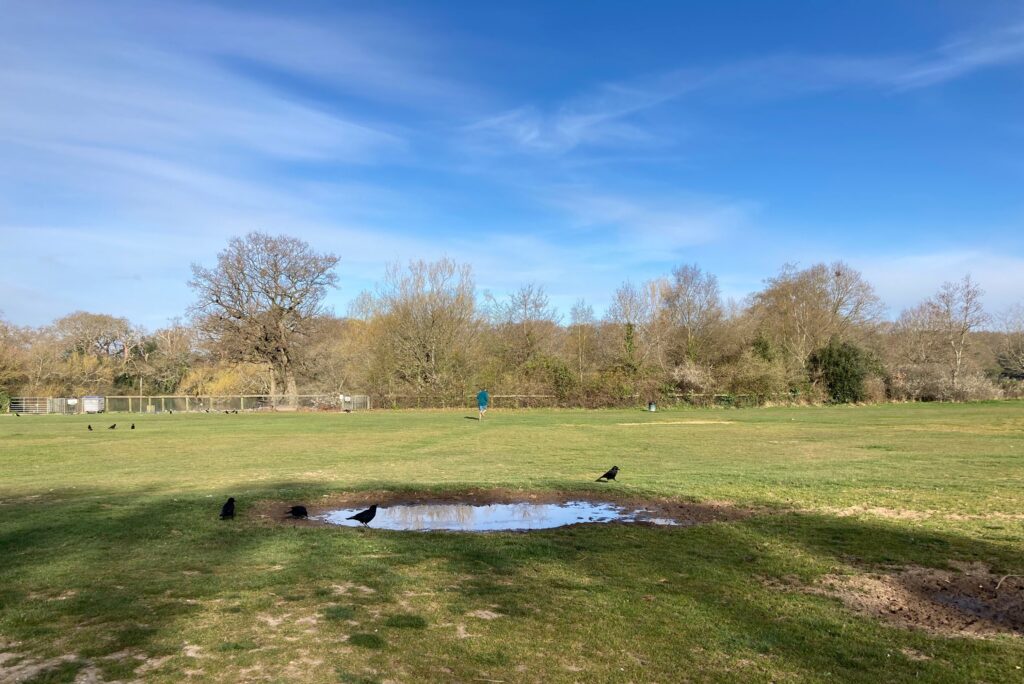
The first parkrun of April 2022 began with puddles, crows and a walk in the Old Cemetery. In a strange way, it felt like an echo of the December parkrun I told you about last time, except it was far warmer and the book hurtling towards publication was a different one. Land Fit For Heroes was with Hayley at Hangar47, just as Plagued had been in December. The only difference to my thoughts about the process was that it now felt as if I’d handed over my second born child. A walk in the cemetery in the early morning light was just the thing to take my mind off all the things that could go wrong. To be honest, I had no idea exactly what could go wrong, but that didn’t stop me worrying about it.

Continue reading April, birds, books, stories and flowers

The little details

The view from the huts at Netley

When writing historic fiction, the little details are the things that bring the story to life. At the beginning of the pandemic I was writing Plagued and I was totally immersed in the world as it was in 1918. I’d read several books of soldiers personal accounts of their time in the trenches, books written by a nurse on the Western Front, details of the chain of evacuation, information about Netley Hospital and about the Spanish Flu. The photographs I found helped me get the feel for what it would have been like, both in France and in England, but it was the little details about the era that made all the difference.

Continue reading The little details

Where have all the pubs gone?

The Engineers Arms Northam

In the first half of the twentieth century, the pub had an important role in working class men’s lives. It was a place they could escape to at the end of a hard day’s work and somewhere they could gather with their friends. One of the things I noticed when I was researching Plagued and Land Fit For Heroes, was how many pubs there were in working class areas back then. Almost every street corner had one. Looking for a pub where my characters could go for a chat and a pint, I was spoilt for choice. In Plagued, I picked the Prince Consort in Netley and the Junction Inn in St Denys for Thomas, Joe and Bert to meet, The Cowherds, the Engineers Arms and the Park Inn were also mentioned. The Park Inn is now a lap dancing club and The Engineers Arms is derelict, but the other two pubs are still open. The same cannot be said for many of those street corner pubs. So where have they gone?

Continue reading Where have all the pubs gone?

The rise and fall of the Railways

Gasworks train Britannia Road Southampton

Railways have played a pivotal role in my life. One of my earliest memories is of Pappy sitting me on the railway bridge at Bitterne to watch the trains, and my first full time job was in a British Rail Data Input Centre. It was there that I learned to touch type. It’s no surprise then, that the railway loomed large in my first two novels, Plagued and Land Fit For Heroes. My research told me that one of the big changes between now and then was the role the railways played in people’s lives. The main characters in both books lived in houses backing onto the railway line and the rumble of passing trains would have been a background to their lives. Hospital trains took Thomas across France and from Southampton Docks to Netley Hospital. Mary worried about her son, Eric, crossing the line on his way to school and she travelled on trains to visit Thomas in hospital. The trains rattled Laura’s windows until the General Strike came and quieted them. Percy and Lenny crossed the railway bridge and passed the busy Terminus Station every day on their way to and from work. The whole of Northam was crisscrossed with railway lines back then, but most are gone now.

Continue reading The rise and fall of the Railways

The Southampton Tram Project

Southampton Common

When we strolled across an eerily beautiful and somewhat misty Common in early October 2021, I had no idea that Commando had another bit of time travel up his sleeve to surprise me. As far as I was concerned, it was just another ordinary Saturday morning watching parkrun and having a wander in the Old Cemetery. My head, as usual, was full of the book I was plotting, listening to the voices of my characters clamouring for attention. The fifth book in the series revolved around a tram driver and his conductor friend. The first draft was written, but despite extensive research about Southampton trams, I’d never actually been on one. The last Southampton tram ran on 31 December 1949, more than ten years before I was born.

Continue reading The Southampton Tram Project

Coming soon…

Southampton Docks

Times of change and strife are often the ones that stand out in history and the years between the wars were certainly filled with both. The men who came back from the Great War had been promised a land for for heroes, but what they got was very different. The war left behind both economic and political turmoil, and what peace there was, was uneasy. There were still wars being waged, the Turkish War of Independence, the Polish Soviet War, the Irish War of Independence, the Rif War, problems between the Italians and Libya, the Americans and Nicaragua, Haiti and the Dominican Republic to mention just a few. Politically too, the world was changing, with the slow rise of both communism and fascism. America may have experienced a period of financial boom in the early 1920’s but Britain faced an unemployment crisis more persistent and severe than any since industrialisation. The ordinary, working-class men who had come back from the war faced terrible hardships. In Southampton, the men of the docks were some of the worst affected.

Continue reading Coming soon…

Southampton docks and Southampton dockers

Research for my second book A Land Fit For Heroes, took me to Southampton Docks during the General Strike of 1926. It should have been easy. In my time working for a cruise company, I’d donned the obligatory hi-vis jacket and wandered around the docks more than once. The problem was, the docks I’d seen in the twenty first century were a far cry from the docks I was writing about. In fact, a lot of the docks as we know them today didn’t exist back then. The western dock had not been built and the sea still lapped at the platforms of Southampton station at high tide. There were no hi-vis jackets back then either. Health and safety wasn’t something the dockers of the mid 1920’s worried about too much.

Continue reading Southampton docks and Southampton dockers

Family Research for dummies

Thomas John Haley

When I first started to research the book that would eventually become Plagued, one of the biggest stumbling blocks was a lack of information. It was always going to be a book heavily influenced by my grandfather’s story but the facts were thin on the ground. I knew he’d been shot, I knew how it happened and I knew a little about his journey across France to safety. The problem was, the first hand story was told to me when I was a child. I didn’t ask the right questions because I didn’t know what I’d need to know. So how exactly did I go about finding out more and how can my experience help other would be family historians?

Continue reading Family Research for dummies

Portswood, trams, tin churches, a laundry and some research

Walter Dowling was a tram driver. He was also Commando’s grandfather. In our attic, there was a wooden box with some of his prized possessions, including his war medals, photographs, postcards, and a tiny diary. During the spring of 2021, I’d been working on a story that involved trams, and Commando thought some things in the box might give me inspiration. The diary was especially poignant. Walter wrote little, but it covered the period when he had malaria and was about to be leaving the army after seven years. It was also when he first met Violet, Commando’s grandmother. He may have been a man of few words, but the words he wrote about her showed how deeply he had loved her. They brought me to tears.

Continue reading Portswood, trams, tin churches, a laundry and some research

Messing about in a boatyard

William Street, heading for Shamrock Quay

May 2021 was mostly spent aimlessly wandering around local streets, and even my next big adventure, on 26 May, didn’t take me very far from home. In fact, it took me to Shamrock Quay, the scene of many happy post football match drinks. Once upon a time I could usually be found outside the Old Waterfront on a Saturday afternoon, with a burger in one hand and a drink in the other, chatting to Bernie and Kath who ran the place in those days. This particular adventure was prompted by a need to research something I was writing. I was particularly interested in the wharves and boat building yards around William Street.

Continue reading Messing about in a boatyard