
When I first started to research the book that would eventually become Plagued, one of the biggest stumbling blocks was a lack of information. It was always going to be a book heavily influenced by my grandfather’s story but the facts were thin on the ground. I knew he’d been shot, I knew how it happened and I knew a little about his journey across France to safety. The problem was, the first hand story was told to me when I was a child. I didn’t ask the right questions because I didn’t know what I’d need to know. So how exactly did I go about finding out more and how can my experience help other would be family historians?
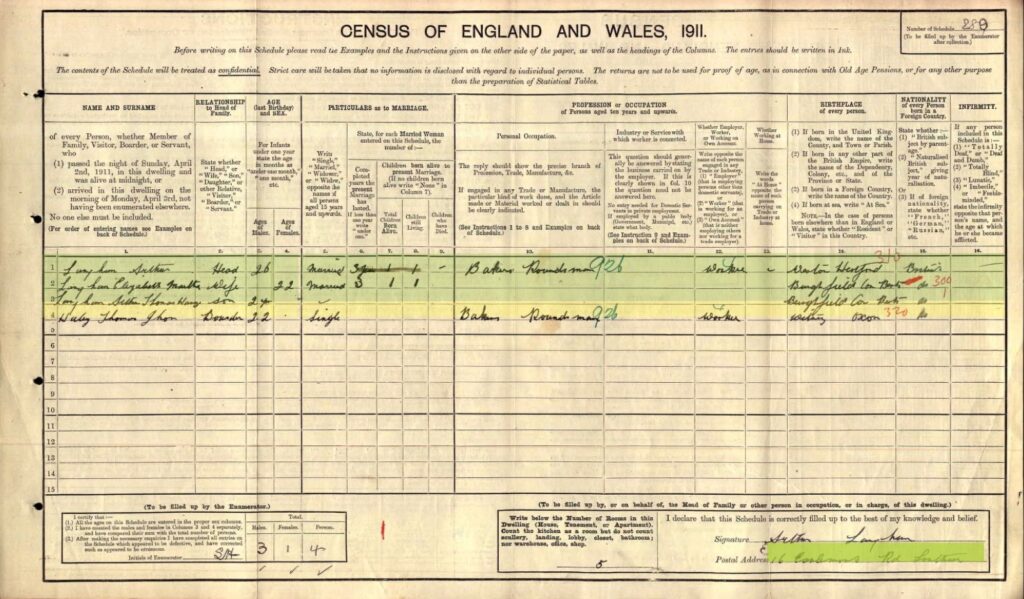
Thanks to Commando, I had membership of Ancestry.co.uk, and it and other similar sites are the best place to start, using whatever scraps of information you have. I already knew that Thomas was born in Witney Oxfordshire on 27 October 1887. At the outset, I’d imagined he was still living in Witney at the beginning of the war, and that Mary had come to Southampton to be close to him as he recovered from his wounds at Netley Hospital. The April 1911 census proved me wrong. It listed him as lodging in Portsmouth with Arthur Langham and his wife Elizabeth and working as a baker’s roundsman, a job I knew he’d continued to do in Southampton after the war. On 7 August 1911, he married Mary Ann Bedford (Elizabeth Langham’s sister) in St Mary’s Church, Burghfield, Berkshire, where Mary was born. He was listed as living in Bristol at that time and working as a canvasser. His brother Hariph, was one of the witness to the wedding.
A little bit of knowledge of your family history is vital when using sites like Ancestry because it’s very easy to be led down the wrong track, especially if your family name happens to be something like Smith, Jones or White. The more I’ve used it the more little tricks I’ve worked out. One useful one is to search birth records by surname and mother’s maiden name. It may bring up children you weren’t aware of, especially those who died young and may never have appeared on any census. It’s also worth considering that the mother in question may not have been married when the child was born. Searching under her maiden name alone is always worth a try.
If you want more information, like father’s name and occupation, exact place of birth, cause of death, details of marriage, it is possible to order copies of birth, marriage and death certificates from the General Register Office. A paper copy is currently £11 and an online one £7. Obviously this can get very expensive so you need to be sure you have the right person before you order. The volume number and page reference from the birth record on Ancestry is the GRO Index Reference you will need to get the right record. In Southampton, birth certificates of children born out of wedlock in the Union Infirmary were euphemistically registered at 1a Chilworth Road, in much the same way as children born in the workhouse in St Mary’s were registered at 154 St Mary Street, Southampton. It was a lot more common than you’d think, especially amongst working class families.
Census records from Ancestry, or other similar sites are useful but finding out where people lived in between each census, or after the 1939 Register is another matter. Thankfully, Southampton City Council have provided a wonderful research resource by way of online copies of many of the Kelly’s Street Directories, these have been invaluable in much of my research, not just into family history but into the area itself. It’s possible to browse the pages using lists of streets, surnames, business names or by types of business. From them I learned that Thomas was living at 185 Radcliffe Road, Northam when he went to war. Sometimes thinking outside the box is needed. Sadly, only the head of the household is listed so it doesn’t help if the person you are looking for was a lodger. It is also worth looking up the name in the business section, as I discovered when I stumbled upon Thomas while I was looking for businesses in the Northam area to add colour to my second book. He was running a fruit shop at 189 Northam Road and must have been living above it because he wasn’t listed in the surname section.

Finding war records is a little more tricky, especially records from WWI. Many were destroyed during the blitz in WW2 so the records you are looking for may no longer exist, and if you do find them, you need to pay extra for Fold3 to access further information. Forces War Records is another option, but it also needs a subscription. As you can see, things soon begin to get rather expensive. Surprisingly, there were several Thomas Haleys in the World War I records on ancestry. Any of them could have been my Thomas. The cap badge on the photograph above was a huge clue. It might not have been the clearest picture, but after a lot of searching through military websites, I was sure it belonged to the Hampshire Regiment. It was the photograph and the help of Brenda Findlay from Netley Abbey Matters that filled in the most important blanks. Brenda’s discovery of his name on a list of the wounded on 27 June 1918 sealed the deal. Now I knew his regiment and the date he was shot.

The next information came from the websites of the Royal Hampshire Regiment and Forces War Records. They told me where the regiment would have been during the Great War, what battles Thomas might have been involved in, and most importantly, that he was likely to have been somewhere between Albert and Amiens on that fateful day in June 1918. This information became the basis for Thomas’s story in Plagued.


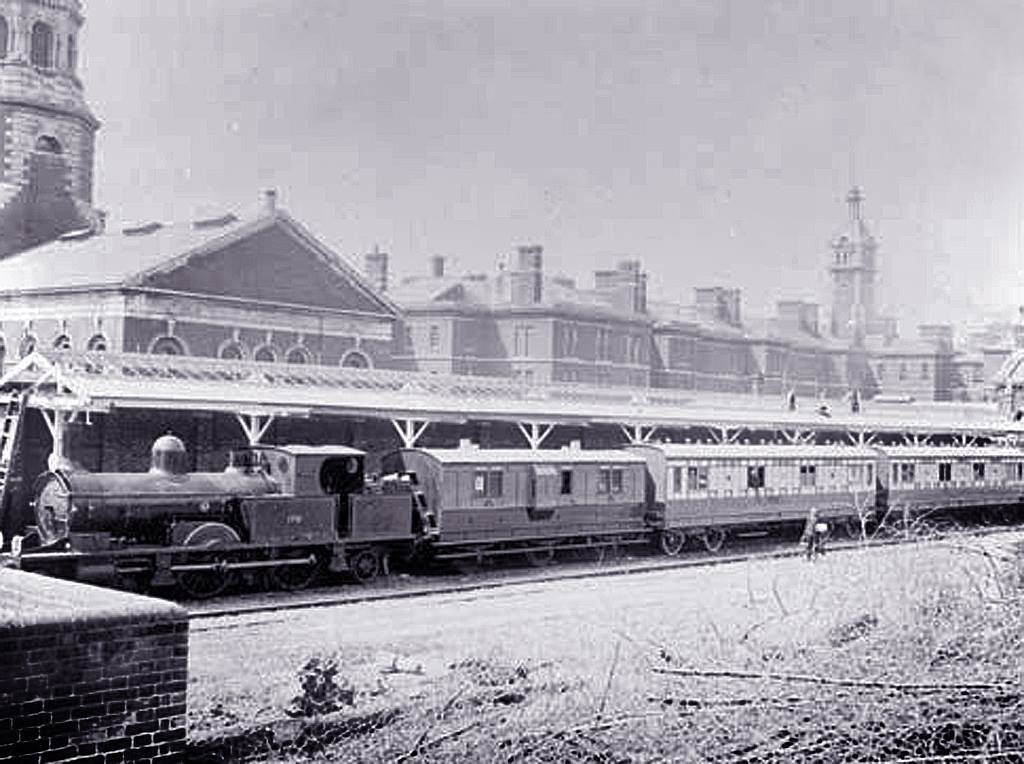
Sadly, there are no records left from the hospital at Netley but it is almost certain that this is where Thomas would have been taken when he came back to England. Again Netley Abbey Matters was an invaluable resource to give me an idea of what life was like at the hospital. Some of the wonderful photographs I found also brought the place and time alive.

Of course, most people researching their family history aren’t doing it because they want to write a book, but the resources above are useful all the same. Every piece of information uncovered tends to lead to other information and this kind of research can quickly become addictive. Whether you set out to discover some famous ancestor, or just to know a little more about your family history, it’s certainly an interesting pastime. Who knows, you might even find something worthy of putting into a book of your own.
If you like what I write and would like to help me keep doing it, you can now buy me a virtual coffee by clicking on the little orange coffee cup at the bottom right. If you’re interested in my historic novels, Plagued is available now on Amazon.
My dad did his National Service as a nurse at Netley.
Wow. I had no idea that was even possible. What an amazing place to work.
He was very fortunate. I think the Korean War had more or less ended when he went into the army, but there were probably other things going on in the world that were equally dangerous for young squaddies.
The men in my family, my grandfather and my father didn’t have national service, they had world wars instead. Thankfully, national service was a thing of the past by the time my male cousins were old enough. Having said that, I think it would do some of the young men of today good to have a taste of army life.
Attitudes towards it differ, but a bit of discipline is usually good for teenagers. I think he quite enjoyed his time there, but it was around then that he met Mum, so that probably helped.
I think National Service certainly provided discipline and taught valuable skills that served many young men well in their life afterwards. Getting away from home, mixing with other young men from different backgrounds and learning to work as part of a team are also things I think some of todays teenagers would benefit from.