
Railways have played a pivotal role in my life. One of my earliest memories is of Pappy sitting me on the railway bridge at Bitterne to watch the trains, and my first full time job was in a British Rail Data Input Centre. It was there that I learned to touch type. It’s no surprise then, that the railway loomed large in my first two novels, Plagued and Land Fit For Heroes. My research told me that one of the big changes between now and then was the role the railways played in people’s lives. The main characters in both books lived in houses backing onto the railway line and the rumble of passing trains would have been a background to their lives. Hospital trains took Thomas across France and from Southampton Docks to Netley Hospital. Mary worried about her son, Eric, crossing the line on his way to school and she travelled on trains to visit Thomas in hospital. The trains rattled Laura’s windows until the General Strike came and quieted them. Percy and Lenny crossed the railway bridge and passed the busy Terminus Station every day on their way to and from work. The whole of Northam was crisscrossed with railway lines back then, but most are gone now.

Some of the changes to the railways were due to Mr Beeching’s axe in 1965. Following a report commissioned by Harold Macmillan in 1961, Harold Wilson’s Government drastically cut the number of railway lines and stations in response to the mounting debts of the nationalised British Rail. Around five thousand miles of track disappeared and two-thousand-three-hundred stations were closed. Most were in rural areas, or were the least used branch lines. In Northam though, some of the lines were lost due to changes in local industries. In Netley it was the closure of The Royal Victoria Hospital.

When Netley hospital was built there was no station and patients arrived on shallow draft boats landed at the pier, or had to be transported by road from Netley Station. It would not have been a comfortable journey for a wounded man. Around the turn of the twentieth century, during the second Boer War, the railway line was extended from Netley Station to a new station built behind the hospital three quarters of a mile away. It made life more comfortable for the patients, who could be taken off the hospital ships at Southampton Docks, put on trains and carried directly to the hospital. It was not so easy for the railway men. The gradients were steep for the steam locomotives of the time and some trains needed an engine at each end to cope. When the hospital closed in 1958 the station was no longer needed and now all that remains are a few rails if you look very closely for them.

In Northam, the railway line little Eric and his friends had to cross every day to get to school is still there, as is the footbridge and the level crossing at Mount Pleasant. The houses Thomas, Mary, Alice and Hetty lived in are gone now though. These weren’t the only lines near the houses there though. If you look very carefully, you can just make out a few traces of track near the industrial estate at the end of Radcliffe Road. These were part of a spur line that ran along the waterside, past the timber ponds and foundry and across Northam Road to the coal porter’s wharf. Back then it was coal that kept the trains running and the fires of industry burning. The whole world ran on coal at the beginning of the twentieth century and tons of the stuff passed along this track. Then petrol, electricity and gas took over from coal, and the track was no longer needed.


The line that ran behind Laura and Lenny’s house in Melbourne Street is still there, even thought the houses have gone. Back in 1926 it would have been busy, as it served Terminus Station near the Docks. In 1939, Terminus Station was the first railway station to open in Southampton. At the time it was called Southampton Station and it was the terminus of the London and Southampton Railway. In 1872, the track was extended into the Ocean Dock Terminal so that trains could terminate at the quayside. In 1858 the station was renamed Southampton Docks to distinguish it from Southampton West station on Blechynden Terrace, and in 1923, the name Southampton Terminus Station was finally settled on.

At the beginning of the twentieth century Terminus Station was busy with traffic from Reading, Alton, London and Portsmouth, the Great Western Railway and the Didcot, Newbury and Southampton Railway. Many of the passengers who travelled on Titanic would have passed through on their way to the ship and many of the first class passengers alighted there to spend their last night on land at the South Western Hotel. These were the trains that rattled Laura’s windows.

This wasn’t the only railway line Laura had to contend with. Her house was on Melbourne Street opposite the gasworks. The gas was produced by burning coal and there was a spur line going through the gasworks, across Britannia Road and Belvedere Road to Belvedere Wharf. Poor Laura could hardly go anywhere without crossing rails. There was another spur line crossing Melbourne Street to the wharves on Milbank Street.


Then there was the station at Northam. There’d been a temporary station at Northam Road when the railway first came to the town, because the railway company and the Northam Bridge Company couldn’t agree on how the line should cross the road. The railway company wanted a level crossing, the bridge company wanted a railway bridge. Eventually the bridge company won and the railway bridge was built. It is still there today.
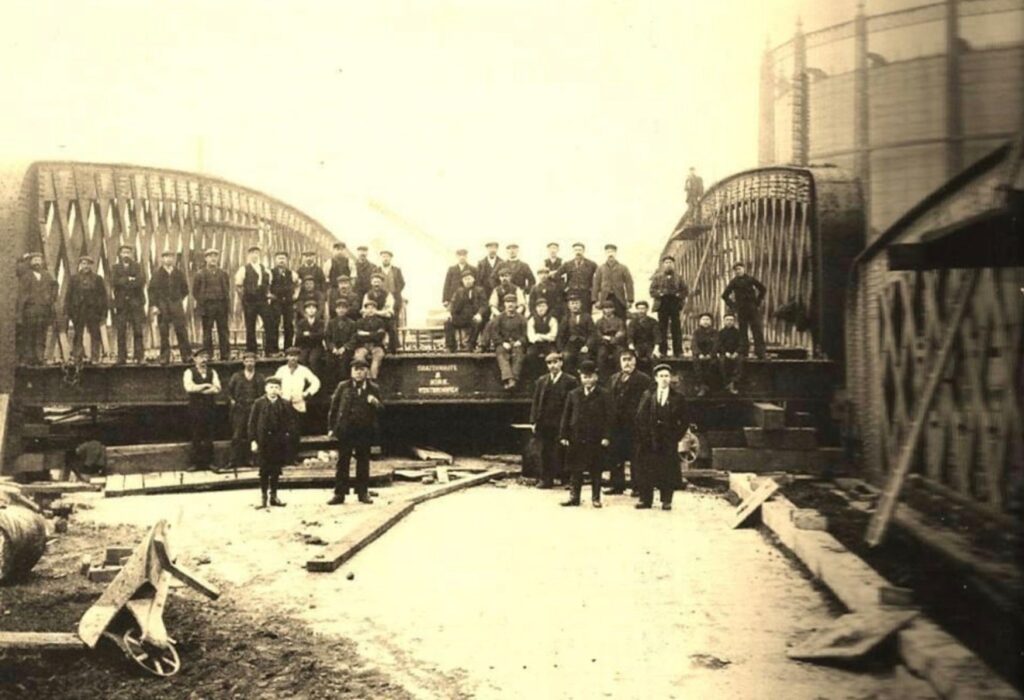
Once the bridge was built the station was no longer needed, but the people of Northam weren’t happy about losing it. During the 1860’s there were campaigns for a new station at Northam. The LSWR said no. It was too close to the Terminus Station. Eventually, they relented and the new station was opened in 1872. It was built by Joseph Bull and Sons of Belvedere Wharf. The popularity of Southampton Central Station saw business at Northam and Terminus stations decline in the 1960’s and both stations closed before the line was electrified in 1967. Northam Station was demolished in 1969. Trains do still run on this line, but only the occasional freight trains going to the docks.

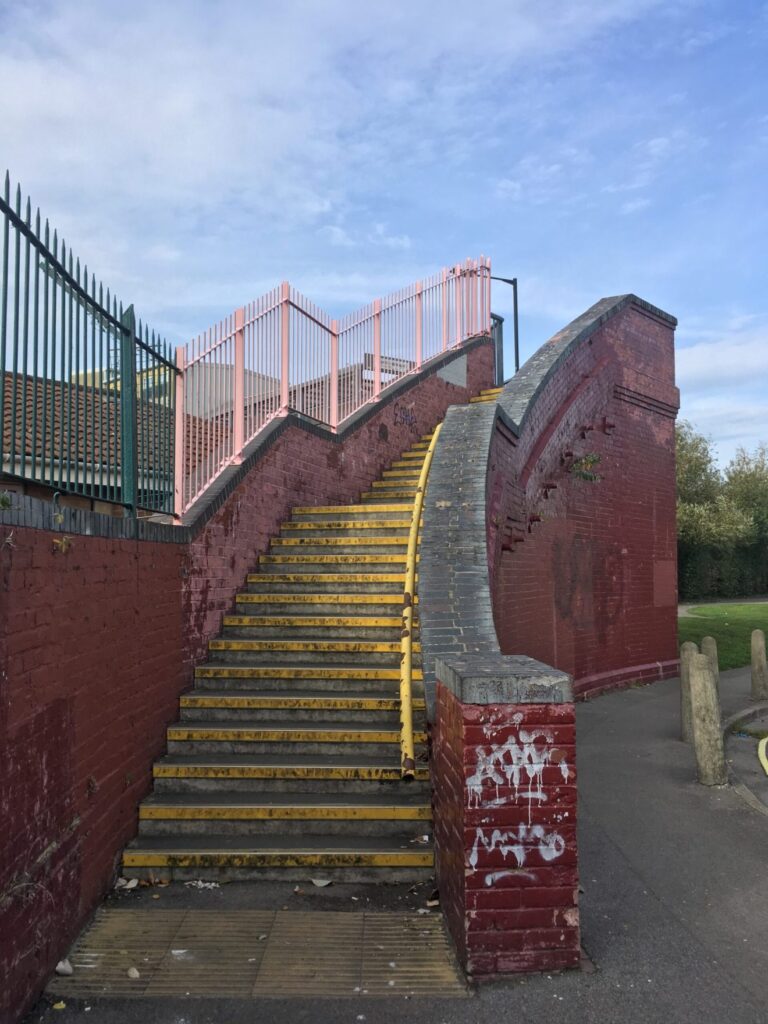
Lenny and Percy would have followed the line of the railway every day on their journey to work at the docks. They would probably have hardly noticed crossing the line on Melbourne Street, but the steps to Chantry Bridge could hardly be ignored. I know, I crossed that bridge myself many times on my way to work at Dukes Keep. This footbridge features large in the story, although I won’t spoil it by saying how. Even when they’d crossed the line, there was no getting away from the railway.
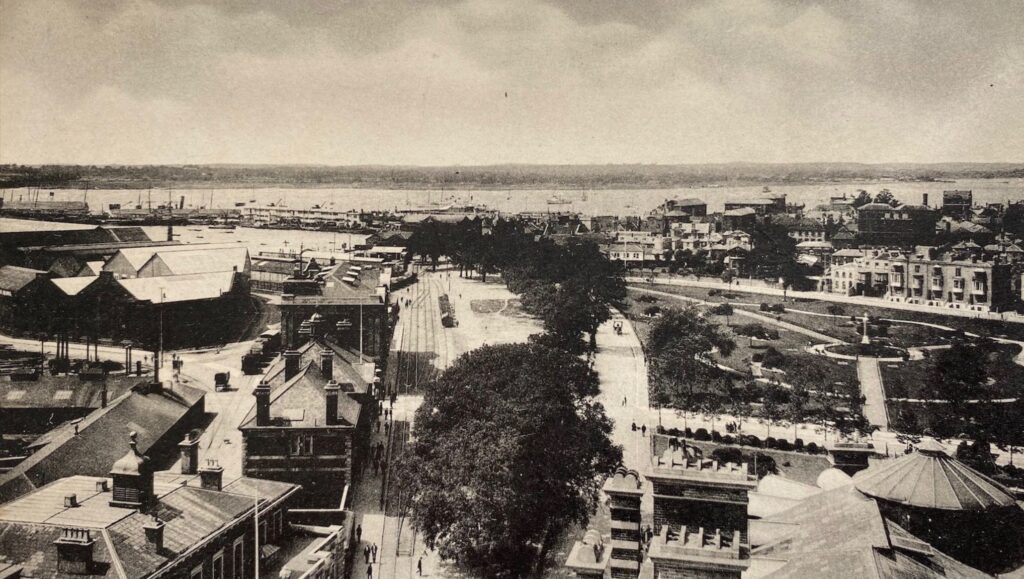
As they walked along Terminus Terrace they would have no doubt heard the rattle of the passing trains, although the stench of the cattle market might have overwhelmed their senses enough that they hardly noticed. They’d have passed Terminus Station and skirted the edge of Queens Park before they had to cross more rails. Back then the railway ran right into the docks and across the front of the Docks Post Office. They’d have had to cross them just to get through the dock gate and once inside there were tracks everywhere.



Although the main railway lines are still operating, the spur lines Thomas, Mary, Lenny, Laura and Percy negotiated every day, are mostly gone. If you look very closely you might see a trace of them, and if you cross Chantry Bridge or walk along Canute Road at just the right time, you might still see the odd train trundling into the docks. Of course, there will be no puffs of steam. Sadly, the game of sitting on a railway bridge waiting for the next train to pass and trying to guess if it will be steam or diesel is no more. The steam trains are long gone and only diesel trains travel on this line now. Even so, the memories of those far off days, hoping for a steam train while Pappy’s arms held me tight, remain.
If you like what I write, and you’re interested in my novels are available now on Amazon in paperback, on Kindle and via Kindle Unlimited. Check out my Amazon page here and my Goodreads page here. If you would like to help me keep writing, you can now buy me a virtual coffee by clicking on the little orange coffee cup at the bottom right.
Oh dear… looks like Grant Shapps’ attempt to rewrite history has succeeded! Beeching (1963) was completely a Conservative idea, brought in by the Minister of Transport in the Macmillan government, Ernest Marples. Yes, some of the closures did take place after Labour came to power in 1964, but it’s unfair to put the blame on them. Indeed, in the 1968 Transport Act, they brought in grants to support uneconomic, but socially needed, railway lines. Historically, they’ve been far more supportive of the railways than the Tories.
The report was certainly commissioned by Macmillan’s government but it was Harold Wilson’s government who implemented the cuts. During their election campaign Labour had promised to halt rail closures if elected, but it quickly backtracked, and later oversaw some of the most controversial closures. However, the long and controversial history of the Beeching report and the cuts is not really pertinent to my research or the story I’m telling. This is a blog about my research and my writing, not politics.