April, birds, books, stories and flowers

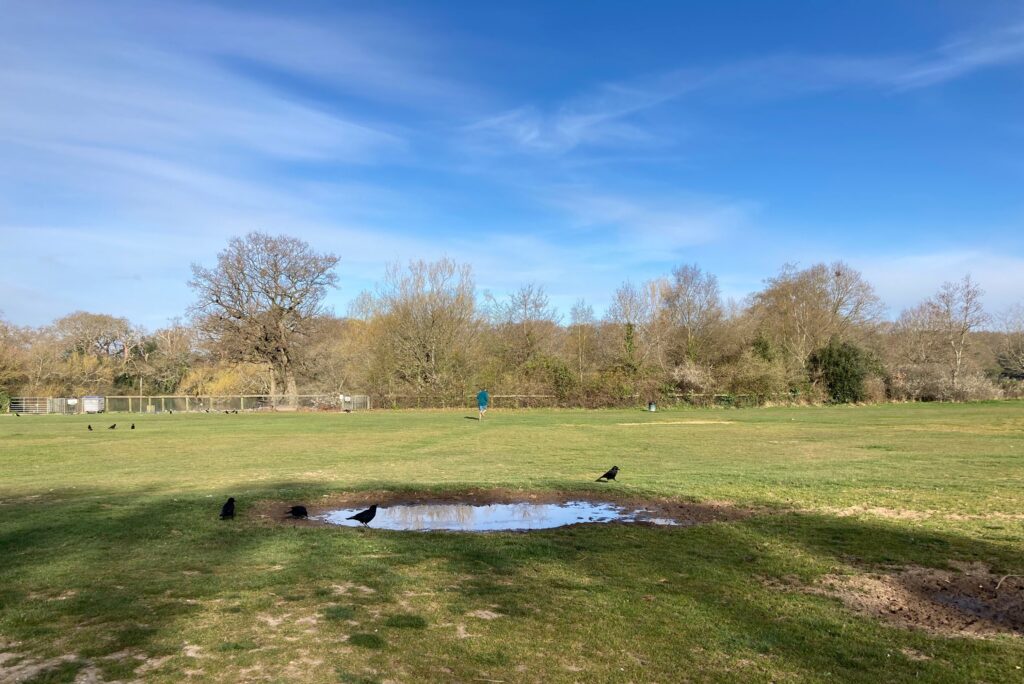
The first parkrun of April 2022 began with puddles, crows and a walk in the Old Cemetery. In a strange way, it felt like an echo of the December parkrun I told you about last time, except it was far warmer and the book hurtling towards publication was a different one. Land Fit For Heroes was with Hayley at Hangar47, just as Plagued had been in December. The only difference to my thoughts about the process was that it now felt as if I’d handed over my second born child. A walk in the cemetery in the early morning light was just the thing to take my mind off all the things that could go wrong. To be honest, I had no idea exactly what could go wrong, but that didn’t stop me worrying about it.

Continue reading April, birds, books, stories and flowers

Time machine and preparing to launch

River Itchen

Much of March has been taken up with going through edits and checking the manuscript and proof copies of the paperback and kindle version of Land Fit For Heroes. The process is slow, and it feels quite strange to become so intimate again, with a book I began writing in October 2020. So much water has passed under the bridge since then and all the characters have changed and grown in the subsequent books, it feels a little like stepping into a time machine. Combined with the decidedly peculiar weather (we had snow last week for heaven’s sake), my walking has been curtailed somewhat. Despite all this, I did manage a couple of short walks that didn’t involve just going up the hill for milk.

Continue reading Time machine and preparing to launch

The little details

The view from the huts at Netley

When writing historic fiction, the little details are the things that bring the story to life. At the beginning of the pandemic I was writing Plagued and I was totally immersed in the world as it was in 1918. I’d read several books of soldiers personal accounts of their time in the trenches, books written by a nurse on the Western Front, details of the chain of evacuation, information about Netley Hospital and about the Spanish Flu. The photographs I found helped me get the feel for what it would have been like, both in France and in England, but it was the little details about the era that made all the difference.

Continue reading The little details

Land Fit For Heroes

Cover thanks to Hayley

Plagued was never going to be a standalone book. Even as I was writing and researching it, other characters were clamouring to have their stories told. Their voices were so loud, it was hard to decide who to listen to at times. Three voices were especially loud, Lenny, Laura and Percy, who’d all had bit parts in Plagued but demanded their place in the spotlight. It took a while to quieten them enough to work out their story, and even longer to research and write it. Now it’s done and thanks to all the wonderful people who helped me along the way, Land Fit For Heroes is now in print.

Continue reading Land Fit For Heroes

Harbingers of spring

When I was a child, we had a forsythia bush at the side of the house. Each year, the first sight of those bright yellow flowers on the bare stems brought joy to my heart. It told me winter had been defeated by spring once again and the warm days were coming. These days, the magnolia is my harbinger of spring. There are several on my walk to the shops, and seeing the furry buds burst to reveal delicate pink or white petals brings the same joy, for the same reason. Now, in mid March, as I plodded up the hill, there were two magnolias bursting with blooms under a deep blue sky. It may have still be cold enough for hats and scarves, but it felt like a sign of new beginnings all the same.

Continue reading Harbingers of spring

Where have all the pubs gone?

The Engineers Arms Northam

In the first half of the twentieth century, the pub had an important role in working class men’s lives. It was a place they could escape to at the end of a hard day’s work and somewhere they could gather with their friends. One of the things I noticed when I was researching Plagued and Land Fit For Heroes, was how many pubs there were in working class areas back then. Almost every street corner had one. Looking for a pub where my characters could go for a chat and a pint, I was spoilt for choice. In Plagued, I picked the Prince Consort in Netley and the Junction Inn in St Denys for Thomas, Joe and Bert to meet, The Cowherds, the Engineers Arms and the Park Inn were also mentioned. The Park Inn is now a lap dancing club and The Engineers Arms is derelict, but the other two pubs are still open. The same cannot be said for many of those street corner pubs. So where have they gone?

Continue reading Where have all the pubs gone?

The rise and fall of the Railways

Gasworks train Britannia Road Southampton

Railways have played a pivotal role in my life. One of my earliest memories is of Pappy sitting me on the railway bridge at Bitterne to watch the trains, and my first full time job was in a British Rail Data Input Centre. It was there that I learned to touch type. It’s no surprise then, that the railway loomed large in my first two novels, Plagued and Land Fit For Heroes. My research told me that one of the big changes between now and then was the role the railways played in people’s lives. The main characters in both books lived in houses backing onto the railway line and the rumble of passing trains would have been a background to their lives. Hospital trains took Thomas across France and from Southampton Docks to Netley Hospital. Mary worried about her son, Eric, crossing the line on his way to school and she travelled on trains to visit Thomas in hospital. The trains rattled Laura’s windows until the General Strike came and quieted them. Percy and Lenny crossed the railway bridge and passed the busy Terminus Station every day on their way to and from work. The whole of Northam was crisscrossed with railway lines back then, but most are gone now.

Continue reading The rise and fall of the Railways

In the here and now

Lately, I’ve been posting about 2021, the lockdown, and life slowly getting back to normality. All the while, life in the here and now has been moving on. The threat of COVID may have been downgraded, but the spectre of war has taken its place in the daily news. If researching and writing about the first half of the twentieth century has taught me anything, it’s that the newspapers and the media are not to be trusted. They may be great for propaganda, but they’re not so good for solid facts. Even so, the invasion of Ukraine can hardly be ignored. The parallels between these days and the dark days of the late 1930’s are clear for all to see and my heart breaks for the ordinary citizens of Ukraine.

Continue reading In the here and now

A pleasant surprise

Last week I was asked to give an author talk at a local school. I have to admit I was a little nervous. In my career, I have often had to stand in front of rooms full of people and give talks, but never promoting myself and never in front of a group of year 5 and 6 children. I felt more than a little out of my depth. Why would children be interested in anything I had to say? Did children even read books these days? These were the thoughts going round and round in my head as I prepared what I was going to say.

Continue reading A pleasant surprise

Coming soon…

Southampton Docks

Times of change and strife are often the ones that stand out in history and the years between the wars were certainly filled with both. The men who came back from the Great War had been promised a land for for heroes, but what they got was very different. The war left behind both economic and political turmoil, and what peace there was, was uneasy. There were still wars being waged, the Turkish War of Independence, the Polish Soviet War, the Irish War of Independence, the Rif War, problems between the Italians and Libya, the Americans and Nicaragua, Haiti and the Dominican Republic to mention just a few. Politically too, the world was changing, with the slow rise of both communism and fascism. America may have experienced a period of financial boom in the early 1920’s but Britain faced an unemployment crisis more persistent and severe than any since industrialisation. The ordinary, working-class men who had come back from the war faced terrible hardships. In Southampton, the men of the docks were some of the worst affected.

Continue reading Coming soon…