
My walk over the bridge at Mount Pleasant on 1 February got me thinking about the old gasworks. I’d seen the gasometer from my rickety perch on the footbridge and wondered how much longer the familiar landmark would be around. For years, there’d been rumblings about the gasometers being demolished since Southern Gas Networks no longer use them and maintaining them is costly. I wrote about them and took several photos on a walk back in 2017. In 2022, when they announced they really were going, local residents had mixed feelings about their demise. Some saw them as an eyesore, others a piece of history. Personally, I sat somewhere in between. I knew the demolition work had started, so on 7 February, I thought I’d have a closer look while there was still a chance.
It was one of those bright, crisp mornings, blue sky and thick frost. The closer I got to the river, the colder it felt, and my head was filled with snippets of other walks to work, going back to the mid-1990s and spanning four different jobs. A vivid memory came to me of listening to eyewitness stories from the D-Day landings on my iPod one spring morning in 2013. They’d been recorded by a retired BBC broadcaster who was going to give talks on a D-Day cruise, and he’d sent them to me. I wrote about it at the time – ‘Walking down towards the river, with the sound of D-Day veterans in my ears, the shafts of sunlight bursting through the trees illuminated the swirling mist clinging to the ground. It seemed a fitting sight as the tale of bombs, gunfire, and battle unfolded.’

There was no mist on this chill February morning, but as I caught my first sight of the river, the bare branches of the trees against the deep blue sky made me smile. It was too cold to hang around taking photos, though. Years ago, when my grandad lived around the corner, there were allotments beside the river here. A place to ‘dig for victory’ during the war. Now it’s all modern houses, like rows of little boxes.

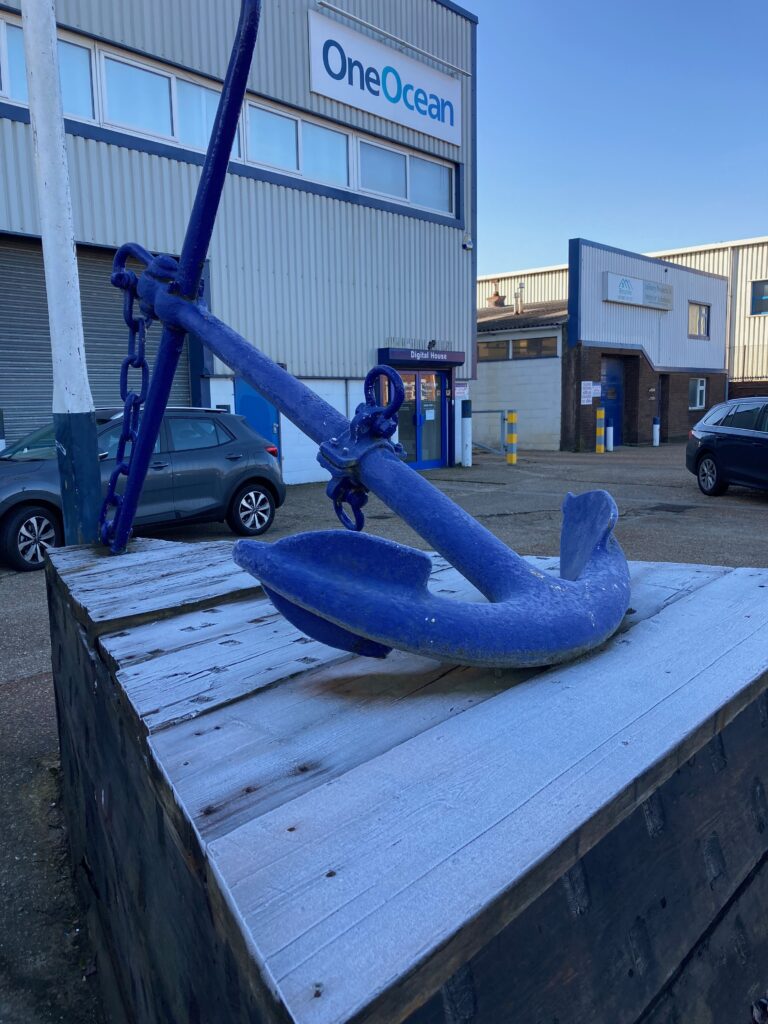
A drift of fallen leaves near the school had frozen solid. They crunched underfoot. The blue anchor at Kemps Quay looked like it had been in a freezer. I quickly snapped photos, so I’d remember later, then shoved my hands deep into my pockets and marched on.

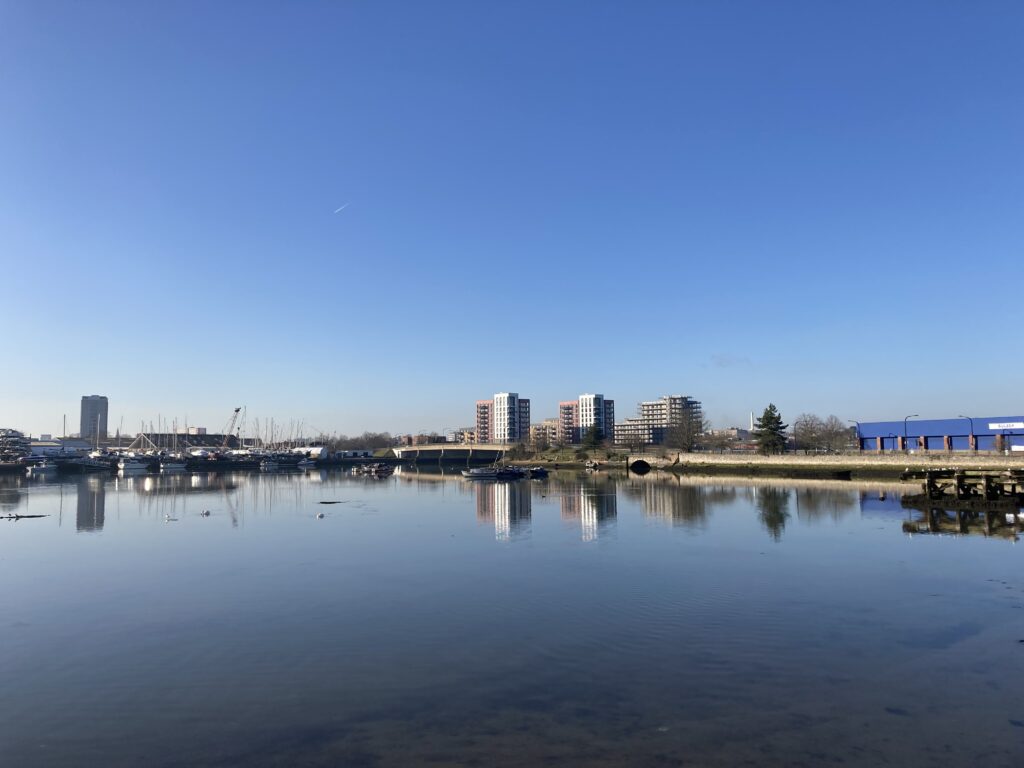
The Itchen was as calm as a millpond, although the sound of the cranes moving piles of old cars in the Northam scrapyard shattered the peace. Much as I’d enjoy the river views, the early morning scrapyard alarm call would get old quickly if I lived here. Maybe they issue earplugs when you buy one of the waterside flats?

It was too bitter to linger on the bridge, so I hurried across, slowing my pace only when I came to the Ship Inn. The light was perfect, and it struck me that I pass this old pub often, but I never take a photograph. Given all the changes happening in Northam, I thought it wise to capture it while I still could. In the 1830s, when the Ship Inn first opened, it was in an enviable position, on the main road into town, on the corner right next to the original wooden Northam Bridge. It stood firm when they replaced the wooden bridge with an iron one in 1889. When they built the current concrete bridge and changed the road layout, the pub suddenly found itself off the beaten track, hidden away behind the bridge. Even so, it carried on until at least the 1980s and was popular with the TV Studio workers.
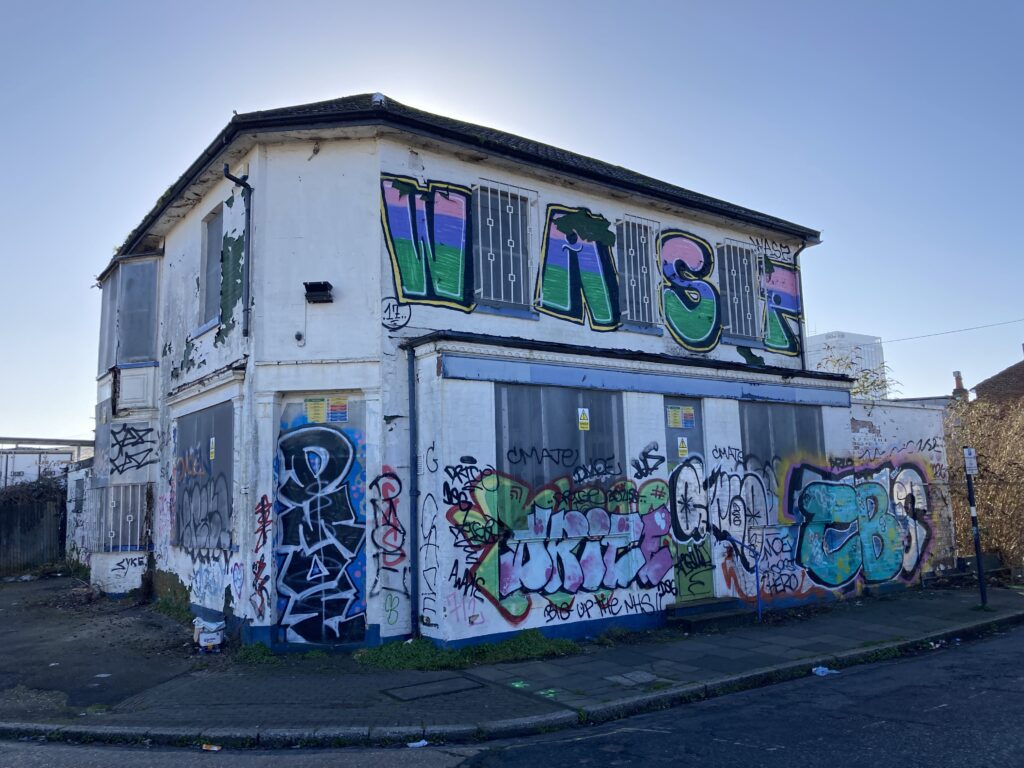
I don’t recall exactly when the Ship Inn closed, but it’s in a sorry state now, covered in graffiti (and not the artistic kind), with windows and doors boarded up and the paint peeling from the old brickwork. It looks sad and unloved, and I suppose it is only a matter of time before it disappears.

The new bridge and the change of road layout created winners and losers. The Ship Inn lost passing trade and fell into the latter category. Across the road, the terraced houses and shops, including my grandfather’s fruit shop, did too. The new road swallowed them up. The row of terraced houses beside the pub did far better from the change. When the road moved away from their front doors, life got far more peaceful for them.

The next milestone on my walk was The Prince of Wales Pub. It has survived where other pubs have not. This is thanks, in part, to the football fans who drink there before and after home matches. In my latest book, A Dish Best Served Cold, this pub is where Bert, Tom, Joe and Harry meet each Friday to set the world to rights and hatch plans. I really must pay it a visit soon.

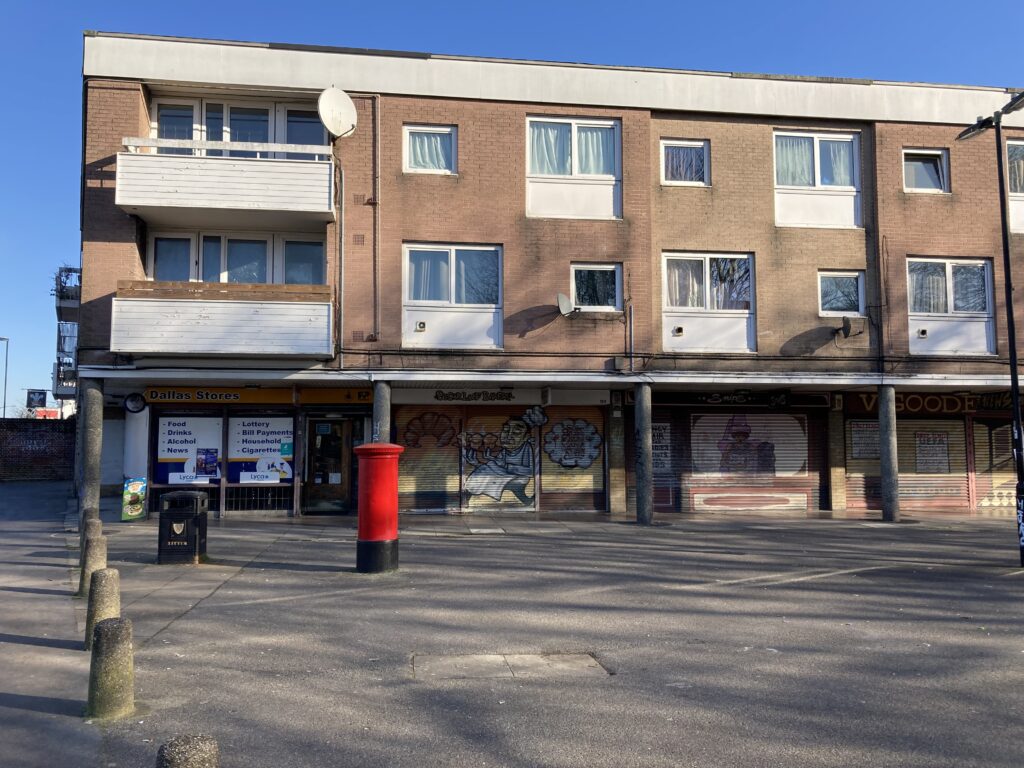
Once, the Prince of Wales nestled amongst rows of terraced houses. Those not destroyed by bombs were pulled down in the 50s and 60s. They replaced them with a modern estate of flats and a tower block. I’m not sure it was an improvement. Most of the shops have closed now, and even the shutters painted to look like shop fronts have faded.
As I approached the gasworks, I spotted new paintings on the bricked-up windows of the Northam Social Club. I’m not sure when they appeared, or who painted them, but they have a distinct football theme. Being so close to St Mary’s Stadium, it’s hardly surprising.

Now, I’d reached my destination, and my first glimpse of the gasometer cradle made me quite emotional. I always thought the gasometers had an austere industrial beauty to them. Maybe I have more reason to be attached to the old gasworks than most. My mother lived in Melbourne Street in their shadow as a child and they featured in my second book, A Land Fit For Heroes. They also feature in a later book, but you’ll have to wait to hear about that one. It’s been a long while since the two huge drums rose and fell, but they have been a landmark on many of my walks. A little like the dock cranes, they’re a sight that tells me I’m getting close to home.
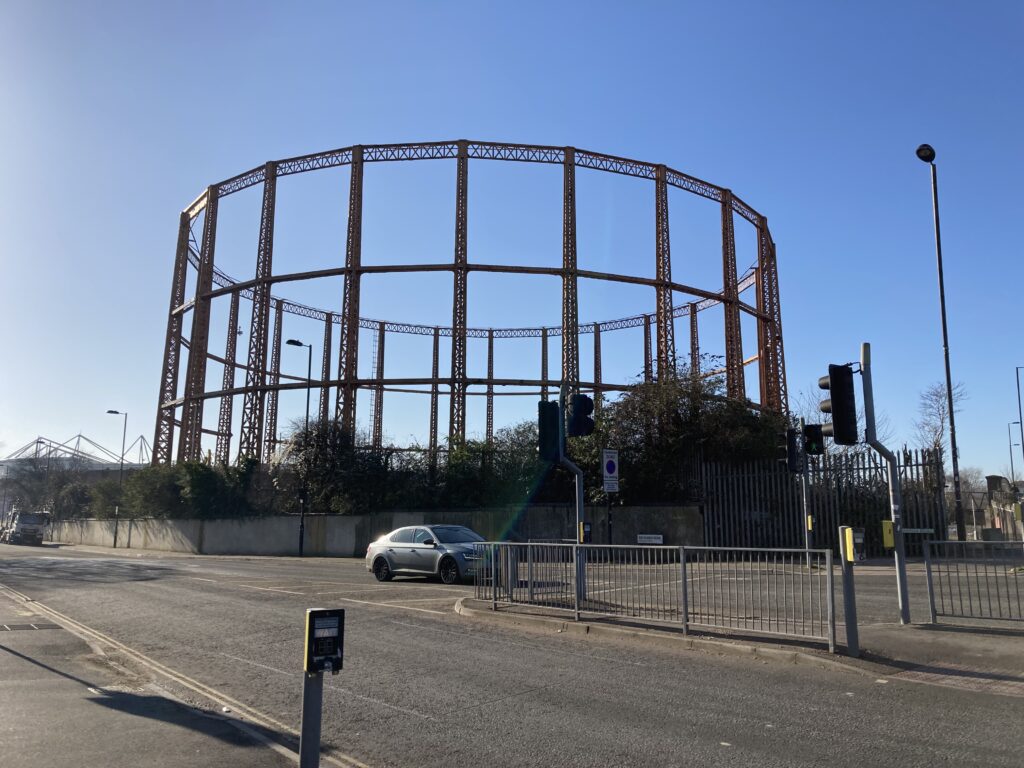
Southampton was one of the first towns in Britain to have a gas supply. In 1819-20, gas lighting brightened the Southampton streets, and a local firm, Barlow Brothers, built the gas works. MP William Chamberlayne was chairman of the local gas company. He gifted the townspeople the ornate iron columns that supported the gas street lighting. They built the gasometer on the corner of Britannia Road in 1909. A second was built behind it in 1935. Their purpose was to store gas and stop fluctuations in the supply during peak times. Modern technology means they are no longer needed.
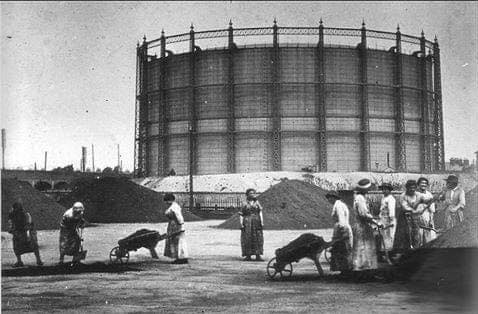
At this point, nothing appeared to have changed. The gasometer cradle was still silhouetted against the clear blue sky. I could almost imagine the tank wasn’t visible because everyone had their gas fires on and supplies were low. The idea of it not being there at all was unthinkable, somehow. Still, everything changes. The gasworks may have brought jobs, light and heat to the town, but the smell, the dust and the sticky black smuts floating in the air blighted the nearby streets. It wasn’t the healthiest place to live. My maternal grandfather died at thirty-six, riddled with tuberculosis of the lungs.
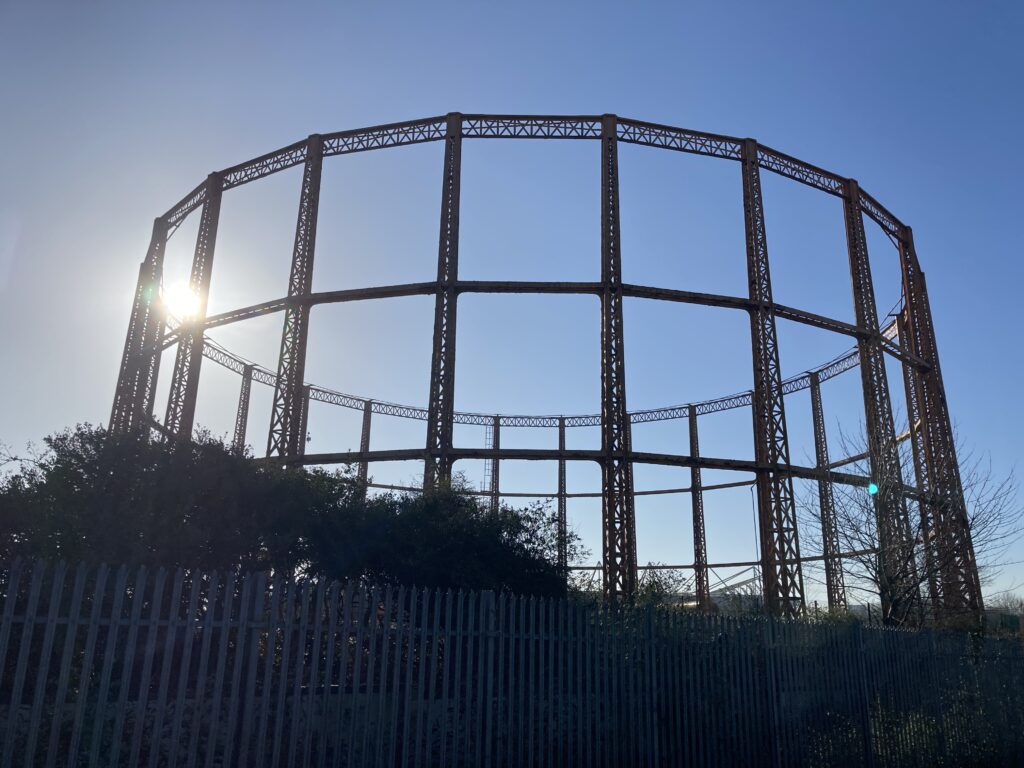
In 1848, the Southampton Gaslight and Coke Company took over the gasworks. They managed it until 1948 when the gas industry was nationalised. Then, in 1965, natural gas was discovered in the North Sea. Unlike coal gas, it wasn’t poisonous, and it didn’t smell. In fact, gas companies had to add a harmless chemical called mercaptan to give it its distinctive “rotten egg” smell so people could tell if there was a gas leak. Gas appliances across the country had to be converted to run on the new clean gas, and a system of high-pressure pipes was built to transport it. Sticking your head in the gas oven became a thing of the past. So did the smoky atmosphere around the gasworks. As the network of pipelines grew, they needed the huge gas holders less and less. By the 1990s, most local gas networks could work at full capacity with no gas holders at all.
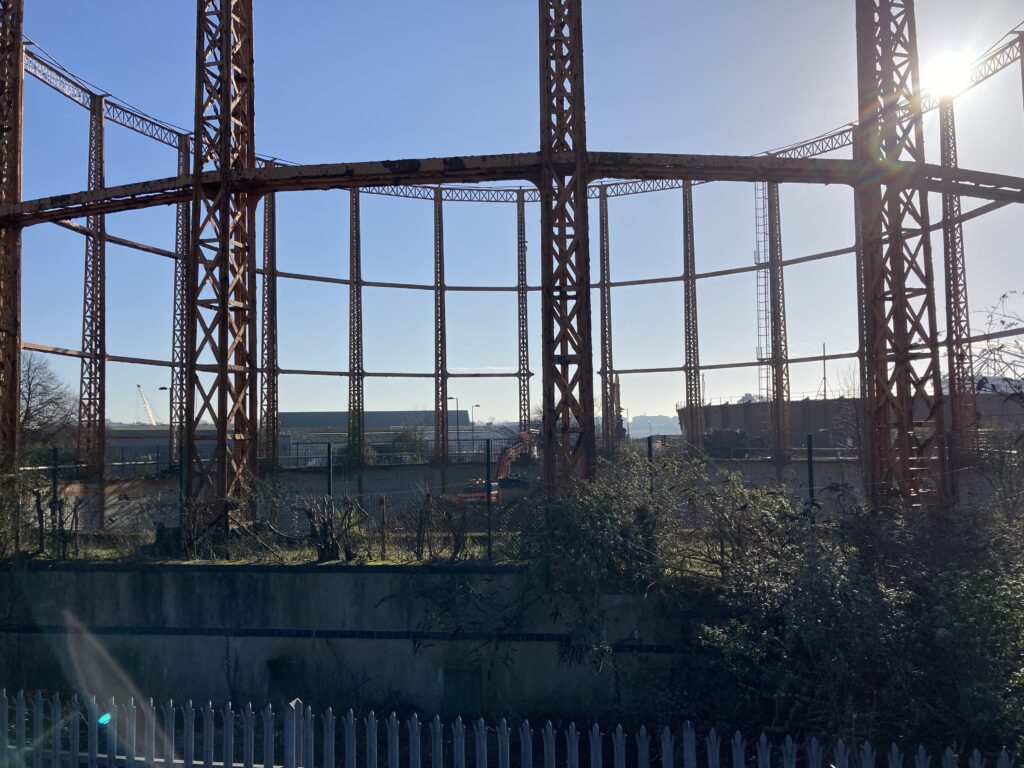
Once I climbed onto the railway bridge, the illusion of normality melted away. Diggers were moving about inside the cradle, and the domed top of the tank was gone. There was no getting away from it. The gasometers really were going. I wondered what my mum would have made of it? Would she have cheered or cried? I was unsure which to do myself.
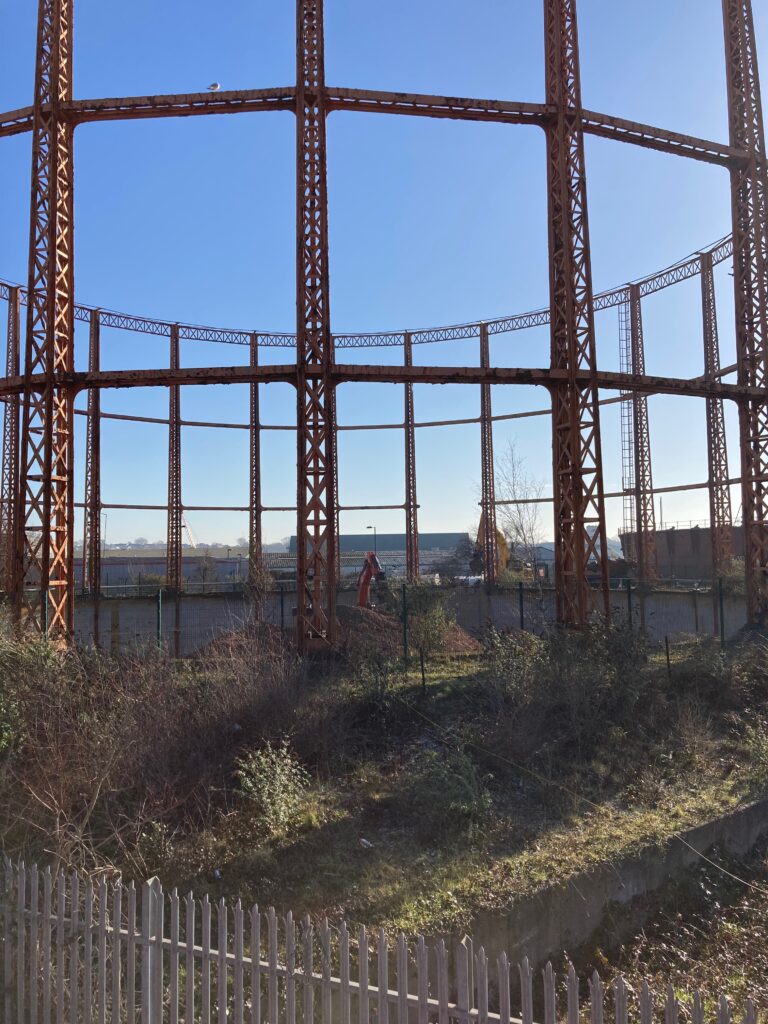
Southern Gas Networks wanted to get rid of the Northam gasometers, but their hands were tied. They were listed buildings. SGN wouldn’t be granted planning permission unless they could show that ‘whatever replaced them was of equal or greater quality’. The council refused several applications to demolish them. Complicating things further, the council believed the remains of an Anglo-Saxon settlement, including a burial site, was somewhere under the old gasworks.

They finally hit a winning plan in 2021. They proposed building four hundred private rental flats, shops, a gym, and even rooftop gardens. The council gave them the go-ahead when they said they would keep elements of the gas holders to acknowledge the site’s history. The twenty-one-story tower block and three smaller blocks should be completed by 2025. I looked through the struts of the railway bridge and tried to picture what it would look like. I failed.

Next, I walked through the covered bridge towards the football stadium. I used to walk this way to work sometimes if I fancied a change. I wanted to see the gasworks from the top of the steps. Once upon a time, there was a bridge here leading to Northam Station. It closed in the 1960s. Now, the only trains passing by are occasional goods trains heading for the docks.

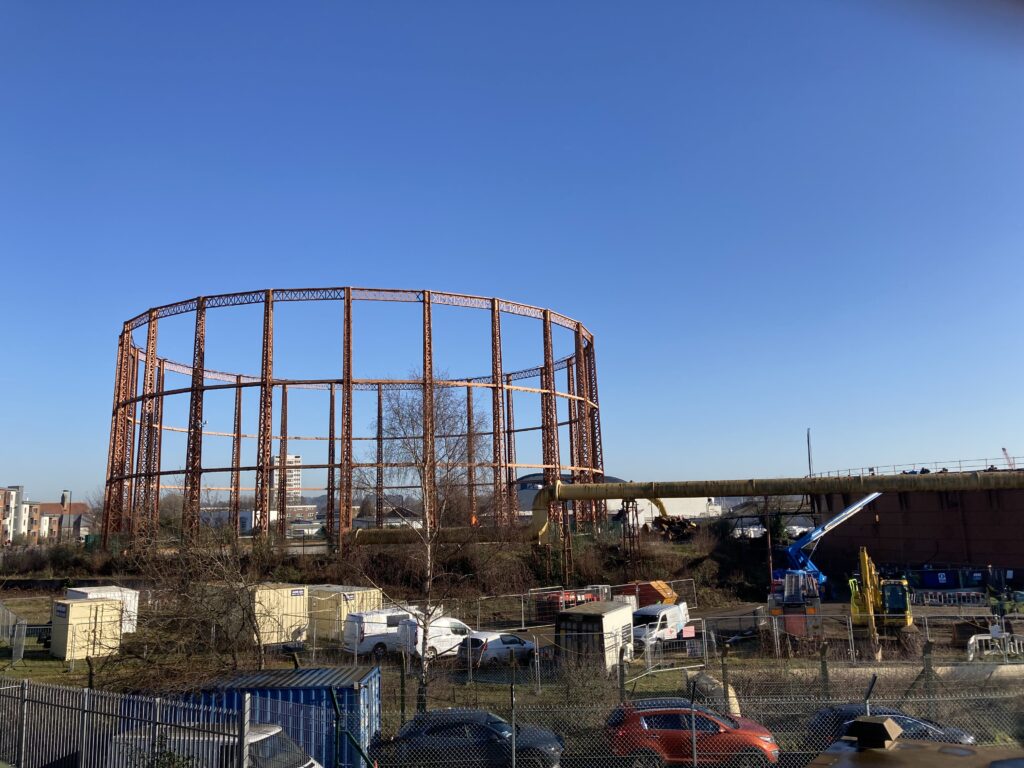
From the steps, I got my first glimpse of the second gasometer, the giant gas pipes, and the cars and equipment on the site. I could see men in hard hats moving about, but not what they were doing. Then I realised a chunk of the side wall of the second gas tank was gone.
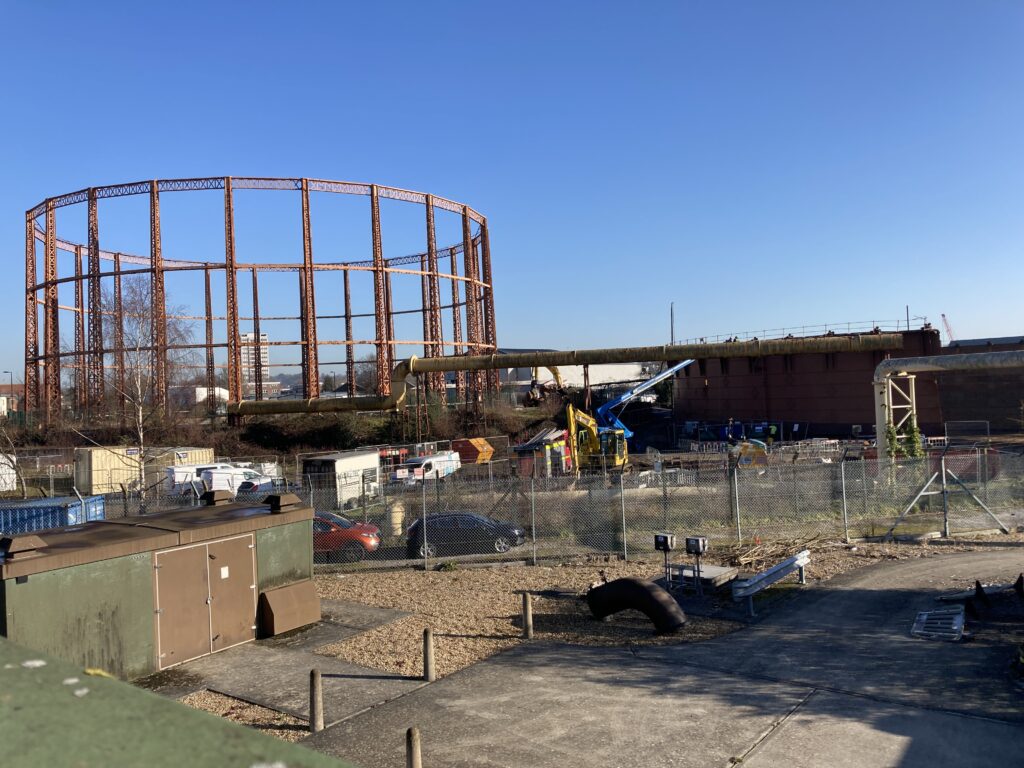
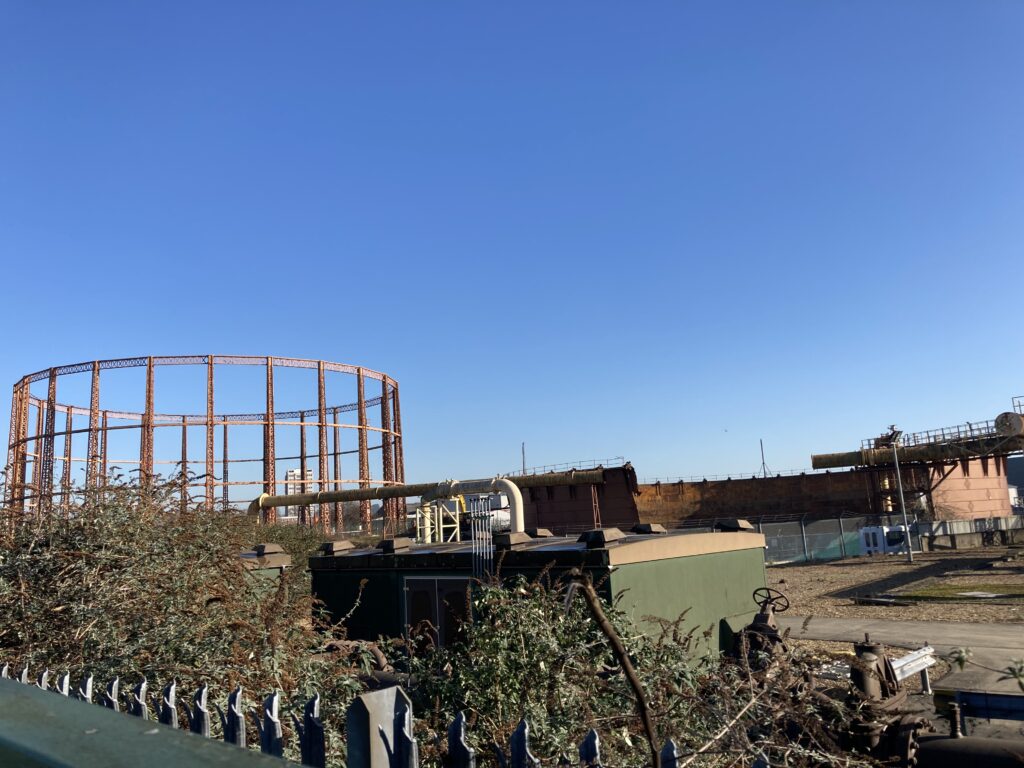
A few steps down and I saw, a hole had been cut in the far side of the tank. I could see right through onto Britannia Road. For a long time, I stood and gawped at it, trying to comprehend what I was seeing. It didn’t seem real.

I walked down the last steps thinking about all the years the gasometers had dominated the Northam skyline. In 1940, the Germans marked the gasworks on their map as an important target. On 26 September 1940, fifty planes dropped bombs on the town. They hit the Supermarine factory at Whites Yard, Peartree Avenue, Bitterne, the docks and the gasworks. Fifty people died. Eleven bombs fell on the gasworks, and two air-raid shelters on the site suffered direct hits. Eleven workers were killed. Several houses on Melbourne Street were also hit, killing thirteen residents. Had they hit the gasometers, it would have been far worse. Northam might have been wiped off the map.
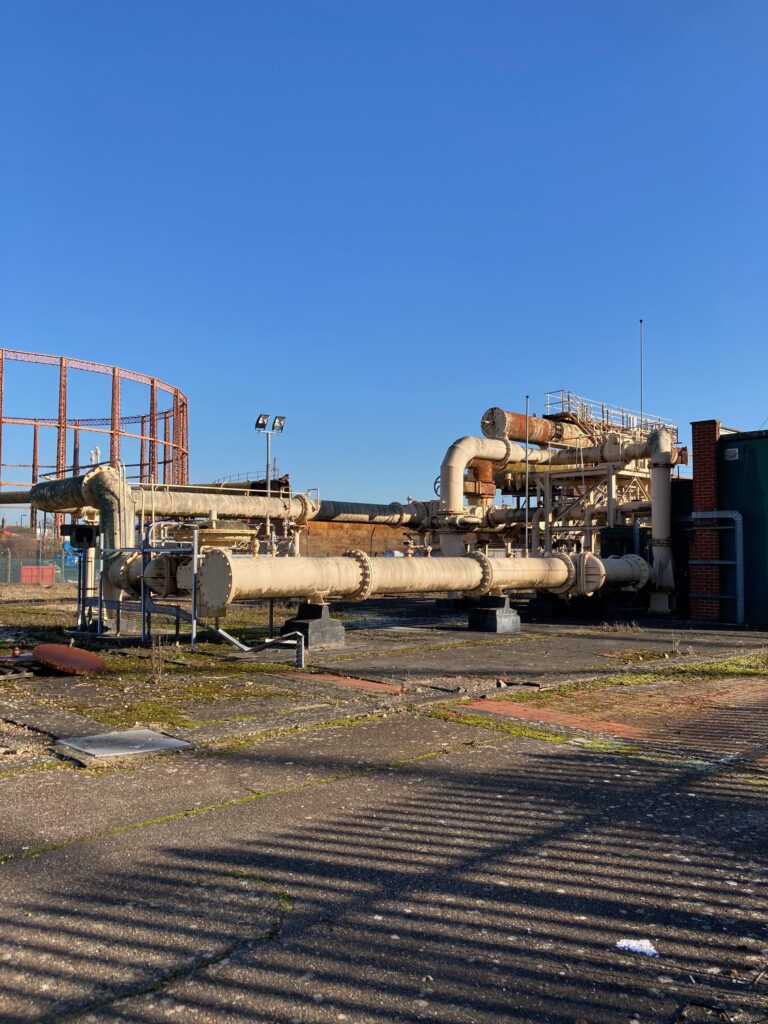
Most of the old gasworks site is long gone. They built St Marys Football Stadium on a part of it, and the rest is now industrial units. The old gasometers are the last remains. Soon they will be gone too. As I walked past the stadium towards Melbourne Street, I imagined a blonde-haired boy and a copper-haired girl playing in the gasworks’ shadow — my mother, Gladys, and her brother, Bobby. What would they make of this place if they could see it now?


If you like what I write, and you’re interested in my novels are available now on Amazon in paperback, on Kindle and via Kindle Unlimited. Check out my Amazon page here and my Goodreads page here. If you would like to help me keep writing, you can now buy me a virtual coffee by clicking on the little orange coffee cup at the bottom right.
I’ve read that in the early years of flying a large, white arrow was painted on the dome of the gas holder. The arrow pointed north, directing pilots to the airfield at Eastleigh.
That wouldn’t surprise me at all.
I worked for the Gas Board from 1968 when the gas works were closing. I was with a number of former works men who had transferred to other departments and I was fascinated by their tales.
They used to tell me the the first thing they looked for on the way to work was the height of the holder because that was an indication of how hard they were going to have to work on that shift.
I used to like crossing the bridge and being surprised by how high or low the holders were.