
When I was writing A Dish Best Served Cold, I needed a fancy cafe where Arthur could hang out. A search of the 1935 Kelly’s Directories showed me a long list of options, but more research told me The Bungalow Cafe, at 157 Above Bar Street — billed as ‘the most up-to-date restaurant in Southampton,’ was the sort of place a show off like Arthur would love. ‘He enjoyed having a pageboy open the door for him. The art déco interior, live music, and waiters ready to cater to his whims made him feel important. This place echoed his aspirations — upmarket, modern, vibrant’. My quest to find out more about it, to paint a picture of Arthur’s regular visits and some of the defining moments of his story, uncovered an interesting tale.
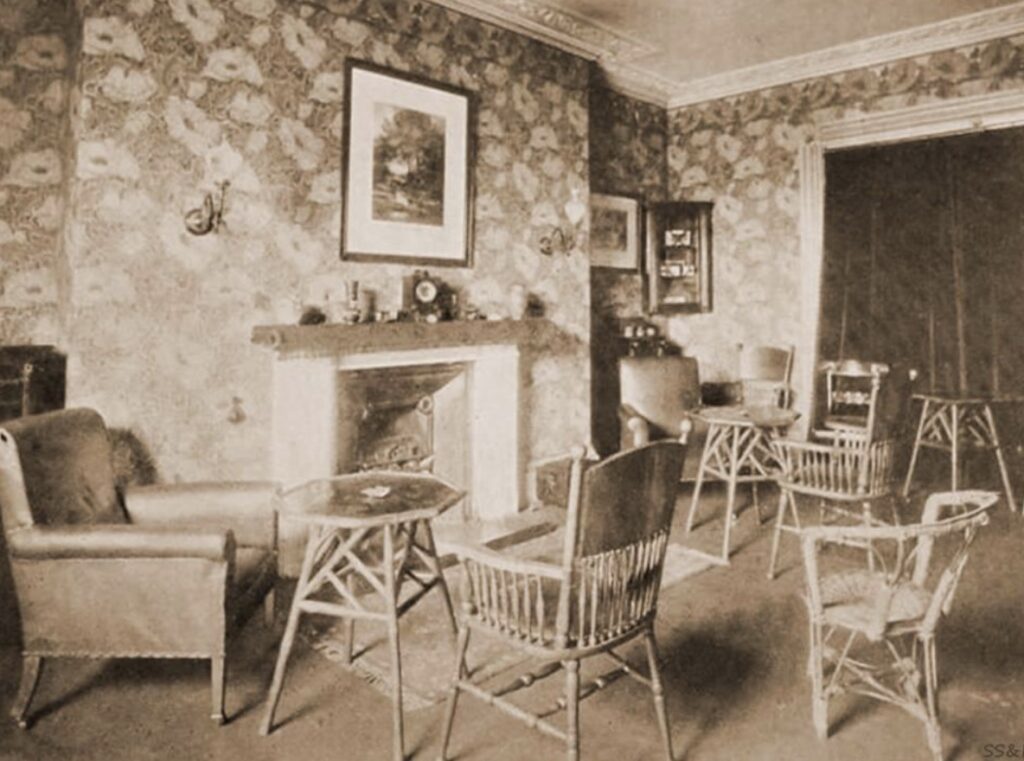
Sadly, 157 Above Bar Street no longer exists, but it was roughly where Guildhall Square is today. In 1907, it was a refreshment room owned by Miss Avery Campion, a forty-two-year-old spinster from Blisworth, Northamptonshire, and Miss Ella Stuart. They decorated it with floral wallpaper, hung pictures on the walls, stood ornaments on the mantlepiece, and furnished it with the things you’d find in a genteel home of the time. The ladies served breakfast, luncheon and afternoon tea, and produced homemade cakes, marketing their establishment as somewhere shoppers could take a break. The pleasant surroundings enticed The National Union of Women’s Suffrage Societies to hold meetings there. For the gentlemen, they even provided a separate smoking room.

By 1912 Miss Stuart had disappeared or retired, and Miss Campion rebranded her refreshment rooms as a cafe. It was the only cafe listed in the Southampton Kelly’s Directory — the first in Southampton. In around 1920, Miss Campion renamed her cafe, The Bungalow Cafe, perhaps in response to the growing competition. There were now three other cafes in town, the Cadena Cafe at 33 Above Bar Street, Sinclair N at 114a East Street, and Miss Farrow’s White Rose Cafe at 153 High Street.
Avery Campion died on 25 March 1924, at Grosvenor House, Grosvenor Square, a nursing home. She was 59 years old. Her estate passed to her youngest sister, Lottie Wesley Campion, and Francis Wilhelmina Thynne. Lottie was forty-three and unmarried. Francis was fifty-four and also a spinster. In 1911, she had been living with Miss Campion at Whincroft, Omdurman Road, Highfield, and was listed on the census as a servant and secretary. Whether Lottie and Francis took over the running of the cafe or sold it as a going concern isn’t clear. Either way, the name lived on, and the business went from strength to strength.

Cafe culture really must have captured the public imagination, because by 1925 there were no less than eight other cafes in Kellys, and they listed the Bungalow Cafe as having two addresses, 157 Above Bar Street and West Marlands Road. In fact, West Marlands Road was just a back entrance to the cafe as the building stretched between the two streets. There was also a listing in the 1925 Kelly’s directory for The Bungalow Cafe Bakery at 1 Howard’s Grove, Shirley.

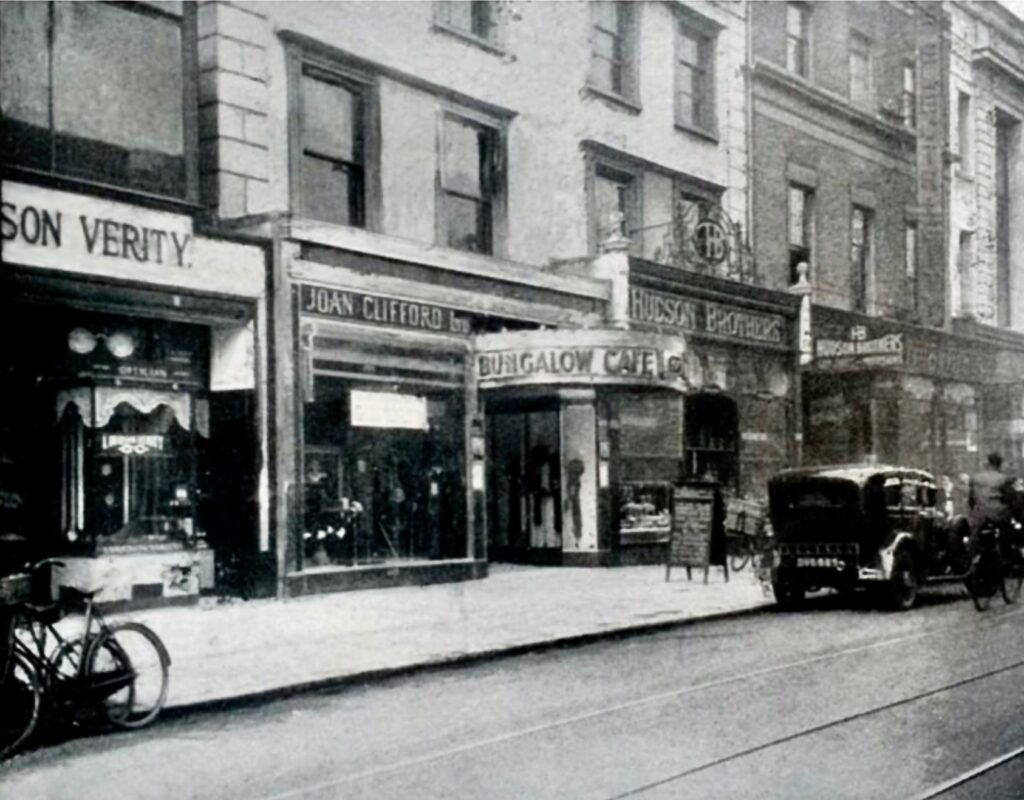

By 1931, there were a dozen cafes in town, and the Bungalow Cafe had branched out. No less than five new Bungalow Cafes had opened. At 231 Portswood Road a Bungalow Cafe, run by Mrs Head, was sandwiched between Boots the Chemist and Melville Quarm confections. The Shirley Bungalow Cafe was at 2 Gordon Buildings, on the north side of Shirley High Street between Shirley Avenue and Howards Grove, where the Plested Pies shop is today. There were two Bungalow Cafes in Eastleigh, one at Regal Theatre on Market Street and the other at 1d Leigh Road. Whether these other cafes belonged to Lottie Campion and Francis Thynne, were franchises, or were just cashing in on a famous name, isn’t clear.


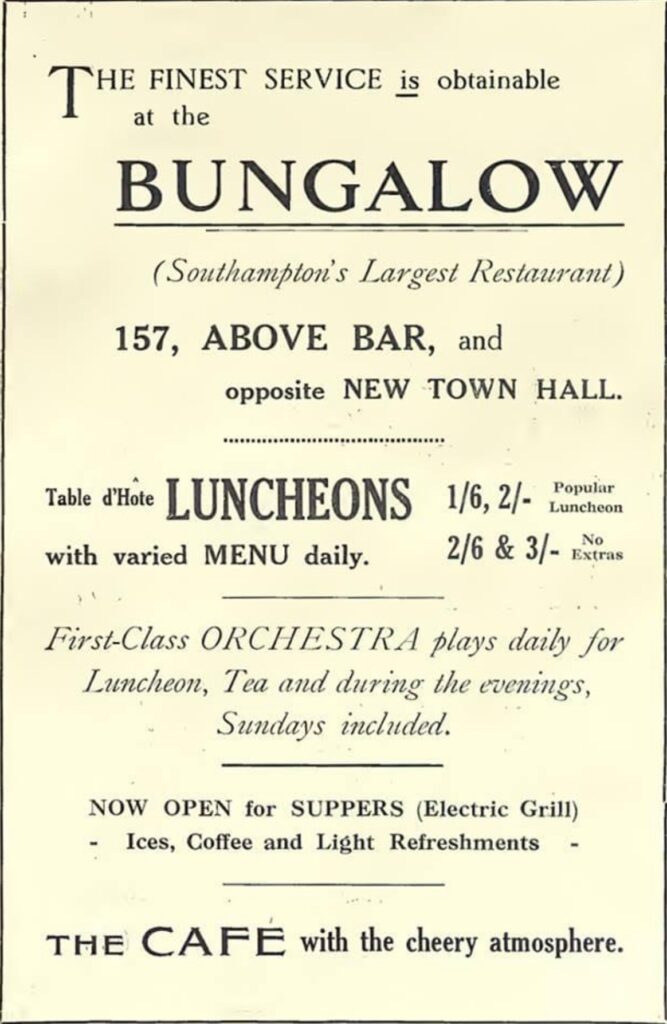
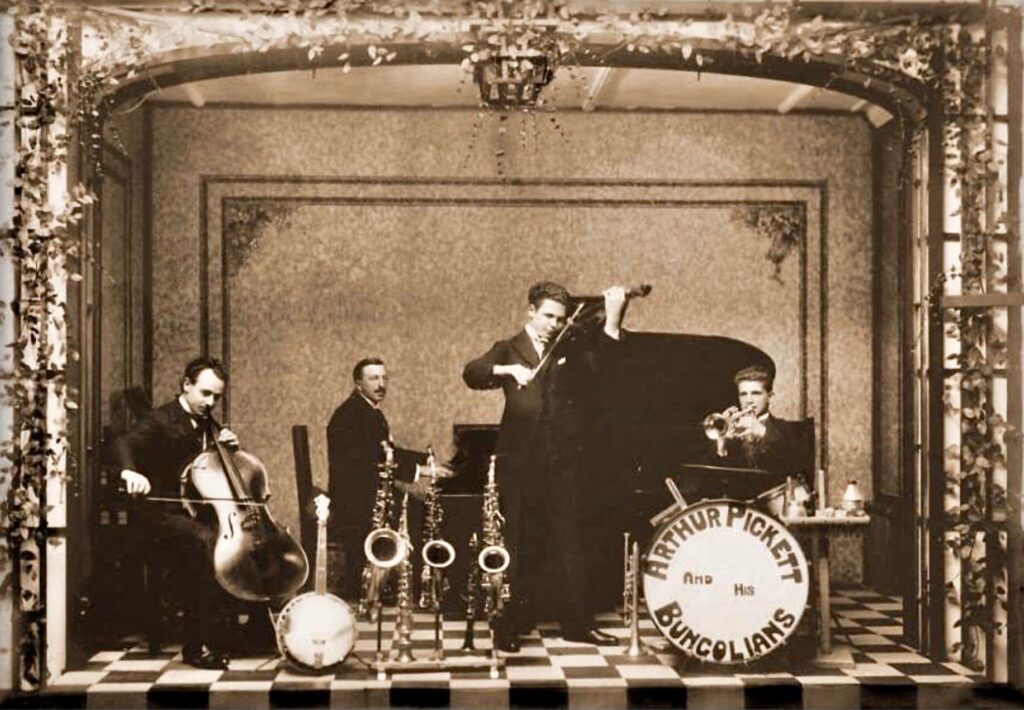
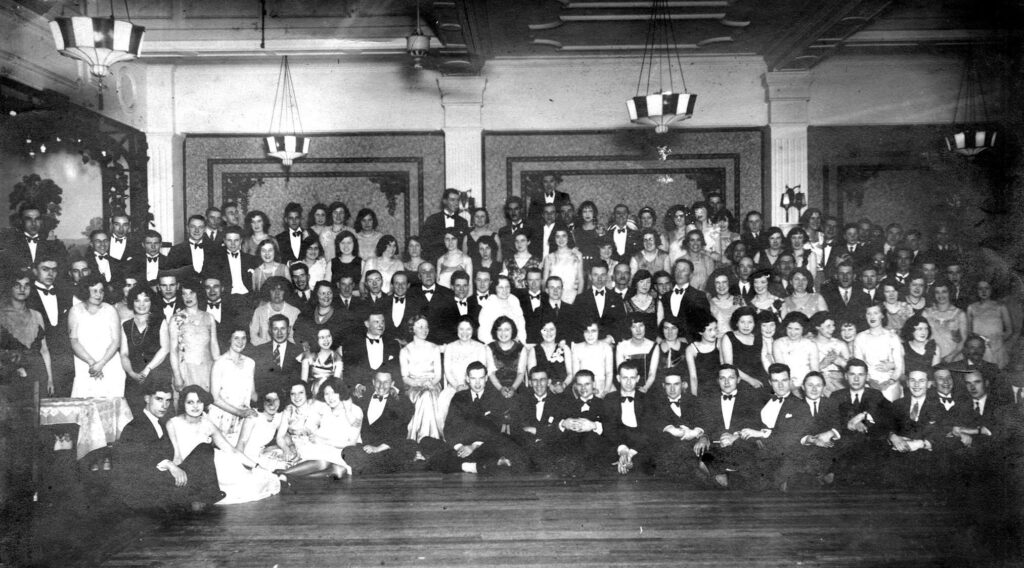
By 1935, when A Dish Best Served Cold is set, cafe culture was all the rage, and there were twenty-five cafes listed in Kelly’s. The Bungalow Cafe in Above Bar may have been the largest restaurant in town, but it had to stand out to beat the competition. Amongst the innovations introduced were uniformed doormen, wine waiters, bellboys, electric lighting, air conditioning, an electric grill and a soda fountain. The decor went from homely floral wallpaper to art déco, with wicker tub chairs, marble columns, and rows of intimate tables. Live music was an additional attraction. Local musicians like Fred Walton, Harry Lawrence, Arthur Pickett, Gill Hulme and Sidney Payne played on a stage overlooking the diners and Ivy Benson’s Ladies Band made guest appearances. The ‘Music and Food for every Mood’ was so popular that the BBC regularly broadcast the bands playing there on Saturday afternoons. The spacious restaurant could also be used as a ballroom or for whist drives and other events.


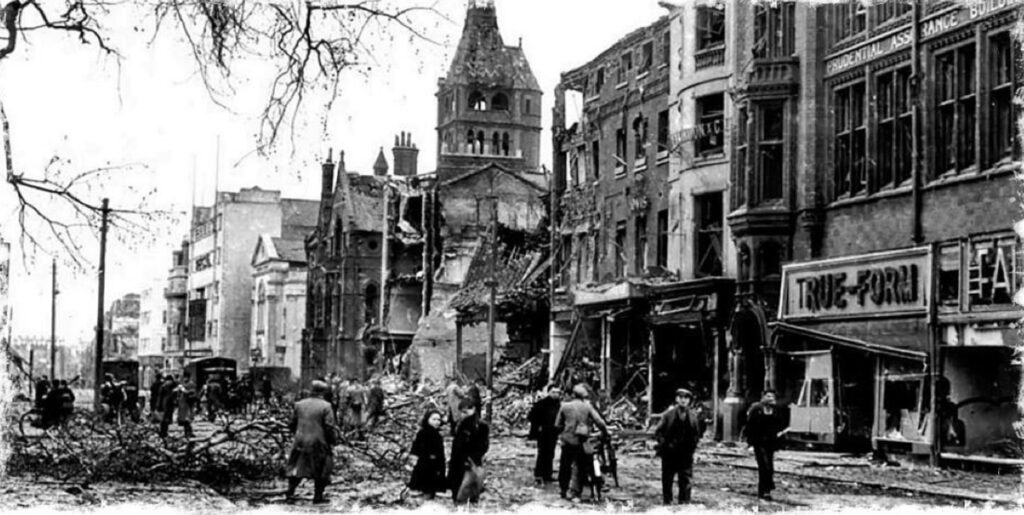
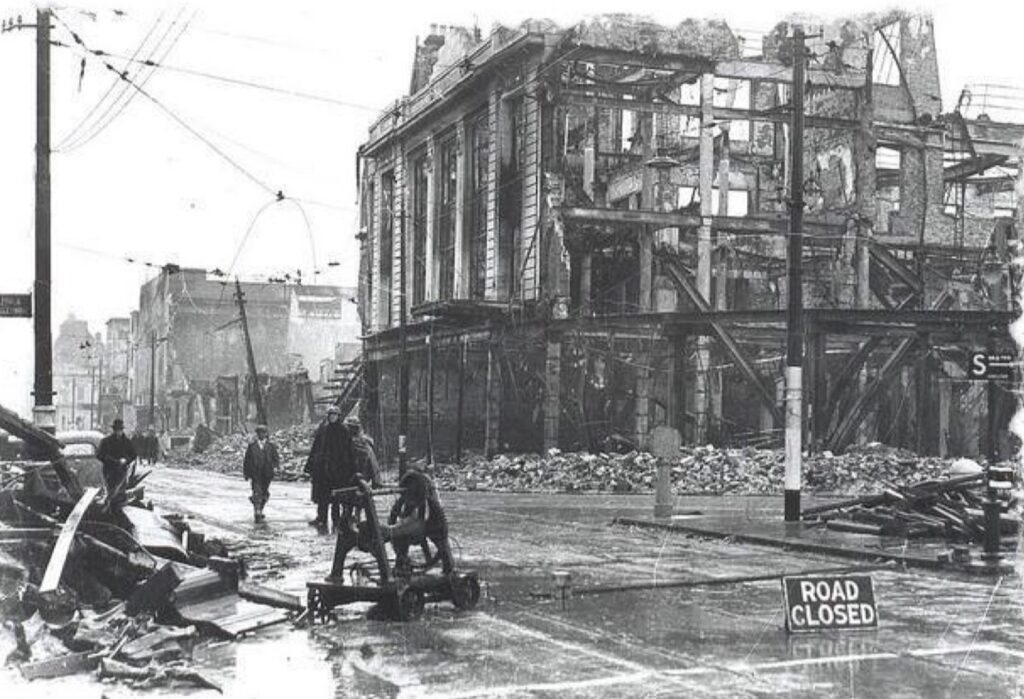
When war came, there were thirty-three cafes in Southampton, but the Bungalow Cafe was the place to see and be seen. It all changed on 11 March 1941 when, according to the Daily Echo, ‘A brilliant moon shining out of a clear sky enabled the raiders, who came in an almost non-stop procession for several hours, to operate without using flares. The conditions also favoured anti-aircraft gunners, who put up a heavy barrage. Buildings damaged or destroyed included a church, three schools, flats over a cinema, a club and a vicarage… ‘ The Luftwaffe devastated Above Bar that night. Two fire watchers were killed, Frank Davidson, at Godfrey and Co, 87 Above Bar, and Robert Lavington, at Prudential Buildings, very close to the Bungalow Cafe. The next morning may well have been when my father-in-law, Albert, recalls ‘walking along Above Bar and seeing smouldering bolts of cloth alongside the road whilst firemen were still hosing down the ruined buildings.’

The Cadena Cafe and the Bungalow cafe, both on Above Bar Street, were gone, and Southampton would never be the same. A year after the war ended, there were forty-six cafes in the town, but Southampton never saw the likes of the Bungalow Cafe again. It was the end of an era.


If you like what I write, and you’re interested in my novels are available now on Amazon in paperback, on Kindle and via Kindle Unlimited. Check out my Amazon page here and my Goodreads page here. If you would like to help me keep writing, you can now buy me a virtual coffee by clicking on the little orange coffee cup at the bottom right.
I was interested at the mention of the Ivy Benson Ladies Band, as in the early 1960s I was a singer with the Ivy Benson Girls Orchestra, travelling to Germany to perform at an AmericanArmy base.
I was born in 1941, so didn’t see the Bungalow Cafe before it was destroyed.
Interesting reading – thank you!
Glad to have brought back some good memories. I wish I’d seen the Bungalow Cafe too.
I posted this on my page this morning, splendid and detailed research on social life in Southampton between the wars. A most enjoyable read. Most of knowledge about town life during that period I obtained from my mum. A Chapel girl born in 1912, she grew up in the 20/30s, as a Pirelli girl, cafe life was a must for her and her “gang” on a Saturday. Kim’s Kosy Korner was the regular meeting place, sometimes the Cadena. If it was a birthday or a special occasion the girls pushed the boat out and took tea at the Bungalow Cafe, after a bout of shopping. Their Saturday afternoon ended up with a matinee at the Grand or at a cinema. One regular haunt was the Picture House on Above Bar Street, it had a roof top terrace and a cafe overlooking the park. You could also be served afternoon tea as you watched the film. These Saturday afternoons exhausted most of the girl’s wages, they survived on very little until the next, early awaited, Saturday afternoon “in town”.
Thanks Rod. What wonderful memories from your mum! Mine told me about the Saturday morning cinema with her brother, the Perils of Pauline, with a cliffhanger every week. She worked in Amey’s laundry in Portswood. She never mentioned cafes, but my dad was a fair bit older than her (7 years) and had a motorbike, so I think their courting days were spent further afield.
Hi, I wondered whether the photo of the bungalow stage came from, of Arthur Pickett and his band? Arthur was my great-grandfather! I’d love to know any more information that might be available or perhaps get a higher-resolution copy of the picture.
Hi Ruth. I’m afraid the photograph was one I saved to use as inspiration as I wrote. I think it may have come from Sotonopedia or a local history Facebook group, but I am not sure which. It might be worth trying on Southampton Heritage Photos or SEE Southampton to see if anyone has any more information. It’s surprising what odd things people know.
Hi Ruth,
My father Phil Kahn played the cello in Arthur’s band.
I will try to send you a photo.
David
Thank you.
I was delighted to read your article about The Bungalow Cafe. My mother used to work there in Southampton before the war she used to tell me stories about her time there.
Glad to have brought back some happy memories. I’d love to hear those stories.
My Dad Phil Kahn and his orchestra played at the Bungalow in the early thirties
Such a shame it was lost to the blitz. I should love to have seen it.