
The glorious ruined church, St Dunstan in the East, might have been the highlight of our whistle-stop tour of London back in May, but our visit didn’t end there. We found a path to the River Thames beside the church of St Magnus the Martyr. This church, founded in the early twelfth century, was one of the first buildings destroyed by the Fire of London. Christopher Wren rebuilt the current incarnation. With a little more time on our hands, we might have looked inside. As it was, like Nancy in Oliver Twist, we passed it by. Being in the middle of final edits on Seventh Daughter, the connection with the Dickens’ classic my Nancy had read with Sam seemed fitting.
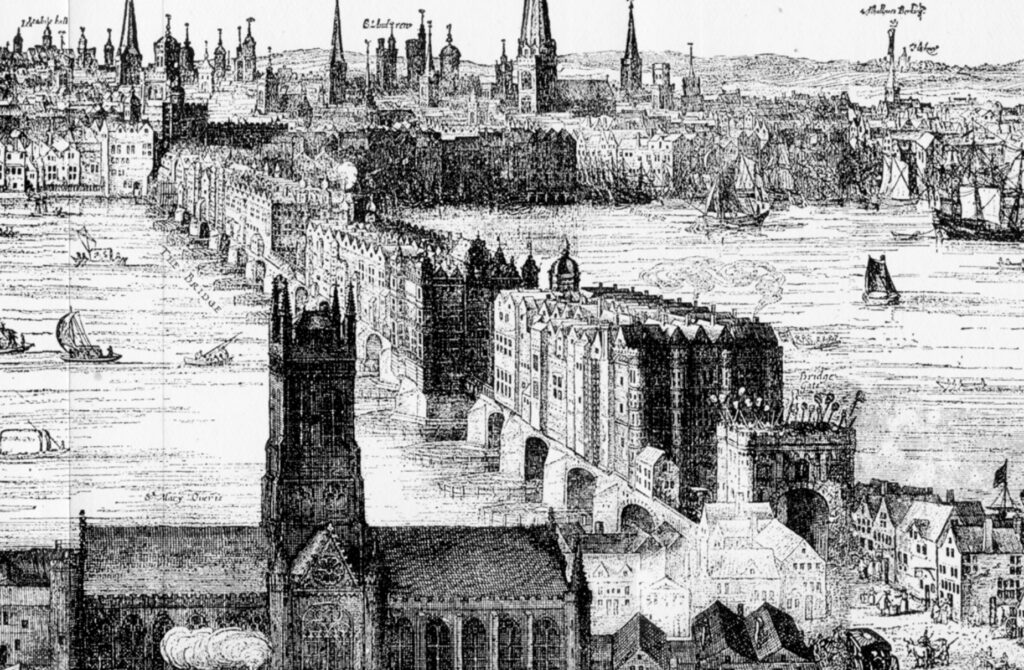
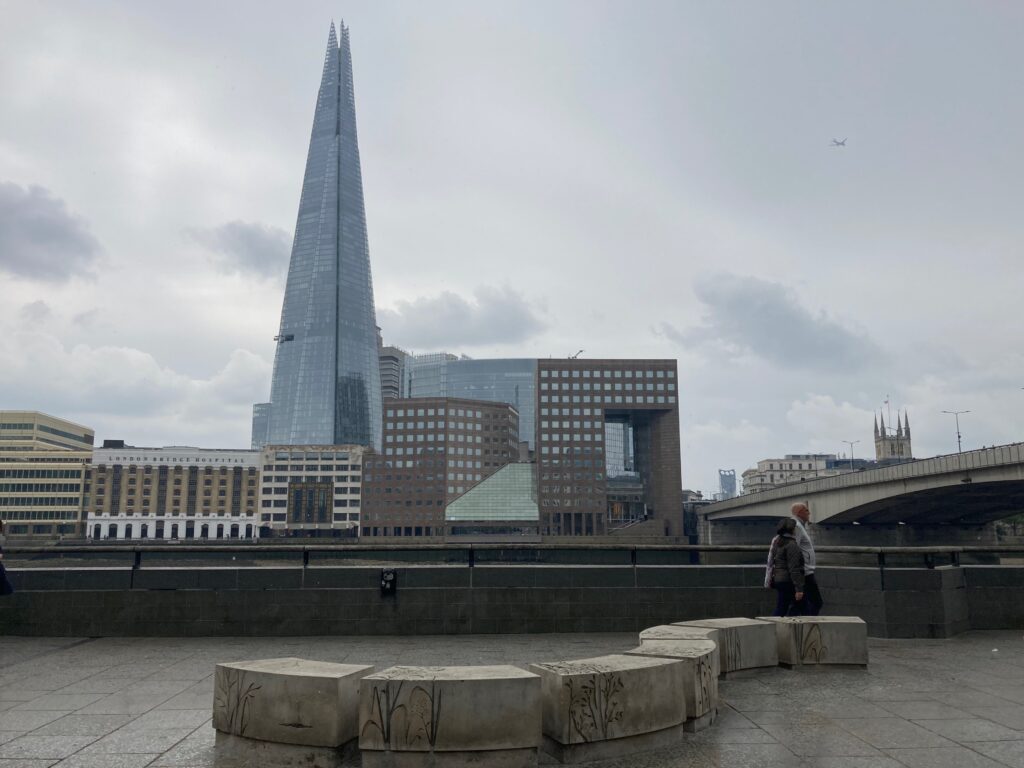
Our walk between the buildings to the river was uneventful, although we saw two pugilists training on the grass. At least I think they were training. The path took us to Grant’s Quay Wharf. To our right, we could see London Bridge, and ahead, the tall, jagged spire of The Shard. Of course, in Dickens’ day, there was no Shard, and the bridge was very different.
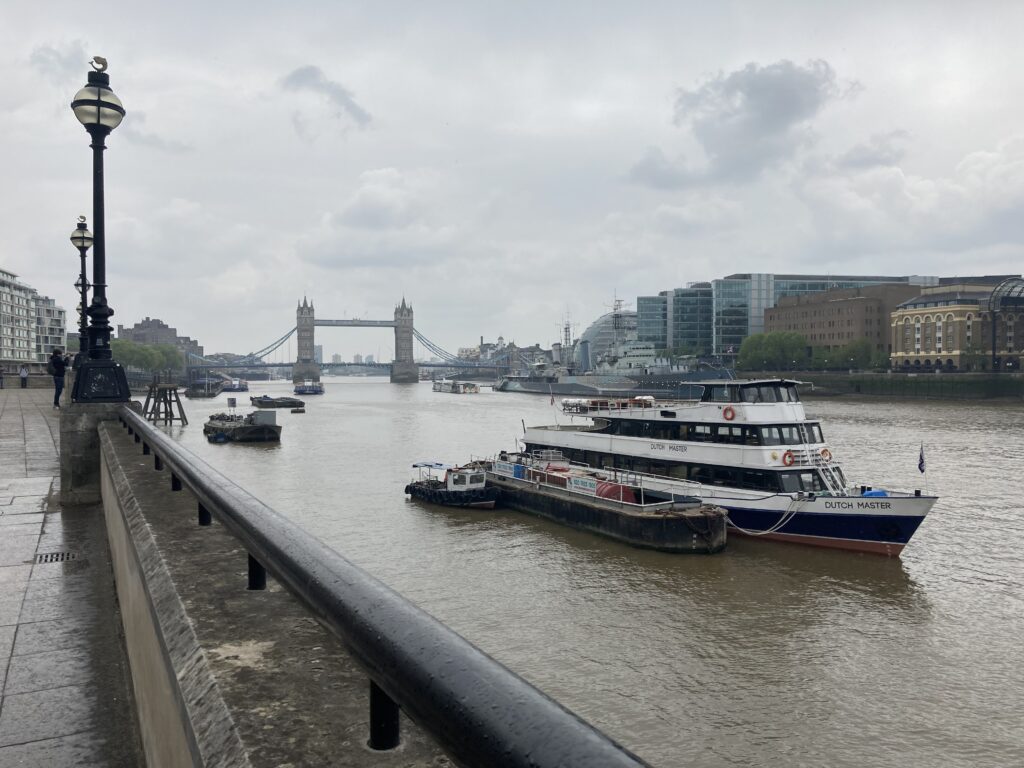
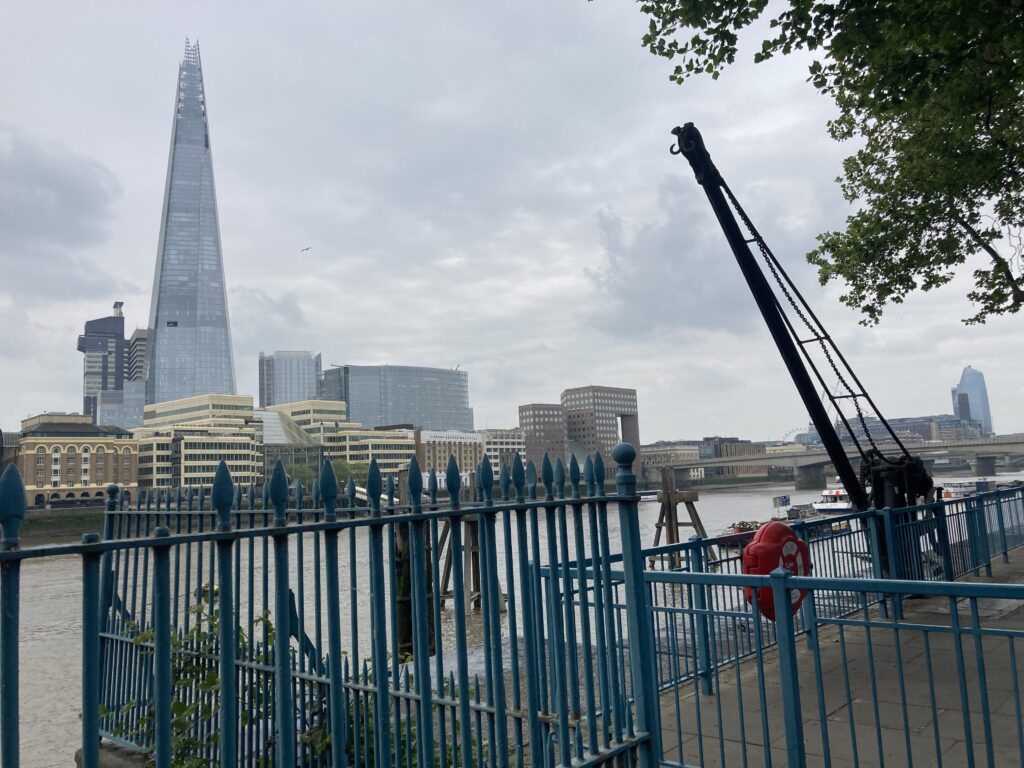
Our first sight of the Thames coincided with the first drops of rain. As we walked towards Tower Bridge, we pulled up our hoods and crossed our fingers, hoping it would be nothing but a shower. The river looked brown and unappealing, and the sky didn’t give us much confidence. Still, there was nothing for it but to keep walking. An old dock crane put a smile on my face despite the rain. I couldn’t help thinking of Percy, Lenny, Albie and Dan, and wondering if these were the kind of cranes they’d have used.
Soon, we came to the gates of the Tower of London. If the rain got worse, we could always change our plans and go inside. Things don’t get much more historic than The Tower of London, after all. The oldest part of the building, the White Tower, was built in 1078, as a home and stronghold for William The Conqueror. Unsurprisingly, it wasn’t especially popular with the Londoners, who resented being conquered. Over the years, various kings added to the tower, most notably Richard I, Henry III and Edward I, but by the thirteenth century, the layout we know today was more or less established.
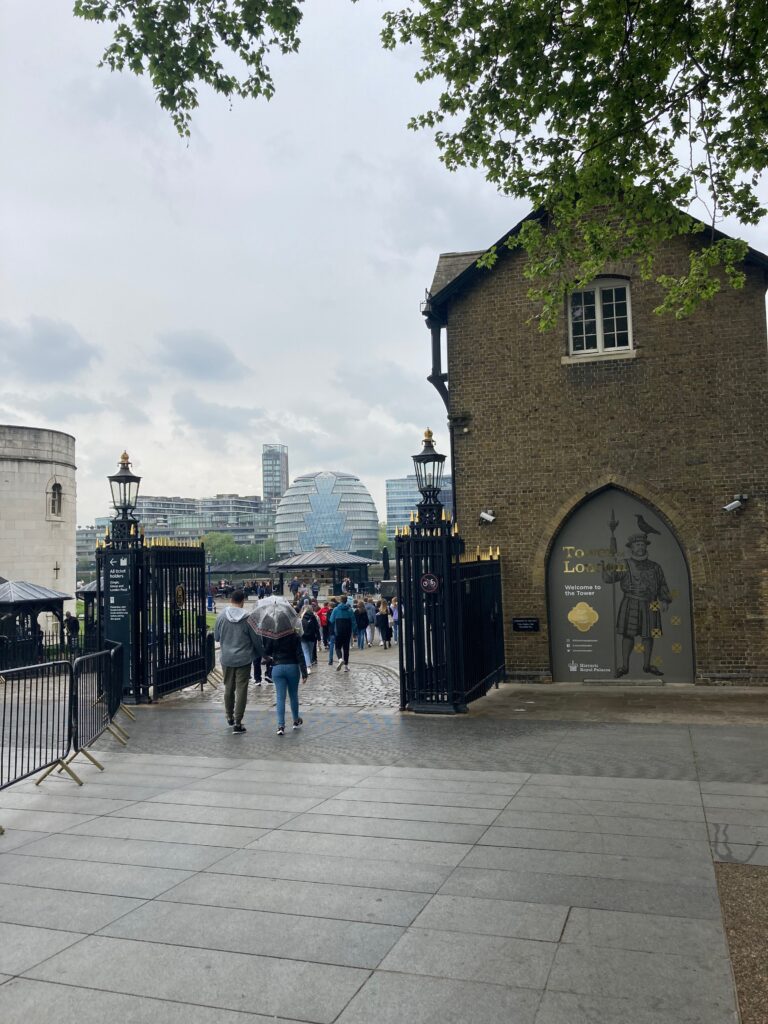
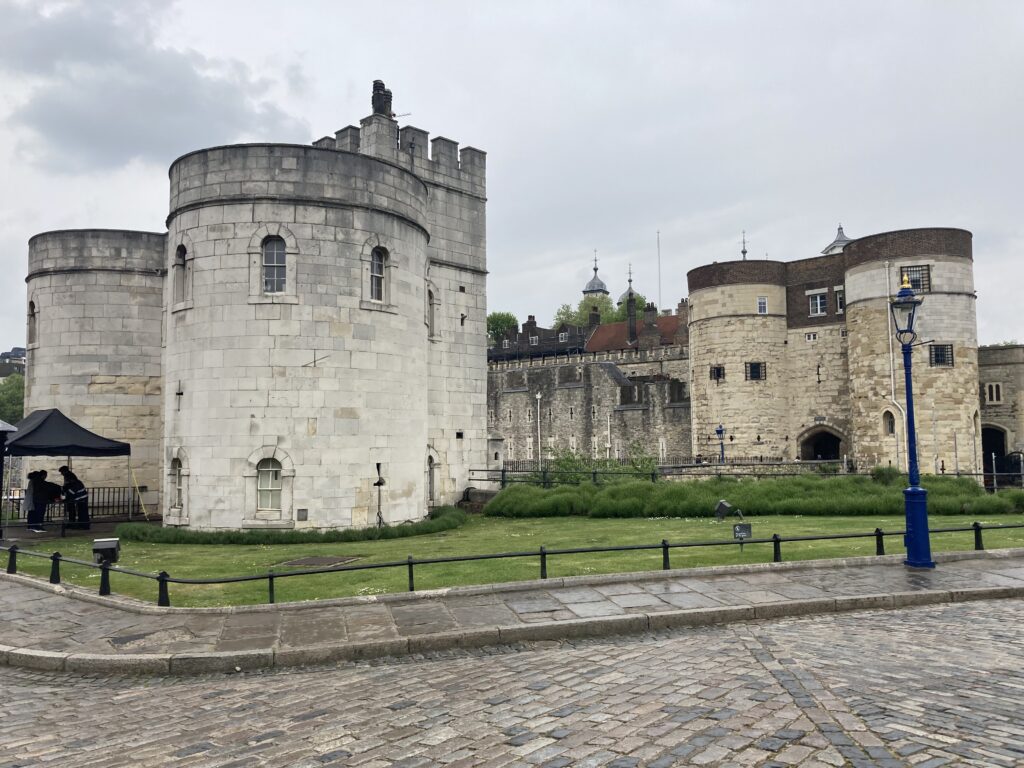
The tower was built as a home for the monarch, but it has served many other purposes over the years. It has been an armoury, menagerie, and public record office. It was also the home of the Royal Mint and the Crown Jewels. The Royal Mint remained in the tower until the 1960s, when it moved to Glamorgan, in Wales. They keep the Crown Jewels in the tower to this day, although recently, the crown, orb and sceptre were paraded through the streets during the funeral of Queen Elizabeth II. Of course, back in May, we had no idea that we would see so much of the Crown Jewels in 2022. Until the reign of Charles II, coronation processions started at the tower and ended at Westminster Abbey. It will be interesting to see if our new King Charles revives this tradition.
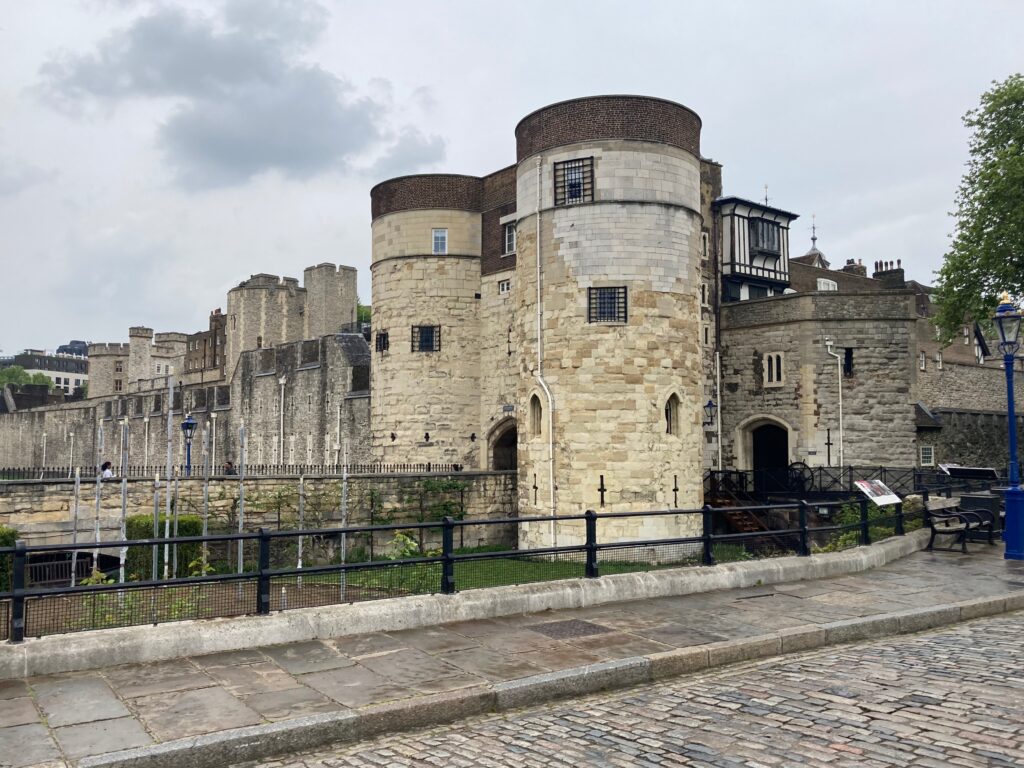
Most people associate the Tower of London with imprisonment and torture. Various kings and queens certainly used it this way. Many were ‘sent to the tower,’ but the most mysterious story is of twelve-year-old Edward and nine-year-old Richard, the only surviving sons of King Edward IV and Elizabeth Woodville. When Edward IV died, his brother, the Duke of Gloucester, became regent. He sent the boys to ‘lodge’ in the tower until Edward was old enough to be crowned Edward V. The coronation never took place. The Duke of Gloucester had the boys declared illegitimate, and stole the crown, becoming Richard III. The princes conveniently disappeared, never to be seen again. Rumour has it that their uncle had them murdered to make sure he kept hold of the throne. Other famous occupants of the tower include Guy Fawkes, Sir Walter Raleigh and his wife Elizabeth Throckmorton, and Queen Elizabeth I before she was crowned.
The tower is also associated with executions, but until the start of the twentieth century, only seven people were executed inside the tower. Three were queens — Anne Boleyn, Catherine Howard, and Lady Jane Grey. Most executions were carried out on Tower Hill, to the north of the castle. During the first and second World Wars, the tower became a prison once again. This time for men accused of spying. They executed twelve spies during this period. The last was Josef Jakobs, a German spy who parachuted into England on 31 January 1941. He landed in a field in Ramsey, Huntingdonshire, near Dove House Farm. During the landing, he broke his ankle. Two farmers spotted him and notified the Home Guard. When he was captured, he was still wearing his flying suit and was carrying £500, forged identity papers and a German sausage. They convicted him under the Treachery Act of 1940, and he was shot by a firing squad on 15 August 1941.

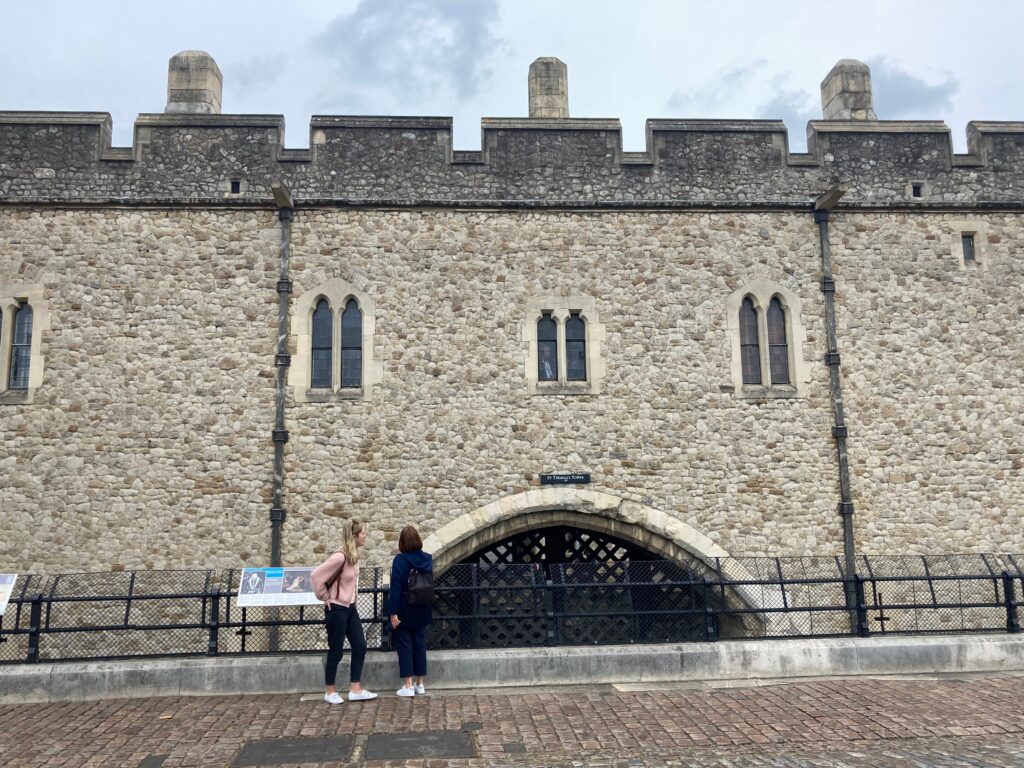
By the time we reached Traitors Gate, the rain had stopped. This was just as well, as entrance to the tower for non-traitors like us is rather expensive. Even today, the gate looks foreboding, although it wasn’t always used for traitors. In fact, Edward I built it as an entrance to the royal family’s accommodation in St Thomas’s Tower. Later, when prisoners came to the tower by barge, they passed the heads of executed prisoners displayed on spikes at London Bridge before they went through Traitor’s Gate. It must have been a chilling warning of their fate.
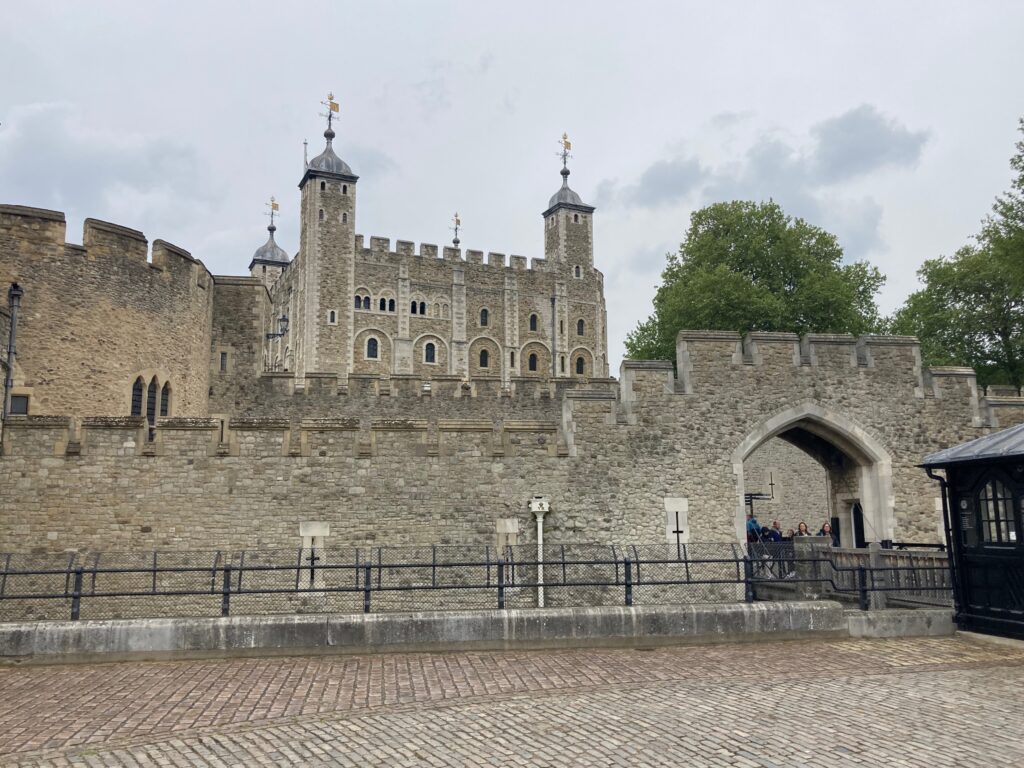
The Kray twins were two of the last prisoners held in the tower. In March 1952, they were summoned for National Service and had to report to the Royal Fusiliers at the Tower of London. Neither was keen on being called up and their visit turned into a fight, during which Ronnie punched the corporal in charge. The brothers then scarpered. The next morning, they were arrested and turned over to the army. Their military careers were brief. They went AWOL again, and were quickly caught. The arrest turned into another free for all, during which the twins assaulted the arresting police constable. After this, they were locked in the tower until their court martial.
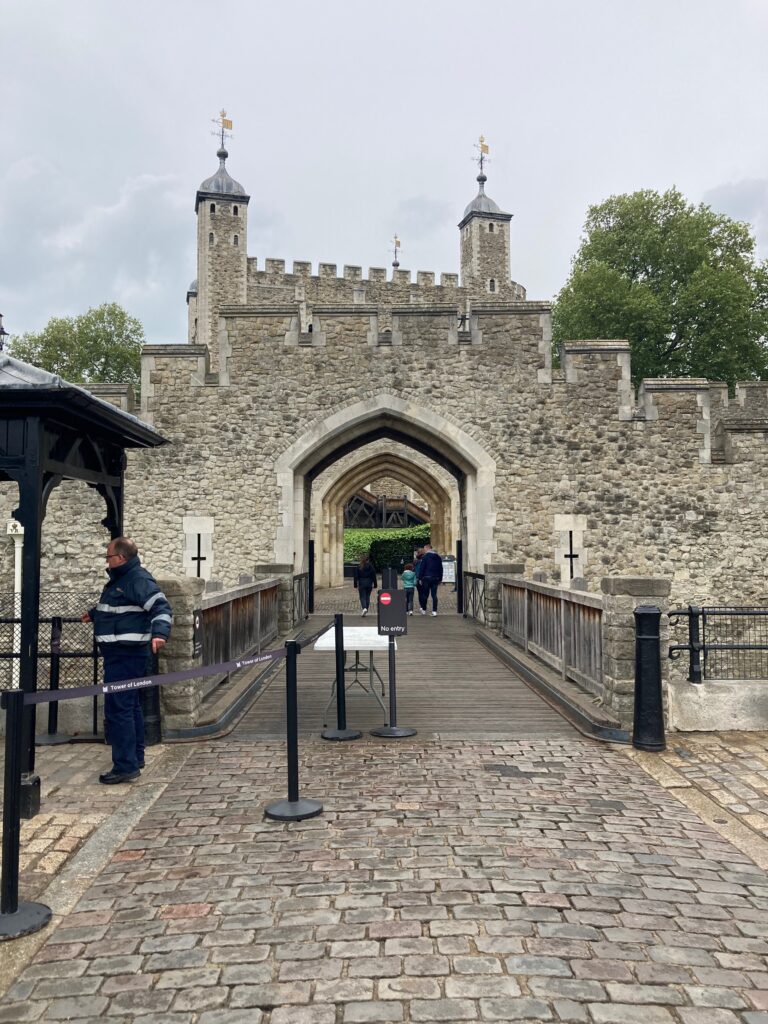
We were now fast approaching another famous London Landmark, Tower Bridge. Designed by Horace Jones to give better access to the East End of London, it was built by John Wolfe Barry and Henry Marc Brunel, and was opened by Edward and Alexandra, the Prince and Princess of Wales, in 1894. It may be one of the most recognisable of London’s bridges, but urban legend has it that, in 1968, when Robert P McCulloch purchased the 1830s-built London Bridge to rebuild it in Lake Havasu City, Arizona, he thought he was buying Tower Bridge. Both McCulloch and Ivan Luckin, who arranged the sale, deny this, but it makes a wonderful story.

After a quick coffee and cake break, we crossed the bridge. The crossing brought back memories for both of us. My memory was of crossing in tears amongst a mass of tired women back in 2013. If you want to know why I was crying, you can find out here. Commando remembered crossing towards the end of his London Marathon in 2015.
The design of the bridge posed a few problems. A fixed bridge would have blocked sailing ships from accessing the port facilities upstream. A Special Bridge or Subway Committee was formed to consider different options. Over fifty designs were submitted. After seven years, they approved a design for a bascule bridge that opened to allow ships to pass. Originally, the mechanism was powered hydraulically, but in 1972, it was converted to an electro-hydraulic system. If you have time and money, you can visit the engine rooms (including the original steam engines) and go inside the towers. We had neither, so we simply walked across. In 1940, during the London Blitz, the bridge took a direct hit, which severed the hydraulic mechanism and stopped the bridge from opening. In 1941, a parachute mine exploded near the bridge and seriously damaged the bascule, towers and engine room. The damage from both incidents was repaired, but in 1942, a third engine, built by Vickers Armstrong, was installed to guard against further issues due to enemy action.
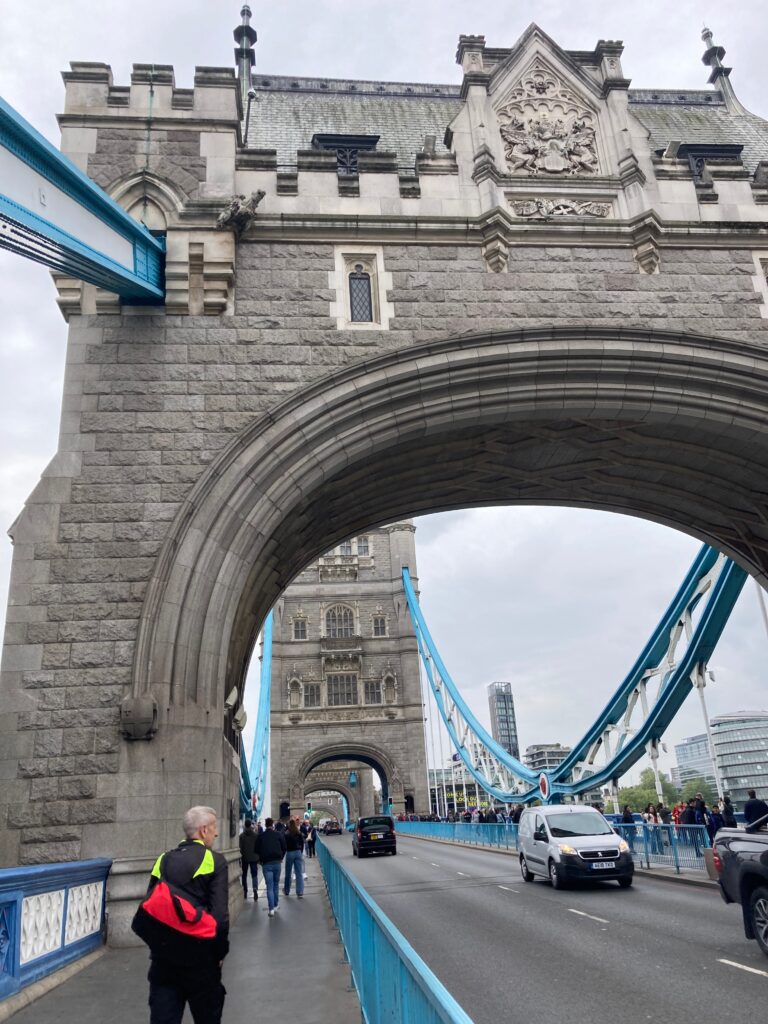
The bridge has also been the scene of several daredevil stunts. Not all of them ended well. On 10 August 1912, stunt pilot Frank McClean flew his Short Brothers S.33 floatplane between the bascules and the high-level walkways. He later flew under London Bridge, Blackfriars, and Waterloo Bridge. In 1968, RAF pilot, Alan Pollock, flew a Hawker Hunter FGA9 jet fighter under the bridge in protest at the lack of a flypast to celebrate the RAF’s fiftieth birthday. He flew beneath the walkway at three hundred miles an hour. When he landed, he was arrested and discharged from the RAF. In 1973, a stockbroker’s clerk, Peter Martin, on bail accused of stock market fraud, flew twice beneath the pedestrian walkway in a single-engine Beagle Pup. He then buzzed buildings in the city. Two hours later, he crashed and died in the Lake District.
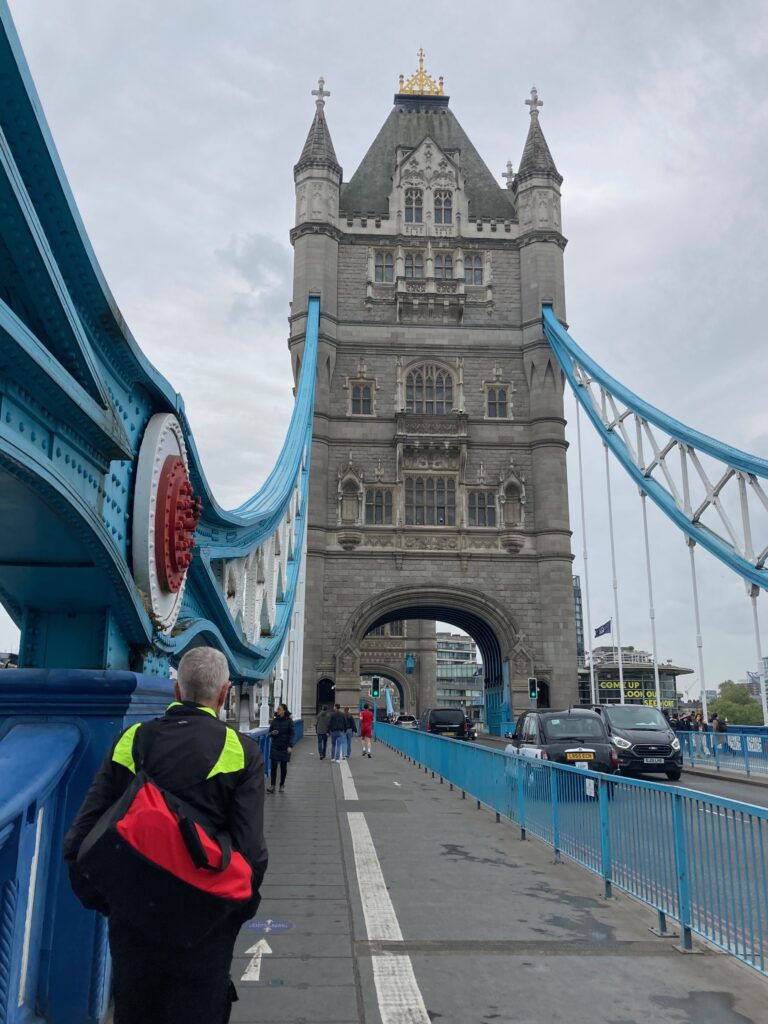
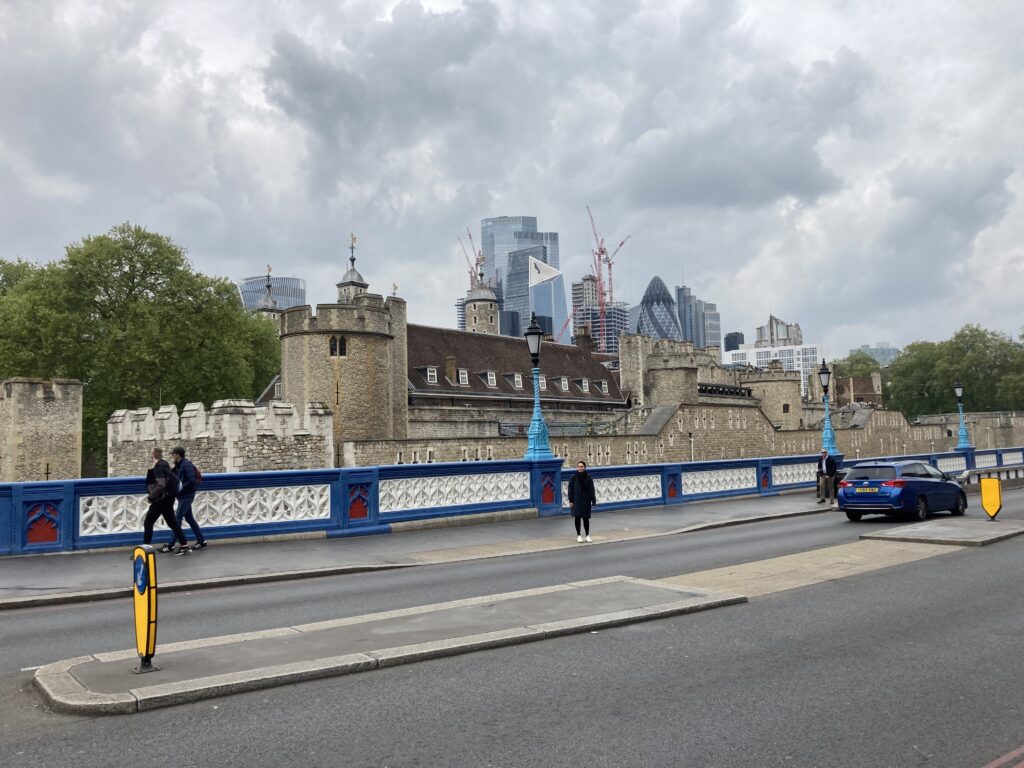
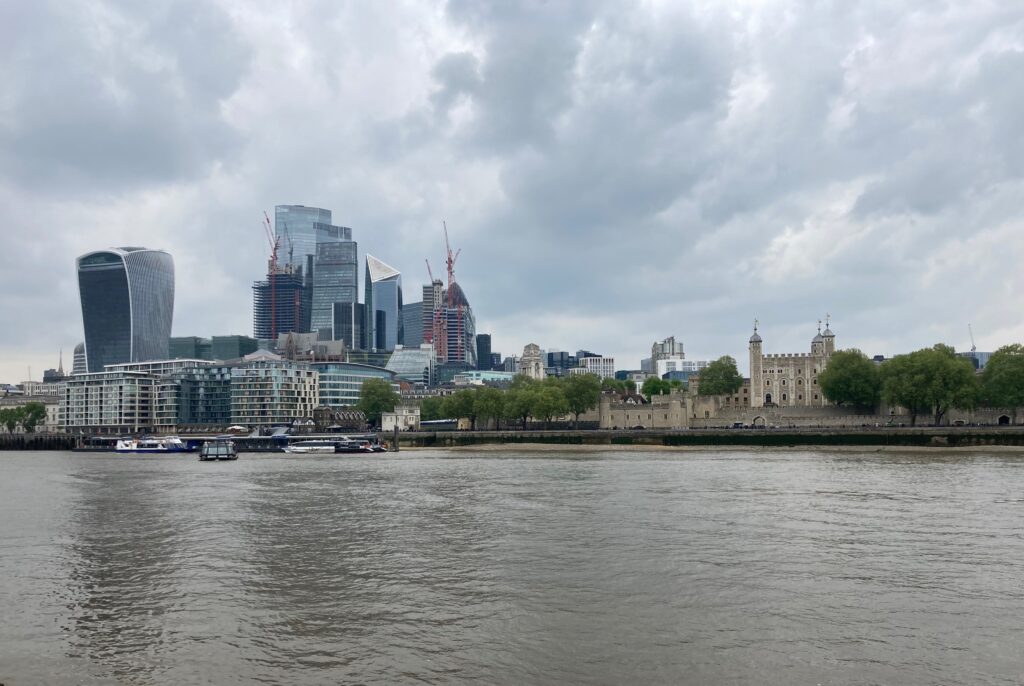
Our walk across the bridge was uneventful, without a plane in sight. Before we continued, we stopped to look across the river at the walk we’d taken. The historic stonework of the Tower of London seemed dwarfed by the cluttered cluster of modern glass and concrete. Something about the modern architecture reminded me of a toy box emptied onto the city. I wonder if these buildings will stand the test of time as well as the old tower?
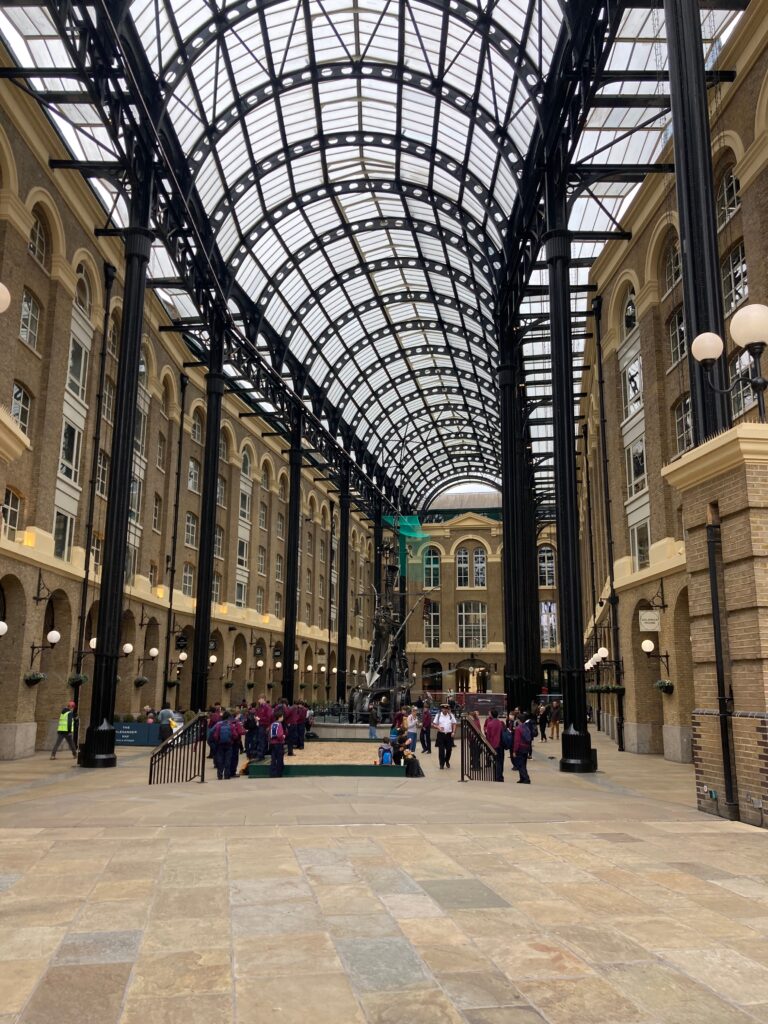
As we walked along The Queen’s Walk towards Waterloo and our train home, we stumbled upon a strange sculpture. Although I’ve walked this way many times, I’ve usually been looking towards the river, so I’d never noticed the sculpture. As a lover of all things quirky, I couldn’t resist a closer look. Later I discovered the ship-like piece had been in Hay’s Galleria since 1987 and is called The Navigators. It is the work of David Kemp.

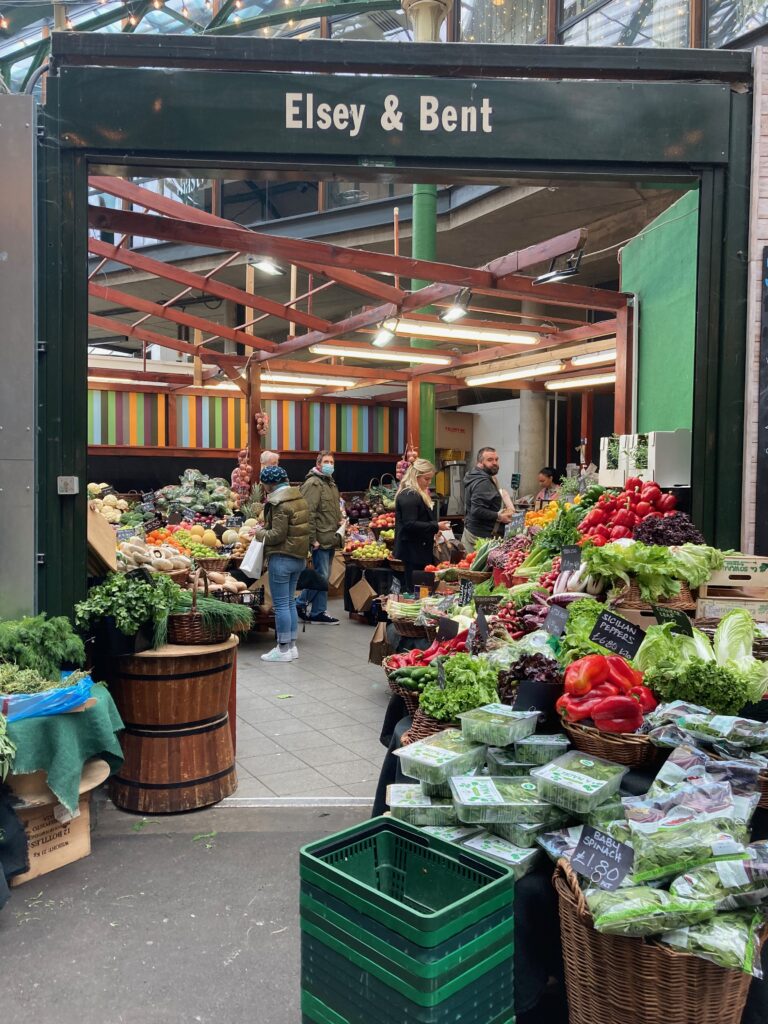
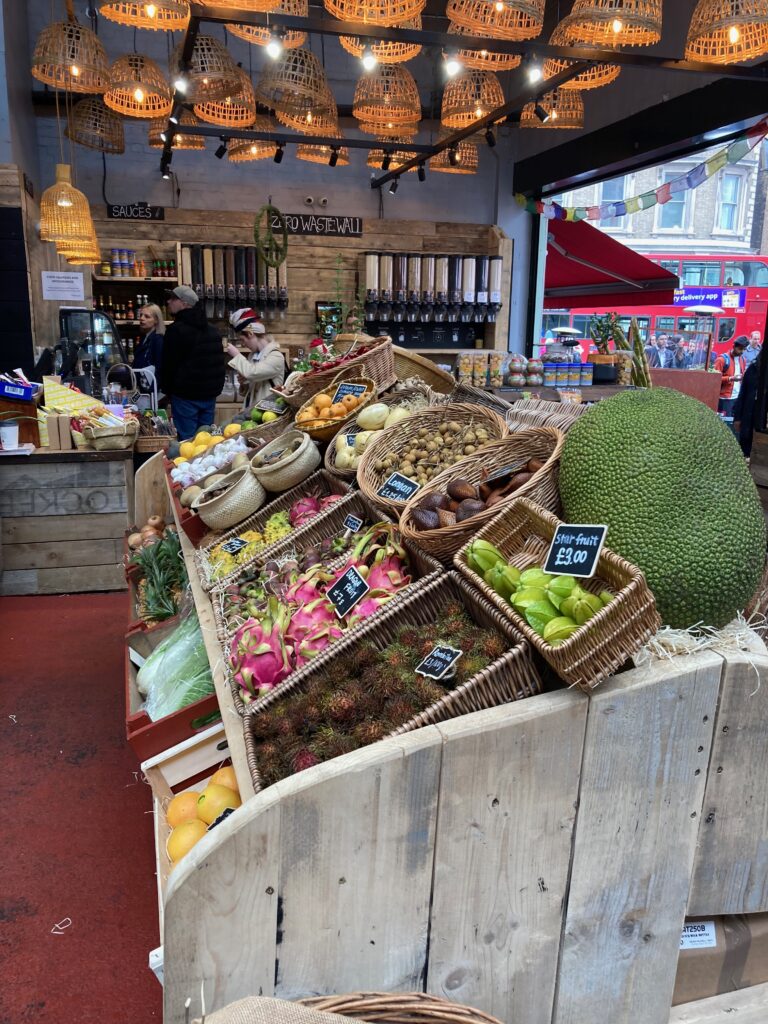
Our last stop before Waterloo was Borough Market, where we spent a pleasant hour taking in the sights and sounds, along with a rather late lunch. Much as I’d enjoyed our time in London, it was a relief to leave the hustle and bustle of the big city behind and head for home.

If you like what I write, and you’re interested in my novels are available now on Amazon in paperback, on Kindle and via Kindle Unlimited. Check out my Amazon page here and my Goodreads page here. If you would like to help me keep writing, you can now buy me a virtual coffee by clicking on the little orange coffee cup at the bottom right.
A very enjoyable read Marie.The crane you showed ,was not the type used in the London Docks.They much larger.Very similar to the Cranes that were used in Southampton East Docks
thank you
Hi Marie,
It’s not often that you make an error, but knowing your diligence in looking out for detail, may I respectfully point out that Alan Pollock’s aircraft was a Hawker Hunter FGA9, not as stated a Hurricane. The “Hurri” was in fact a pre-war fighter. However, both aircraft were designed by Sir Sydney Camm. He was a designer at Hawkers from the 20’s to the 50’s, so designed everything from biplanes to jets.
Cheers, Rick
Thank you. I will amend it. I need to double-check my sources in future!
I enjoyed reading about the rest of your London trip and many of the photos looked familiar as I did much the same walk when I was in London in 2007. I wish I’d known of St. Dunstan’s then as I’d have definitely included it in my sightseeing.
It’s well worth a visit when you get the chance.