
August had become September, and there was a hint of melancholy in the air. The flowers brightening the Old Cemetery had turned to fluffy seed heads, and the green leaves would soon turn brown. The first grave to catch my eye emphasised my sombre mood. It belonged to two little sisters, Alice Maude and Violet Foote. Alice taken at three years and four months and little Violet at seven days. Their deaths were more than a century old, but I couldn’t help thinking of the grief that must have weighed down their parents.

The next grave told a different story. The clean white stone stood out amongst the grey and the black letters looked newly carved. It belonged to the Clark family. John Clark was born in September 1839 in Perthshire, Scotland. In October 1867, he married Mary Green in Tarrant Hinton, Dorset. They must have come to Southampton soon after, because their first son, John George, was born in the town in 1869, quickly followed by a daughter, Betty, in 1870. Then came Harry, born in 1871. Duncan came along in 1874, followed by Archie in 1875, Charles in 1877, and Margaret in 1878. Poor Mary must have been exhausted.
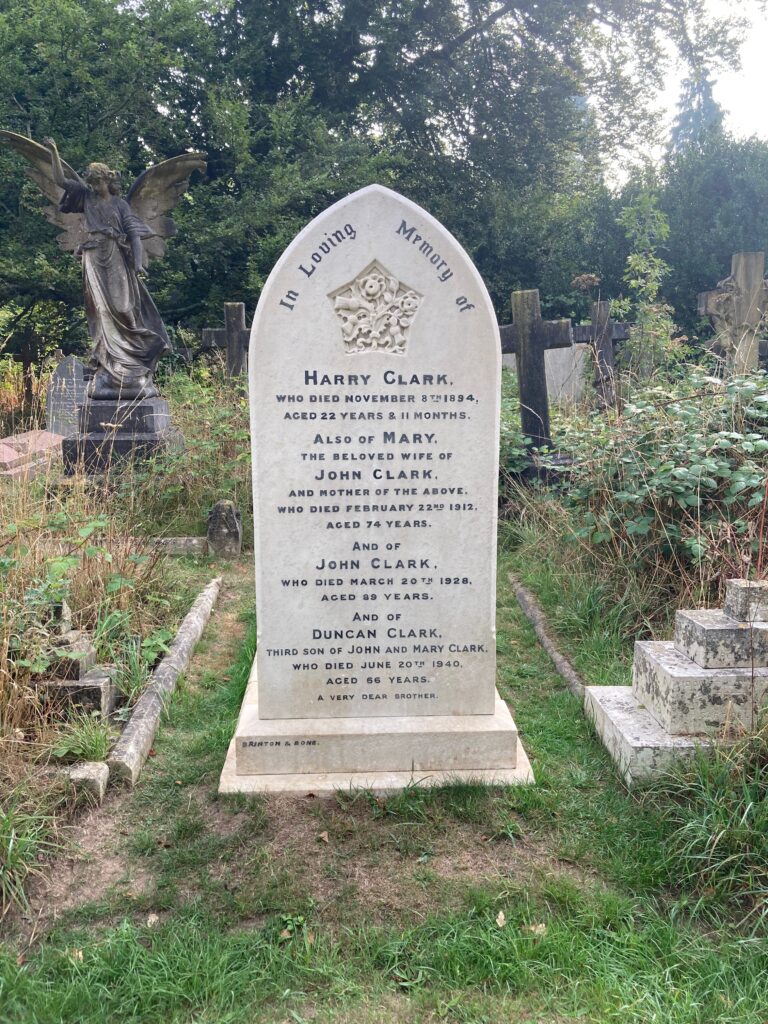
The Clarks were a family of steam engine makers and fitters. A quick search for steam engine manufacturers at the time told me they probably worked for Day and Summers in Northam. They built engines for ships and later the ships themselves. They also built several of the floating bridges that crossed the Itchen to Woolston and locomotives for the London and Southampton railway. Harry, the Clarke’s second son, was christened Henry Greene Clarke, perhaps as a nod to his mother’s maiden name. On the 1891 census, he was listed as a steam engine apprentice, like his younger brother, Duncan. How the brothers died is a mystery, but they are clearly still remembered.

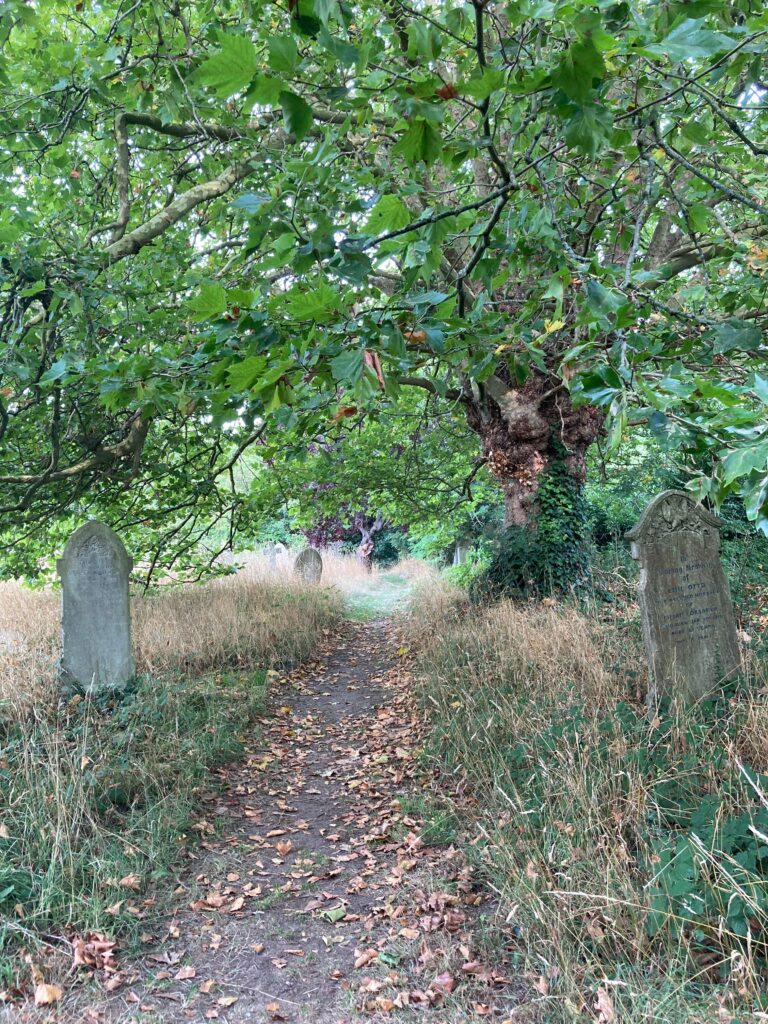
Walking along the cemetery paths, it’s easy to get lost, especially if you let your mind wander and stop paying attention. A tall, long dead tree is among the landmarks that remind me where I am and help me find my way back to the gate. The tower of grey white, stripped of bark many years ago, is visible from quite some distance. Today I walked close enough that I could put out my hand and feel the smooth, weathered wood. It told me I was on the long straight path that runs parallel to Hill Lane, one path away from the cemetery wall.
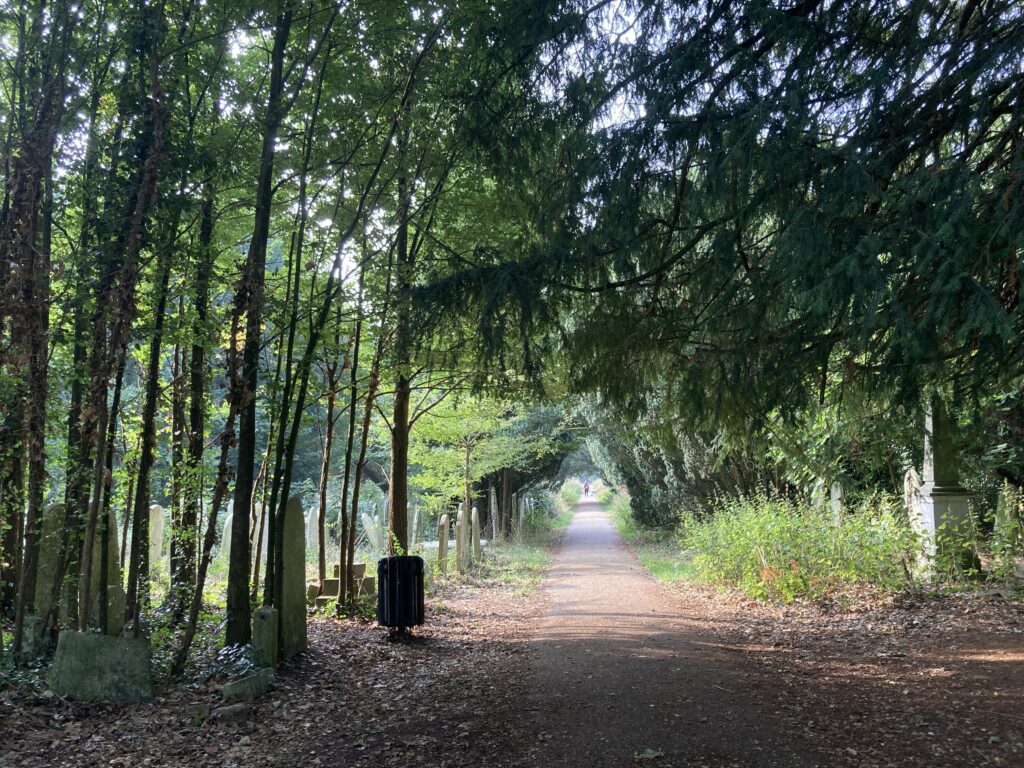
The morning was cool, with a slight haze of morning mist still clinging in places. For the first time in ages, I’d worn my mac because the sky spoke of rain to come. The path stretched ahead, a tunnel of green so beautiful it made my heart hurt. I was alone, apart from a dog walker slowly disappearing into the distance. I slowed my steps, not wanting to catch up. A smile and a ‘good morning’ felt like it would break the spell.
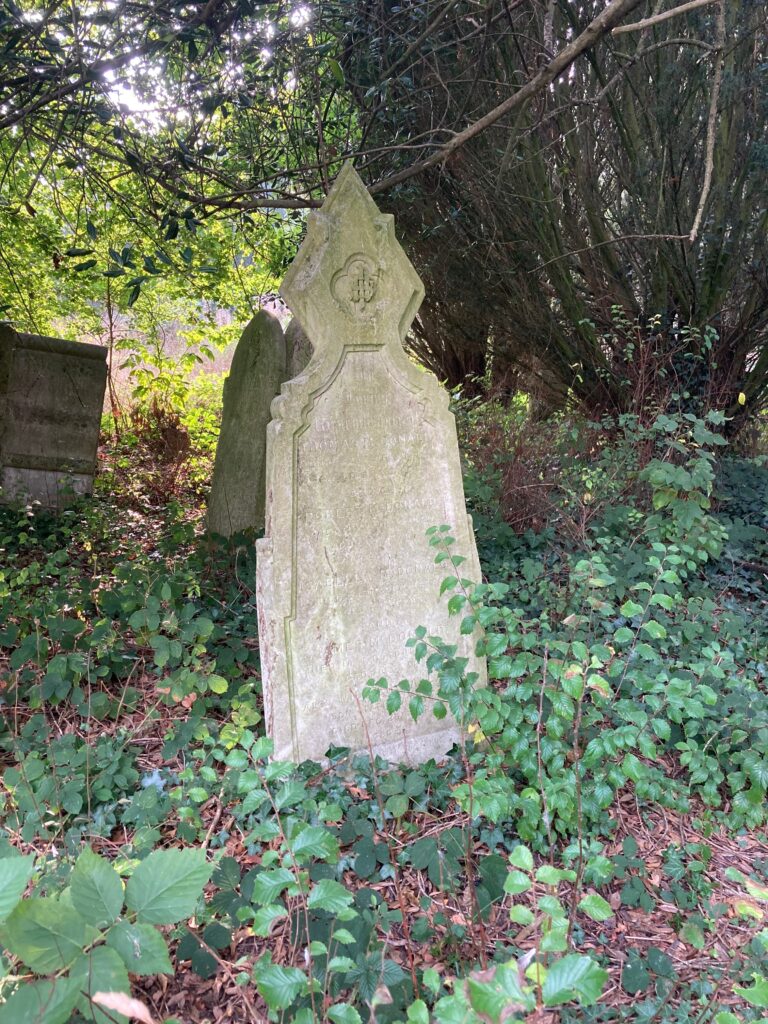
The next grave to catch my eye belonged to the McDonald family, none of whom were natives of Southampton. James McDonald was born in 1809 in Scotland. In 1829, aged twenty, he joined the Royal Engineers. Shortly afterwards, he married an Irish woman, Isabella Bustard, in Garrison, Cork. They had seven children in seventeen years, George, Jemima, James, Thomas, William, Robert and Alexander. During that time, they moved around the country, probably because of James’s army career. George was born in Scotland, Jemima and James in Wales and Thomas, William, Robert and Alexander in Yorkshire. What drew them to Southampton is a mystery, but by 1861, the family was living in Kings Terrace, Back of the Walls. If wanderlust prompted James McDonald to join the Royal Engineers and led him to Southampton, maybe it was the Ordnance Survey that made him stay. He and the two sons buried with him ended up working amongst the maps. James died in 1887, aged 78, at 3 Castle Street in Bevois Town.

With time getting on, I thought I should make my way back towards the gate, so I took a side path I knew would lead me that way. I hadn’t gone very far, when I came across a group of graves I didn’t recognise. It took me a moment to work out that this was an area newly cleared of brambles, revealing lots of graves I’d never had the chance to see.
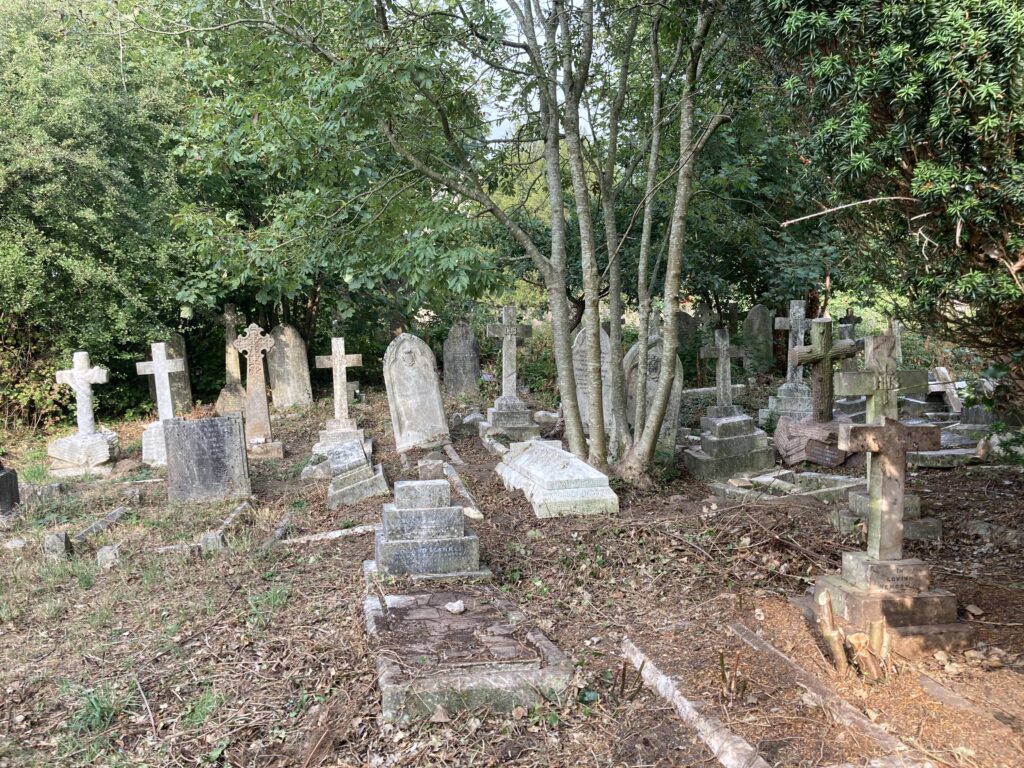
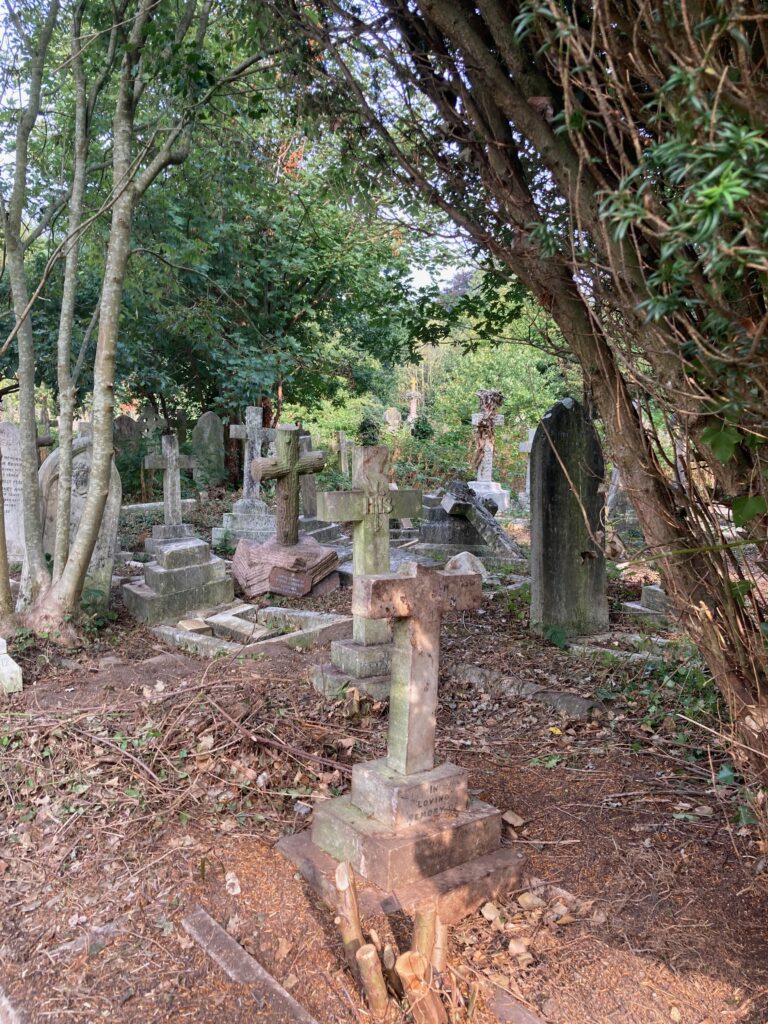
So many unseen graves overloaded my senses. If I hadn’t dawdled earlier on, I might have had time to explore them properly, but with so little time, I knew I couldn’t do them justice. With some regret, I snapped a few photographs to help me find the spot again. Then I carried on towards what I hoped would be the main path. The cleared graves had made me lose my bearings, so I wasn’t sure I was going in the right direction.


It was a relief when I came across a grave I recognised. The grave of Rebecca Arabella Dimmock. Rebecca was born Rebecca Arabella Cook in Portland, Dorset in 1823. She married Charles Dimmock of Wingrave Buckinghamshire, in Weymouth in 1849, and they moved to Southampton in the 1850s after the death of their third daughter, Elizabeth. They lived in Milbank Street where Charles worked as a carpenter’s foreman, possibly in one of the small shipyards along the waterside. They had seven daughters and three sons. This is one of the graves that act as a marker during my cemetery walks. The name Rebecca Arabella caught my eye some years ago. It was a name that should be in a novel, and for a long time, I toyed with using it in one of my stories. So far, I’ve resisted the urge, but the name always makes me smile and tells me exactly where I am.

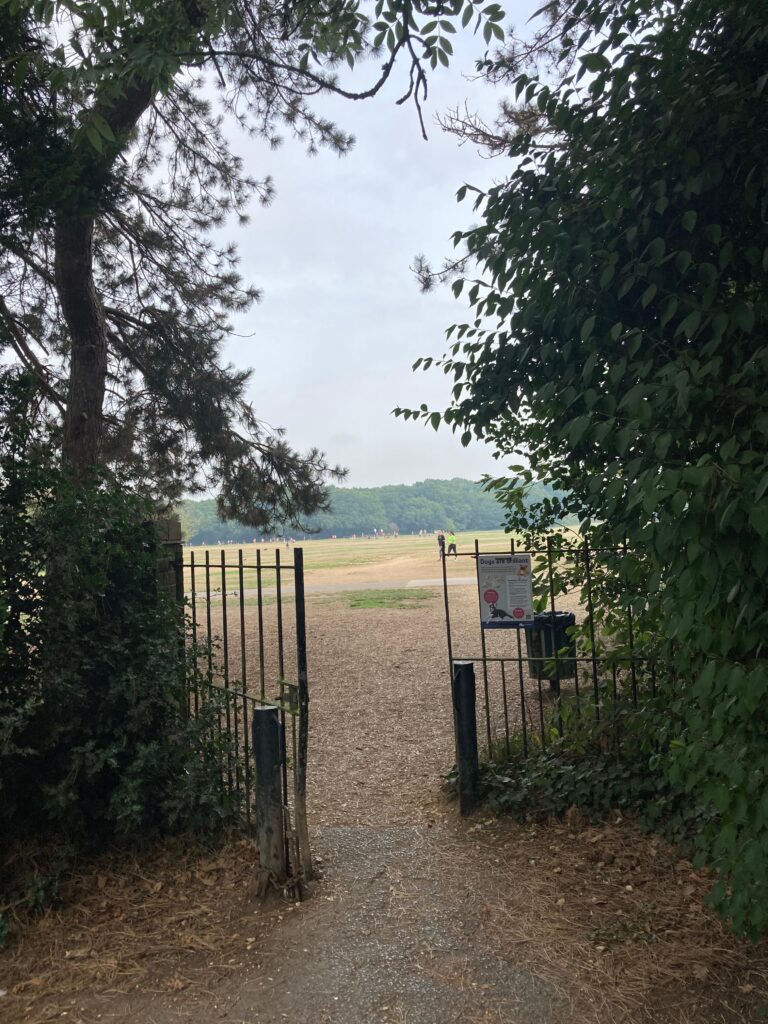
Before long, I was back on the main path, eyeing the clouds and wondering if it would rain before parkrun finished. After weeks of hot, dry weather, a bit of rain wouldn’t have gone amiss. Before I finally headed for the gate, there was one more grave I had to visit. Graves, like Rebecca Arabella Dimmock’s, may feel like old friends, but one grave is family, and now I’ve found it, I try to visit it whenever I can.
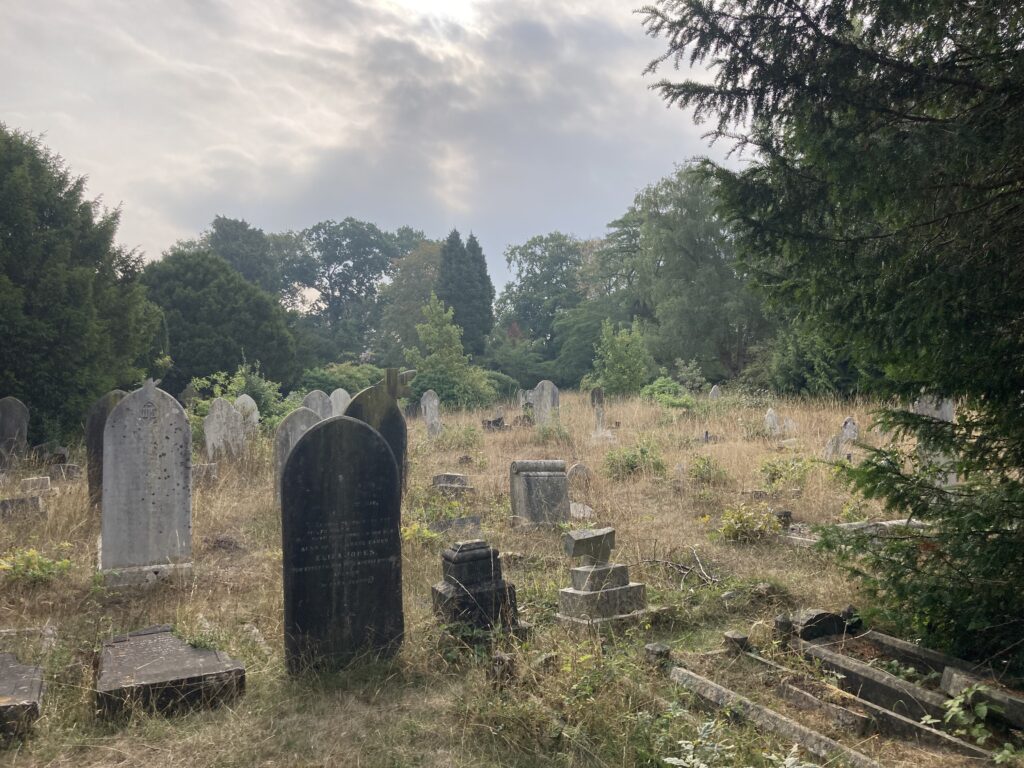
So, after a few moments with Florence and Walter Woodman, I finally went to the gate and returned to the living world for another week.
If you like what I write, and you’re interested in my novels are available now on Amazon in paperback, on Kindle and via Kindle Unlimited. Check out my Amazon page here and my Goodreads page here. If you would like to help me keep writing, you can now buy me a virtual coffee by clicking on the little orange coffee cup at the bottom right.
I really enjoyed this read. When I visit Southampton I like to do the same
Thank you. I’m so glad you enjoyed reading.
A lovely read. I know I’d get hopelessly lost in the Old Cemetery. When I lived just down the road from the Common and sometimes walked my dogs there, I had to be careful to stick to paths I knew or I could have been wandering around for hours.
I still get lost in there, despite visiting so often.