
On 11 August 2021 I’d walked across Riverside park to check out the repairs to Woodmill, then I’d carried on to the flower Roads to find the houses where my grandparents and Commando’s had once lived. Now I wanted to explore Daisy Dip, the ribbon of parkland in the valley between the houses. The park is split in two by Lobelia road and it was the west side I was interested in because I planned to feature it in the book I was writing.
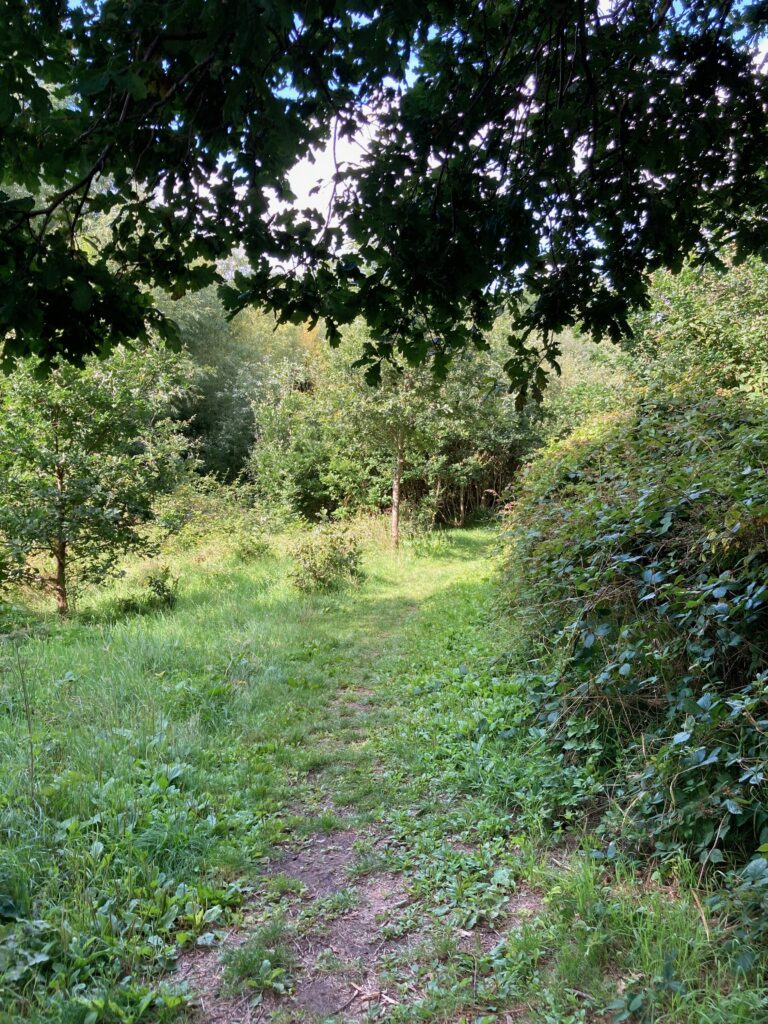
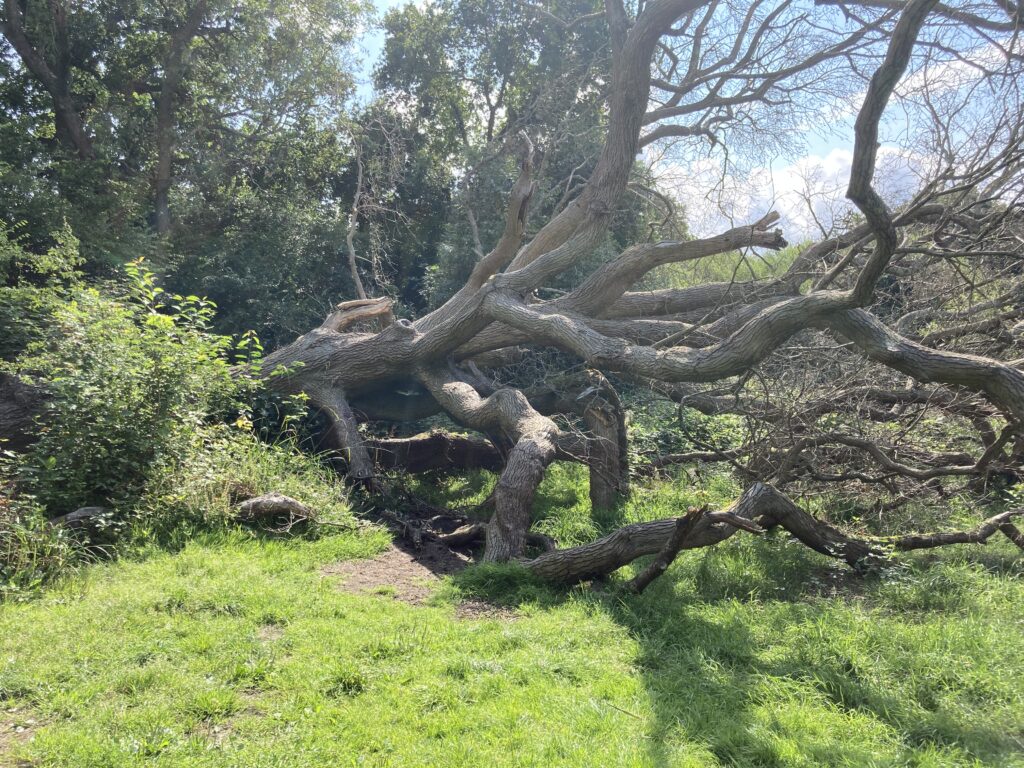
I entered the dip by the trail on Lobelia Road, as this was where my character entered it in my story. It was nothing more than grass flattened by the passage of feet, much as I’d expected it to be, but it was more overgrown by trees than I’d imagined. As my story was set in the 1930’s though, I suspect the trees would have been much smaller back then. Glad of a bit of shade on what was turning out to be a hot day, I carried on towards the bottom of the dip.
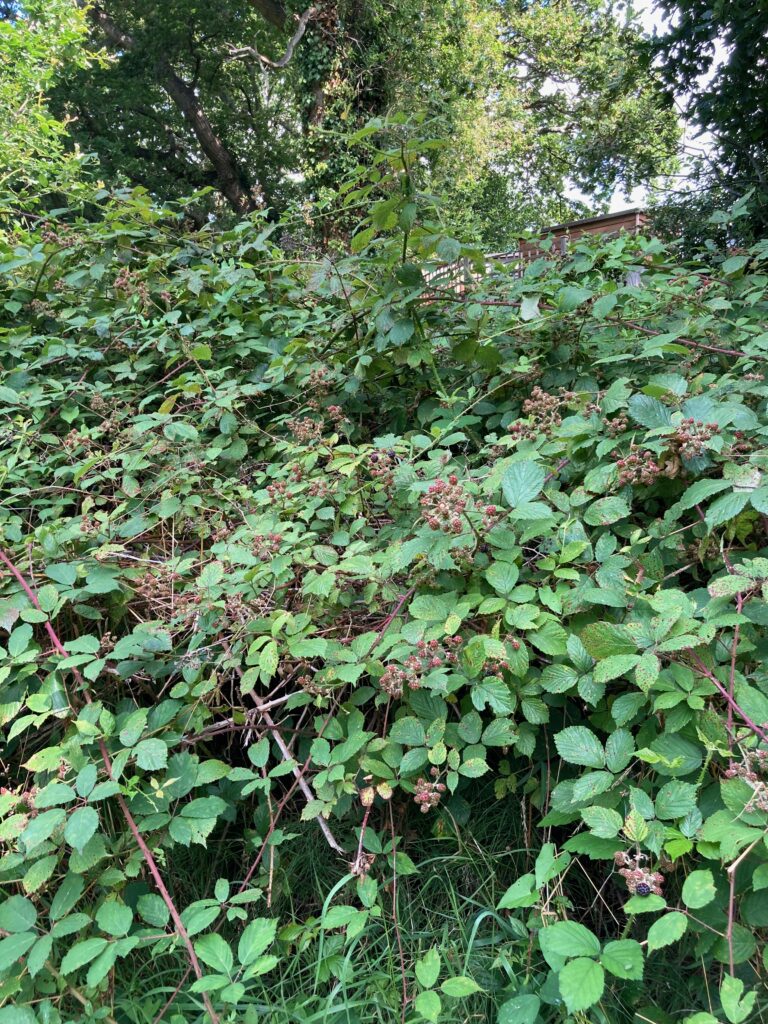
There were blackberries growing all along the trail and I imagined Violet and Laura both picking them to make jam. It was the sort of thing almost all women did back in the 30’s and 40’s, when food was scarce and money was short. If they’d been ripe and I’d had a bag, I might have picked some myself.
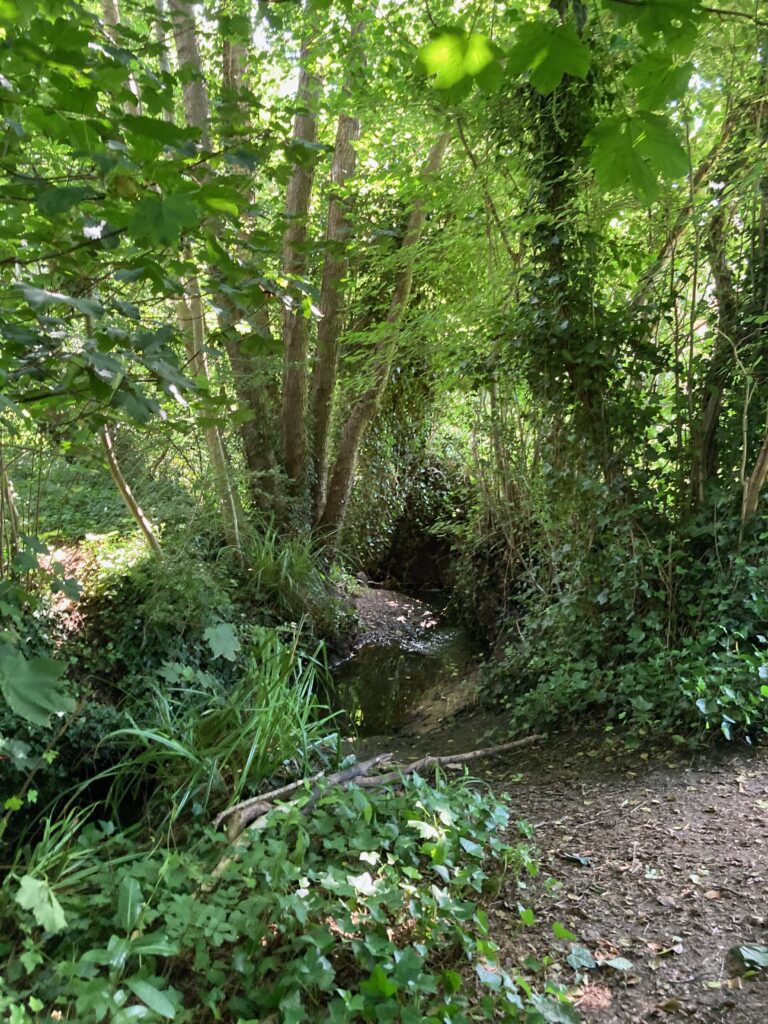
It was pleasant dodging in and out of the sun, and the trail was nice and dry underfoot. It would be a different matter in winter, especially near the bottom of the valley where the little stream runs. It was surprisingly secluded and quiet, given how close I was to all the houses, but with no streetlights, it wouldn’t be somewhere I’d want to go after dark.

I wandered along, enjoying the dappled shade, the birds singing and the solitude. My mind was on my plot, thinking about my characters walking along this trail, what they would have been thinking, seeing and hearing. In my head it really was the mid 1930’s. Then I came to the little bridge and I was dragged right back to the present day. For one, the bridge wasn’t quite where I’d thought it would be and I certainly hadn’t expected to see a burnt out motorbike in the bushes. If there were joyriders back in the mid thirties, they’d have had slim pickings on the flower estate. I doubt very much if many people in social housing owned anything more than a bicycle back then.
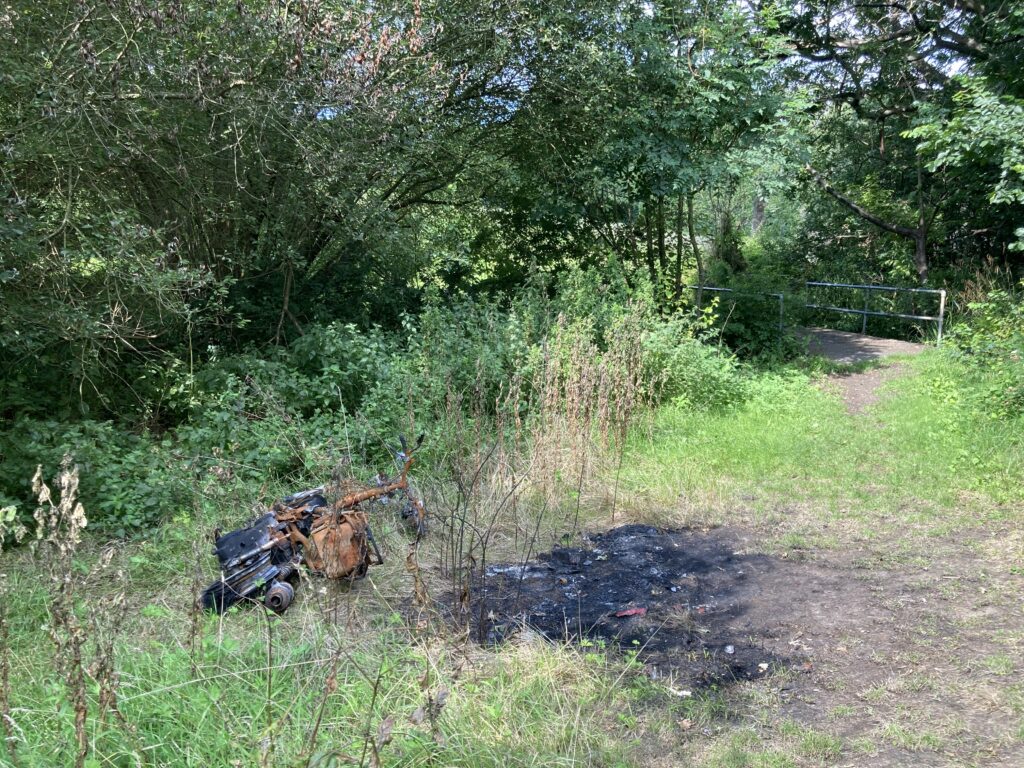
The bridge crossed the feeble little stream, half hidden by grass, weeds and saplings. On the other side was a sloping field of rough, tussocky grass. At the very top of the slope I could make out houses. It took me a while to get my bearings and understand that they were the houses on Bluebell Road. A path ran along the bottom of the field, right on the edge of the woods. I remembered it from an earlier walk in Bassett Green Woods, and I remembered the woods beyond. With more time on my hands I might have gone for a wander amongst the trees but there were still things I wanted to see in the flower roads.

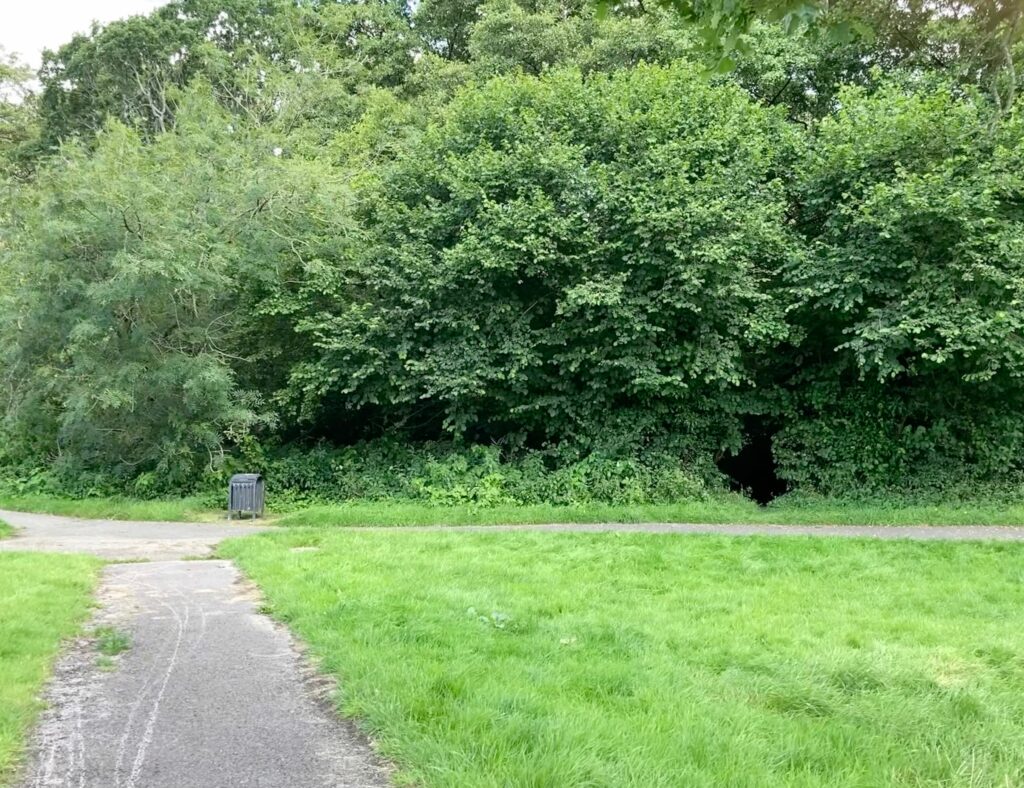
There are paths and trails going off in all directions here and, for someone who loves an unexplored trail it was torture not to be able to explore all of them. I had a long walk home though and it really was beginning to get very hot. Even so, I looked longingly along each path and trail and promised I would come back another time to explore them all.
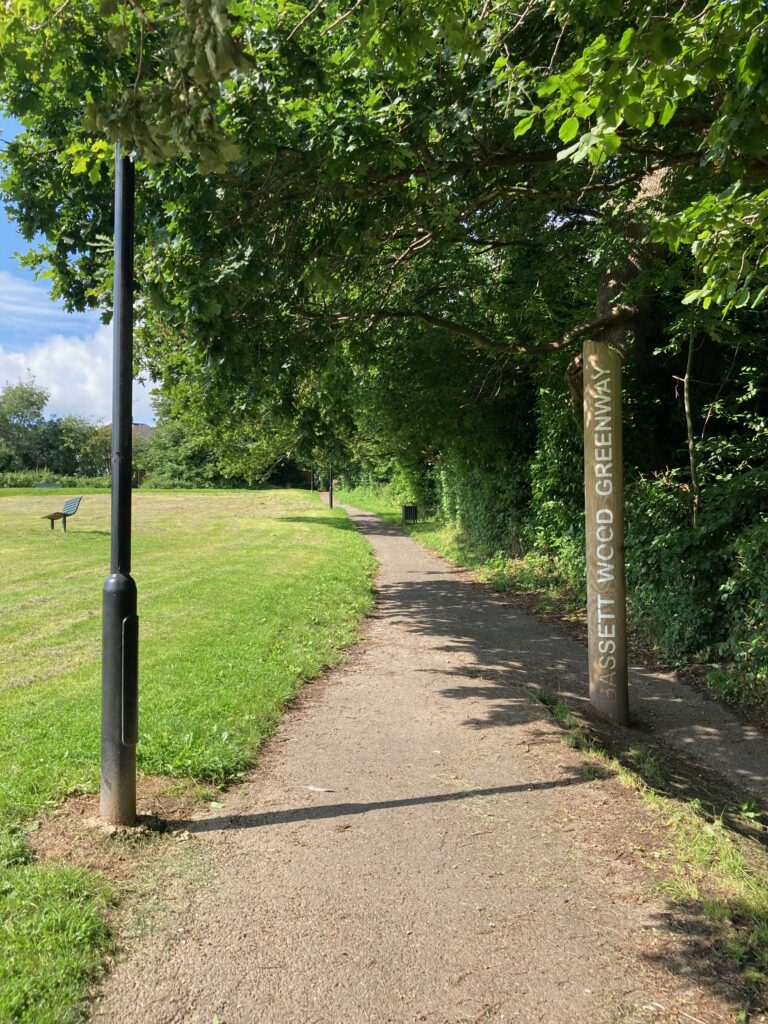
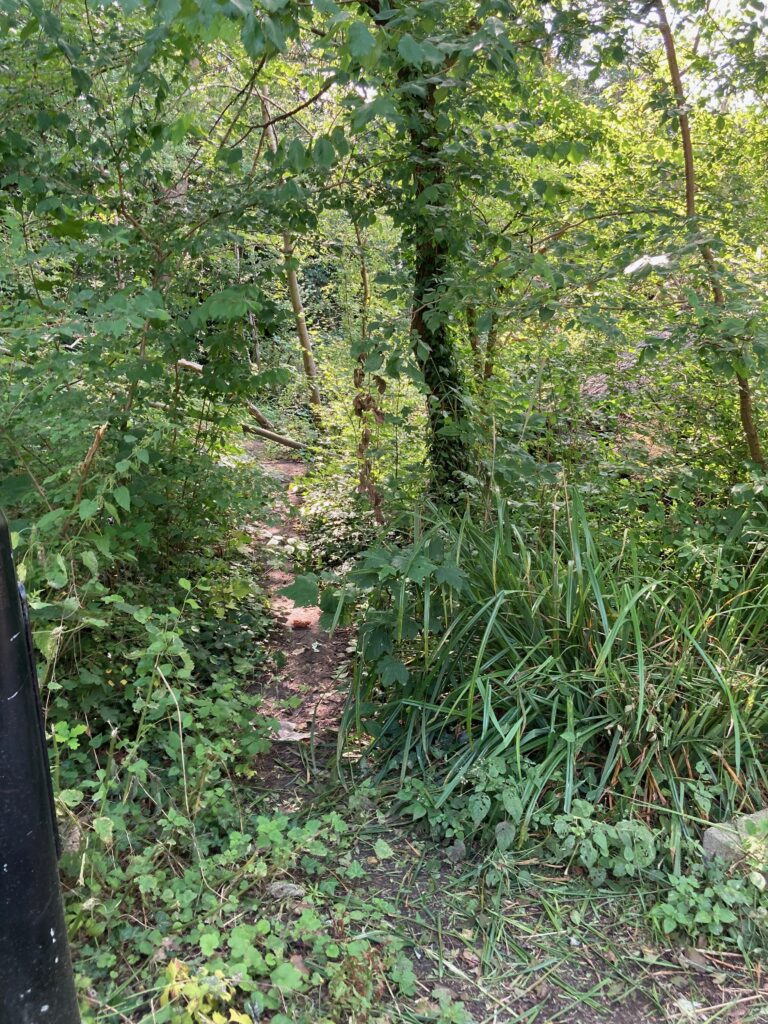
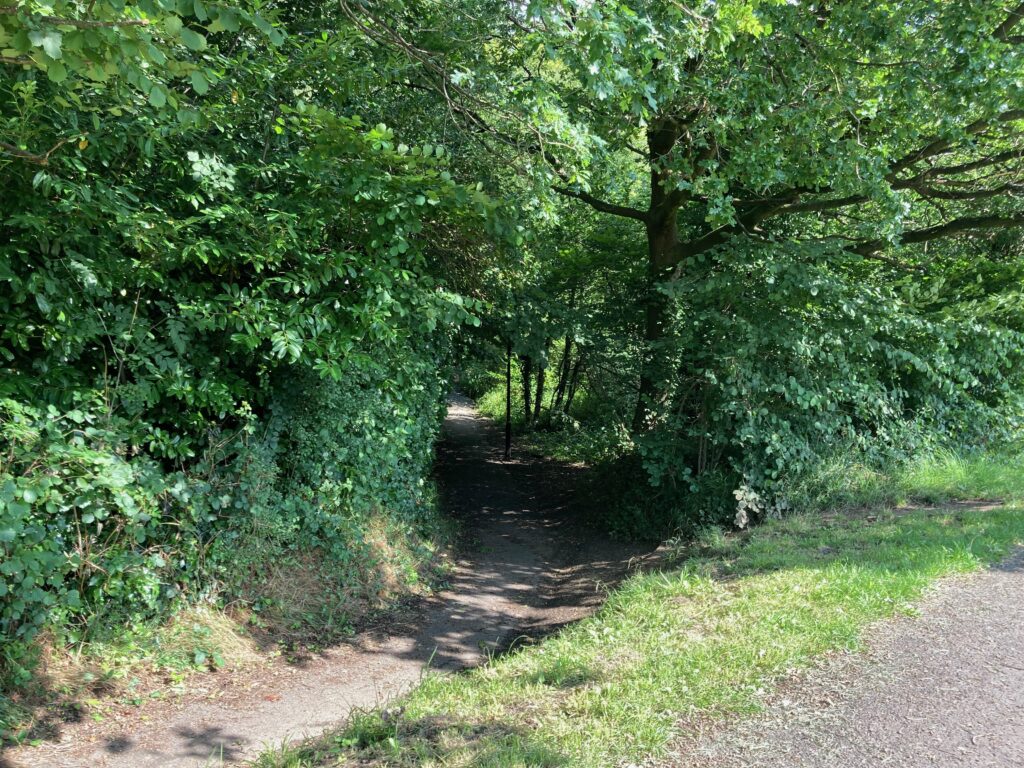
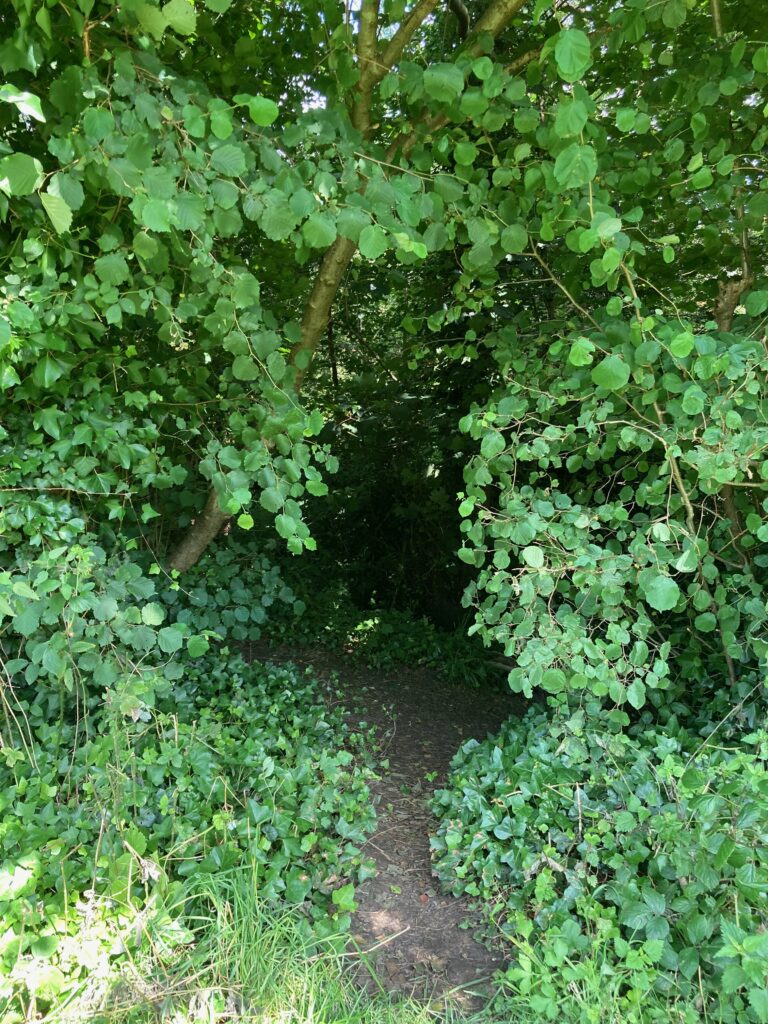
The nameless stream that runs down through the dip meanders through the woods and seems to split and go in different directions. Back in the 1930’s there were several ponds and even fish, if the old maps are to be believed. Now a lot of the wood that was there has been built on, but the remaining wood and the dip are still a little oasis of nature for the people who live in the nearby streets.
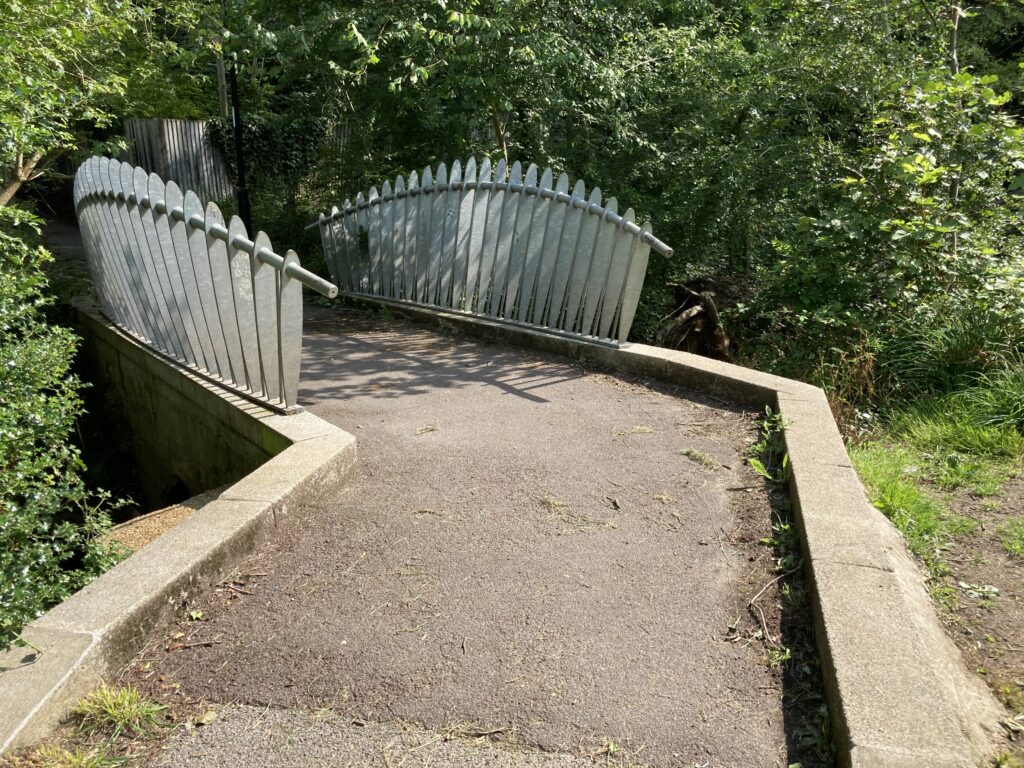
Amongst all those tempting trails, there was one I couldn’t resist. It featured in the story I was writing and I needed to be sure it came out where I thought it did. If I was right, it would lead me up onto the far end of Carnation Road where the road loops round in a dead end and there is a little grassy island, a little like the one at the junction of Lobelia Road and Bluebell Road. The residents often called it the frying pan, because of its shape. I was surprised to find there was another little bridge to cross. This one had decorative metal railings, although they looked too modern to have been there in the 1930’s.
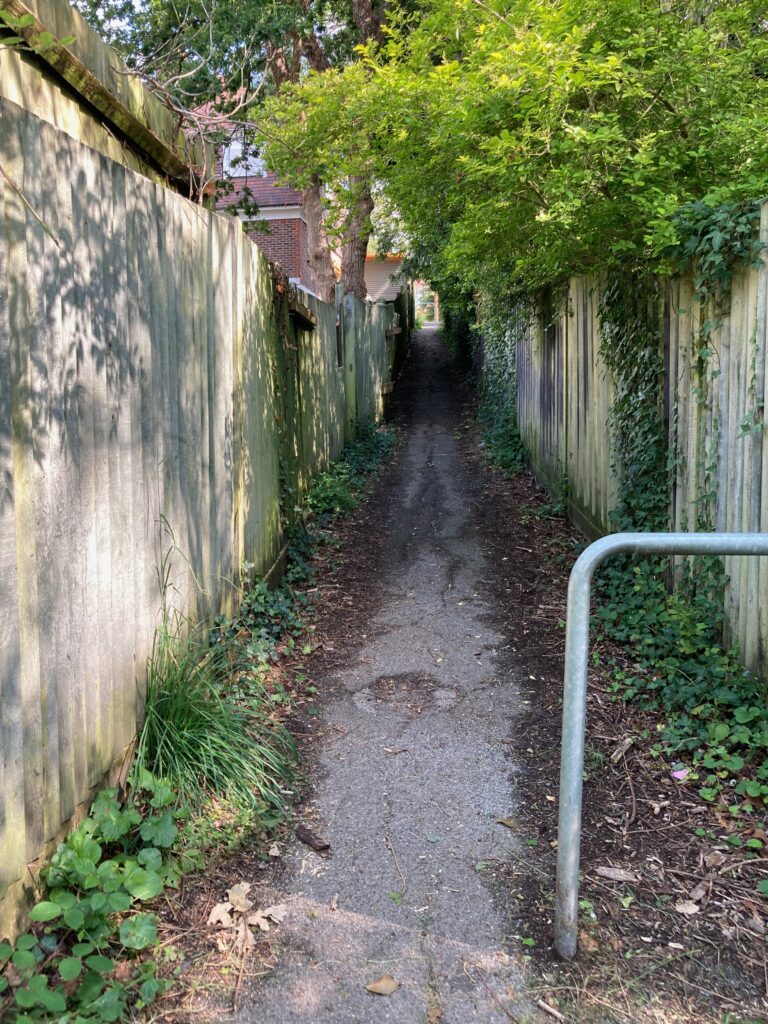
Once I’d crossed the bridge the path was pretty much as I’d expected, a narrow cut way between the houses with high wooden fences on either side. It was a little steeper than I’d expected, but quite short. At the top I found myself exactly where I thought I’d be. This was very good news for the plot of my story.
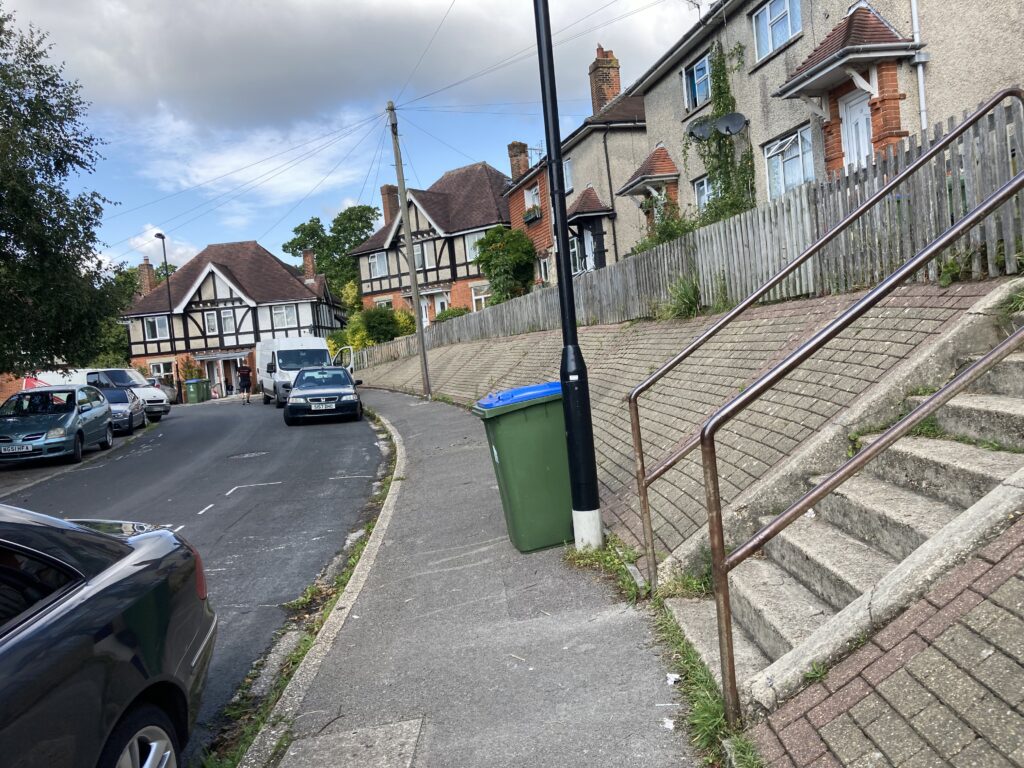
I spent a little while looking at the houses at this end of the road, noting that the ones at the far end of the frying pan were nicer than those around them, with mock Tudor beams and interesting gables. The houses on the far side of the island were raised above the road with steps leading up to them. Unlike all the other houses, they had no front gardens, but maybe they made up for this with better views.

Now I’d seen all I came to see, so it was time to head back to Lobelia Road and slowly make my way home. It had been an interesting morning and I’d learned a lot but I was hot and a little tired. At least the walk home would be filled with ideas, and when I got there, I’d have plenty to write about.

If you like what I write and would like to help me keep doing it, you can now buy me a virtual coffee by clicking on the little orange coffee cup at the bottom right. If you’re interested in my historic novels, Plagued is available now on Amazon.
Lovely story in the 1950s and the early sixties those fields had a groundsman and there were only a couple of trees.We used to play football on a Sunday morning thirty to forty a side.I used to play in the frying pan with my friends who all lived there. In the late 1950s the council had about thirty horses in that field for a time.So I expect you can guess I spent my youth playing there.
My husband said he didn’t remember the trees when he was a lad in the 60’s & 70’s so I guess they must have grown in the last 50 years or so.
A fascinating trip down memory lane (I lived in Bluebell Rd 1989-2002). Iirc the marshy bit had a nice colony of yellow flag irises which would probably have been there in the ’30s too. That “feeble little stream” is deceptive btw – it’s tiny in dry weather but I’ve seen it flood quite impressively after a period of very wet weather, especially if the culvert under Lobelia Rd gets blocked! We used to call it Daisy Lake when that happened 🙂
I can imagine it flooding, and icing over in the winter too. I suspect the local children made good use of both occurrences.