
Mid August 2021, and it really felt as if the worst of the pandemic was behind us, so for the first time in a long time, I met up with Kim for a little stroll. Well, I have to be honest, it was more march than stroll and it wasn’t exactly little either, but still . . . For once I had a plan, and it mostly involved finding out what, exactly, was going on at Marhill Copse. The last time I walked this way was in June 2020. I was meant to be walking with Kim but she had a terrible headache that turned out to be the start of her brush with COVID, so I went on my own. Now, as I walked across Riverside Park towards Woodmill to meet Kim, it felt as if I was was completing the circle somehow. We were finally going to get that lost walk.
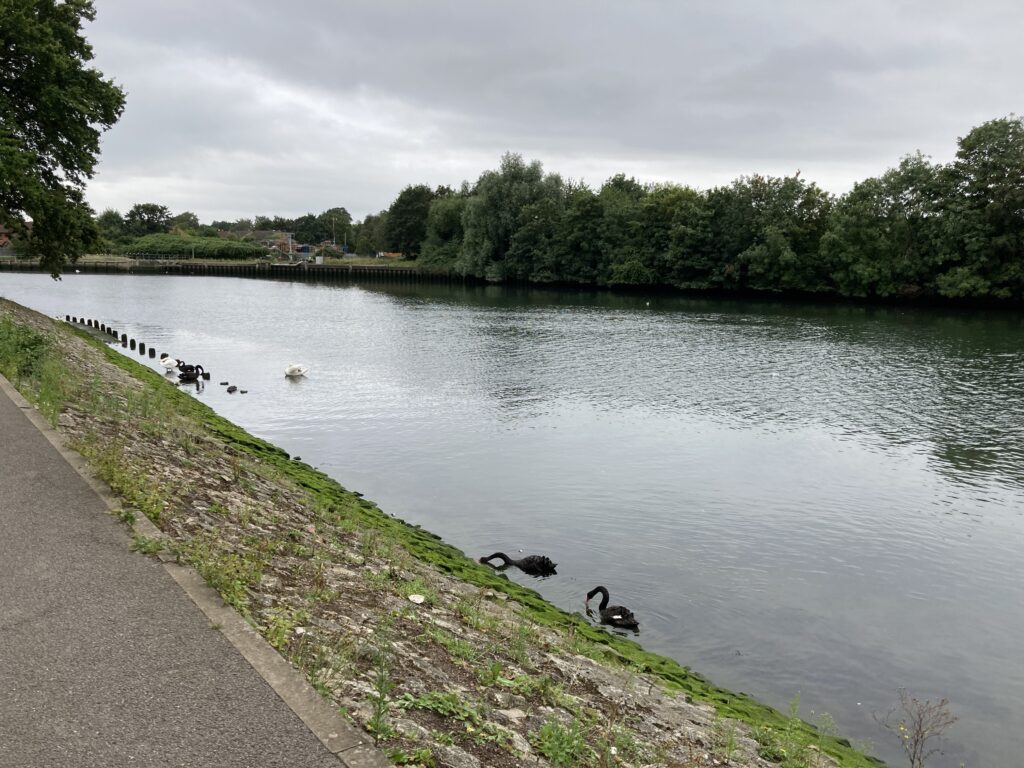
There was no sign of the seven cygnets I’d seen that day, but they had been a good omen because Kim survived her tussle with the virus. Instead, there were four black swans and two mute swans near the river bend. The black swans, Cygnus Atratus, are, of course, interlopers, Australian escapees from some fancy ornamental gardens who have decided that they like our river much better than captivity. In 2012, there were just 37 pairs of black swans nesting wild in the British Isles but they are now becoming more common. Beautiful as they are, this may not be a good thing. They are far more aggressive than our native mute swans, and could well become the dominant species in time. I walked on to Woodmill thinking about how excited I had been when the black swans first arrived and began to breed. Now, they seem to be breeding so well I worry about the consequences for our beautiful mute swans.
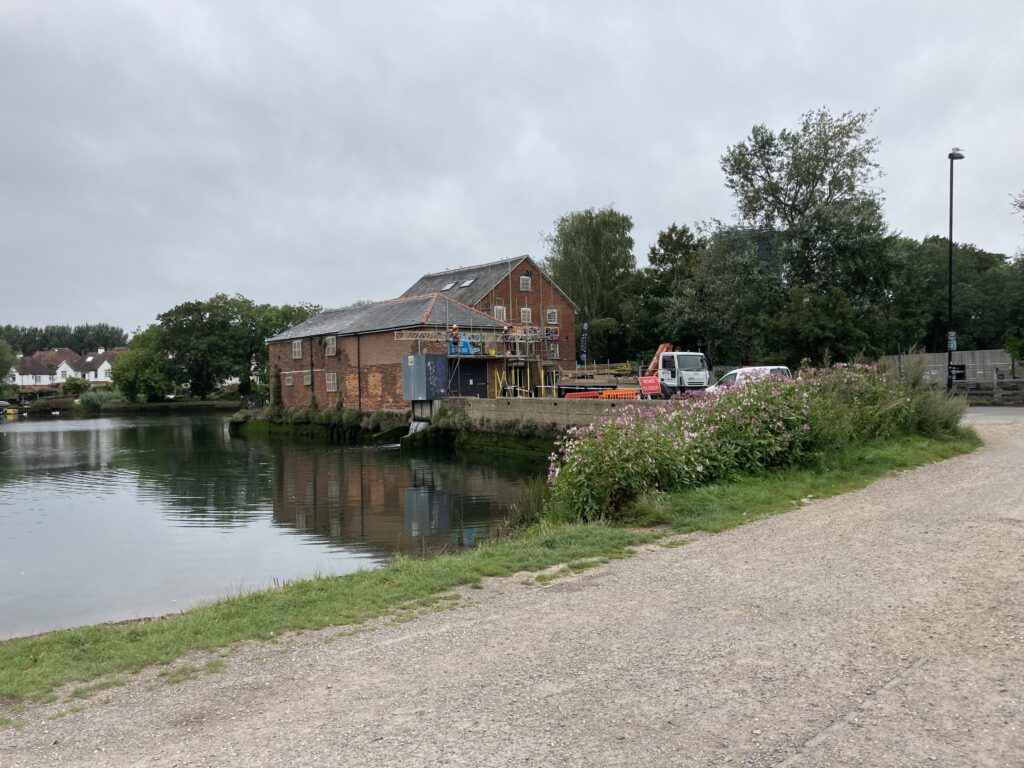
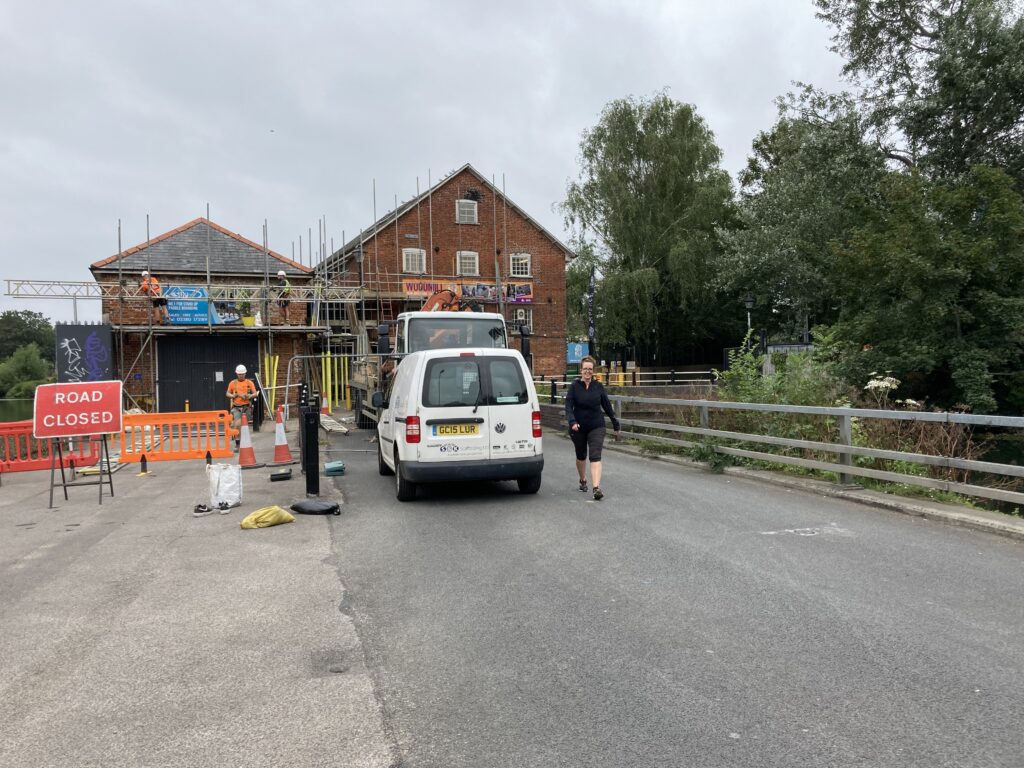
When I reached Woodmill I got quite a shock. The mill was ensconced in scaffolding, workmen were clambering about and there were signs saying that the road was closed. I had visions of this walk ending up abandoned, just like the original. A closer look told me the road may have been closed to cars but it was open to pedestrians, which was a relief. Something else I noticed, was the growing clump of Himalayan Balsam on the bank beside the mill. Like the black swans, this is a foreign interloper, escaped from ornamental gardens. Beautiful the pink flowers may be, and beloved of the bees, but this plant poses the same threat to our natural wild flowers as the black swans do to the white. Its seeds explode out of their pods and travel great distances and it quickly colonises large areas, crowding out the native plants. Both are examples of why introducing non native species can upset the balance of nature.
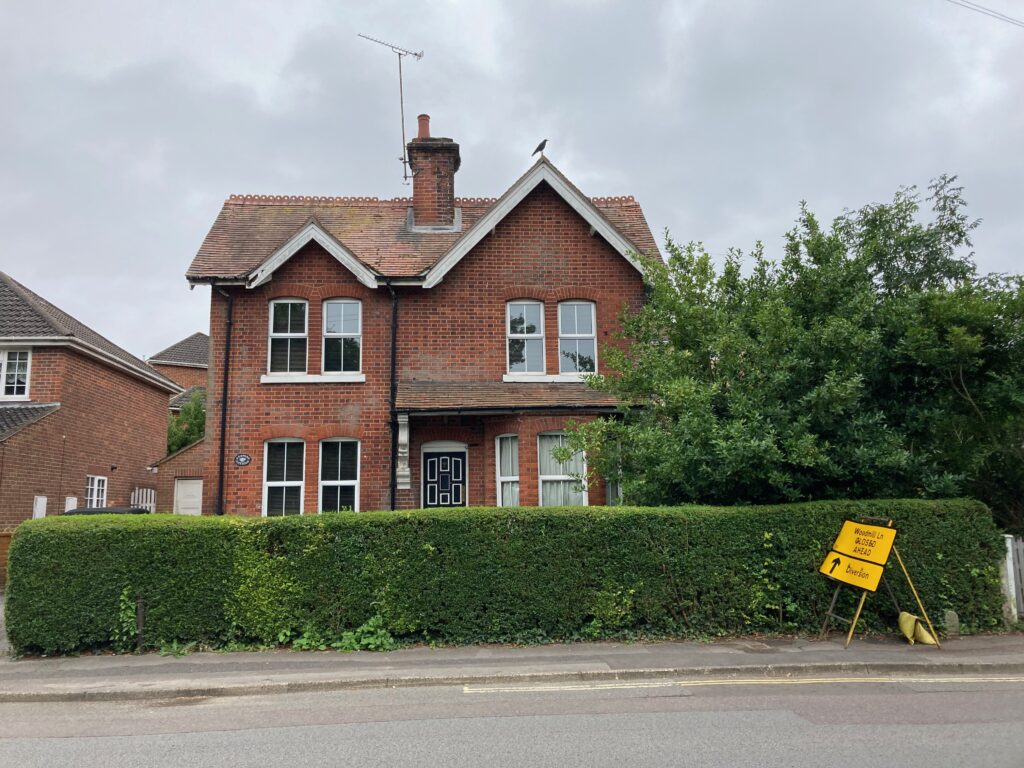
Thankfully, there wasn’t too much time to dwell on this and get morose. Kim soon arrived, smiling and eager for a walk. Had she known my plan, she might not have been quite so keen, or quite so smiley. We set off, chatting away as usual, on the exact same route I’d taken over a year before. This time, when we reached Keepers Cottage, I was armed with information rather than speculation and assumption. Ann Howlett commented on my June 2020 blog post to tell me that this was a gamekeeper’s cottage, for the Townhill Estate. The gamekeeper, James Johnston, was born in Scotland in 1876 and lived in the cottage with his wife Bessie and his daughter of the same name until at least 1939. I knew someone would know the answer! Thank you again Ann.
The previous summer I’d been worrying about the changes taking place at Marhill Copse. The had been a lot of protests and petitions about the Airport cutting down hundreds of trees to protect the planes that fly low over the park on their way to land. There were some signs of trees being cut down on my last visit and I was a little concerned by what I’d find this time. The very first change we noticed was a brand new signpost, made from what might have been felled trees.
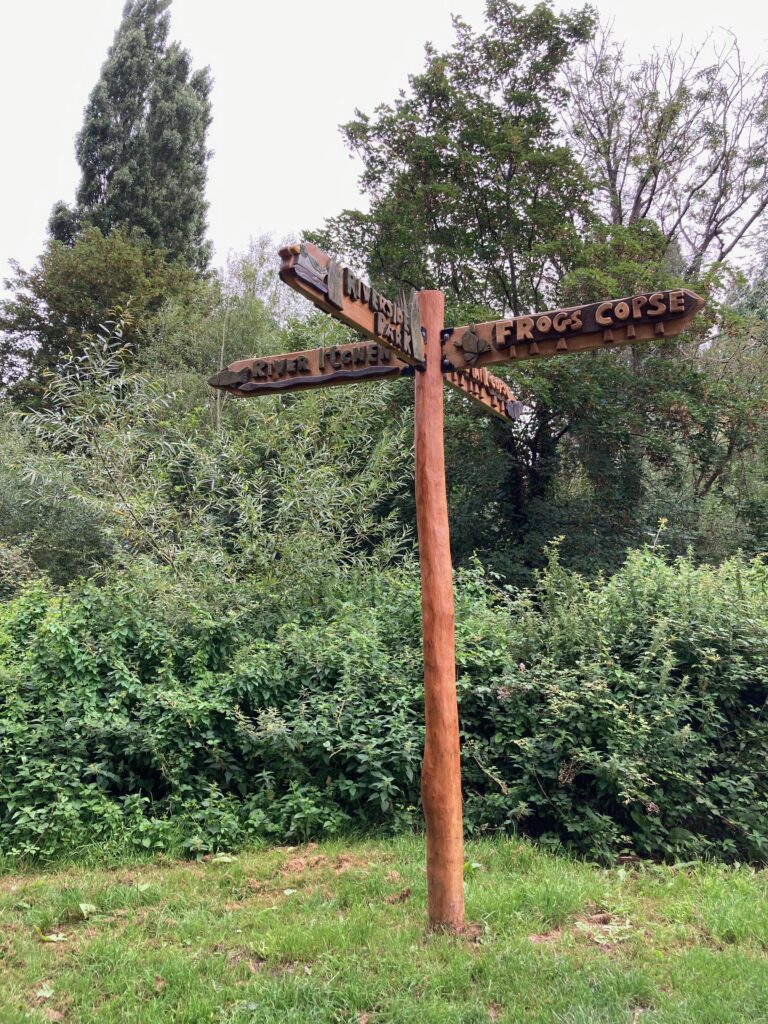
I have to be honest and say I liked the signpost very much, but I was still very worried at the idea of hundreds of trees being cut down. We went through the gate feeling slightly apprehensive. Well, I was feeling apprehensive, Kim had never been along this trail before so she didn’t really know what to think. At least it wasn’t muddy for once.
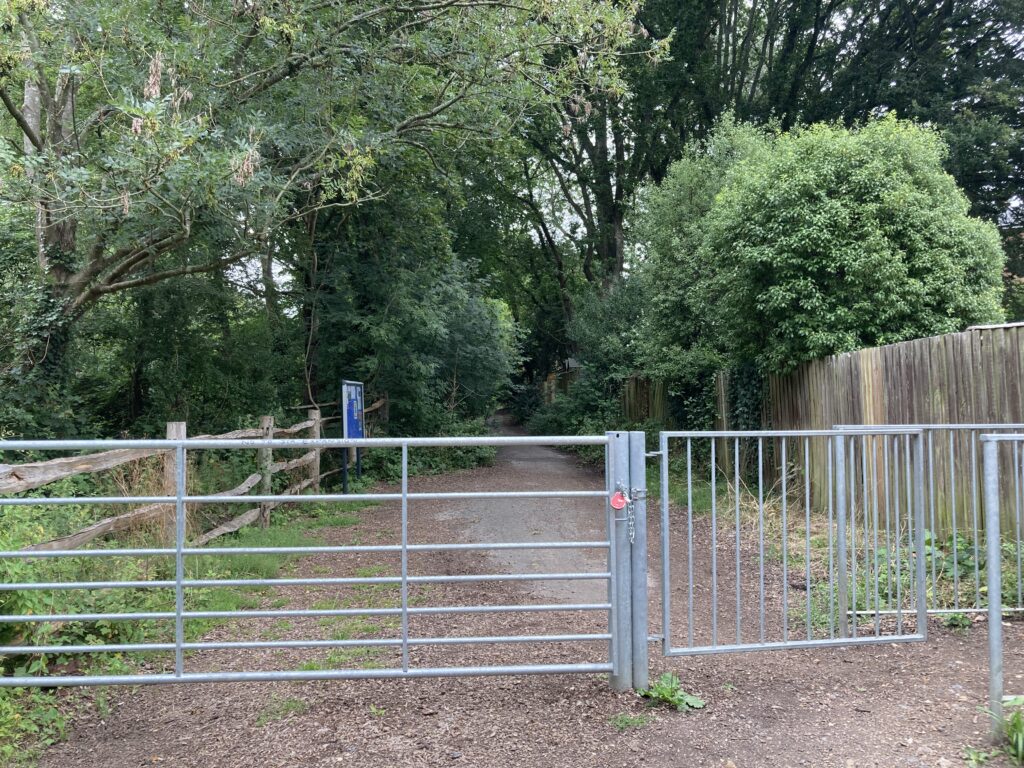
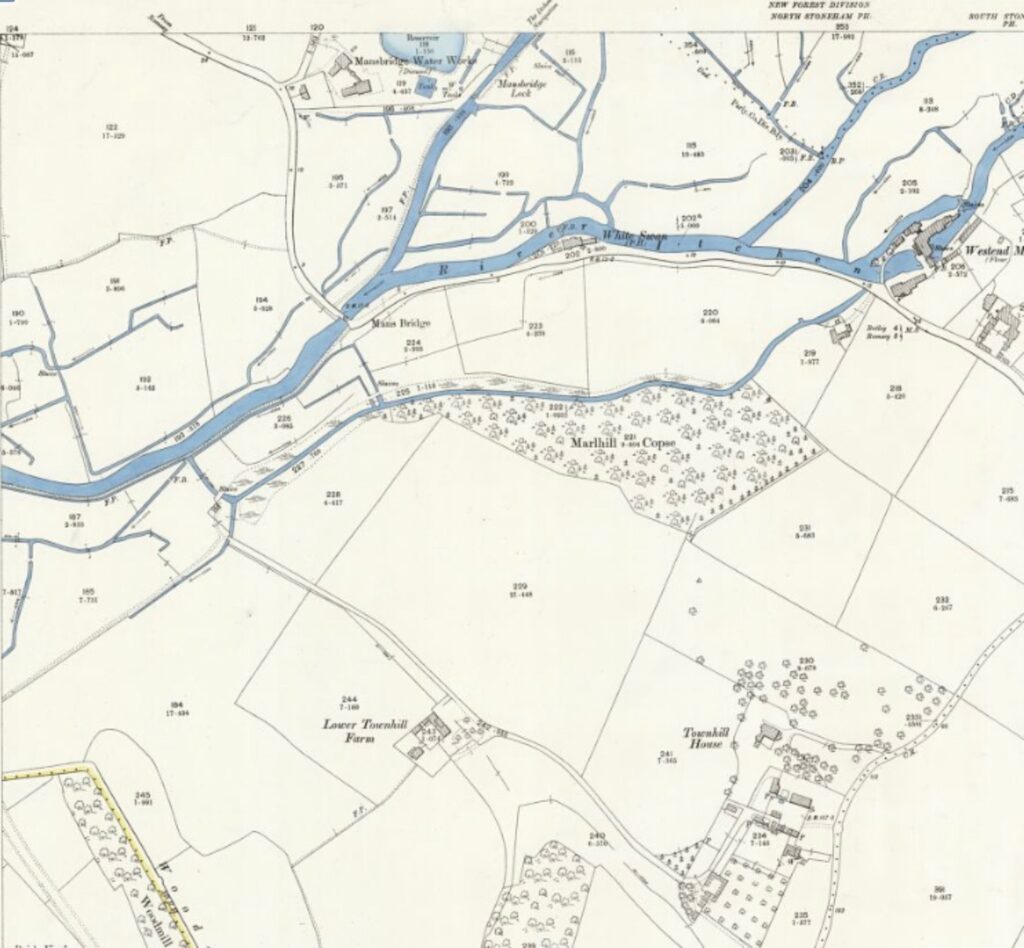
At first things seemed much as they always had. We walked through a tunnel of greenery, gently climbing. To our left was the little nameless rill that runs from the Cutbush Playing fields to the corner of Woodmill Lane. Old OS maps tell me that this was once connected by sluices with Gaters Mill, and, at various points, to the Itchen. The stream had its origins in a Saxon canal and was called ‘new river’ in the Saxon charter of 1045. I imagine it was also once involved with the working of the mill but these days the sluices are closed and the water is stagnant and a rather beautiful shade of luminous green that gives the view a fairytale quality.
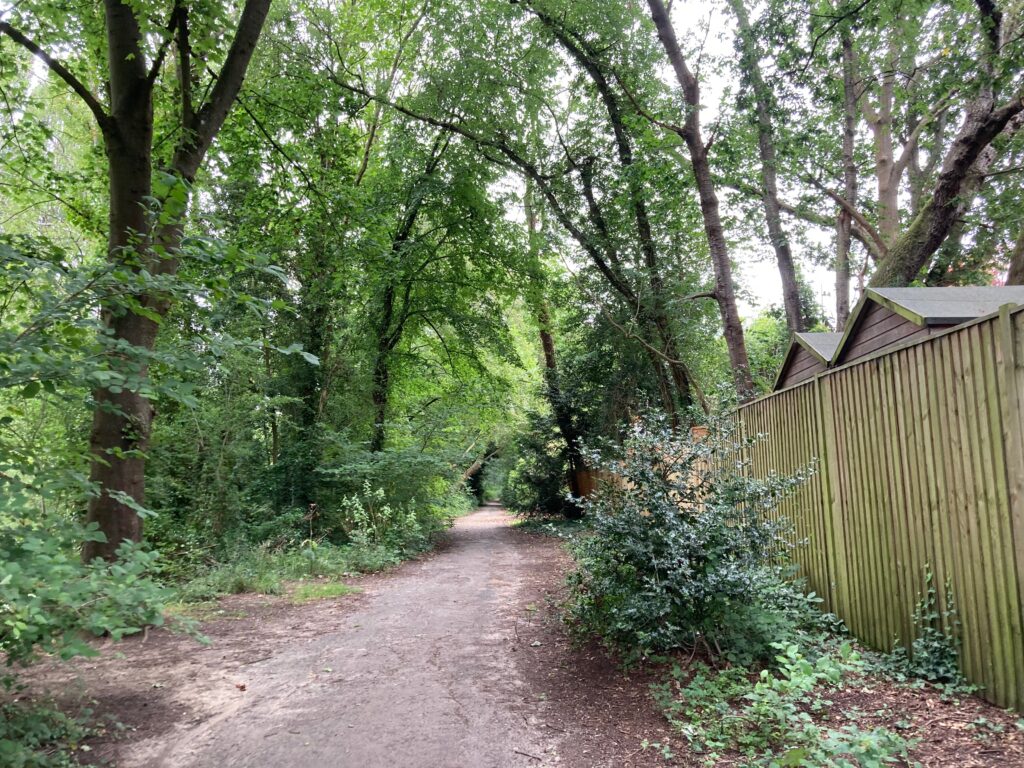
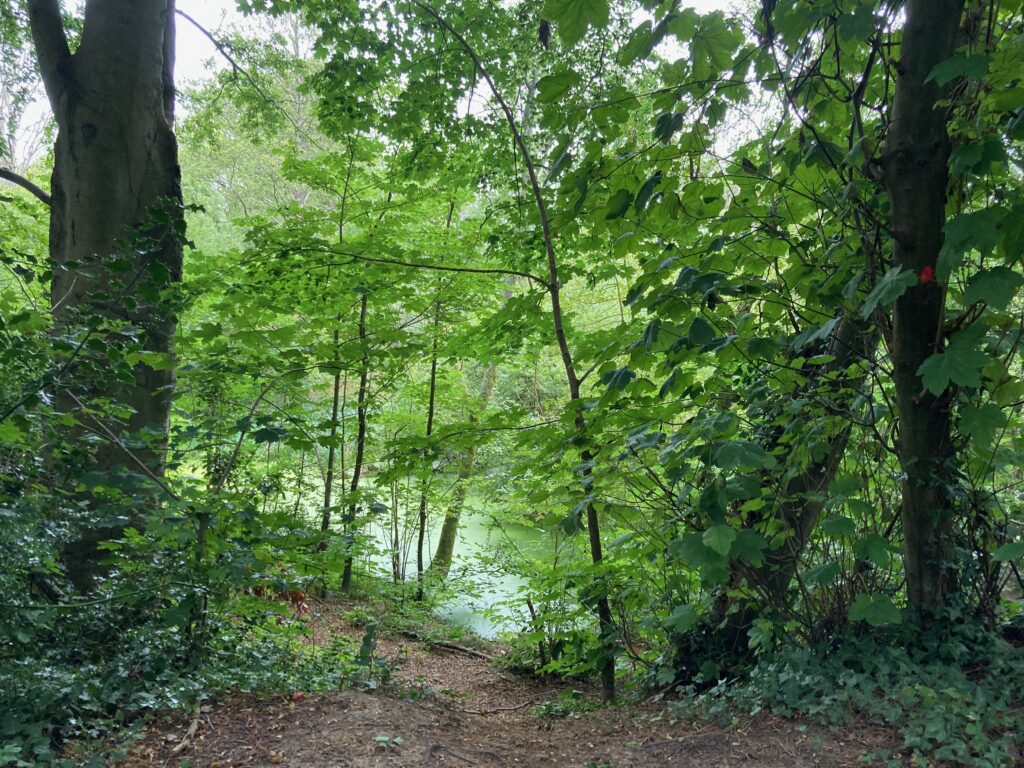
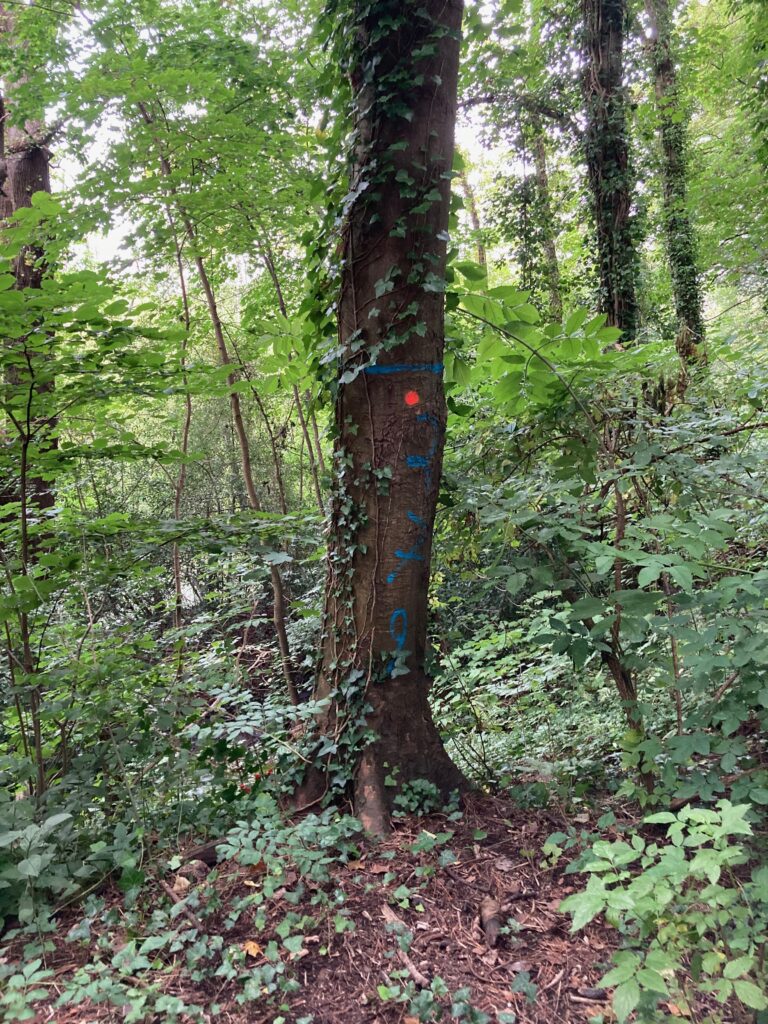
It wasn’t long before we began to notice slightly sinister markings on some of the trees. It was clear these weren’t the result of young vandals with spray cans, these trees were marked to be cut. This was what all the fuss was about.
My initial response to the cutting down of trees is, understandably, horror, and I can see why people have protested. Delving a little deeper though, I can see why woodland needs to be managed. This article explains far better than I can in a short blog and is well worth a read. Sad as I feel for the trees that may end up being felled, I’m beginning to understand why this might need to happen. My question, at this point, was whether it was being done responsibly at Marhill Copse.

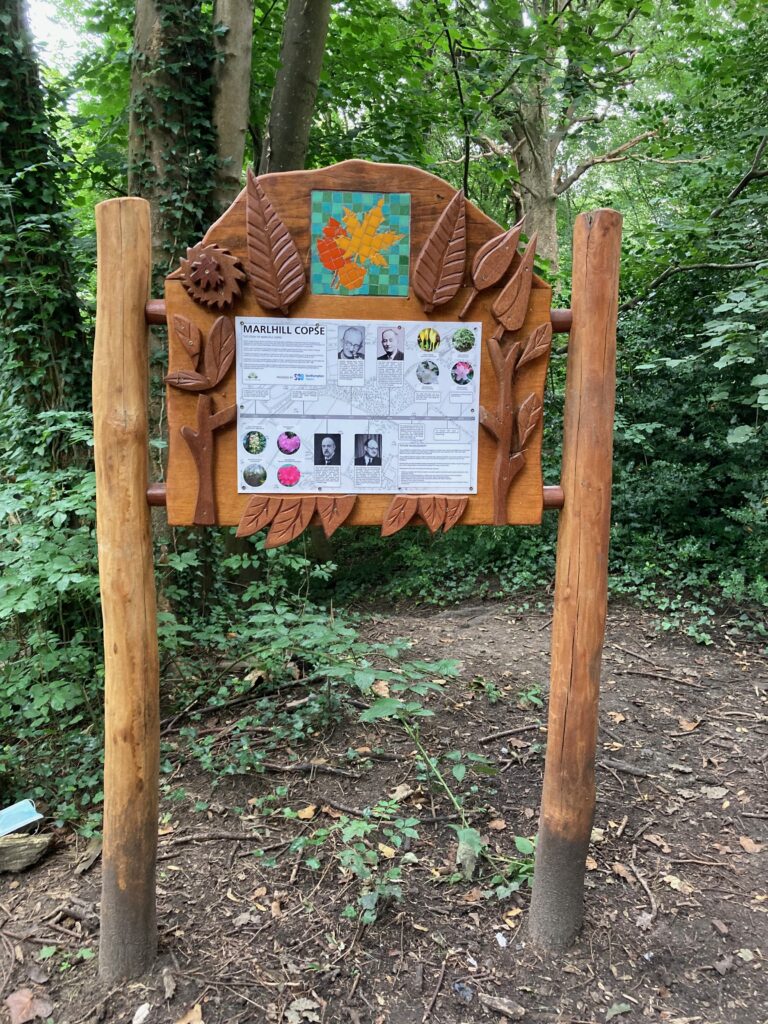
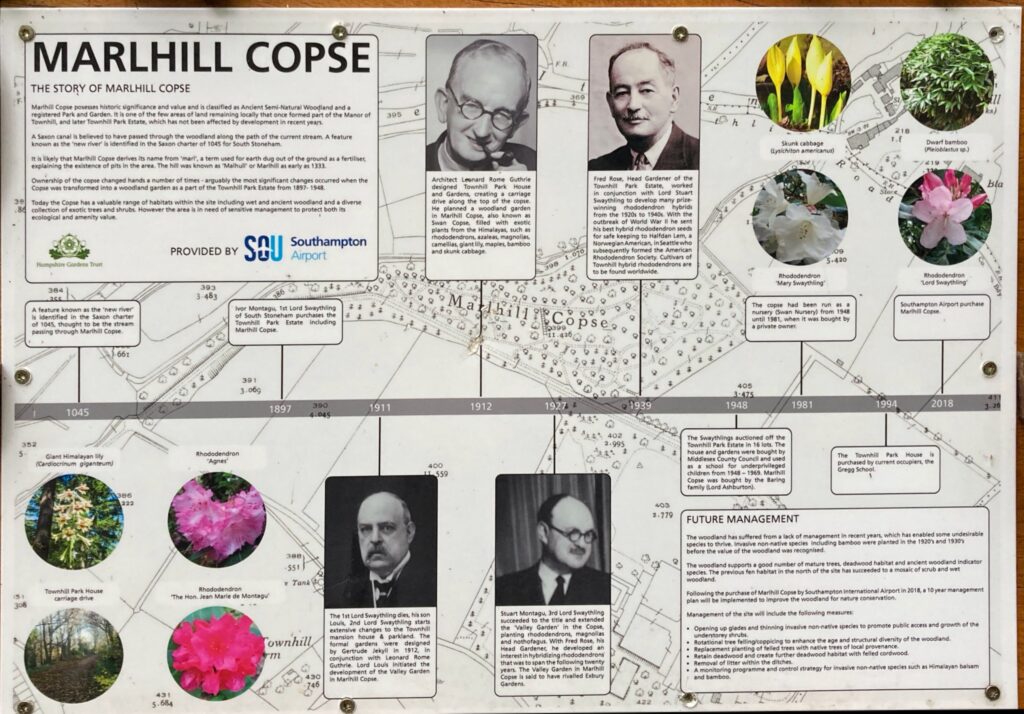
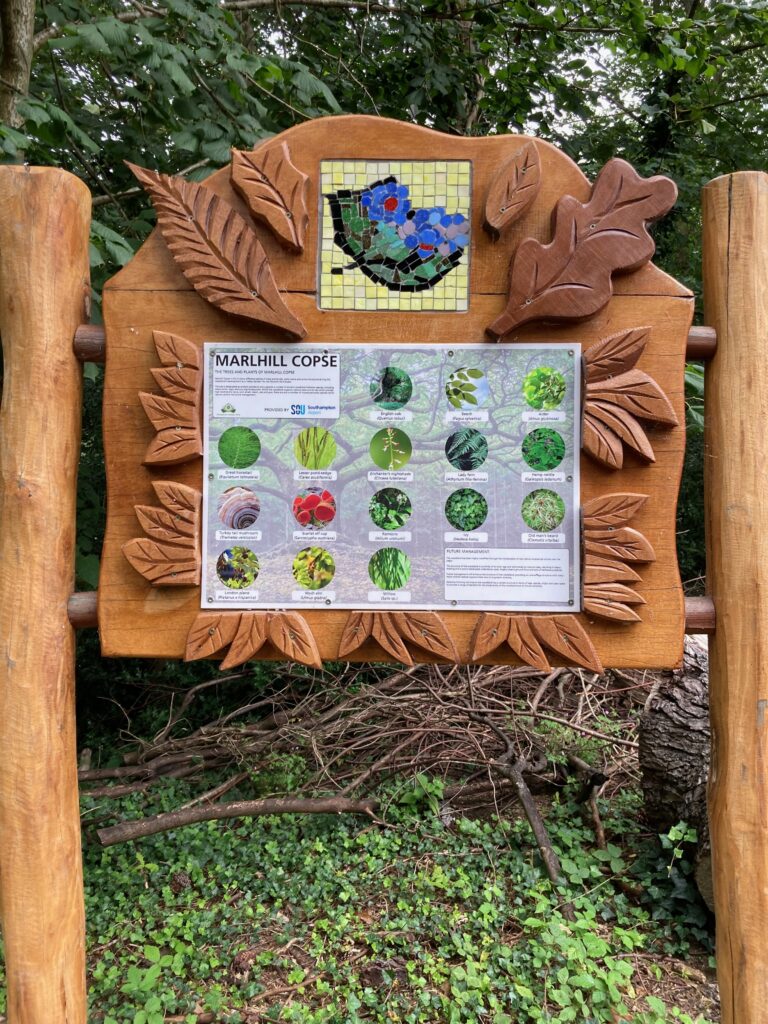
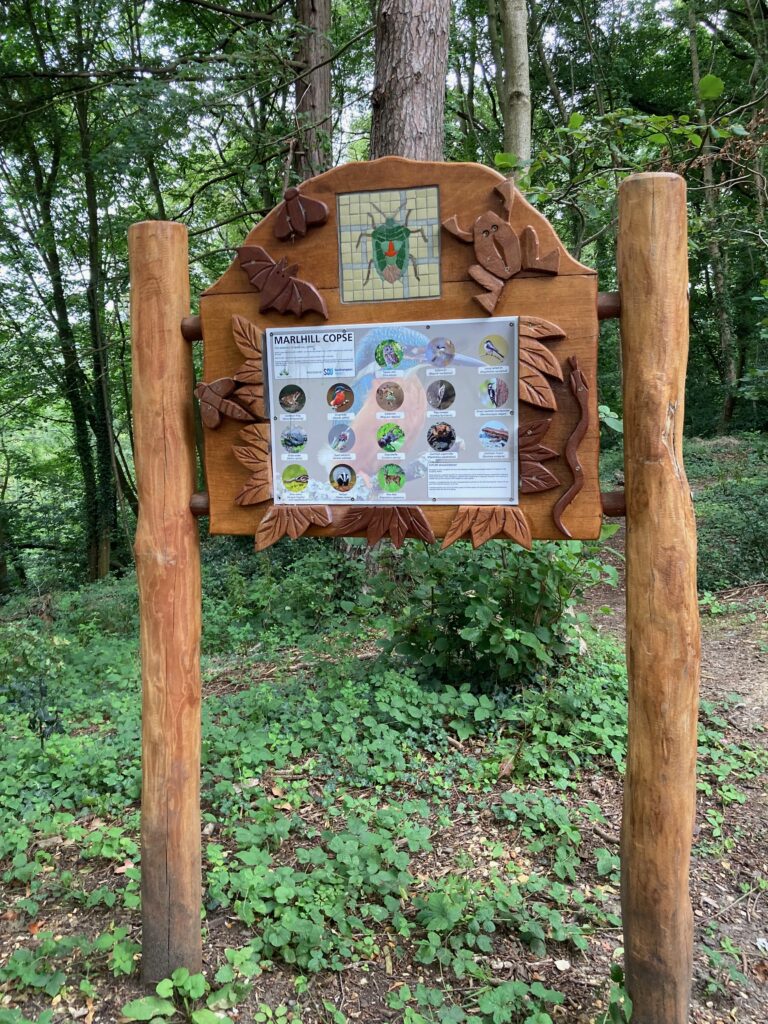
We walked a littler further and came across another new sign. Made out of what might have been more felled trees and a rather beautiful mosaic, it made interesting reading. It certainly allayed some of my concerns. I was especially interested in the section about future management. The first part of my morning walk had demonstrated all too clearly how non native species can cause devastation to natural wildlife and the fact that the new owners were aware of this issue and had plans to mitigate it sounded positive.
To the right of us were the fences of nearby houses. On past walks I’ve come across some very large fallen trees along this trail and I could see how some of these might pose a threat to the houses beyond the fences. The giant pine trees are especially worrying. I’ve almost been hit on the head by huge falling cones in the past and there are often massive branches laden with cones littered on the ground after stormy weather. If some of these non native, pines were about to be felled, it might not be a bad thing.

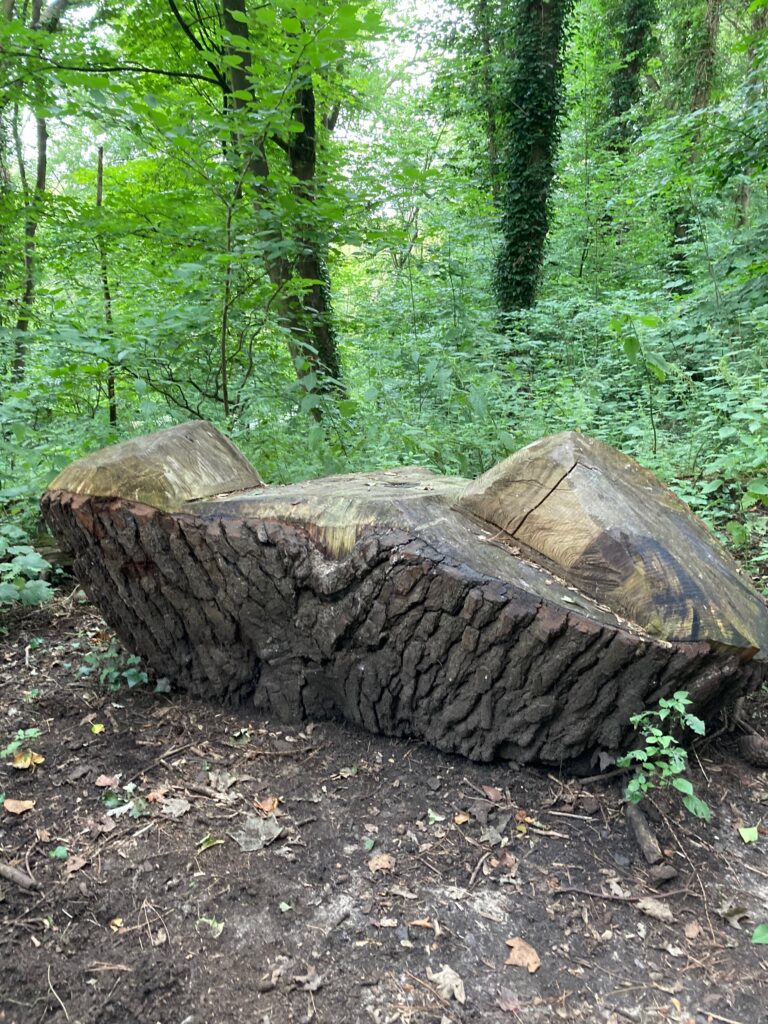
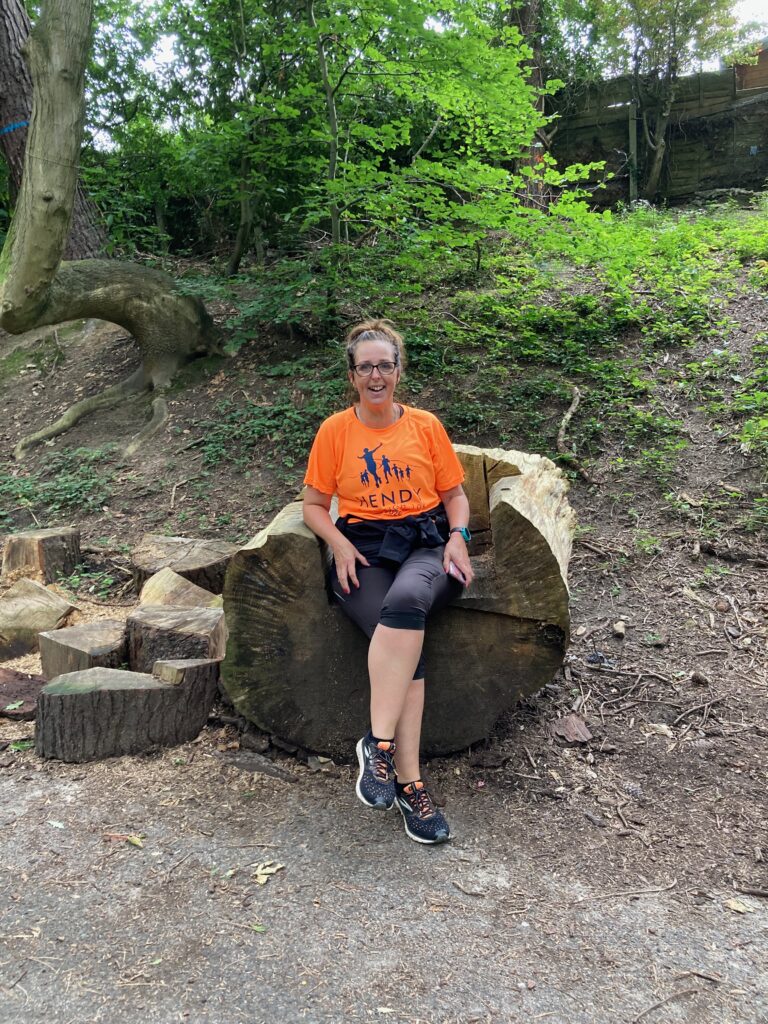
We had been climbing steadily since we went through the gate on River Walk and it was getting rather warm. Last time I walked this way I’d seen some lovely little seats made from the trees that had already been cut down. Today we stopped for a moment to make use of them. Of course, these seats will rot in time, but rotting wood is actually a good thing. Dead wood provides a habitat for invertebrates, fungi and plants. As the wood breaks down, it releases nutrients and builds up organic matter in the soil. It is a source of food for wildlife and home to nesting birds and even bats.
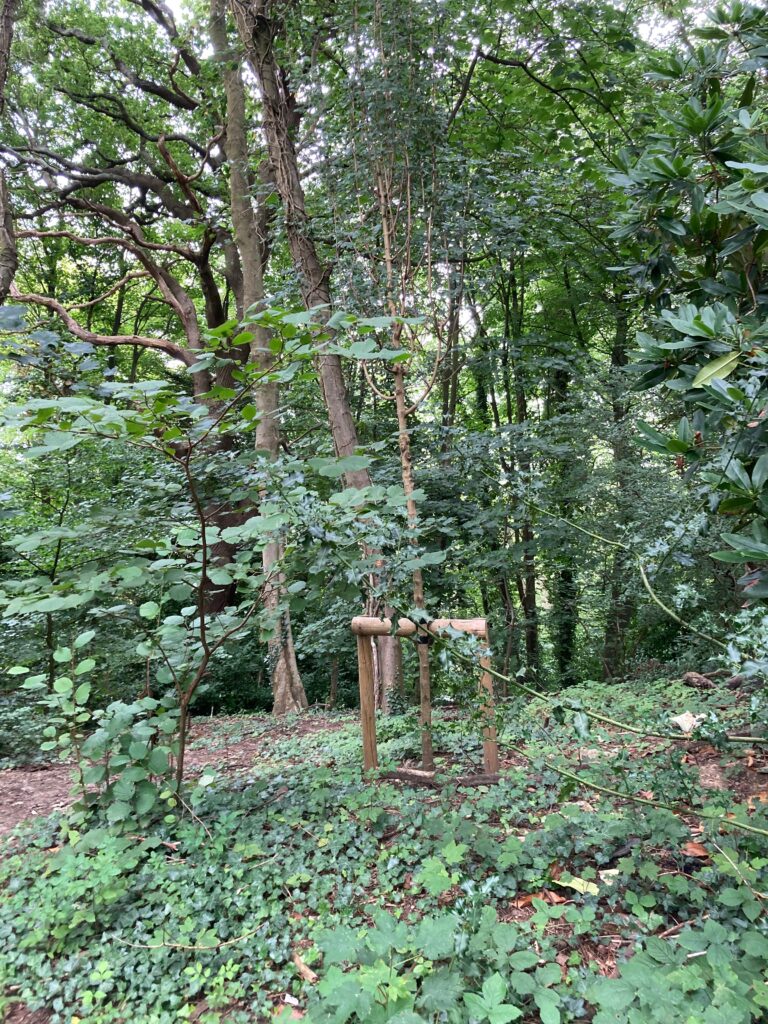
Another encouraging sign were a number of saplings that had been planted where trees had been cut. The further we walked, the more of these we saw. It really was beginning to look as if the new owners were replacing the massive pines with native species, just as the sign said they would. The changes at Marhill Copse were looking more and more like a good thing.
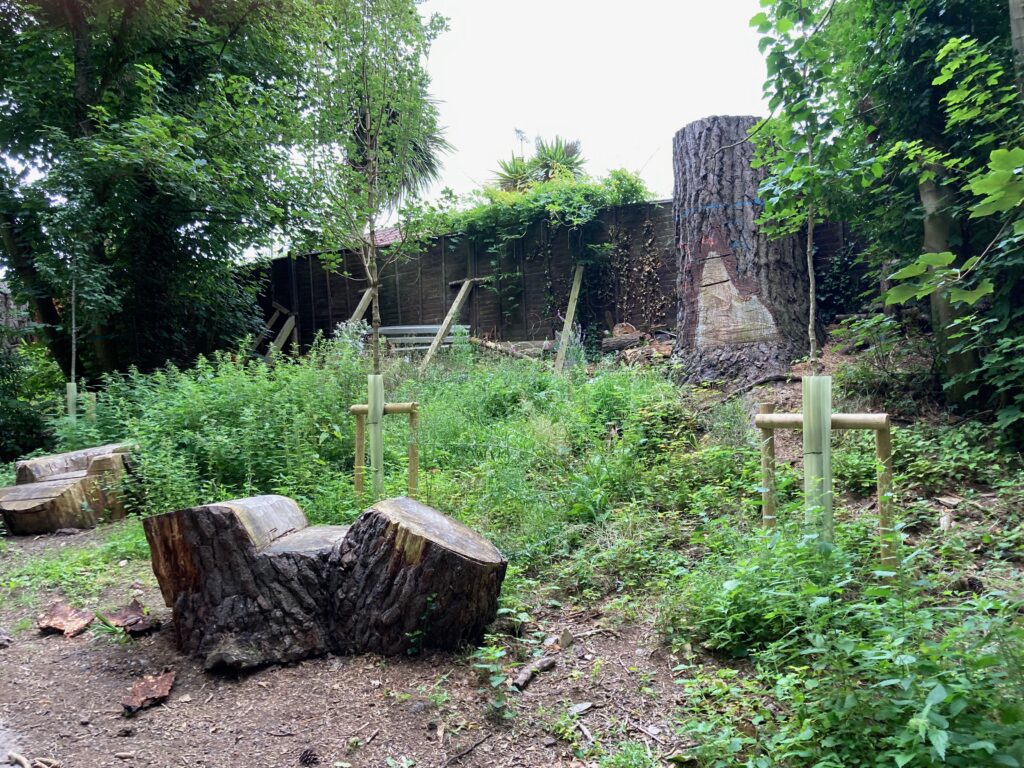
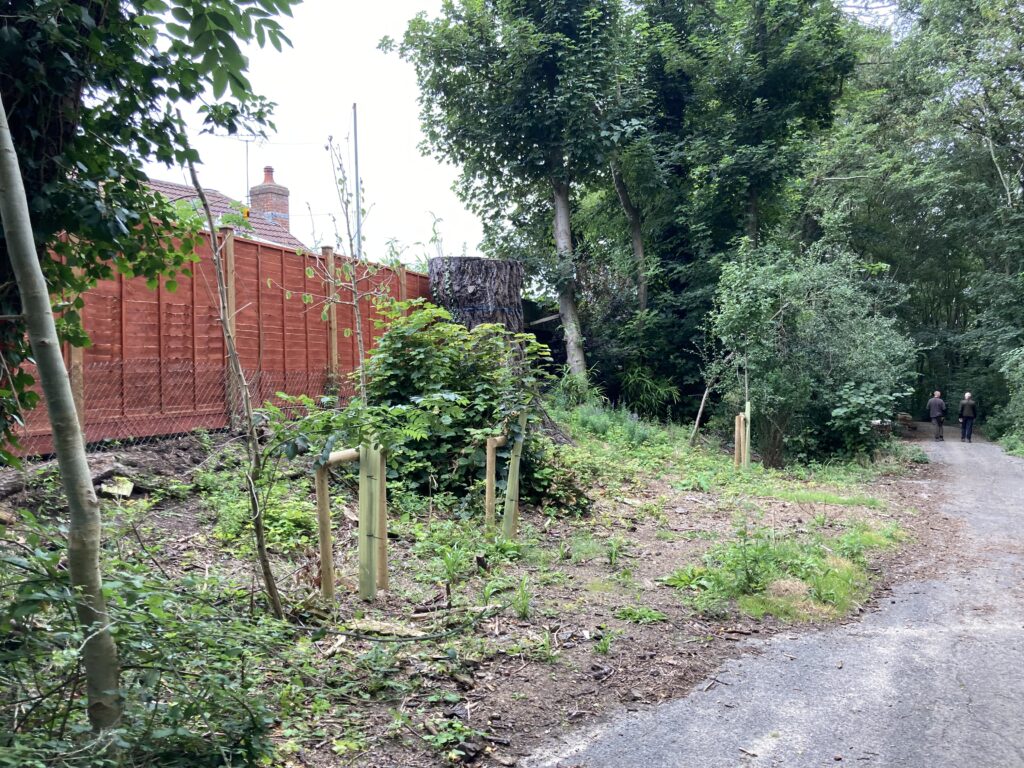
It’s easy to hear ‘trees cut down,’ and react in horror. This is especially true when the new owner of the woodland in question is the local airport. Environmental issues have become a huge concern in recent years and big businesses, like airports and ports, have had a very bad press. There is no disputing that planes create pollution, but the aviation industry is working to reduce the pollutants emitted into the atmosphere from aircraft. New engine designs, operational procedures and fuels are beginning to make a difference. As the old Irish saying goes, ‘even black hens lay white eggs,’ and, in this instance, I’m beginning to believe they are doing the right thing.
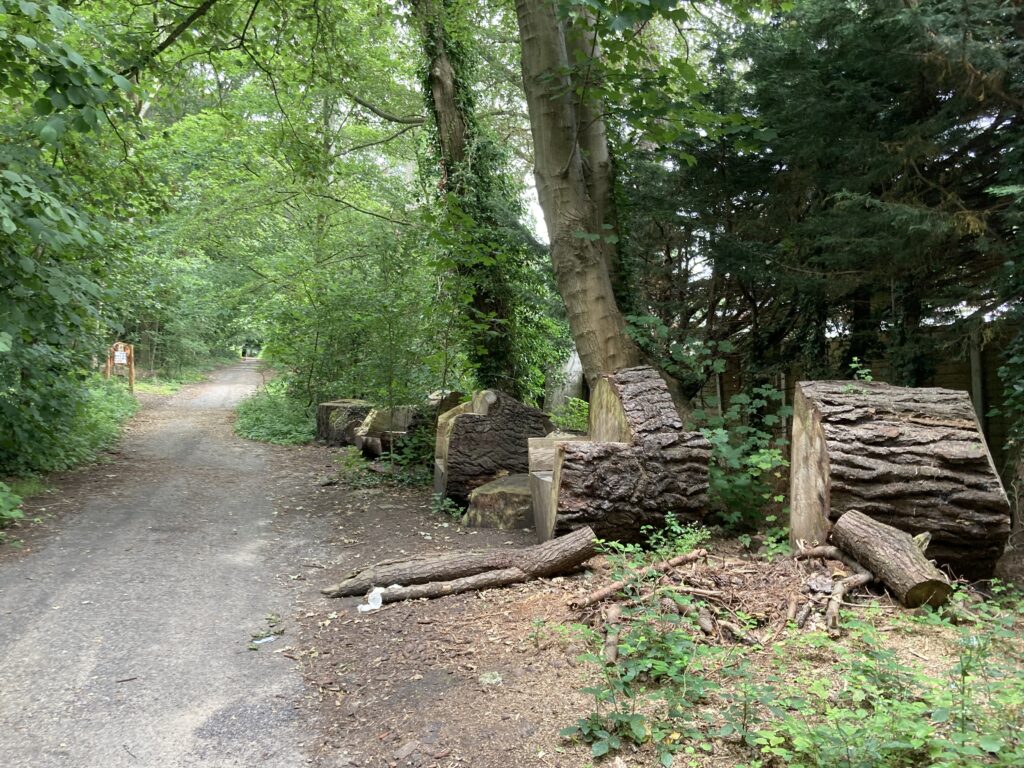
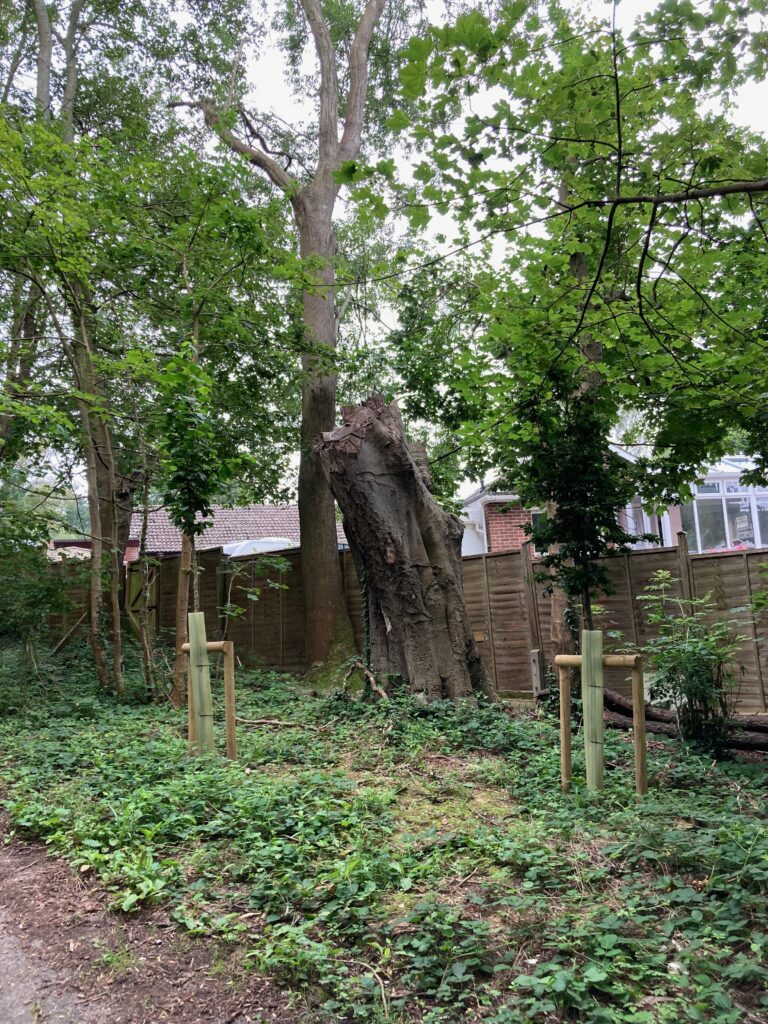
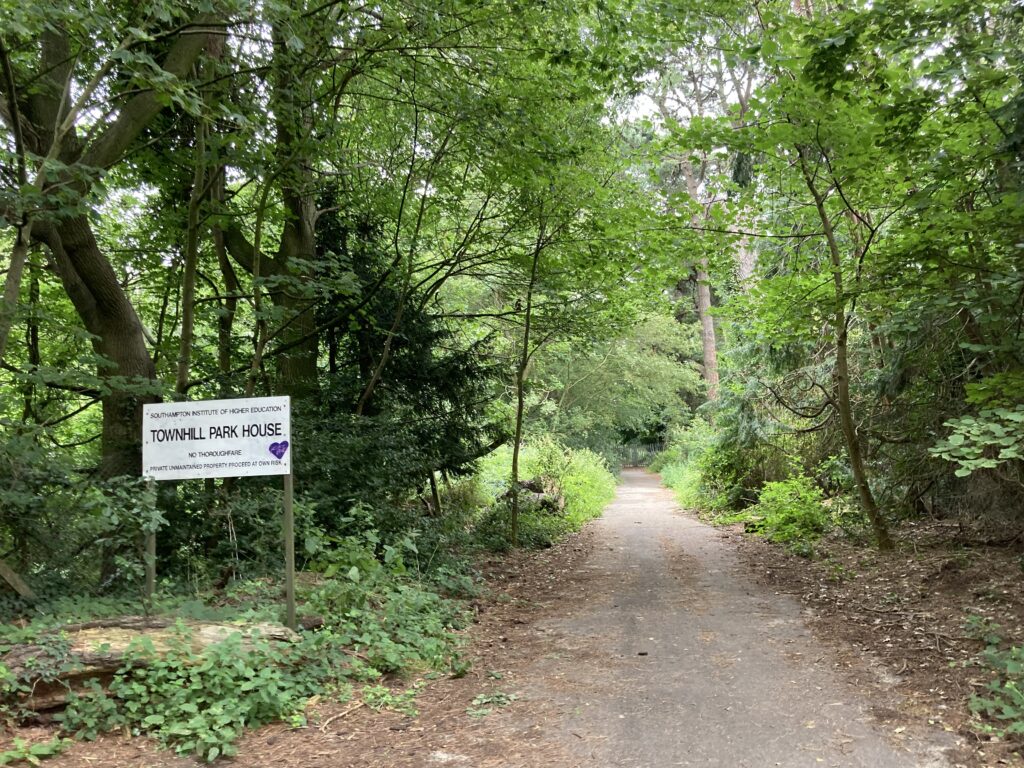
When we came to another new sign for Townhill Park House, I knew our walk through Marhill Copse was coming to an end. We’d seen trees marked to be cut down and we’d seen trees that had been cut down. We’d also seen new trees planted though and many signs that things were not nearly as bad as I’d feared.
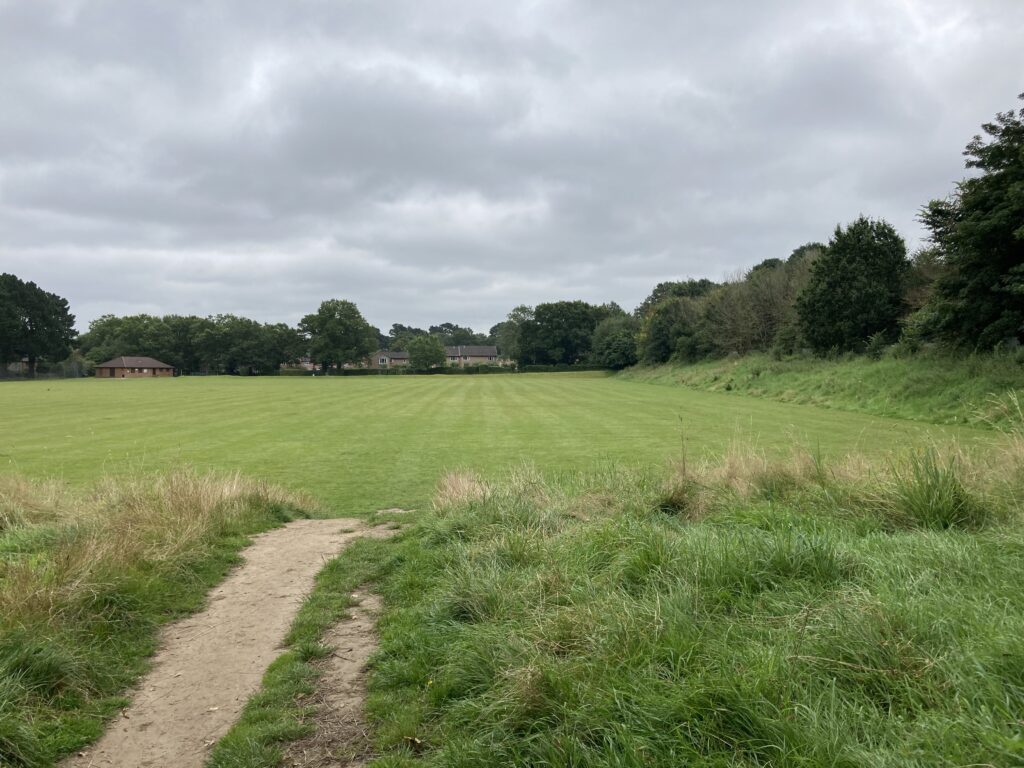
As we walked the last part of the trail and emerged onto the Cutbush Lane Playing Fields, I felt far more hopeful than I had at the beginning of this walk. Perhaps the problem was always a matter of perspective. Nothing is black and white, good and bad, sometimes there is a need to delve a little deeper to see all the shades of grey and understand what is really going on.
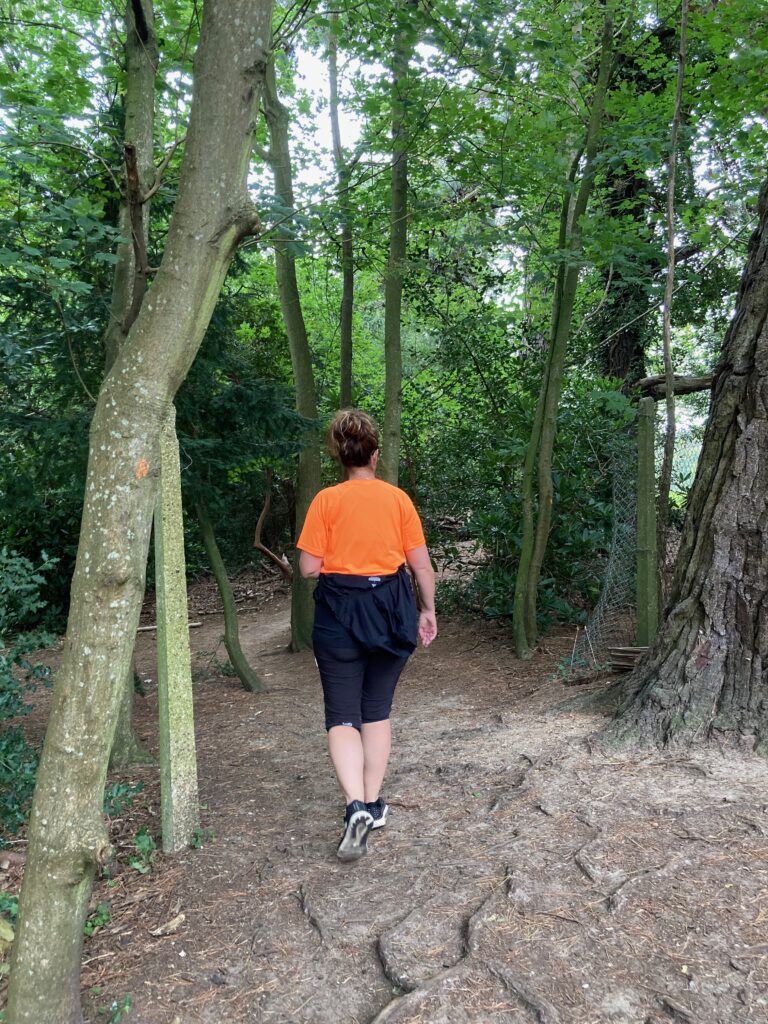
The playing fields were not the end of our walk by a long chalk. I wasn’t going to let Kim off that lightly. The rest of the walk will have to wait for another day though.
If you like what I write and would like to help me keep doing it, you can now buy me a virtual coffee by clicking on the little orange coffee cup at the bottom right. If you’re interested in my historic novels, Plagued is available now on Amazon.
I’m glad that Marhill Copse is being managed properly and the trees not being cut down for no reason. Also glad that you were able to get out for a walk with Kim, and pleased to see that she is looking so well.
it certainly looks like the airport people have the best intentions. Kim really does look great doesn’t she?
You can go off the path (in the dryer weather) to the left just before Townhill house and see the ornamental acer trees and gardens. When I was a child we could walk through to the stone bridge at Mansbridge but the whole area has become boggy and wet where it used to be fields. So yes the management is needed. There used to be so many deer and badgers that we would watch at dusk.
hopefully things will get batter now.
This is a lovely article showcasing places that I love visiting several times each week, thank you.
Regarding the work at Marlhill Copse, the last application to fell the pines and broadleaf trees on the southern edge was refused but the airport has appealed and the hearing will be later this year. The disputed trees are those that you experience on the right of the path as you climb up the hill.
These trees include native and non-native species (e.g. there are Scots pines, which are native and Monterey pines, which are not) but the most of the UK is populated with non-native tree species (apples, chestnuts, … ) and so this is a misleading representation. The issue is only with invasive species, and possibly the only species in this compartment that is invasive is the sycamore (which is isn’t entirely an unbeneficial species). The felling of these trees would remove that lovely “tunnel of greenery” that you observe – replacing the taller side of the tunnel with lower growing species.
Safety will always be a concern where we build underneath trees. However, the risks are much lower than getting in our car each day and we live with that risk. Trees can be managed when their individual risk becomes too great – but felling whole swaths of trees is not a good solution.
I’m glad you enjoyed the post Izzy and thank you for clarifying a little more what is happening. I will admit that my first reaction when I hear about trees being cut down is usually horror. So far, what I’ve seen gives me cause to hope this lovely area will survive and prosper and hopefully good sense will prevail.
I cannot believe I have only just discovered this beautiful place! I have lived locally for years and my son even attended Gregg school! I knew the main garden of Swaythling House was designed by Gertrude Jekyll but didn’t realise Marlhill Copse existed until a couple of weeks ago. Whilst walking the dog on the playing fields I decided to follow a tiny path. I came across such beauty! The rhododendrons are magnificentt and that Wisteria that must have climbed a good one hundred foot up some trees! The stillness of the green stagnant water is spellbinding. For me to stumble upon this true piece of beauty so near to where I live was comparable to the men finding the Lost Gardens of Helligan! I am just sorry that it has taken me so long to discover it!
I felt the same the first time I stumbled upon it.