
On 11 August 2021, I’d been to look at the repairs to Woodmill, but this was just the first part of a much longer walk. In fact, Woodmill and the repairs were almost incidental. The main aim of my walk was flowers, although maybe not the kind you’re expecting. Once I’d inspected the new brickwork at the mill I carried on along Woodmill Lane, over the little railway bridge, and crossed the road at the junction of Portswood Road and High Road. I was heading for Swaythling.
About half way along Langhorn Road I saw my first flowers. One little cottage garden was absolutely bursting with them. They were lovely, but they were not the flowers I’d come to see. My aim was the flower roads of Swaythling, or at least some of them. The history of these roads is interesting, but not well known. In 1924, Southampton Council sought an Act of Parliament to secure land on West Marlands park (the site of the old Magdalene hospital for lepers) to build a new Civic Centre. There were objections to the plans, and to ensure that the scheme went ahead unopposed, a promise was made to build two thousand homes for working people in the borough. This was how the flower roads came into existence.
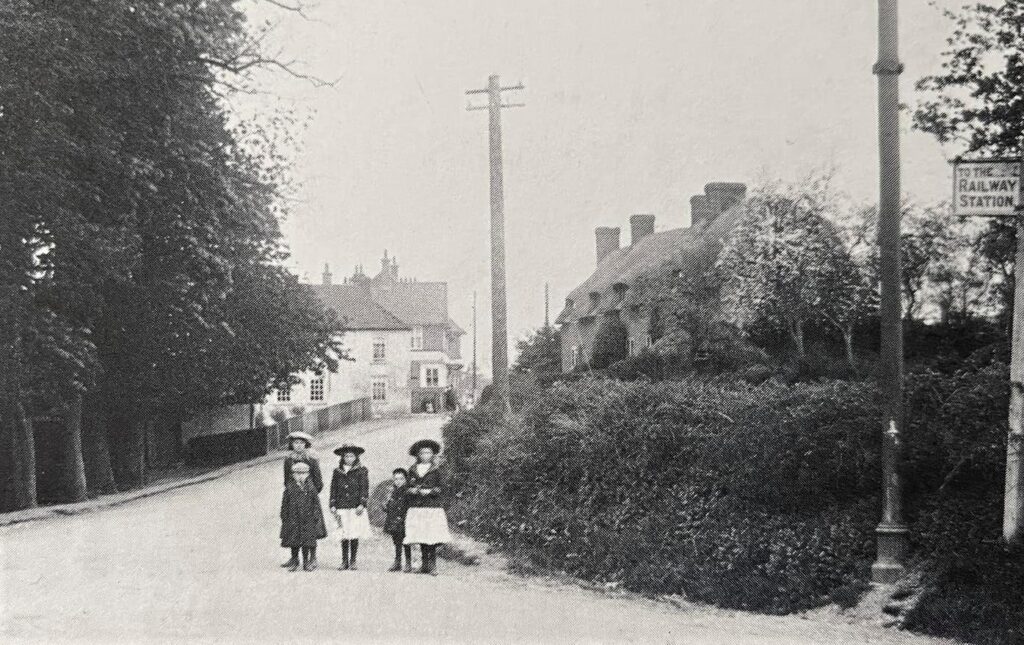
Swaythling was originally a manor and a farm between the parishes of North and South Stoneham. It was quiet and rural until it was absorbed into the borough of Southampton in 1920. The new social housing was built during the 1930’s and for some reason, it was decided to name all the roads after flowers. Perhaps the powers that be thought this would make the estate sound like a nicer place to live?
My interest in the flower roads was threefold. Commando’s grandparents, Walter and Violet Dowling, once lived there, as did my grandparents, Leonard and Laura White, and the latest book I was writing was partly set in the area. One of the things I wanted to do was walk the streets I was writing about to remind myself of distances, views and the terrain. So, like the characters I’d been writing about, I crossed Burgess Road, walked up Aster Road, across Honeysuckle Road, and began to climb the hill up Bluebell Road towards Daisy Dip.
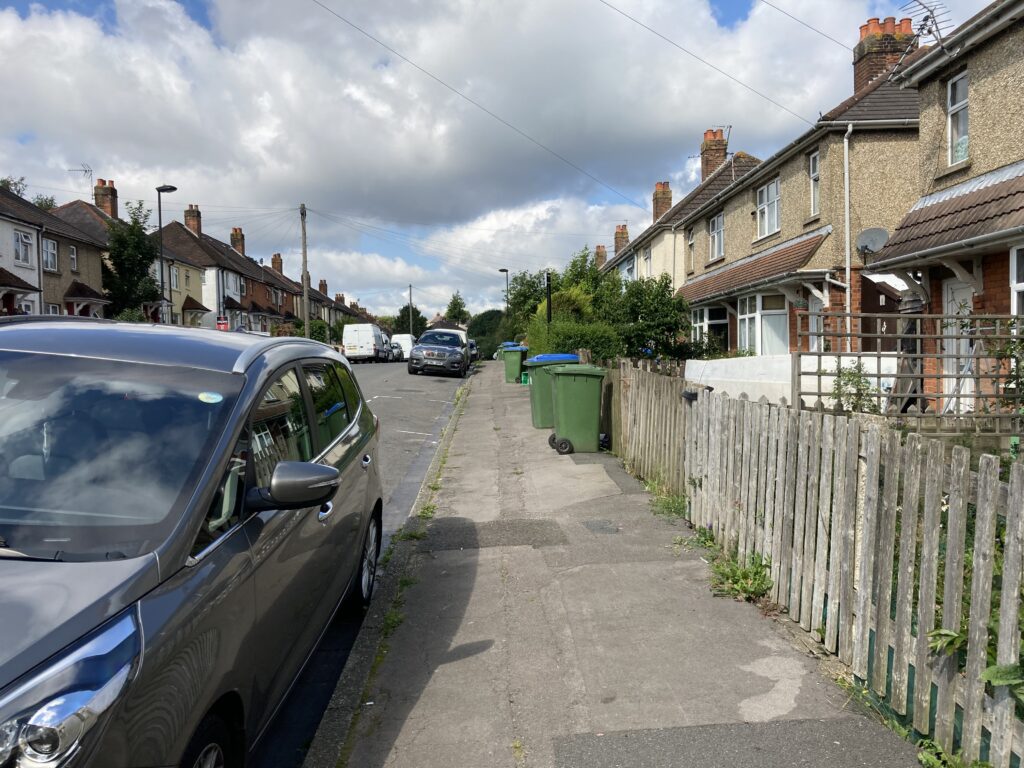
The houses I passed were pleasant, mostly pebble dashed, with porches or little bay windows. They had neat little gardens filled with flowers, although not necessarily the flowers the roads were named for. I could imagine my mum as a young woman walking up this hill on her way home from work, or Walter walking the other way to catch a tram to the depot.
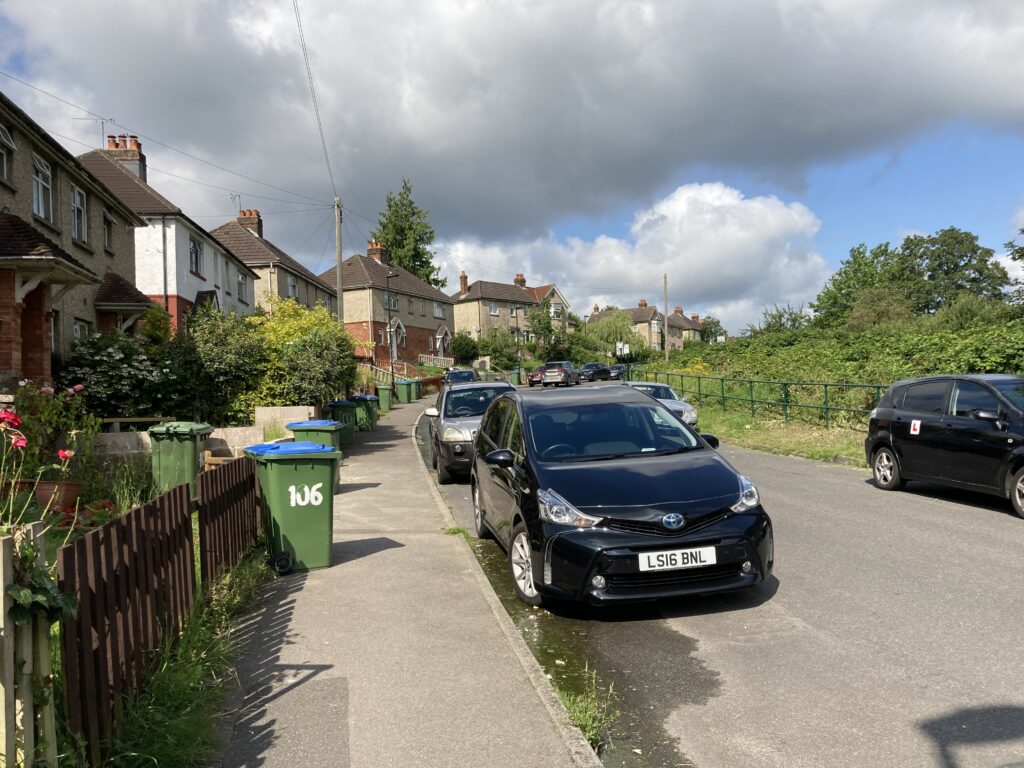
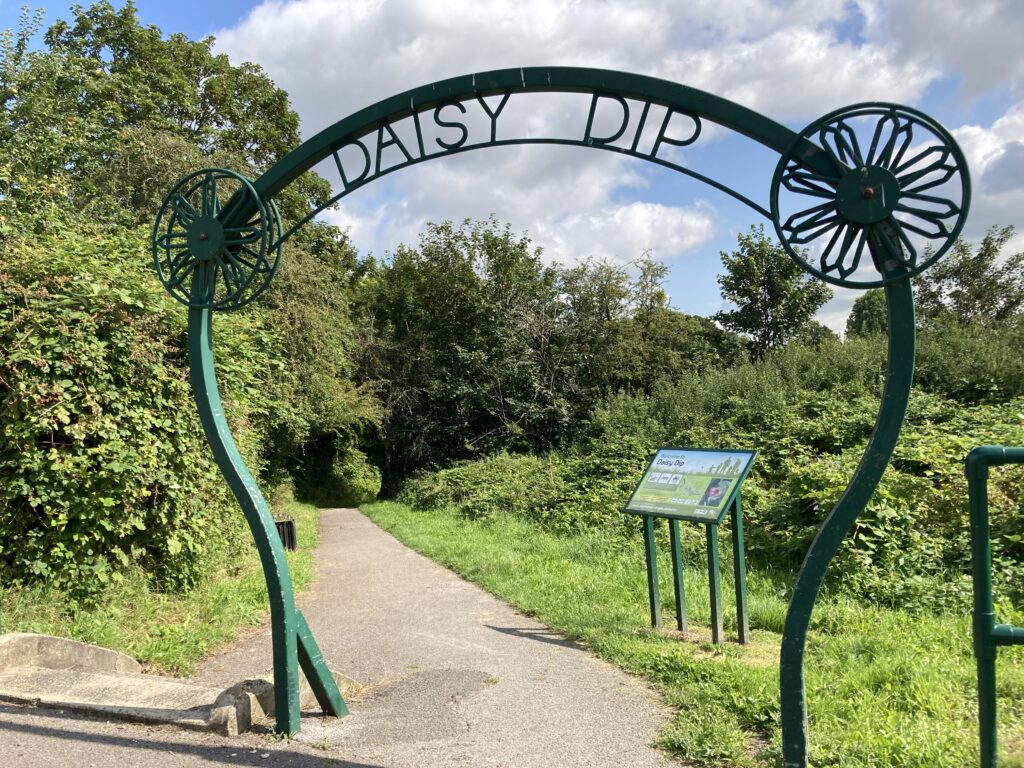
At the top of the hill I came to Daisy Dip. This strip of parkland, running down into a valley that was probably too difficult to build houses on, is divided in two by Lobelia Road. The short road between it and Honeysuckle Road is called Daisy Road, hence the name of the park. Although I wanted to explore the dip, my first aim was Lobelia Road and the house where Walter and Violet once lived.
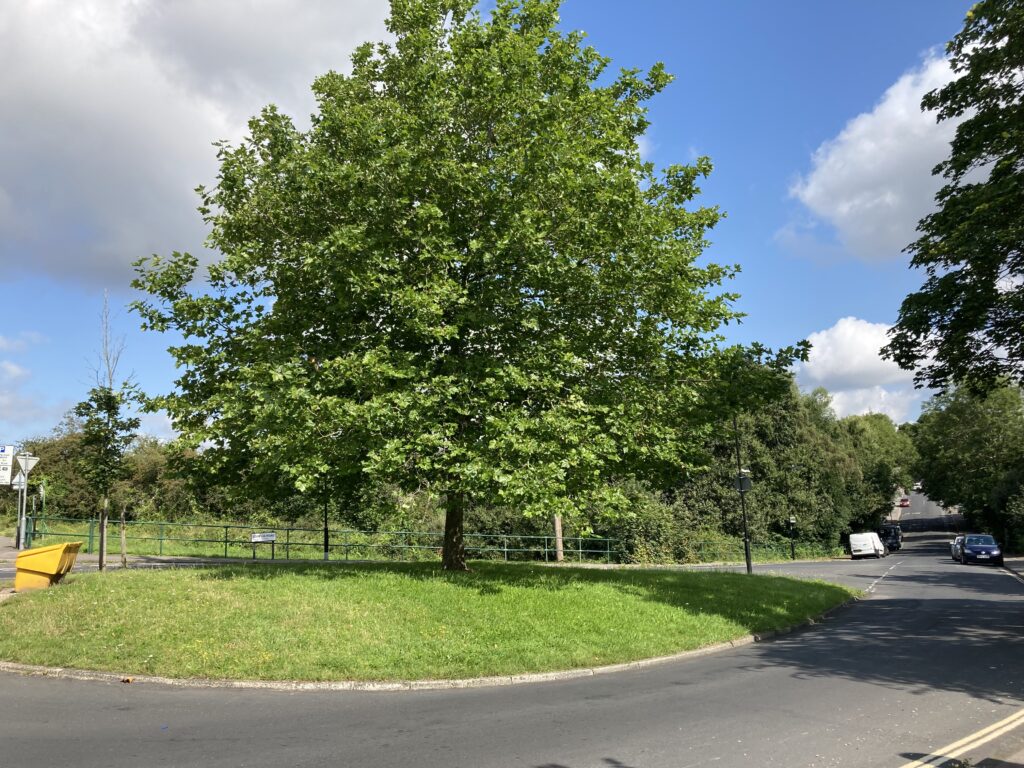
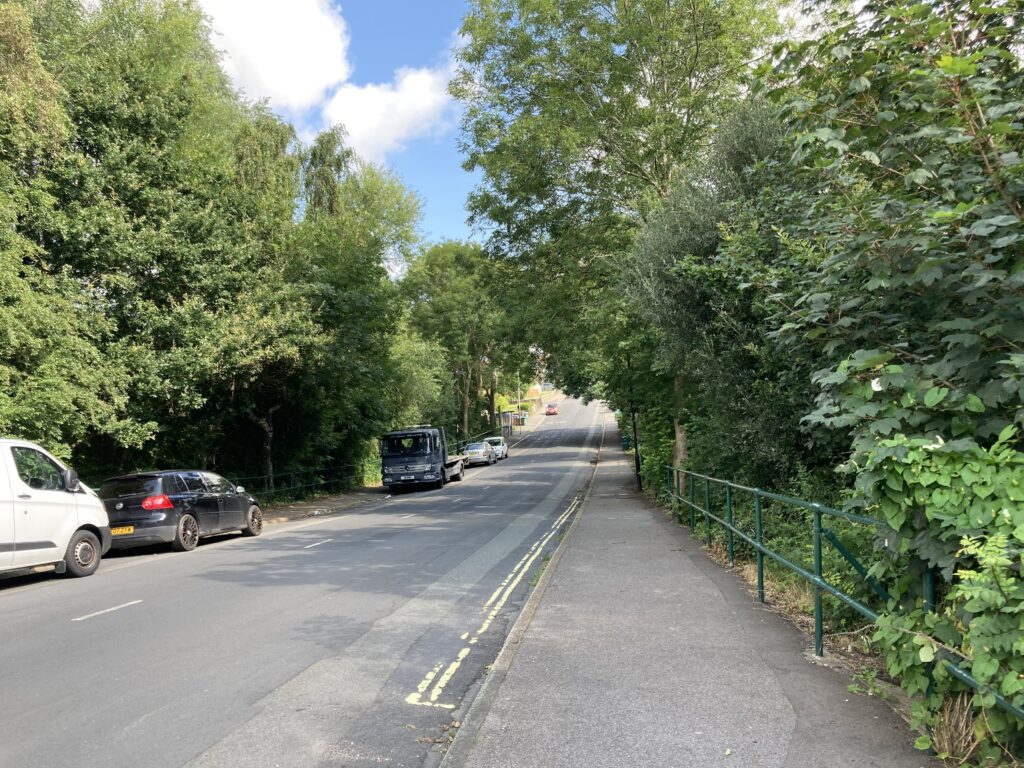
The first thing I noticed was the teardrop shaped island at the top of Lobelia Road. This was something I’d forgotten all about and it proved to me how important actually walking these streets was if I wanted what I wrote to be authentic. Otherwise, the road through the dip was exactly as I remembered, a steepish down and up with trees on both sides. It was probably exactly how my mum would have remembered it too. Apart from the size of the trees and the parked cars, I doubt it has changed much since the 1930’s. What a wonderful place it must have seemed when they moved there from Melbourne Street and the shadow of the gasworks.
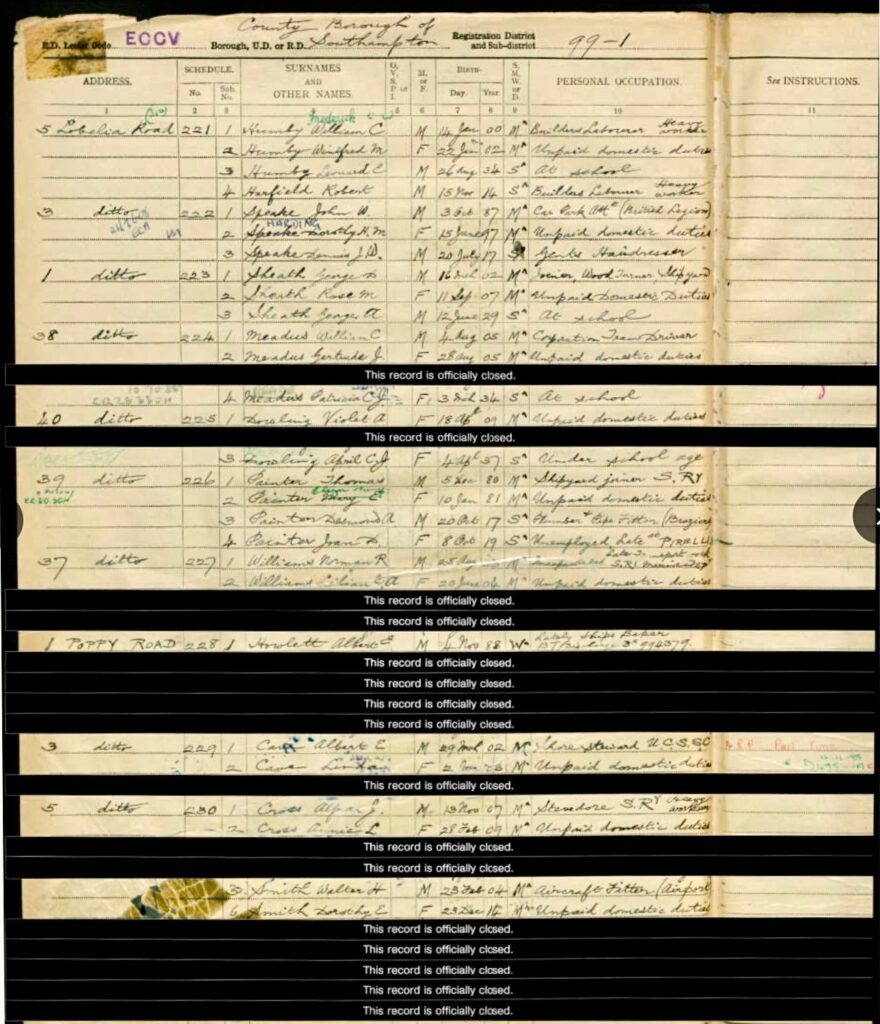
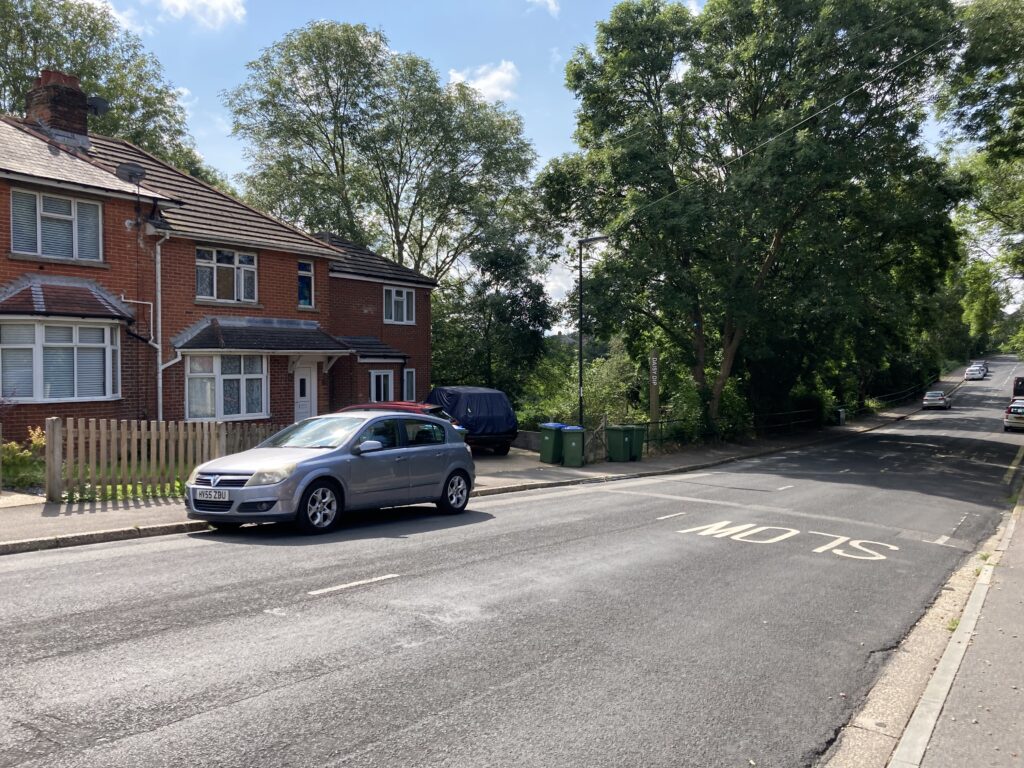
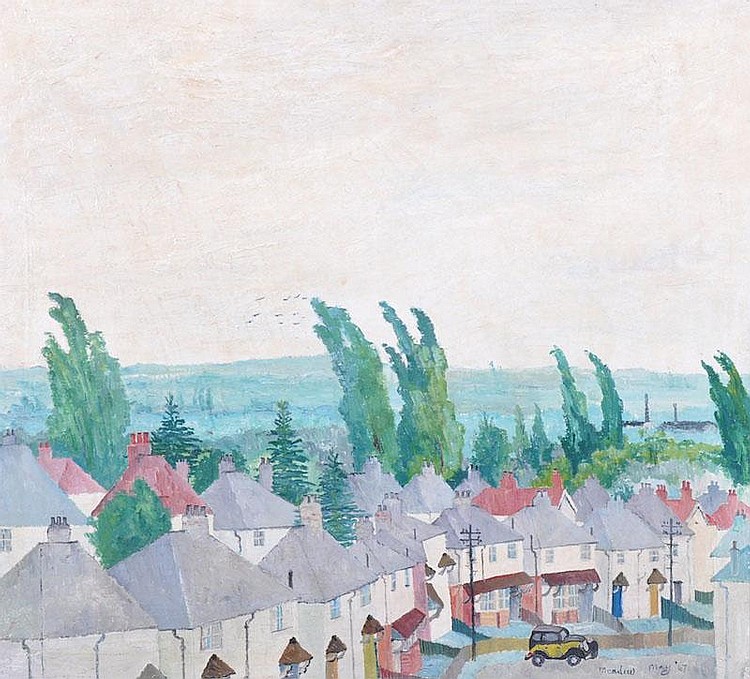
Walter and Violet lived right next to the dip, although a new house has since been built on the land beside their house so it is now one house removed from the park. The Meadus family lived next door to them at number 38. The eldest Meadus child, Eric, was a talented artist. He won a scholarship to King Edward VI Grammar School and went on to become an apprentice draughtsman at Vickers Armstrong. After his national service, Eric lived in Canada for two years and it was there that he took up painting seriously. When he returned to England he got a job as a draughtsman at the Pirelli Cable works and drew cartoons for their magazine Cable.
Eric’s first exhibition was in 1965 at the City Art Gallery and his oil paintings were exhibited at the Royal Academy, the Cork Street gallery in London and at the Paris Salon. Many of his paintings feature the flower roads and other buildings in Swaythling and his work is often compared to L.S. Lowry. Eric worked at Pirelli’s for the rest of his life. Sadly, he died in 1970, aged just 39, just as he was beginning to become famous for his artwork.
Opposite Walter and Violet’s old house there is a small footpath leading down onto the dip. This was set to feature in my story, as was the junction of Lobelia Road and Carnation Road. If anyone in the houses was looking out of their windows they probably wondered what the scruffy blonde woman was doing walking up and down, squinting at things and taking photographs. What I was doing was looking at distances and making sure that the things my characters were supposed to have seen and done were actually possible. This might have been hard to explain if anyone had stopped me and asked.
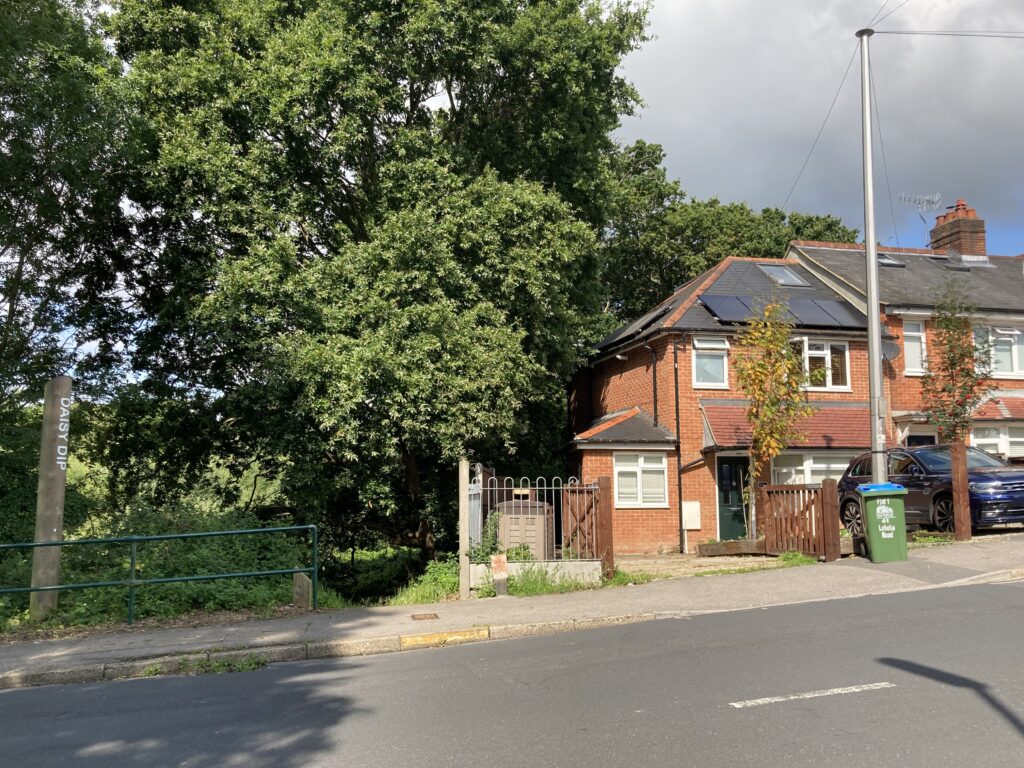
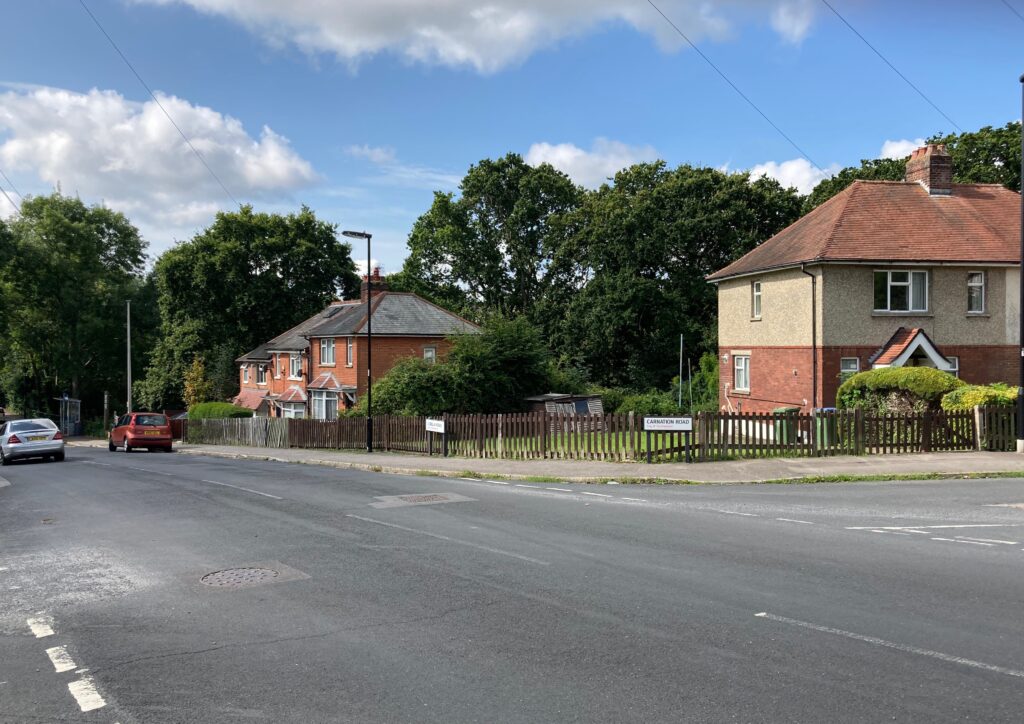
The next thing on my agenda was finding the house where Leonard and Laura White had lived and where poor Leonard had died from TB aged just 35. I knew it was in Carnation Road and I knew the number, but Carnation road is very long so I was prepared for a bit of a walk. In the end I was surprised at how near it was to Walter and Violet’s house. Commando’s grandparents and mine would almost certainly have known each other, if only to nod to in the street. There was quite a community spirit in these roads back in the 1930’s and 40’s. Unlike today, people really knew their neighbours and there would have been lots of gossiping over fences and popping into neighbours’ houses. Perhaps they had even been friends?
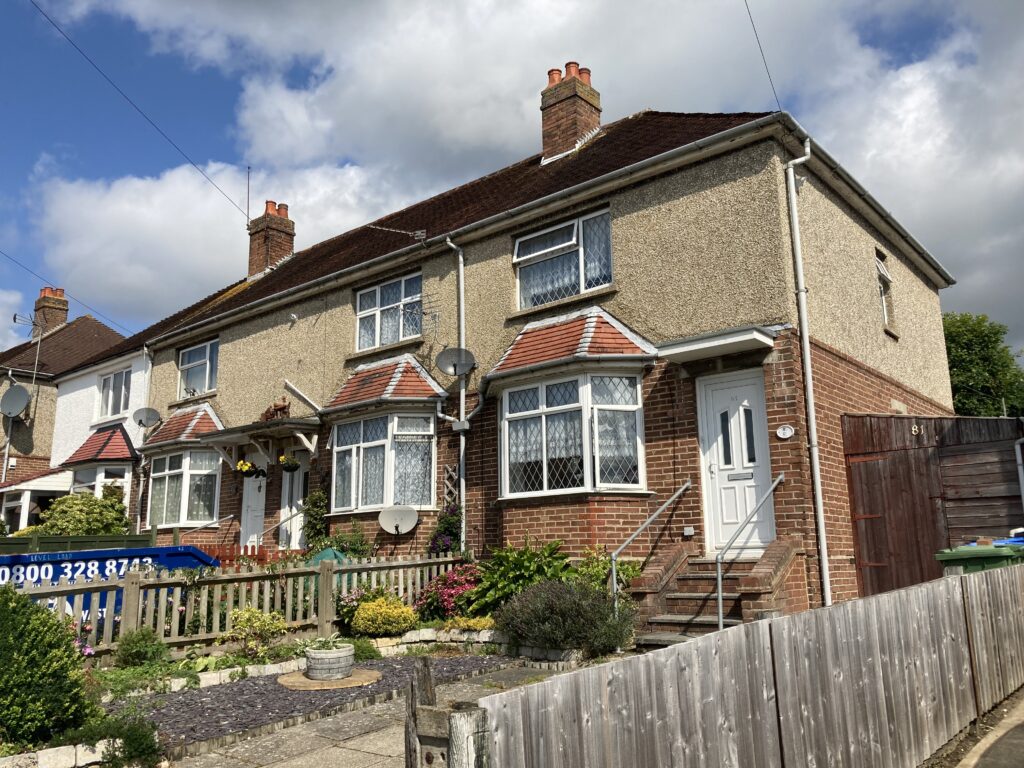
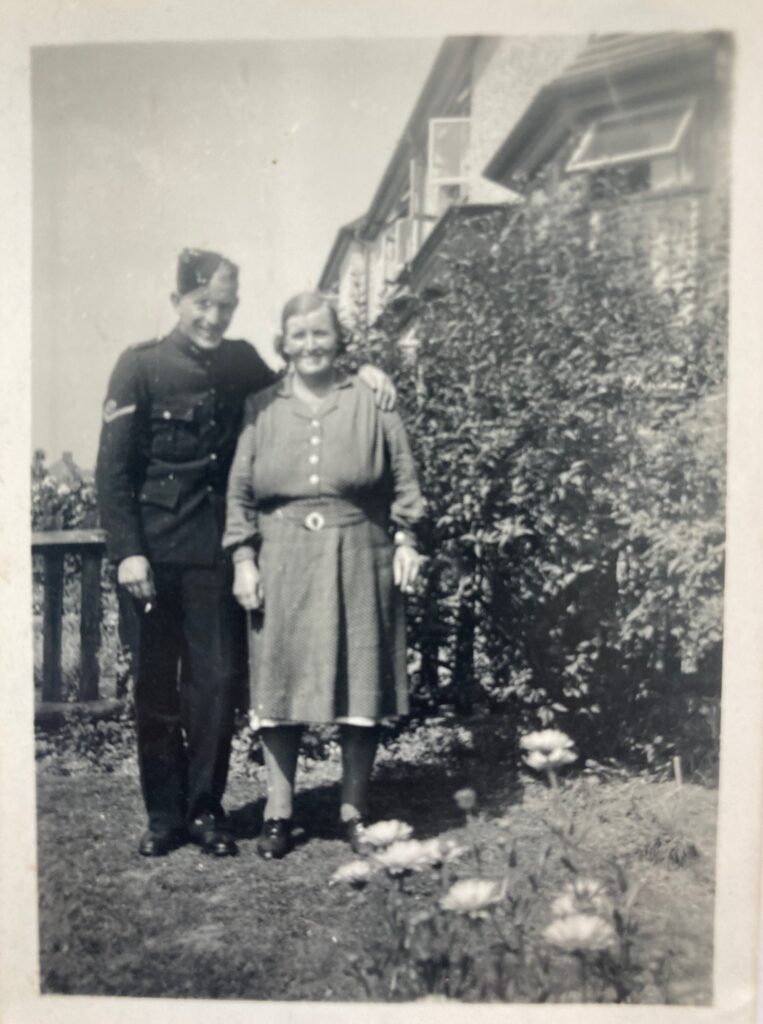
Leonard and Laura’s house was on the end of a terrace of four. The bay window and the wooden fence were just as I’d expected, although I’d never actually been there because Laura had moved to a prefab in Bassett Green by the time I was born. What I didn’t know about were the steps up to the front door, or the gate to the back garden. I’d only ever seen the house as the backdrop to family photographs. Seeing it in real life made me realise I had a few revisions to make to my story, but that was why I’d come after all.
Now I’d seen the two two houses I wanted to see but my adventure in the flower roads wasn’t quite over. Next I wanted to explore Daisy Dip, but that is something I’ll tell you about next time.
If you like what I write and would like to help me keep doing it, you can now buy me a virtual coffee by clicking on the little orange coffee cup at the bottom right. If you’re interested in my historic novels, Plagued is available now on Amazon.
So interested in this, the Flower Roads being my home for 20 years and being a Meadus fan through going to The First Gallery in Bitterne. I knew you knew about the estate by the fact you didn’t refer to it as the Flowers Roads as many (even the council) sometimes do. I am trying to get Meadus on the art curriculum at the local primary where I teach and I would think our pupils would love to hear how a real life author does research if you’re ever free to come in. I am half way through “Plagued” too and “seeing” all the scenes in the town in my head brings it alive. Really excited your next book will be about here. I live in one of the roads most associated with the flower from “plagued” if you want to guess.
My grandparents lived in Carnation Road and my Mum was brought up playing on Daisy Dip. My mother in law had a fire screen painted by Eric Meadus, sadly, not in great condition after years of use. I love Meadus paintings and wish they were more well known. It would be great to get them onto the school curriculum. As for coming to talk to your pupils about research, I’d be more than happy to once this pandemic is over and visitors are allowed. You can always send me a message on the contact form if you want to make arrangements.
I’m glad you’re enjoying Plagued. The next book is actually already with the editor and is about the docks area during the general strike. The one I was researching in the flower roads is actually number 4, so you will have a little while to wait, but number 5 is also set there. I’m currently working on number 7! I’m guessing you live in Poppy Road.
I really enjoyed reading your story its so nice reading how happy life was then when we had little but appreciated what we had
Thank you.it does seem that people have an awful lot these days but don’t really appreciate any of it.
Hi Marie,
Me again. Sorry, but you seem to be following in my footsteps, some 55 years later! The flower roads estate was well known to me, as my father had a greengrocer’s shop on the High Street in Swaythling, just on the borders of the estate. I never knew the estates history, but now you’ve solved another mystery for me.
The shop and the adjoining garage, petrol station and car showrooms are now demolished and the site is now occupied by student flats, as is what was the wasteland adjacent to Parkville Road. 55 years ago, that was a track for dirt bikes with an open stormwater drain running through it! I spent hours and hours watching trains from that site. The Old “Swaythling Fisheries” chip shop is sill there. We were very friendly with Mr Coleridge and his wife and daughters who made the best fish and chips in Southampton! Now, it seems to be a Chinese take away. Their yard will no longer be filled with bathtubs full of raw chipped potatoes awaiting “frying tonight”.
In the early to mid 60’s, the flower road estate was pretty dicey for a 10 – 11 year old kid on his own. I got caught by gangs a couple of times and ended up with a beating. In 1965 I started at Glen Eyre School and stayed for two years. You had to learn how to fight! Looking at Google Maps now, I’m surprised to see it’s all gone now. It was only recently opened when I went there. We used to spend lunch times in Daisy Dip, at the playground. But the real attraction were the big trees on the Carnation Road side of the dip. At some point, someone had tied a rope high on one of the big oaks, and attached an old tyre to it. Climbing into the tree , it was possible to hook the rope pull the tyre up and hanging on for dear life launch out over the dip which sloped away from the tree. At maximum stretch you were about 30 or 40 feet off the ground, swinging back towards the tree….you had to have a lot of nerve to do it otherwise you could fall off or collide with the tree on the return swing. Typically, we would usually watch the fourth and fifth formers do it, hoping that the school bully would come a cropper!
The photo you posted called “Swaythling 1910” is (I’m pretty sure) a photo of Wessex Lane taken by the Fleming Arms looking up the Road to the Masons Arms. The trees on the left line Monks Brook and the Grange. I knew the last two tenants of The Grange, but its all gone now, as is The Mason’s. One of the cottages on the right was occupied by a member of the Titanic’s crew.
Cheers,
Rick
Thank you for sharing your memories. When i think back to the things we got up to as kids in the 60’s and 70’s it surprises me that so many of us survived. There is a footpath though what used to be the Grange now. I walk it often.
Very interested to read your story . I was brought up in the Flower roads from the age of 3 , at No. 15 Carnation (in the frying pan) , and met my wife when I was 20 , and who lived at the Swaythling end of Carnation at 173 .. . .Our paths had never crossed in all the years we had lived in the same road until then .Now married almost 51 years .
It’s a long old road isn’t it? My mum lived at 81 but I think, when they first moved there, my grandparents lived at number 39. I’m not sure why they changed houses, but my grandfather died of TB at number 81 in 1934 and my Nan carried in living there until she moved to the Bassett Green prefabs.
My mum and her 7 siblings all
Lived in Bluebell Road, no.28. The Barfoot’s.. 6 boys 2 girls.. I’m loving these stories.
My Nan’s mum was a Barfoot, Emma Maria, and I’ve used the name in my second book for that reason. She married Frank Hebditch. They both came from Dorset originally and lived in Kent Road, St Denys.
Brought back memories..my aunty doll house lived at 1 carnation ..my nan and grandad at 22 lobelia ..Arthur and Lillian chambers
1 Carnation road would be right at the bottom of the loop, the posh houses 😉
Yes it was a big house but nothing posh about my old auntie doll
Doll house was her name her husband was Vernon..both sadly passed
I was brought up in Lobelia Road No 25 my parents were Frederick and Edna Dinnage. my friend lived opposite and her name was Jean Chambers. She carried on living there after she married and her parents had passed away,
Hi Jean Chambers is my lovely auntie..she is living next to her daughter Joanne in monks close
We lived in Honeysuckle, #224, grand parents lived a few doors away…, christened in the C of E Church (Tulip Road), went to Bassett Green infants/Junior schools but then moved to Wimpson Lane (Millbrook) Juniors before I went to Senior school – fond memories as a child especially if they tarmac the road, great playing with the black tar and the stones in the gutters! Always told off for getting caked with the Tar…,
I remember one really hot summer playing in the melted tar in the gutter and getting a real telling off from my mum for ruining my new white socks.
My Mother grew up at 238 Honeysuckle Road. The Le Marechal family, I think they lived there from about 1934 to about 1964. Jean.
Thank you. My mother and uncles grew up in Carnation Road. The White family.
My family are from flower roads laburnum Rd the house family lobelia the Chambers were at no 22
I found this fascinating. I lived at 221 Honeysuckle Rd as a child ( I was born in1956) with my grandparents Sidney and Violet Yates. My grandparents lived in that house until they died and my grandmother had previously lived in Bluebell Rd. I attended Basset Green primary school and played regularly at Daisy Dip. My memories are of living in a community where people truly cared about each other.
I remember the Barfoot family as my mum was friends with Joyce. I am assuming Ruth Goldsworthy is her daughter – if so we played together as children.
wonderful memories
Throughout the 1960’s I used to walk from my home in Copperfield Road to where it joined Bluebell road and use “the cut” up to Lilac road on my way to Bassett Green infants and then junior school every day. Later to Glen Eyre comp (as was then) in Violet road. Had good friends in Honeysuckle road, Violet road and Bluebell road in those days.
I loved exploring some of these little cut ways. I’m sure I will be back to look at more of them at some point.
I had an aunt lived in carnation road Mrs Tine Sheppard she had a daughter calld Sue and lm not sure if she had 1 or 2 sons as well l know one boy was called Peter, but l dont know if Tine still lives there or not, she was from a large family of 12 sibblings who origanaly lived in A4 pundle Green Bartly and Tine’s parents were Samual and Alice Eva or Eva Alice Blake and Tines grandparents were called Thompson who live next door to my grandparents Mr and Mrs Blake, and my mothers name was Freda Blake, but l have moved house a few times and have lost her address its a great shame as ldont have a a lot of family left now andl would so much like to find any of my family members.
You never know, someone who knows her might see this and contact you.
Great memories. I grew up in Bluebell Road 224. The field and Daisy dip was our favourite place to play and explore, back in the 60’s
The children of the flower roads certainly had a great playground.
This is so lovely to read as Eric Meadus is my great uncle. I sadly never met him but I’ve heard many a story from both my dad (his nephew) and my great nan (his mum).
It’s lovely to know that people remember him and enjoyed his work.
Thank you.
My pleasure. I’m glad you enjoyed reading.
I lived at 223 Honysuckle Road from 1971 to1977.
Loved reading your article and everyone’s comments. My mum grew up at 41 Carnation Road during the fifties and sixties while my dad lived in Laburnum Road.
I’m glad you enjoyed it. Hope it brought back some good memories.
Hi. Great read, thank you. My Grandparents lived at 232 Bluebell Road. William and Edith White (nee Blake)
Not sure how long they lived there but my grandfather passed away in 1975 aged 80 and was still living there. They had 4 children. Iris (My mum) William, Norman and Sheila. Sheila (Married name-Moorey) eventually married and lived at 76 Laburnum Road.
My Grandfather was a darts player for The Hampton Park Hotel and I still have a silver cup and medal he won. I’ve also been playing darts since about 1970
Such happy memories of visiting them when I was a nipper.
As an aside I worked for Crusty Cottage Bakery (Formally Bryants Better Bread) in Bowden Lane. There was an old chap there named Burt who lived in the Flower Gardens as well. Excellent baker but a right mizzog, lol! Another lady there was Joyce who’s father used to pinch pies and cakes from Bryants delivery motorcycle when parked up!
I’m glad you enjoyed reading. What lovely memories. My grandmother lived in Carnation Road and then moved to the prefabs.