
My Grandfather, Thomas John Haley, the man who inspired my novel, Plagued, was born in Witney, Oxfordshire on 27 October 1887. It was the year of Queen Victoria’s Golden Jubilee. His father, Elijah, was born in 1862, in Hailey, just outside Witney, and was a woollen blanket weaver. His mother, Esther Brodrick, was born in Filkins, about 9 miles away, in 1865. Thomas was their first child. I knew all this from research into my family tree, and I’d heard Pappy talk about Witney, but I’d never been there. So, on 26 September 2021, with the book in the process of being published, Commando and I went on a little trip into the past. It felt like a trip I should have made long ago.
Armed with two sheets of paper listing my Oxfordshire ancestors, where they’d been born, lived and died, and Google Maps on my phone, we left the Witney Travelodge and set out to see what we could find. Time was at a premium. We had one night in the hotel and it was already after midday. It was clear that we’d only be able to scratch the surface, especially as much of my information came from census records and was vague to say the least. Corn Street was our first taste of what Witney was all about. The little terraced houses built of buff coloured cotswold stone did not disappoint.
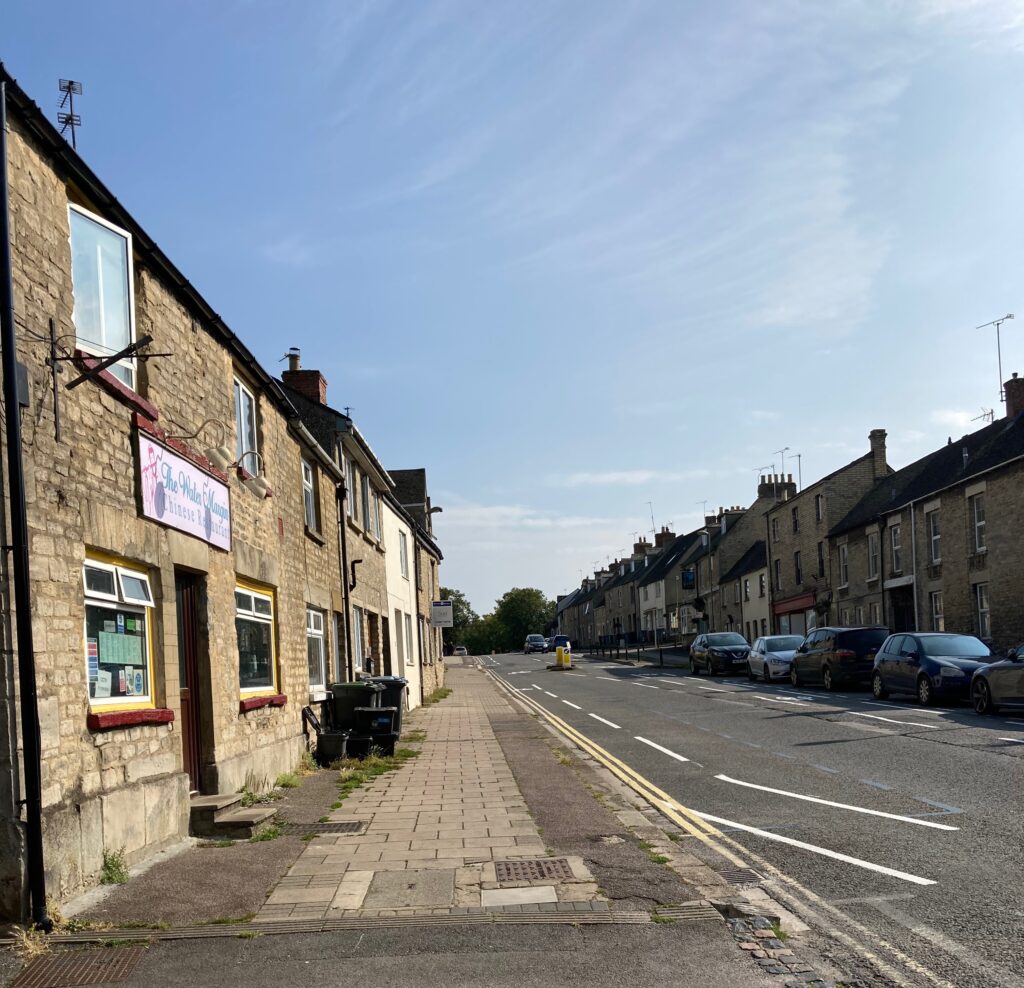
My great, great grandfather, also called Thomas Haley, lived somewhere on this street in the 1850’s and it was probably here that my great grandfather, Elijah, was born. Sadly, the census did not provide a house number, possibly because this was such a rural area at the time that none was needed. The chances are that many of the houses we walked past had not even been built at the time, although there was a workhouse on Corn Street from the 1730’s until 1836. Thomas too, was a blanket weaver, as was his father, Thomas, and his father’s father, John. Witney has been famous for its woollen blankets since the middle ages so their choice of career is hardly surprising. I might not know which house was Thomas’s but there was one house on the street that I knew for certain had a family connection.
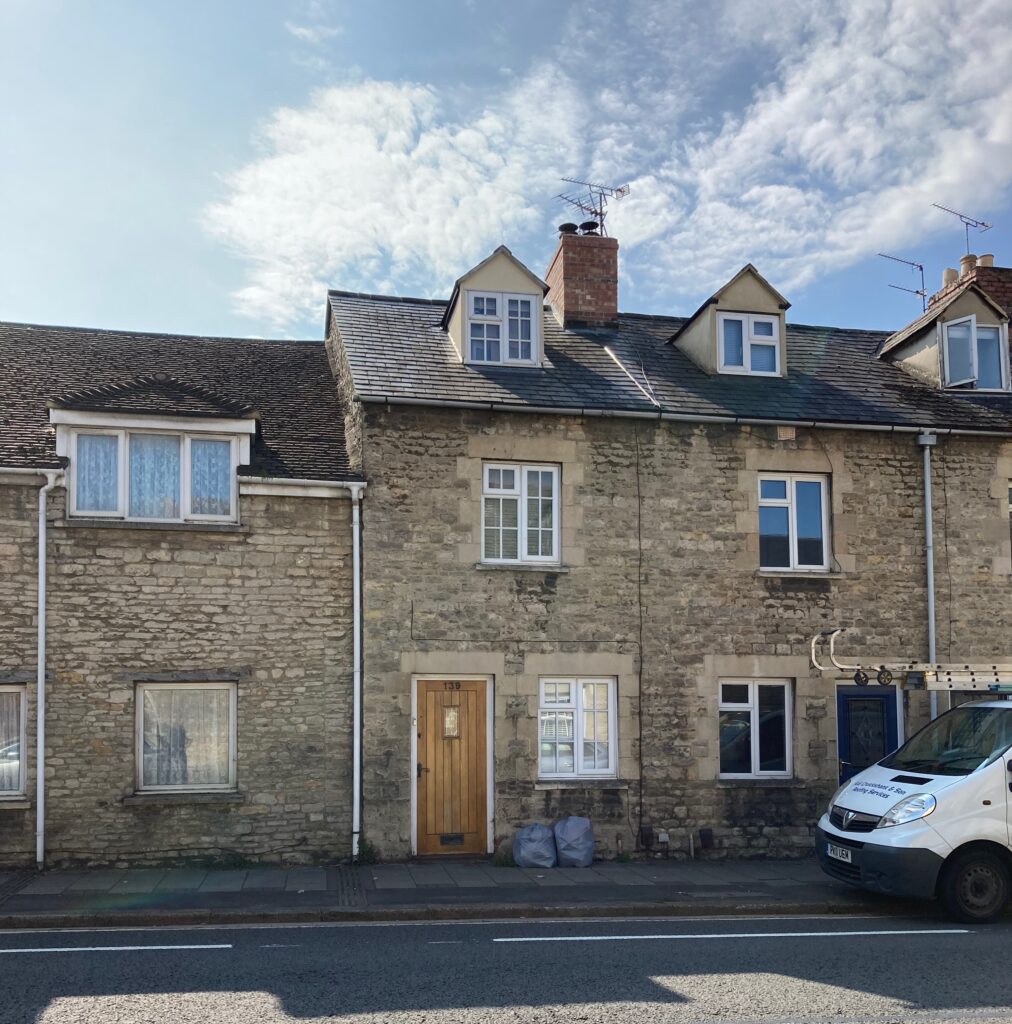
On 1 February 1890, Alice May Pratley was born at 139 Corn Street. Her father, James, was a woollen spinner and her mother was Rebecca (ne Hope). Alice became a glove maker, another trade, along with mop making, that made Witney famous. She probably worked at the Newland glove factory, established by William Pritchett, a Woodstock glove maker, in 1830. In April 1912, 21 year old Alice married 20 year old Harold Haley, a grocer’s porter. Harold was my grandfather’s youngest brother. Alice was the inspiration for the Alice in my book. I stood for a moment and wondered how on earth James and Rebecca Pratley managed to bring up eight children in this narrow little terraced house.

We walked towards the centre of Witney, stopping every now and then to admire a particularly interesting looking building. When I came upon the 3 Horseshoes pub (now called Horse Shoes), I was enchanted by its picture postcard prettiness and its slightly crooked windows. I couldn’t help wondering if Alice and Harold had spent their evenings in places like this, or had my great, great grandfather Thomas sunk the odd pint here after work?

Then there was the Witney Primitive Methodist Chapel, now converted into a barber’s and a coffee shop. The Haleys were mostly baptised, married and buried in St Marys church, so I doubt they worshipped here, but I wonder if the Pratley’s did? The original chapel was built in 1845, but it proved to be so popular than a new, larger chapel was built in front of it in 1869, on the site of the minister’s house. The old buildings were converted into a school room and vestry. For a methodist chapel it was certainly an impressive building. Corn Street was a predominantly working class area, with a population of mill workers, labourers and craftsmen, and these were just the sort of people who favoured methodist chapels in the mid 1800’s.

By this time we were coming towards the end of Corn Street. We’d been travelling all morning and the sight of another pub was rather tempting. Sadly, the late seventeenth century Eagle Tavern, with it’s slightly wonky welsh slate roof, didn’t appear to be open, so after a quick photograph, we carried on walking. Moments later we entered the market square. The first interesting building we came upon was the town hall. This was not the original town hall, built in 1514. That one had an arcaded ground floor to allow markets to be held there and above this was an assembly room. In the early eighteenth century the arcaded area was converted into a village lock up and fire station with one, horse drawn, fire engine. In the 1780’s the building was rebuilt using ashlar stone from the nearby Black Bourton quarry. This was the town hall we saw. It was built by masons James Gulliver and William Harris, with an arcaded lower floor and a first floor meeting room, presumably in a similar style to the old town hall.

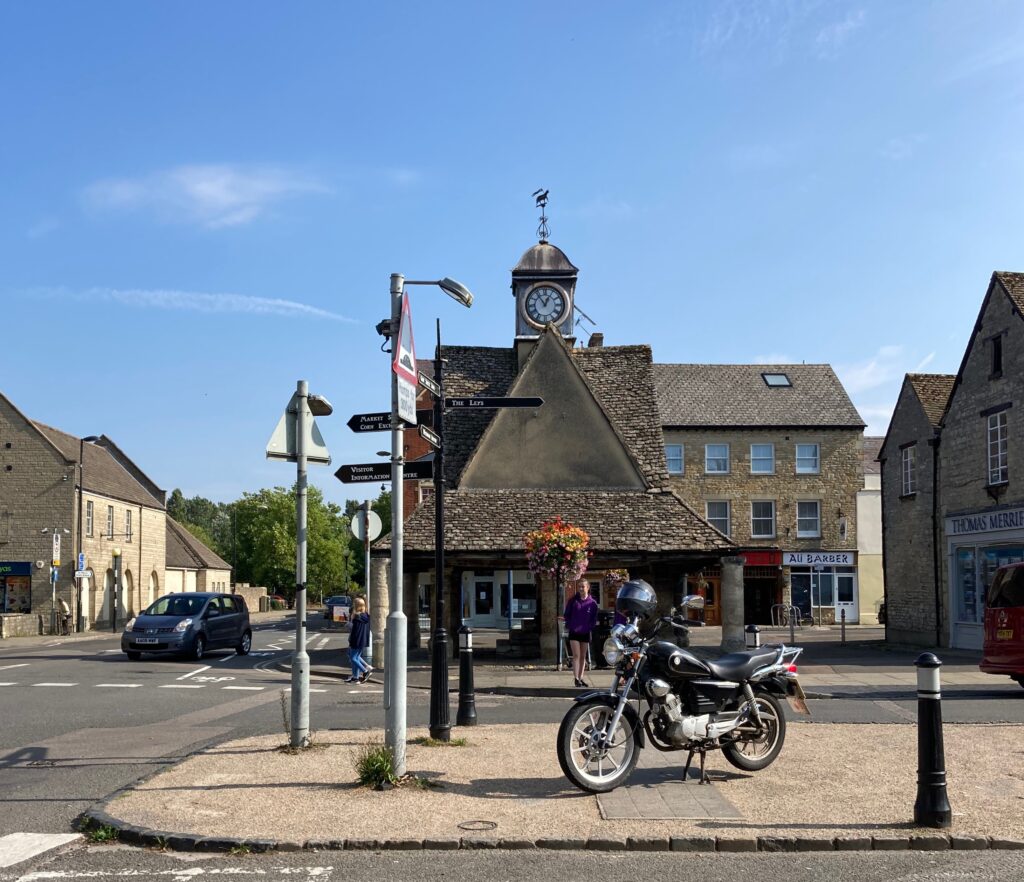
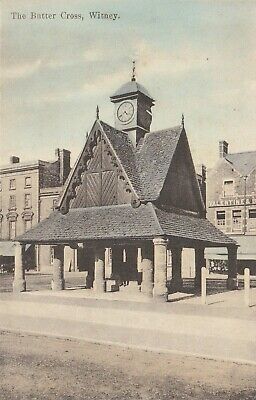
The town hall and the Buttercross opposite, are probably the most recognisable buildings in Witney and neither have changed much since the days when my grandfather roamed these streets as a young man. The peculiar four sided Buttercross began life as a simple market cross, possibly on the site of an ancient preaching cross, or shrine. It consists of a central stone pillar raised on a bed of steps, surrounded by twelve pillars that support the strange gabled roof. This roof was built in around 1606 following a bequest by Richard Ashcombe. It gave shelter to people who came to sell perishable goods like butter, hence the name. In 1683, following a bequest by William Blake, a draper and wool merchant from nearby Cogges, the clock turret was added.
Behind the Buttercross is the war memorial. I knew there would be no Haley names on it but Alice’s brother, Frederick John Pratley, might be. He died on 30 March 1918 in Pozieres, France, not so very far from the place where Thomas Haley was later shot. It was a lovely little memorial, planted with red flowers and well looked after. Sadly, the position of the sun and lots of parked cars didn’t help with my photograph. We soon found Frederick’s name and I was pleased that the people of Witney still seem to honour their war dead.

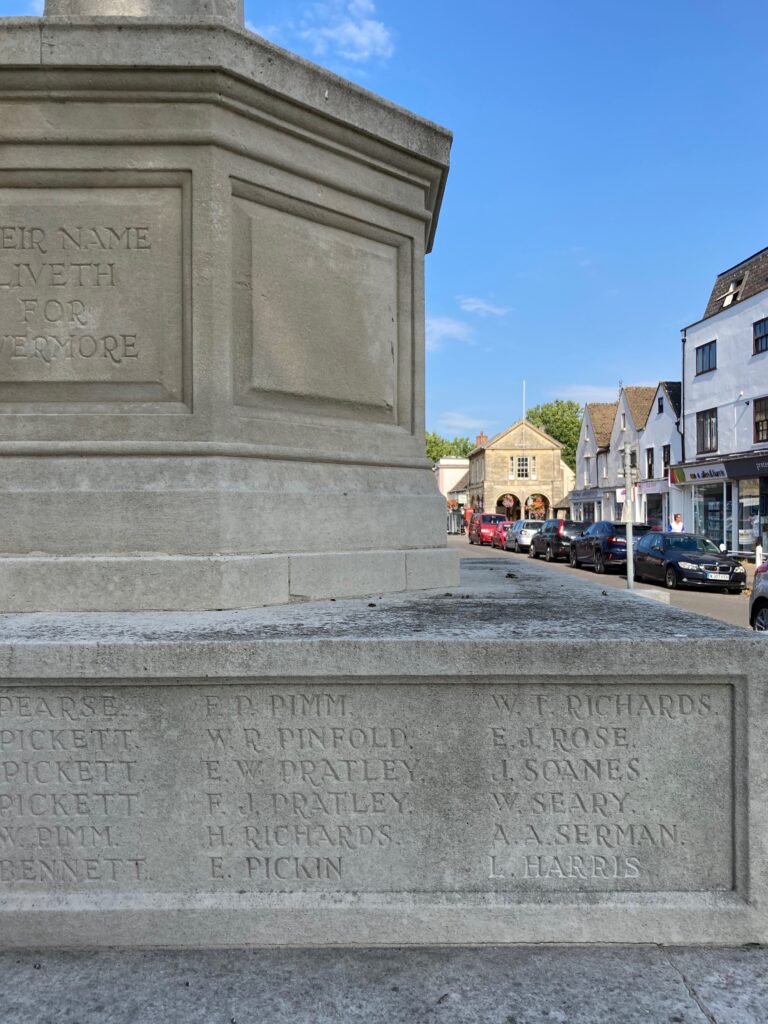
Just behind the war memorial we could see the spire of St Mary’s church. This was where the Haley family worshipped and I was quite excited at the prospect of having a look around the graveyard to see if I could spot any Haley graves. Whether I found any, or not, will have to wait for another day though.
If you like what I write and would like to help me keep doing it, you can now buy me a virtual coffee by clicking on the little orange coffee cup at the bottom right. If you’re interested in my historic novels, Plagued is available now on Amazon.
That was a delightful read Marie, as always.
Thank you. It was a really brilliant trip and I learned a lot.
What a fascinating trip to your past, it’s nice that your were able to see the streets and houses of your ancestors and finding Frederick’s name on the war memorial is quite special. I always think seeing the name there somehow makes the past even more real. Witney still looks a lovely town.
It was a wonderful trip. Witney was all I expected and more.
It maybe pure coincidence my great grandfather had a younger brother Elijah,was christened on 19th June 1936. I hope this maybe of interest
That is interesting. It is such an uncommon name, I wonder if there is a family connection. My great grandfather Elijah lived until 1945, so would have been alive when your Elijah was born.
139 Corn st was my first house in 1986,I brought it from James Prattly,son of Molley and Freddie Prattly of 143 Corn street.James was left the 98% derelict house in the will of George Cooper as he grow up with his same aged son,who I believed was hit by a car,and died, at a young age,outside on Corn st.
George Cooper ,i understand was practically blind at an old age,and a difficult character.
I also understand this house to be 1880’s build,a mill workers foremans house as 12 wider than the other 3 in the block,Check the opposite end and see it juts in,12inch larger at the front,possible the foremans next in commands residence.
I can tell you every stone in the house,I have the full photo album if any one is interested in it and that end of Corn st as I spent a happy 17 years in residence starting in 1986.
I memories shared would be a pleasure.
That is so interesting. Alice’s father was called James Pratley but he died in 1914. George Cooper was married to Alice’s younger sister Florence. It was one of the few houses connected with my family that I managed to find on my visit. Thank you so much for sharing your memories. I would have loved to see inside.
Where are peoples comments to read.
All comments appear below the blog posts if you scroll down. I have to approve each one though to stop spam (which sadly happens a fair bit), so they don’t appear immediately.
Thank you for a very interesting read i am in the process of writing my book with my mother’s information that she has left me. She was born in Swingburns yard 1929 and had written accounts of all of Corn St. The Cooper and Pratley names are in her family tree as my father was related to the Cooper family I have over 60 years involvement of the Towns Fire Brigade. My great grandmother Allen lived in corn street and George a coach painting business too. Rod
Thank you. I’m so glad you found my post interesting. Apart from my grandfather, Thomas Haley, Alice (ne Pratley) is the only other of the Witney family I ever met. It was at my father’s funeral and I was only nine so I don’t remember much, apart from her sitting in the garden with my grandfather (we always called him Pappy) and saying how much I had grown. Your book sounds very interesting. I wish you every success with it. You must let me know when it’s finished as I’d love to read it.
Hi Mary, such an interesting article of Witney in the 1800s. I was born in 1950 to a mill worker who lived in what at the time was new council housing, which was primarily to house mill workers, the major employers in the town. I can recall a family with the name of Haley, living in Taphouse Avenue which is one of the roads that form part of this estate. It may be somewhere you wish to visit when you next visit or may lead you to some of your relatives.
Thank you for the information. I really hope I do get the chance to come back and explore further. I’m glad you enjoyed reading.