
They say there has been a church in Witney since the tenth century but St Mary’s, standing at the far end of a long, wide expanse of grass called Church Green, is not the original church. In fact it was built in the twelfth century on the site of previous Norman and Saxon churches. It has also undergone many changes over the years. The tall spire, rising one hundred and fifty six feet into the blue sky, was added in the fifteenth century. It dominates the Witney skyline, so it was hard to miss, even for strangers like us. Such a large and imposing church shows that Witney was a wealthy and important town in medieval times. This was where many of my Oxfordshire ancestors were baptised, married and buried. As we walked towards the church I was hopeful that I might be able to find some Haley graves.

As it was, the churchyard and the graves were quickly forgotten. As we walked through the gate and approached the church we discovered that the door was open. This is something that almost never happens when I visit churches, so I could hardly believe my luck. With a tingle of excitement, we entered the church. I imagined all the ancestors I’d read about crossing this same threshold. Elizabeth Clayden had walked through this same door in October 1794, when she married John Haley, my four times great grandfather. Mary Brown had done the same thing in March 1818 when she married my three times great grandfather Thomas Haley. And Mary Ann Beechey had passed through this arched doorway in January 1849 when she married my great great grandfather Thomas Haley. It felt like I was walking into my own family history.
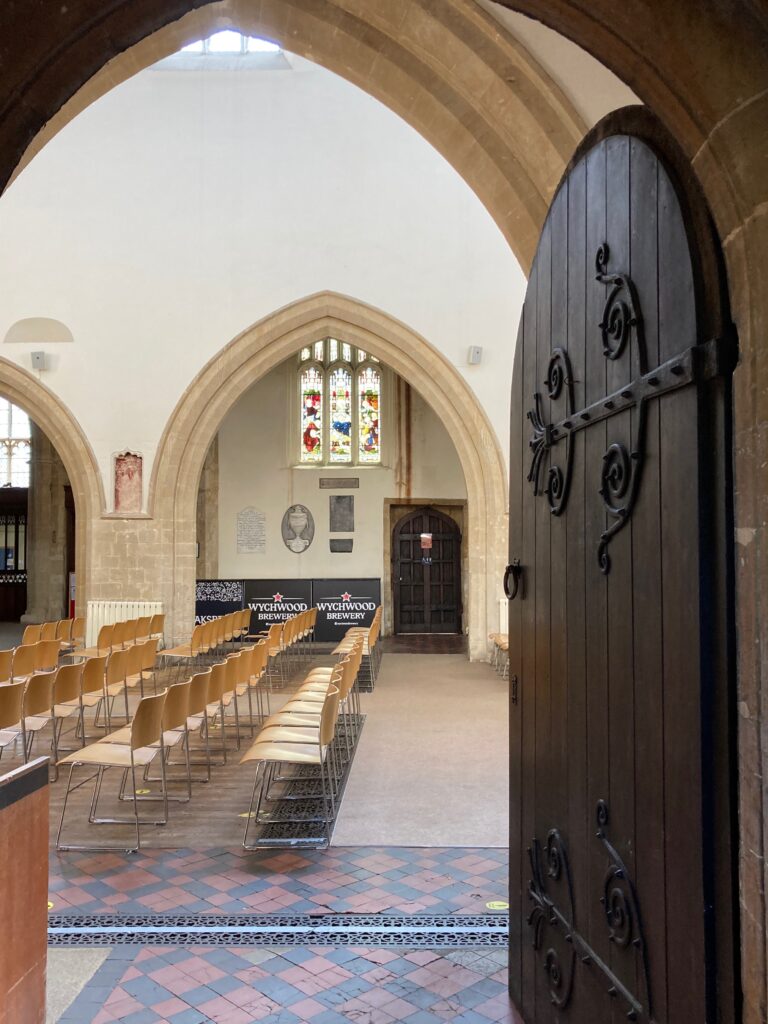
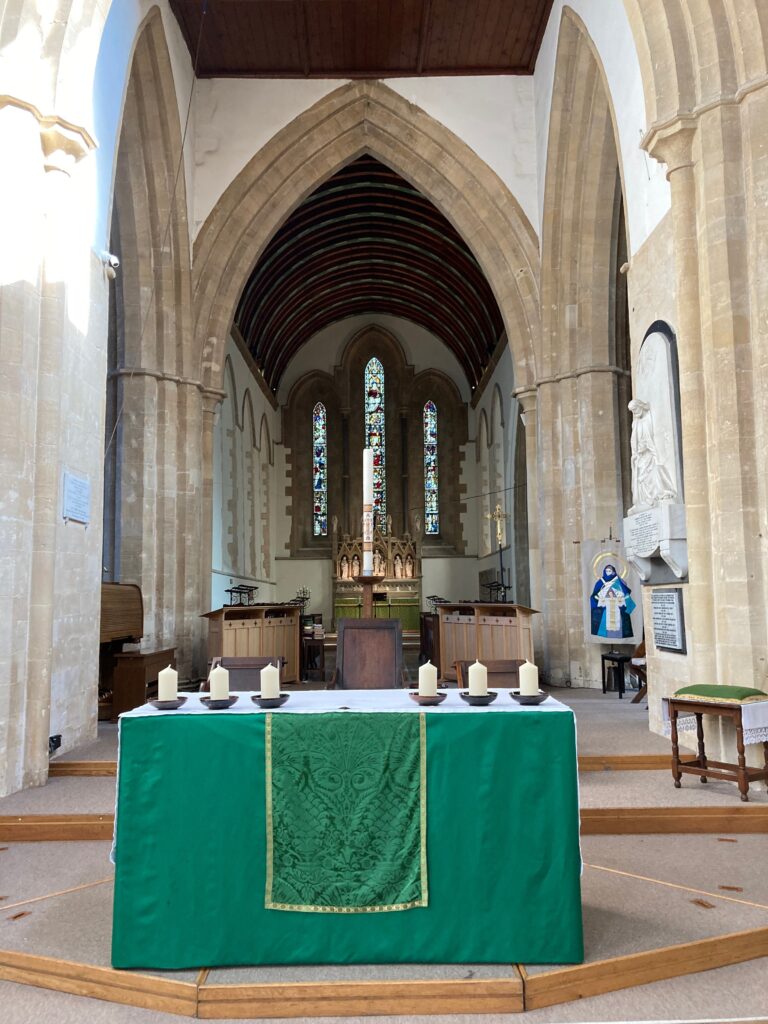
Sadly, the interior of the church is no longer one that any of those ancestors would recognise. In 1864, the rector, Francis Cunningham wanted to make his mark. He knew his plan to ‘gut the church from end to end,’ might not meet with his parishioner’s approval so he resorted to sneaky tactics. He employed G E Street to alter the interior of the church in stages and quietly swept away many of the original medieval features. There may no longer be pews and much else that my ancestors would have recognised has gone, but the beautiful stained glass windows remain. In my opinion, the stained glass is one of the best things about old churches. Despite a rumbling stomach and a desperate need for a drink, I wandered around taking pictures of them.


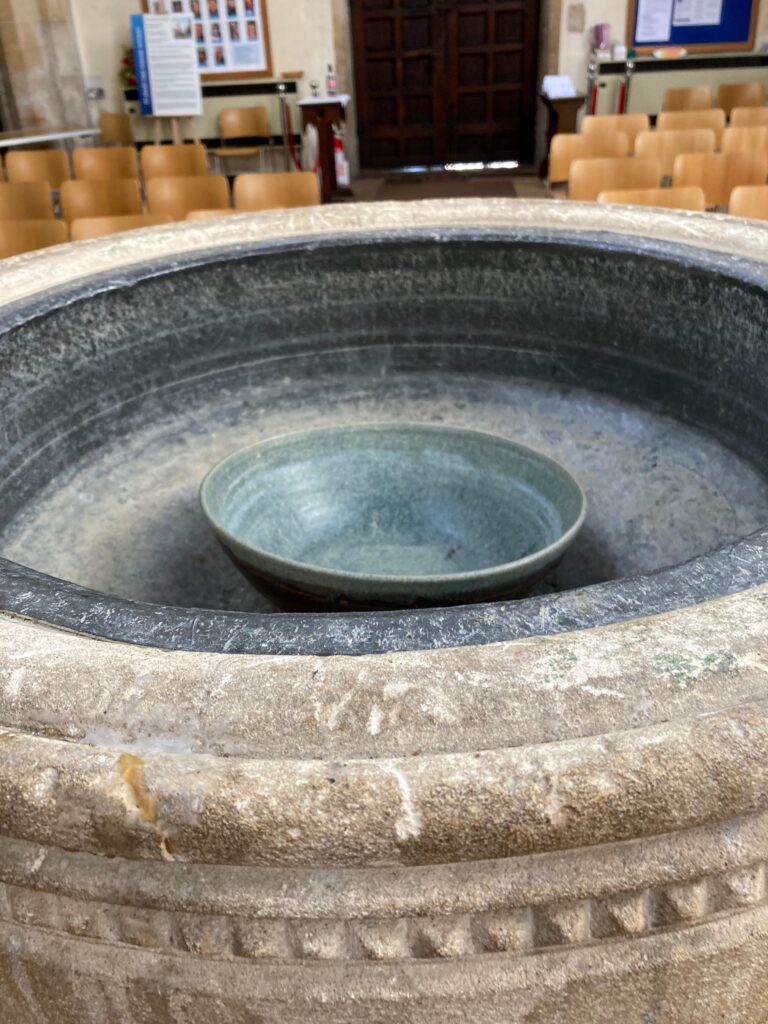
Below the most ornate of all the windows was the font. This is the earliest feature still remaining and dates from Norman times. This was also where the three ancestors above would have been baptised. I stopped for a moment to have a good look at it and imagine all the babies who’d had their heads wetted here over the years.


During this time Commando had been very patient. This was not his family history after all, and he isn’t as fond of old churches as I am. He was also probably starving at this point because he has a lot less fat on his bones to keep him going. There were certainly many more interesting things to see in the church, but if I wanted to check out the churchyard before either of us expired from hunger and thirst I was going to have to get a move on.
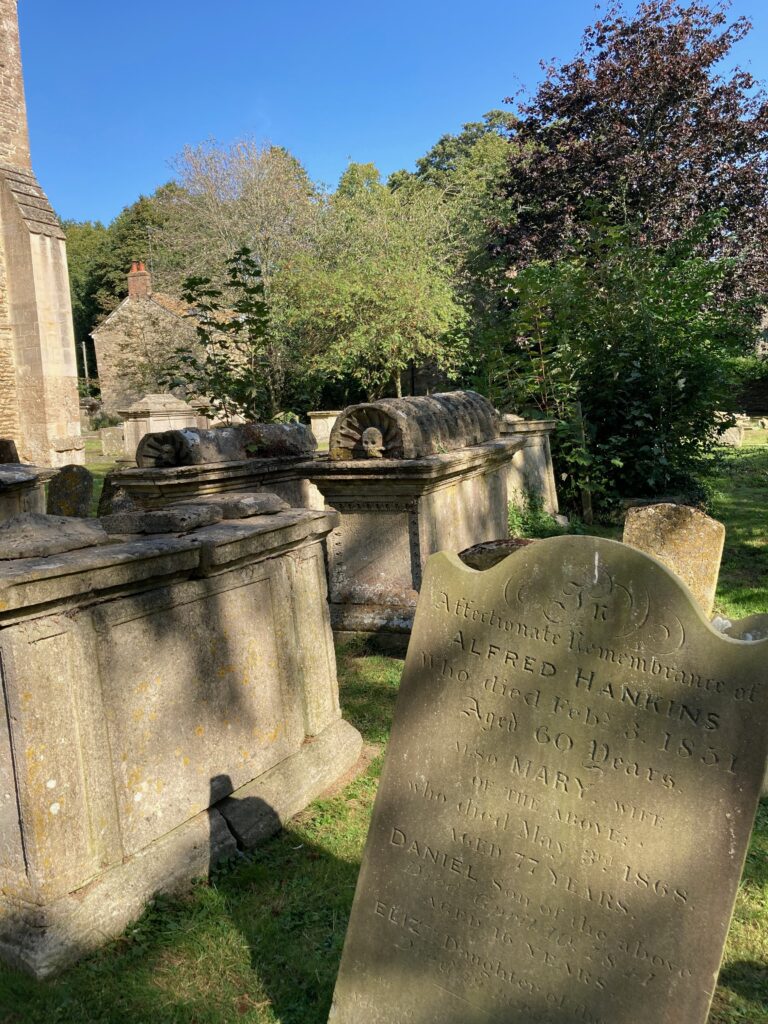
As it was, it was soon clear that we were going to be very lucky to find any of the Haley graves. The churchyard might not have been exactly huge but many of the old stones were too badly worn to make out names. Still I walked slowly around peering at them all anyway. Strangely, for a town with a nearby village called Hailey, the name Haley (however it’s spelt) is not one of the common Witney names. If I found a Haley grave, I would be pretty sure it belonged to an ancestor. Hard as I looked though, I found none.

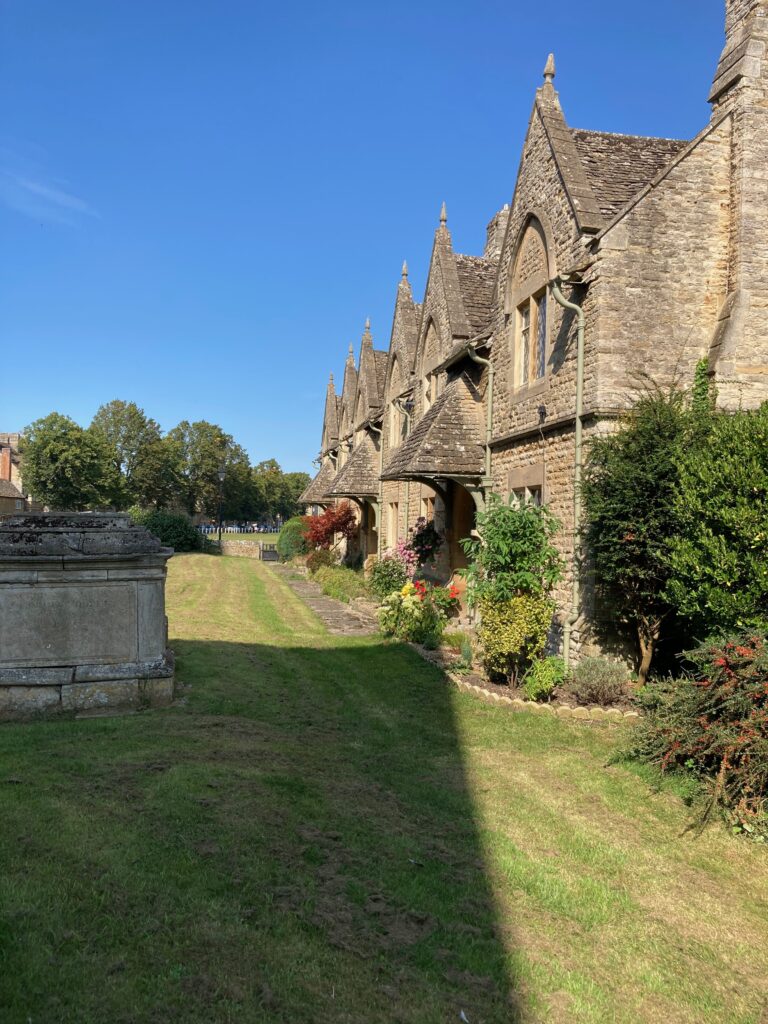
We’d done a whole circuit of the churchyard and between us looked at every grave with no success. Perhaps, with a little more forward planning, we could have contacted the church in advance and found out where the Haley graves were. This was always going to be something of a whistle stop tour though and the church being open was a bonus neither of us had expected. Any small disappointment was more than made up for by the row of beautiful little cottages overlooking the churchyard and the wonderful blue sky above us.
Now, it really was time to find somewhere to get some refreshments. We walked back to the market square and looked around for likely places. The most interesting, at least in my opinion, was the Angel Inn. For one it looked old and just a tiny bit crooked. This, to my mind, is the mark of a good pub. It also looked right out onto the market square. On a beautiful sunny day like this was, we would normally have opted for a seat outside, but this little pub was just too enchanting not to look at from the inside.
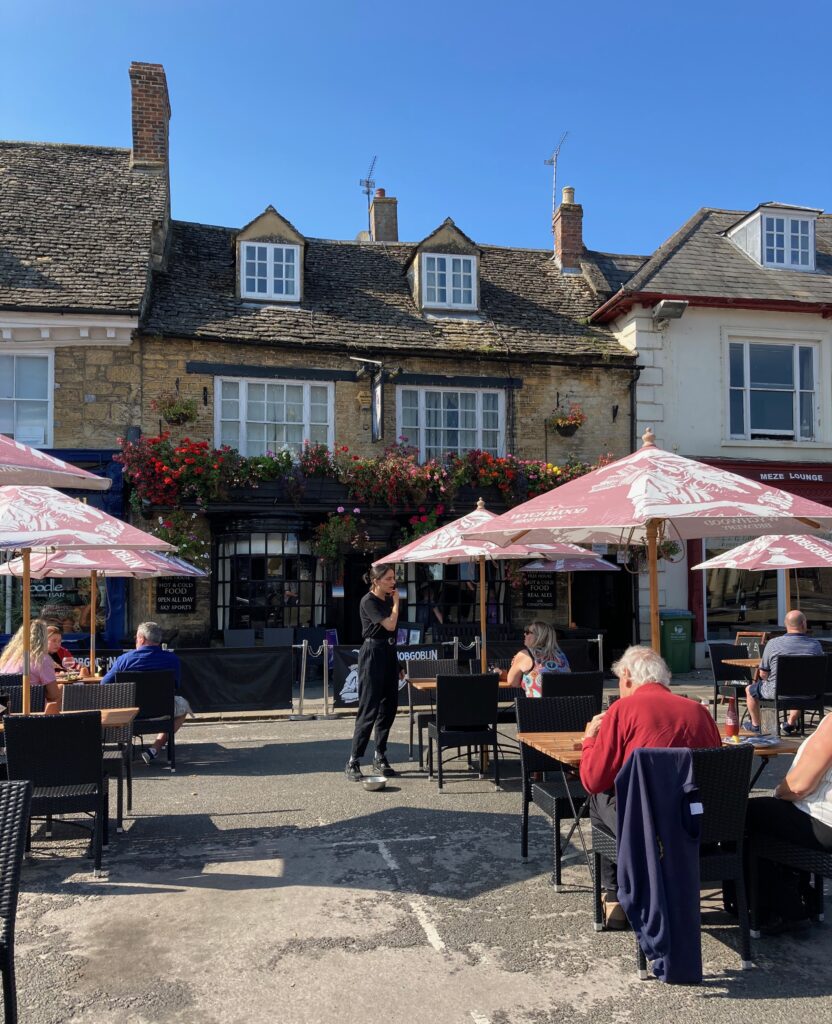
We found a table near the bay window with a good view of the bar, and while Commando perused the menu I did a bit of impromptu Google searching on my phone. It turns out that this pub dates from the late seventeenth century, and it was originally a barber’s shop. By the end of the seventeenth century it had become an alehouse, originally called Greyhound. In 1809, it was renamed the Angel. It was once owned by Joseph Early, of the famous blanket making family. There were also rumours of a cursed bar stool. Apparently, anyone who sat on it either got very sick or died. It was a relief to read further and discover that said stool had been removed so neither of us were in any danger.
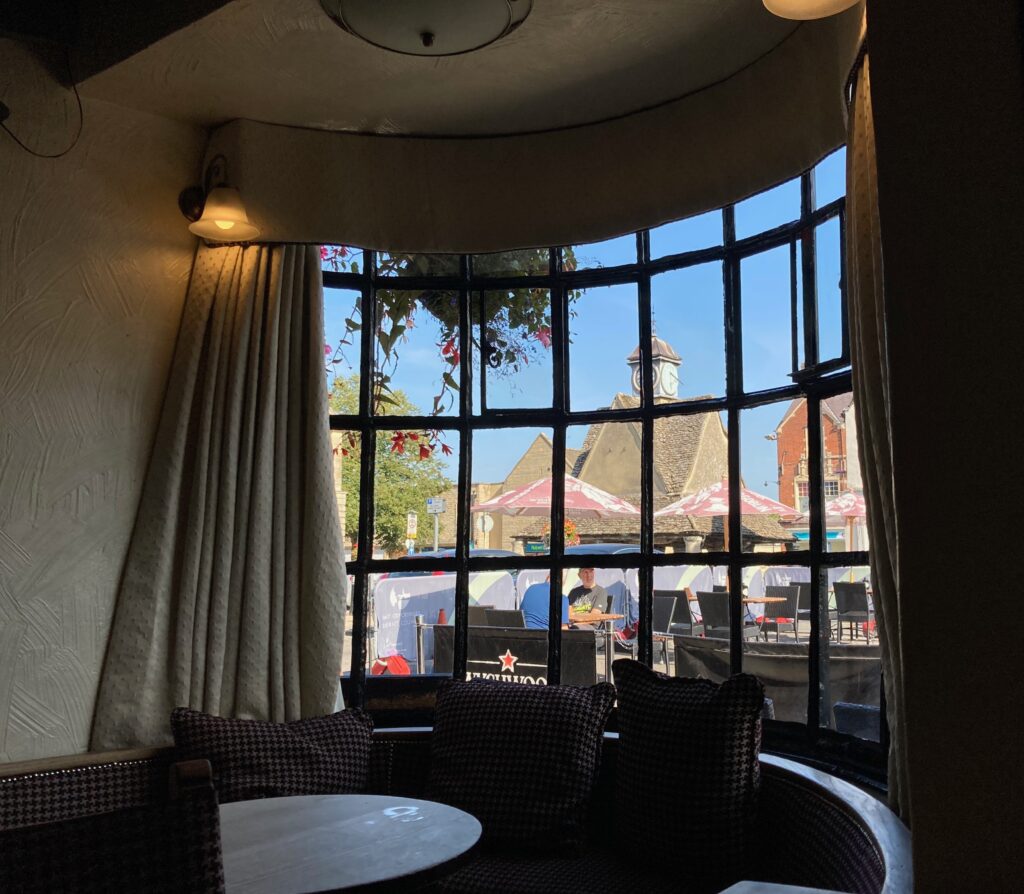
It really was a wonderful pub, all low beams, a marvellous old stone fireplace and lots of interesting nicknacks. The menu was inviting and the prices were good. Our biggest problem was choosing what to eat. Well, that and the fact that there was a football match that afternoon and a few of the regulars were waiting for it to start. It’s not that I don’t like football, I do, but from their conversation, it was obvious that the regulars were Wolves supporters and the team they were playing was Southampton. We decided that it was best to keep quiet about where we came from and not cheer if Southampton scored while we were in the pub. As it was, we didn’t have to worry. Wolves were the only team to hit the back of the net, and by then, we’d almost finished our food.


The food was very good, and very welcome after our seventy four mile journey followed by a morning of walking about in the sun. It would have been easy to settle in for the afternoon, soak up the atmosphere and see what happened with the football. There was a lot of Witney still to see yet though, and not much time to see it.

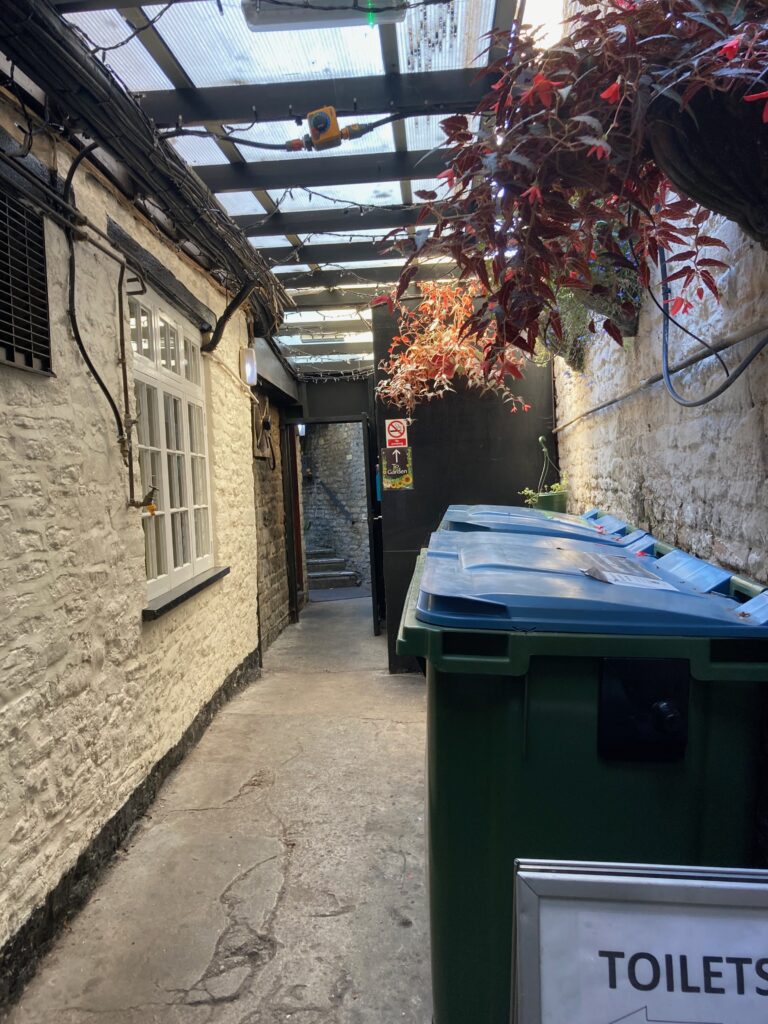
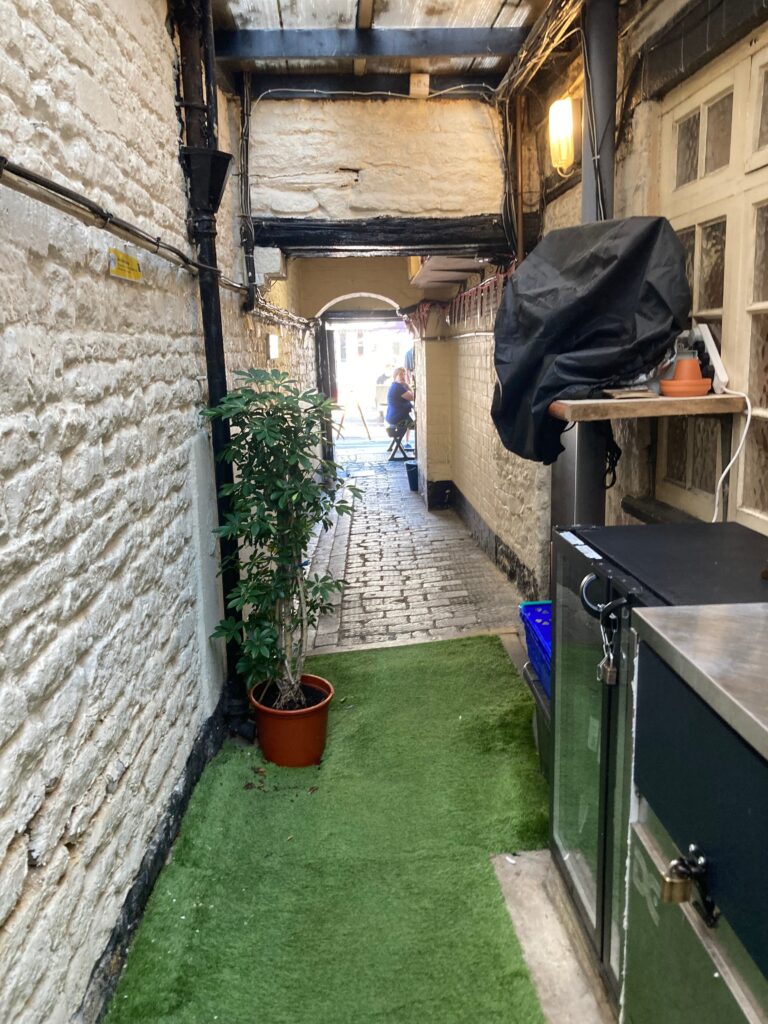
With the football taking a decidedly downhill turn for Southampton fans, even Commando didn’t mind leaving the majority of the match unwatched. While he paid the bill, I took a little wander down the intriguing little alleyway that lead to the toilets. I couldn’t help wondering if any of my Haley ancestors had made a similar journey. The next stop on our journey was a place called Narrow Hill. Whether we would find it or not wasn’t clear.
If you like what I write and would like to help me keep doing it, you can now buy me a virtual coffee by clicking on the little orange coffee cup at the bottom right. If you’re interested in my historic novels, Plagued is available now on Amazon.
There is a Bob Haley in Witney today. No idea of his family history. Don’t really know him myself but he’s a friend of my family and friends.
Thank you for that. Maybe he’s related to me?
Love your work Marie. Brought back lots of memories. I now live in Perth WA but was born and grew up in Witney, was Christened and went to Sunday school at St Mary’s and started drinking in the back room of the Angel when I was still at Henry Box. I’d forgotten the alleyway but always have a few visits to the Angel when we come back – the food is great, good value and the beer is as good as it gets.
The name Mary Ann Beechey seems to crop up a lot around those parts late 1800’s. My great great grandmother was also Mary Ann Beechey (1841 to 1907) but she married James Miles in 1862 and lived at 170 Corn Street. Who knows – maybe we are related – my ancestors also trace back to Hailey and my mother in law still lives their!!
I’m glad to bring back some good memories. The Angel was a fabulous pub. I think we made a good choice going there. I have not delved very deeply into the Beechey part of my family tree but I do know that my Mary Ann Beechey had an aunt called Mary Ann Beechey (1801-1880) and called her first daughter Mary Ann, so I’m guessing it was a popular family name. Perhaps we are related.
Its great to see such a nice church being kept nice. A few years ago my Cousin (sadly past now) took me to Look around the Small church in Drayton St Leonards, Oxfordshire where most of my mum’s side of the family came from. The Church was open. this Church is dedicated to George Washington Wife Martha Dandridge as the Dandridge Family lived in the village. It is such a lovely little Church all the old graves had been moved so the different Village Families could be place together. A list posted inside the Church told us where each family and its members were now placed around the trees in the Church Yard. very interesting to the fact it told us what they where buried in not Coffins but Shrouds of Cotton or Lining. We also found a the small Village War Memorial next to the church with 5 names on it (this is a very small village) one being our uncle. I love reading your account Thank you
I’m glad you enjoyed reading and thank you for sharing your memories.
It’s a beautiful church and I love the stained glass. What a thrill to go through the same threshold as your ancestors.
It really was. We were so lucky to find the church open.
A couple of corrections: The spire of Witney’s church is not 15th century at all! It’s mid to late 13th century, of the Geometric Decorated Gothic period. The belfry and pinnacles are a dead giveaway. The Additionally, while at a glance seemingly of a late Norman fashion, the font is not Norman at all; it was one of the works of G E Street from the late 19th century (along with the since controversially removed pews). If anything, it’s one of the more recent objects in the church rather than the oldest.
Thank you.