
In front of the Guildhall the rhino trail suddenly stopped being logical and I could no longer simply walk from one rhino to the next if I wanted to see them in order. Either I’d have to walk back and forth, passing some more than once and taking far longer than I’d have liked, or I’d have to look at them out of sequence. It seemed like a good time for a little break and maybe some coffee while I decided. Unfortunately, when I went back to the cafe, it was packed with other rhino hunters so a drink would have to wait.
10 August 2013
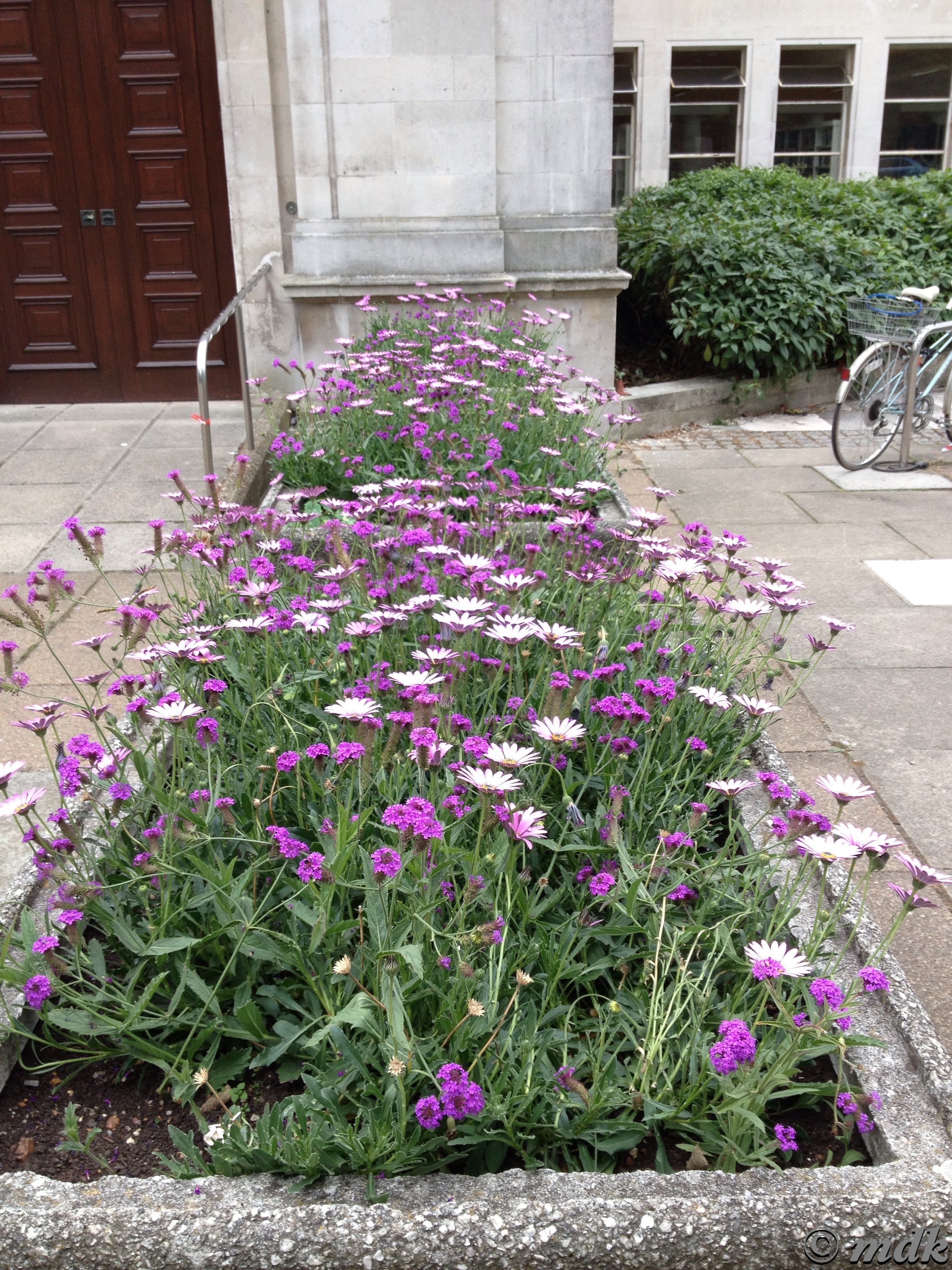
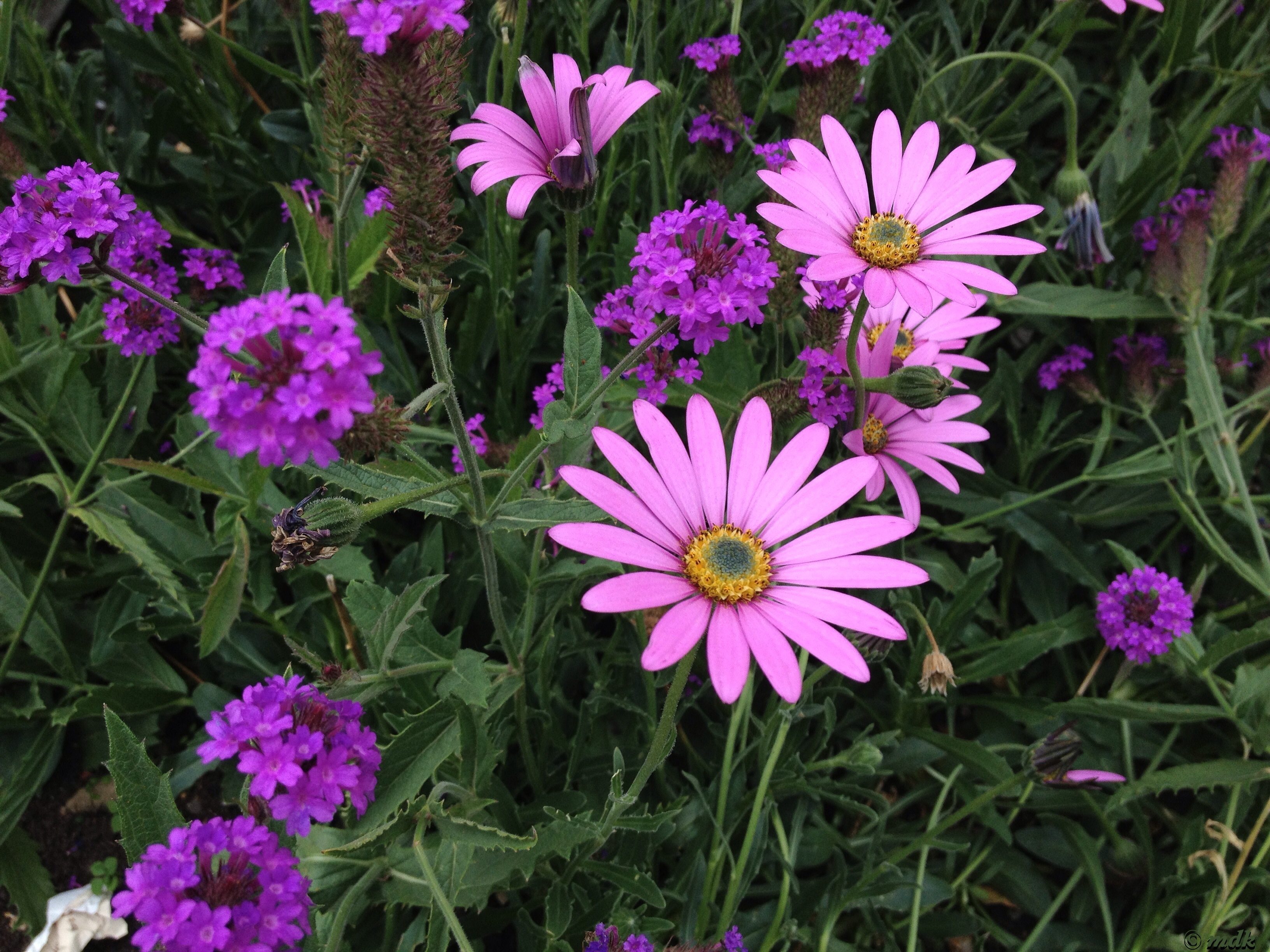
In the end I decided to break with tradition and tell you about the next rhinos in the order I saw them rather than their numerical order. Number twenty seven came next, standing outside the Art Gallery. His name is Rohan and I spotted him as soon as I rounded the corner but the bright display of purple flowers in a trough distracted me for a moment or two. The council really excelled themselves with the minimalist planting, relying on the bright colour and the different shapes to catch the eye. It worked for me.
Planet Rhino was pretty bright himself. Freelance illustrator, Sam Pierpoint, also the artist for rhino number twenty three, Rafik, painted him. She created a serene world using chaotic patterns based on an imaginary rock just off the edge of the Milky Way. I don’t know about anyone else but I’d quite like to visit it.
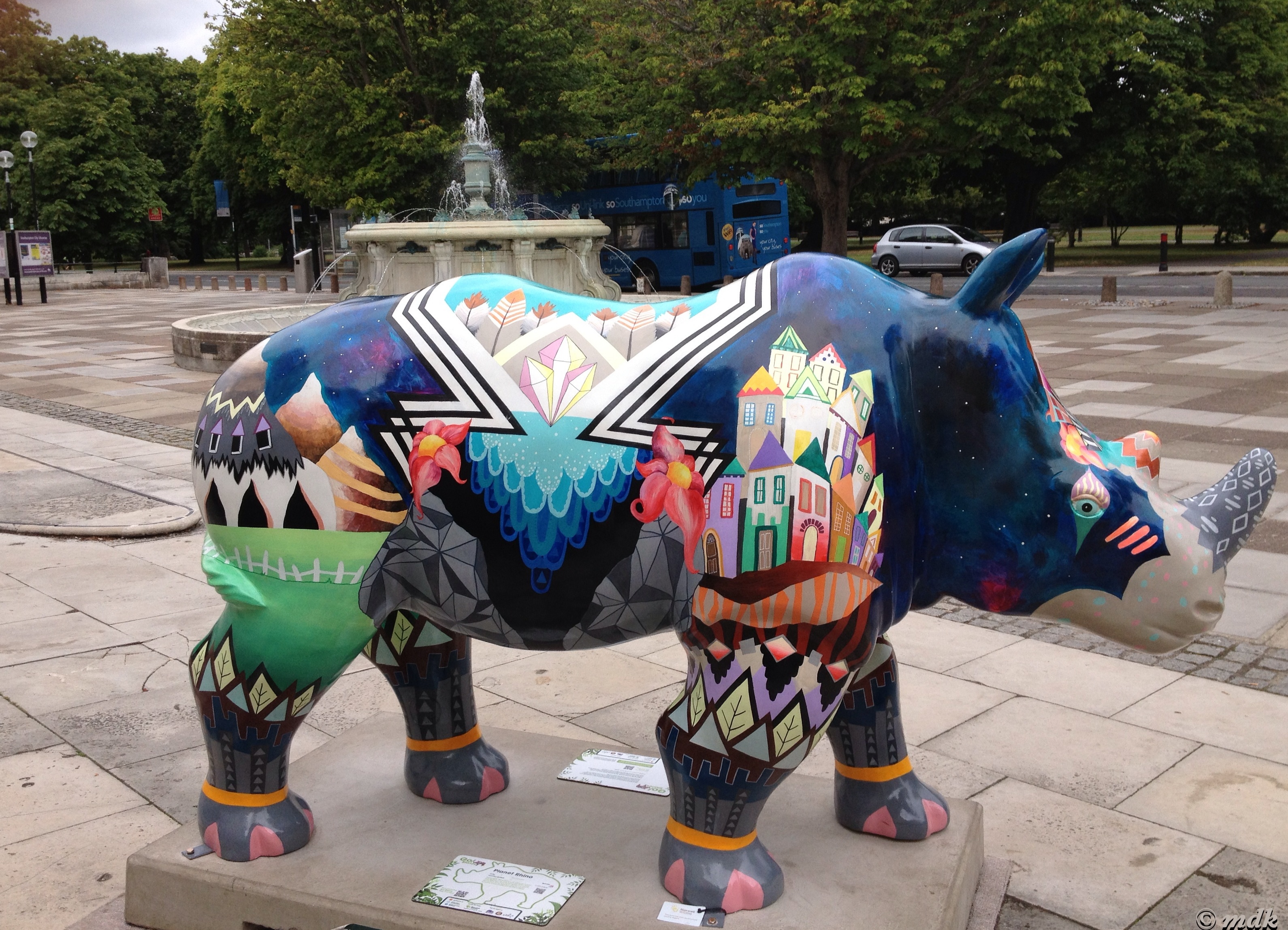
Water cascading from the fountain outside the art gallery made a nice backdrop. Once upon a time there was a rose garden on an island in the road outside the Civic Centre. The fountain stood there in pride of place while traffic sailed past like boats in a tarmac sea. Road improvements (and I use the word loosely as it didn’t seem much of an improvement to me) when the Marlands Centre was built spelt the end of this little Island of calm in a busy city but the fountain survived and was moved to the front of the Art Gallery.

There were a lot more rhinos to visit that afternoon so I couldn’t stay too long or visit the gallery as I’d have liked. There was just a quick photo of the all important information tag so I’d remember the name and all the details later and I was off towards the next rhino. Ok, I did go back for another look at the flowers before I left.
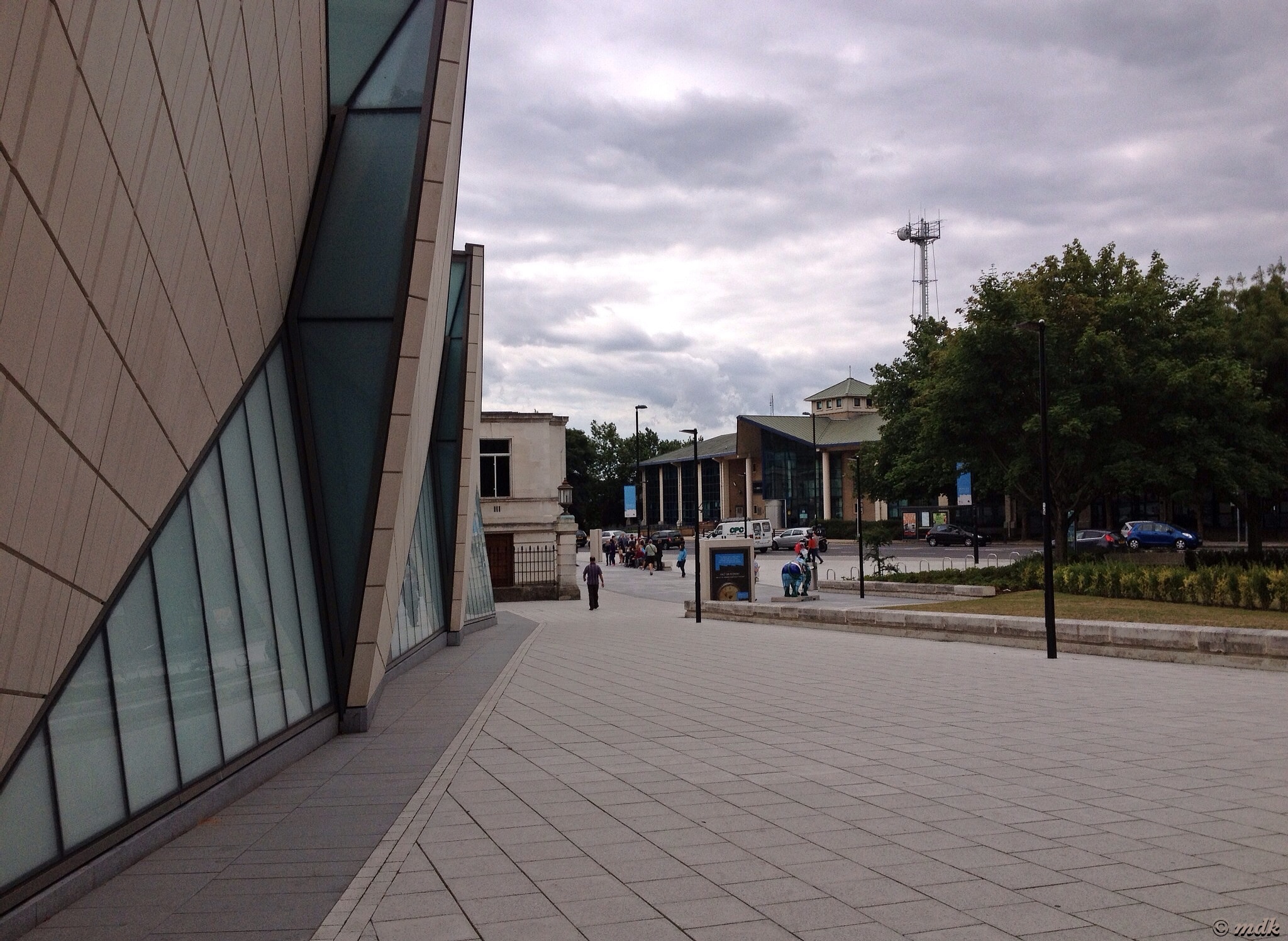
I wasn’t sure exactly where rhino number twenty five was, but when I turned the final corner of the Civic Centre building heading towards SeaCity Museum he was there hiding. As soon as I saw him a big grin spread across my face, I knew straight away what he represented and why he was outside the museum.
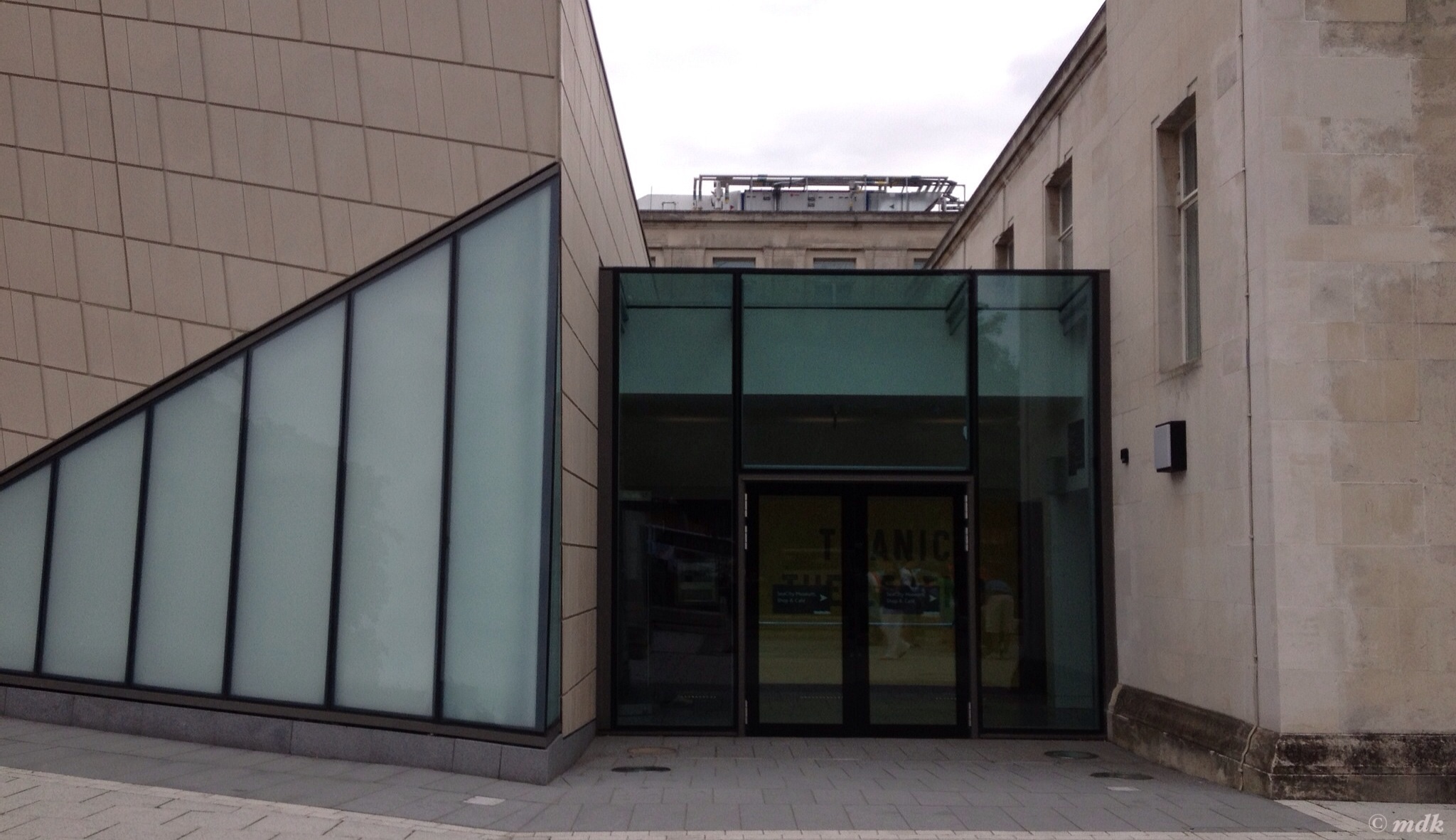
Reginald Rhino is kind of historic, even if he is very young, so it was quite fitting to find him outside the museum. He’s named after someone we should all be very grateful to, not just the people of this fair city but people everywhere. You see, Reginald’s namesake is R J Mitchell, the designer of the Supermarine Spitfire. There can hardly be anyone who hasn’t heard of this iconic plane or the part it played in World War II.
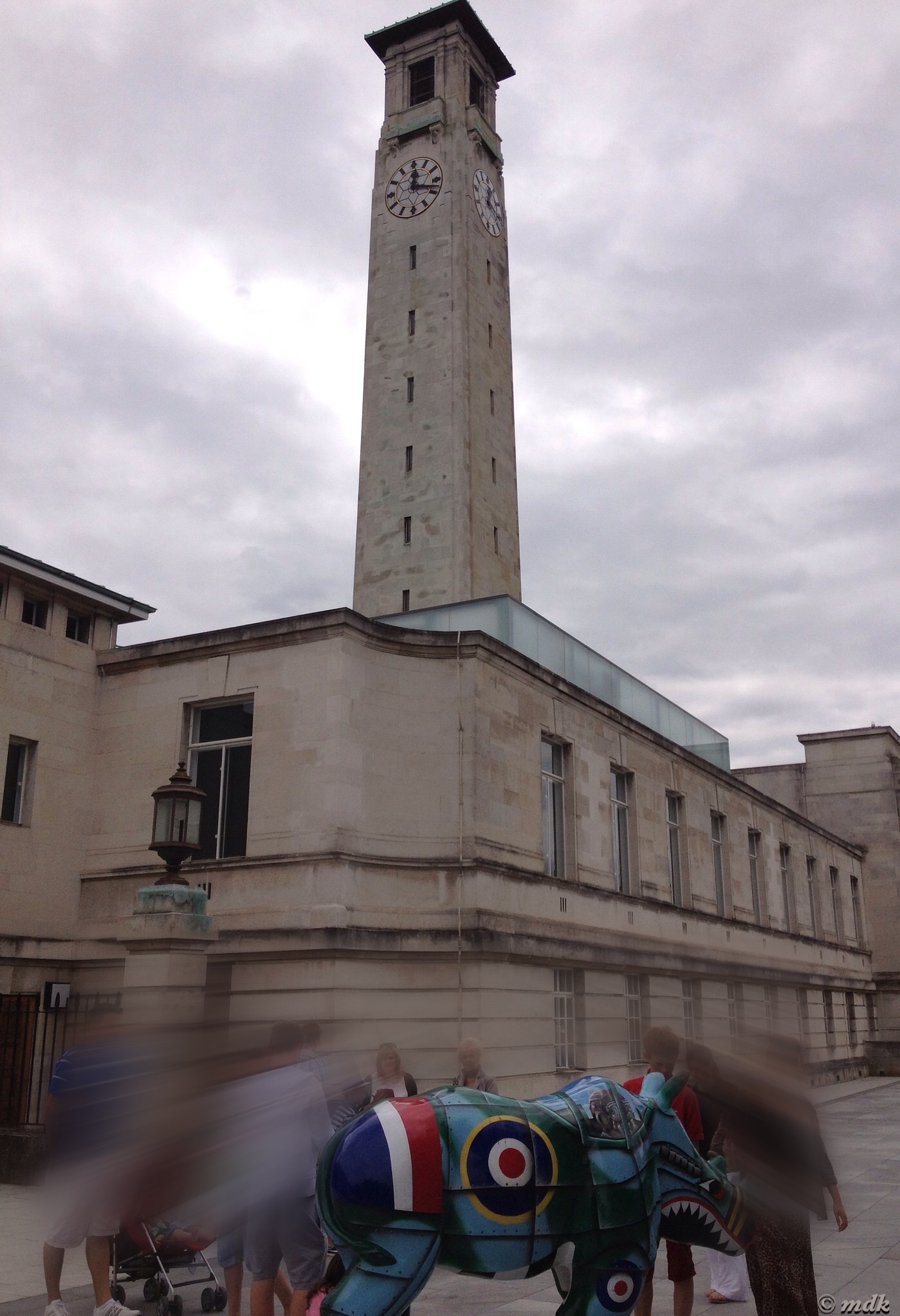
This pretty little single seat fighter plane was used by the allies throughout the war and was, in fact, the only British fighter in continuous production throughout the whole conflict. Mitchell designed the Spitfire at the Supermarine Aviation Works in Woolston. It took its first test flight at Eastleigh Aerodrome, now Southampton Airport, in March 1936 and was instrumental in the allied victory.
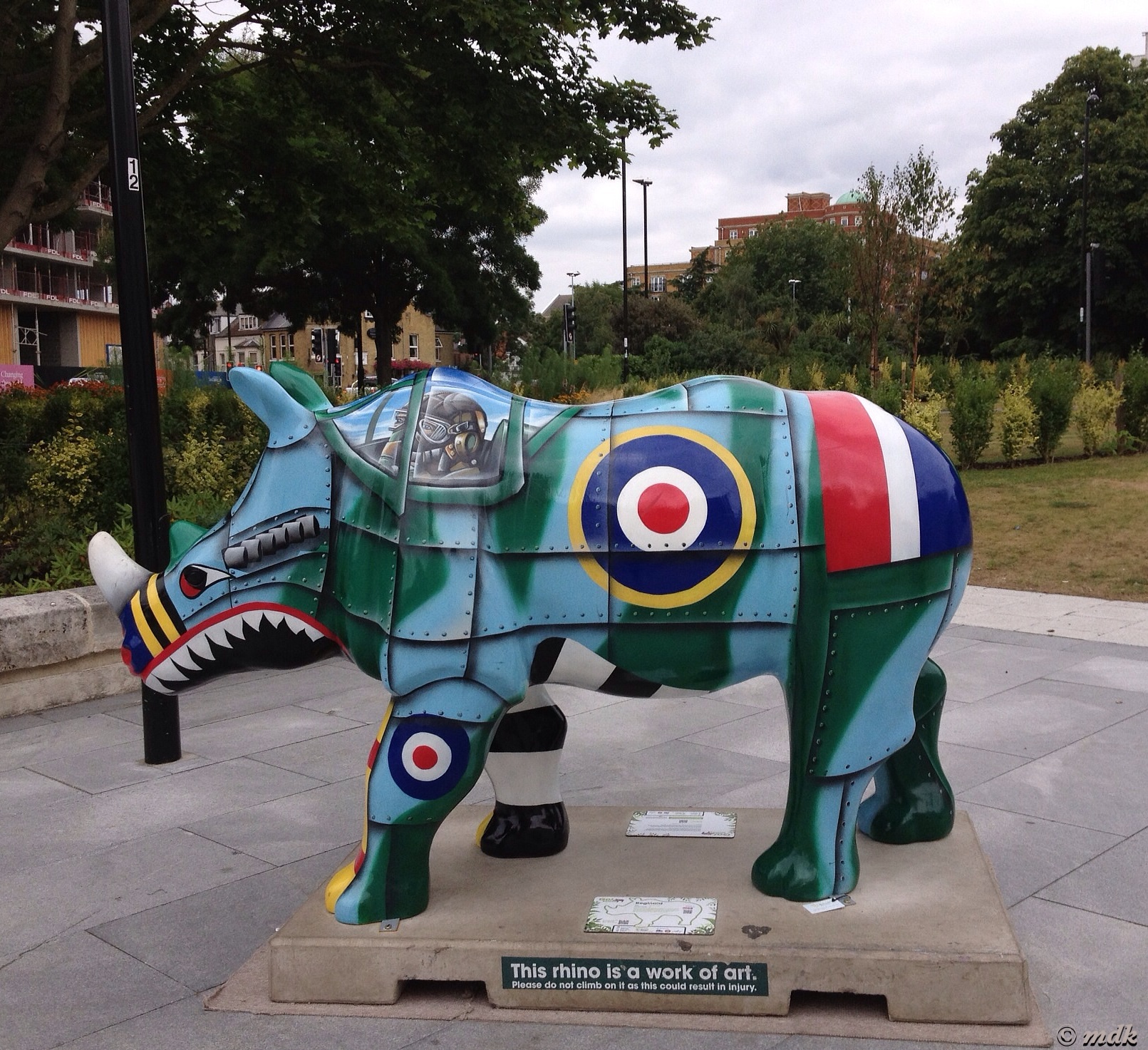
With his Spitfire camouflage paint job, his flags and RAF emblem, not to mention the pilot sitting in his hump, Reginald was attracting quite a bit of attention. People crowded round him and I had to wait a while to get a photo of him on his own. Inside the museum I knew there were baby rhinos but I didn’t have time to visit them. Such an interesting museum is worth more than a rushed in and out and I will go back another day when I have a whole afternoon to devote to it. Besides, CJ would never have forgiven me if I went and didn’t take him.
Reginald is sponsored by food wholesalers 3663 and they commissioned Bristol based artist, Damien Jeffery, to paint him. Damien has been working for five years designing and painting murals for schools and businesses. He has also taken part in Europe’s largest urban art festival Upfest not once but twice. Painting rhinos is not exactly a new departure for him either, well, the rhinos may be, but he painted a gorilla for a project similar to Go Rhinos called Wow Gorillas in Bristol as well as mascots for London’s Stroll Discovery Trails in 2012.
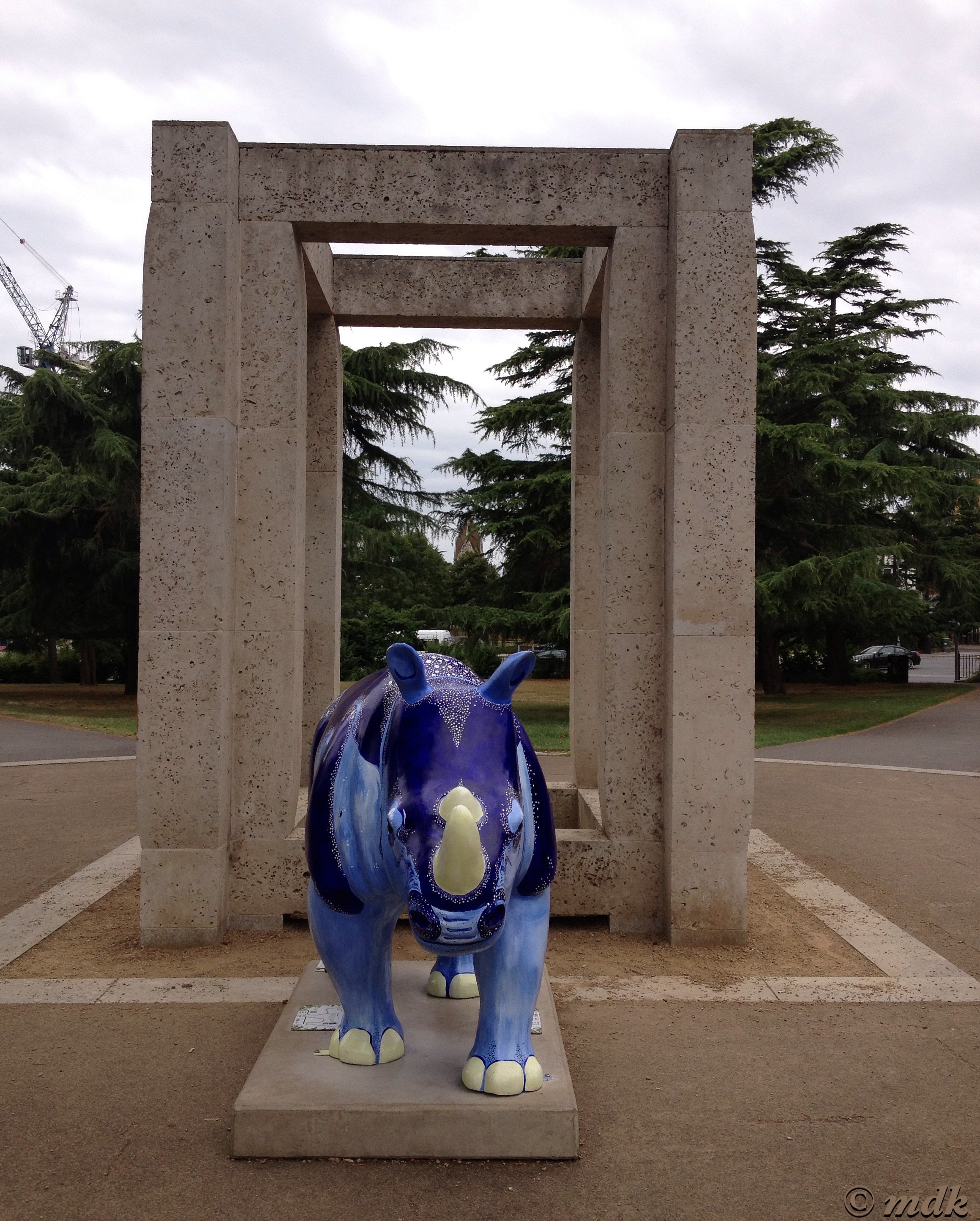
The next clutch of rhinos were all across the road in Green Flag award winning, West Park. The park is also known as Watts Park because of the stature of Isaac Watts which stands in pride of place in the centre. Rhino twenty nine was the first I found there, not long after I’d left Reginald and SeaCity Museum. In fact, as I crossed the road, I could see it through the trees right in front of Enclosure, the controversial sculpture by Paul De Monchaux. Enclosure is a bit of a marmite thing, you either love it or hate it, personally I’m quite fond of it. Four meters high, it is constructed as a series of stone rectangles through which four different park views are visible. For me it’s the way it frames the park that works and one of these days I will come back and take a photo of each view.
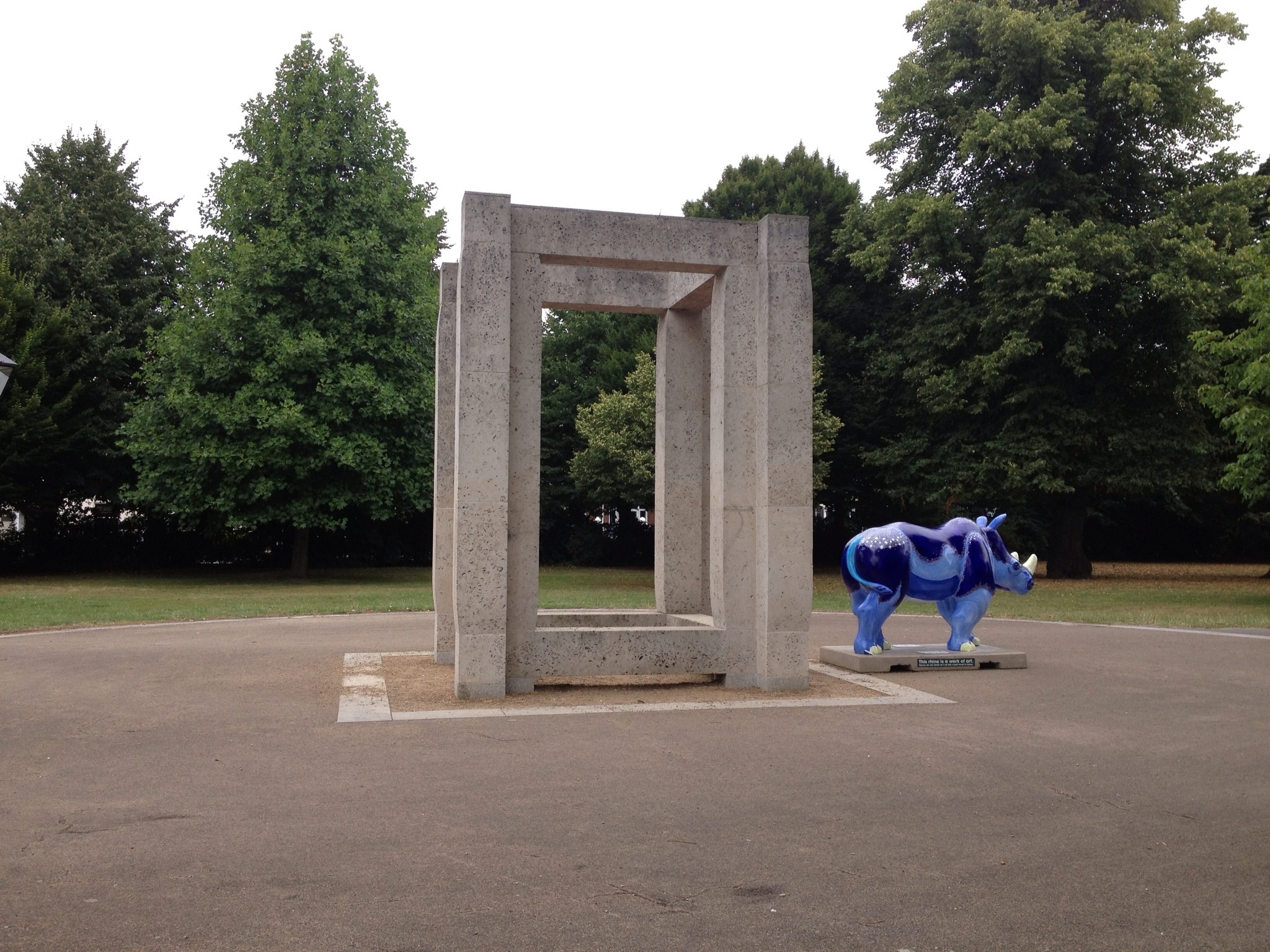
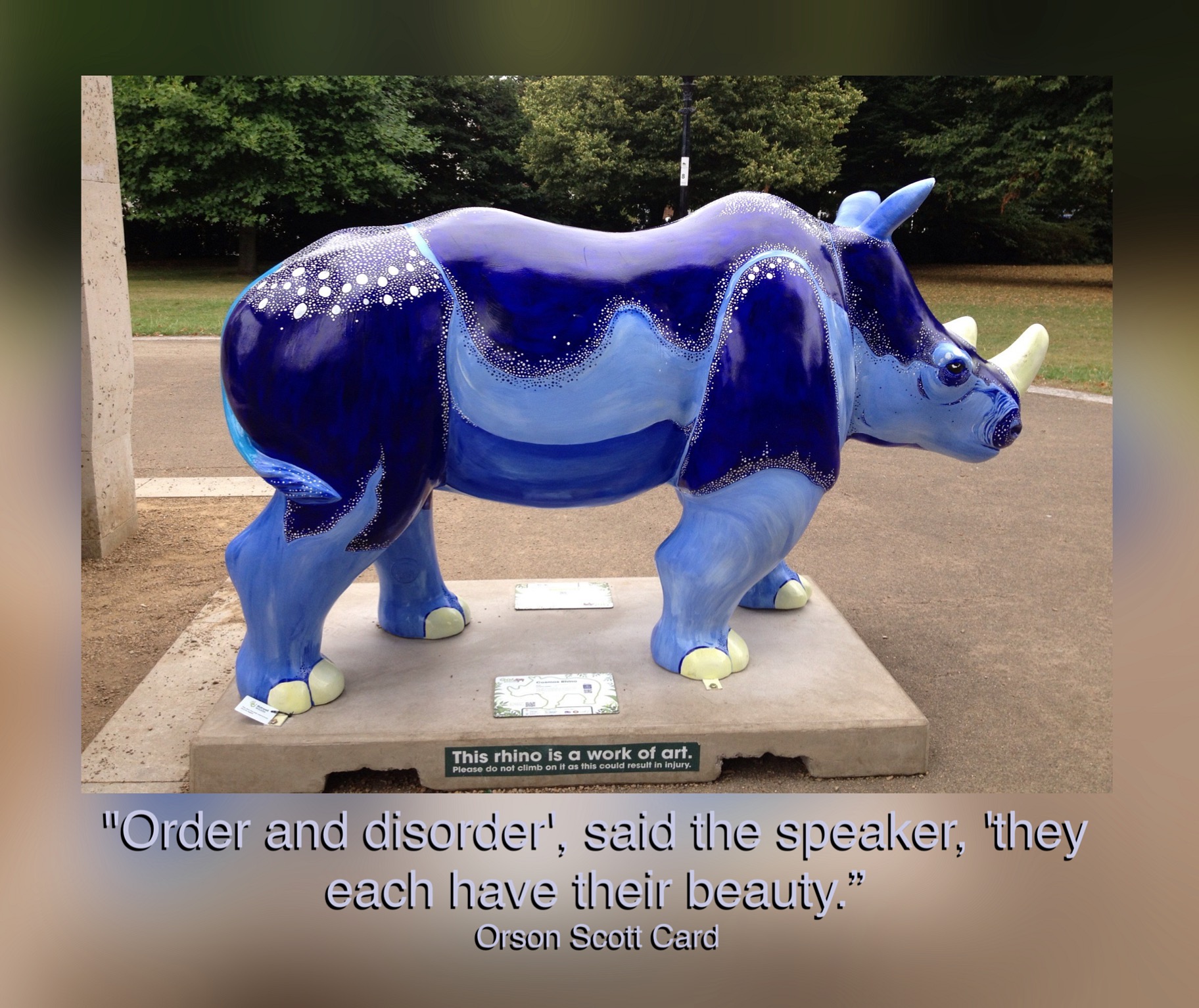
Enough about the sculpture though, this is really about the Rhino. Cosmos was painted by Drew Saunders, an illustration student at The Arts University, Bournemouth and sponsored by house builders Crest Nicholson. As blue is my favourite colour, especially deep cobalt blue, Cosmos really appeals to me, especially as the white spots remind me of a starry sky. Apparently this was just the look Drew was going for so I’d call it a success.
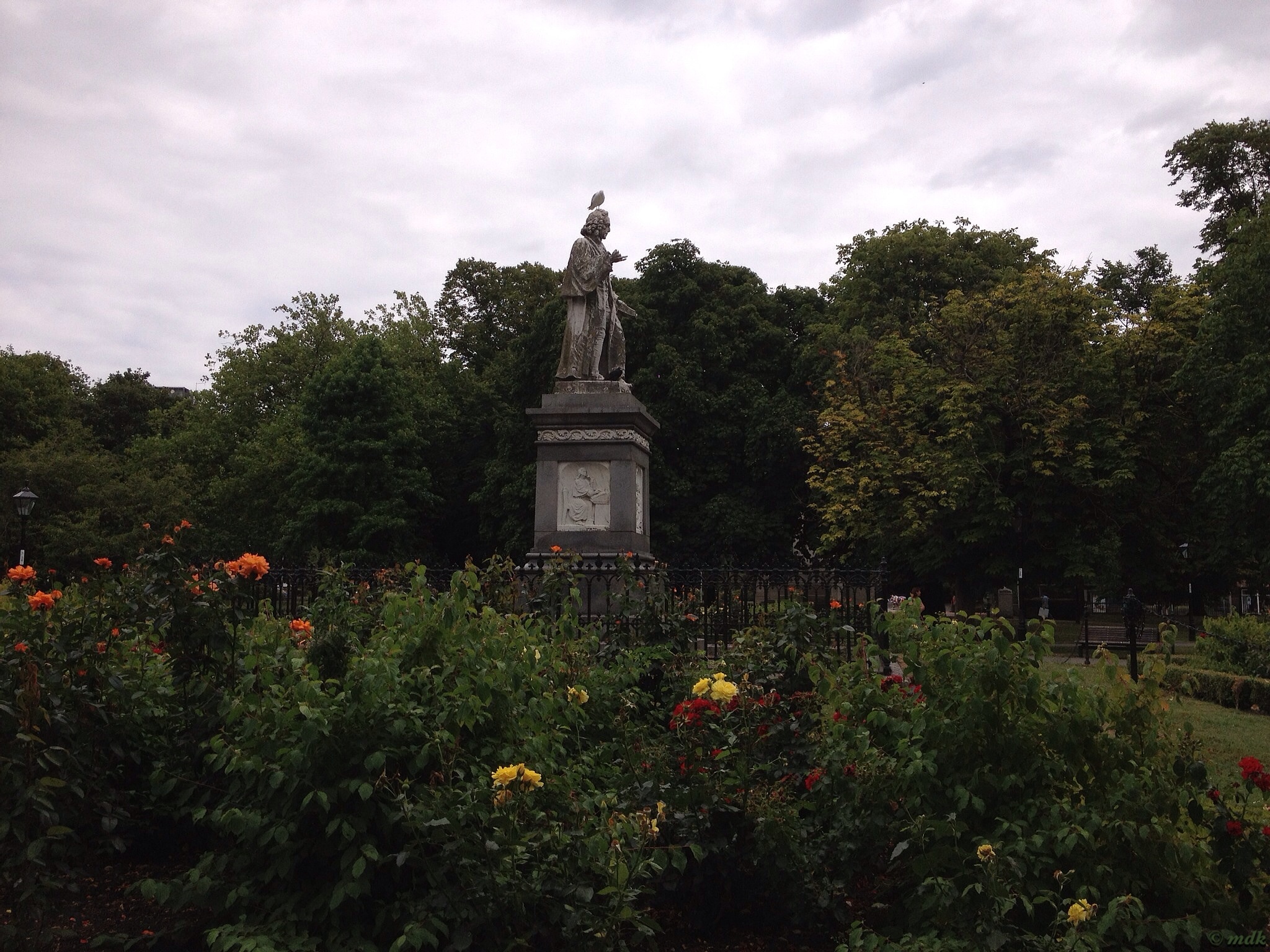
Leaving Cosmos behind I made for the statue of Watts, standing in the central circular garden. Isaac Watts is one of Southampton’s most famous sons, an author, educator, philosopher and writer of hymns he was a man of many talents. Born in 1674 he was educated at Southampton’s King Edward VI grammar school and lived in French Street, within the old city walls. The hymn Oh God Our Help in Ages Past I’d heard being chimed by the Civic Centre clock as I passed was written by him. I have to admit to a little chuckle to myself as I got closer and spotted a pigeon perched most irreverently on the great man’s head. As Watts was well known for being a nonconformist, I’m pretty sure he would have been amused himself, I’d like to think so anyway.
Close to the statue the prickly cases of sweet chestnut adorn the trees. When I was a child we had an open fire and I remember sitting in front of it waiting for the pop of the skins as the chestnuts roasted. Central heating and gas fires may be cleaner and more convenient but you can’t beat chestnuts roasting on the fire or staring into the patterns of the flames on a cold winter day.

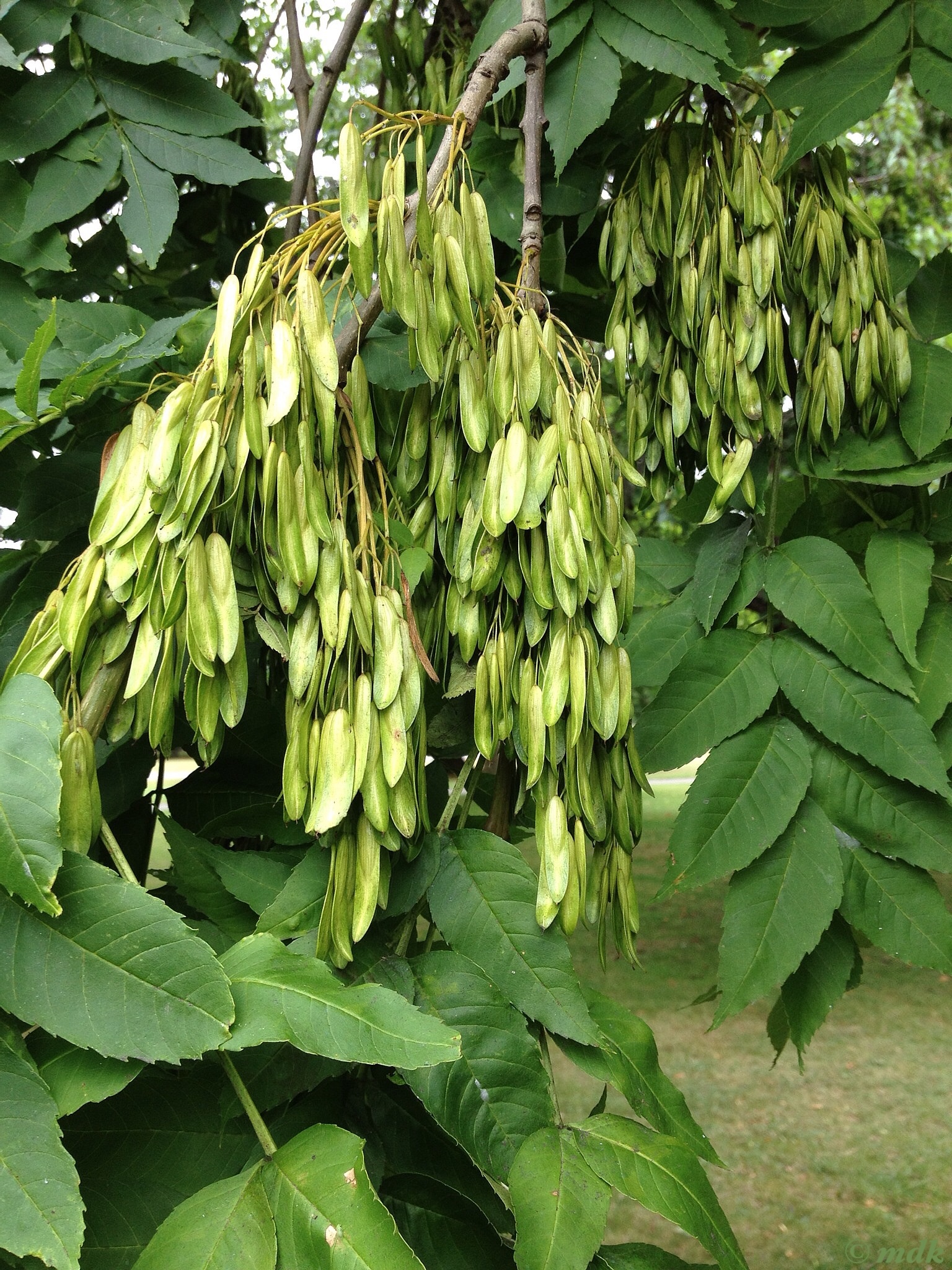
The parks were pretty crowded too so it wasn’t as pleasant a walk as it could have been. All the Friday walks, meandering about when everyone’s at work, have spoiled me. In Watts Park the ash trees are covered with heavy bunches of keys. Thankfully they don’t seem to have succumbed to the chalara dieback scouring the county. This disease is caused by a fungus called Chalara fraxinea and it’s said its decimating ash trees all over the country in the same way Dutch elm disease killed most of the elm trees. It would be a shame if our ash trees went the same way.
My next rhino, number thirty, was standing right in front of Isaac Watts, giving him something interesting to look at to take his mind off the pigeon. This was Beatrix, sponsored by Terence O’Rourke, planners, designers and environmentalists who ran a competition amongst their team to design her. Stuart Waite Davidson’s design was the winner and Beatrix was painted by artist Laura Schillemore who also painted Reveal.
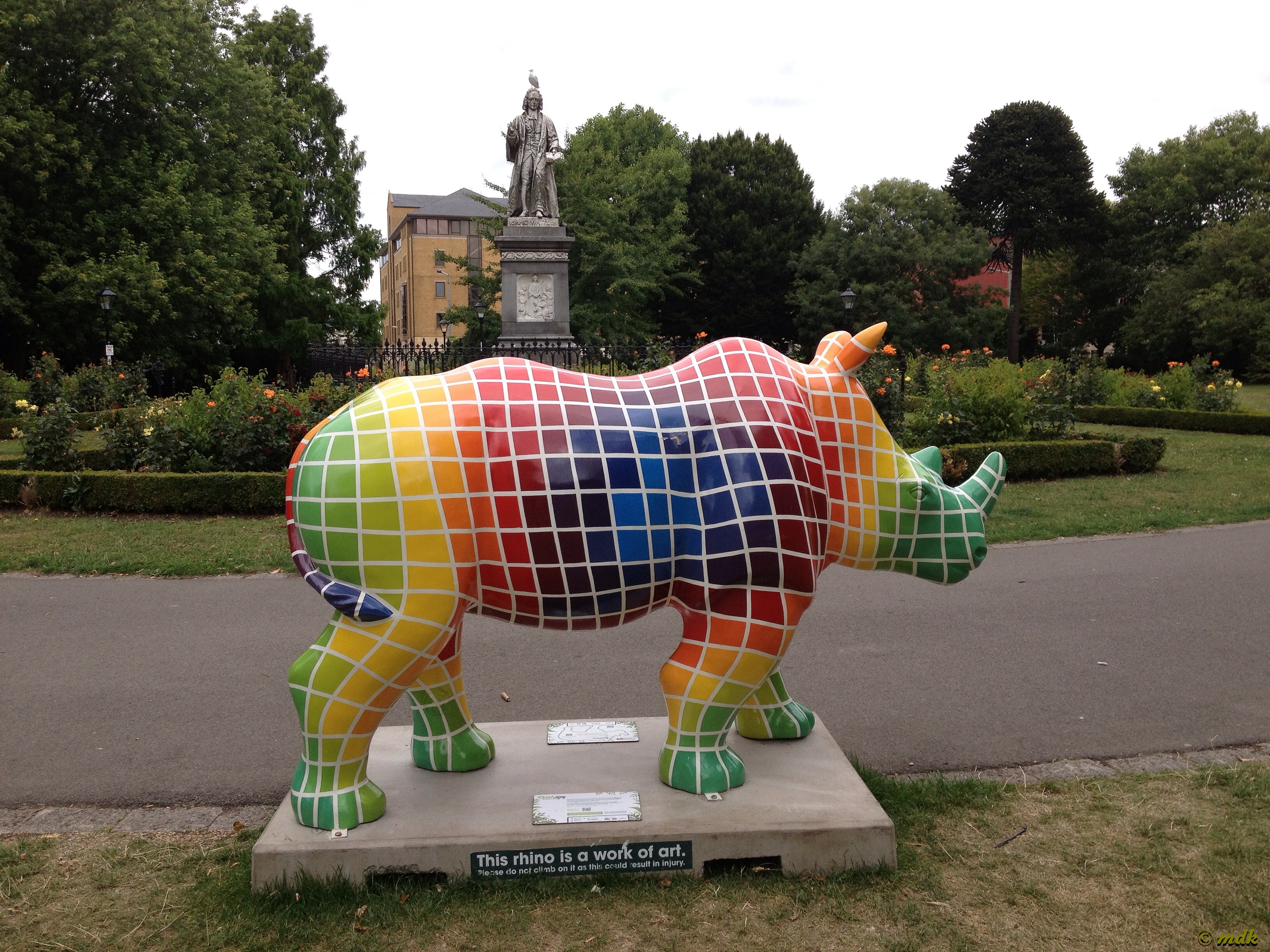
Stuart is fanatical about colour which is fairly obvious when you see the rainbow grid that clothes Beatrix. The idea was to create a mosaic effect using a spectrum where each division would be a unique shade. If nothing else, she brightens up Isaac’s view very well, he may even need sunglasses. Having found two rhinos in Watts Park I wasn’t actually expecting any more but, as I made my way towards the cenotaph, I happened to glance over at the bright floral display on the corner. The sunflowers in particular caught my eye because I love sunflowers, one of these years I’m actually going to get round to growing some. Then I noticed something green just beyond the flowers so I went to investigate further.
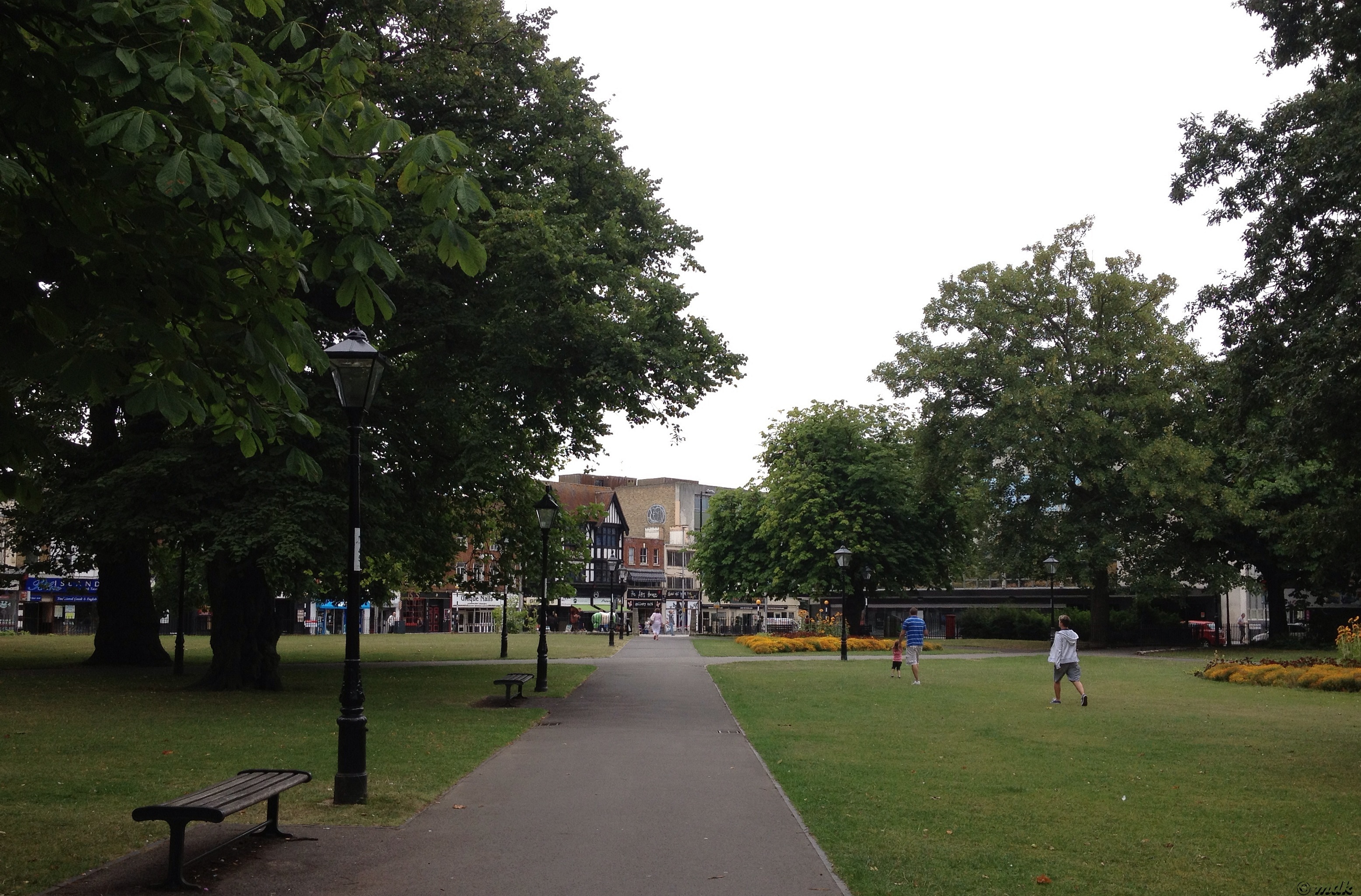
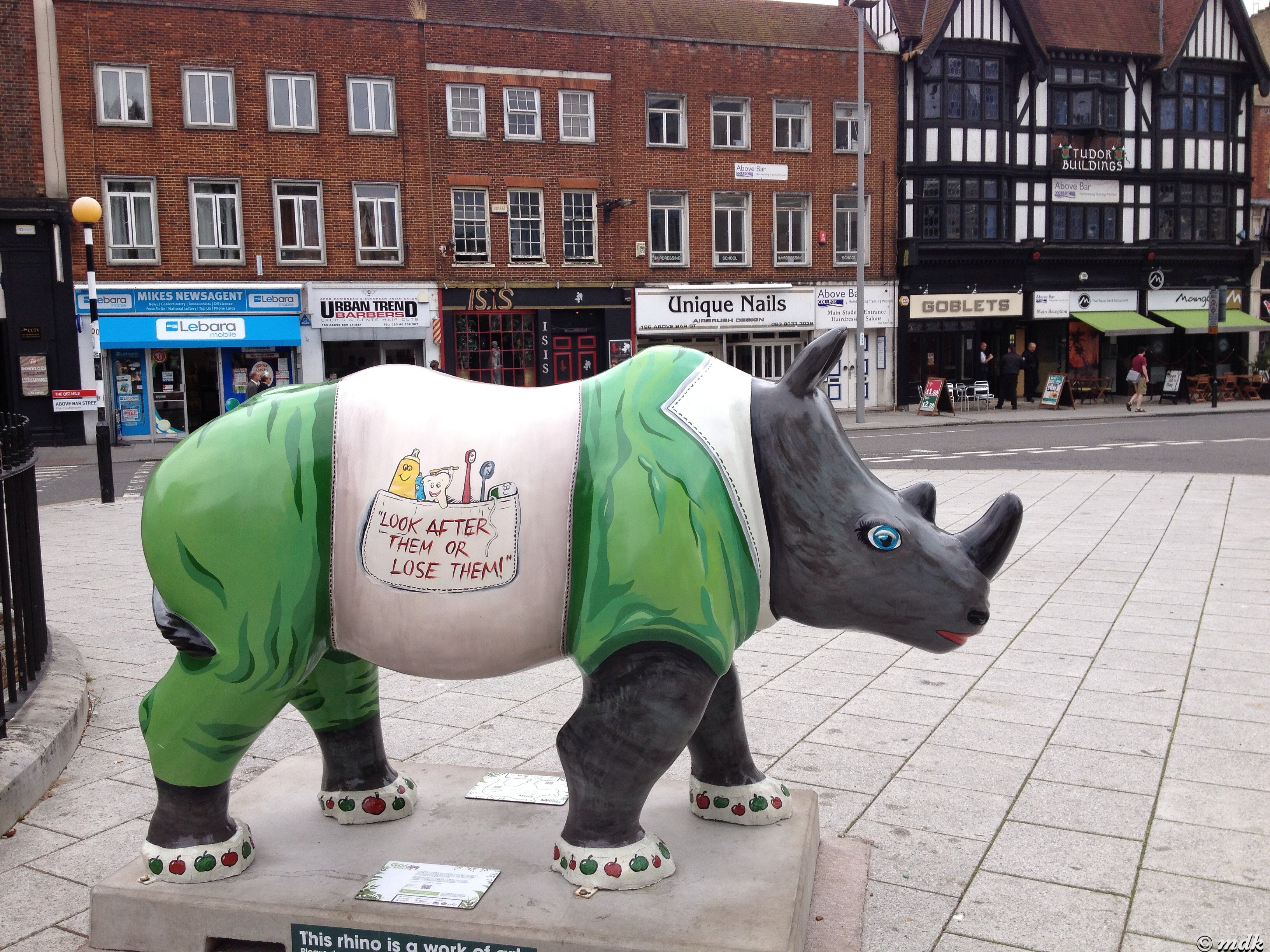
A few more steps and I was certain it was another rhino. Without the sunflowers I might have missed it. This was Flossy, painted by Nina Fraser, a graduate of Southampton University’s Creative Community at Winchester College of Art and sponsored by Denplan, the dental payment plan people. Of course Flossy is all about teeth, with her dental nurse’s uniform and reminder to ‘look after them or lose them.’ The dentist may not be my favourite place but still, I’m glad I saw flossy.
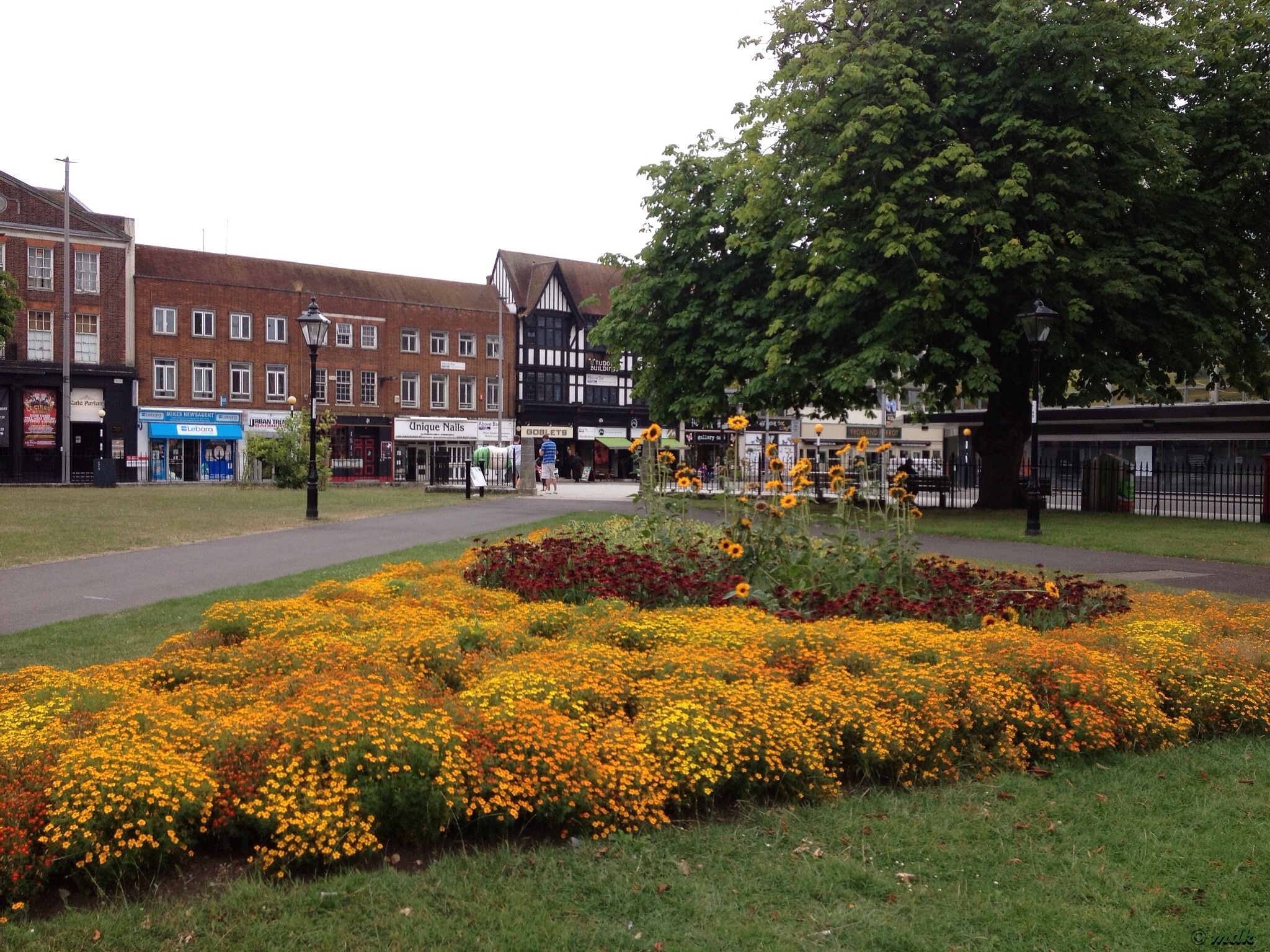
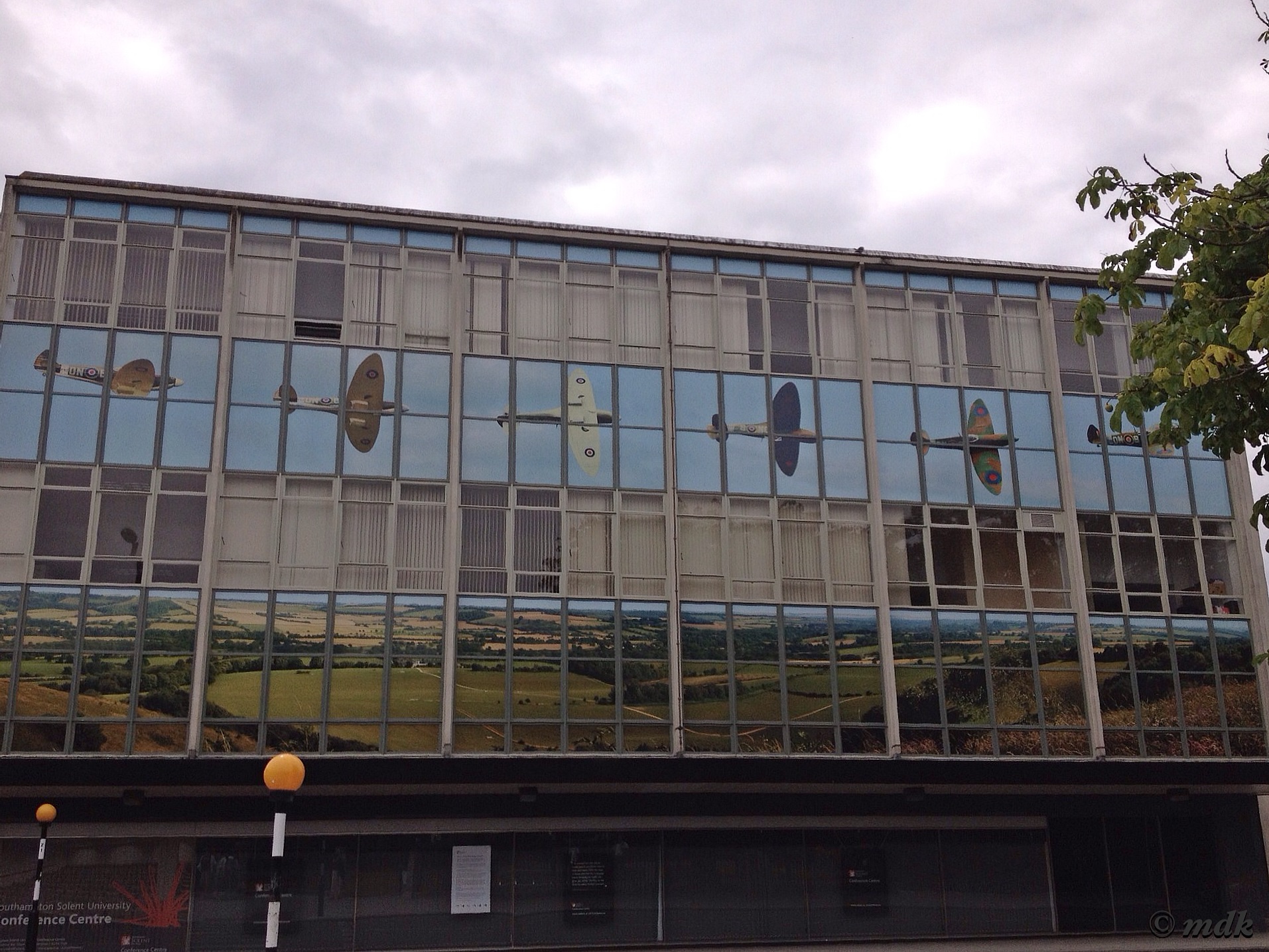
As I turned to look at her information tag the building on the corner caught my eye. I don’t often come to this end of the City Centre as it’s mainly pubs and restaurants and, if I do, it’s to visit the parks so I was blown away by the frieze of Spitfires flying across the windows of the building opposite. For a moment I thought the greenery below was a reflection of the parks then I realised it was another frieze, the Hampshire Downs if I’m not mistaken. What a wonderful thing to do to a building and if it wasn’t for Flossy I’d never have seen it. If only all municipal buildings looked liked this from the outside what a lovely place the city would be.
So this leaves just six rhinos unaccounted for. Did I find them all? Now that would be telling…
Please see my copyright information before you copy or use any of the above words or pictures.