
With all the editing on Plagued complete, and publishing wheels in motion, I needed a break from looking at screens, zoom calls and fiddling about with old photographs to come up with cover art. In fact I needed a break from thinking about 1918 altogether. July 2021 was almost over, COVID restrictions had been lifted but I didn’t feel ready to throw caution to the winds. Instead I decided to walk the perimeter of one of Southampton’s lost estates, the Chessel Estate in Bitterne.
The Chessel Estate belonged to David Lance, a magistrate and businessman who had made his fortune in the service of the East India Company. In early 1789, David returned from China, where he had been working in partnership with William Fitzhugh, and settled in Southampton. He bought substantial property in the town and soon married William’s sister, Mary, whose father Valentine Fitzhugh lived in Bitterne Manor House. Exactly where in the town the Lance family lived isn’t clear but it was most likely in Above Bar because the Lance children were baptised in All Saints and Holy Rood churches. David also purchased a triangular tract of land in Bitterne, overlooking the River Itchen at Chessel Bay. This was to be the site of his country home.

Today, it is hard to imagine Bitterne as a rural area, where a rich man might build a country home. Back in the late 1700’s though, the railway was yet to arrive and Bitterne really was a small village at the top of a hill, surrounded by woods, fields, copses and the odd manor house and farm. Chessel House was built on the high ground south of Bitterne Road and west of Peartree Avenue. In 1797 the Lance family moved in.

My walk began at one of the three lodges to the estate. The lodge, once called Magellan, stands where the main drive to the house would have come out onto Peartree Avenue. It is the only one of the three lodges still standing. Stone pillars on either side of the road were once the gateposts of Chessel House, although the ones outside Magellan have been moved from their original position. The little house has also been extended since I was a child.


Chessel Avenue follows the line of the drive that ran from the lodge, past Chessel House, to the gate at the north west edge of the estate. Sadly, the impressive house, was demolished in the 1920’s so there is nothing to see there any more. Designed by John Kent, it stood roughly where 35 Chessel Avenue is now. Unfortunately, very few photographs remain of the house but the sales particulars in the Hampshire Independent in 1840, give an idea of what it was like. The description calls it a ‘Splendid Italian Villa … The leviathan amid the contending beauties and renowned attractions of Southampton’ and mentions ‘Grecian order of architecture’ and ‘purist classical taste.’
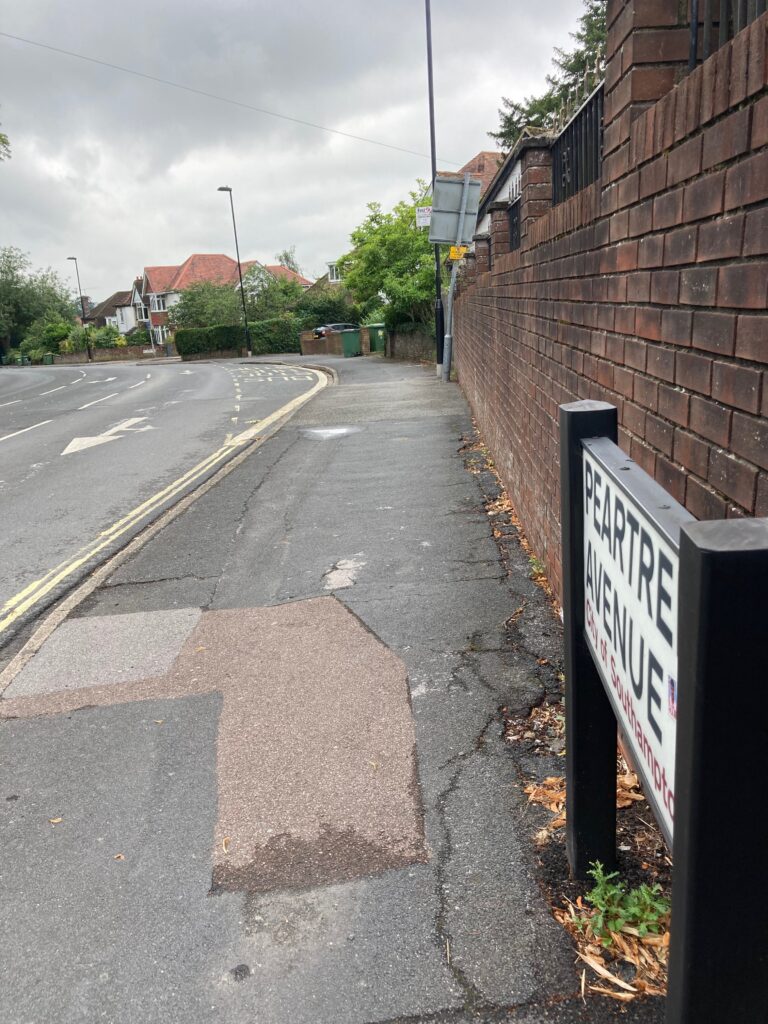
Peartree Avenue follows what would have been the boundary wall of the estate. I set off trying hard to imagine what it must have been like back in David Lance’s day. To my left, Freemantle Common was probably much as it would have been then, but Peartree Avenue has changed beyond recognition. Looking at the old maps of the time, the avenue more or less follows the route it has always taken but these days it is lined with houses instead of hedges screening the Lance’s gardens.

Jane Austen became a friend of the Lance family when she lived with her brother Frank and his wife in Southampton. She visited the house regularly between 1806 and 1809 and described it to her sister in a letter as ‘a handsome building, stands high and in a very beautiful situation.’ She was not quite so kind about Mrs Lance, and wrote, “they live in a handsome style and are rich, and she seemed to like to be rich.”

Before long I had reached the top of Athelstan Road and turned right to follow as closely as I could the boundary of David Lance’s land. Of course, in his day the boundary would have run through Redmoor Copse and followed the line of the river. Today, all that remains of the copse is a few trees in amongst the houses and the lodge house that once nestled on the edge of the road is no more.

When David Lance purchased the land to build his house the only way to cross the river from Southampton was by bridge at Mansbridge or by water, using the Itchen Ferry. Lance was a shrewd man though, he also invested in the Northam Bridge Company, formed to build a bridge across the river between Northam and Bitterne. This would make access to his land easier and, no doubt, make it more valuable. The Admiralty were also keen to build a bridge. England was at war with France, and a road connecting the Portsmouth and Southampton dockyards seemed like a useful thing. In 1799, the first Northam toll bridge was opened.

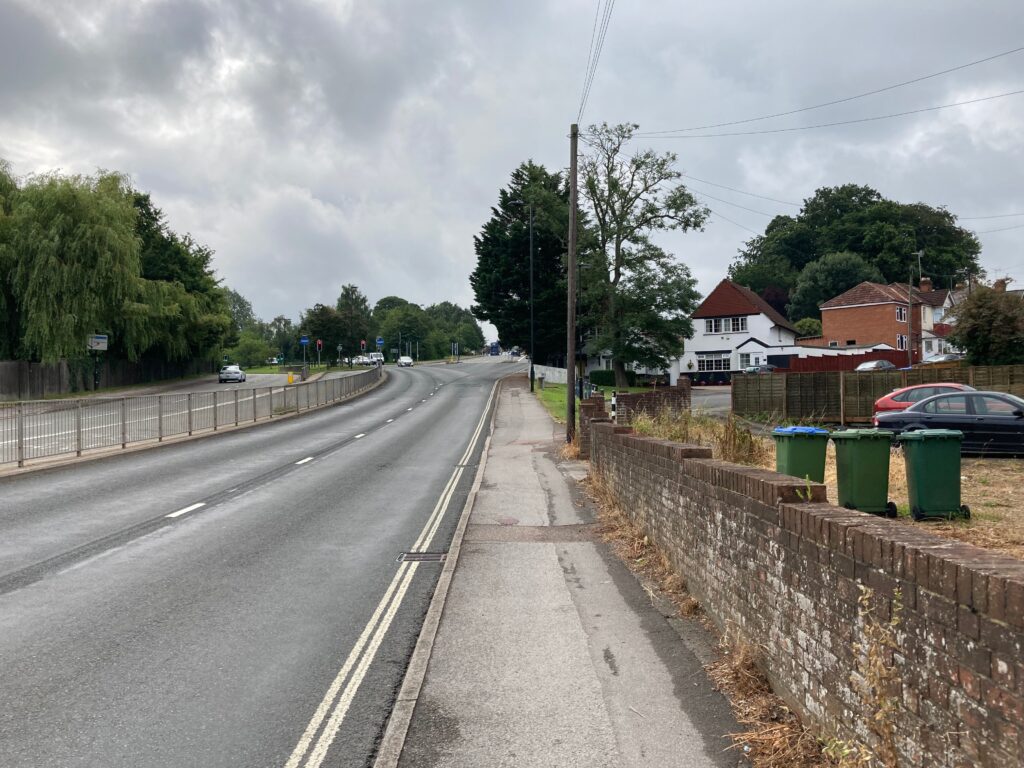
Athelstan Road winds its way down the steep hill following the line of the river, and emerges on Bitterne Road opposite the railway station. To the left, and just around the bend, is Bitterne Manor where Mrs Lance’s family lived, and the bridge that David Lance was instrumental in building. To the right, the road follows the boundary of the Chessel Estate and heads slowly uphill towards Bitterne Village. I, of course, turned right and began the long, familiar uphill slog.

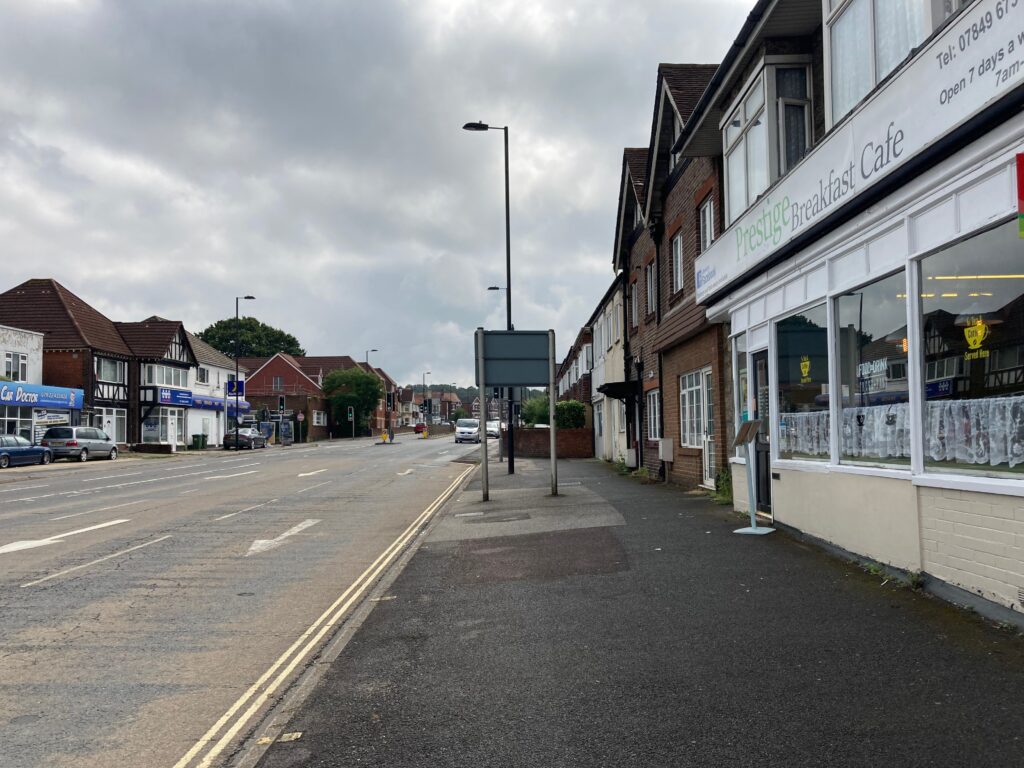
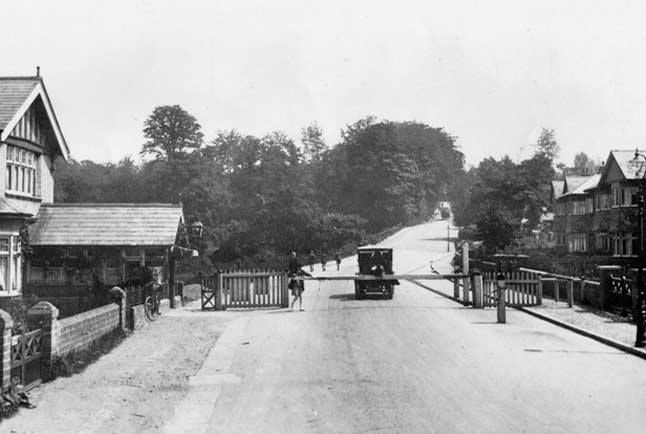
As I plodded upwards it was hard to reconcile the busy dual carriageway with the rural dirt road the Lances would have used. None of the houses I passed were built back then and even the railway didn’t exist. Slowly the incline became steeper and I rounded the bend where the third Chessel Estate lodge once stood. The charming little thatched cottage stood close to the original toll gate on the corner of Midanbury Lane. I couldn’t help thinking what a shame it was that such a lovely building was demolished in 1963. The bus lay-by that took its place may be useful but it is not as easy on the eye.


David Lance was an influential man, a Deputy Lieutenant of the Volunteer Regiment of Horse militia. He was a landowner, not just at Chessel, but also at Faccombe near Andover. He’d become a Burgess of Southampton in 1794 and a Sheriff of Hampshire in 1807. He was also a member of the exclusive Royal Southampton Archers. Despite his wealth and power, he and his wife Mary were not immune to tragedy. Their daughter, Frances, born in 1801, died when she was two weeks old. Another daughter, Emma, died in 1810 aged nineteen. Perhaps this second death was an influence in their decision to leave Chessel in 1815 and travel around Europe.

The Lances may have left Southampton but their memory remains. Two of the roads built on their land, Chessel Avenue and Chessel Crescent, are named after their estate and the steep hill leading up to Bitterne Village was called Great Lances Hill and is still called Lances Hill today. Thankfully, my walk of the perimeter of the Chessel Estate would not take me quite that far because the hill is a real slog, even on a good day.
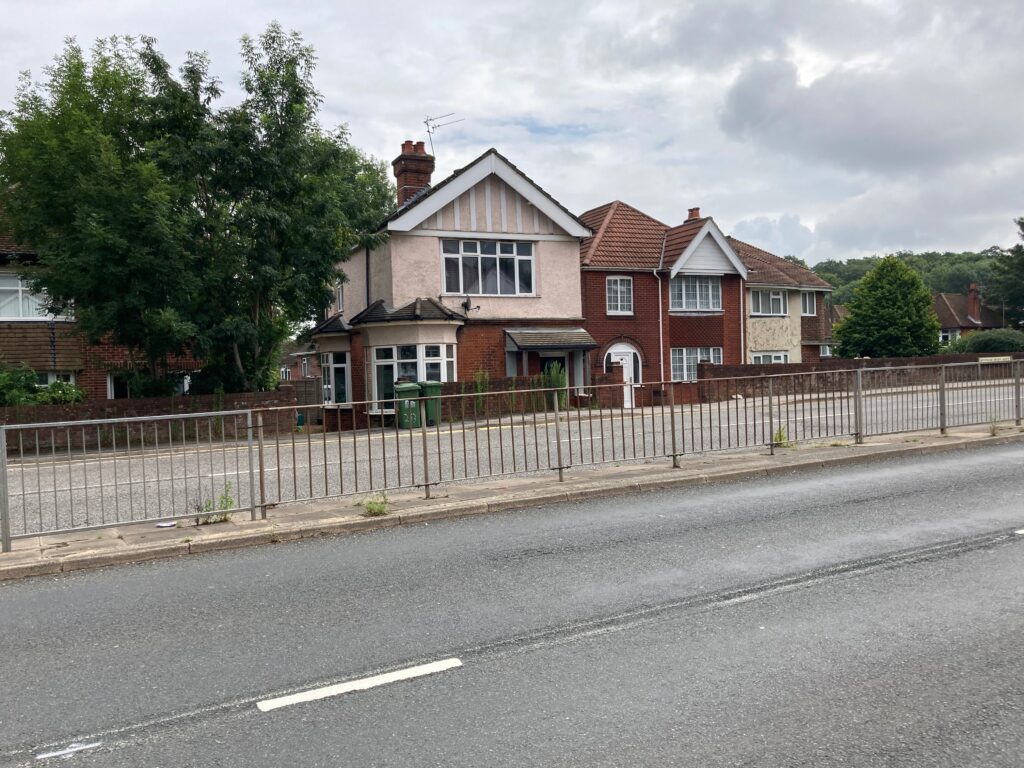
At some point the toll gate for Northam Bridge was moved from the corner of Midanbury Lane. Why it was moved and when, I couldn’t say, but it ended up a little way up the hill from Chessel Crescent, close to the corner of Glenfield Avenue. The toll house still stands today. It can easily be spotted because it is closer to the road than the houses around it and the remains of the porch where the toll keeper stood can still be seen.
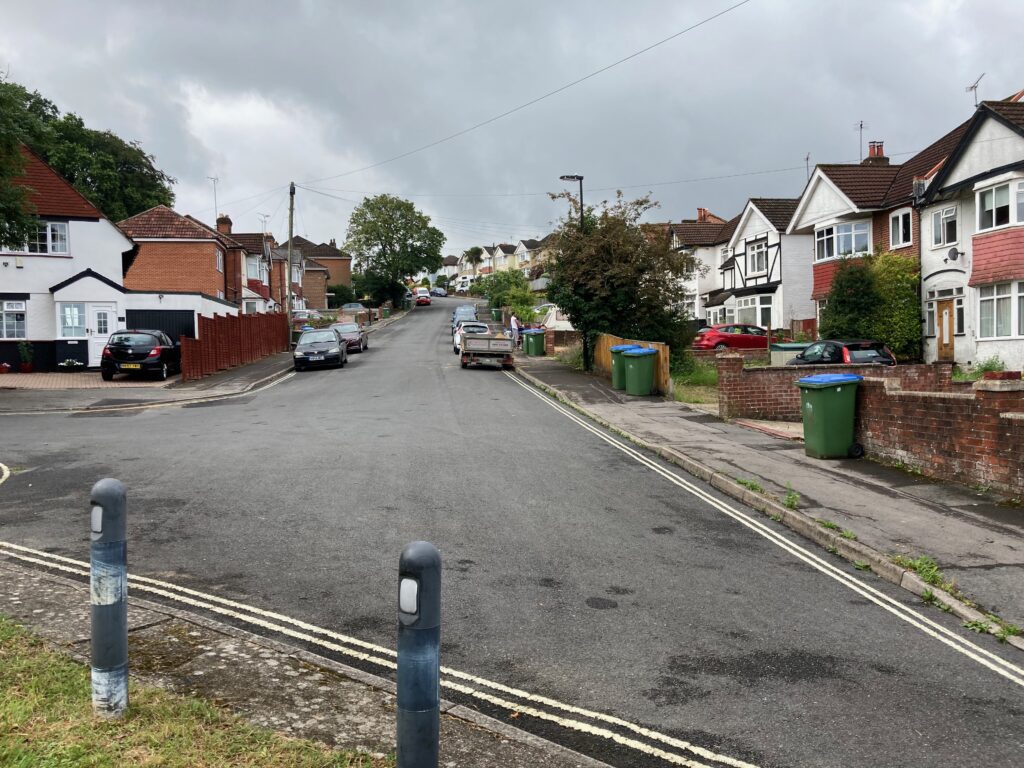
I might have avoided Great Lances Hill, but to complete the circuit I had to tackle Little Lances Hill. The word little is deceptive. The hill is certainly shorter than Great Lances Hill, but, if anything, it is steeper. By the time I reached the top I was feeling rather hot and slightly breathless. It was a relief to find myself back by the gateposts where my journey began.

The Lance family never returned to Southampton. At the end of 1817, David Lance sold the estate to the Right Honorable Lord Ashtown and moved to Marylebone in London. He lived there until his death, aged 63, in 1819, and was buried in the crypt of St Marylebone Parish Church in 1820. In 1911, the estate was sold to developers and the house was demolished in the 1920’s.
If you like what I write and would like to help me keep doing it, you can now buy me a virtual coffee by clicking on the little orange coffee cup at the bottom right. If you’re interested in my historic novels, Plagued is available now on Amazon.
Happy New Year!
Happy New Year to you too Marian
So interesting Marie,thank you!
Thank you. They are streets I walk often.
I’ve run down Athelstan Road and Chessel Avenue, but never up them. I ought to give it a go one day.
I walk up Chessel Avenue regularly. I try almost everything to avoid walking up Athelstan. I don’t even like driving up it. Both of the Lances Hills are a good test of stamina and both the hills in the circle of Chessel Crescent too.
I drove up Athelstan for the first time a couple of weeks ago. Never again.
The roundabout at the top doesn’t help one bit. I dreaded being sent up there on my driving test. Thank heavens it didn’t happen, or I might not have passed.
I always enjoy your posts as you usually cover my “old stamping ground”! I was born in Woolston and lived in Merry Oak until my mid 20s, now I live on foreign ground in Lordshill. Keep walking Marie.
Thank you. I was brought up in Bitterne and have lived in both Portswood and Wooslton. I think Portswood is the least changed of the three.
Thank you Marie for another interesting and thoughtful insight of our local history. Happy new year to you and your family.
Thank you and a Happy New Year to you and yours.
Hi Marie,
How fascinating! I lived around here in the 1960’s, in fact one of your photographs of Athelstan Road was taken right outside our old house at no. 47! There were great views to be had from the front bedroom window, dominated by the docks, but you could also see right over to the big round chapel on Burgess Road in Swaythling.
I found the details of the Lance’s estate particularly interesting, as I had a paper round from about 1968 to 1970 which covered Chessel Ave and Athelstan Road. I remember thinking that the houses at the top of Chessel Ave were very posh and the got less posh as I came down the Avenue to Cross Road! The newsagent’s shop was at the top of Lance’s Hill and from Google Street View it looks like its a real estate agents now. I can’t recall the name back in the 60’s. I would walk up to the shop at around 5:30 every morning, sort and load my papers and walk to Chessel Ave to start the round, down Chessel Ave and up Athelstan Road to Peartree Ave. which took me until about 8:15. Then I walked to school, St Mary’s College on Midanbury Lane. All very local…I sometimes did the round of papers on Chessel Crescent on a Sunday morning. The Sunday papers were almost always large broadsheets with colour supplements and other separate sections and they were very heavy. I would sometimes have to return to the Newsagents to reload as I could not carry the full load at once.
It’s really great to find out a bit more about the area. You tend not to pay a lot of attention when you’re 14 or 15. I had a school friend, Peter Adams, who lived in Glenfield Rd, but I never knew about the Toll House. You published an interesting photo of the junction at the bottom of Athelstan Road. In the 60’s, there was always a policeman on duty there for the morning rush hour, it was that busy. He was quite a demonstrative chap, and wouldn’t hesitate to tear you off a strip if you ignored his instructions to MOOOOOVE!!!
A great read as always Marie.
Cheers,
Rick
I had an evening paper round from the same shop only a little later 1973/4. It was called Moores and it is now an estate agent. My round was Chessel Crescent. The Sunday round was hard work. I recall looking like I’d been down a coal mine afterwards because of the newsprint.
The policeman at the junction was called Tiny Dyer. I have a friend who is his grandson. He was a real character. I remember him seeing us across the road to school in the mornings. He was very tall and quite scary.
Moores, that was it. Greetings to a fellow paper delivery person! Chessel Crescent was tough…I was glad I only did the occasional Sunday. 18 bob a week (Monday to Saturday) for my normal round…I think it was 5 bob just to do the Sunday!
Wow, fancy finding out the name of the policeman after all these years. Thanks for that. He was a character alright…of course there were no traffic lights at the junction in the 1960’s, so he was a busy man during the rush hour. That whole block was a big one-way square I seem to remember, with the wonderful Bitterne Library on the southern side. I spent many, many happy hours in that Library. I’m glad it still exists in one form or another. Like all Southampton Libraries in those days, it had that “Library” smell and a muffled silence, broken only by the occasional “bonk” of the librarian’s stamp. Nowadays, libraries seem to be more like social centres….at least they are in here in Tasmania!
What a place to put a roundabout…it certainly doesn’t help the drivers on Athelstan getting out. The two hills were great on the bike…going down! Up was a “get-off-and-walk” job.
Great to read the comments on this story. Best wishes for the New Year to you and yours. Hope 2022 is better for us all. We get the BBC TV news daily out here, so I’ve got my beady eyes on you!
Cheers,
Rick
Chessel Crescent was a tough round, most of the houses either up steps or down and those hills! I can’t remember what I got paid now, but I know I spent most of it on records. The Cobbett Road library was one of the great joys of my childhood. I loved going in there to choose my books every week, that and a walk up to the Triangle with my grandad to buy boxes of lego from the toy shop.
Tiny was a real character. We could do with a few policemen like him today. As for Athelstan hill, I avoid going up it like the plague, even today. It certainly makes the calves burn. Happy New Year to you too.
Hi Rick… the newsagents was called moores! It was my dads family business and one of three in bitterne!
What an interesting history and in part a sad one with the Lance’s losing two daughters. I very much like the look of Magellan Lodge, a delightful house, though I wouldn’t want to live at the top of a hill.
It is a little sad that all their wealth did them no good in the end. Better to live at the top of the hill than at the bottom like me though.
Thank you, another fascinating read. Since I moved to the area 8 years ago, I’ve become interested in the local history, especially around Peartree. Someone recently mentioned Harriet Grote to me. Have you written about her anywhere?
I’m so glad you enjoyed reading. So far I haven’t written about Harriett or much about the Ridgeway. I’ve been busy writing novels, but I must remedy that soon.
Hi.
I am a foreigner to Bitterne (or Sholing, depending on who you listen to). Born in town, grew up in Bassett (prefab) then Freemantle, onto Weston, Kanes Hill (West End), before my wife (born in Bitterne) and I settled in Ruby Road in 85. Like you, I am an author (but a technical author, of 38 years). I liked your article. Slow time, I have been reasearching the history of our house. It was built about 1925 and was then in Bitterne, in the Parish of Hound. I really ought to write up my time in Bassett (51 to 58) because life was so different back then. The gang (anywhere up to 10+) freely went into Bluebell Woods to climb trees, jump the stream, dig up groundnuts (someone always had a penknife) without an adult in sight. There was an old lady, just before the hole in the fence to Bluebell Wood – if she saw the gang, she would stand at her gate and let the children have a single sweet each (they were off-ration by then). It could not happen now. I should really do some more writing up. BTW When our children were young, I read them bedtime stories, but they got bored. I invented my own outrageous stories of “me growing up” with titles such as “When Our Class Got Abducted By Chinese Ocean Going Pirates, When We Were Visiting Hythe”. I had a brace of such stories. That’s when I found out how critical children could be – I was allowed to add detail, but was chastised if I left anything out (including the added detail).
Anyway, keep up the research and writing.
Thank you for sharing. Maybe you should write those stories down! I bet there are a whole generation of children who’d love them.