

4 May 2017
While we were sitting on our bench by the sea discussing whether to carry on along the sea wall path or find a way into Stanley Park an elderly gentleman came and sat beside us. Pretty soon he struck up a conversation about where we were from and what we were doing. When we told him we couldn’t decide between park and sea he said, “There’s nothing very exciting along the sea wall here but there’s a path up into the park not far off.” And so our decision was made.
The path was easy enough to find and soon we were climbing into the trees. At the top of what turned out to be a steep and winding slope we stopped for one last look back at the shore. We were now directly above the seats we’d been sitting on and, out on the water, we had the best view yet of the galleon. It was flying a Columbian flag and our new friend had told us it was a naval ship on a training exercise. Later I discovered she was the A R C Gloria, built in Bilbao in 1968, and she did indeed belong to the Colombian Navy. To me she looked more pirate ship than navy.
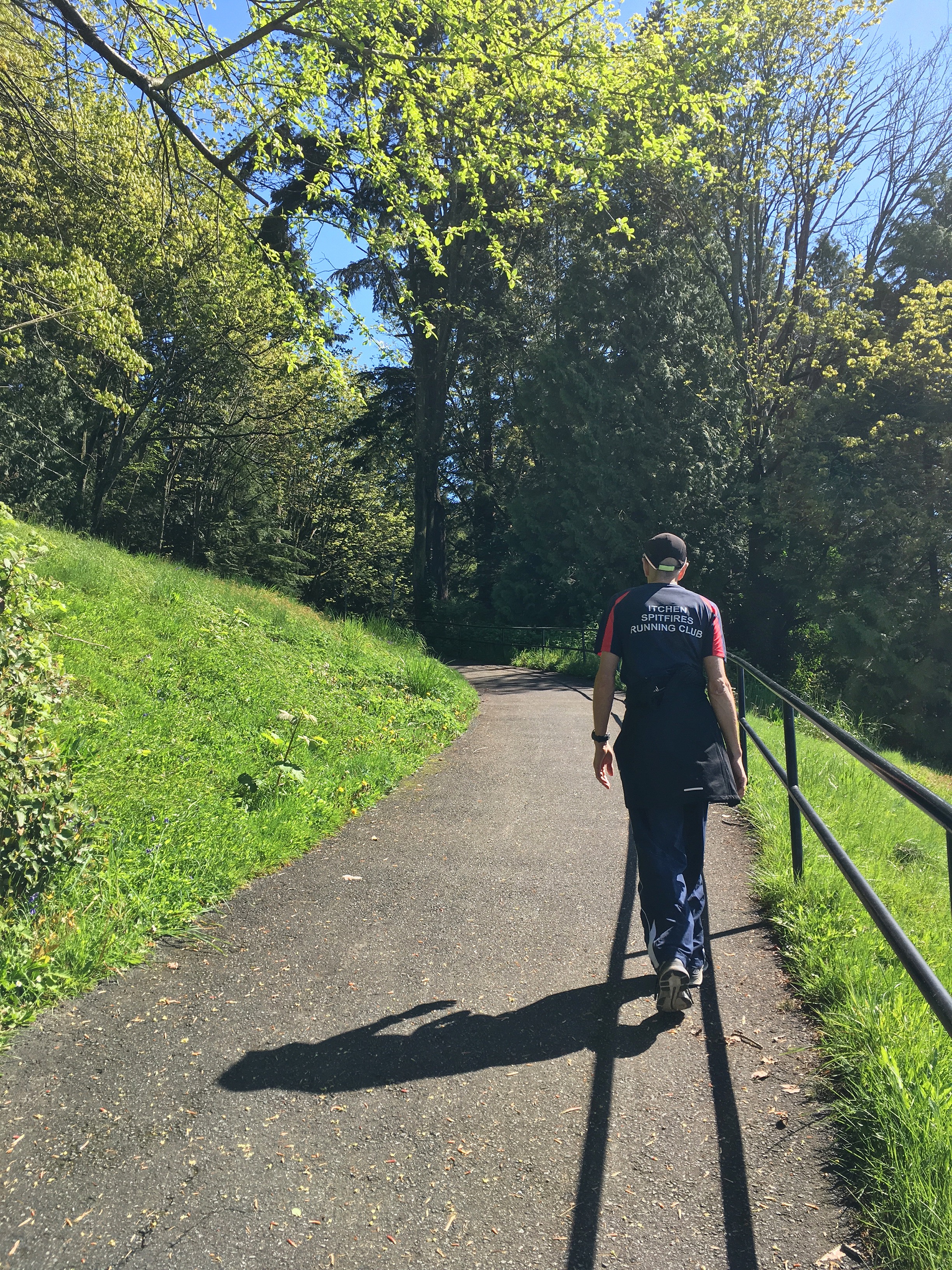
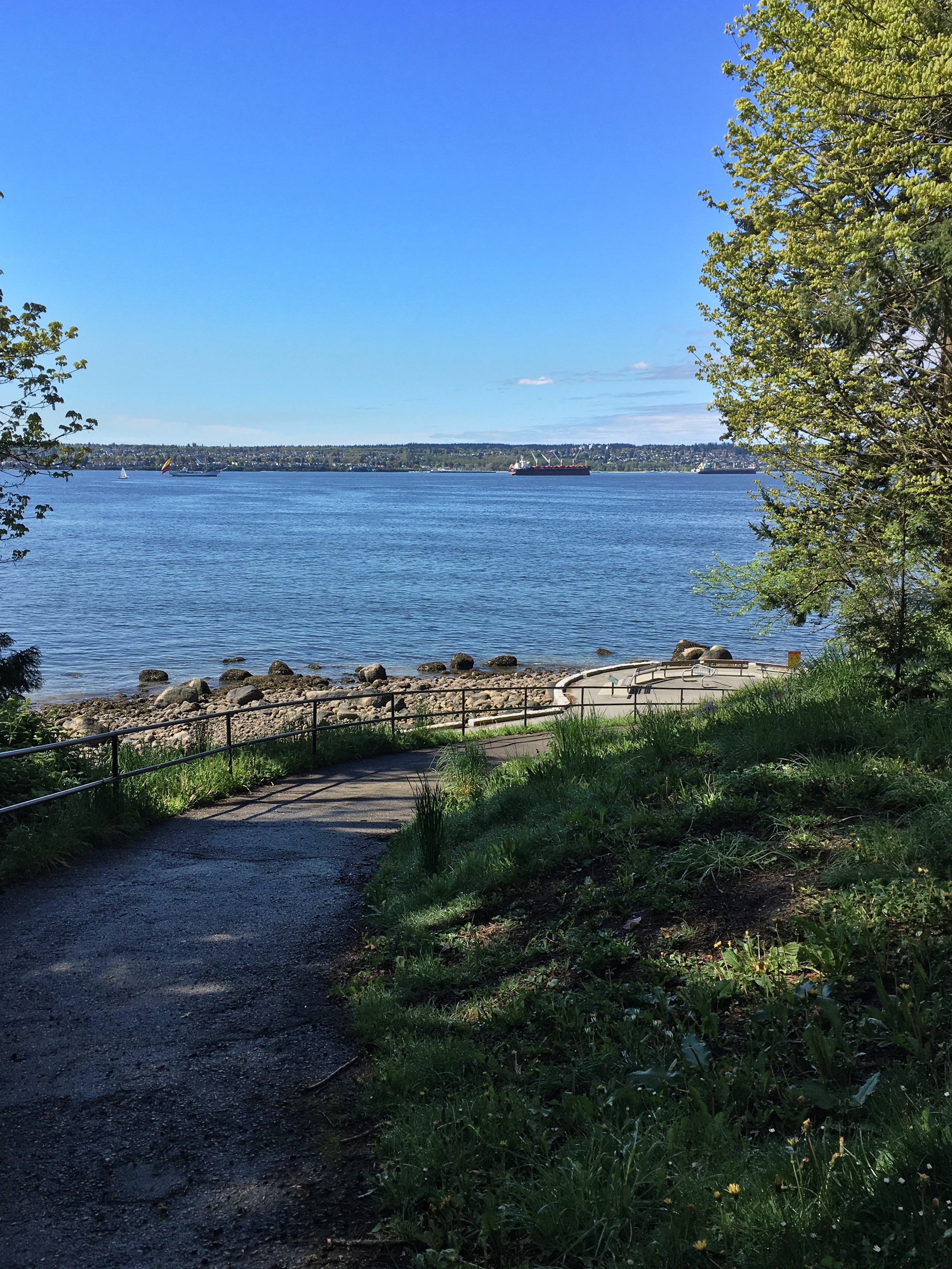
From the outset Stanley Park, named by Trip Advisor as top park in the entire world in 2014, had been high on our list of things to see while we were here. We were also under no illusion that we’d be able to see it all. There are over one thousand acres after all. Unlike most urban parks it wasn’t created by landscapers. It began life as a forest used by indigenous people for more than three thousand years. The Squamish people had a village here and the Musqueam people used its resources.
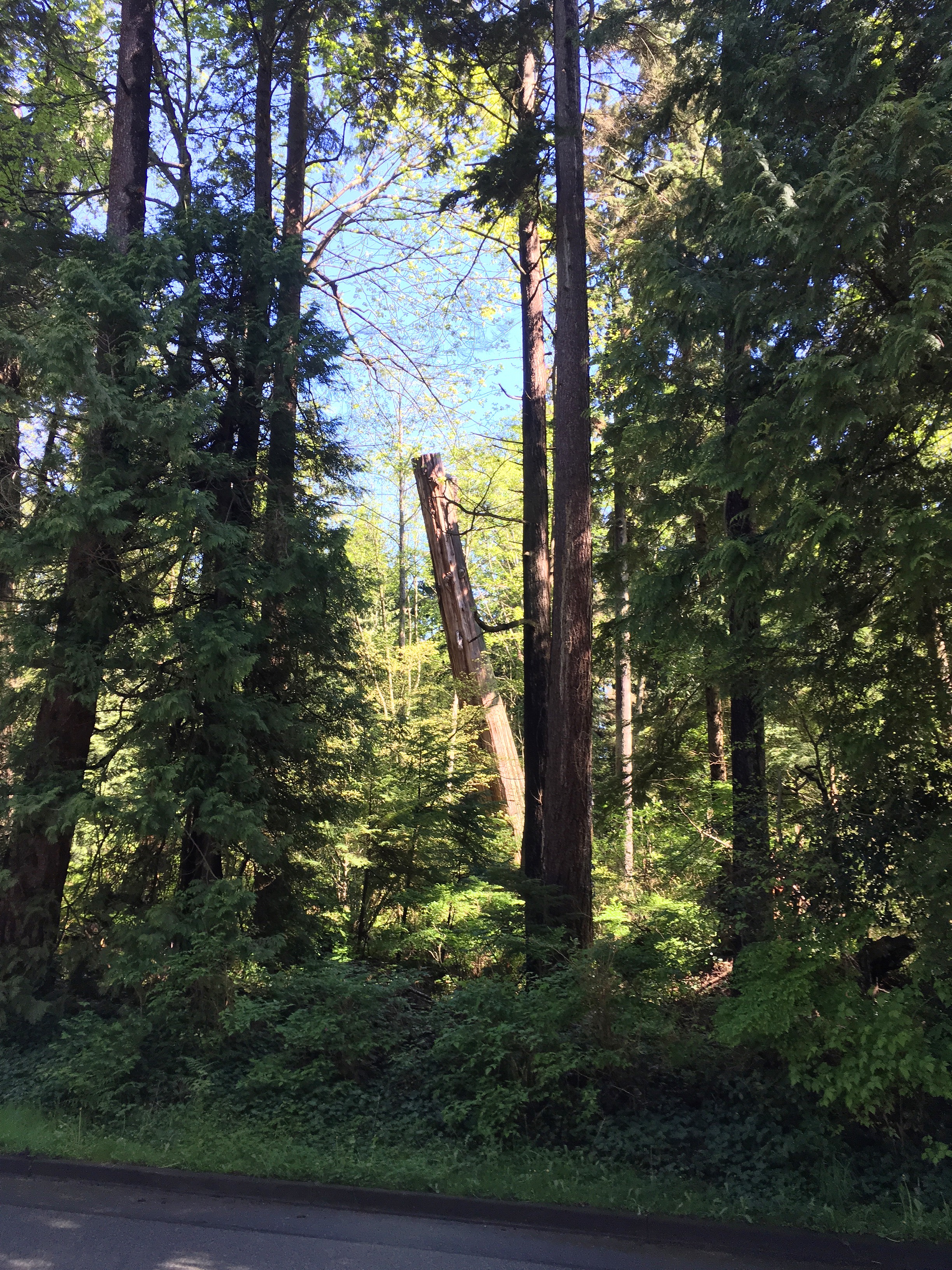
At the top of the slope we came out onto a narrow, tree lined road. Quite soon we saw a trail running off to the side. We took it and found ourselves In the middle of the forest amongst Douglas fir, western red cedar, western hemlock and Sitka spruce.
“I wonder if there are bears here?” Commando mused as we walked through the dappled shade.
“I hope not,” I looked around nervously, “or at least I hope we don’t meet any if there are.”
There was no need to worry though. There are lots of creatures in the park, two hundred species of birds, raccoons, coyotes, skunks, beavers, rabbits and even grey squirrels, but there are no bears or any other large mammals,
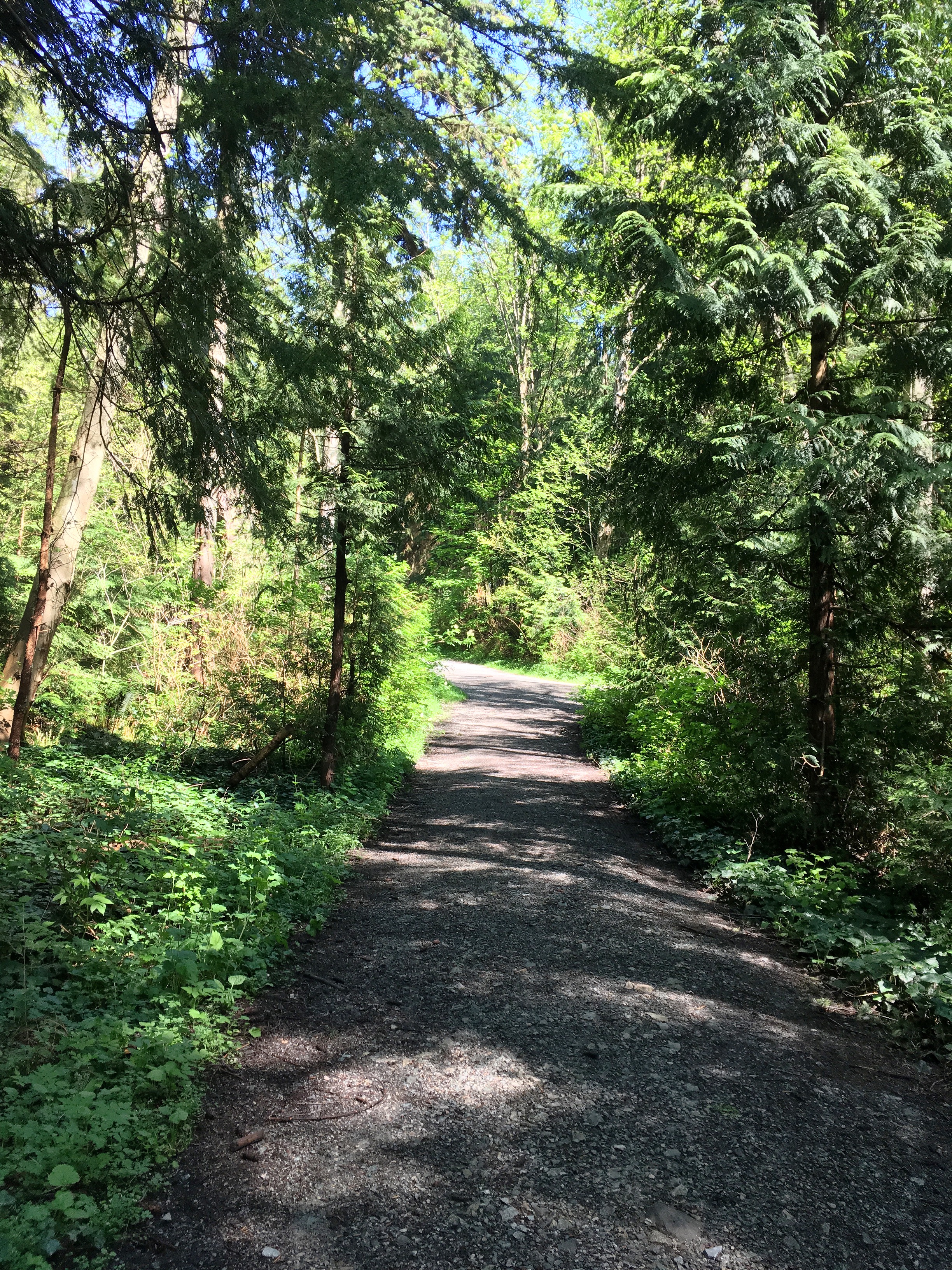
Soon I’d forgotten all about the threat from possible bears. The trees beside the trail we so tall and dense it really did feel like we were walking in an ancient forest. There are, in fact, around half a million trees, some hundreds of years old, the tallest of which are almost two hundred and fifty feet tall. Over the last hundred years thousands have been lost to three major windstorms, the last in 2006, but many have been replanted so it really is much like it would have been when the First Nations people lived here, apart from the trails of course.

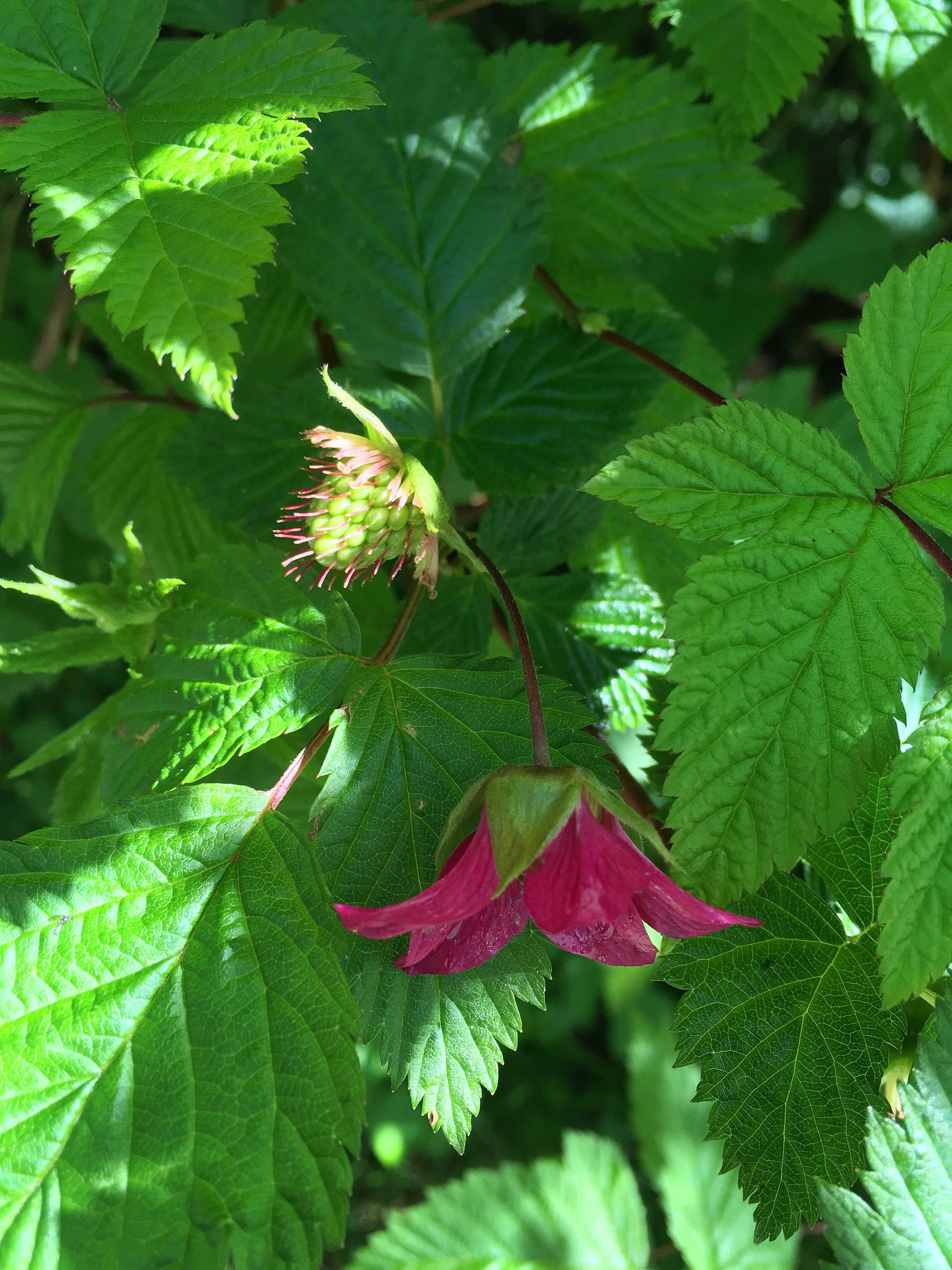
It wasn’t all about the trees either. The edges of the trail were bursting with salmonberries. These are natives of the west coast of North America so I’d never seen them before but I recognised the leaves and prickly stems as being very similar to the blackberry and raspberry leaves at home. The flowers were deep pink and a little different to those on the berries I’m used to but the little unripe berries we so like ours I knew they must be related. No doubt the First Nations people made good use of them.
There were boggy areas beside the trail and, now and then, we caught a whiff of a pungent scent reminiscent of a certain medicinal herb, illegal at home but available in specialist shops here. We looked around, wondering if someone was growing their medicine rather than pay for it, or if it was something left over from the Squamish people who almost certainly used it. There were no serrated compound leaves to be seen though.
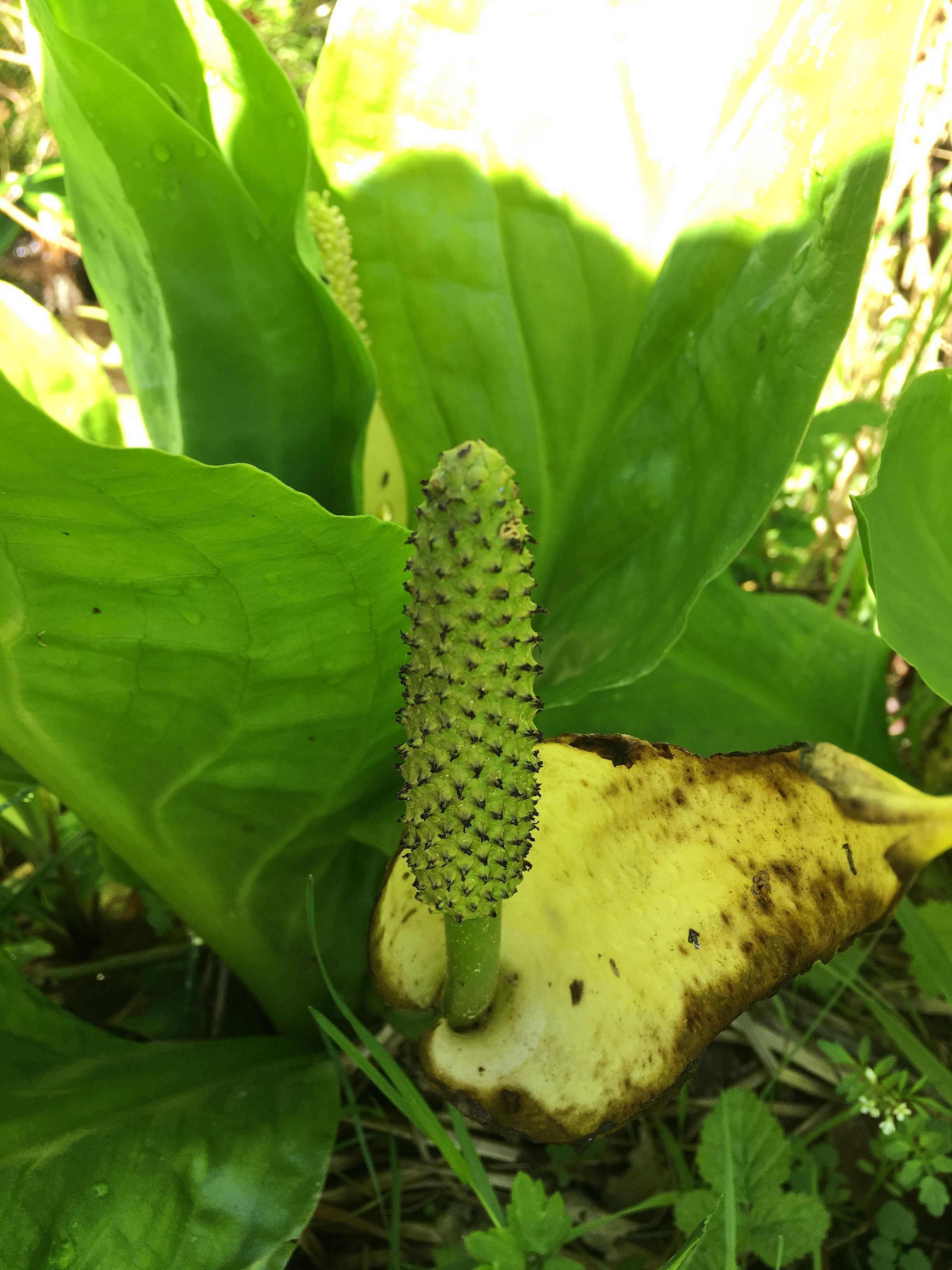
When I saw a bright yellow spadix and a thick, yellowish green spathe amongst the undergrowth, I had an idea what might be causing the smell. Although I’d never seen western skunk cabbage before, I’d seen photographs of its eastern relative on Allen’s New Hampshire Garden Solutions blog, and they were enough like our own cuckoopint to seem familiar. The plant is part of the arum family and the distinctive scent attracts pollinators.
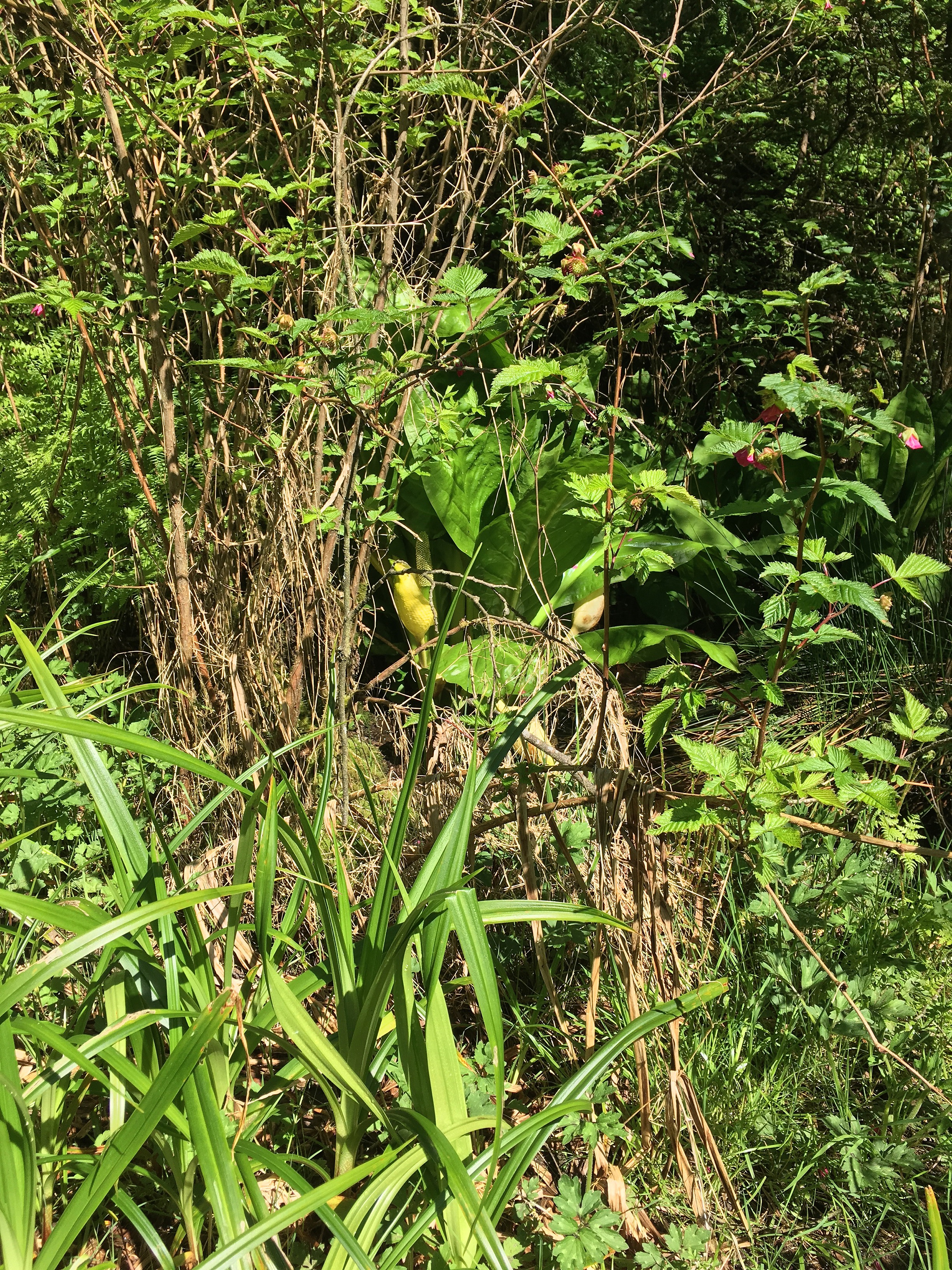
Once I’d seen one I saw them everywhere, aided of course, by that strong aroma. With eyes shut we could have been walking on the streets of Amsterdam. If there had been bears in the park they’d have enjoyed eating the skunk cabbage roots. It was also another plant the First Nations people would have gathered. They used it for burns, sores, swellings and injuries, for food in times of famine, although too much can have unpleasant, even fatal effects, and the leaves were used to line berry baskets and wrap around salmon before baking in a fire.

Captain George Vancouver and Spanish Captain José María Narváez were the first Europeans to explore the peninsular in the 1790’s. Captain Vancouver described it as an island, so it’s possible it was surrounded by water at that time, at least at high tide. He also described being met by around fifty natives in canoes who welcomed him with a gift of cooked fish. He was most impressed.
As we walked along the trail that would not have been there back then, I couldn’t help wondering what it must have been like before the outside world encroached upon it. Despite the thought of bears I suggested we step off the trail, just for a little while and not too far, to try to imagine it. From the relative brightness of the sun speckled trail we stepped into a world of shade and green tinged light.

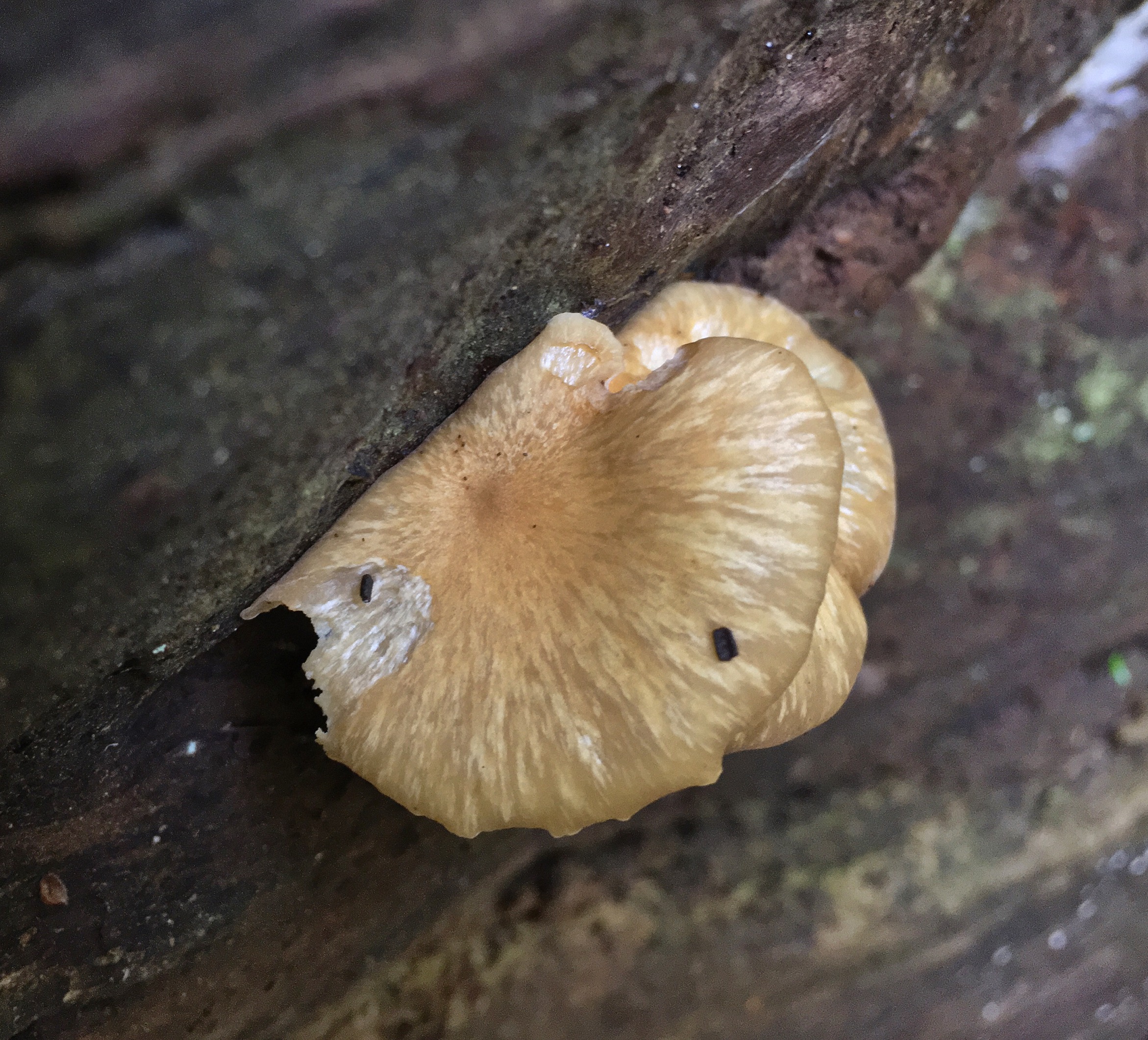
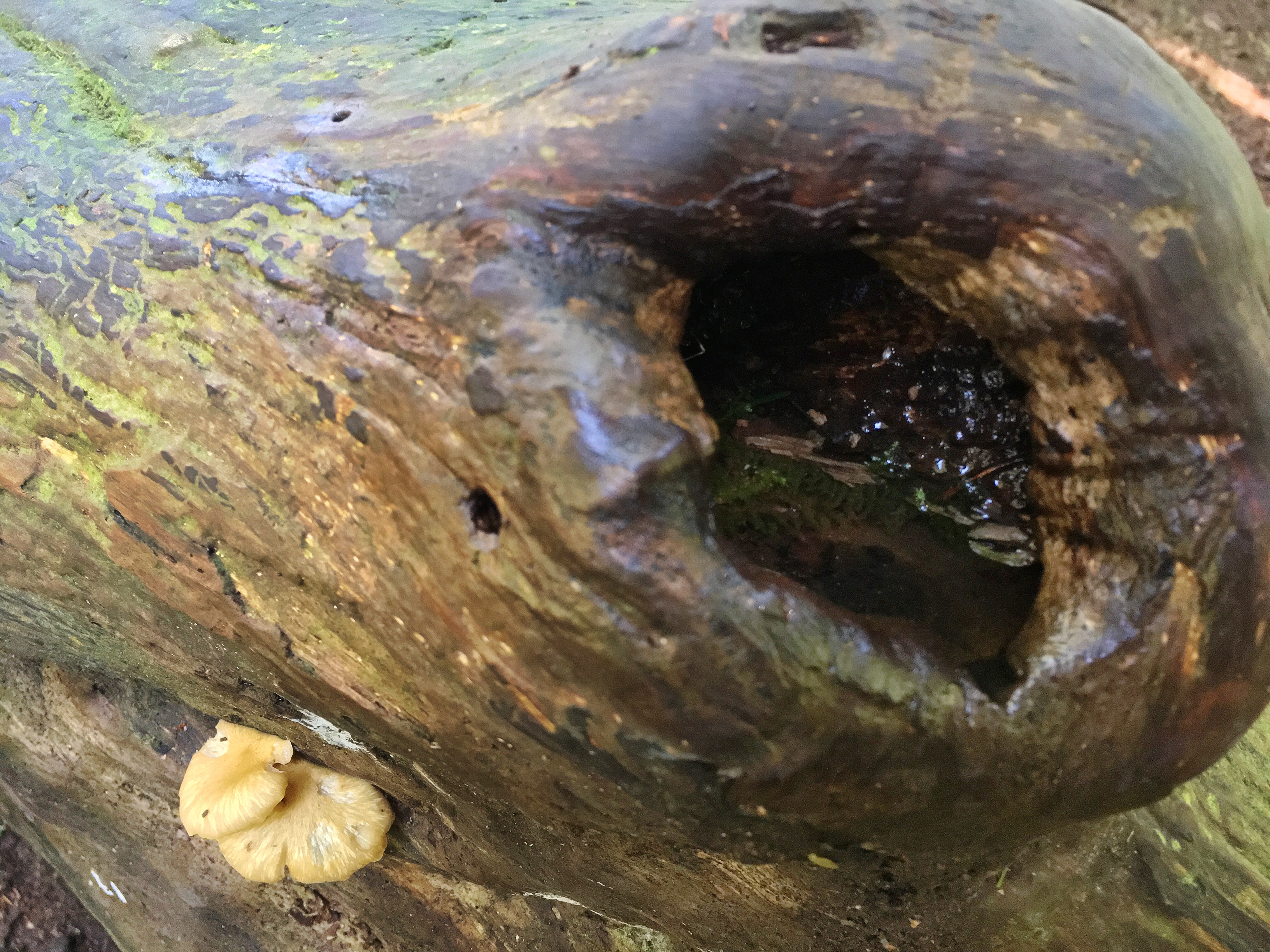
Rotting stumps were home to fungi, one had a hollow filled with water like a miniature pool with sides so smooth they might have been sanded. There were wonderfully contorted moss covered stumps that looked as if they’d been encased in green velvet, ferns and a large round boulder so covered in moss, algae and liverwort I thought it was a plant at first.



During the Crimean war British admirals agreed to defend the area alongside the Squamish if there was an invasion. It never came but the seed was sown that this was a strategic military position. During the Fraser Canyon Gold Rush, in 1858, the British colonised the area. Within a couple of years other Europeans had begun to build homes in the forest. The first was ‘Portuguese Joe’ Silvey. Others came and began to cut down trees to build homes. Over the next twenty years six different companies carried out logging operations. The trail we were walking on, like most of the trails in the forest, began life as skid roads, used to move logs. Thankfully, the peninsular had been made a military reserve in 1863 and this saved if from further development.
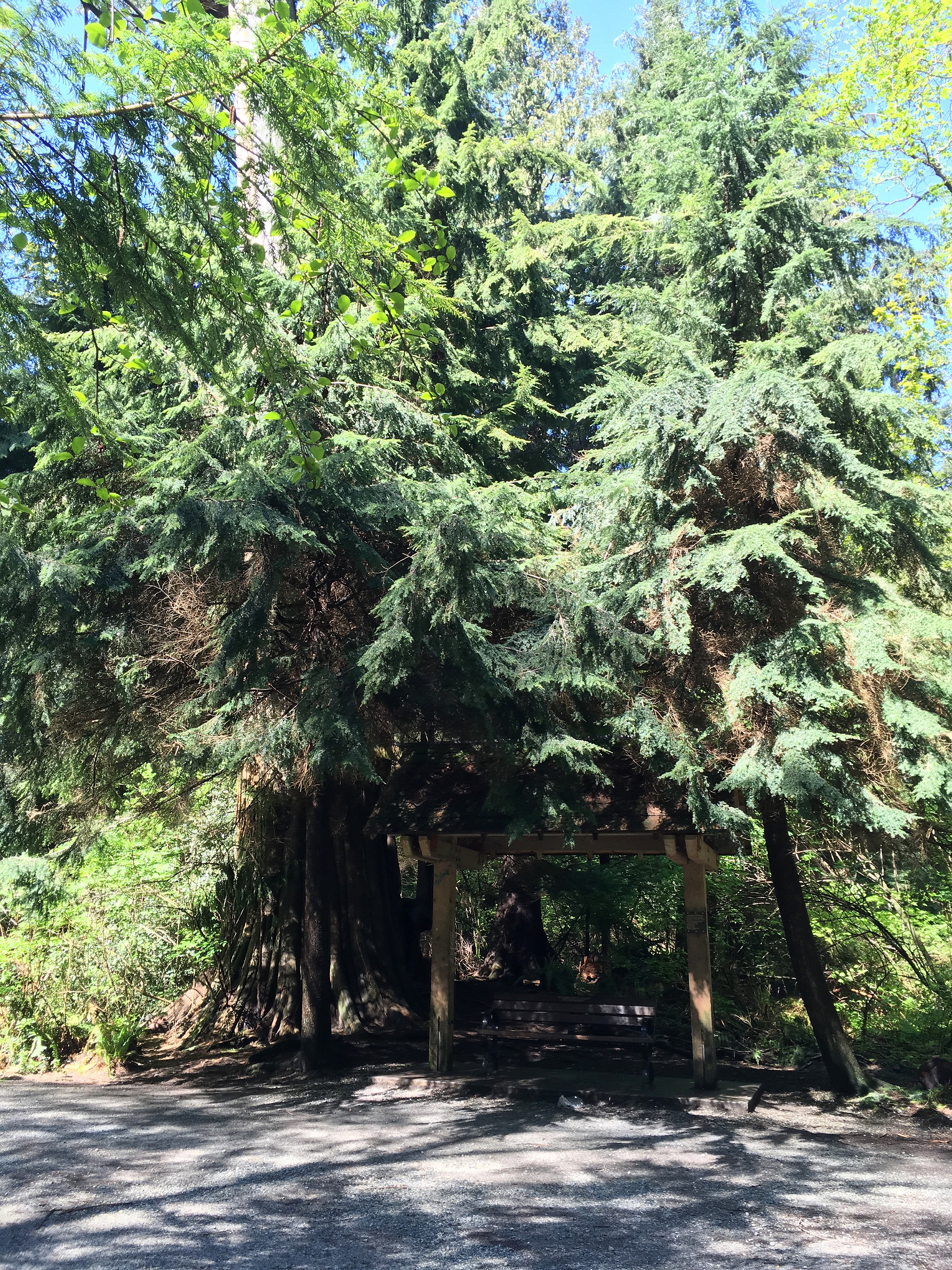
Once we’d found the trail we’d kept going straight, not really sure where we were heading or how deep into the forest it was leading us. When we came to a crossroads with a sign and a wooden shelter containing a bench we had a descision to make. We agreed the most enticing destination was Lost Lagoon, the Lake the park warden had told us about. If nothing else, it would probably lead us back towards the beaches.
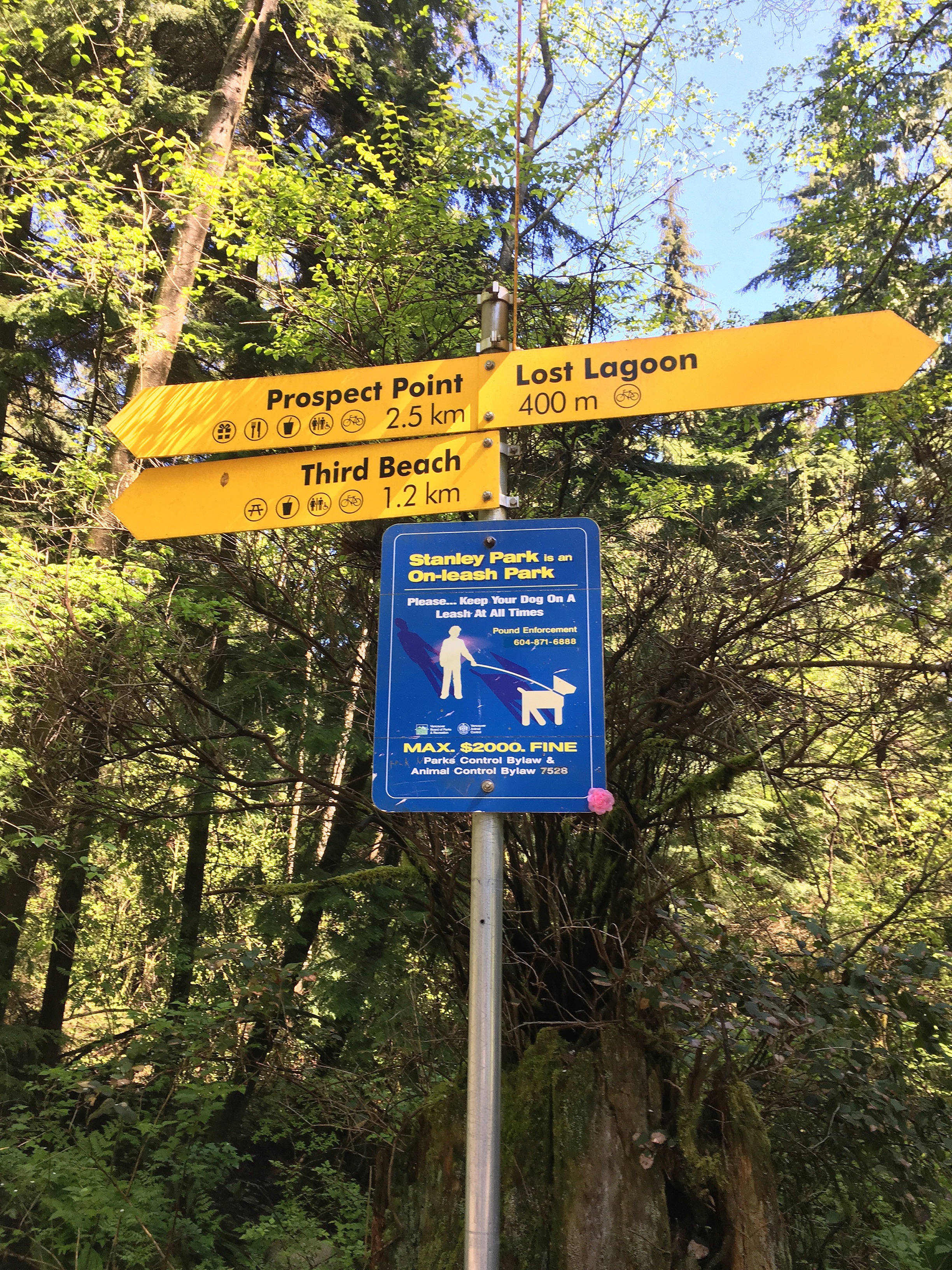
We set off towards Lost Lagoon but, after a short while, I spotted another interesting sign on a wooden pole. It said simply, Cathedral. Something told me we should investigate. Commando agreed so we set off along the trail.

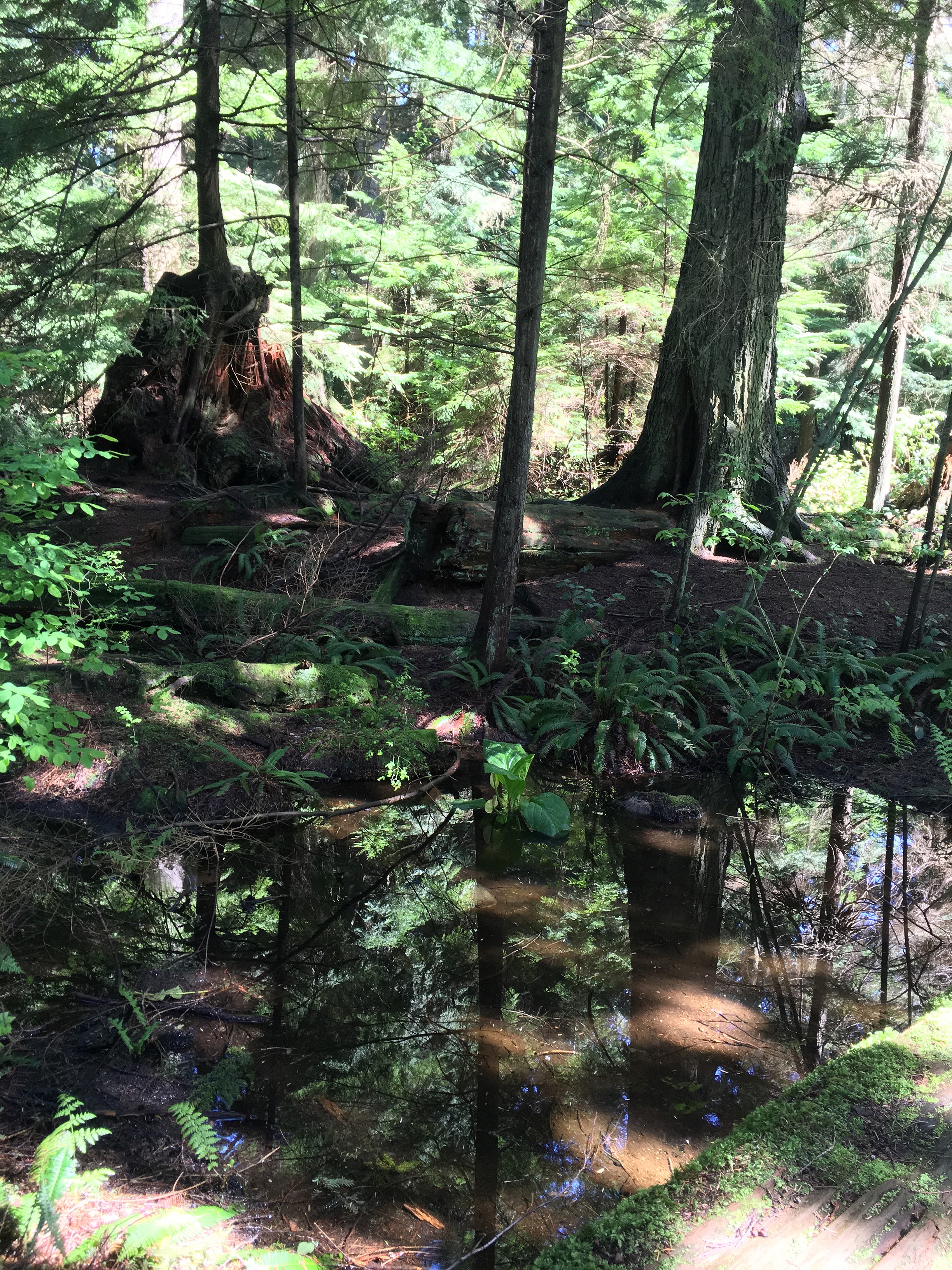
It turned out to be a wonderful descision. There were little streams running beside the trail, speckled sunlight sparkling on the water. The trail was narrow and the dense canopy created a wonderful green gold light. This seemed to be a boggy area with little pools along the edges, although the trail was mostly dry.


The still water of the pools acted as a mirror reflecting the branches and foliage along with bright little splashes of blue sky. Combined with the light coming therough the leaves it felt as if we really were in a cathedral with light streaming through stained glass. I don’t think I’ve ever walked anywhere quite as beautiful and, when the short trail came to an end, it felt like a crushing disappointment.
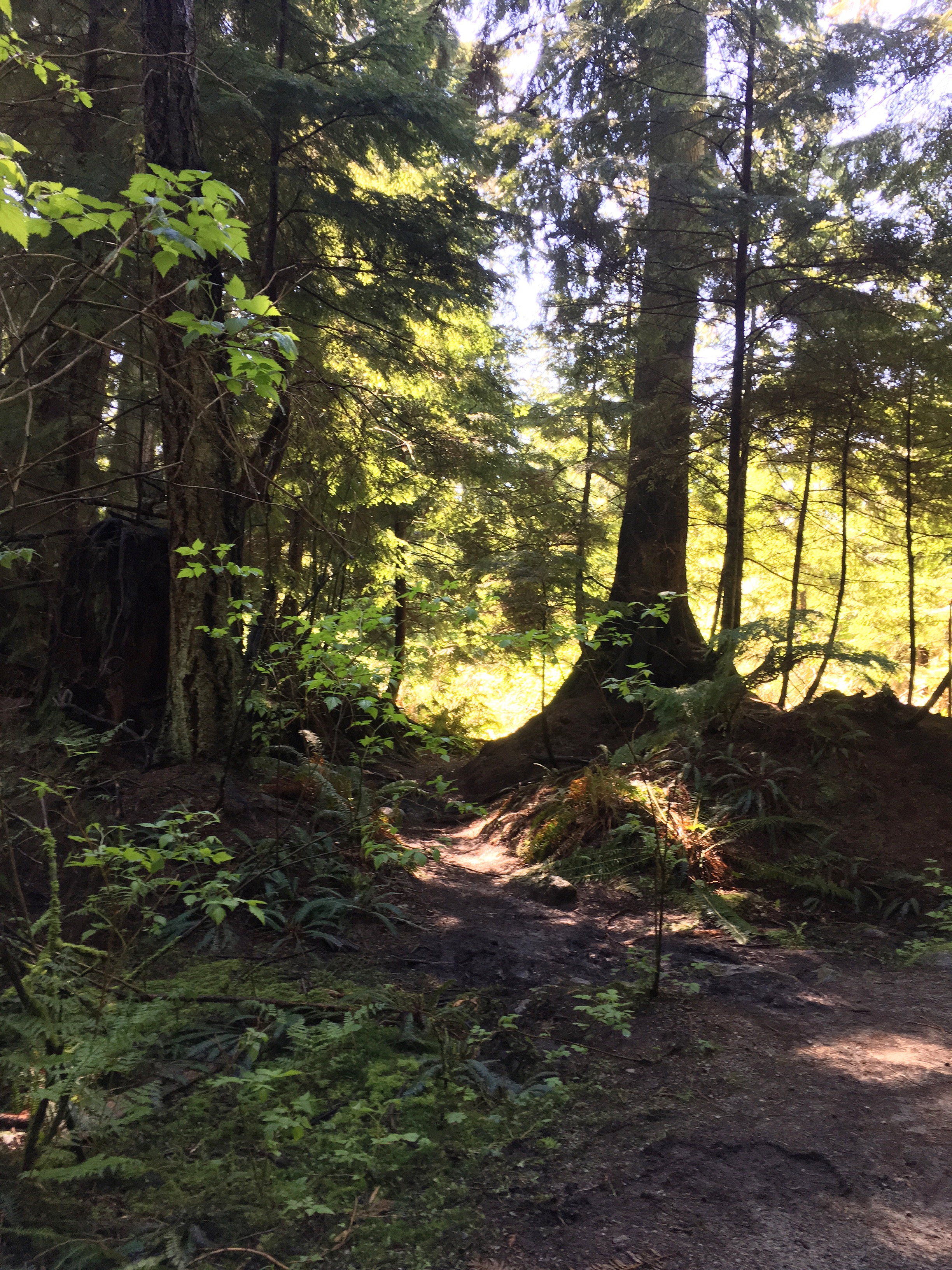
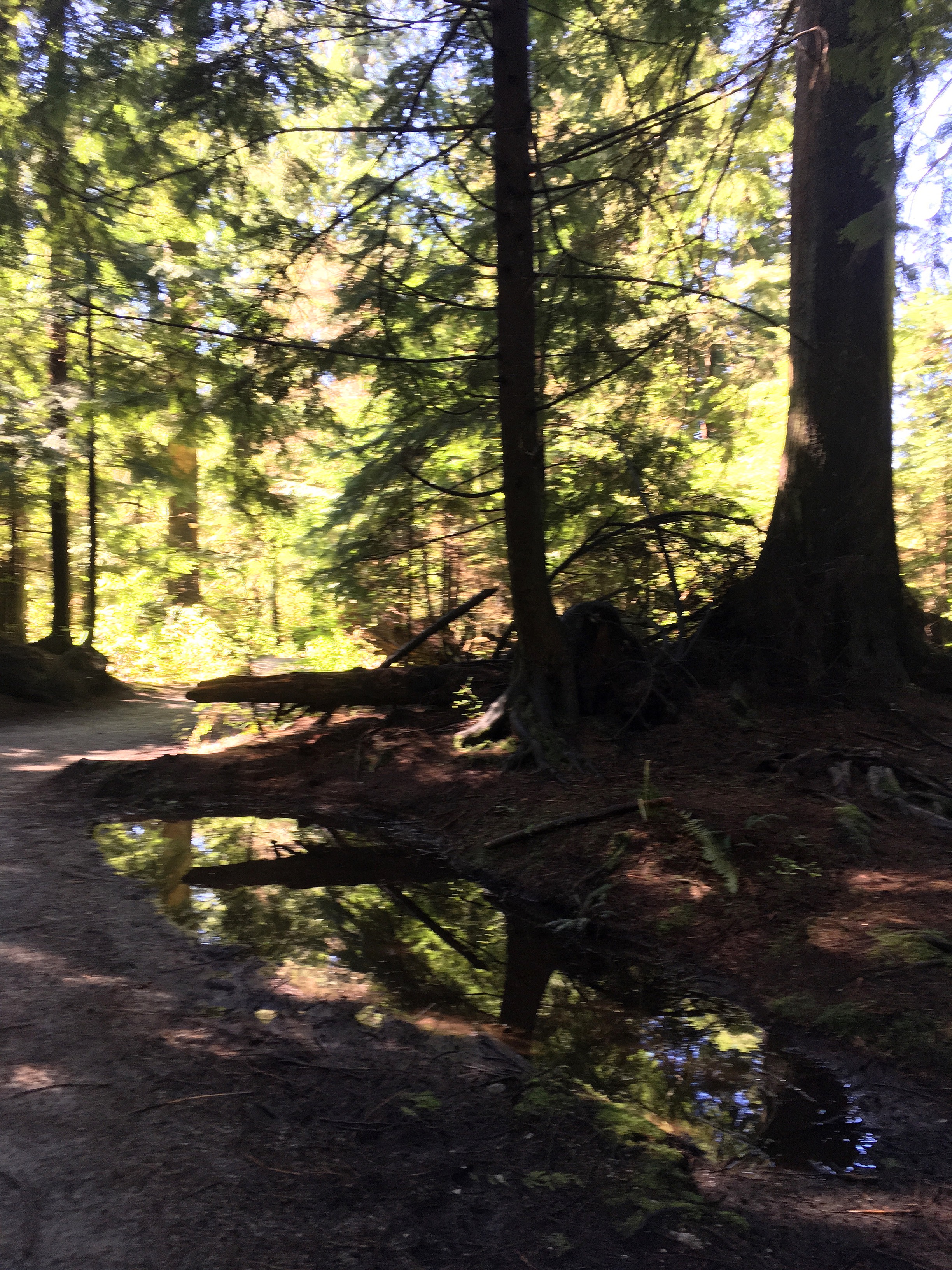
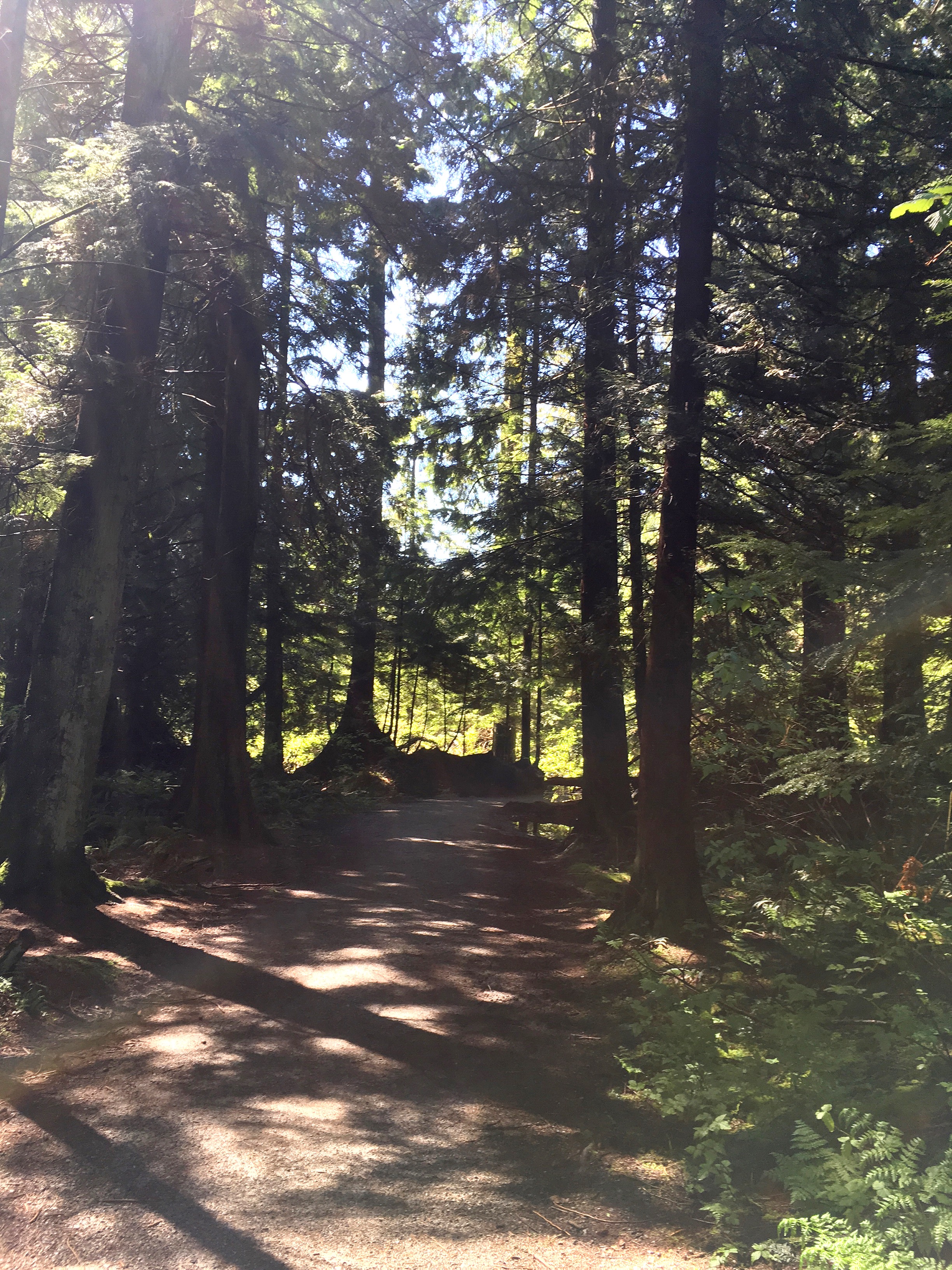
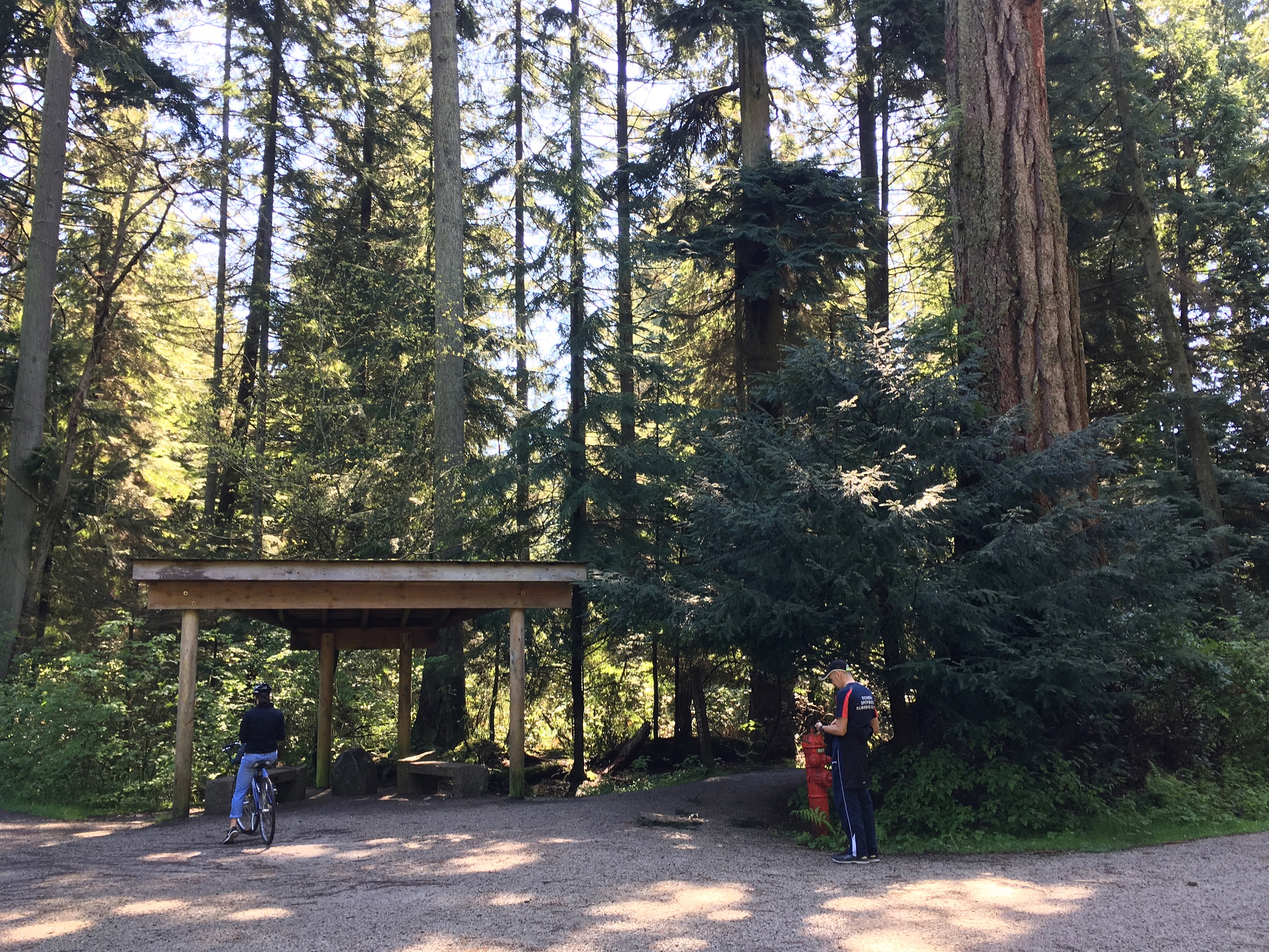
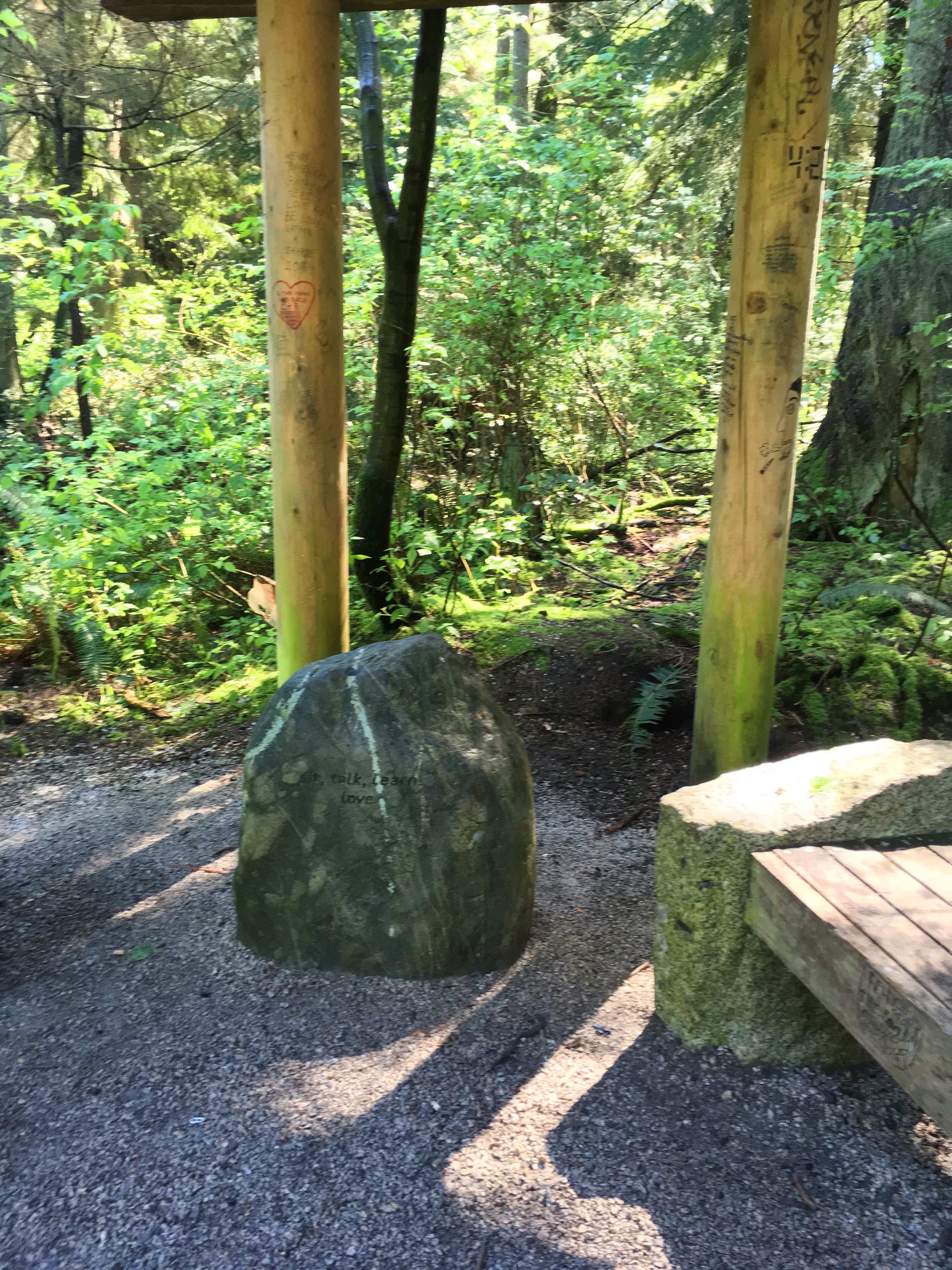
In the end the Cathedral trail wasn’t quite finished with us. We came out onto another crossroads with a large wooden shelter. Inside were two seats and a stone with something written on it. A cyclist had stopped there and was looking at her phone, probably consulting a map. Commando got his phone out and did the same. Meanwhile I looked at the stone. It said Sit, Talk, Learn, Love. The crossroads was the intersection of Bridle Path and Lees Trail. Commando wasn’t sure where they would lead but it looked as if they would take us deeper into the forest rather than back towards the beaches. It seemed to me there were so many trails here it would be easy to get very lost. The only thing we could do was walk back along the Cathedral trail. This was, of course, more of a joy than a problem.

Please see my copyright information before you copy or use any of the above words or pictures.
What a beautiful environment to explore.
It really was. I wish we’d had time to see more of it.
What a beautiful place. Now I’m jealous.
It was beautiful. We were so lucky to have the chance to visit.
Thanks for the blog mention. The western skunk cabbage flower looks very different but the leaves look just like ours do. It sounds like they smell the same too!
Our forests are beautiful places and I’m very happy that you got to spend time in one. Now maybe you can forgive me for going on and on about being in the woods!
Working out what that skunk cabbage was, was down to reading your blog. It was a truly beautiful place, I’m sure you’d have loved it and recognised far more than I did. Walking in woods is one of my favourite things, along with walking by the sea. Thistle Place had everything side by side. If you ever get the chance to go there I’d love to see what you make of it. As for forgiving you for going on about being in the woods, I am glad you take the time to write about it. You’ll never know how many times I think about the things I’ve read on your blog and how often they answer questions for me.
i’m glad I could help. I’d love to go there someday!