
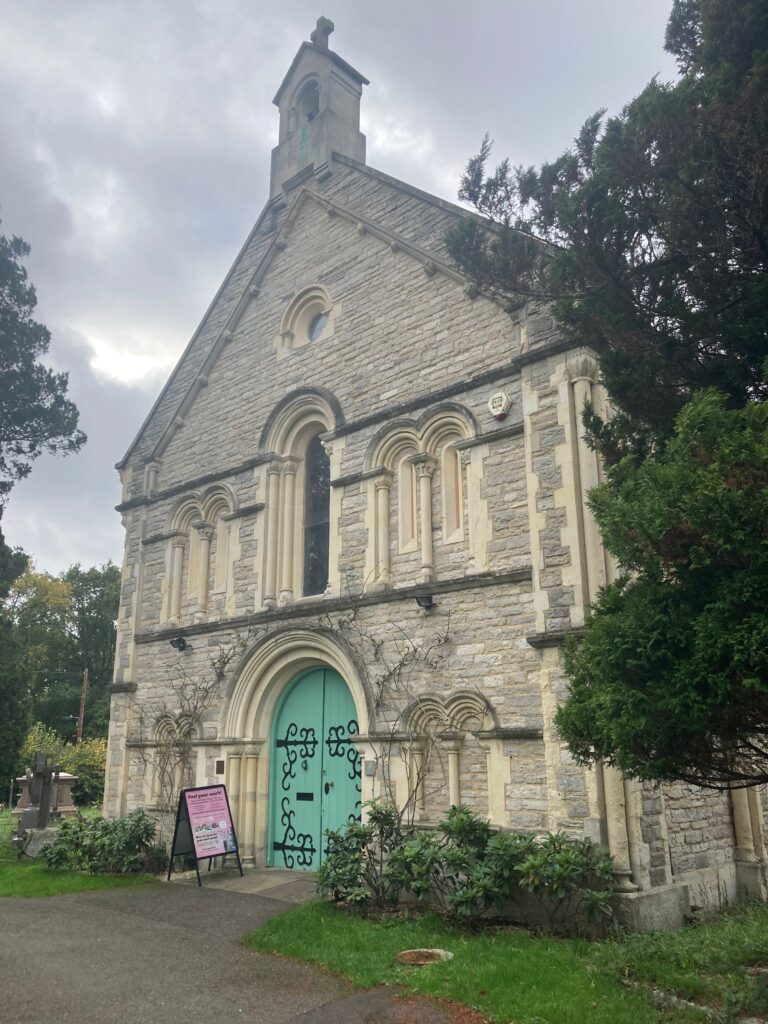
One of the first things people notice when entering the Old Cemetery’s main gates is the Cross of Sacrifice. It stands alone, in front of the Church of England chapel, signifying that Commonwealth War Graves are present. In fact, the cemetery contains 127 graves from the two world wars and others from earlier wars, including the Battle of Waterloo, the Charge of the Light Brigade, the Indian Mutiny and the Boer War, along with many Titanic graves. It was also the reason I chose the Old Cemetery as the halfway point in my morning walk with CJ on 11 November.
Sir Reginald Blomfield designed the Cross of Sacrifice for the Imperial War Graves Commission in 1918. Usually carved from Portland stone, with a stylised bronze longsword, point down, fastened to the front, and sometimes also to the back, it was used in war cemeteries throughout France and Belgium. By 1937, more than a thousand had been erected, and it has since been used in war cemeteries around the world. I timed my morning walk perfectly and arrived a few minutes before eleven o’clock. What better place to observe the silence and remember the day the guns finally stopped in 1918.
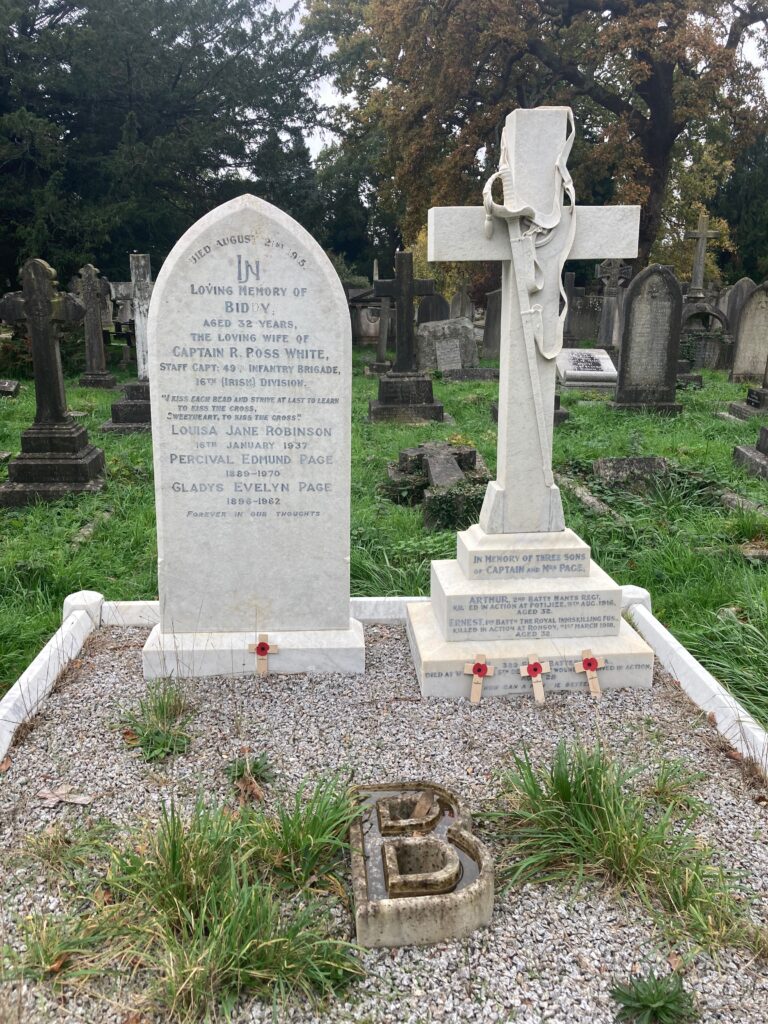
Once we had paid our respects, we took a slow walk through the cemetery, stopping now and then to look at graves. Several had poppies on crosses placed on them, whether by relatives or the wonderful Friends of Southampton Old Cemetery, I couldn’t tell. As so often happens, one particular gravestone caught my eye. It was a family plot, belonging to the Page family, commemorating three sons lost in the Great War. The beautifully carved cross, hung with a sword, echoed the cross of sacrifice. My heart broke for their mother, poor Biddy. How hard must it have been to lose three sons in such a short space of time? The FoSOC restored the grave in 2018 for the centenary of the Armistice.
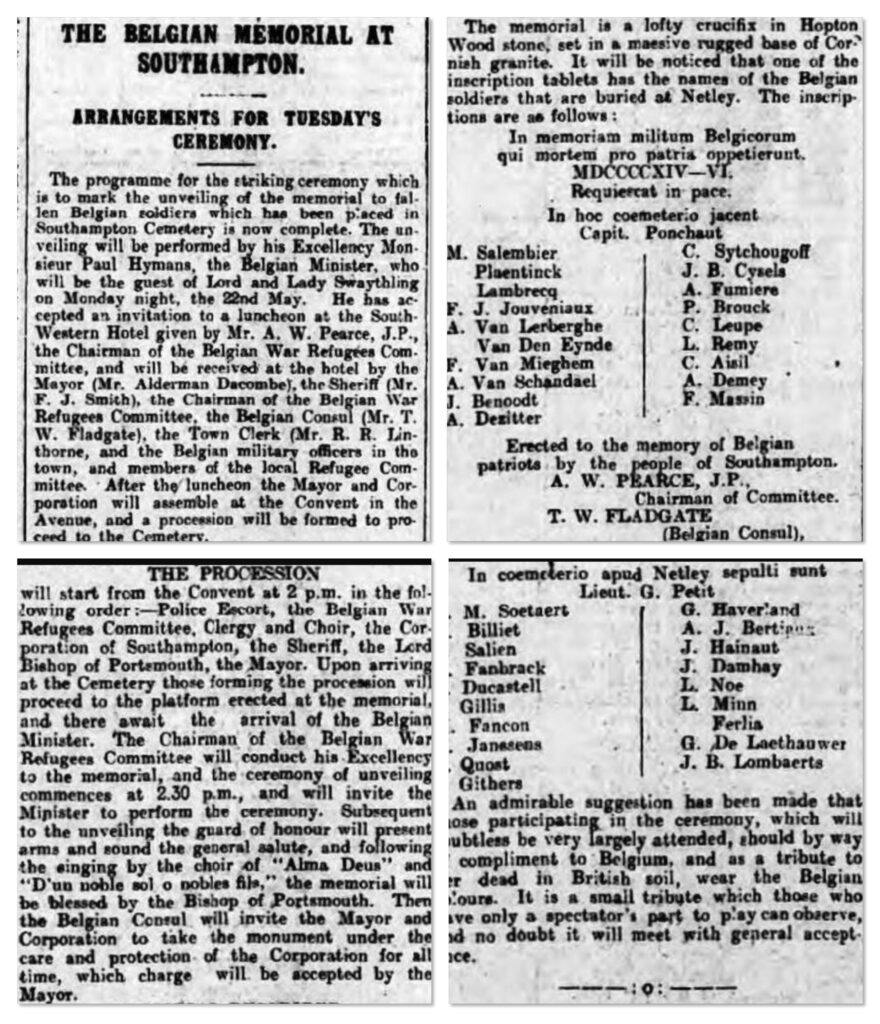
We followed the path to the Belgian war graves. The memorial, designed by Garrett and Haysom, was erected on 23 May 1916. It commemorates Belgian soldiers who died at Netley Military Hospital during the first years of the Great War.


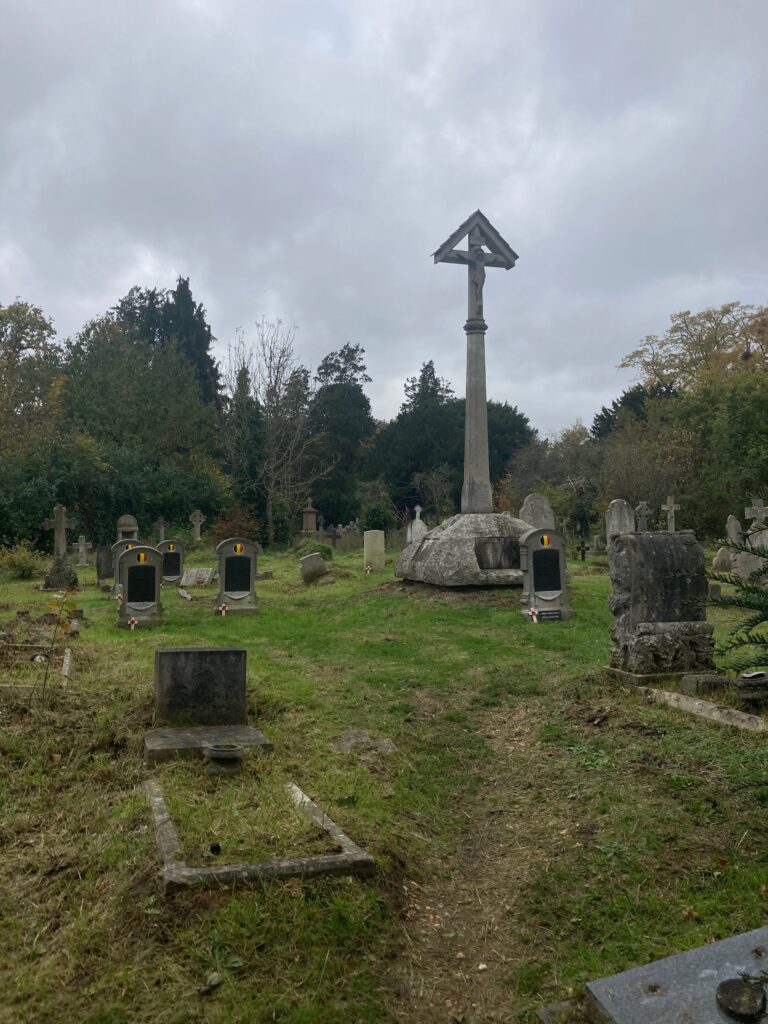
It was gratifying to see the poppy crosses on the graves. We stopped briefly to pay our respects and think of the families of the lost men, who may never have had a chance to visit their graves.
Within sight of the Belgian memorial there was something else I wanted to show CJ. Since I discovered the grave of his great-great-grandparents this spring, I have visited it whenever I can. This was the first time CJ had seen it. Perhaps we should have thought of bringing flowers.
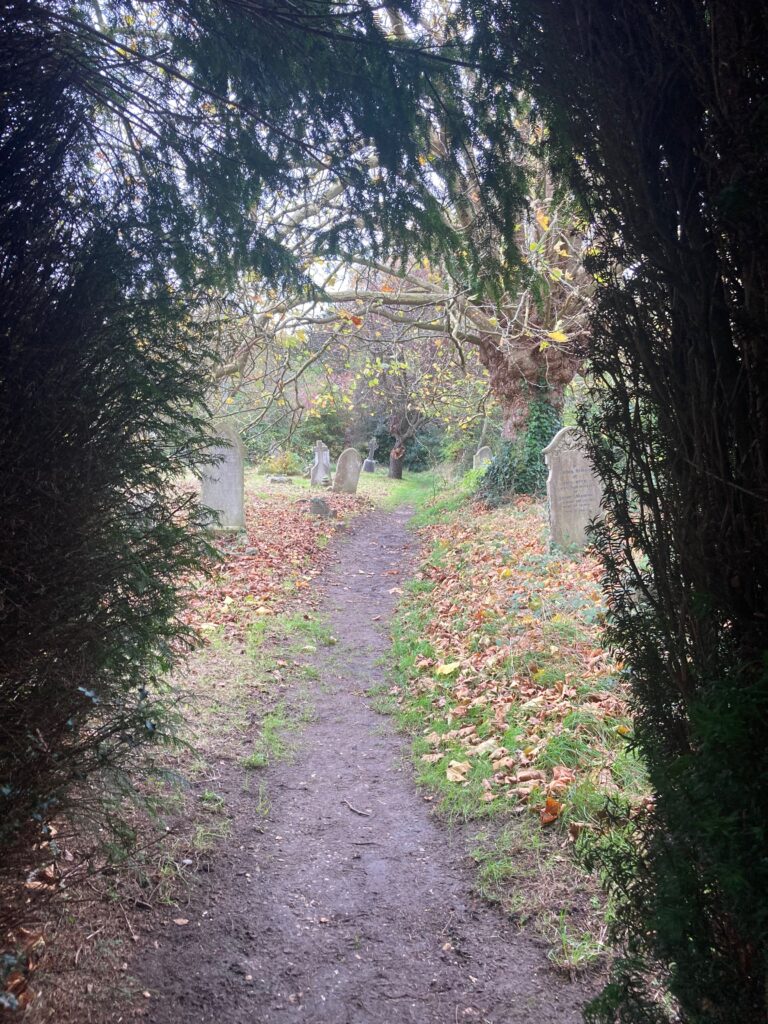
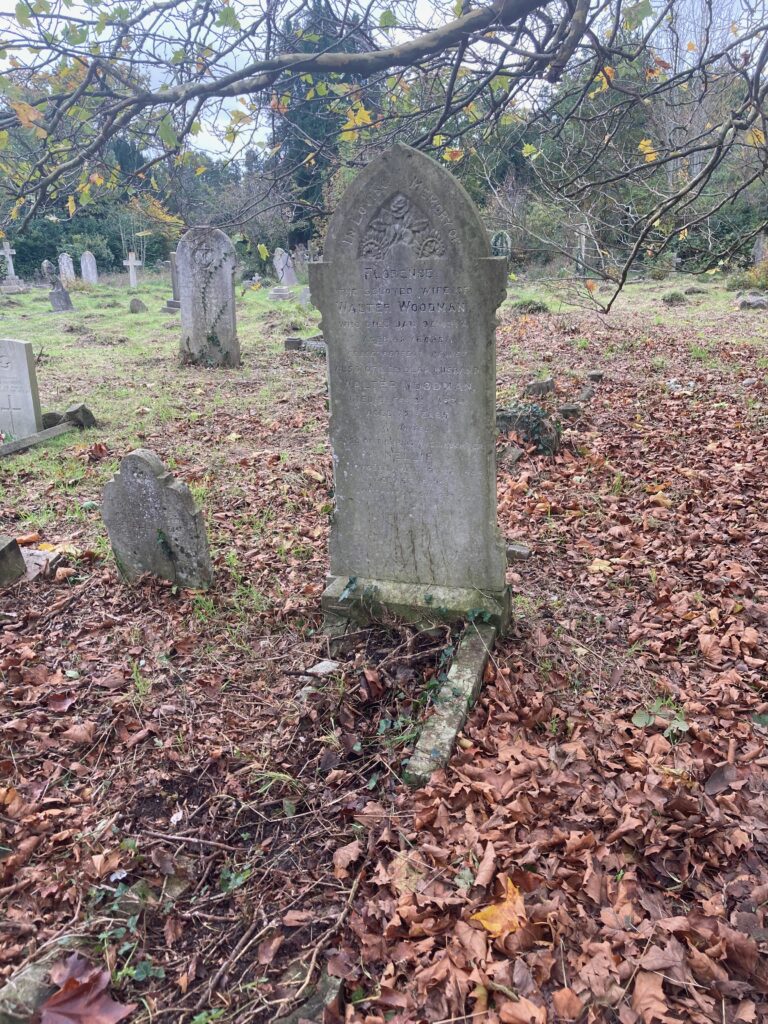
When we left the cemetery and walked across the flats, it was strange to see no park runners dashing for the finish line. My normal cemetery walks are on Saturday mornings, after all. Without the parkrun finish funnel, and a host of brightly dressed runners, the Common looked empty. CJ, who has never seen it on a parkrun morning, noticed nothing amiss. He had his mind fixed on the possibility of coffee. The nearest place to get a drink was the Hawthorns Cafe. I’d half expected to find the ornate gates closed, but we were in luck, and the cafe was open.
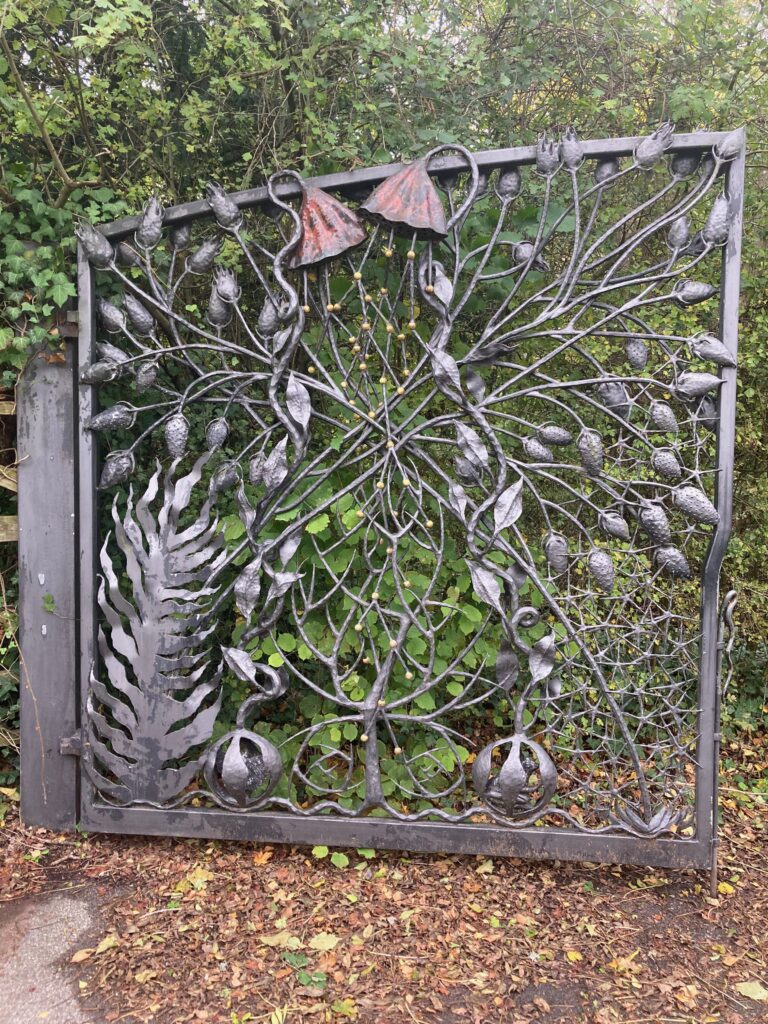
From the sixteenth century until 1814, this was the home of the town’s official brickmaker. In 1818, Thomas Ridding, the town clerk, built Hawthorn Cottage on the site, although it was more of a country house in the Georgian style than a real cottage. Local shipbuilder, John Ransome, lived there between 1851 and his death in 1886, and later, the Newman family took residence. Miss Newman, the Titanic Lady Visitor, lived here until her death in 1940. The house was badly damaged during the Southampton Blitz, and, in 1945, Southampton Council purchased the site, demolished what remained and turned it into Southampton Zoo. In 1985, the zoo was closed after protests at the conditions the animals had to endure and the Hawthorns Wildlife Centre was built.

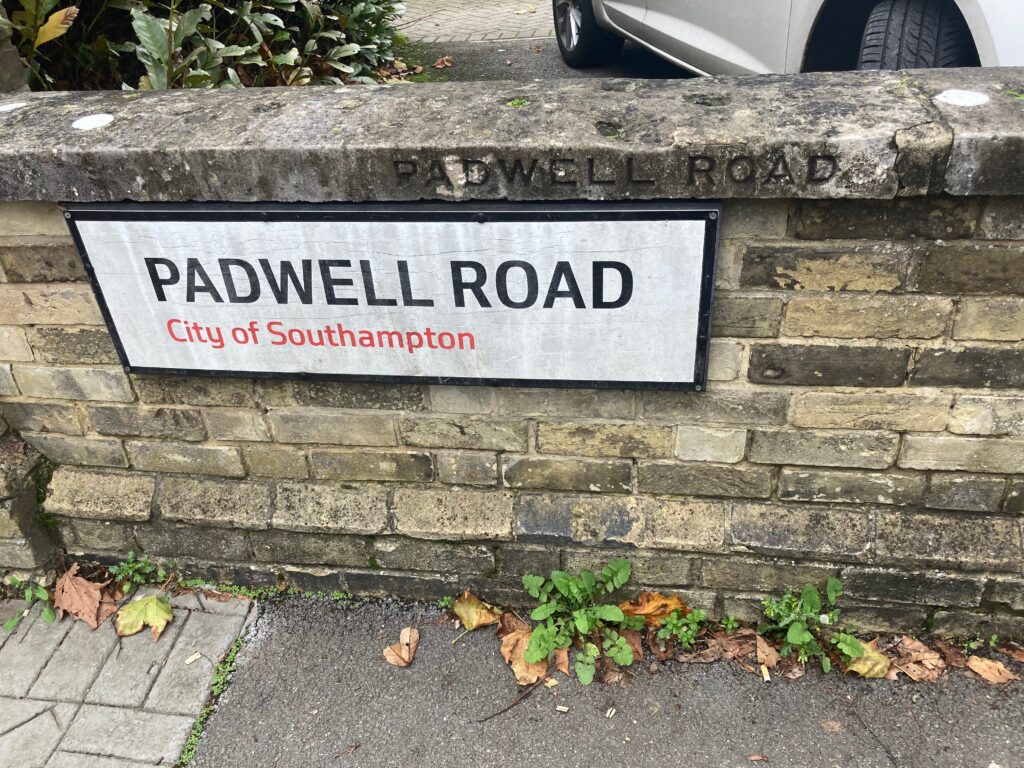
After a rest and a drink, we made our way home. It should have been a straightforward journey, mostly downhill, with no surprises. We made it as far as Padwell Road before the jamais remarqué phenomenon kicked in. It is extraordinary how many times I discover things I’ve never noticed in very familiar places. I really shouldn’t be surprised by now. We were strolling along, with me telling CJ about the Heinkel bomber that crashed on Padwell Road in the early hours of 16 April 1941, when I noticed the road name etched into the wall above the official street sign. Presumably, it predates the modern sign, and it made me wonder how many more like this are scattered throughout the town.
We carried on, through Bevois Valley, and across the railway bridge at Mount Pleasant to the river. On our outward journey, we’d stuck to the road, but I thought it would be nice to take the river path on the way home. It’s been a long while since I’ve walked that way and I wanted to see the developments on the new flats being built.
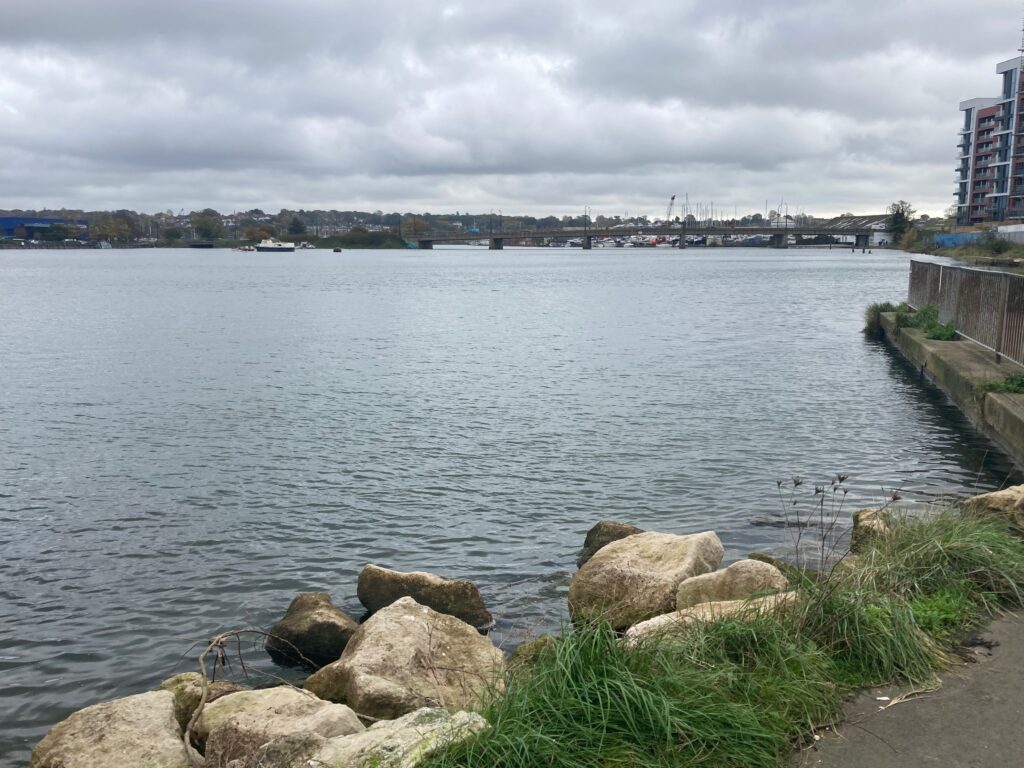
I’d thought we might see some swans, but there were none on the corner by the big stones. Despite the high tide, the path was dry. We passed the new flats and the old posts sticking up from the river, remnants of the log ponds. The next surprise came when we reached the bridge. One of the two arches where I stop to admire new and interesting graffiti has been closed in and taken over by Coalporters Rowing Club. I will miss the graffiti, but I suppose it will stop people from using the archway for nefarious purposes.

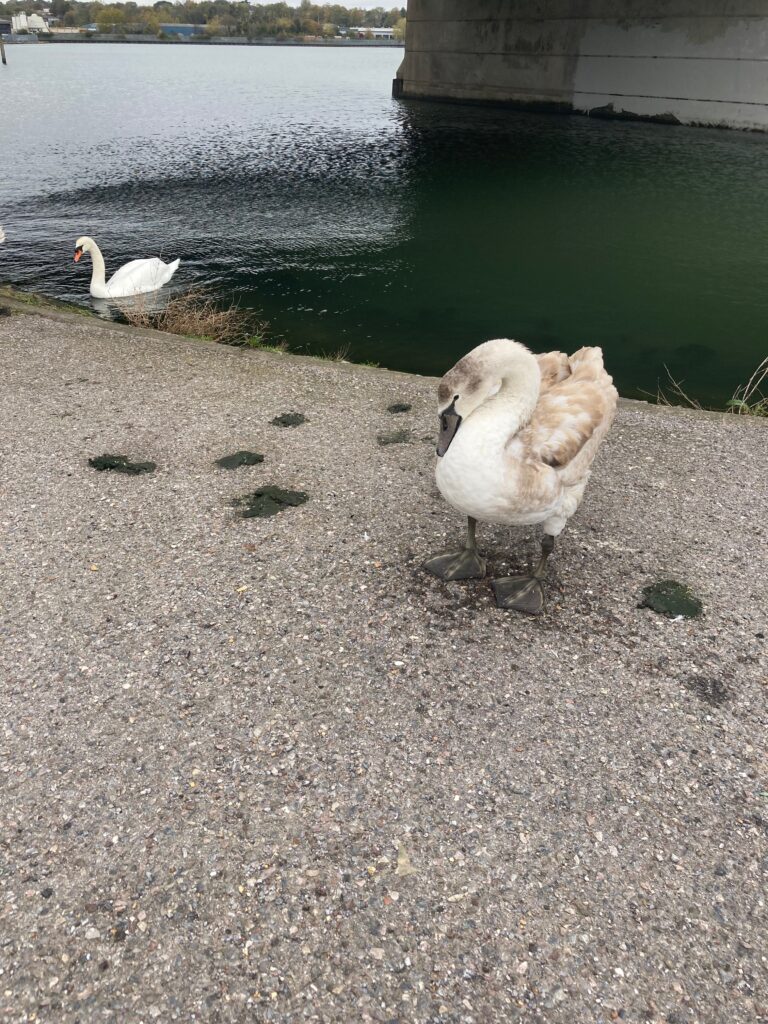
On the other side of the bridge, we got another surprise. A little family of swans, a Cob, and two almost grown cygnets greeted us. Both cygnets were standing on the bank, preening themselves. Dad looked on suspiciously while we photographed his children.

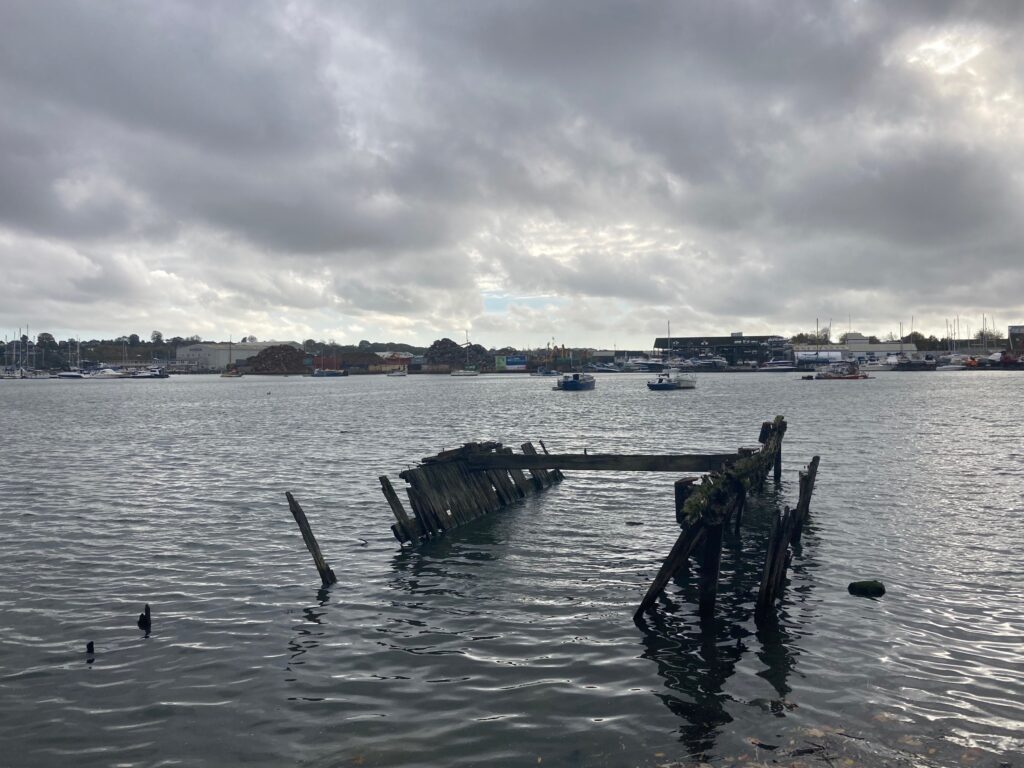
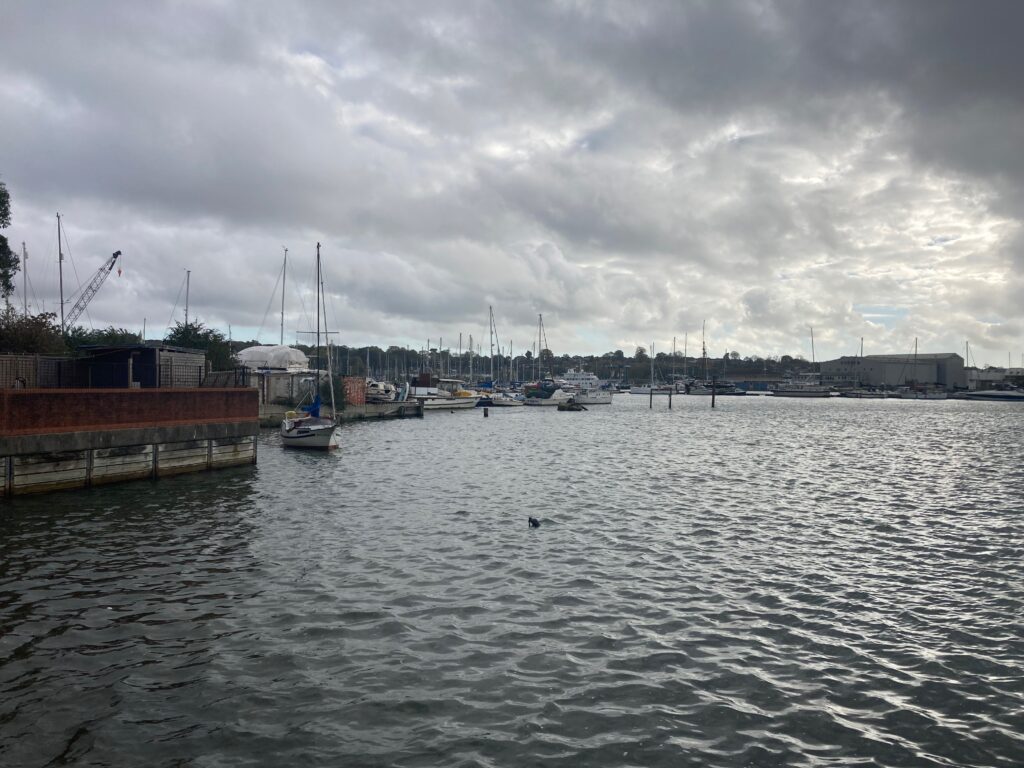
The weather had been kinder than I expected for our walk, but as we climbed the steps of the bridge, dark clouds were gathering. We paused briefly to photograph the little that remains of the skeleton ship, then scurried home as fast as we could. We made it just as the heavens opened.
If you like what I write, and you’re interested in my novels are available now on Amazon in paperback, on Kindle and via Kindle Unlimited. Check out my Amazon page here and my Goodreads page here. If you would like to help me keep writing, you can now buy me a virtual coffee by clicking on the little orange coffee cup at the bottom right.
I was very interested to read of the Belgian war graves and memorial. My husband is half Flemish and neither he nor I knew anything about them.
I like the Hawthorns Cafe but didn’t know its history, though I did move to Southampton before the closure of the zoo.
Always lovely to see swans and cygnets.
The Belgian war graves are well worth a look if you are ever passing.
Lovely to see you enjoying a walk in the old cemetery. I think the Page family are my family. I know a few times my mother and father took me to see the grave and also it has been cleaned and repaired lately. I would like to buy your book but I am not sure of the title that encompasses the Page family.
Hi Lynne, I’m glad you found my post interesting and that the photograph of the Page family grave meant something to you. My books are historical fiction, set in Southampton and inspired by my own family history. Although you might enjoy them, they are not accounts of other Southampton families. If you are interested in finding out more about your family, the Friends of Southampton Old Cemetery might be able to help you.