
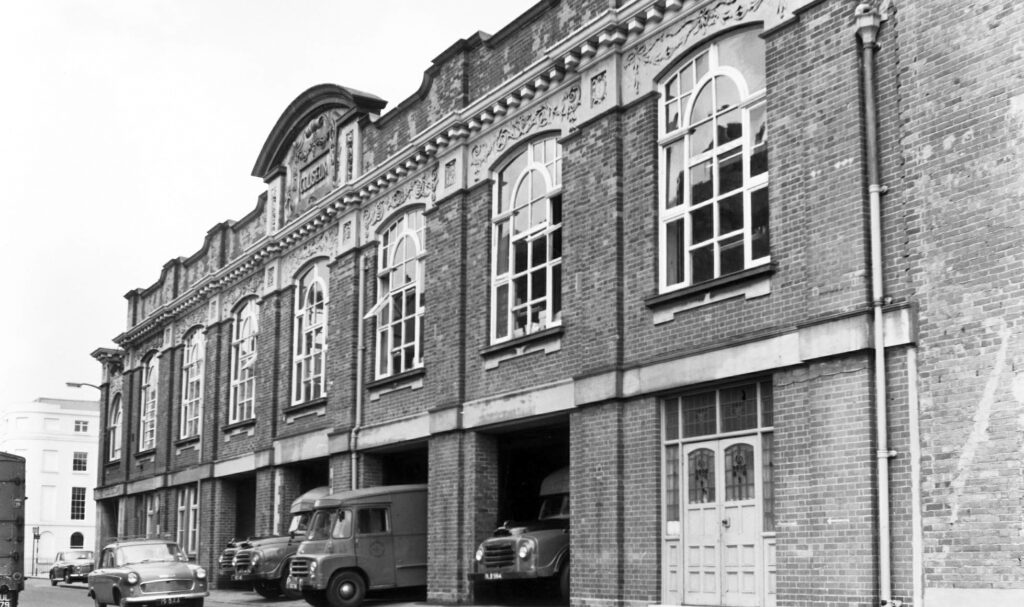
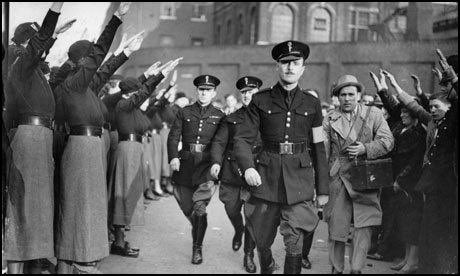
The rise of fascism in Britain and the fear of another war are themes running through my latest book, A Dish Best Served Cold. In 1935, the prospect of another war was unthinkable to most people, but the British Union of Fascists were rapidly gaining popularity, thanks to their charismatic leader. The party had over forty thousand members, attracted by Oswald Mosley’s powerful nationalistic speeches. Thousands gathered to hear him at Blackshirt rallies across the country. In 1934, he was well received when he spoke at the Coliseum on Portland Terrace. That he could fill the town’s largest meeting hall speaks volumes about his popularity.
The Coliseum was demolished in 1965 to make way for the Inner Ring Road and an extension to the Echo Offices. It had served many purposes since it opened in 1880, a skating rink, a music hall, an army clothes depot during the Great War, an exhibition space, an emergency telephone exchange in WW2, and finally a Post Office parcel sorting depot. These days, it’s part of WestQuay. It lasted a great deal longer than Mosley’s Blackshirts, and its passing was regretted rather than celebrated.
Oswald Ernald Mosley was the eldest son of a baronet and had been in the cavalry and the flying corps during the Great War. In 1918, aged twenty-two, he became one of the youngest Conservative MPs before he crossed the floor and joined the Labour Party in 1924. He came within a whisker of defeating Neville Chamberlain in Birmingham in the general election that year, and two years later, was elected as Labour MP for Smethwick in a by-election. His passionate anti-war stance and his championing of the working classes made him a contender for leader of the party and possibly a Labour Prime Minister. If the party had listened to his proposals to curb unemployment, things might have turned out differently. As it was, Labour MPs thought creating public work schemes and nationalising the main industries were too radical. Mosley was furious that they had rejected his ideas and resigned in May 1930. By 1932, the New Party he created had become the British Union of Fascists.
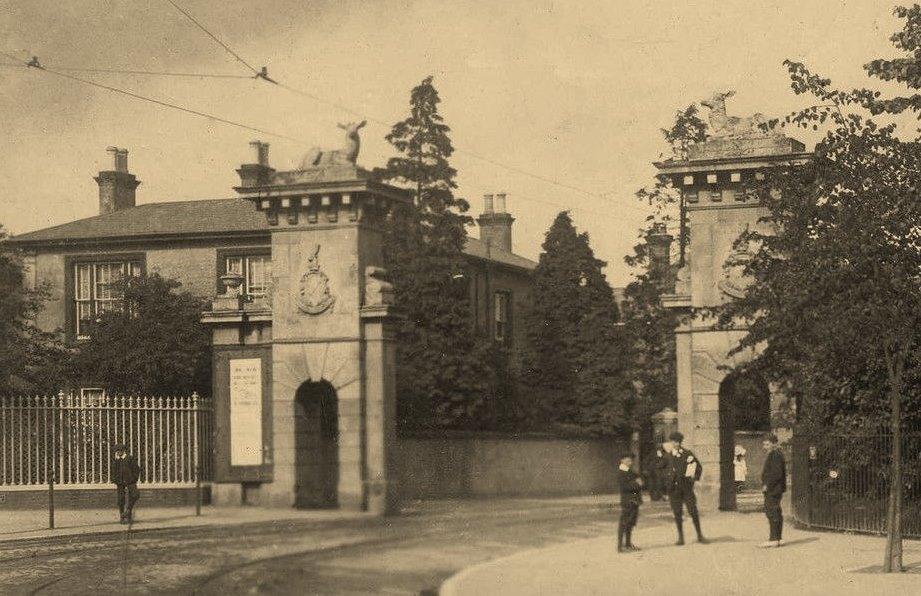
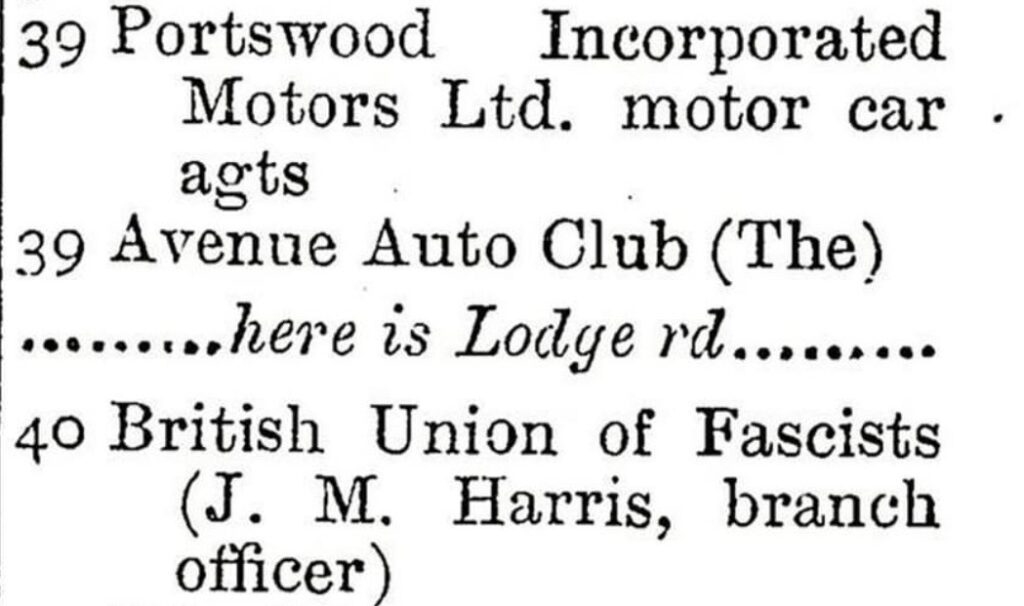
In A Dish Best Served Cold, Arthur and Roy discuss the protection racket they’re setting up as they walk along the Inner Avenue after a BUF meeting. In 1935, The BUF had their Southampton headquarters at 40 The Avenue, in an Italianate villa on the corner of Lodge Road. The road began life as a carriageway on Bevois Mount, the Earl of Peterborough’s estate. In 1845, William Betts, the new owner of the estate, had an impressive gateway erected, with stone pillars over twenty feet high, topped by carved stags. This gateway quickly became known as the stag gates. In the 1920s, the council widened the road and demolished the pillars. No one knows what became of the stags, but the name Stag Gates is used to this day. Like the gates, the BUF villa is long gone, and a Travelodge stands on the site.
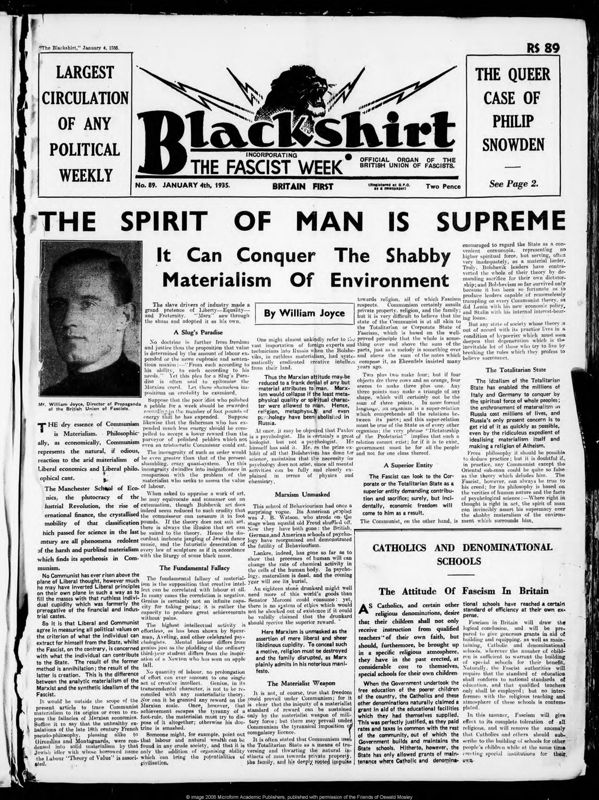
In 1935, the BUF was at the height of its popularity, but the Southampton branch was small compared to London, Leeds or Manchester. Of course, Southampton, with a population of less than two hundred thousand, was a small town, not a big city. Even so, fifteen per cent of the BUF’s national membership came from Southampton, and party members considered the Southampton Division an example to follow, particularly when it came to sales of The Blackshirt, the BUF newspaper.
In truth, Southampton’s fascist group was nowhere near as successful as party members made out. The branch consisted of a handful of local traders, like tobacco shop owner Richard Knop and Charles Cuthbert-Smith, the governor of a juvenile prison, and never recruited widely among the working classes of the town. Prominent party member, Richard Reynell-Bellamy, said Southampton had always been a tough place to recruit, and this was proved when the BUF candidate finished bottom of the poll in the municipal election of 1935 with just 29 votes. The dockers, shipbuilders and other working-class men were mostly staunch Labour voters and had little time for fascism.
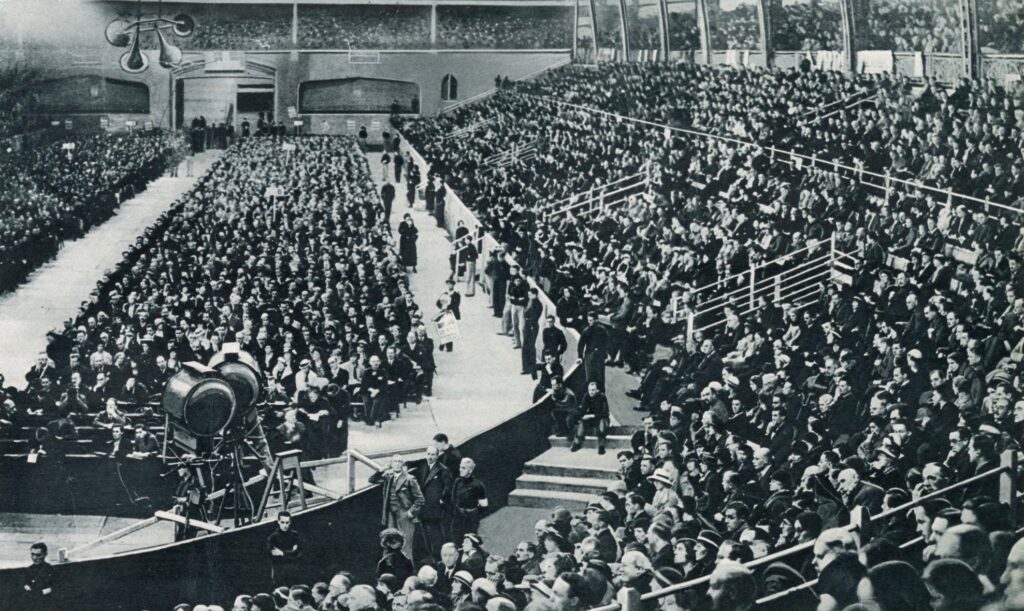
In A Dish Best Served Cold, Arthur recalls hearing Mosley speak at Olympia at the height of his popularity.
‘Mosley had a way with words, though — at least between the heckling and drama. The spectacle of ranks of Union Jacks and yellow and black BUF flags, arc lamps and a band playing marches was a sight to behold. He’d liked the ruck too, and the excitement when the Bolshevik bloke fell from the girders in the roof.‘
This event turned out to be a turning point for the BUF. They’d enjoyed support from the press, with both the Daily Mail and The Mirror promoting them, and American journalist John Gunther calling Mosley ‘strikingly handsome. He is probably the best orator in England. His personal magnetism is very great.’ The Olympia Rally, on 7 June 1934, was supposed to showcase the BUF’s popularity. Instead, it showed the fascists in a bad light. Amongst the crowd of ten thousand, there were anti-fascist protesters and things turned ugly. You can read about it in detail here. The violence of the Blackshirts towards the protestors combined with Hitler’s Night of the Long Knives in Germany in late June and Early July saw both support and membership plummet. The British people had seen through the rhetoric and showmanship, to the rotten core of the movement, and they voted with their feet.

In 1934, there had been concern amongst the local Jewish population. The minutes from Southampton Hebrew Congregation meetings at the time show rising insecurity and an awareness of their marginalised status. Members even discussed arranging a meeting with the local fascists, but they abandoned the idea. They needn’t have worried. The more radical and antisemitic the BUF became the more its popularity decreased. Southampton never saw the street violence that plagued the East End of London. There were no battles, like Cable Street, but the working classes of Southampton showed exactly what they thought of Mosley and his Blackshirts when he visited the town again in 1937. That visit is a story for another book and another day . . .
If you like what I write, and you’re interested in my novels are available now on Amazon in paperback, on Kindle and via Kindle Unlimited. Check out my Amazon page here and my Goodreads page here. If you would like to help me keep writing, you can now buy me a virtual coffee by clicking on the little orange coffee cup at the bottom right.