
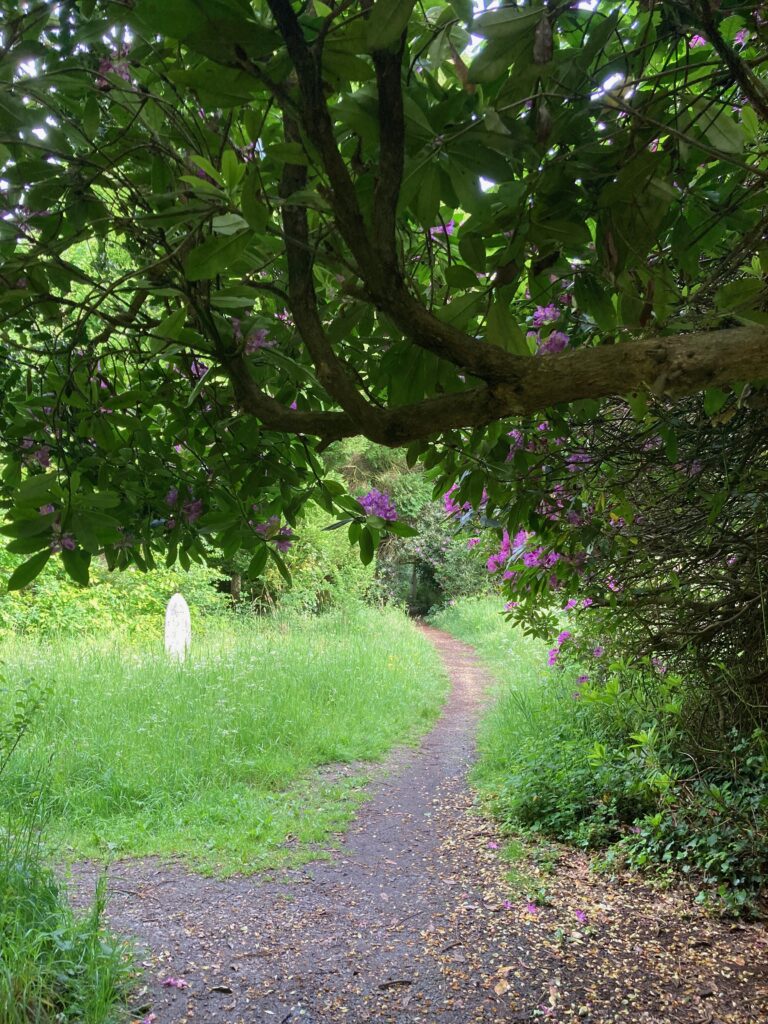
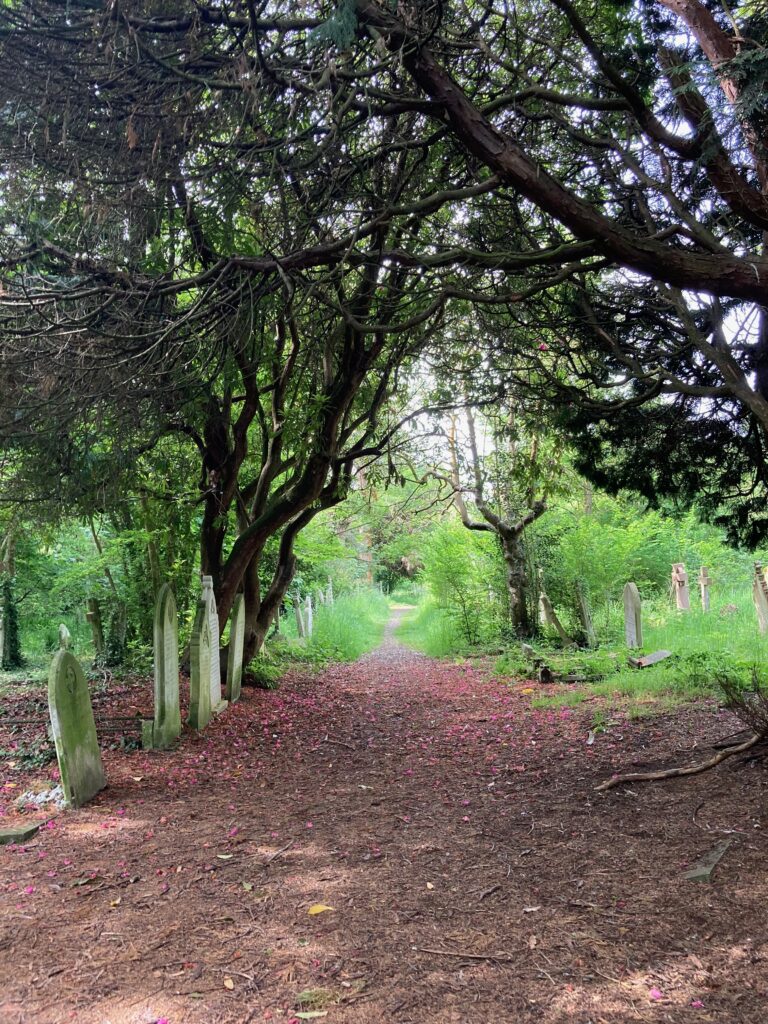
As it’s Halloween, I thought I’d share some more tales from the Old Cemetery, although the walk in question was on 21 May, so it was more sunshine and flowers than dark spookiness. Bright pink rhododendrons were bursting out everywhere I looked, and the cemetery was resplendent. It would have been easy to be lulled into a false sense of security, but the shady corners still had a slightly sinister aura. These and the graves in them were what interested me, along with the secrets they keep.

The first grave called to me when I headed off the main path towards the shadows of the gnarled old trees. It belonged to the Neaves family and looked innocuous at first glance. Later, when I researched the family story, I realised appearances can be deceptive. Edward Henry Neaves was born in Middlesex in 1840. He moved to Hampshire and became a stoker on HMS Volcano, a naval ship on harbour service in Portsmouth. There he met Sarah Taylor, and they married on Portsea Island. By 1891, they were living at 121 Radcliffe Road in Northam, and Edward was working as an engine driver. Around the turn of the century, they moved to 69 Princes Street and Edward became a beer retailer. He was sixty, so maybe it was a retirement plan, but it didn’t work out that way. What happened is a mystery, but he spent his last days in a lunatic asylum in Kingston, Portsmouth, and died there on 24 April 1912. What sent him mad, and why was he calling to me?

The next grave that called to me belonged to George Lanham. He was born in Millbrook, the son of an ostler. In 1871 George married Julia Burn, and they moved to Crown Terrace. Over the next eleven years, they had four children, George, Charles, William and Edwin. The family moved to Mount Pleasant Road and George found work as a watchman at the port. Tragedy struck in March 1877, when they lost their beloved Willie, and again in 1881, when Edwin died. Julia followed him the same October, and George joined her in 1884. There was nothing unusual about their story. In the late 1800s, families lost children with monotonous regularity, often from illnesses like diphtheria, polio or TB, that are easily curable today. The Neaves family had lost a child too, Beatrice, aged just four. It struck me that it might be the children who were calling to me, rather than the adults.

I left the shady graves behind and stepped into the light again, thinking about those poor children who had hardly lived. What a shame they never had a chance to dance along these paths under bright skies, enjoying the even brighter flowers. Or did they? Were they waiting for me to leave so they could?


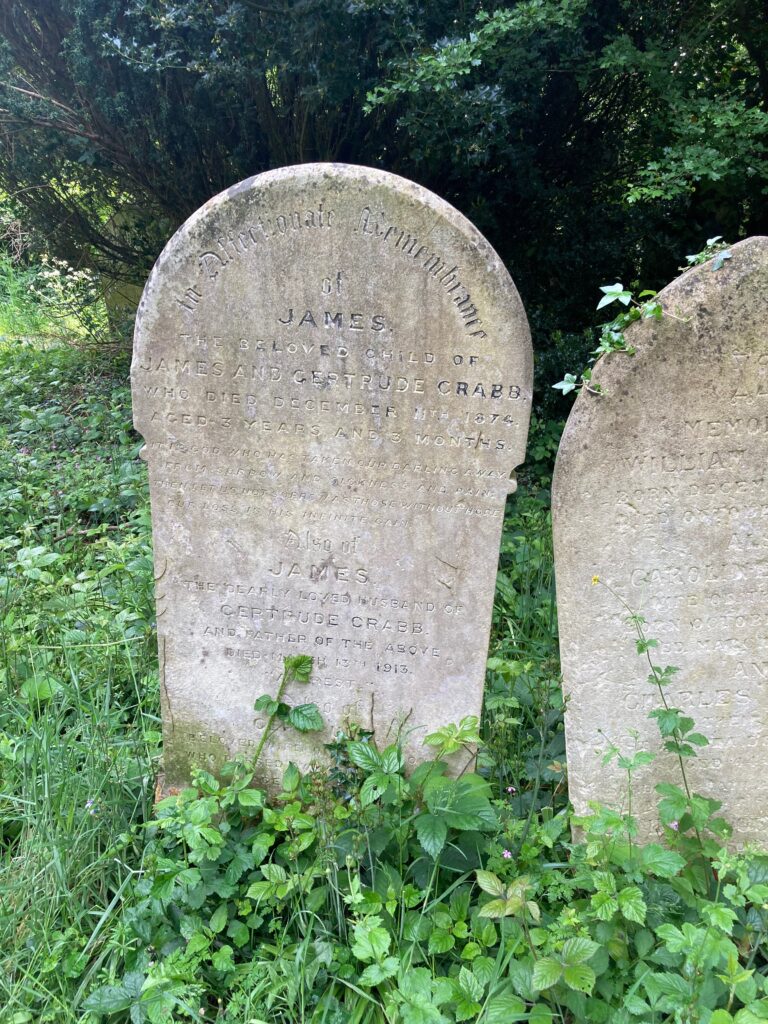
When I reached the next patch of shade, I looked back, half expecting to see them hand in hand on the path. They weren’t there, but in front of me was another child’s grave. It belonged to James Crabb, aged three. He was the eldest son of James and Gertrude, born in 1871 at 33 Manchester Street, where his father was working as a hairdresser. His brother, William, was born in 1873 and his sister, Emily, in June 1874, just six months before poor James died. Perhaps, Beatrice, Willie and Edwin were waiting for me to go before they came out to play with James?
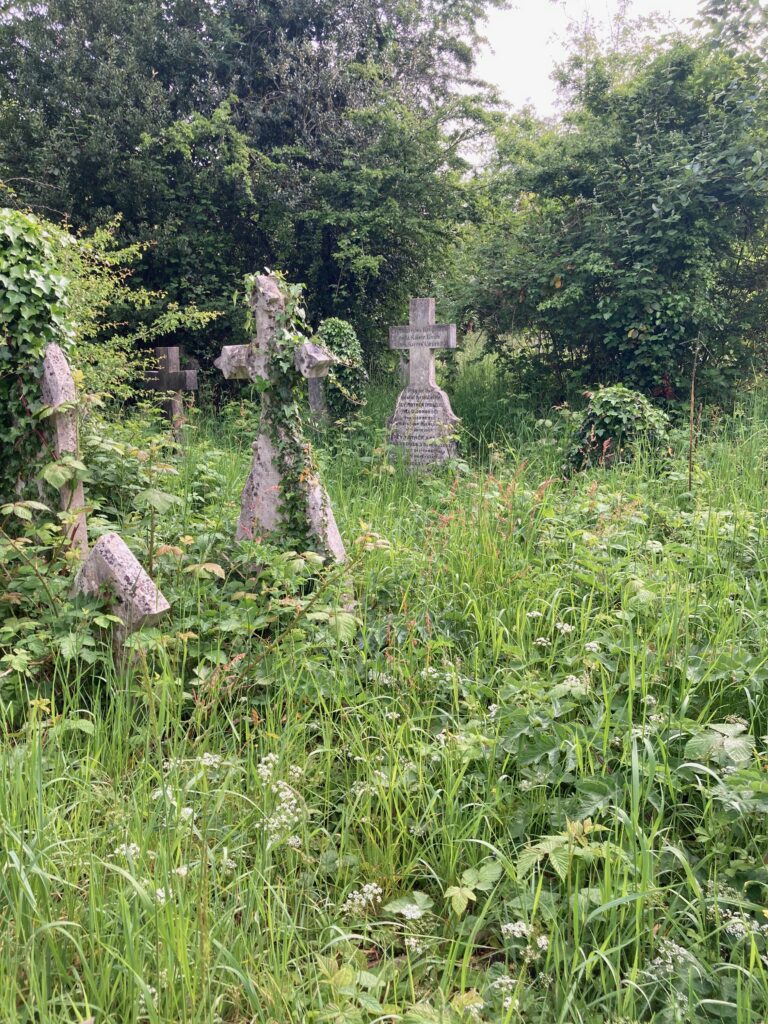
I carried on, admiring the old, ivy-covered stone crosses and smiling at the way Mother Nature provides flowers for these long forgotten graves. If there were ghostly children behind me, they meant me no harm. Any spirits roaming in this cemetery keep themselves to themselves. There are almost 117,000 graves here, but not a single story about the place being haunted. The only ghost stories about the Common centre around the Cowherds Pub. Apparently, it has two ghosts, one a murdered nineteenth-century landlady, the other a short man wearing a tall hat, who likes to walk through walls. One of these days I’ll have to pay the place a visit and see if I can spot them.

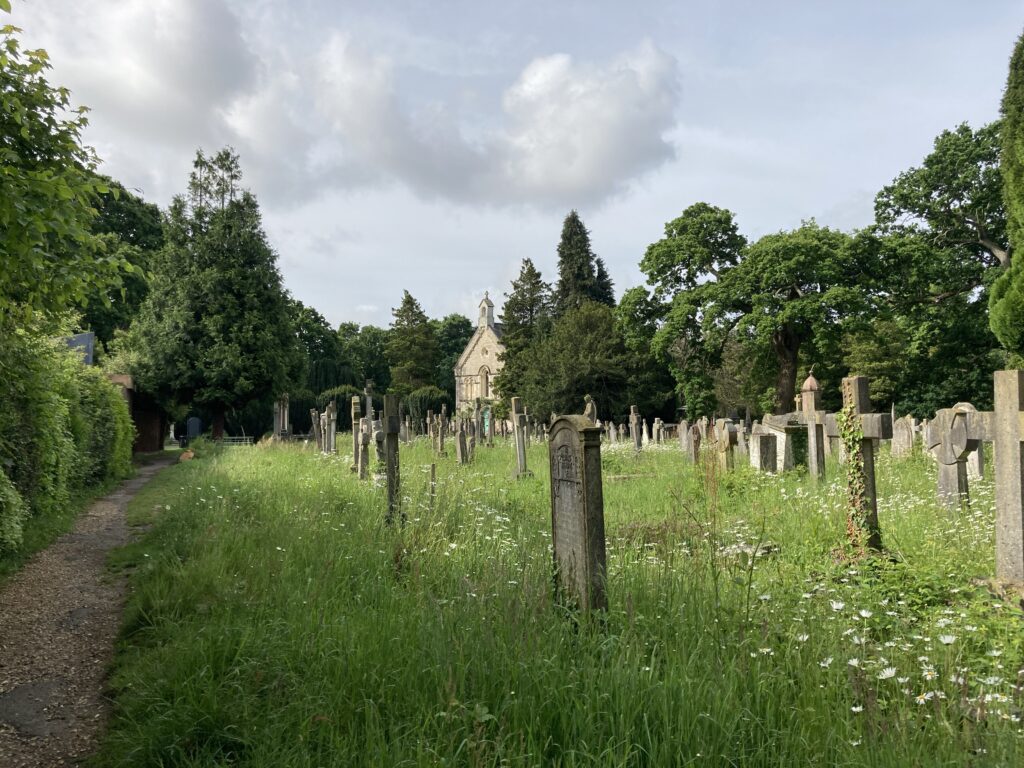
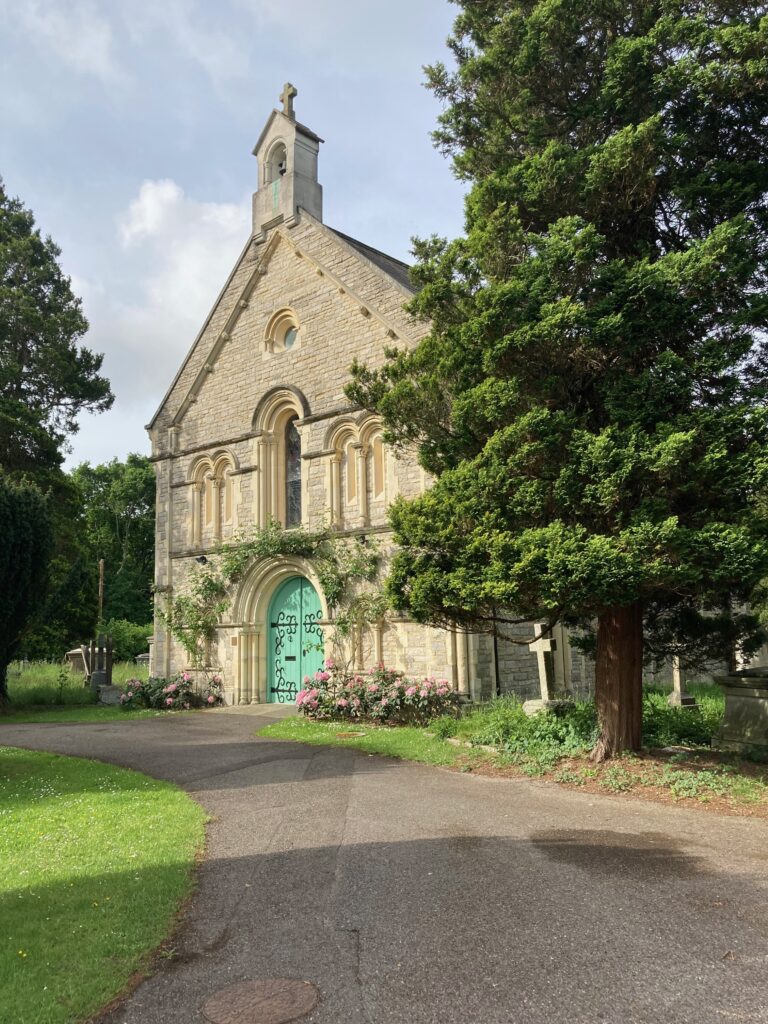
When the chapel came into view, I knew I’d come almost as far as I could. There are three chapels in the cemetery, Church of England, Nonconformist and Jewish. The chapel I’d reached was the Church Of England Mortuary Chapel, built in around 1850. It’s my favourite at this time of year because of the roses around the wonderful turquoise doors. I stopped for a while to admire the blooms. Then I set off along a path I knew would lead me back the way I’d come.
The next grave I came to was one I know well. It belongs to the Lemon family. London-born James Lemon became the Southampton Borough Surveyor in 1866. Southampton had suffered two serious cholera epidemics — in 1849 and in the summer of 1866. James’s task was improving the sewerage system. There were objections about cost, but he persisted and installed miles of new sewage pipes. He also persuaded the council to buy land in St Denys for sewage disposal and to build a new water main from the reservoir on the common. His work was not confined to the sewers and water pipes. It also involved getting East Street widened, and the High Street asphalted, along with schemes to extend the docks and rebuild the Royal Pier. In 1892, he became the chairman of the Harbour Board, and in 1891, he was elected Mayor. In 1909, he was knighted. Sadly, his wife Maria had died three years earlier, so did not live to see her husband become a knight. Lemon Road, off Waterhouse Lane, is named after him.

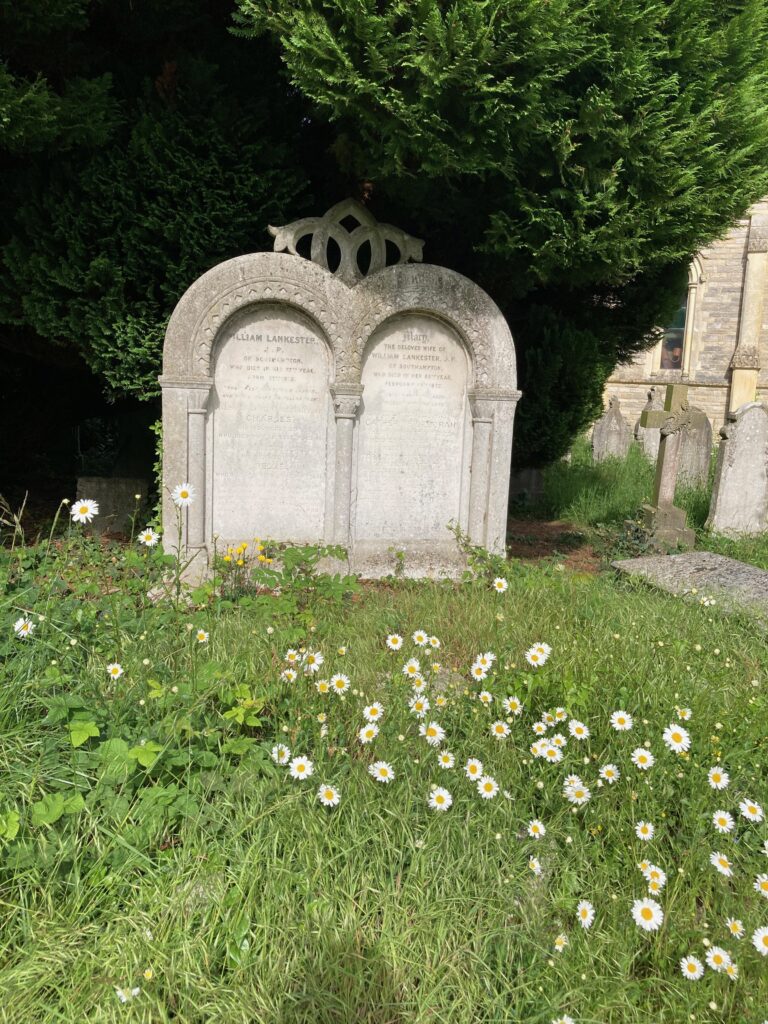
A sprinkling of white daisies drew me to the grave of William and Mary Lancaster. It’s quite a lavish affair, befitting the manager of W & J Lankester, a large iron foundry and ironmongers. William’s father, Henry Blomfield Lankester, founded the firm in 1800 and left it to his sons, William and Joseph, when he retired in 1829. They had premises on Southampton High Street, an iron and brass foundry, Holy Rood Foundry, on Bernard Street, and a yacht supply store. The company made the cast-iron railings and gates for Osborne House on the Isle of Wight. The family were liberals and nonconformists, so it is fitting that they should be buried within sight of the Nonconformist Mortuary Chapel.
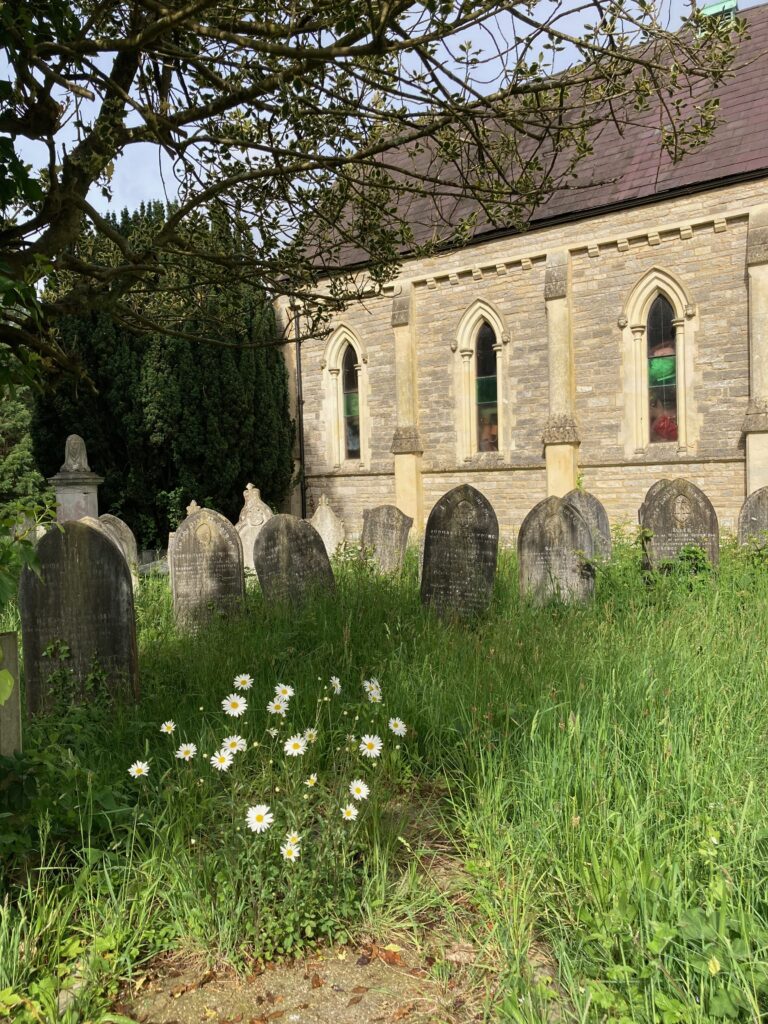
The Nonconformist Chapel was built at the same time as the Church of England one. It isn’t as grand, but it has the advantage of two benches outside the door, for those who wish to sit in quiet contemplation. There was no time for me to enjoy them as I had a parkrun to get back to.

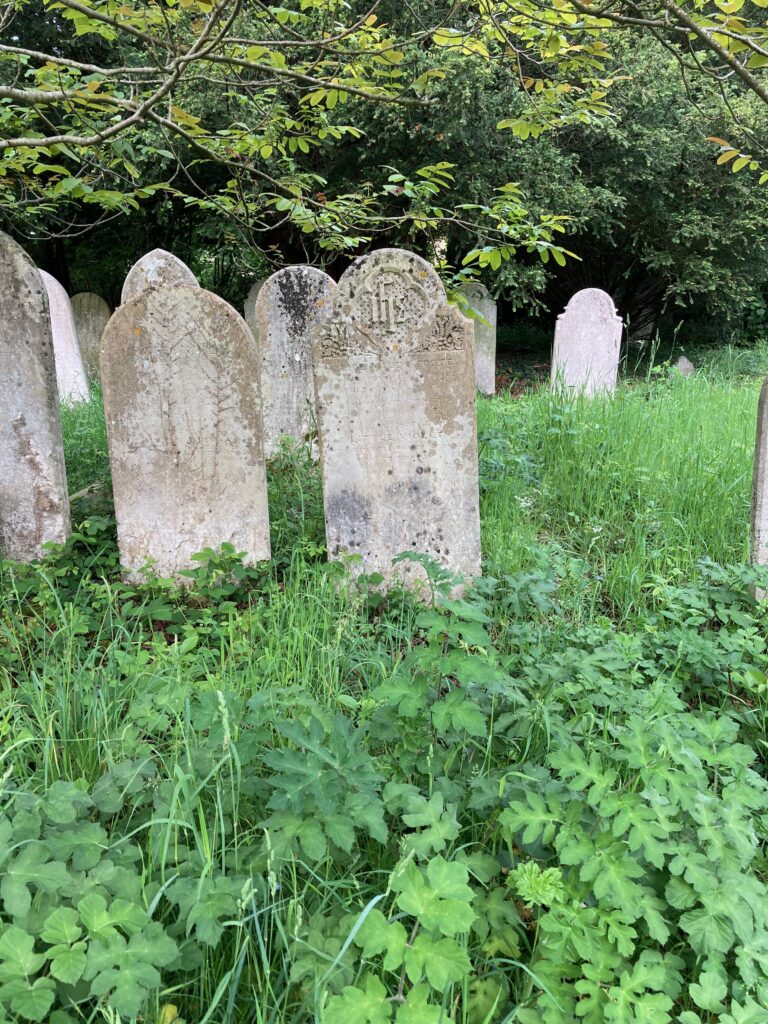
There was one more grave to catch my eye before I reached the gate. It belonged to Alice Maude Foote, who died in December 1873, aged 3, and her baby sister ‘Little Violet,’ who lived for just seven days in 1897. It seemed as if the children really were calling to me that morning.
I wandered back towards the gate wondering if my aunt, Freda Haley, was in the cemetery somewhere. She died during the Spanish Flu epidemic in 1918, not long before her third birthday. I don’t know where she’s buried, but my grandparents lived in Northam so she may well be in the Old Cemetery. If she is, I wish she’d let me know where because I’d love to lay flowers on her grave.

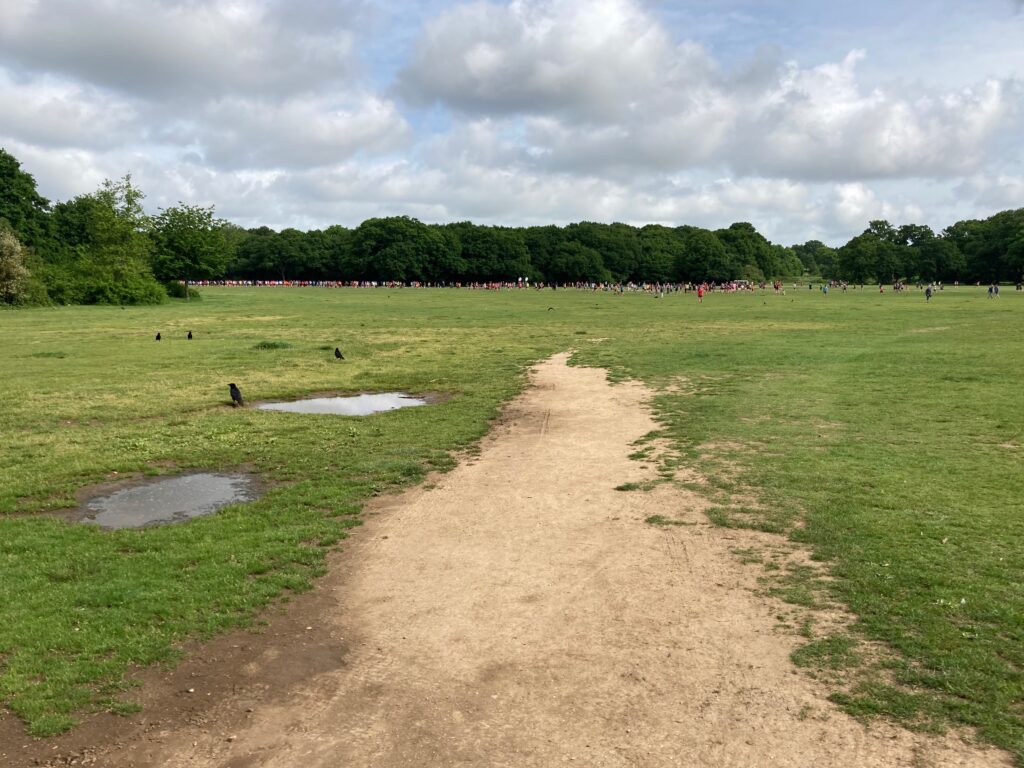
Finally, I reached the gate. The parkrun finish funnel was a mass of colour and movement. On the grass, a quartet of crows hunched, looking far more sinister than anything I’d seen in the cemetery. Maybe Southampton Old Cemetery is not the place to go if you’re looking for spooks, but it’s always interesting.
If you like what I write, and you’re interested in my novels are available now on Amazon in paperback, on Kindle and via Kindle Unlimited. Check out my Amazon page here and my Goodreads page here. If you would like to help me keep writing, you can now buy me a virtual coffee by clicking on the little orange coffee cup at the bottom right.
Thank you for your informative and soothing description of your wander through the cemetery. It was extremely interesting.
I’m glad you enjoyed it.
I have just found this interesting artical and look forward to reading more also your books .
Interesting also that you had an aunt by the name of Freda Haley ,Haley was my mothers maiden name
I’m glad you enjoyed it. The Haley side of my family originally came from Witney in Oxfordshire. My grandfather, Thomas and his brother Harold moved to Southampton in the early 1900s. Perhaps we are related in some way?
It’s desperately sad that many families lost multiple children at such young ages. As you say, it wasn’t unusual but still, I wonder how they coped with the continuing grief. I hope you are right, and that they come out to play amongst the graves.
I’d like to think that they do. There are so many of them.