
On 3 July 2022, Commando decided to go for a nice flat run along the shore at Lee-on-Solent. Obviously, I took the opportunity to tag along and pay my respects to Leonard Thomas Haley, my first cousin once removed. I discovered him when I was researching my family tree on Ancestry.co.uk. As parts of his story inspired my current work in progress, it seemed fitting to pay a visit. I was also keen to explore the area around the Fleet Air Arm Memorial and enjoy a walk by the sea.
After a false start, when the new parking ticket machines flummoxed us in the seafront car park, we gave up and parked on the street close to the memorial. Once we’d synchronised our watches and arranged where to meet, I watched Commando run off into the distance, then headed for the memorial. Although I only found out about Leonard a short while ago, the wording, ‘No grave but the sea,’ brought a lump to my throat. As I ran my fingers over his name to feel the letters, I thought of his wife, Iris, and his daughter, Pamela, and wondered if they had ever had the chance to do the same. Did they ever look at the sea and think he was part of it now?
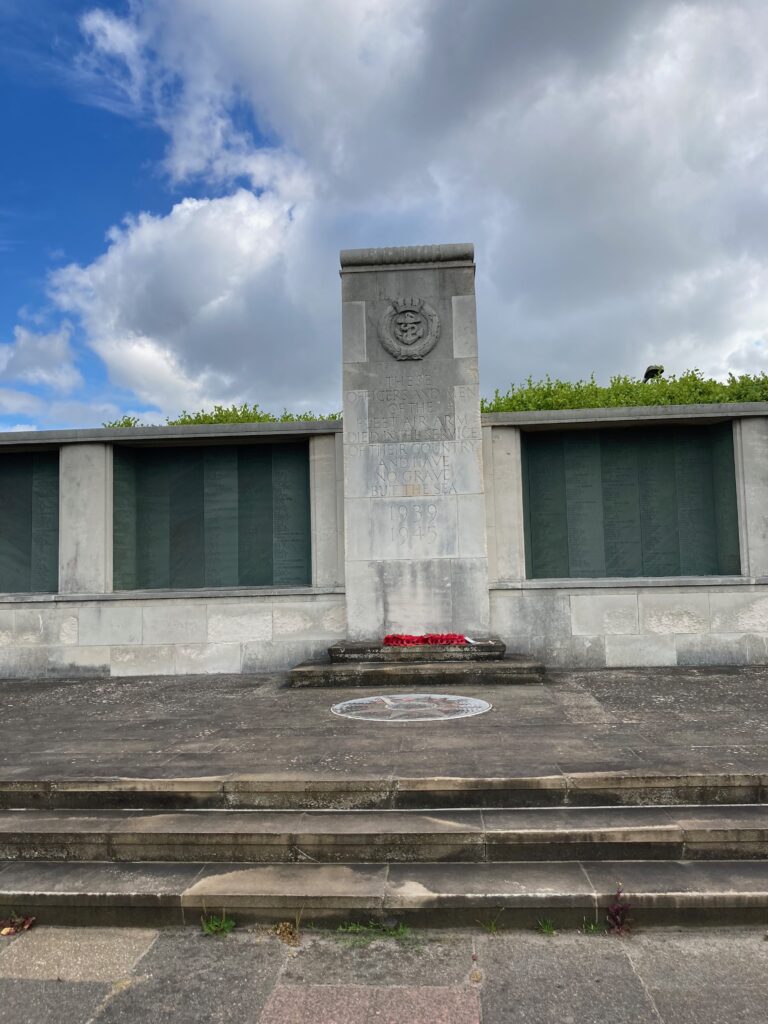
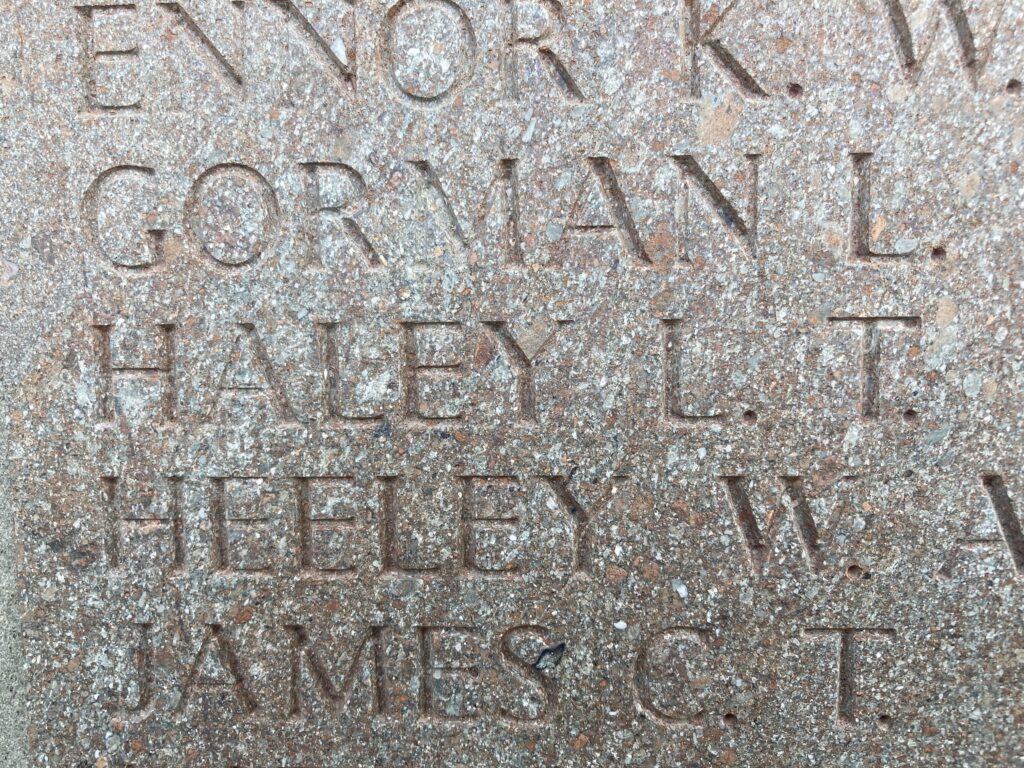
I’ve told Leonard’s story before, so I won’t go into it again, but if you missed it, you can find it here. This time, I was interested in the buildings around the memorial and HMS Daedalus, the airfield where the Fleet Air Arm were trained. Behind the crumbling boundary wall I had spied some interesting-looking properties, and I wanted a closer look at them.

Unfortunately, I was not tall enough to peer over the wall, so I walked along Richmond Road to see if I could find a gate. There were gates, rather lovely wrought iron affairs, but they were shut, so the best I could do was poke my phone between the bars and capture what I could. I’m glad I did because I later discovered that the old naval base is being developed to provide new homes. Apparently, two hundred houses were completed in 2021, and the second phase is about to begin. Hopefully, these beautiful old buildings will not be casualties of the development.

A little research when I got home told me what I’d been looking at. The detached villa I couldn’t quite capture through the bars was Westcliffe House. Originally a private dwelling built in 1904, the navy requisitioned the house in 1917 when they took the site over as a temporary naval seaplane training school and satellite to the Royal Naval Air Service base at Calshot. The house became an officer’s mess. In 1918, the RAF took control of HMS Daedalus, and in the 1920s, they used it to train the Fleet Air Arm. Thankfully, the building is Grade II listed, so it should escape the chop.


In 1935, a new officers’ mess, The Wardroom, was built. Architect M May designed the building. Given its intended use, it was beautiful, with a stone and timber-framed gable very much in keeping with the style of the original villa. A liaison between the Government and the Royal Fine Arts Commission was responsible for the sympathetic design. If only modern architects took such care. Much to my relief, I discovered that The Wardroom is also a Grade II listed building.

The lovely little cottage beside the gate was the original lodge to Westcliffe House. It really is a pretty building, echoing the design of the house. Sadly, I couldn’t find any mention of it being listed. Although it looks a little the worse for wear, I hope it doesn’t end up being demolished.

Some houses a little further down the road interested me. Something about them looked military, and I had an idea that they might have been married quarters for HMS Daedalus. It turns out I was right. They were built between the wars for just that purpose. How many wives opened the doors of these houses to receive the dreaded telegram telling them their husbands were not coming home?

Next, I walked up the road towards the Hovercraft Museum to see if there were any other opportunities to poke my nose over walls and see fascinating things. Sadly, there weren’t. Other than a peep at Westcliffe House from a different angle, and a glimpse of a dilapidated corrugated iron building that might once have been a hanger, there was nothing to see.


I thought about walking a little further to look at the airfield. Black clouds were rolling in, and Commando had said he’d be back in about an hour. I didn’t want to miss him or be too far from shelter if the heavens opened, so I turned back towards the memorial. Later, I would regret my decision.

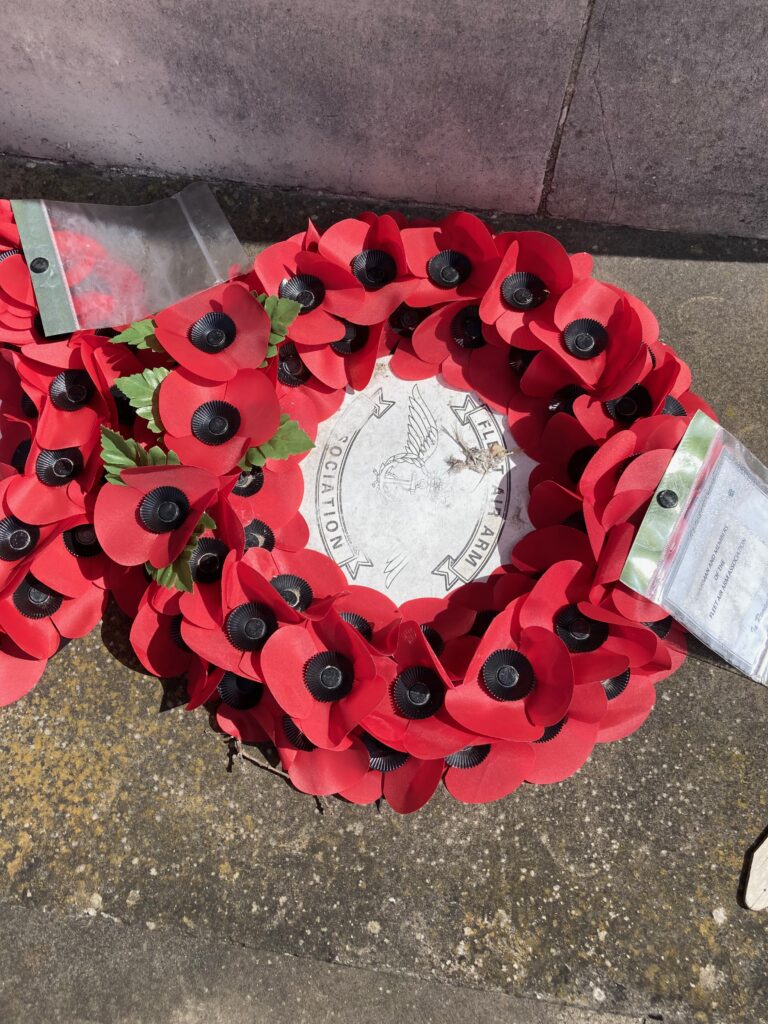
After stopping to read the poppy wreaths laid at the memorial, I headed for the sea. The sun was still shining, and there were plenty of places I could duck into if the rain started. An information board about the airfield’s history kept me busy for a while. Shortly after I’d finished reading it, Commando ran past.


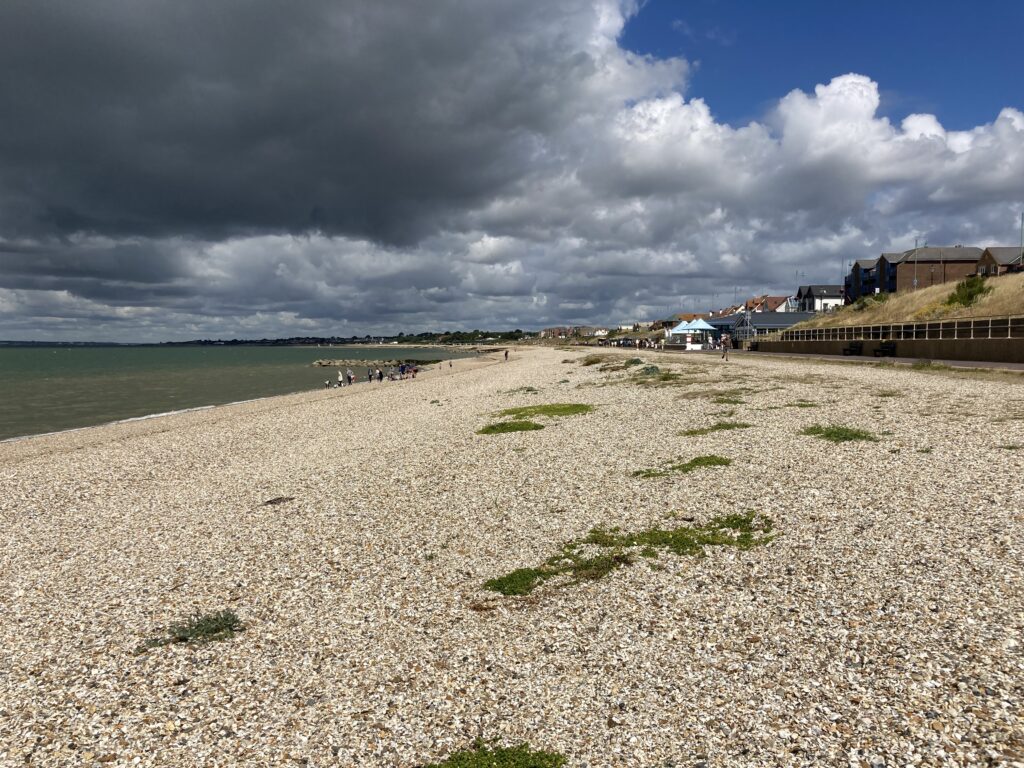
The sound of small planes taking off and landing made me think about what it must have been like in Lee-on-Solent in Leonard’s day. Now I was on the beach, I could see the little aircraft beneath the vast bank of black cloud. Slowly, I strolled along the beach, stopping every time another plane took off and thinking about all the men whose names had ended up etched in stone.


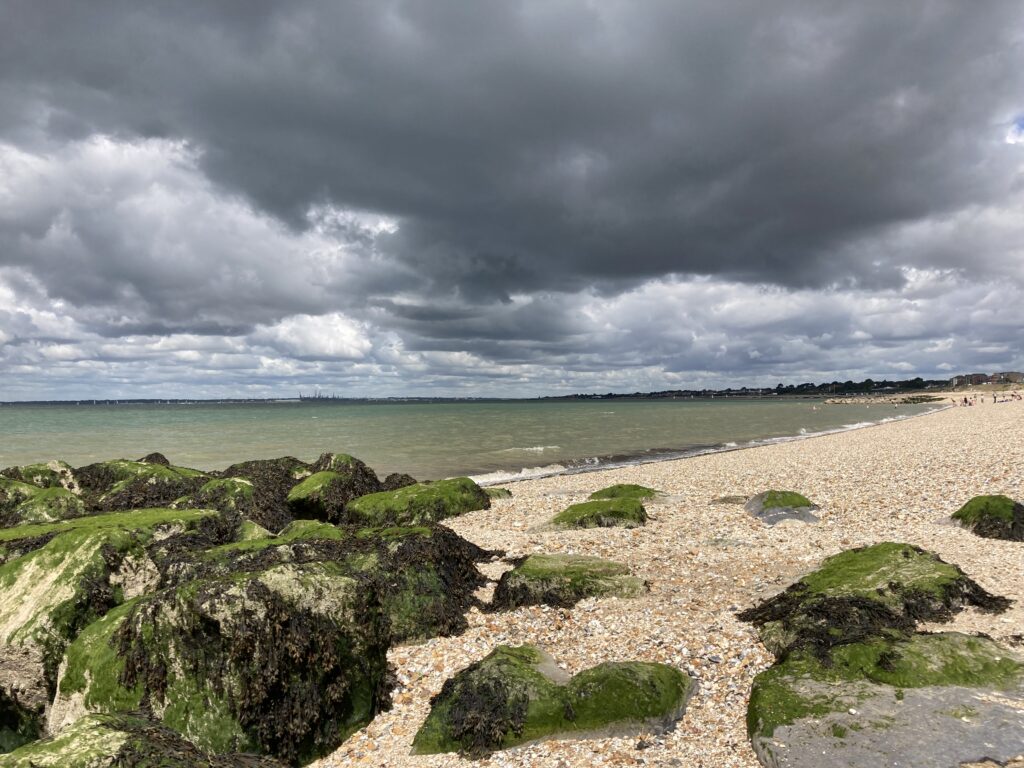
After a while, I left the path and wandered across the shingle towards the sea. A few brave souls were actually swimming. It felt like a step too far to me, but it was nice to breathe the fresh, salty seaweed smell and hear the waves lapping at the shingle. A few little sailboats were meandering across the water off the coast of the Isle of Wight, and the spires of Fawley reminded me of the view from Weston Shore. There really is nothing as nice as a walk by the sea, even with a big black cloud hanging over you.


After a short stop to admire the WW1 memorial, I thought I’d better head back. I might not have walked very far, but my hour was almost up. I strolled along Marine Parade, enjoying the baskets of flowers attached to the railings and daydreaming about owning a house on the seafront. The thought of having a balcony overlooking the sea was sorely tempting. Of course, I’d have to win the lottery first.


Once Commando had finished his run, we went for coffee and cake at one of the seafront cafes. As we sipped our drinks, we debated which of the Marine Parade houses we would buy if we ever became unexpectedly rich. Then it was time to go back to the car. Driving past the airfield, I spotted a marvellous new sculpture at the gates. I kicked myself for not going further when I’d had the chance. The sculpture, created by Portsmouth-based blacksmith, Peter Clutterbuck, is called Gate Guardian and shows Daedalus poised for flight. I couldn’t take a photograph, so the best I can do is this link to an article about it. Needless to say, I will make a point of getting a closer look on my next trip to Lee-on-Solent.

For anyone wondering, the name Daedalus comes from Greek mythology, and it is an especially fitting name for an airfield. Daedalus was an Athenian inventor, architect and craftsman famed for his knowledge and power. His story is told in Ovid’s Metamorphoses, a book I studied in Greek Literature at college. King Minos imprisoned Daedalus and his son, Icarus, on the island of Crete. They could not escape by sea, as Minos had all the ships searched before they sailed, so Daedalus made wings for himself and his son using feathers, thread and wax. He warned Icarus not to fly too close to the sea in case the feathers got wet and not to fly too high because the sun would melt the wax. Icarus didn’t listen. He flew too high; the wax melted, and he fell into the sea and died. While no modern airmen need to worry about melting wax or flying too close to the sun, teaching airmen to listen to instructions must have been one of the main aims of the training establishment of the Fleet Air Arm.

If you like what I write, and you’re interested in my novels are available now on Amazon in paperback, on Kindle and via Kindle Unlimited. Check out my Amazon page here and my Goodreads page here. If you would like to help me keep writing, you can now buy me a virtual coffee by clicking on the little orange coffee cup at the bottom right.
Hi Marie,
Thanks for the memories! As a young teenager in the early 1960’s, I would go down to the Navy Open Days at Lee On Solent. They were happy days! There would be a smattering of aircraft on the field, mostly helucopters but the occasional Fairey Gannet and on one memorable occasion a WWII vintage Swordfish biplane. I remember being allowed to sit in the cockpit of the Gannet – which seemed to be a mile of the ground to me!
Later on, I would fly from nearby Hamble airfield, with Lee On Solent to the South, easily picked out by the white tower on the seafront, which I believe is no longer there. What a shame! That tower instantly comes to mind whenever I think of Lee On Solent.
The Southampton area was a fascinating place to grow up in during the 1960’s.
What wonderful memories. Growing up in Southampton in the 60s is something we have in common.
Just a thought from a Lee on the Solent old boy,you forgot the in Lee on the Solent just thought i would let you now.
Sorry about that, we outsiders simply call it Lee-on-Solent.
I have not lived in Lee very long but love it. It was so interesting to read your story and I learned some interesting facts so thank you
Thank you. I’m glad you enjoyed it
I lived in Lee on the Solent from the early 60’s until a family move in 1973.
Fond memories.
Does anyone else recall Morecombe and Wise opening the annual open day event probably in the mid to late 60’s ?
Also vivid memories of the tower complex before and after it closed.
A great shame.