
When Commando said he fancied taking a different route home from a visit to his sister’s house on 8 March, my first thought was that I was glad I’d charged my phone. His shortcuts and alternative routes often end up with me frantically looking at Google Maps and trying to give him directions. When he asked me if I knew where we were, I had no idea, but I could tell by the look on his face that he had something up his sleeve. It was clear we were on one of his magical mystery tours, but knowing this didn’t make me any the wiser. When I saw the ancient ruins, I was still clueless.
‘You must know where we are now,’ he said as we stood looking at a crumbling tower and moat.’ It’s Bishop’s Waltham Palace.’
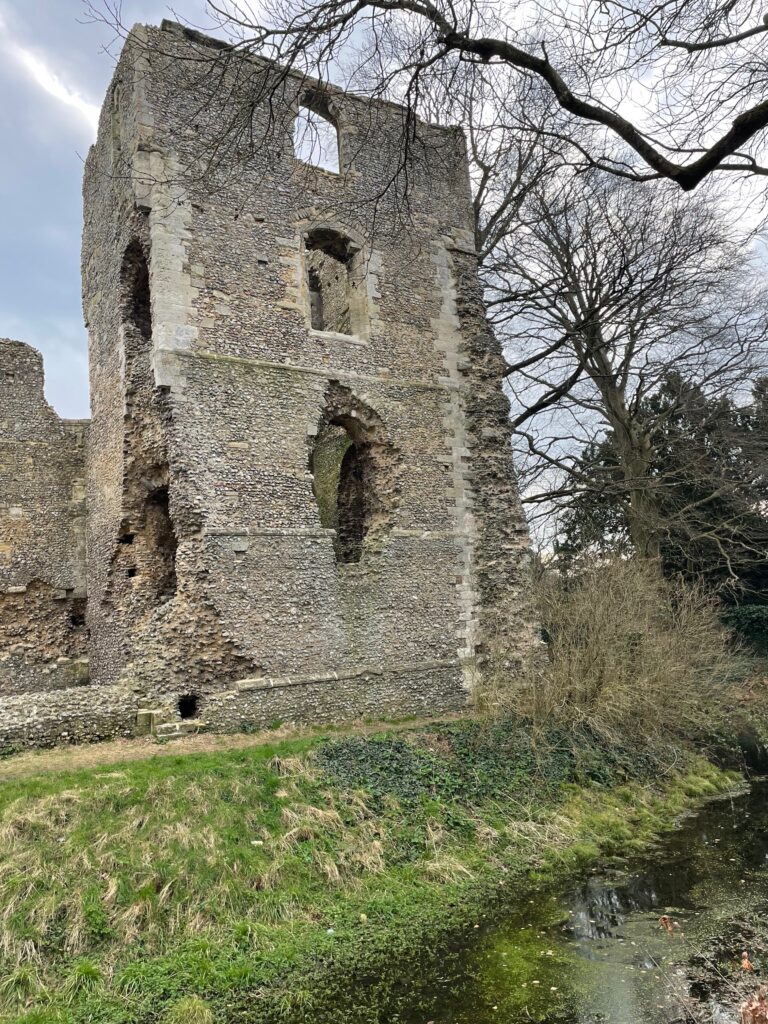
I’m ashamed to admit that I didn’t even know Bishop’s Waltham had a palace. Despite my love of all things historic, it had somehow passed me by. Admittedly, it is a bit off the beaten track, and Bishop’s Waltham is not somewhere I’ve ever explored. Still, a surprise palace is always a welcome sight, and I was glad that the gap in my knowledge was about to be rectified.
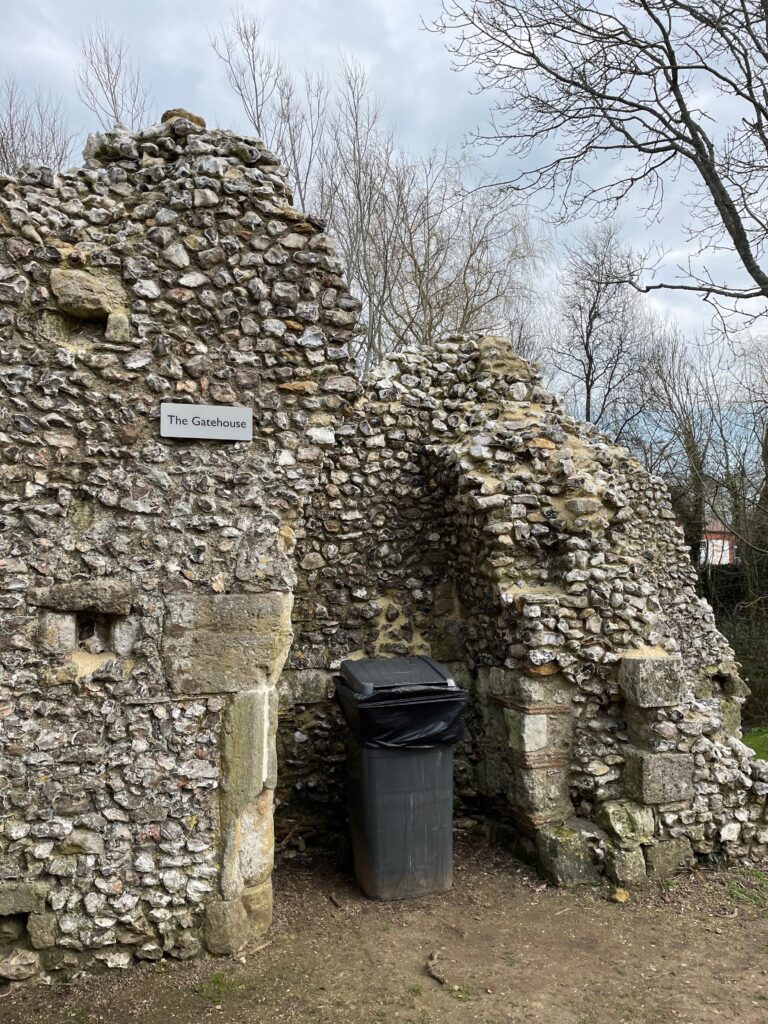
Once we were inside the gate, I stopped to read a handy sign. It told me that, between the twelfth century and the civil war in the 1640s, this had been the home of the bishops of Winchester. It was hardly a surprise. Those pesky bishops were the richest churchmen in Europe. They owned just about everything of note in Hampshire. When the English Civil War broke out, Colonel Bennet and a garrison of two hundred Royalists attempted to hold the palace for the king. After the Royalist defeat at the Battle of Cheriton and a long siege, Bennet finally surrendered it to the Parliamentarian commander, Major-General Sir Thomas Browne, on 9 April 1644. The incumbent bishop, Walter Curll, made his escape in a dung cart, but the palace was burned down and reduced to ruins.
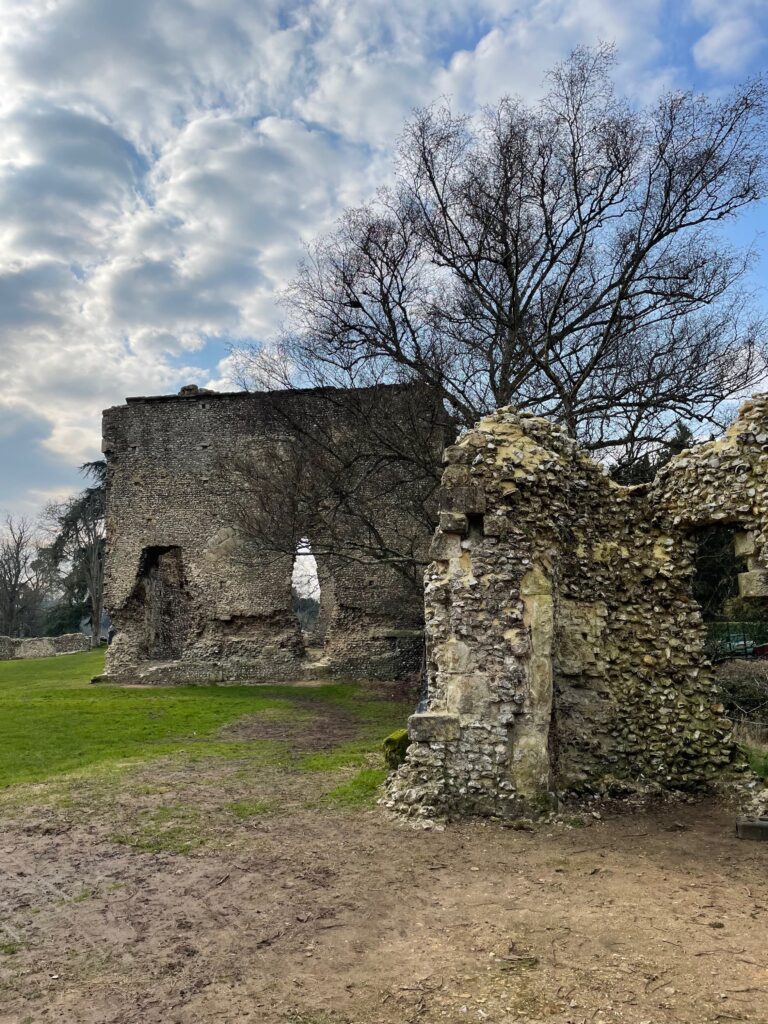
Even in 1644, the palace was an ancient building. In 904, King Edward the Elder gave the bishops of Winchester land in Waltham in exchange for land in Portchester. Remains of timber buildings on the site suggest they built the first residence of wood and the Doomsday Book of 1086 mentions a park for wild animals. Bishop Henry de Blois built the first stone building in 1135, although little of it remains. When Henry II came to the throne, the bishop supported his brother, King Stephen, in the civil war with Matilda. He was exiled, and the palace was rebuilt. Bishop William of Wykeham rebuilt it again in the late 1300s, Cardinal Beaufort made further additions, and Bishop Lanton completed the work in 1495.
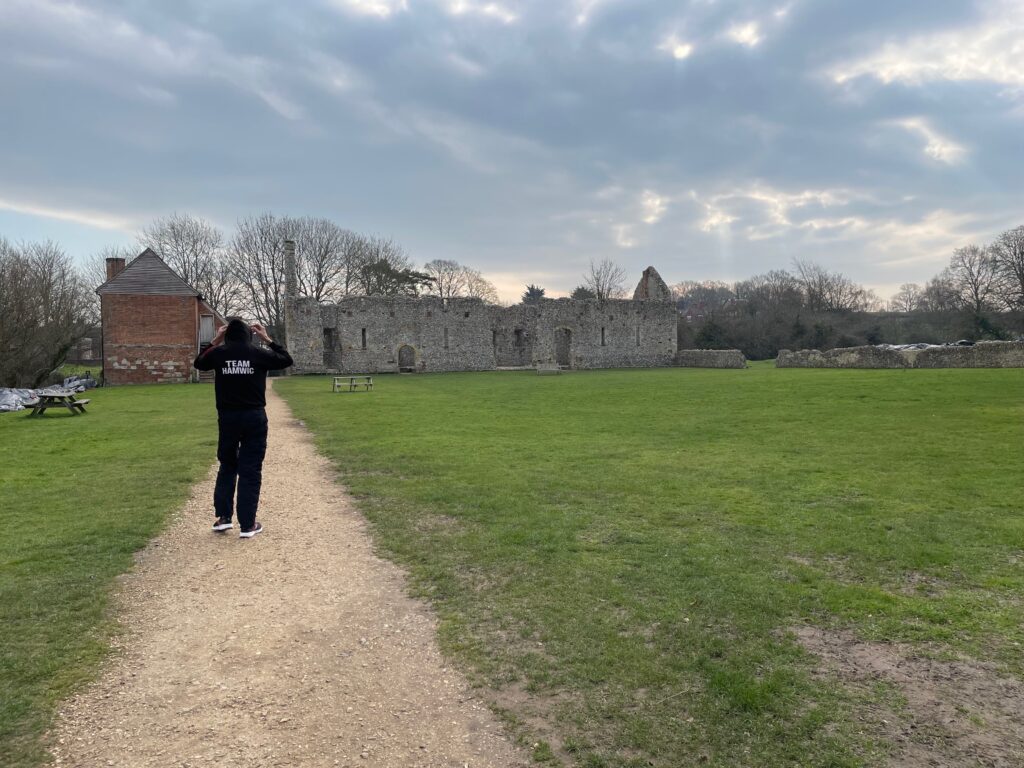
Not really knowing what we were looking at, we followed the gravel path along the northern boundary. I wondered if any actual kings had lived there or if it was a palace in name only. Later, I discovered that Henry III had stayed at the palace several times, Richard I had held a council there in 1194, Henry V visited, Mary Tudor stayed there before her marriage to Philip II and Henry VIII met Holy Roman Emperor Charles V there in 1533 to negotiate the treaty of Waltham, an alliance against King Francis I of France. Although no king appears to have lived there, it was certainly a popular haunt.
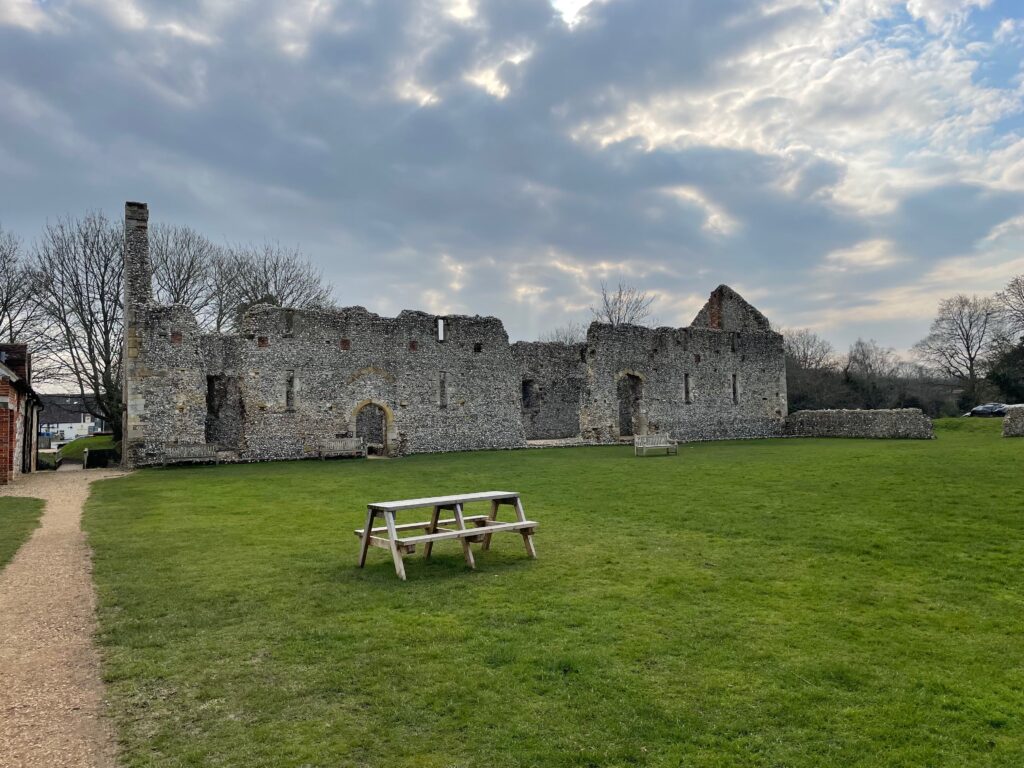
The buildings we walked towards turned out to be a bakehouse and brewhouse built by Bishop Wykeham and a much newer farmhouse. The latter appears to date from the early nineteenth century, when the Poor Law Trustees for the parish leased the site and turned part of it into a farm. Although the farmhouse was one of the more modern structures on the site, I have to say I was rather taken with it and wished I could have had a look around inside.

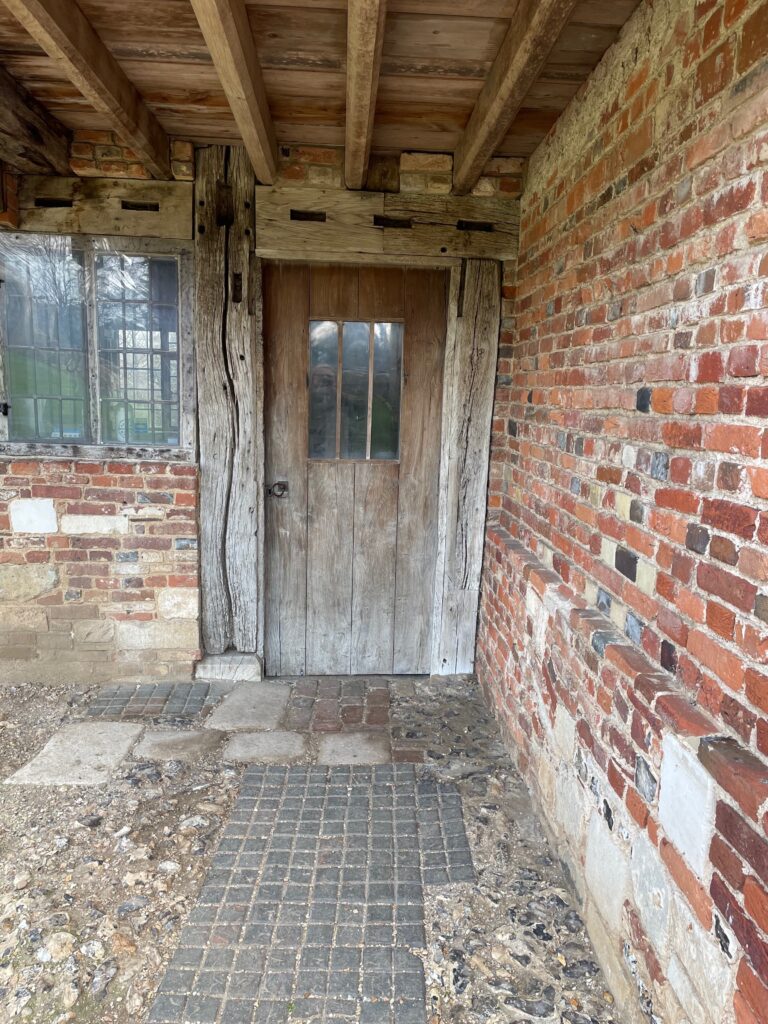
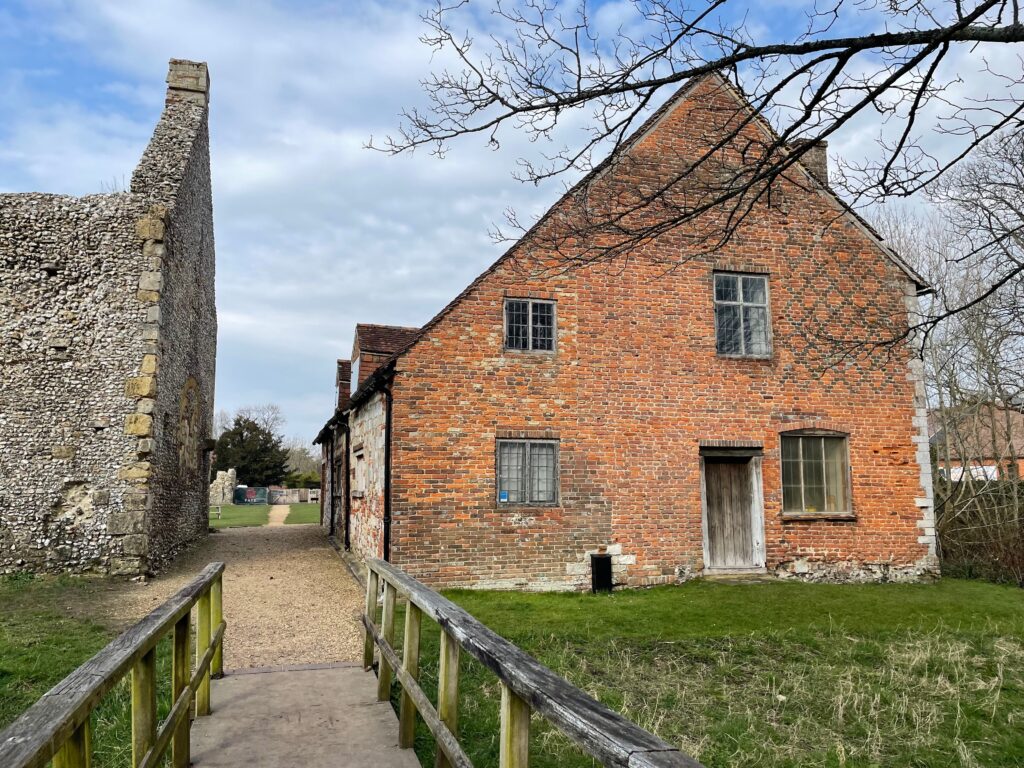
We spent some time wandering around inside the brewhouse and bakehouse. As far as I could make out, the bakehouse was the building nearest the farmhouse. I based my assumption on the chimney, the large fireplace, and the remains of what looked like bricked-up ovens on the outside wall. Later, I found a beautifully detailed map on the English Heritage website that confirmed my suspicions. The site is well worth a visit if you want more information about the palace.
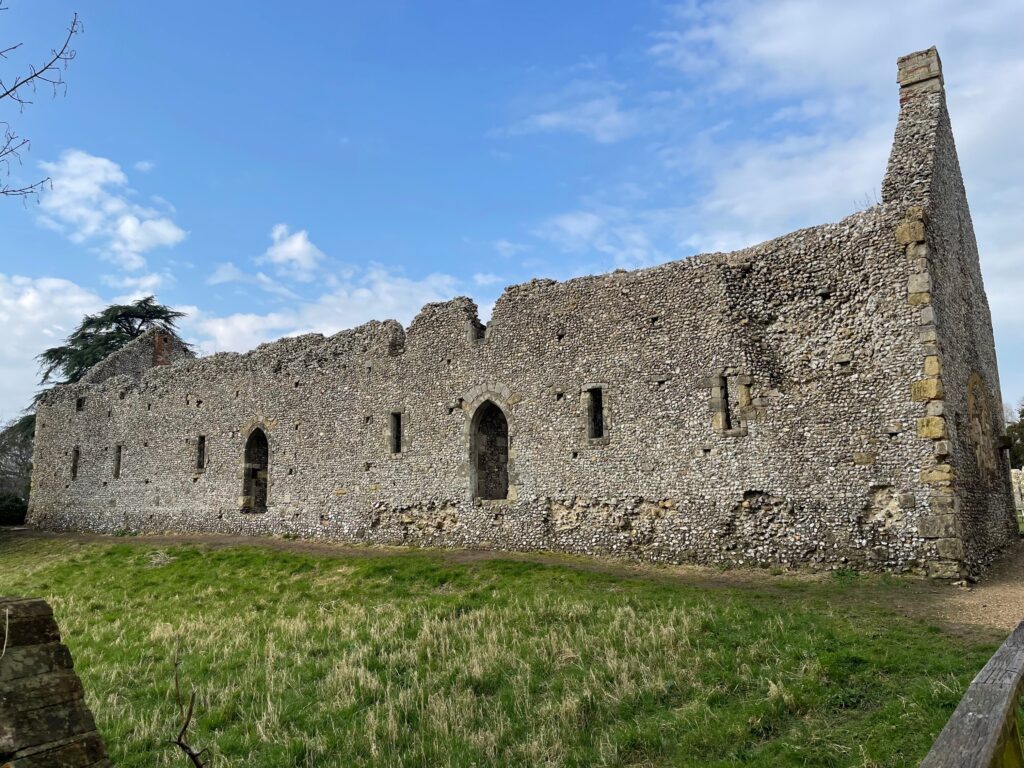

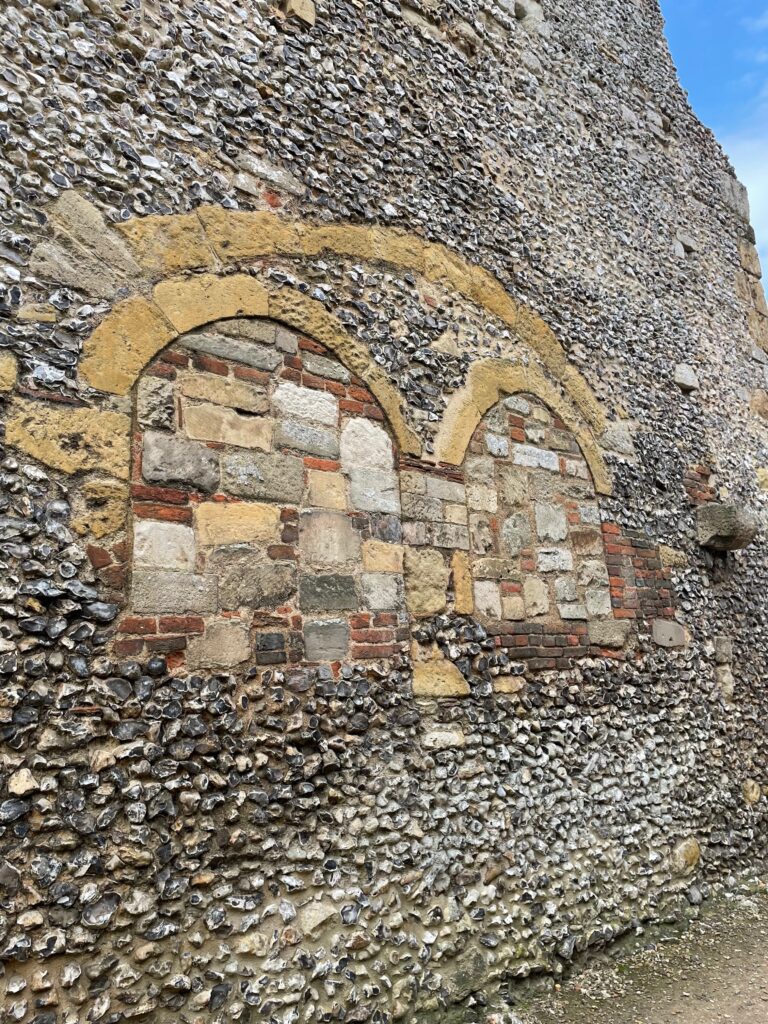
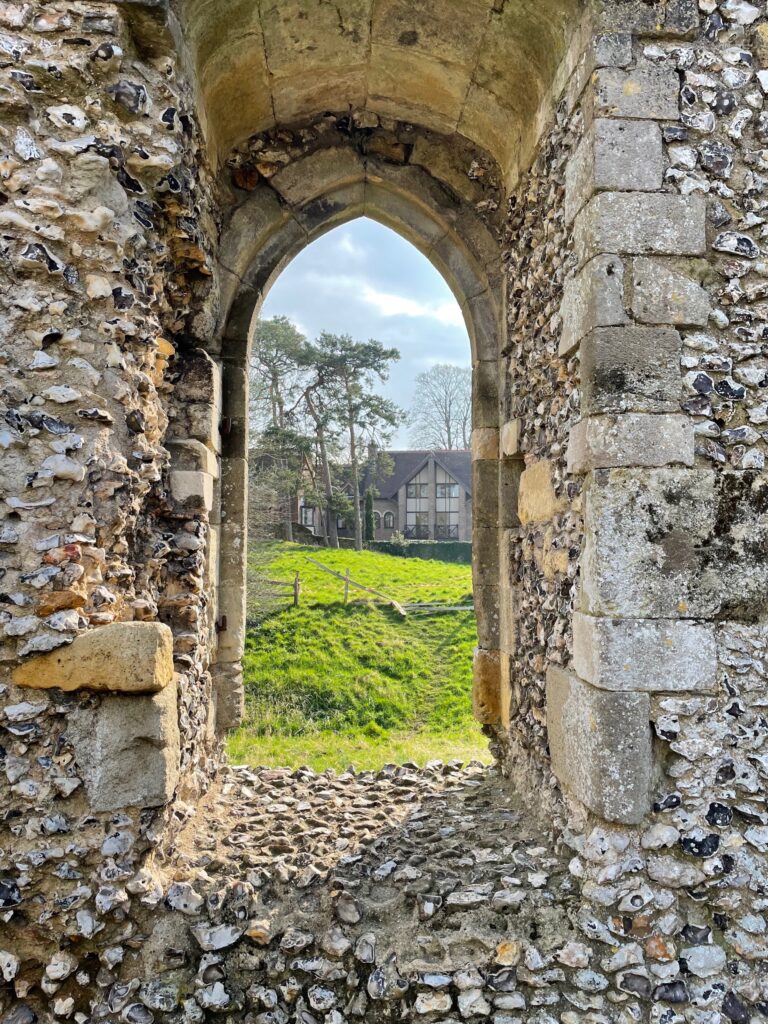
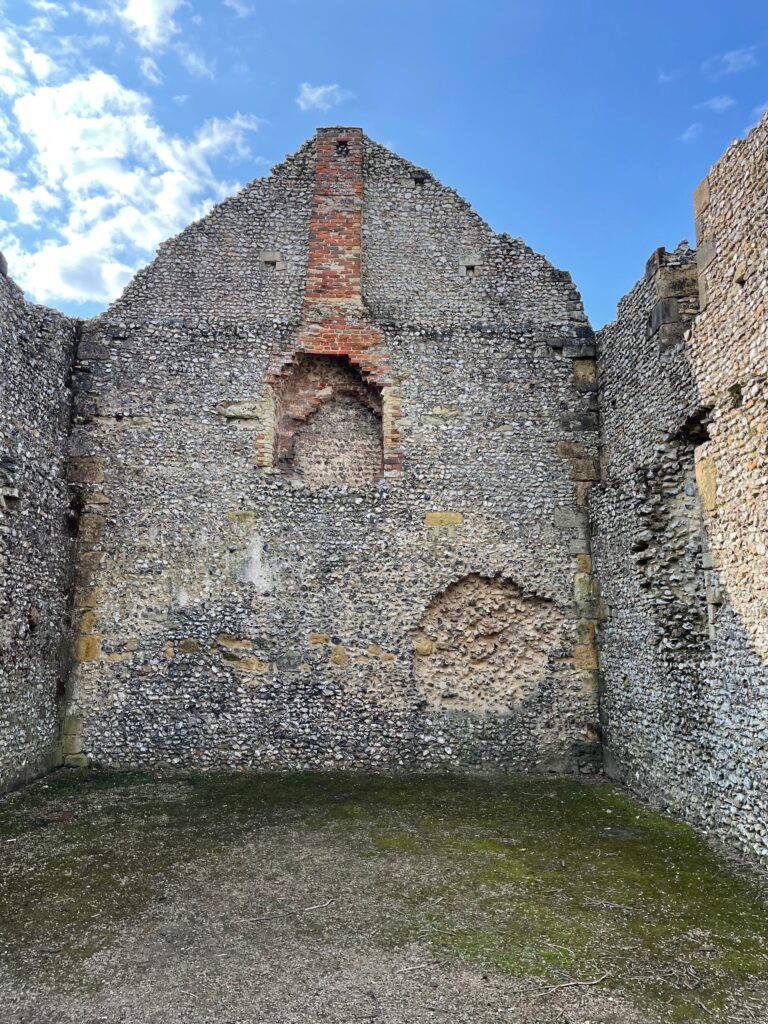
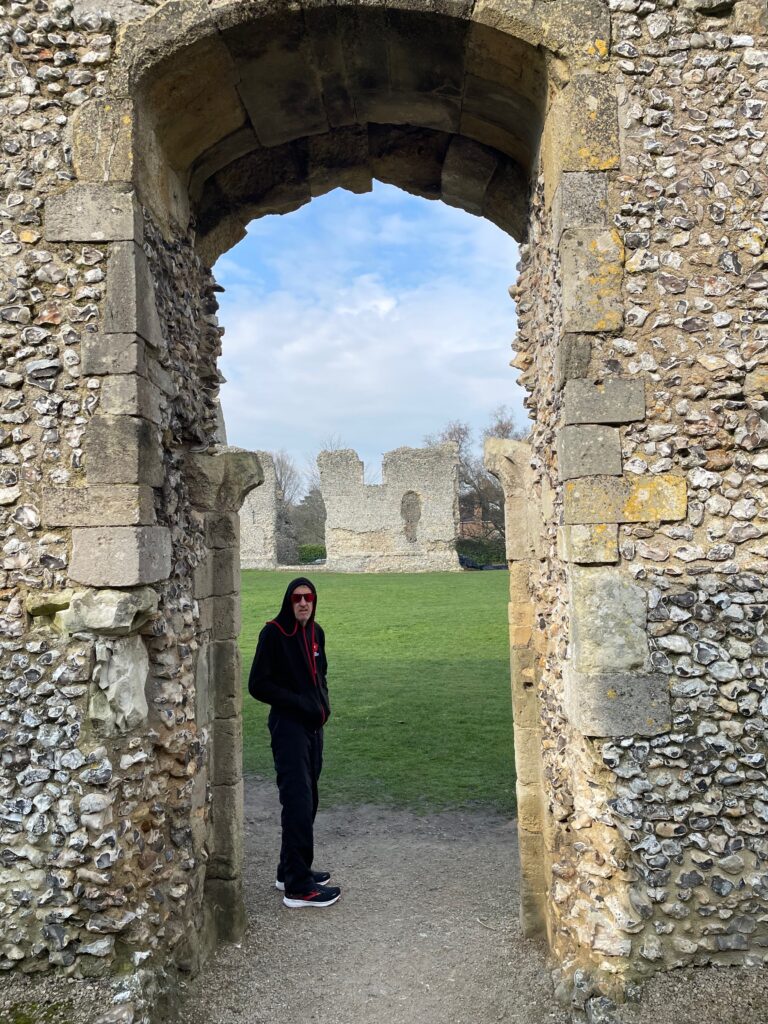

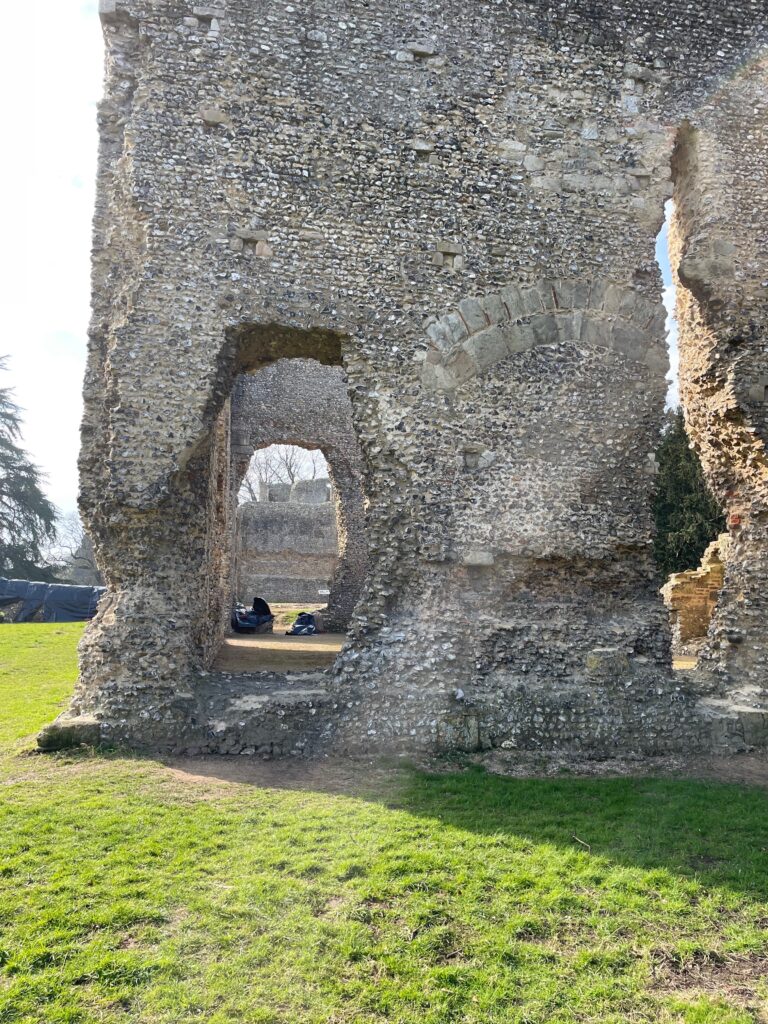
On the opposite side of the large, grassy courtyard, there were more buildings and a lot of black plastic. On closer inspection, the plastic was covering various bits of the stone wall. It looked as if they were being restored, but as black plastic doesn’t make for good photographs, I tried to avoid it. As far as I could tell, these were the remains of the bishop’s residence. The English Heritage map marks them as a kitchen, service rooms, and hall. We wandered around, peering through the various doorways and windows, not knowing what we were looking at but impressed nonetheless.
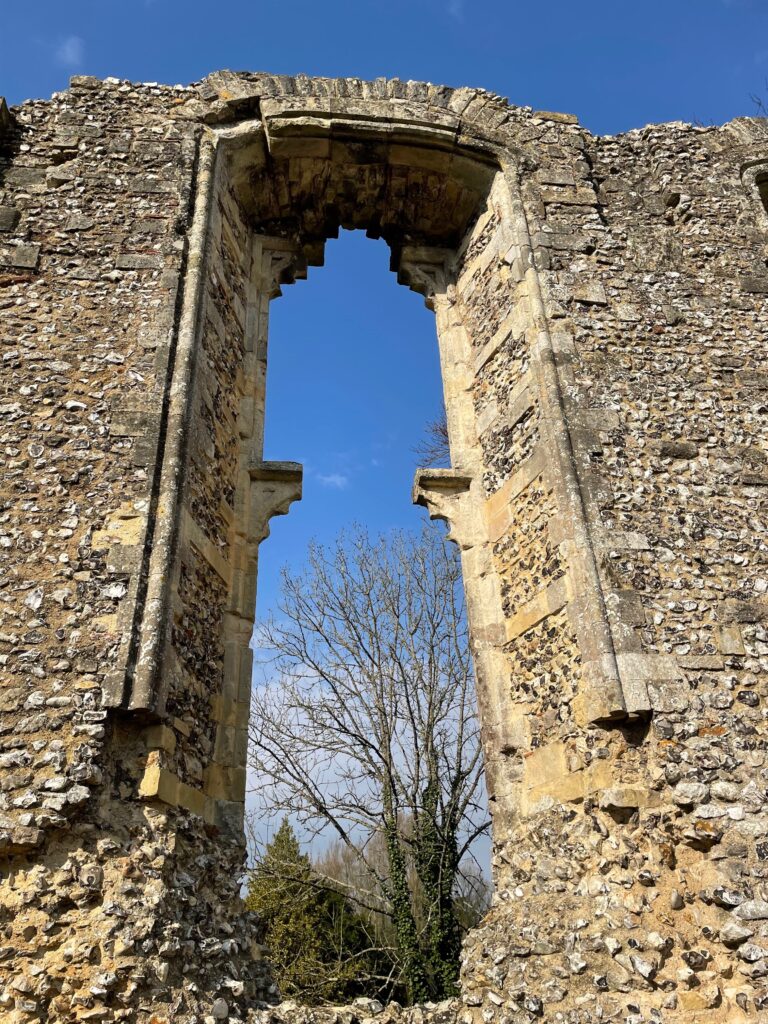
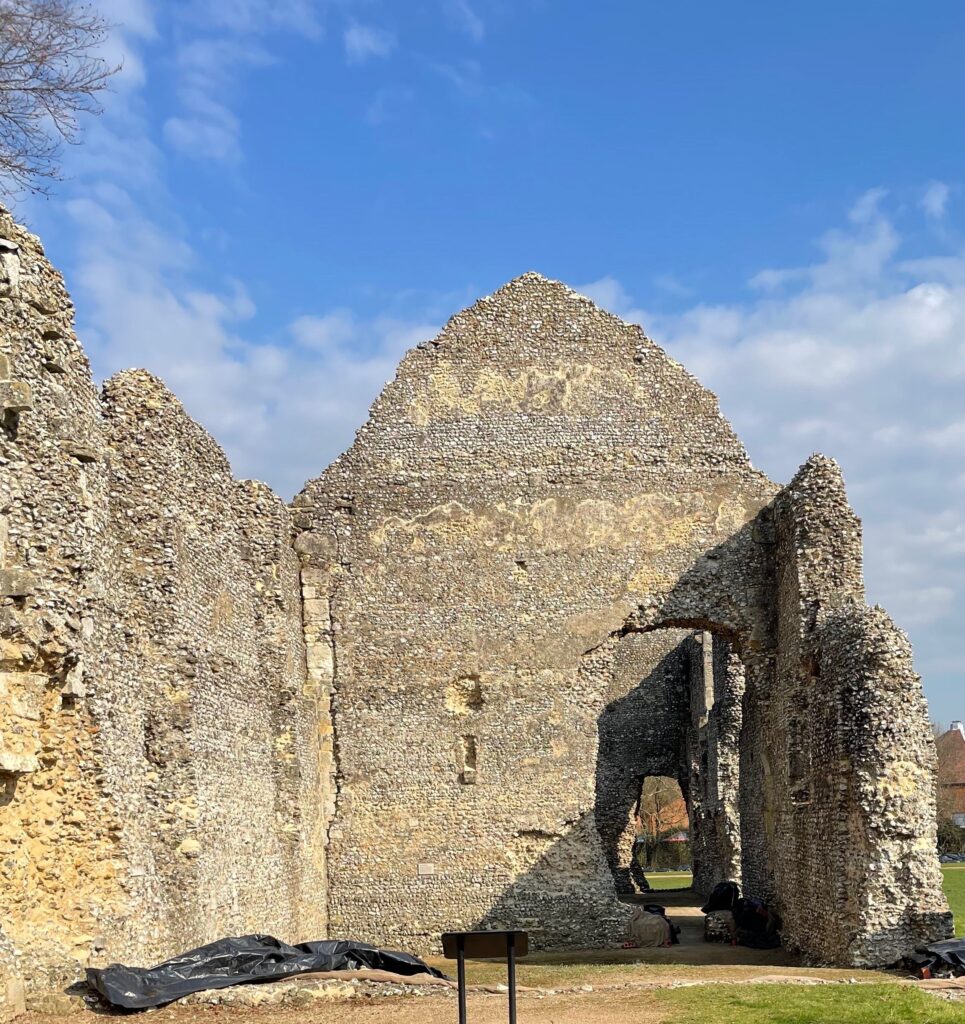
In its day, it must have been a remarkable building. Sadly, although the palace was returned to the bishops of Winchester in 1660, after the Restoration of King Charles II, it was already in ruins, and the bishops abandoned it. Over the next hundred years or so, the townspeople plundered it for building materials.

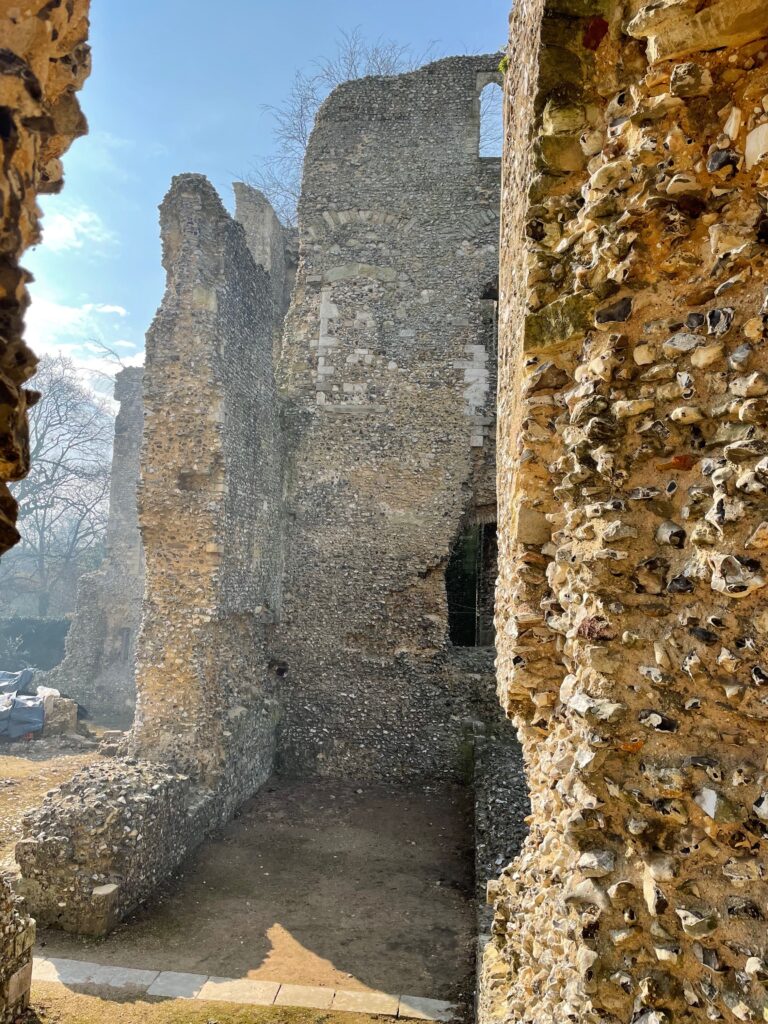

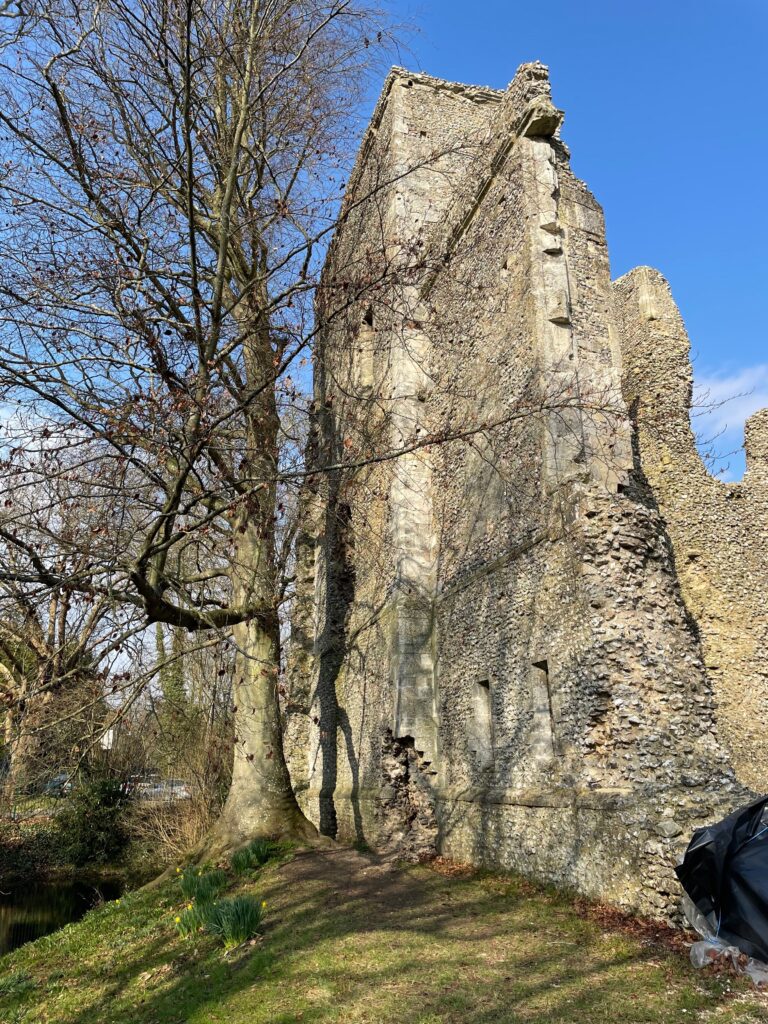
The final part of our tour took in the tower we’d seen when we first arrived and the buildings behind it, which would have included the bishop’s chamber. Although the bishops had abandoned the site, it wasn’t until 1889 that the church sold it. The new owner was renowned physician Sir William Jenner. The final owner of the palace was Admiral Cunningham, later Viscount Cunningham of Hyndhope, the naval commander in charge of the Mediterranean fleet during the Second World War. In 1952, he transferred the ruins to the Ministry of Works guardianship.
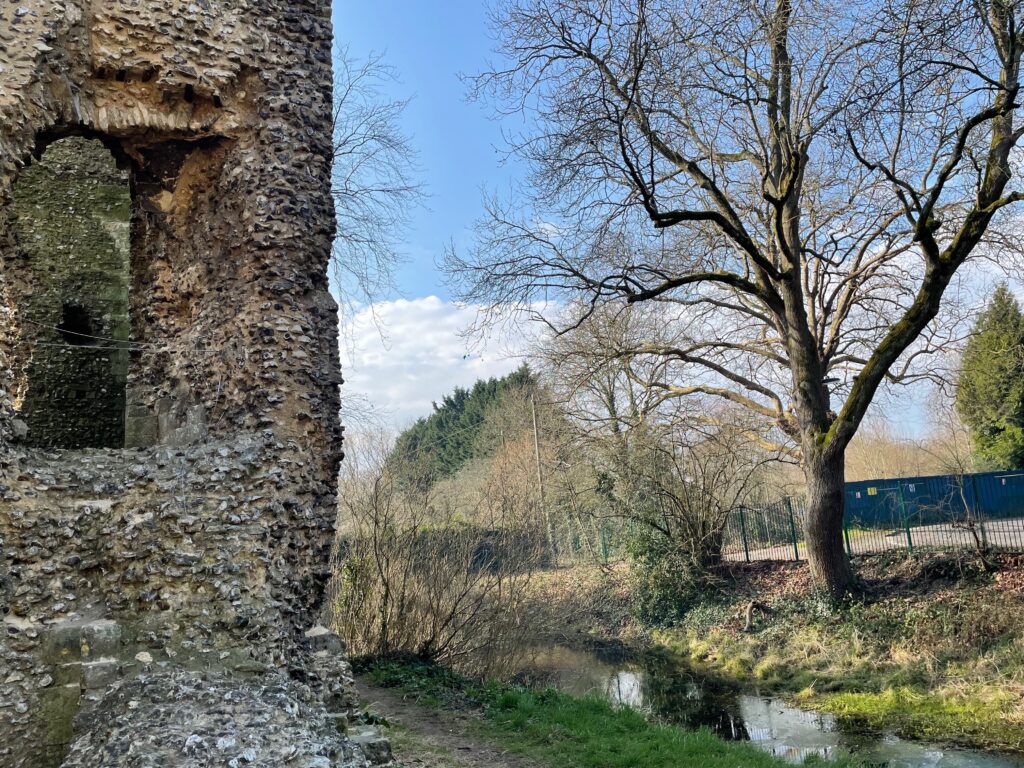
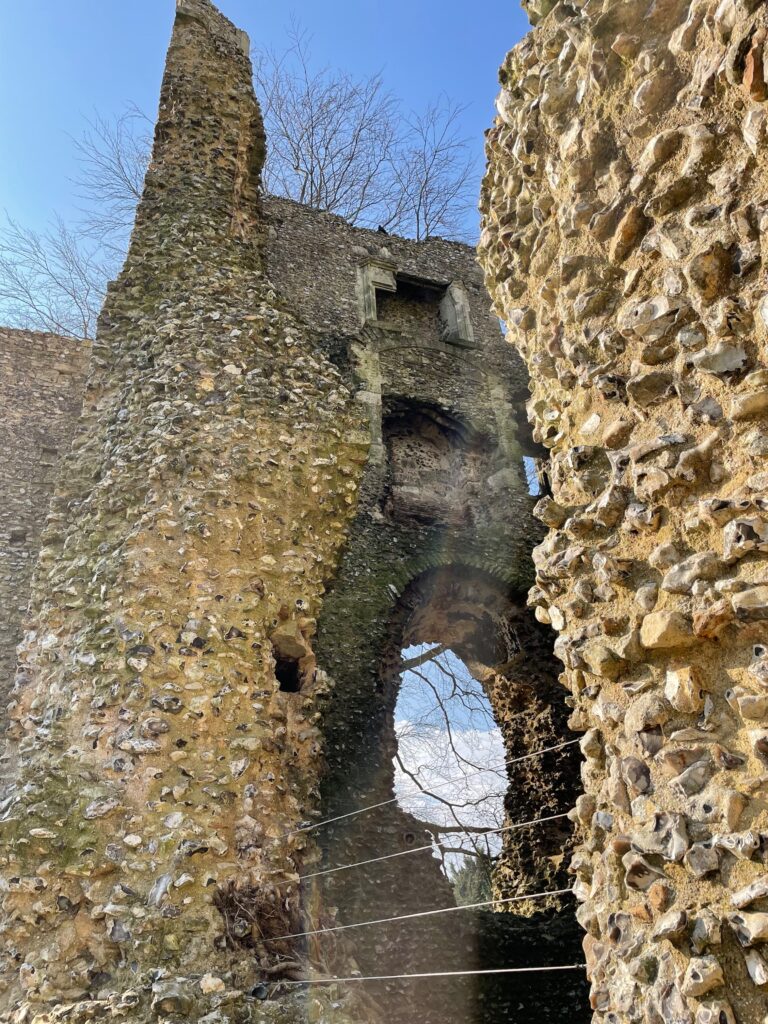
The Ministry of Works restored the place and carried out major archaeological excavations between 1952 and 1971. English Heritage has continued the conservation works, hence all the black plastic. This may have meant we couldn’t see everything on the site during our brief visit, but that seems a small price to pay for preserving such a fascinating and significant building. It also gives me an excuse for another visit in the future.

If you like what I write, and you’re interested in my novels are available now on Amazon in paperback, on Kindle and via Kindle Unlimited. Check out my Amazon page here and my Goodreads page here. If you would like to help me keep writing, you can now buy me a virtual coffee by clicking on the little orange coffee cup at the bottom right.
Fascinating Marie. I have driven past there many times when I lived in Fareham and never thought of stopping and exploring the ruins. Perhaps this is something I will do the next time I am in the area.
Thank you for the very interesting information and lovely photographs.
It is well worth a visit. I had no idea it was there.
Delighted you enjoyed your visit! Do come and see inside the museum in the farmhouse. The building actually dates from around 1440 and has the only surviving original timber roof in the palace. Some of the brick on the outside is also original but much of what you see probably dates from the early 18thC…
We are open weekend afternoons, May to October.
Thank you. I did enjoy it. If I get the chance I will come back one weekend as I’d love to see inside the farmhouse.