
7 June 2015
When our tour of the vaults and walls ended outside the Wool House my foot was a little achy and CJ and I were in need of coffee. The Wool House already looked packed so we decided to walk up Bugle Street towards the centre of town and find somewhere there. As part of the price of the tour we’d been given discount tickets for Tudor House Museum. CJ was keen to use them but, given the time and my aching toe, I thought we’d be better saving them for another day. Besides, it was sunny and we’d spent a great deal of the morning underground. There was no reason we couldn’t go inside for a coffee though and maybe a little look at the garden.
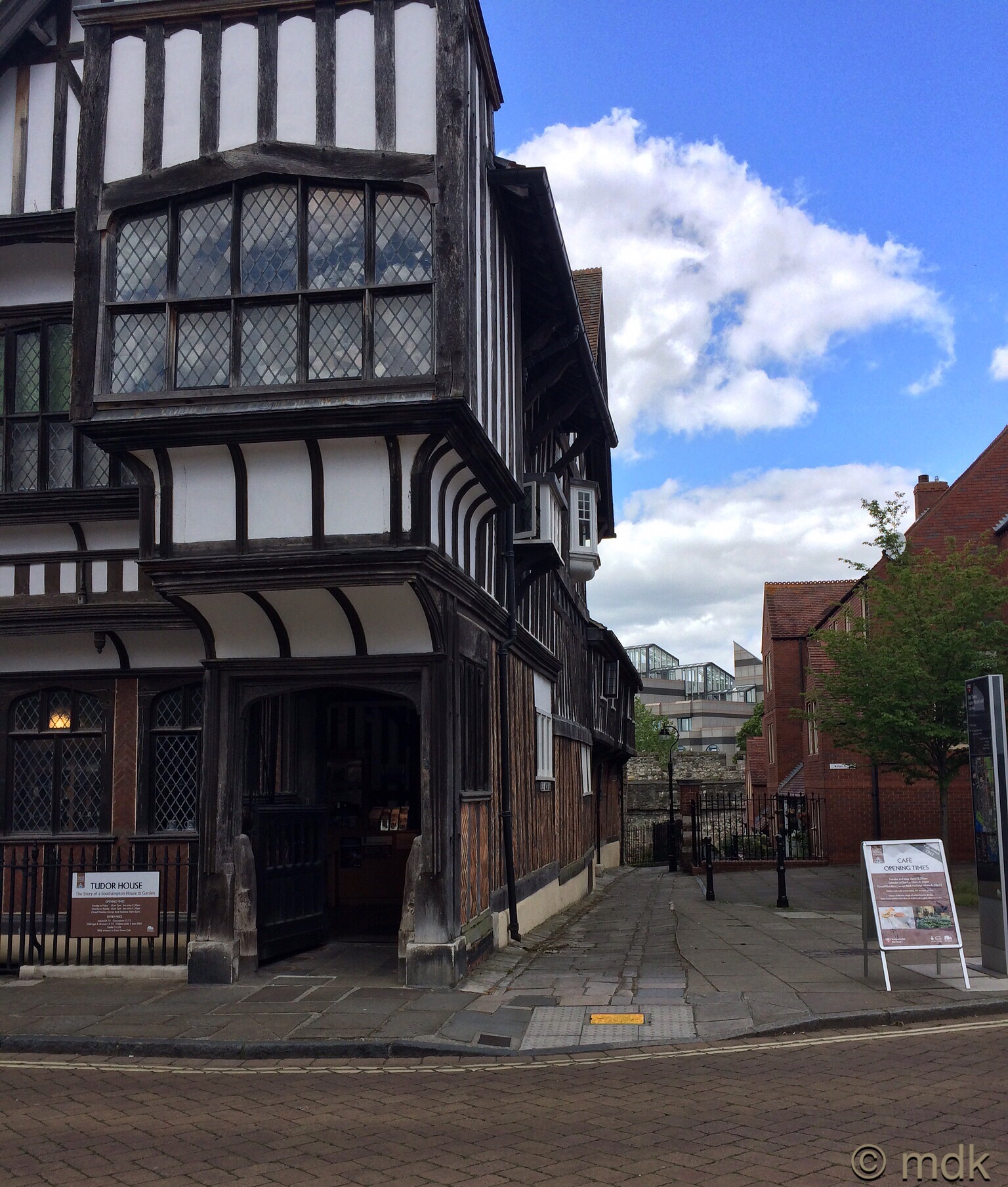

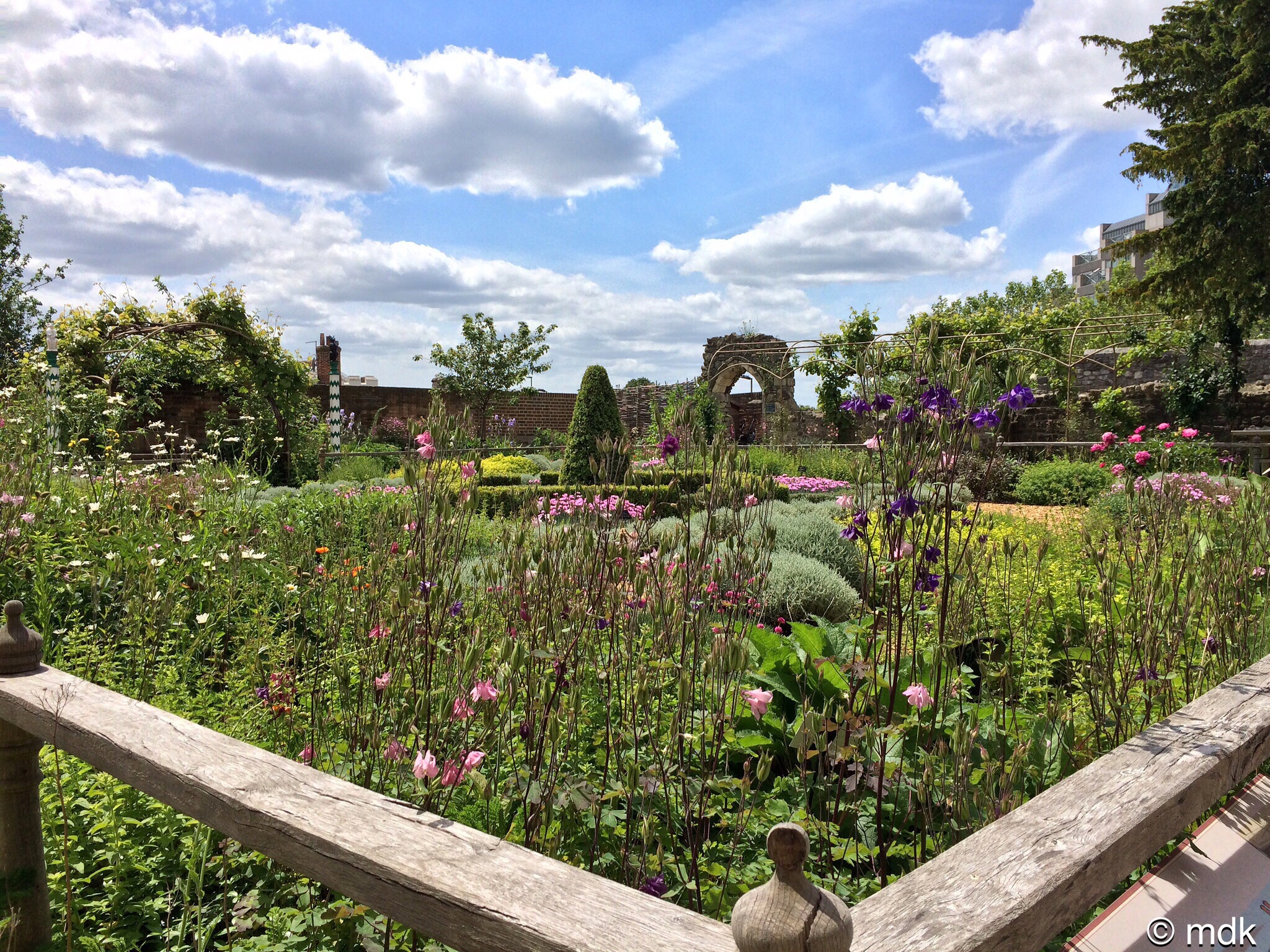
Pretty soon we were sitting at a table with a lovely latte and a cheeky chocolate chip cookie in front of each of us looking out over the lovely garden. Once my coffee and cookie was gone I wandred off to photograph some flowers. CJ trailed behind, looking slightly bored as I pointed out different plants. Unlike me, he doesn’t find foxgloves, aquilegias and borage fascinating although he did like the bees buzzing around them and was impressed when I managed to capture one on camera.

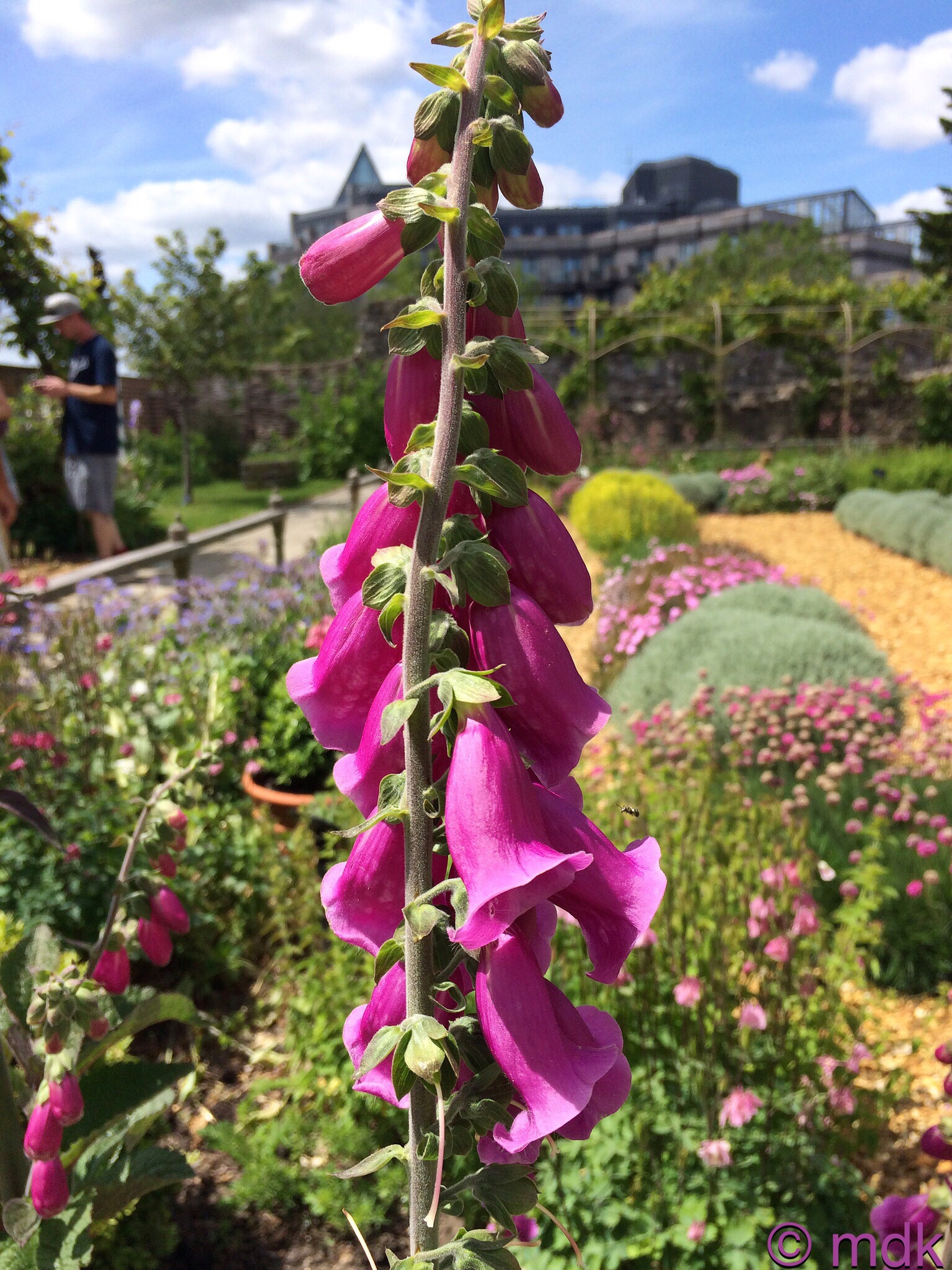
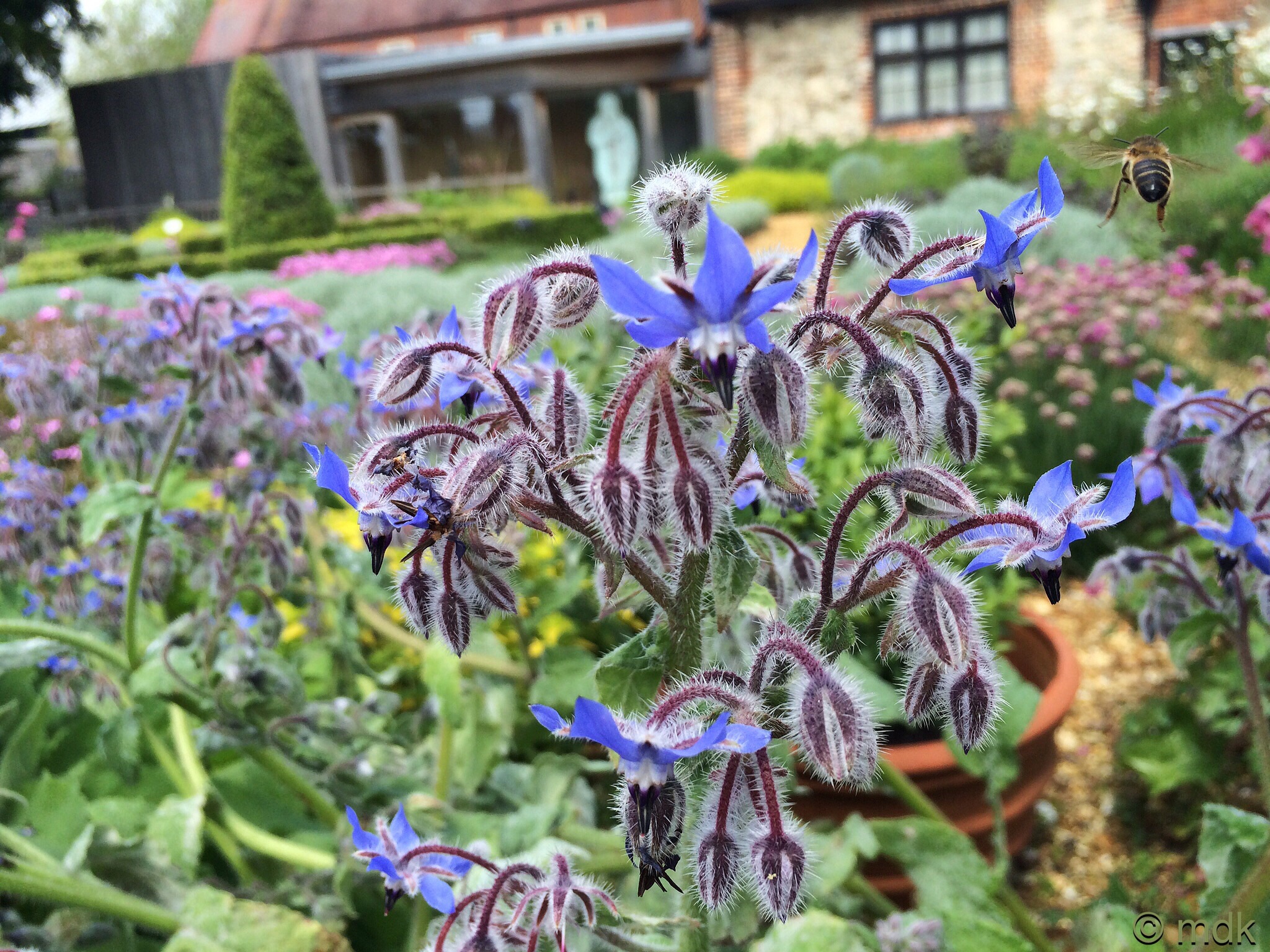
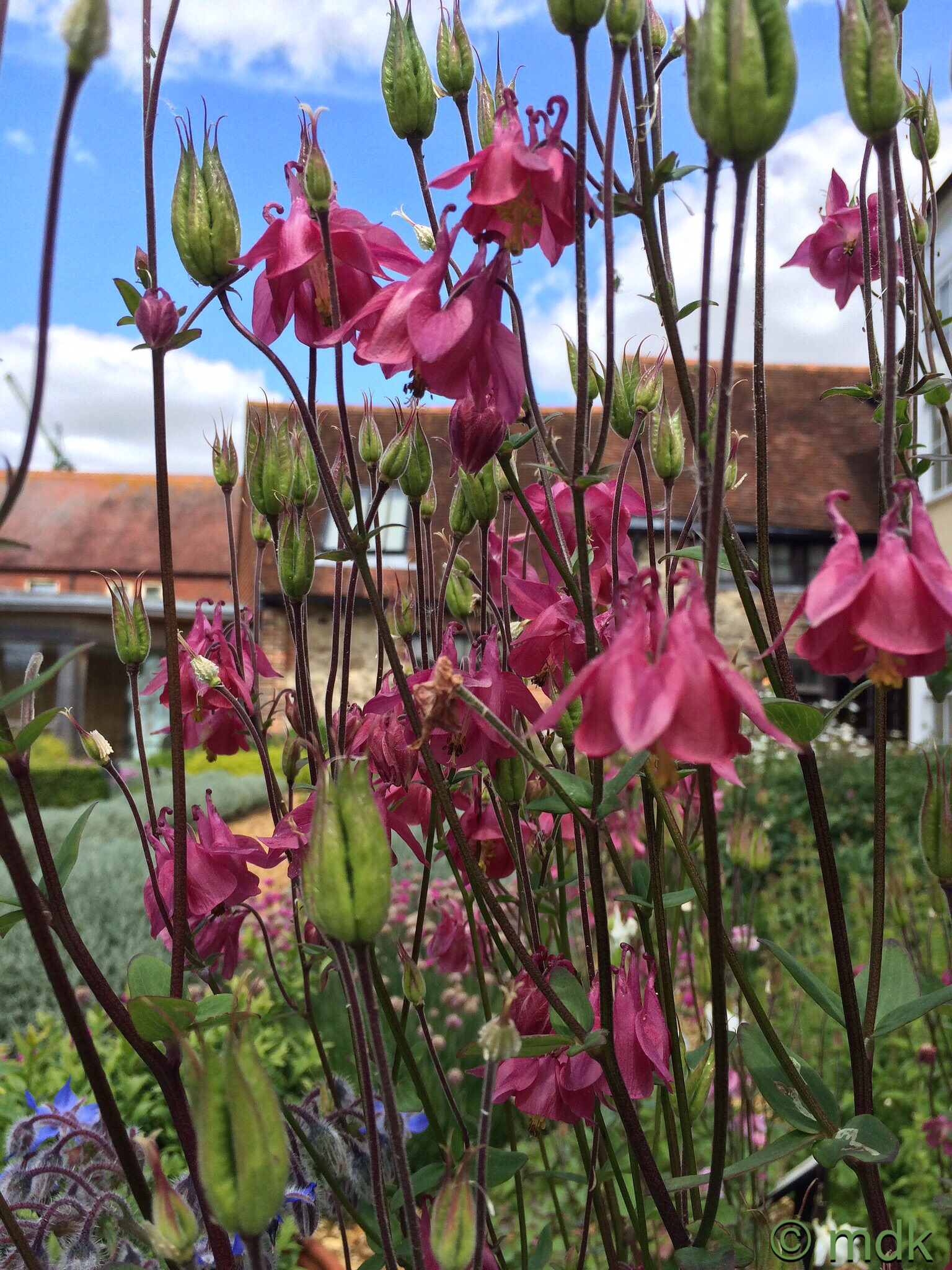
This is not an ordinary garden. It’s a recreation of a fifteenth century Tudor Knot Garden, designed by garden historian Dr Sylvia Landsberg. Although she based the design on manuscripts and other historic sources using period plants, herbs and features, there were no plans or remains from the original garden so this is her impression of what it might have been based on typical gardens of the time. Each plant is carefully labeled and the overall effect is stunning.
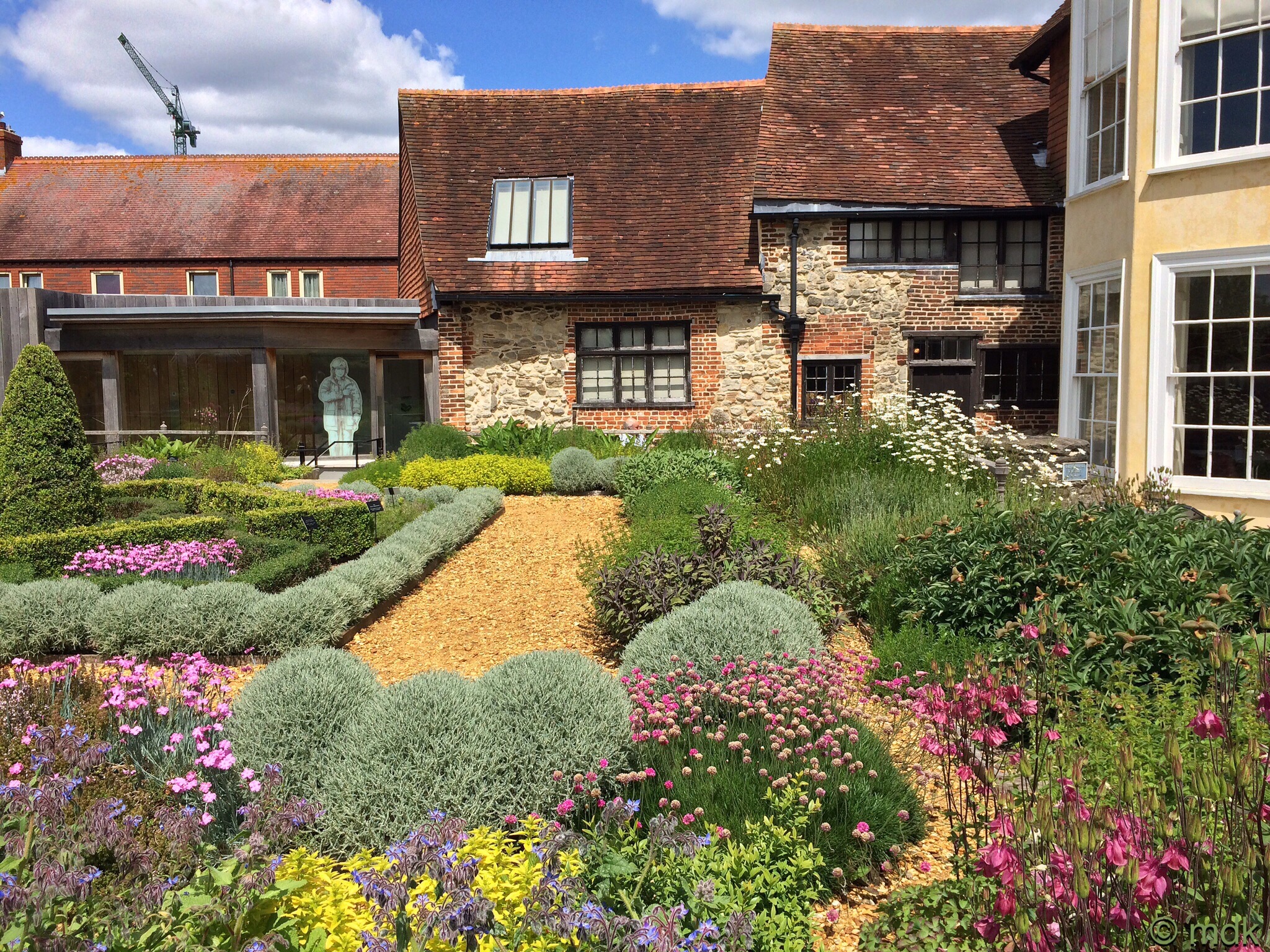

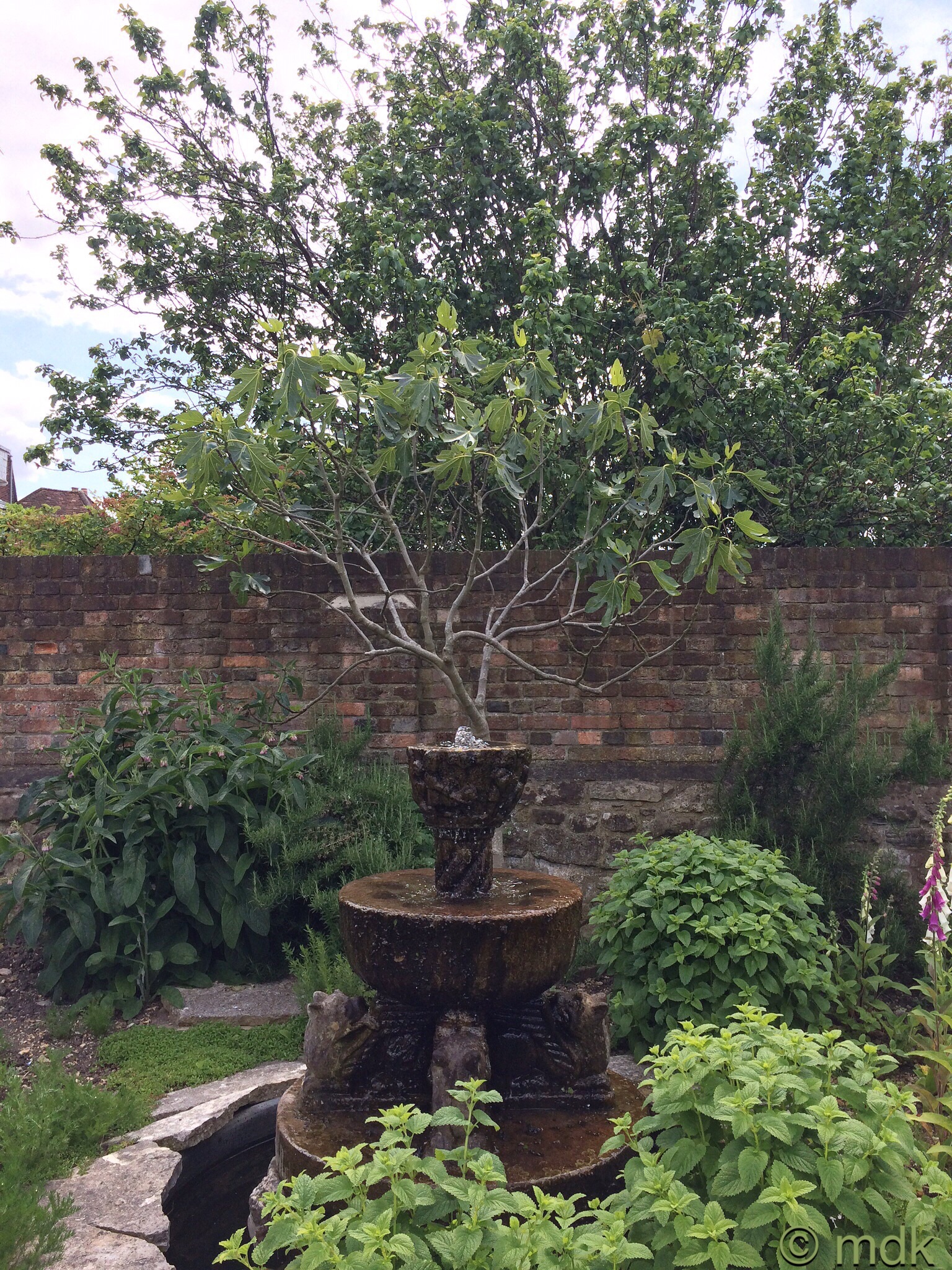
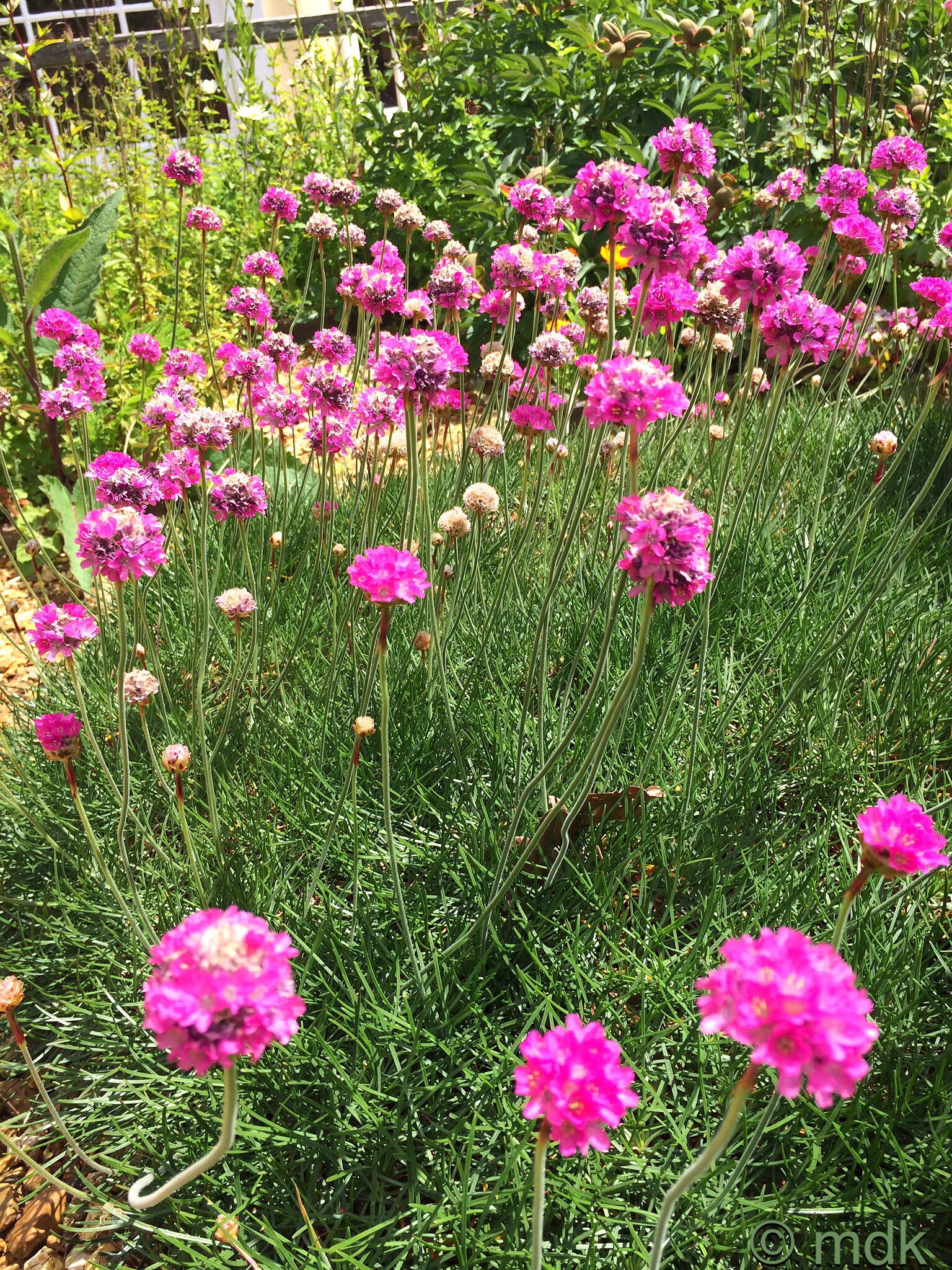
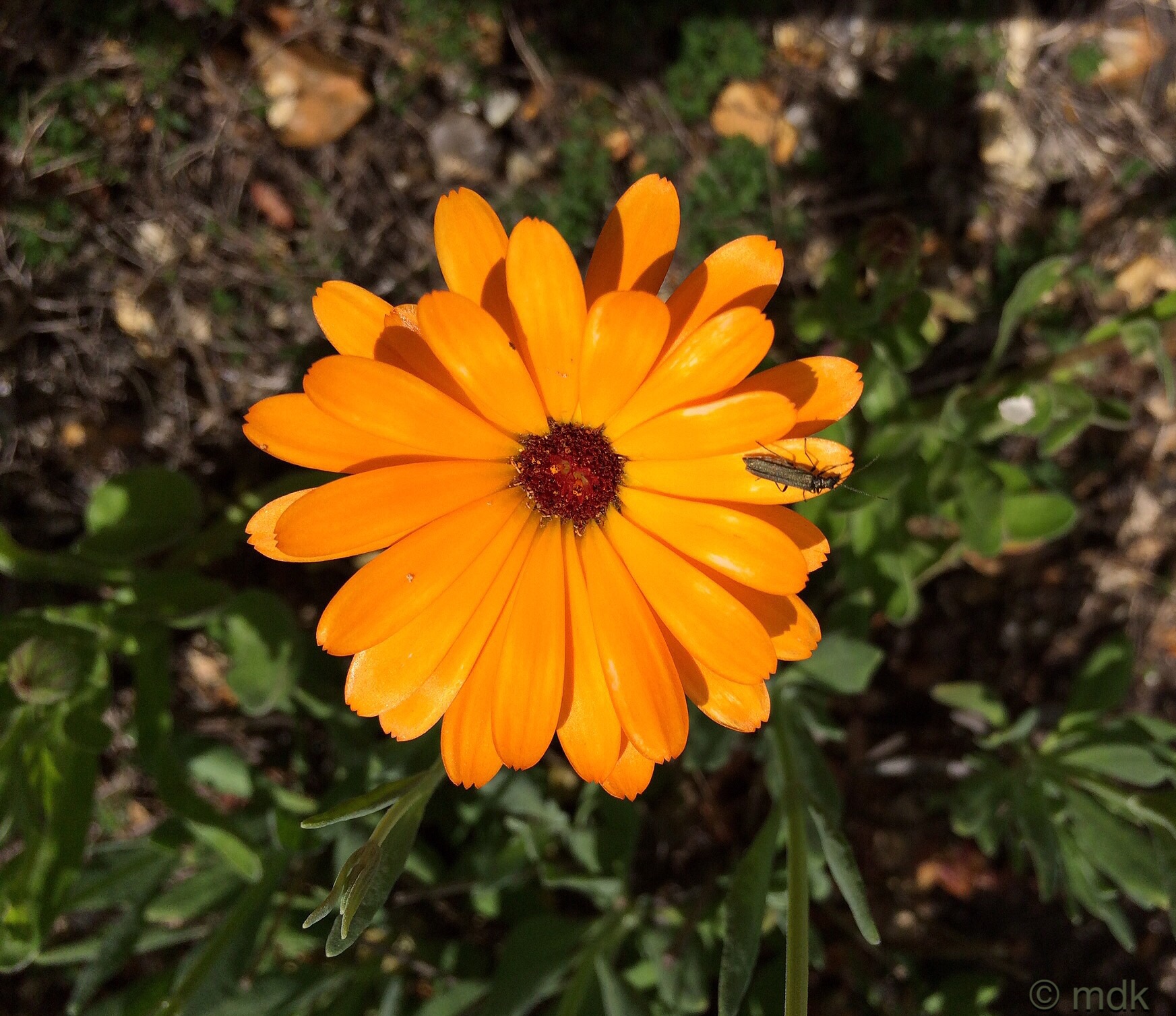
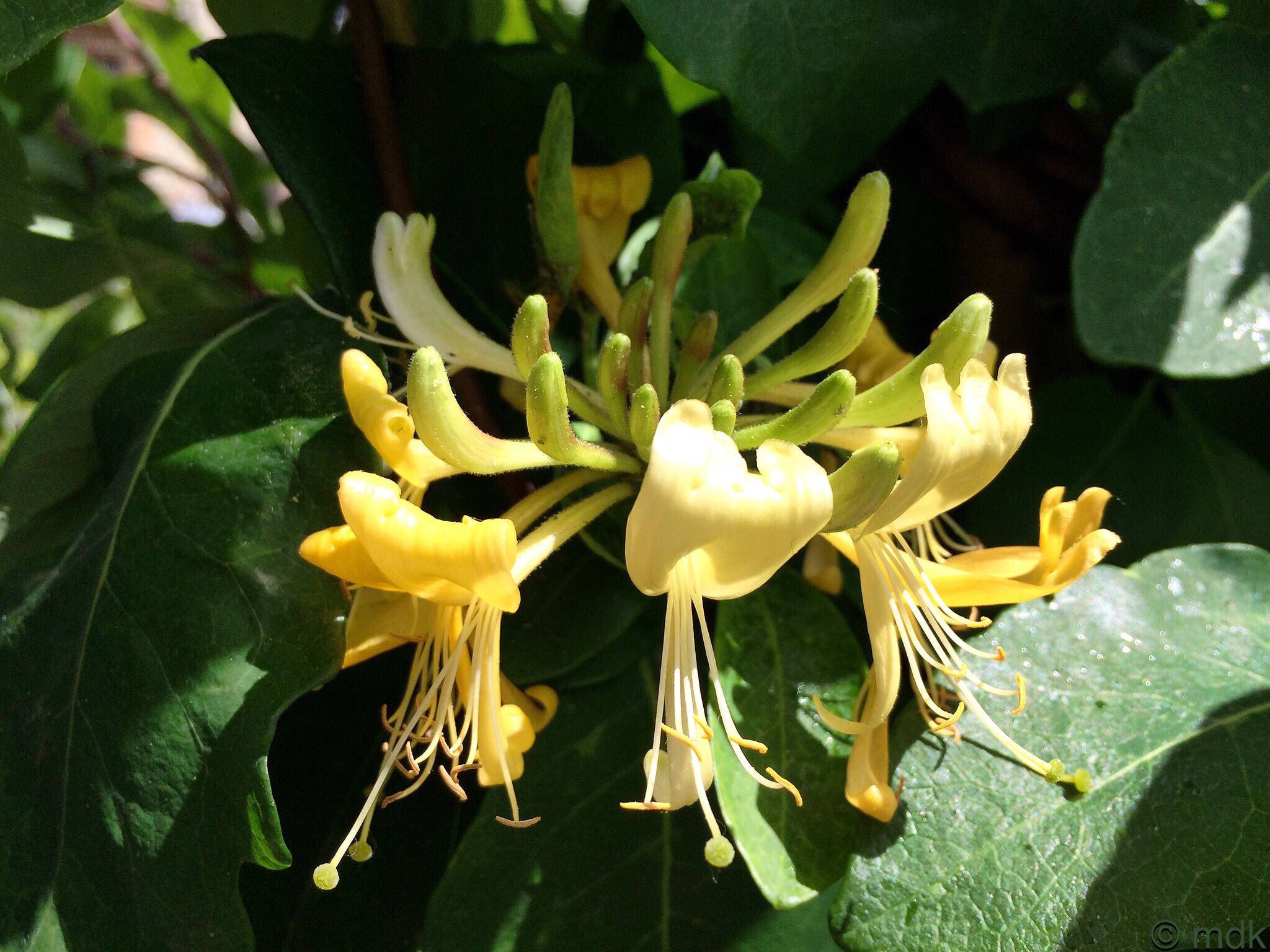
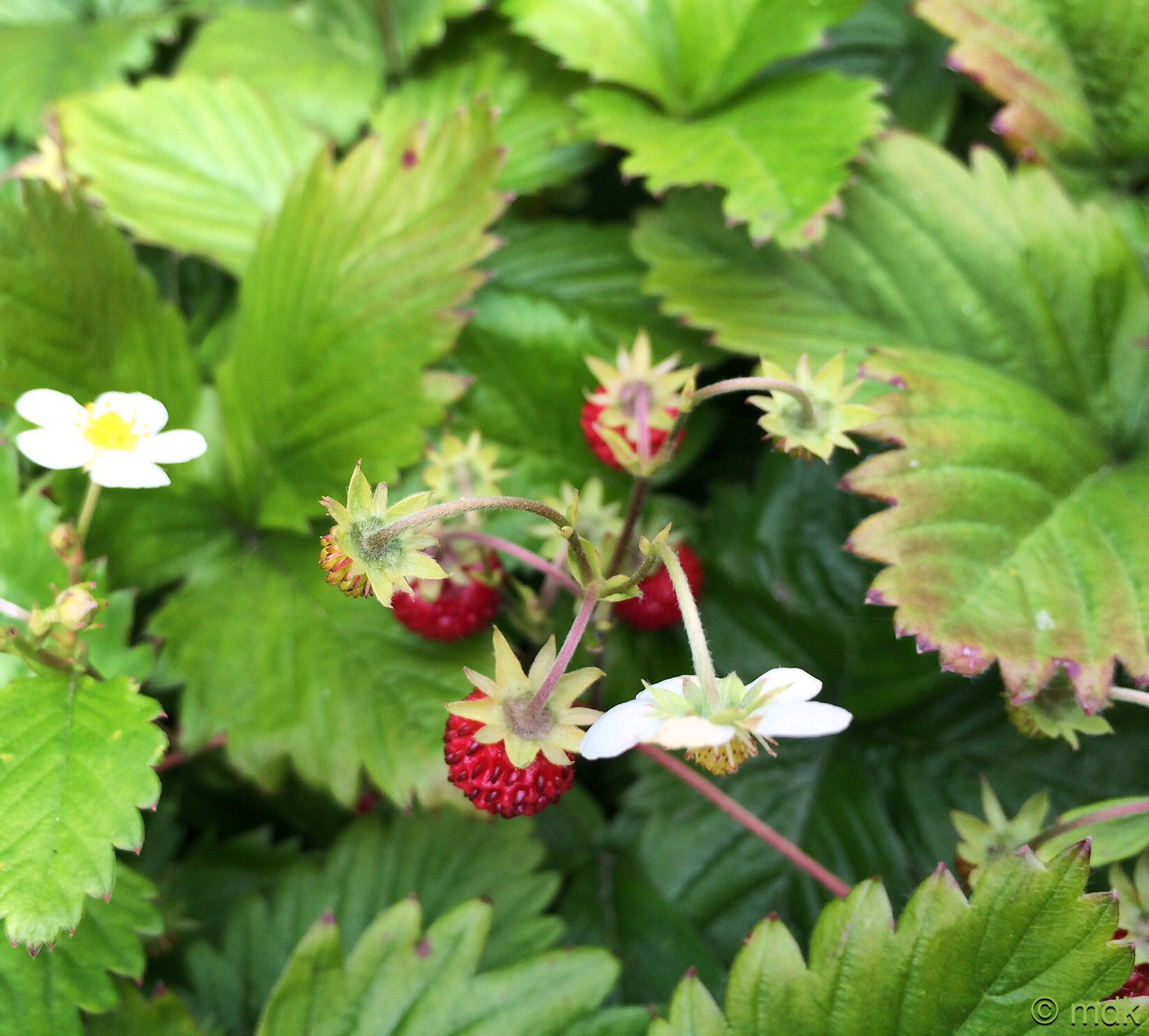
Water tinkled from a fountain shaded by a fig tree and surround by rosemary, foxgloves, lemon balm, mint and what I thnk is comfrey, just about to flower. In the knot garden I pointed out lavender, thyme, sage, thrift, pinks, marigold, honeysuckle and wild strawberries complete with fruit to CJ. He pretended interest he didn’t feel. While I gasped and smiled over blowsy peonies and delicately painted iris he tried not to yawn.


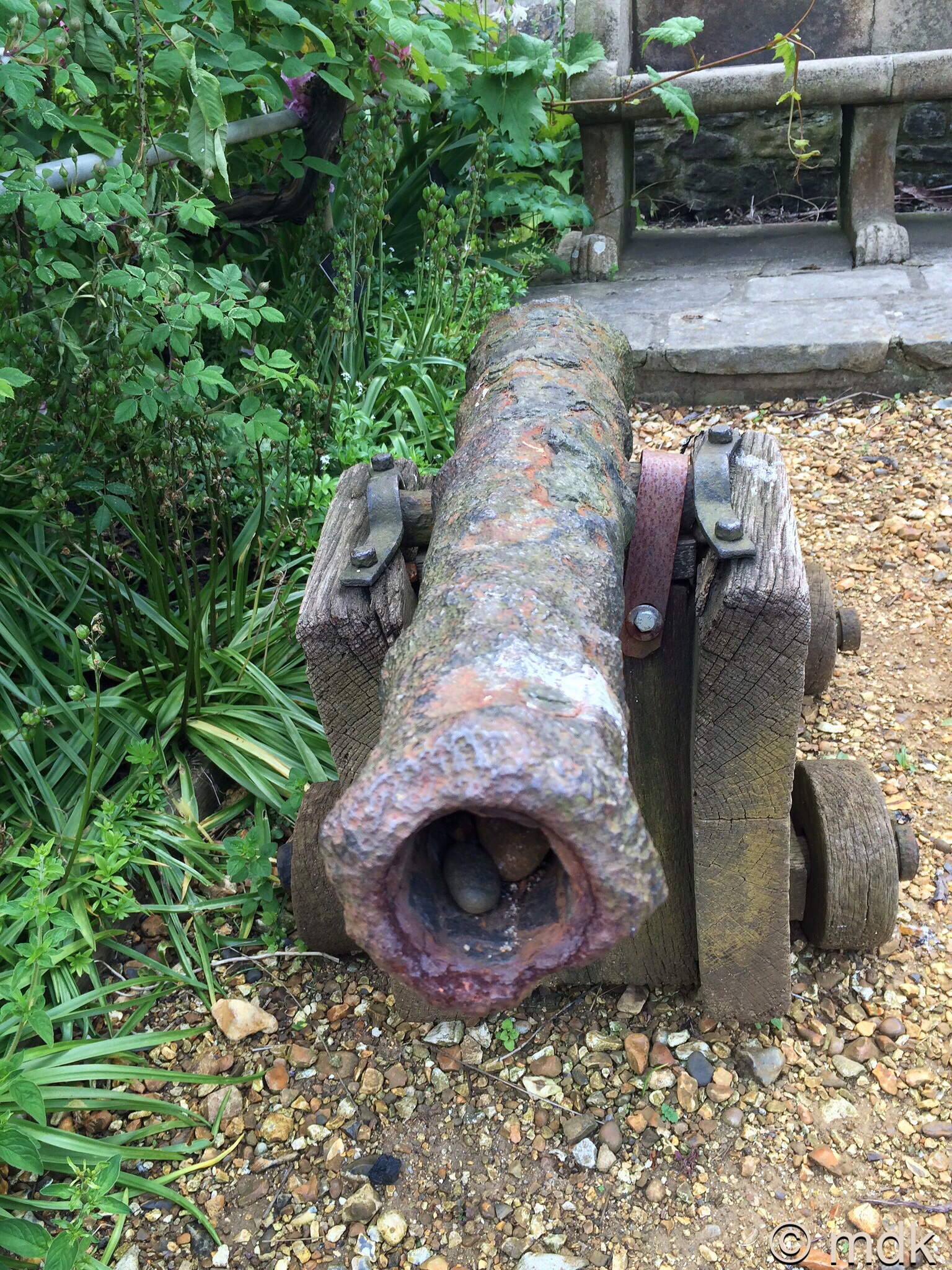
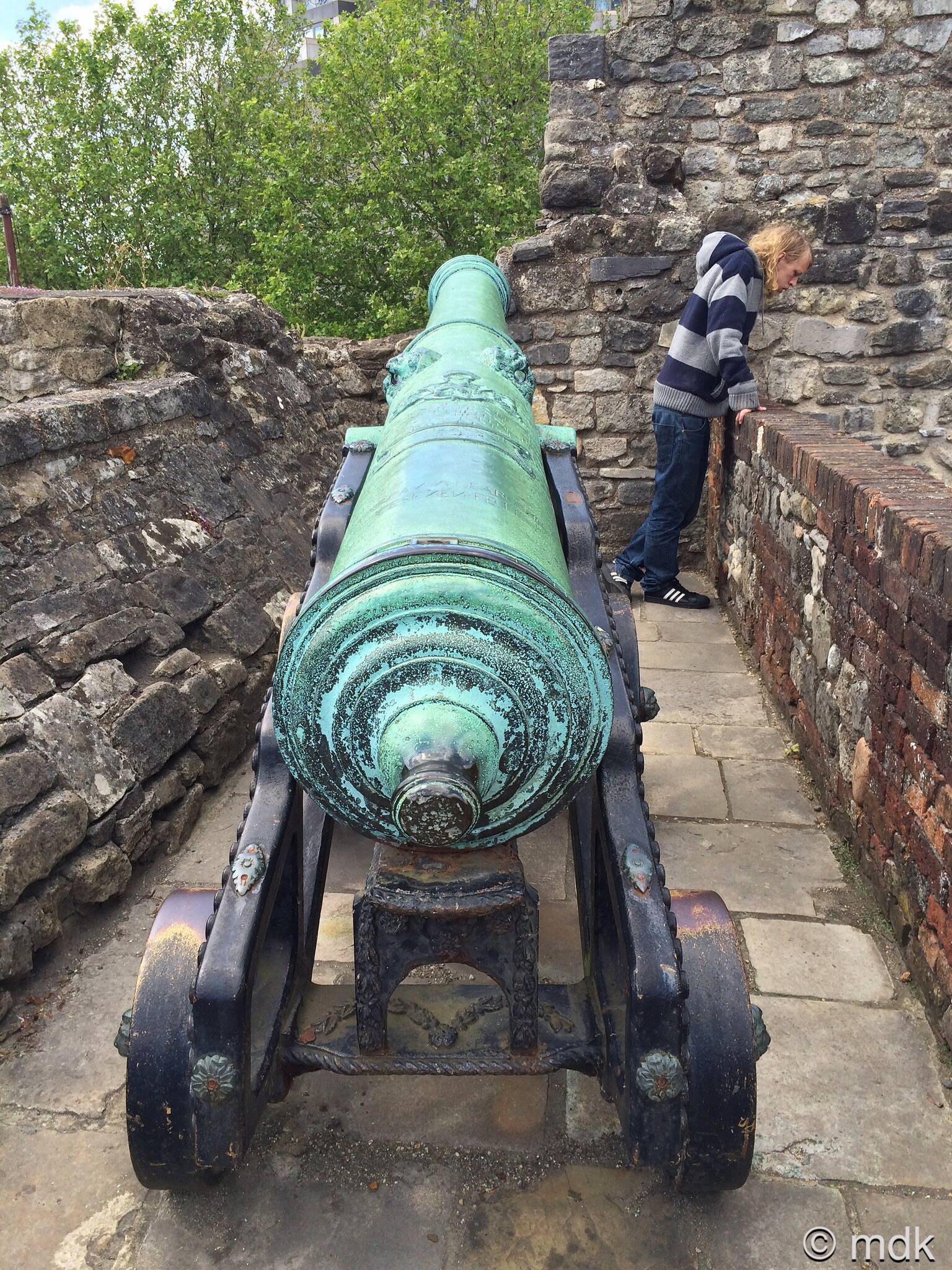
When we came to the arbour, entwined with roses and vines covered in tiny grapes he suddenly perked up. He’d spotted a little cannon. Things that explode are much more his thing. As it happened, I knew where there was a much bigger, better cannon so I led him through the stone arch that was once part of St Deny’s Priory and showed him. Made by Italian, Arcanus Cesena for Henry VIII in 1542, the massive bronze cannon, green with verdigris, was pointed in the general direction of the docks and Marchwood. Beside it on the ground was a huge iron ramrod so heavy CJ couldn’t even lift it. Medieval Cannoneers must have been brawny men for sure.

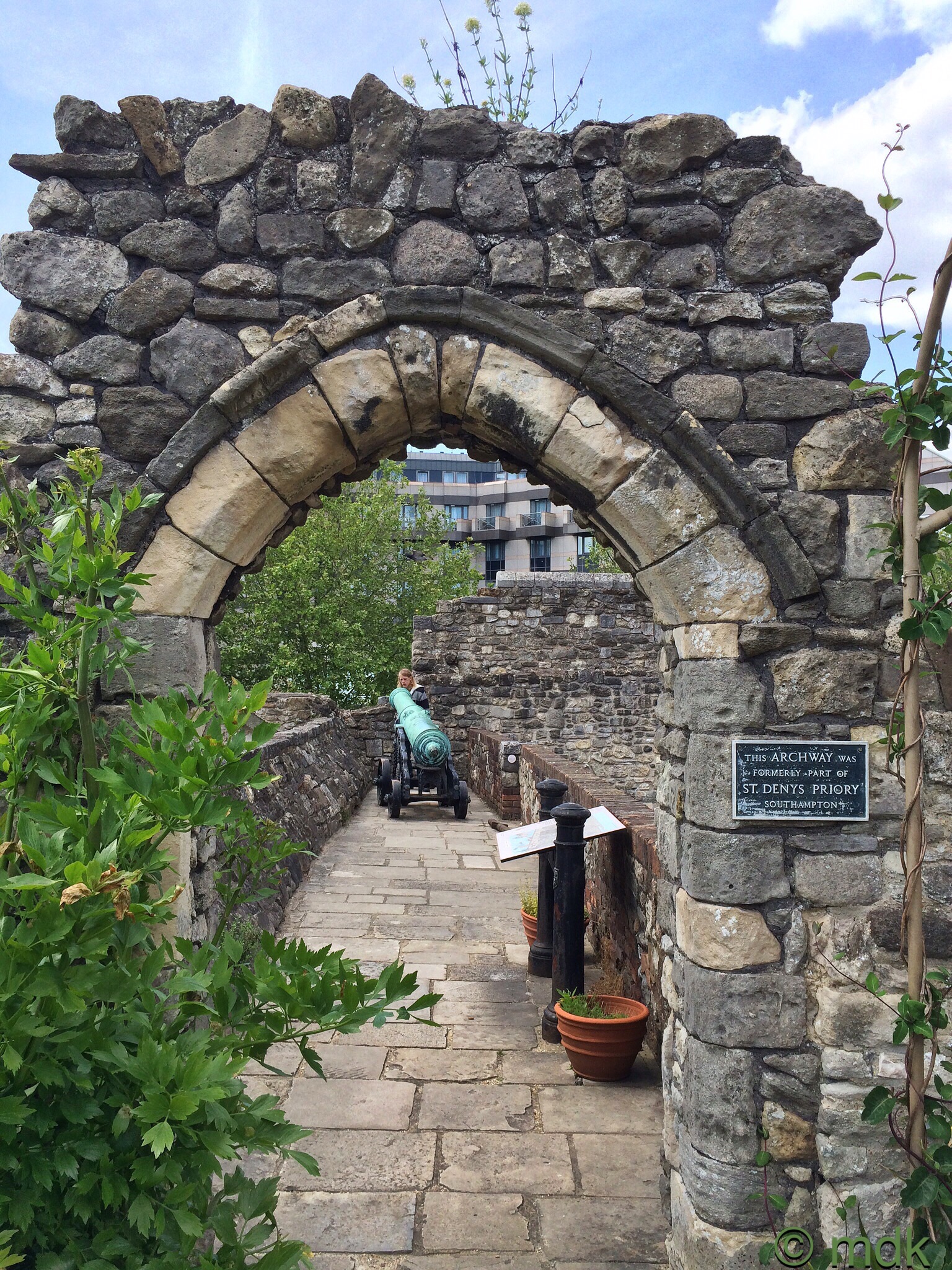


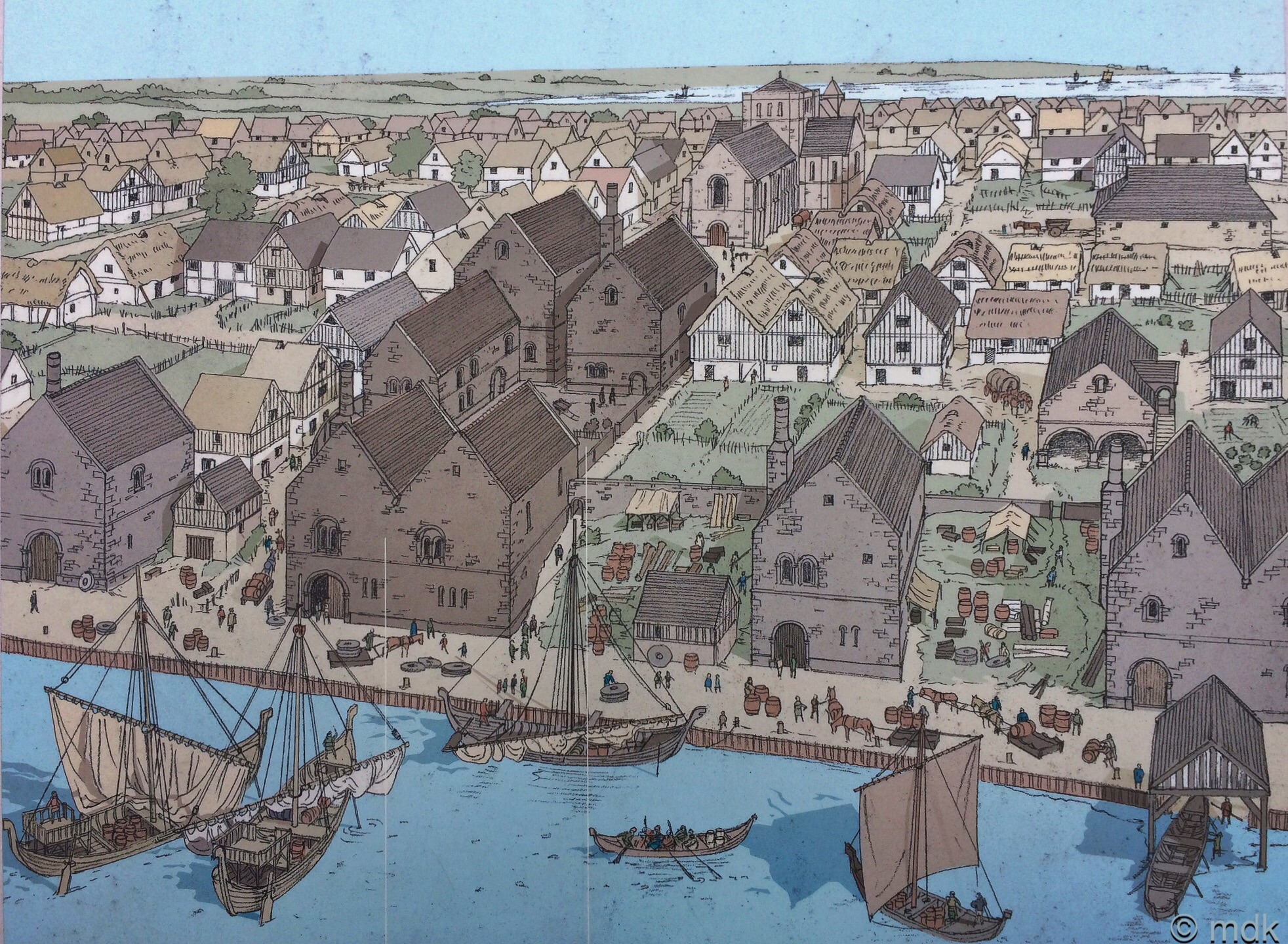
Over the low wall we looked down on King John’s Palace, the ruins of the Norman house dating from around 1170 that may, or may not have once belonged to the king. This was one of the quayside houses incorporated into the town walls in the fourteenth century after the French Raid, when it was owned by Mayor John Wytegod, a wealthy merchant. Tudor House was built on the same plot. The arches leading to the quay were blocked and fitted with some of Britian’s oldest gun ports. CJ wanted a closer look so we left the cannon with a quick stop to look at a wonderful drawing of the old town showing the house as it would once have been and went back through the priory arch.
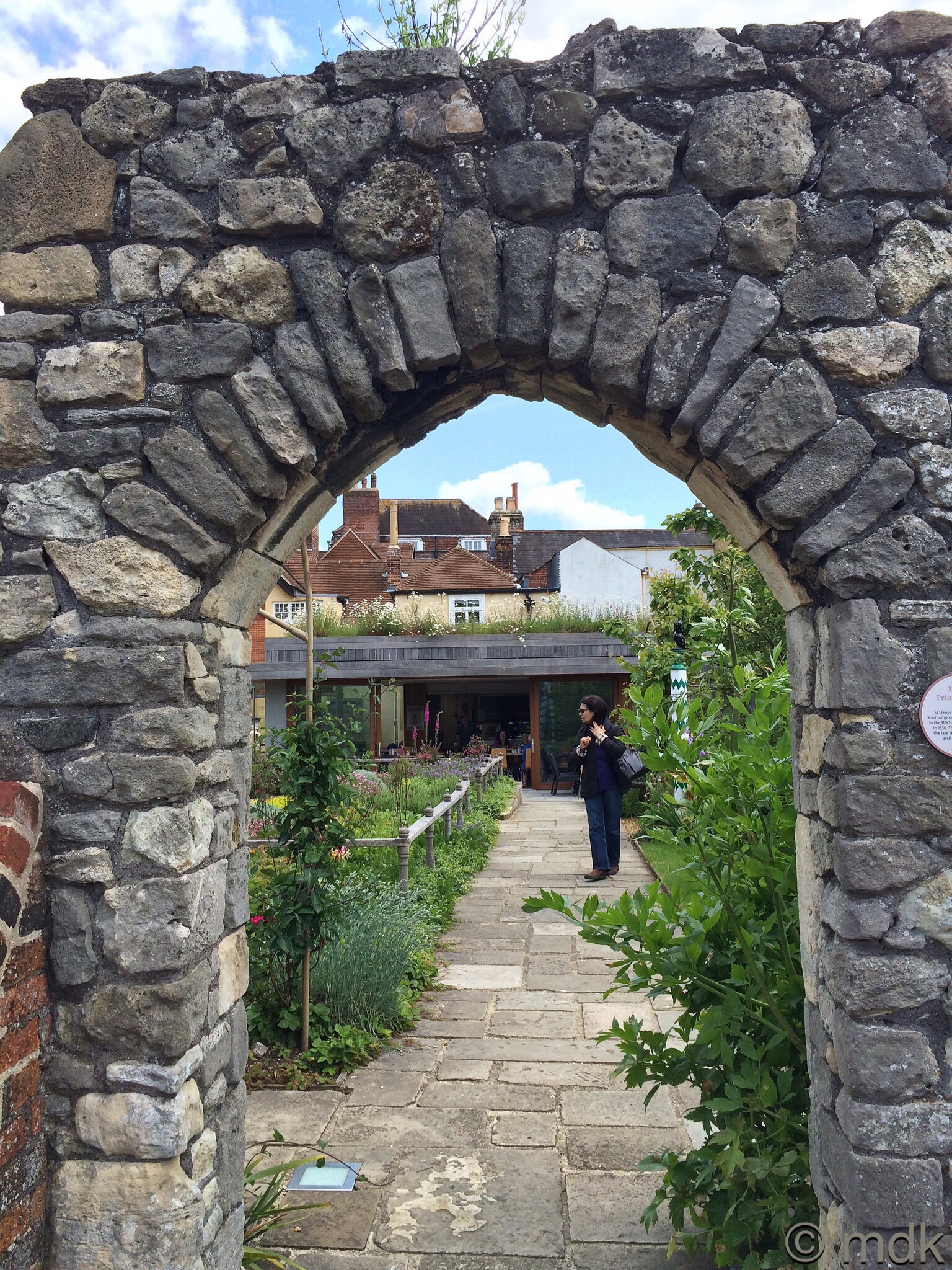
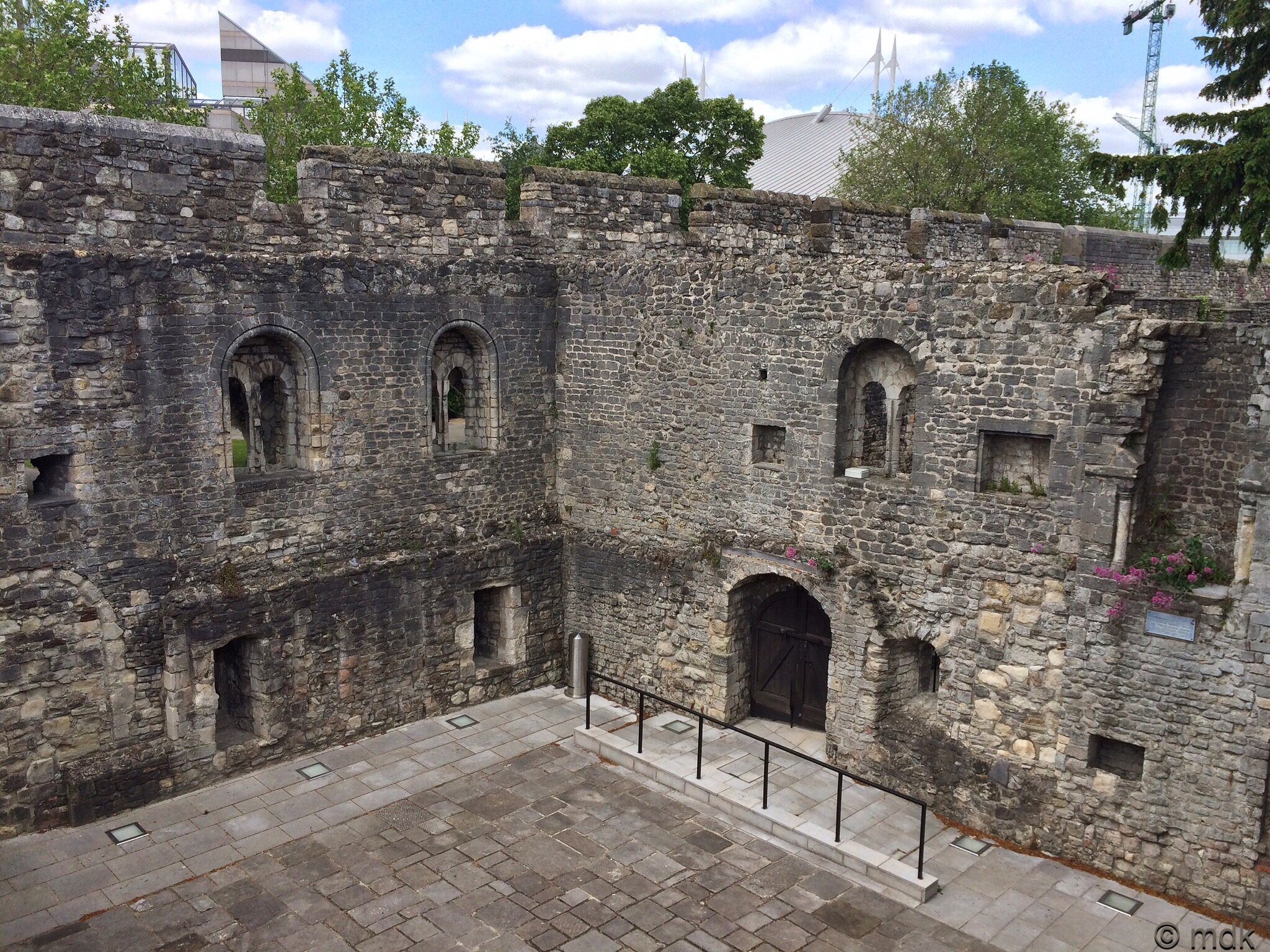
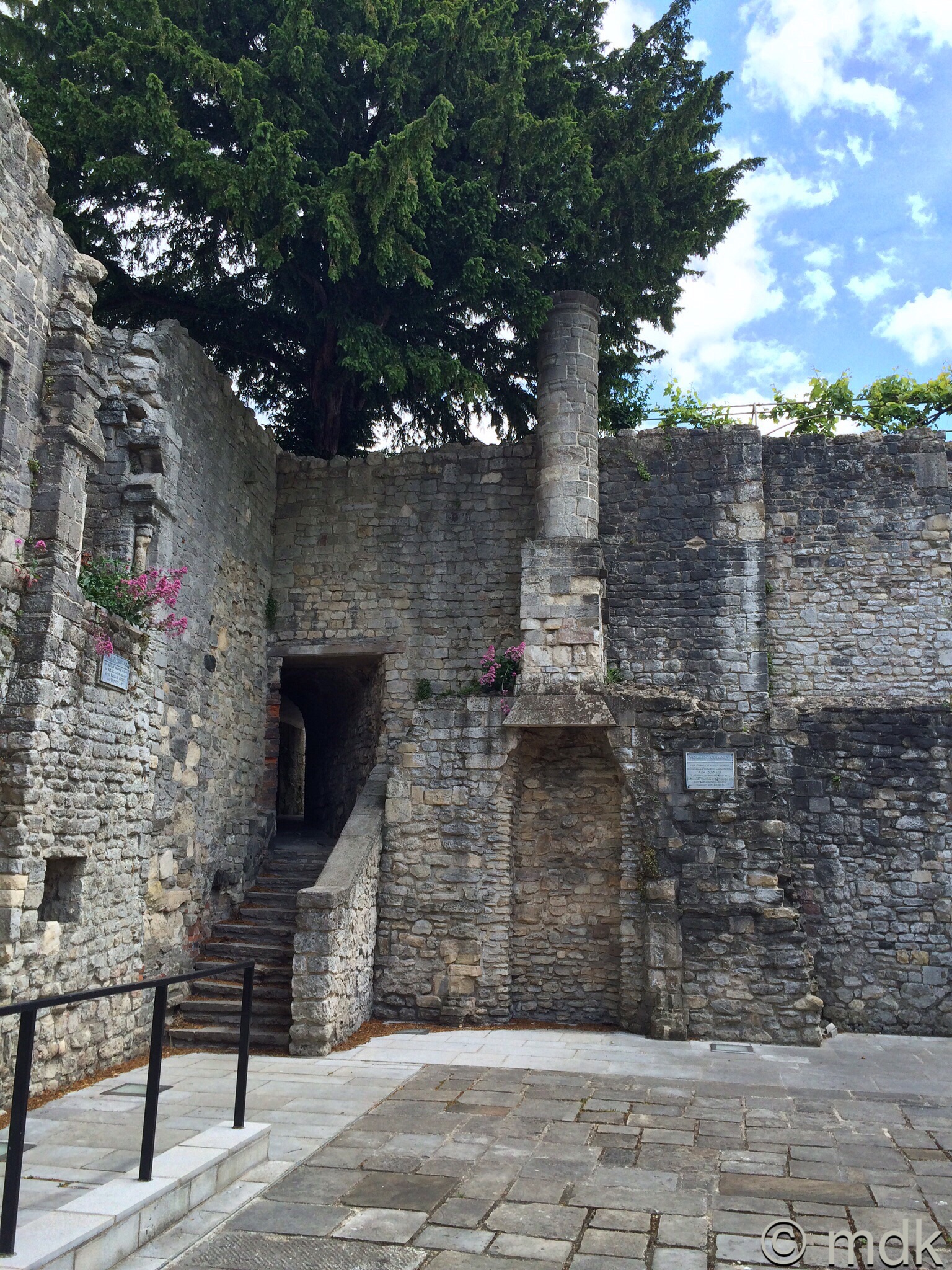
We made our way to the steps with a glance at the top of the tall chimney over the wall and another over the side wall into Blue Anchor Lane. Once this would have been a two story house with the living quarters on the first floor. We walked down the steps into what would once have been another cellar, used to store wine imported from France. In later life the house was used as a stables and, in the early eighteenth century, a coal merchant set up business there. Then, at the beginning of the twentieth century, philanthropist William Spranger, who owned Tudor House, used it as a private museum. This was officially the first museum in the city. At some point in the early 1900’s the roof was removed leaving it as it is today.
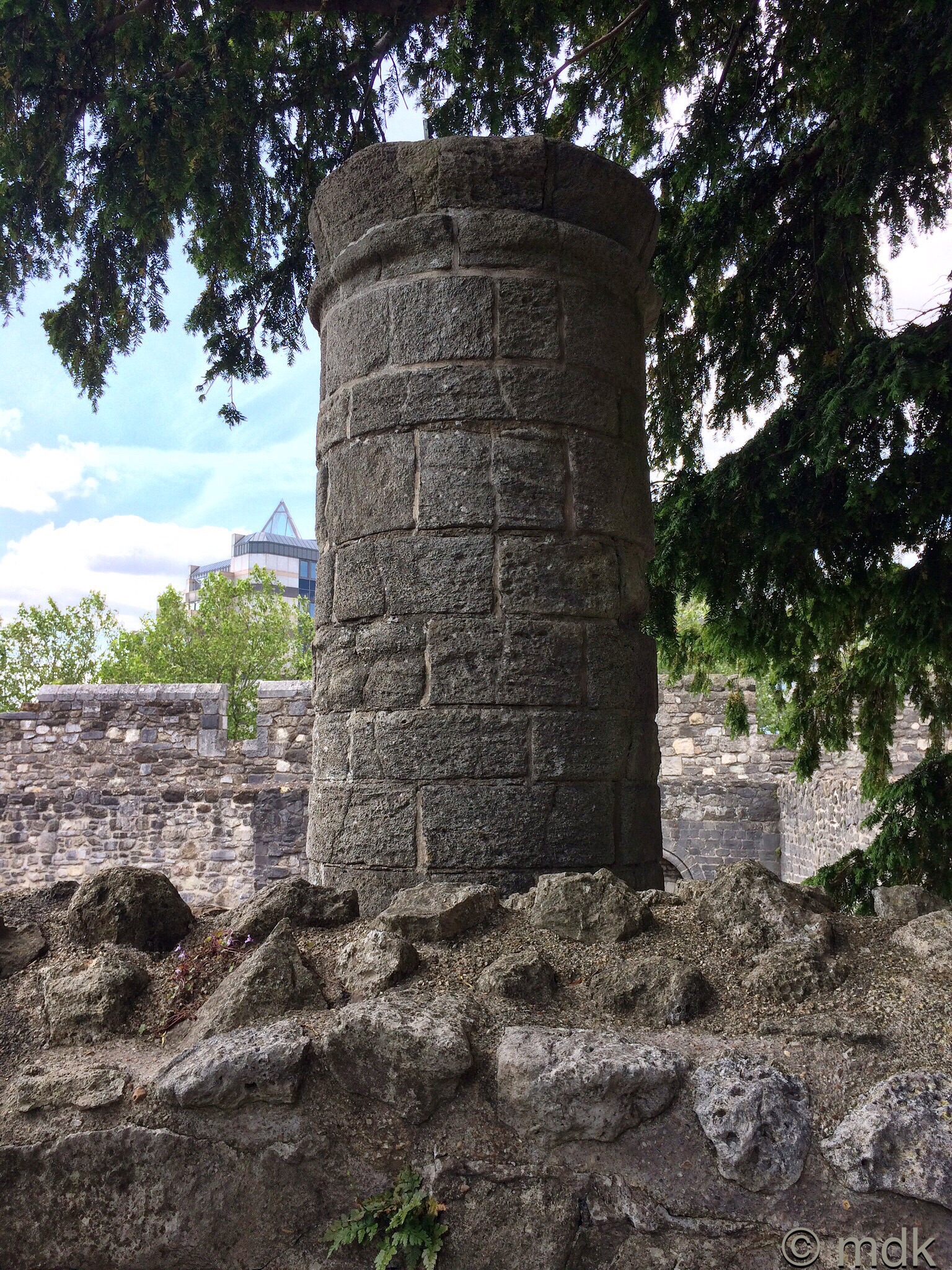
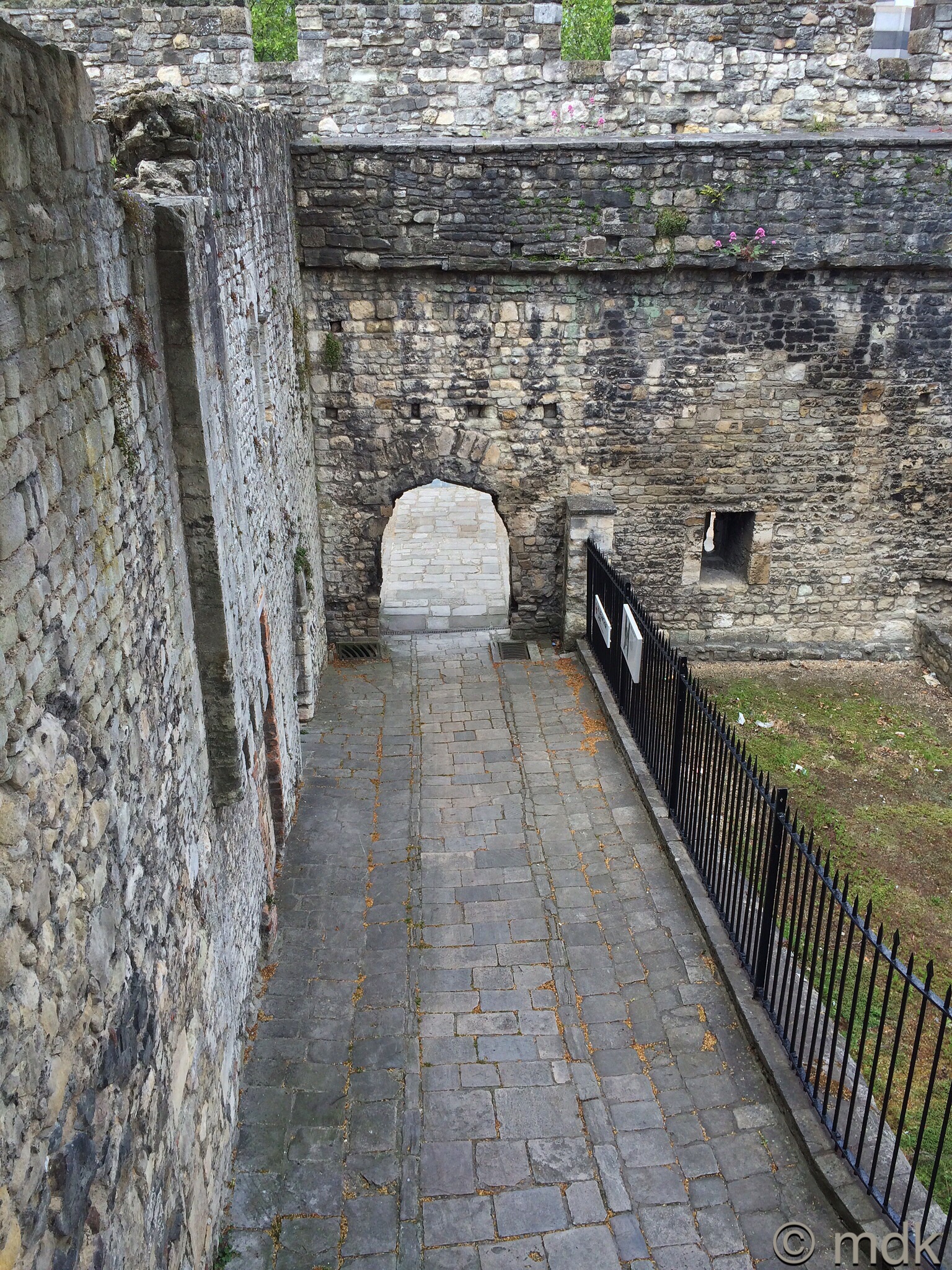
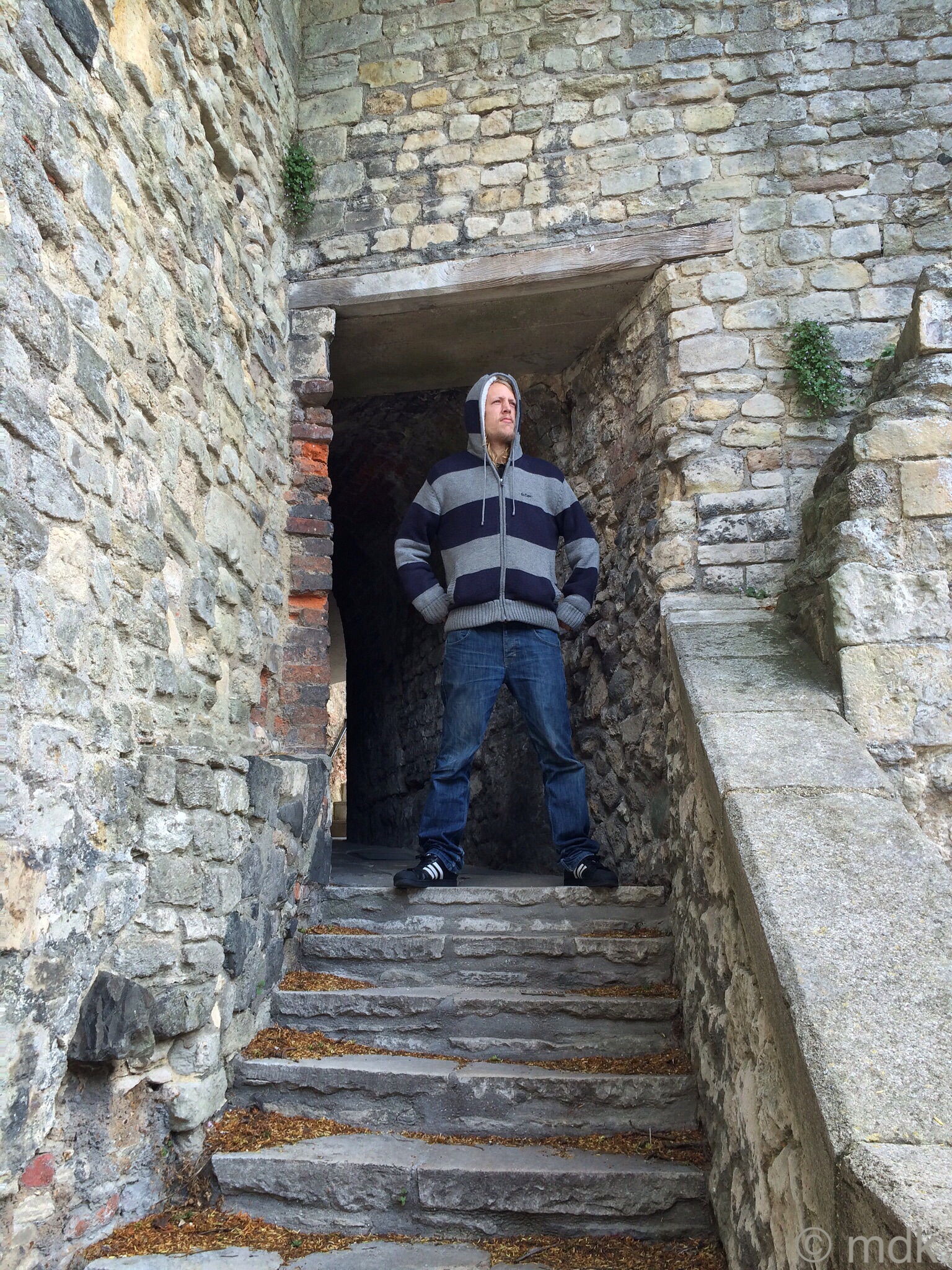
The ground floor windows were small to deter thieves but the larger windows of the upper floor were larger, double lighted and arched. We walked around trying hard to imagine what it must have been like. Looking up we could see the fire place on the first floor, complete with a growth of pink wild flowers too far away to identify, and the remains of the fireplace on the ground floor. Surprisingly, the tall chimney was not an original feature. It was moved here from a thirteenth century building on the High Street but it does fit in well.


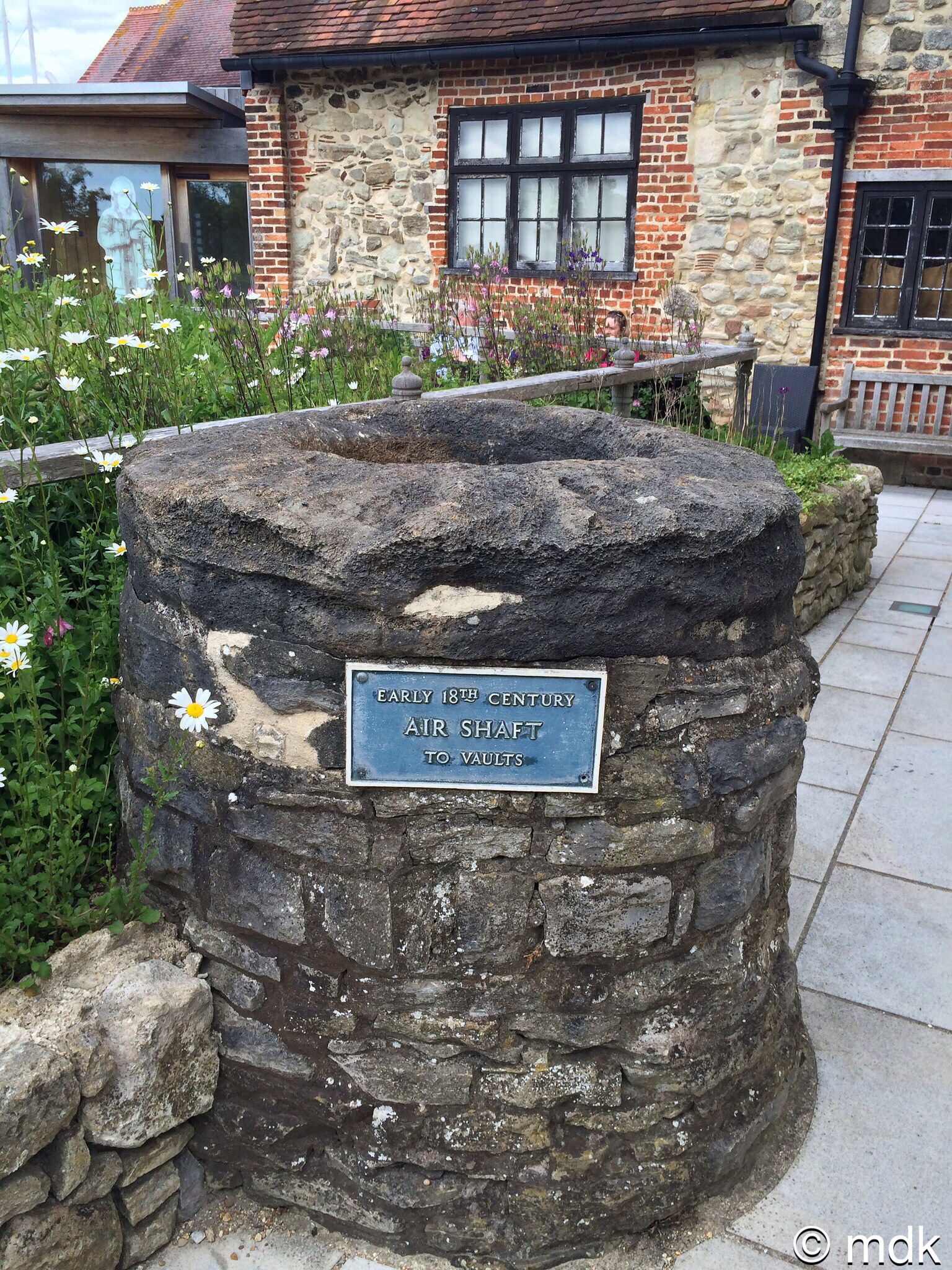
We hadn’t paid for the tour of the house and we’d long ago finished our coffee so it was time to go. As we made our way back to the cafe doors we stumbled upon what looked like an interesting stone well. The label told us it was actually an air shaft for the vaults. Strangely, I didn’t remember any vaults from my previous visit. With one last look at the beautiful gardens we went inside.
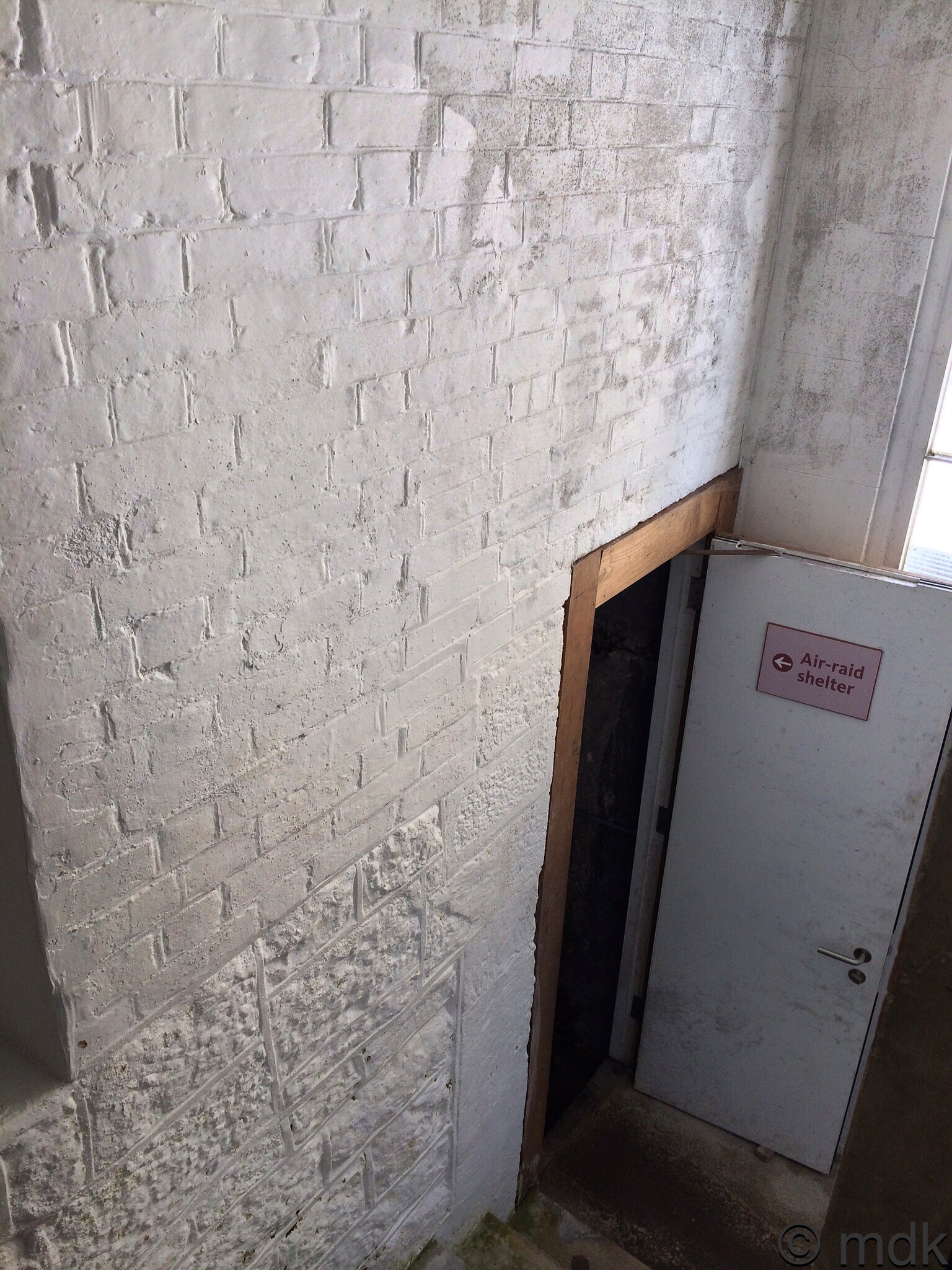
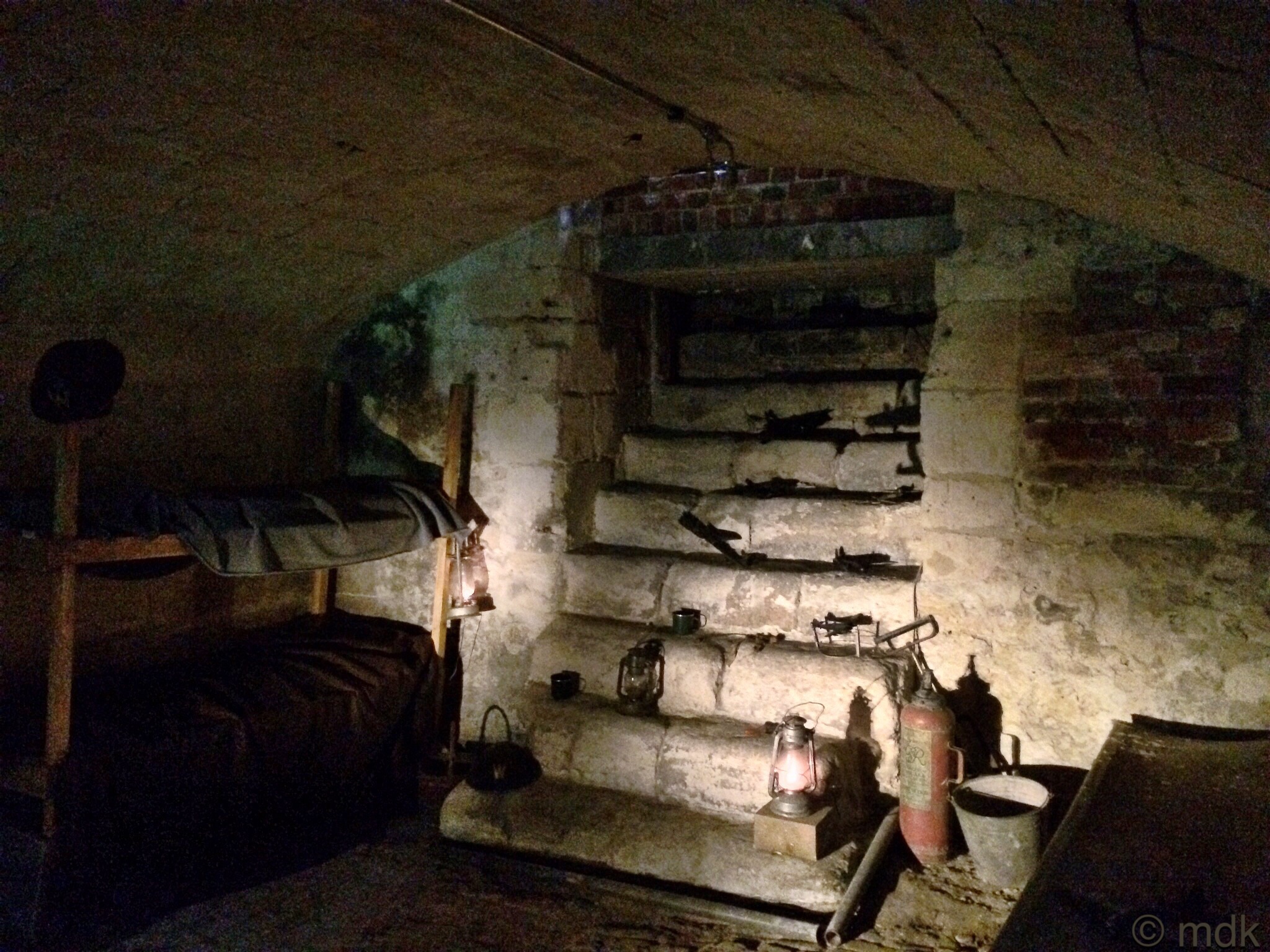
On the way to the exit CJ spotted a little door at the bottom of some stairs with a sign saying Air Raid Shelter. We didn’t know if we were really allowed to go down there but we couldn’t help ourselves. There was no one about so, feeling a little guilty, we climbed down the stairs and entered. Maybe these were the vaults.
What happened next was one of the most chillingly interesting experiences I’ve ever had. We entered a small cellar set up as a war time air raid shelter with bunks, lamps, buckets, fire extinguishers an air raid warden’s hat and even some toy spitfires. The light was dim with long shadows on the walls. Suddenly, there were disembodied voices. We’d obviously triggered some kind of motion sensor and set off a tape recording.
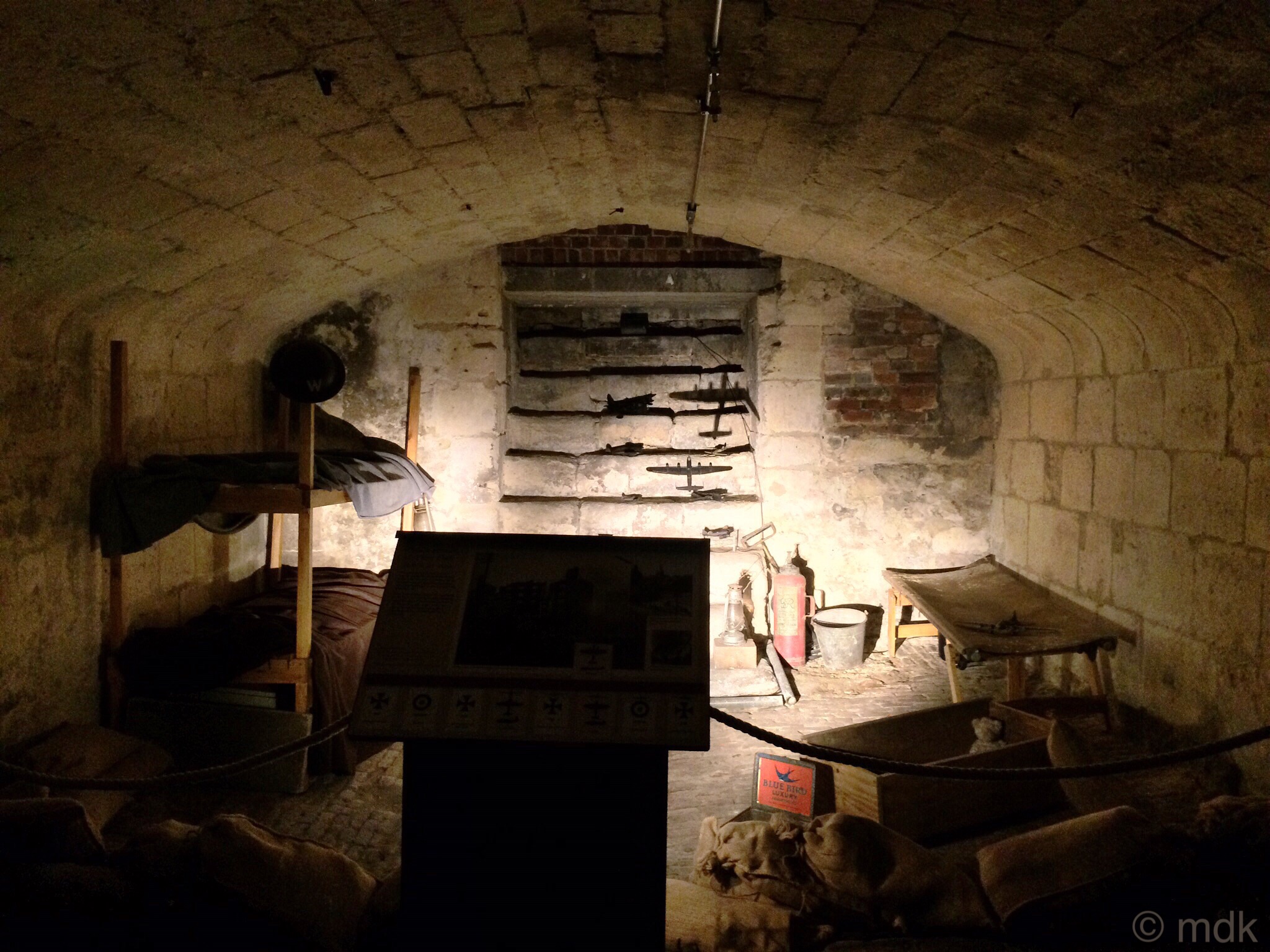
We stood enthralled as the sounds of a family settling into the shelter for the night played out around us. The father was reassuring, cheerful even, the mother was quiet. The lamps came on, we heard the creak of the bunk, a little family chit chat…then the bombs began to fall. Ominous booms in the distance, one after another. When they got louder, the family began to sing.
There’ll be bluebirds over
The white cliffs of Dover,
Tomorrow, just you wait and see.

With every bomb the light seemed to flicker and I caught myself thinking what it must have been like to be down there not kowing where they were falling, what kind of town would be outside when you walked out of the shelter… if you walked out of the shelter… There were so many bombs falling I knew this must be the terrible night of 30 November 1940. Neither of us had spoken since the voices began and I was just about to whisper this to CJ when there was the most terrible explosion, I swear the room shook. I almost jumped out of my skin and gripped at CJ’s arm. I may even have screamed a little.
Finally, it was over. It honestly felt as if we’d been there in that shelter with bombs really falling. So much so I was wondering what we’d find when we went back up the stairs. As we went to leave, a woman and child came down the stairs, they were speaking in German and I wondered what they’d make of it.

What a day it had turned out to be. There may not have been much in the way of actual walking because of my poor toe but there’d been vaults, beautiful gardens, ruins and, finally, an air riad. What more could I ask from a day?
That air raid experience sounds really true to life.
It felt as though it was and certainly made me appreciate what it must have been like.
Really enjoyed this post Marie, especially the air raid shelter.
Thank you Pat. The air raid shelter was an pleasant surprise and a really eye opening experience.
Steeped in history is what I imagine you must have felt like. I can’t imagine how terrifying it must have been when those bombs were falling, not knowing if you would even have a house left when it was over. It must be just about the most stressful thing a human being could ever go through, especially with children involved.
From the stories mother told me I knew it was terrifying but that shelter really brought it home to me. I’m not sure I’d have coped as well as they did.
I like the coffee shop at the TH, they do lovely cakes in there. Once there was a wedding party having their photos taken in the garden whilst we were there, lovely venue for that.
I know exactly what you mean about the air raid shelter, it is quite unnerving when the ‘voices’ start and then the noise of the bombs, sent shivers down my spine when we were down there.
Lisa x
When we went for our tour there was a wedding going on. It must be a lovely setting for wedding photos. That shelter though, it really made the whole day for me.
What a cool place! Coffee with a side of air raid. I can’t imagine what it must have been like, not knowing what the outside world would be when you emerged.
It’s a great museum with so much to offer. The air raid shelter really brought it home to me who hard life must have been back then. I’m not sure how they loved that way for so long.