
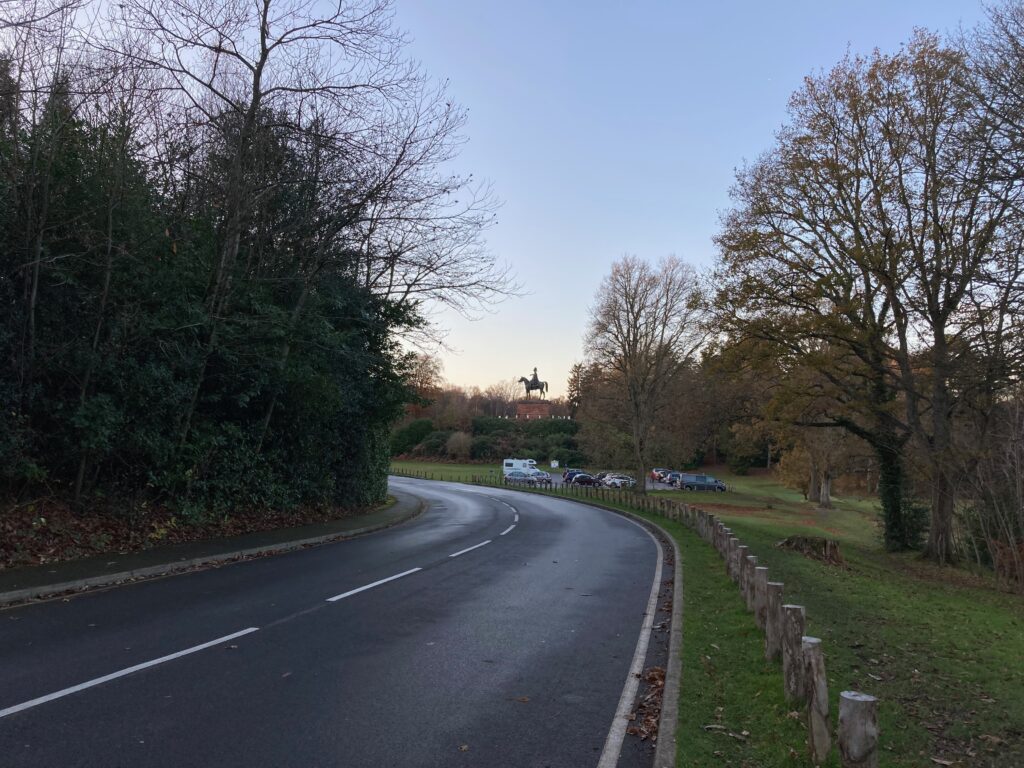
December 2021 brought a new COVID variant, Omicron and a two race weekend. The former didn’t sound like too much of a worry, all the reports said it was mild, more a sniffly cold than anything. The latter was a different matter. The first of the races, on Saturday 4 December, was a Hampshire Cross Country event in Aldershot, forty odd miles from home. Predictably, we got a bit lost. Things in the car got fraught and we arrived cross and later than planned. There was a rather interesting looking statue on the opposite side of the car park but the women’s race was about to start so there was no time to have a proper look at it.
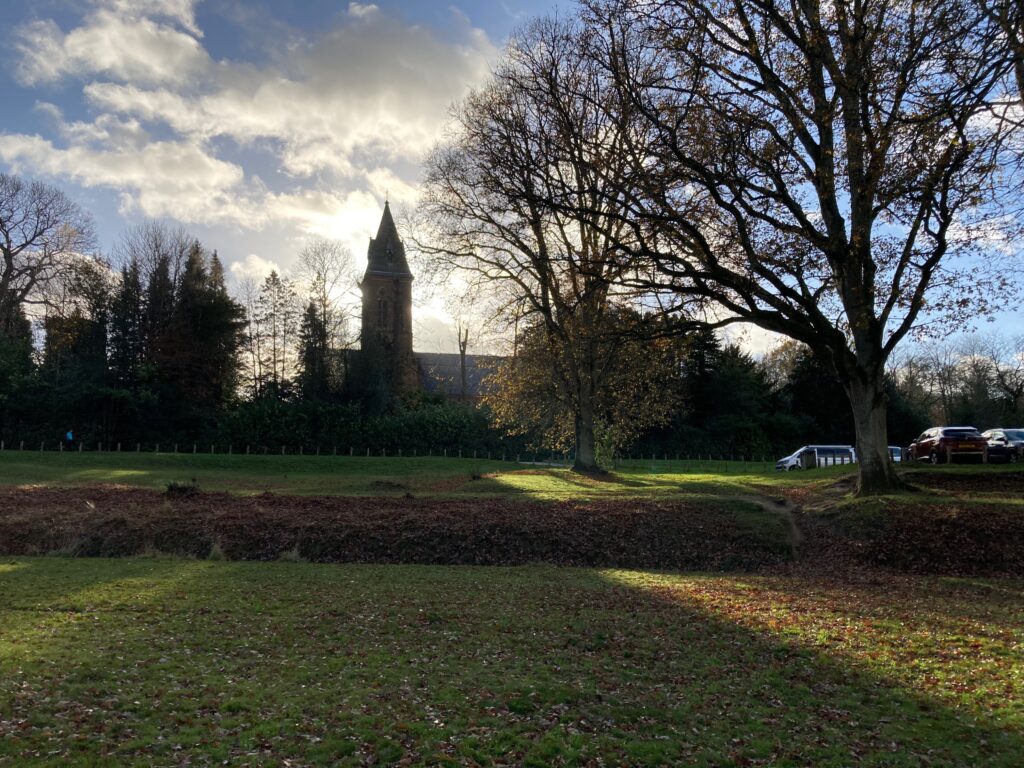
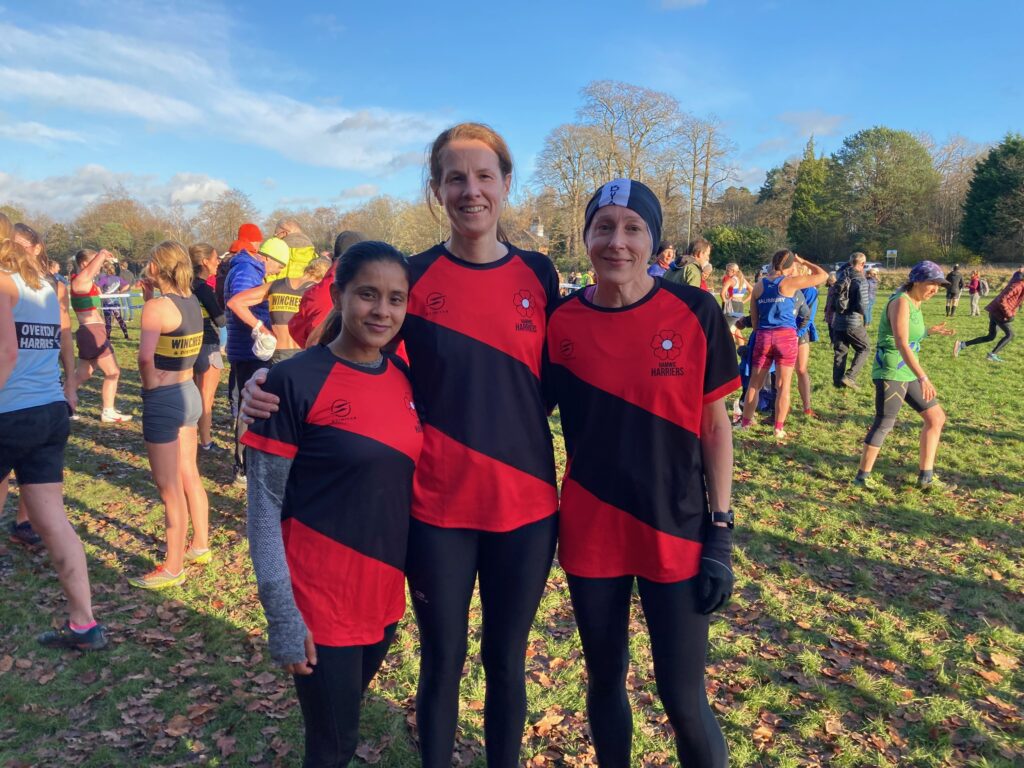
There was also an intriguing church silhouetted against the low autumn sun. It looked like just the kind of place I’d enjoy exploring, but of course, I was there to take photos of runners, not go for a walk. By the time we’d traipsed across the squelchy grass to the start line, the Hamwic ladies were already running. Luckily, I did manage to catch them at the finish line and get a swift team photo before the men’s race began.
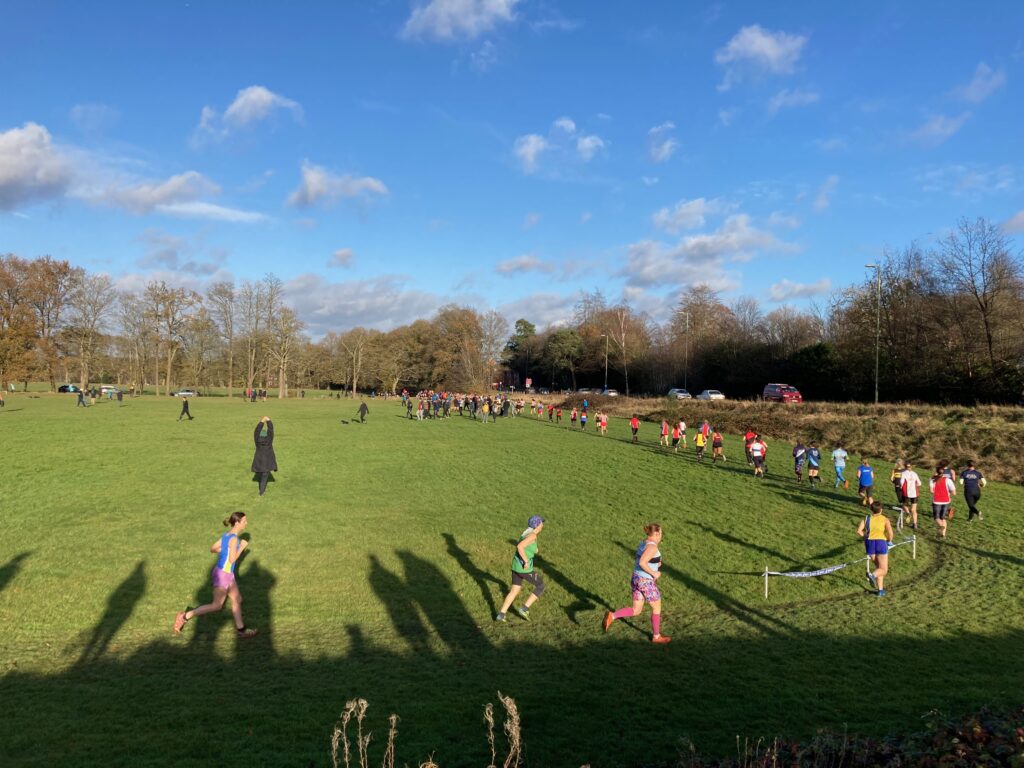
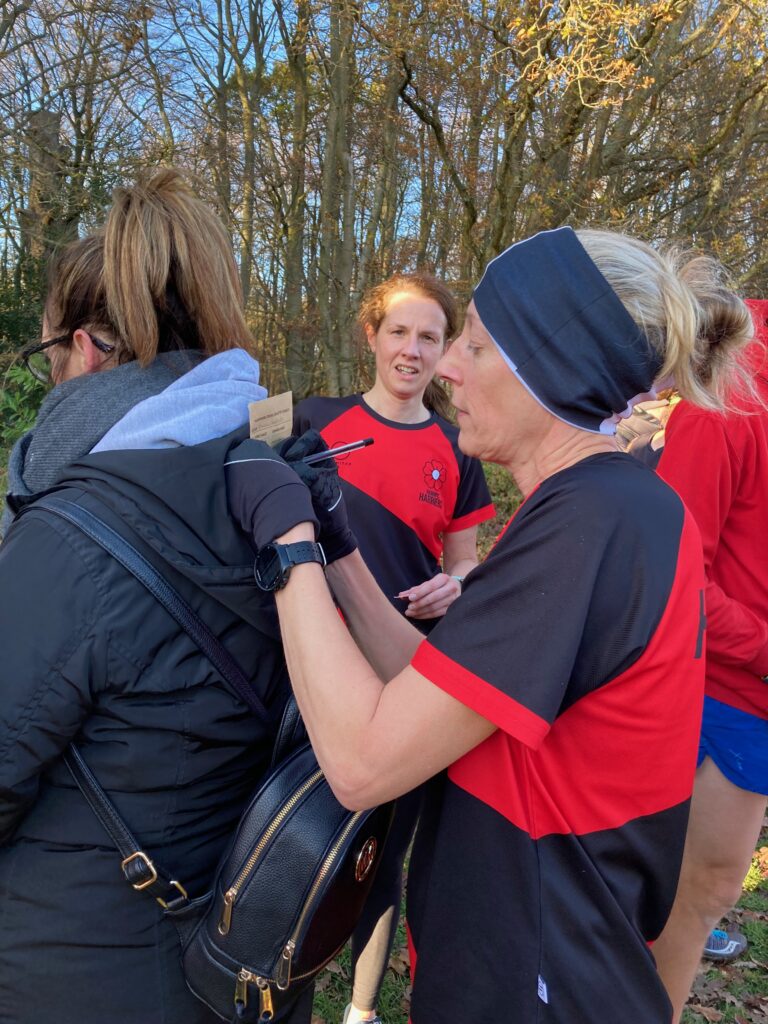
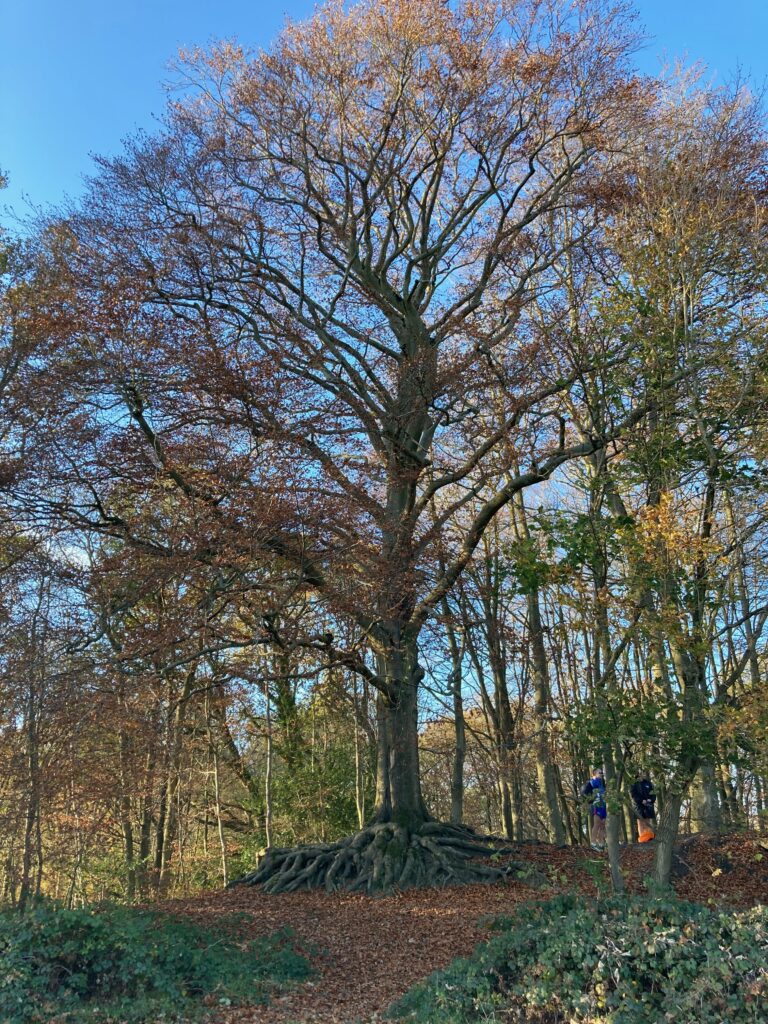
The park was rather beautiful with all the fallen leaves and some gnarly rooted trees I’d have liked a closer look at, but there was no time for wandering. The men were stripping off their warm clothes and getting ready to race. The biting wind made me quite glad I could keep my Dryrobe and hat on, although my hands were already feeling the chill. There were mutterings about needing a bigger tent. Had we had one, Kim and I might have sat inside it for the whole race.
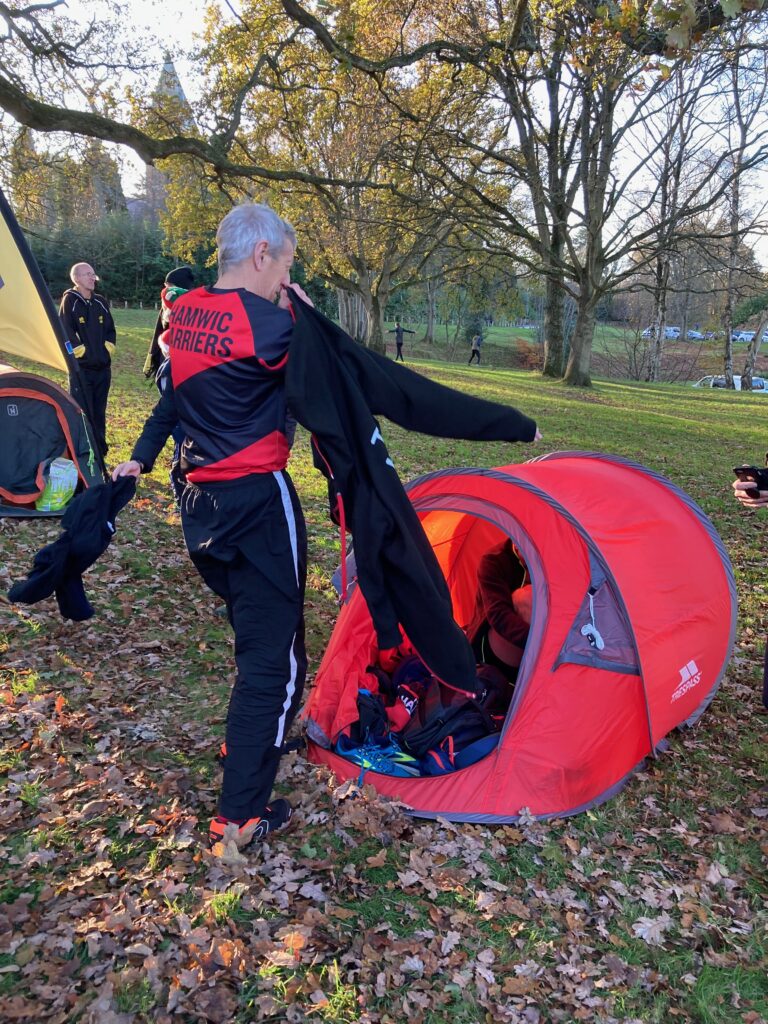
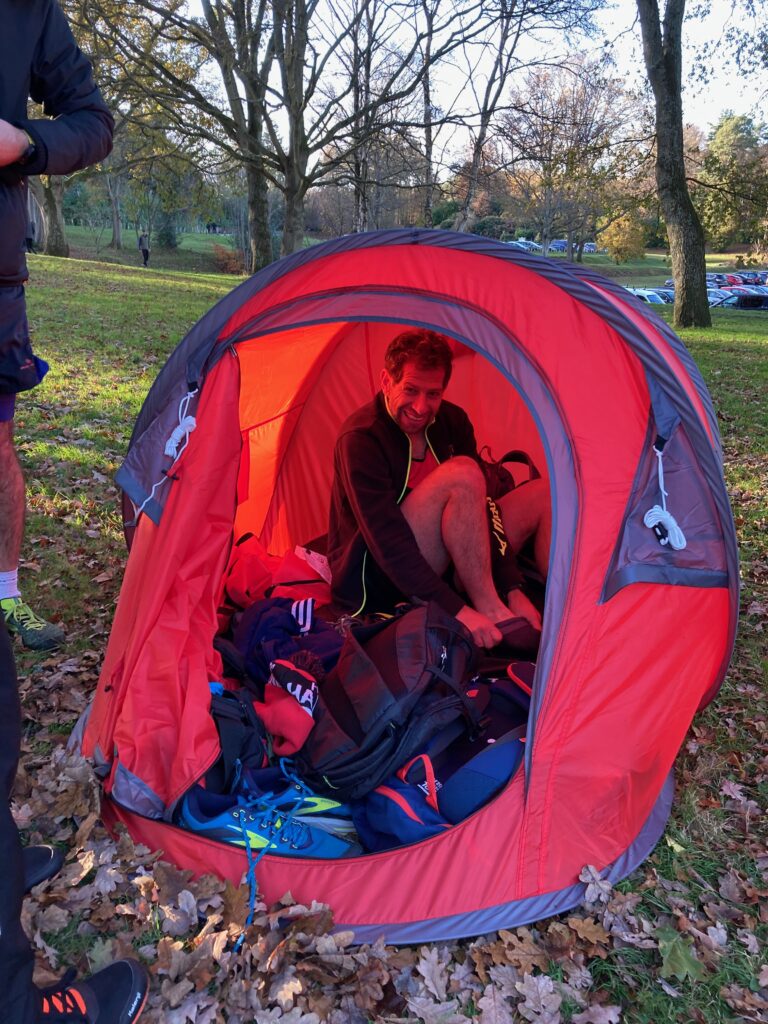
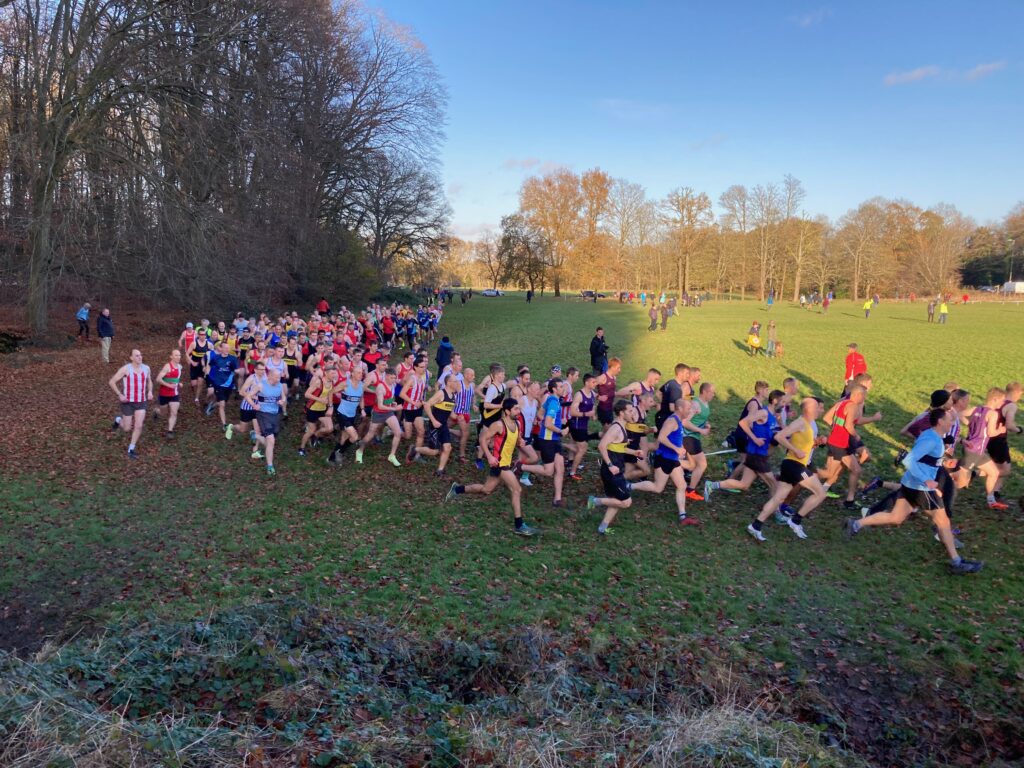
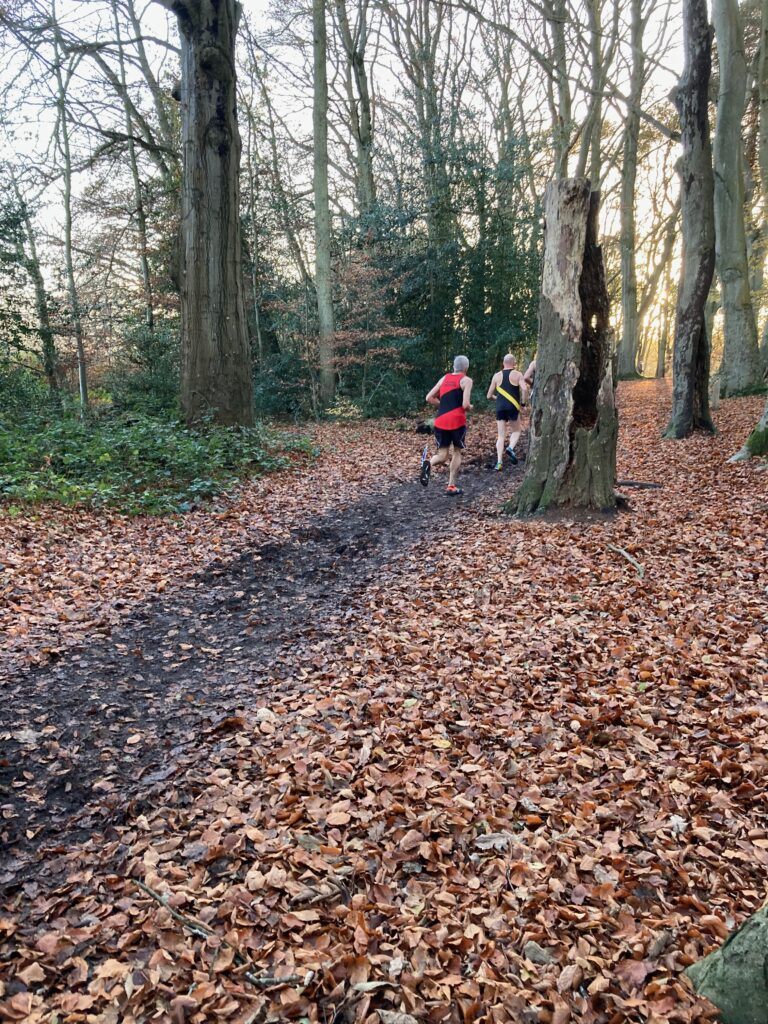
As it was, we watched the men thunder past and then set off to find a good spot to catch them mid race. The men’s race was longer than the women’s, and we knew that they would end up running through the woods once they’d been around the field. The trees might provide a bit of shelter from that bitter wind and something interesting to look at while we waited too.
We had a little while to wait before the first of the men were likely to appear, but there was plenty to look at while we searched for a good spot. One dead, hollow stump really captured my attention. The rotting wood, the texture of the bark and the colours of the rotting wood, not to mention the heart shaped hole, seemed like a work of art. I could have spent the whole afternoon taking photos of it.

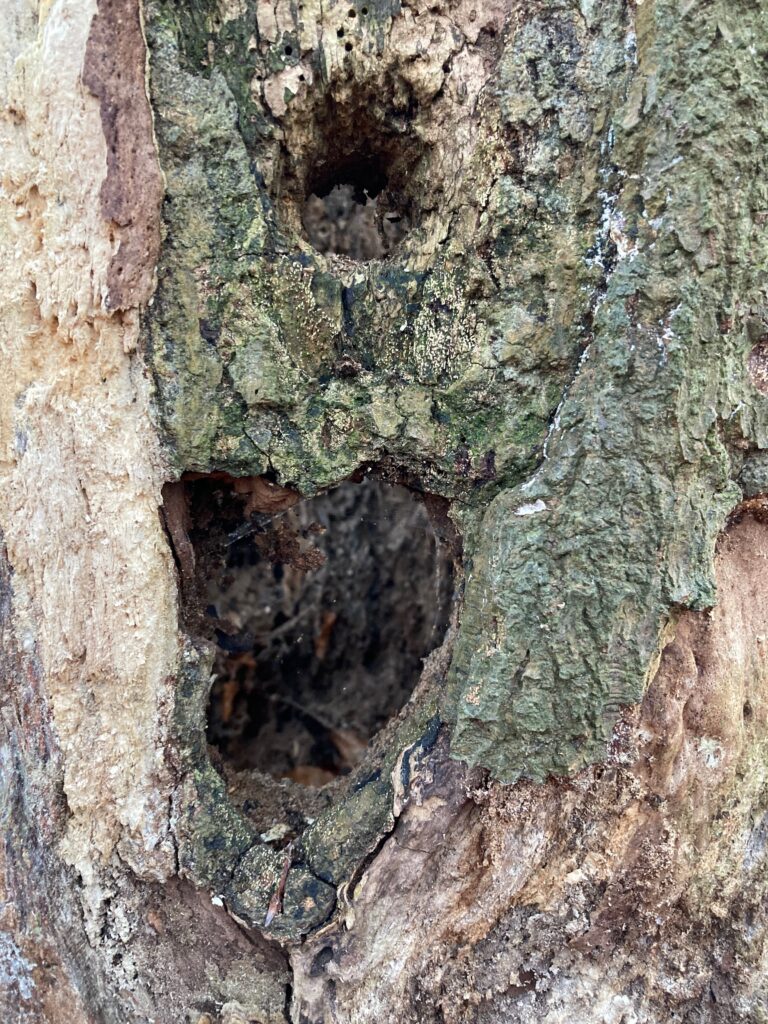
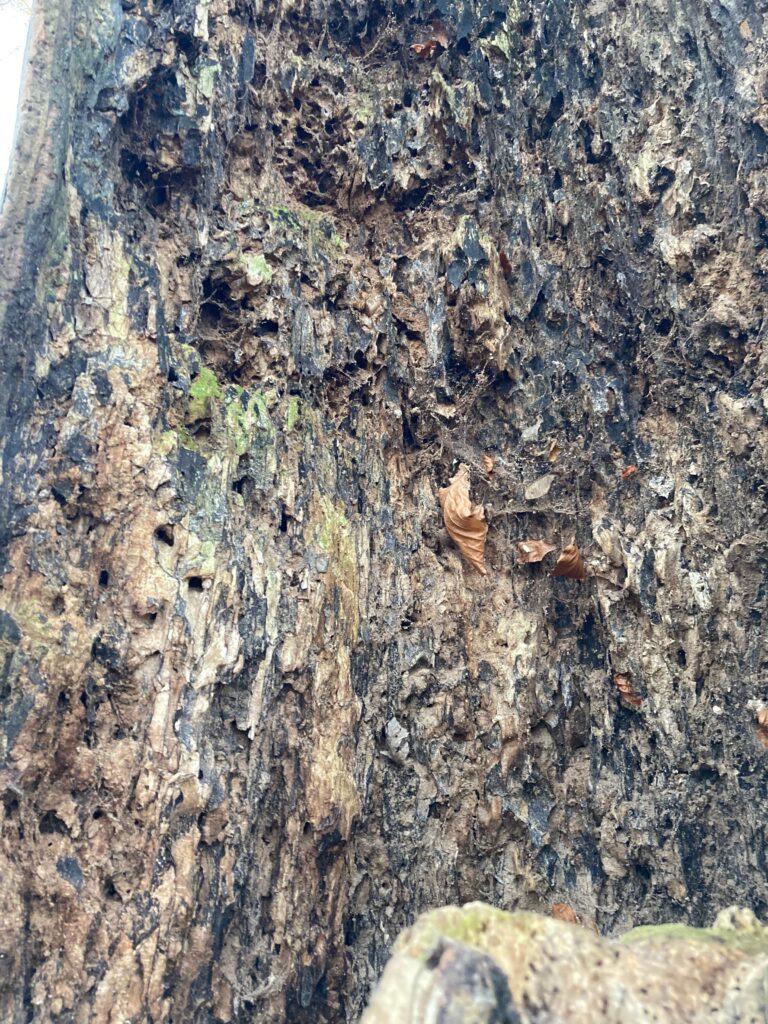
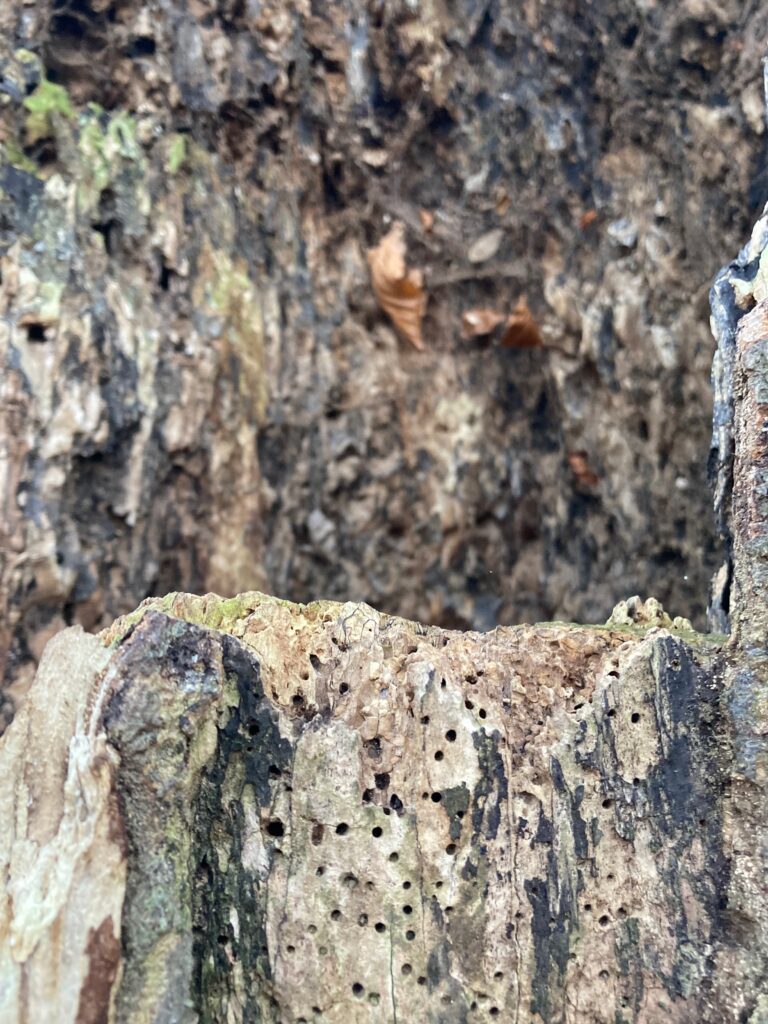
In fact I’d have been happy to spend the afternoon meandering through the woods with the copper coloured leaves crunching beneath my feet. The light was wonderful too, beams of sunlight slanting through the trees, deep blue sky through the bare branches and the green and gold of the leaves.
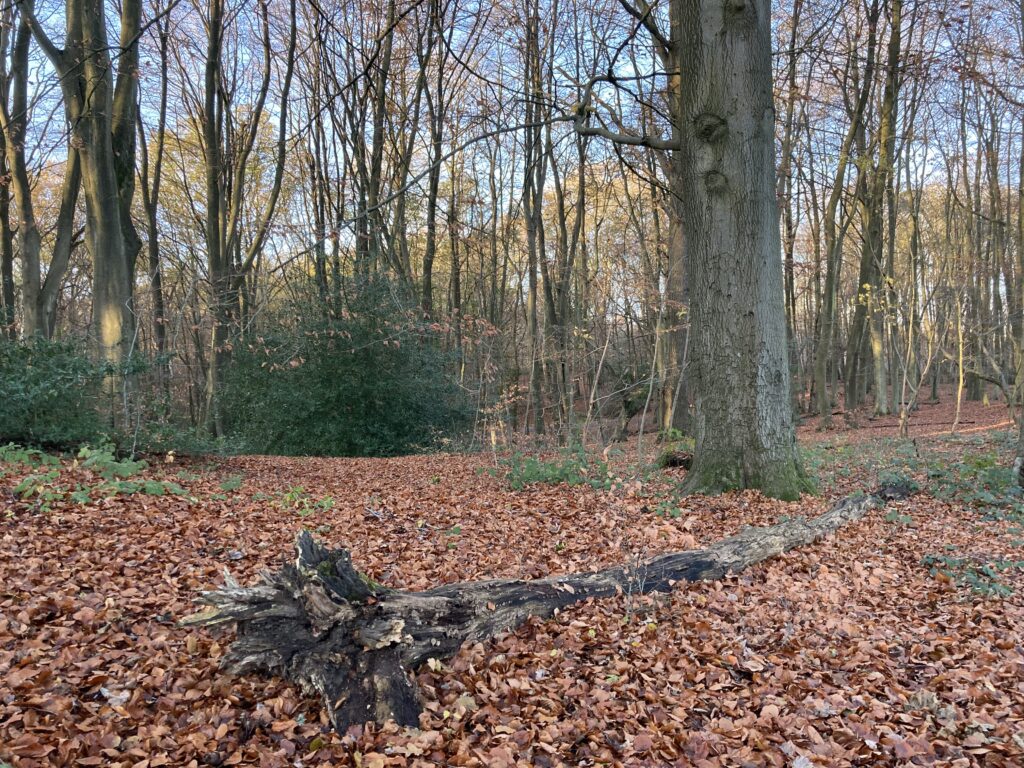
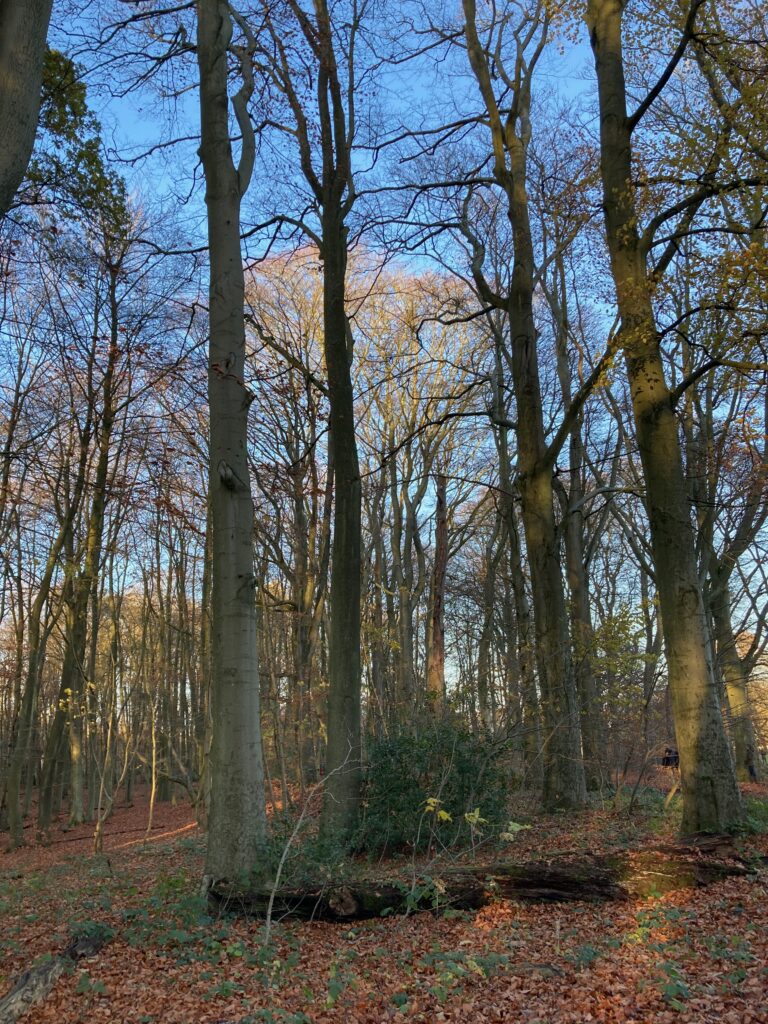
Of course, we were there to capture the runners, and it wasn’t long before the first ones came past. I did manage to catch all the Hamwic runners in action, but the beauty of the trees proved to be quite a distraction. Because of the lockdown, and all the work on Plagued, there had not been anywhere near enough time spent walking in woods.


Eventually, the last runner crossed the finish line and Kim and I wandered back to the little red tent. A swift team photo was taken. Actually half a dozen team photos were taken so I could be sure there would be one where everyone had their eyes open. Then, while everyone got their warm clothes back on, I scooted across the grass to have a closer look at the intriguing church and statue I’d seen earlier.


When I got to the church, I was disappointed to find locked gates keeping me out. Luckily, there was also a sign, so I could at least work out which church I was being kept out of. It turned out to be the Royal Garrison Church of All Saints. Knowing this, the locked gates made perfect sense. Aldershot is an army town, the first permanent barracks were built there in 1860. The church was an army church.
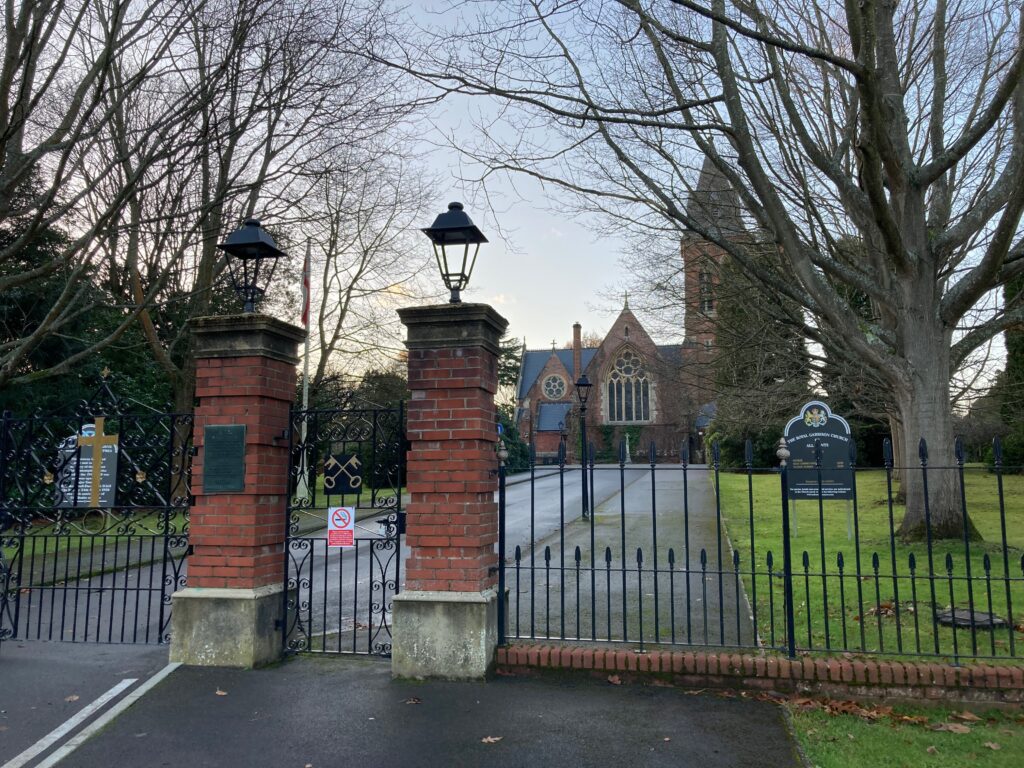
After the barracks were built, Sidney Herbert, the Secretary of State for War, believed a garrison church, fitting for the new centre of the army was needed. At the time there were three churches in Aldershot Camp but they were wooden, rather uninspiring and too small for the number of soldiers at the camp. The new church was meant to be a focal point at the end of the main road through the camp. It was designed by Philip Charles Hardwick of London, and built by George Myers at a cost of £16,000. The red brick of the new church stood out in contrast to the local yellow brick of the surrounding barracks and it soon became a local landmark, known as the Red Church. The building was completed and consecrated on 29 July 1863. Sadly, Sidney Herbert died in 1861 and did not see his vision come to fruition.

As it happens, it was a quirk of fate that the church was there for me to see at all. In the late afternoon of 18 February 1883 an orderly was preparing for the Sunday evening service when he noticed that the wooden floor beneath his feet felt rather warm. As he watched, the boards began to crack and smoke began to seep through the gaps. Some dry wood stored in the cellar had somehow caught fire. The orderly dashed out to raise the alarm. Two army fire engines were quickly on the scene, along with two hundred soldiers, who formed a chain to get buckets of water into the cellar, and the fire was extinguished with no real damage to the fabric of the church.

The gates keeping me out were rather beautiful, annoying as it was not to be able to get a closer look. A plaque on the brick pillars told me that they were built by the apprentices of the Army Apprentices School and the pillars were built by students of the Royal Army Educational Corps. Before I headed back to the runners I managed to poke my phone through the gates and get a clear photograph of the church.


There was also a memorial outside the gate. Being November it was a mass of poppies and wreaths. I stopped for moment’s reflection and a quick photo before I retraced my steps. Unfortunately, I wasn’t able to get a closer look at the statue. Later I discovered that it is the largest equestrian statue in Britain. It was sculpted by Matthew Coates Wyatt as a monument to Arthur Wellesley, 1st Duke of Wellington. Wellington is best known for his victory at the Battle of Waterloo, but he was also Prime Minister in 1834. The horse is Copenhagen, the horse he rode at Waterloo, and the bronze for the statue was derived from captured French cannons. The Statue was originally placed on the Wellington Arch at Hyde Park Corner in 1846, but it was said to be out of proportion to the arch and Queen Victoria thought it was an eyesore. In 1885, it was moved to Aldershot.


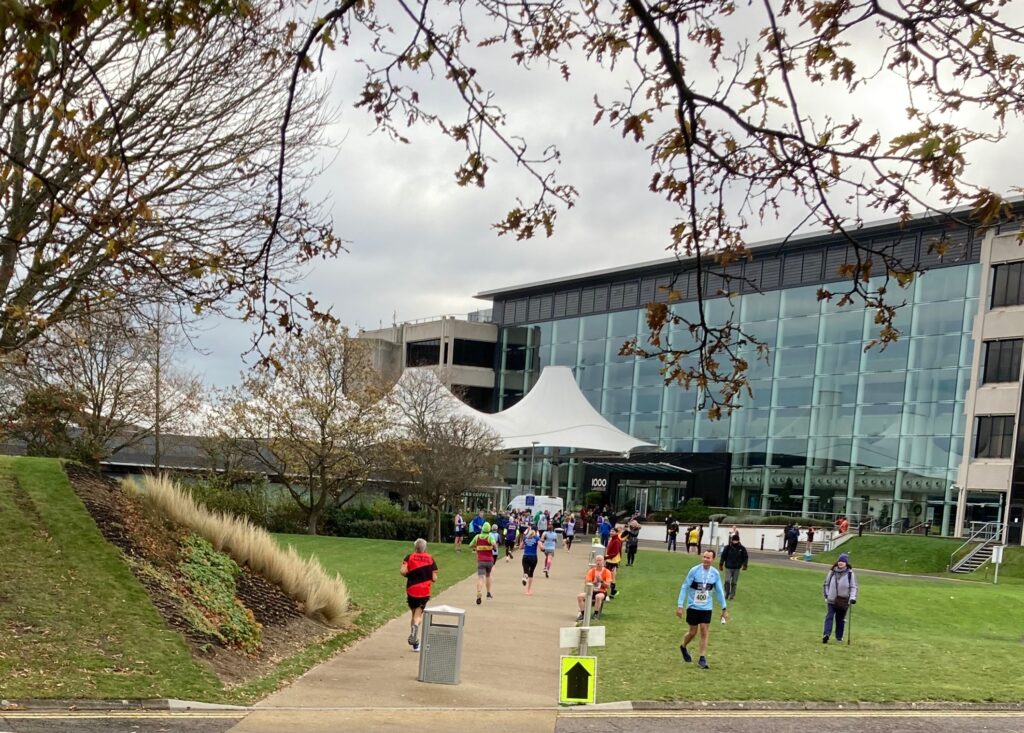
On Sunday morning, the second race of the weekend was a little less picturesque, but a lot closer to home. It was the Victory 5 race in Portsmouth. With no trees to speak of, there was very little in the way of shelter from the freezing wind and nothing much to distract me. I did, however, manage to do my job and capture the Hamwics running. As there were only two of them, it wasn’t especially challenging work. Getting back to racing after the pandemic felt like such a positive thing, so it was hard to grumble too much about the cold, but it was a relief when it was all over and I could get back to the warmth of the car. I was beginning to think there might be such a thing as too much fresh air, especially in December.


If you like what I write, and you’re interested in my novels are available now on Amazon in paperback, on Kindle and via Kindle Unlimited. Check out my Amazon page here and my Goodreads page here. If you would like to help me keep writing, you can now buy me a virtual coffee by clicking on the little orange coffee cup at the bottom right.