
One of the upsides to the lockdown, at least at first, was that people had time on their hands. For some, this might have been considered a downside but many people were using the time to be creative. Social media was full of people making things, baking bread, sewing, knitting, creating art. In some ways it felt like a reminder of gentler, less frantic days. Apparently, there were also fairy doors springing up along the butterfly walk. It was 15 April, the day before the lockdown restrictions were due to be reviewed, and, still glowing with the success of my two bridge walk, I decided to risk a look.
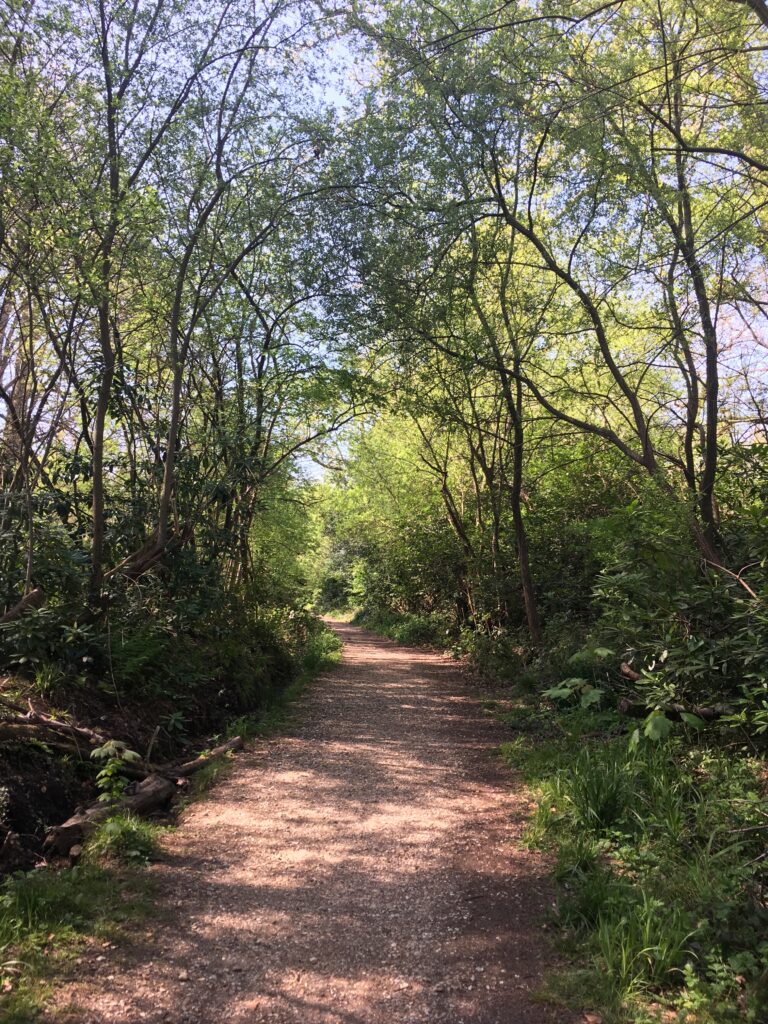
In normal circumstances a walk along the butterfly trail would not be a risky prospect. Given the crowds I’d witnessed along the river and in the parks, though, I thought I might be setting myself up for disappointment. Parts of the trail are very narrow, making social distancing difficult should I meet other people along the way. In the end I decided it was worth the risk. If the worst happened, I could turn back or take one of the side trails back to the road. Even so, I set off fairly early, hoping to beat the crowds. Things started off well. The first part of the trial was completely empty. I took a deep breath and set off.
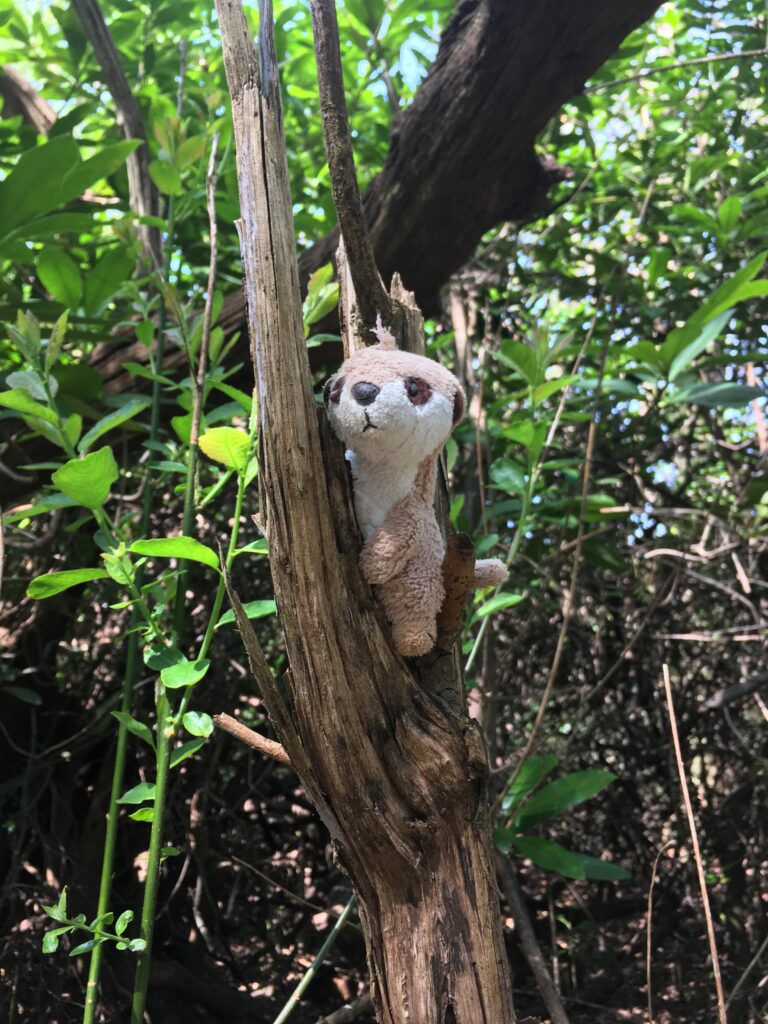
As I didn’t know where the fairy doors were likely to be I took it at a slow pace and kept my eyes peeled. The first thing I spotted was a strange little bear keeping watch in a tree. Maybe he was a lookout to warn the fairies of humans approaching? Then again, he could simply have been a lost toy. I might have been letting my imagination run away with me at this point.
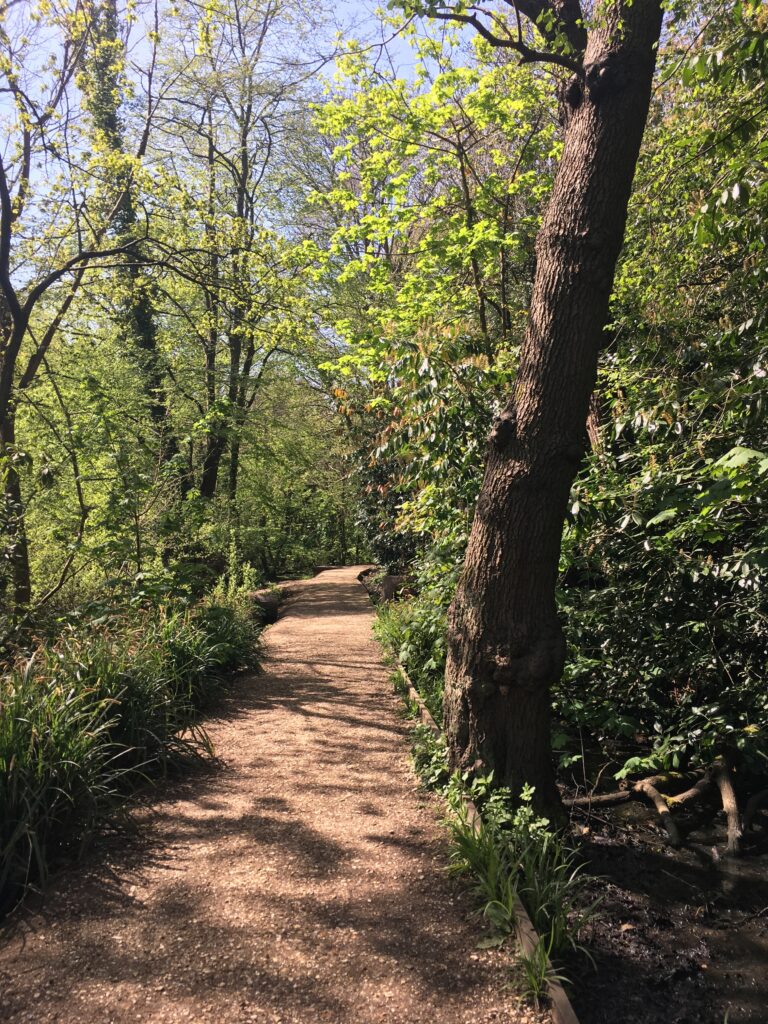
I did meet a dog walker coming towards me as I came to the stream. Luckily, the path is wide by the bridge, so we politely nodded and gave each other room. Then I went back to thinking about fairies. When I was a little girl I was sure they existed but, these days, most adults tend not to believe in them. When you consider some of the things they do believe, this seems quite odd. Funnily enough, around the time of the 1918 pandemic fairies were quite a hot topic and lots of adults believed in them, even some rather famous ones.
In the summer of 1917 two young girls, Elsie Wright and Francis Griffiths, from Cottingley near Bradford, took a series of photographs of fairies near the stream at the bottom of their garden. They had borrowed Elsie’s father’s camera to prove the fairies they talked about so often were real. Arthur Wright developed the photographs but dismissed them as a prank using cardboard cutouts. His wife, Polly, believed they were real. In 1919 she took the photographs to a meeting of the Theosophical Society in Bradford. Edward Gardner, a leading member of the society thought the photographs were significant. He took them and the original glass-plate negatives to Harold Snelling, a photography expert. Snelling said, “the two negatives are entirely genuine, unfaked photographs … [with] no trace whatsoever of studio work involving card or paper models.”
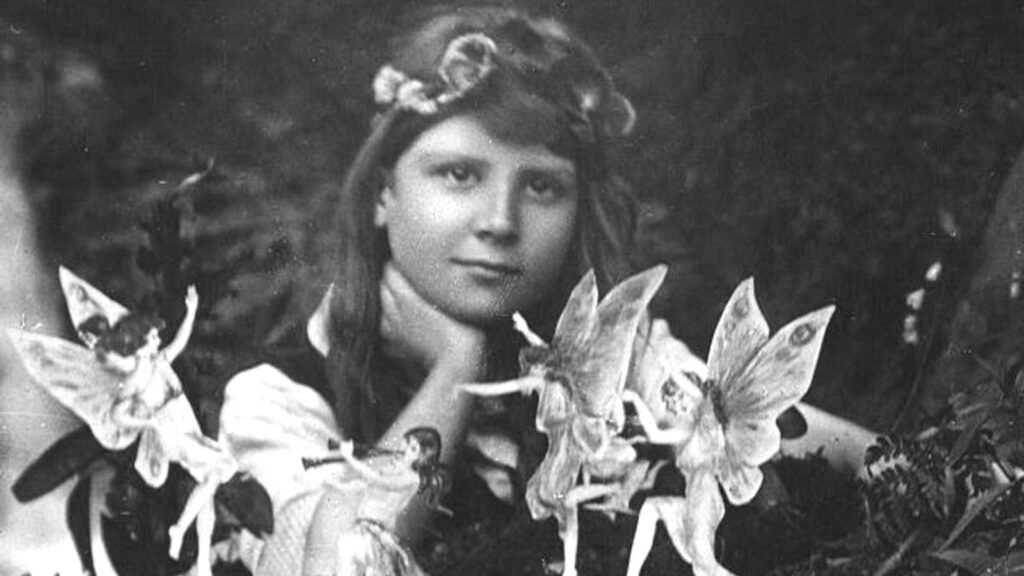
All this may seem quite unbelievable today, but remember, photography was relatively new. The very first photograph had been taken less than a century before. Most ordinary people did not own cameras and certainly had no way of manipulating pictures if they did. Even Sir Arthur Conan Doyle was fooled. The author and prominent spiritualist took the fairy photographs to Kodak for their opinion. They agreed that the pictures “showed no signs of being faked,” but concluded that “this could not be taken as conclusive evidence … that they were authentic photographs of fairies” and declined to issue a certificate of authenticity.
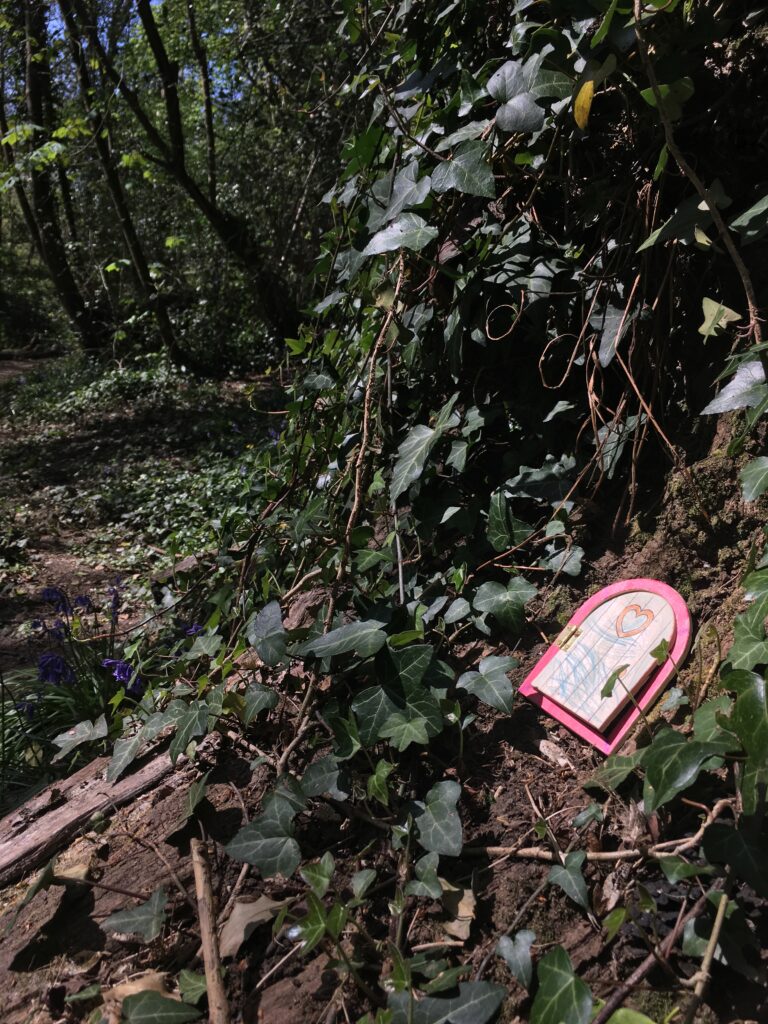
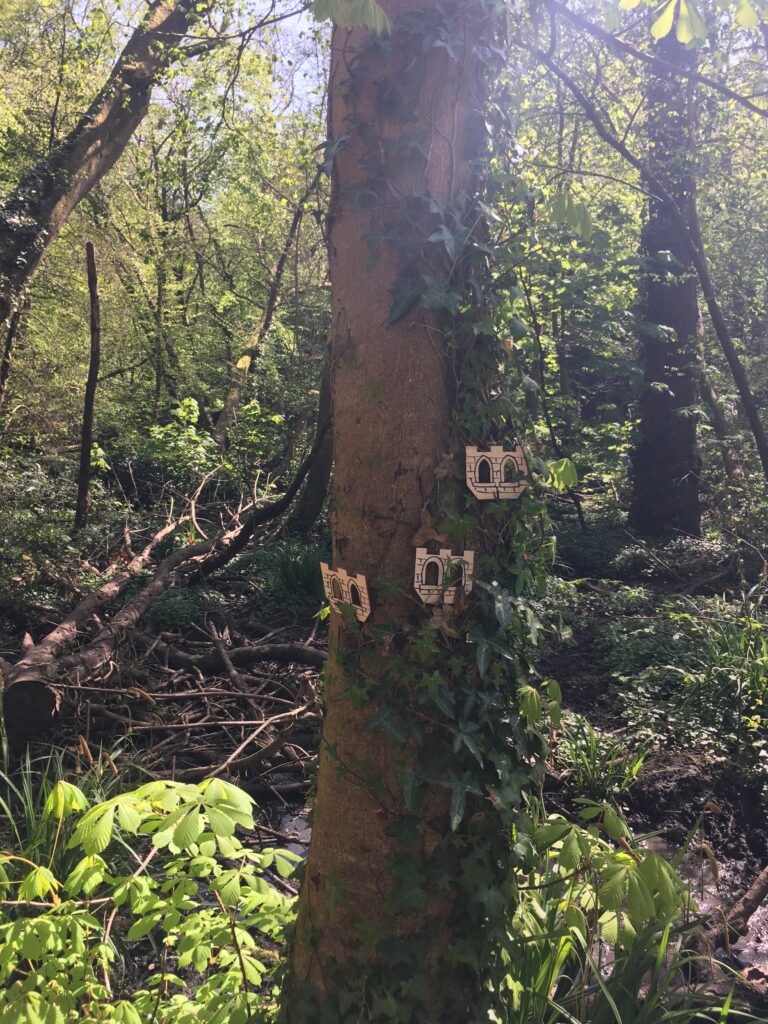
My first hint that there might be fairies living in Mayfield Park came shortly after I’d crossed the stream. At the bottom of one of the trees along the trail a little wooden door with a heart on it caught my eye. I smiled and walked on. I saw no fairies but a little way ahead I saw some windows in another tree. What a magical walk this was turning out to be.
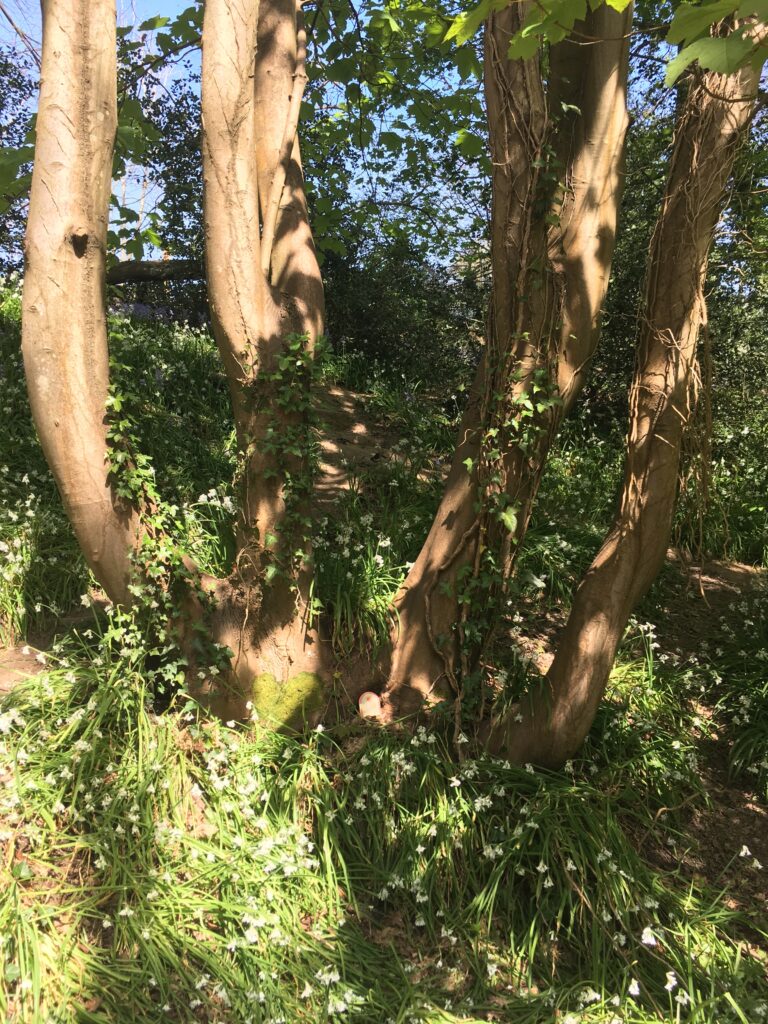
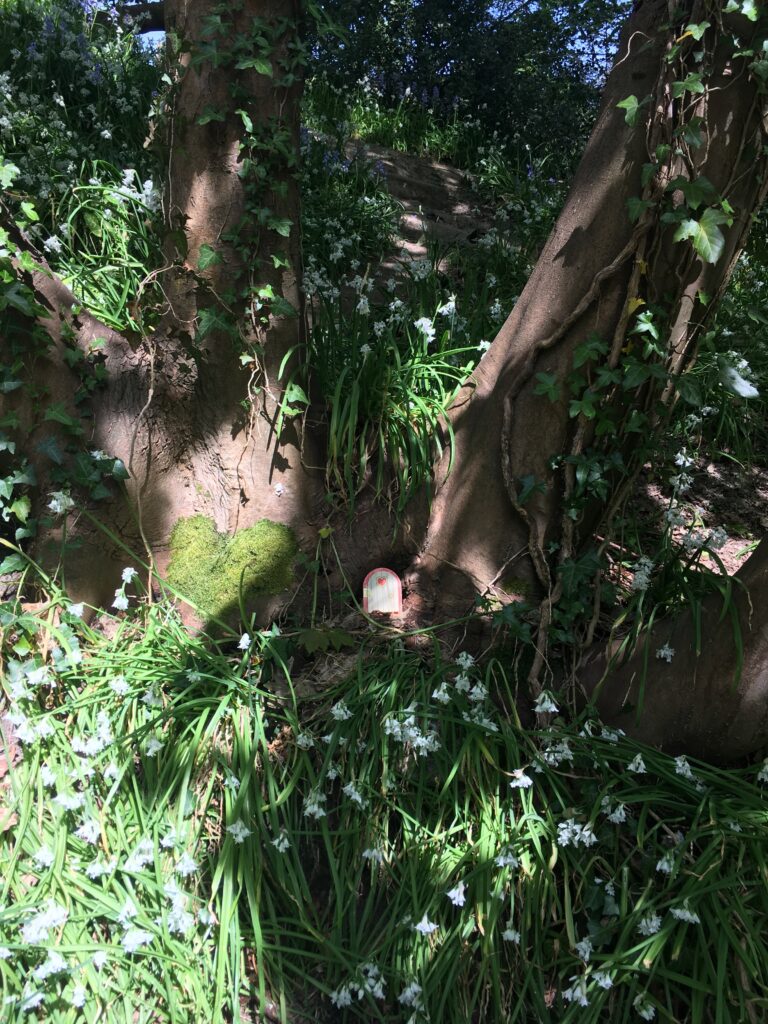
My next fairy encounter came about half way along the trail. At the bottom of a tree, surrounded by wildflowers, there was another door. When I looked a little closer, I saw a heart shaped patch of moss beside it. Sadly, the fairies, if there were any, were hiding.
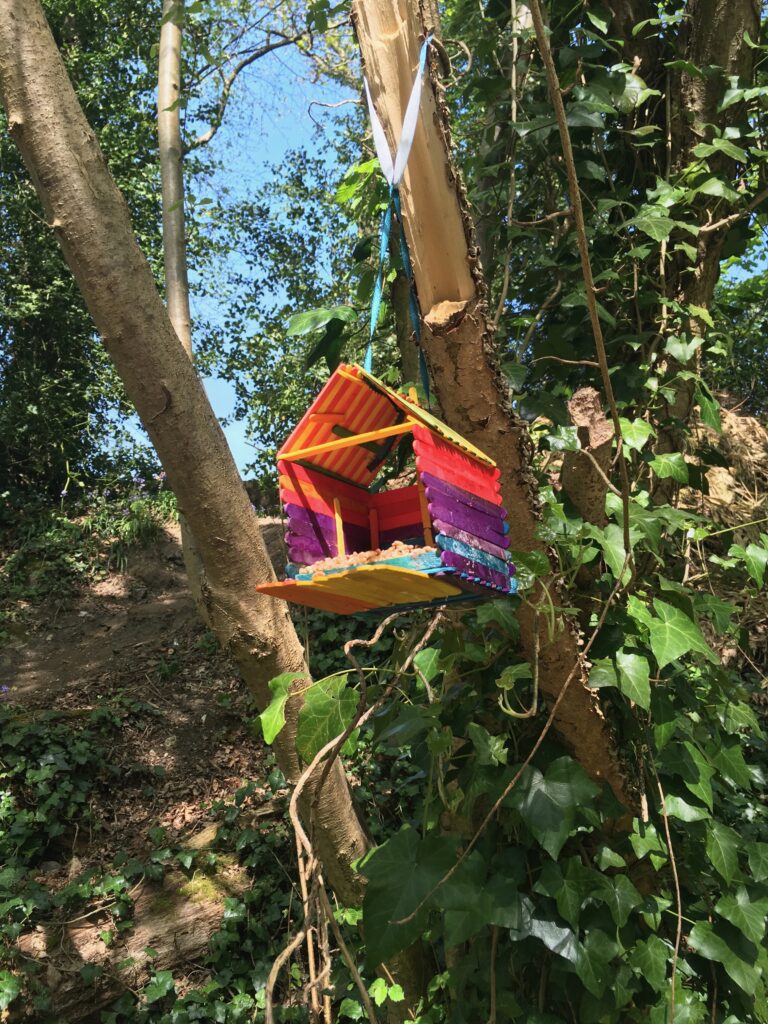
This wasn’t the end of it either. Hanging in a nearby tree I spotted a rainbow coloured bird feeder made from lolly sticks. Of course, this wasn’t evidence of fairies and was almost certainly made by a human, maybe one on furlough trying to fill the hours. Close by there was another fairy door. This one showed evidence of a very untidy fairy, fond of leaving lots of her bits and pieces scattered about.
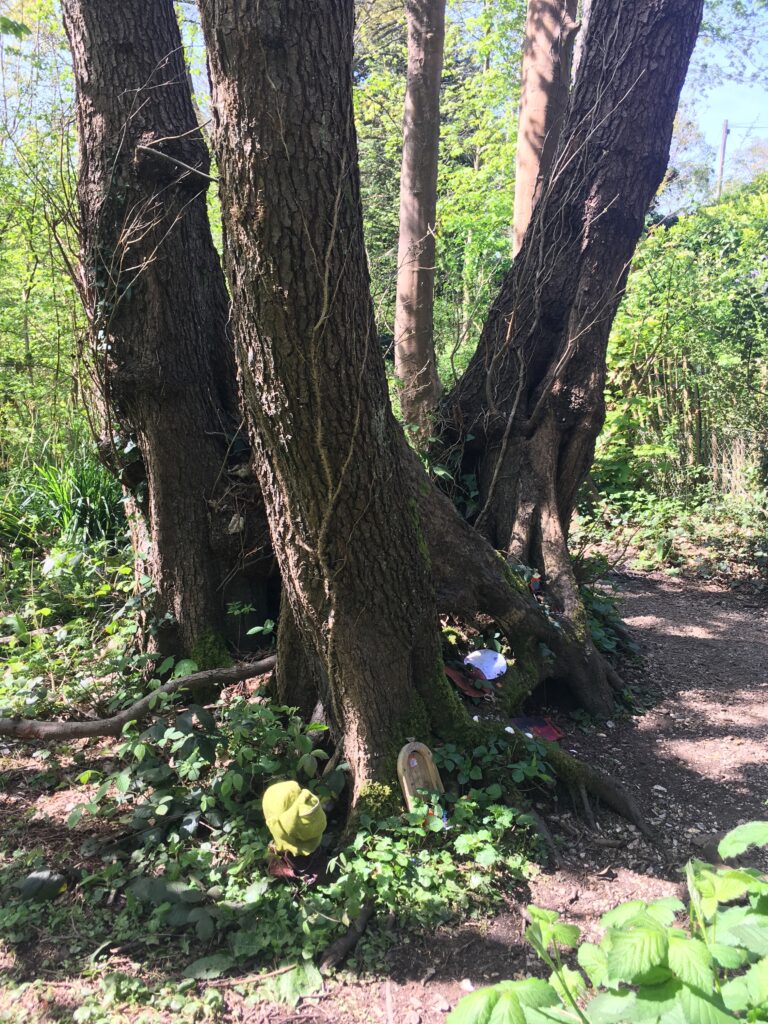
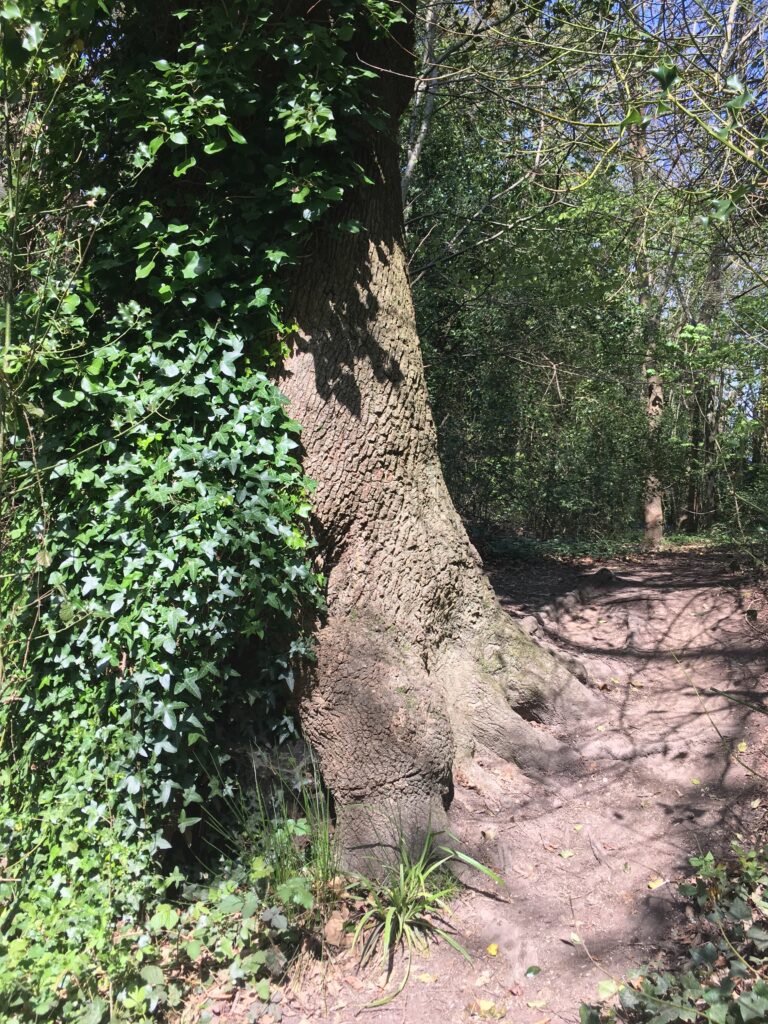
This was the last fairy door I saw on the walk. Not long afterwards I heard people coming along the trail and decided to take one of the side trails back to the road. Oddly enough, it was the trail that goes past the one tree in the park that always makes me think fairies might really live there. Today though, their door was half concealed by ivy and I saw no sign of any fairies at all.
By now you may be thinking that the lockdown has made me lose my mind. I have to be honest and tell you that I don’t really believe in fairies these days. I do, however, remember the magical time when I did, and seeing the fairy doors on the trail made me happy to know that other little girls still believe today. I suppose the moral of today’s tale is that not everything about this pandemic has been bad. People have taken the time to create magical things and children have been encouraged to go out walking searching for them.
If you’re still wondering about the Cottingley Fairies, wonder no more. In 1983, Elsie and Francis finally admitted that they’d faked the photographs. It was a simple trick. Elsie had copied illustrations of dancing girls from a children’s book and added wings. The girls had then cut the figures out and supported them with hat pins to take their photographs. Adults had believed them because they wanted it to be true (why does that sound so familiar?). Despite everything, though, both girls maintained they really had seen fairies at the beck at the bottom of their garden.
What a lovely post. I think there’s a little bit in all of us that wants to believe in magic – I know there is in me! Fairy doors in a woodland setting are delightful and perhaps give young children a sense of wonderment that does no harm in today’s modern world.
It was one of the bright spots of lockdown, when this kind of thing began to happen. All children should believe in magic for a while.
That was a lovely read, Marie. Thank you for sharing your walk. Is the Butterfly trail still at Mayfield Park do you know?
Thank you. The trail is still there but I think the fairy doors have gone now. It began to get a bit messy, as people were adding all sorts of things, including lots of plastic toys. I think someone local cleared everything up.