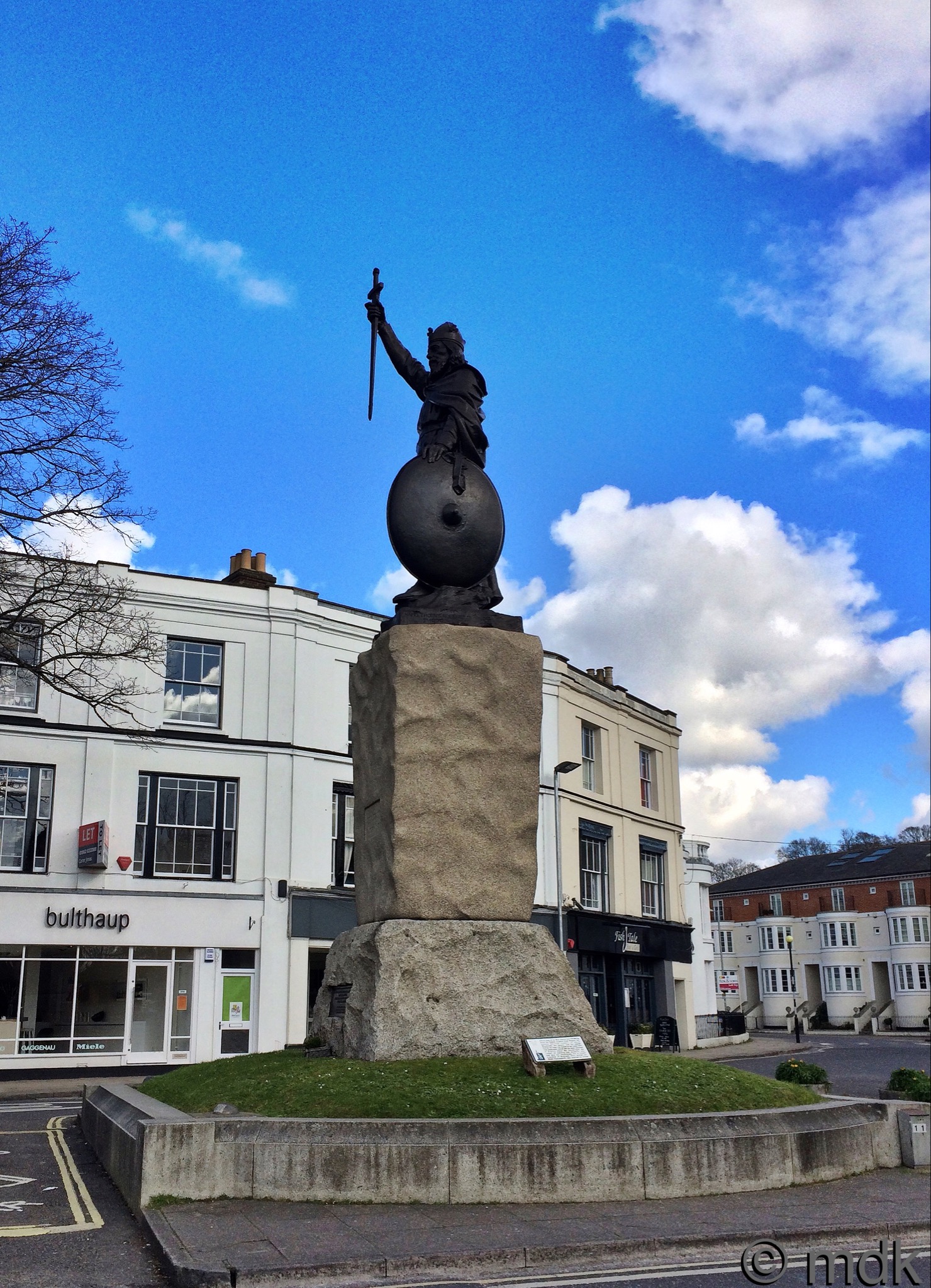
25 February 2016
Winchester has been the focus of many walks. From the rush of elation when I saw my turning point at the cathedral on my final Moonwalk training walk, to the lure of coffee at the end of the Itchen Navigation it has drawn me. Many times I’ve looked in awe at the massive Gothic cathedral, one of the largest in England and the longest in Europe, but I’d never been inside. An intriguing photograph on the Winchester Heritage Facebook page made me realise a visit was long overdue. The rattle of car keys alerted CJ and, when he heard what I was going to see, there was no putting him off.
Winchester was one of the first Roman settlements in Britain. Roman ingenuity diverted the River Itchen, draining the land to extend the town onto former marshes. The first cathedral, the Old Minster, was built in 642 and work began on the current cathedral in 1079. It was built on a high water table over a stream so flooding has always been an issue. Nowhere is this more evident than one of the oldest parts of the building, the crypt, which floods in wet weather. This was what I’d come to see.
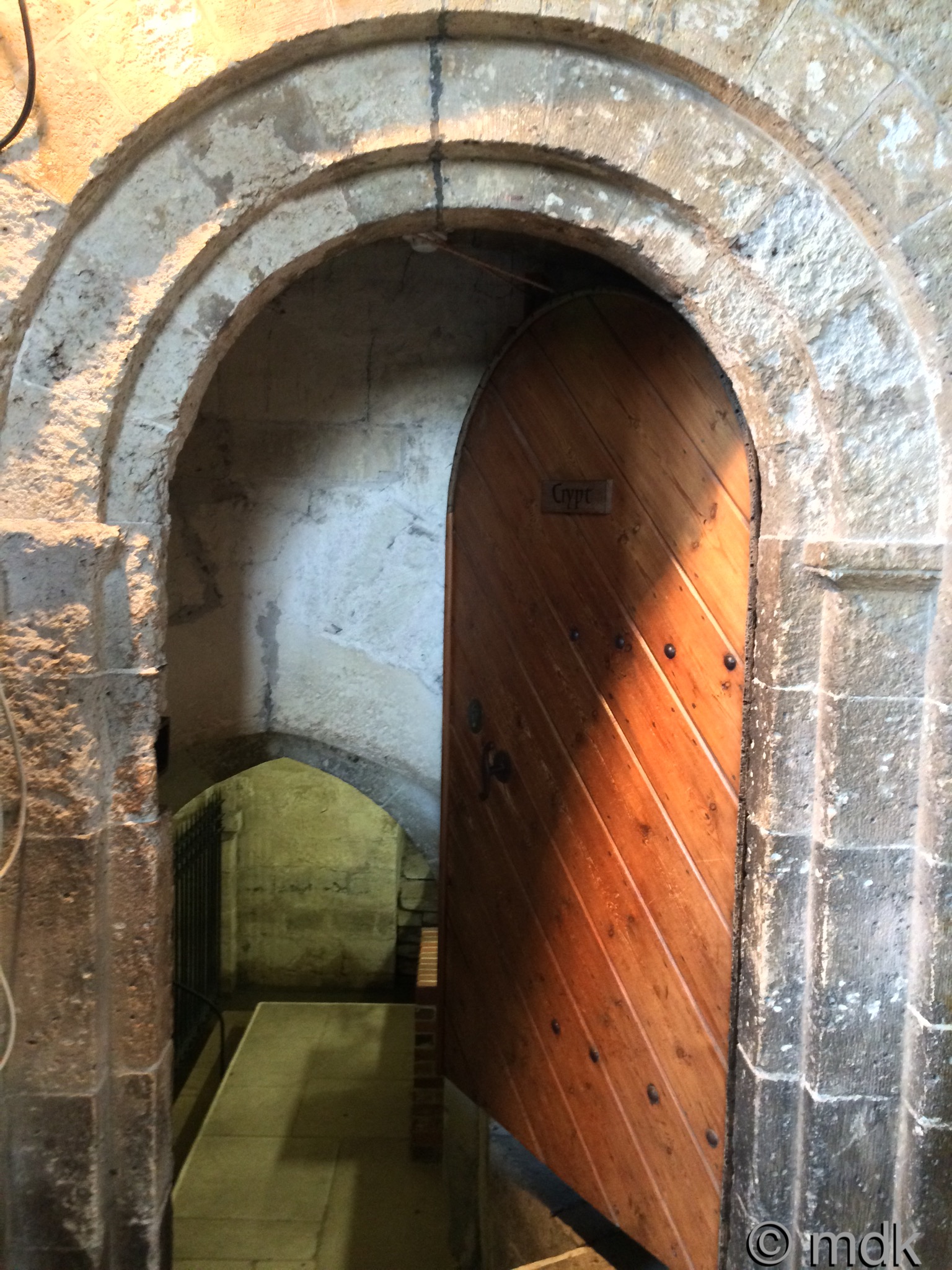
As soon as we’d paid our money I asked about the hourly crypt tours I’d read about. It was a case of good news, bad news.
“Sorry, it’s flooded at the moment so there are no crypt tours,” the lady behind the desk told me. Flooding was good news but not being able to tour the crypt was disappointing until she carried on, “you can still have a look from the viewing platform though.”
So off we went, feeling excited but with no idea where the crypt was. Luckily, one of the guides saw us looking lost and took us there. If I’d had to walk fifteen miles it would have been worth every step.
The vaulted stone ceiling and the play of light and shade would have been breathtakingly beautiful even without a mirror of still, greenish water. Add to that Sound II, Anthony Gormley’s mysterious life sized lead sculpture based on a plaster cast of his own body, and it really couldn’t get any better. Standing ankle deep in flood water contemplating his cupped hands and reflected amidst the arches he added a hauntingly ethereal quality to the scene. At times the water comes to his knees.

The guide, who’d stayed with us as we gasped at the beauty of the flooded crypt, told us how, at the beginning of the twentieth century, the cathedral had been in danger of collapse. Expansion of the building in the thirteenth century used beech logs as foundations which were failing. One crypt pillar was sinking, masonry was cracking and chunks falling. If nothing was done the south wall would collapse.
Engineer Francis Fox and architect Thomas Jackson knew the logs had to be replaced with concrete but digging trenches underwater was impossible. Somehow the building would have to be shored up before the water was pumped out. Fox came up with a cunning plan. Diver William Walker worked heroically for five years under the dark, murky water at depths of up to twenty feet to shore up the walls with thousands of bags of concrete. Sadly Walker died in the Spanish Flu epidemic of 1918 at the age of forty nine.
Stumbling out of the dimly lit crypt we found tombstones beneath our feet packed so tightly it was impossible not to walk on them. The thought of disturbing the dead made me feel anxious until another guide, who’d obviously seen my worried face, explained that most had been moved from other graveyards and had no bodies underneath.

There were also large tombs scattered about with effigies of the occupants. One tomb in particular caught my eye, mainly because of the beautifully peaceful face. It belonged to Frederick Iremonger, prebendary of the cathedral and rector of nearby St John’s. He was, apparently, a man of great compassion who died aged just thirty nine.


As I’d been expecting to spend my time touring the crypt, I hadn’t done much research about the rest of the cathedral so we wandered aimlessly, looking at things that caught our eye and probably missing more than we saw. A huge pink and orange wall hanging made me think of the silks of Marrakech and I stopped to take a picture, hoping to find out more later. Yet another helpful guide approached and pointed out the small chapel beneath the silks.
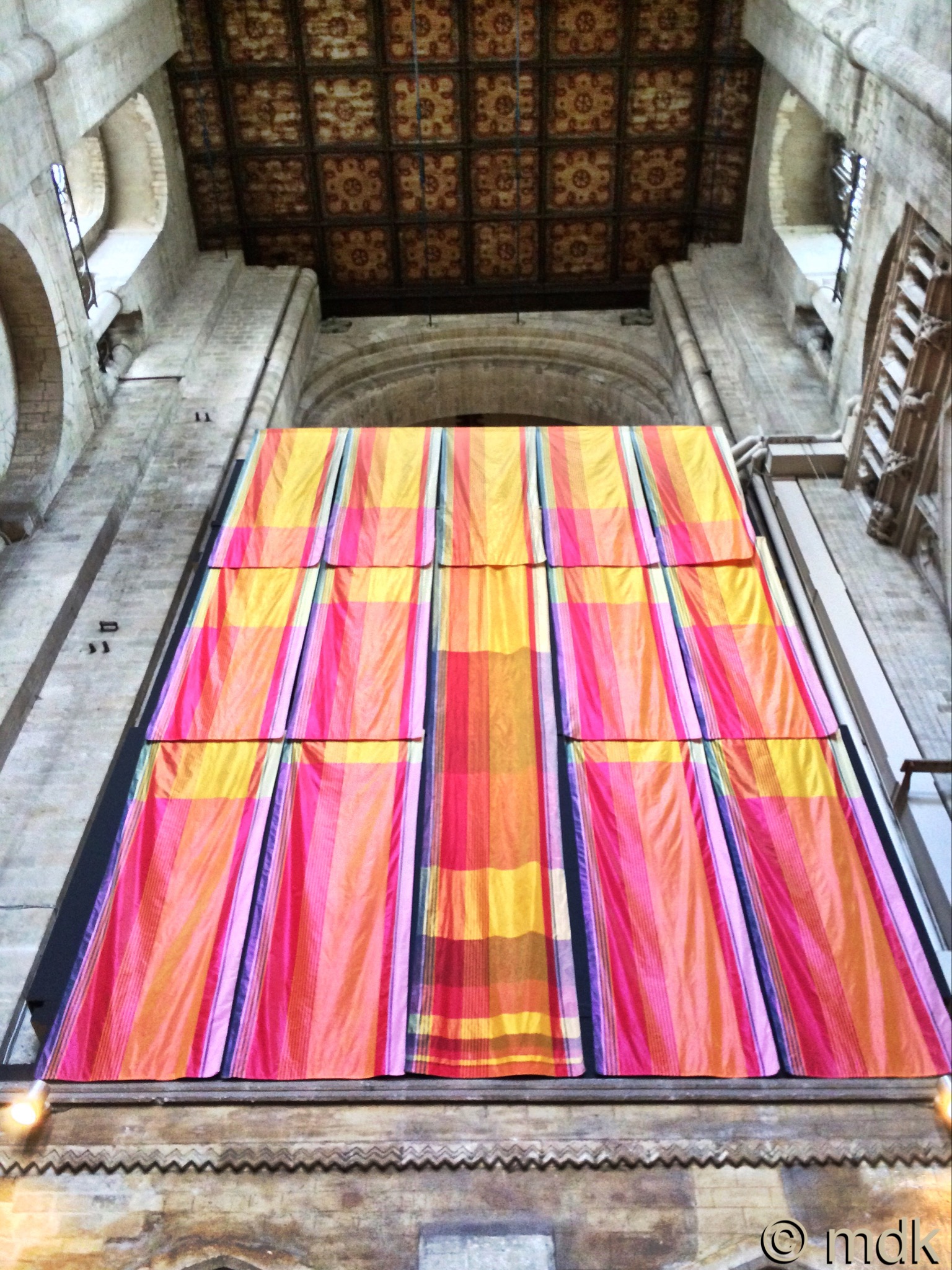
This was the Chapel of the Holy Sepulchre she explained. She flicked a light switch we’d probably never have spotted, illuminating the twelfth century paintings within and we stood and gawped. They show Christ being taken from the cross to his tomb and were uncovered in the 1960’s. The once bright colours were faded with age but the effect was still stunning. I never did find out more about the silk wall hanging though.
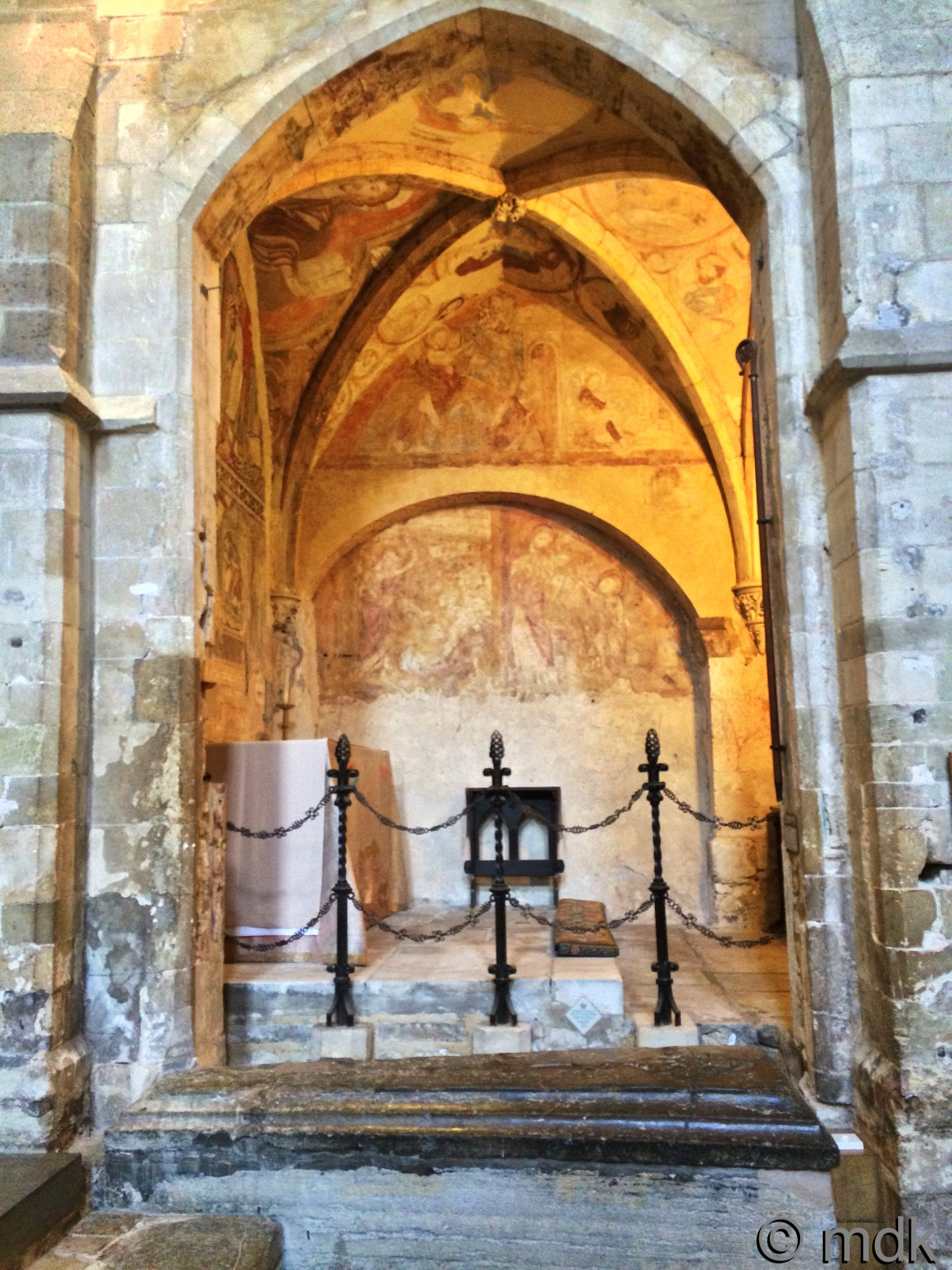
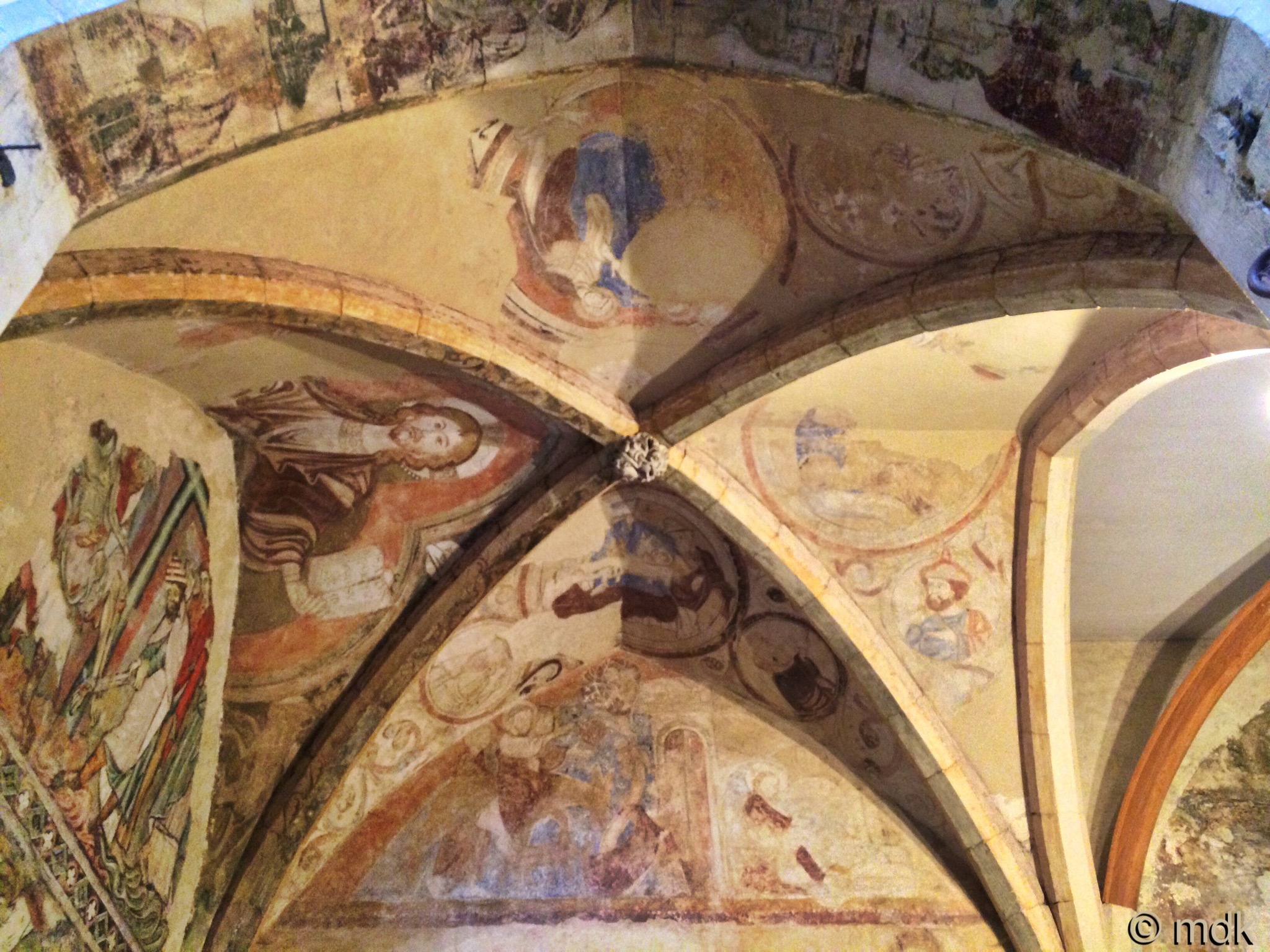
We carried on our wanderings, stopping to peer into small chapels, admire intricate carvings and aisles of soaring columns with majestic vaulted ceilings. There was so much stained glass even I was in danger of stained glass overload. Some pictures were taken but in the main I just stared, open mouthed. The windows alone would fill a whole post and more.

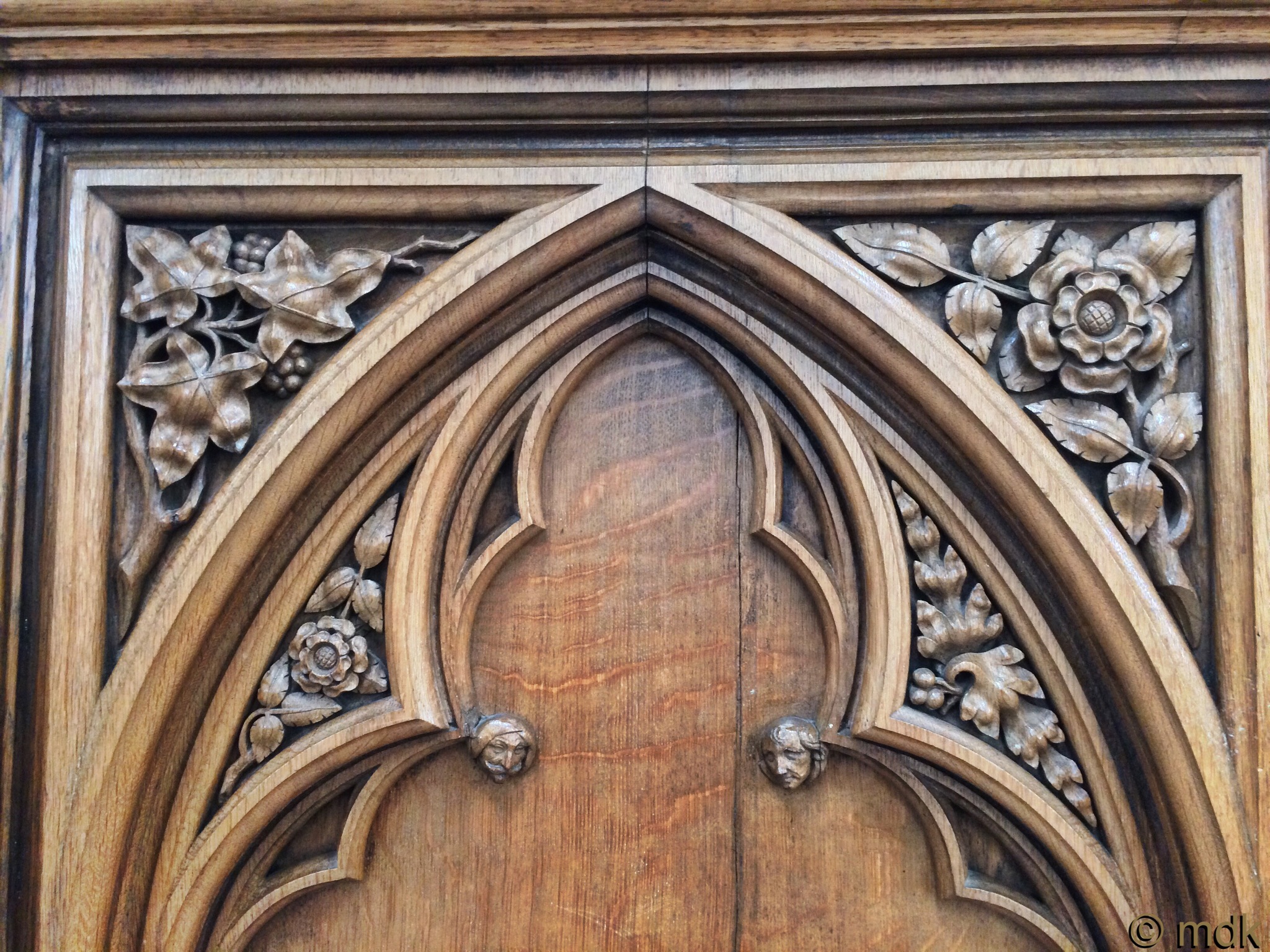

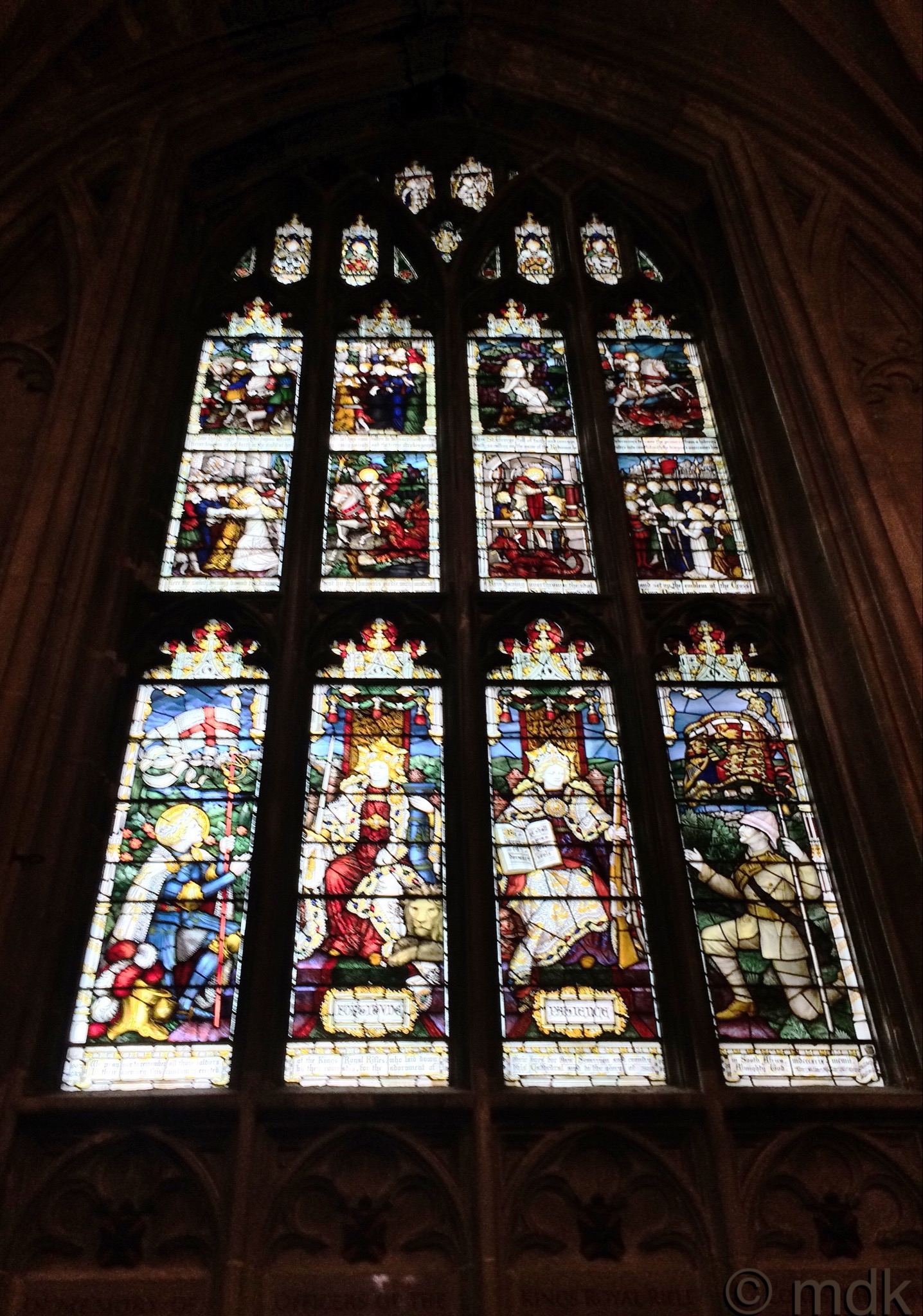
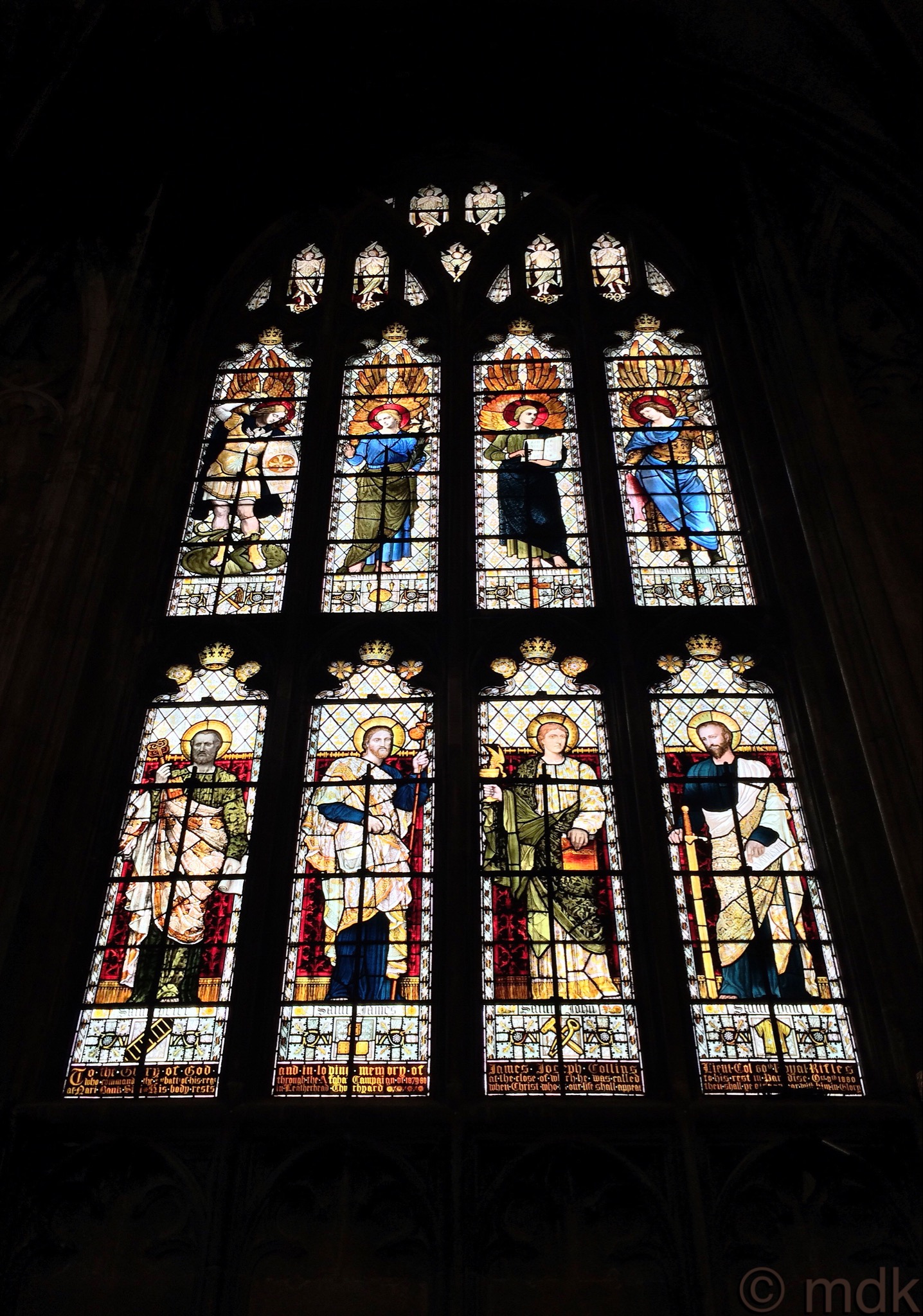
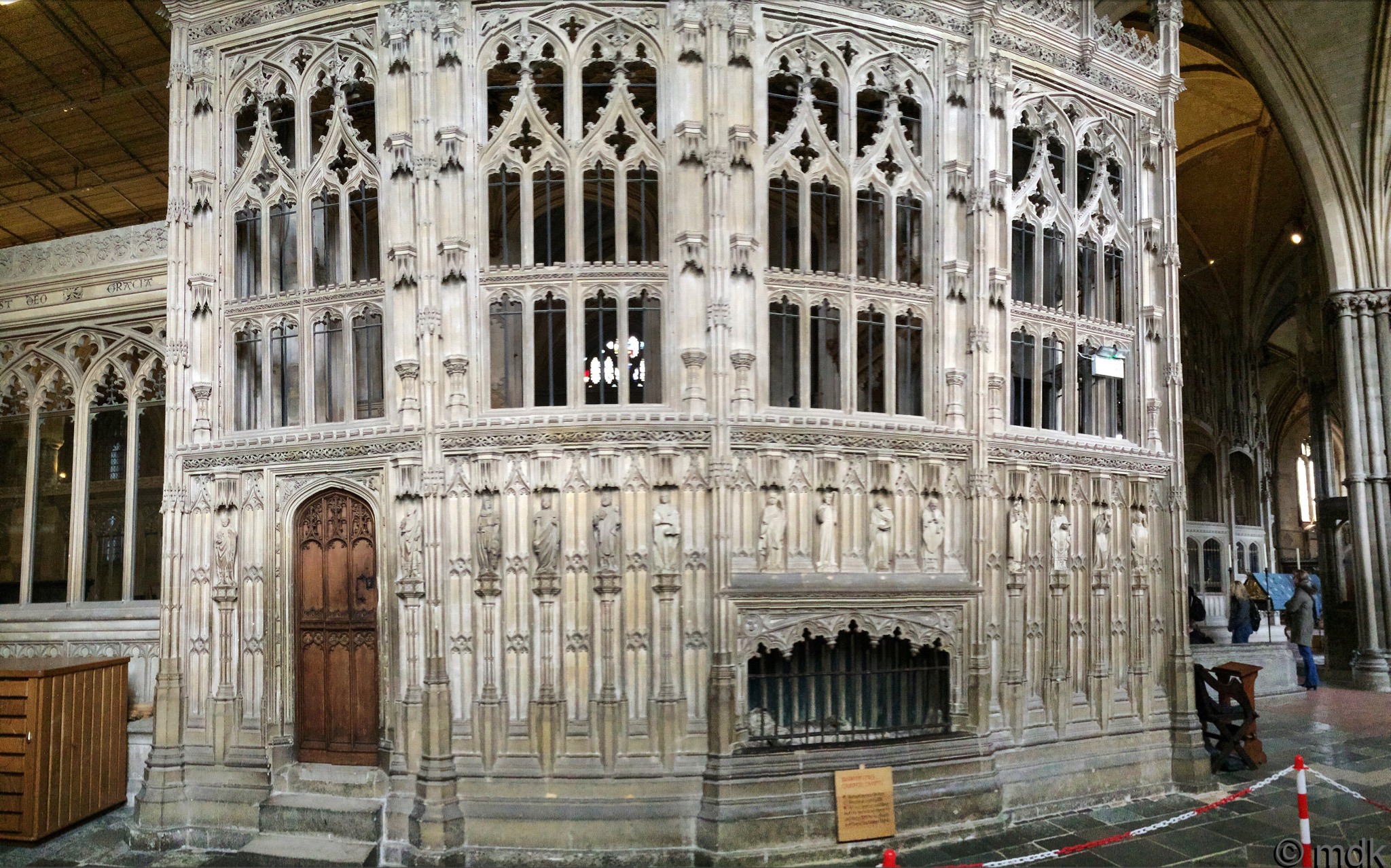
When it came to overloaded senses the stained glass had nothing on Bishop Fox’s chantry chapel with Fox’s tomb surrounded by ranks of beautiful statutes of saints. Amomgst them, St Denis, carrying his head, was a reminder of my search for the priory at St Denys. It would have been easy to spend all day looking at them and taking photos but another reminder of St Denys caught my attention.

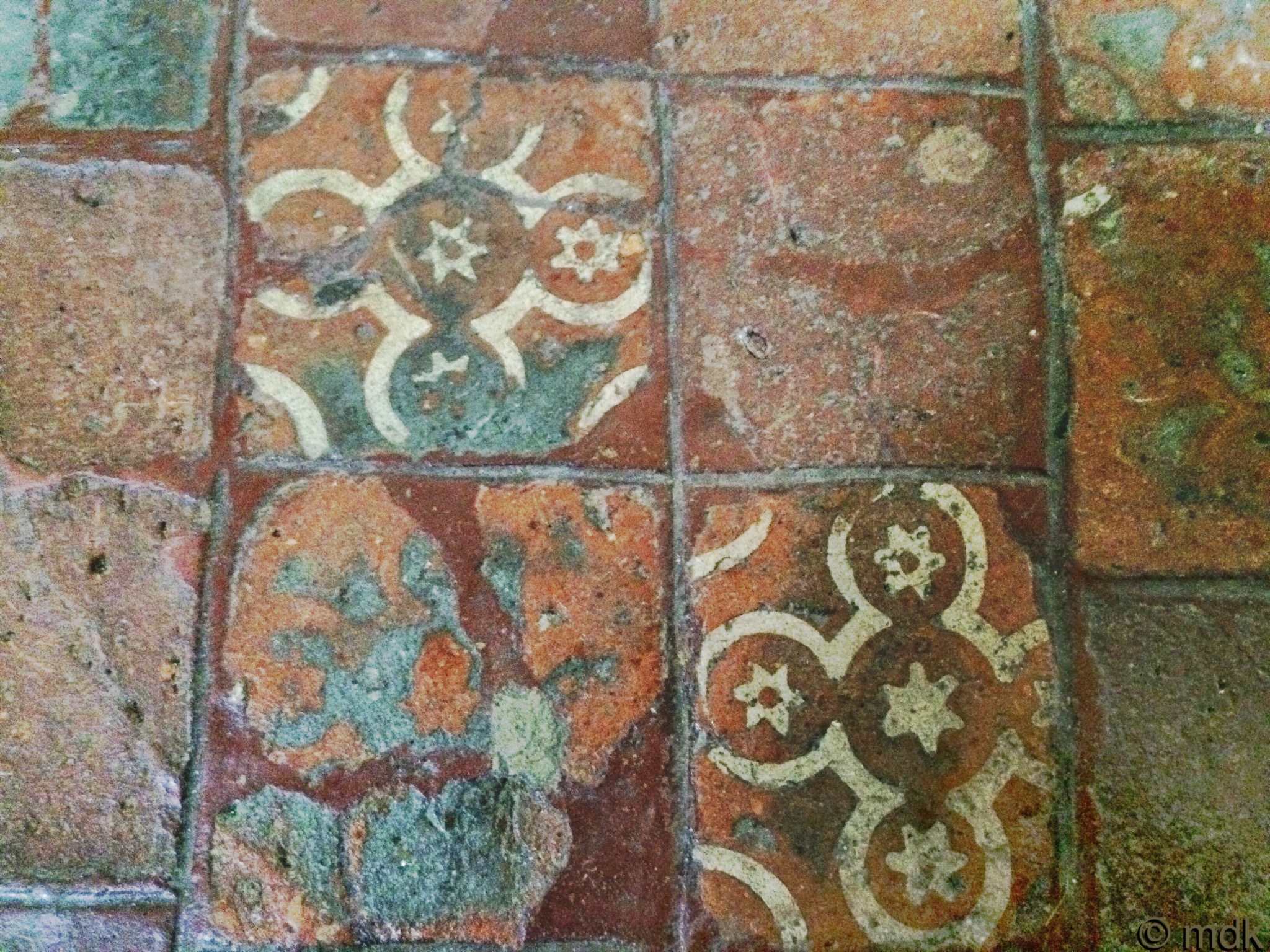
On the floor there were encaustic tiles, very much like those I’d seen in St Denys Church. These date from the thirteenth century so are probably a little newer than the ones from the priory but they form the largest surviving spread of medieval decorated floor tiles in England. We followed them, marvelling at how bright some were after so many centuries.


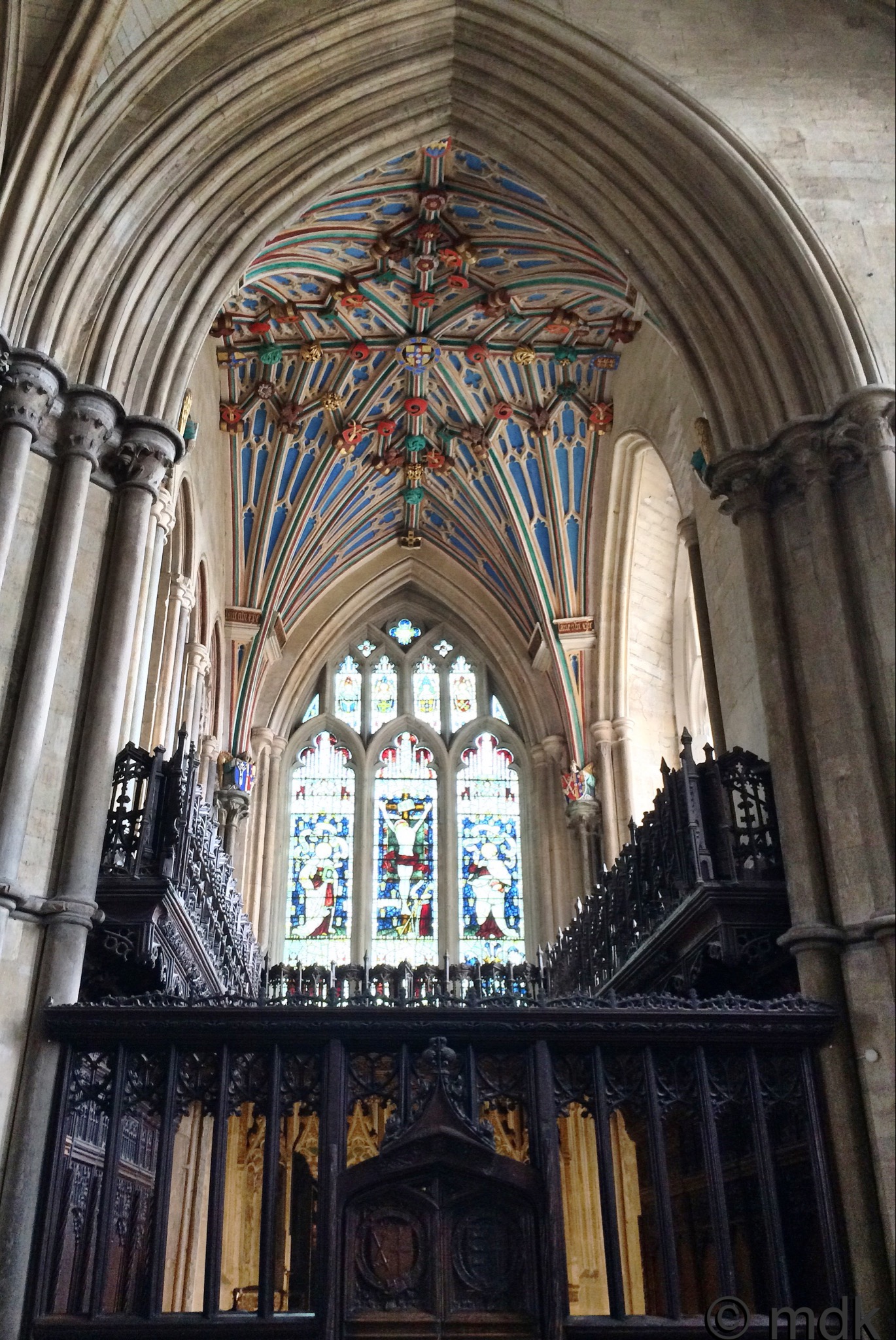
The tiles led us to the Langton chapel, where our heads snapped from the floor to the ornately decorated ceiling. Even the stained glass was hard pushed to compete with the ornate patterns in blue, green, red and gold or the elaborate carvings of the panelling. Langton was Bishop of Winchester and chaplain to King Edward IV. For his services he was given a recycled chantry chapel that had once been dedicated to St Birinus who converted the West Saxons in the seventh century.
On we went, peering briefly in the Guardian Angels Chapel with its bright stained glass and a ceiling covered with angel heads. Anywhere else we’d have stopped to stare but here, we were pulled in so many directions by so many wonderful sights it was impossible to take everything in. Even Bishop Waynflete’s beautifully painted tomb effigy warranted no more than a glance although he was once headmaster of Winchester College, provost of Eton and founder of Magdalen College Oxford and surely deserved more of our attention.


St Swithun’s tomb did stop us in our tracks. Born in Winchester in around 800, he was once Bishop of Winchester and is the patron saint of the cathedral after all, and his bones were famed for their healing powers. St Swithun was originally buried in front of the Old Minster but, a hundred years later In about 964, his bones were dug up and moved inside the building. In the eleventh century, they were moved again and placed behind the high alter in the new cathedral. Pilgrims came from far and wide to visit and crawl into a purpose built tunnel, the Holy Hole, to be close to his healing powers. During the Reformation the king’s commissioners smashed the tomb and stole the valuables within then the tunnel was blocked off.

Legend has it the kindly and charitable bishop had asked to be buried in the open where ordinary men could walk over him. When his bones were moved into the minster on his feast day, 15 July, a terrible storm began and lasted for forty days and nights. Now, rain on St Swithun’s Day, is said to presage forty days of rain. Perhaps they should move him back outside. We have quite enough rain already.
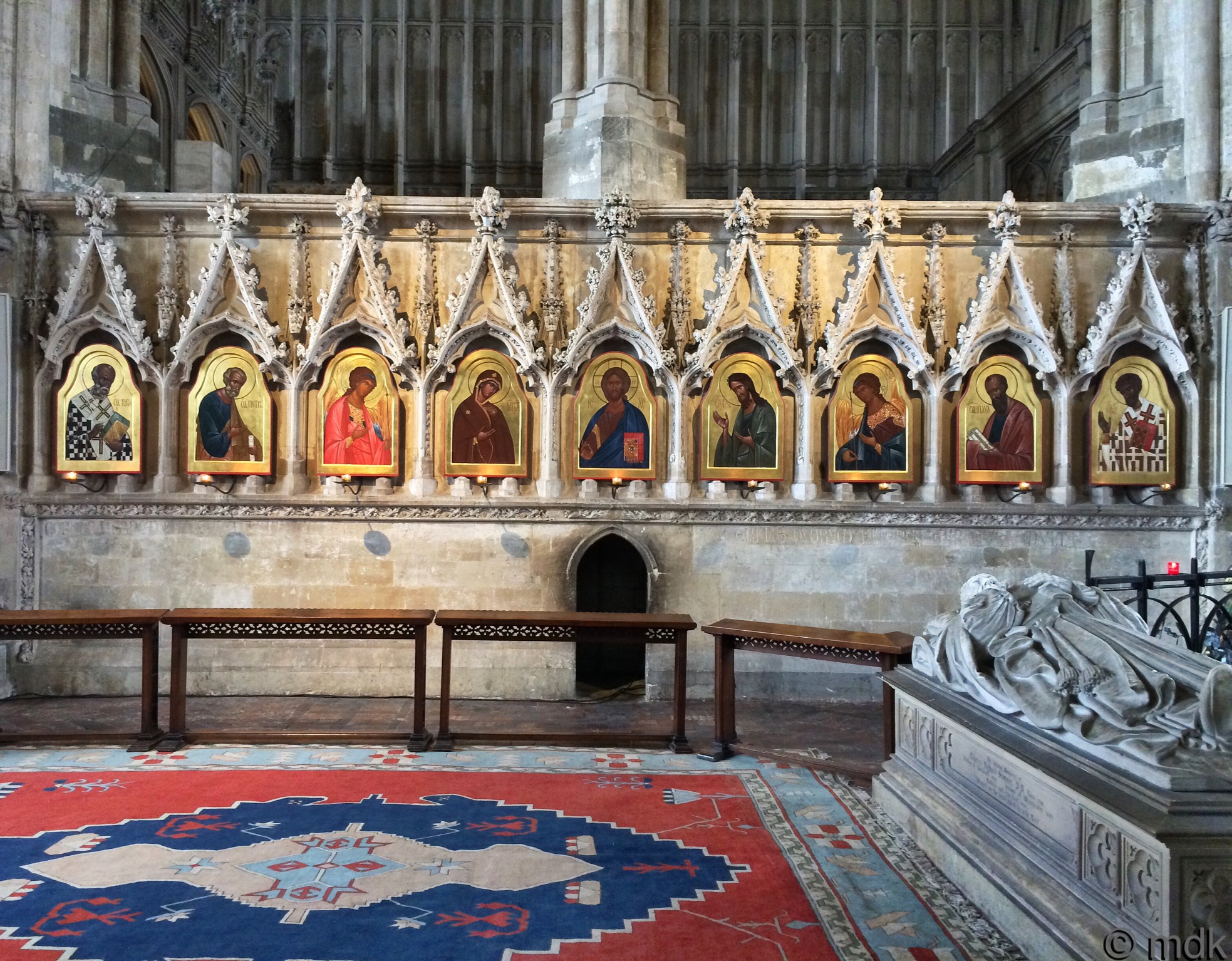
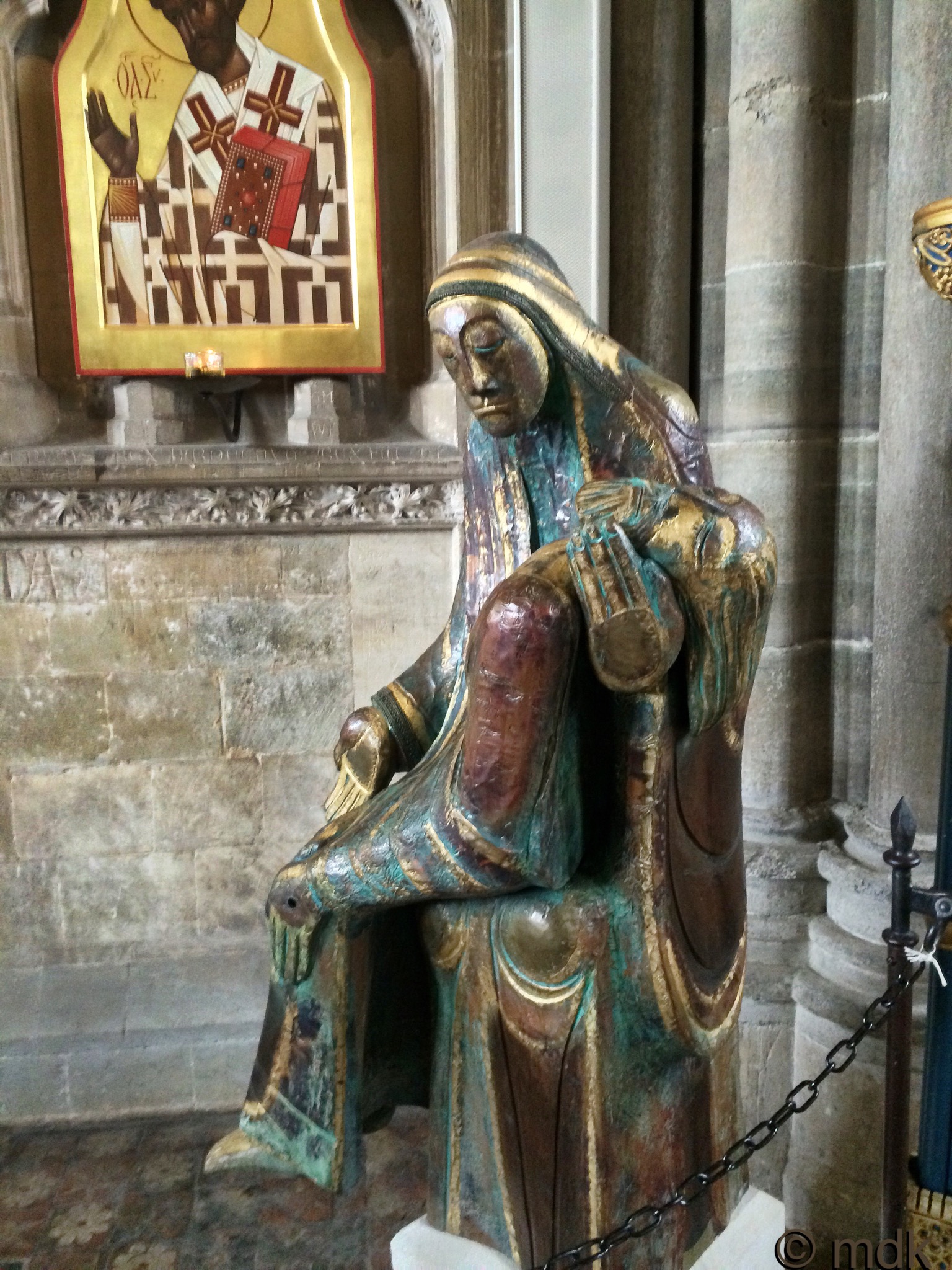
Behind the tomb nine brightly painted and gilded icons drew us forward. These were painted by Sergei Fyodorov in 1997. Beneath them is the tiny door to the now blocked Holy Hole. Close by a wooden sculpture caught my eye. This, I later discovered is Pieta, an image of the Virgin Mary cradling the body of Christ, created in 2011 by Coventry born sculptor Peter Ball. Poor Mary looks so sad and bowed with the weight of her troubles it’s a very moving piece.
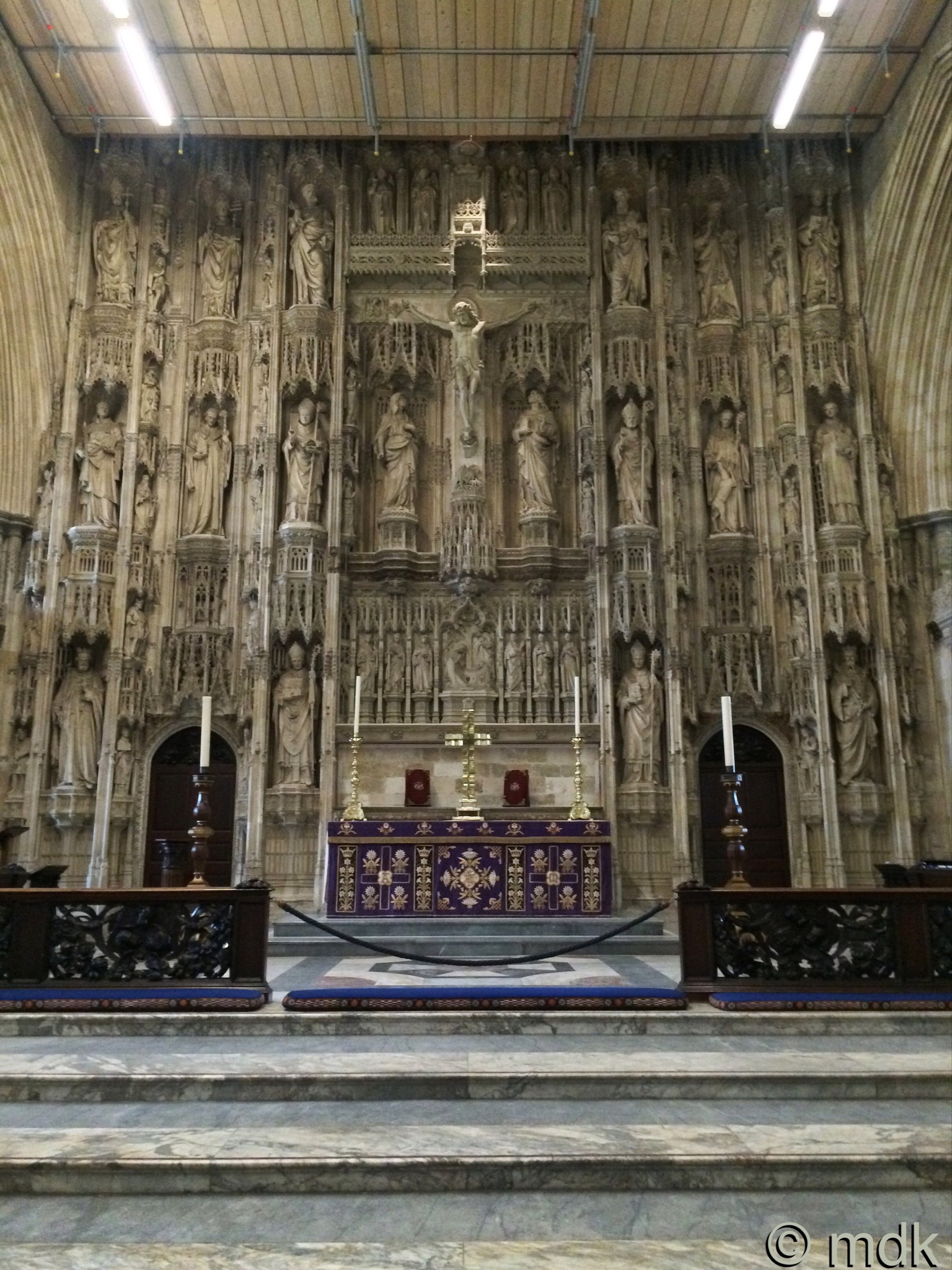
Any feelings of being overwhelmed paled into insignificance when we came to the high altar. The astoundingly complex fifteenth century stone screen behind it was an explosion of sensory information. We stood open mouthed trying, and failing, to take it in.
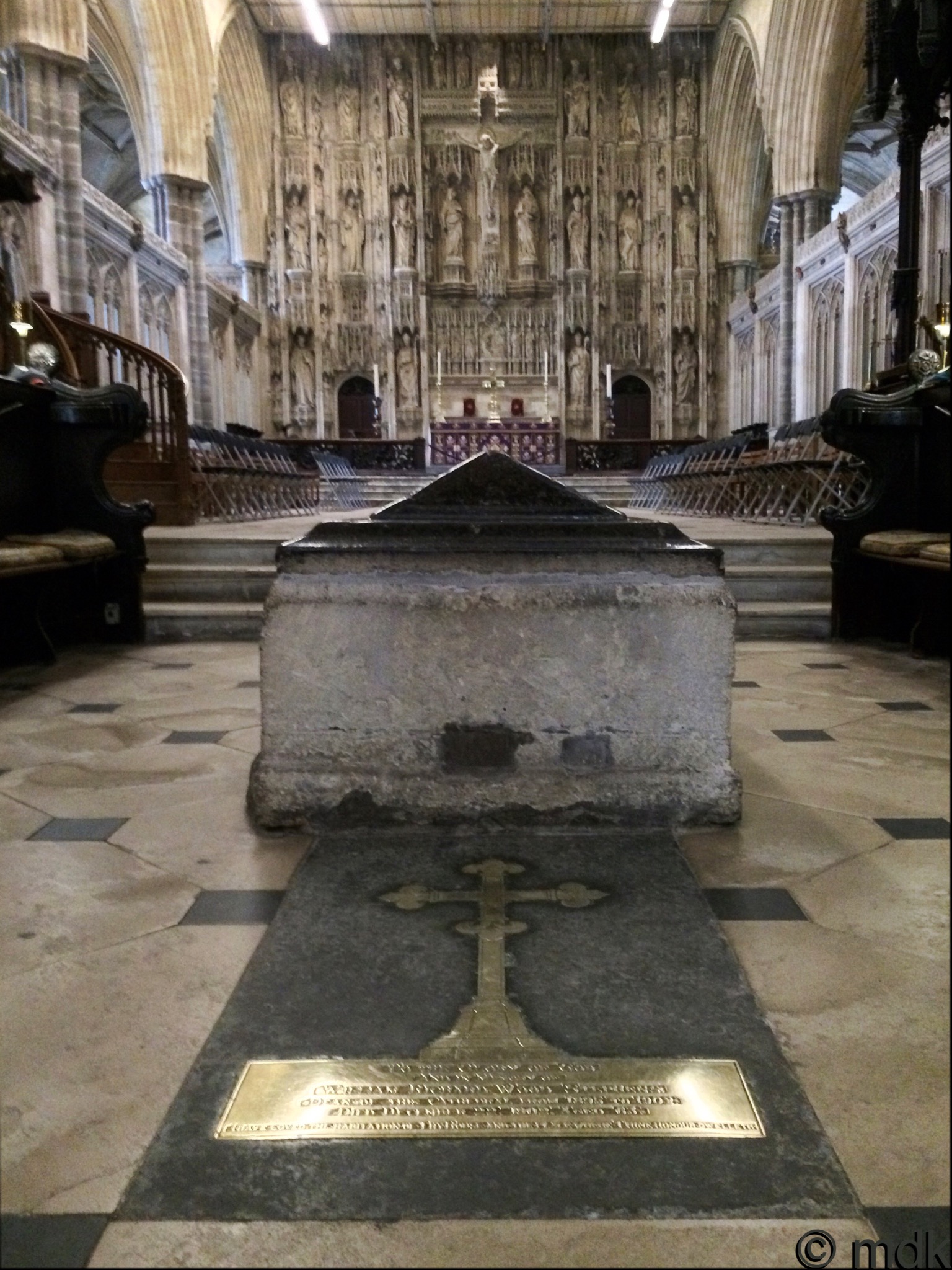
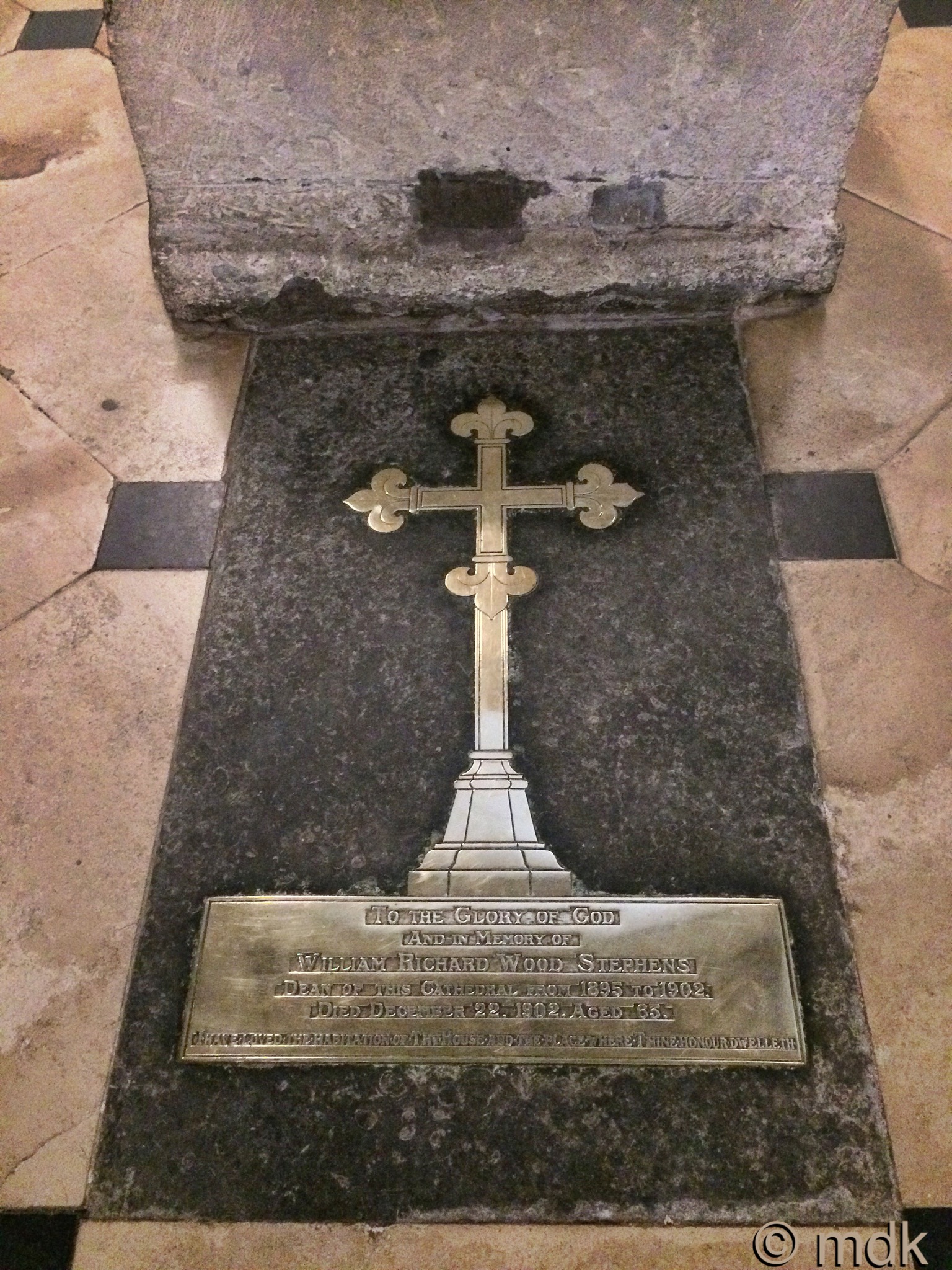
When we eventually tore ourselves away and turned there was no respite for our poor, overworked eyes. A halo of light streaming through from the nave silhouetted the intricately carved choir screen and illuminated the apex of Henry of Blois’ stone coffin. Henry, brother of King Stephen and grandson of William the Conqueror, was Abbot of Glastonbury Abbey and later Bishop of Winchester. He was often referred to as the power behind the throne. When he died in 1171 he was buried in the choir of Winchester Cathedral, although it’s said his heart was buried at Cluny. Ironically, his sarcophagus was once thought to contain William Rufus, William the Conqueror’s son, and probably the least popular king ever.

As we stood, wondering how it was possible to bury a king and a bishop and forget where, a disembodied voice came over the public address system inviting us to share a minute’s silence and prayer. Praying really isn’t my thing but a minute of peace to let our poor frazzled brains rest sounded good. We stood quietly looking through the choir screen into the nave as whoever was speaking prayed. There seemed to be some kind of bird song backing track which I thought was a nice touch.
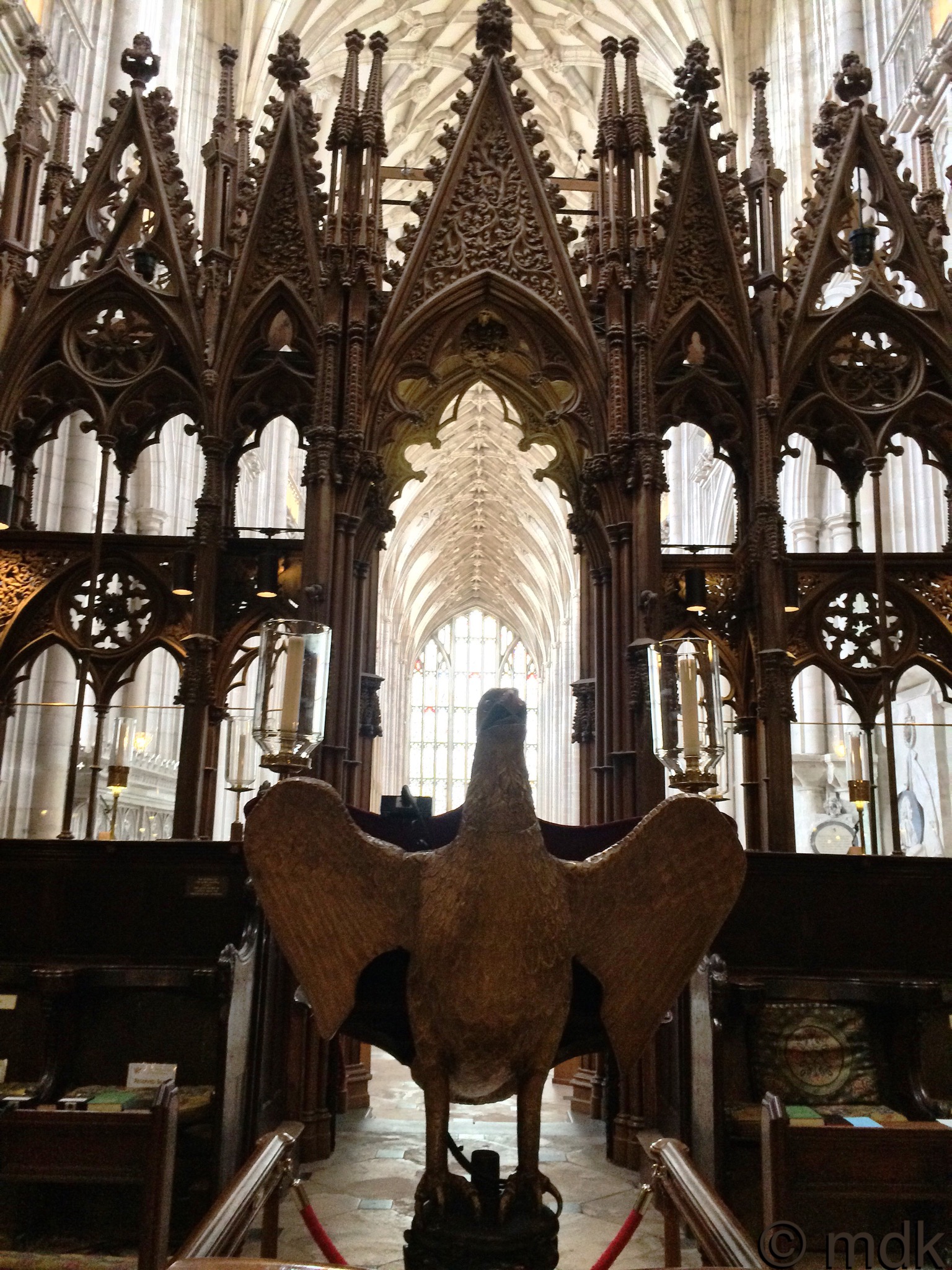
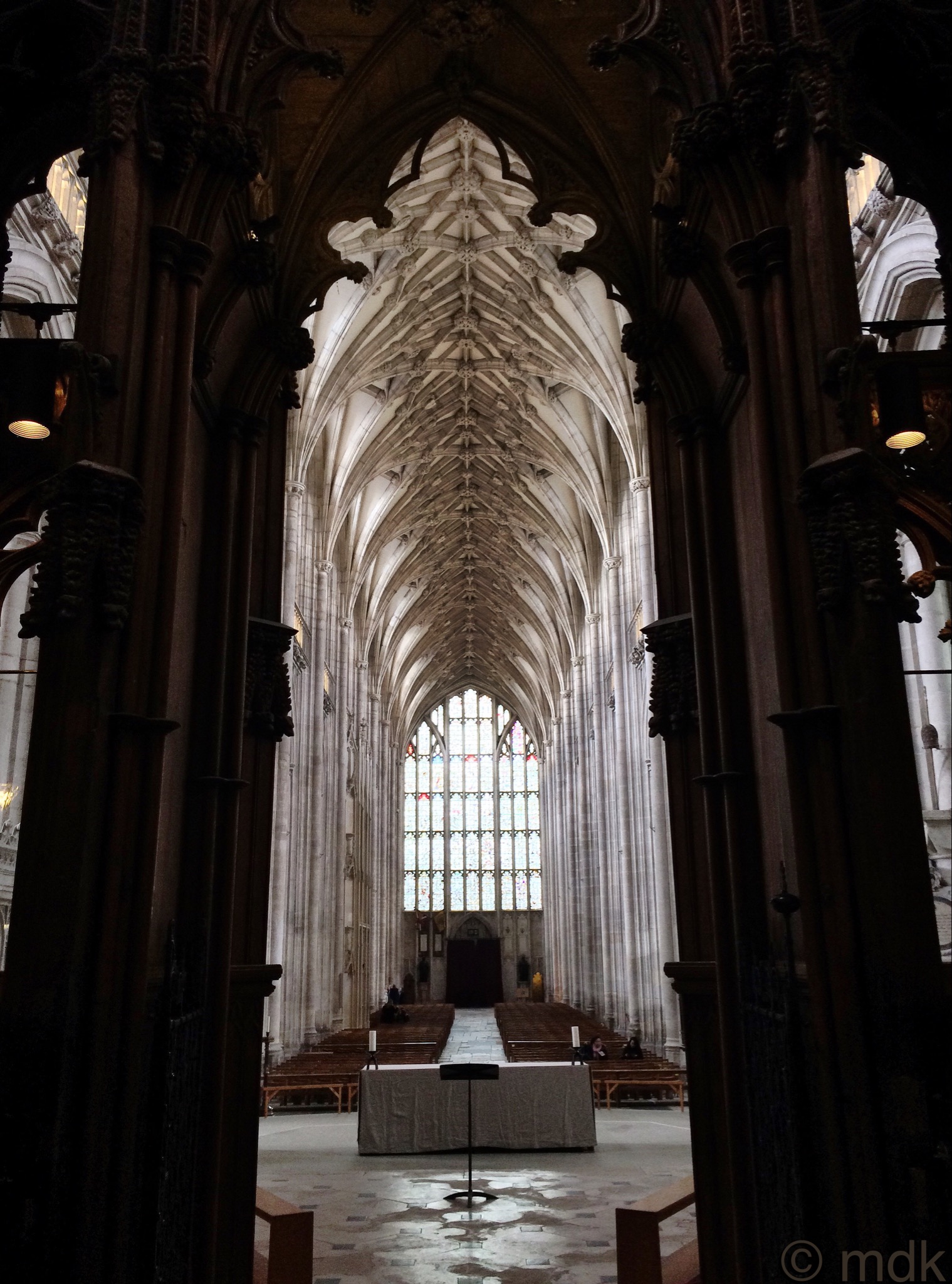
When the praying stopped something very strange happened. We made our way into the nave and I was raising my phone to take photos of the stained glass windows when the birdsong started up again. Had someone forgotten to turn off the tape?

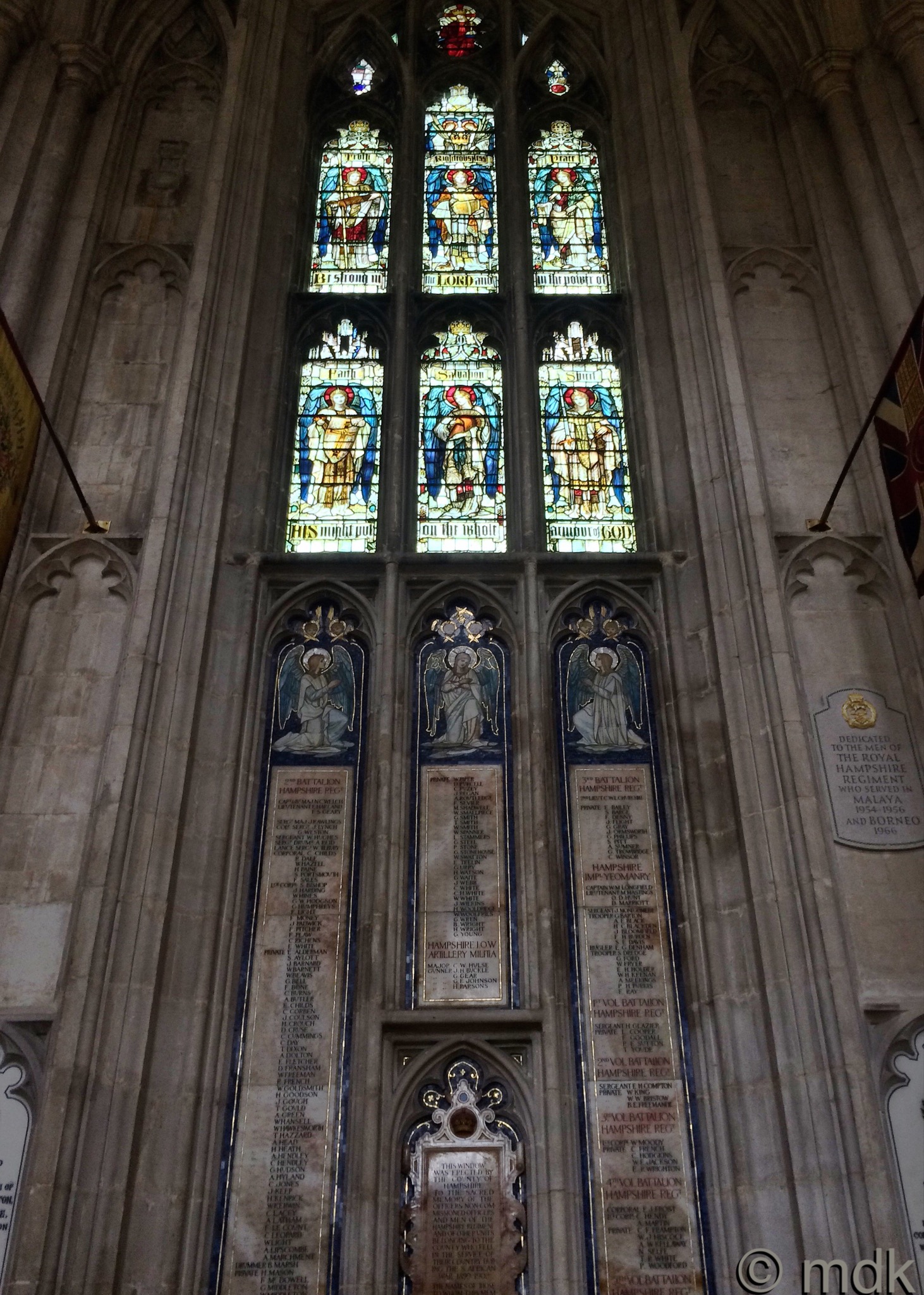
The cathedral was still filled with birdsong as I looked up at the the huge west window. The original glass was destroyed by Oliver Cromwell’s forces after the Civil War broke out in 1642. After the restoration of the monarchy in 1660, rather then replace them with new glass, the colourful shards were reassembled in a random pattern.

Now we’d seen all we were going to, so we turned towards the exit. This was when we bumped into the guide who’d taken us to the crypt.
“Did you enjoy your visit?” he asked.
“We did, but I think we’ll have to come back, there’s far more to see than we could take in in one day,” I said.
Just then a little robin flew past us and landed on one of the chairs in the nave.
“Was that the bird that was singing?” I asked. “I thought it was a tape.”
“He lives here,” the guide explained, “in fact there are a pair of them. The priests feed them.”
While I carried on talking to the guide CJ grabbed my phone and managed to capture a shot of the little bird. It may not have been the clearest photo ever but it is probably my favourite of the day.
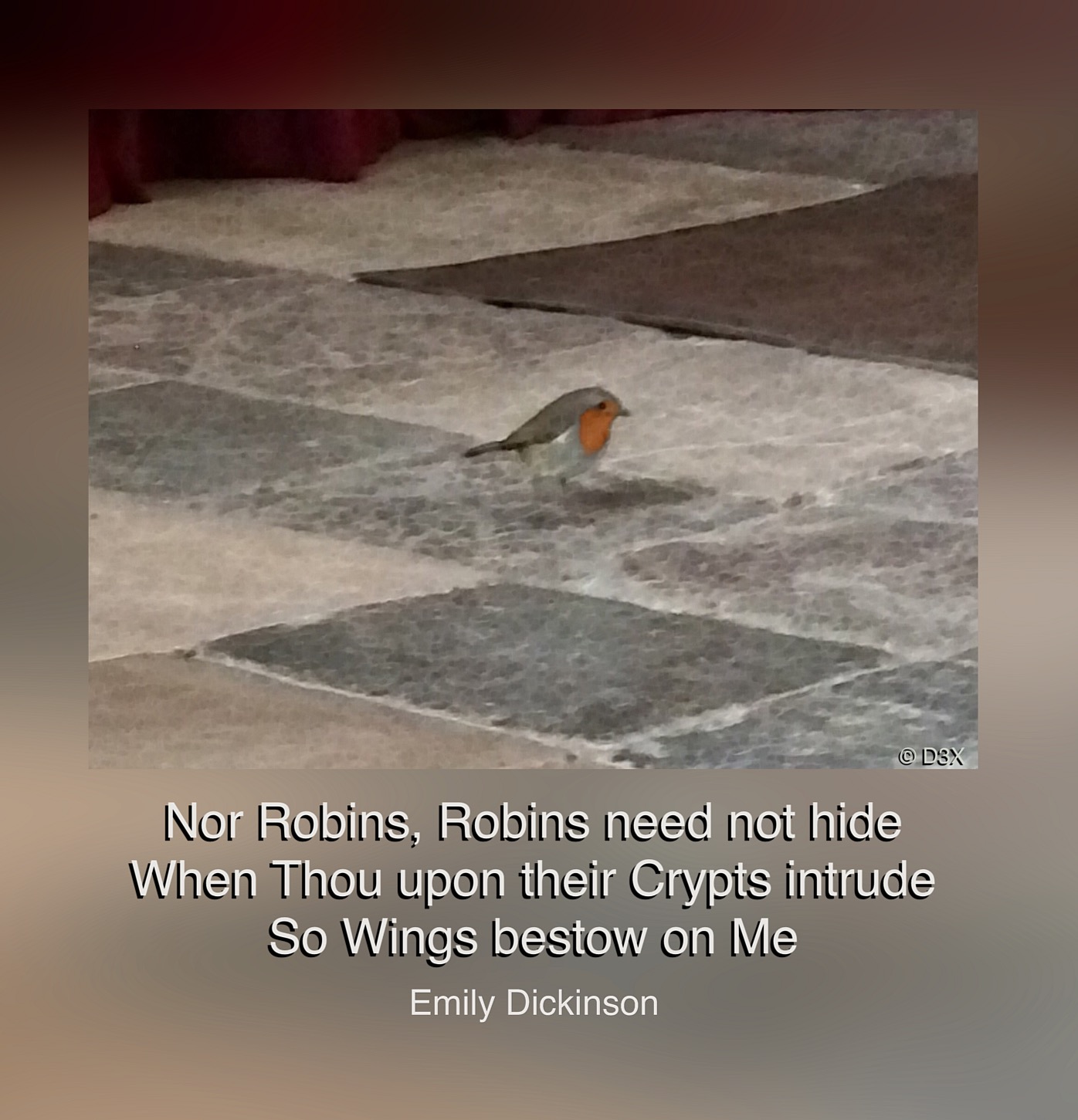
At at the outset fifteen pounds had seemed a lot to pay for two of us to go inside the cathedral, even if the tickets are valid for a year. That would buy more than six skinny lattes after all. Walking through the door into the Winchester sunshine, our heads spinning with all we’d seen, it seemed a small price to pay, especially as I know there is more than enough in the cathedral to keep me amused for many more visits.
Thanks so much for the tour, what an outstanding building it is. I hope you will go back there to get your moneysworth from that expensive ticket and show us more of your beautiful photographs.
There will certainly be more visits to the museum. There’s a lot left to see.
Winchester is one of my favourite places. I attended uni here and had the privilege of having my graduation here in 2014…I loved every scary minute of it. I must make more effort to visit…even if its just to wander around the old city walls and buildings.
There’s so much to see in Winchester I always come away feeling I’ve just scratched the surface.
I have lost count of the many times I have visited this most wonderful place.
I can’t believe this is the first time I’ve been inside. CJ went with a school trip years ago but he’d never seen the crypt. I know we will keep going back.
That’s quite a place! I know what you mean about sensory overload.
I love the statue in the flooded crypt and how great it is that robins live there.
It seems like a place you could visit a hundred times and still see something new each time. The statue in the crypt is wonderful. Hopefully next time we’ll be able to take the tour and see it up close. As for the robins, they made my day.
That is fascinating. I have visited Winchester and its Cathedral many times, but never been to the crypt. I love the touch about the robin and your Emily Dickinson quote is so apt.
The crypt is well worth a visit. There are tours on the half hour when it’s not flooded but you can still have a look even when it is.
What a beautiful, amazing church. Thanks for skipping the six lattes to take us inside 🙂
We don’t have a cathedral in Southampton so this is the nearest one. It was a great visit.
The photographs are stunning. I’m sure I’ve seen a statue of Walker in the cathedral, but perhaps it’s hidden away somewhere. I’ve never been into the crypt, but it looks worth a visit.
I think there is a statue of Walker in the cathedral. Next time I’ll try to find it. The crypt is well worth a visit, even when it is flooded.
What a haunting photo that first one is, the reflections of the arches in the water. Beautiful.
My husband’s niece went to uni in Winchester and her graduation ceremony took place inside the cathedral.
Lisa x
I was so pleased the crypt was flooded, although I’d have liked to do the tour. It was eerily beautiful.