
I have always been a sucker for a footpath. Something about seeing those signs gets me all excited. This odd obsession has led me on quite a few wild goose chases in my time. It has led me astray, miles from where I wanted to be. Sometimes, it has caused me many miles of backtracking, or unnecessary detours. But, still, I cannot resist the lure of the footpath. Maybe it’s because there are no cars, and, generally, no people? Or it could simply be the anticipation of stumbling upon something strange or beautiful at the other end. Whatever it is, I’m hooked and on 15 April, with blue sky overhead, I needed a fix. Unfortunately, time, a lack of available transport and the need to knuckle down and do some work on my next book, meant I was going to have to keep it local.
Urban footpaths are nowhere near as enticing as rural ones. Even so, I consider myself lucky to have a whole network of the former at my disposal, all within a very short distance of my front door. My challenge for the morning was keeping away from the roads as much as possible. I began with a path I know well. It joins Beech Avenue and Glenfield Avenue and was once a shortcut home from school. Or it was until I was banned from using it.
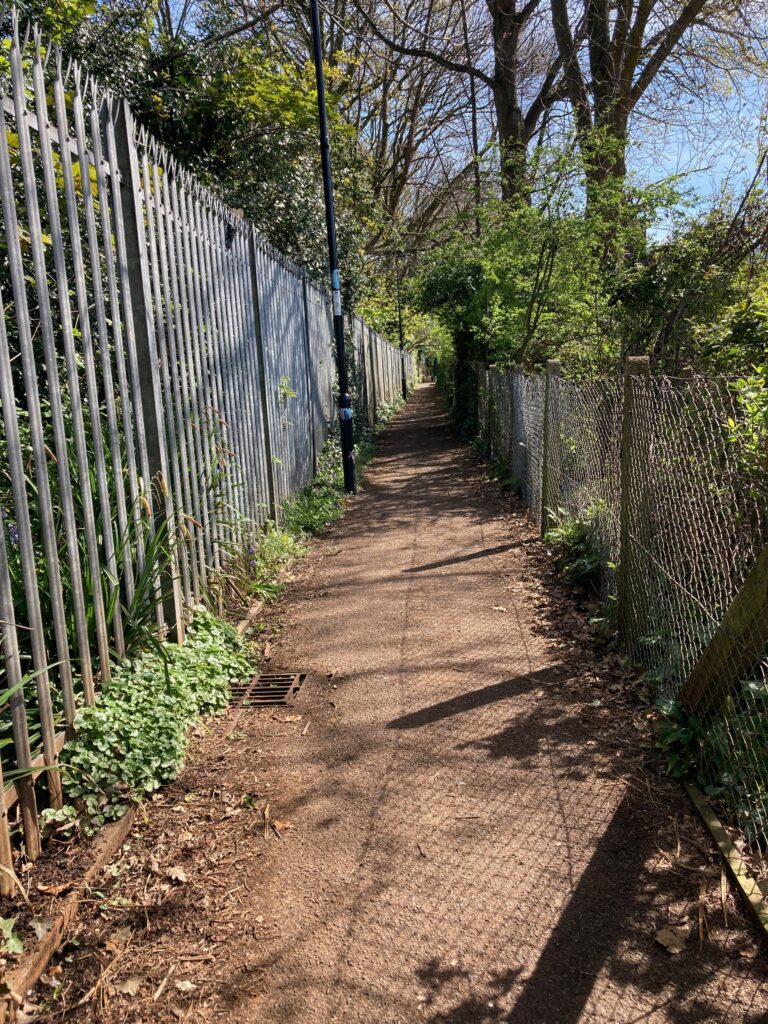
On this sunny April morning, it looked innocuous enough, if rather unexciting. There isn’t much to recommend this boring tarmac path, bordered on one side by the stark metal fencing of St Mary’s College and on the other by the chainlink fence of my old junior school. At least not at first sight. Back in my school days I remember it being greener, with beech hedges on either side, but this may be a trick of the memory. It was more than half a century ago after all. If you peer through the metal fence, though, an abundance of bluebells are growing.
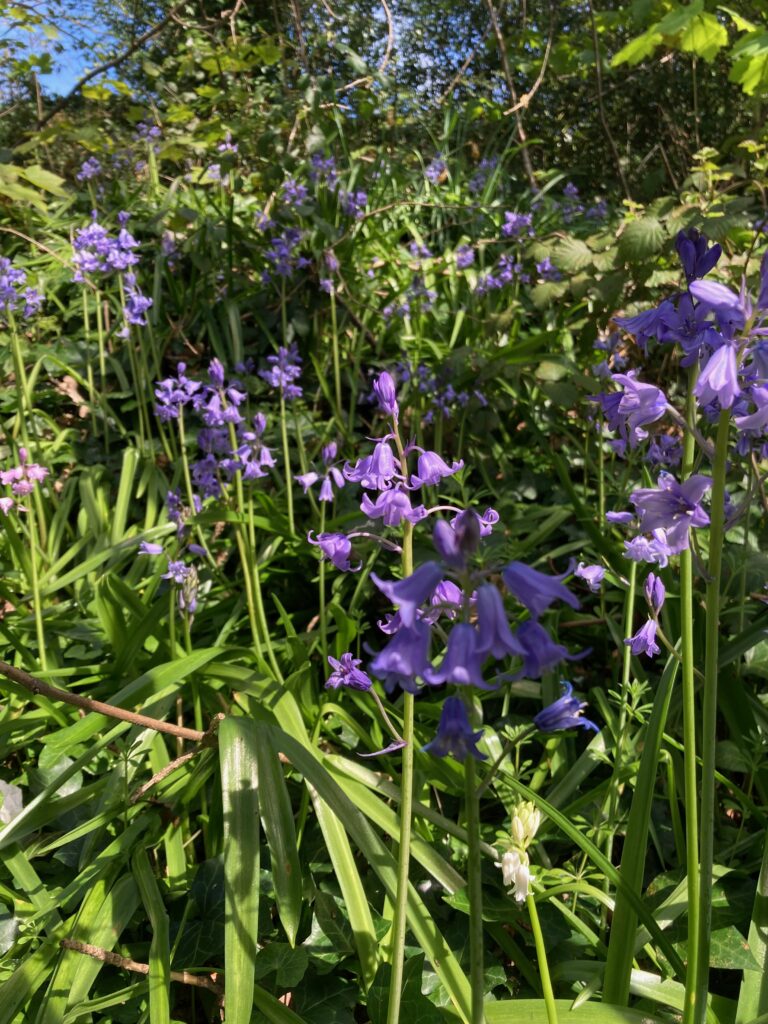
If I half close my eyes I can see two little girls, maybe six years old, give or take a year, walking together down this green tunnel of a path on the way home from school. One is blonde, the other is dark. They are talking. Those two were always talking. It’s a wonder they learned a single thing at school. They have almost reached the end of the path when a man, casually leaning against the hedge on the college side of the path speaks to them. He asks them if they can keep a secret. They giggle. He shows them his secret by opening his coat. The two girls giggle even more and walk away. They keep his secret for a day or so. Then the dark haired girl tells her mother and the police come to visit the pair.
That was why I was banned from the path. The strange thing is, the man and his secret weren’t at all scary. I don’t recall seeing the secret at all, although I must have, and the man is a hazy figure, middle aged I think, slightly fat and dark haired, possibly balding. It all seemed funny and slightly rude. The visit from the police was a different matter. Lots of questions I couldn’t answer and a feeling that, somehow, I had done something wrong. It would be many years before I dared to walk along that path again, and, even today, I imagine my mother wagging her finger at me disapprovingly.
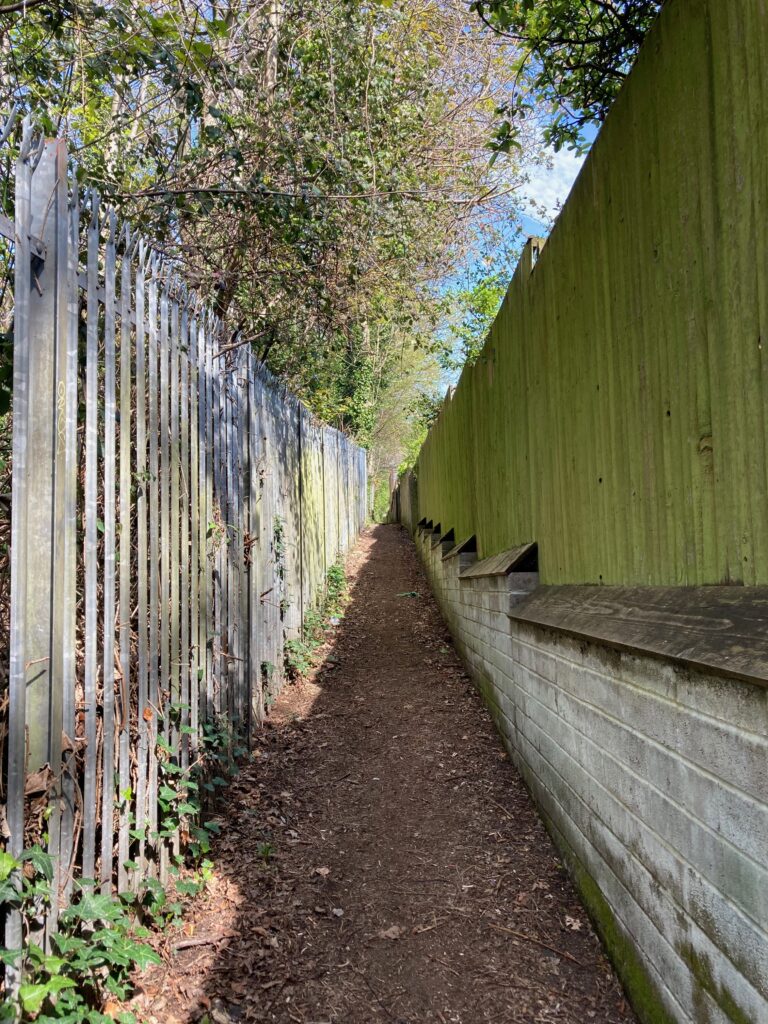
Near the far end, not long before it reaches Glenfield Avenue, the footpath divides. The side path is narrower and quite steep. It skirts the edge of the old St Mary’s College playing fields and runs behind the back gardens of Glenfield Crescent and Cobden Avenue. Here the tarmac gives way to leaf mould. In autumn and on rainy days there is an earthy scent of decay. The metal fence continues as before but now there are walls, fences and the odd gate hiding the gardens from view. Other than the lack of people and cars, there is little to recommend it until you arrive, slightly breathless, at the summit. The top end of the path is bounded by a high, and gloriously crumbling red brick wall. It is covered with moss and lichen, and a tangle of wildness grows at its feet. I stopped to inhale the delicate scent of the bluebells that had colonised the whole stretch of wall. A pigeon watched me suspiciously from his perch high in a tree. Perhaps he sensed my guilty memory.
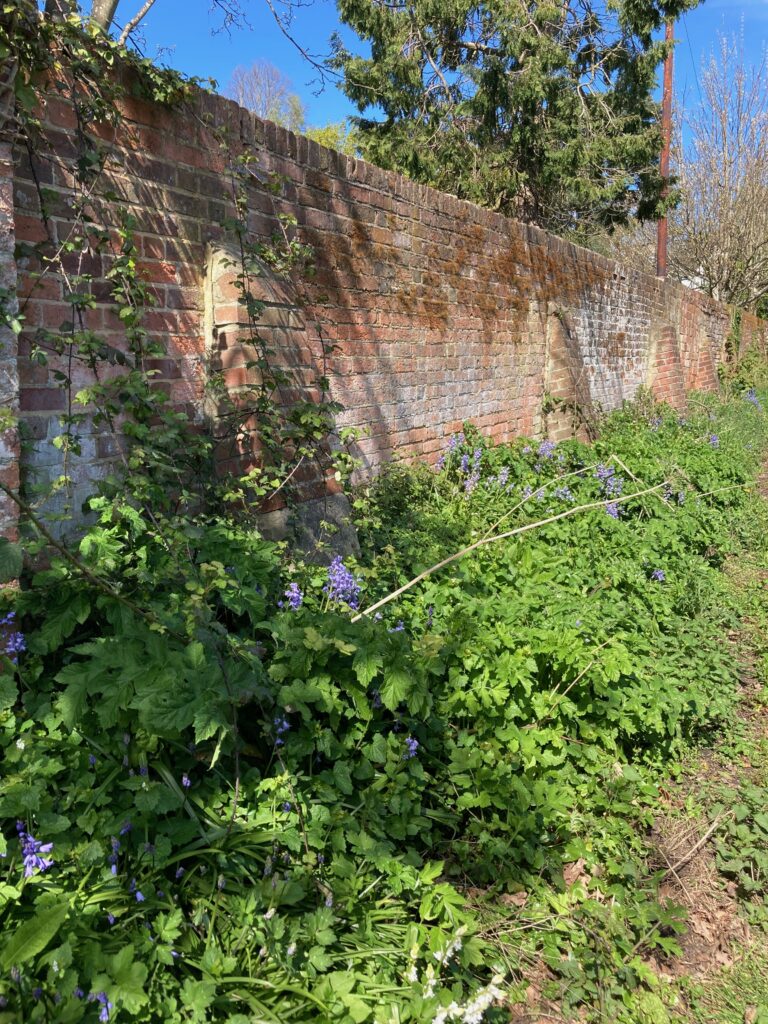
The summer of 1972 was a strange limbo between junior and senior school, a time of leaving old friends behind and hurtling towards new ones. One friend spanned both worlds. Her name was Lizzie. She lived at the top corner of my road and I’d known her for as long as I could remember. When I first met her, aged around three, she had a head full of blonde curls, but, unlike my own, straight, white-blonde hair, her curls had now turned caramel brown. During that summer she and I walked this path together for the first time. We had two companions, a dark haired boy and a fair haired boy who had left our old school the year before. The four of us took an unknown path behind the wall — unknown to us anyway, the boys seemed to know it well and we were almost certainly trespassing. It was here that I first kissed a boy. Such a chaste kiss it was too — although not for the want of trying on the part of said boy.
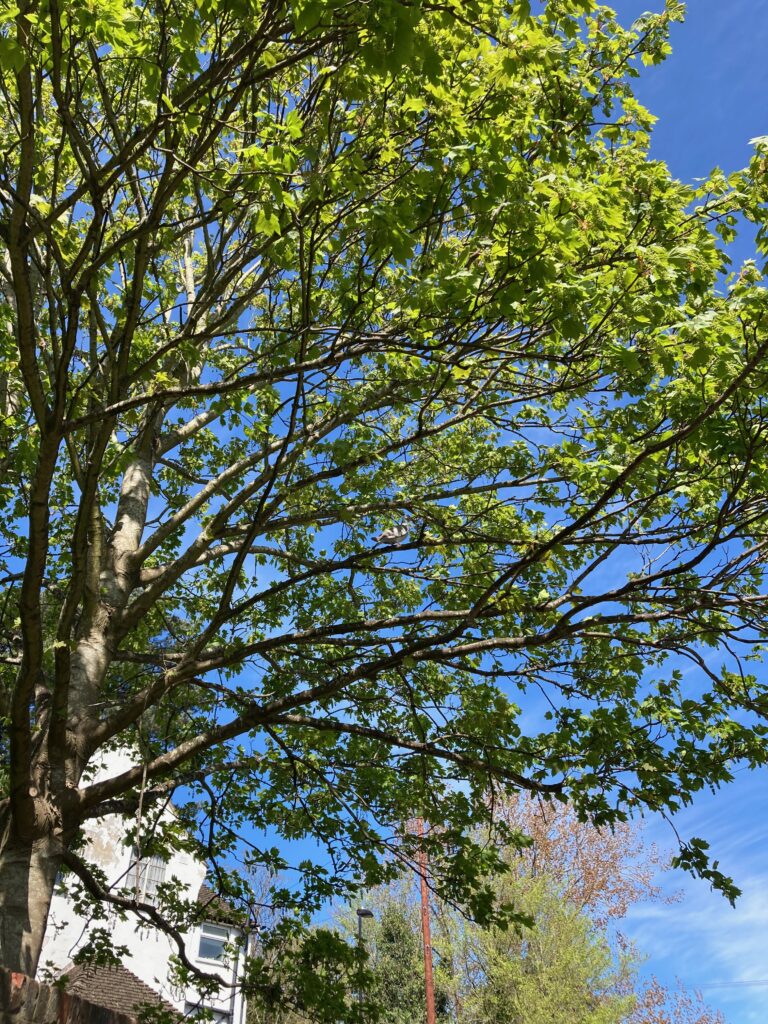
Lizzie and I were innocent twelve-year-olds, you might even say naive, given where we were and who we were with. Unfortunately, the dark haired boy kissed Lizzie and the fair haired boy kissed me. Later, Lizzie and I confessed we both wished it had been the other way around. Our mothers would have disapproved of any kissing at all, but they never found out. We never went back either. Neither Lizzie, or I were overly impressed with the business of kissing boys. In fact, it would be quite some time before either of us bothered to try it again.
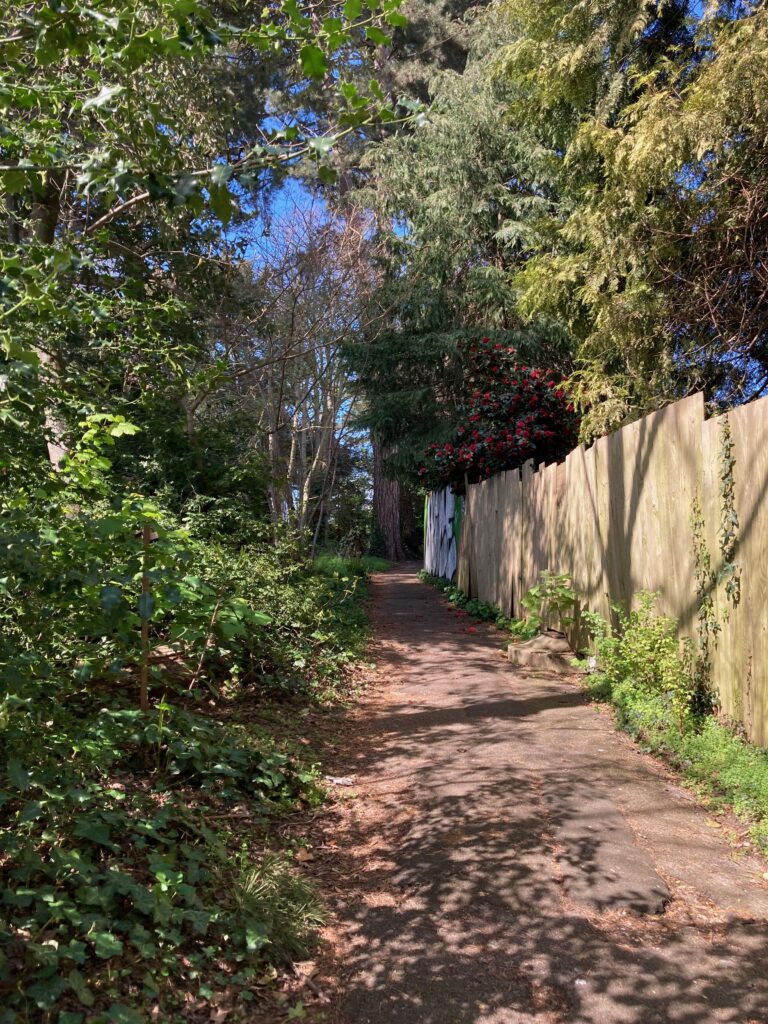
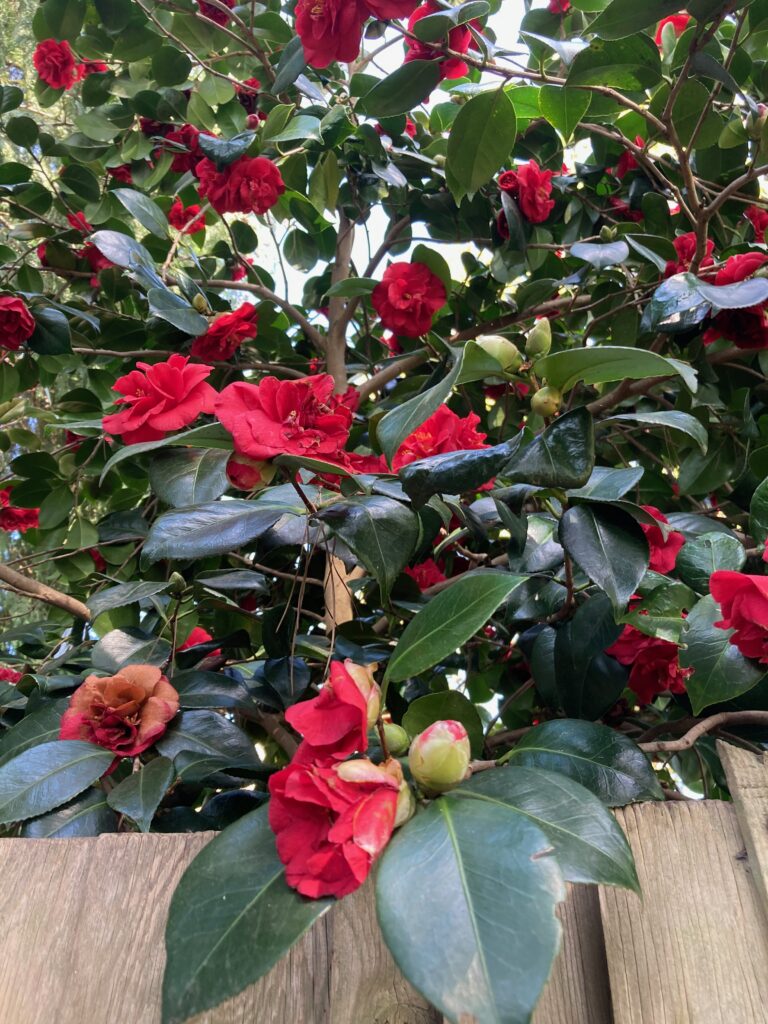
Across the road from this memorable spot, is another footpath. It follows the line of Cobden Avenue but climbs high above the road and is shielded from it by trees. It is greener than the previous paths, although one side still consists of shabby fences belonging to the houses on Beechwood Gardens. As a bonus, there were camellia flowers hanging over one fence to make me smile on this particular April morning.
The path climbs and curves until it finally turns sharply right and becomes steeper as it heads up Midanbury Lane. Long ago, in 1045, Wadda’s Stake was probably somewhere nearby. Exactly what this landmark looked like is a mystery, but it was mentioned in the South Stoneham land charters of Aethelred II, and appears to have been roughly at the junction of Midanbury Lane and Cobden avenue. Whatever it was, it is long gone now. Not quite so long ago, in that limbo summer, my giggling, secret spilling dark haired friend and I used to take this path on the way to another forbidden place.
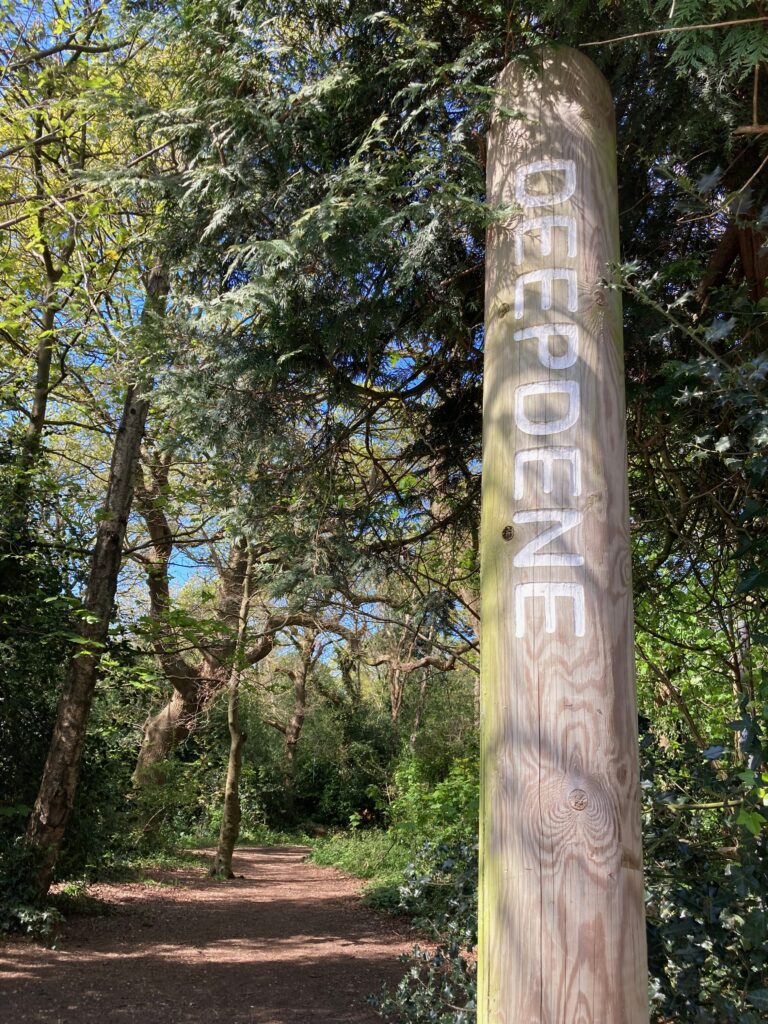
Why Deep Dene was out of bounds I couldn’t say, although the man with the secret, or someone like him, might have been in our mothers’ minds. We were just two young, short haired twelve year old girls, dressed in scruffy jeans, t-shirts and trainers we called sneakers. We certainly didn’t see any strange men. Truth to tell, I don’t remember much about what we did now, apart from sit on the swings in the centre and walk through the woods feeling very naughty and a little scared because we knew we shouldn’t be there. Back then, they seemed such huge, deep, dark woods, but actually, they were just overgrown gardens, the gardens of Deep Dene House.
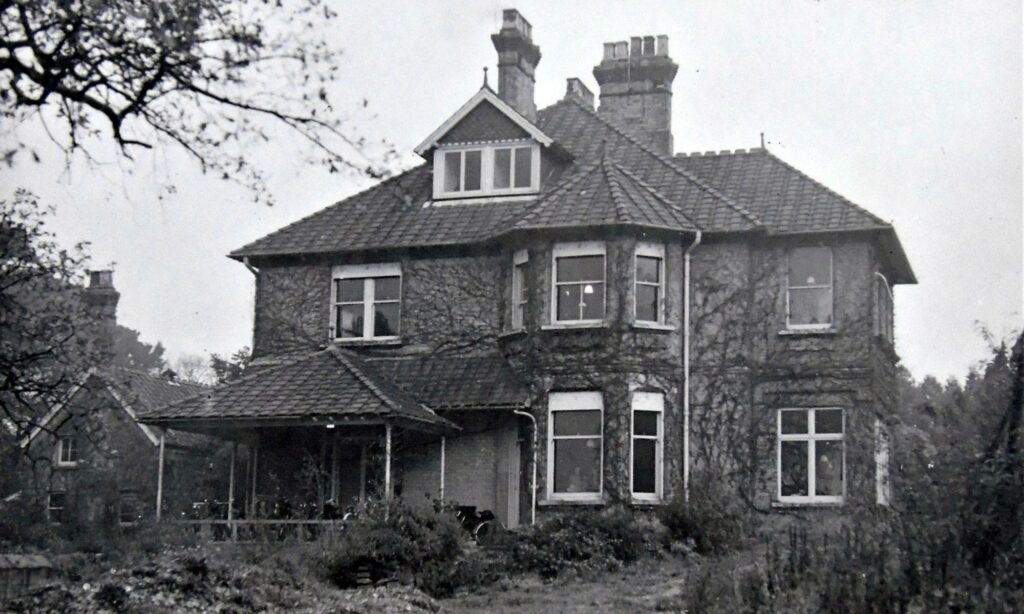
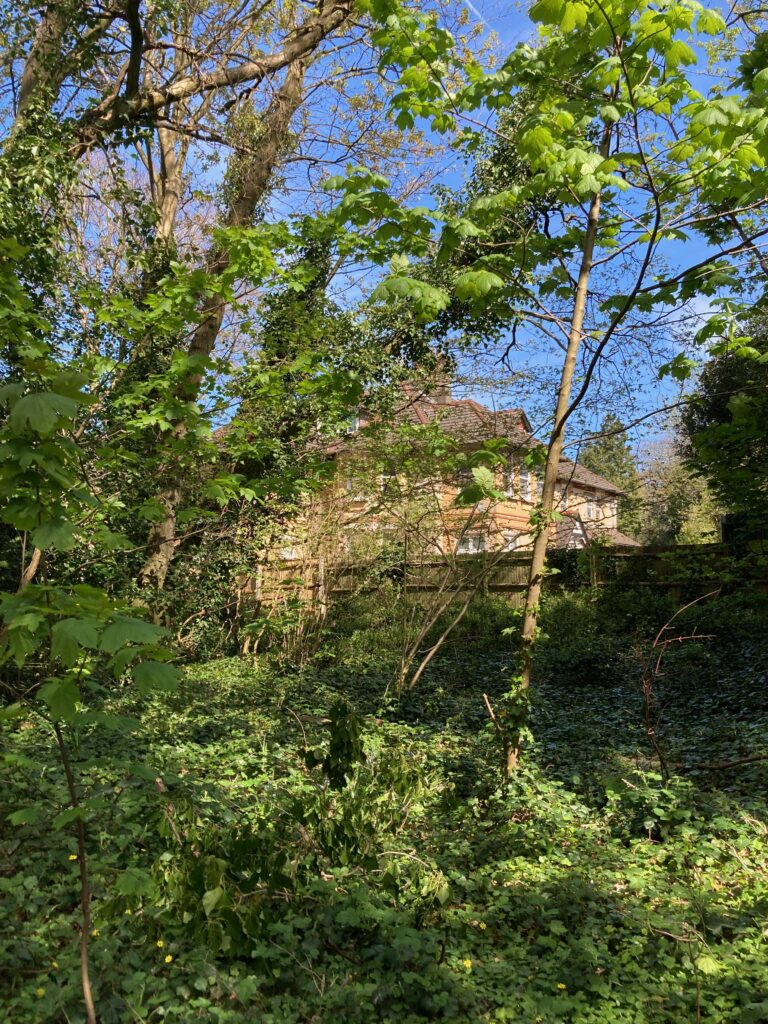
The house still stands and can be seen through the trees, although it has now been turned into flats. It was once the home of Sir Henry and Lady Milner-White. Sir Henry was a director of Southern Railways, amongst other things. Their son, Eric, became the Dean of York and was one of the founders and benefactors of the Church of the Ascension, just down the road on Cobden Avenue. The east rose window of the church is a memorial to his parents. After the the Supermarine Factory in Woolston was destroyed during a devastating air raid on 26 September 1940, Deep Dene House became the accounts and personnel department of the Ministry of Aircraft Production and the gardens were eventually left to Southampton Council. Of course, my dark haired friend and I had no idea of any of this back then. If you want to know more about the dispersal of the factory, the wonderful Supermariners website, is a great resource. I’ve found it useful while researching my most recent books.
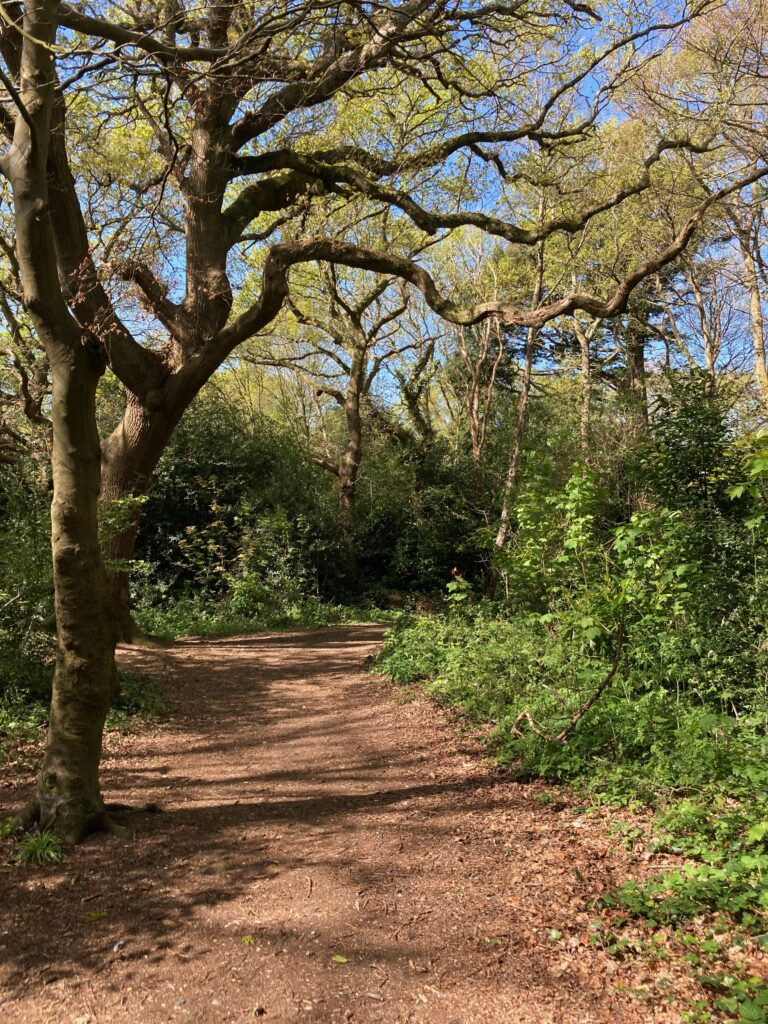
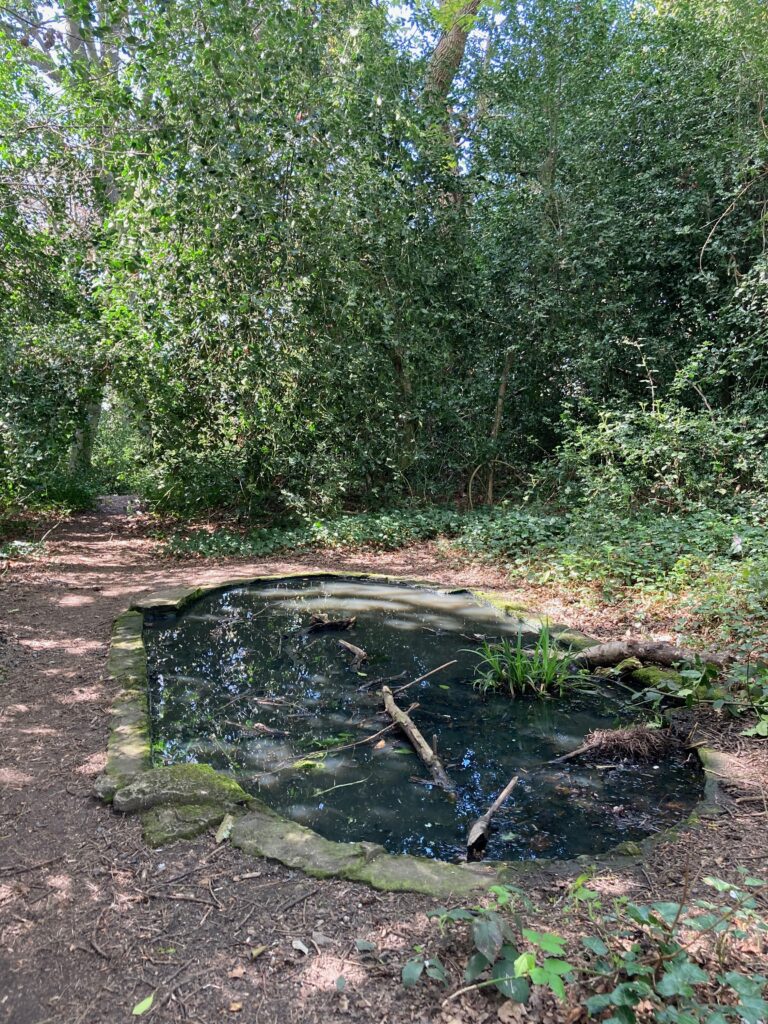
Today, the woods seem far smaller and not at all scary. As they were known as Bluebell Woods in the 1950’s, I half expected to find them a mass of blue, but I was disappointed. My only concern was which of the many trails to take. In the end, I decided to follow the one that would lead me past the old pond. It’s a bit of a sorry sight these days, all murky water, filled with fallen branches, but I imagine it was once Lady Milner-White’s pride and joy.
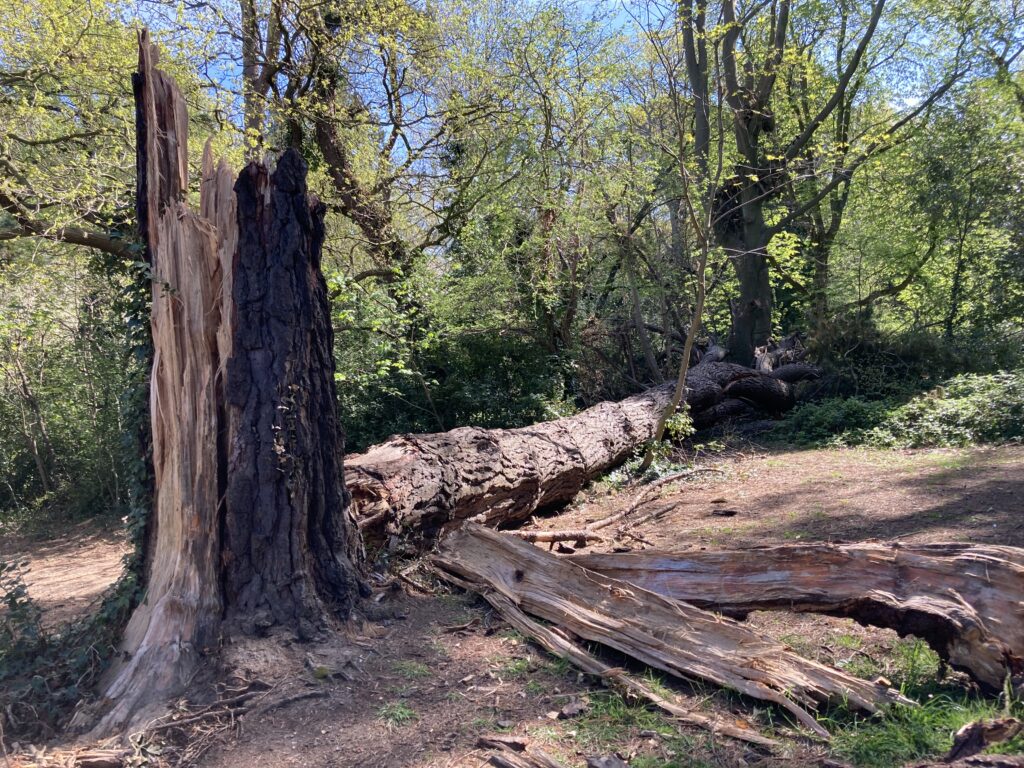
There was plenty of evidence of fallen branches everywhere I looked. Deep Dene is no stranger to trees, or bits of trees falling. In 2017 a tree from these woods fell and blocked the whole road during rush hour. A house was damaged, but, luckily no one was hurt. Being nosey, I had to go and have a look. If you’re nosey too you can read about it here. There’s not much to see now, of course, except the gap where it once stood.
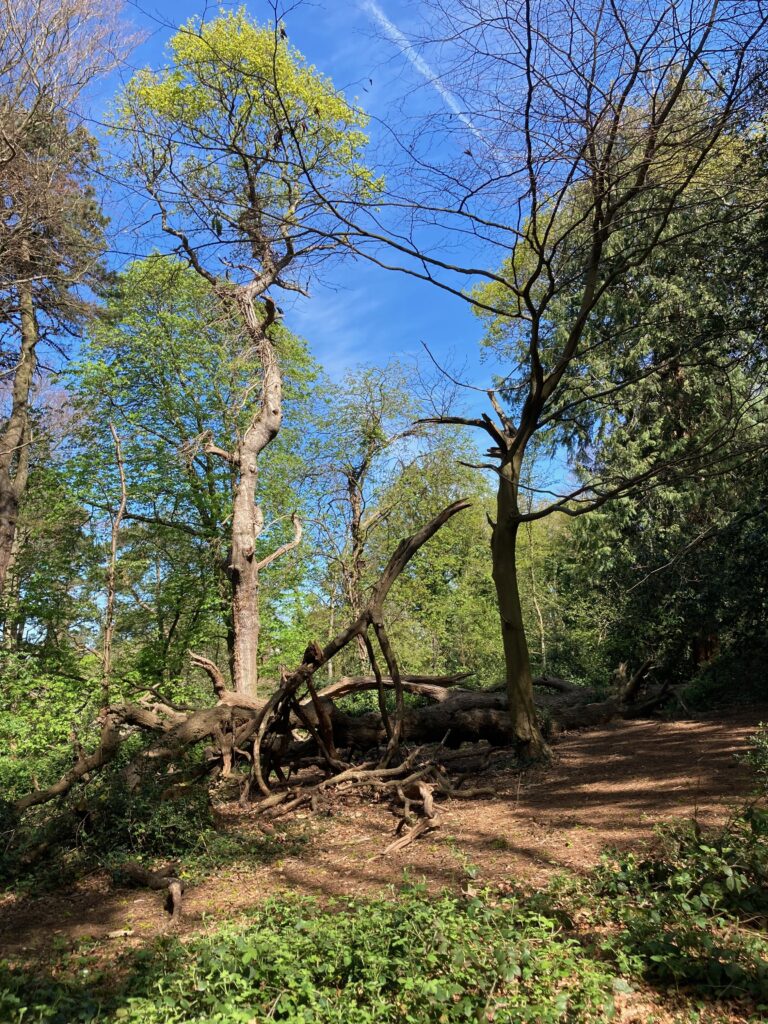
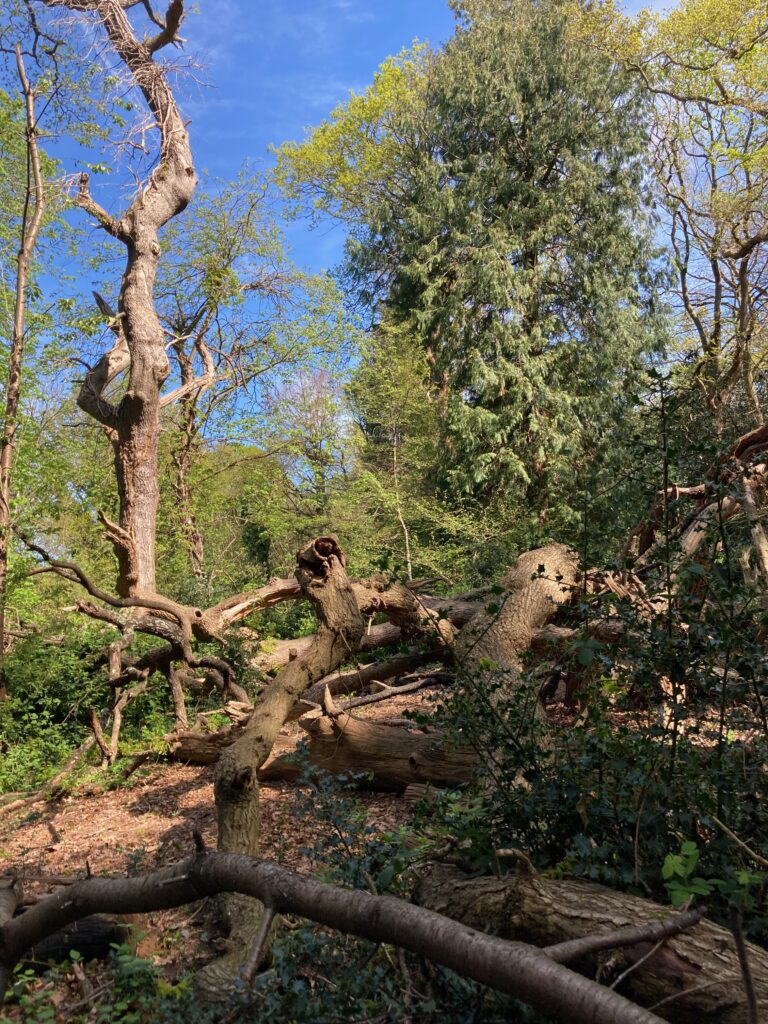
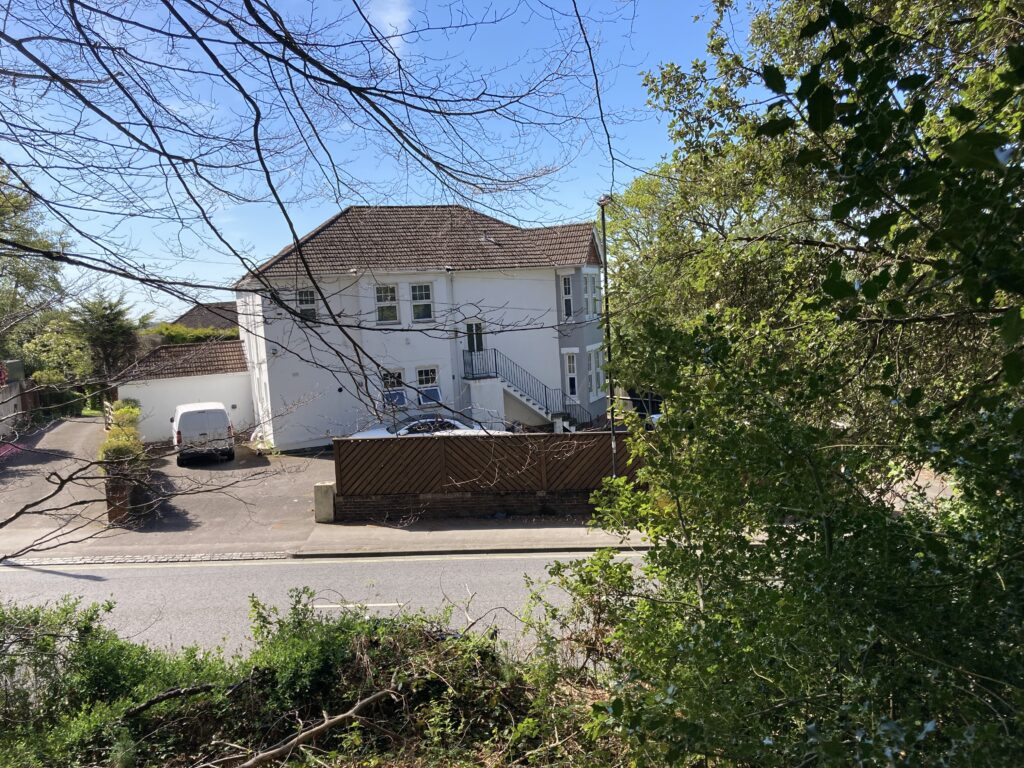
As I made my way to the other side of the woods though, I found another large fallen tree that made me think I might not have been as safe wandering along the trails as I thought. Thankfully, I wasn’t far from the gate on Cobden Avenue, so I didn’t have to spend too much time listening to the creaking of the trees and wondering if one was about to come down on my head. Before I left, I took a few photos of the devastation.
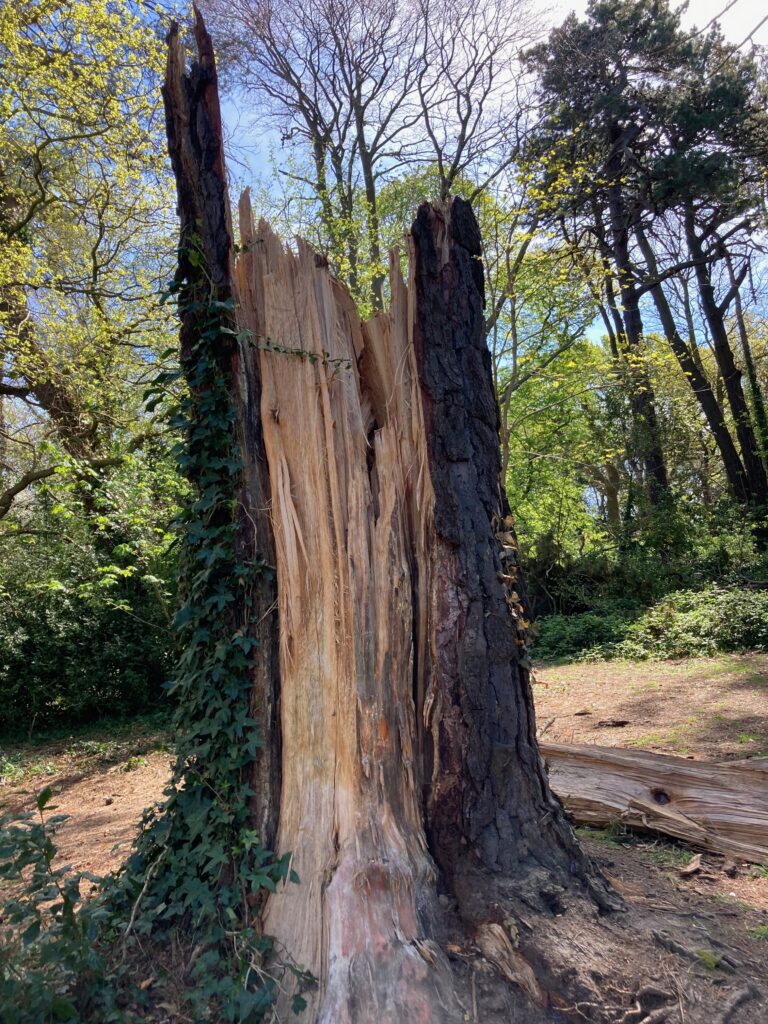
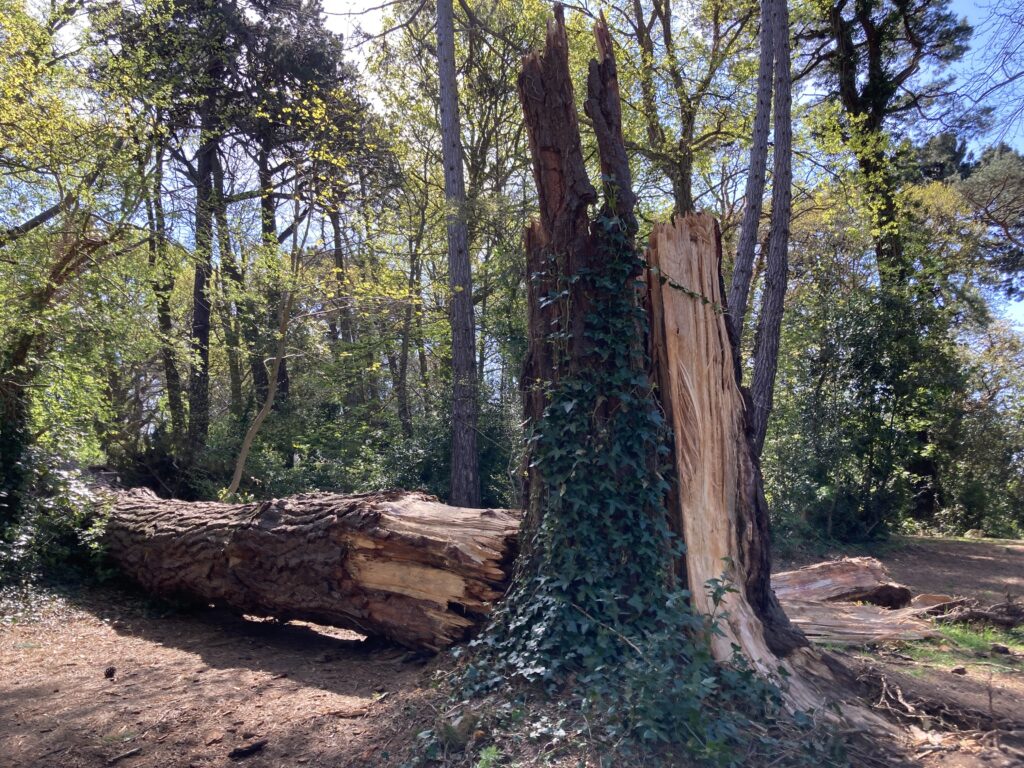
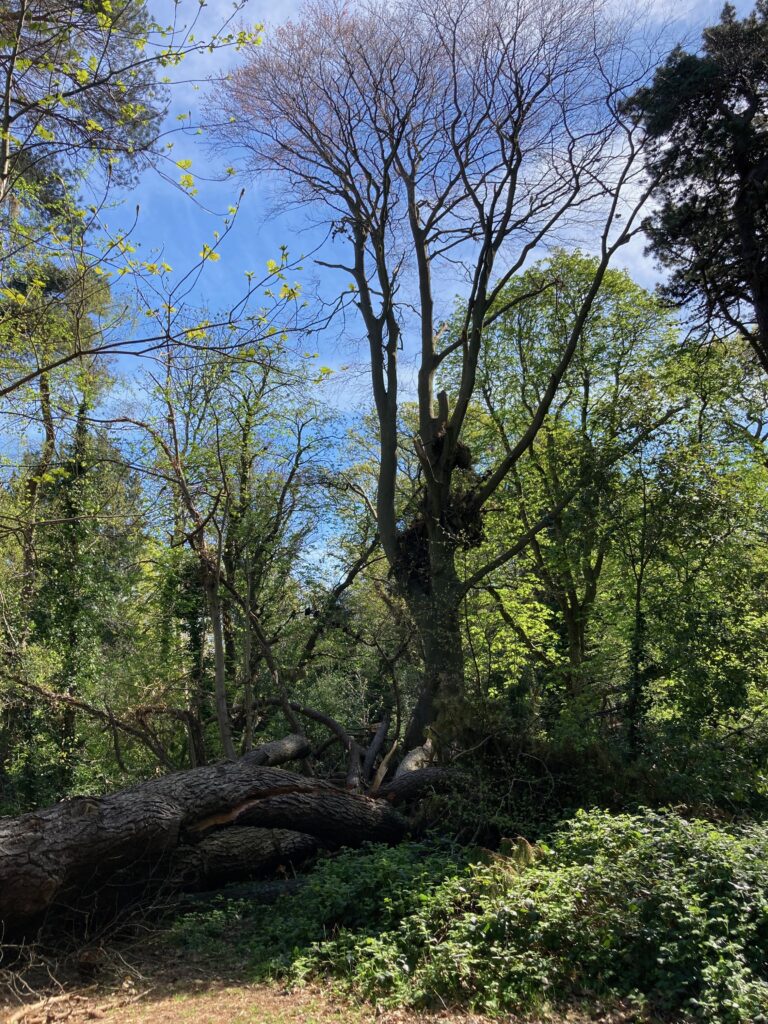
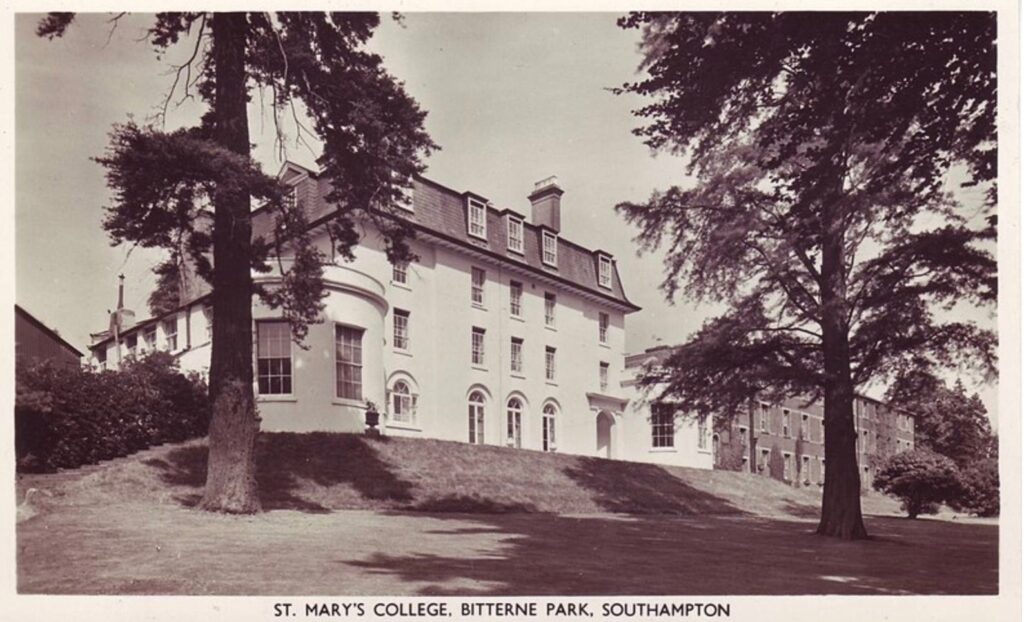
Across the road I came to my penultimate footpath. This one links Cobden Avenue with the 1970’s houses of Tamarisk Gardens. At least this time I had a downhill walk and some garden greenery to contrast with all the garden fences. This was another footpath I took with my dark haired friend during that limbo summer. Tamarisk Gardens comes out onto Midanbury Lane a little uphill from my final footpath of the morning and my final story. The last path even has a name, it’s called Monks Walk, at least, that is what we always called it. It leads from Midanbury Lane to the gates of St Mary’s College, or onto Monastery Road. As you may have guessed from these names, St Mary’s College was a catholic school, at least it was in my youth.
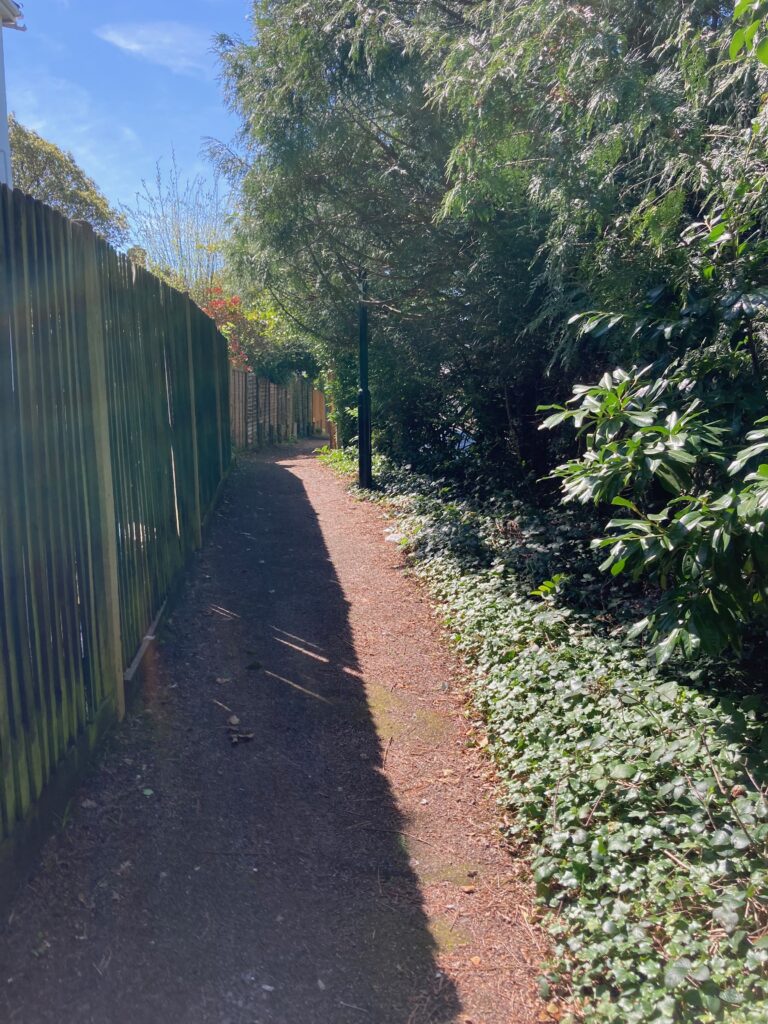
Originally, it was a country house called Bitterne Grove, built by Richard Leversuch in around 1790 and sold shortly afterwards to James Dott, a retired East India Company surgeon. The interesting story of the house is probably something for another day, although the curious can find a wonderful article about it on Sotonopedia. Suffice to say, it was purchased in 1910 by the French order of the Brothers of Christian Instruction and eventually became a catholic school for boys, run by several Brothers.
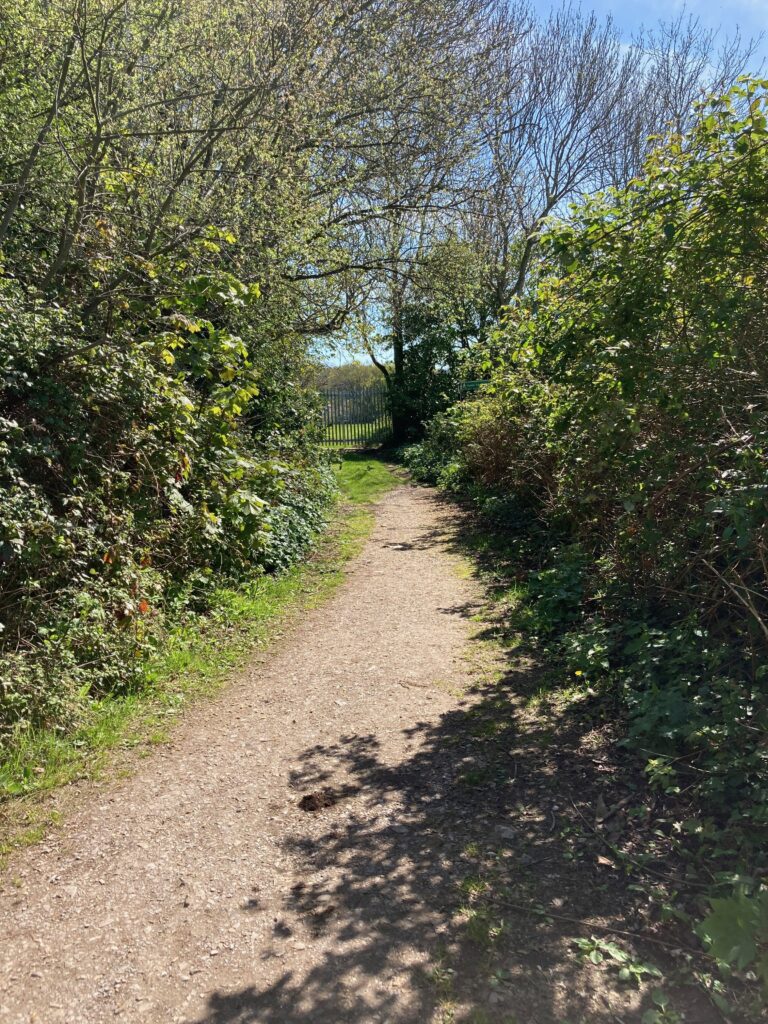
Back in the limbo summer there were no gates at the end of the lane, at least none we ever saw closed. It must have been nearing the end of the summer of 1972 when my dark haired friend and I last met there. There were trees and shrubs around the outer perimeter of the field, and a steep bank leading down to Beech Avenue. At the top of the bank, right at the corner, there was an open concrete square surrounded by walls about a foot high. It may have been something to do with drainage, but it was dry that summer and we used it as a kind of den because it was hidden amongst the trees. On this particular day, my dark haired friend had got a box of matches from somewhere, and we made the tiniest fire in the history of the world in our den. In fact, it could hardly have been called a fire. It was really just a handful of dry leaves and twigs. When we’d used the last of the matches, we carefully stamped it out and climbed down the path we’d trodden in the steep bank.
The whole adventure would probably have been long forgotten if we hadn’t seen a fire engine, all blue lights and sirens, as we were walking back up towards the main road. The horror of that moment, and the fear that we’d be caught for setting fires ensured we never did it again. In fact, we never went back to our den. Of course, that fire engine was just a coincidence, nothing to do with us at all. Looking back though, it felt as if that moment marked the end of our limbo summer. Different senior schools beckoned and my dark haired friend and I had to go our separate ways. As for Lizzie, she’s a story for another day too. Maybe she’s a whole book . . .
If you like what I write, and you’re interested in my novels are available now on Amazon in paperback, on Kindle and via Kindle Unlimited. Check out my Amazon page here and my Goodreads page here. If you would like to help me keep writing, you can now buy me a virtual coffee by clicking on the little orange coffee cup at the bottom right.
An extremely interesting read, it’s an area of the city I’m unfamiliar with, only ever passed through to be honest. The ornamental pond in the grounds of Deepdene used to show on the old OS maps.
I’m glad you enjoyed it. Deep Dene is well worth a visit when you’re next passing through.
This was an absorbing read, and the photos are evocative. I mostly haunt the Freemantle/Shirley parishes, rarely going to the east of Soton, hence my ignorance of Deep Dene.
Thank you. Glad you enjoyed it. Its worth crossing the river for Deep Dene and Riverside Park.
You may be interested to know that the Spitfire Makers Charitable Trust are unveiling a blue plaque on the entrance to Deepdene House tomorrow, Sat 29th March, 2025. It’s to commemorate the use of the building by the Supermarine Wages and Accounts department during WWII, which you mention in this blog. Amongst invited guests are family members of some of the women who worked in the house and a group of former University of Southampton students who shared a flat there in the 70s. Thanks for the info about Sir Henry and Lady MW, I’ll refer to that in my intro, before the unveiling.
If you find this before 11.30 tomorrow morning you’d be welcome to join us for the short ceremony – we hope we may be able to look inside the rather grand front door at the paneled entrance hall with chandeliers, grand staircase and servants’ ‘back stairs’.
Thank you! It’s good to see it finally being recognised. If I get the chance, I may pop along.If not,I hope it all goes well.