
We Brits are famous for talking about the weather. It’s true, we do. There’s a good reason for this obsession. Although our little island rarely experiences the extreme weather other places have to contend with, ours is far from consistent. There are no guaranteed warm, dry summers, winter doesn’t necessarily mean snow, rain is always around the corner and it’s quite normal to get all four seasons in one day. When extremes do happen, we’re really not geared up for it. Our houses don’t have air conditioning and there are no snow ploughs or chains for car tyres. The last week has been a tad on the warm side. In fact, the Met Office recorded a record UK temperature of 40.3°C on 19 July. The media gleefully catastrophised. There were headlines like ‘How the heatwave broke Britain,’ and ‘Gates of Hell are opening.’ If it hadn’t been so warm, the men with sandwich boards would surely have been walking up and down, proclaiming that the end of the word was nigh. When people began saying it was far worse than the famous summer of 1976, eye-rolling in our house reached danger levels.

The long, hot summer of 1976 was much more than one or two weeks of very hot days or a record high temperature. It was hot for over two months, and between 23 June and 7 July 1976, the temperature was higher than 32°C every single day. On 28 June that year, temperatures in Southampton reached the dizzy heights of 35.6°C, the highest June temperature recorded in the UK. The Central England Temperature records said it was the hottest summer for three hundred and fifty years. Headlines back then were less glum and included things like ‘Whew, what a scorcher.’
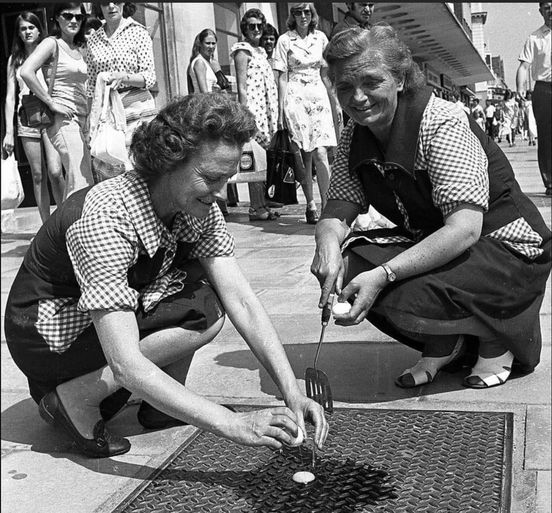
The heat was not the whole story, though. The unusually warm weather came at the end of an unprecedented drought. The dry period began in May 1975 and lasted for sixteen months. It was the driest spell since records began in 1717. In fact, it had been unusually dry long before our extra warm summer began. Met Office scientists stated that rainfall in England and Wales between 1971 and 1975 was the lowest for any five-year period since the 1850s. Combined with the exceptionally warm summer, it became a once in 500-year occurrence.

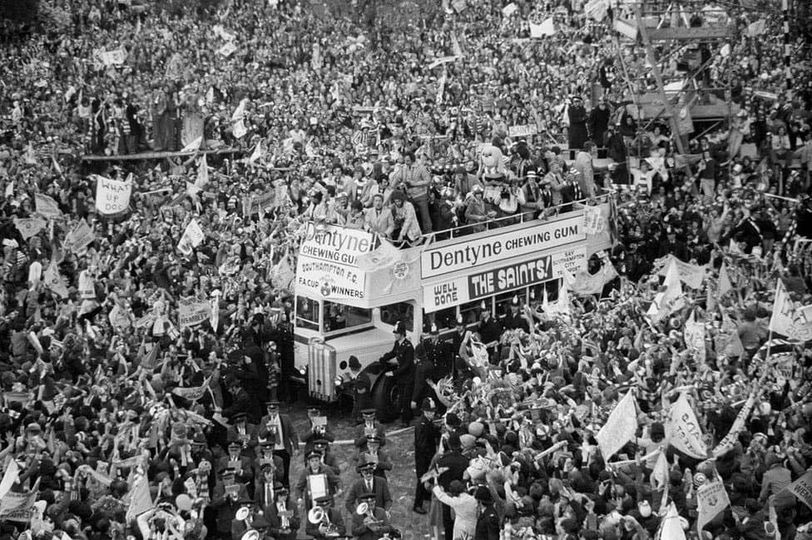
For me, it was the long summer break between O Levels and college. I turned sixteen the day after Saints won the FA cup — a memorable occasion for the people of Southampton. The manager of the local paper shop, where I worked evenings and Saturdays, brought in a TV so we could watch the match, and I decorated the windows in Saints colours. Not a single customer came into the shop until the match was over, and then all hell broke loose as people rushed out of their houses and began dancing and singing in the streets. The next day, 2 May, I went to town with my friend Annis to see the team arrive at the Civic Centre on an open-topped bus. It felt like a historic day. Little did we know what the summer ahead held.
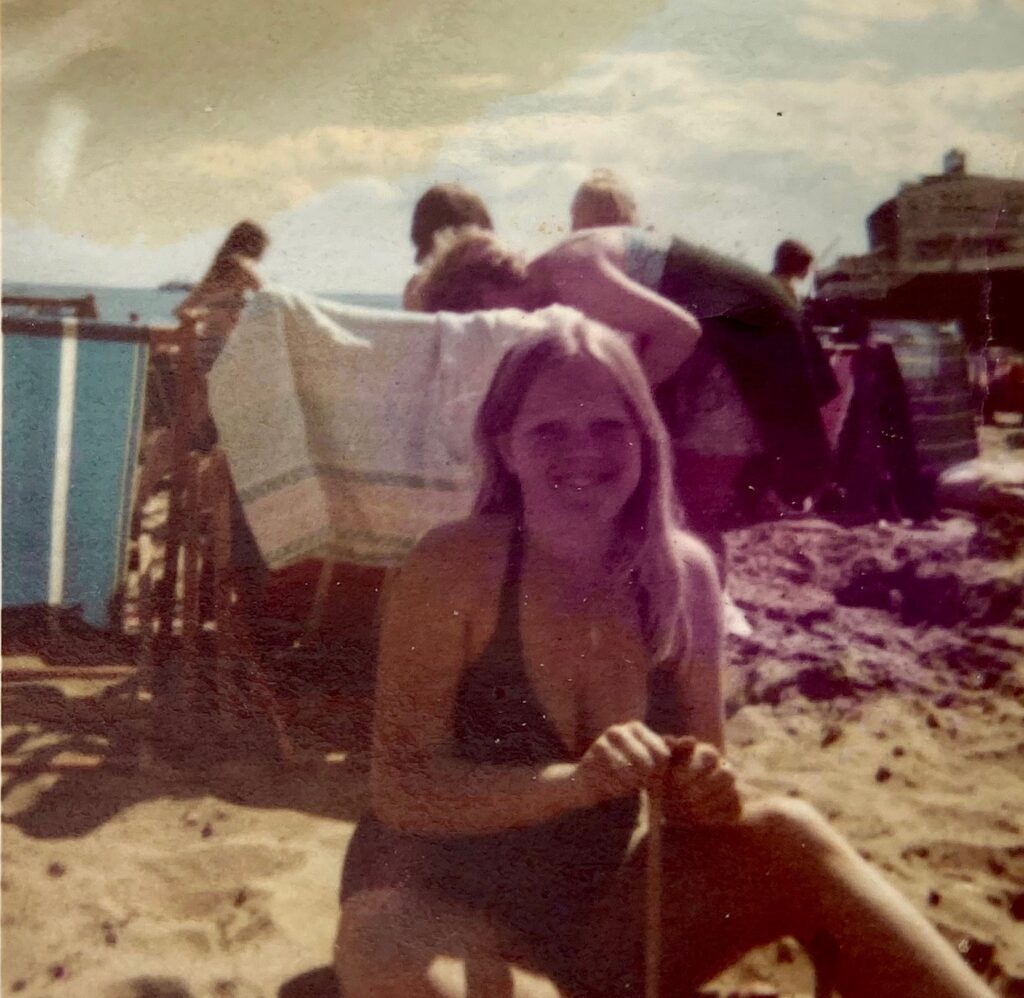
At first, the sunshine and lack of rain felt like a good thing. Of course, it was hot, especially when I was working in the shop in my nylon overall, but it felt like a taste of all those hot countries I’d never been to. I remember going to Bournemouth on a coach with my mum, my sister and my nephews. We had no suntan lotion in those days, so there were lots of red peeling shoulders afterwards for a fair-skinned blonde like me. We forgot what rain was like.
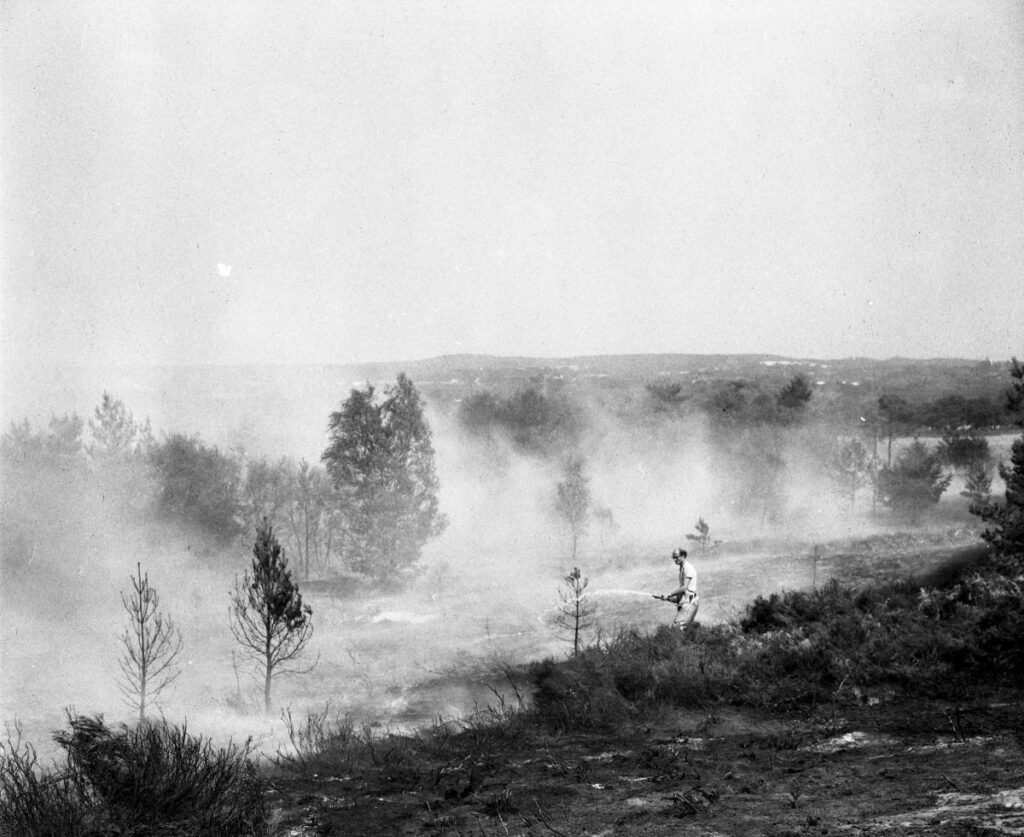
Then the tarmac began to melt, and the ground beneath the dry, brown grass started to crack. Suddenly it didn’t seem so much fun any more. On 28 June, when the temperature in Southampton broke the UK record, we had had no rain for forty-five days. That’s a big deal in a country where it’s considered lucky to see a rain-free week. Reservoirs dried up, the riverbanks cracked and crumbled, huge fires broke out in the New Forest, and crops failed.
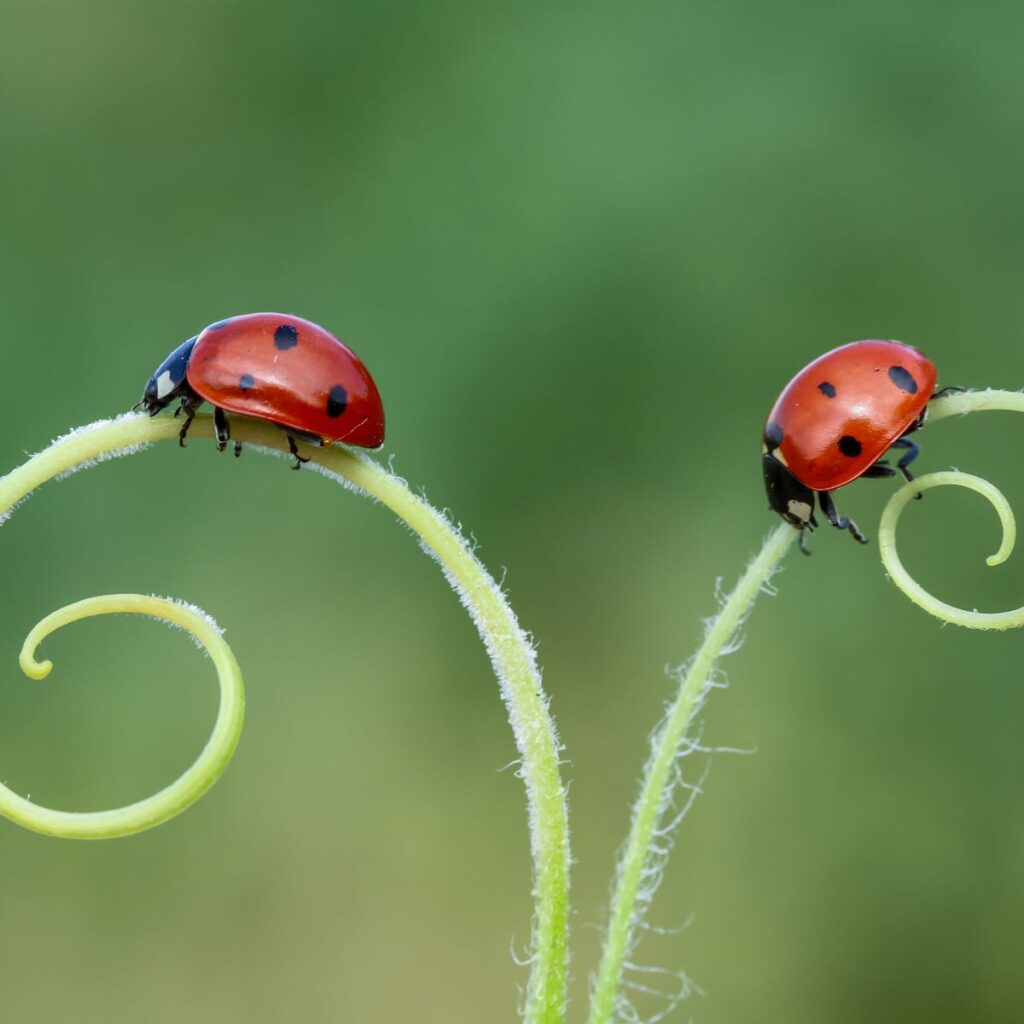
By August, the drought was so severe that Parliament passed the Drought Act 1976 to ration water. They had banned hosepipes in early July, but now we had to get our water in buckets from standpipes in the street. Then came the swarms of ladybirds. Of all the creepy crawlies in the world, ladybirds must be the least fearsome. In 1976, though, they became positively sinister. The unusually warm spring had been good for the aphid population, which caused an explosion in ladybird numbers. By late July, the plants the aphids lived on had withered in the heat, and so had the aphids. Now, 23.63 billion ladybirds (according to British Entomological and Natural History Society estimates) had nothing to eat. They swarmed, looking for food elsewhere. A swarm of ladybirds may not sound all that scary, but it really was. They were everywhere, and they bit.
Finally, in the last week of August, the rain came. Every night lightning lit the sky, thunderclaps disturbed our sleep, and the parched ground ran with water it couldn’t soak up fast enough. The rain continued for the next two months. The summer of 1976 was well and truly over, but those of us who lived through it would never forget it.

At times, the current hot spell may have been warmer that 1976, and it has certainly been more humid, but it pales compared to the searing heat of Egypt, Morocco, Tunisia, Turkey, Cyprus and some of the other places I’ve worked. Admittedly, my walk to parkrun on 16 July got a tad sticky. It might have helped if I’d been thinking straight and taken the shortest route. Instead, my feet took me over Cobden Bridge, echoing my old walk to work. The upside of this route was that I discovered someone had repainted the sign on the bridge.


By the time I reached the boardwalk, I realised my walk would also have been a good deal nicer if I’d remembered to bring my water bottle along. Still, there was a supermarket on Empress Road, near the Bus Mines. I was sure I’d be able to get a bottle of water there to see me through the rest of my journey. Unfortunately, it turned out that the only options available were two-litre bottles of still water in packs of six or small bottles of flavoured fizzy water. I plumped for fizzy, even though I’m not a fan. At least it said no added sugar on the bottle.

There may have been no sugar in my fizzy water, but it was the most sickly and vile thing I’ve ever tasted. With nothing else to drink, I sipped it as I walked along Inner Avenue. Anyone watching must have wondered why I was pulling such odd faces. Moments after I reached the Common, Commando rang to ask me where I was (my detour into the supermarket had taken far longer than expected). As I fumbled with my phone, I dropped the water bottle. When I opened it again, the blasted thing exploded, showering me with fizzy water from head to foot. I threw it in the nearest bin.

The sticky heat had one advantage when it came to my WIP. One setting for my latest book is Boei Glodok prison camp in Java in 1942. The camp was in Batavia, now called Jakarta, and the temperatures and humidity made life for the prisoners of war harsh. I’d researched the weather thoroughly, but sweltering on my decking writing, ‘The afternoon rain had stopped, the towering column of cumulus cloud had turned from white to rosy pink and then indigo, but the sticky heat still felt oppressive,’ I could really imagine I was there, minus the Japanese guards and the starvation of course.


Poor Commando had to attend a training and networking event on the hottest day, 19 July. While he was learning about all the latest developments in sports shoes, I spent most of my time on the decking, drinking lemon-infused water, writing and watching the towering cumulus clouds. Commando and the staff of all the sports shops at the training event were wined and dined in style at a fancy local restaurant called Thaikhun. When the sky slowly turned from gold to rosy pink, I walked up to the local takeaway to get my own dinner.


We rounded off the week with a stroll along the shore to my favourite bench. At least the sea breeze took the edge off the heat, and the obligatory 99 ice cream helped cool us down. It’s been a while since I’ve been to the shore, and there have been a few changes. They’ve erected new railway sleeper flood defences in front of my favourite bench. They spoil the view of the remains of the dead tree and the sea, but they will probably stop the road from flooding later in the year.


A rest on my second favourite bench, a little further on, made a nice way to round off a hot, sticky week. Despite all the media hype, it really wasn’t that bad. I managed to fit a couple of walks in without keeling over or getting dangerously dehydrated. I got some writing done. I drank an awful lot of water and ate little other than ice lollies. Thankfully, there wasn’t a single swarm of ladybirds, and the streets remained standpipe free. Even the tarmac steadfastly refused to melt.

If you like what I write, and you’re interested in my novels are available now on Amazon in paperback, on Kindle and via Kindle Unlimited. Check out my Amazon page here and my Goodreads page here. If you would like to help me keep writing, you can now buy me a virtual coffee by clicking on the little orange coffee cup at the bottom right.
I calculate that you are a year and a few days younger than me. In 1976 I was in sixth form college. I have a vivid memory of us having lessons outside in some of the shade afforded by the grounds of what was then Southampton College for Girls. I don’t remember the standpipes, though. We must have had them in our road, but I don’t remember them.
I do remember the day Saints won the FA Cup. I watched most of the match on TV, then went out into the garden. When I heard all the cheering, I knew who had won.
On the hottest day this year I really felt my age and found breathing not as easy as I usually do, especially when I went to bed. I had to go to Portswood late in the afternoon and I used the very short thunderstorm as an excuse to go in the car, with the air conditioning on, rather than walk.
I finished my last exam in late May and didn’t start college until September. I did have an evening and Saturday job though. I remember my mum filling buckets at the standpipe and saying it reminded her of the war.
On the hottest day, I took a very slow walk to the shops, dodging from tree to tree. I was really looking forward to the thunderstorm, we had about five drops of rain!
We had a bit more than five, but it wasn’t what my garden needed.
It was disappointing to say the least.
This was such an evocative look back at the memorable summer of ’76 (that photo of the ladies frying an egg is brilliant). I had turned 18 in the May and I remember even walking to work early morning the heat being almost unbearable. I didn’t live in this area back then, I was still in Potters Bar and living at home with my parents. I don’t remember if we had stand pipes for water there but we definitely had a hose pipe ban. Your mentioning of the fires in the New Forest is what particularly worries me with this current dry, hot spell. The forest is tinder dry, and most of the streams, rivers and ponds are already dried up. One careless barbecue or tossed cigarette end and the same thing could happen.
I detest that flavoured fizzy water, it may be sugar free but no doubt had vile sweeteners in it. I like the sound of a cooling lemon infused water or a 99 though!
I remember the fires in the New Forest very well. It was horrific thinking of all the wildlife. Sadly, the Common is full of burnt grass from barbecues and the grass is so dry it’s a wildfire waiting to happen. Ice cream sales in the paper shop I worked in went through the roof. Sometimes I opened the freezer just to get a blast of cold air because those nylon overall were dreadful. I will never buy that fizzy water again, it was awful. I just chop up lemons, limes and oranges, put them in my freezer and use them as ice cubes, much nicer.
I remember a sad event from the Summer of 1976. My mother had taken me and some friends down to Weston Shore to cool off in the water when the distant sound of fire engines filled the air. A huge plume of smoke could be seen to the north. There was a pig farm on the upper part of Botley Road that had caught fire. Apparently all the livestock were killed and the farm destroyed.
I don’t remember that. It was a strange summer though.