
At the eleventh hour on the eleventh day of the eleventh month of 1918, the Allies and Germans signed an armistice. It didn’t officially end the Great War, but it was the beginning of the end. The armistice expired after thirty-six days and was extended several times before the signing of the Treaty of Versailles on 28 June 1919 brought lasting peace. Each year, on the day the guns fell silent, we stop, remember our war dead and lay wreaths of poppies to recall the flowers that sprang up in the fields where the soldiers fell.

The scale of destruction during the Great War is hard to comprehend. Some forty million military and civilian casualties and between fifteen and twenty-two million dead made it the one of the deadliest conflicts in human history. When we remember, it’s easier to think of one battle or one soldier. Who to choose, though? Usually, I choose my grandfather. He fought in the trenches in Flanders and France and was amongst the wounded. He could so easily have been amongst the dead. I’ve told his story before, though, both here and in my book, Plagued, so today, I will tell a different one.
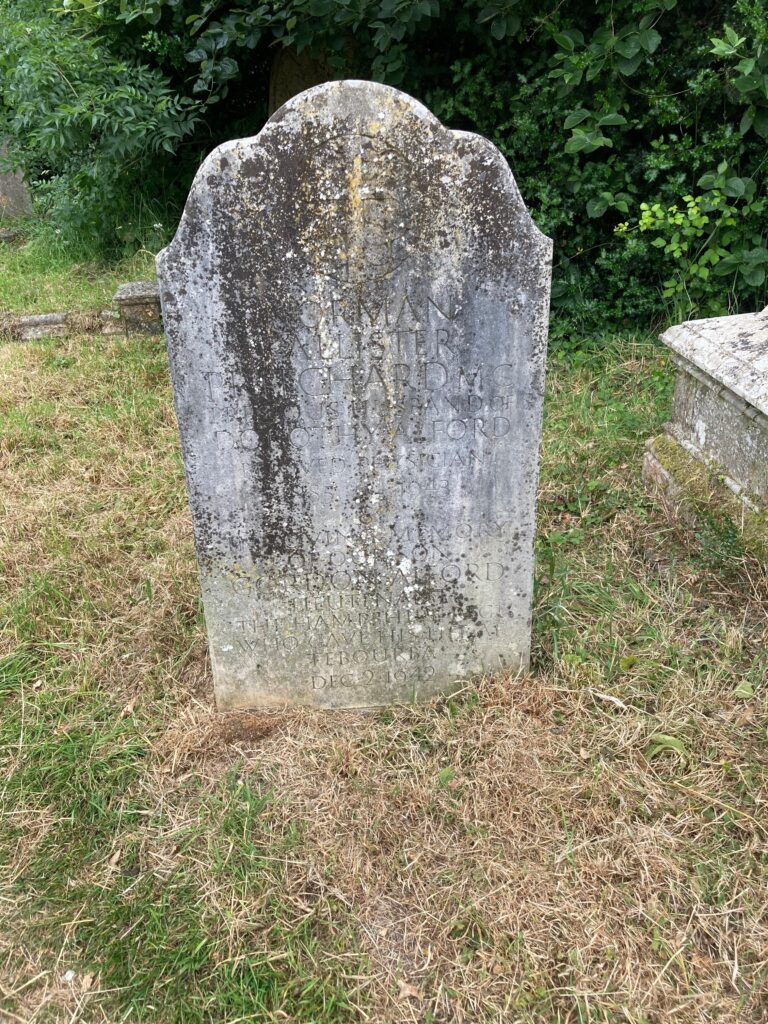
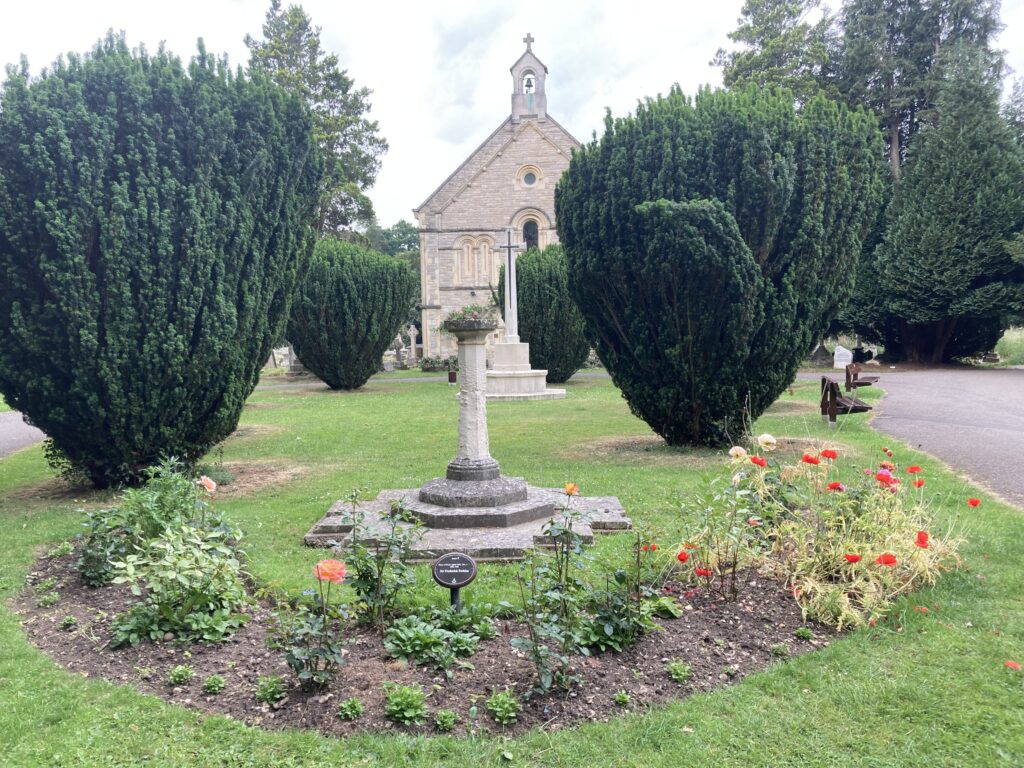
Of the millions of soldiers, I have chosen Norman Pallister Pritchard’s story to tell you on this Armistice Day. It was a random choice. In the middle of June, I stumbled upon his grave when I was walking in the Old Cemetery. It jumped out at me because I’d used the name Pritchard in my forthcoming novel, A Dish Best Served Cold. On that same walk, I saw a bee frolicking amongst the petals of a poppy. It felt like a sign, and I try to listen when such things present themselves.
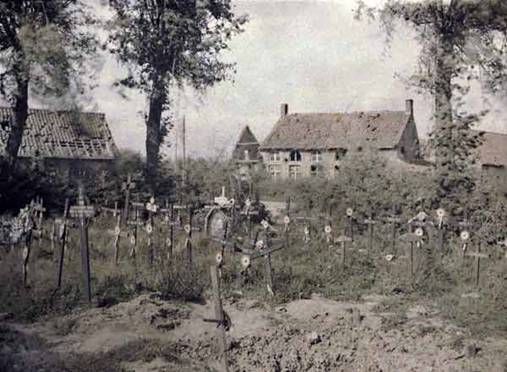
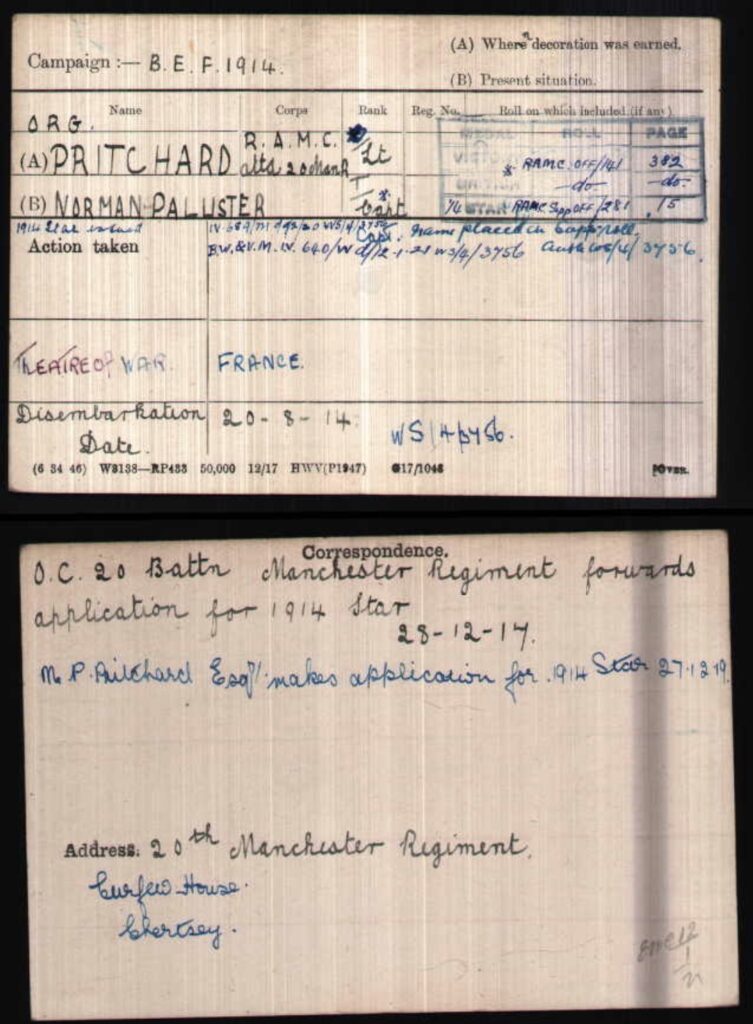
Norman Pallister Pritchard was born in Hampstead, London, on 26 May 1885. His father, Urban Pritchard, was a surgical registrar and house physician at King’s College London. Norman’s middle name honours his grandmother, Charlotte Pallister. By 1911, Norman had followed in his father’s footsteps and become a medical student. When war came, he joined the RAMC. At first, he worked in a base hospital in Ireland, but in late 1914, they sent him to France with the 15th Field Ambulance as a Medical Officer for the 15th Brigade Royal Field Artillery.
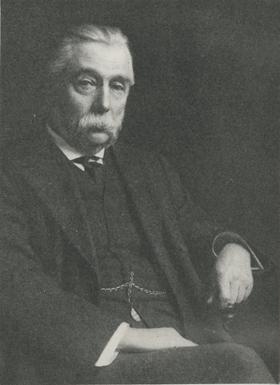
The Imperial War Museum Archives holds a series of war diaries detailing Norman’s service. Using details of where he was and the battles he saw, I have been able to piece together the highlights of his war. In 1914, he was in Festubert and Neuve Eglise. He hadn’t gone there to fight, he’d gone to treat the wounded, and he had no shortage of customers. His first major battle was the Aisne between 12 and 15 September 1914.
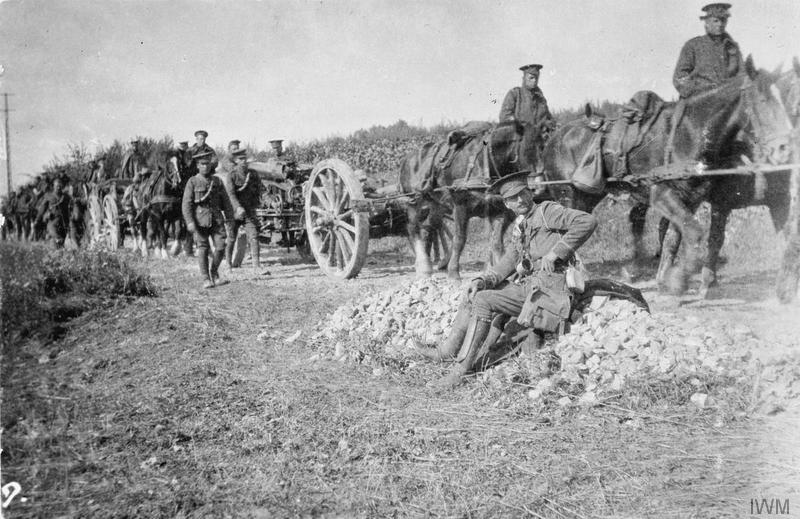
After the battle of Marne in early September, the Germans retreated. On 13 September, on a plateau above the Aisne River, they turned to face the pursuing Allies. They took cover behind a dense thicket two miles from the crest of the cliffs. The Allies below were out in the open, and the Germans took full advantage of their wide field of fire until nightfall. That night, a dense fog settled over the battlefield. Hidden by it, the British and French crossed the river on pontoons and advanced up narrow paths to the plateau. Then the sun came up, and the mist evaporated. The Germans saw them and gunned them down. Instead of retreating, the Allies dug trenches and took cover. So began the trench warfare that would last until 1918.
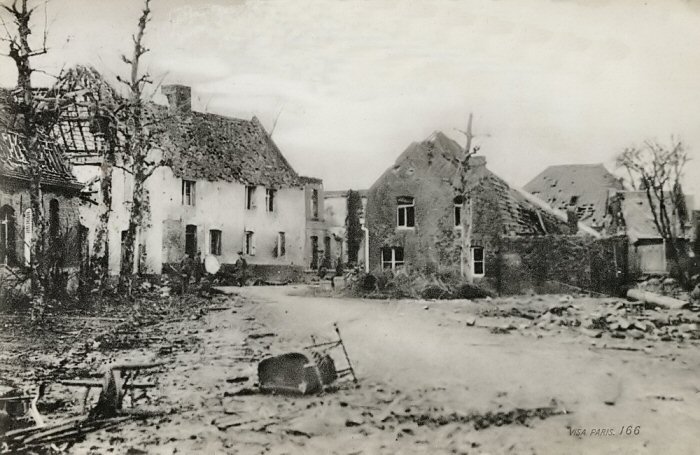
In late November, Norman had more casualties to treat. Fighting around Ypres had subsided. The exhausted troops on both sides had dug in because of bad weather. British and Indian Sikh troops held a defensive position near the village of Festubert. On 23 November, the Germans attacked and captured around eight hundred yards of trench east of the village, but the 34th Royal Sikh Pioneers and the 1st Battalion of the Manchester Regiment counter-attacked and recovered them. It was one of the first attacks on an organised trench system, and a costly one for the Sikhs and the Manchesters. It foreshadowed the years of trench war ahead.
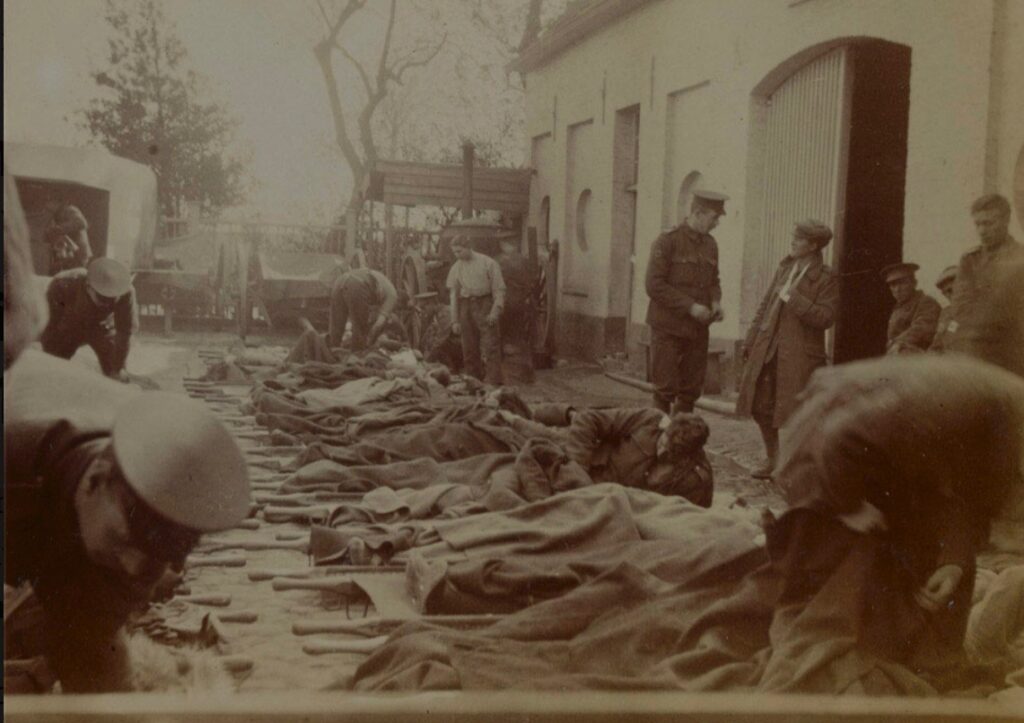
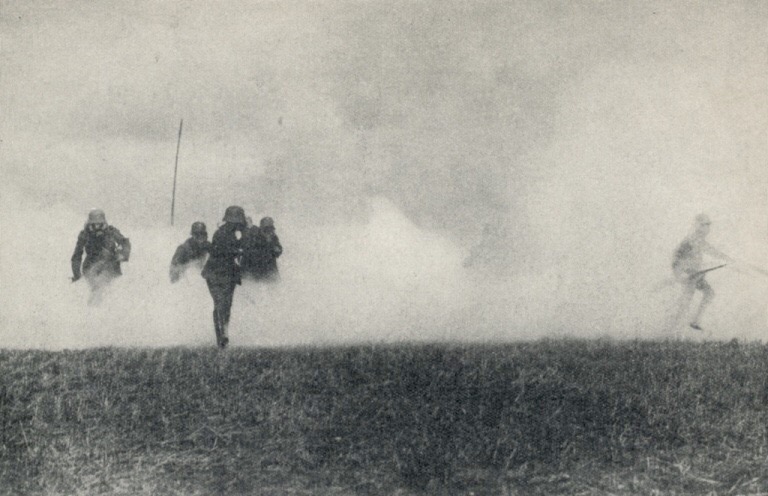
In April 1915, Norman treated men suffering from the horrors of the German’s first use of poison gas during the second battle of Ypres. The Germans were attempting to capture the bulge in the Allied line, known as the Ypres salient. On the warm spring afternoon of 22 April, the German Fourth Army released a cloud of chlorine gas. It drifted across two French divisions in the northern part of the salient, and the Germans advanced behind it. The stunned Allied troops fled in panic towards Ypres. Over ten thousand men were gassed. Half of them died. Colonel Henri Mordacq, of the 90th Infantry Brigade, described what he saw. …haggard, their overcoats thrown off or opened wide, their scarves pulled off, running like madmen, directionless, shouting for water, spitting blood, some even rolling on the ground making desperate efforts to breathe. Despite the apparent success, there were too few reserves to support the German advance. A counter-offensive stopped them after one and a half miles. The gas attacks continued and fighting raged on until 27 May, but the Germans did not break through. The cost was 34,933 German casualties, 59,275, 21,973 French, and 5,975 Canadian.
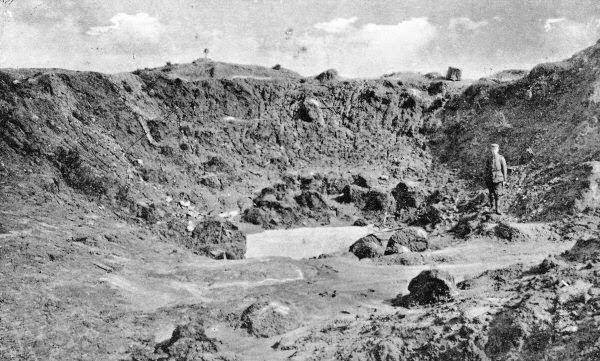
In August 1915, Norman was with the 8th field ambulance at Hooge. There he dealt with the victims of the short but vicious battle for the village and chateau of Hooge. The 14th Division had been holding the Ypres salient near the village since the middle of June, and the British trenches were in tatters. On 17 July, the Allies had exploded a large mine under the enemy front line, and the 4th Middlesex 8th Rifle Brigade occupied the resulting crater. It was a hellish position under constant shelling and strafing. On the night of 29 July, an ominous silence fell. Half an hour before dawn on the morning of 30 July, the Germans blew up the stables of the chateau. There was a hissing sound and a bright crimson glare lit the crater, followed by jets of flame. The Germans had unleashed the first flamethrower attack of the war. The 8th Rifles fell back to the support line. The line held, but ground had been lost.
Norman moved between Casualty Clearing Stations at Bailleul, Nordpeine, and Remy for the rest of 1915 and early 1916. On leave in the summer of 1916, he married Dorothy Alford Andrews in Hampstead, London. By July, he was at St Ouen when the famous Somme Battle began. It raged until 18 November 1916. Three million men fought for control of the land on either side of the Somme. Norman was there that September when the British used the first tanks. They were supposed to cut the war short. Despite their dramatic effect on German morale, they were unreliable and didn’t break through the German lines. By the time the battle ended, the British had gained just six miles of German-occupied territory along most of the front. A million men were dead or wounded, making it one of the deadliest battles in human history.
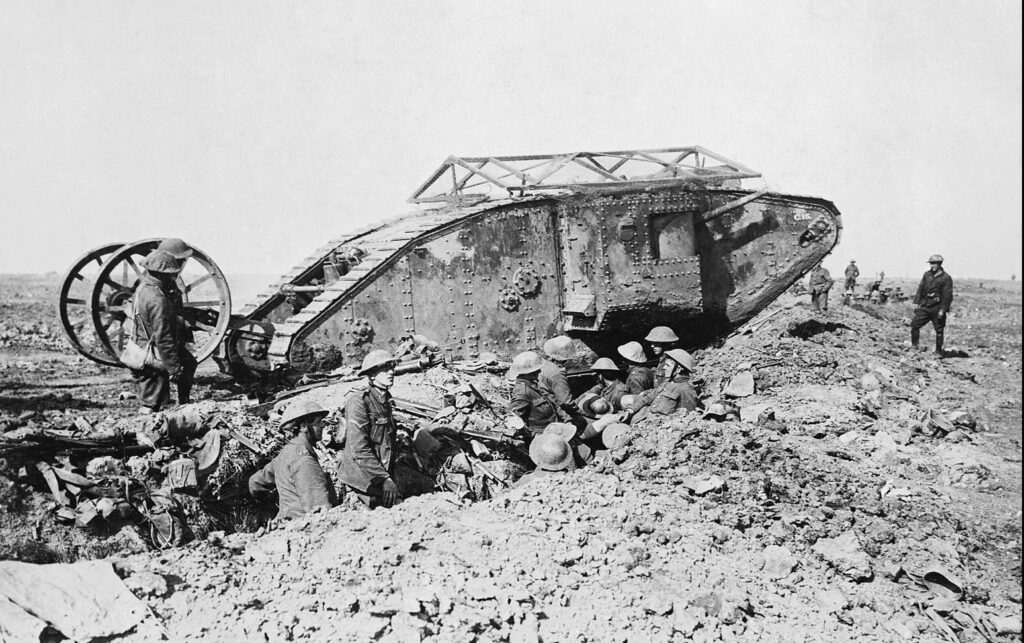
Norman remained on the Somme with the 21st Field Ambulance until the end of January 1917. In February, he was in Beaumont Hamel as the Medical Officer of the 20th Battalion Manchester Regiment. His next big battle was Passchendaele. Also known as the third battle of Ypres, the Passchendaele offensive was an attempt to break out of the Ypres salient, capture the high ground around Ypres and advance on the German-occupied ports on the Belgian coast. It failed. By November 1917, after one hundred days of mud, blood and futility, the Allies had advanced around five miles and lost two-hundred-and-fifty-thousand men.
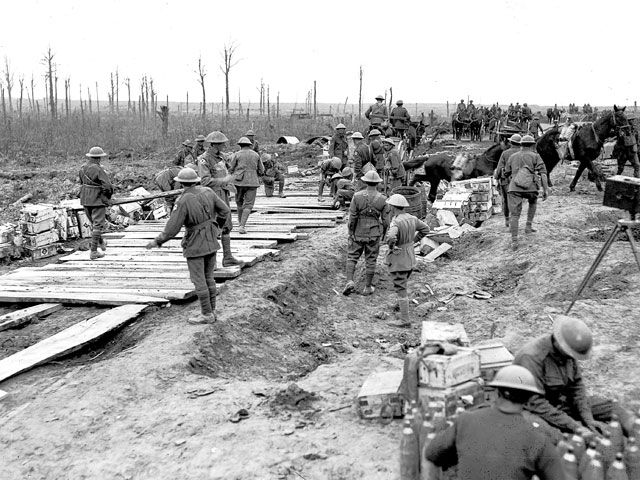
Passchendaele was a costly failure, but the Allies considered the Battle of Polygon Wood a victory. Norman treated the casualties. Shellfire from both sides had destroyed much of Polygon wood, and it had changed hands several times. On 26 September 1917, a series of British attacks began, led by lines of infantry, advancing behind layers of creeping barrage. The weather played into British hands. For once, it was dry, and the ground was solid. They attacked around dawn, using the morning mist to cover their movements. The mist cleared in time to reveal the German counter-attack before it reached the battlefield, and it failed. By 3 October, the British had inflicted a severe blow on the German 4th Army and allowed the allied forces to advance towards Broodseinde Ridge. The victory came at the cost of over twenty-thousand British casualties, 5,700 Australians, and around 13,500 Germans.
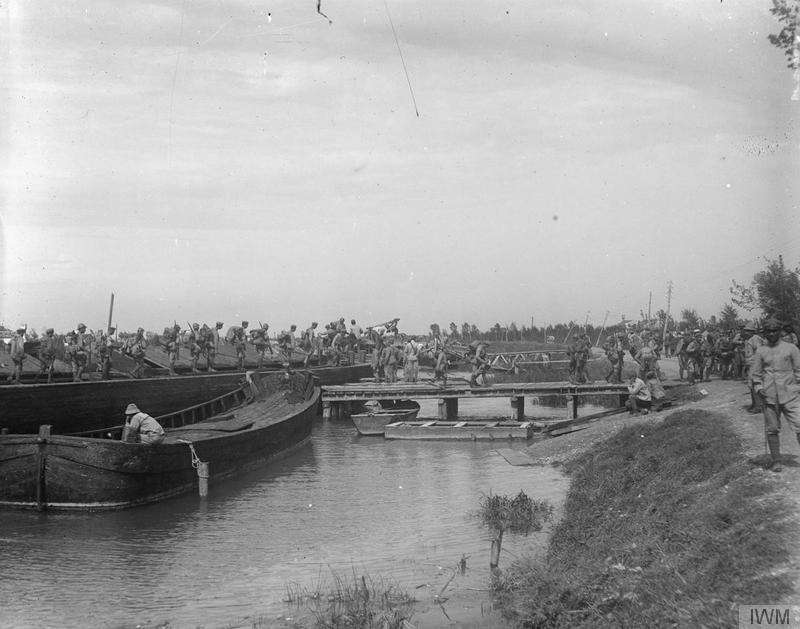
In Late October 1917, Austro-Hungarian and German troops tried to break the deadlock with the Italians on the border between Italy and Austro-Hungary. Italian forces were driven back over 100km to the Piave River. The Allies rushed British and French Forces from the Western Front to help the Italians. These included Norman, with a Field Ambulance unit. They fought two battles, the first between 10 November and 25 December 1917 and the second between 15 and 23 June 1918. The Italian army, bolstered by British and French troops, repulsed the attacks. It was a turning point on the Italian front, and by the end, the Austro-Hungarian Army were all but destroyed. There were around 87,000 allied casualties, including 450 British and 118,000 Austro-Hungarians. In April 1918, Norman was awarded the Military Cross.

After the war, Norman returned to England and continued to work as a doctor. His son, Gordon Alford Pritchard, was born in 1919, in Chertsey, Surrey. When the family came to Southampton isn’t clear, but by 1931, they were living at Bath Lodge, 3 Bath Road, in Bitterne and Norman was working as a physician, surgeon, police surgeon for Hampshire Constabulary and medical officer to Post Office Services. Norman died in January 1943, having devoted his life to saving others. His son, Gordon, had been killed the previous month while fighting in Tebourba, Tunisia.
In Flanders fields the poppies blow
Between the crosses, row on row,
That mark our place: and in the sky
The larks, still bravely singing, fly
Scarce heard amid the guns below.
We are the Dead. Short days ago
We lived, felt dawn, saw sunset glow,
Loved, and were loved, and now we lie
In Flanders fields.
Take up our quarrel with the foe:
To you from failing hands we throw
The torch; be yours to hold it high.
If ye break faith with us who die
WE SHALL NOT SLEEP,
THOUGH POPPIES GROW
IN FLANDERS FIELDS.
John McCrae
If you like what I write, and you’re interested in my novels are available now on Amazon in paperback, on Kindle and via Kindle Unlimited. Check out my Amazon page here and my Goodreads page here. If you would like to help me keep writing, you can now buy me a virtual coffee by clicking on the little orange coffee cup at the bottom right.
A chilling account of these WW1 battles. The horror of it all and the numbers of those killed and injured is hard to comprehend.
Norman was a brave man, sad that he lost his son to war just before he died. Possibly the shock of that hastened his own death.
I wondered that myself.
This is fascinating, thank you. Norman Pallister Pritchard was my grandfather, unfortunately I never met him although my grandmother, Dorothy told me lots about him
My father Dr John Norman Andrew Pritchard was his first son born in 1919 and Gordon was his second son born 3 years later
He died from cancer in 1944 the same year that Gordon died aged 22.
Dear Marie
Thank you so much for writing about my grandfather, Norman Pallister Pritchard; his eldest son was John Pritchard (my father) who also trained as a doctor and was a GP in Farnborough Hampshire. My grandmother (Dorothy) was a wonderful woman and granny and was 92 when she died. We miss her a lot..
Gordon was their second son and you are right I think Gordon’s death in the 2nd world war hastened Grandfather Norman’s death. So sad for my grandmother.
His diaries in the Imperial War Museum are fascinating.
Thank you again
David Pritchard
So glad you enjoyed reading. His grave called out to me as I passed. I’m pleased his story found his family.
Norman was my great grandfather and this is a fascinating read. Thank you for writing it and telling his story.
My pleasure. I’m glad you found the post and I hope it had meaning for you.