
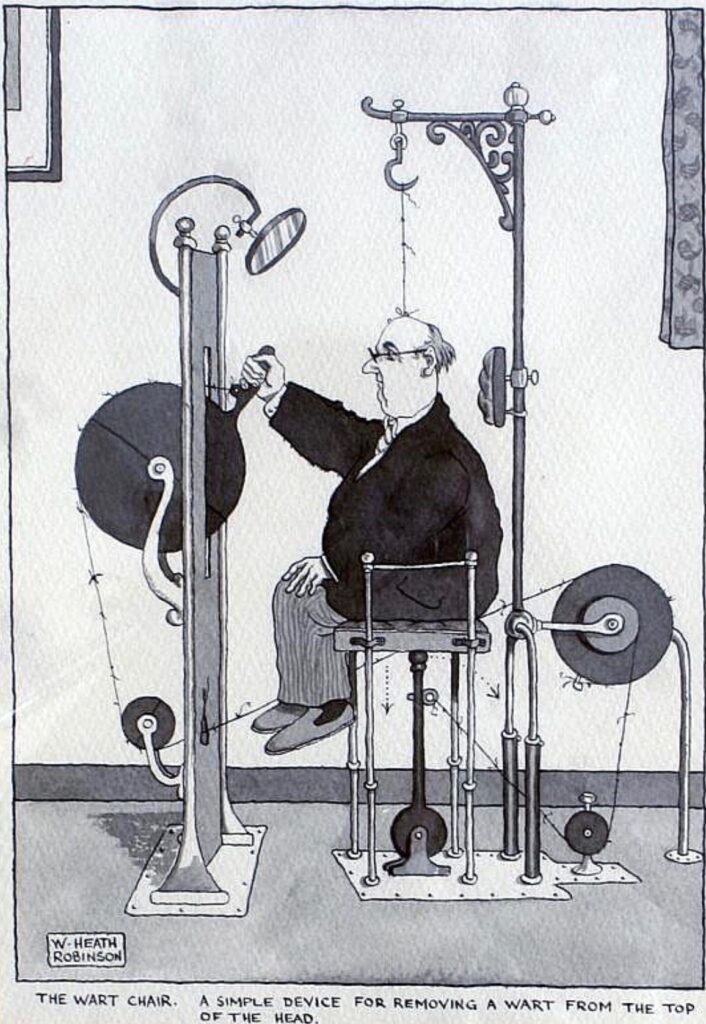
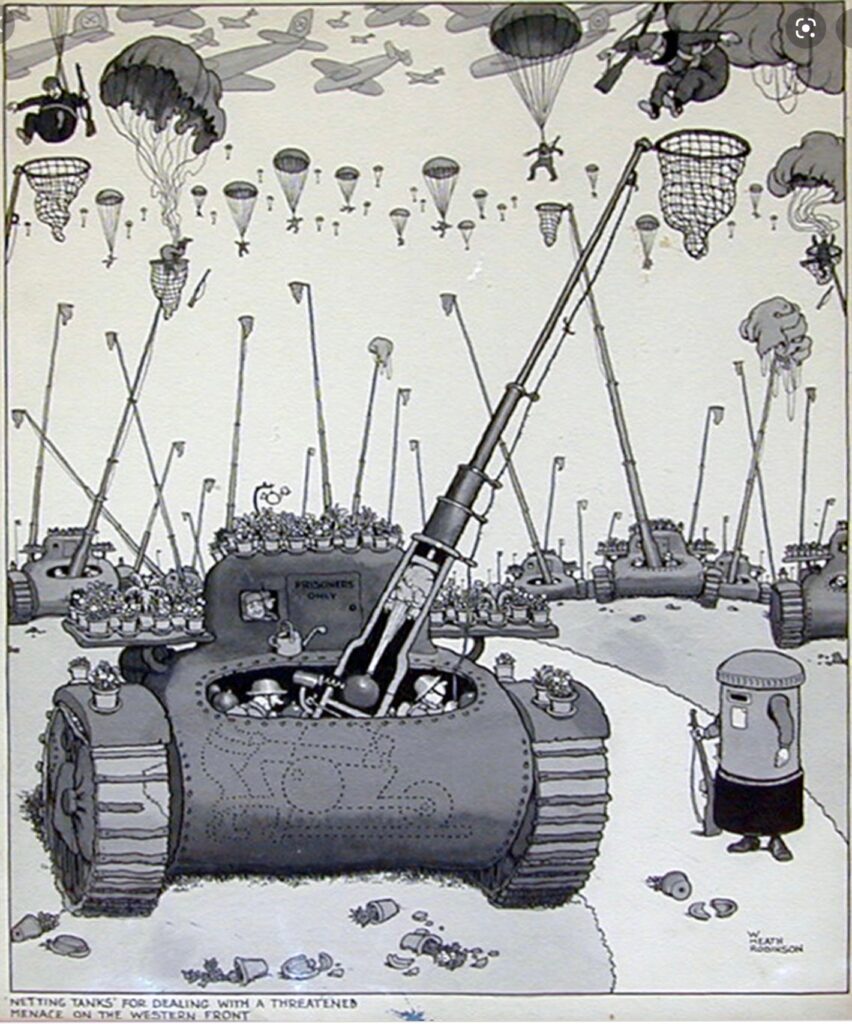
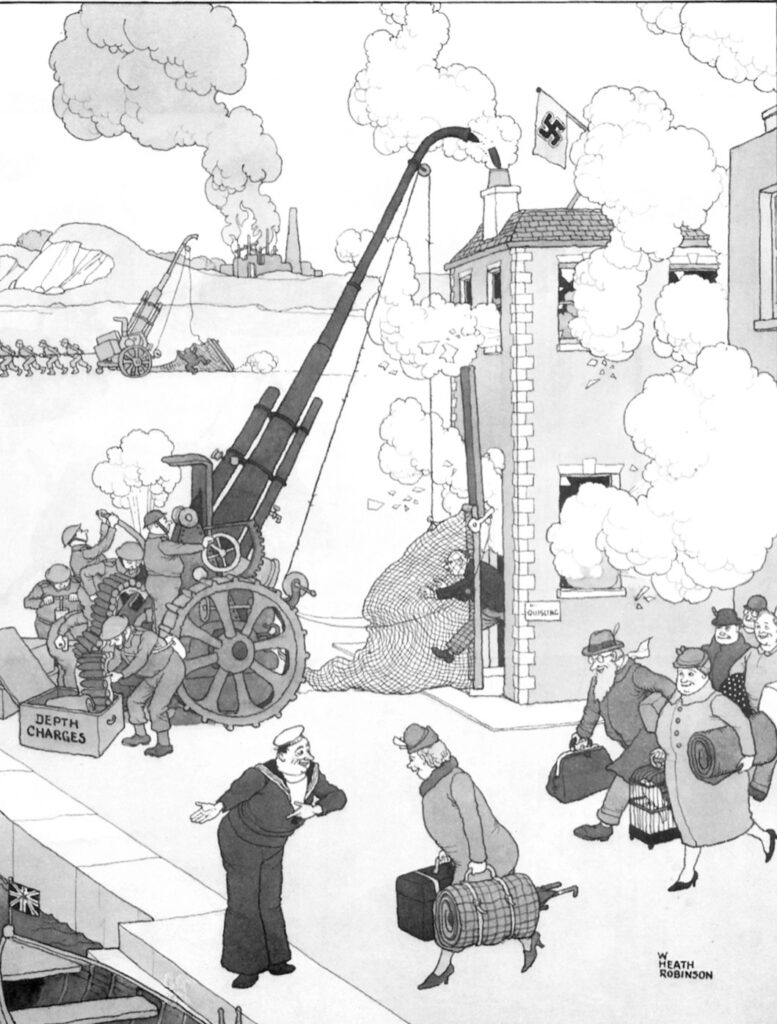
What did people talk about in 1918? This was a question very much on my mind when I began writing Plagued. Dialogue is a key element in any work of fiction, what the characters say, or don’t say, often tells the story. When it comes to historic fiction, the conversations also help set the scene, and the tone and content needs to be right. If it isn’t, readers will notice, or at least they will find it increasingly difficult to suspend their disbelief. Obviously, modern terms and phrases have to be avoided, and I spent a great deal of time Googling the origins of certain words and phrases (like Heath Robinson) to make sure I didn’t let any anachronisms slip in. Reading works written at the time helped with vocabulary too, but the content was another matter.
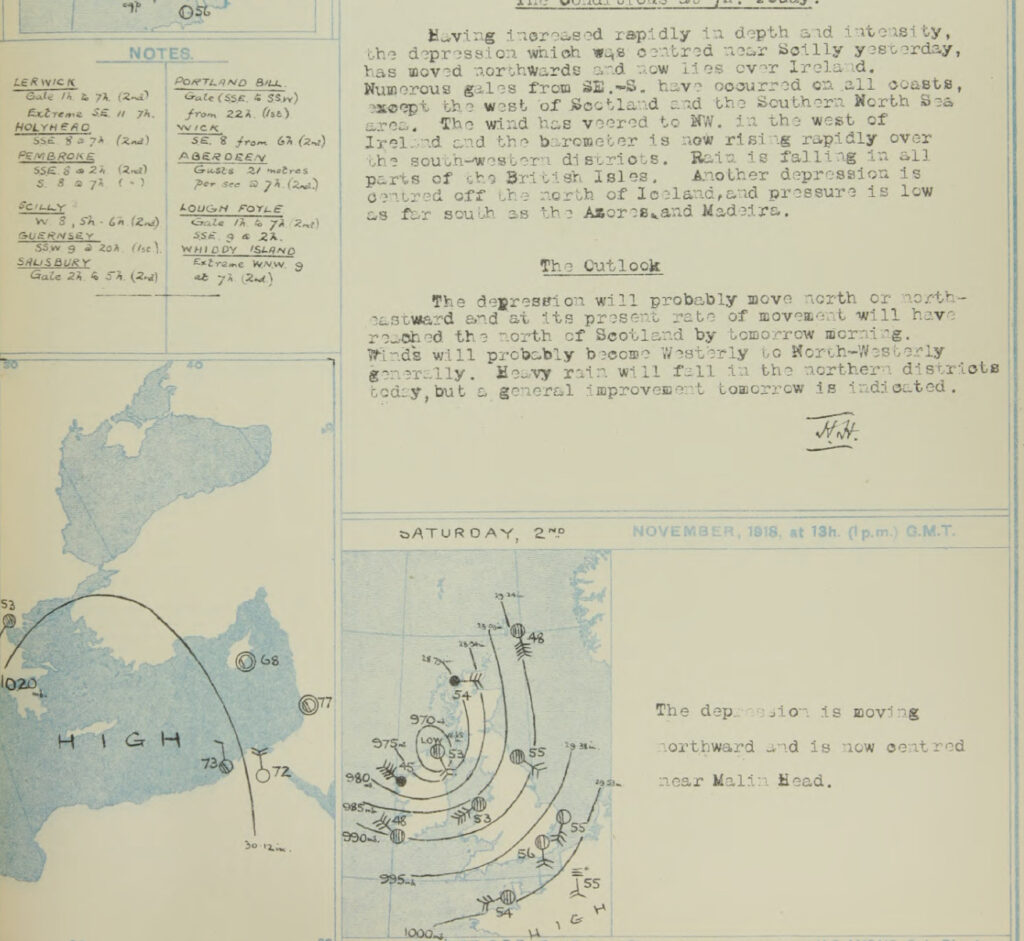
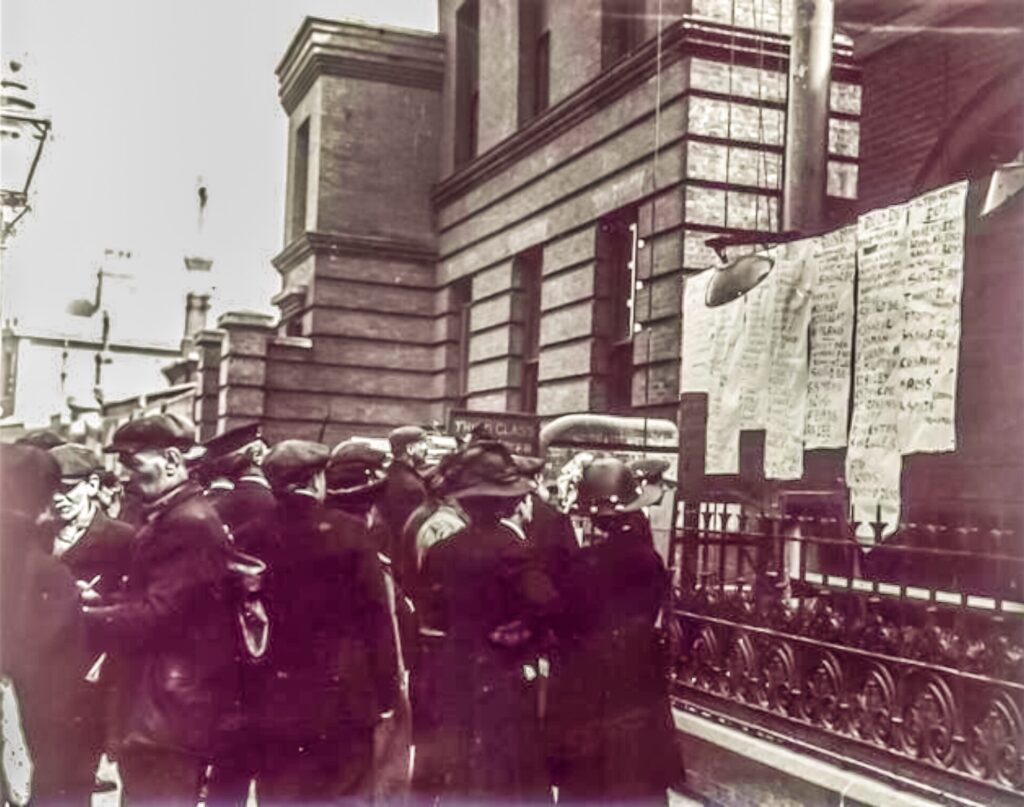
The times may have changed, but people haven’t, not really. Today, people gossip and chat about the weather, and recent news. They moan about the government and rising prices, and share memories. In 1918, they undoubtedly did much the same. The weather wasn’t hard to find out about. The Met Office Archive provides daily weather reports in glorious detail, and I made full use of them. The news back then revolved around the war, shortages, the impositions of The Defence of the Realm Act, the Spanish Flu and things like the suffragette movement and women taking over men’s jobs. Gossip and scandal would have reflected the morals of the times. The sharing of memories was another matter. What recent events would have shaped their lives and been etched onto their minds?
In Southampton, one of the most obvious was the sinking of the Titanic six years earlier. For my working class characters, this would have had a huge impact, especially as they lived in Northam, an area that provided many of the crew. No street in the town was untouched by loss. In real life, thirty two crew members came from Northam. Three of them came from Radcliffe Road, where my characters lived. Ernest Edward Gradidge, a fireman (stoker) and Arthur J Rous, a plumber, were lost. Arthur Ernest Read Lewis, a steward, was saved. They were all in their twenties. Those lost men would have left a huge gap in the community and the saved men would have suffered survivors guilt. Most survivors didn’t talk about Titanic, much like most soldiers didn’t talk about the war, but the sinking and its aftermath would still have been a topic of conversation amongst local people in 1918.
There were no television soaps, or reality shows to occupy peoples thoughts in 1918, although there were theatres, cinemas and celebrities of the day. My working class women wouldn’t have had much time for that kind of thing though. At least most of them wouldn’t. One of my characters may actually have rubbed shoulders with some of the music hall acts who went on to be big stars. Martha was inspired by a real person. The real Martha lived in Plymouth and married my grandfather’s brother, or at least, she lived with him, which would have caused quite a scandal back then. She was also an actress, not exactly a respectable profession either. She married an actor when she was 17, but he appears to have disappeared at around the time their only child was born. This left Martha in the lurch in more than one way. Women could only divorce in exceptional circumstances, and desertion wasn’t one of them. So, Martha was obviously a bit of a rebel, as well as a performer. All I really had to go on were the facts I’d found on Ancestry and I had no photographs, but I imagined her as rather exotic and quite a story teller.
Most of the stories I had her tell, were about her past, how she came to be living with a man eight years her junior with two illegitimate children. It was all conjecture and supposition on my part and I may have done her, or her missing husband a grave disservice. I couldn’t find out much about her life as an actress either, but I did find out a fair bit about the theatres in Plymouth from a wonderful site, Arthur Lloyd.co.uk. It helped me get a picture of the kind of things she might have been involved in. One of the big stories in Plymouth in 1909 was a visit by Harry Houdini. Martha would certainly have been aware of it and it became the basis for one of her stories.
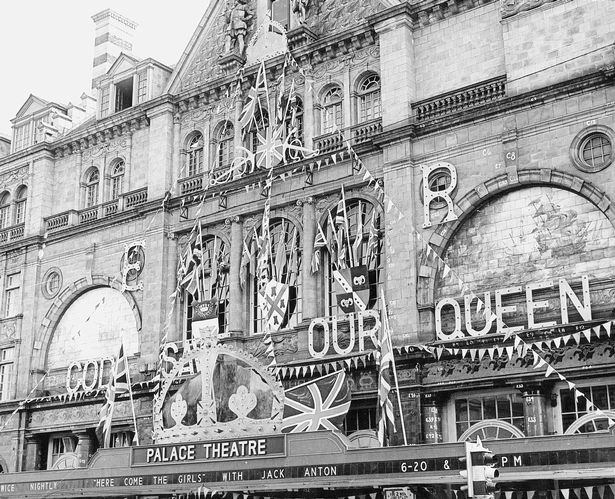
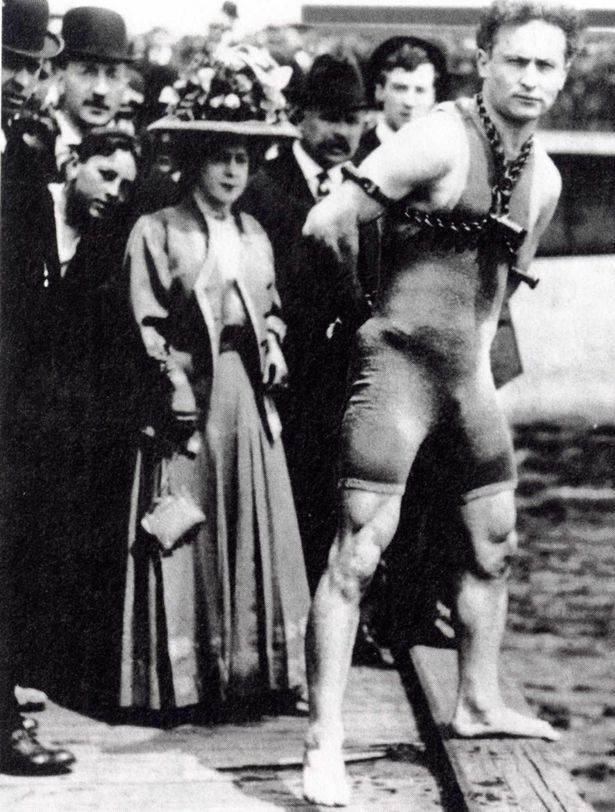
Houdini appeared at the New Palace Theatre in Union Street, about a mile from where Martha lived back then. To whip up publicity for his performances, Houdini gave a free show to the people of Plymouth. According to newspaper reports, he appeared on Stonehouse Bridge, about half a mile from the theatre, dressed in nothing but a pair of white knickers, with his hands cuffed, wearing elbow locks and chains around his neck. In front of a large, and adoring crowd, possibly including Martha, he took a few deep breaths then dived headfirst off the bridge into the cold water below. He was under the water for no more than forty-five seconds, but to a crowd unused to such drama, it must have seemed an age. When he reappeared he had shaken off his chains. He swam ashore, jumped into a taxi, still soaking wet, and went back to the theatre. No one who saw it would ever forget it, and plenty who didn’t see it would say they did.
His performance at the theatre was no less dramatic. A group of dock workers made a special box to challenge him. Houdini agreed to forfeit his £25 appearance fee if he failed to escape from it. To add to the drama, the dock workers came onto the stage and added nails to the box during the performance. It took Houdini twelve minutes to escape, but escape he did. He appeared, perspiring profusely, to uproarious cheers. No one could explain how he had got out of that box.

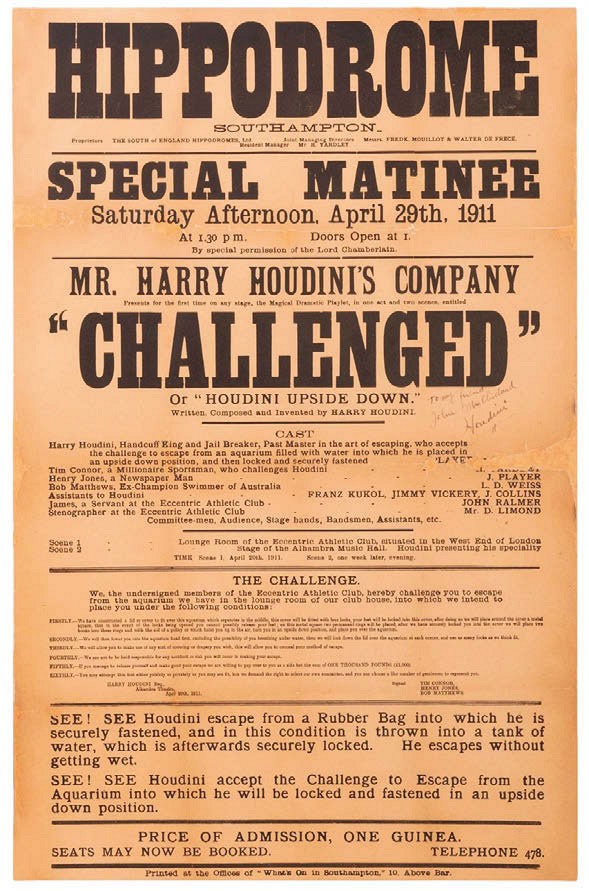
In 1911, the great escapologist appeared at the Hippodrome in Ogle Road, Southampton. It was his second visit to the town, the first being over a decade earlier. He performed twice a night for a week, beginning on 24 April. During his shows he released himself from straight jackets and even a milk churn filled with water. The place was packed every night. His afternoon performance on 29 April, was different. It was a special matinee with a very special price of one guinea. Reputedly, he had an audience of just one and the trick he performed had never been seen before. Houdini was premiering his Water Torture Cell. The ‘cell’ was a large mahogany cabinet with a glass front. It was filled with water and the lid had two holes through which Houdini’s feet were inserted and fastened tightly. The showman was then lowered, head first into the tank and the lid was locked. It took Houdini less than a minute to escape. The trick became one of his most famous and remained in his act until his death in 1926.
There are no newspaper reports of Houdini jumping off of any local bridges to publicise his Southampton shows. At least none that I’ve found. I imagine if he had leapt from Northam Bridge, Cobden Bridge, or even Mansbridge Bridge, people would still be talking about it now. Strangely, Houdini’s visit to the town and the origin of his famous Water Torture Cell, has not passed into Southampton legend. Perhaps it was eclipsed by the events that took place a year later.
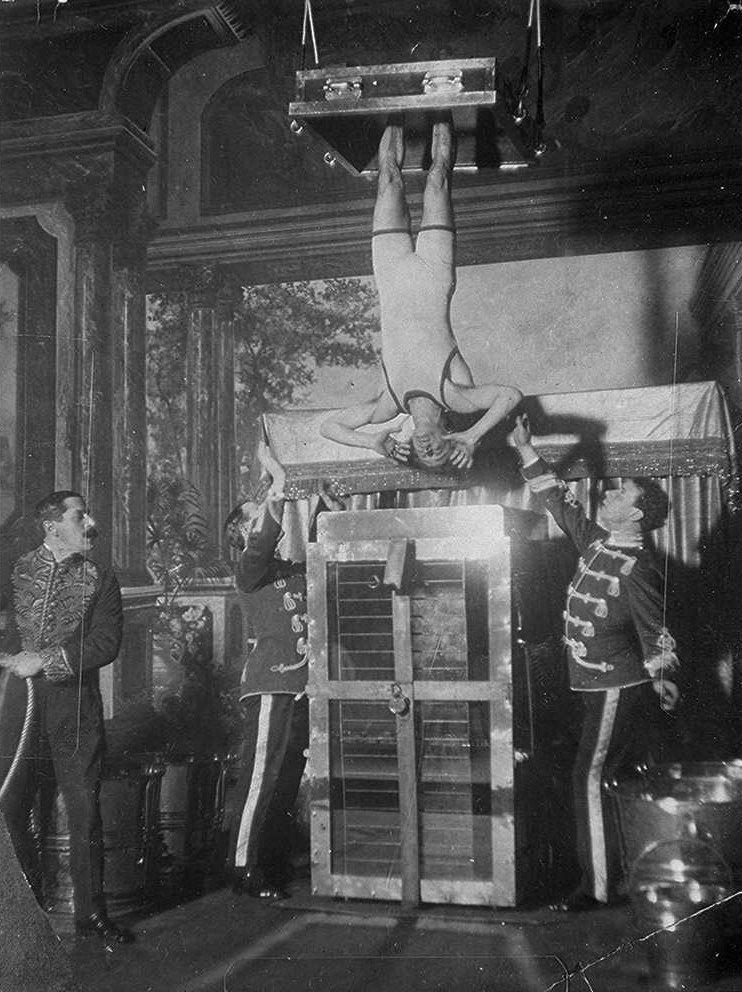
As you can see, writers of historic fiction end up researching some very strange subjects while trying to make their characters’ conversations authentic and capture the time and place they’re writing about. When I look back at my internet search history, I often wonder what someone else would make of it. In fact, given some of the subjects I end up researching, I think I’d probably best delete it all to hide the evidence. It could well get me in trouble.
If you like what I write, and you’re interested in my novels are available now on Amazon in paperback, on Kindle and via Kindle Unlimited. Check out my Amazon page here and my Goodreads page here. If you would like to help me keep writing, you can now buy me a virtual coffee by clicking on the little orange coffee cup at the bottom right.
What a fascinating account of Houdini’s performances in this area.
Thank you. I’d have loved to find out that he’d jumped off one of the bridges, but I don’t think he can have done.
People just living together was normal at that time Marie.Not everyone got married,especially in the working classes