
28 January 2016
There was a time when I passed St Mary’s Church in Southampton every day at least once but I’d never seen it with the doors open before so I’d never been inside. Today I had a couple of appointments in town and the plan was to have a wander along St Mary’s Street and take photos for a post about this interesting area of the city in between. When I saw the open door though, I couldn’t pass up the chance to have a look inside the mother church of Southampton.
In around 690 AD, about three hundred years after Clausentum was abandoned, the Saxon King, Ine, built a new town across the river more or less where St Mary’s Church stands today. He called it Hamwic or Hamtun, the very beginnings of the Southampton we know and love today. By Saxon standards this was a large town with up to five thousand inhabitants, centred around the busy port. The first church was built at the same time as the town, or slightly before, when Saint Birinus arrived on a mission to bring England back to its former Christian faith. During the Viking raids of 994 King Olaf of Norway crossed the river from Woolston to worship there. Of course, the doors I walked through were not the same doors Olaf would have entered. There have been many changes since then and the present church is the sixth on this site.
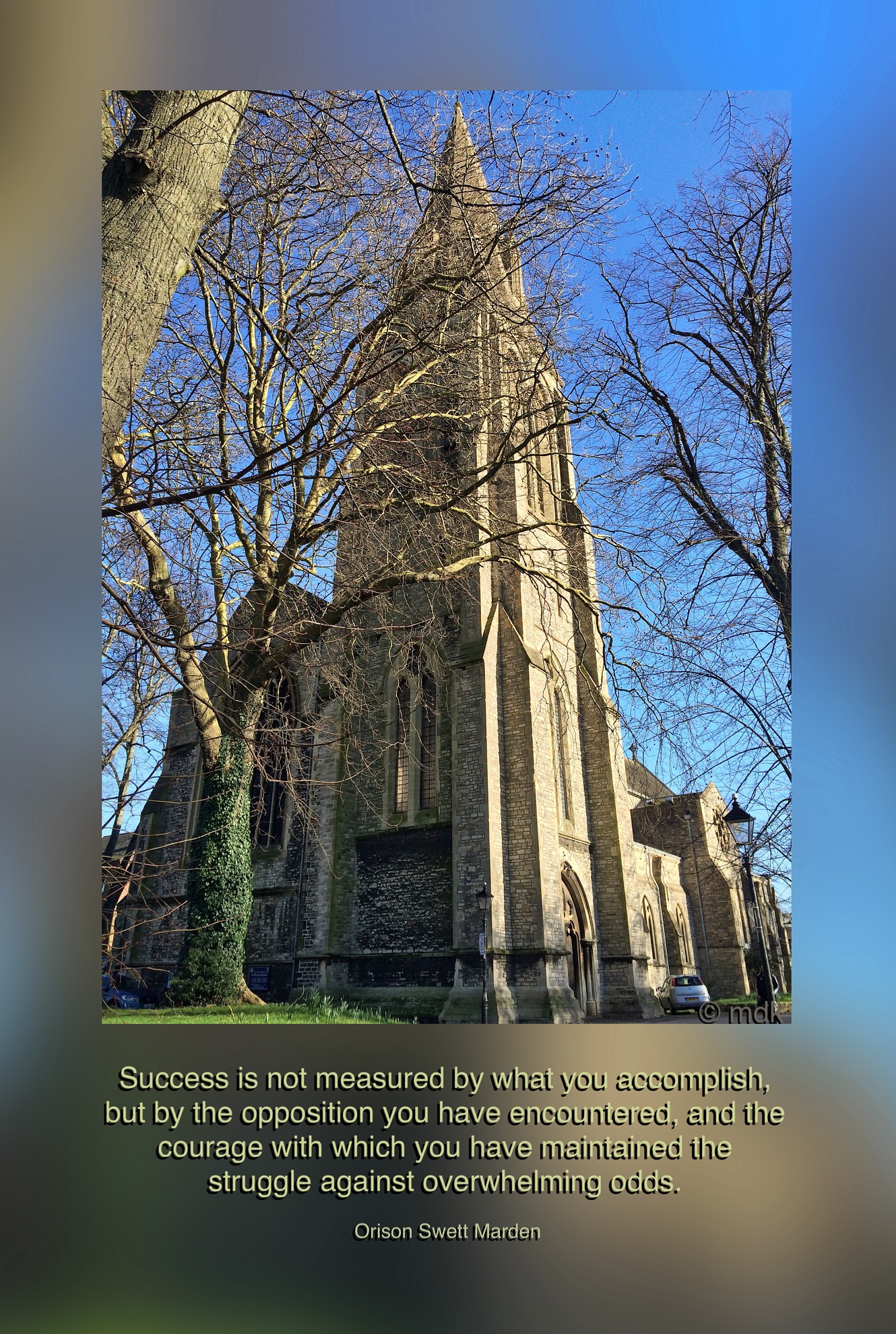
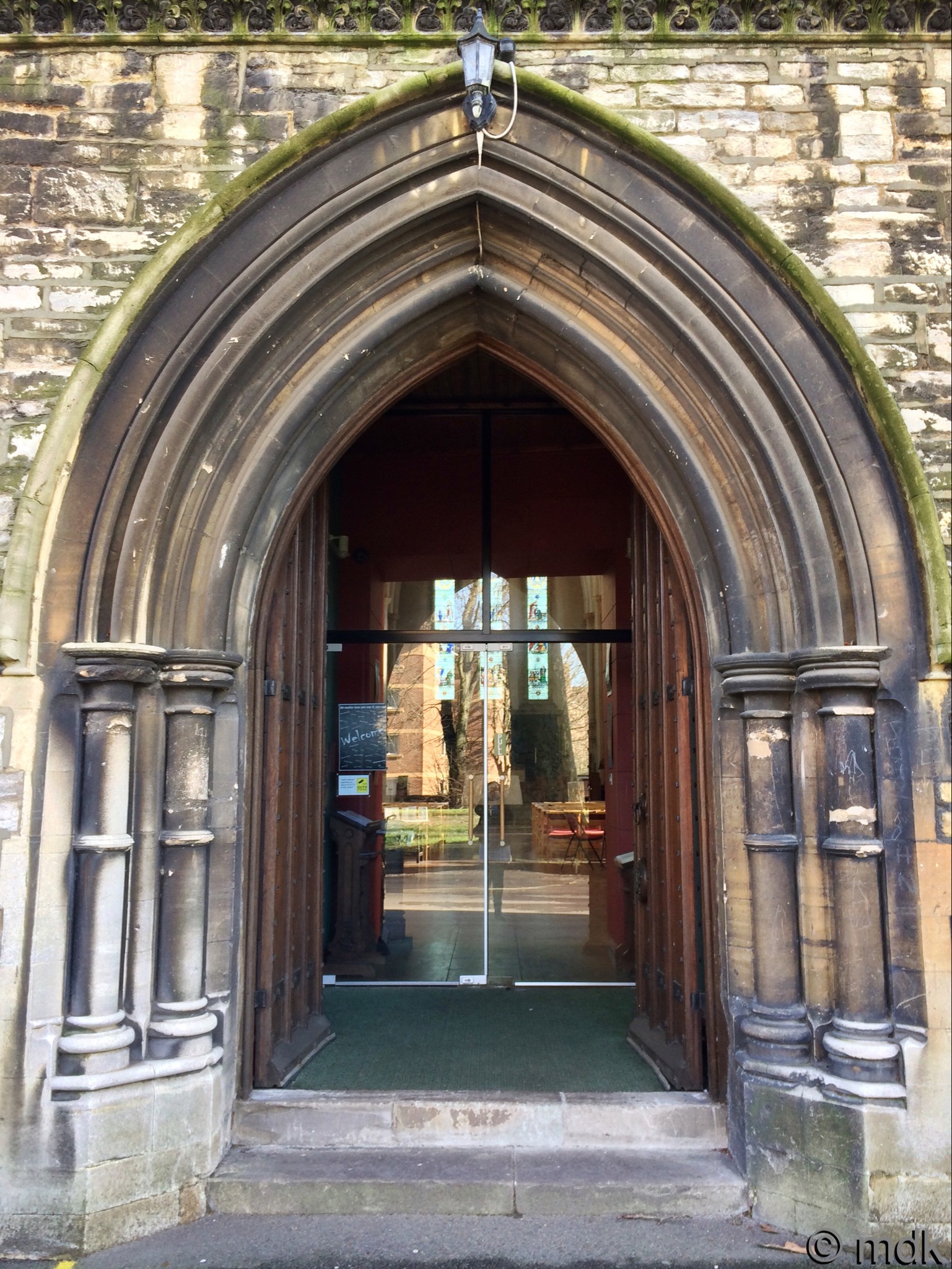
The story of this pretty little church, nestling amongst tall trees, is of survival against all the odds. After many Danish raids the Saxon town fell into decline. By the eleventh century, when Canute was crowned king of England in the Norman settlement to the west, most of Hamtun’s inhabitants had moved there and Hamtun was more or less abandoned. This new settlement would become the walled town of Southampton but, even after St Michael’s church was built in the new town in 1070, St Mary’s remained the mother church, claiming tithes and burial rights.
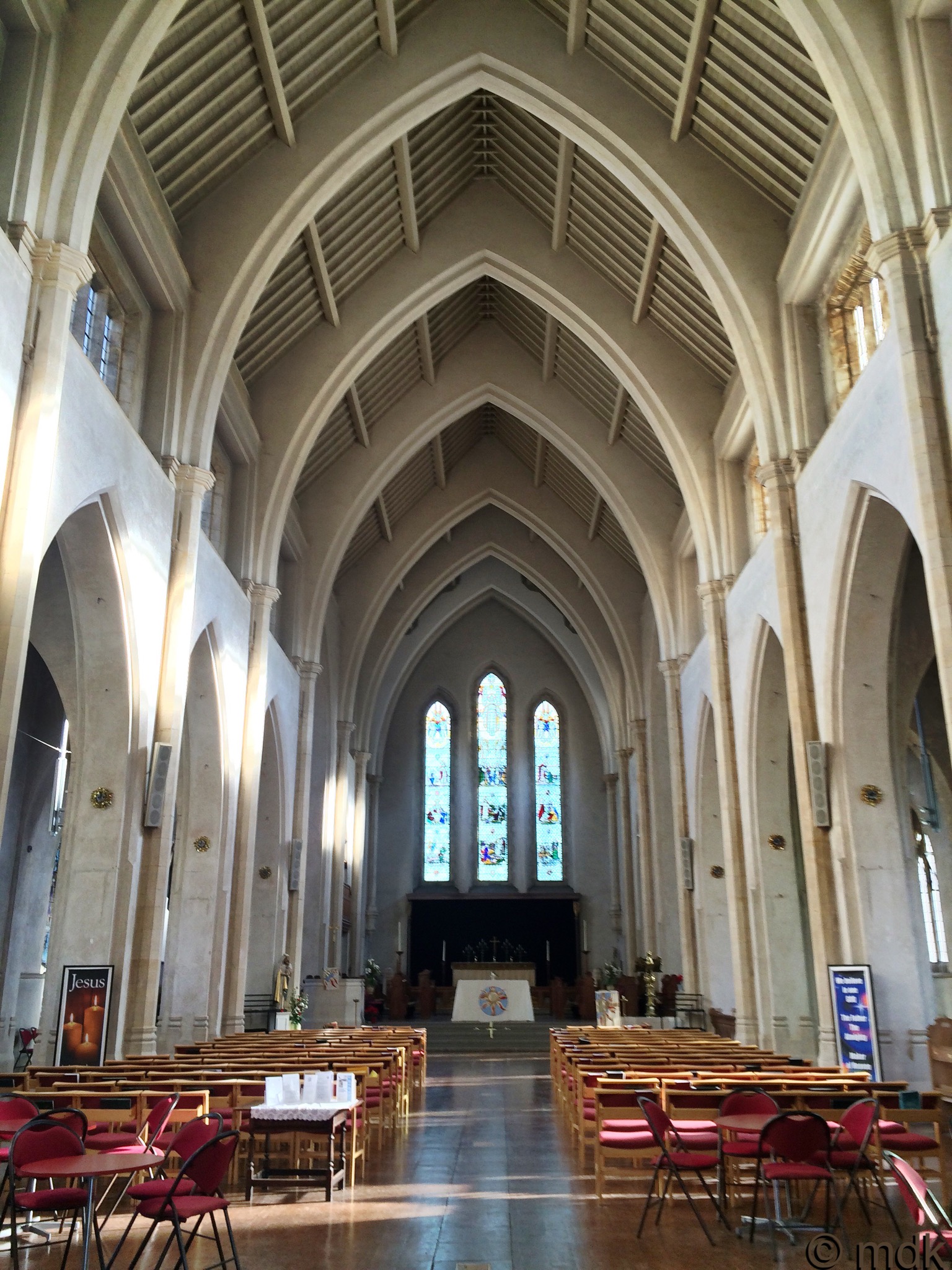
As I stood on the threshold looking down the surprisingly large and bright church towards the chancel I was acutely aware of the history beneath my feet, if not in front of my eyes. After the new town was built the first church slowly fell into a state of disrepair until, in the twelfth century, Henry I’s wife, Queen Matilda, ordered it to be rebuilt. The second church lasted four hundred years and, despite being outside the walled town, was the principal place of worship. Sadly, in 1548, the rector, Dr William Capon fell out with the powers that be when, under the Chantries Act, the government abolished the chantry grammar school and confiscated the lands. Retribution was swift and cruel. They ripped out the interior or his church, going so far as to remove marble tombs and the bells from the tower. As a final act they weakened the steeple to the point it had to be demolished.
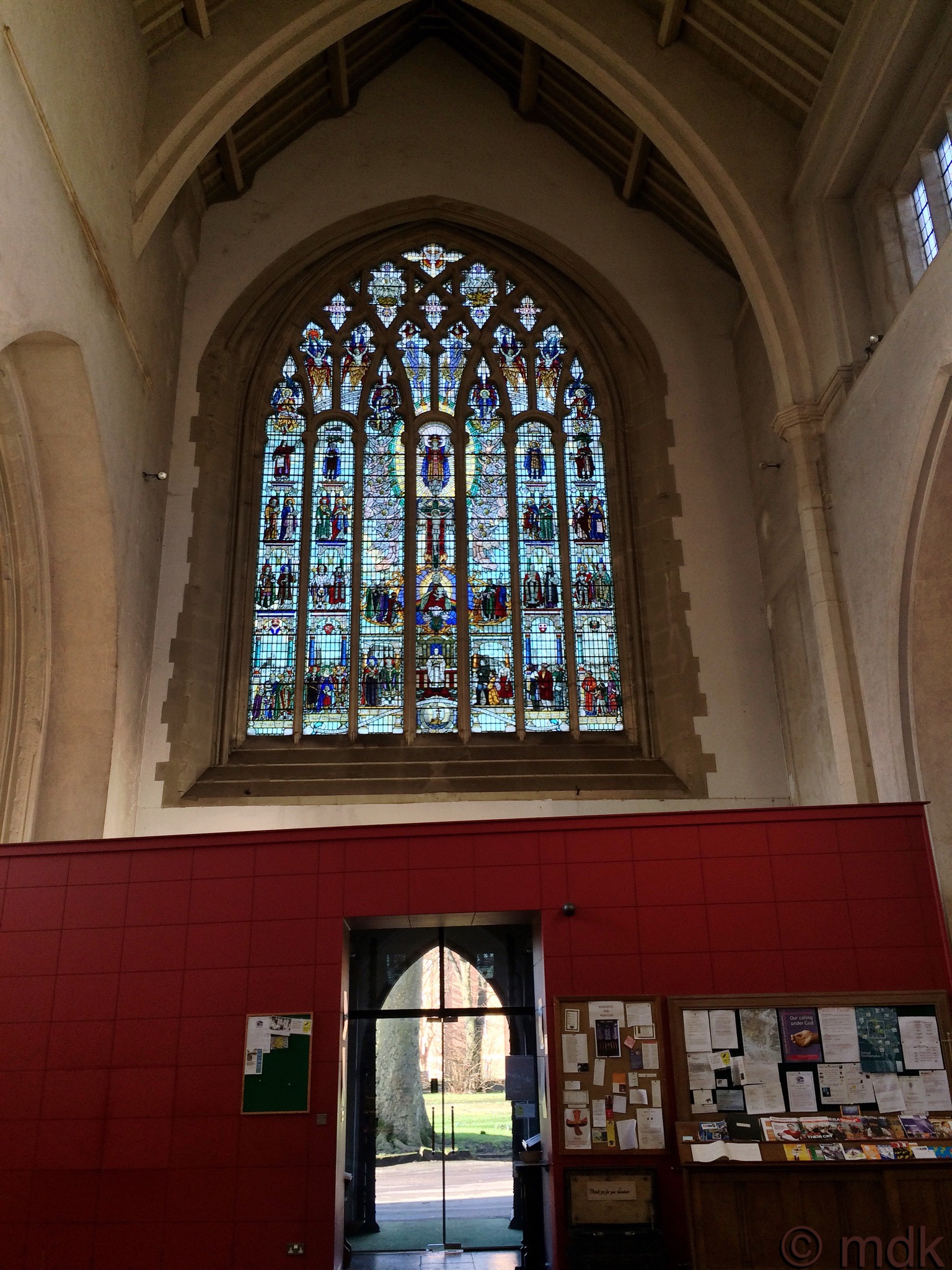
The church was more or less destroyed. In fact, such was the devastation, the Court Leet of 1549 ordered the rubble to be carted away to make the roads from Bargate and East Street. The chancel was all that remained. Thinking about how quickly fortunes could turn, I turned to look at the fabulously detailed window above the door, designed by Gerald Smith to depict six local landmarks. For a while I stood and tried to make them out.

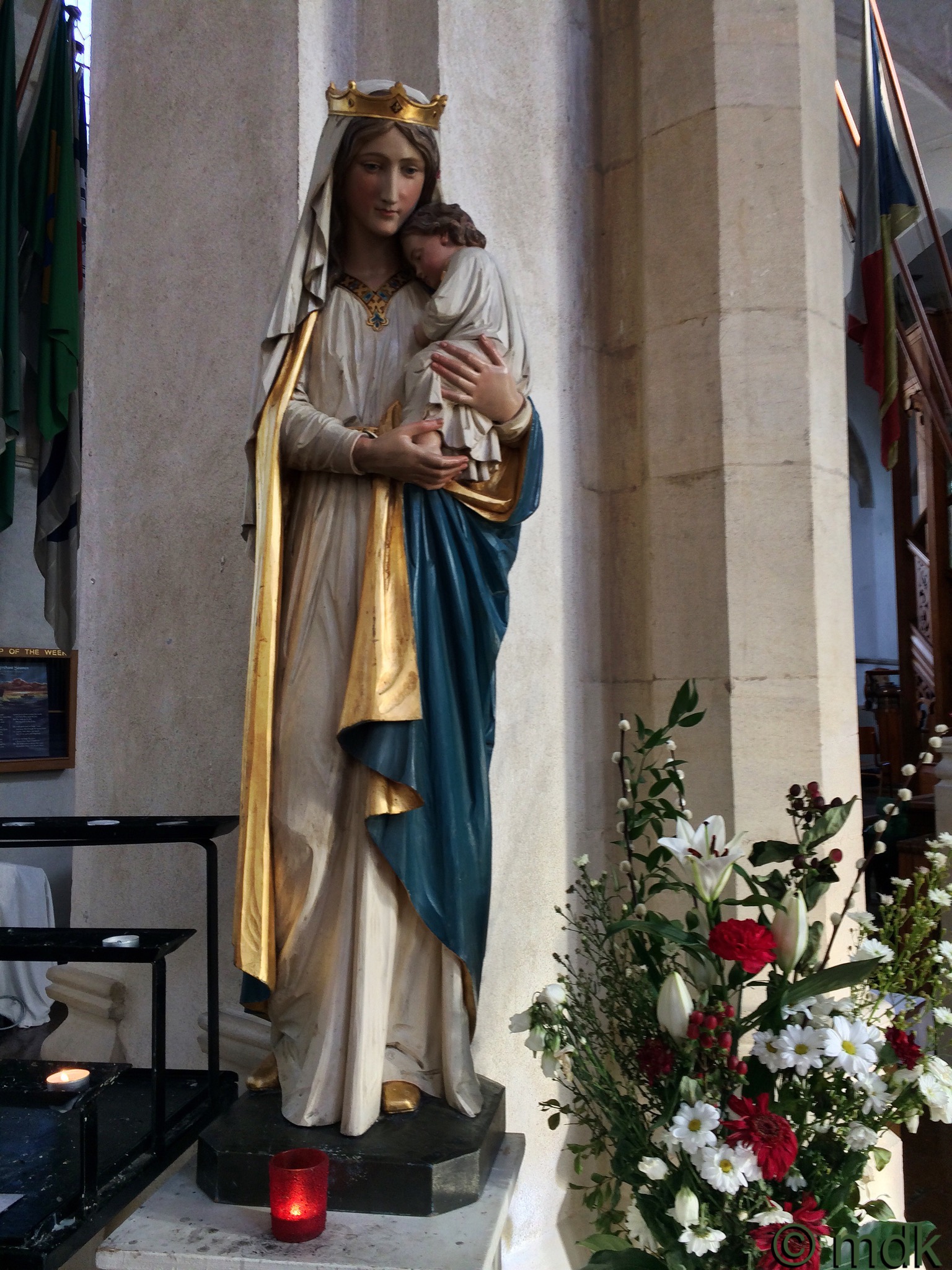
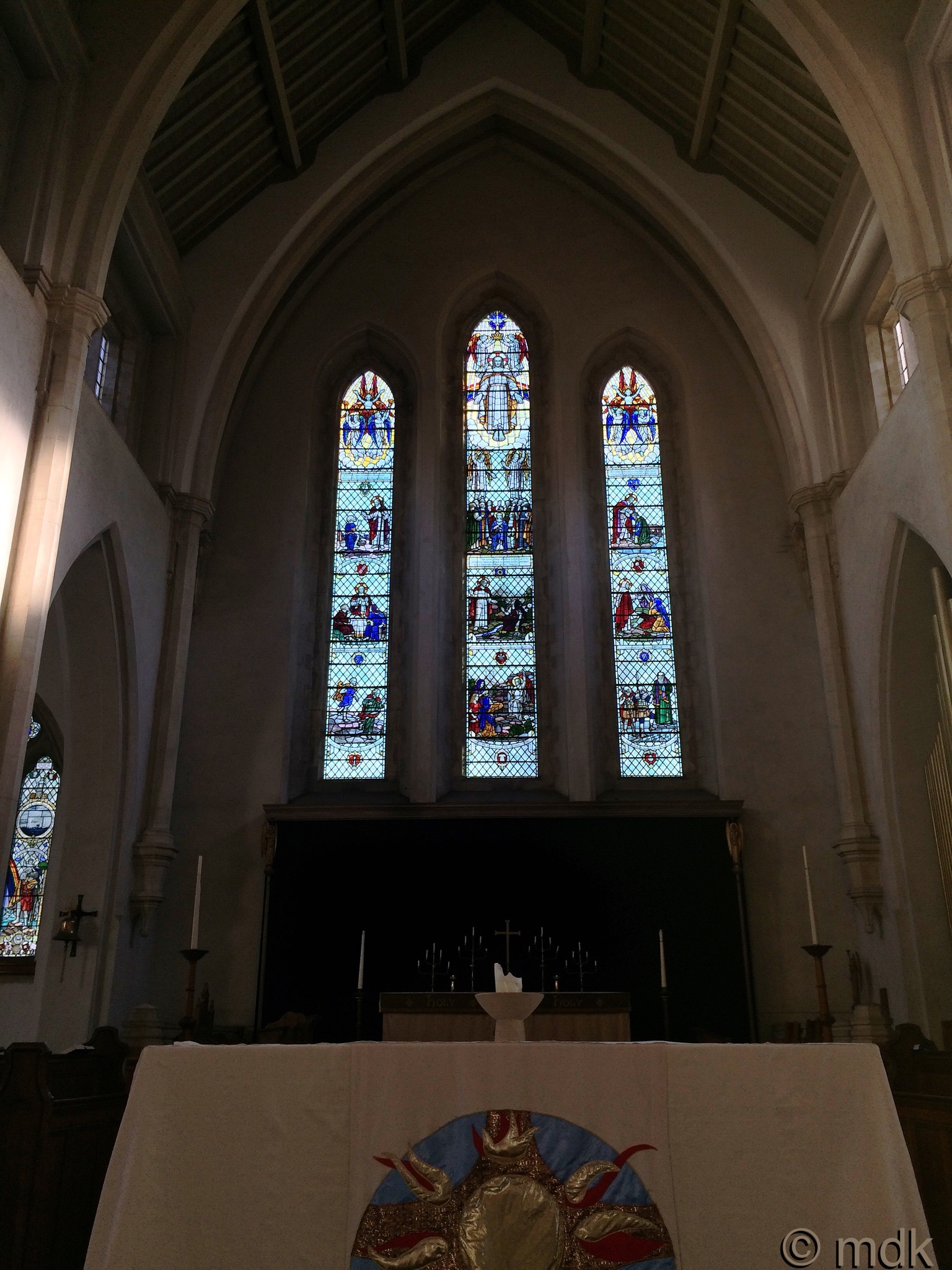
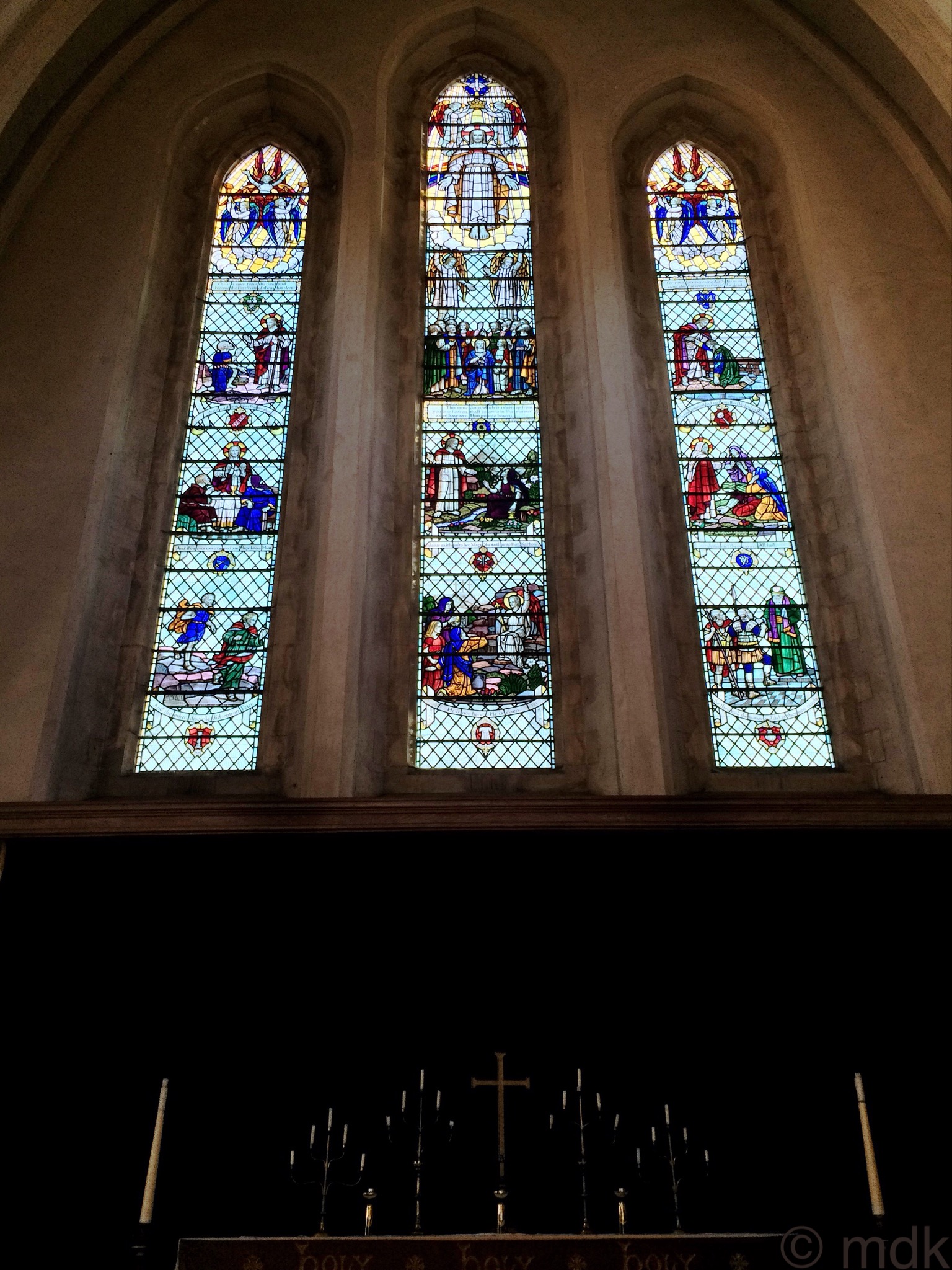
Poor William Capon must have been devastated by the loss of the church and the chantry grammar school. He died in 1550, leaving £100 in his will to build and fund another grammar school in the town. This would become King Edward VI School. The modern school has recognised William Capon’s generosity by naming one of the houses after him. Obviously this was not the end of the church or I wouldn’t have been quietly creeping towards the enticing stained glass window in the chancel, stopping on the way to admire a serene statue of the church’s namesake cradling the baby Jesus in her arms.
Despite everything, services were still held in the ruins although the church, the chantry lands that had caused all the trouble and the tithes were leased to Robert Reniger, Sheriff of Southampton and a merchant ship owner. Under the terms of the lease Reniger paid the rector eighteen pounds a year. Then, during the Civil War, everything was handed over to the Corporation. Payment of forty shillings was made to a Mr Barber to repair the chapel but it wasn’t enough money to make much of a difference.
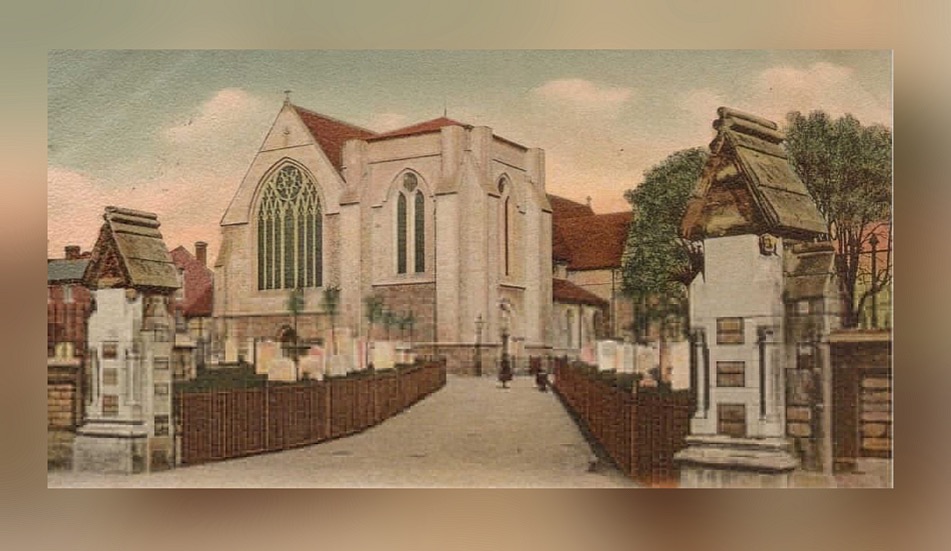
After the restoration the leases reverted to the church and Doctor Clutterbuck took charge as rector. It wasn’t until 1711 that things began to change for the better. Archdeacon Brideoak gave £920 to build a nave and, twelve years later, a further £400 to rebuild the chancel. By 1800, as the town spread and grew, aisles and galleries were added. Unfortunately, piecemeal additions and poor workmanship meant the building was soon in a sorry state again and, in the 1870’s it was condemned.
In 1878 the foundation stone for the next new church was laid and it was completed in 1884. Basil Wilberforce was rector and the church was dedicated as a memorial to his father, Bishop Samuel Wilberforce. This new church played a huge part in the town. In 1885, it started a football team. They would go on to become the Saints, who now play a stone’s throw from the church in St Mary’s Stadium. Then, in 1912, while the spire was still being built, hundreds of White Star Line crew and the familes of those who perished on the Titanic attended a memorial service in the new church. The tower was finally finished in 1914 and the sound of its eight bells inspired Australian composer A. Emmett Adams and British lyricist Douglas Furber to write the song The Bells of St Mary’s, later sung by Bing Crosby in the film of the same name.
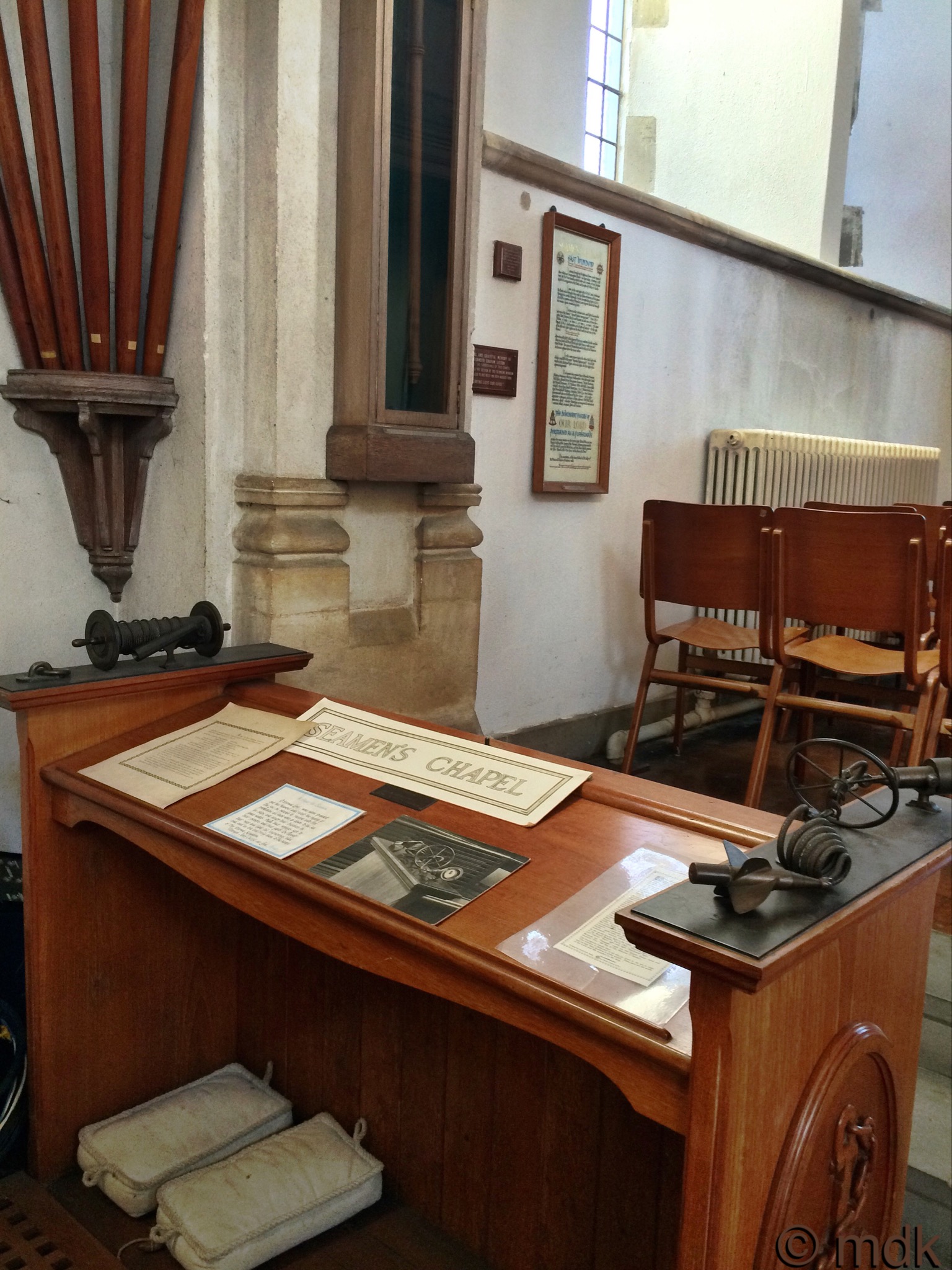
The chancel window enchanted me for a while but, to my left a mass of flags attracted my attention. They stood at the entrance to the north transept and the Seamen’s Chapel, commemorating the history of the port. Behind the flags was a beautiful wooden desk, or maybe it’s a pew, the seat looked as if it had come from a ship and there were nautical instruments at each end of the desk. The lectern also looked like it came from a ship.

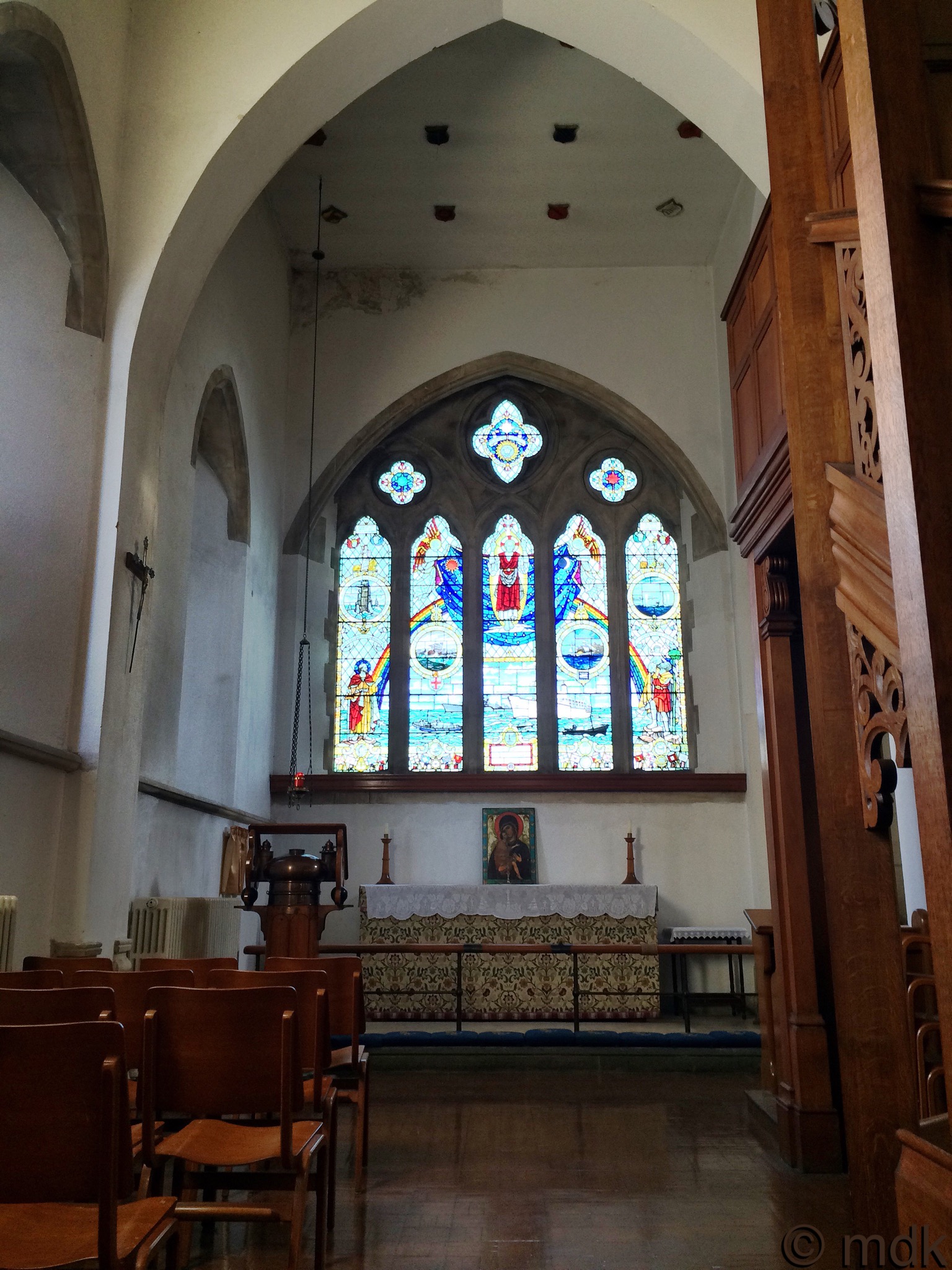
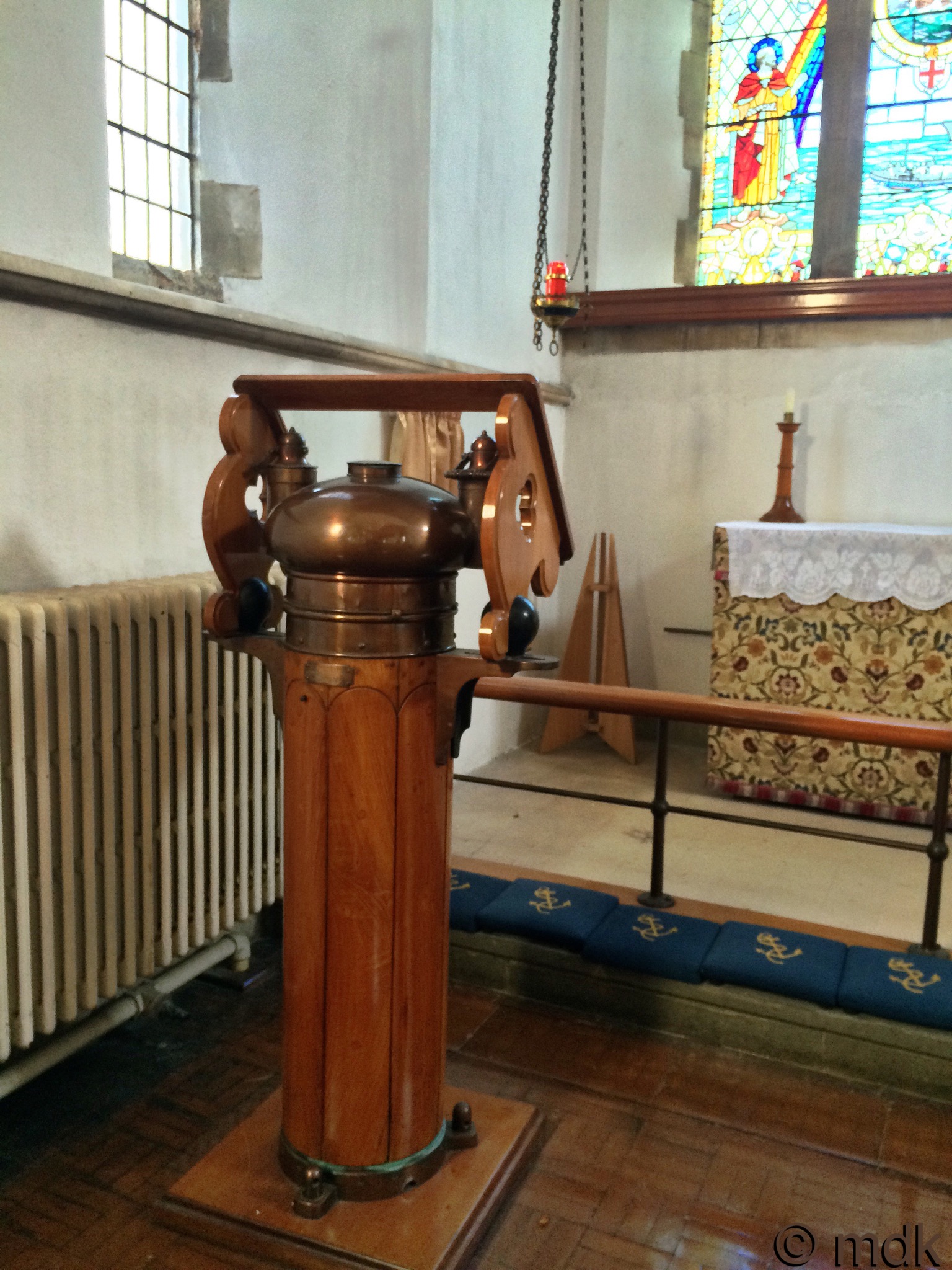
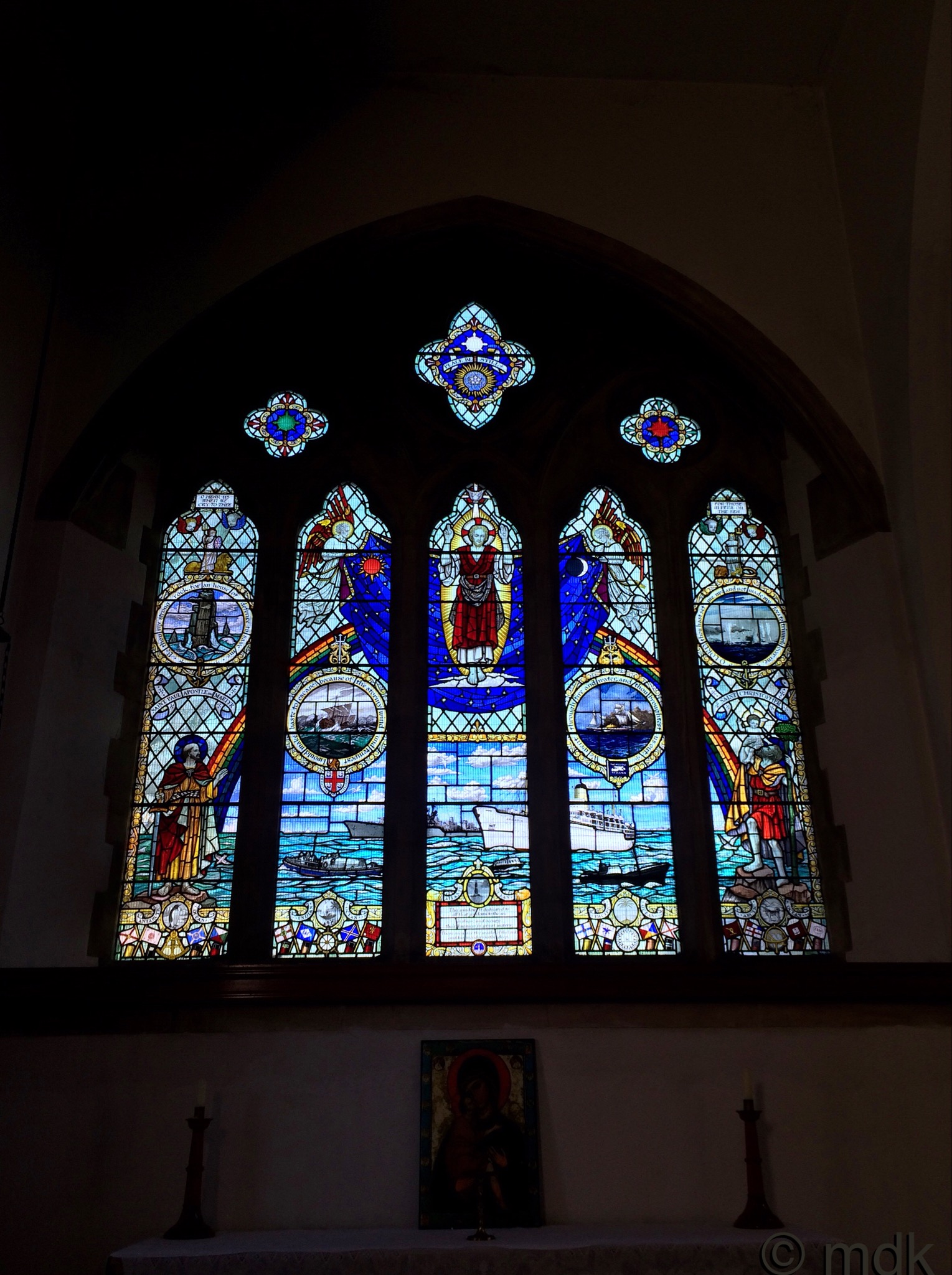
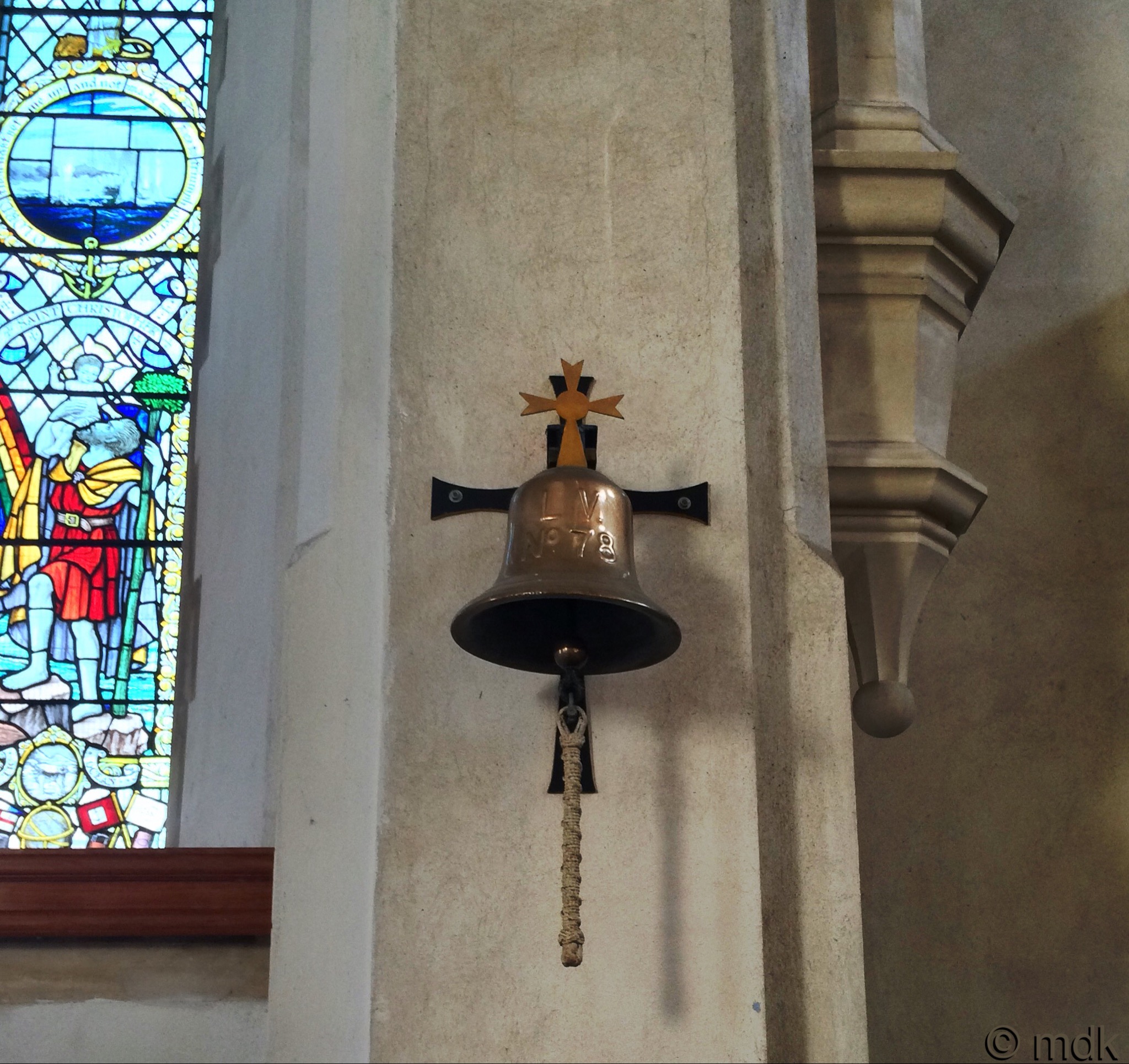
The stained glass is always the draw of the inside of churches for me and the window in the Seamen’s Chapel was gloriously colourful, filled with sea, ships and a rainbow, it mesmerised me for a while. Then I noticed a ship’s bell beside it and began to wonder about its history. I’m still wondering because I couldn’t find anything out about it.
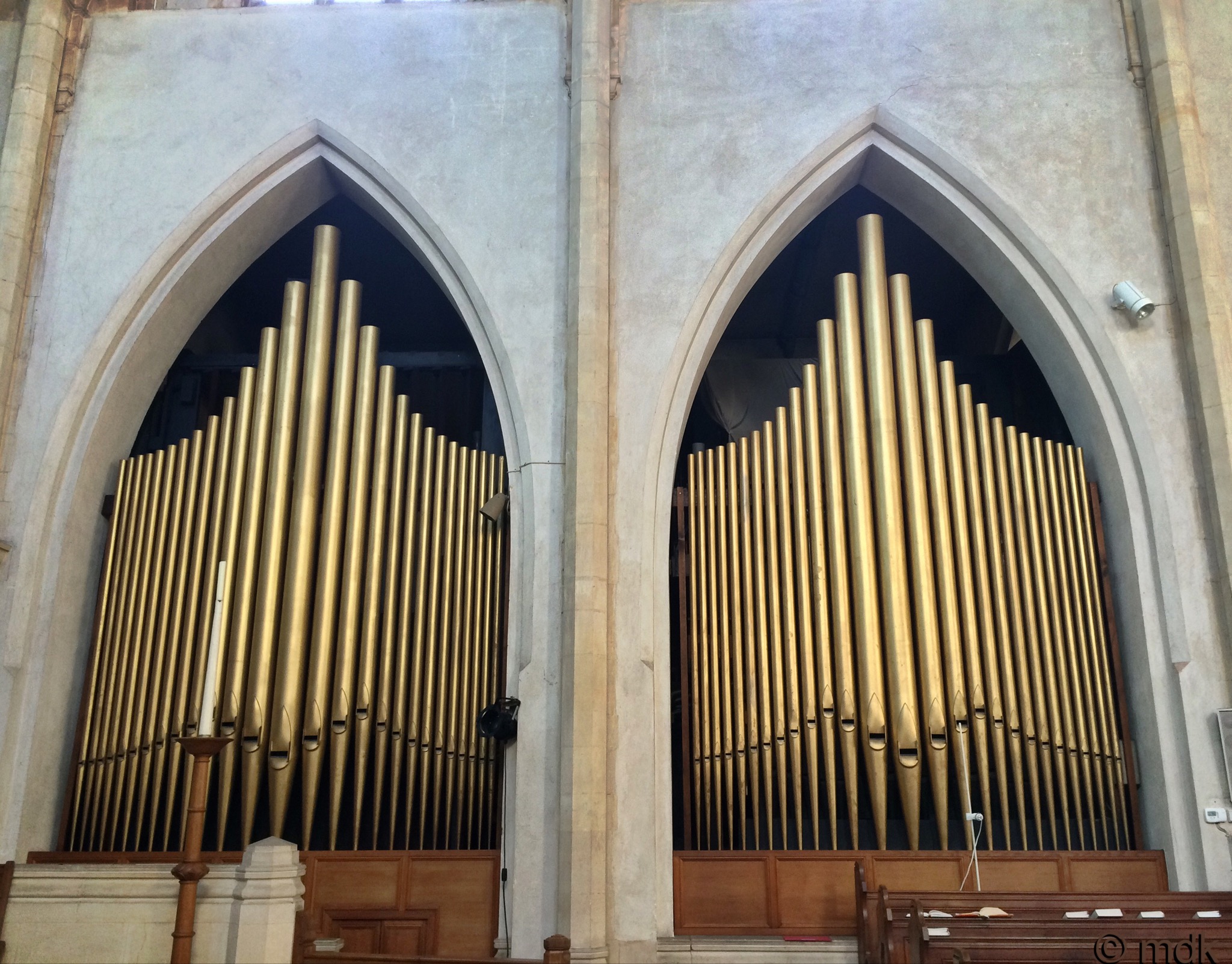
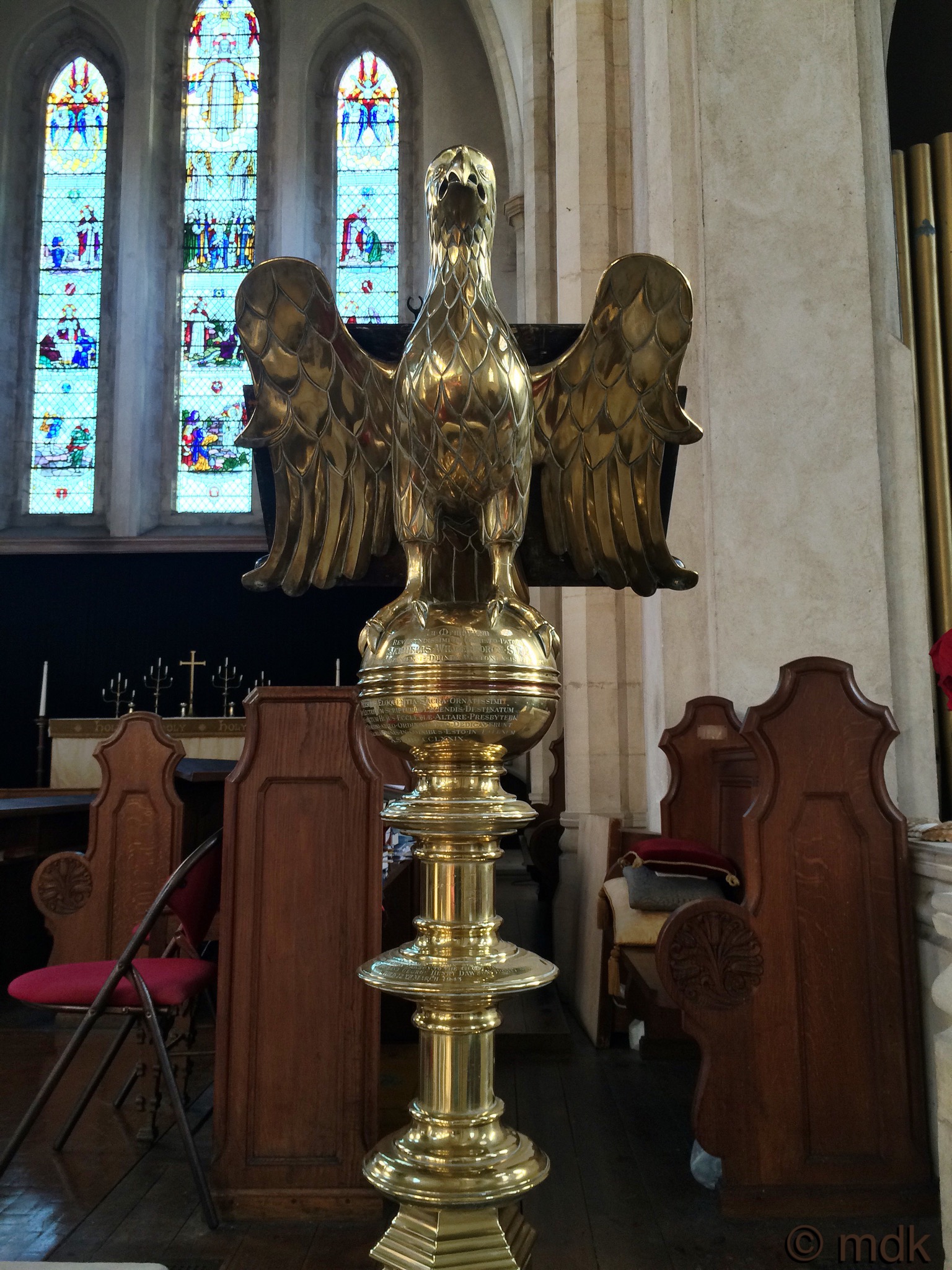
Between the chapel and the chancel, stairs led down to a mysteriously enticing door. Maybe it leads to the crypt? The south transept is almost completely taken up by a mass of organ pipes. The organ is among the largest church organs in the south of England and was built by Henry Willis and Sons in 1956. Some of the pipe work comes from the former Albert Hall organ in Stirling. Below the ranks of shining pipes is the eagle lectern. There was an inscription but, as it was in Latin, I was none the wiser for it.

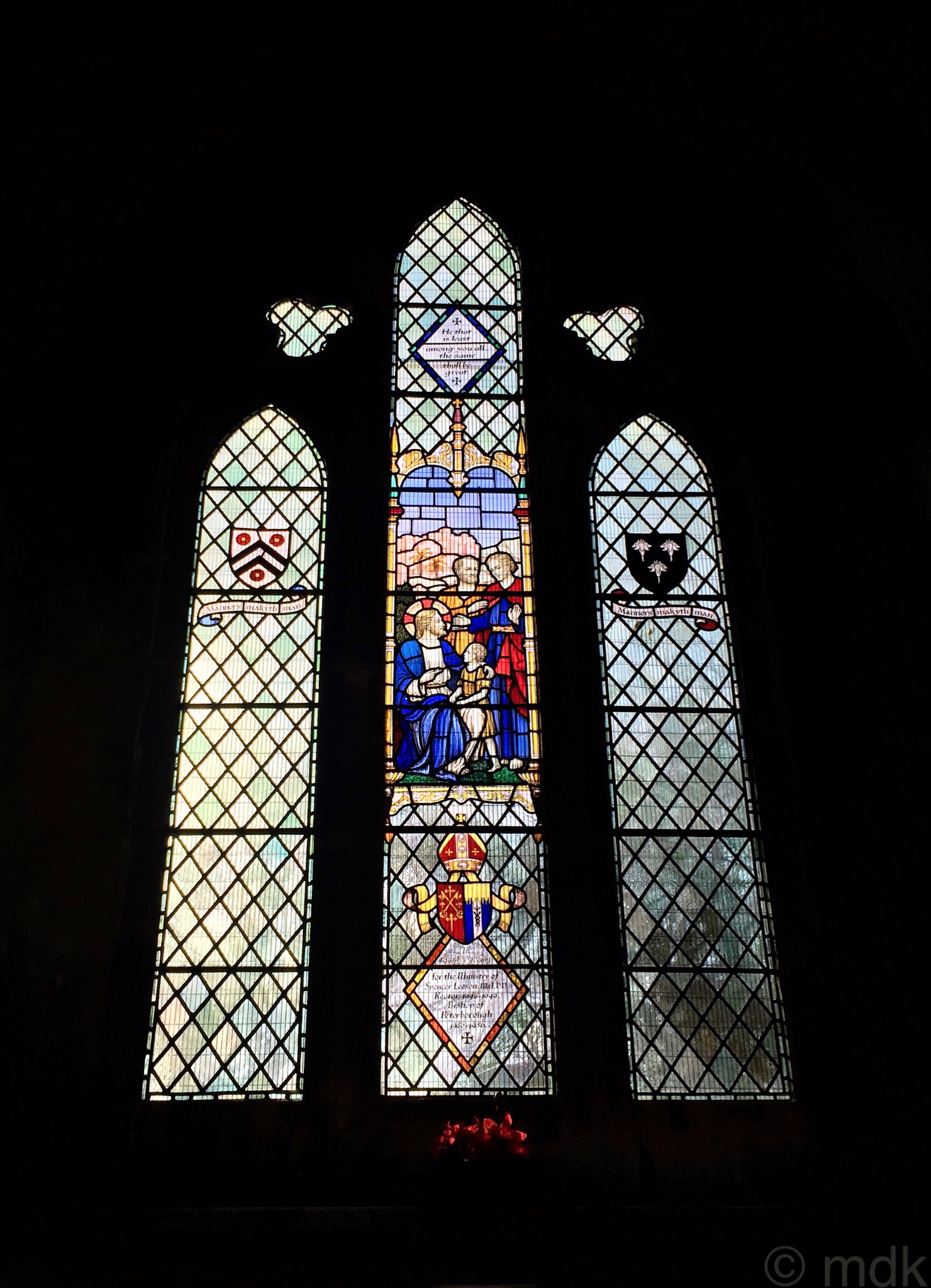
The new ninteenth century church was built to last but, sadly, its tribulations were not quite over. On 30 November 1940, during the Southampton blitz, inceniadry bombs almost put paid to the church once again. All but the tower, the famous bells and the Baptistery were left in smoking ruins. Services continued in the Chantry Hall just across the road and, with the town reduced to rubble, rebuilding wasn’t a priority. It was 1954 before a decision was finally made to rebuild. Architect Romily Craze kept the Victorian shell and the steeple and added some beautiful stained glass windows. These were what I’d really come inside to see and I spent some time wandering around admiring them.
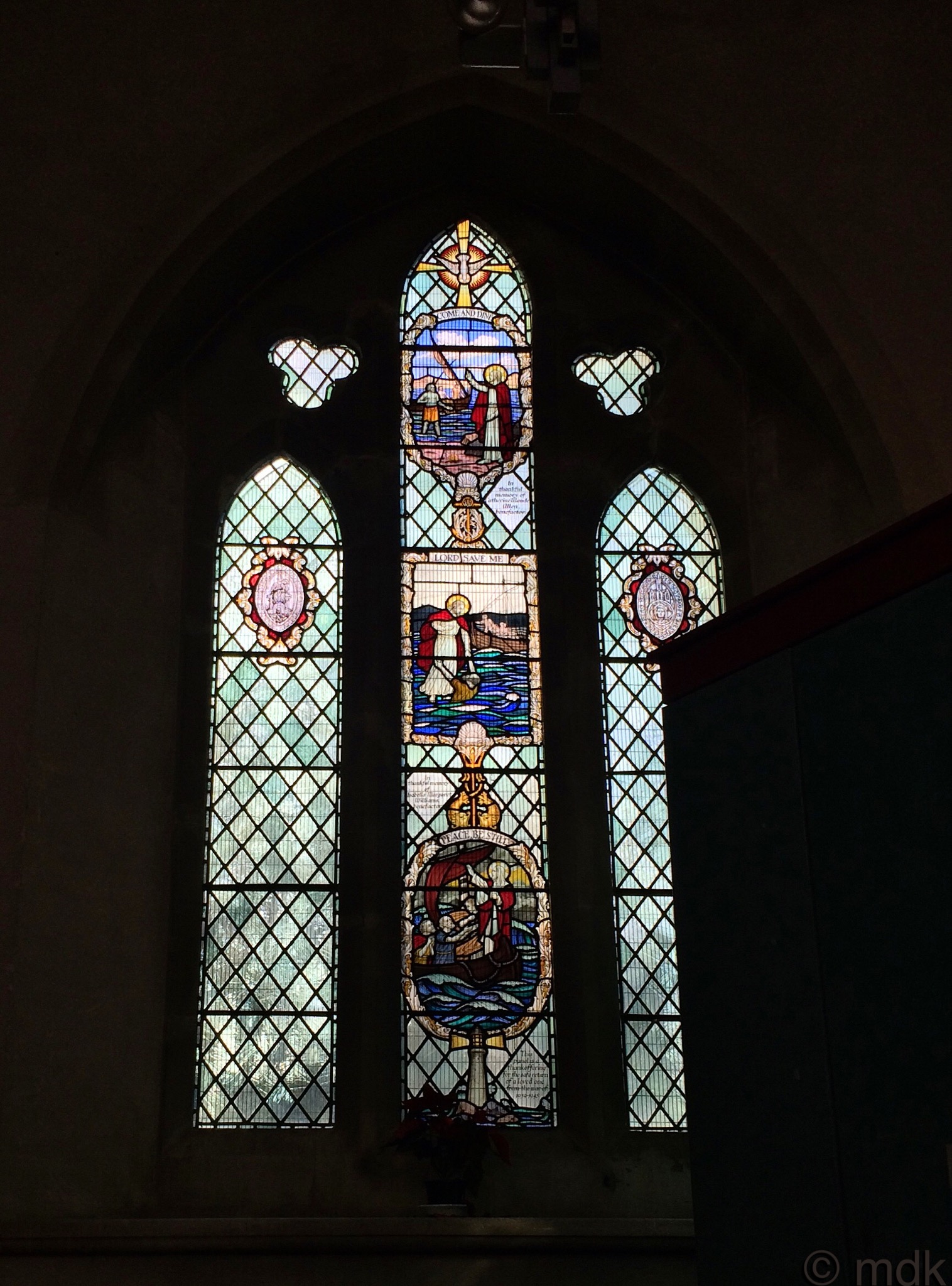
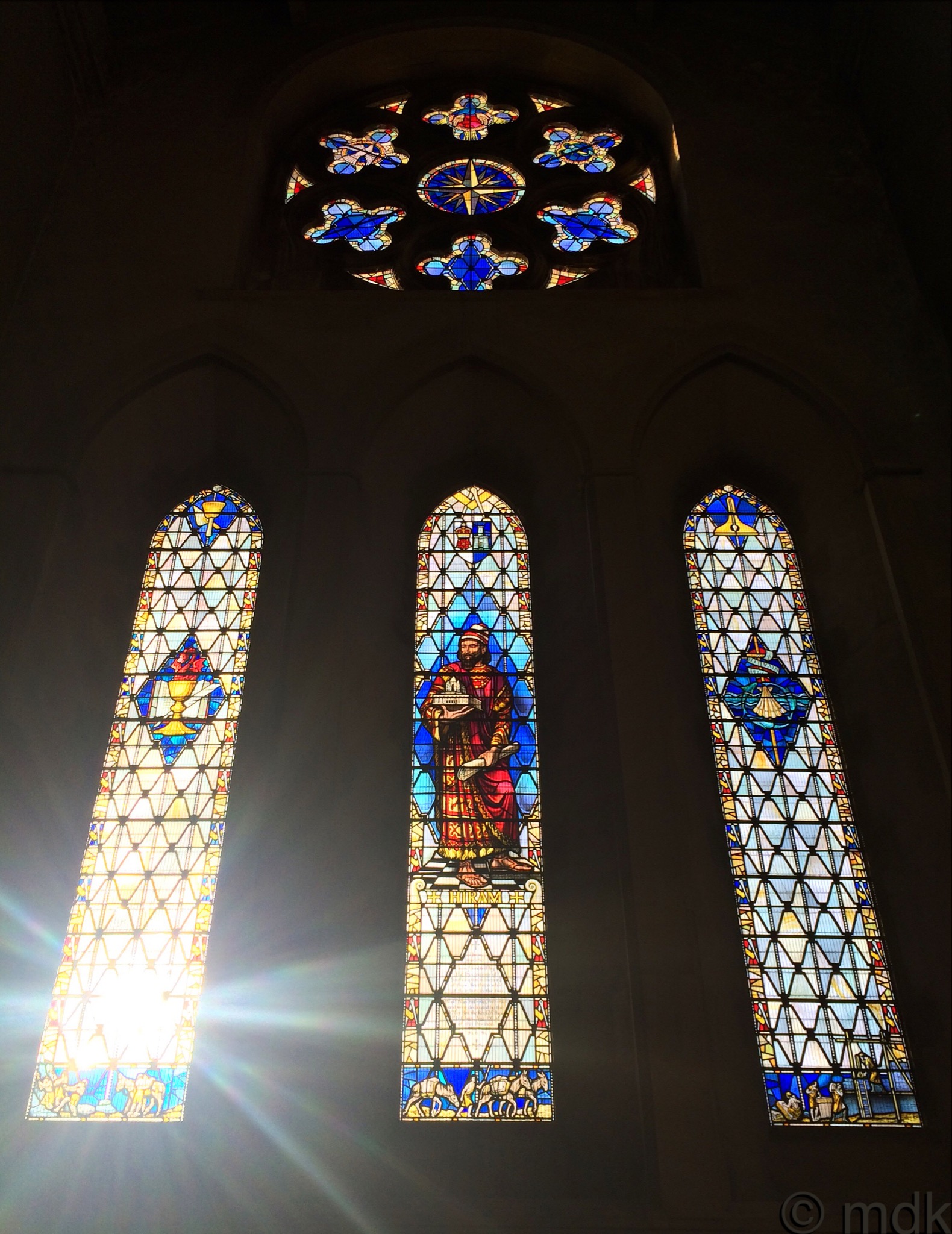
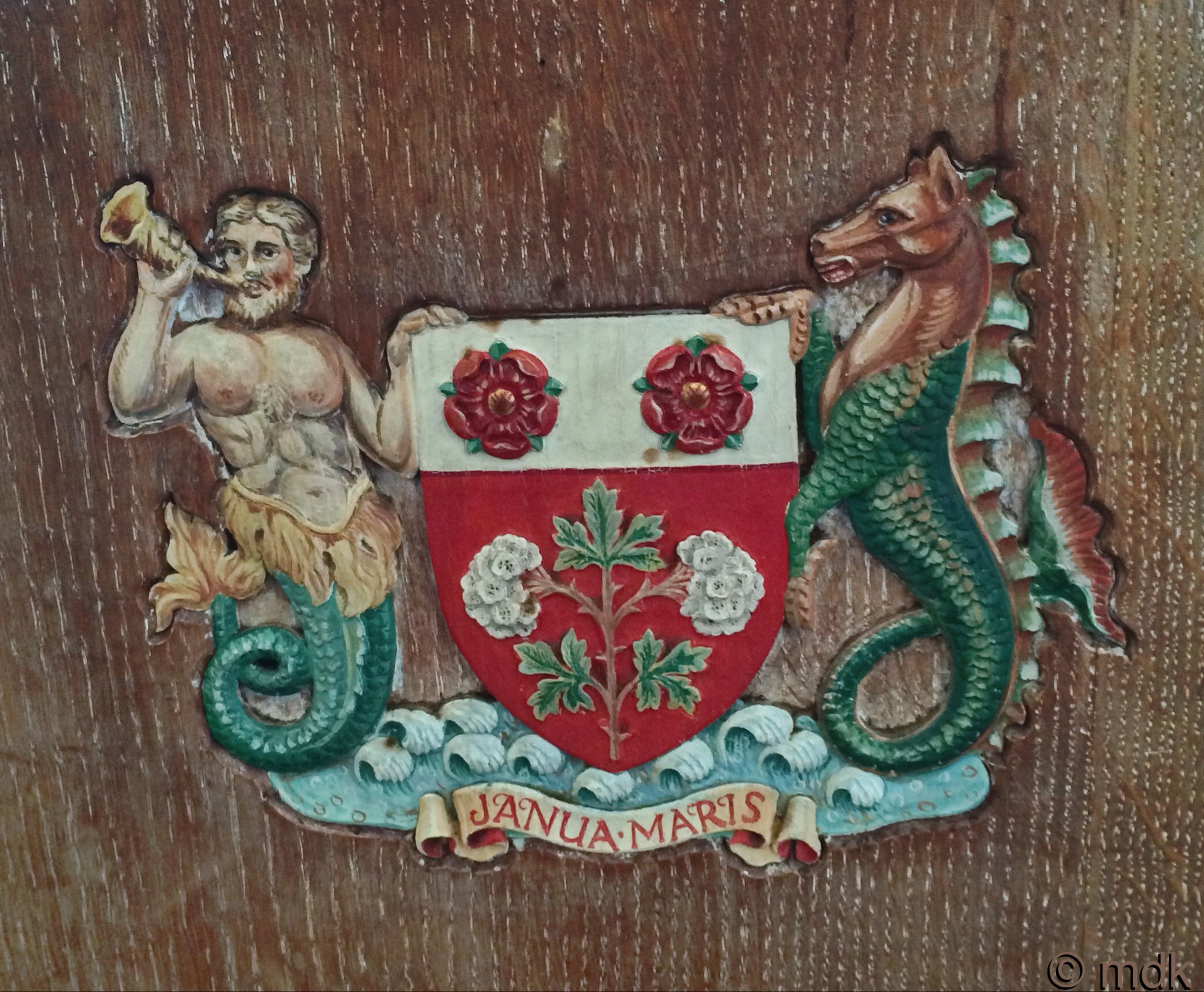
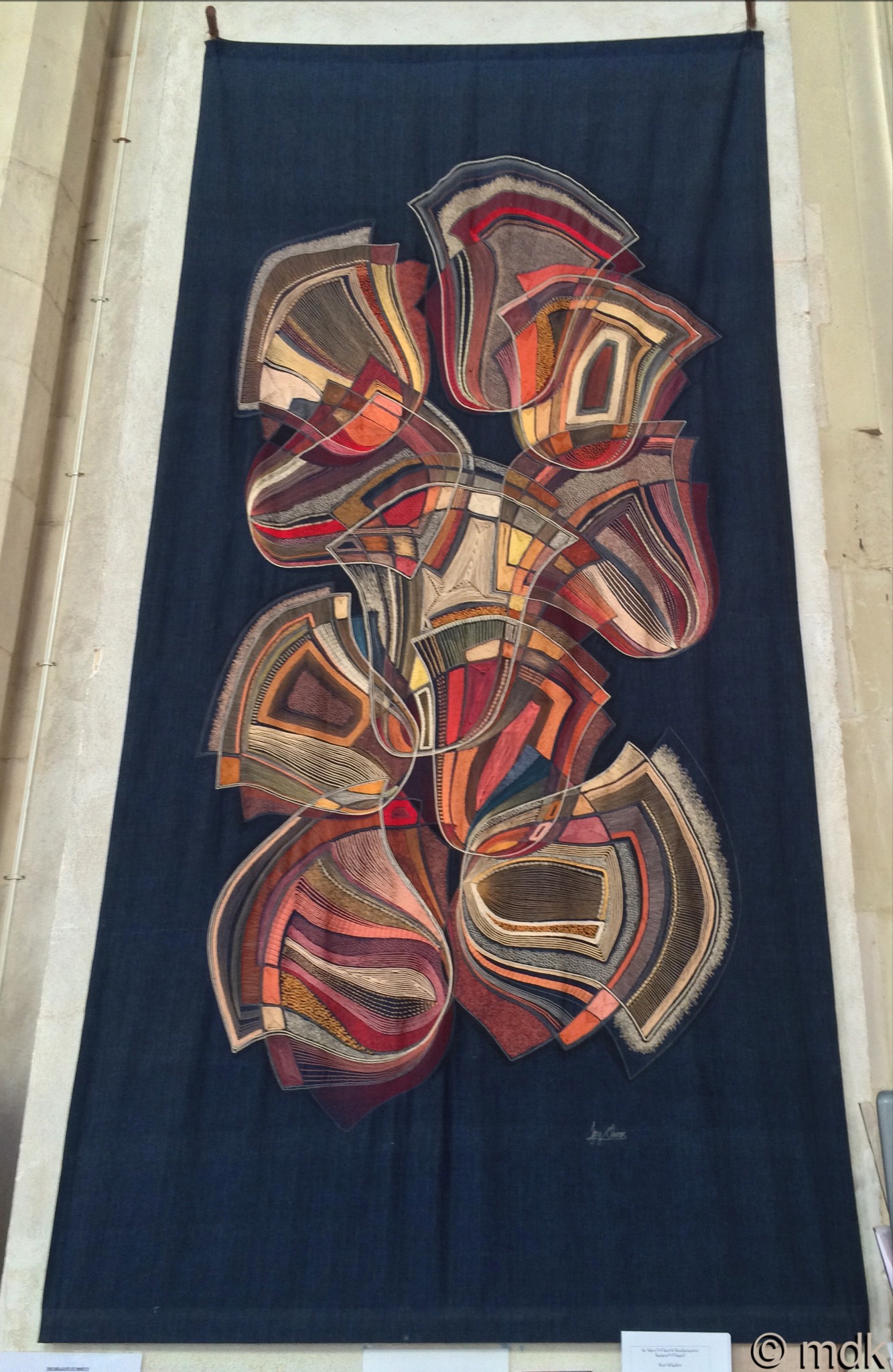
Besides the windows there were so many other little details, like the nativity relief on the wall, the colourful carvings on the end of pews and the stunning tapestry on the wall I didn’t know where to look next. In fact, with so much to grab my attention I could have spent all day there and probably still missed something.

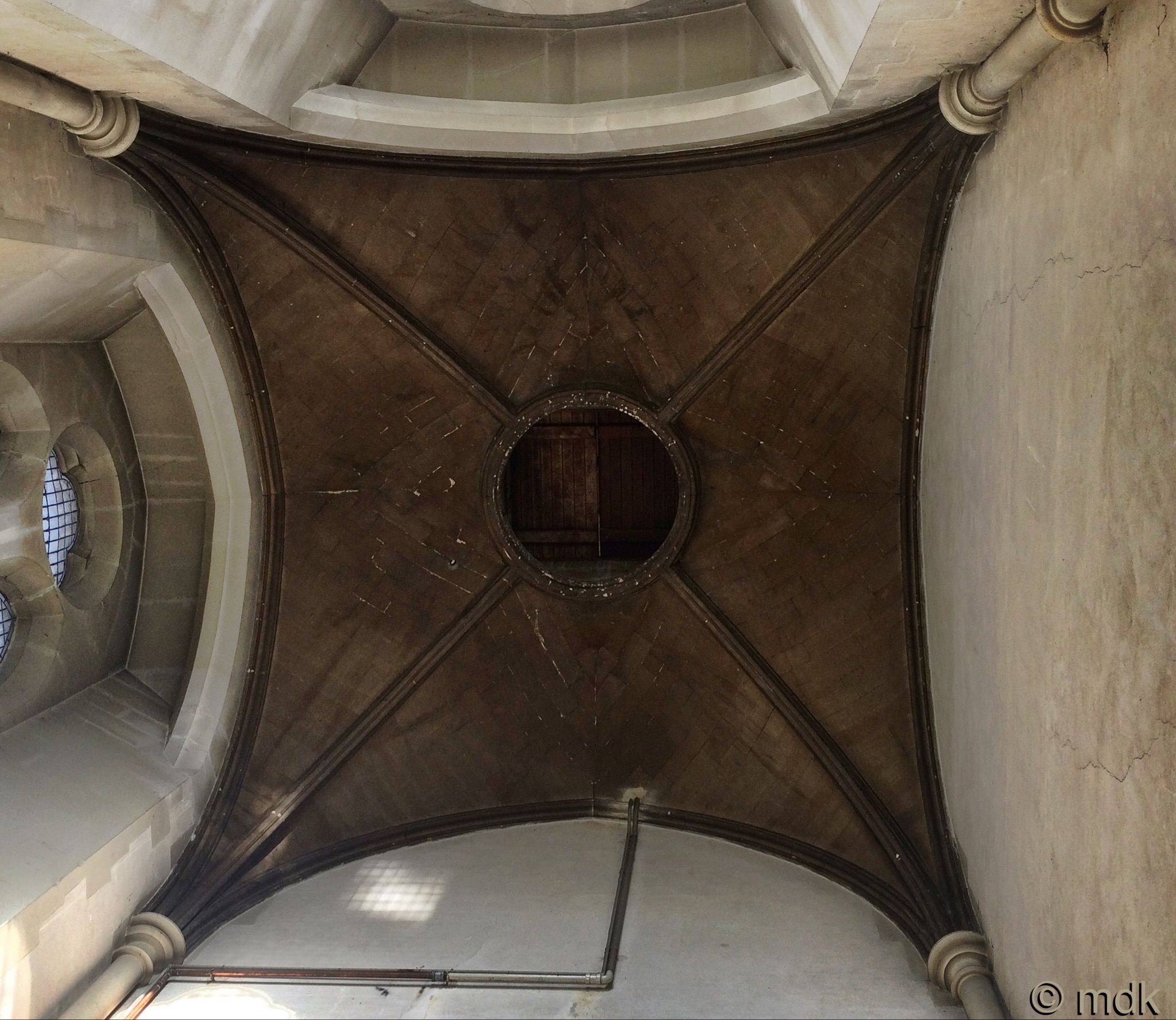
Much as I’d have liked to stay, I did have another appointment to think about and I didn’t want to arrive flustered and rushed. Before I left though, there were still a couple of things I wanted to see. When the church was bombed out the baptistery and the tower survived. Climbing the tower and seeing the famous bells was out of the question, the door was closed and locked. The best I could do was stand and look up at the ceiling, where a circular opening gave me a tantalising glimpse of floor boards. The day they offer tours of that tower I’ll be first in the queue.

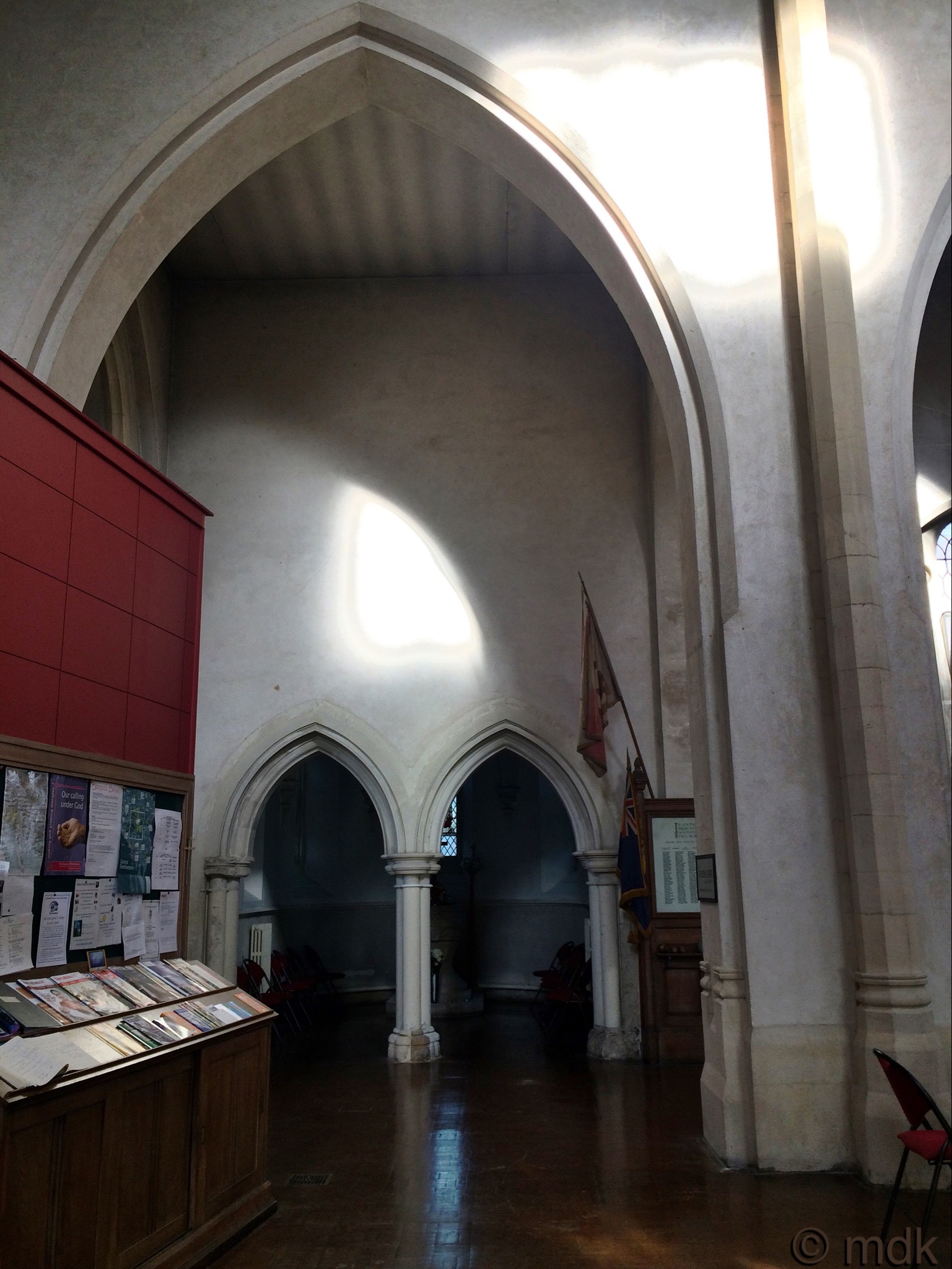
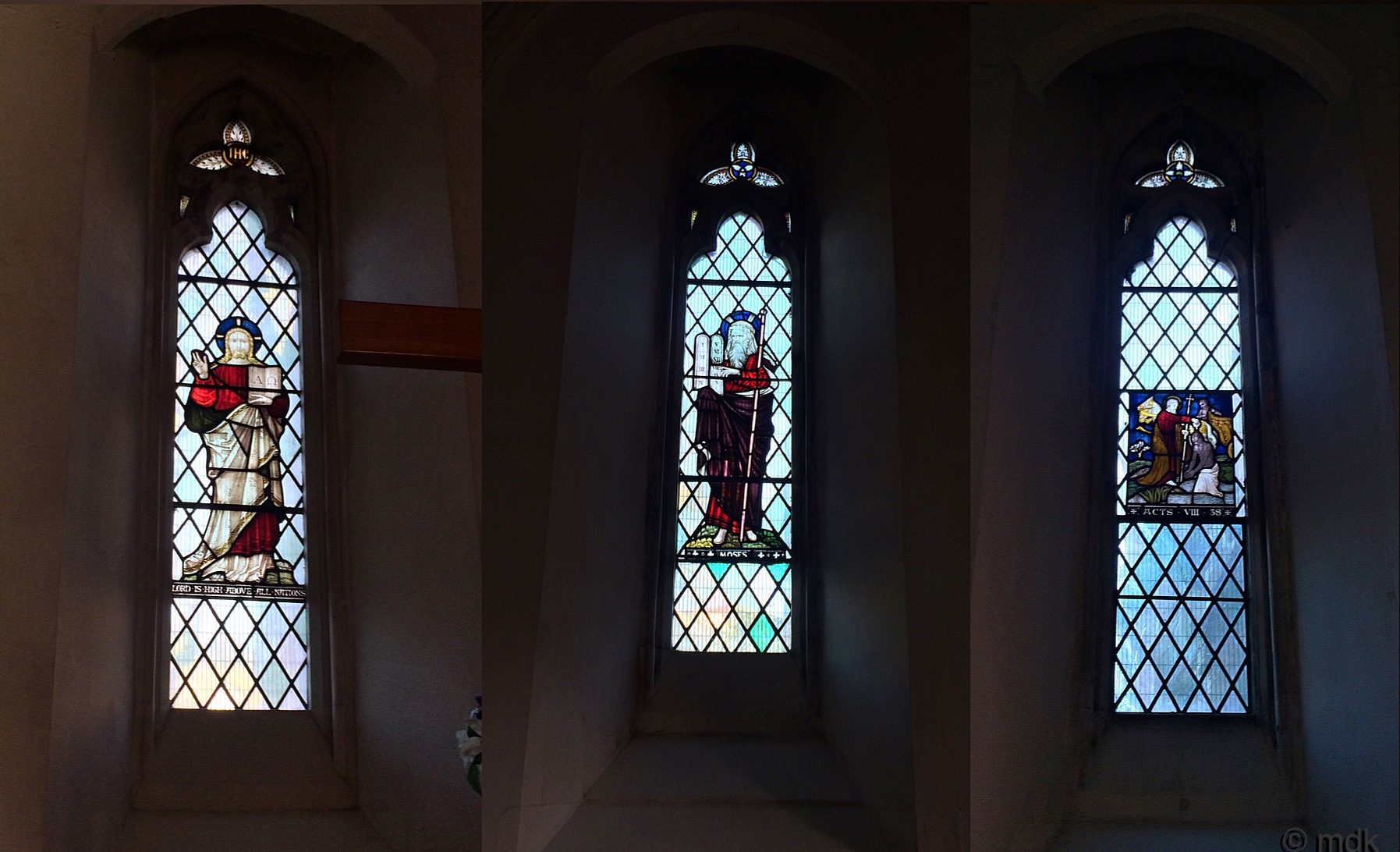
The baptistery was a different matter. Through a double arch to the north of the door I walked into the oldest part of the church and stared up in awe at the stained glass surrounding me. The five windows, designed by Clayton and Bell, filled the small room with light and colour. These days this part of the church is used for small services and private prayer.

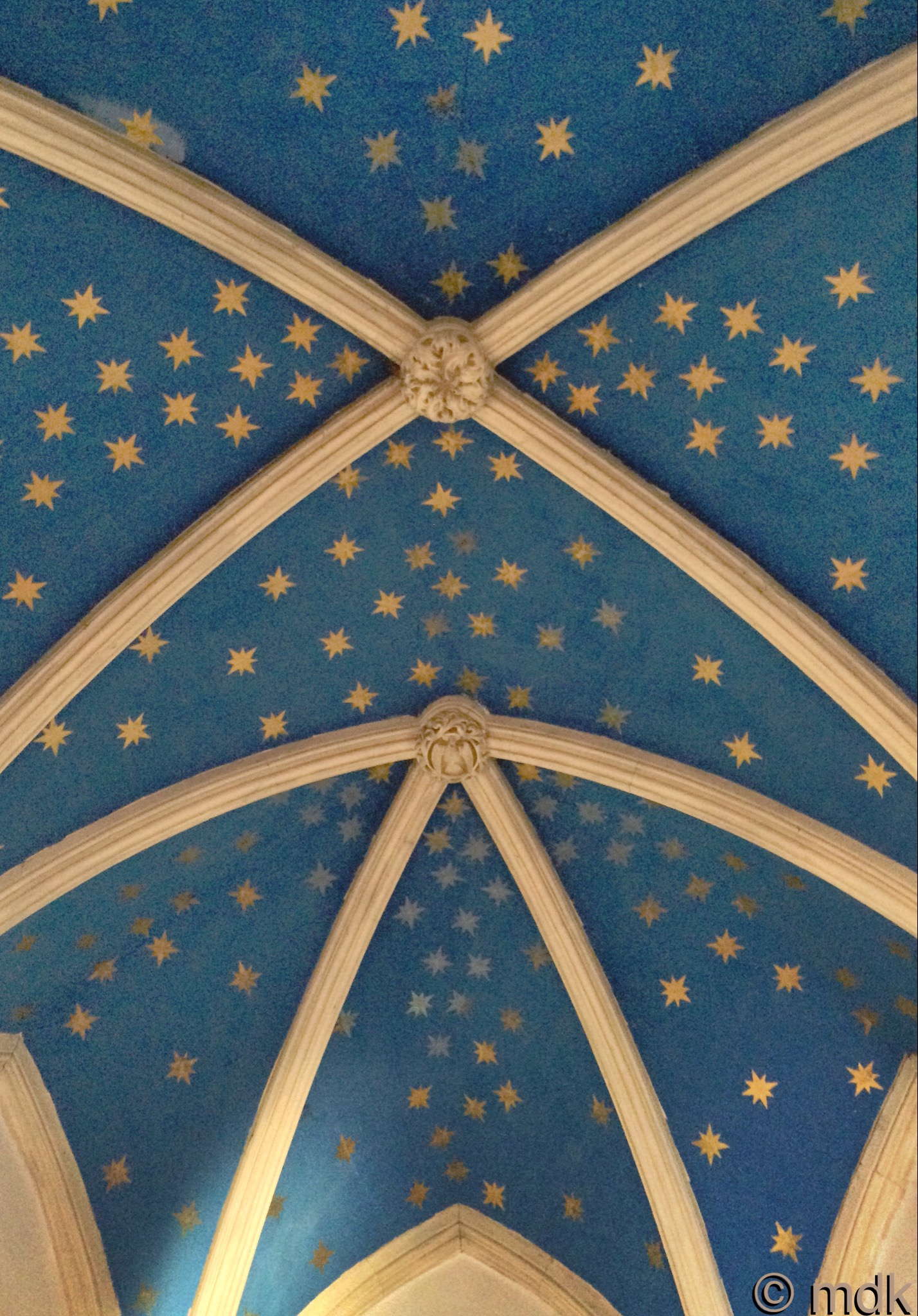
The centrepiece of the room is the stone font topped with a simple wooden cross and a picture of Christ. It was dressed with fresh flowers and tea lights in glass holders encircled the base. Much as I’d have liked to linger it really was time to go but, as I turned to leave, something made me look up. If I hadn’t I’d never have seen the deep blue ceiling painted with gold stars and, once I had, I couldn’t help wondering how many babies had been captivated by this same sight when being christened, only to find themselves suddenly doused with water. Perhaps that’s why it’s there.

As I walked back through the door into the sunlight I couldn’t help wondering what the future has in store for St Mary’s? To have survived for so long despite so many disasters is testament to the place it holds in the hearts of the people of Southampton. Some might say it’s been unlucky to have suffered so much misfortune but I like to think it’s like the city it represents. After all, Southampton has survived through many incarnations. From the first settlement at Clausentum on the east bank of the Itchen, to Hamwick on the West Bank and then the walled town whose fortunes have waxed and waned, it too has risen again and again from the ashes of the past. Long may both continue.
You took some excellent pictures of all that beautiful stained glass, I envy you your success.
There were a lot that didn’t come out so well. I usually take a few just in case though.
There must be something special about that plot of land for so many to have given so much for so long to make sure that a church would always stand there. It’s as if it’s hallowed ground.
There seem to be an awful lot of churches flinging their doors open for you lately. You’d better be careful or you might find yourself worshipping inside instead of outside some day.
That ceiling with the stars on it might be enough to convince me to stay for a while but I’d have to get back outside before too long.
It’s odd how I seem to keep finding churches with open doors. I’ve walked past this church countless times, every day when I worked nearby, and never seen the doors open before. The stained glass windows are my favourite thing but I still prefer to worship outside in the open air!
Marie the doors are open every day….come back especially on a Wednesday lunch time.
I shall have to return soon 🙂 thank you.
I like that lovely blue ceiling with stars and also the modern glass doors that let in the light. Great shots!
The ceiling was a real surprise.
That’s a great post Marie. I remember having to do our school service reading at that gold eagle! I did something about The Bells of St Mary’s last year – (they usually have bell practice on Thursdays) but my photos are not as good as yours https://wordpress.com/post/southamptonoldlady.wordpress.com/50
I’m glad it brought back some memories for you. I’ve been wanting to see inside for ages.
Amazing history and such a beautiful church!
It is a lovely church.
Such a atmospheric and true historic gem , lets hope for years to come it stands proud and can really excite generations to come . The city s face changes rapidly but St Mary s has stood the test of time and still looks fresh among the new build changes . Excellent reminder to our history Marie
Thank you Gary. It seems to have a magic about it to have survived despite everything that has been thrown, or dropped on it.
And hopefully it will continue looking over all the new for many many years , West quay will never have the appeal no matter how long it is part of our city , and certainly never the architecture , that is pure joy.
Very true. After all, St Mary’s was there before the old walled town and all that came after.
So steeped in history and rebirth. Your ability to tell a modern tale through the history of this spot is wonderful, Marie.
Thank you Martha. It’s an interesting site, even if the church has been rebuilt six times.
I attended st Mary’s school. And we were marched across the road for the dedication service of the new church. We sat in the seamans chapel where I had a view of what was taking place. Apt place as all the males at that time were all connected in some way to the sea. All the males in my family etc. Was christened and married there.
What lovely memories
The organ is used regularly every Sunday for the 9.15 service, as well as occasional civic services, and I have had the pleasure of playing it for the last six years. The instrument will be 70 years old in 2026, with little significant work on it, and listed BIOS listed. That is testament to quality of the materials used by Willis in 1956. The PCC is considering how to proceeding getting some remedial work done over the next year or two.
Thank you. How lovely to play such a historic instrument. I hope the works goes well.