
3 November 2016
Poetry is something I’ve always been fond of so having to learn poems by heart at school was never a hardship. Long before I met Commando and acquired a poetic surname, one of my favourites was John Keats, To autumn. The fact that it was written as he walked a trail through the water meadows in Winchester makes it all the more special and I’ve long been meaning to follow in his footsteps. Today, with the words of the poem running through my head, CJ and I did just that.
When 23 year old Keats stayed in Winchester during the late summer and early autumn of 1819, he was probably already suffering from the tuberculosis that would kill him just over a year later. Even so, he made it a habit to take a daily walk through Cathedral Close and across the water meadows to St Cross. The sights he saw there inspired To Autumn, the last of his 1819 odes.
Season of mists and mellow fruitfulness,
Close bosom-friend of the maturing sun;
Conspiring with him how to load and bless
With fruit the vines that round the thatch-eves run;
To bend with apples the moss’d cottage-trees,
And fill all fruit with ripeness to the core;
To swell the gourd, and plump the hazel shells
With a sweet kernel; to set budding more,
And still more, later flowers for the bees,
Until they think warm days will never cease,
For summer has o’er-brimm’d their clammy cells.
In his letters Keats wrote ‘I take a walk every day for an hour before dinner and this is generally my walk – I go out at the back gate across one street, into the Cathedral yard, which is always interesting; then I pass under the trees along a paved path, pass the beautiful front of the Cathedral… ‘
The Christmas decorations were already up on the High Street when we arrived in Winchester and the mist was still clinging about the distant hills. It seemed to me that, aside from the festive preparations and the hour, little had changed since Keats walked these streets from his lodgings somewhere on the north side of the High Street to the cathedral. Apart from the bronze soldier on the war memorial, it’s doubtful the cathedral has changed much since Keats’ day either. During his time in Winchester he could often be found wandering up and down the aisles reading letters from the love of his life, Fanny Brawne. Tragically, lack of money and poor health kept him from marrying Fanny so those letters must have been bitter sweet.


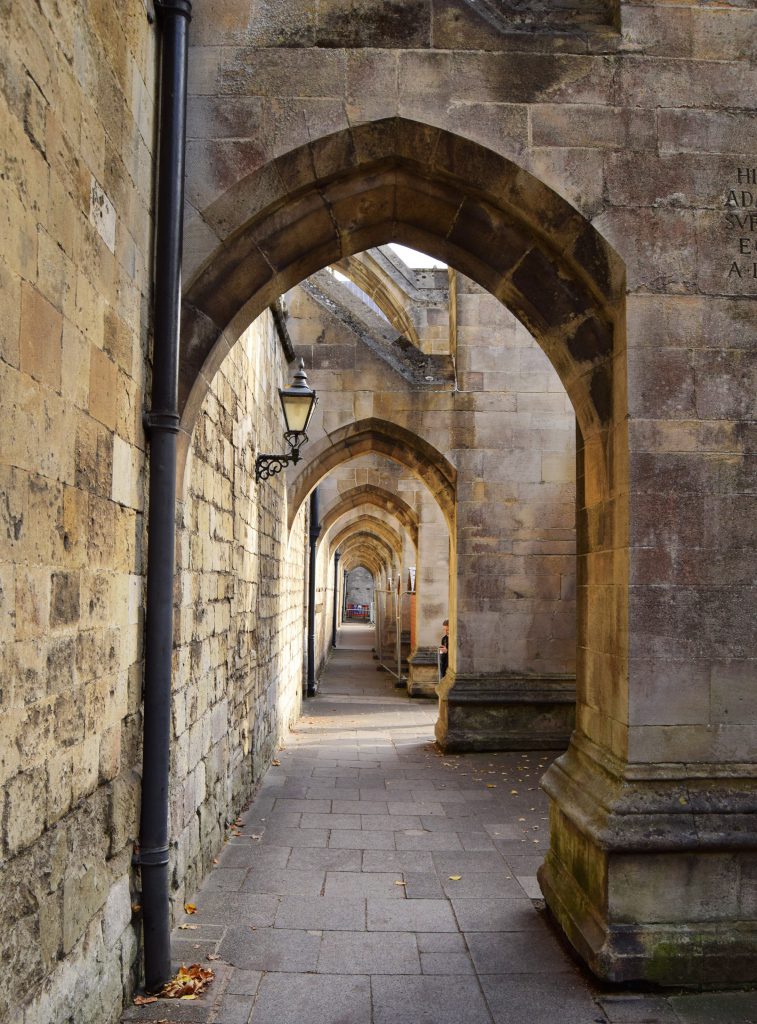
Like Keats, we turned ‘to the left under a stone door way,’ then headed through the arches of Curle’s Passage into Cathrdral Close. In his letters he described passing ‘through two college-like squares seemingly built for the dwelling place of Deans and Prebendaries – garnished with grass and shaded with trees.’ Sadly, today it was not quite as peaceful or idyllic a setting. Instead we found more evidence of Christmas. Little wooden sheds were being put up in one square in preparation for the Christmas Market. To me it all seemed a little too much, too soon and, briefly, it shattered my illusion of following in the poet’s footsteps.
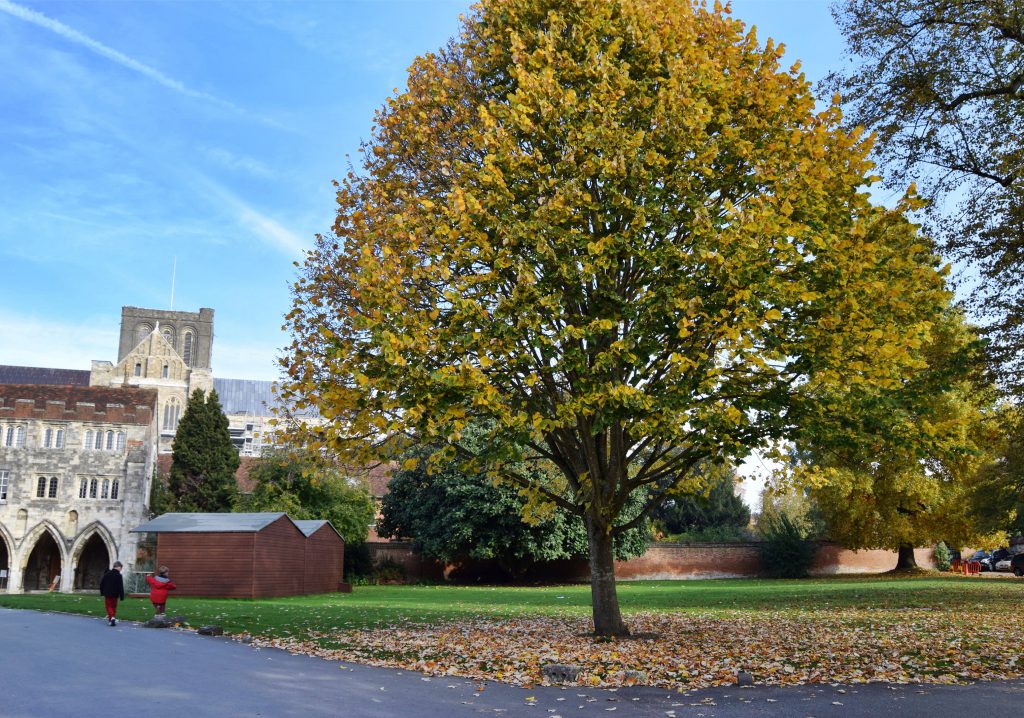
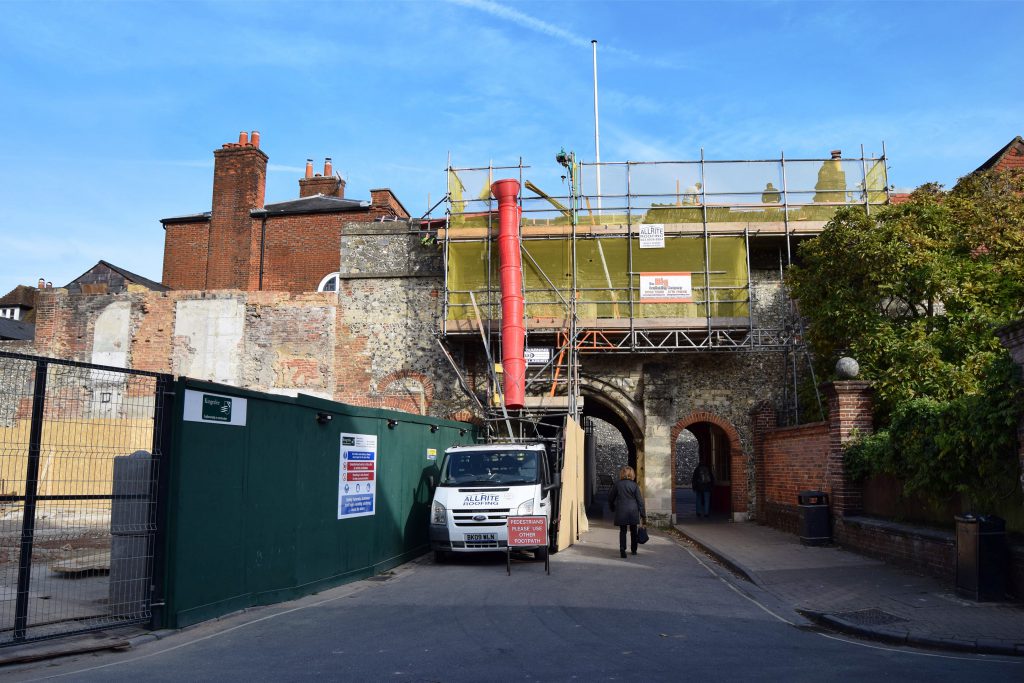
Try as I might to transport myself back to an autumn day in 1819, wheelie bins and parked cars kept me firmly in the twenty first century. Then there was the scaffolding beside Priory gate and completely covering Kingsgate. Trying to ignore these modern day intrusions we walked through the arch into College Street.

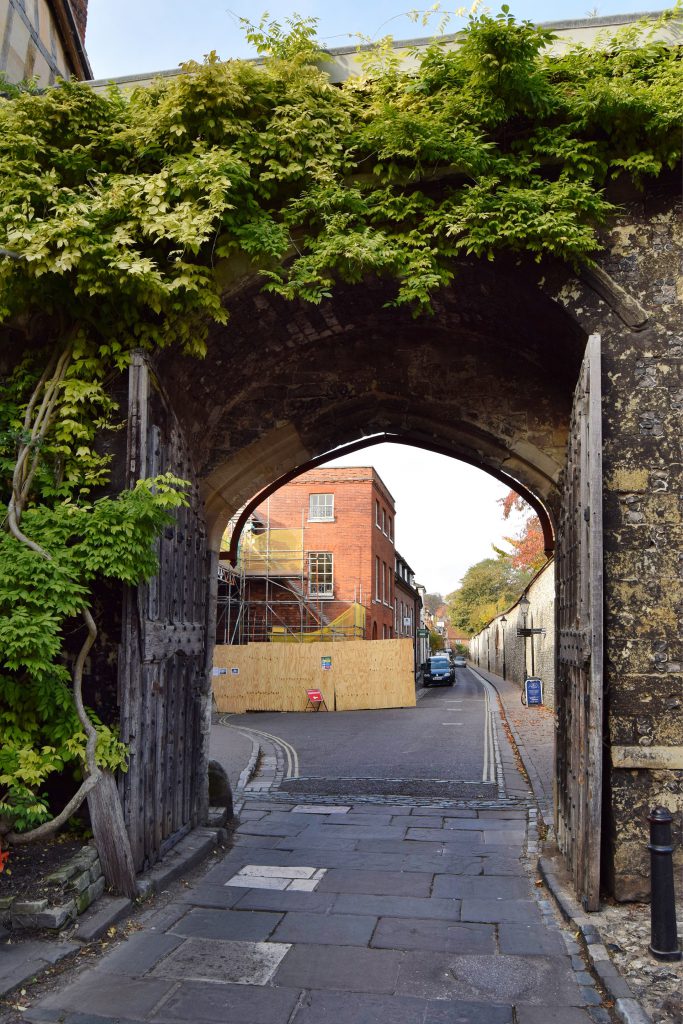

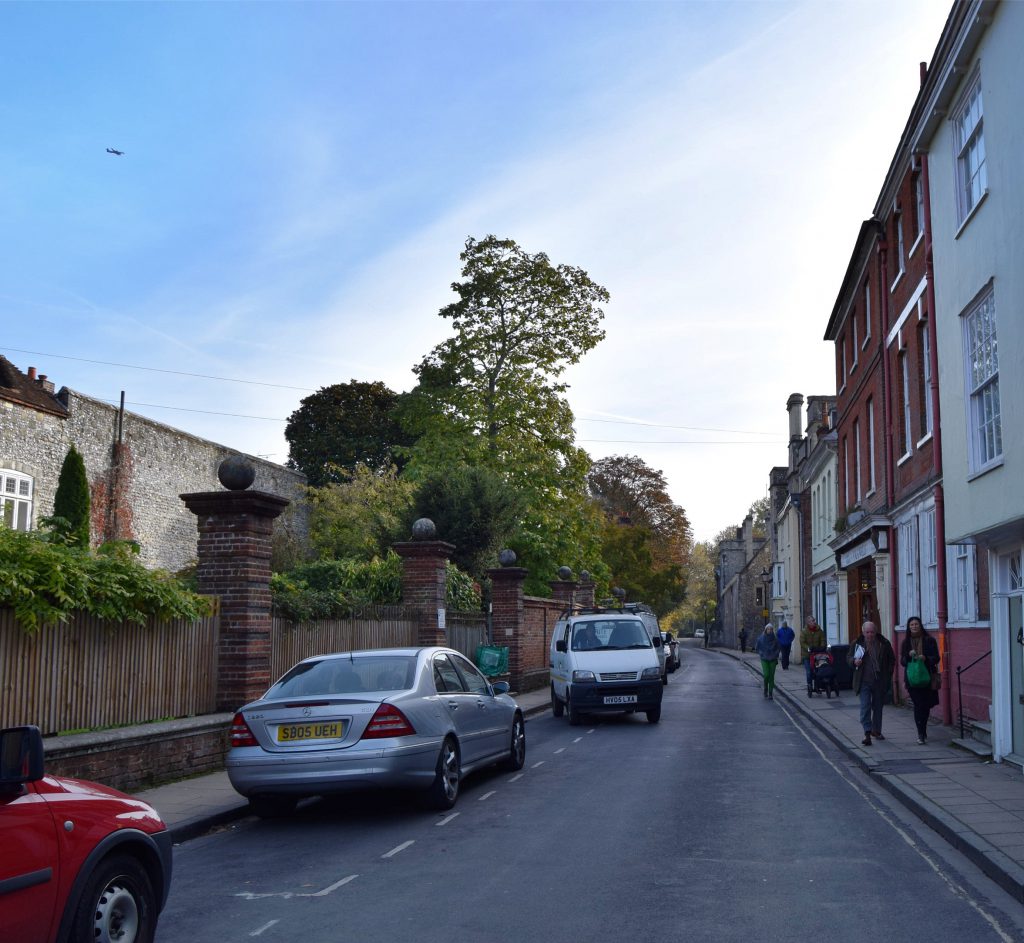
Even with the parked cars and a plane flying overhead the sense of history here was strong. This is where Jane Austen finished her final novel, Persuasion and where, on 18 July 1871, she died. Opposite the unassuming terraced house where she spent her final days a quote from Sense and Sensibility has appeared since my last visit. This, it turns out, is part of a series of exhibitions, walks and talks celebrating the bicentenery of her death.

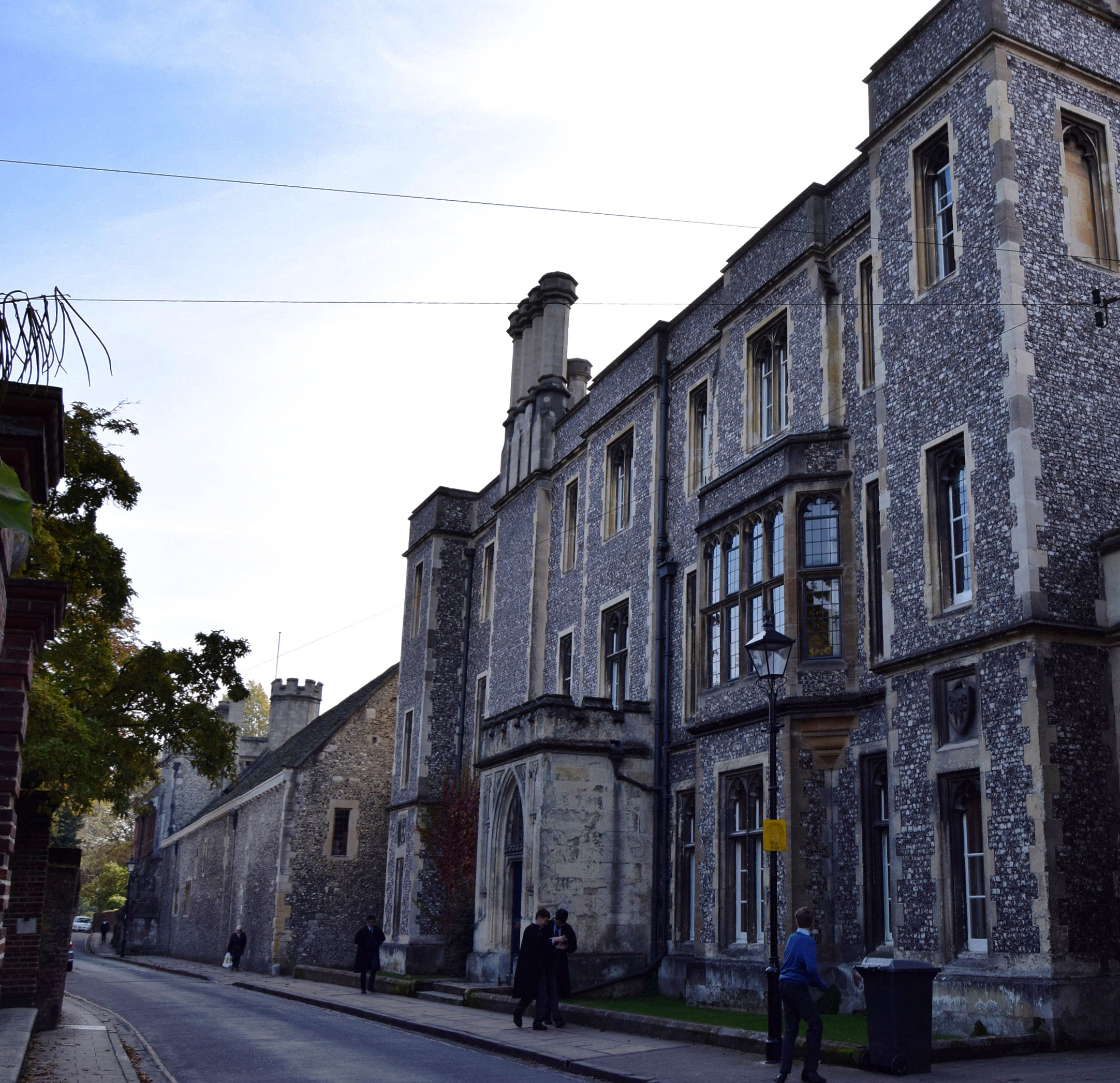
Further along the street students in black gowns outside Winchester College added to the sense of times past. Founded in 1382, this is the oldest public school in England. With a little more time and, no doubt a bit of money, we could have had a guided tour but we were both keen to get away from the city centre and onto the water meadows.

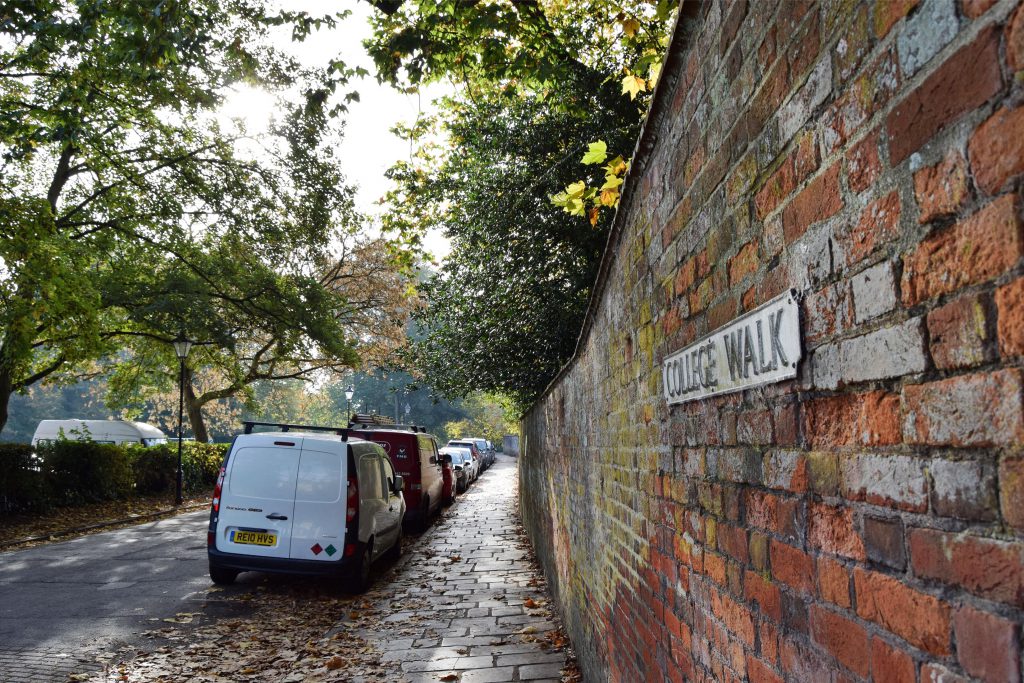
At the end of the road we passed the Bishop of Winchester’s house and turned onto College Walk. The old red brick wall of the college on one side of the road and the autumn leaves reflected in the ditch on the other certainly seemed the stuff poetry is made of.
“What a pity we can’t make all the cars disappear,” I said to CJ.
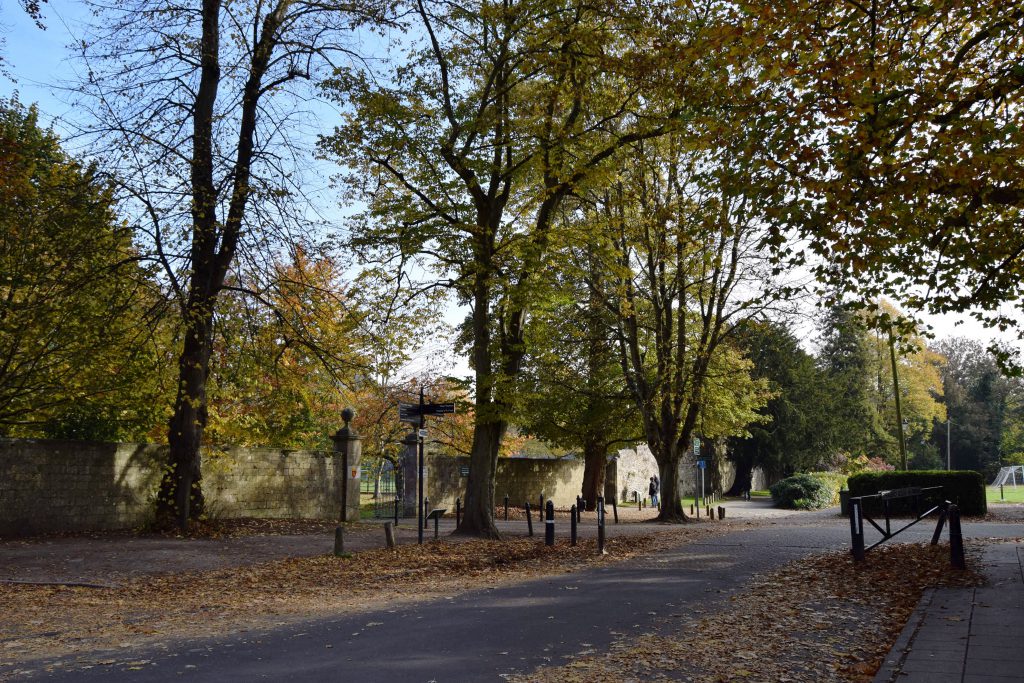
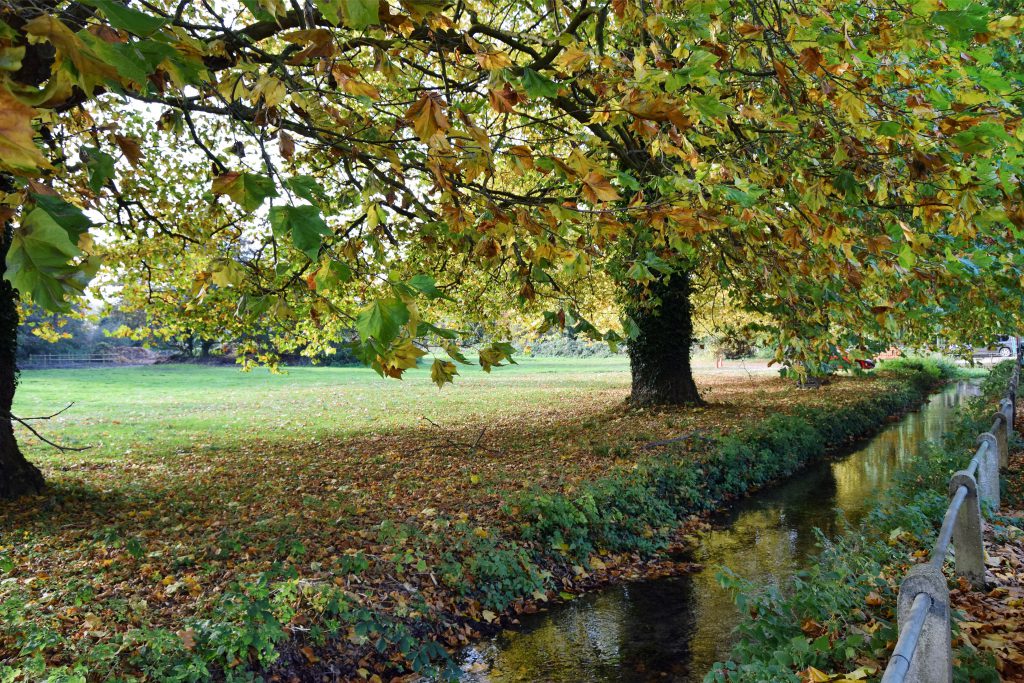
At the end of the road we got our first glimpse of the Itchen and, as we stepped through a curtain of willow leaves onto the footpath, I got my wish and the modern world vanished completely. Beside us the crystal clear water trickled over smooth stones adding music to our steps. The maturing sun shone in the blue sky but mist was still clunging to the meadows half hiding the distant trees. This was just as I imagined it when I’d planned our walk.
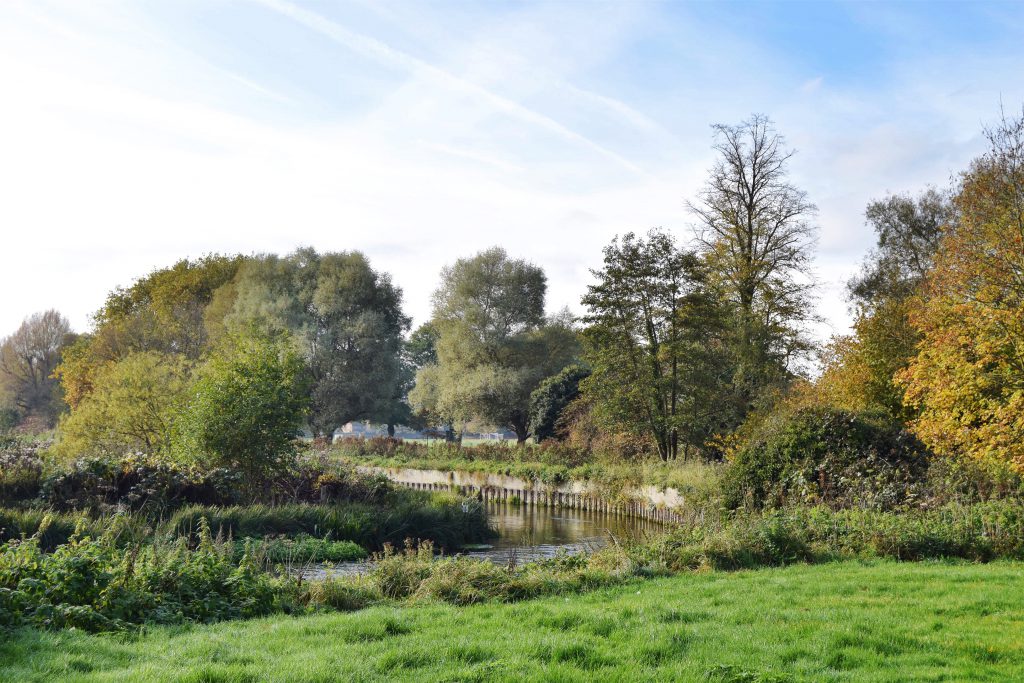
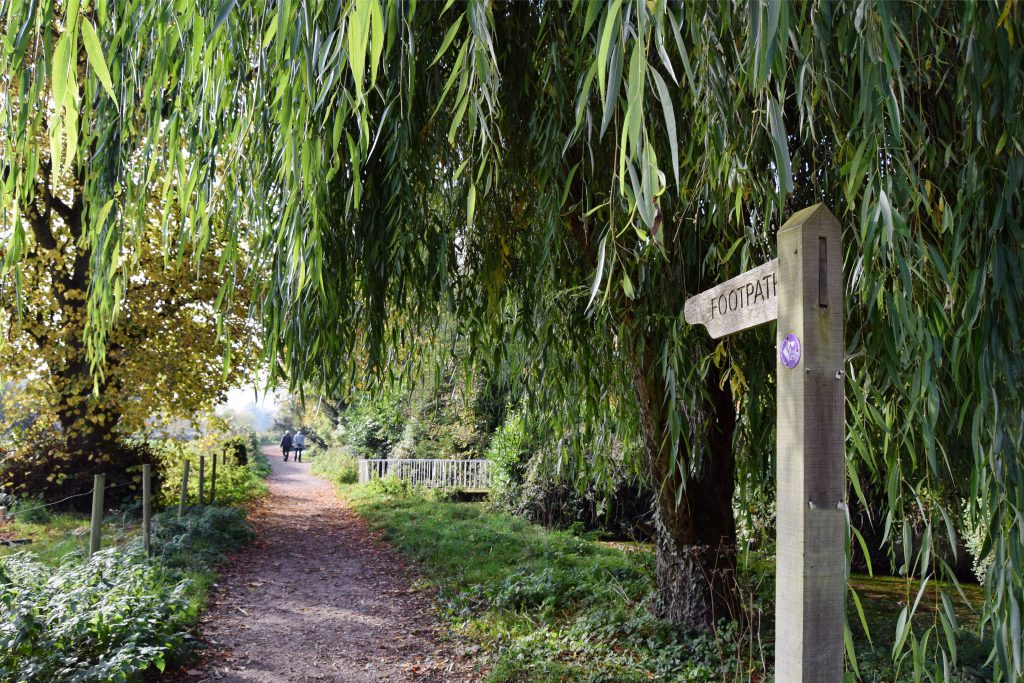
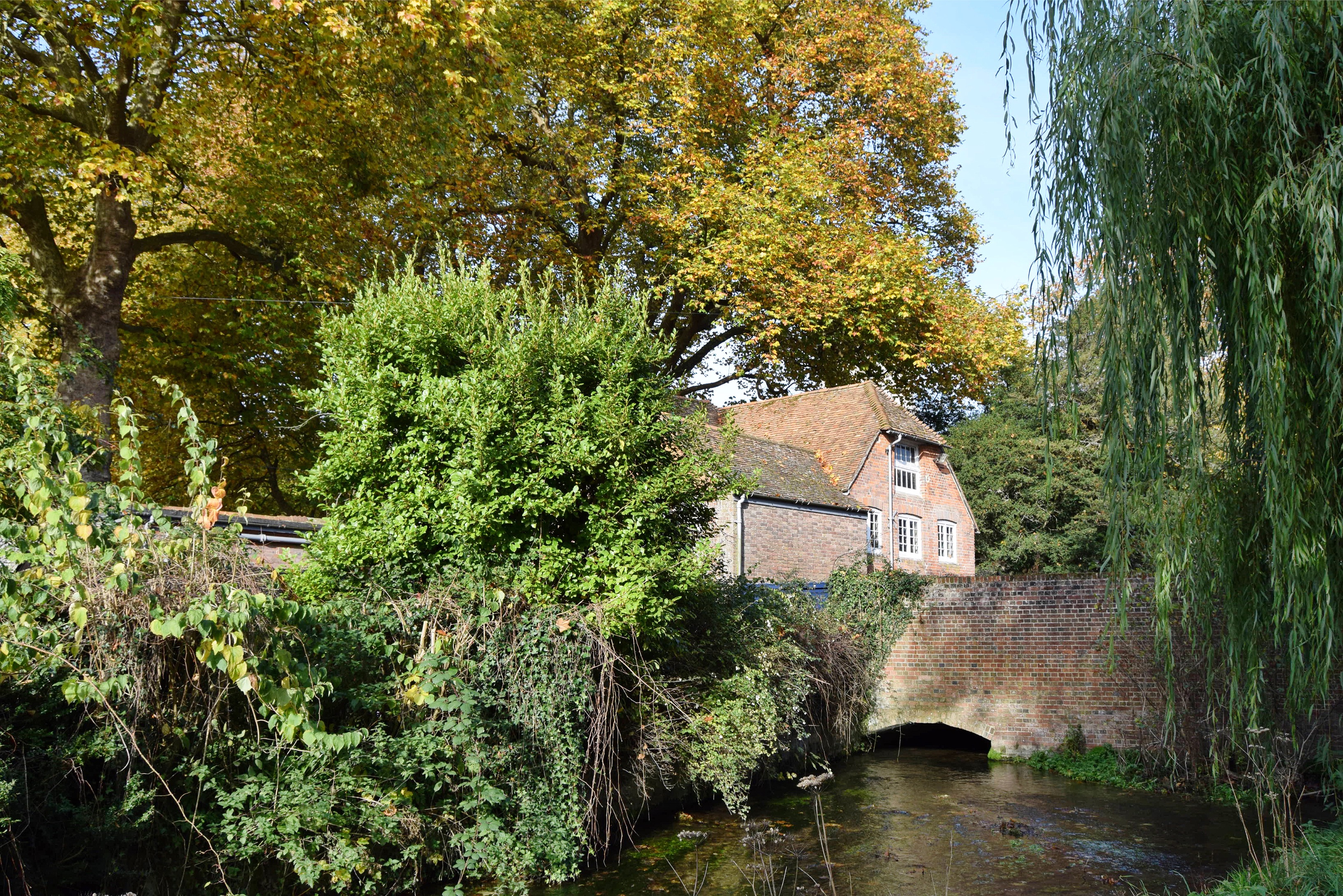

Smiling, we strolled along the gravelly path drinking in the glowing colours and the damp leaves sparkling in the morning sun. On the water our first swan of the day floated lazily, like a white island in a sea of reflected greens.
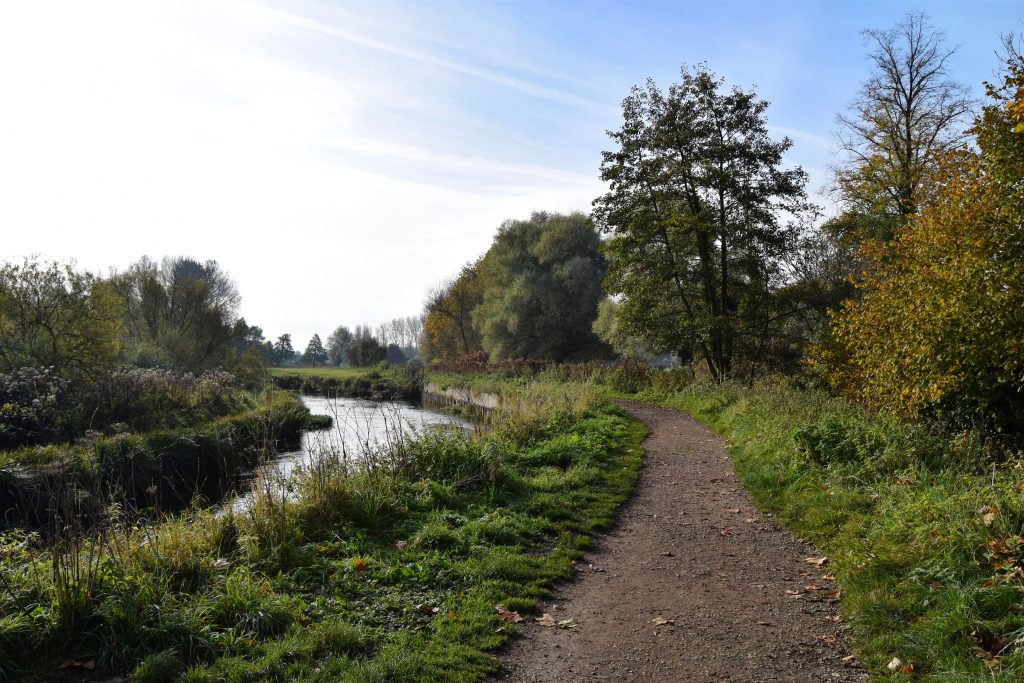
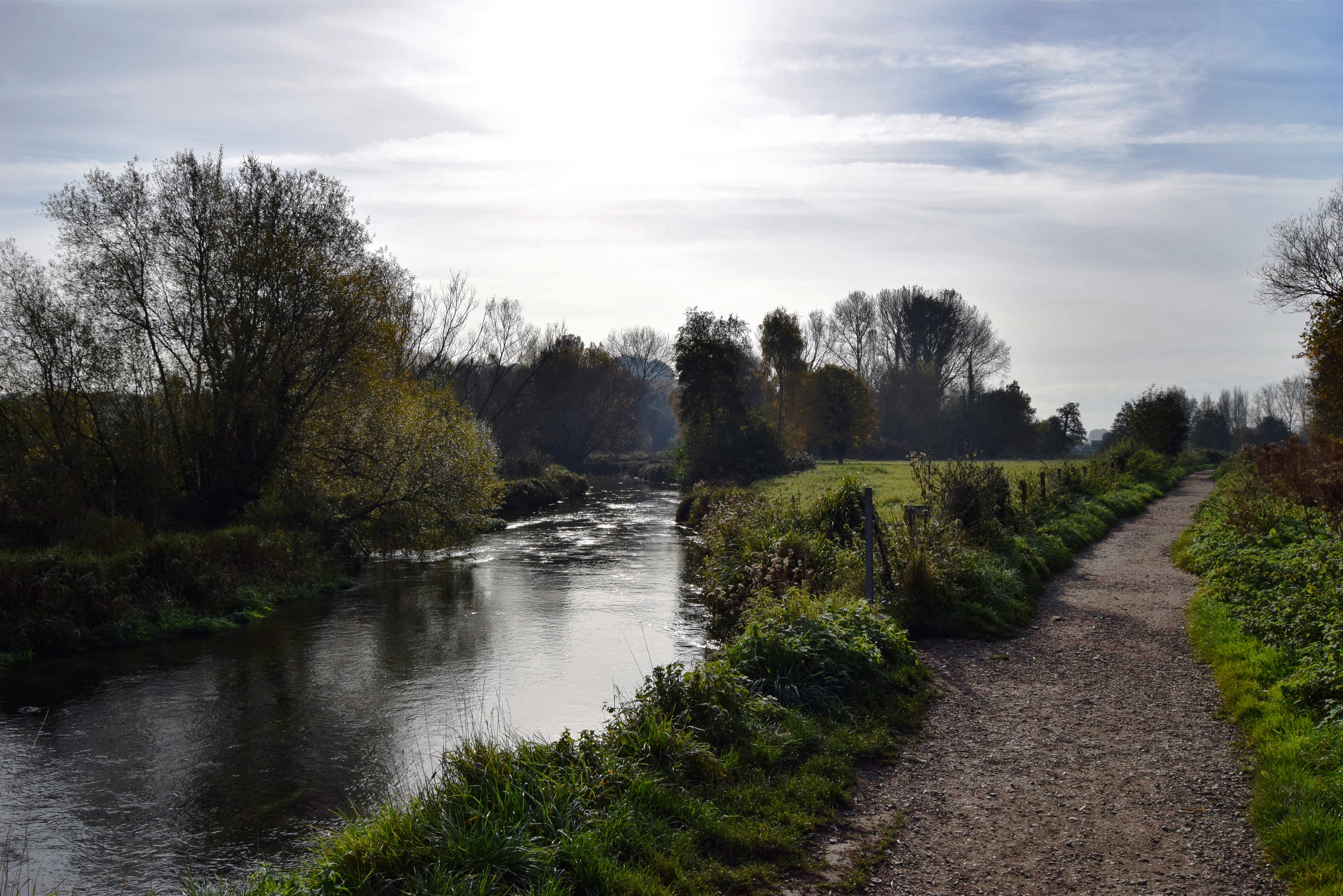
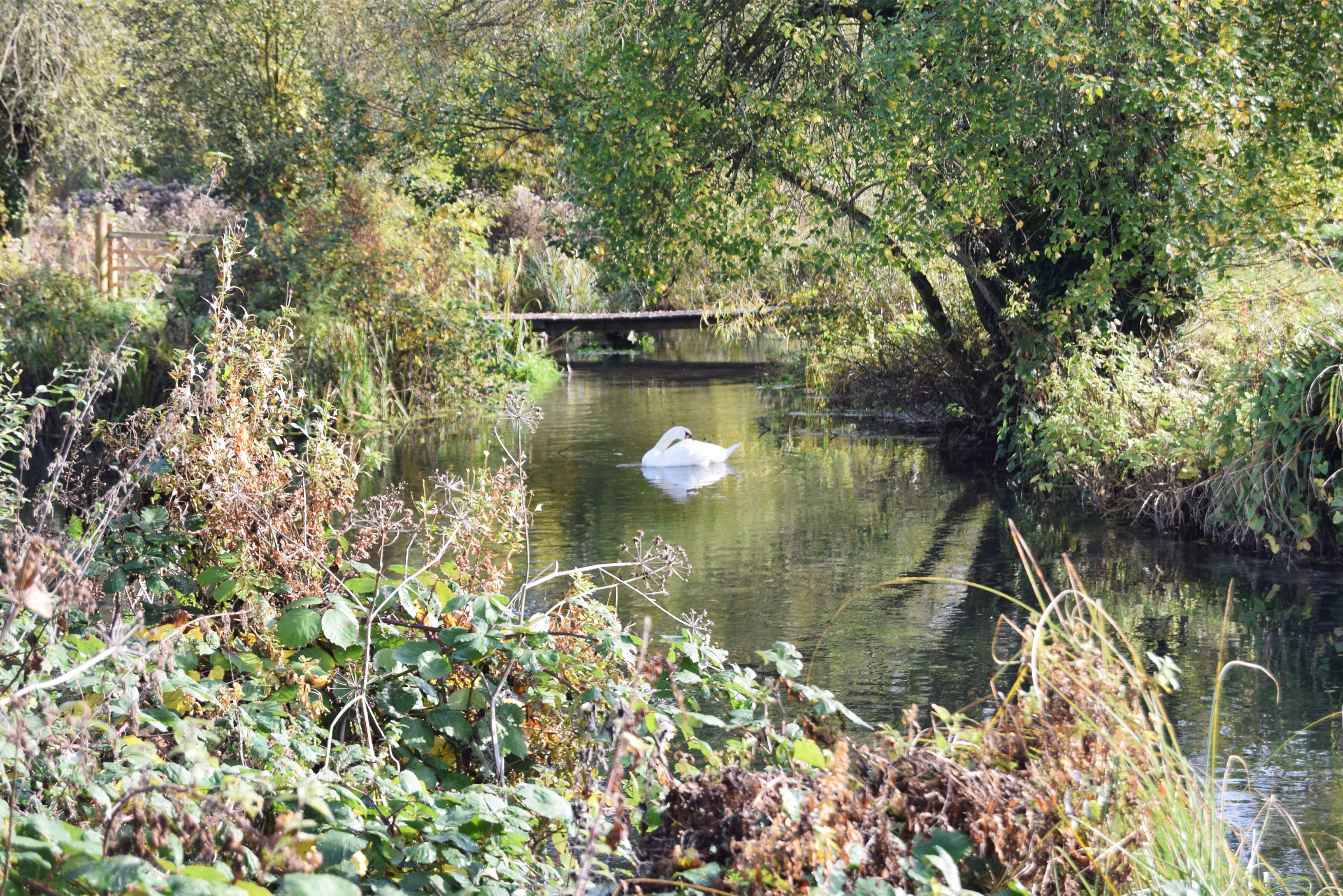
On we went towards Garnier Road. The river burbled beside us and, through the colourful leaves, we got glimpses of the Winchester College playing fields. A pretty little bridge temped us to cross but, sadly, the Private sign comfirmed it wasn’t for us so we passed it by.
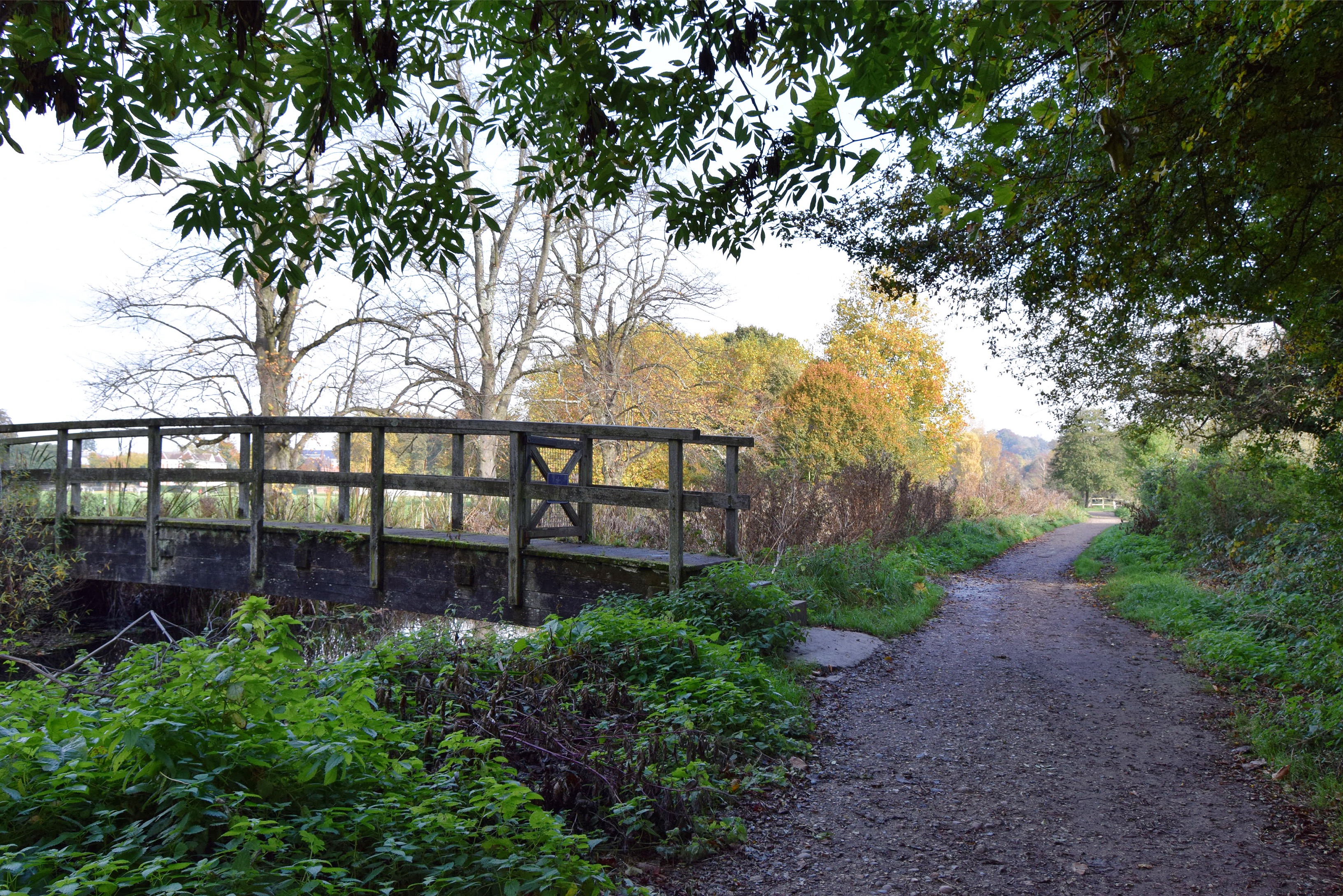
After a very brief return to the real world as we crossed Garnier Road, we were back on the footpath. The pretty little flint clad cottage beside the path here looks as if it may have once been a mill. Water gushes through a sluice right next to the back door and it seems a shame to see all that power going to waste.
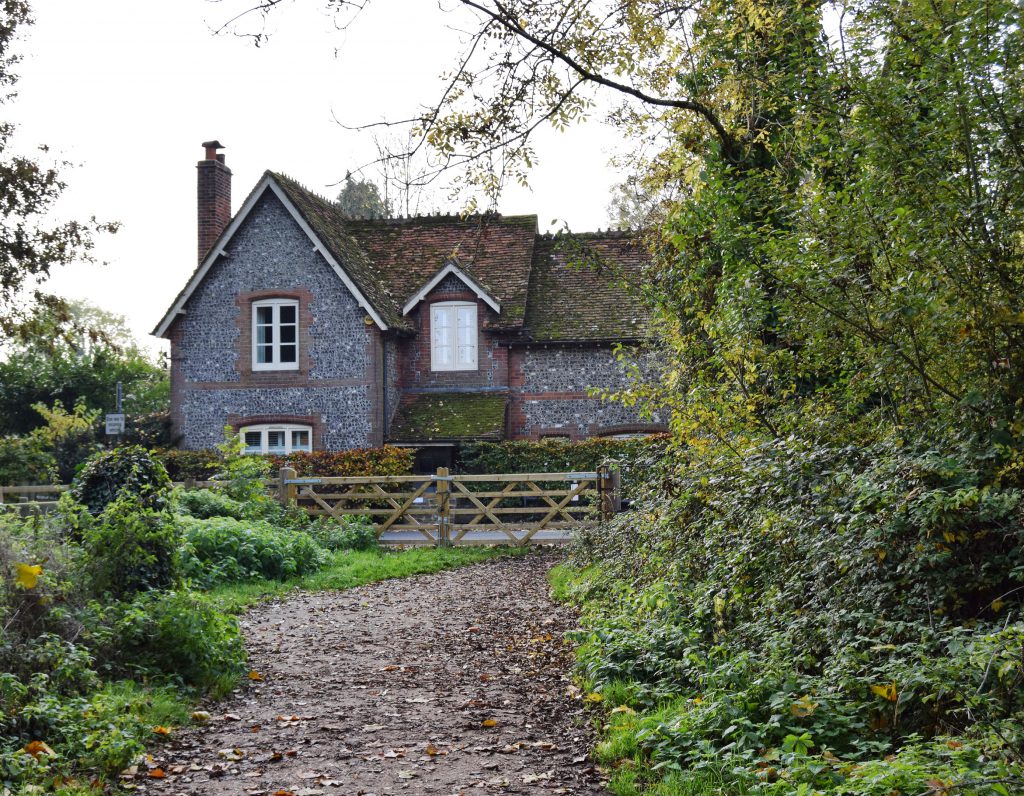
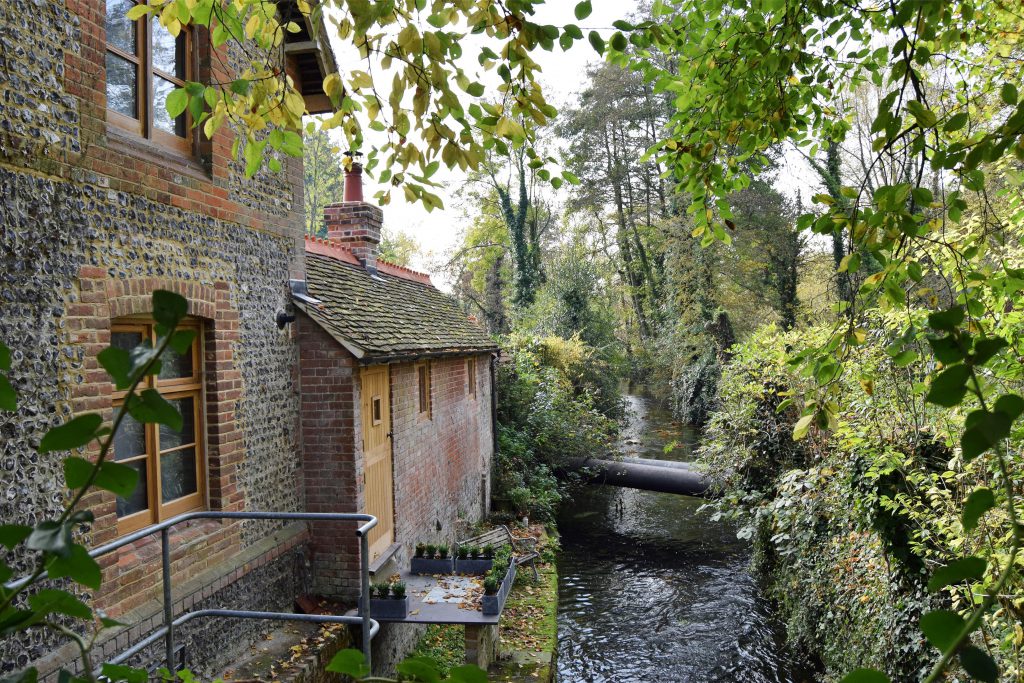
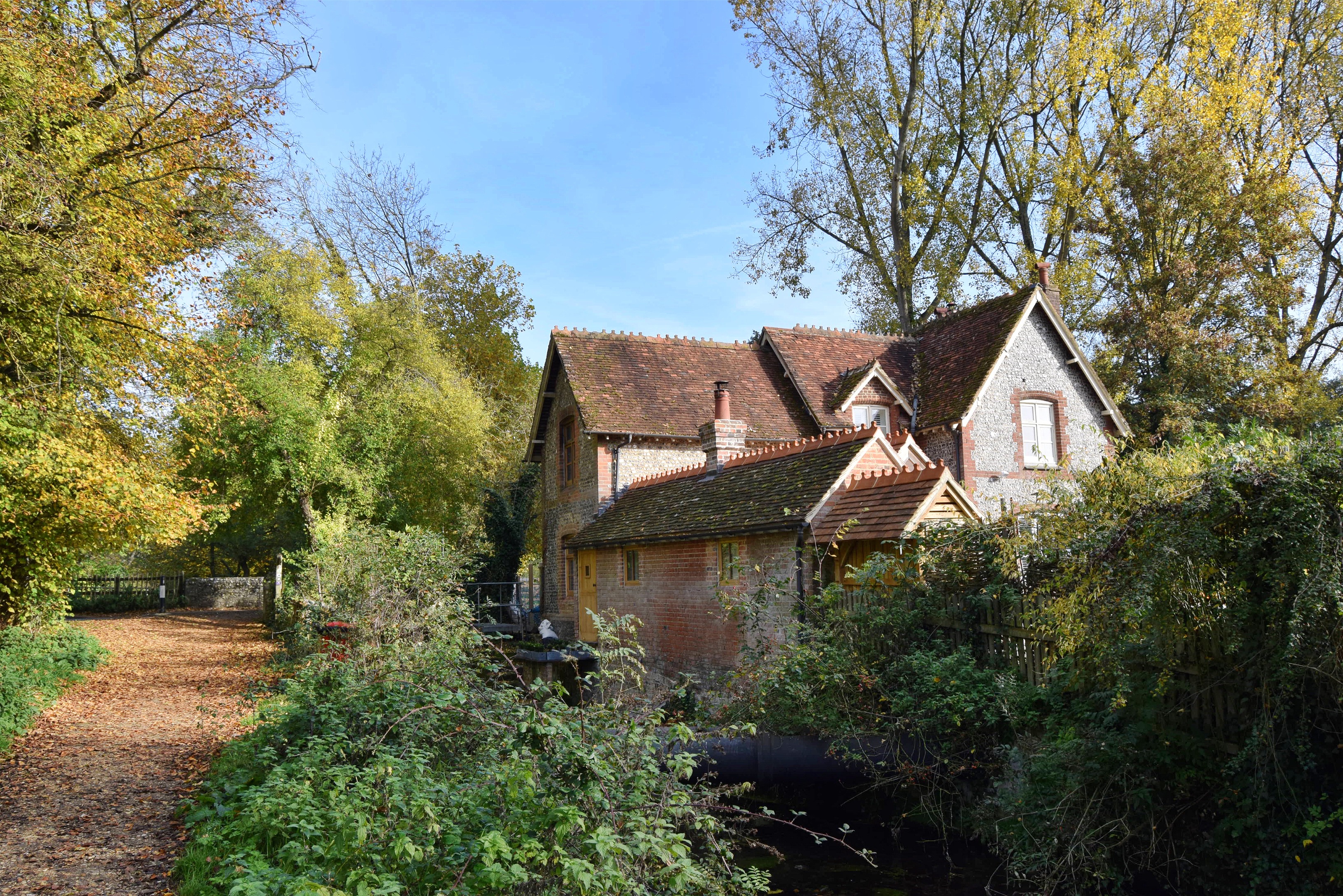
We’d barely left the road and the house behind when we got our first hazy look across the meadows at St Catherine’s Hill, behind a veil of morning mist. It would be our companion for most of the rest of our walk.
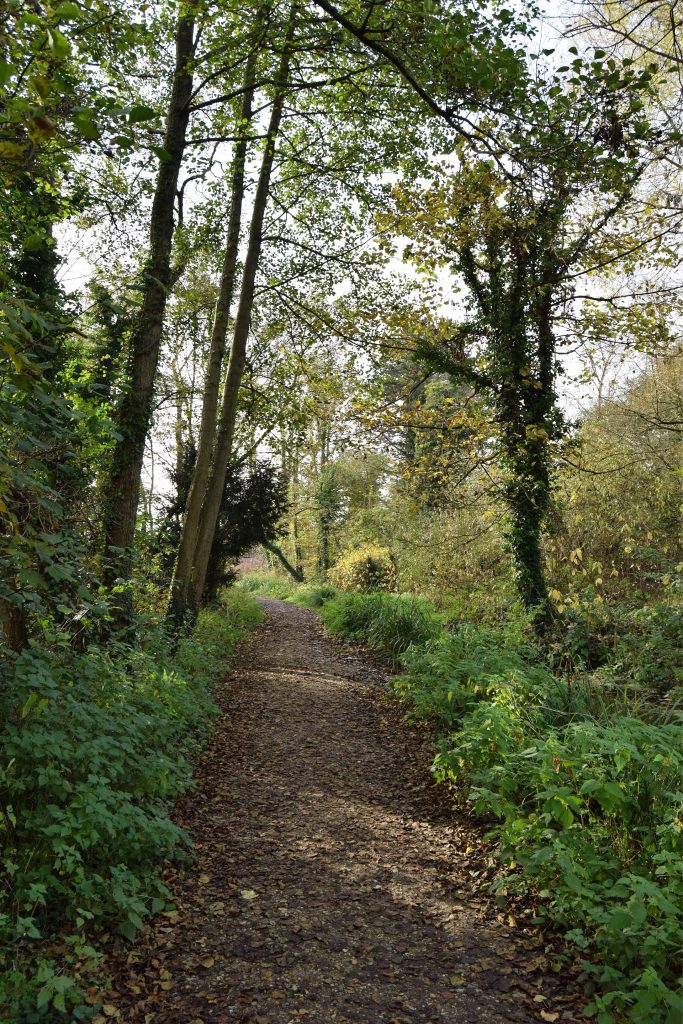

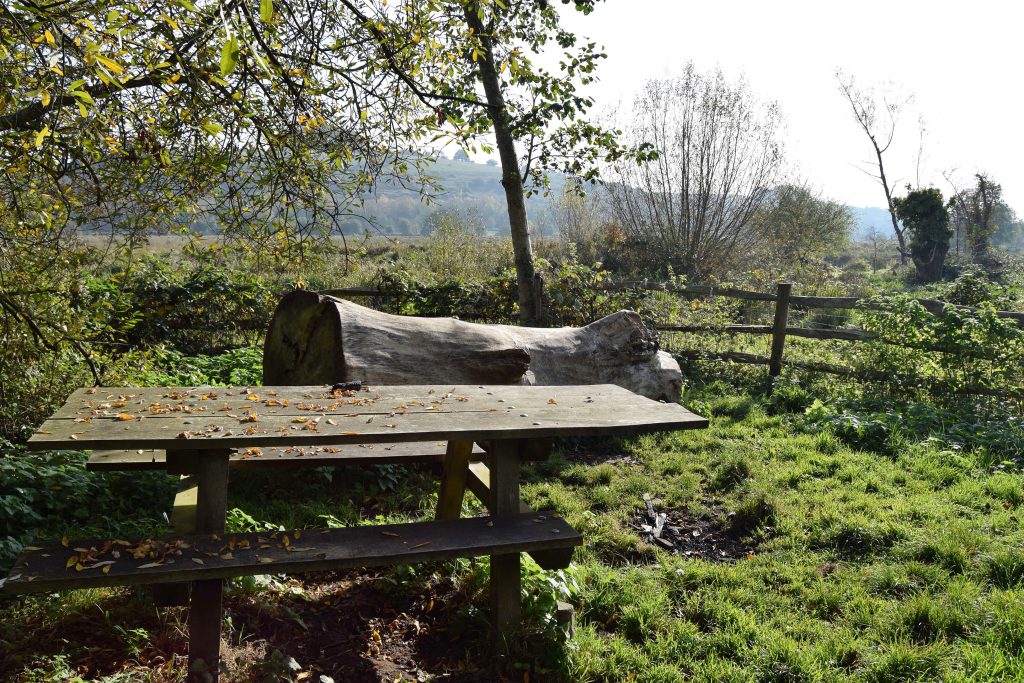
At a handy picnic bench strewn with fallen leaves we stopped for a drink and a snack. For a while we sat enjoying the peace and quiet of the empty meadow. Every now and then another leaf drifted from the tree to land on the bench beside us. We could have stayed all day but there were miles ahead to be walked and poet’s steps to follow so we dragged ourselves away and continued along the path.

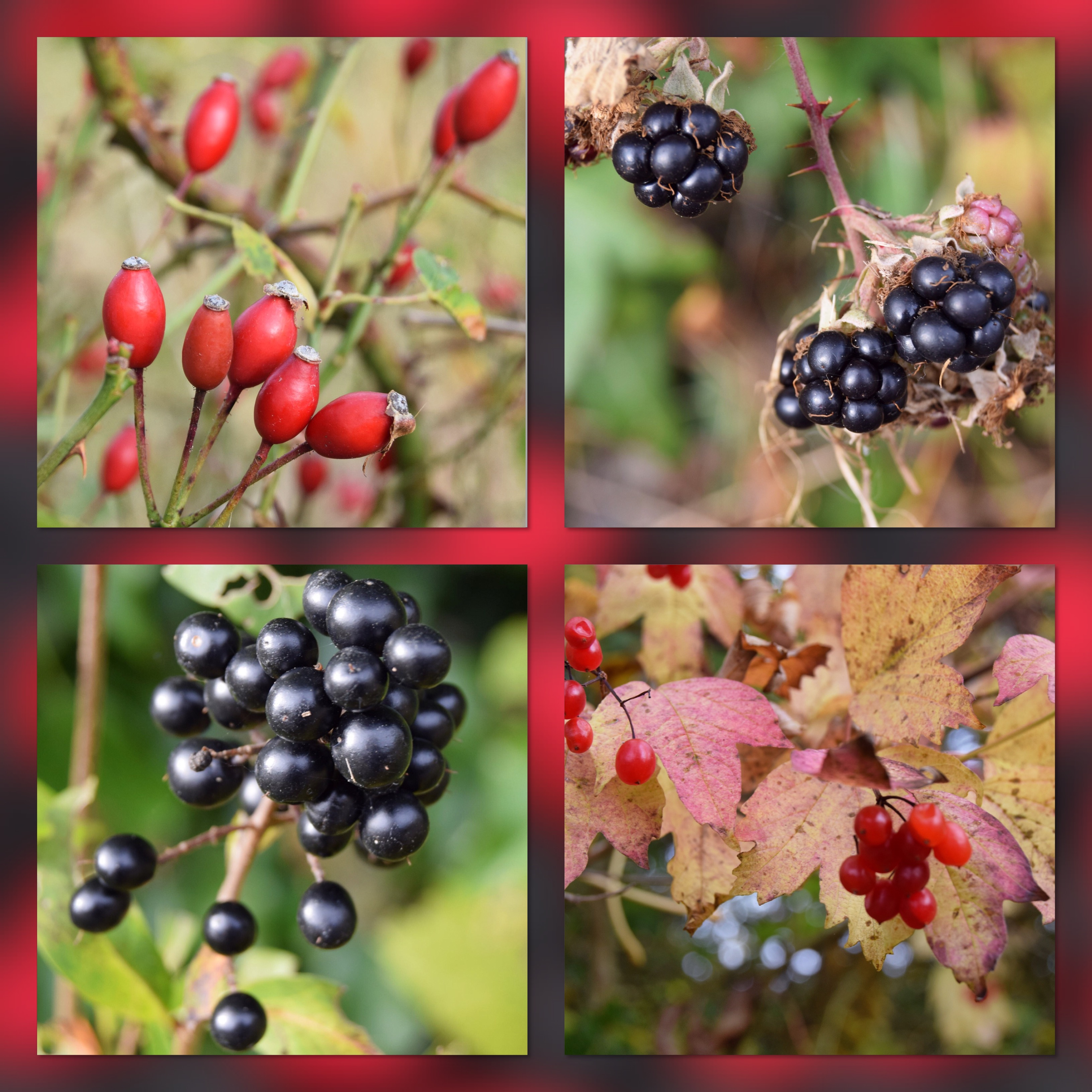
So far we’d had mist in plenty and now the path was bounded by Keats’ mellow fruitfulness. The undergrowth here seemed to be overbrimming with life, berries and hips in shades of glossy red and black everywhere we looked.

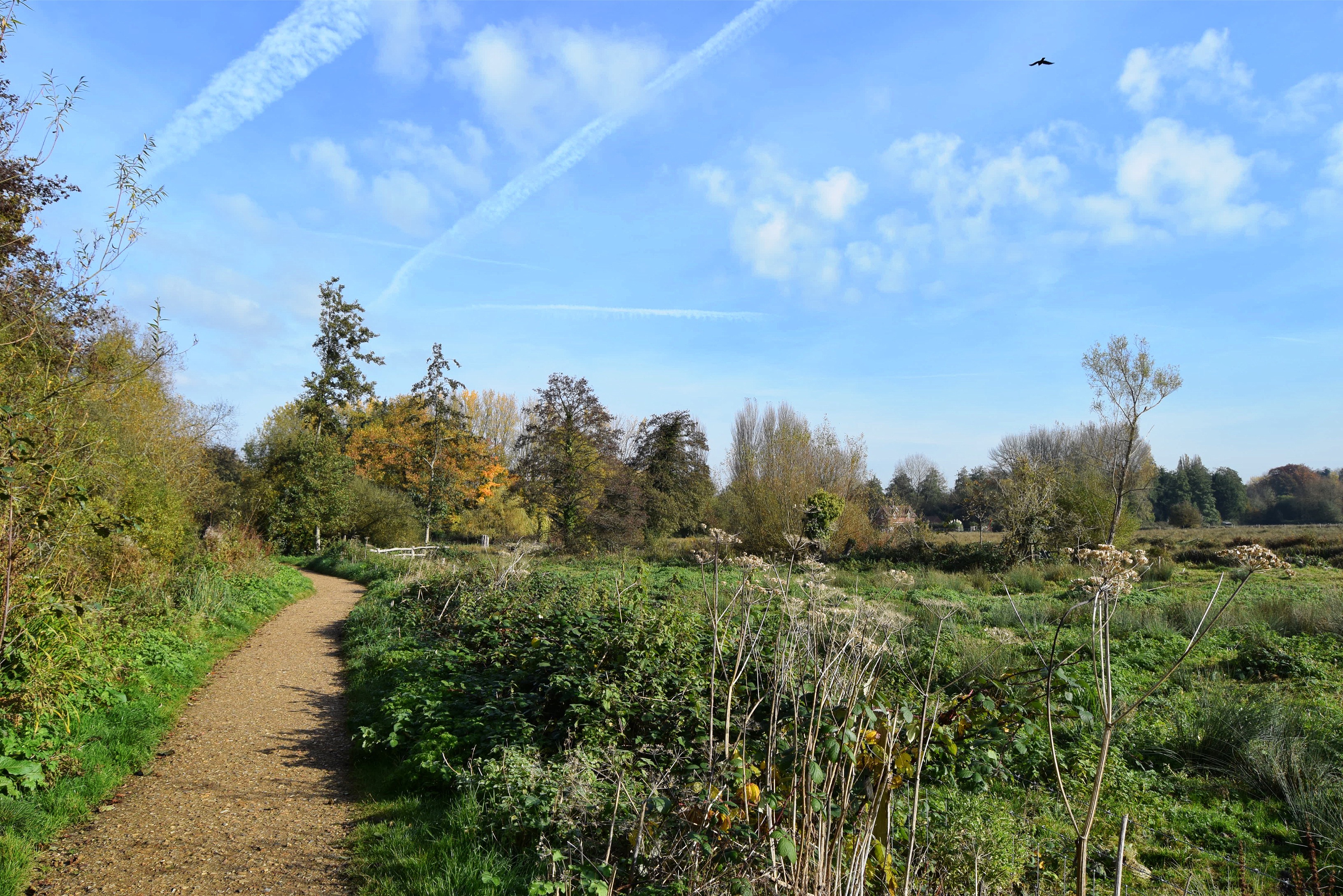
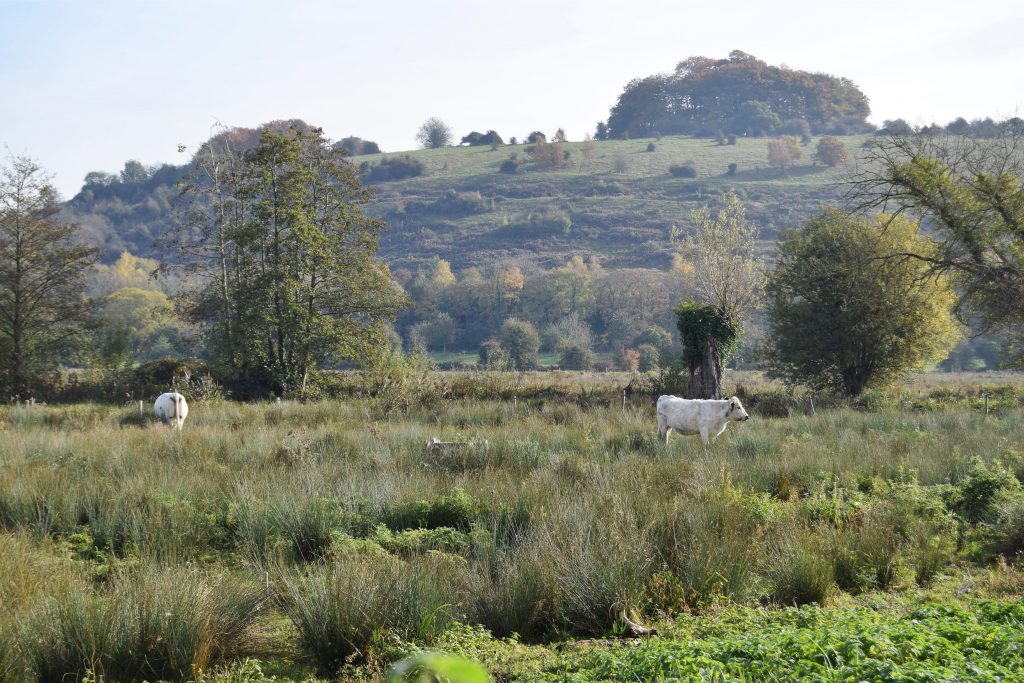
When we reached the bridge leading to Cripstead Lane I knew the first part of our walk was coming to and end. Keats described ‘crossing some meadows and at last a country alley of gardens I arrive.’ This was surely the country alley. In the shadow of the hill white cows were grazing and, behind the old stone wall the land was parcelled up into allotments filled with fruit trees, ripening vegetables and rickety wooden sheds. Perhaps, back then, these were the gardens?
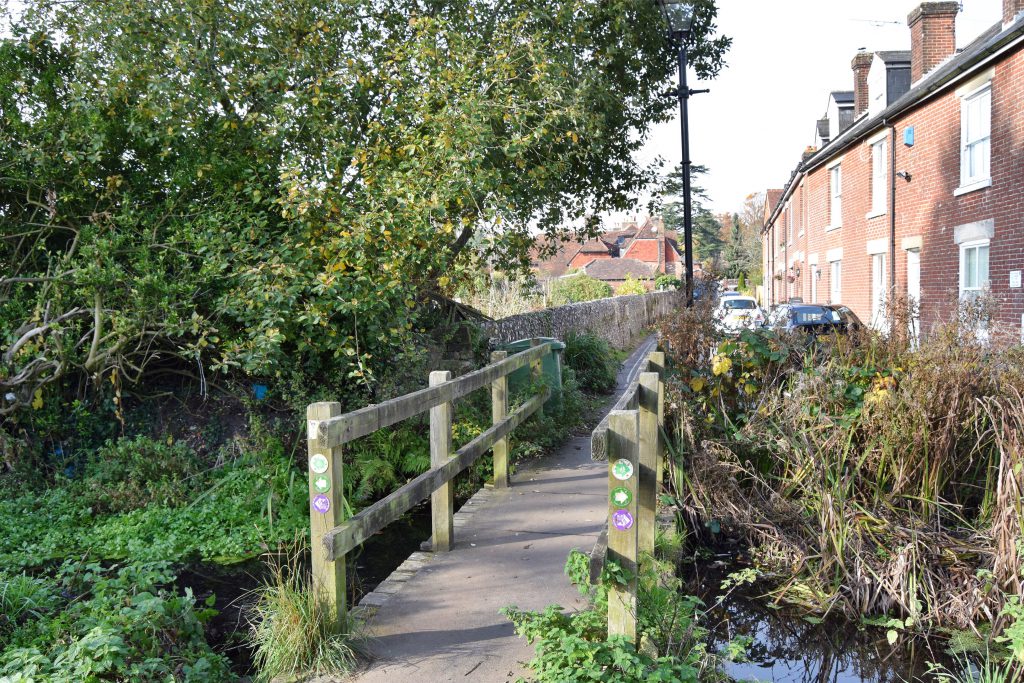

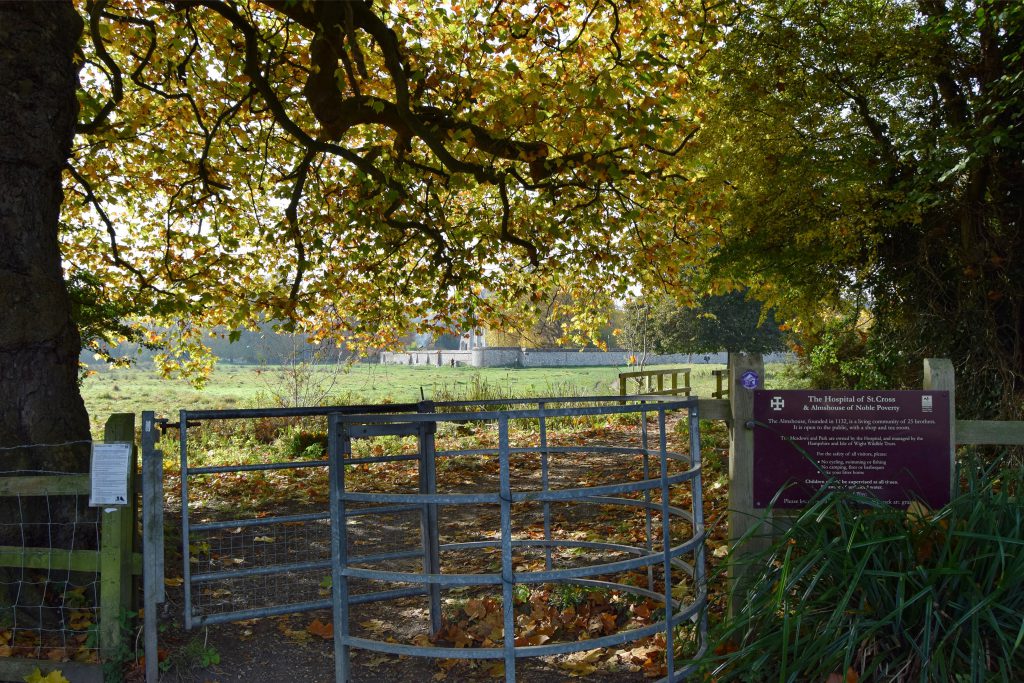
At the kissing gate we paused for a moment in the shade of a golden leaved tree. Ahead the wall of St Cross Hospital beckoned. From Keats’ letters about his daily walks we know he went as far as St Cross. His return route is a mystery but I had an idea where he would have gone next…
Please see my copyright information before you copy or use any of the above words or pictures.
That’s a beautiful walk. No wonder Keats did it every day.
I was in Oxford two Sundays ago and saw the other education institution founded by William of Wykeham – New College. He founded Winchester College to provide an education for poor boys so that they could then go on to New College. Things have changed a bit since then.
It was a lovely walk and, for the most part, much as Keats would have seen it.
Pictures 4 and 19 extra nice 🙂
Thank you. The light was just perfect as we walked through Curle’s Passage and there’s nothing like a country scene to make a photograph stand out.
Loved the berries.
They were everywhere we looked.
It seems early for Christmas decorations but I’ve seen them here too.
I don’t blame Keats for taking that walk every day. It’s a beautiful one!
I wish they’d save Christmassy things until December. They seem to begin earlier each year. The walk was beautiful, perfect for a poet.
I agree and think Xmas decorations should be banned before December. The Christmas tree arrived in our town today! Beautiful photos, Marie, and isn’t it interesting how many great poets and writers were also great walkers
Don’t even get me started on Christmas. Bah Humbug! It strikes me that walking time is thinking time so for writers and poets it’s a useful pastime.