
8 March 2015
On Sunday, Commando had a fifteen mile run scheduled on his London Marathon training plan. When he said he fancied running in the New Forest I was putting on my boots before he’d even finished speaking. In my head I had visions of beautiful blue sky over purple heather on White Moor and maybe a pony or two in the distance. The actual walk couldn’t have been further from this if it had tried.
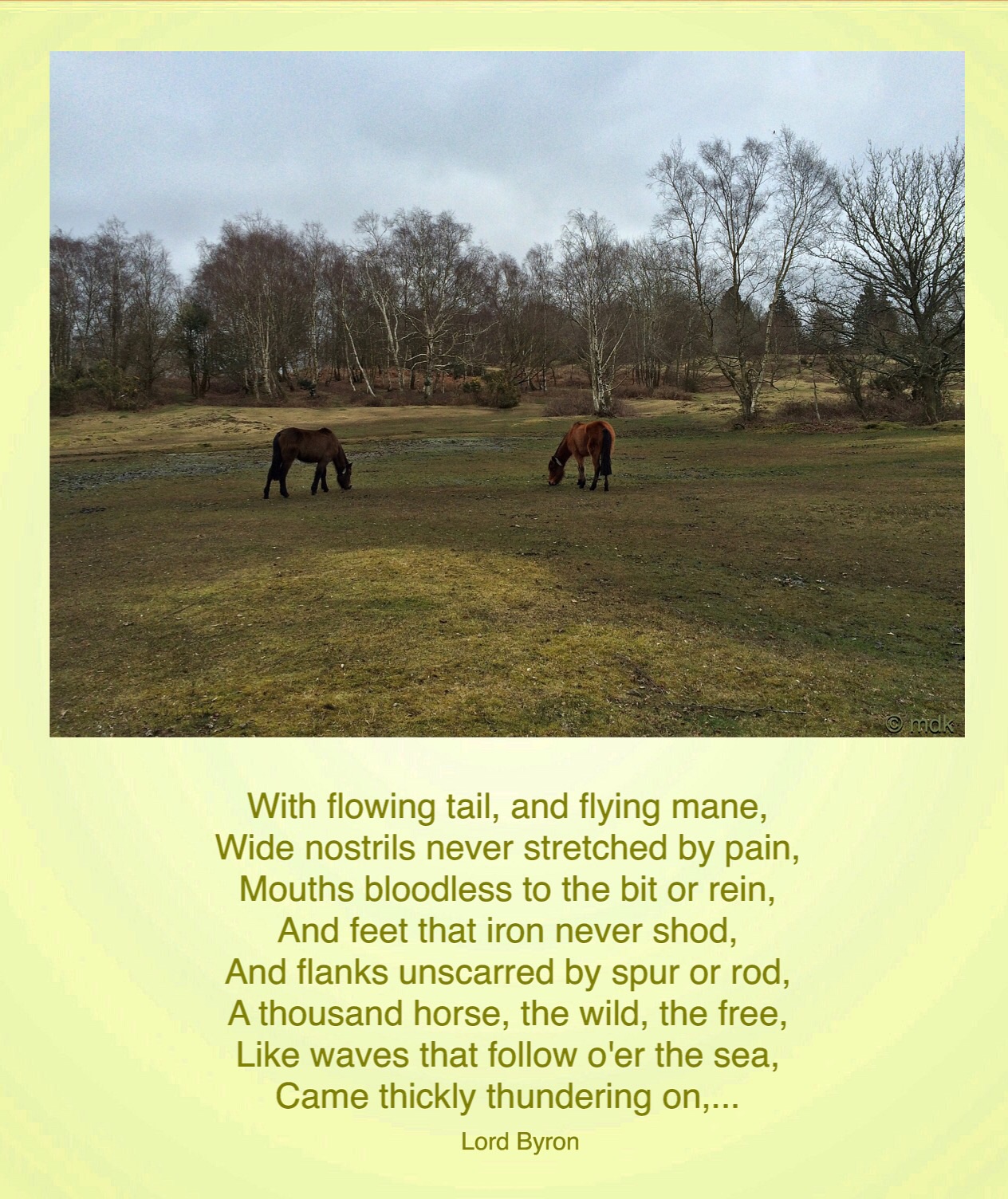
It was disappointingly grey overhead when we set out but, being the eternal optimist, I thought the clouds would probably burn off soon enough. When we parked up at Bolton’s Bench it was still grey though and the wind was as biting as mid winter. Commando set off on the road towards Ashurst, planning to made a wide loop that would eventually lead him back to Lyndhurst and I started along the trail towards White Moor. Within moments I’d spotted my first New Forest ponies eating grass close to the trees on Southampton Road.
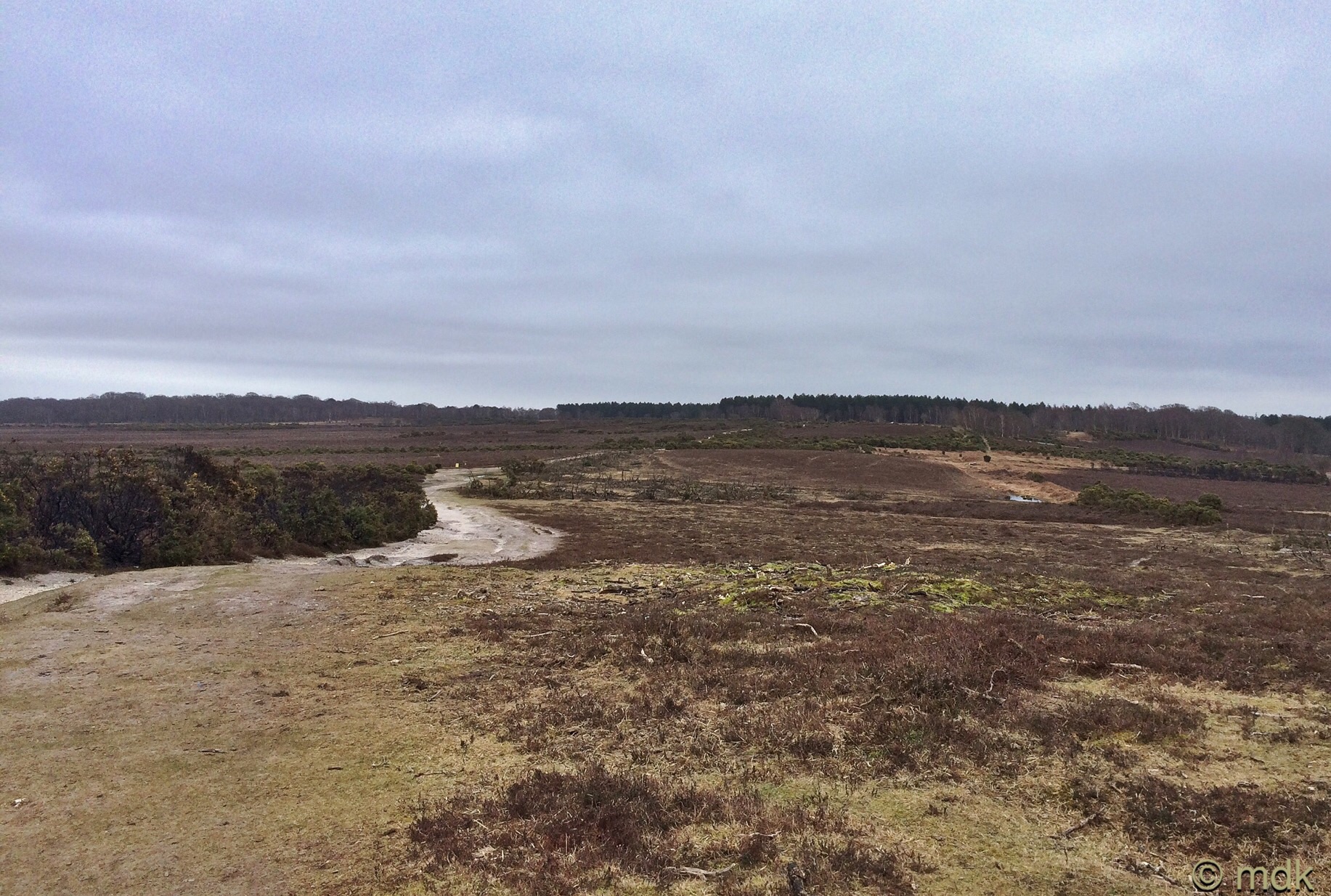
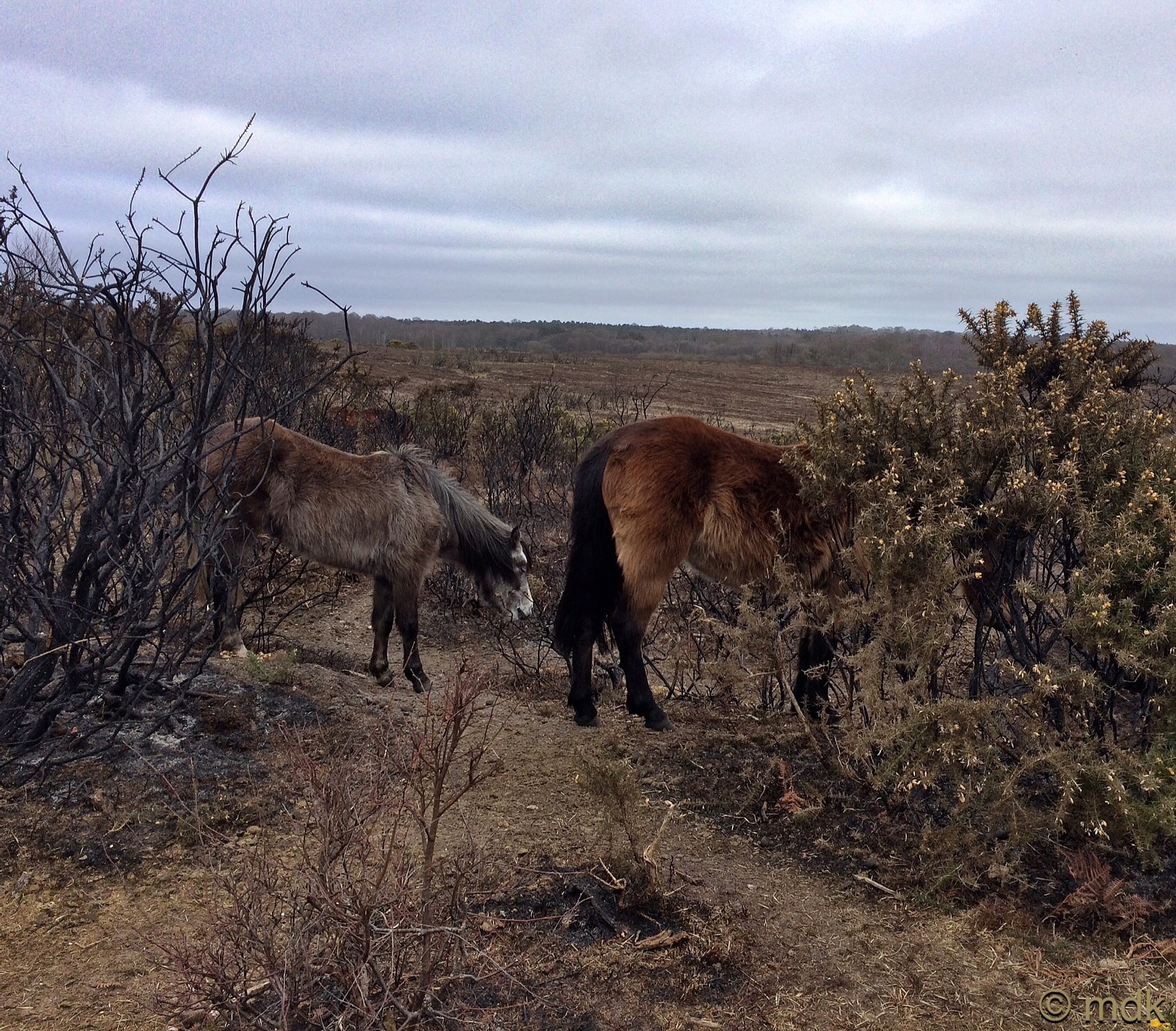
The climb up the hill by the sand pit seemed windier than normal and I realised why when I saw the verderers have been burning the gorse and cutting it back. It’s surprising how much shelter the thickly tangled gorse branches provide and how noticeable it is when it’s not there any more. Controlled rotational heathland burning and clearing is part of the management of the forest, it removes old stems from woody bushes and encourages new shoots that are easier for the ponies to eat. Obviously it was Lyndhurst’s turn for the burn this year.

White Moor is named for its pale sandy soil and the sandpit is a remnant of the sand and gravel pits that were once dug in the area, this also explains the undulating nature of the landscape. This particular sand pit was still in use at the beginning of World War I and, between the sandpit and the path, a long deep hollow was probably a World War I practice trench. Soldiers camped on White Moor before embarking for France and this was certainly an area used for training troops with many such trenches dug. The mud and cold of the New Forest was a good introcudtion to the French and Belgian trenches without the gunfire and grenades.
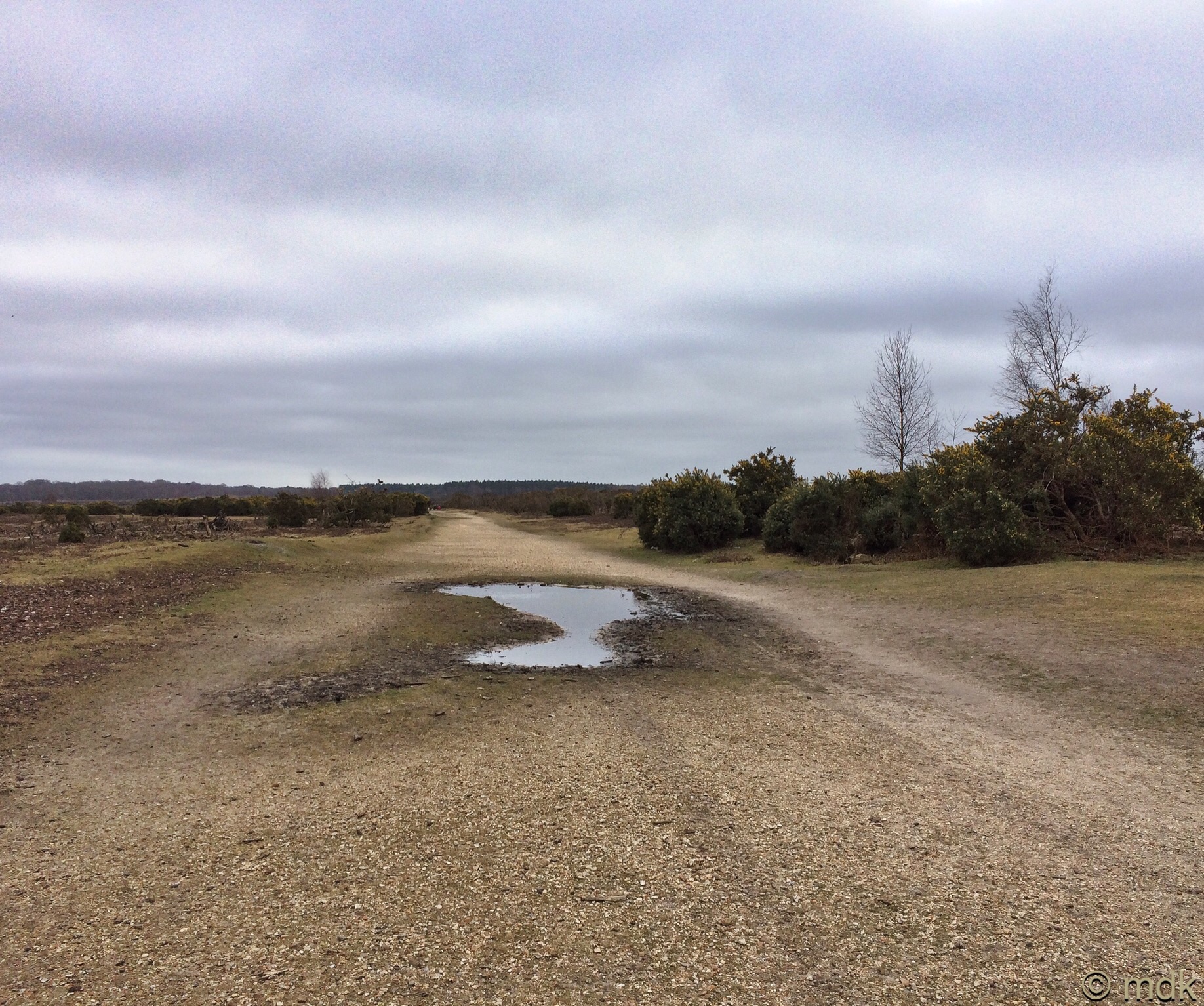
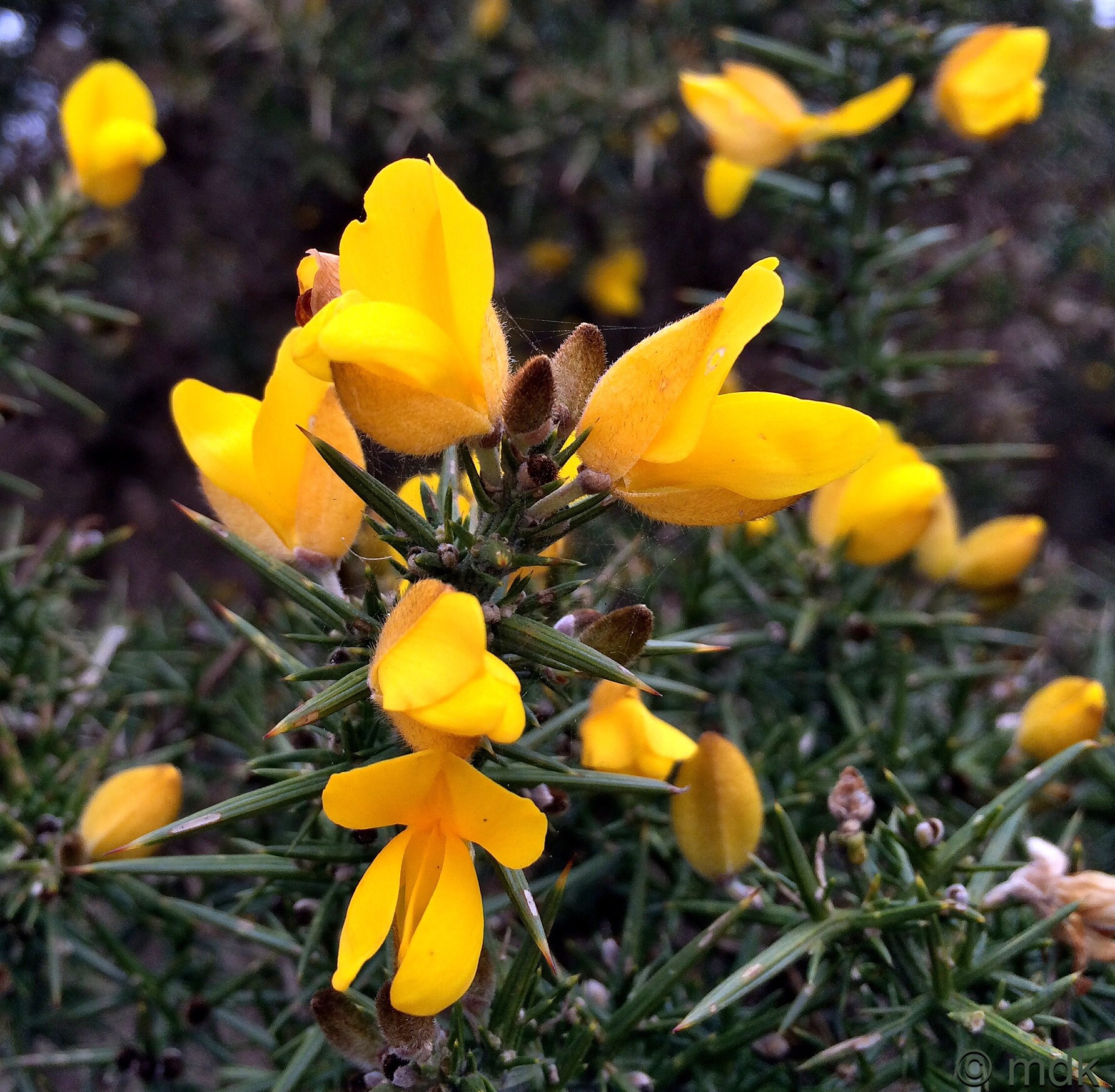
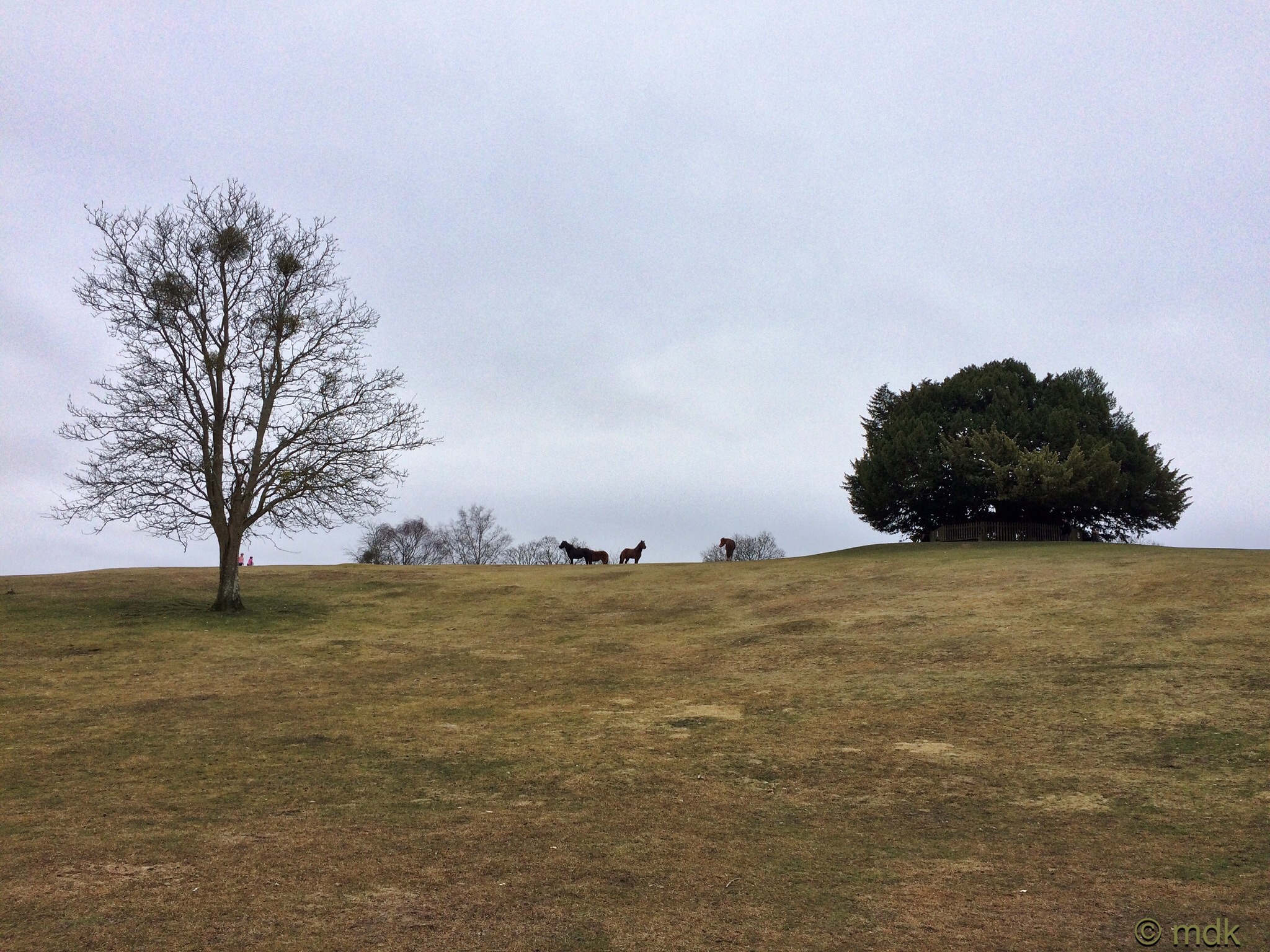
The wide sandy, gravel trail was drier than I expected and apart from one or two large puddles that were simple to get around it was easy going. At the top of the hill a few stands of gorse had escaped the burning, probably left to provide shelter for the local ponies. It was bright with yellow flowers. As I got closer I could see it was also full of ponies. I may have mentioned once or twice that the ponies scare me a little close at hand. These are not nice tame pets after all, they are wild horses. Yes, I know they won’t eat me, they’re herbivores, but they have been known to bite and they can trample. These were a little close for comfort, right beside the path, and there were lots of them. For a moment or two my heart quickened. Then I noticed they were all as still as statues, not even the flick of a tail or ear between the lot. One was even laying down which is an odd thing for a pony as far as I can tell.

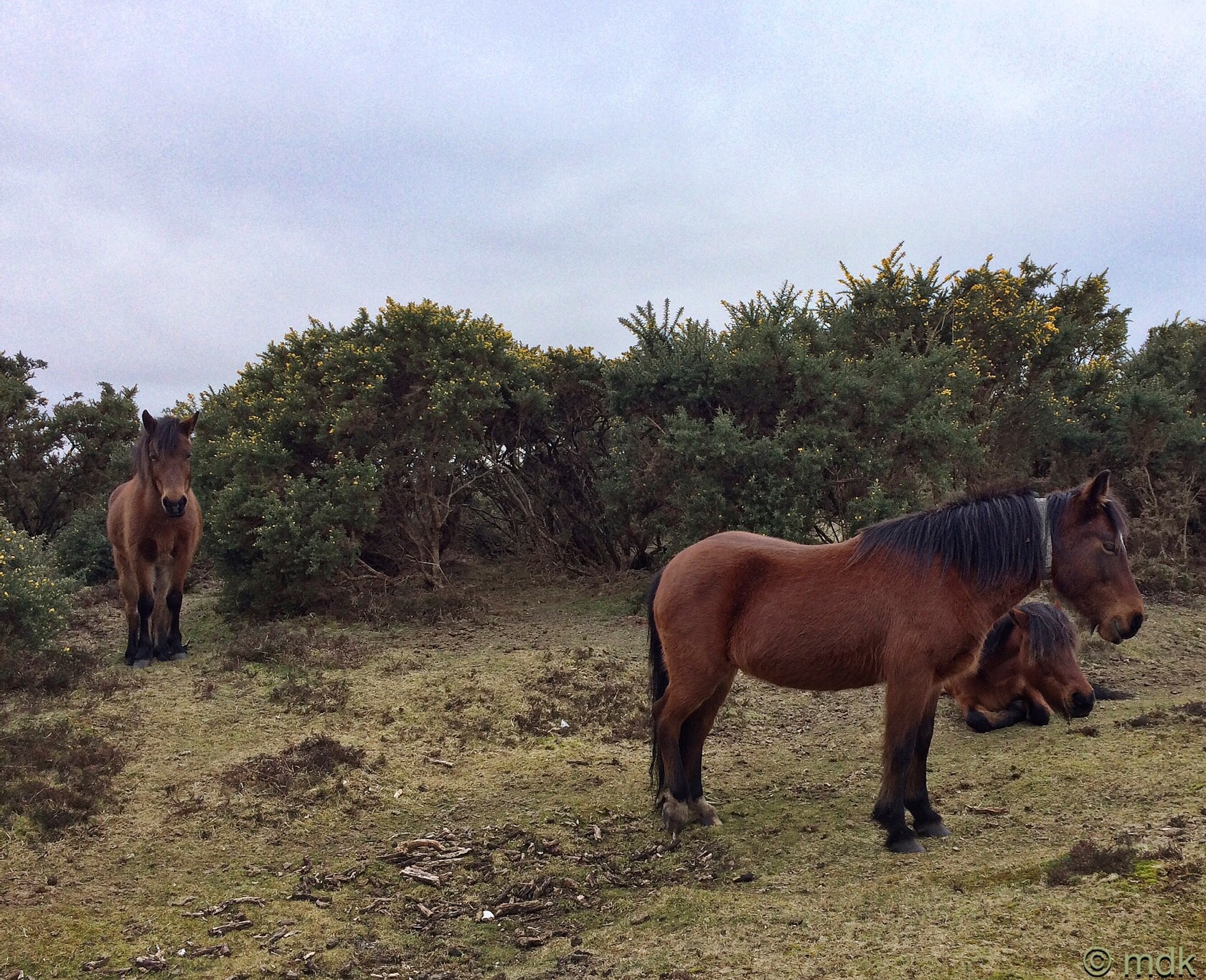
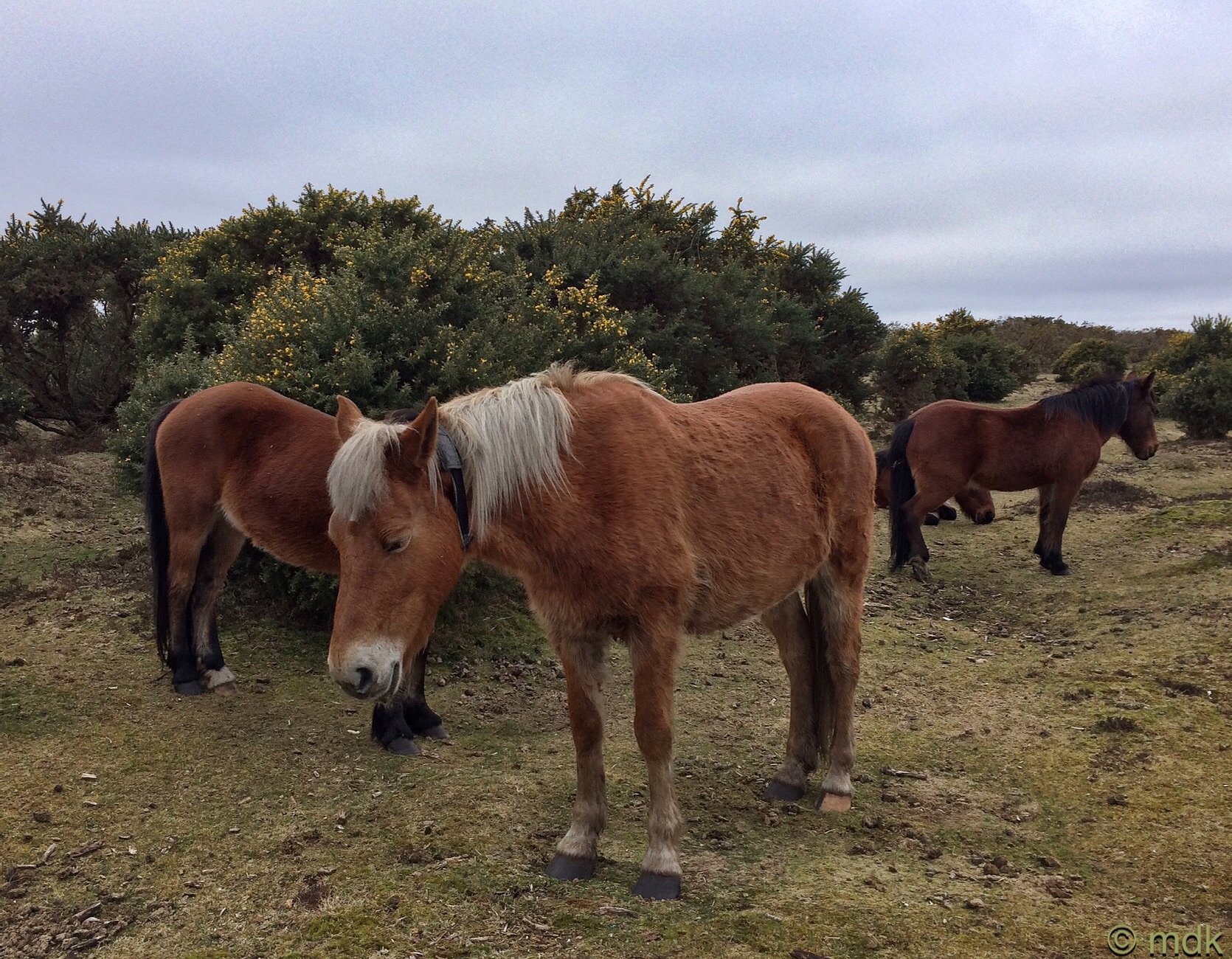
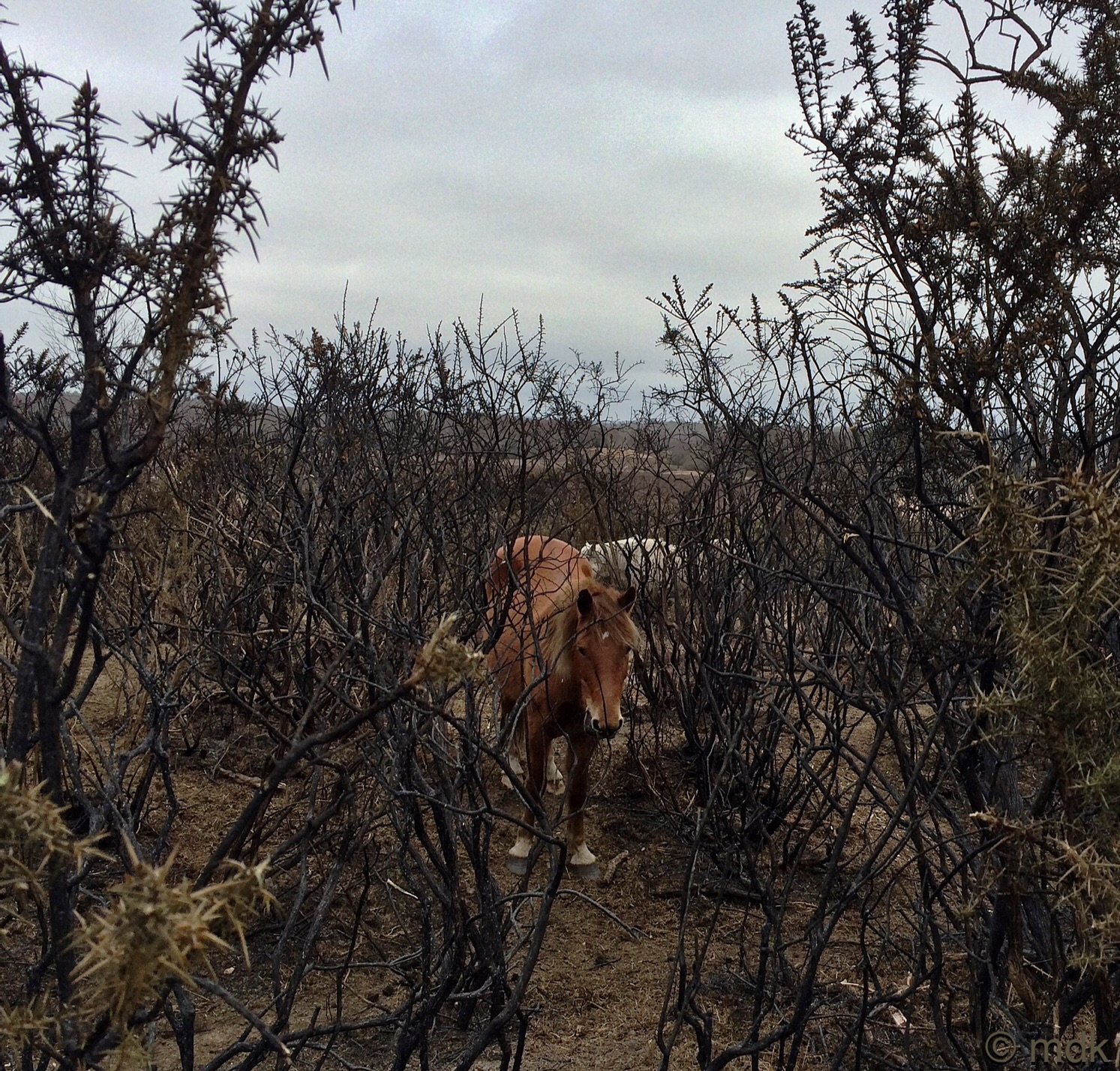
Their winter coats were shaggy and looking a little threadbare from the beginning of the spring moult. As they seemd very docile I stopped for a while to take some photos and was struck by their beautiful faces, each one a distinct individual. For some reason they all looked terribly sad, even the pony with the white heart shaped patch on her forehead. Maybe the lack of blue sky was making them unhappy. Those grey clouds just weren’t burning off no matter how hard I willed them to. From then on there seemed to be ponies at every turn. On the other side of the trail a little further on a trio were standing amongst the blackened gorse as statue like as the first group.

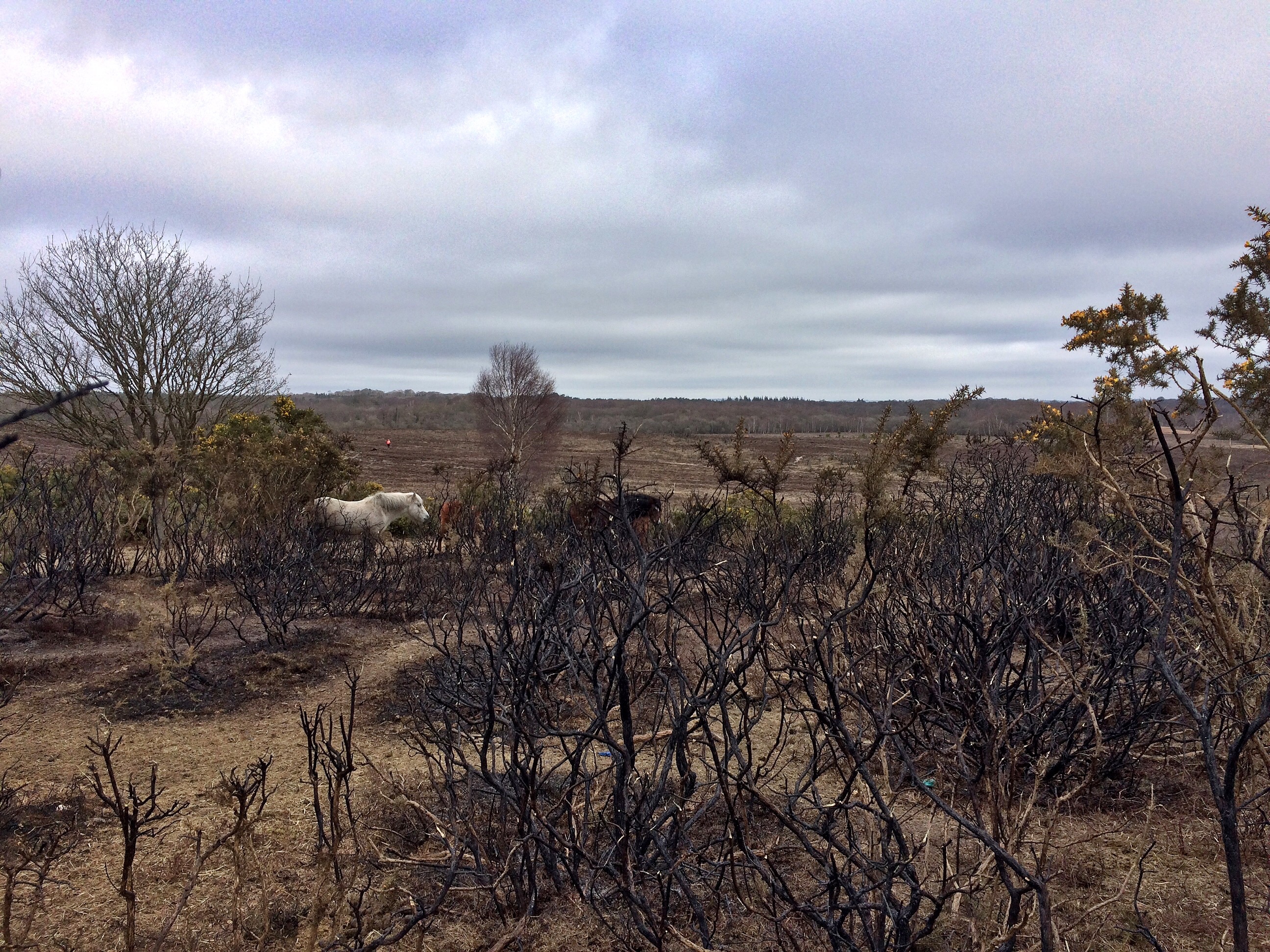
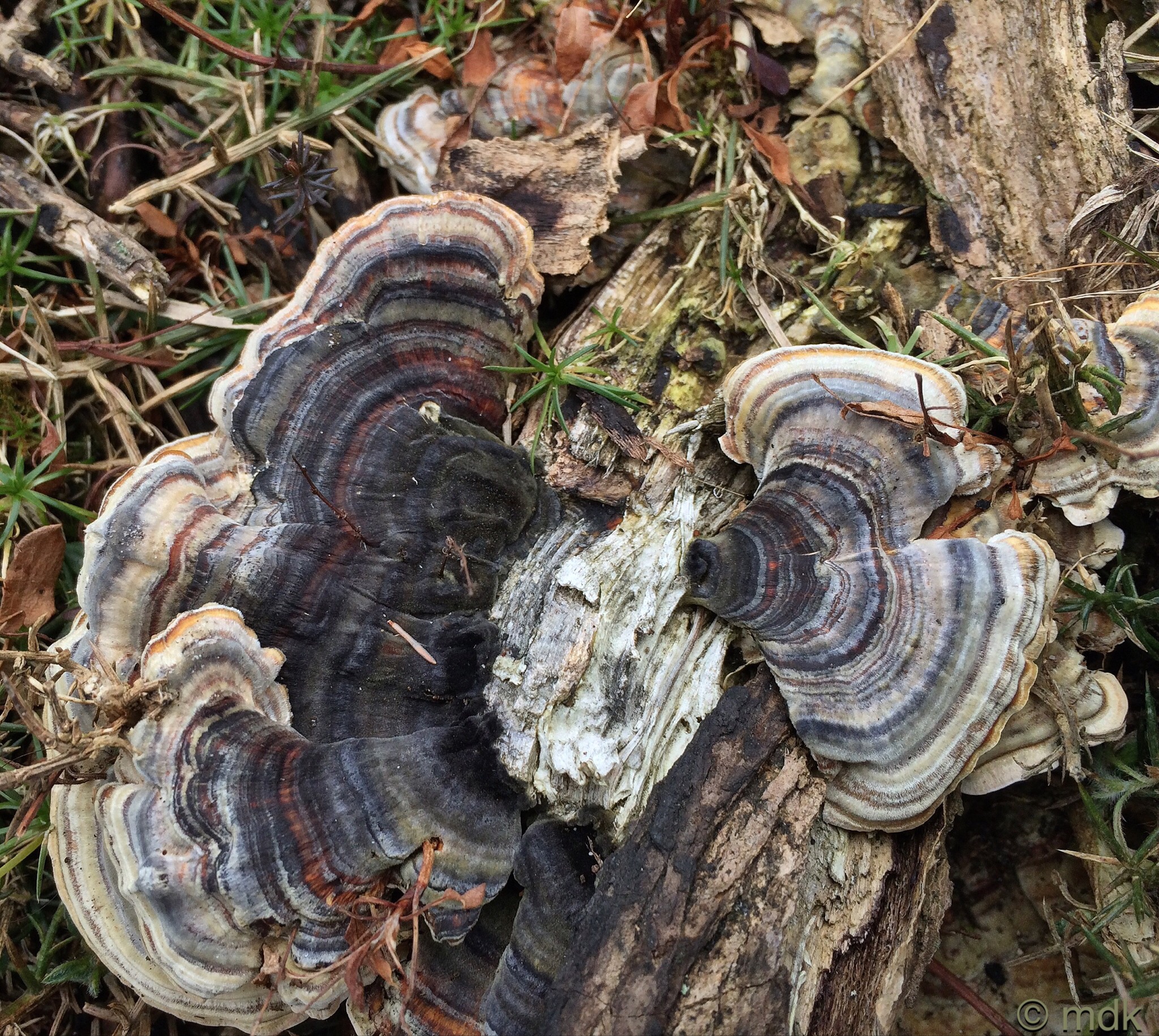
The view from the top of the hill seemed like a wasteland of gorse stumps under a grey, unforgiving sky. Smoke in the distance made me wonder if the burning was still in progress. I understand the principal of gorse burning but it does leave the landscape a little bare until it grows again. Amongst the gorse stumps I did find some pretty turkey tails that had somehow survived.

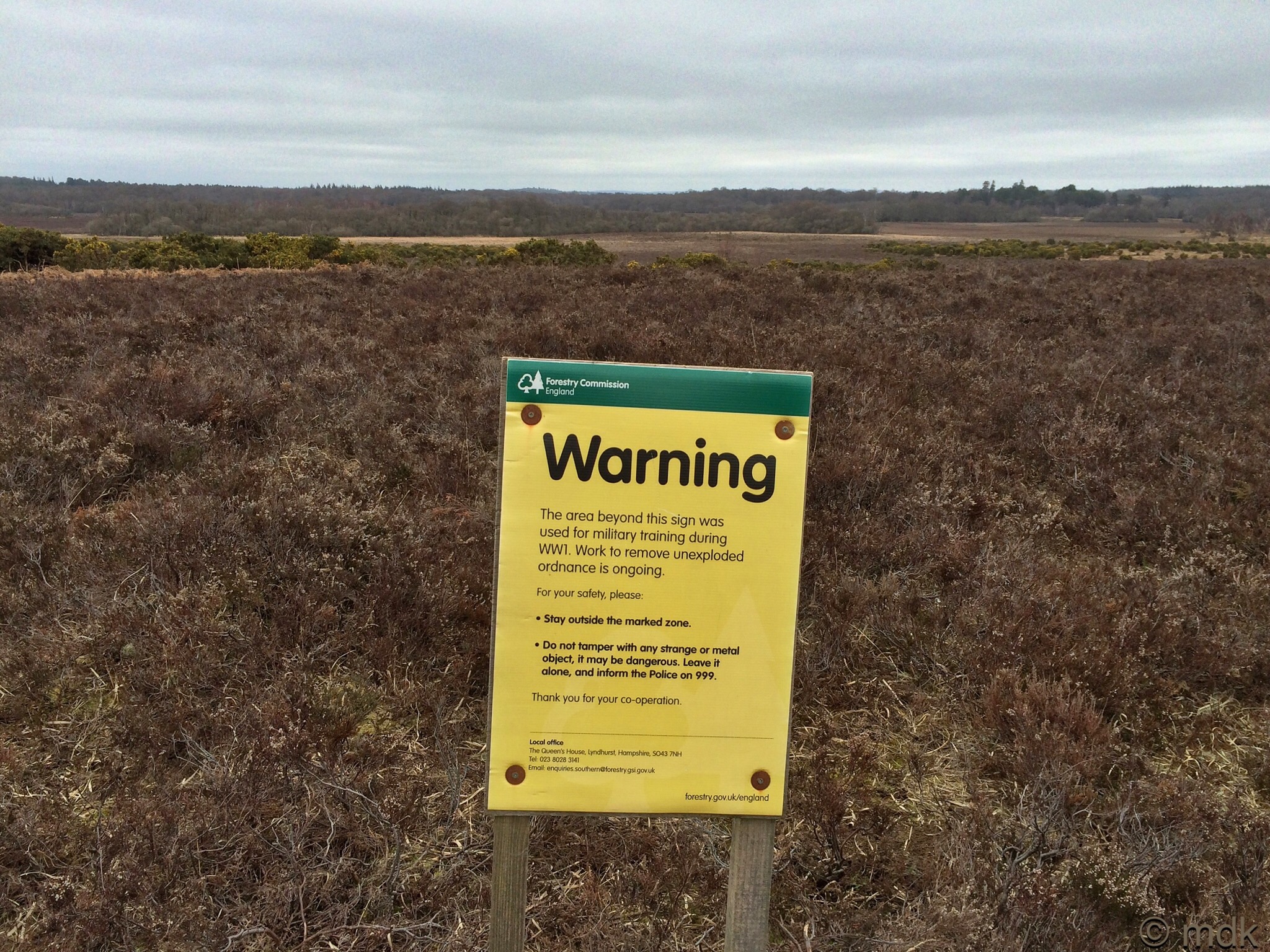
Looking over the moor towards Ashurst I’d hoped to see a vista filled with purple heather. Sadly, I’d arrived too early and the heather hasn’t yet started to flower. The brightest colour came from the signs warning of World War I ordnance. This area was a grenade and bombing school between 1914 and 1918. Troops were trained in the use of grenades, known then as Mills bombs, and land mines whilst the locals were banned from the area. Sir Arthur Conan Doyle’s son lived nearby at Minstead and was amongst the trainees. I wonder what the poor ponies made of all the noise? Many of the explosives are still out on the moor waiting for an unsuspecting hiker or pony to step on them. Hopefully the humans will heed the signs and the ponies know better.
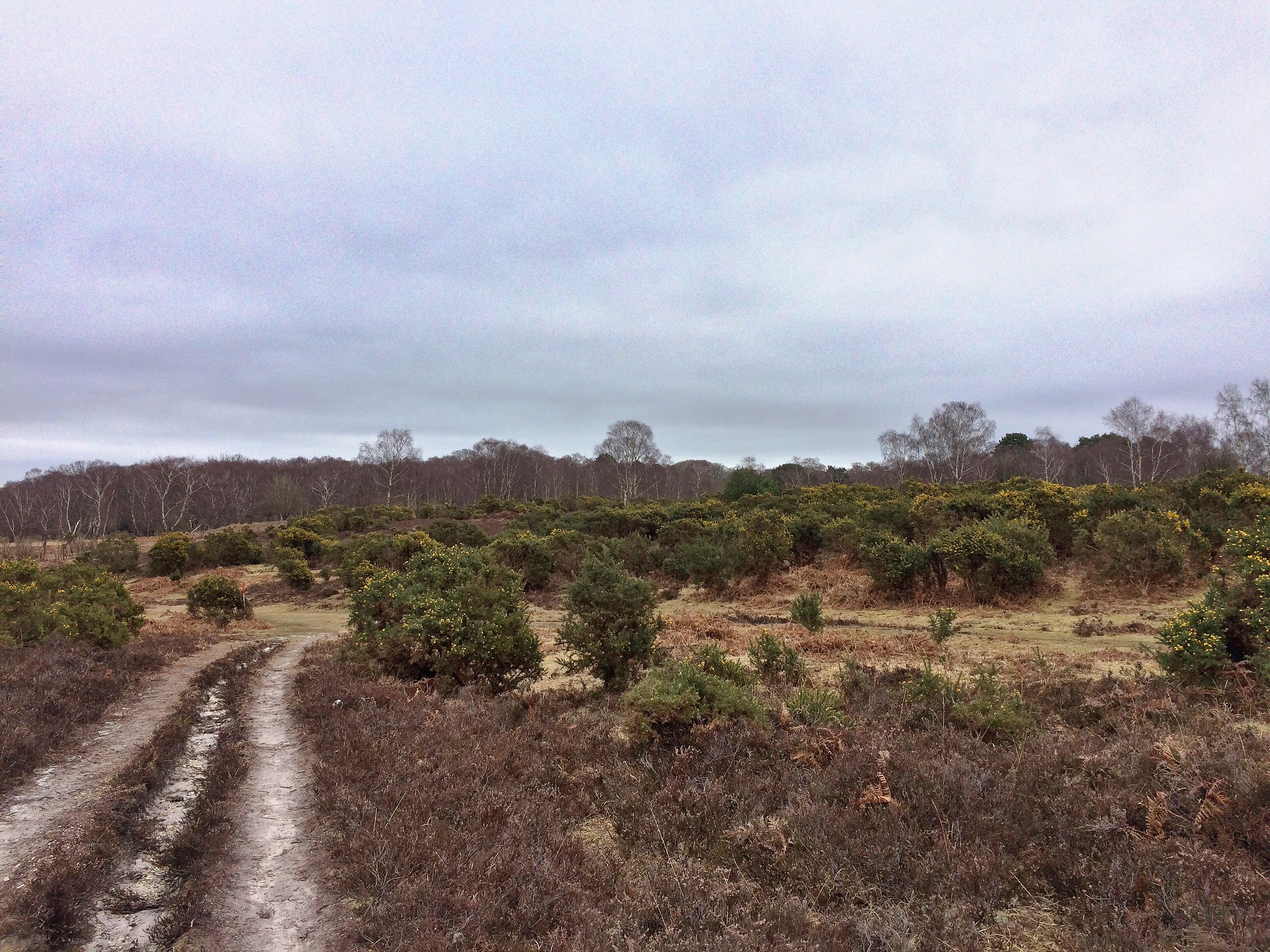
When I came to the place the path divides I chose the narrow trail that follows the line of the warning markers and skirts the north west edge of Matley Wood. Although this is called the New Forest, it actually began life as deciduous woodland and, after the ice age, beech, birch and oak grew where the ice melted. From the Bronze Age areas were cleared to cultivate food but the soil was poor and the clearings quickly turned to heathland which was later used as grazing land. In 1079 William I cleared away more then twenty small hamlets and farmsteads to turn this into a royal hunting forest, from then on known as the New Forest. It is now one of the largest tracts of unenclosed pasture, heath and forest in the south of England.

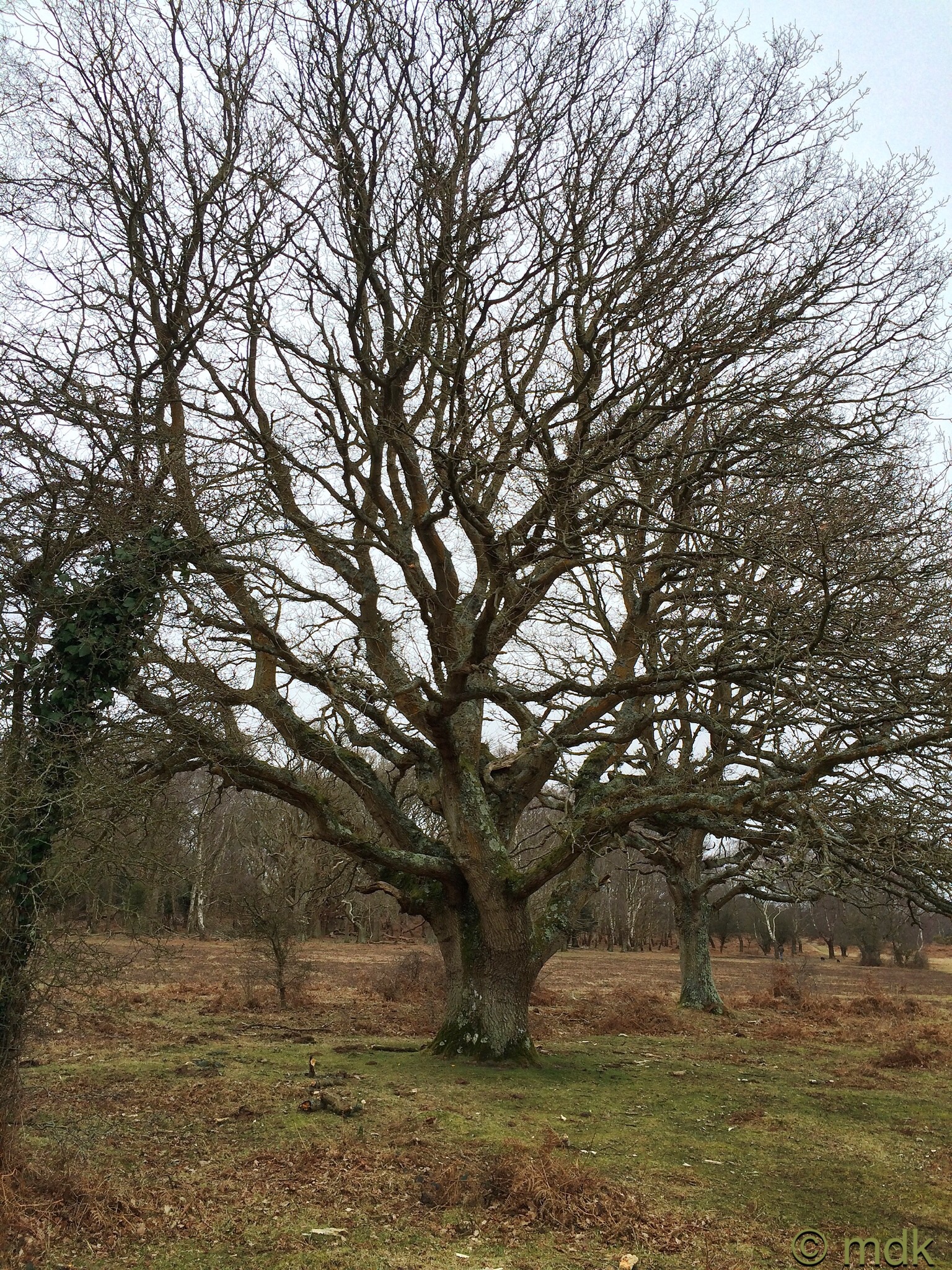
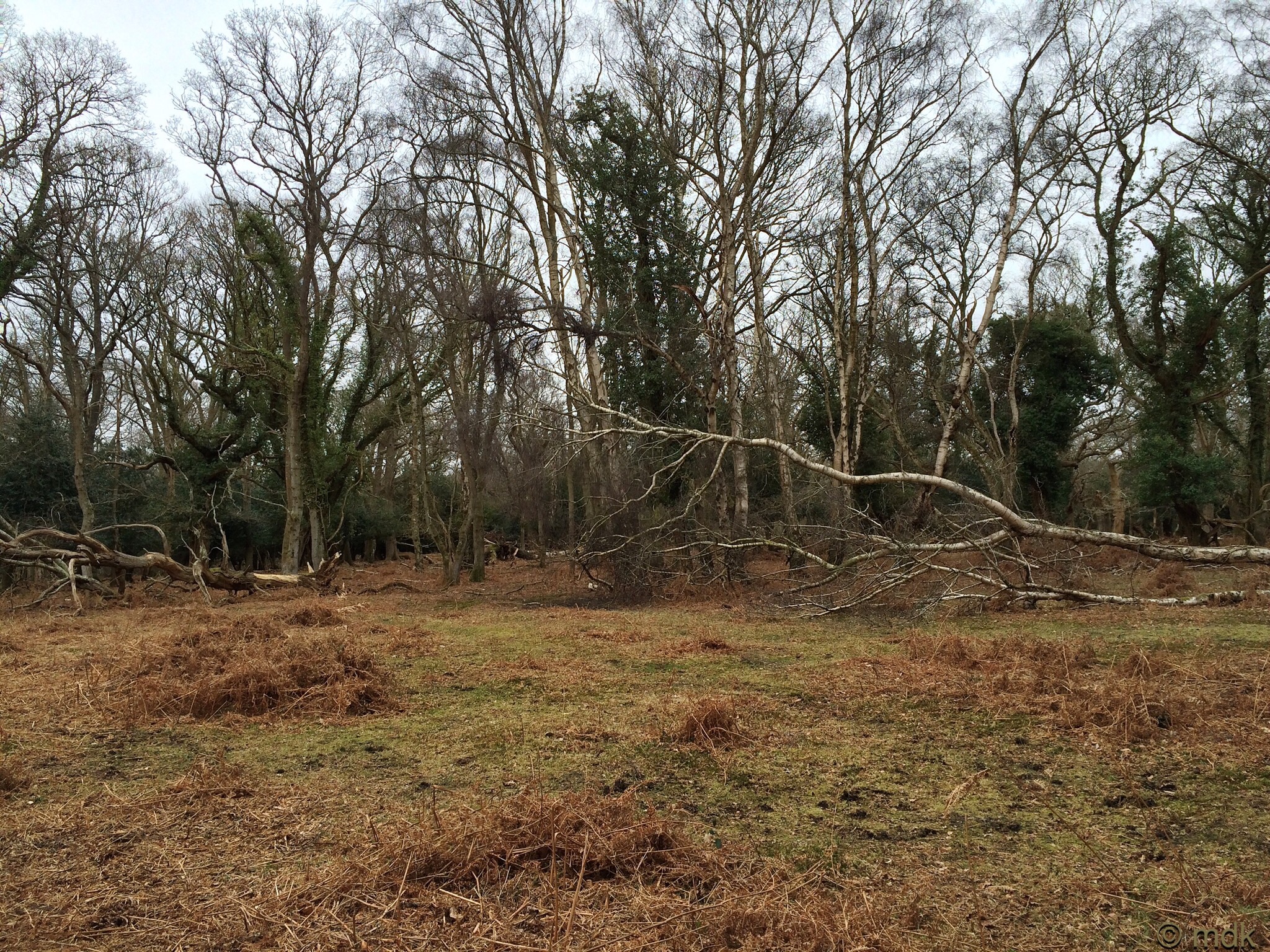
Despite the name it is neither new, nor really forest and the only trees I’d seen since leaving Bolton’s Bench were in the distance. As I walked down the hill gorse gave way to the odd tree and soon I was walking through the woods. The trails through Matley Wood have had me lost and confused on more than one occasion. It isn’t always clear what is a trail and what is a path to nowhere created by ponies. On Sunday some of it was very muddy and I found myself having to wander some distance off what I thought was the trail just to keep moving forward. A large number of trees seem to have fallen since I last came this way too, making it difficult to get my bearings as some known landmarks had disappeared altogether or looked rather different laying on their side on the forest floor.
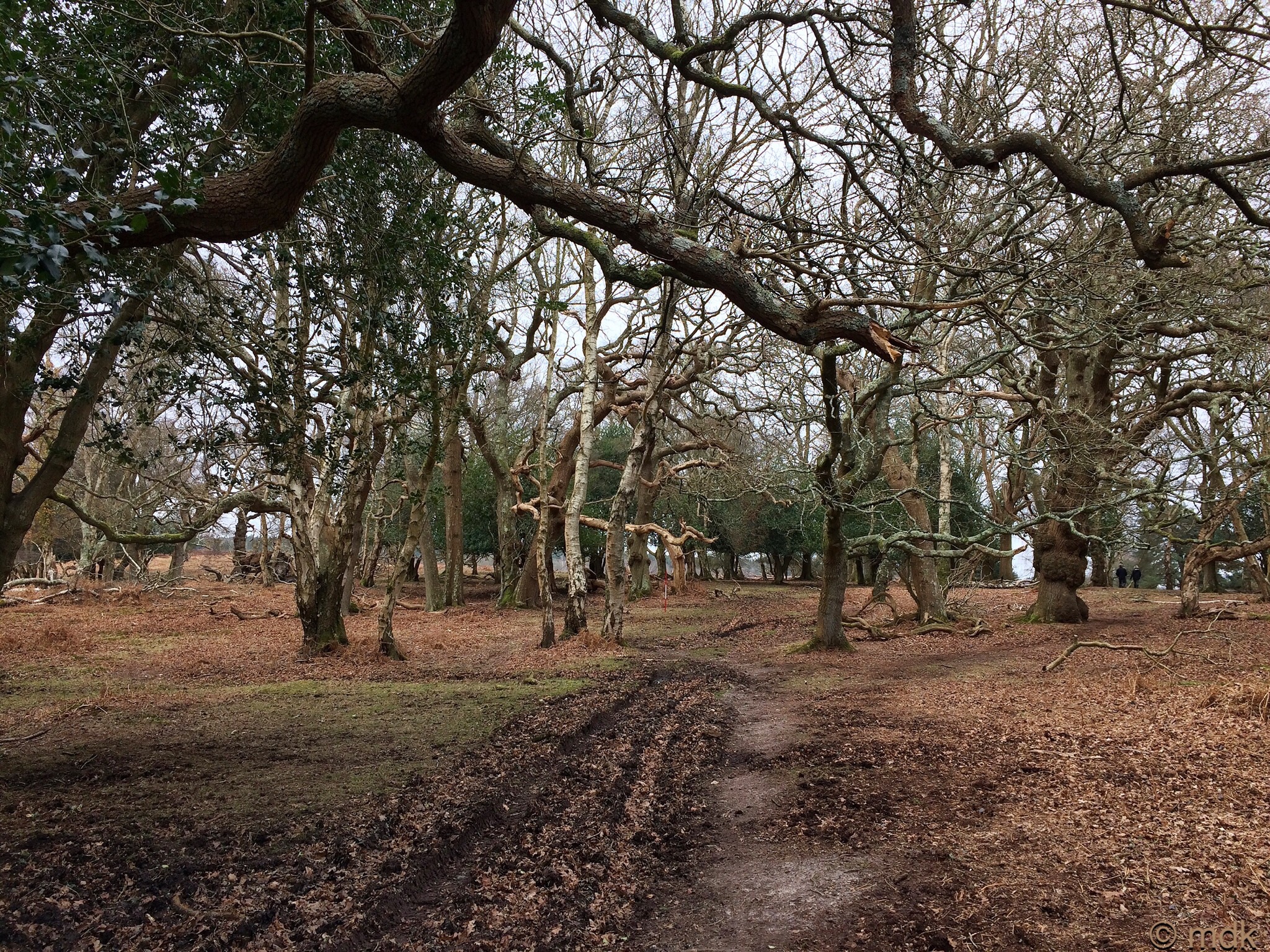
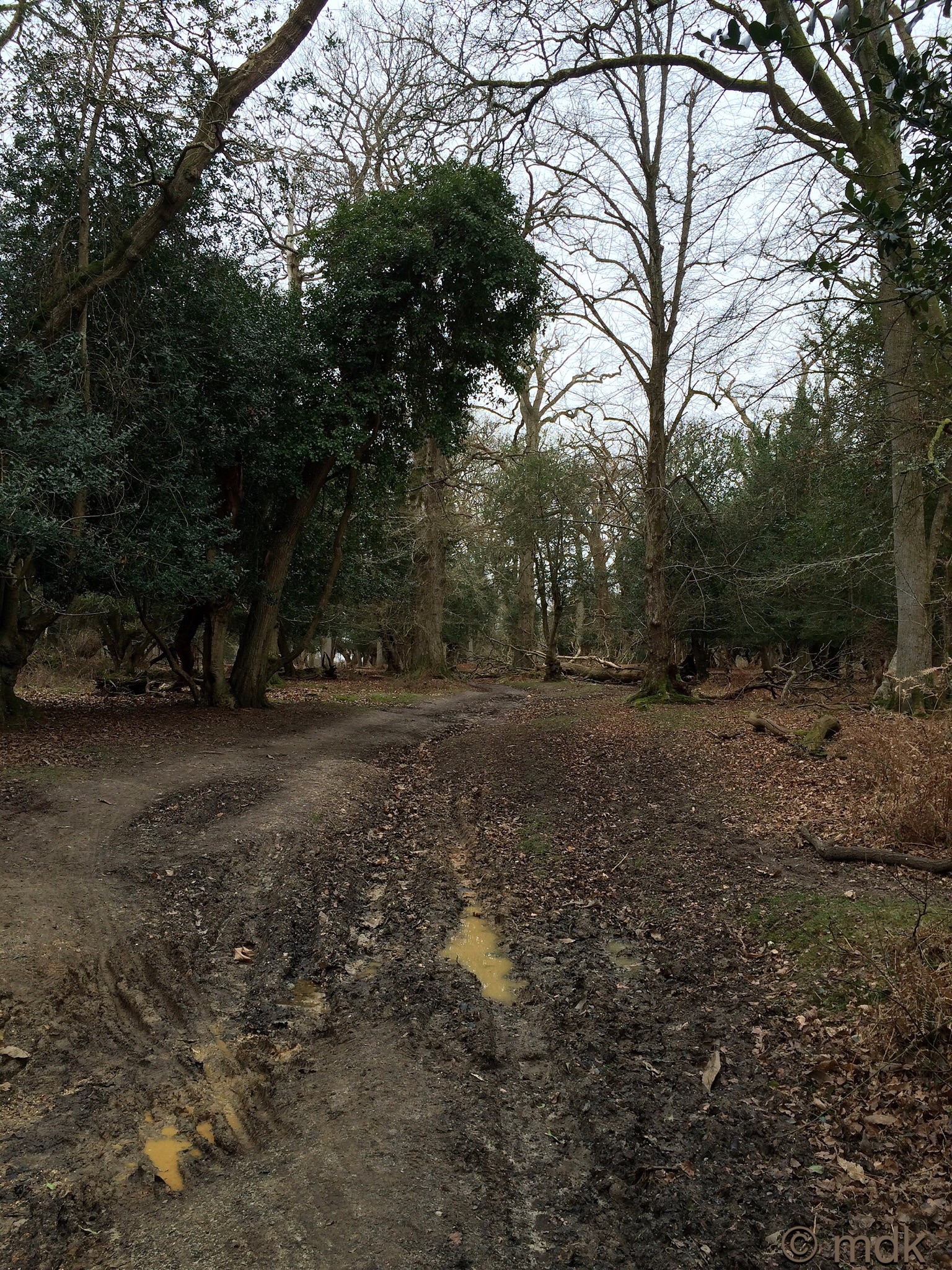
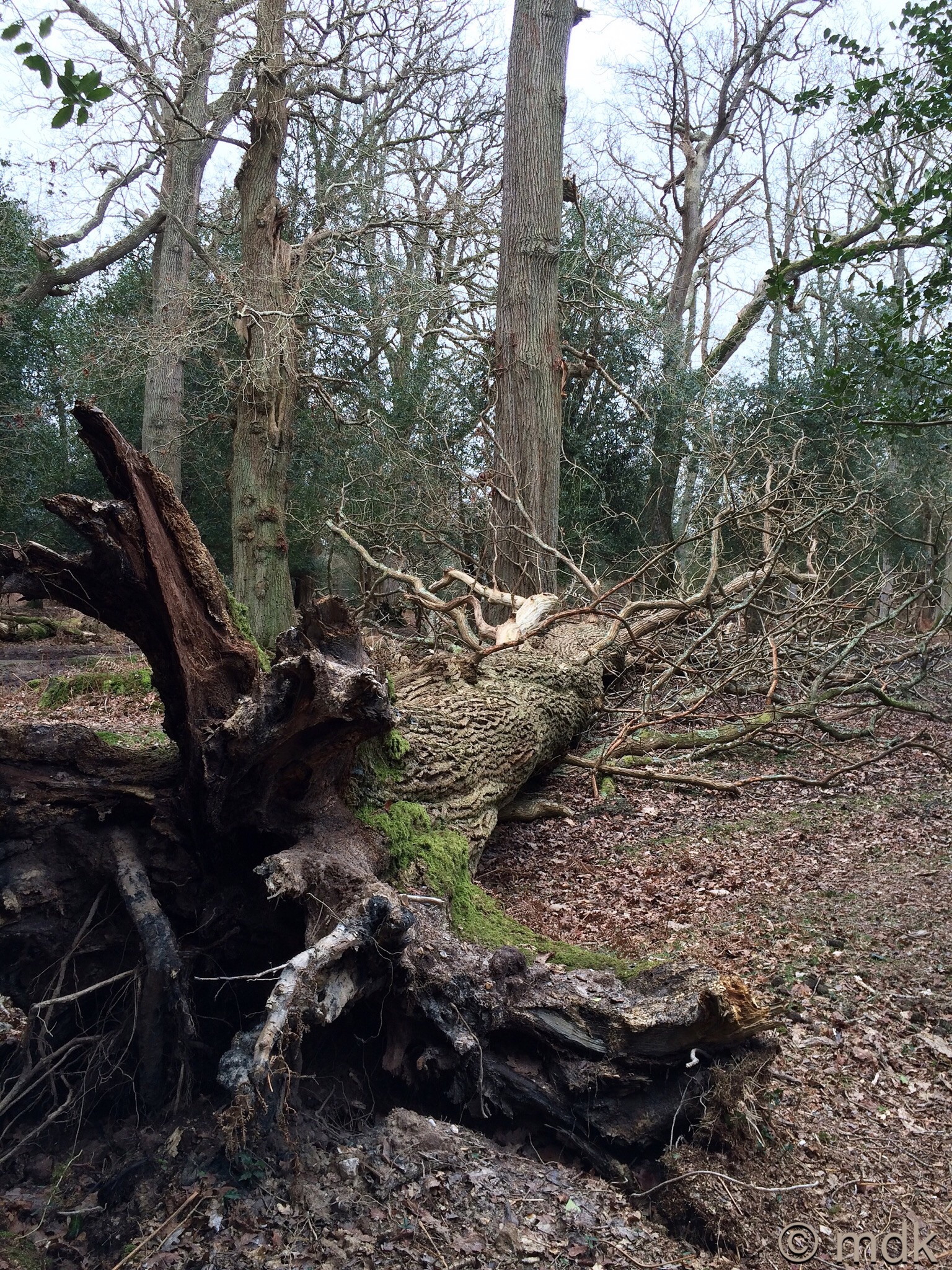
Just after I saw the unmistakeable trail that leads off towards Deer Leap and knew exactly where I was I met with a couple poring over a map.
“Are you local?” the man asked me.
“Not really, but I do know where I am,” I said. Five minutes before I’d have been lying.
“Is this Matley Wood?” the woman held the map out towards me, “we seem to have lost the trail.”
So I pointed out the way the trail went, warning them it was pretty muddy and not too clear in places.
“It curves round the outside of the wood and then divides. The left fork will take you to Lyndhurst,” I pointed to it on the map, “the right fork leads towards Ashurst I think, but I’ve never taken it and the trail here,” I gestured behind us, “goes to Deer Leap.”
With a quick warning about the unexploded bombs I left them to it. Hopefully they are better navigators than I am or they’re probably still out there now.
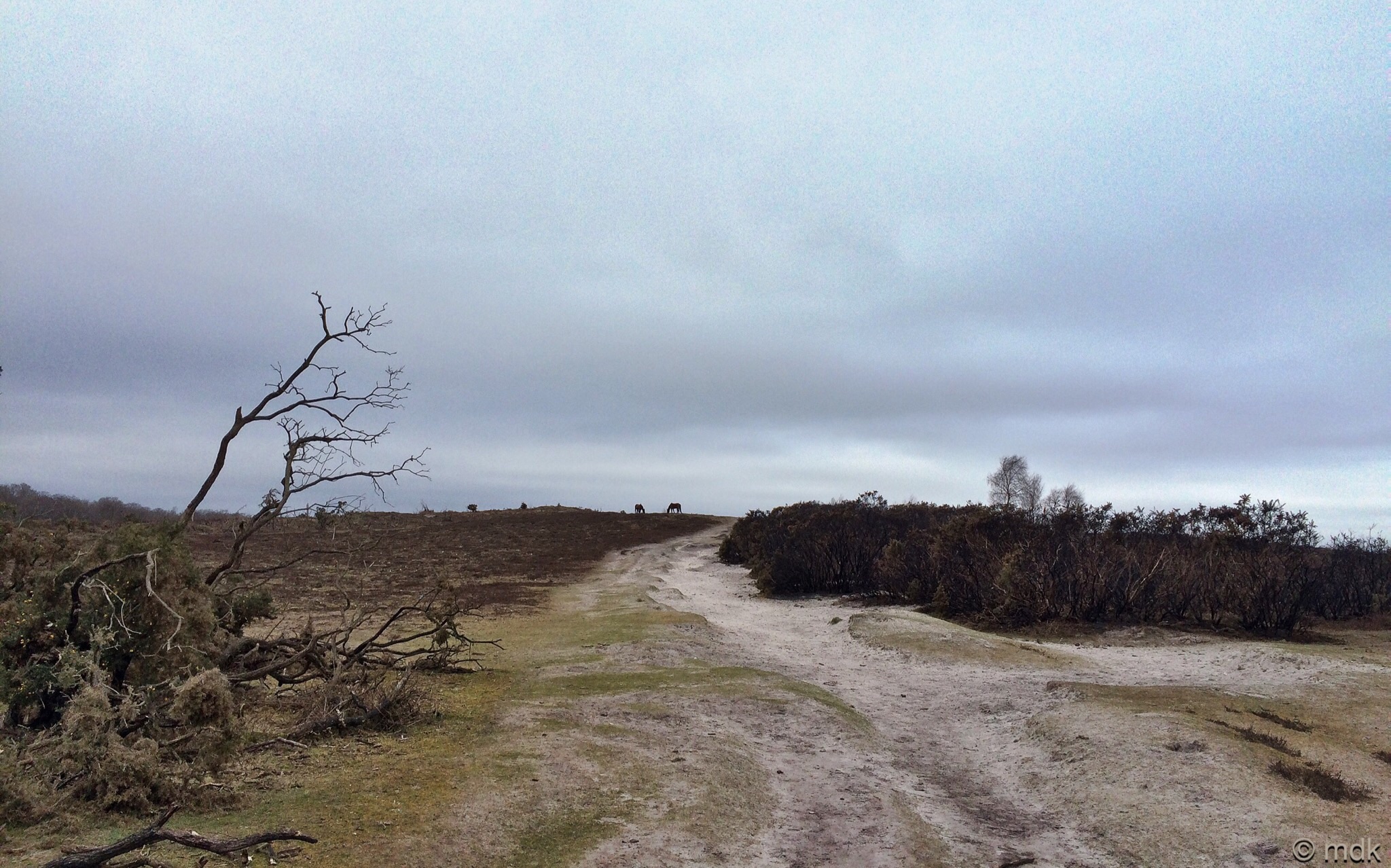
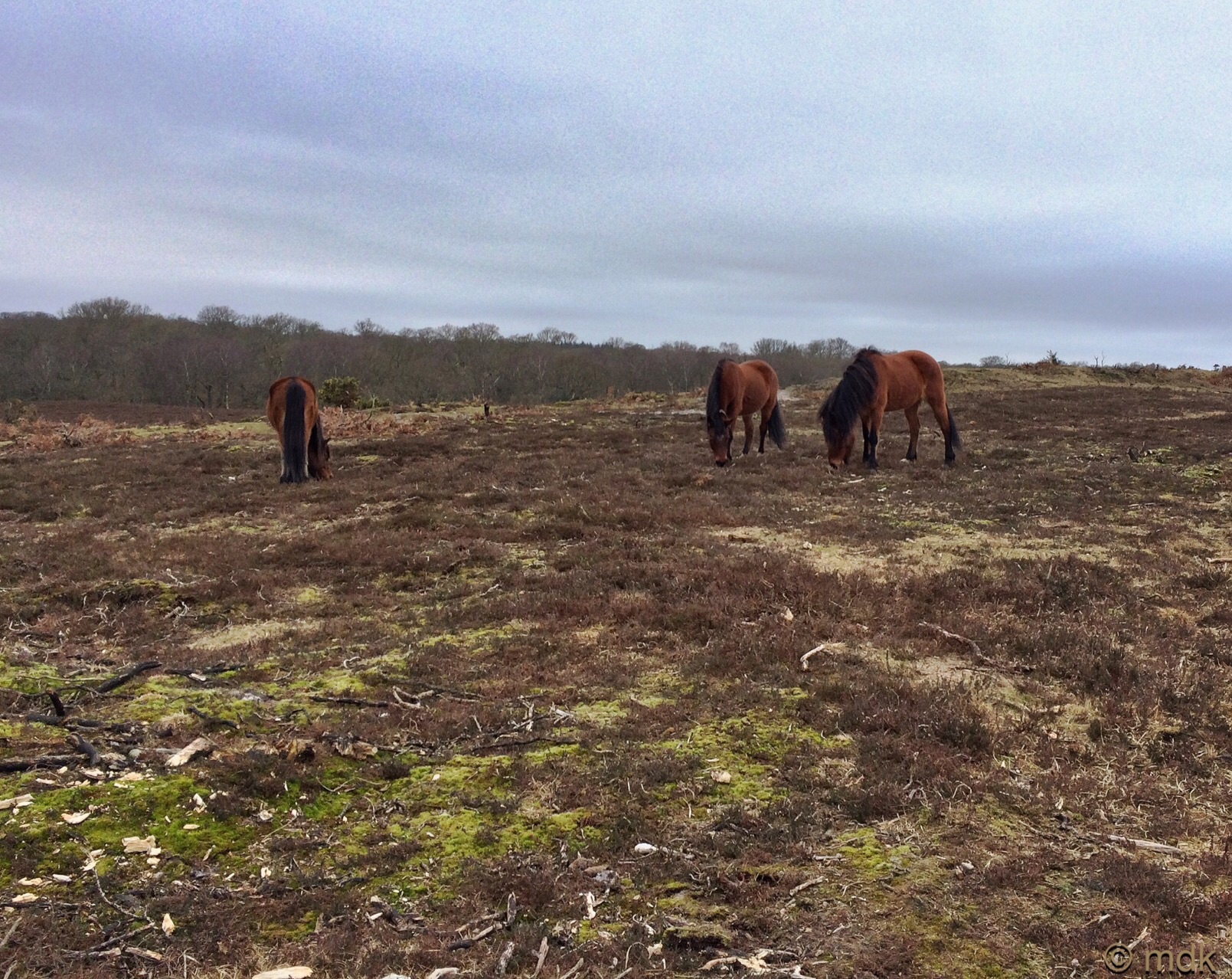
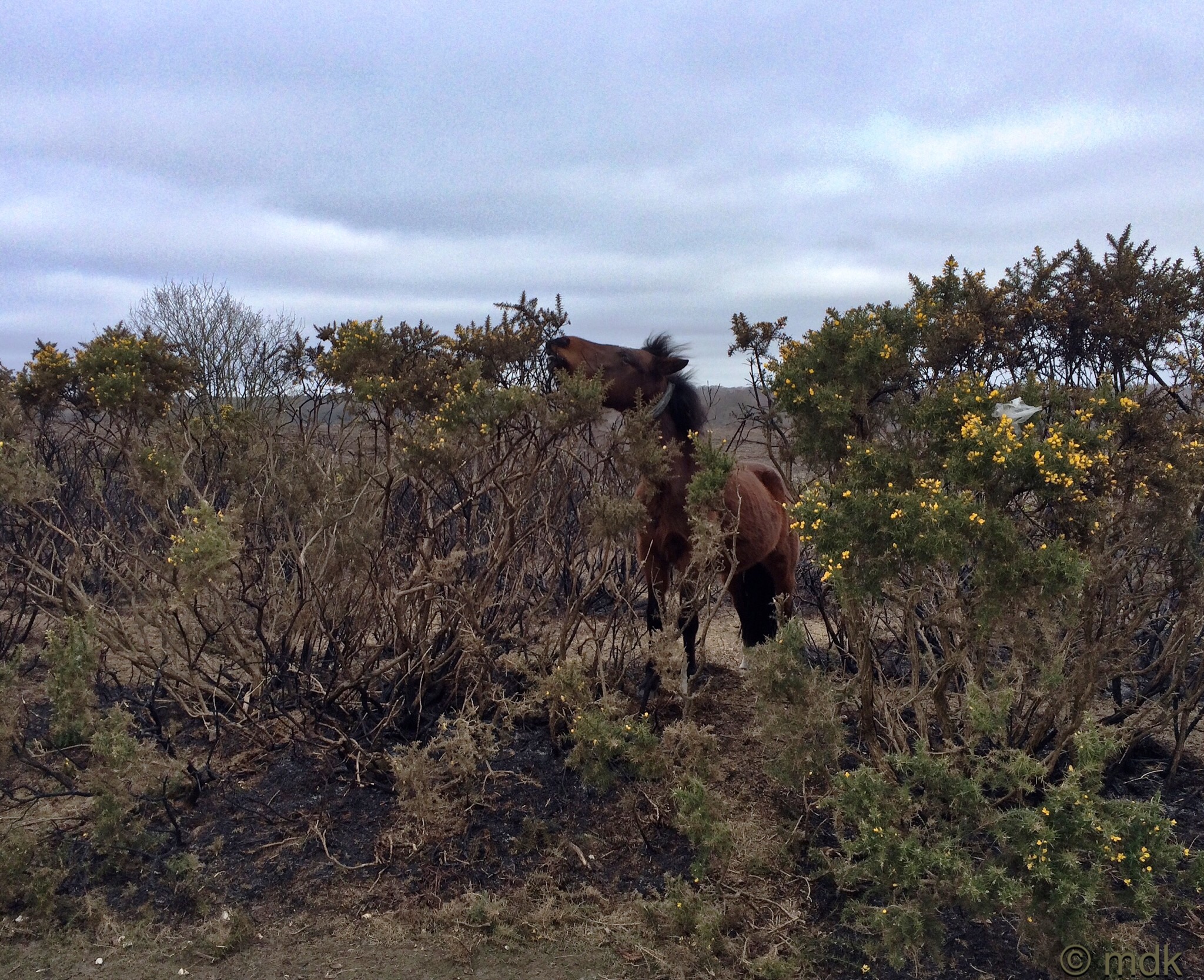
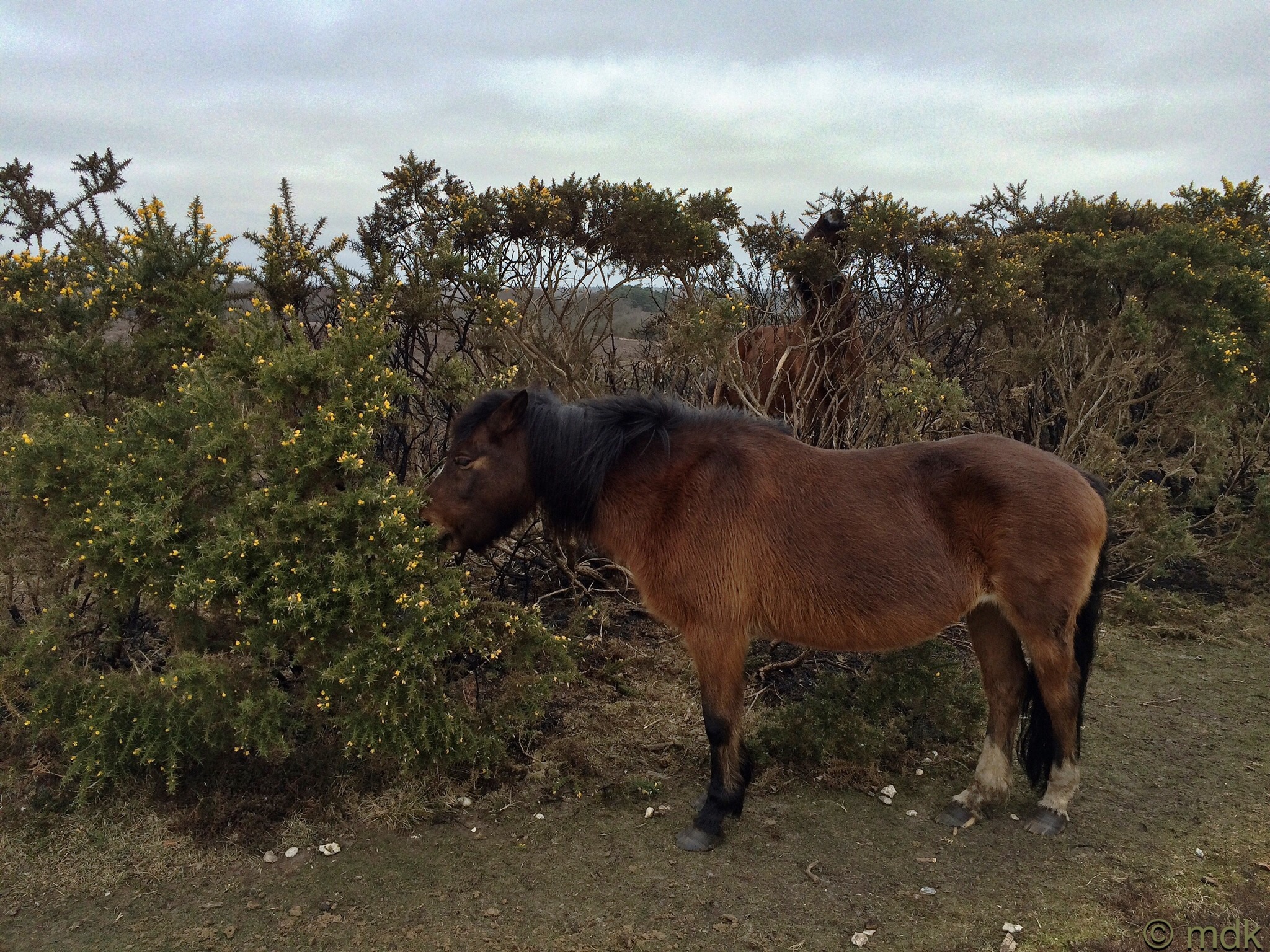
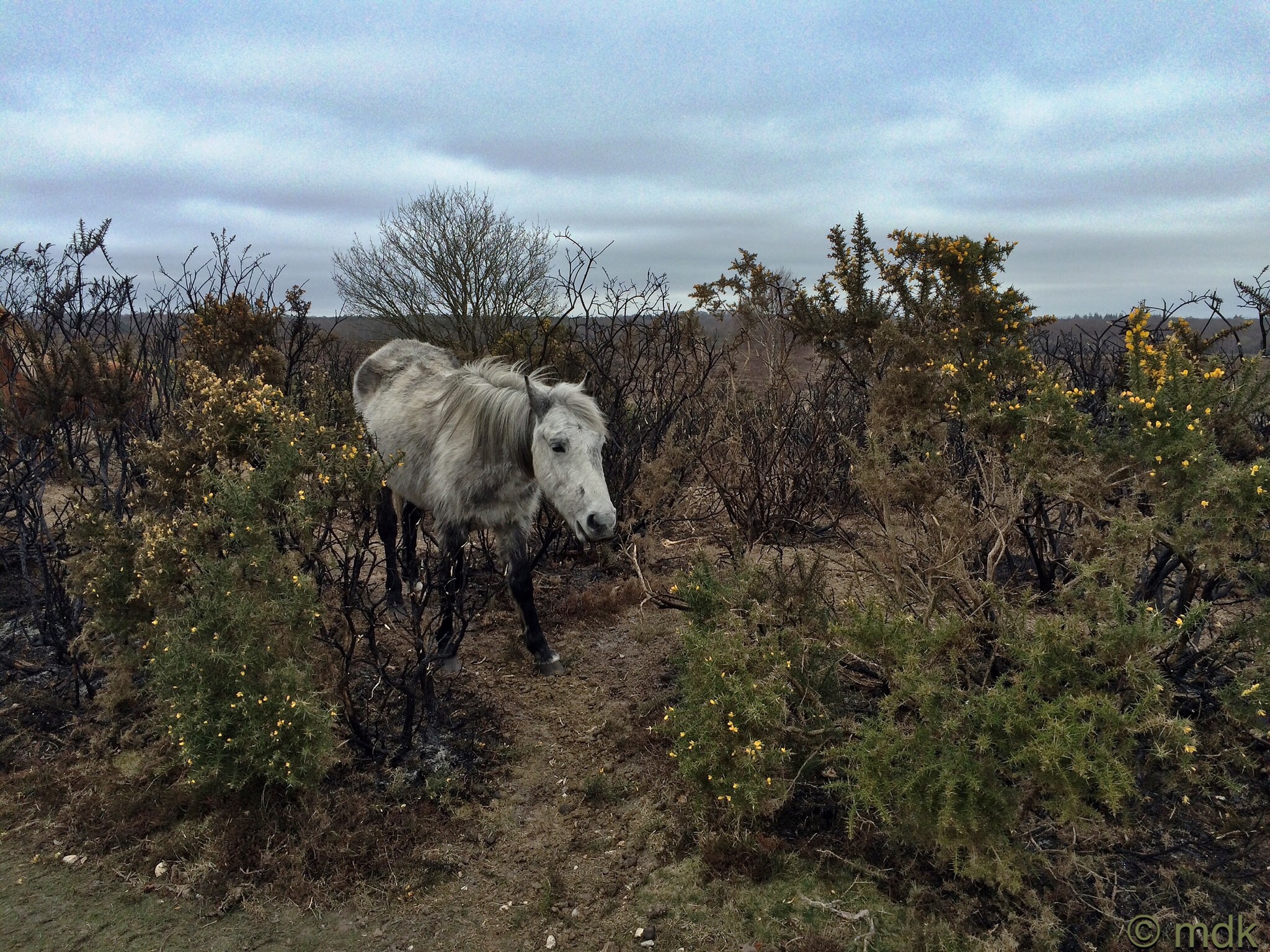
Even in the wood I couldn’t get away from the ponies. Every so often I’d see one or two between the trees watching me. Soon I was on the campsite trail leaving the wood behind me and then I was back on the Sandy trail across White Moor. There were ponies dotted about everywhere but, unlike the statue ponies I’d seen on my way out, these were munching on grass or heather. When I got back to the living gorse they were stretching up to eat the new shoots. Goodness knows how their poor mouths cope with the prickles and even new shoots must be tough going, I could hear them crunching away as I passed by. Again I marvelled at their different expressions, each seeming to show distinct personality. Some looked gentle, or shy, others stern and determined, one grey and white pony seemed to have a mischievous glint in her eye but maybe I’m letting my imagination run away.


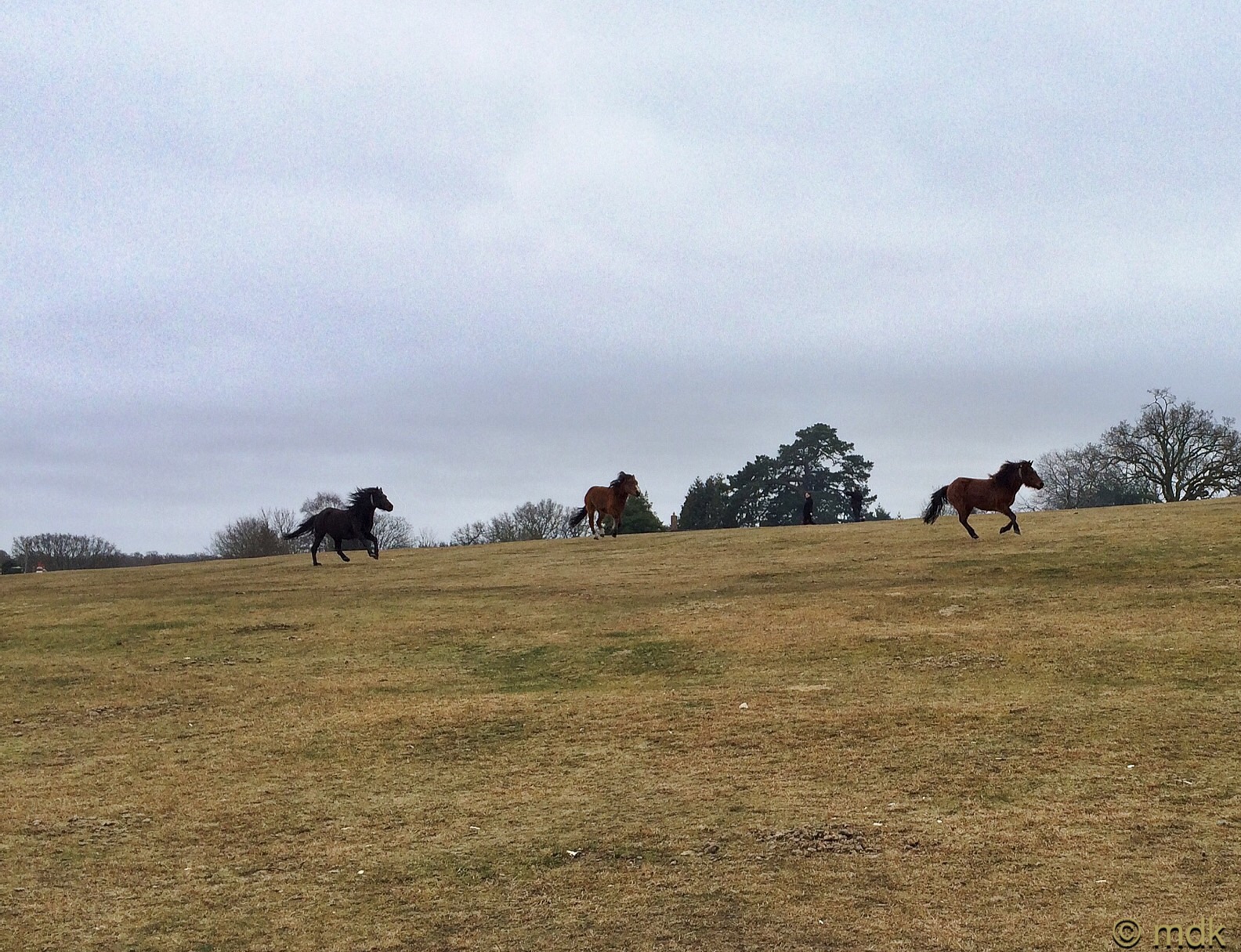
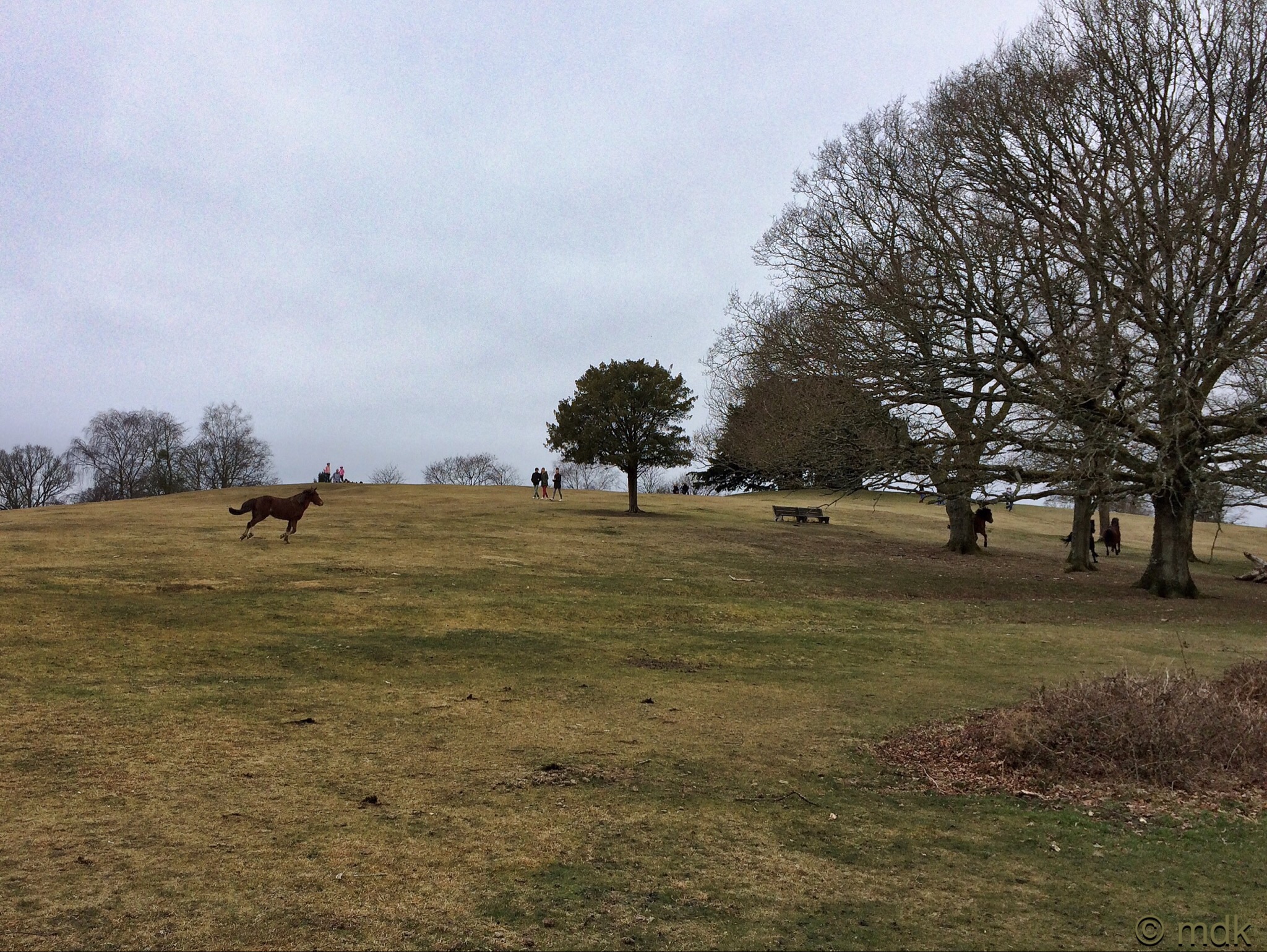
As I came over the last hill, just as I had stopped to take a photo of the little chapel, I heard a terrifc pounding of hooves and several ponies went thundering along in the distance. At first I thought something had spooked them, maybe a dog off the lead, and I was glad they weren’t running towards me. A little further on I stopped in my tracks as I heard the sound of galloping behind me. In my experience New Forest Ponies stand about, eat, ocasionaly walk slowly or run a few yards if they’re spooked but I’ve never seen them gallop for any distance before. These were going at full pelt. They crossed the trail behind me and raced up towards Bolton’s Bench while people stood around with their mouths open watching.


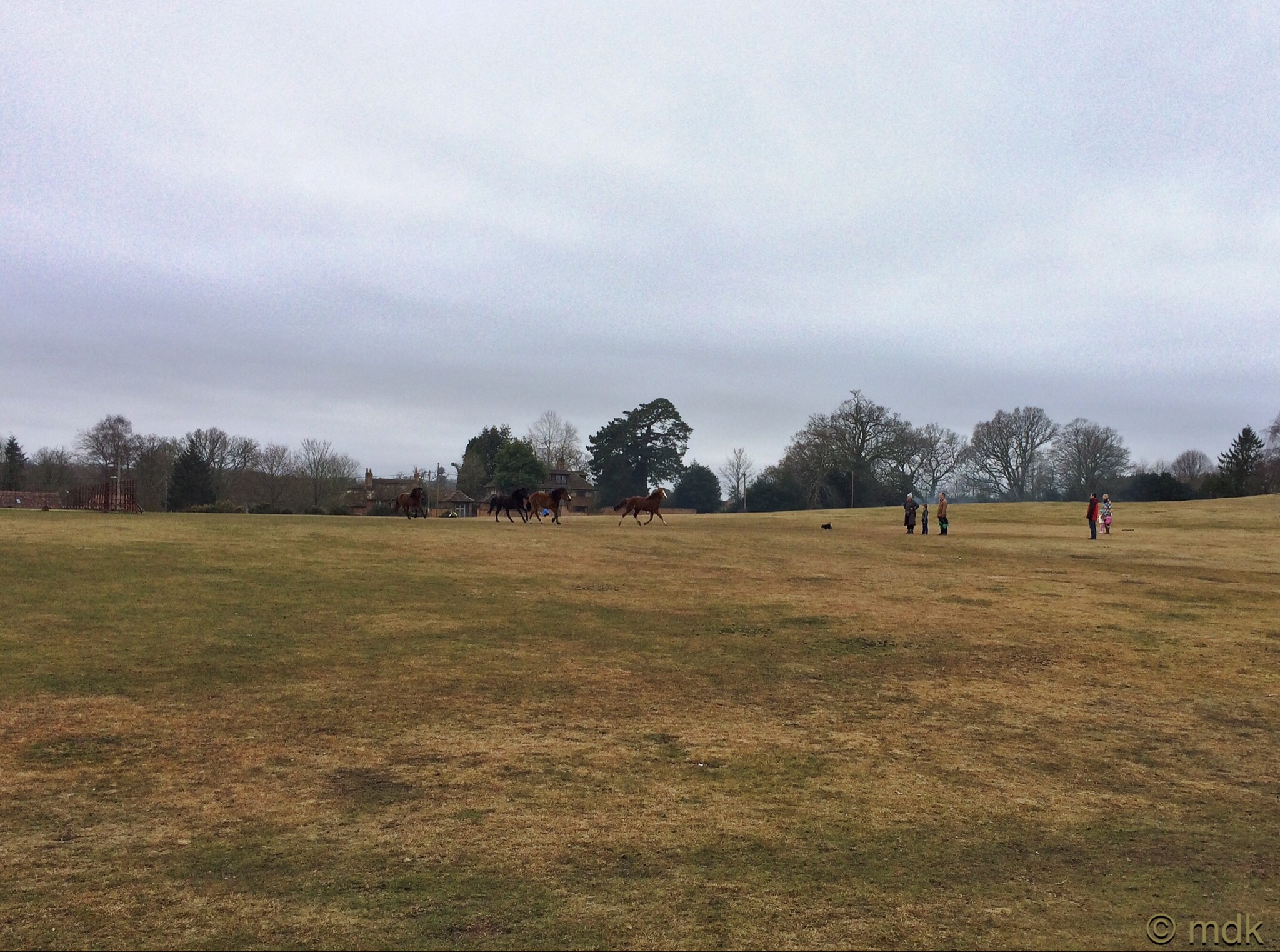
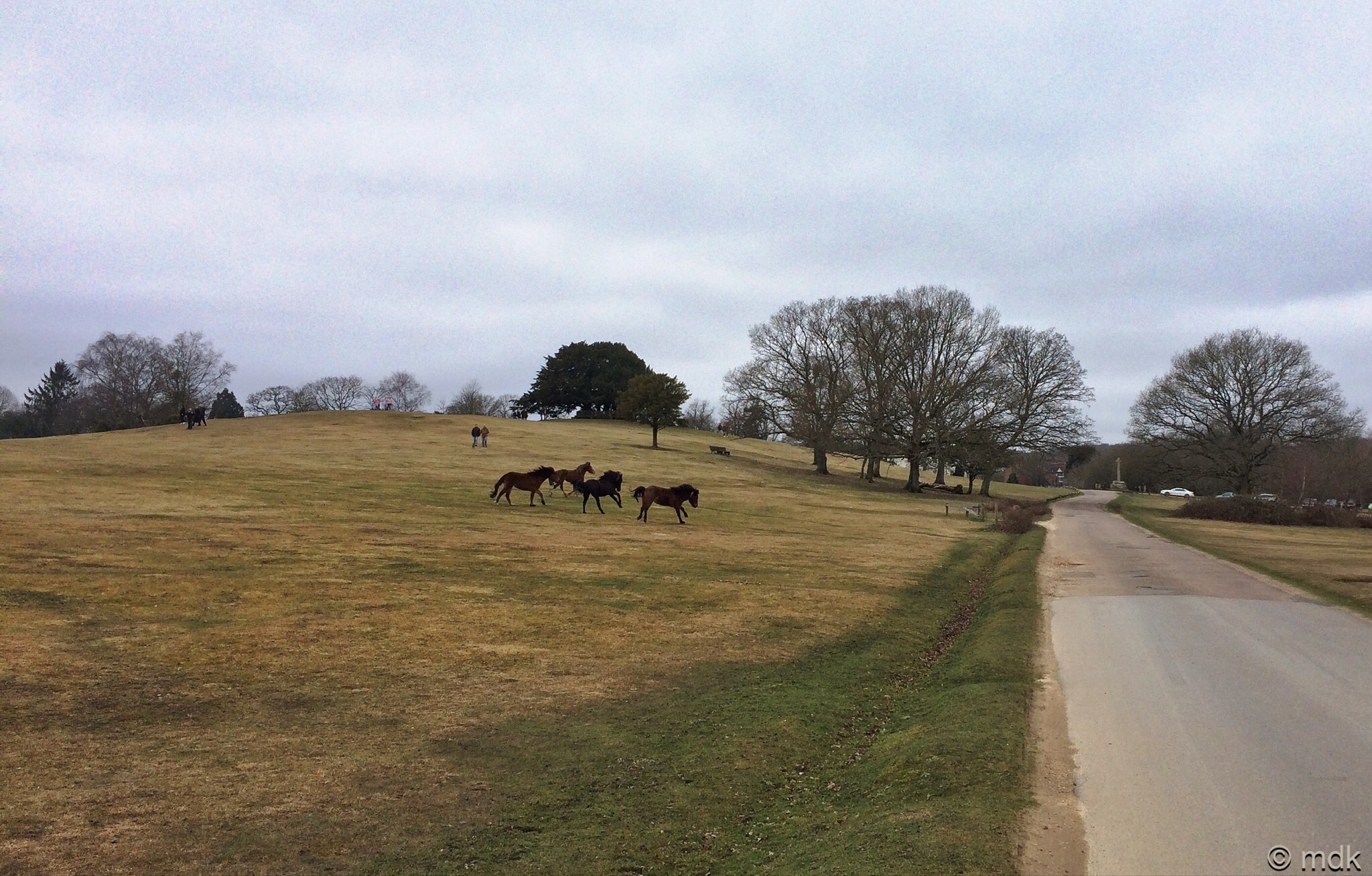
Circling the hill twice they came round for a third time and, for a horrible moment, seemed to be running right at me. I froze in terror but kept taking pictures even as I prepared to dive out of the way. Looking at the photos afterwards they were nowhere near as close as I thought but it felt like a close shave at the time. Quite what it was all about is a mystery. Maybe they were just full of the joys of spring, they certainly looked as if they were enjoying themselves. Eventually they calmed down and gathered at the top of the hill as if nothing had happened and I made my way towards the village in search of coffee.

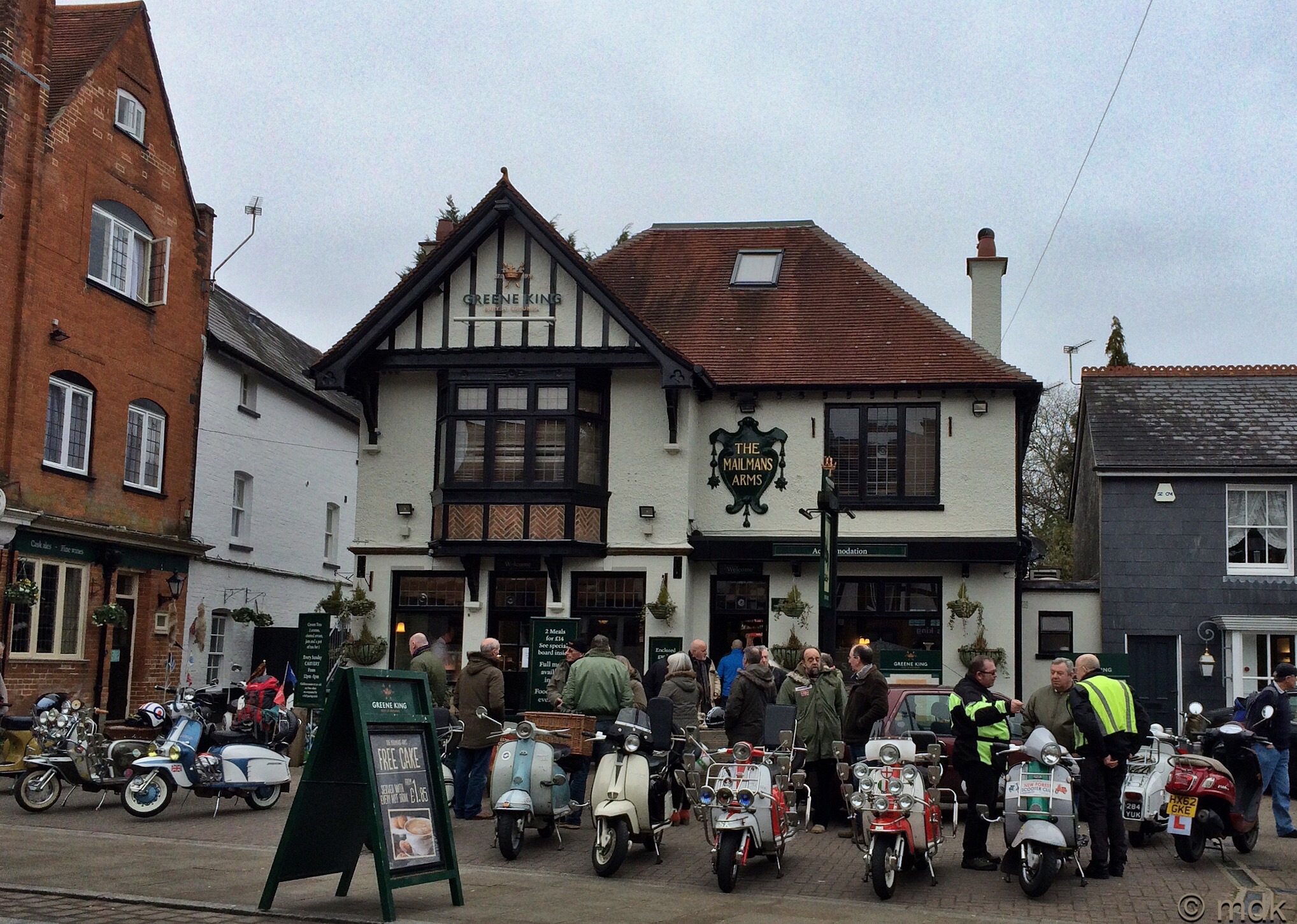
There seemed to be some kind of scooter convention going on outside the Mailmans Arms with lots of Middle aged men dressed as Mods and scooters brimming with mirrors and lights like something out of The Who’s Quadrophenia. Taking a photo I left them to it and, with a quick stop to look at some beautiful sheep in a shop window, headed straight for Costa and a skinny latte. After a couple of hours of walking I think I’d earned it.

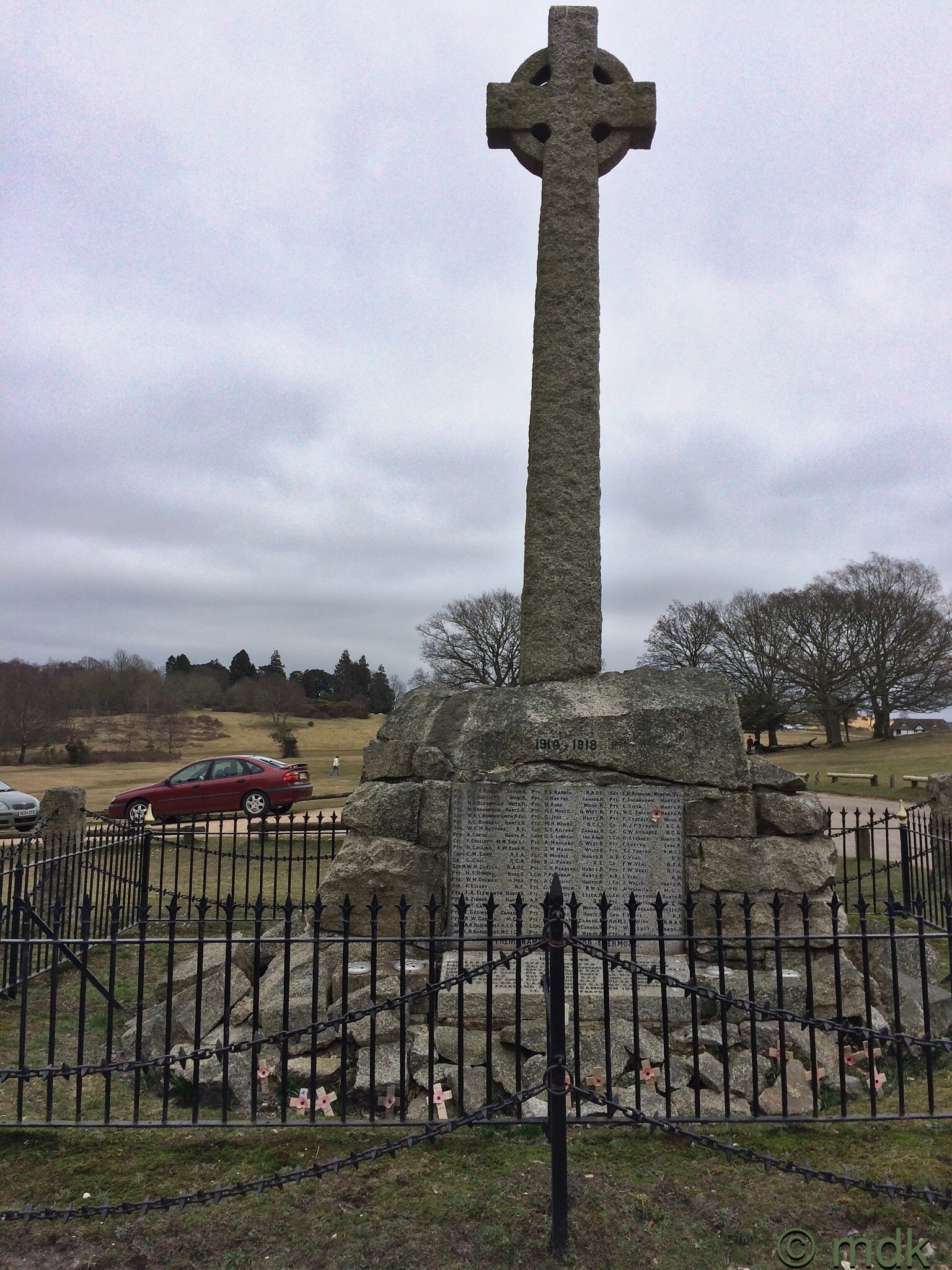
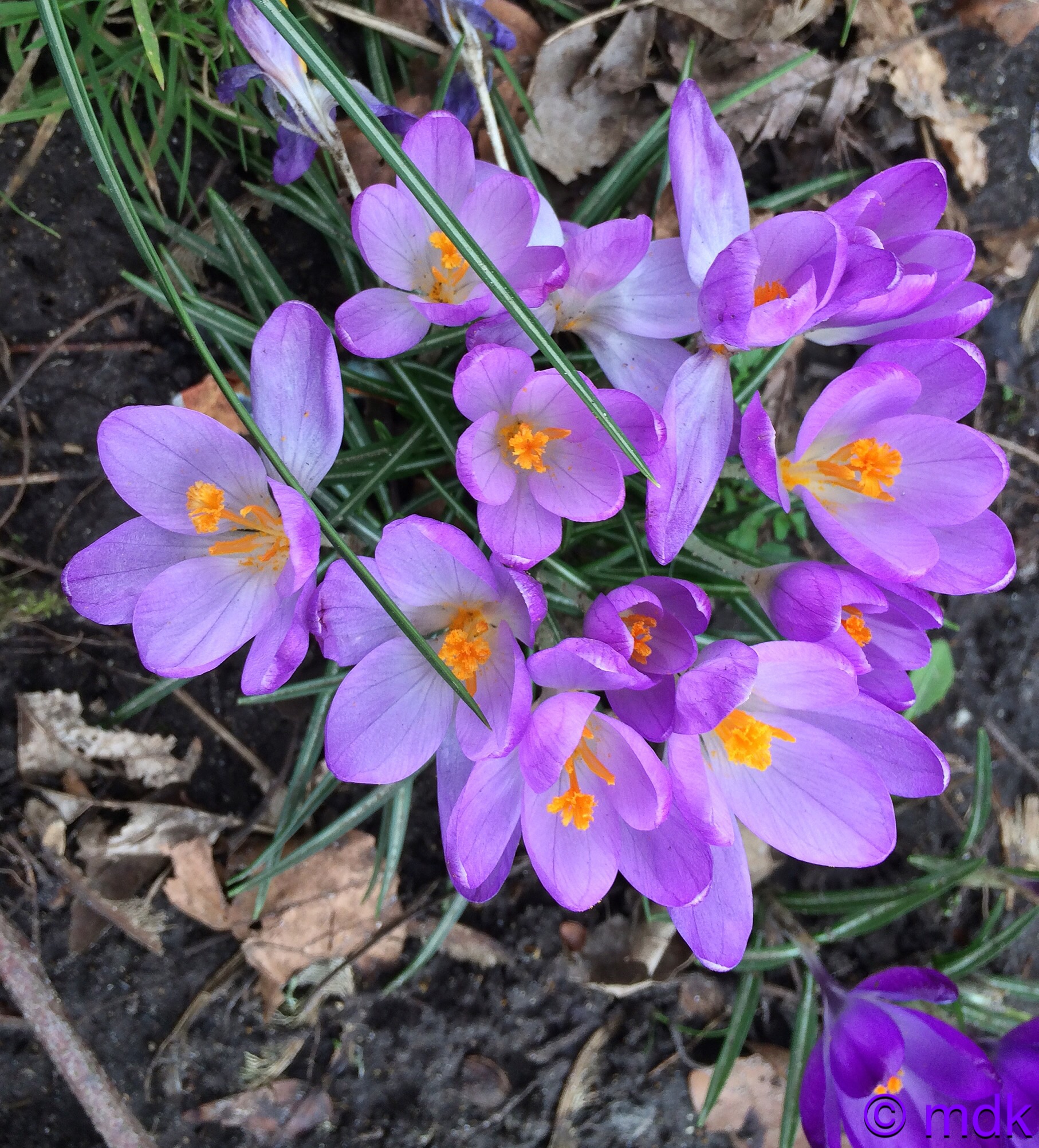
On the bench by the cattle grid outside the Lyndhurst Park Hotel, I sat and enjoyed my coffee keeping one eye out for Commando and admiring the spring crocuses with the other. Not long after I’d finished my coffee and headed back towards the car park to find a bin for the empty cup Commando came running across the grass looking very fresh for a man who’s just run fifteen miles. I’m not sure how he does it but he is well on track for the London Marathon in April and I’m unbelievably proud of him. It may not have been the blue sky, purple heather walk I’d envisioned but Commando says he had a good run and I certainly had an eventful walk.


Oh I love the New Forest, a fantastic place to walk. Those ponies do look so sad though don’t they? But I love your photo of them running wild, beautiful. Gorgeous crocuses too. Marie, I’ve tagged you for the B&W 5 Day Photo Challenge! Here’s the link: http://sherrimatthewsblog.com/2015/03/11/secrets-at-sea-day-2-black-and-white-photo-challenge/ No obligation, but thought you might like to take part with your fab photos 🙂
It was a treat to see the ponies enjoying themselves running across the moors and hills but I’m glad they turned at the last minute and I didn’t have to dive out of the way. I will do my best on the B&W 5 day challenge. Black and white ohotos is not really something I’ve done but it will be interesting to have a go.
They seem to know when to move out of the way at just the right moment, even if they leave it to the last minute! No pressure with the B&W, I hadn’t done it before either, but once I figured out how to use the Picase editing programme that came with my this new laptop, I began to have fun with it. I look forward to seeing what you come up with 🙂
I’ve been having a play with the B&W. I’ll probably do one post with pictures from the previous 5 days. As I’ve been on holiday this week I have a lot of material to work with 🙂
Great…perfect timing 😀 Hope you enjoyed your time off!
I am indeed 🙂
I’m glad you didn’t get trampled by the ponies!
Me too. I’ve never seen them galloping like that before. I don’t know what got into them.
It seems very strange to me that they would just leave those ponies to fend for themselves. I would think that there would eventually be more of them than the land could support. I wonder what they would do then. Cull the herd?
The New Forest Ponies have been wild in the forest for literally thousands of years. I don’t think they cull them, it’s a harsh environment so there is almost certainly a high mortality rate and cars add to this because they’re not fenced in. It’s also a huge area almost 600 square kilometres.
The ponies are beautiful. You don’t see that around here unless you go by a stable. And the crocuses! It will be a while before we see those around here!
These are wild ponies and they’re everywhere, you can hardly turn around without seeing a pony at times. Unless you actually want to see one and then they all hide. It’s great to see the flowers coming out.
A veritable feast of ponies.
There were a few more than I felt comfortable with