
On 11 January, I stood on the corner of Lyon Street and Onslow Road in the fog and thought about the best route home. The quickest way was to walk to the end of the road and turn left onto Derby Road and then right onto Mount Pleasant. I was so close to the Royal South Hants Hospital, though, it seemed silly not to see it while I was there. After all, it had played a pivotal role in Land Fit For Heroes, and I could almost imagine Percy running along the road in the dark. Of course, the hospital he would have seen no longer exists — at least, most of it doesn’t.
The front of the old hospital used to be on Fanshawe Street, one street up from Lyon Street. These days Fanshawe Street is a short stretch of empty road leading nowhere, but I thought I ought to walk the few yards if only to see the street sign. This corner, where Fanshawe Street meets Onslow Road, was where Percy was heading when he had a chance encounter that changed his life. It felt as if I should document it even if there was nothing left to see.


The scene outside the hospital was an important one. I spent countless hours looking at old maps of the area, comparing them with Google Maps and Street View and walking the route in my head. Walking it for real was pointless because the modern hospital is nothing like it was in 1926. Even the road layout has changed beyond recognition. Without the old maps, and the photographs and postcards I found, I might never have been able to visualise the hospital as it was back then. I’d certainly never have been able to imagine where Percy ran or how he managed to clatter into a nurse leaving at the end of her shift.
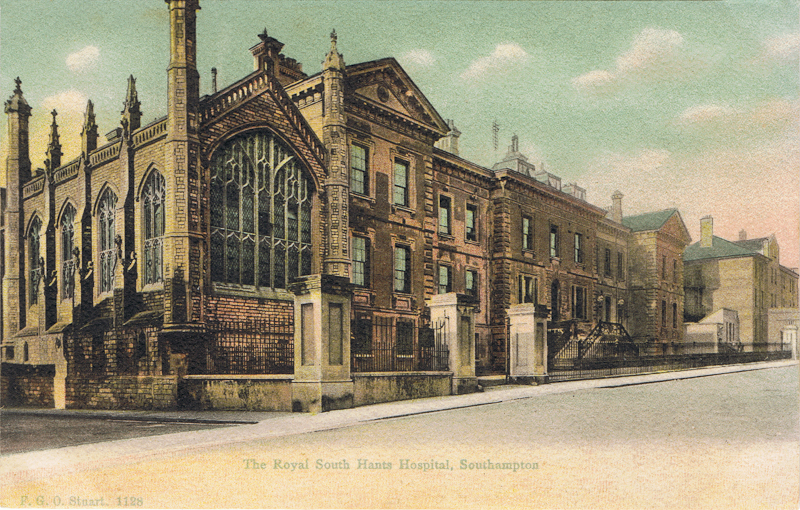
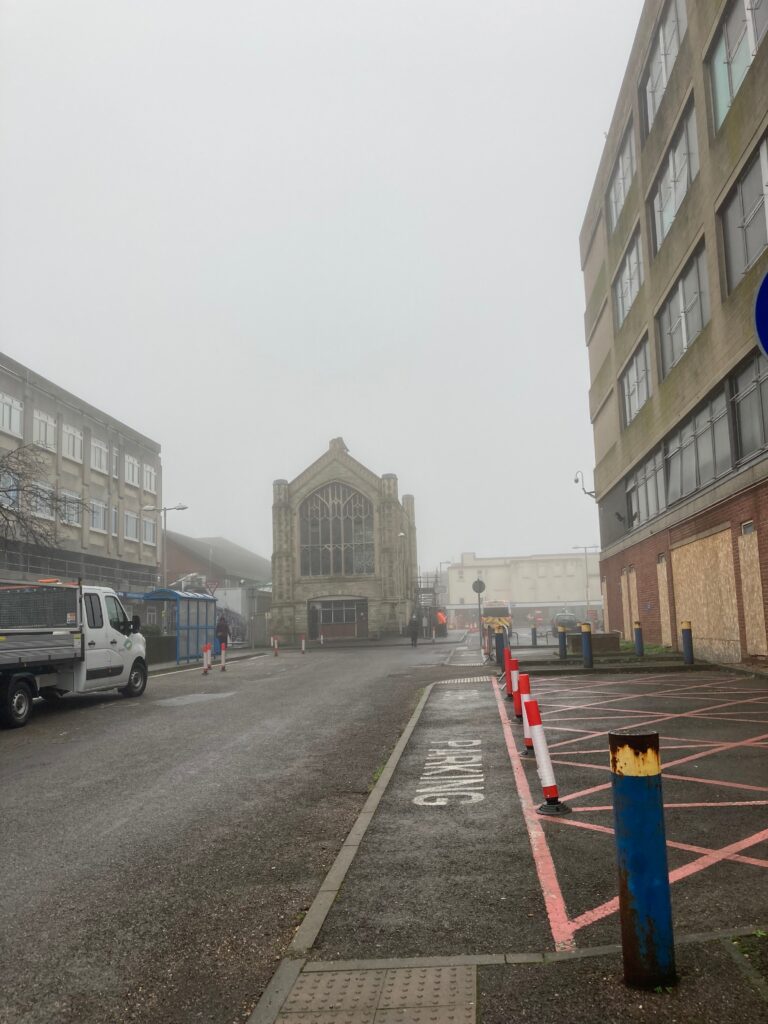
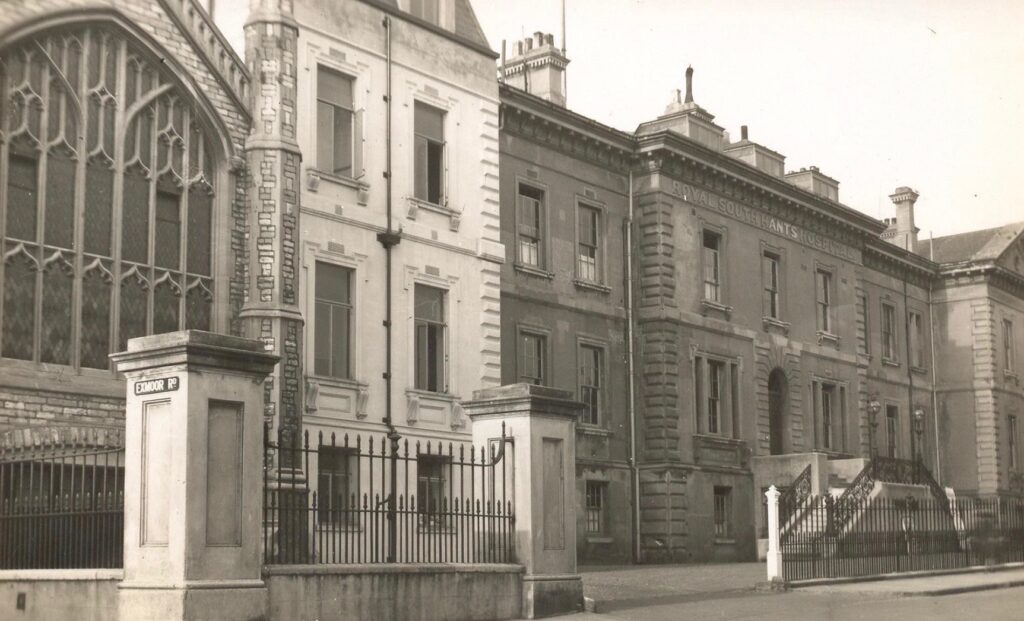
Only one tiny fragment of the old building remains today. Once I’d finished taking photographs of the street sign, I returned to Lyon Street to look for it. The hospital chapel stood at the eastern end of the Royal South Hants, at the junction of Fanshawe Street and Exmoor Road. That junction no longer exists, and the chapel is now stranded in the middle of the modern hospital complex. Despite missing some of its spires, it is a beautiful reminder of those bygone days. I’m glad it has been saved.
The original hospital, designed to accommodate 40 in-patients, was built in 1844. The site was chosen because, at the time, it was a tranquil rural setting with good ventilation and drainage. The architect was Thomas Sandon Hack, and the main benefactors were two doctors, Joseph and William Bullar, their brother John Bullar and the Reverend Charles Fanshawe. Presumably, this is why the nearby streets were named Bullar Street and Fanshawe Street. The chapel was a later addition, designed by local church architects Hinve and Bedborough and built between 1857 and 1858.
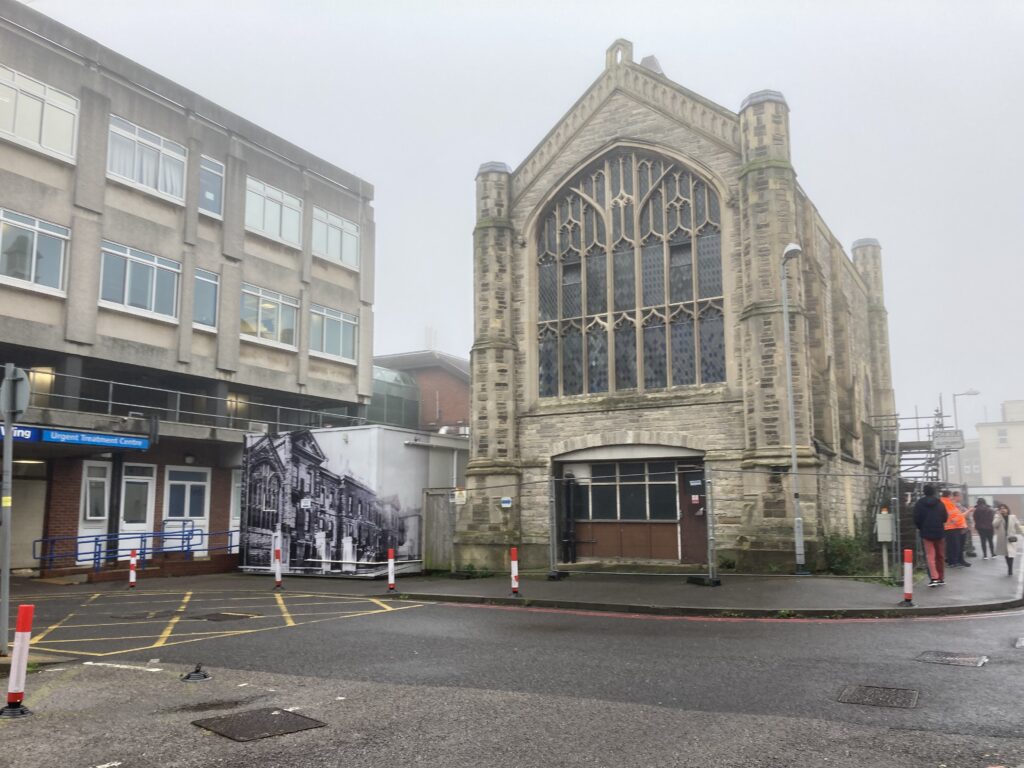
As I stood in front of the chapel, I remembered visiting my mother in the modern building beside it. It must have been in 1989, when I was expecting CJ and Mum was having radiotherapy. Her bed would have been near the second window from the end on the first floor, but I wasn’t allowed to go there. Instead, she was brought down to the foyer in a wheelchair to see me. I admit I stood for a while looking up at that window, thinking of her. Some sort of temporary looking building has been erected where the door to the ward used to be. I’m not sure exactly what it is for, but I like the mural of the old hospital building painted on it.

Perhaps the temporary building is a modern-day effort to create more space. The old hospital began expanding within a couple of decades of opening. The Crabbe family from the Glen Eyre estate in Bassett donated money to build and fund a new east wing in 1867. The ward my mum was on back in 1989 was named after the family, and I assume the Upper and Lower Crabbe wards are still there today.
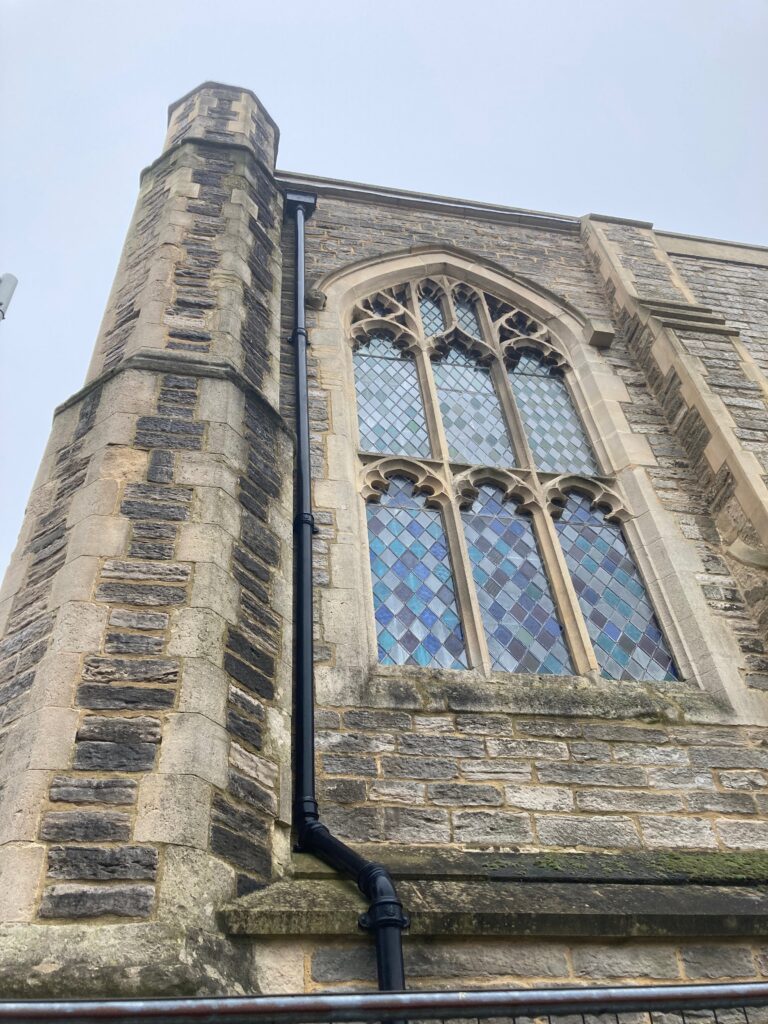
The door at the front of the chapel is not original. Patients entered directly from the hospital — through a door on the first floor. This door can still be seen on the west side of the building. The chapel sat above an undercroft, which is, I suppose, where the modern doors lead. Sadly, I’ve never had the chance to go inside, and I’m not sure if it is ever open to the public any more. If this is the case, it seems a shame.

So, I stood for a little while, staring into the fog and thinking about Percy running around the corner in the dark while the nurse came down the hospital steps. I looked back along what would have been Fanshawe Street and smiled to myself. The scene seemed very real inside my head. I hoped it would feel the same to the people who read my story.
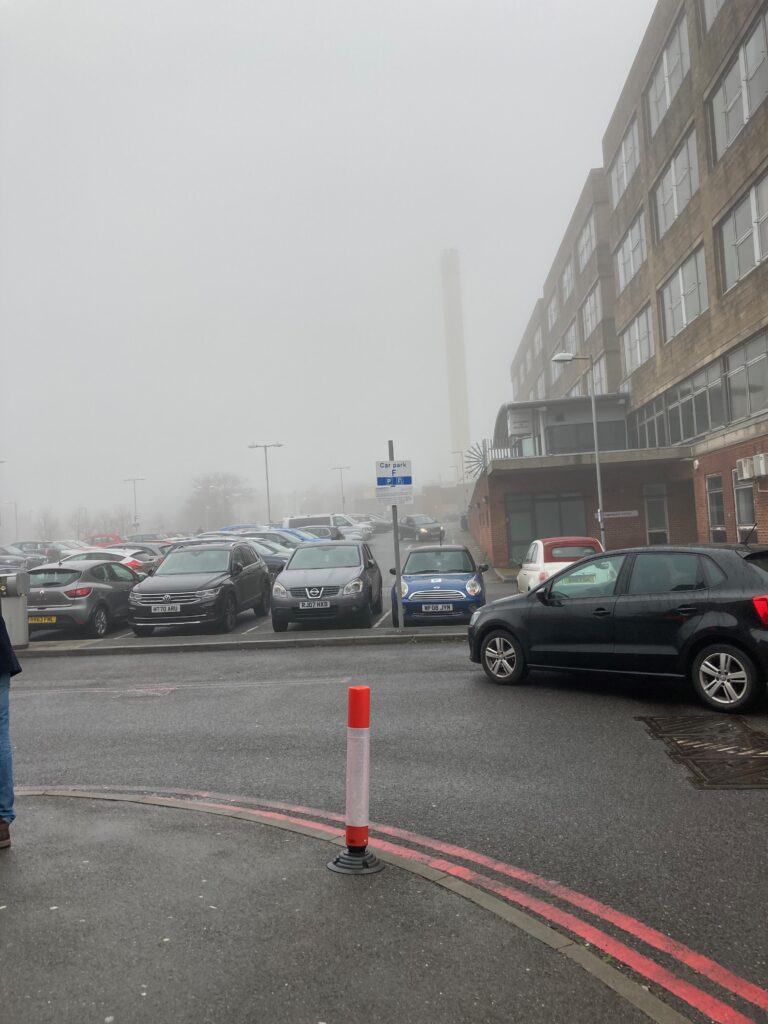
Now I’d seen the remains of the hospital, I could have simply turned around and walked along Lyon Street towards home. The image of Percy running through the dark night was so clear in my mind, though I decided to head up to St Mary’s Road to look at the place he started his journey.

In the story, Percy had been following someone along St Mary’s Road and had ducked down a side road to avoid being seen. That side street was Graham Road. I knew the area well because I worked right opposite for three years. I knew that the houses, at least on one side of the road, were much as they would have been in 1926, and I could imagine the route he would have taken to come out onto Osbourne Road — although the part of Exmoor Road he’d have run along has now been swallowed up by hospital buildings. There was no real reason to stand at the top of Graham Road, and if anyone had seen me there, smiling to myself, they might have thought I’d lost my mind. Even so, I stood for a while and imagined Percy running into the darkness.

When I finally turned to head down St Mary’s Road and retrace the footsteps of my old walks home from work, I got distracted again. This time it was by the modern Charlotte Place building. Once upon a time, there were three roads here leading between St Marys Road and East Park — Bellevue Street, Northam Street and Compton Walk. My father-in-law, Albert Keates, was born in Northam Street, the middle of these three streets. It was the setting for my third book, Seventh Daughter, and I couldn’t resist walking that way, even though it took me further from home rather than closer to it.
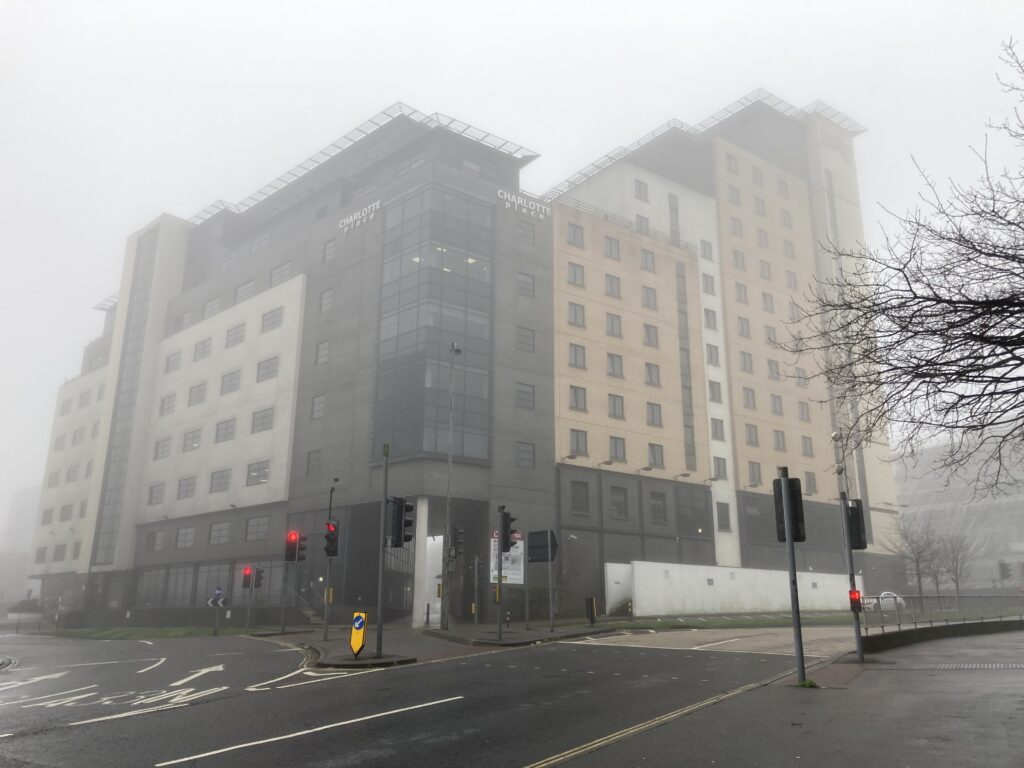
The three streets were demolished in the 1960s, so there was nothing to see, but as I crossed the road and headed for the park, I’m sure I felt the ghosts of the past calling to me. Then again, it was probably just my imagination. Either way, I’m glad I did go that way because the misty parks were so lovely they were worth the extra walk.
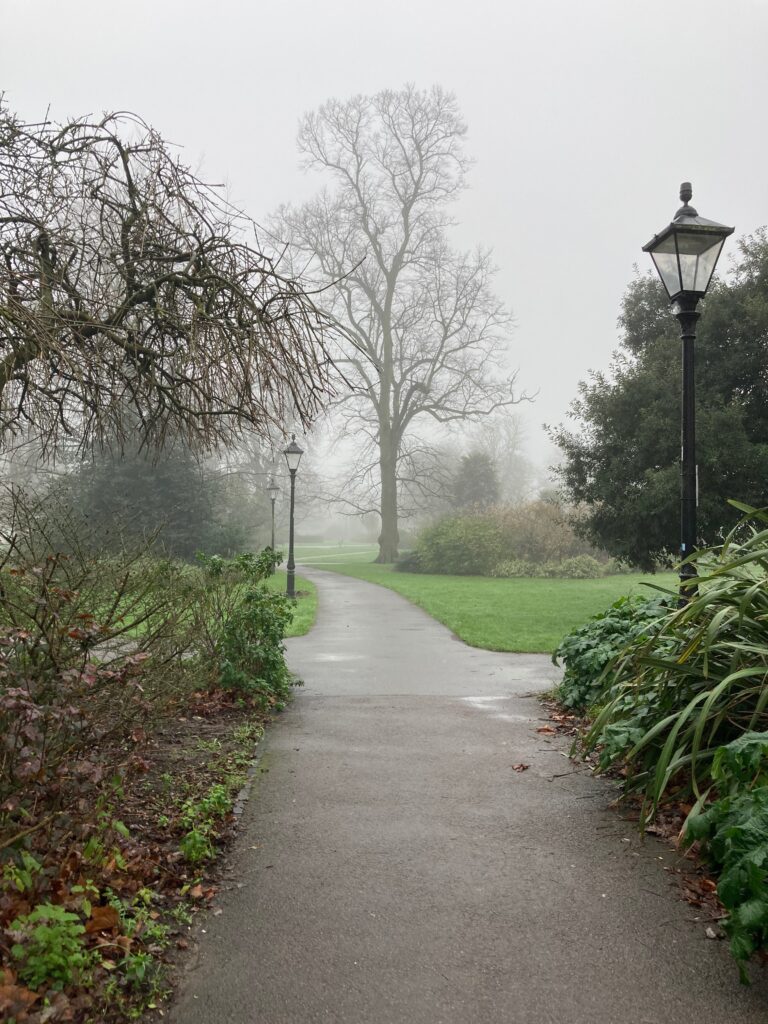
There is something breathtakingly beautiful about the bare branches of trees appearing through the fog. The water-filled air softens everything and shrouds it in mystery. I walked along the paths grinning like a loon when each tree and lamppost appeared as if by magic. After a while, I noticed men in orange jackets dotted about the place. Soon I realised they were park-keepers working away to tidy up the edges of the grass. I stopped to chat with one and thank him for his hard work. He seemed surprised that anyone would notice, but without these men toiling away, day in, day out all year round, our parks would not be as nice.
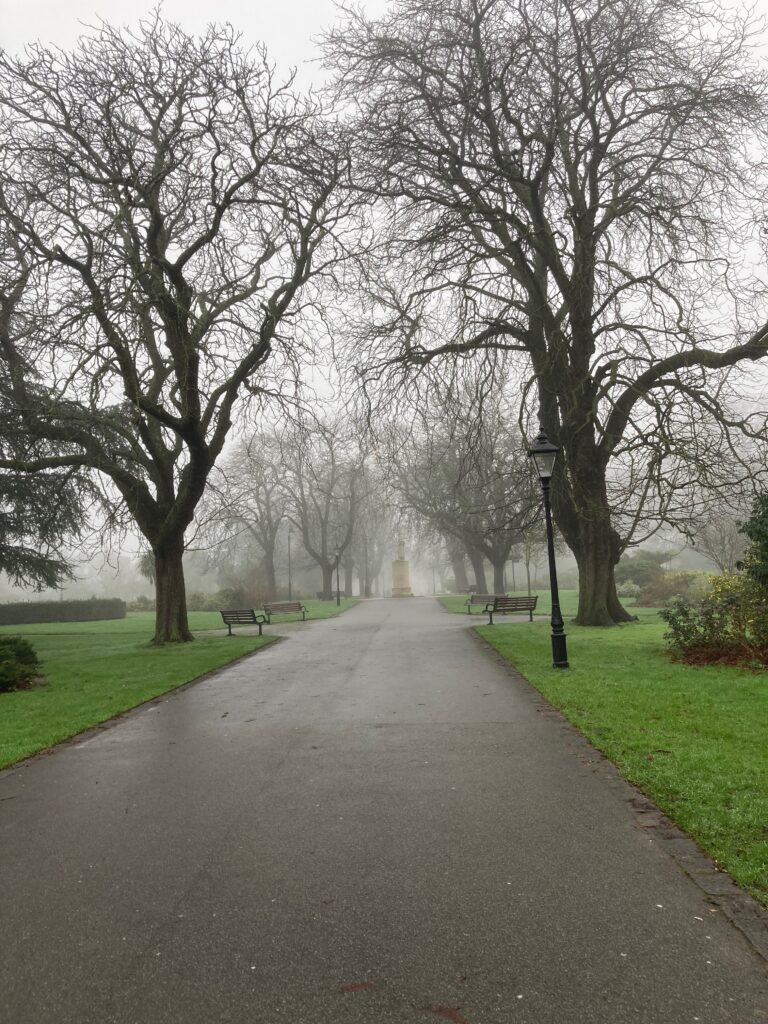
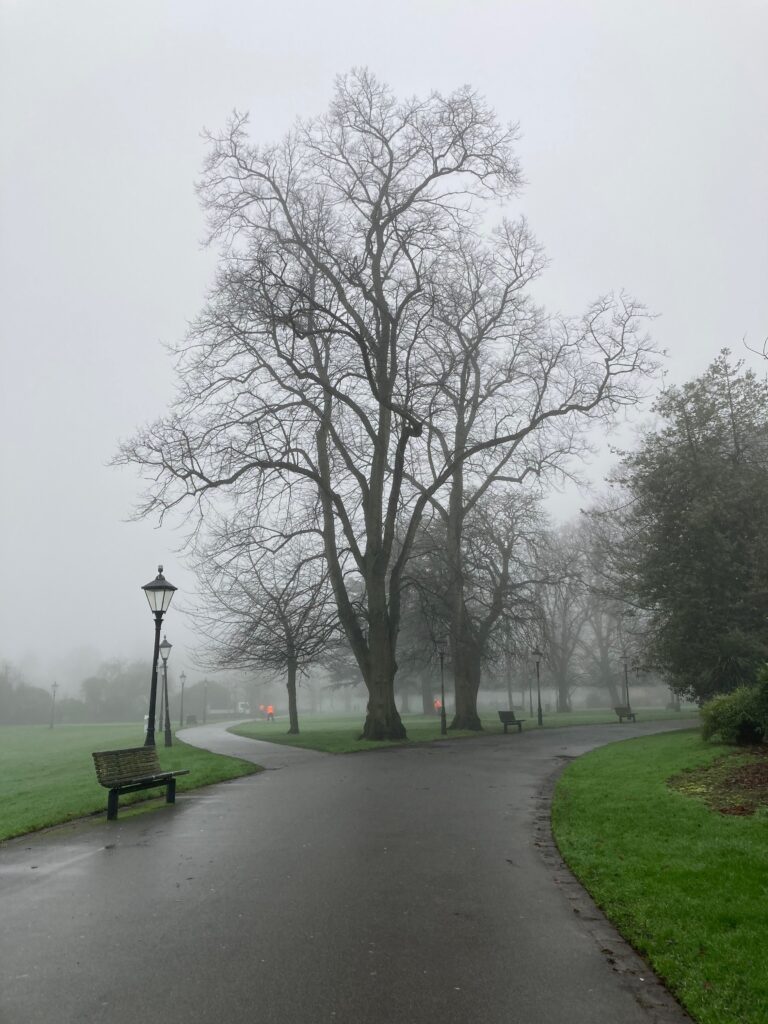


Of course, I took far too many photographs and lingered far longer than I should have. If the benches hadn’t been quite so wet, I might have sat for a while. All too soon, I reached the road. Now it really was time to head for home.

If you like what I write, and you’re interested in my novels are available now on Amazon in paperback, on Kindle and via Kindle Unlimited. Check out my Amazon page here and my Goodreads page here. If you would like to help me keep writing, you can now buy me a virtual coffee by clicking on the little orange coffee cup at the bottom right.
I spent rather more time at the RSH at the end of last year than I wanted to. Dad was a patient there twice in September and October. Its purpose has changed a lot even in the 40 years since I started working for the NHS. It feels like a hospital that no one quite knows what to do with.
I think you’re right. It is rather sprawling and confusing for patients. My last visit was to return my crutches after I broke my foot. I think I hobbled around for ages before I found the right place.
A very good read.I remember the old Charlotte place.I went there with my Father to buy bait for sea fishing.That would have been in the mid 60’s and the area was very run down then.
thank you. They were very humble houses, but a great community spirit.
Thankyou for the memories and photos of the RSH. I have treasured memories handed down to me from my mother, of her experience around the time that my father died on Garton Ward RSH in 1958. To my own memories working on that ward myself between 1995 to when Garton Ward moved to the General Hospital in 1996.
Thank you. I’m glad I brought back some good memories. My father-in-law had his ear sewn back on at the RSH when he was a boy in the 1930s, and my mum spent quite a while there having radiotherapy.
Enjoy your coffee in me, and thankyou for revisiting the history of RSH
Thank you very much. It really is appreciated. Have a lovely day.