
18 November 2014
One of my favourite childhood books was Alice in Wonderland. My copy was a thing of beauty that once belonged to Pappy and had colourful illustrations by artist Gwynedd M Hudson. I read it countless times and it captured my imagination. Alice Liddell, the inspiration for the story, lived most of her life in Lyndhurst in the New Forest and is buried in the churchyard there. As the Tuesday weather forecast hardly mentioned rain at all I thought I’d pay it a visit.
This little adventure involved an early start, two buses and a fair bit of walking. Luckily, as Lyndhurst is the ‘capital of the New Forest,’ the place where the Court of Verderers sit and home to the New Forest District Council it has a regular bus service. Ok so once an hour isn’t great but, for the forest, it’s positively heaving with buses.
Sadly, it wasn’t long before my carefully laid plans began to fall apart. The second bus was late. There was a bus with no number parked in the lay by up the road but it didn’t seem to be going anywhere. Five minutes after my bus was due the unmarked bus suddenly decided it was a number six and moved towards my bus stop. A crowd of people stood up and surged forward, me amongst them. The bus pulled in, opened its doors, shut them again and drove off. The people in the queue let out an exasperated moan. The next bus wasn’t due for an hour.
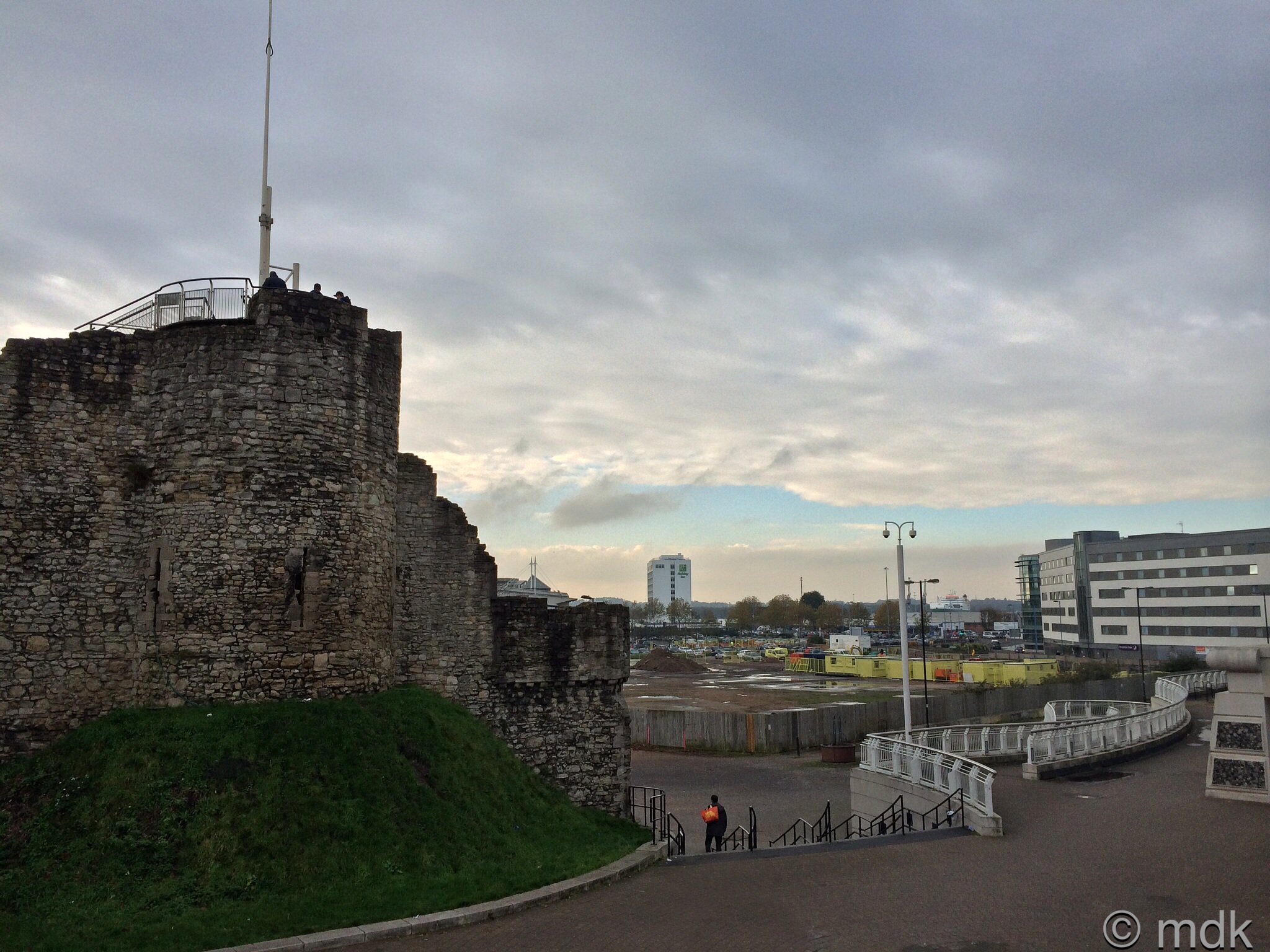
For a moment I thought about abandoning the whole thing, wandering around the parks, getting a coffee and going home. I’m made of sterner stuff though and sunny days are at a premium. For about three quarters of an hour I wandered around WestQuay looking at things I can’t afford. M&S had a rather nice waterproof coat that might come in handy. Maybe when I get paid. Eventually, with a new pair of gloves and a Costa coffee I returned to the bus stop.
The next bus was ten minutes late but I wasn’t letting it get away. I stood on the kerb waving my arms like a maniac not caring if I was pushing my way to the front of the queue. To be fair, once the doors opened I did let the other people get on first. After that I settled back and watched the New Forest go by for the next forty minutes whilst listening to two elderly ladies grumble how things were so much better in the old days.
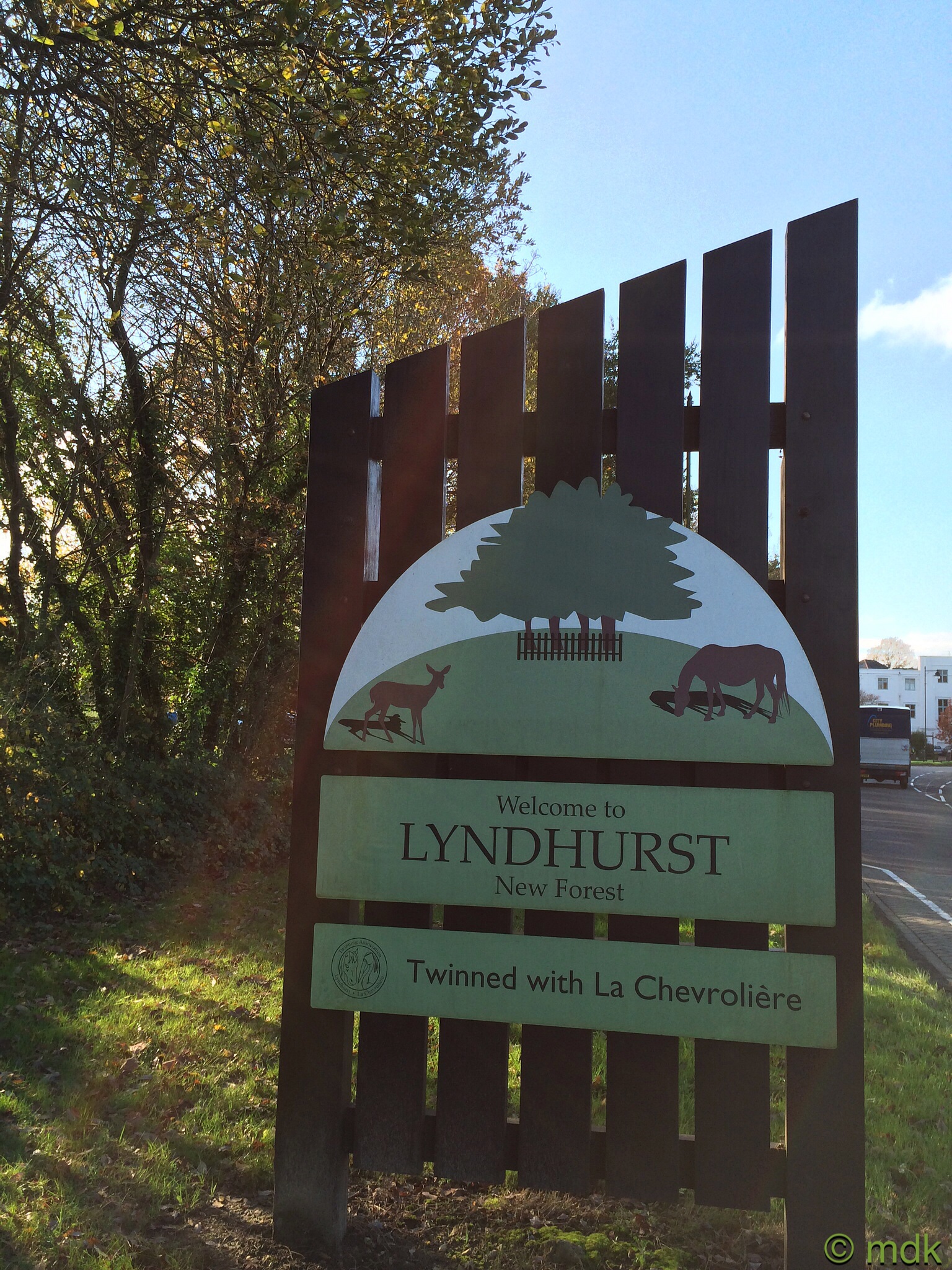
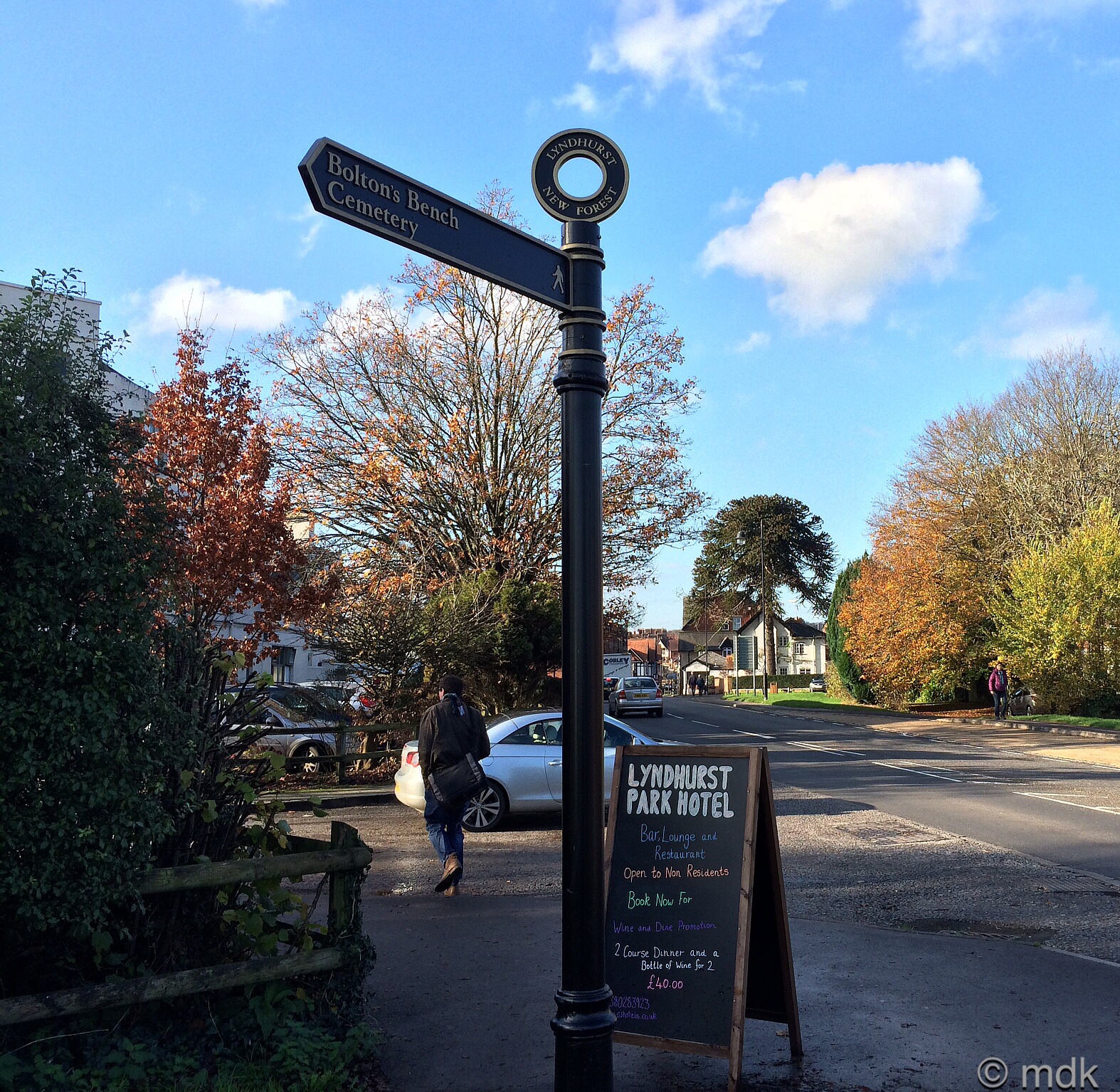
It was a relief to get off the bus and stretch my legs by the rather attractive Lyndhurst sign with grazing ponies as a backdrop. Rather than walking towards the ponies and the moors as I have in the past I set off past the Lyndhurst Park Hotel and yet another sign and towards the village. The name, in case you were wondering, is Old English for Wooded hill growing with lime-trees.
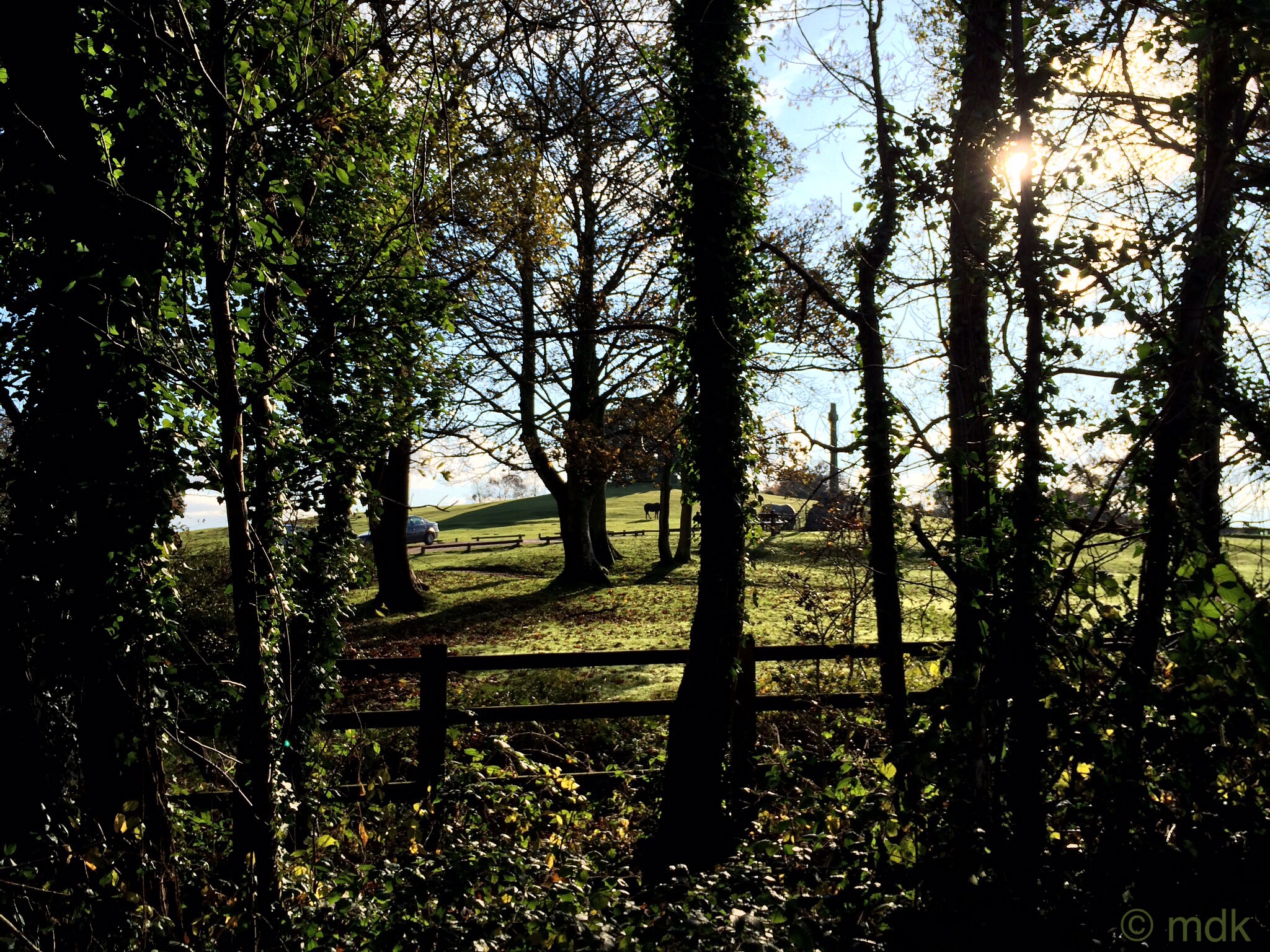
There has been a village here since at least 980. It grew up at the place where tracks from villages such as Cadnam, Minstead, Totton, Ashurst, Beaulieu, Lymington, Brockenhurst, Bransgore and Ringwood crossed. This central location made it one of the most important villages in the New Forest. The narrow High Street, crowded with quaint little shops, curves through the centre. Most of these buildings date from the eighteenth century although some, recognisable for being bigger and taller, were built in the late nineteenth century.
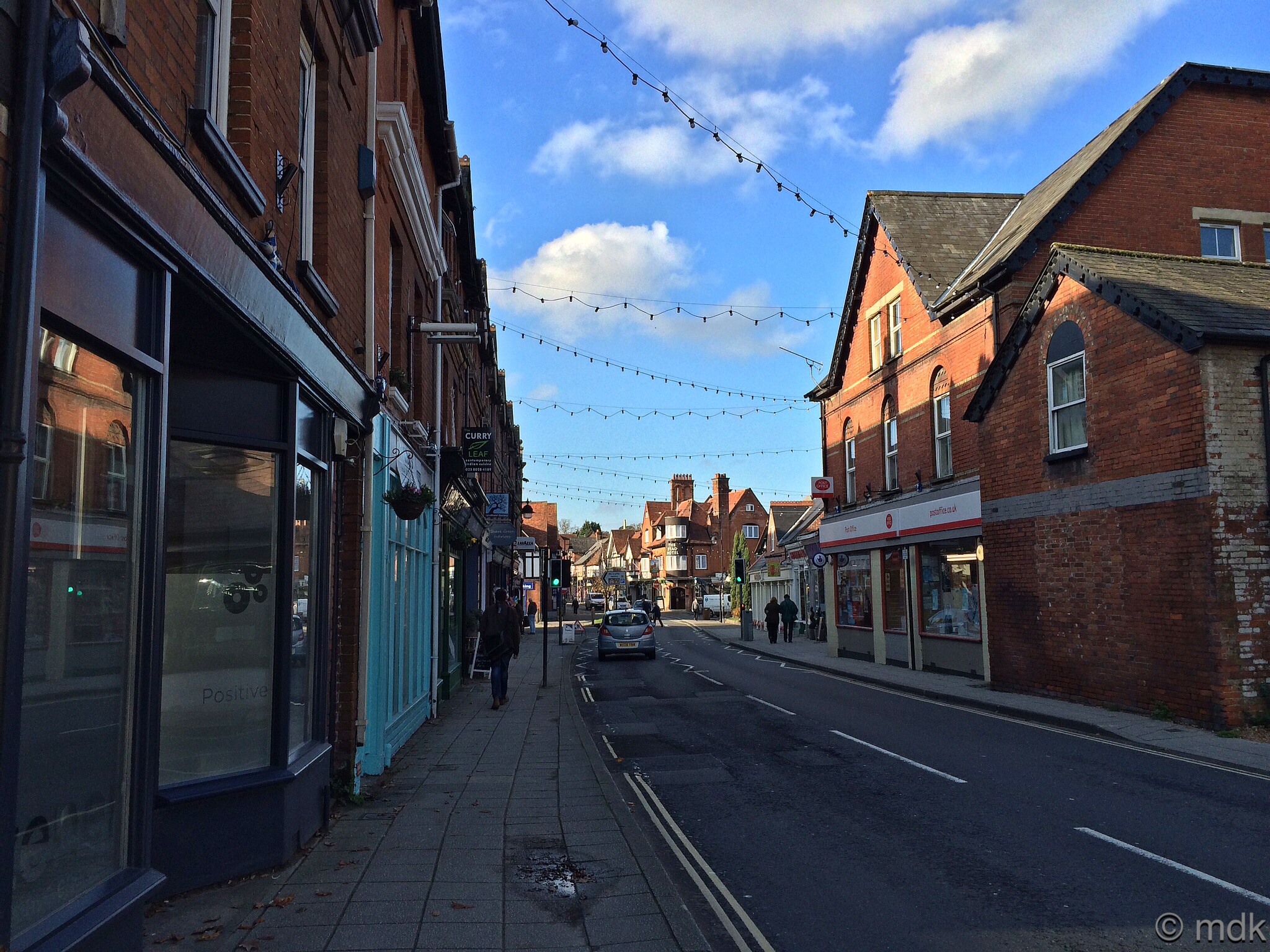
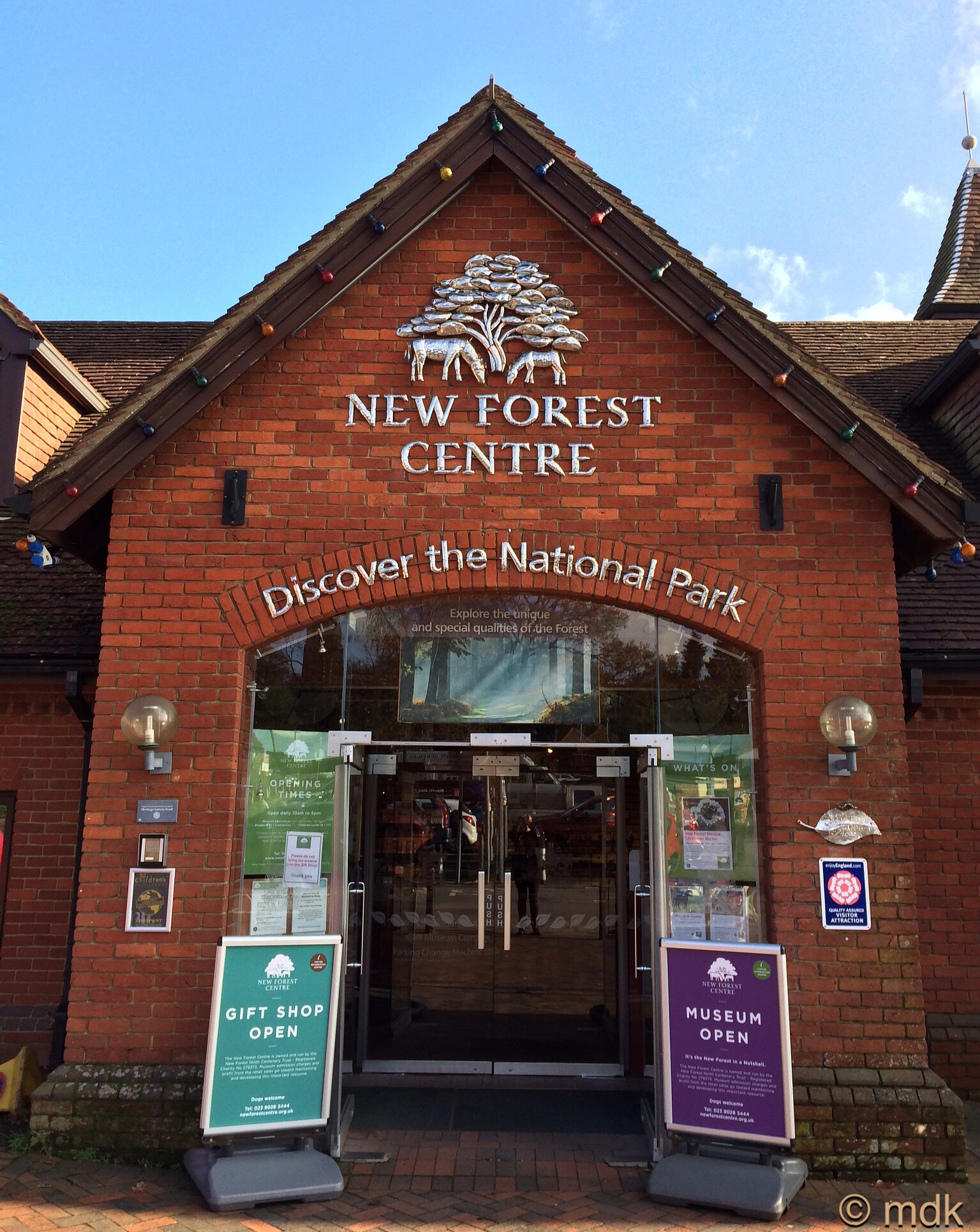
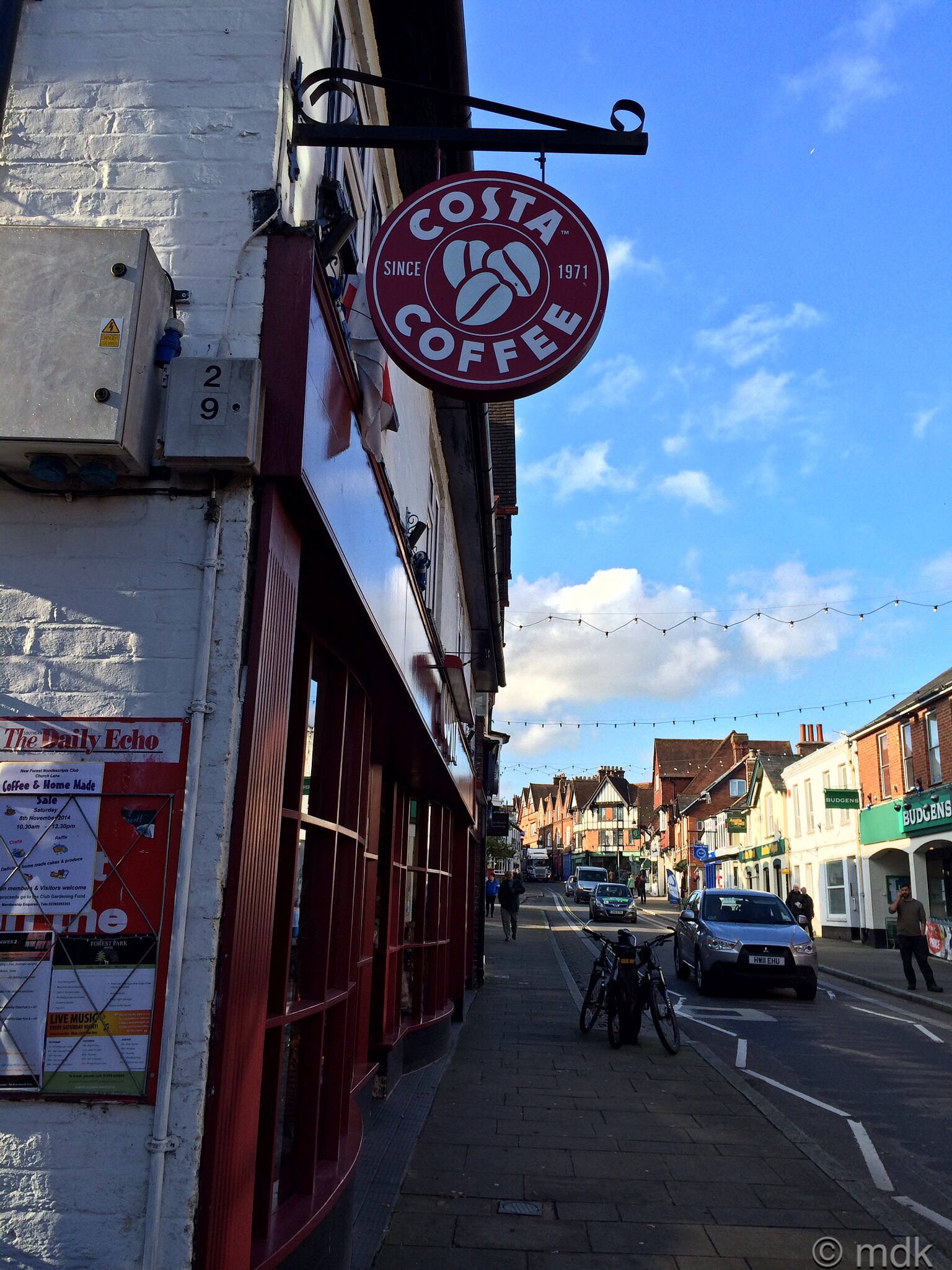
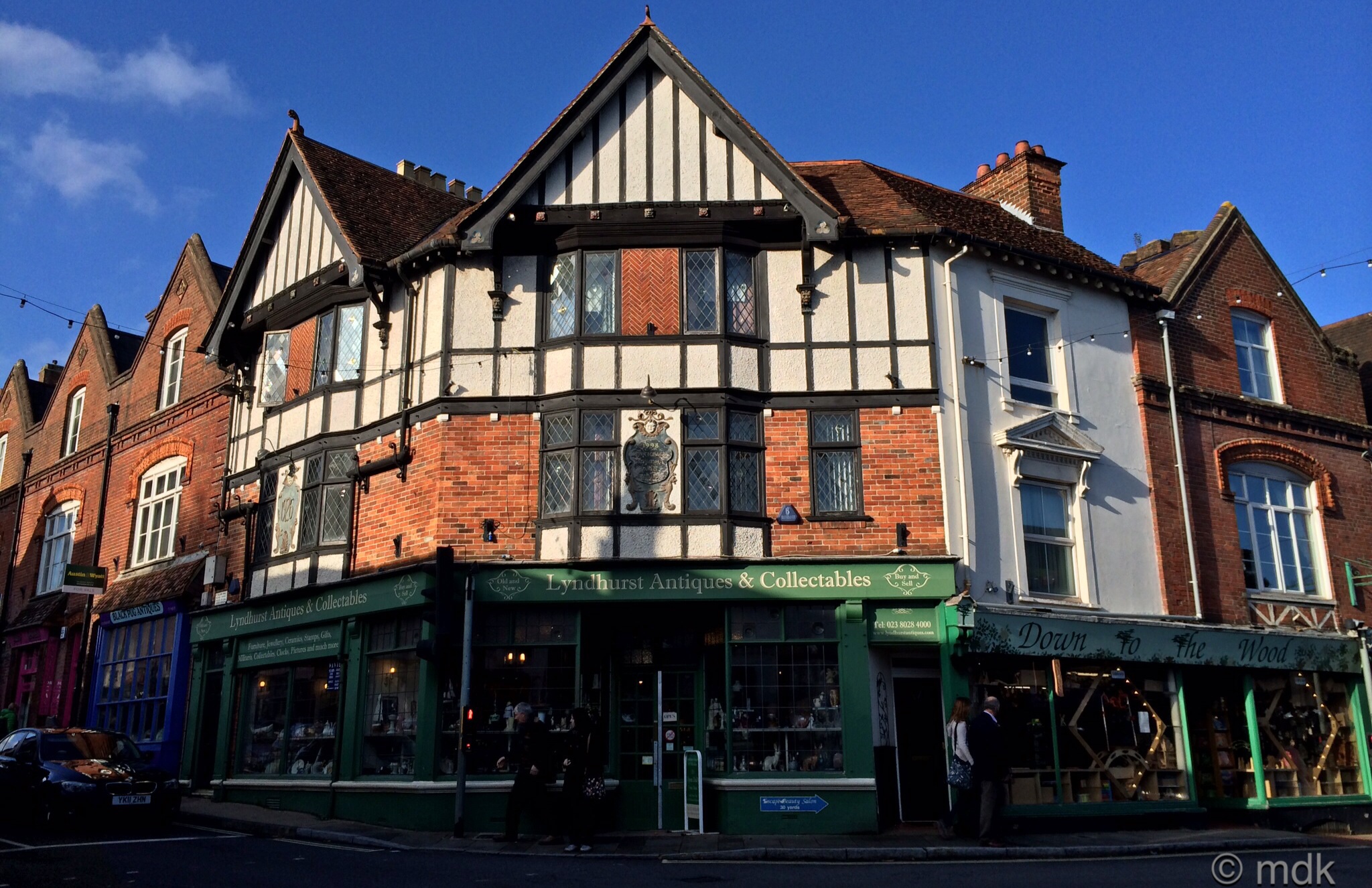
After a coffee plus forty minutes on a bus my first priority was finding a loo. Thankfully this was easily done and had the added bonus of taking me off the High Street past the New Forest Centre, a modern building with a beautiful beaten metal sign and a wealth of information for anyone wanting to know more about the forest. Back on the High Street I was surprised by the number of coffee shops and tea rooms. You would think there was only so much tea or coffee anyone could drink but the place is bustling with tourists during the summer.
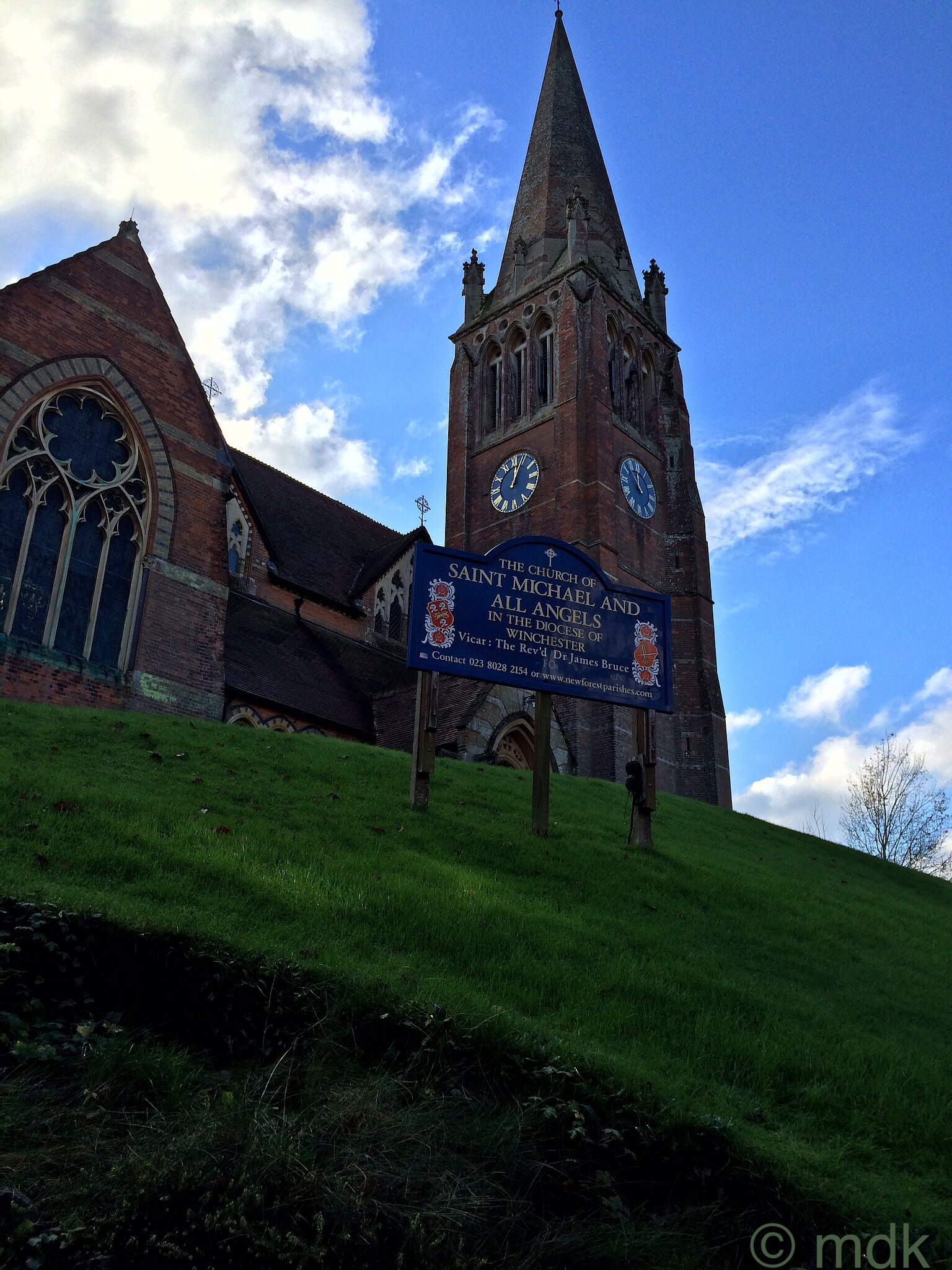
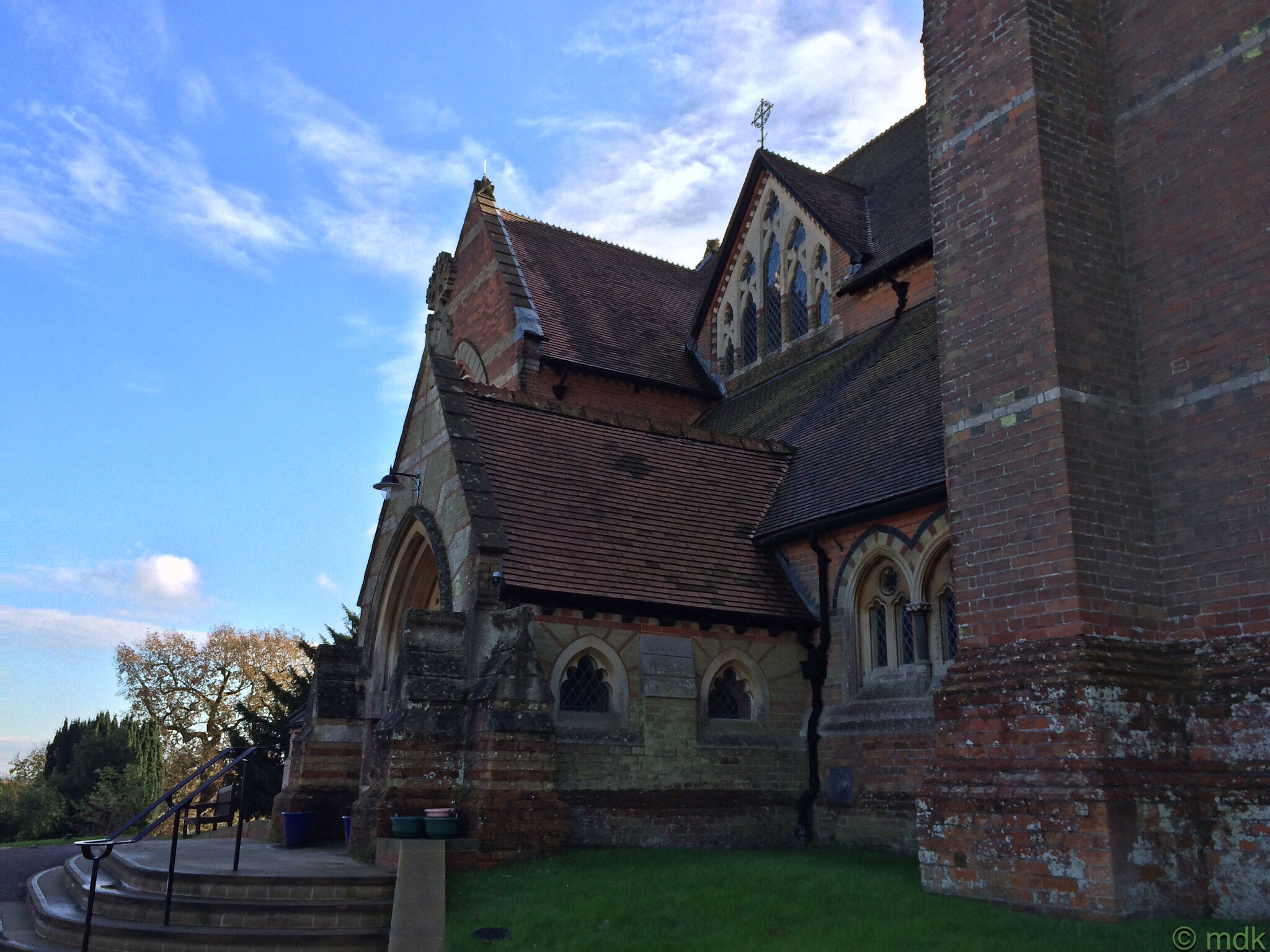
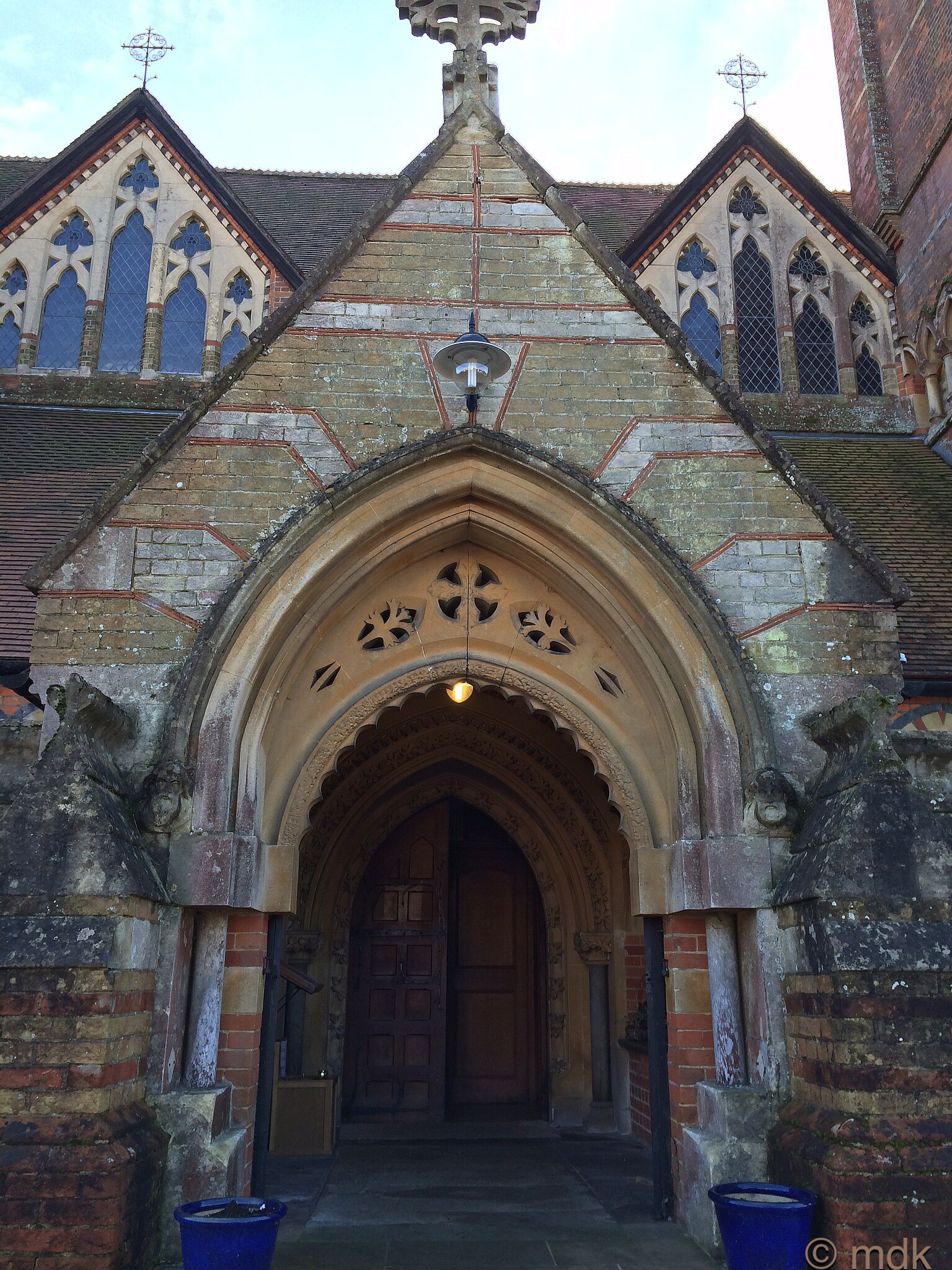
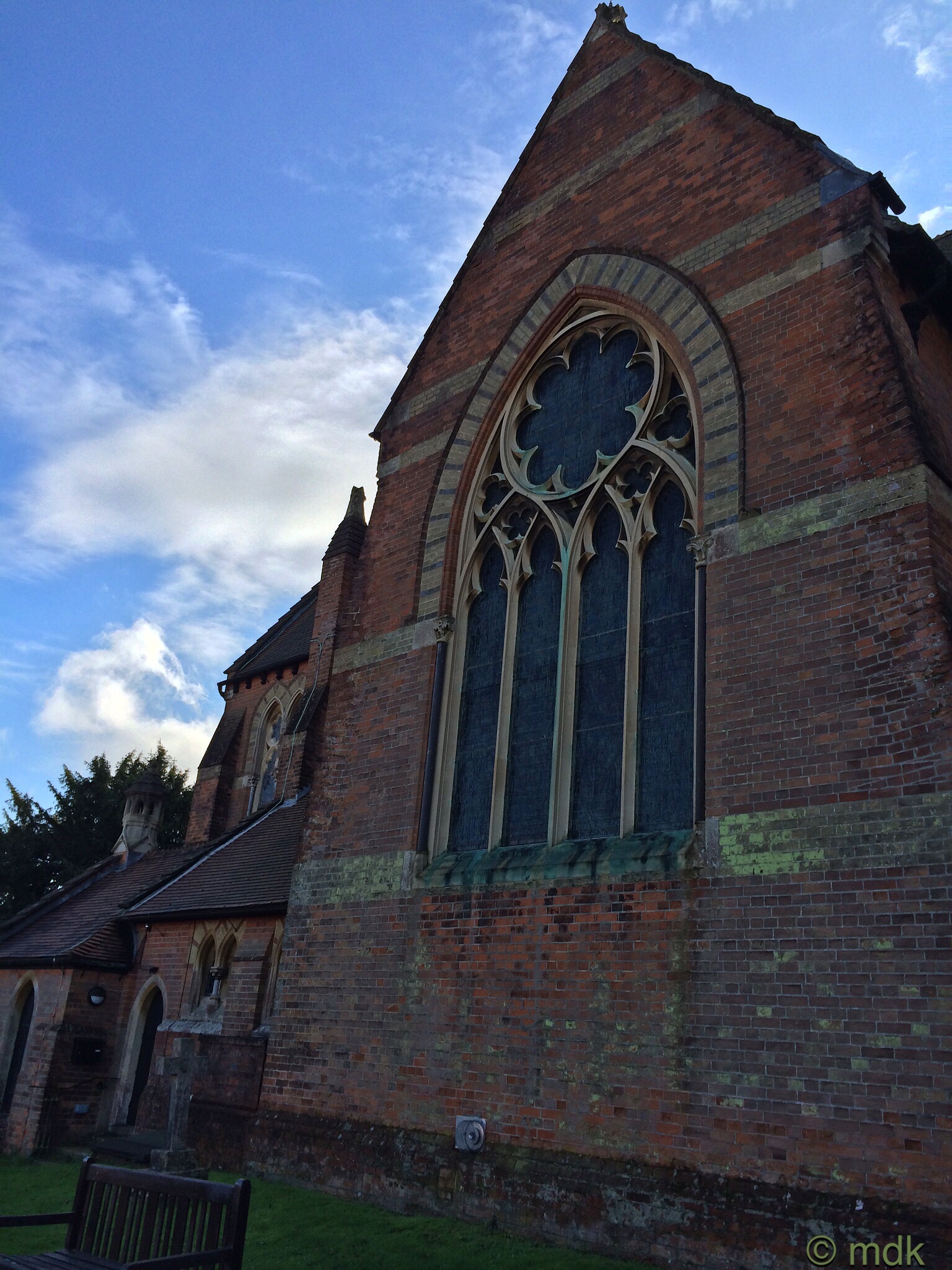
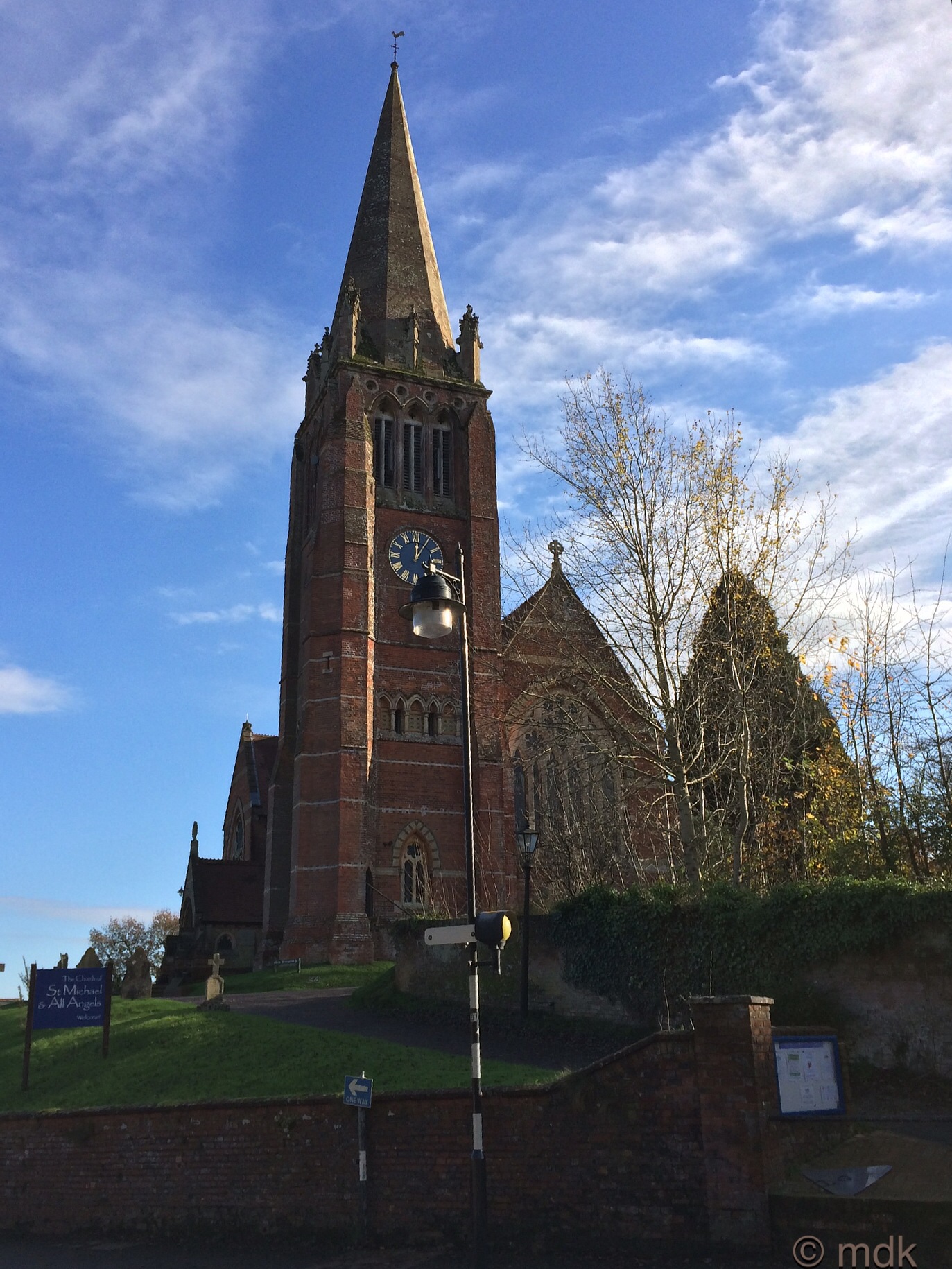
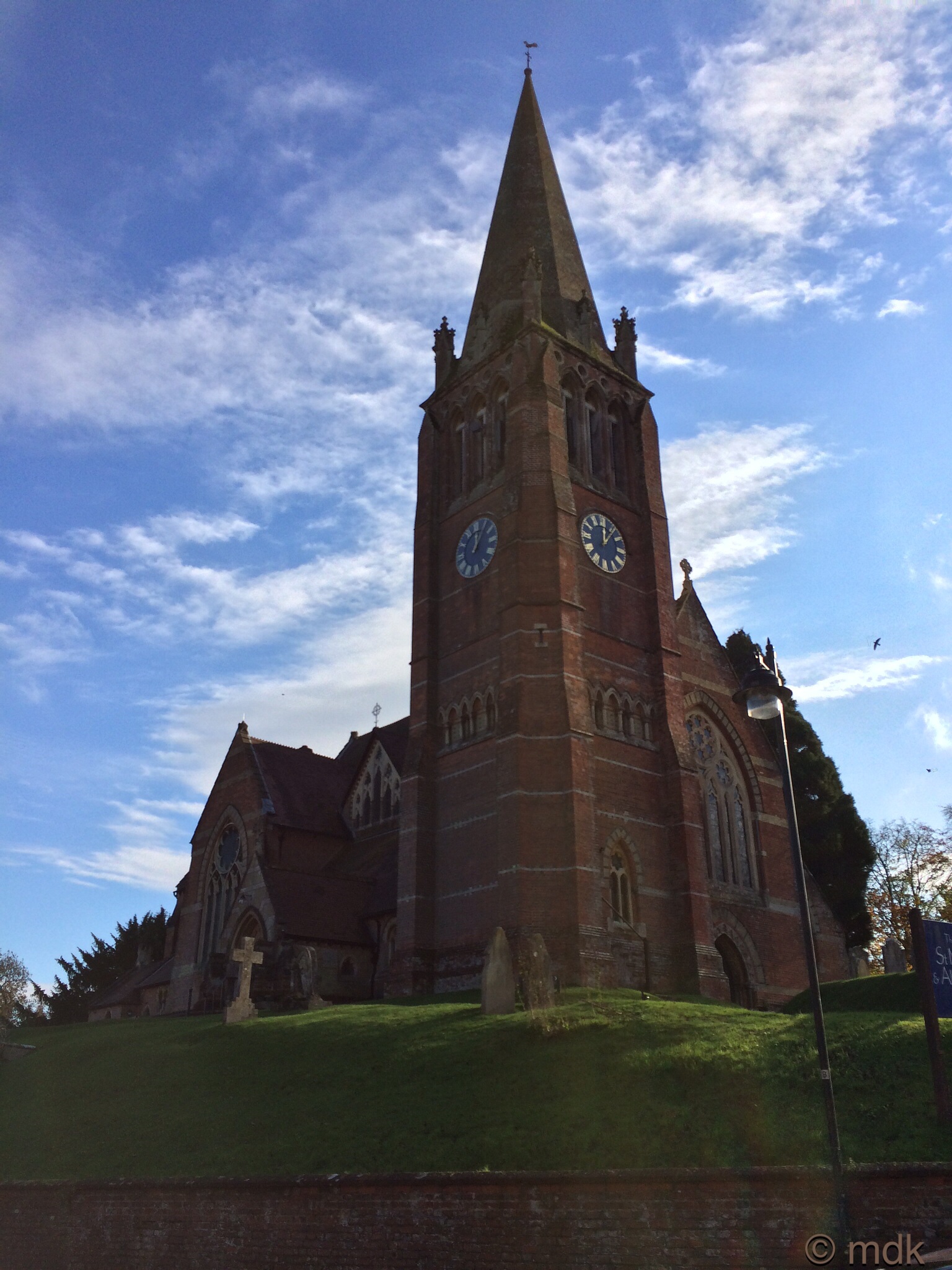
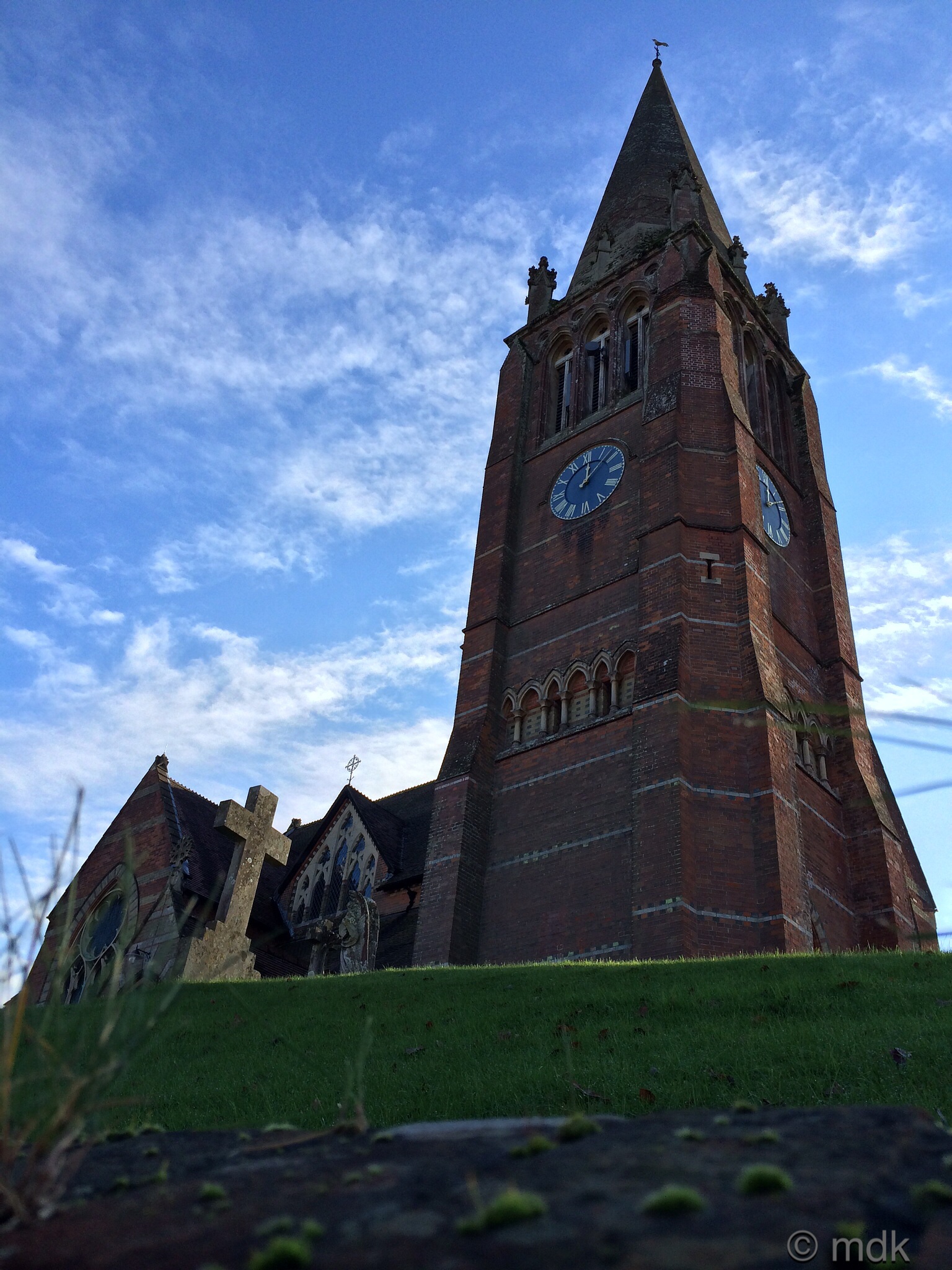
It would have been easy to get distracted by all the interesting buildings and shops but I was on a mission so I carried on past them to the church close to the top of the High Street. Sitting on a mound overlooking the village, St Michael and All Angels dominates the skyline and can be seen for many miles. Built between 1858 and 1870 of red brick with a yellow trim, it was designed by William White.
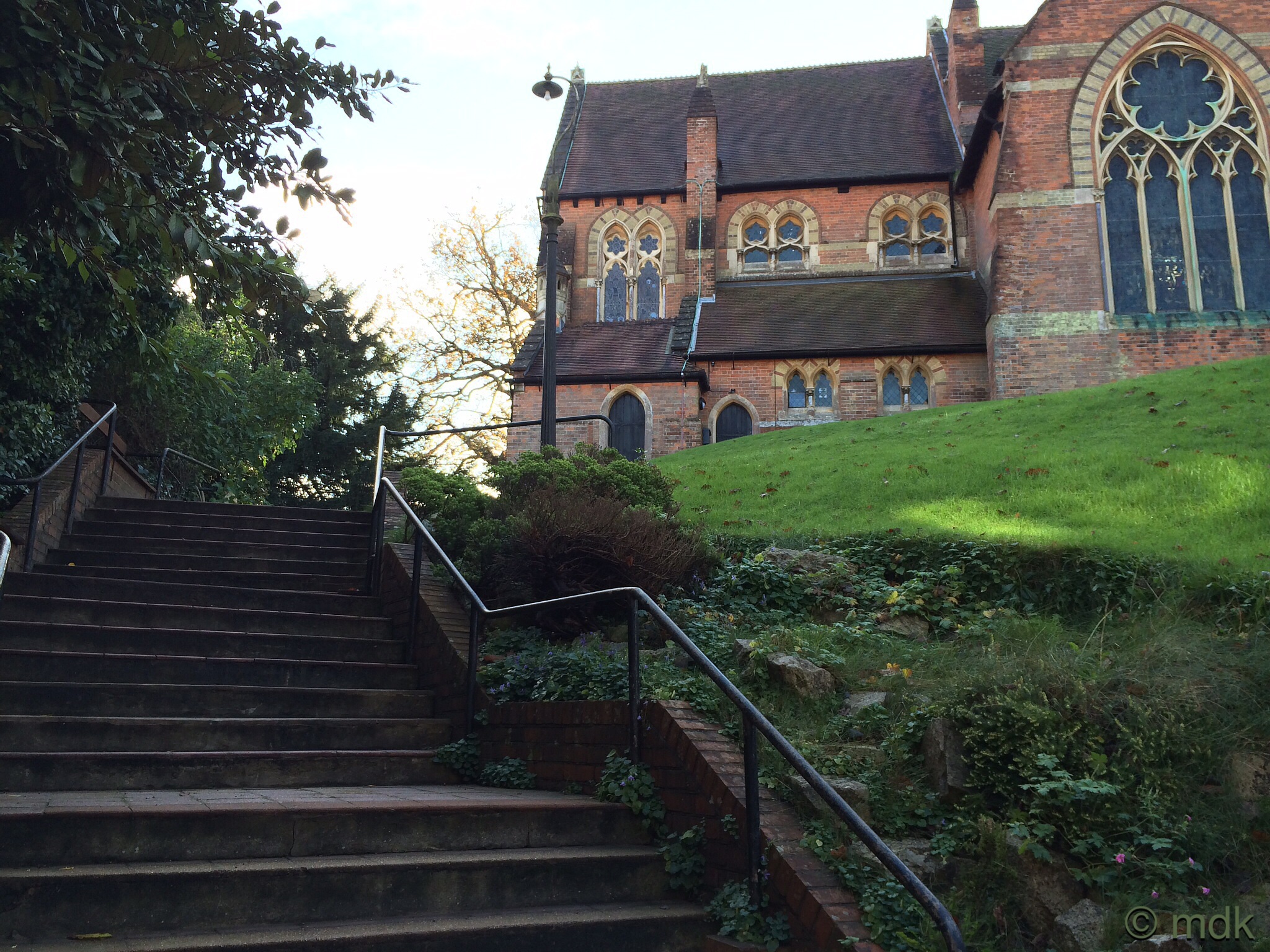
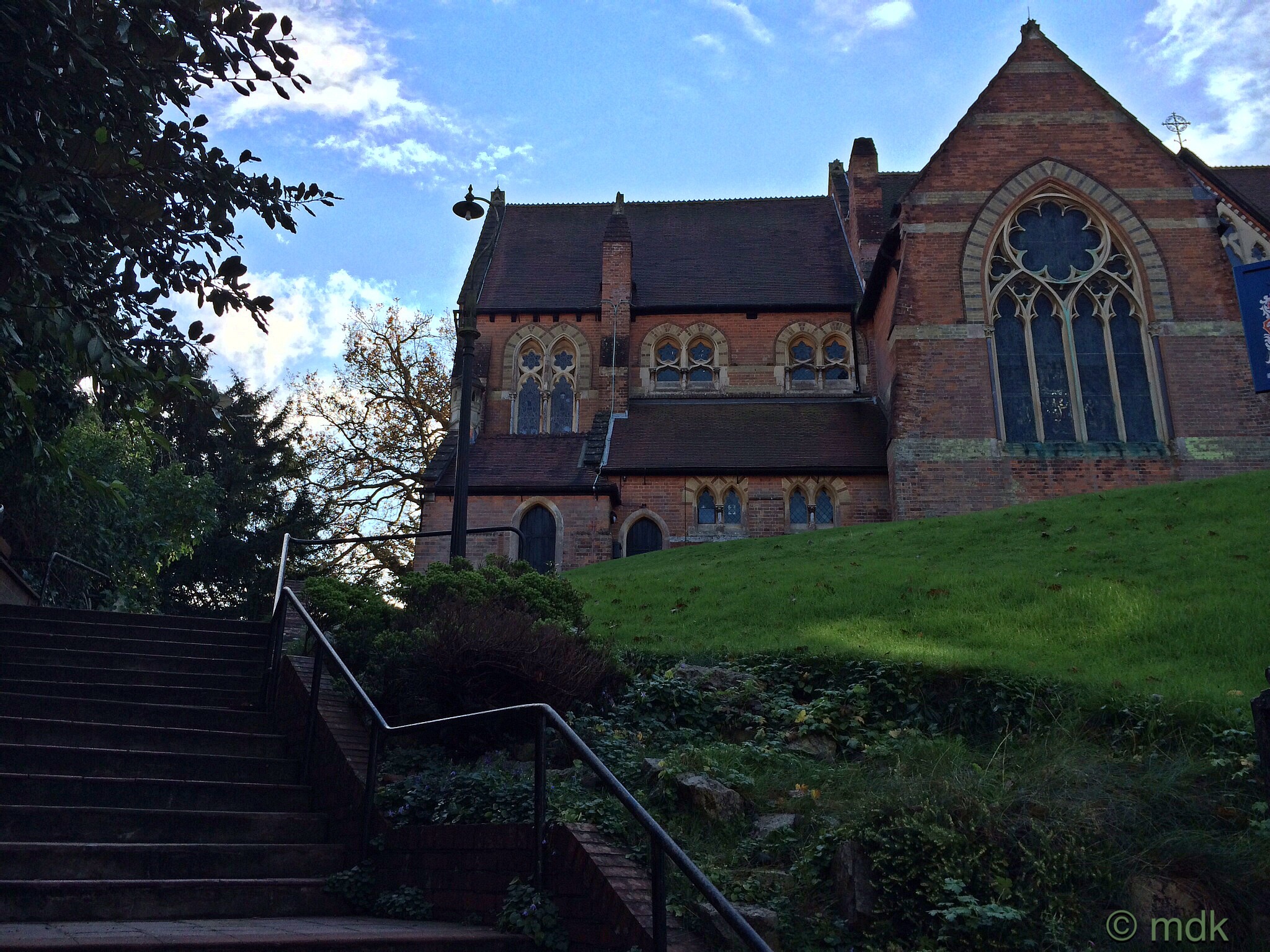
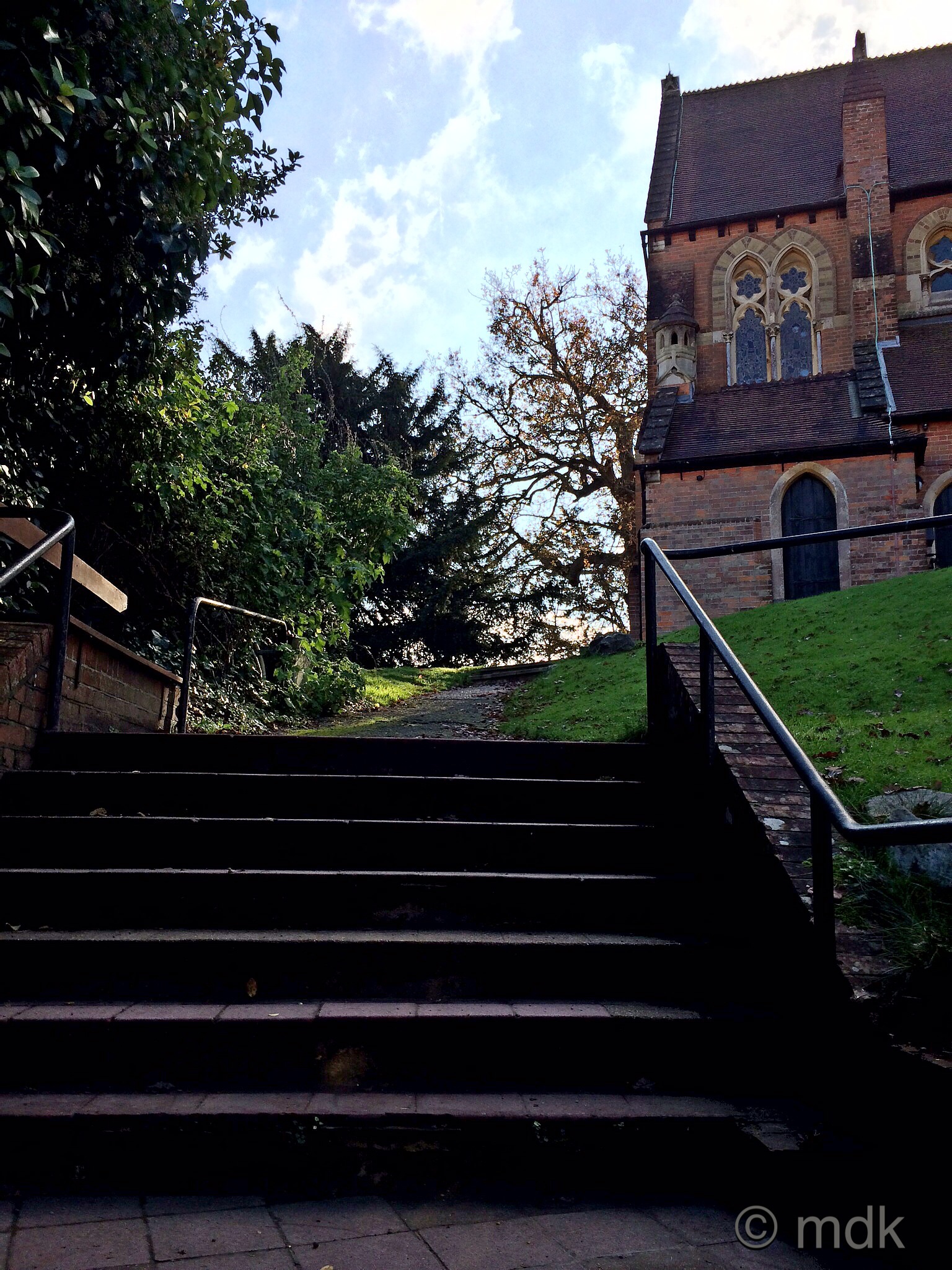
Being on a little hill the steps to the church are quite steep but there are strategically placed seats in the wall running up them and a pretty rock garden to look at if you do need a rest. Although I’d seen pictures of Alice’s grave I was a little worried I wouldn’t be able to find it so I decided to search systematically. I began by going around the back of the church where I found an intriguing little door.
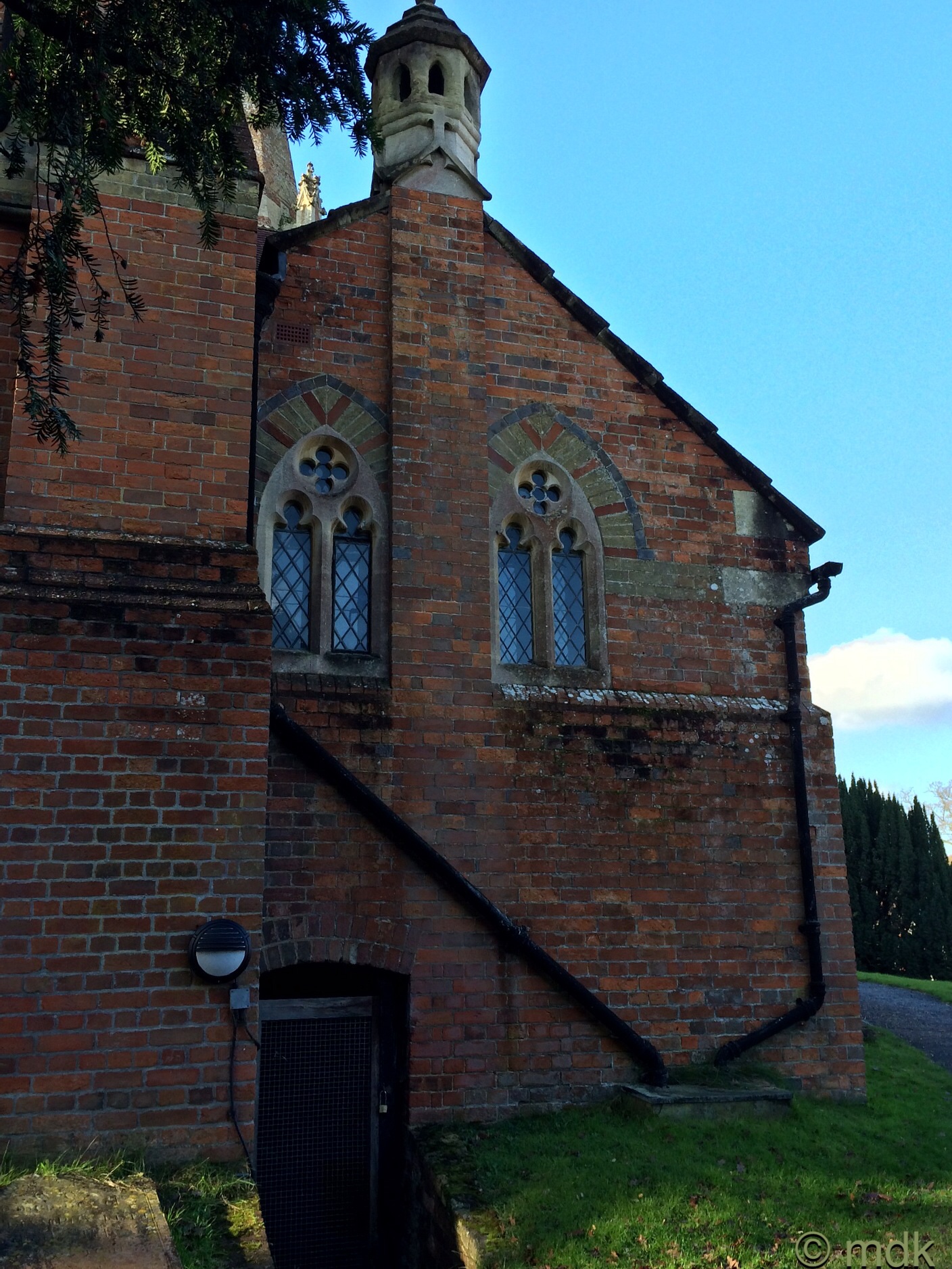
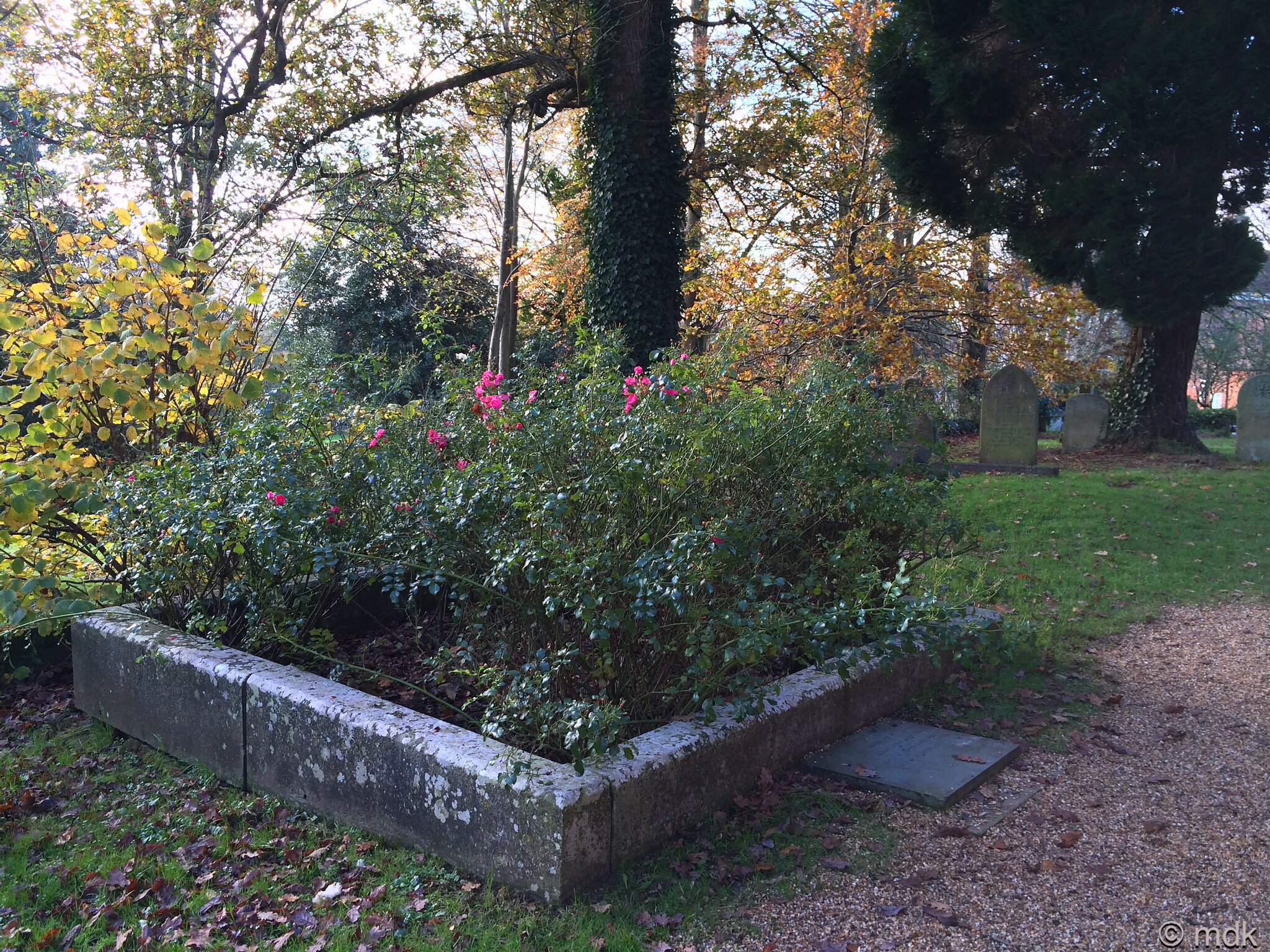
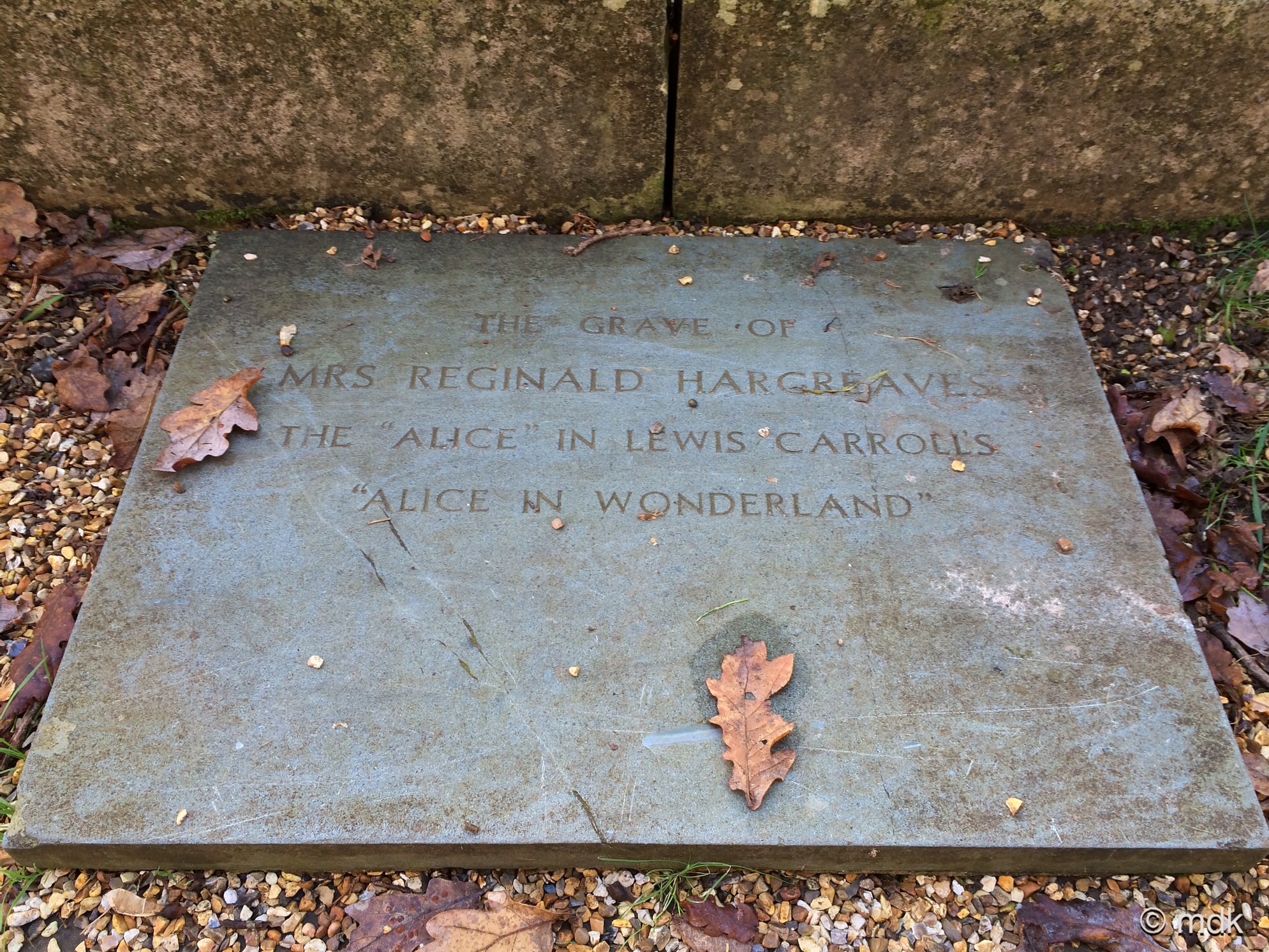
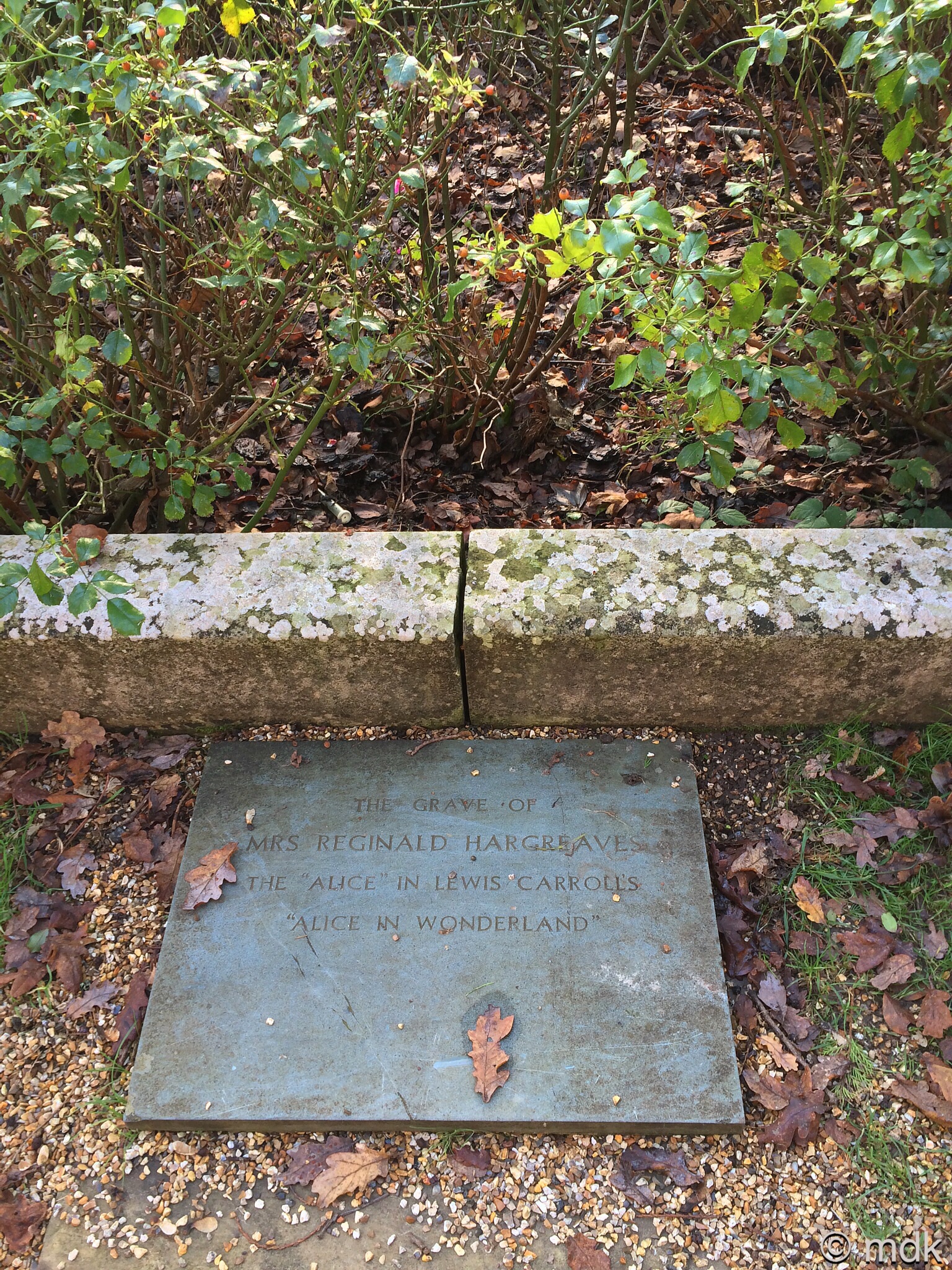
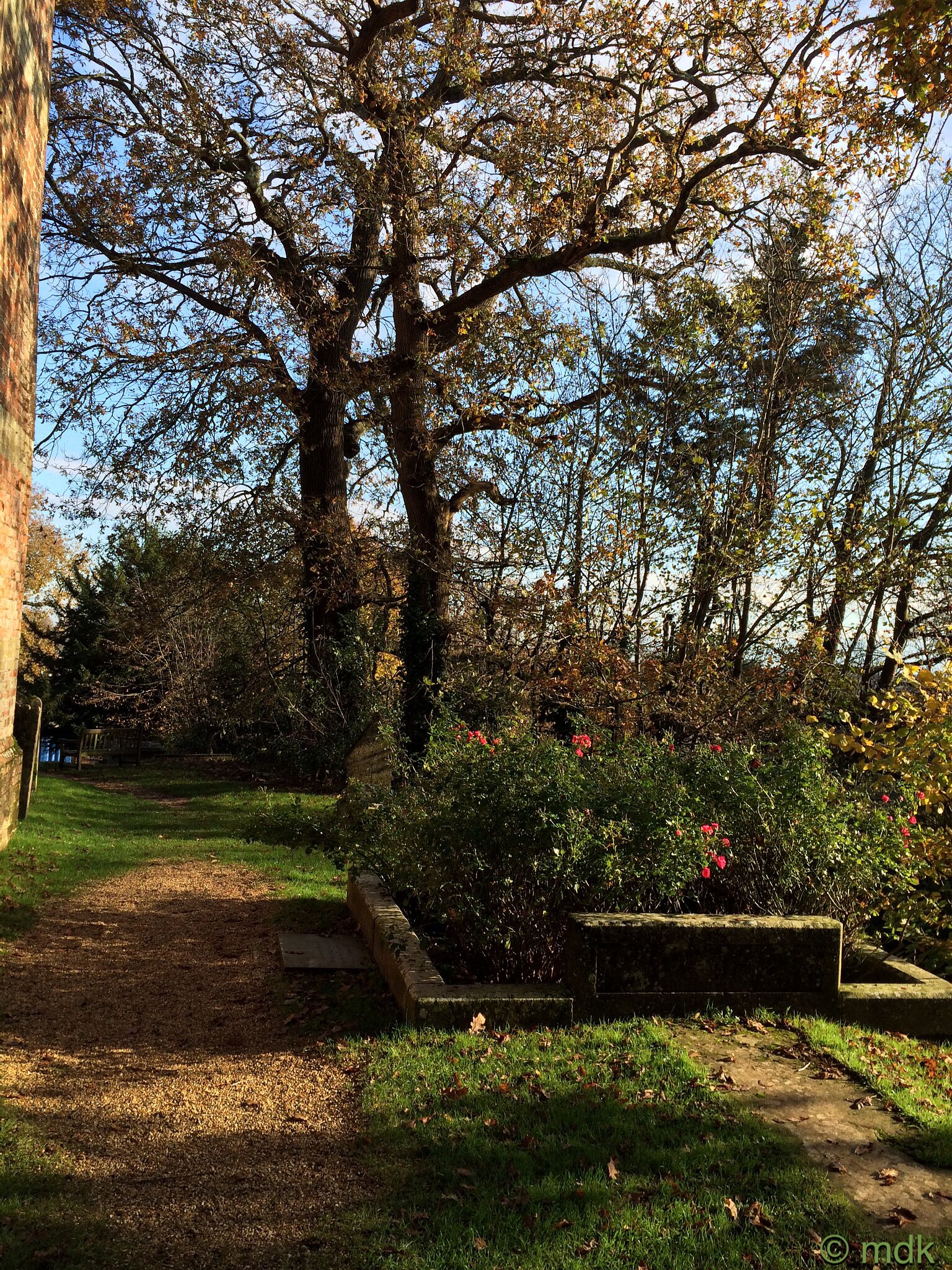
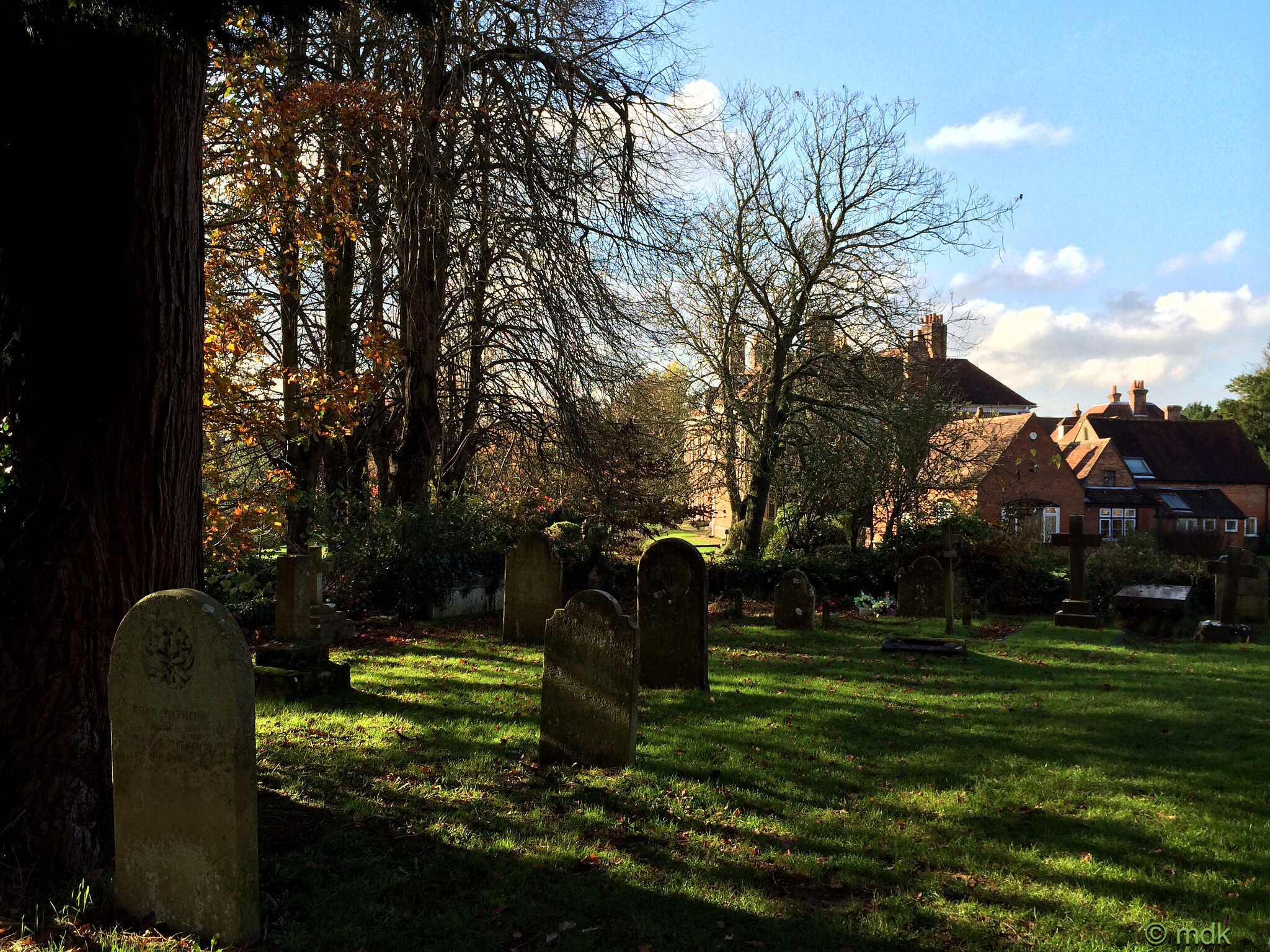
Slowly I began to circle the church, looking at gravestones as I went and trying not to get too distracted by the lovely old building. As it happened, it didn’t take long to find the grave, it’s a very small churchyard after all. Right behind the church there’s a small square rose garden bordered by oblong, lichen covered stones. Beside the garden is a small, grey plaque, ‘The grave of Mrs Reginald Hargreaves, the Alice in Lewis Carroll’s Alice in Wonderland.’ It’s a rather understated grave but in a beautiful setting.
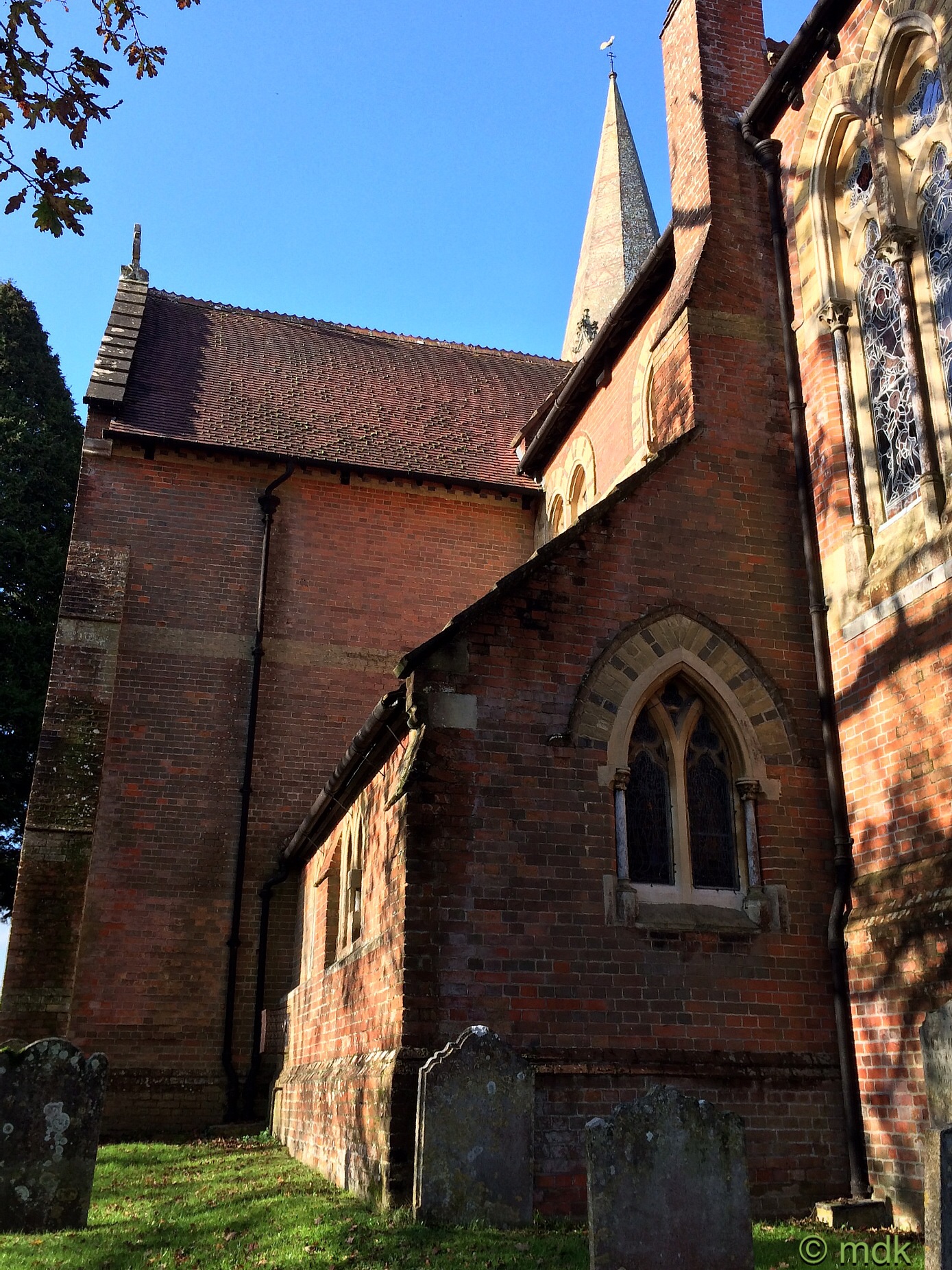
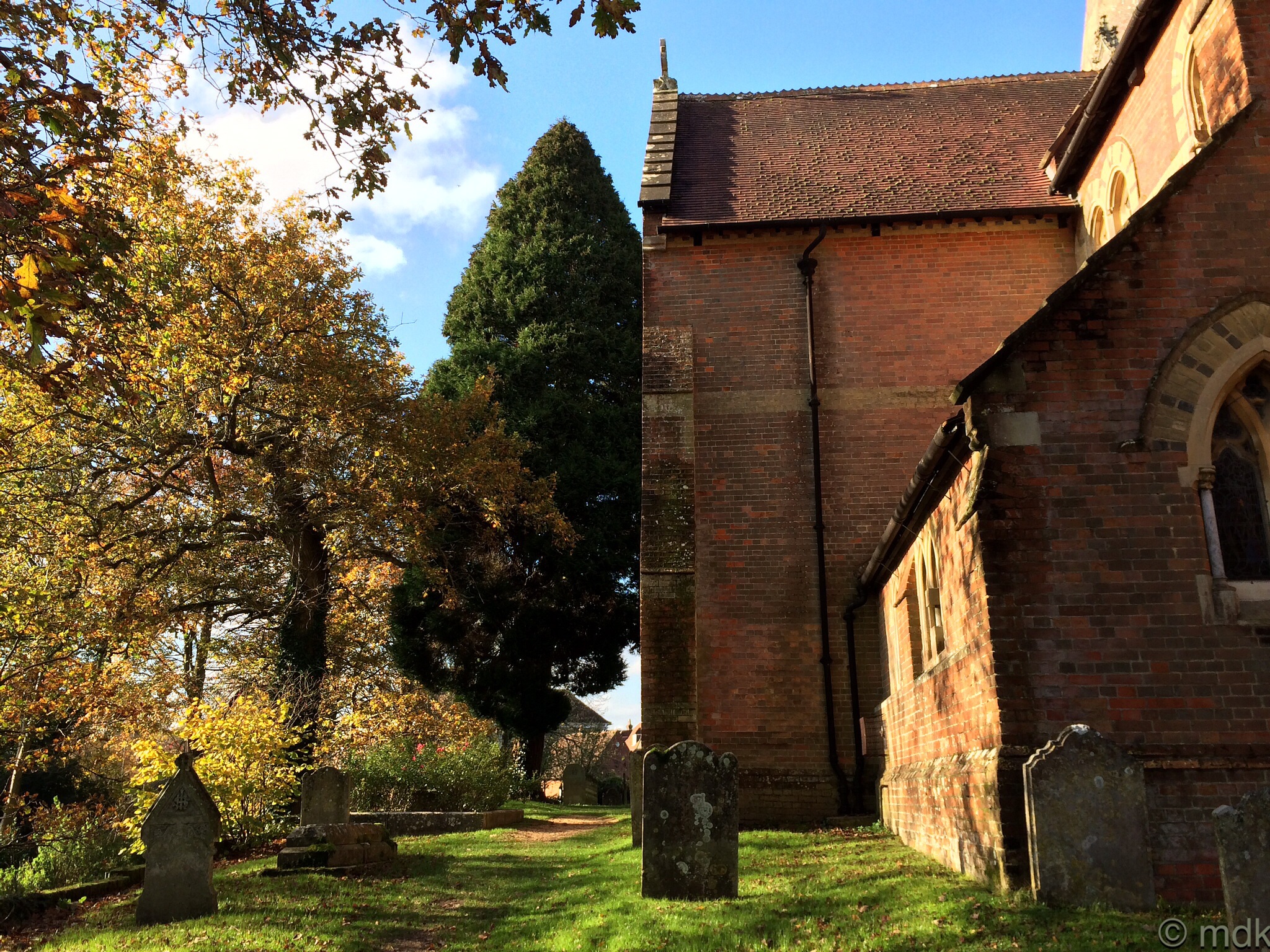
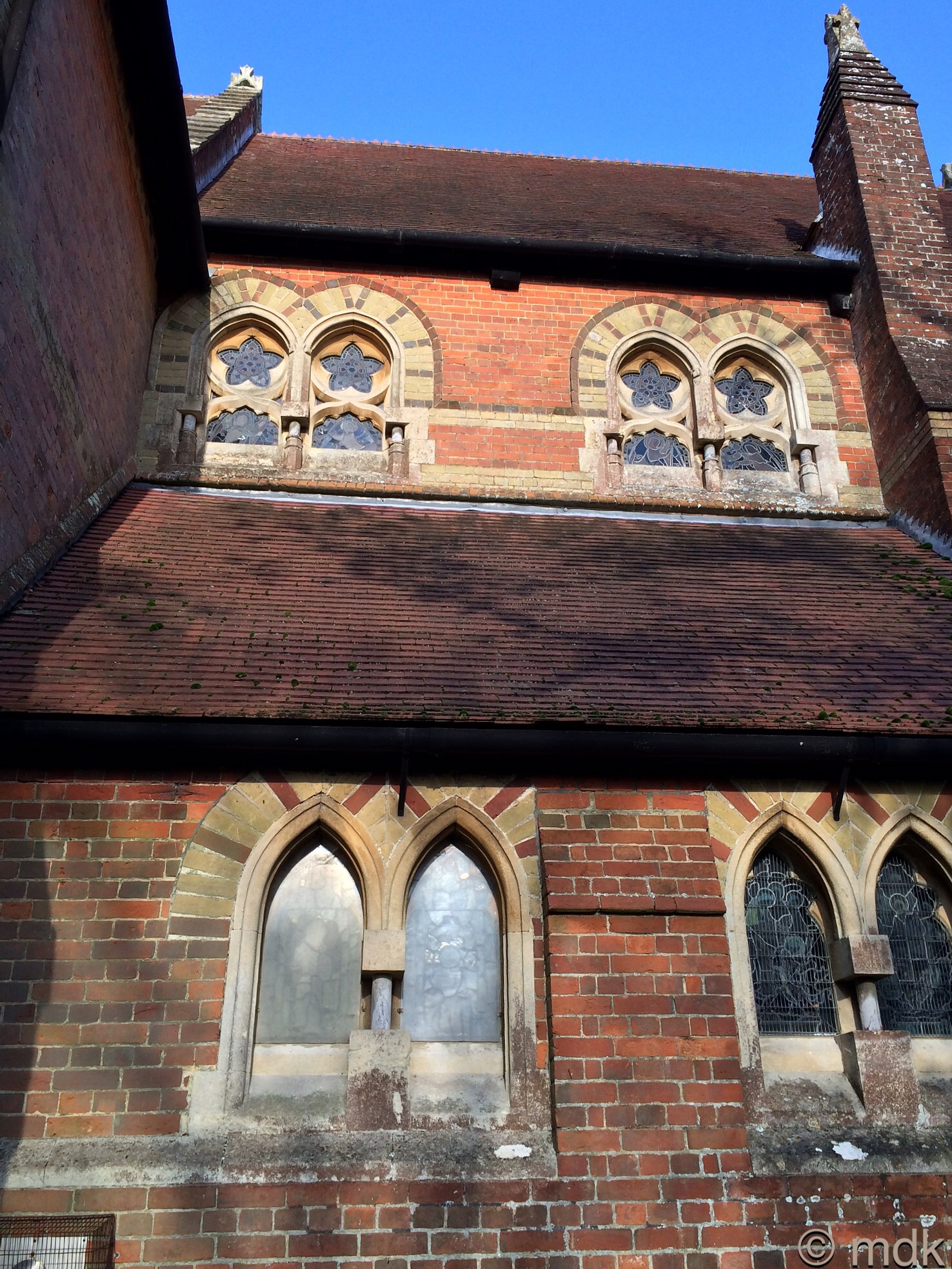
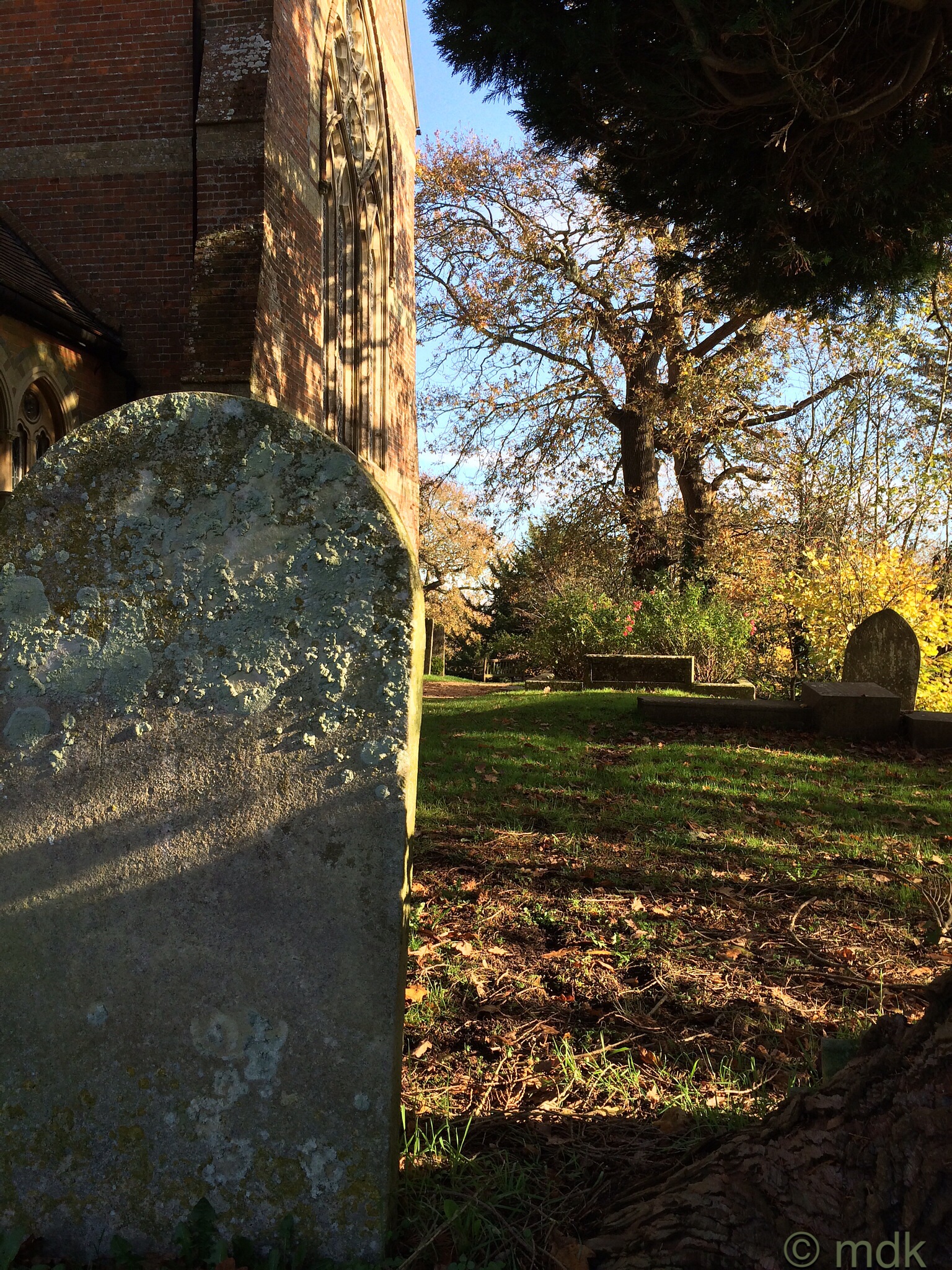
After a moment’s reflection I carried on my walk around the church. With autumn leaves and golden sunlight dappling the lichen covered graves it was breathtakingly beautiful. From the other side of the church the light picked out the patterns of different coloured bricks and the detail in the arched window and door. On the corner there were some steps leading up to another odd little door.
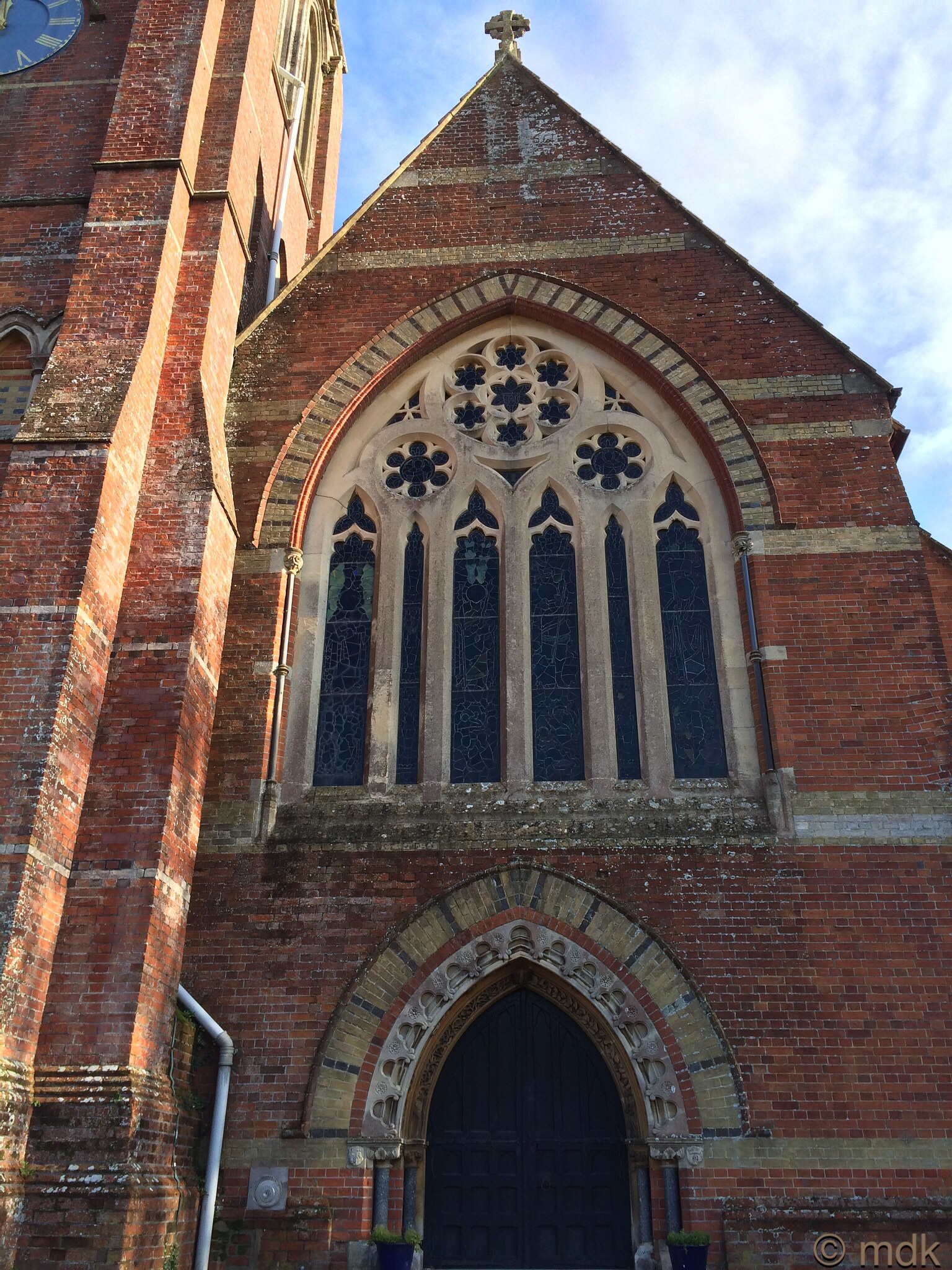
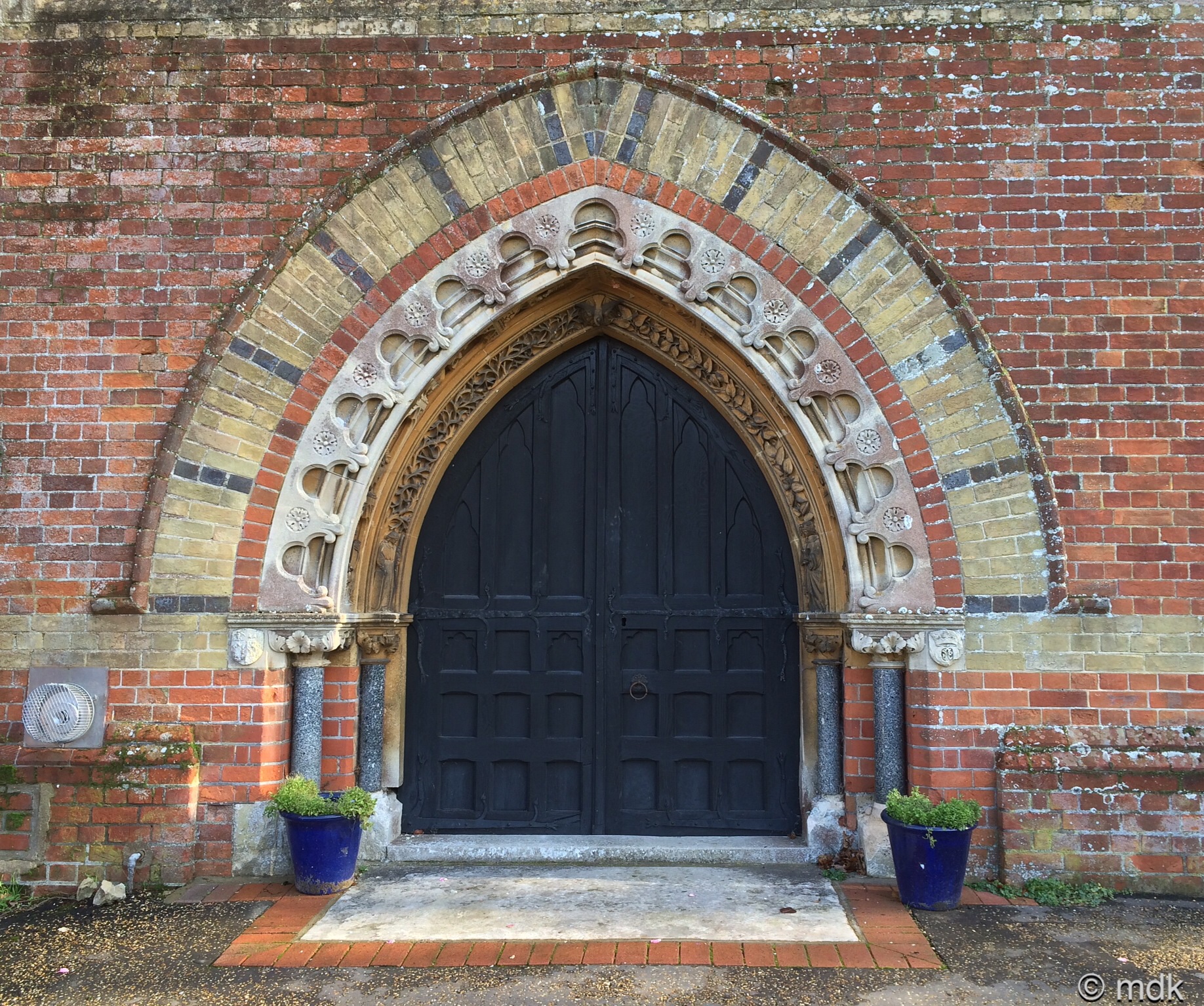
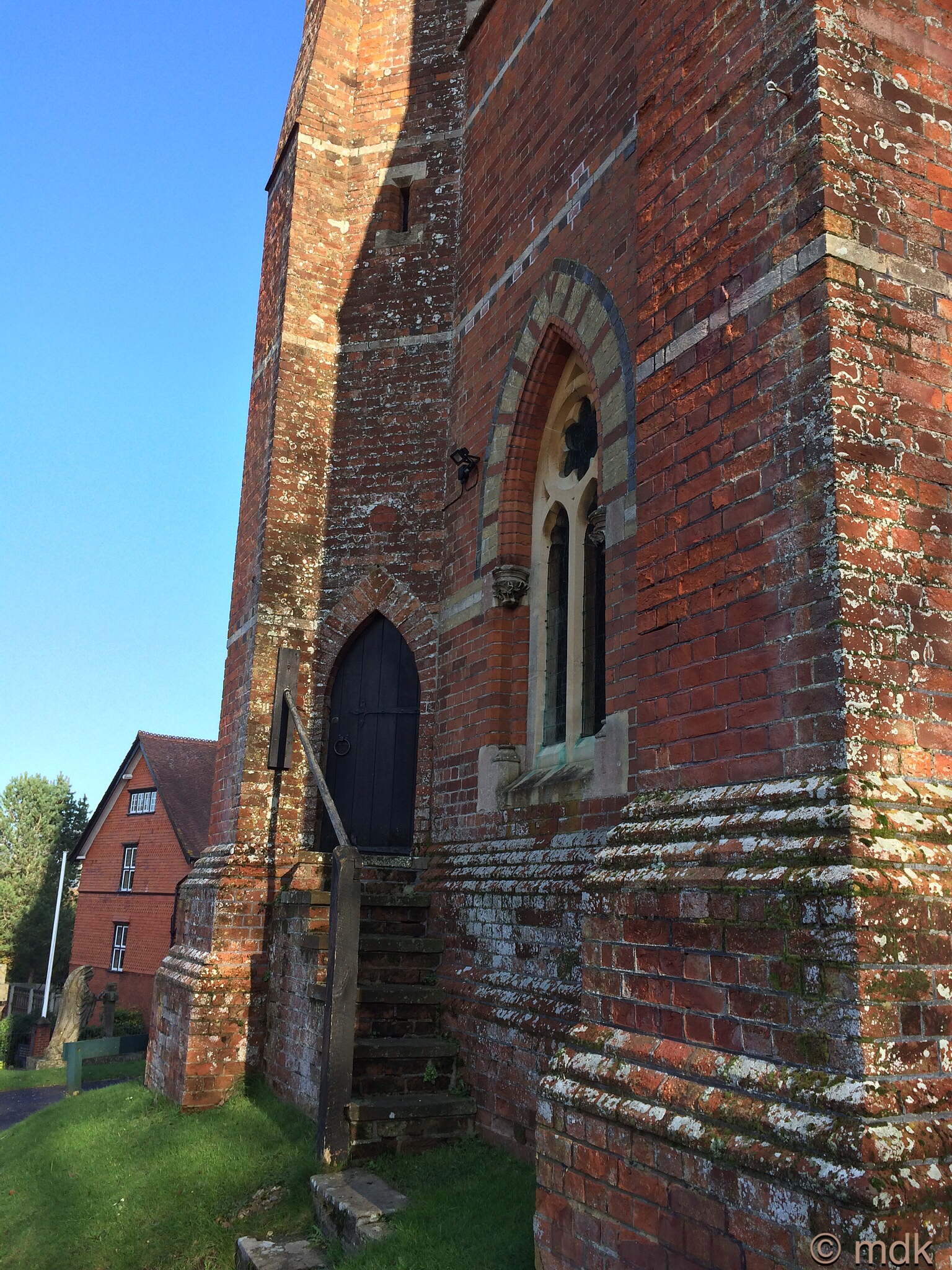
Now I’d come full circle and I was at the front of the church looking at the main door. With such a small churchyard it felt as if I’d seen the building in little snatches because I’d been too close to see it as a whole. Back down the steep steps and under the decorative metal arch I crossed the road to try to capture the building as a whole. I took far too many photos.
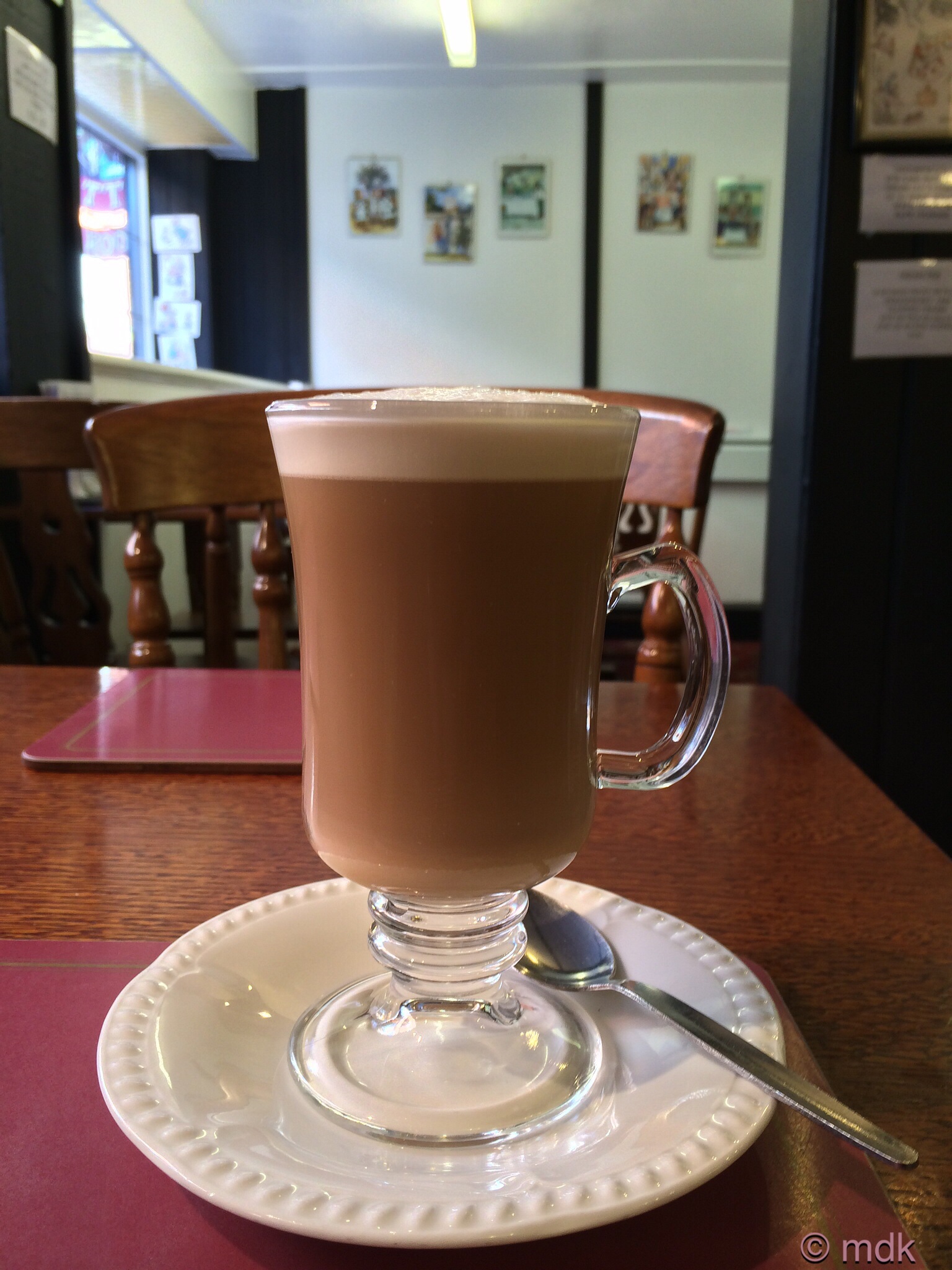
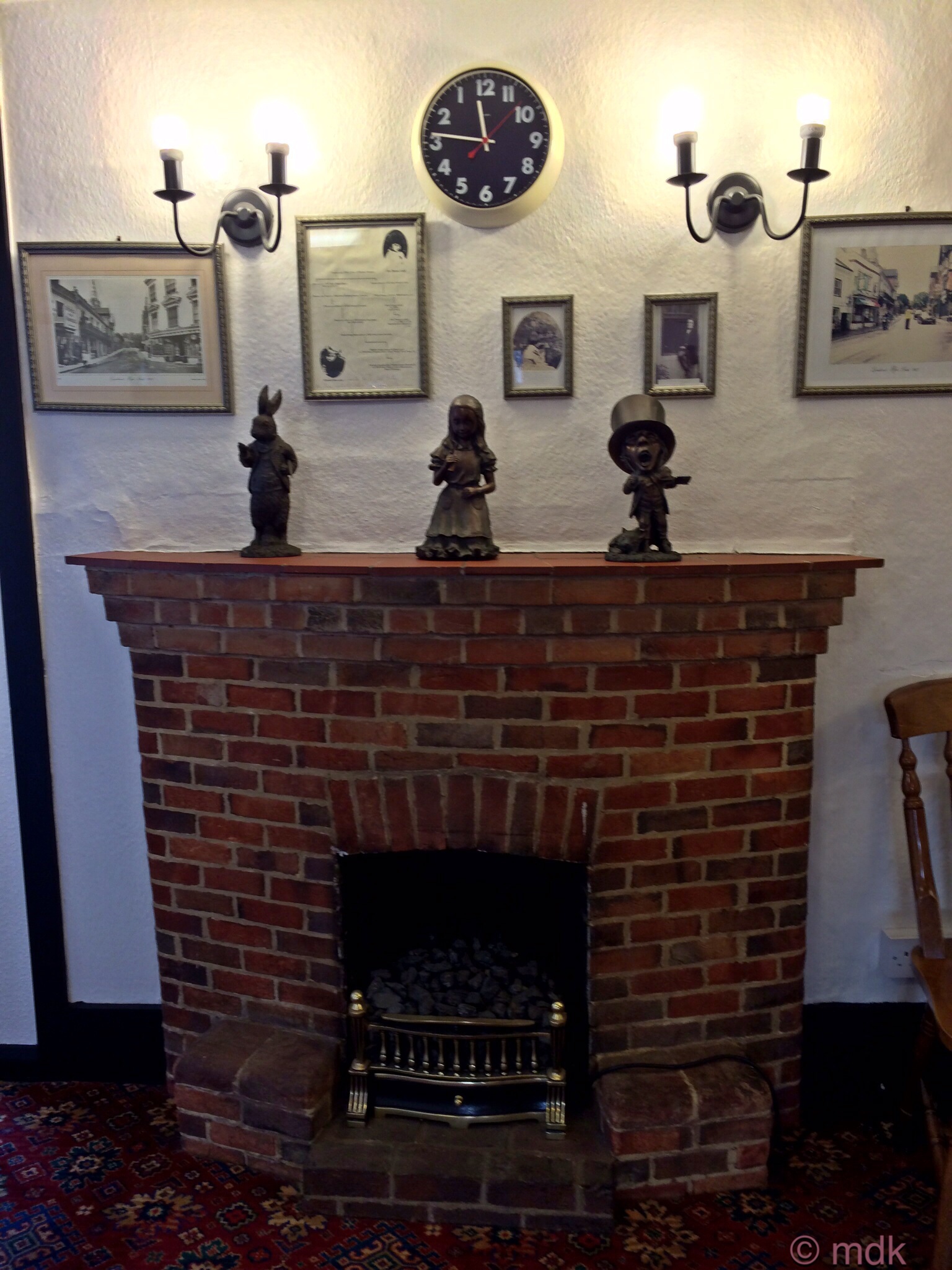
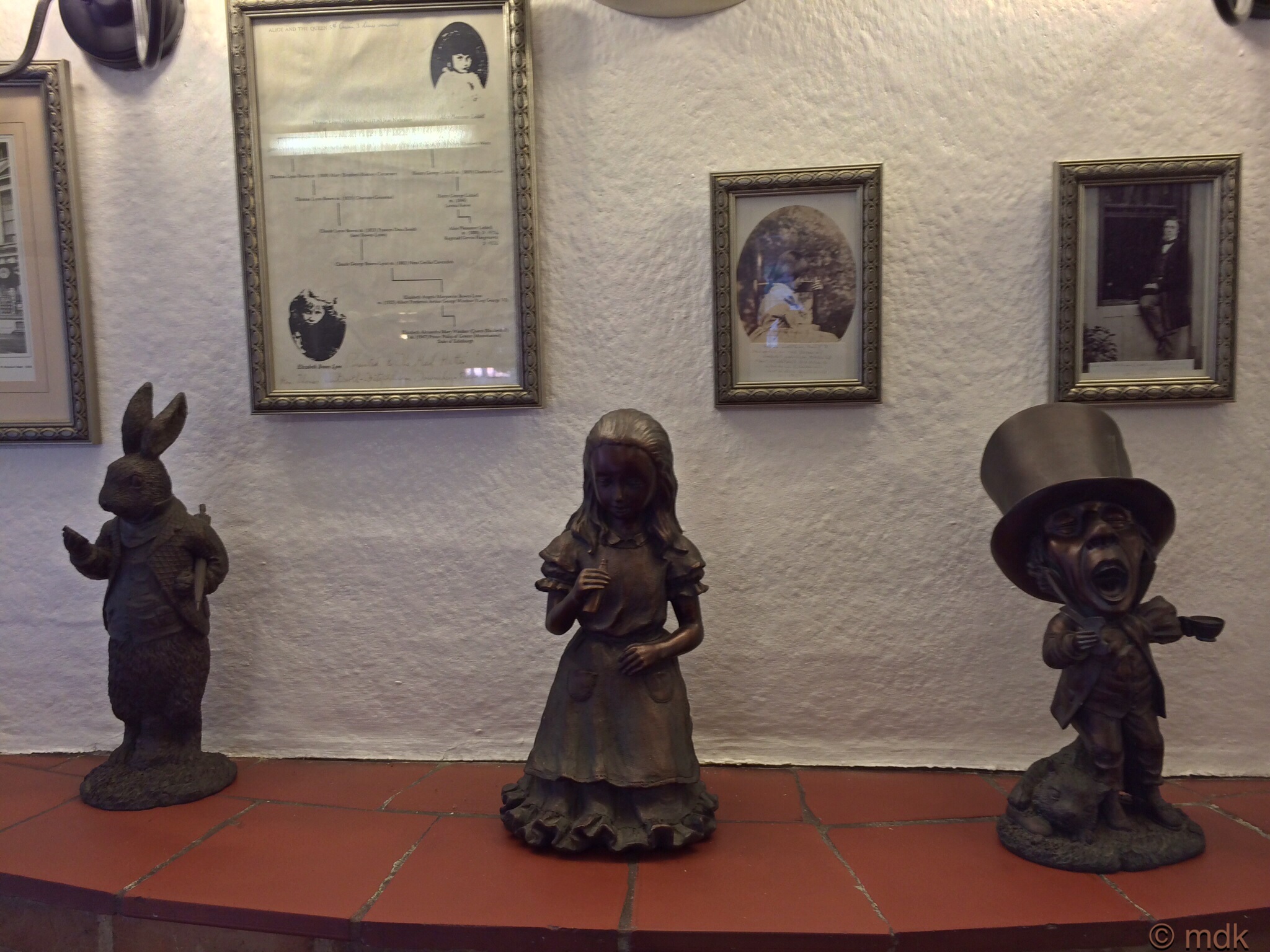
Back on the High Street there was one more Alice related place I simply had to visit, The Mad Hatter’s Tea Rooms. This quirky little café had intrigued me since I first saw it but I’ve never had time to go inside before. Last year, when Commando was training for his first marathon, I’d peered through the windows longingly. Inside it was all white paint and dark oak beams, stuffed with Alice memorabilia.
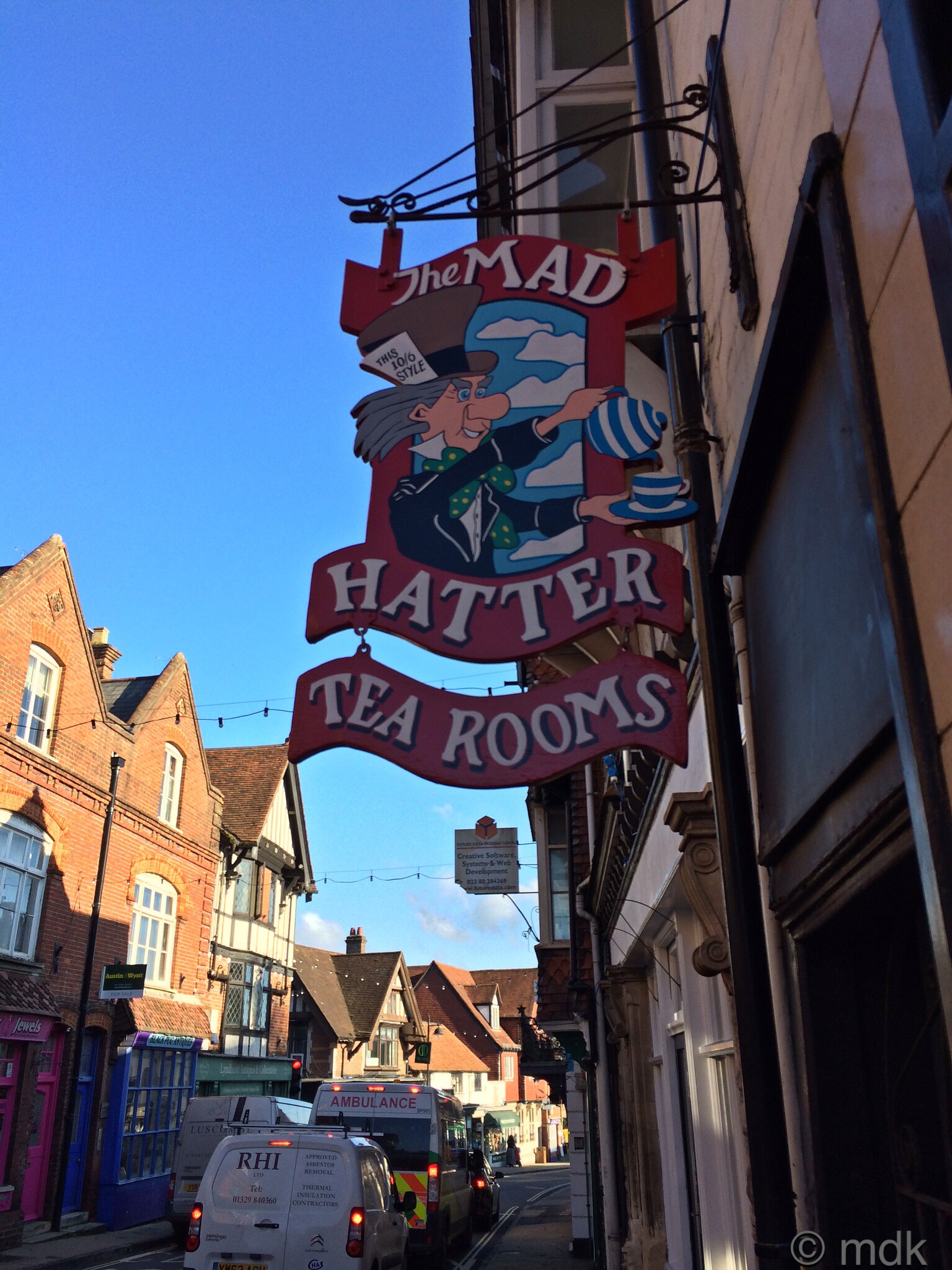
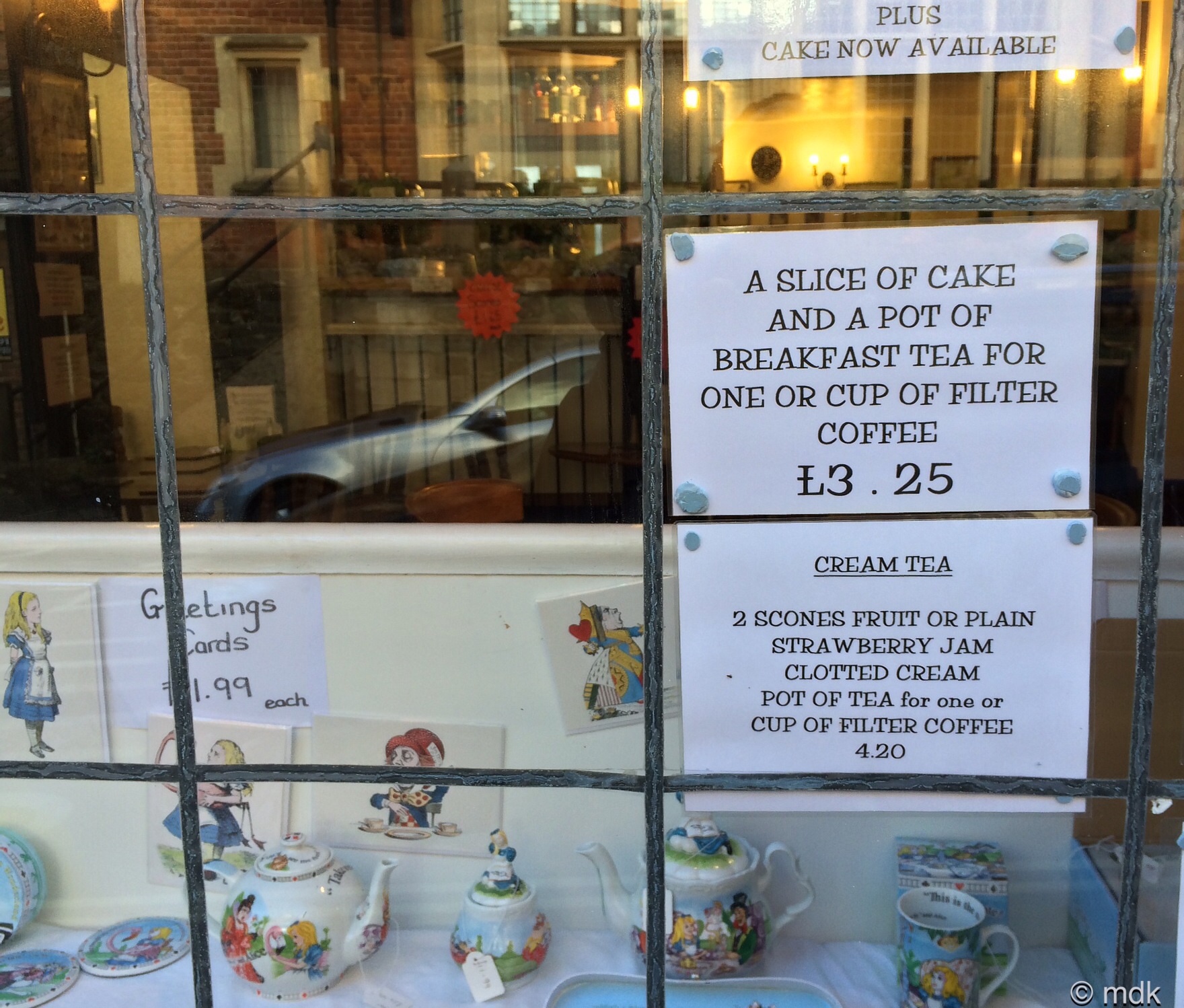
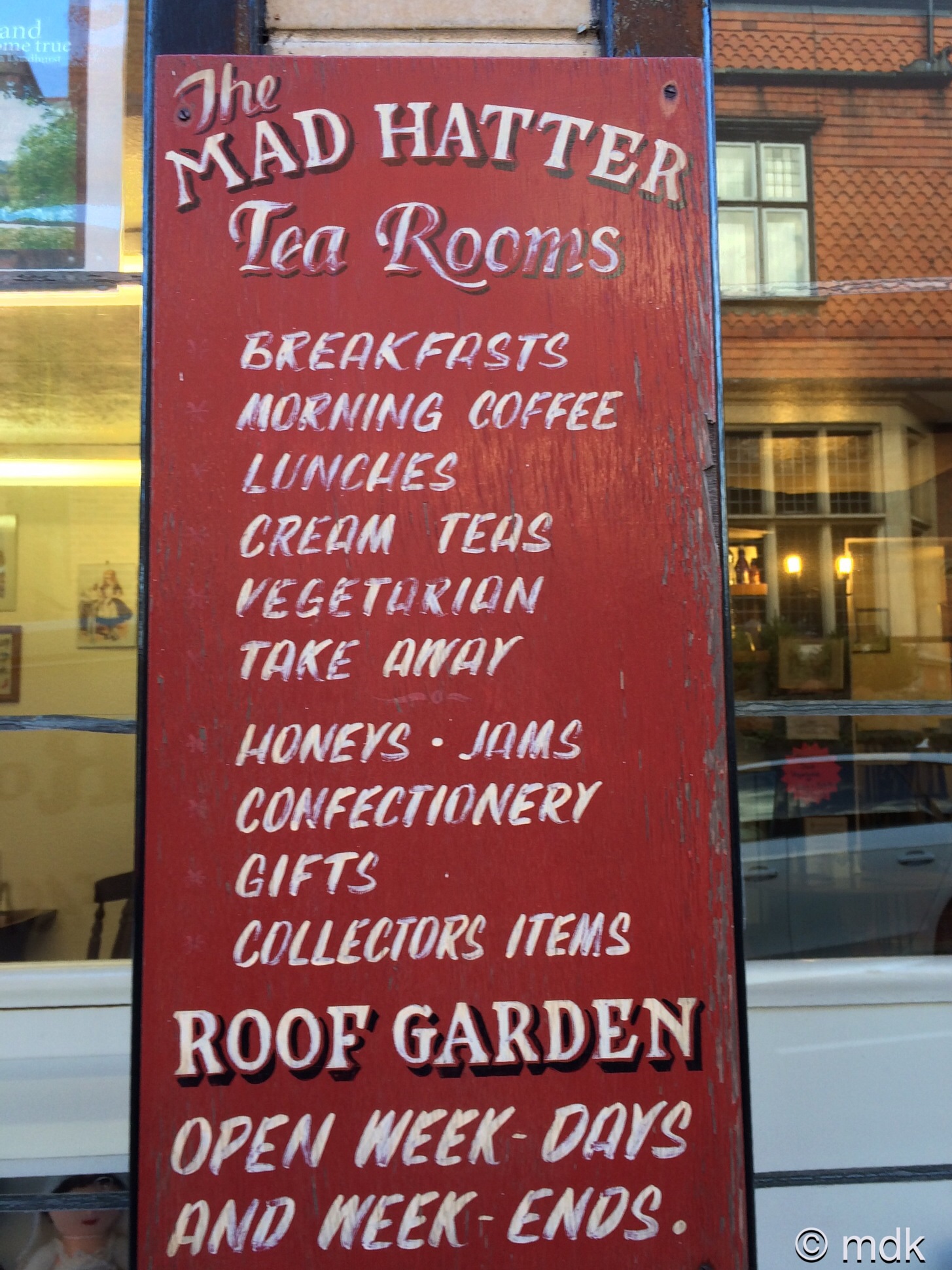
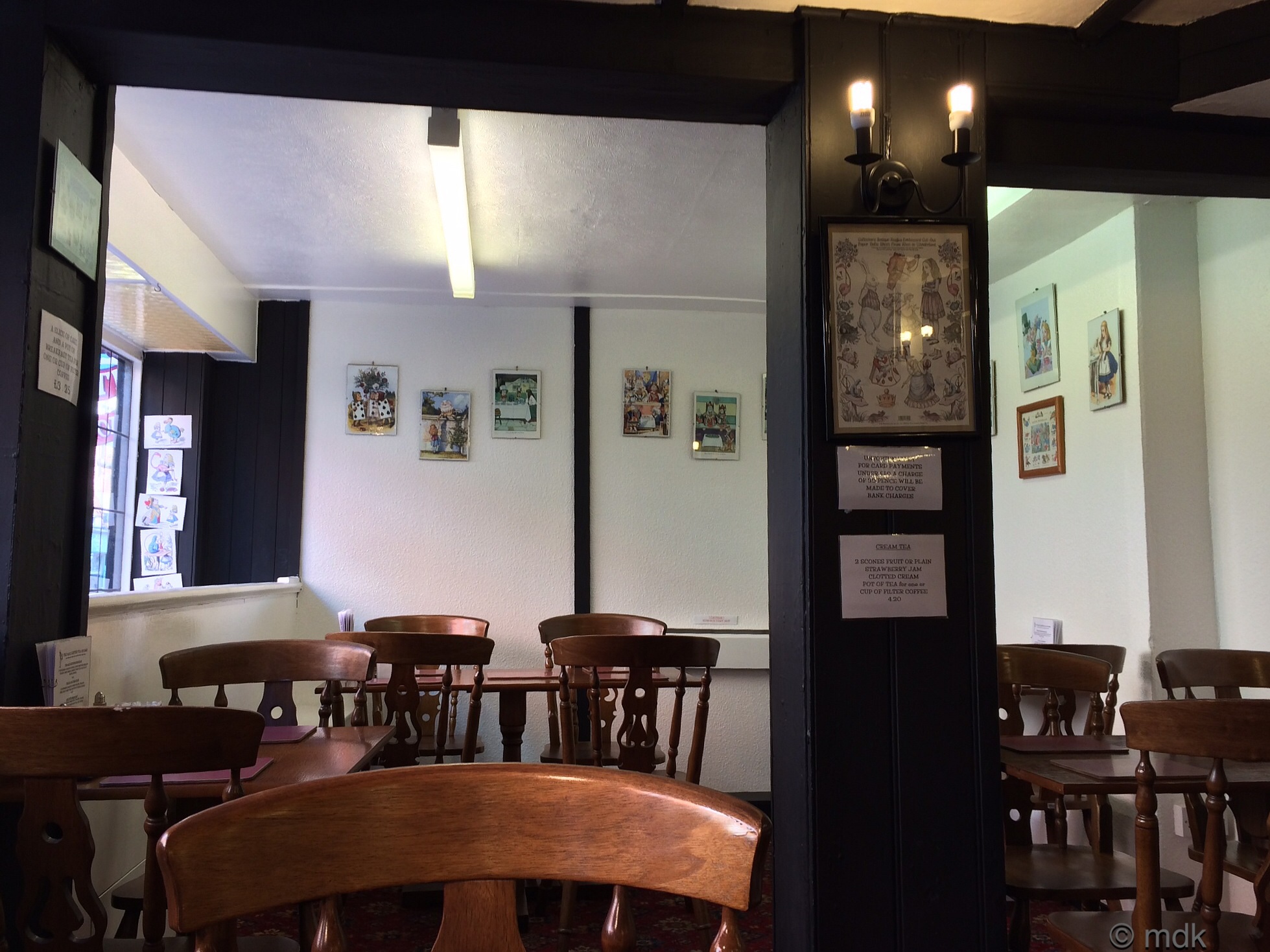
While she made my latte the waitress asked if I’d come to see Alice’s grave.
“Such a pity her house was demolished,” she said.
I hadn’t even known it had been but I agreed, it was a shame. The coffee was good and I enjoyed a little quiet time relaxing and looking at all the pictures and ornaments. It may not be to everyone’s taste but I thought it was wonderful.
So far, apart from the bus disaster in Southampton, it had been an enjoyable morning, if a little light on the walking front. Fortified with yet more coffee I set about putting that right.
You have made it look very attractive, it would be a good place to visit I can see. Sorry about the bus debacle and hope you got better luck going home.
It’s a beautiful place fora walk for sure
I’ve always heard that Lewis Carroll was smoking opium when he came up with Alice in Wonderland but I’ve never been able to find out if it was true or not. I do know that he took some very strange photos of children in his day.
Riding the busses must be educational I would think, since you hear so many complaints about them.
I’m pretty sure Mr Carroll did some kind of mind altering drugs before writing Alice in Wonderland.
What a lovely little town you discovered! Looks well worth the bus ride and waiting around.
It is a lovely little village. The New Forest is full of them
I wish I had known you when I was teaching Lewis Carroll’s works to literature students. My students and I would certainly have enjoyed the settings you depict here. Thanks!
I wish we had had the Alice books on our syllabus at school. It is only recently I discovered the Alice connection with Lyndhurst. Funny the things you miss about the places close by.
I await your walk with keen anticipation.
You won’t have long to wait, it will be published tonight.
I love Alice In Wonderland. Though I didn’t name her, my dog came with that name as well. Quick question; in the shot with the costa sign, the lines on the street appear wavy and strange. Why is that? Does it mean no parking? Love seeing your world!!
The zig zag lines are there because there is a zebra crossing just out of shot. These warn of the crossing and cars are not alowed to stop there except to let people across the crossing. I’ve always loved the Alice stories too.
a “zebra crossing”? Love zebras!
A zebra crossing is a kind of pedestrian crossing here. There are white lines painted across the road and cars have to give way to pedestrians on them. They’re called zebra crossings because of the black and white stripes. You might have seen one on the cover of the Beatles’ Abbey Road album.
Ah, Cross-walks here!
🙂