
The first thing we noticed about the Holy Trinity Church at the top of Narrow Hill, was the shut door. It had been a short but steep walk from the house where my great great grandfather Thomas Haley lived with his family. The land for the church was gifted by the Bishop of Winchester and the Duke of Marlborough in the 1840’s and the church was built between 1848 and 1849 by architect Benjamin Ferrey of Christchurch. After our earlier good fortune at St Mary’s, the shut door was a slight disappointment.
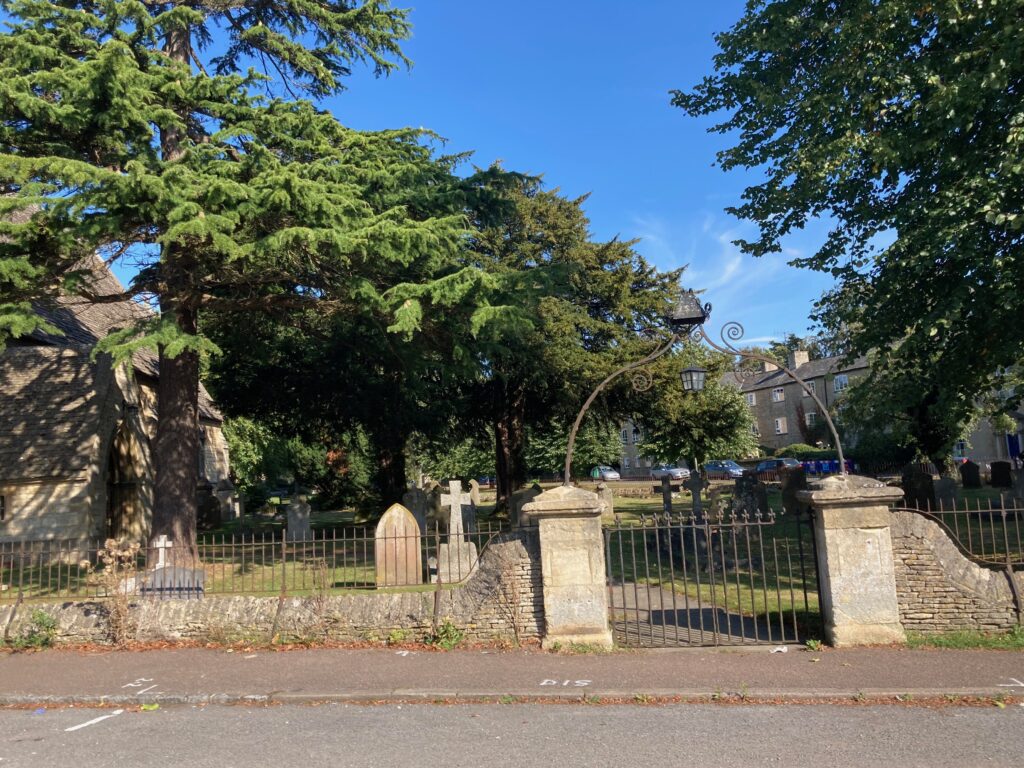
We thought perhaps the door around the other side of the church might be open. We walked through the gate full of hope. At first it appeared as if we were in luck, but a closer look showed we weren’t. This was a shame because I’d read that the pulpit, fitted in 1909, was created in the Woodgreen workshop of Leonard Shuffrey, the architect son of Thomas Haley’s next door neighbour. The Shuffrey family must have been celebrities in the area, with one son an artist, another an architect and the pulpit in the church dedicated to their parents Samuel and Mary Shuffrey. I wonder if it gave my poor great great grandfather an inferiority complex?
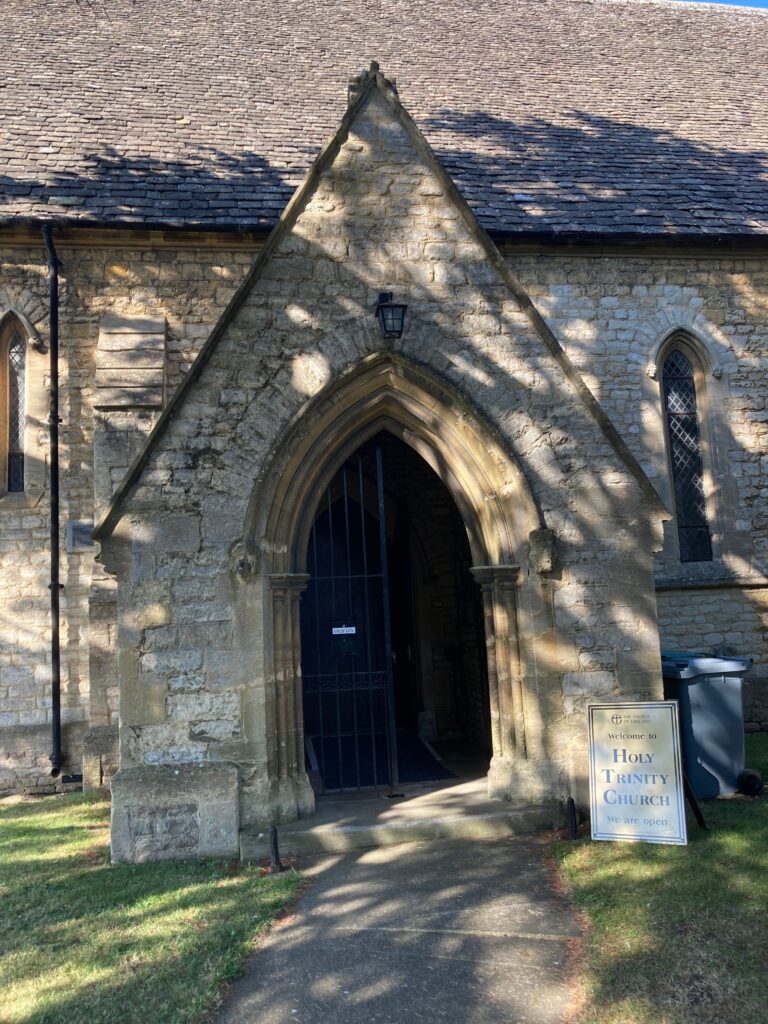
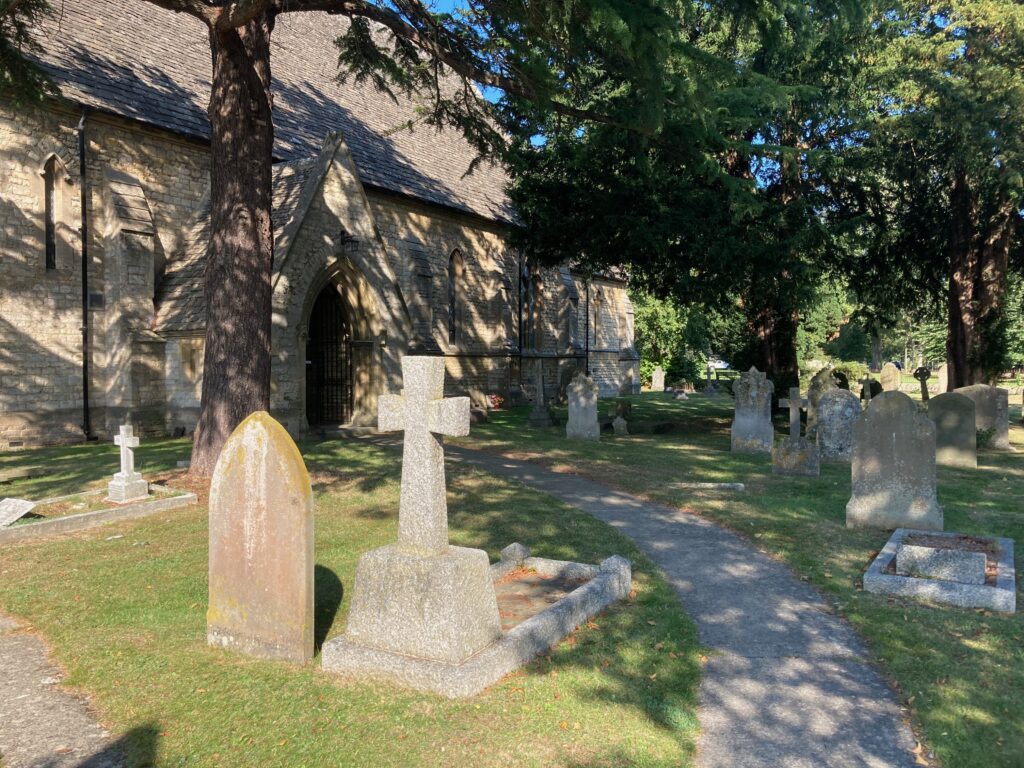
Disappointing as it was not to be able to go inside the church, the sun was shining and we could still walk around the churchyard. This was, after all, my main focus. Thomas Haley Junior, my great great grandfather, died in late 1887, not long after his namesake, my grandfather, Thomas John Haley, was born. This was where he was buried. For the second time that day, we found ourselves wandering around peering at graves, and for the second time, we didn’t find what we were looking for. Haley graves were, it seemed, very illusive.
If I’m honest, I never really expected to find the grave. Seeing his house and the church where he worshiped and was buried was more than I’d really expected. The sun had stayed out, despite a fairly dour forecast and I felt I really was walking in the footsteps of my Thomas, the grandfather who coloured my childhood and inspired my first novel. As we walked back down Narrow Hill towards West End, I felt content. Witney was a place I’d only ever heard about from my grandfather. I felt lucky to be able to see it with my own eyes and pleased that it seemed not to have changed too much since he last walked these streets.
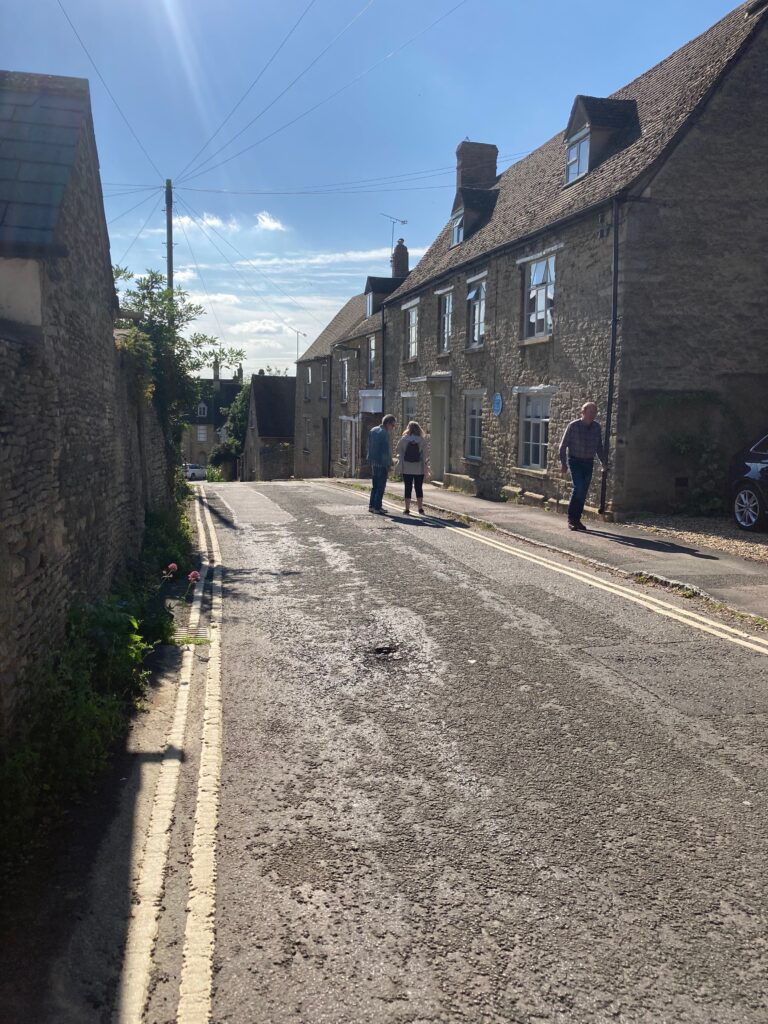
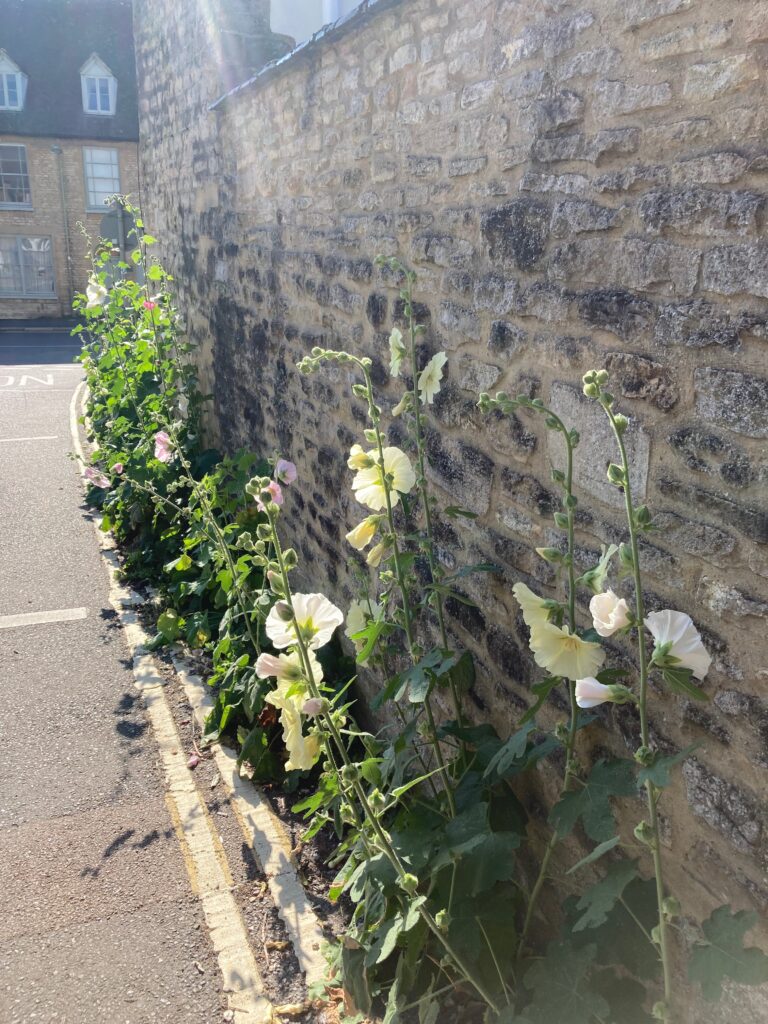
From the outset I knew I wouldn’t be able to find the next house on my list. I knew that Elijah Haley had lived on Crawley Road after he married Esther Brodrick and this was where my grandfather, Thomas, was born. The problem was that the early census records did not give house numbers and, unlike Narrow Hill, there was no convenient blue plaque to help me out. The 1939 register said he lived at 8 Crawley Road but it was clear from a long, hard look at the old OS maps, that a lot of houses had been built on Crawley Road since 1939, when Thomas was born. I knew it was the fifth house from the junction of West End in the 1880’s, but in the circumstances, this wasn’t much help. Still, when we reached the bottom of Narrow Hill the sun was lighting up the hollyhocks growing against the old stone wall and turning them into pretty little lampshades. What more could I ask?
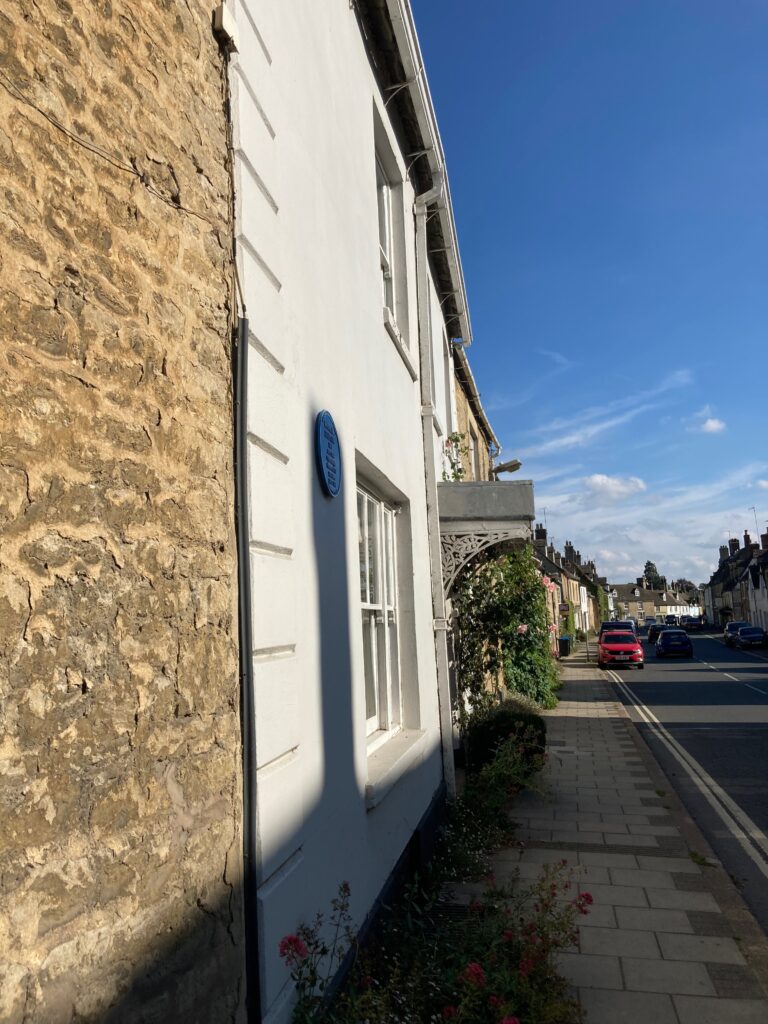
We had a little way to walk to the end of West End and the junction where Crawley Road began. In the space of that short walk I learned two interesting things. The first was that Patrick Steptoe, the pioneer of IVF, had lived in West End between 1917 and 1943. There was a blue plaque on the outside of his house and what a pretty house it was with a lovely porch and roses around the door. Now if only he’d lived next door to Elijah . . .
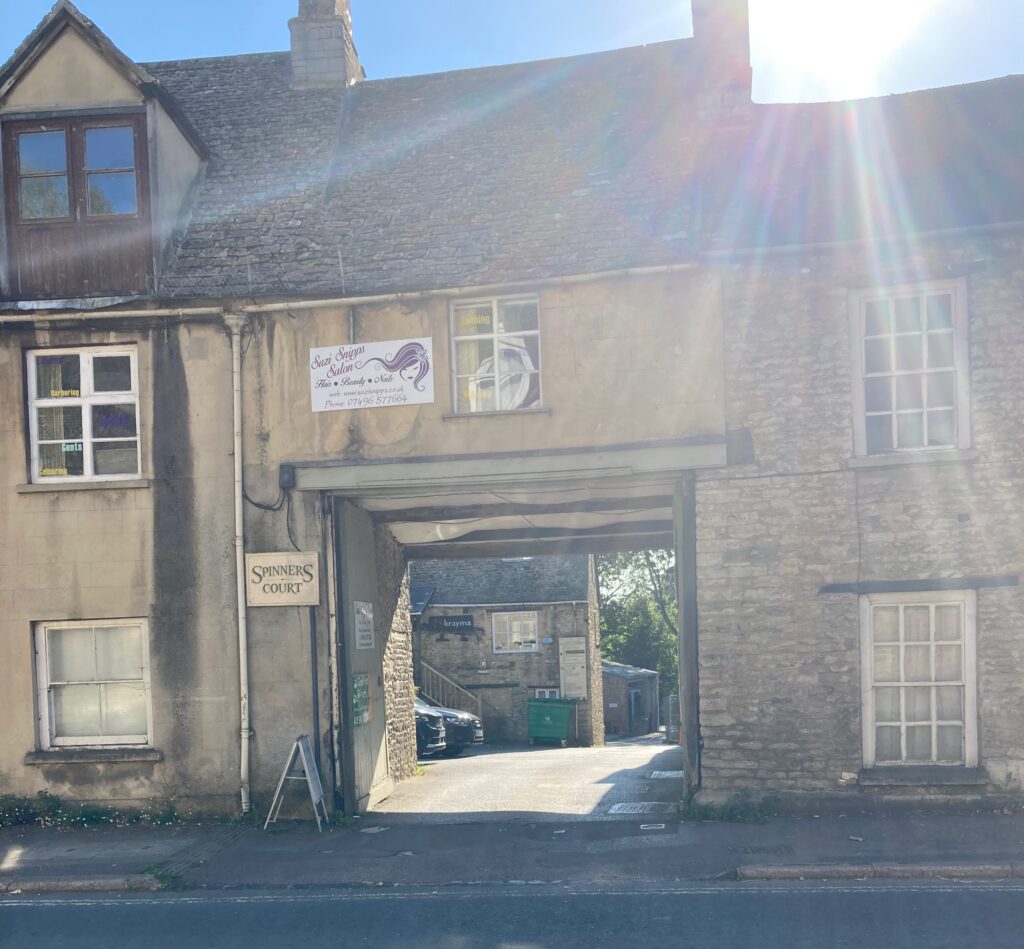
The second thing I learned was that the odd garage, come workshop entrance I’d seen at Thomas Haley’s house on Narrow Hill might have had a whole different use. We passed a house called Spinner’s Court with the same kind of opening, leading to a courtyard filled with other buildings. A later look at a more detailed OS map told me this was almost certainly the case with Thomas Haley’s house. Perhaps this was where he made his blankets?
The old OS maps told me there were only a handful of houses on Crawley Road until well into the twentieth century and almost all of them were facing the river. Looking at the most detailed maps I could find I had a rough idea where Elijah’s house might have been, but it was clearly going to be difficult to pinpoint it on a road that had changed so much. Still, we were there, this was where my Pappy was born, this was where he’d played with his brothers as a boy. It was enough, even without finding the exact house.

On the corner of Crawley Road I spotted a house called Tenterhooks. The name made me laugh. It was also very fitting. Back in my Pappy’s day there were water meadows across the road from his house. When blankets had been woven and fulled (washed to mat the fibres and turn them into a felt like fabric) they were taken outdoors to dry on tenter racks. Gangs of men called tuckers would hang the blankets on the frames and fix them to the tenterhooks, the metal hooks driven into the frames to hold them taut while they dried. If it rained the tuckers had to dash about collecting the blankets and those water meadows were often a mass of blankets on a fine day.
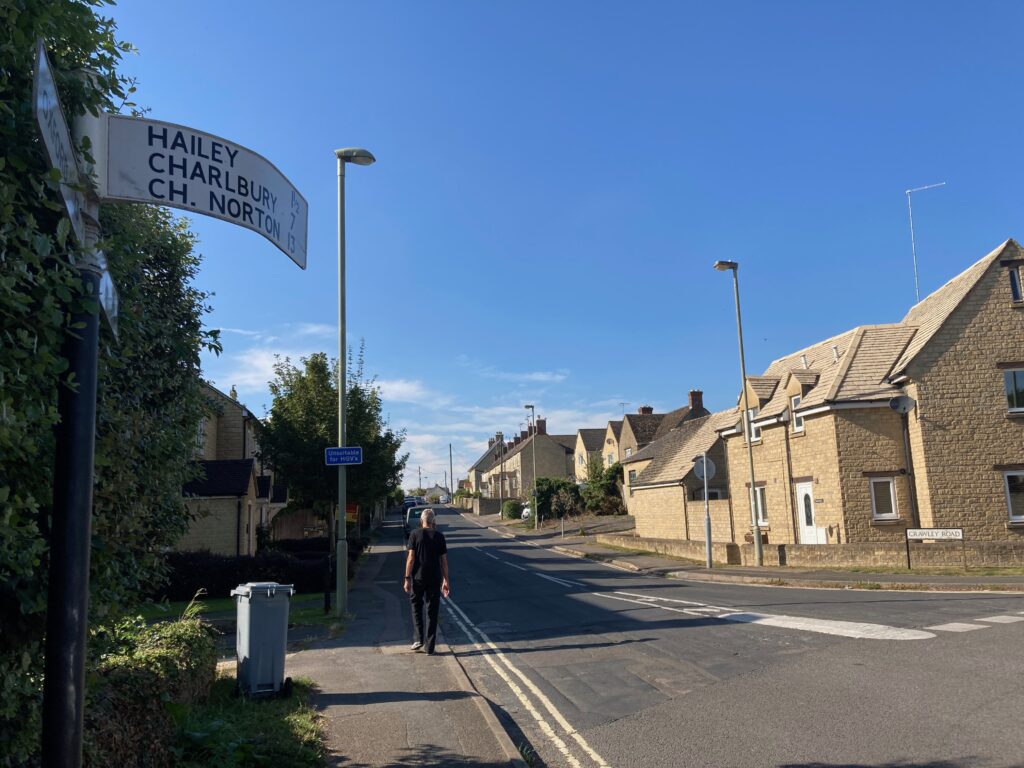
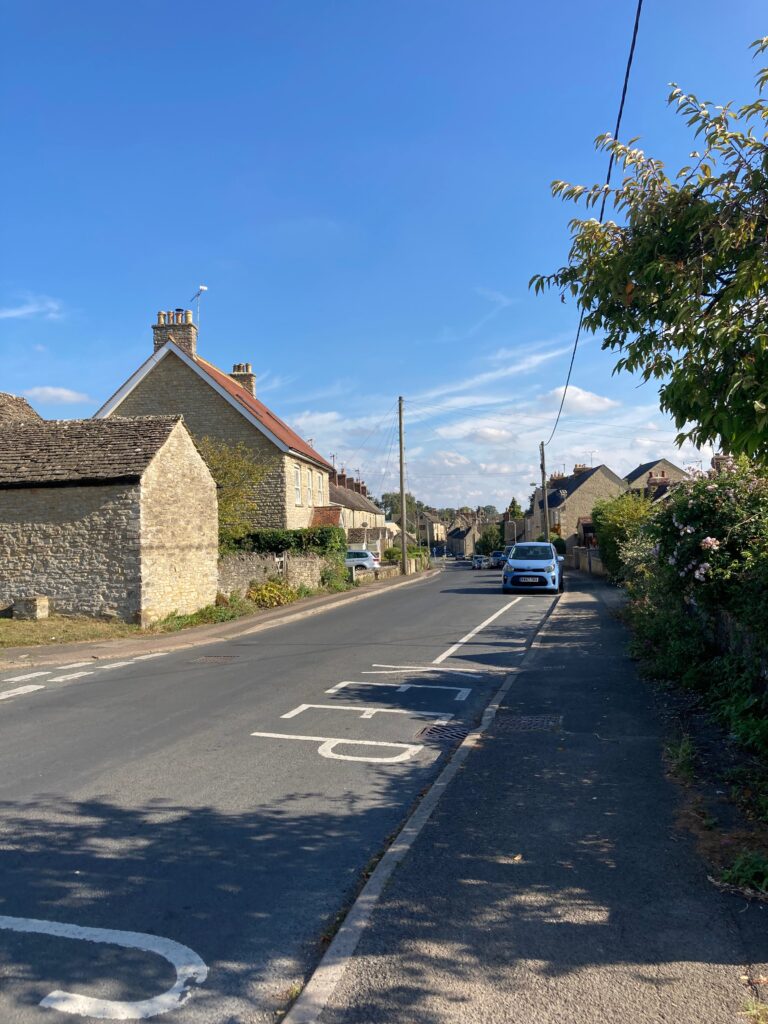
When we came to the house that I had judged to be roughly were Elijah’s had been I took a photograph, but I wasn’t convinced it was the right house. For a start, it looked far too new, although the stone of these houses does appear to wear very well and the roof was a touch on the wibbly side, so I could be wrong. Either way, it was the closest I was going to get to seeing the house when Pappy was born and grew up.
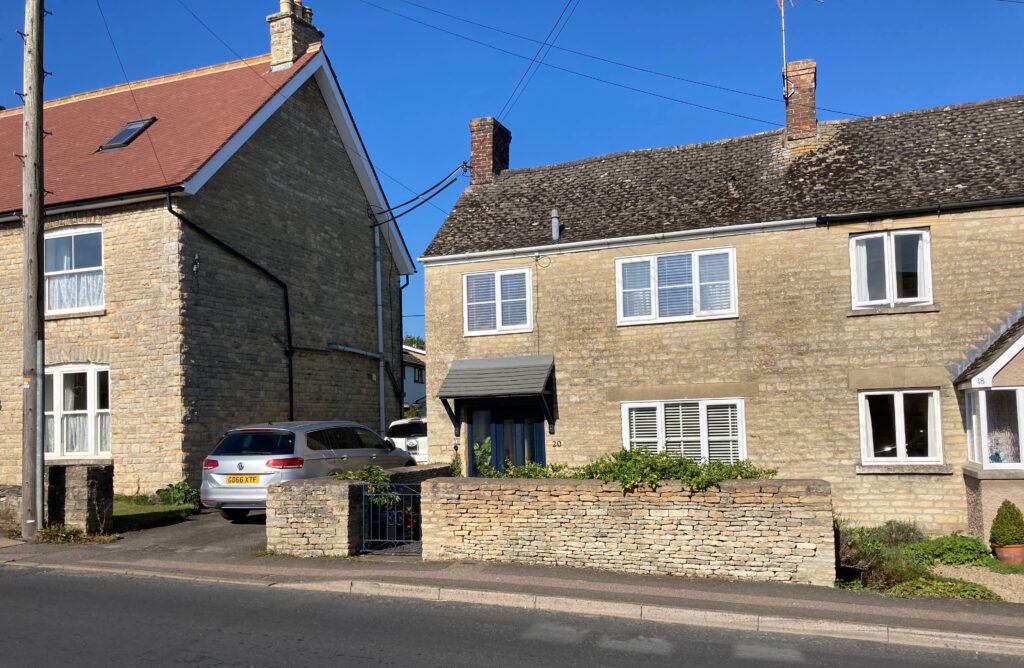
We did walk a little further along the road just in case. In case of what, I’m not sure, but we saw some lovely houses, none of which were likely to have been ones my Pappy lived in. All the while I kept thinking that this road was where it all began. Somewhere here my Pappy, Thomas John Haley, was born and grew up. This was the beginning of my story, even if it wasn’t the beginning of the story I had told in my book. This was the place that made the man I knew and loved so dearly, the man who was both brave and humble, who fought in a war, was shot, came home and barely mentioned it again.
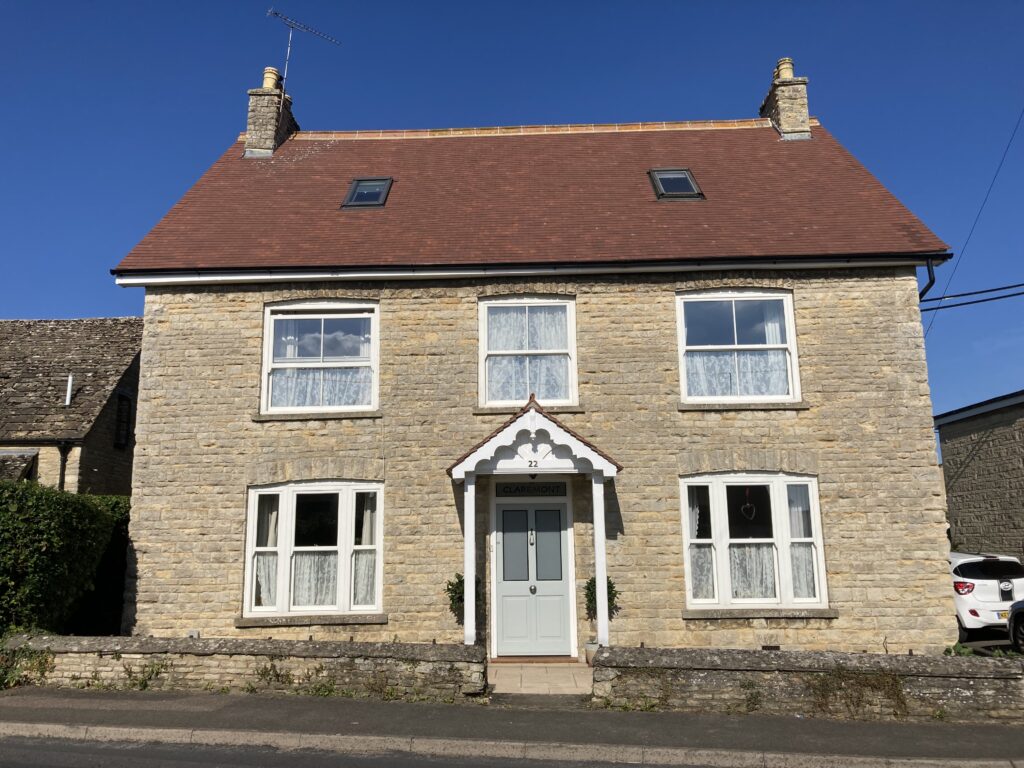
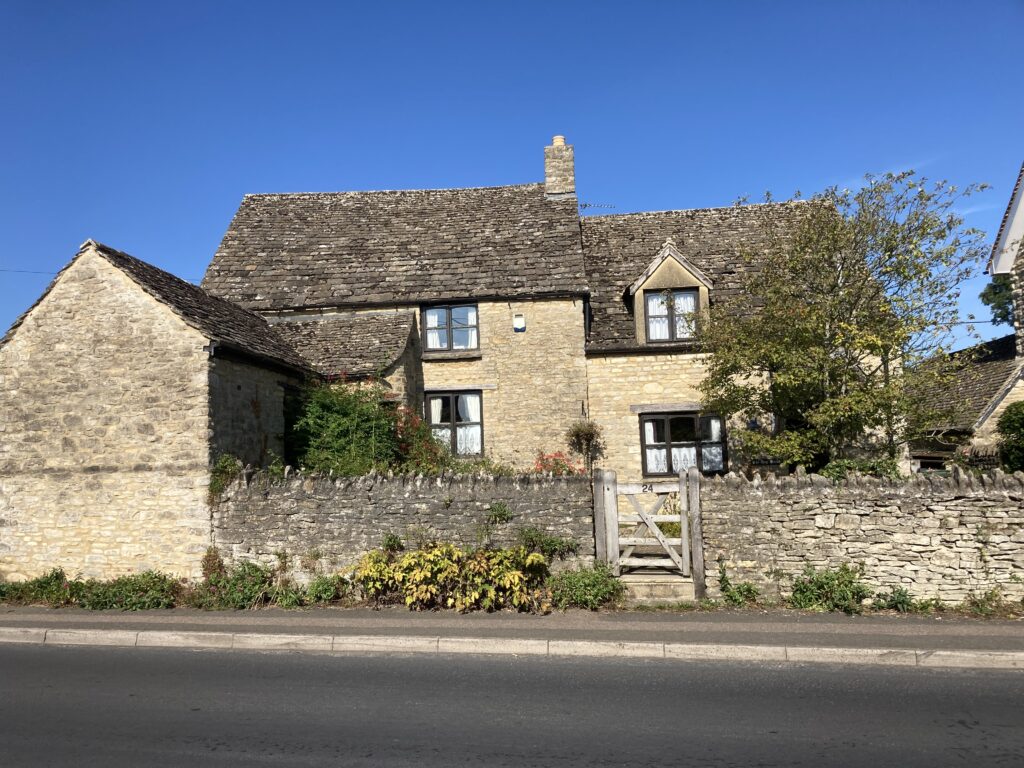
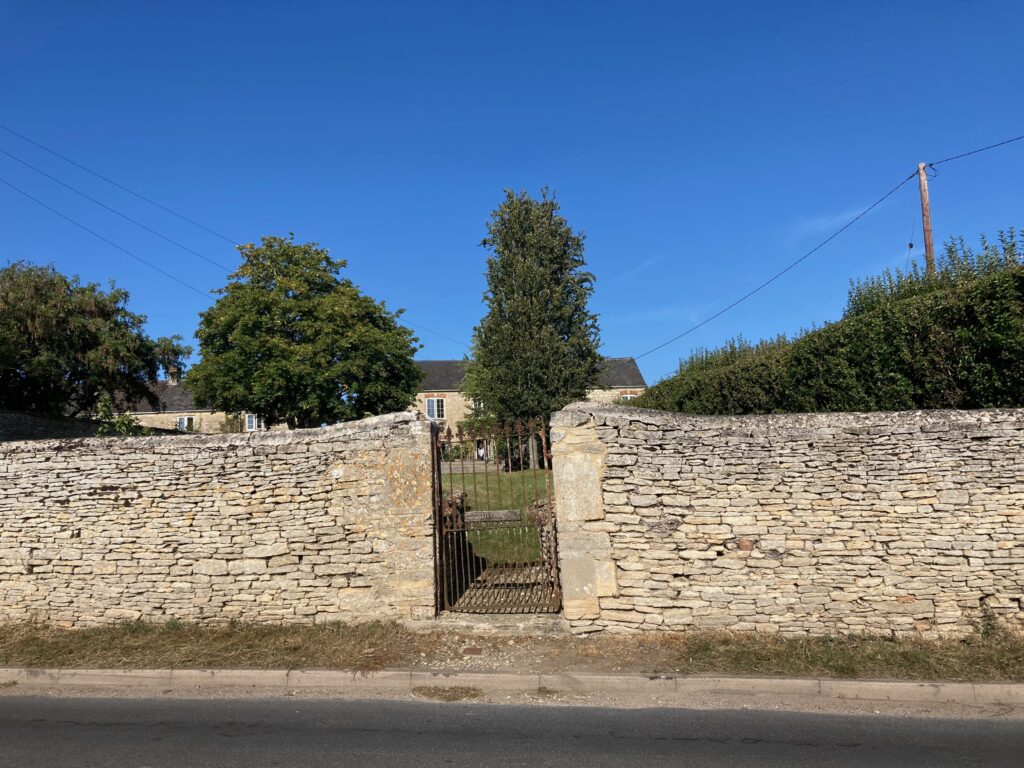
So we slowly walked back the way we’d come, down a road that Pappy would have known so well. As we did I thought about him walking here with his brothers, Hariph and Harry, three dark haired boys with blue eyes, not a care in the world, or an idea of what lay ahead for them. Then I thought of our next objective, the River Windrush. Thomas and his brothers must have played on its banks as boys. Young boys are always drawn to rivers in my experience. Because of all the houses built on its banks since Thomas was young I couldn’t see it as he had but I wanted to see what I could of it.
For once I had a plan. It might not have been the best of plans and it might very well get us completely lost but I didn’t let Commando know that. On the map I’d seen a footpath that looked as if it ran beside the river. What could possibly go wrong?
If you like what I write and would like to help me keep doing it, you can now buy me a virtual coffee by clicking on the little orange coffee cup at the bottom right. If you’re interested in my historic novels, Plagued is available now on Amazon.
Interesting and I was baptized in Holy Trinity Church.
Thank you. I wish we’d had the chance to go inside.
I was also christened in Holy Trinity Church. The lovely cottage you have pictured on the corner of Crawley Road and Westfield Road was rented by an American Airman in the 1950s and my mother did some cleaning and baby sitting for them. I went to a few birthday parties that they held in that building.
Thank you. I’d have loved to see inside some of these places.
I was also baptised in the church and attended Sunday school on a regular basis. I lived opposite the church as a child and spent many happy hours playing on the green and riding my bicycle down Narrow Hill and up the alleyway through the houses. Lovely memories.
Thank you for sharing them.
Hi again Marie
I am not too sure if it is behind the house on Crawley Road that you think may be your grandfathers but a few of those front cottages have side paths or lanes that invariably lead up to the back land which has earlier cottages on. Might just be worth a look next time you visit… as feel sure you will! I am surprised you did not visit Hailey itself or the little village of Crawley which is only half a mile further – both lovely and as I said on another post a big part of my own childhood! Your writing is wonderful – I can totally imagine your grandfather and his brothers playing around the river and wooded areas just as my brothers and I did as children. It was the best playground ever!
I really hope I will be able to go back. If I do I will be sure to see if I can find those earlier houses. It’s good to know that my imagination wasn’t too far out when I saw my grandfather and his brothers playing around the river. It really must have been the best playground ever. I did get a short time in Hailey before we went home. My post about it is due to be published tomorrow.
Look forward to it. Wow you did a huge deal in one day! I thought it was over 3 or 4!
I had a list and we walk fast. I wanted to fit in as much as I could in the time we had. I think I wore my poor husband out though. He’s used to running marathons but not so keen on walking.