
2 September 2015
When I first heard about Banksy’s rather bizarre pop up ‘bemusement’ park, Dismaland I knew CJ would want to see it. Let’s face it I wanted to see it myself. The pictures I’d seen made me smile and I immediately got the tongue in cheek concept of an alternative theme park with miserable mouse eared staff and grotesque exhibits, another ironic Banksy comment on our society of greed and sensationalism. Research told me it would be easy enough to get to, although the journey would be long. Unfortunately, so would the queues. Some said the four hour wait was all part of Banksy’s master plan, an echo of the normal theme park experience. Even CJ agreed a three hour journey, followed by a four hour queue then another three hour journey didn’t sound like much fun, so I decided to come up with an alternative.
CJ and I would go out to hunt Banksys in the wild. Obviously, the only place to do this with any level of success was Bristol, the illusive artist’s home town. Banksy, for those who don’t know, is one of Bristol’s most famous exports, a man who went from illicit spray can graffiti on city walls to five figure success in art galleries and whose face and identity is still a mystery. A master plan was devised, an extremely detailed itinerary saved on my phone, the rucksack was packed with battery packs, chocolate milk and an all important waterproof then, on Wednesday morning, we set off bright and early to catch the train.
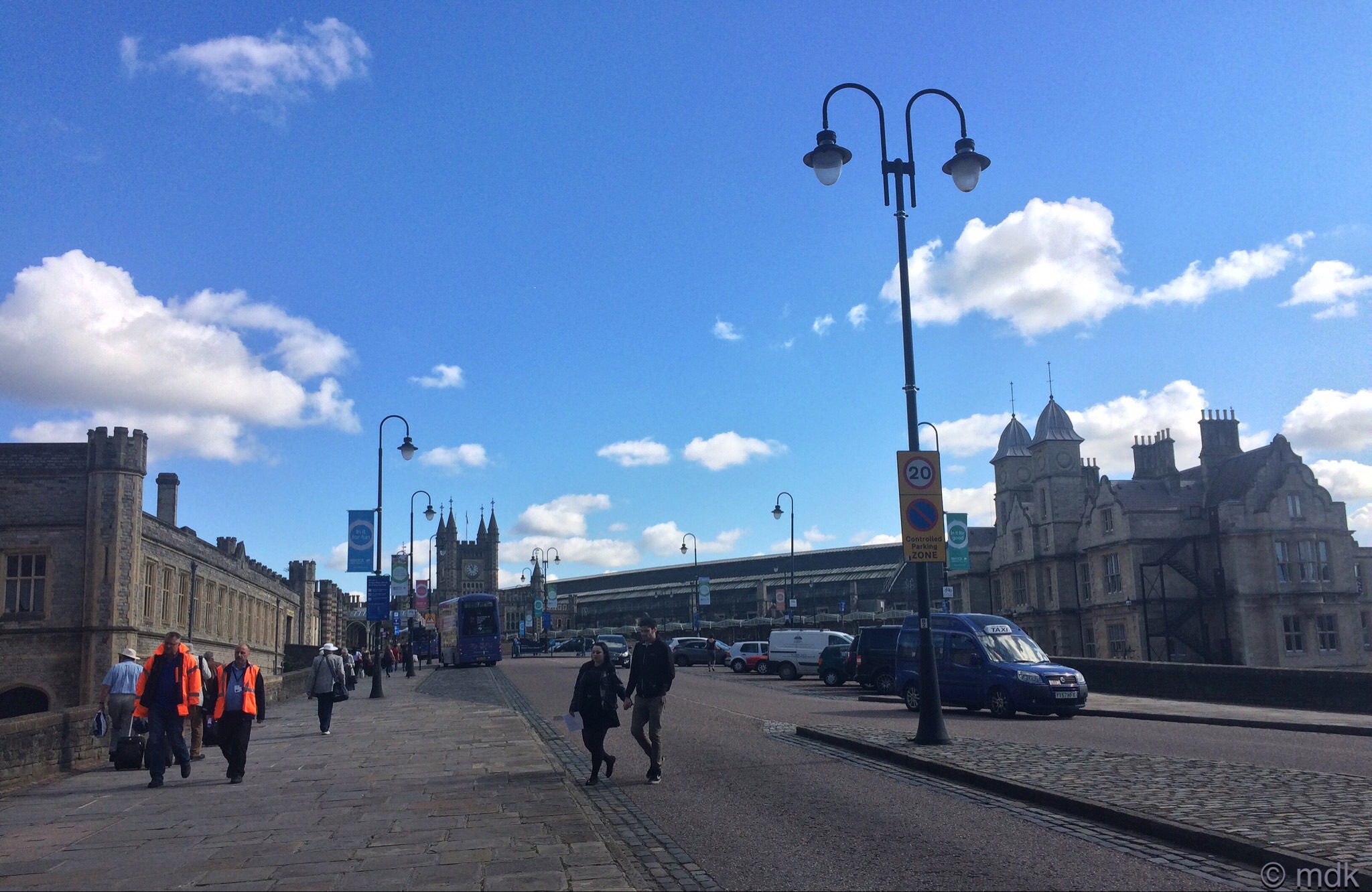
Just before eleven we left the hustle bustle of Temple Meads to find unexpectedly blue skies. The weather forecast had been for mid morning showers getting worse in the afternoon so we were under no illusions about staying dry. Any blue sky was a bonus and it set off the old station building perfectly. Named after the nearby Temple Church, it was erected between 1839 and 1841 on pasture land just outside the old city boundaries, hence Meads, a derivation of an Old English word for meadow. It may not have been what we came to see but there’s no denying Isambard Kingdom Brunel’s original Tudor style building and the Gothic towers and clock of the main entrance, added in the 1870’s by Matthew Digby Wyatt and Franics Fox make an impressive welcome to the city. To the right the Jacobean style office building, built in the mid 1850’s by Samuel Fripp, completes the scene.

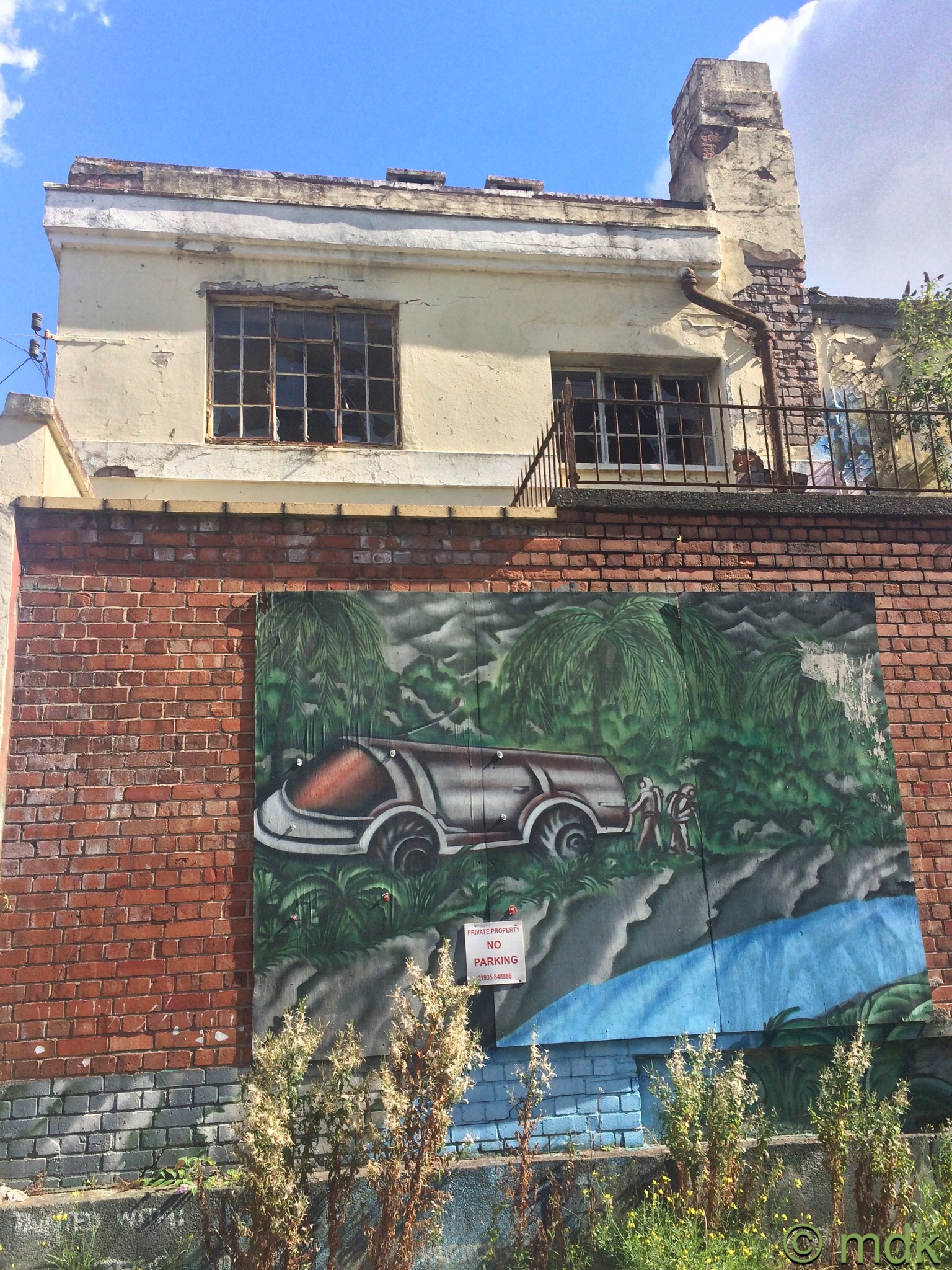
After a quick stop to look at Google Maps and get our bearings we were off along Redcliff Lane and Prewetts Street where we saw our first Bristol graffiti. It may not have been Banksy’s work and I had no idea what it meant but the contrast of the strange vehicle and men in what appear to be space suits ahainst the crumbling brick and broken glass of the derelict building appealed to me.
Carefully following my directions and peering at street signs we continued towards what we hoped would be our first genuine Banksy of the day. When we came to the end of Guinea Street and I saw the turquoise struts of the footbridge I have to admit to a little relief, my instructions were working. Smiling, we crossed to Spike Island, created in the early nineteenth century by William Jessop when he diverted the course of the River Avon creating a floating harbour and a canal like cut. The island became home to quays, shipyards and warehouses with a harbour railway which once connected these with the rest of the railway network. These days it’s mostly upmarket housing.

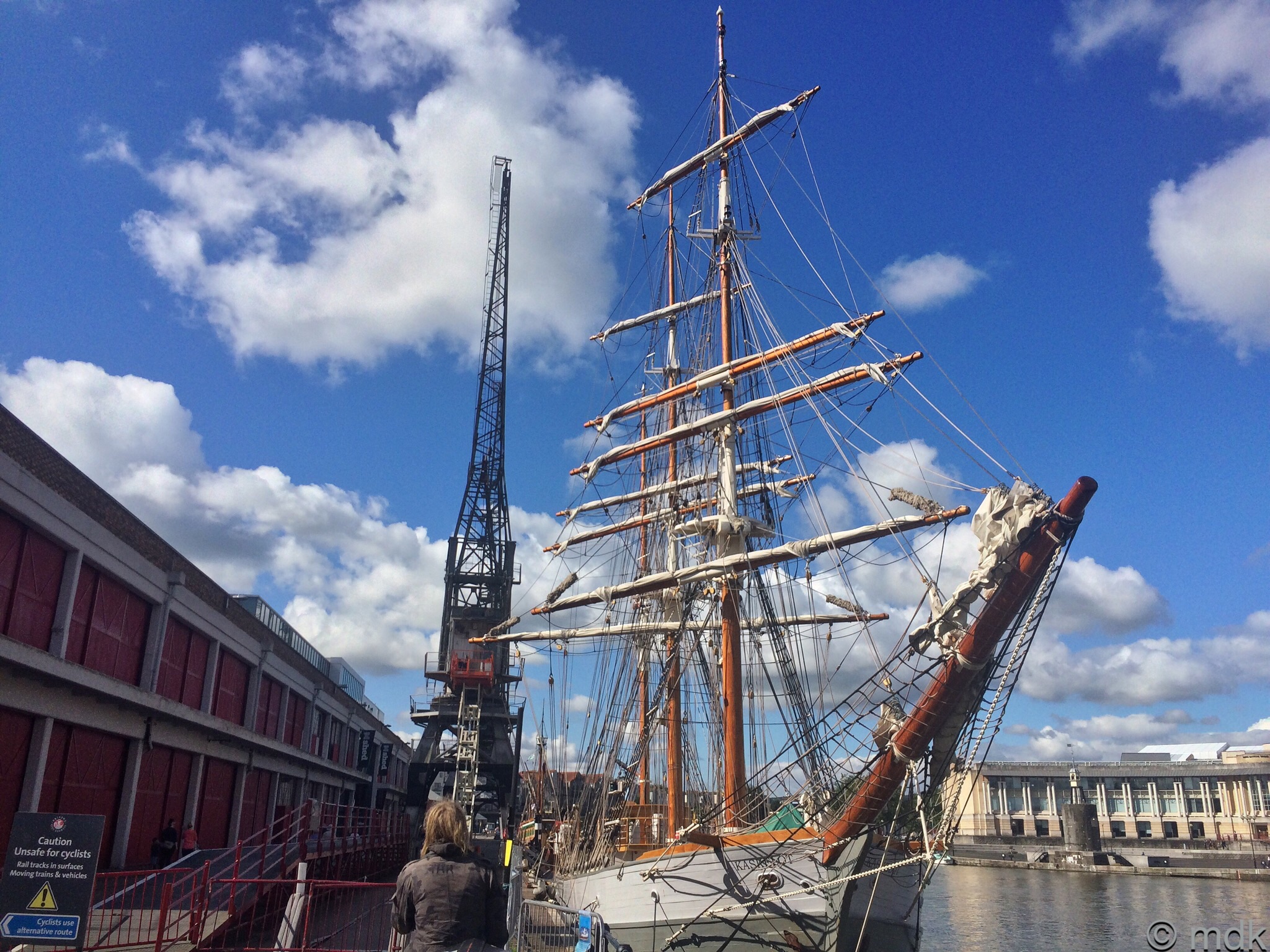
Sticking to the plan, we turned right towards the water of the floating harbour, past the fancy flats until we could see Prince’s Wharf in front of us. There was a quick stop to admire the massive cranes and the tall masts and furled sails of Kaskelot, a three masted barque. Built in 1948, to carry supplies to coastal settlements in East Greenland it is one of the largest wooden ships still in commission. Nice as it was to stand in the sun looking out over the water, we had an itinerary to follow and we were right outside our first objective, M Shed. This former transit shed is now a museum and was, I hoped, home to our first Banksy. We were both surprised to find admission was free, although there was a place to make donations, which we did.
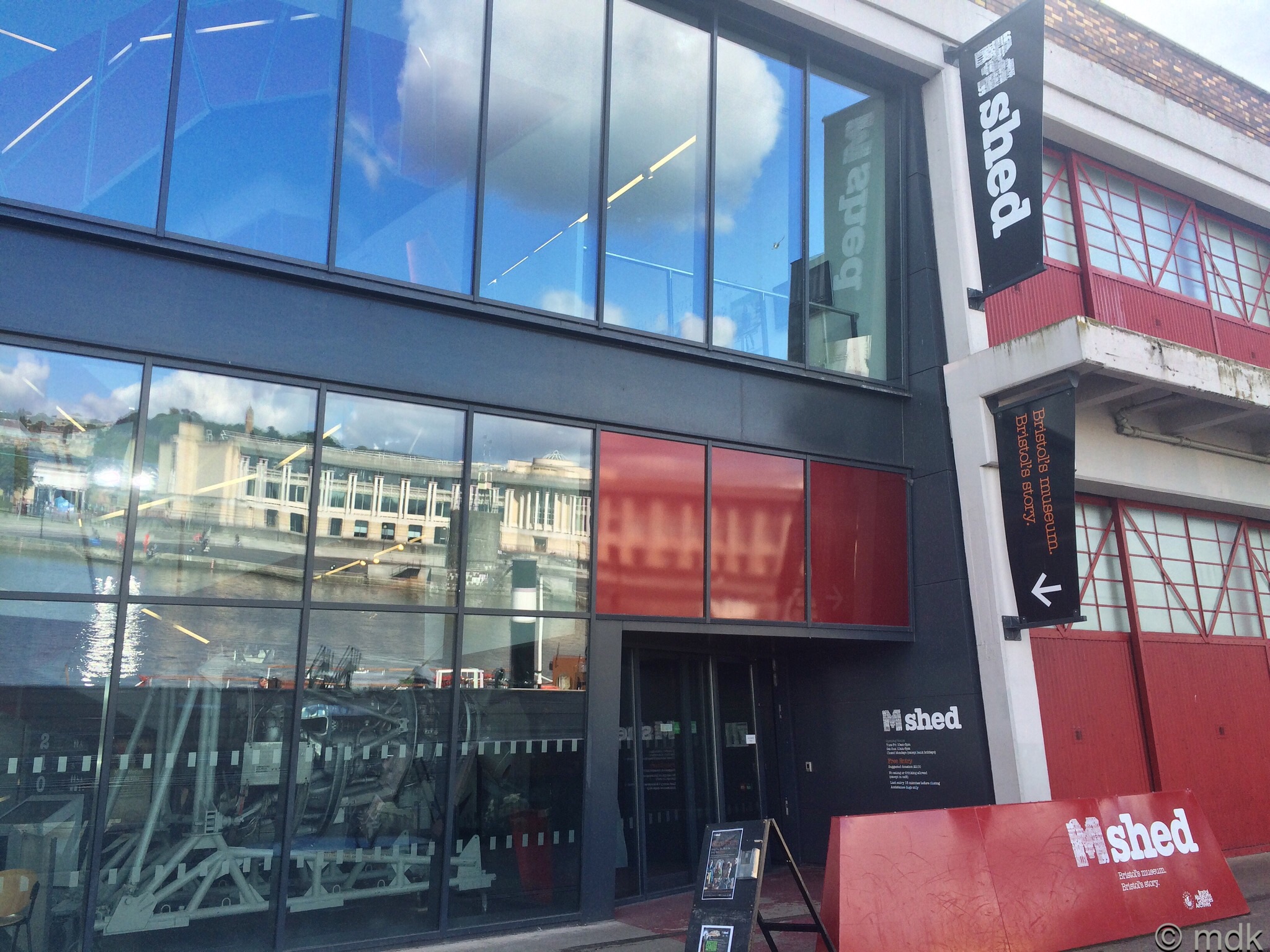
Straight away it was obvious our mission could become derailed right there. It was hard to drag CJ away from all the engines and mechanical things in the foyer and neither of us had a clue where to start looking for the illusive Banksy. Once the slightly macabre stencilled graffiti, called Grim Reaper, could be seen on the side of the old cargo ship, Thekla, we’d seen moored in the Mud Dock of the floating harbour. The ship, built in Germany in 1959, was once used to transport timber to ports in the Baltic Sea but, in 1982, novelist Ki Longfellow Stanshall had the idea of using her as a floating theatre. In 1990 she became an underground nightclub and also the canvas for Banksy’s artwork. Grim Reaper was actually painted over by the harbourmaster at one point, against the wishes of the club’s owners, but Banksy returned and repainted. In August 2014 the painting was cut from the side of the ship to stop it being destroyed by the elements and, after conservation work, was put on display in M Shed. By a stroke of luck we stumbled upon it within the first ten minutes, although even I was getting distracted by all the interesting exhibits and wishing we had more time.

A little further on we found Bristol illustrator and graffiti artist, Andy Council’s, massive mural, Dinosaurs. The gigantic dinosaur made up of city landmarks looming over the dockside cranes struck a chord with me. Often I’ve looked at our own Southampton cranes and seen metal dinosaurs. Nearby I spotted a painting by one of my favourite artists Beryl Cook. Although she had no formal training, didn’t even start to paint until she was in her thirties and was never accepted by the art establishment, her paintings of the life she saw around her are reminiscent of old seaside postcards and are guaranteed to raise a smile. Cook lived in Bristol for several years and this particular painting, Jazz in Winter, is a scene from a Bristol pub, Old Duke on King Street. She and her husband had been enjoying the Jazz one Friday night and she noticed a little old man drunkly dancing. When he began to stumble into the bandstand one of the musicians calmly took him by the arm and danced him right out the door.
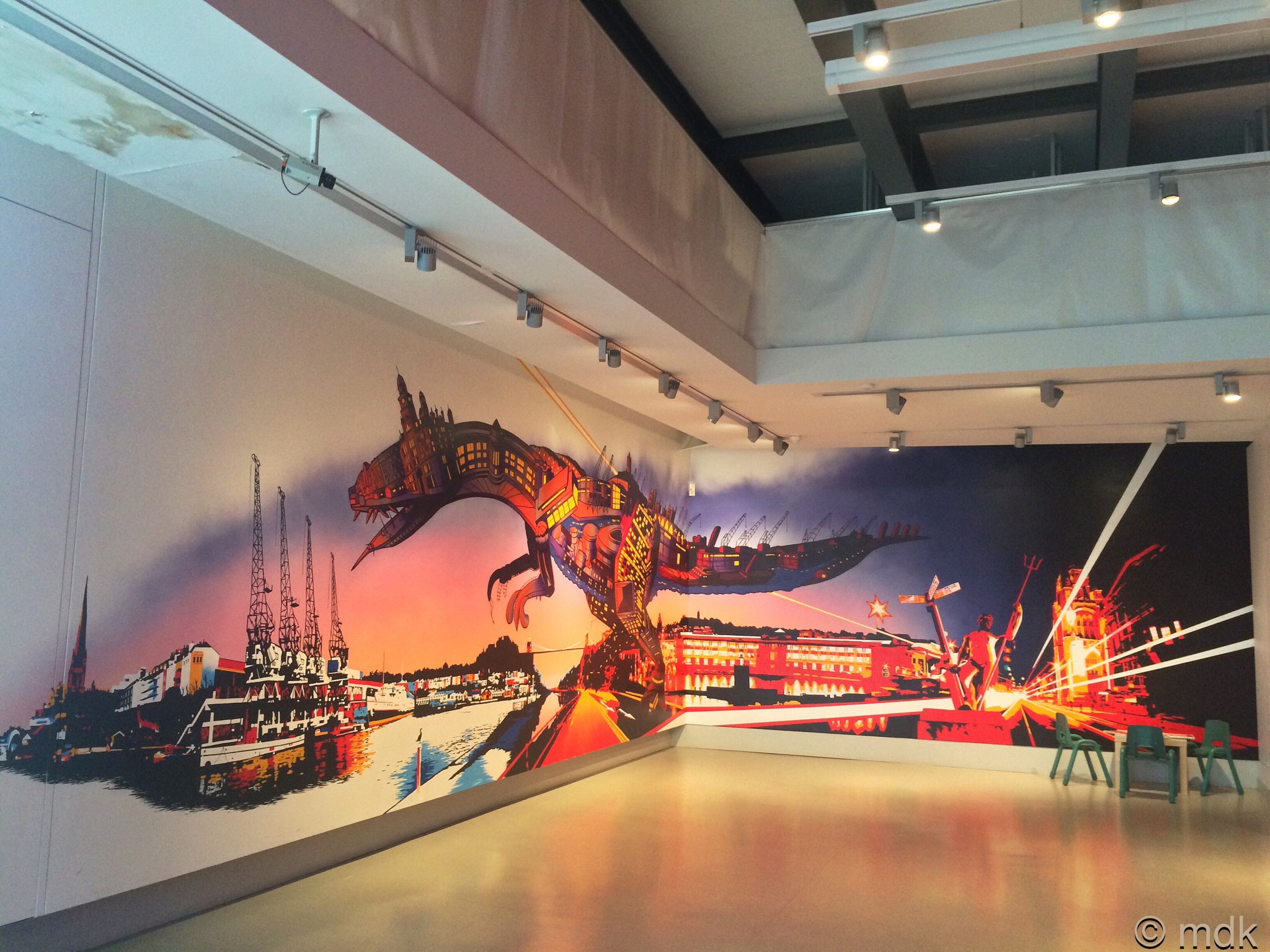

Of course, these artworks were just a tiny part of all the interesting things on display. We saw exhibits about old buses, clothes, machinery, even Wallace and Gromit, Nick Parks’ loveable clay animation characters, created in the Aardman Animation Studios right there on Spice Island. Then there was the oak door and porch of Spicer’s Hall, removed when the front of the building, near Bristol Bridge, was demolished in 1885. In medieval times only freemen of the city were allowed to trade freely and outsiders could only sell wholesale to Bristol merchants. Spicer’s Hall, built in the early 1300’s, was where their goods were stored and sold. Originally the building had been home to Richard Spicer, MP and three times Bristol’s Mayor.

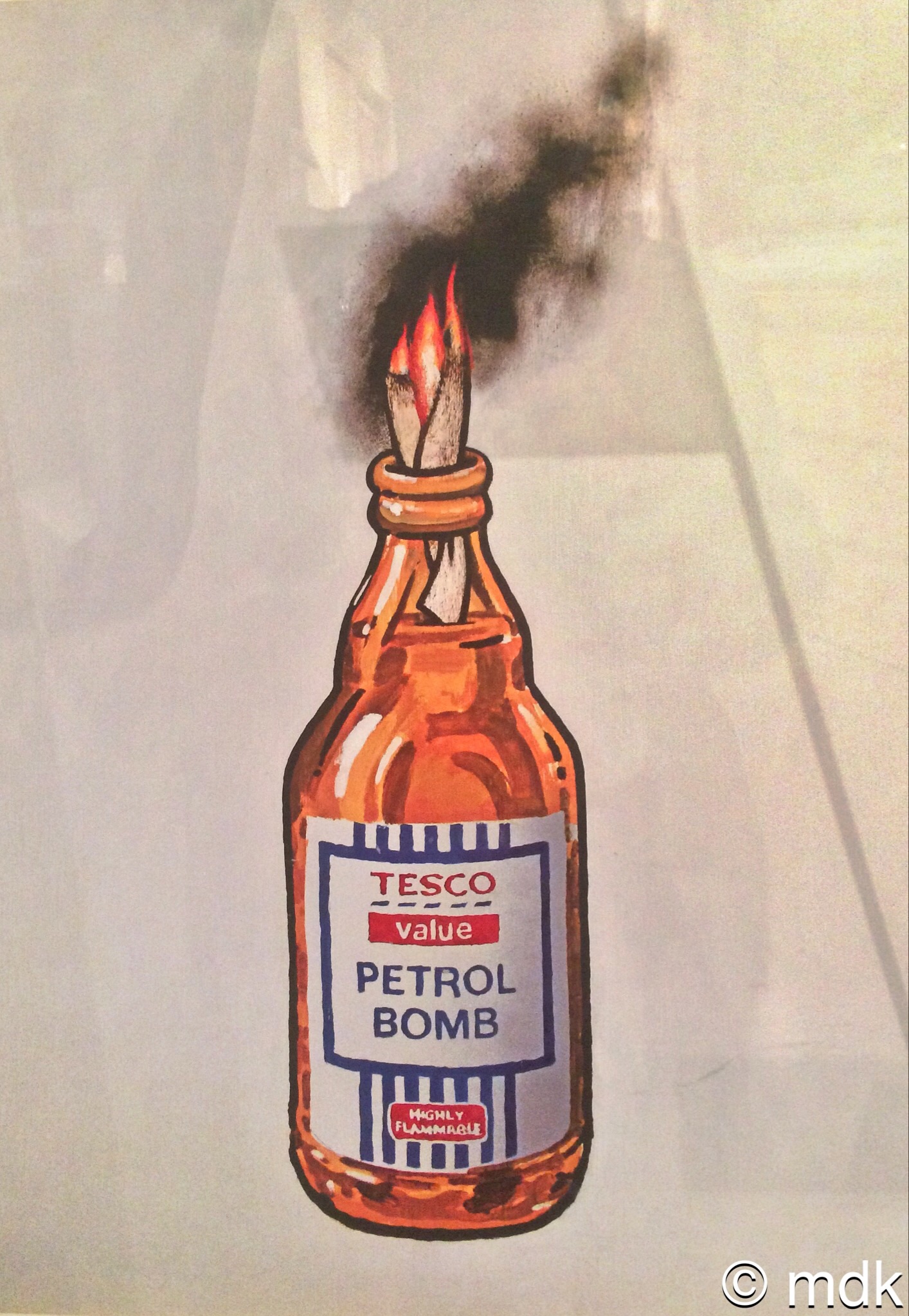
Ironically, even today the people of Bristol aren’t overly keen on certain outsiders trading in their city. Back in 2011 there were riots in Stokes Croft when a Tesco Express opened despite residents’ protests. Quite what the residents of Stokes Croft had against Tesco is a mystery but the riots were violent and petrol bombs damaged the store. Banksy, who had already created a range of Tesco value soup can prints, referencing Andy Warhole’s famous Campbell Soup can, along with Very Little Helps, a print of children standing below a Tesco flag, couldn’t let the occasion go unremarked. He produced a print of a Tesco Value petrol bomb a copy of which we saw close to the door of Spicer’s Hall.
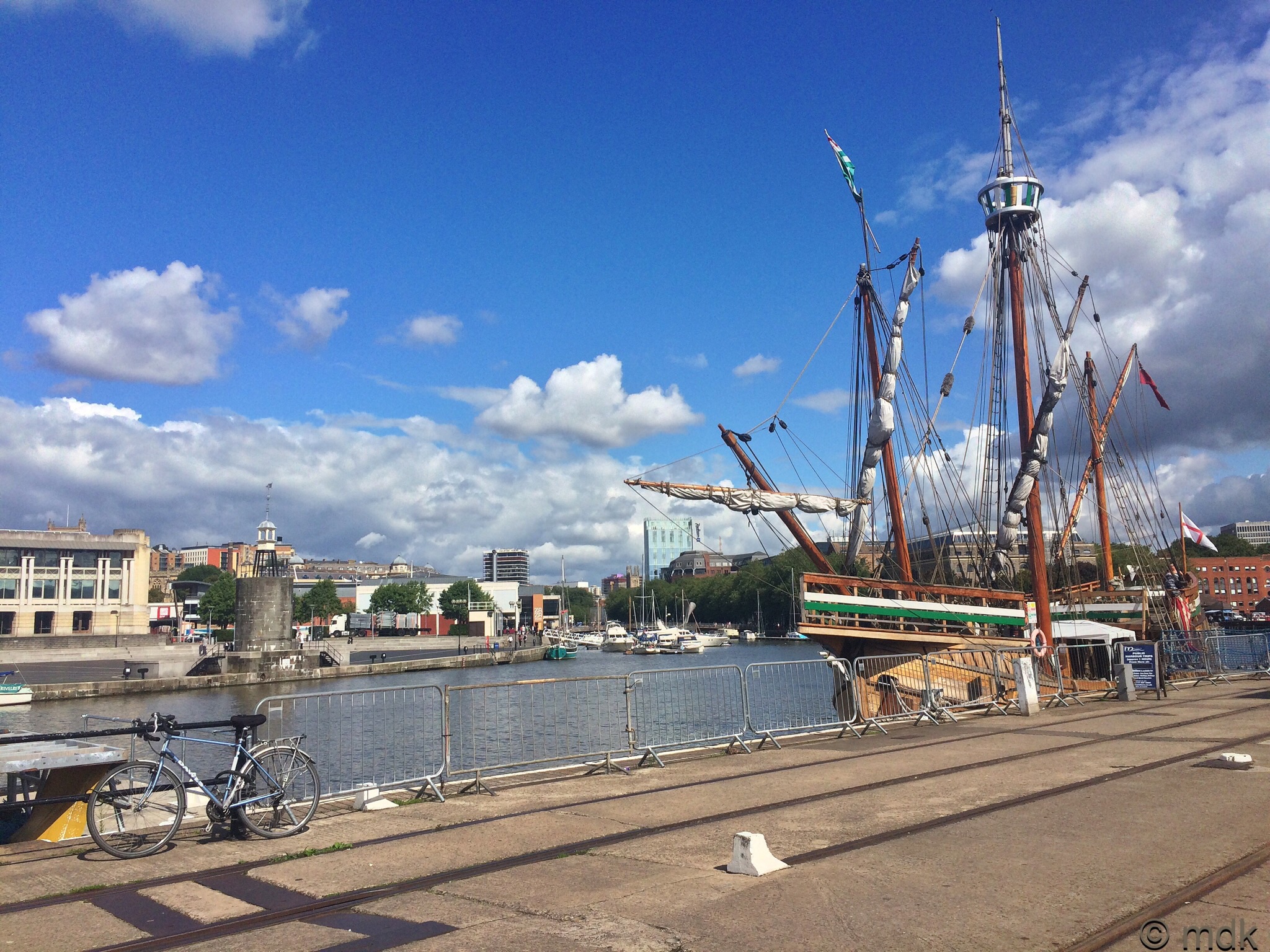
We could probably have stayed in the museum all day but it seemed a shame to waste what good weather there was. Besides, it was almost midday and we were both getting hungry. Back outside a few more clouds had gathered in the bright blue sky. We stopped for a moment to look at another sailing ship in the floating harbour and the row of enormous electrically powered cargo cranes built by Stothert and Pitt in 1951. When CJ spotted the M Shed cafe we decided we see what was on offer.

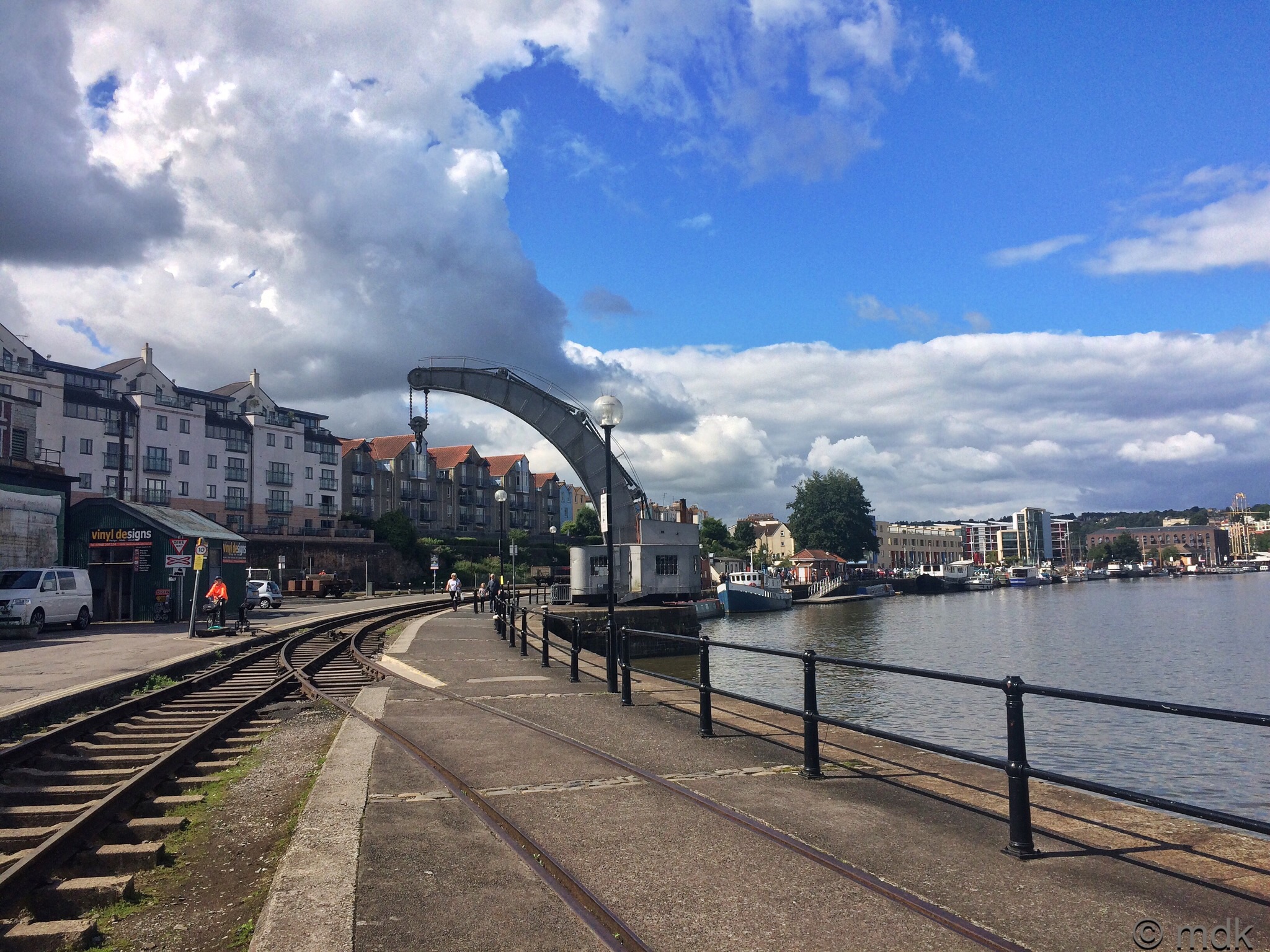
In the end we just had coffee. The salad baguettes looked nice enough but the smell of the lavender disinfectant the staff were using to clean the floor was overpowering. In another setting it might have been a pleasant enough scent but it didn’t really mix with food somehow. We figured we’d find somewhere else soon enough and carried on along the quayside. We found another crane, the only surviving example of a Fairbairn steam crane, built in 1878 by Stothert and Pitt. It was used right up until 1973 to move goods on and off ships and is still operated on special occasions. The tracks of the harbour railway ran in front of it along with old points and railway wagons. On Bank Holidays there are steam locomotives and train rides, obviously we’d missed all that.

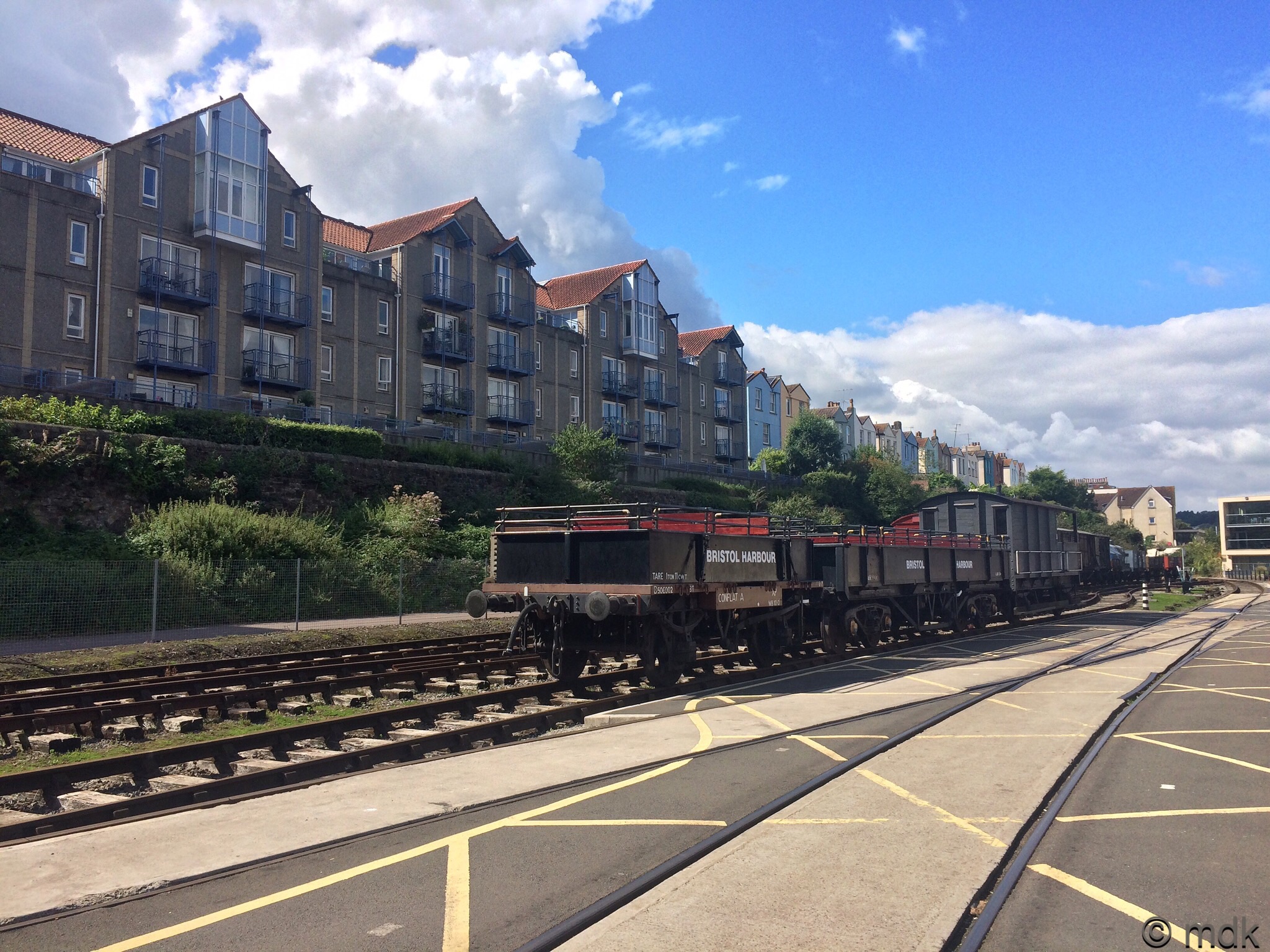
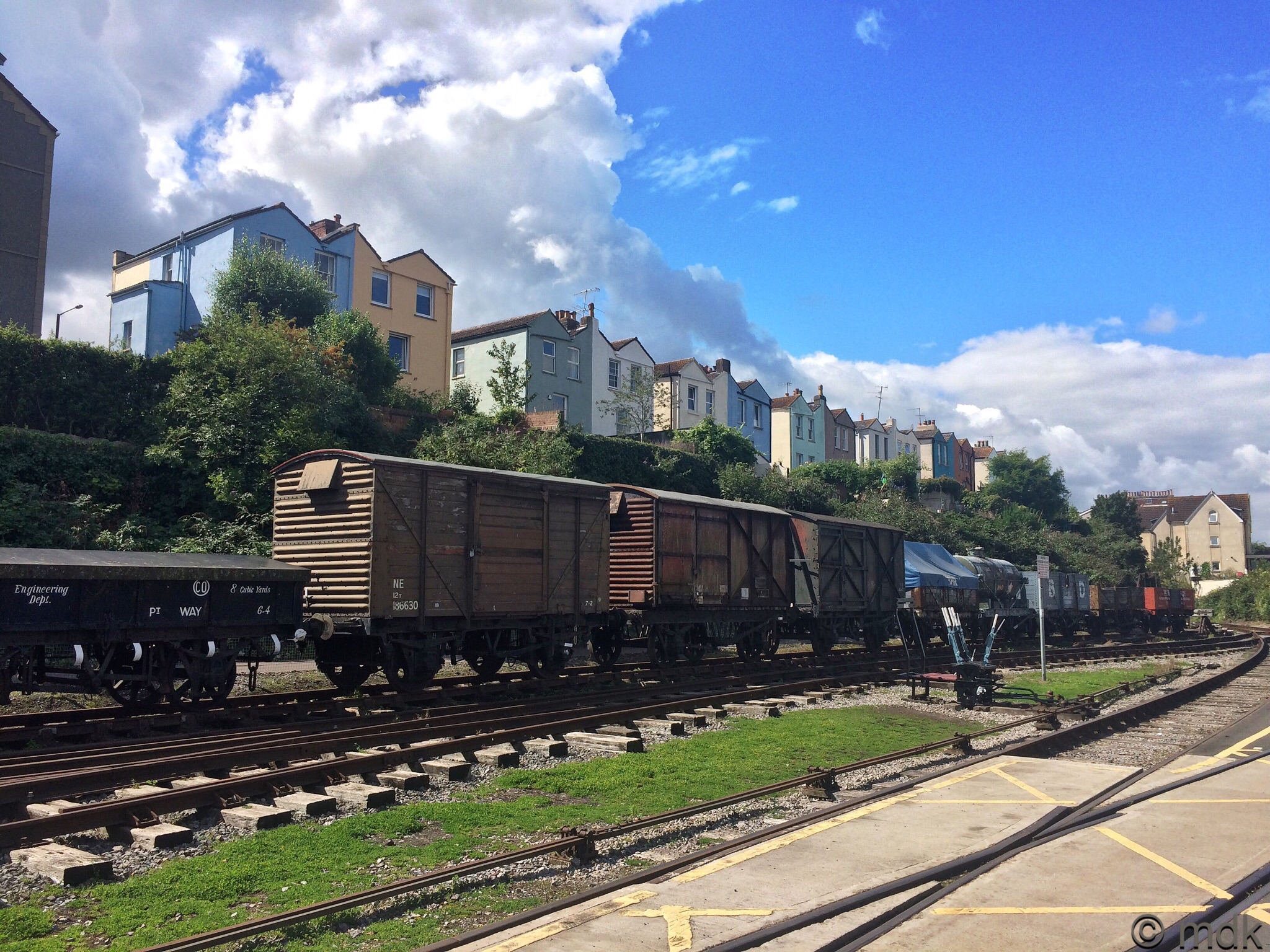
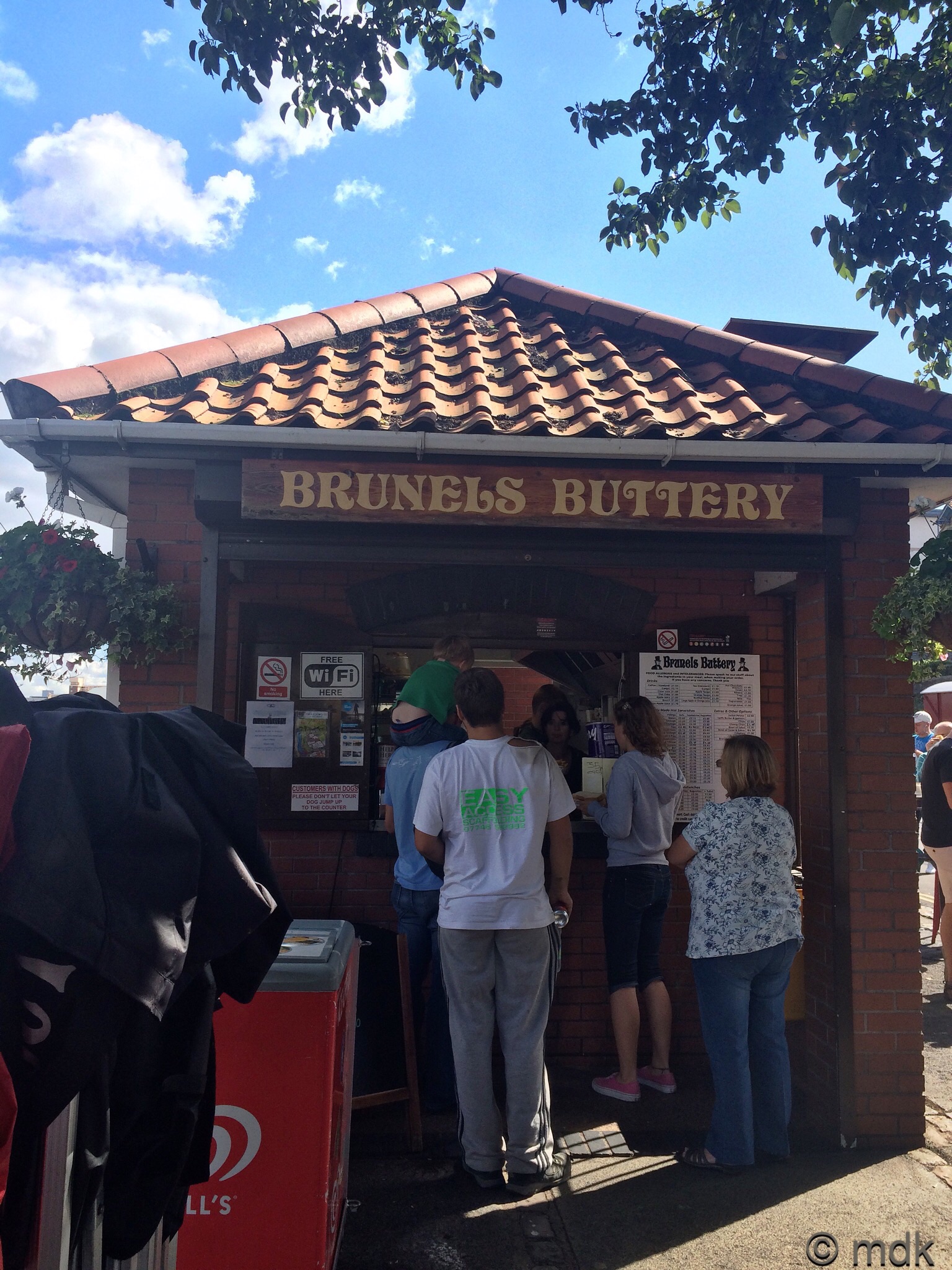
We also found Brunel’s Buttery, a small kiosk selling snacks. The queue was long but fast moving so we joined it. It was run like a military operation, orders were taken, numbered tickets were given out and the food arrived quickly. We had sausage and bacon rolls and they were wonderful. Seagulls watched us as we ate and we, in turn, looked out over the harbour watching the gathering clouds.
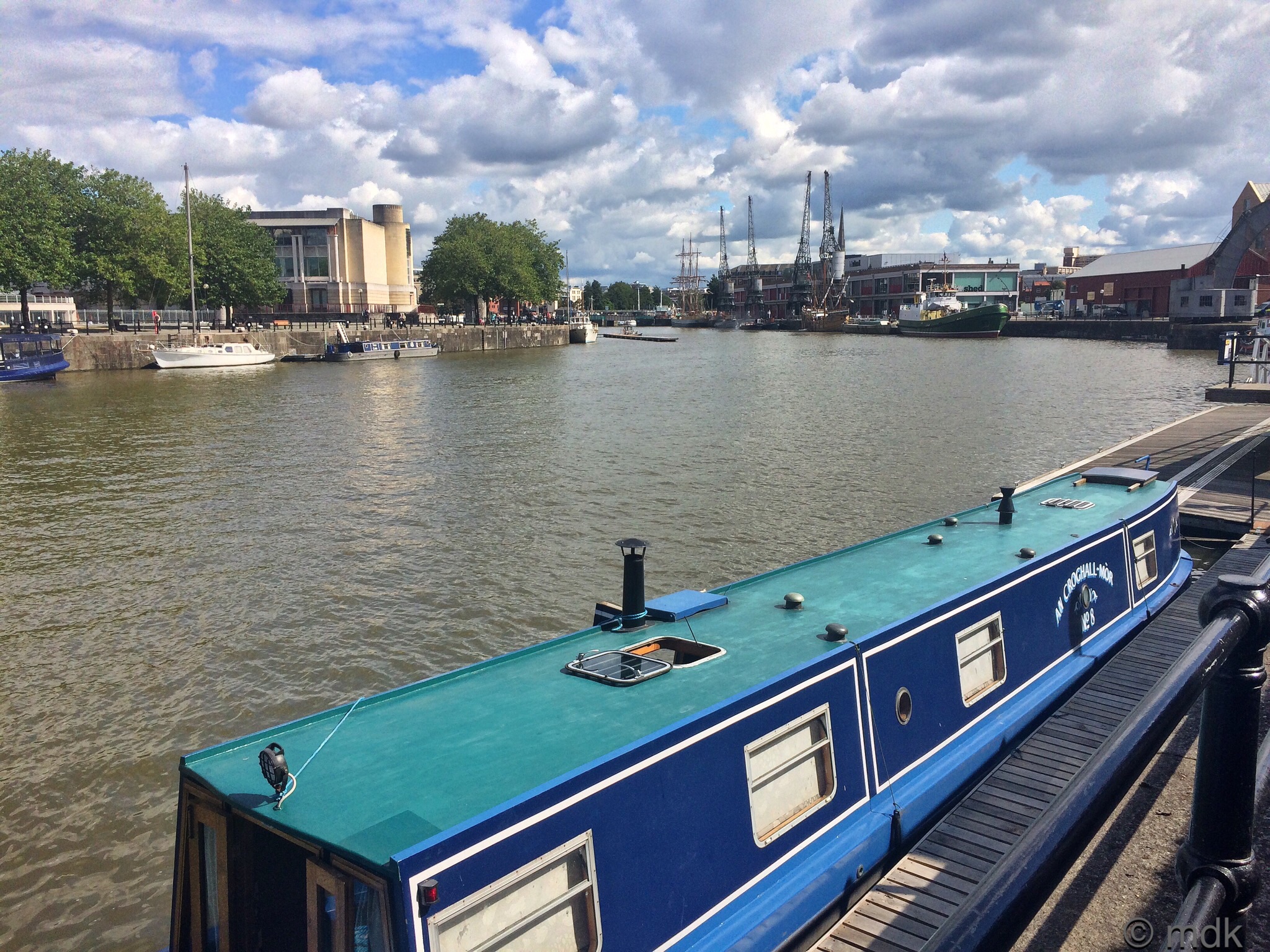
We may have come to hunt graffiti but there were other, more historic, things in my plan and the first of these was coming up as we wandered along the quayside. Across the water I noticed an interesting shell of a building that hadn’t figured in my plans at all.
“I wonder what that is?” I asked CJ.
“It looks industrial with that tall chimney,” CJ said. “Maybe we’ll get to see when we get over there.”
Shortly afterwards my carefully crafted itinerary came unstuck. In 1970, Brunel’s iron clad passenger ship, SS Great Britain, was towed back to the same Bristol dry dock she’d been built in to be used as a museum ship. I’d hoped we could walk around her, as we’d done with the Victory in Portsmouth’s Historic Dockyard. Sadly, unless we paid rather a large sum of money to explore her decks, which we didn’t want to do, we couldn’t even see her. There was a tall fence and a building blocking our way forward.
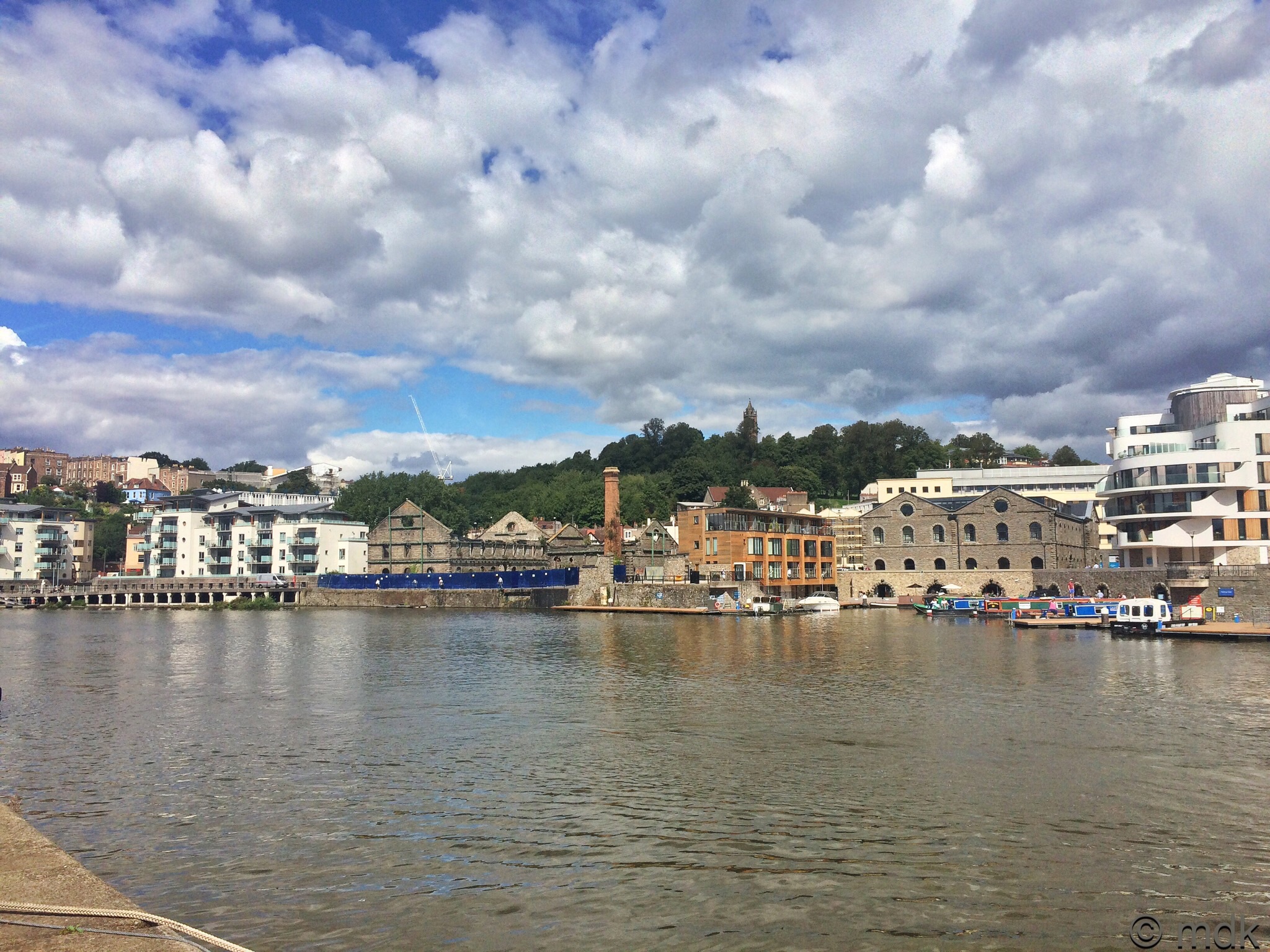
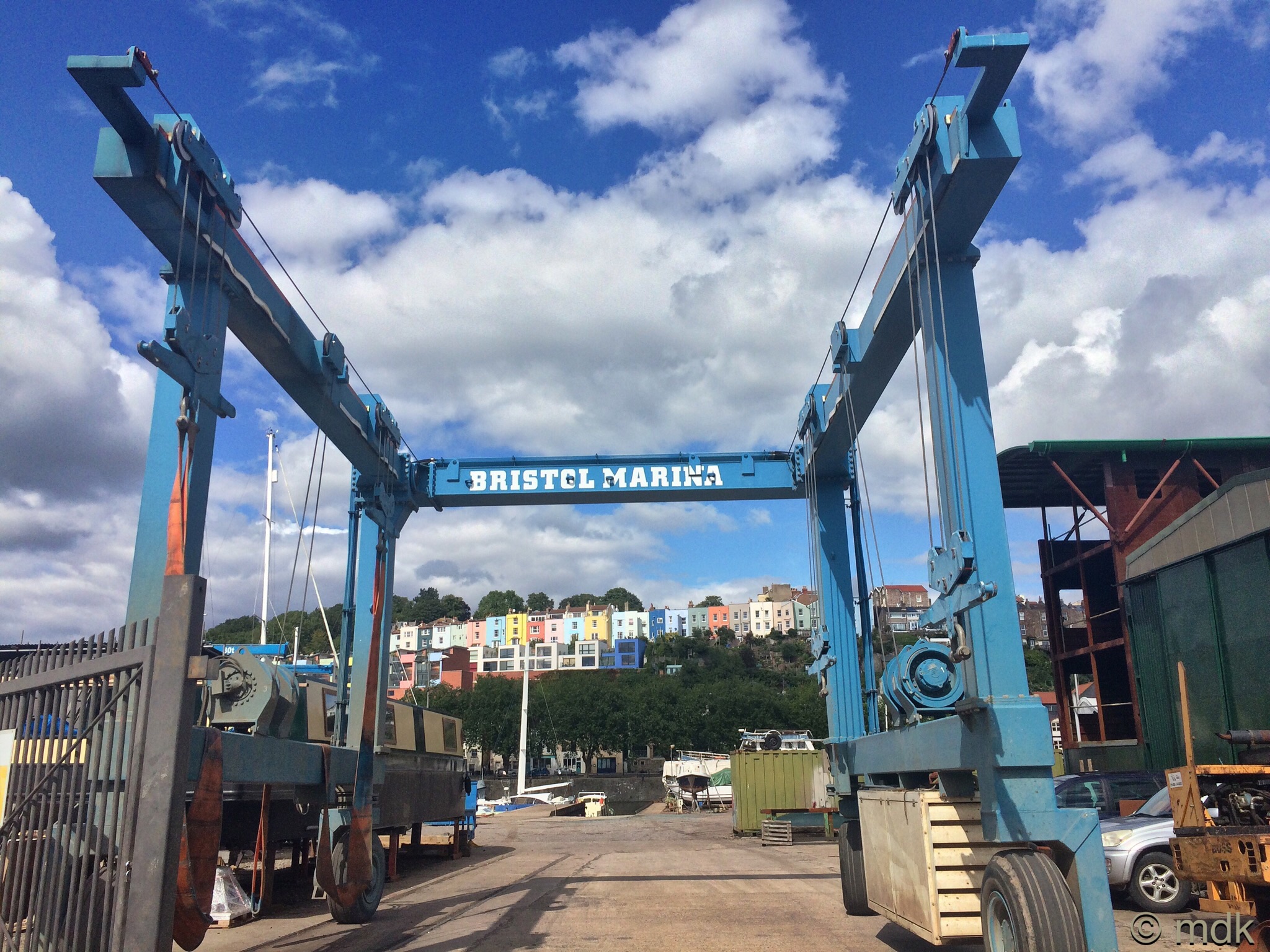
Luckily, although I’d thought we’d be able to see the ship, I hadn’t been sure we’d be able to get past it so I’d plotted an alternative route to our next objective, back to the Cumberland Road then right onto Hanover Place. Unfortunately, this meant we missed passing the Aardman Animation studios. So far we’d seen two Banksy’s, both of them behind glass, the next, if we found it, would be in the wild so to speak. Ahead of us we could see the entrance to Bristol Marina and, through the arch of blue painted girders, the painted houses of Clifton Road. What I was actually looking for was a clock tower.
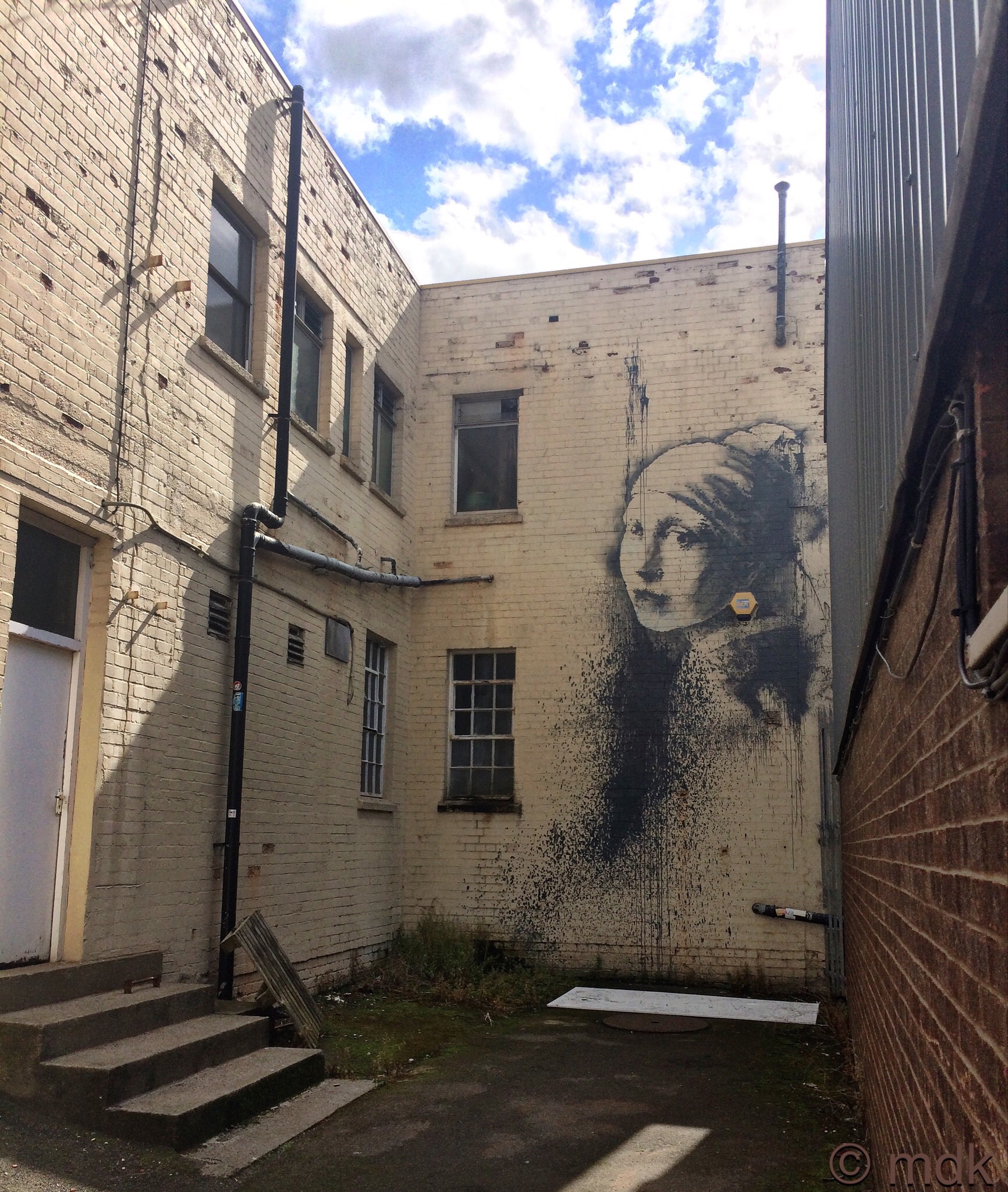
The clock tower was on one of the units of the Albion Dockside and somewhere near it, according to my research, was The Girl With The Pierced Eardrum, painted by Bansky in 2014. It didn’t take long to spot the tower on the corner of a cream painted brick building. The clock was wrong but the Banksy was there right next to it. The work is a parody of The Girl With A Pearl Earring by Vermeer and she has the same haunting look but her earring has been replaced by a burglar alarm. I like the pun. It took a while to find the right spot to take a photo without the sun streaming in and ruining it. CJ followed my lead but took more care over his composition. I should probably have him with me at all times and use his photos rather than mine.


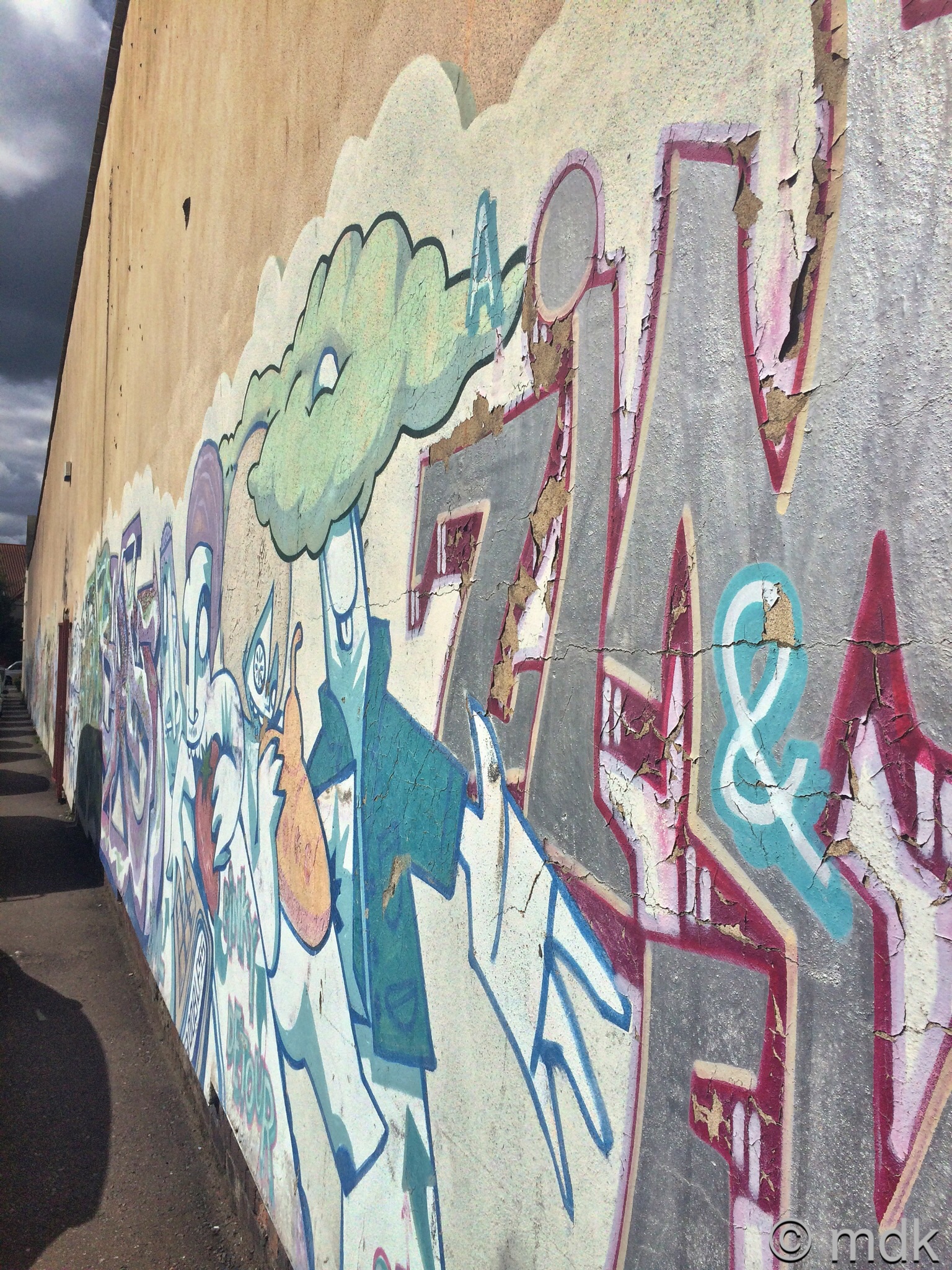
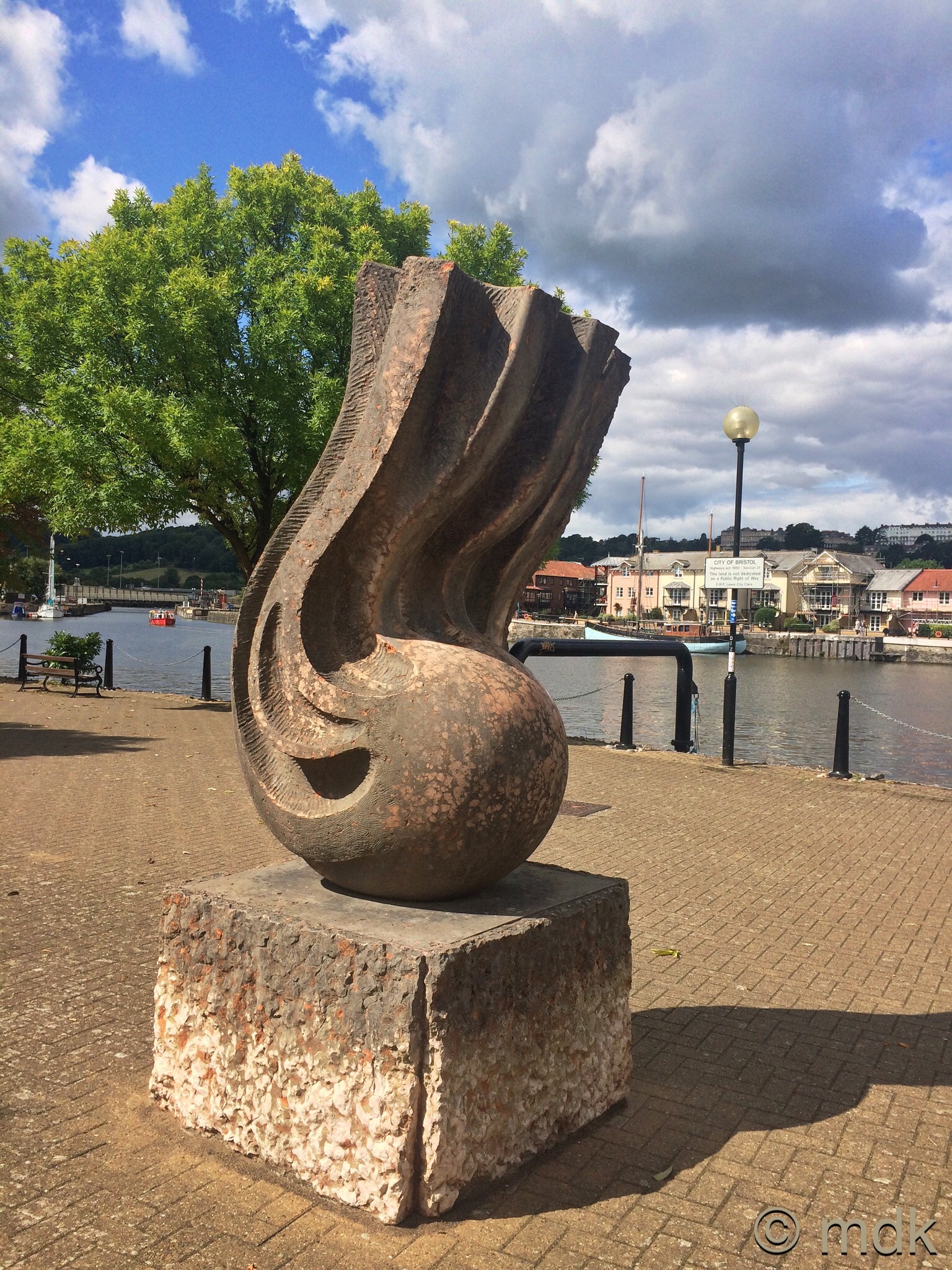
On Sydney Row we spotted some less famous graffiti, all pastel colours, on a cream brick wall. It had obviously been there a long time as the paint was crazed and peeling. It reminded me of a mosaic and I liked it. Then we were back amongst the expensive flats. Here there were interesting but untitled sculptures and unobstructed views of those colourful Clifton Road houses nestling at the base of a green hill.


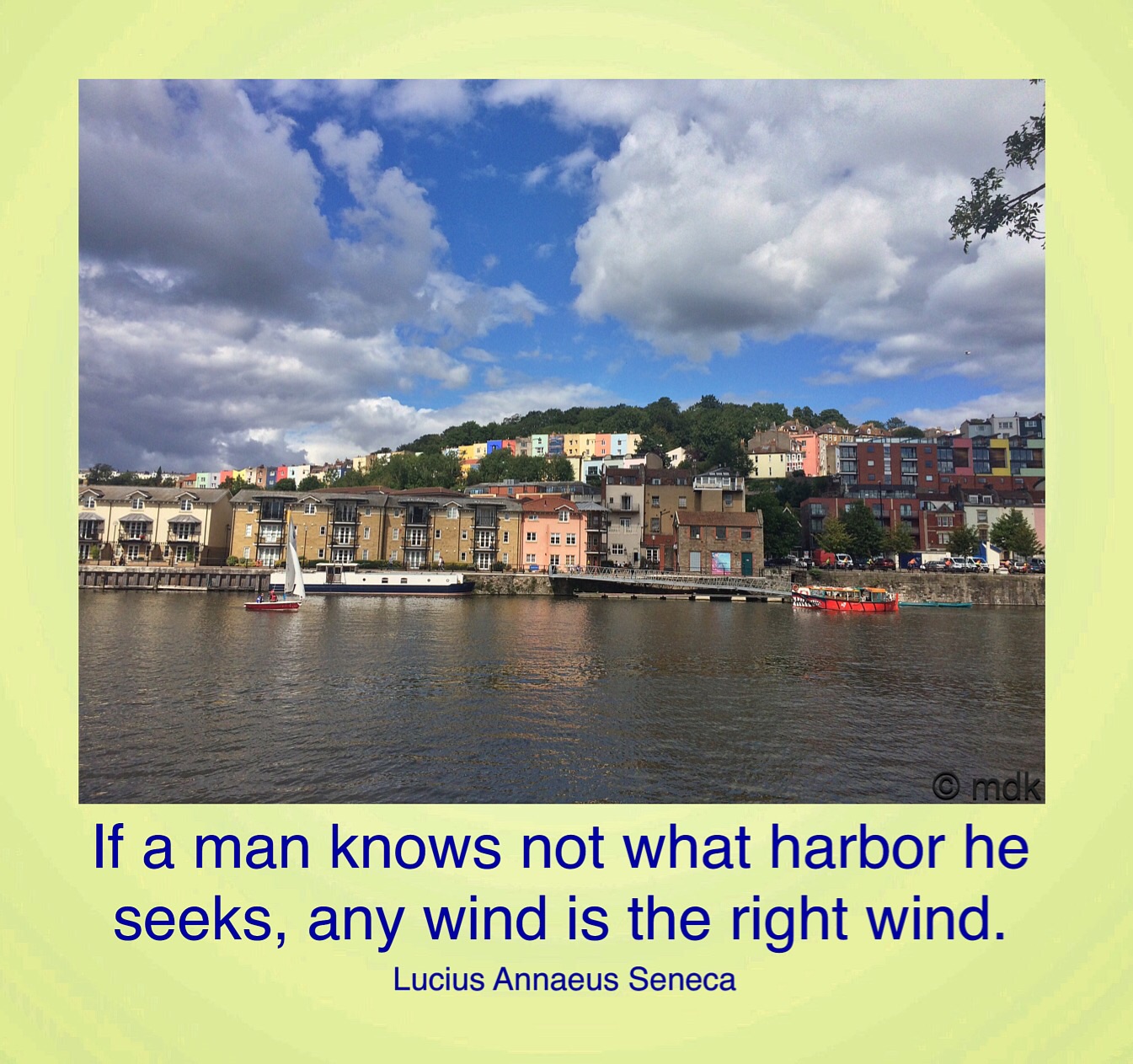
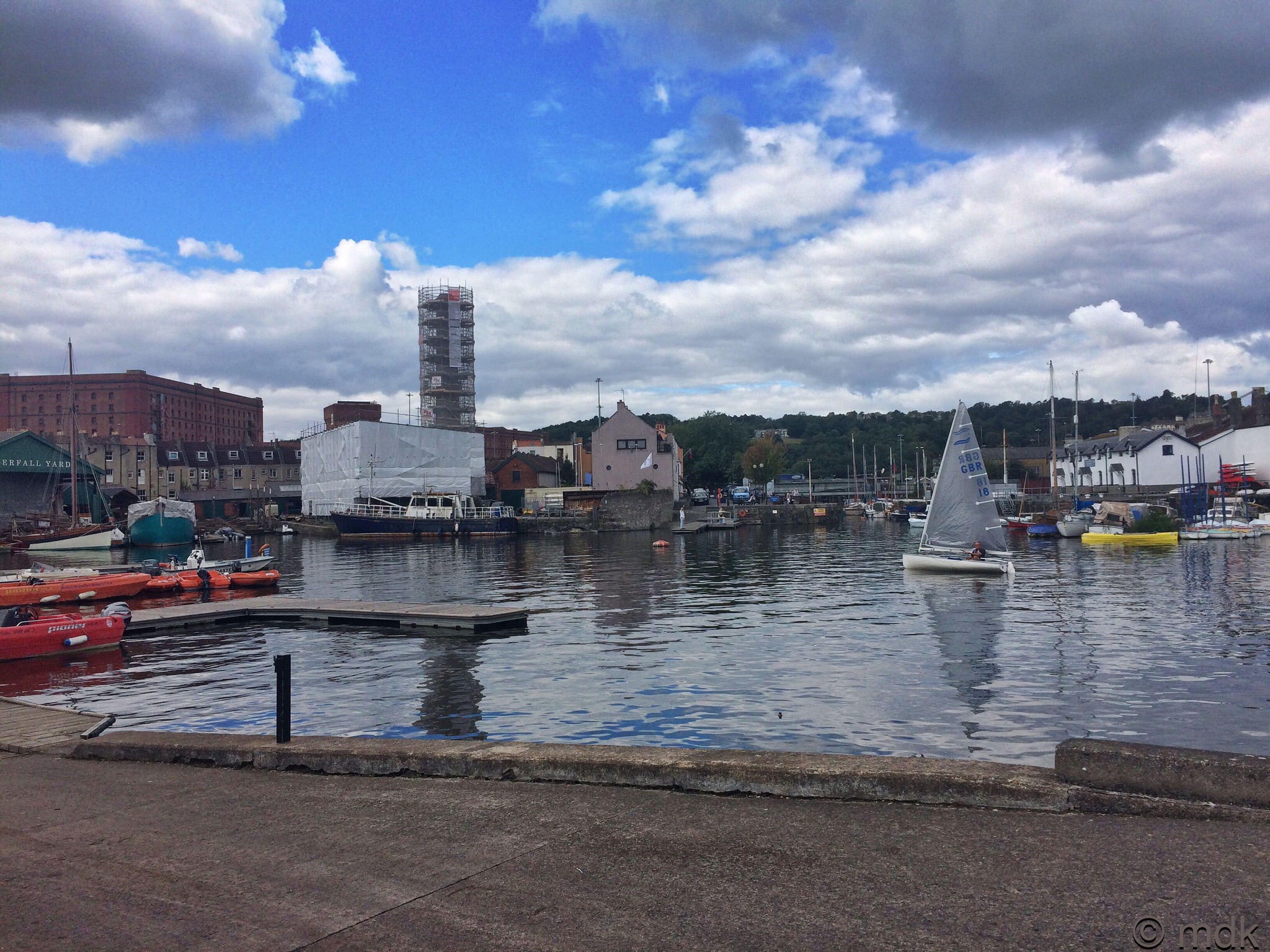
Some of the clouds now had dark patches that spoke of rain and, as they moved, the sun seemed to throw a spotlight on certain houses, illuminating their cheerful paintwork. Small sailing boats manoeuvred around the bay. Ahead was the Merchants Road swing bridge, built in 1925 by John Lysaght. It was just after one o’clock and this would be our crossing point.

What an absolutely splendid look round an exciting city, you certainly made the most of what was on offer. I can see that it is a ‘must visit’ place and will surely go sooner rather than later.
It is a very interesting city. I think you’d find the museum hard to leave.
Wow–that was quite an adventure! I usually associate England (all of Europe, really) with antiquity, but you’ve clearly demonstrated its modern edge!
Bristol has. Little of both as you will see in tomorrow’s post 🙂
Those murals must be fairly valuable for one to be cut right out of a ship.
The girl with the pierced eardrum made me laugh!
Banksy’s work sells for tens of thousands of pounds these days. Not bad for a graffiti artist. Many of his pieces make me laugh.
Isn’t it fascinating how graffiti,an art crime, is being relabeled as street art. And now, some building owners are actually paying to have murals painted on their buildings. Another blogger I follow, https://seekraz.wordpress.com/category/street-art-graffiti/ has an entire collection of street art posts. I think I’d love walking around Bristol!
The artwork on the streets of Bristol is beautiful. It’s well worth a visit although I don’t like the taggers who feel the need to spray their initials over everything.
We visited Bristol a few years ago s part of a contact visit with T’s brother. We loved it an there was certainly a lot to explore, although the reason for our visit meant we couldn’t roam as we pleased. I did manage to get snapped with the Cary Grant statue which was a higtlight for me!
Love that GWTPE piece, so clever.
Lisa x
I think we only scratched the surface although we were walking round for about six hours. I liked GWTPE too, made me laugh.
The first, derelict building was my favorite! What a fascinating adventure. Glad you had CJ along too! How nice to explore with him.
I liked the derelict building but I don’t know what the painting meant. CJ is a great Banksy fan so I couldn’t have left him behind.