
Monks Brook has been a feature of my walks for many years. Regular readers of this blog will have followed me more than once as I walked beside it from Woodmill to Swaythling or Eastleigh. I have mentioned it in passing when I’ve been at running events in Eastleigh or crossed it, heading from Lakeside to Stoneham Lane. Originally, it was called Swaethling Well, swaethling, being an old English word meaning misty stream, and the modern area of Swaythling took its name from the brook. In the fourteenth century, the water upstream of Swaythling was renamed Monks Brook after the monks of Hyde Abbey near Winchester. The stretch between Swaythling and Woodmill was still known as the Swaethling Well. This is the part of the brook I know best, but I have long wanted to explore more of this seven-mile stretch of water. On 28 September, when Commando said he was going for a run at Fleming Park, I grasped at the chance to follow the course of the brook further upstream. How far I’d be able to get remained to be seen.
Sadly, it isn’t possible to follow the full course of the brook on foot. Much of it has been culverted under roads and motorways or is on private land, inaccessible to undesirables like me. The section running through Fleming Park was once agricultural land belonging to Home Farm. Between 1929 and 1939, the local council acquired it as two parcels of land and turned it into a park. My walk began at the southern edge, where the brook runs through a culvert under Nightingale Avenue. Close to the road, a curved wooden bridge crosses the water. This gave me a dilemma. Which side of the brook should I follow? In the end I chose the western bank, simply because it was quieter.

On either side, the banks are overgrown with shrubs and trees, so little of the stream was visible at this stage. In fact, it would be easy to walk past without ever realising it was there. Amongst the greenery, I was sad to notice a few Himalayan Balsam flowers. These bright pink flowers may be pretty and beloved by bees, but they are an invasive species, slowly choking our riverbanks and crowding out the natives. The plants were introduced in 1839, as a greenhouse annual, and spread quickly because the seeds explode from their pods and can travel four metres or more. In a single season, a newly seeded plant can grow up to eight feet tall and seeds released into rivers can travel downstream for great distances. One clump this year can mean a whole riverbank full by the next.
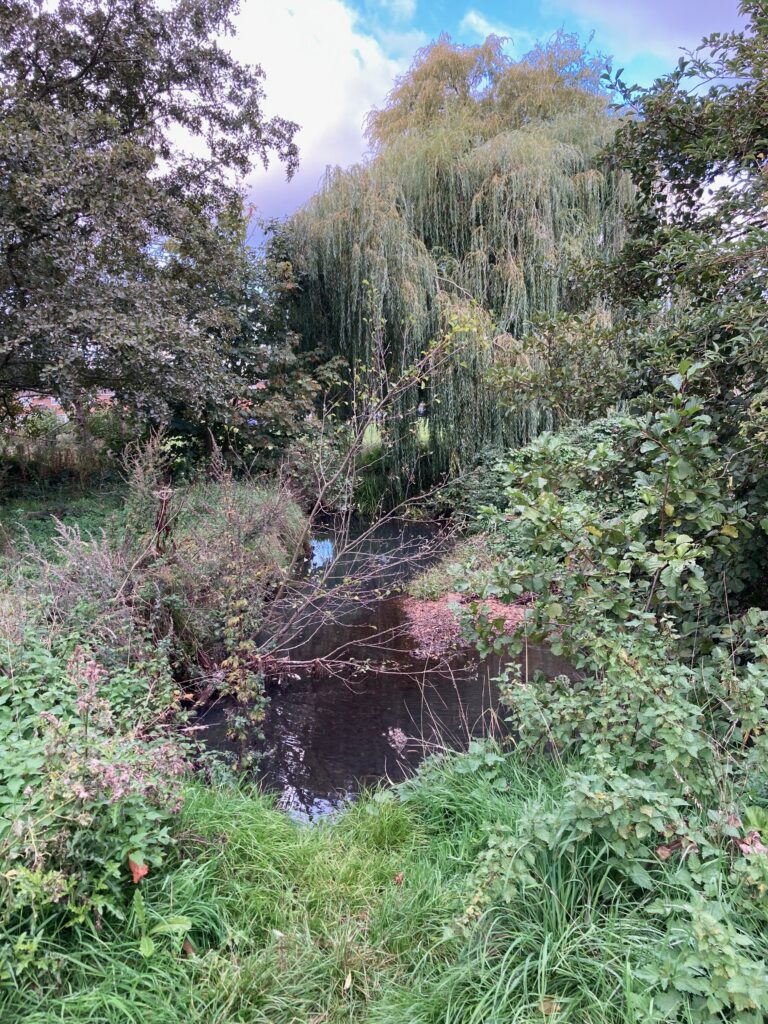

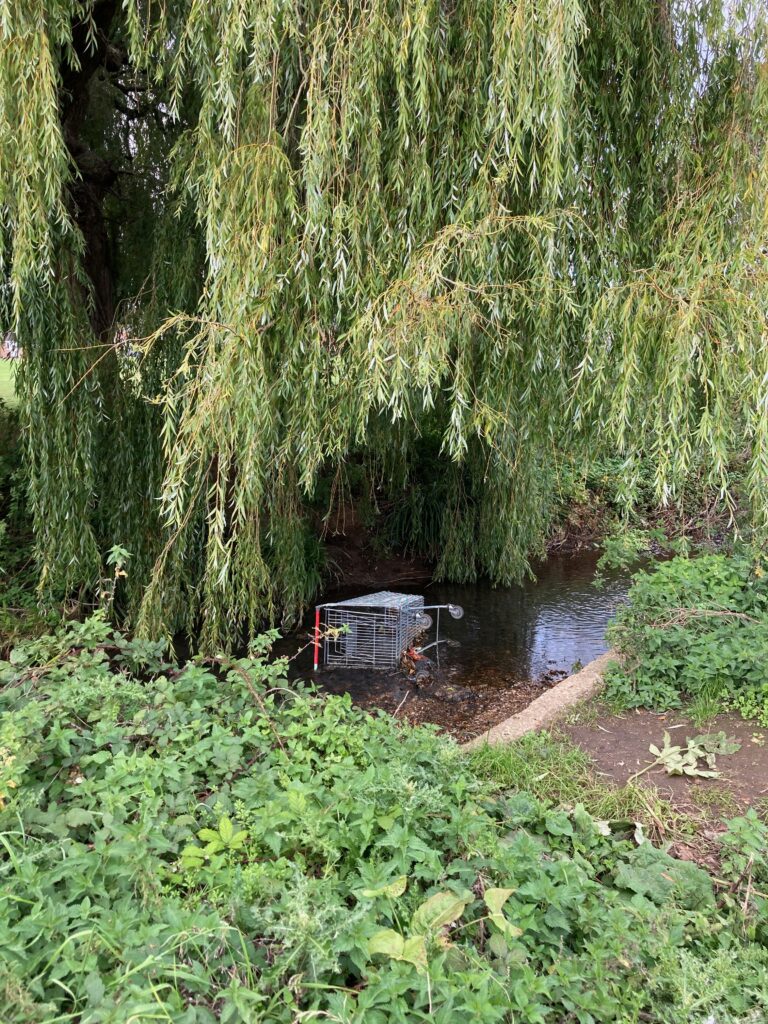
Another disappointment was an abandoned shopping trolley under a beautiful willow tree. Quite what possesses people to dump such things in rivers is beyond me, but I wish they wouldn’t. I dread to think what their homes must be like if they have such little care or conscience. Unfortunately, litter of all kinds appears to be on the rise. Surely, it can’t be difficult to take things home and dispose of them properly?
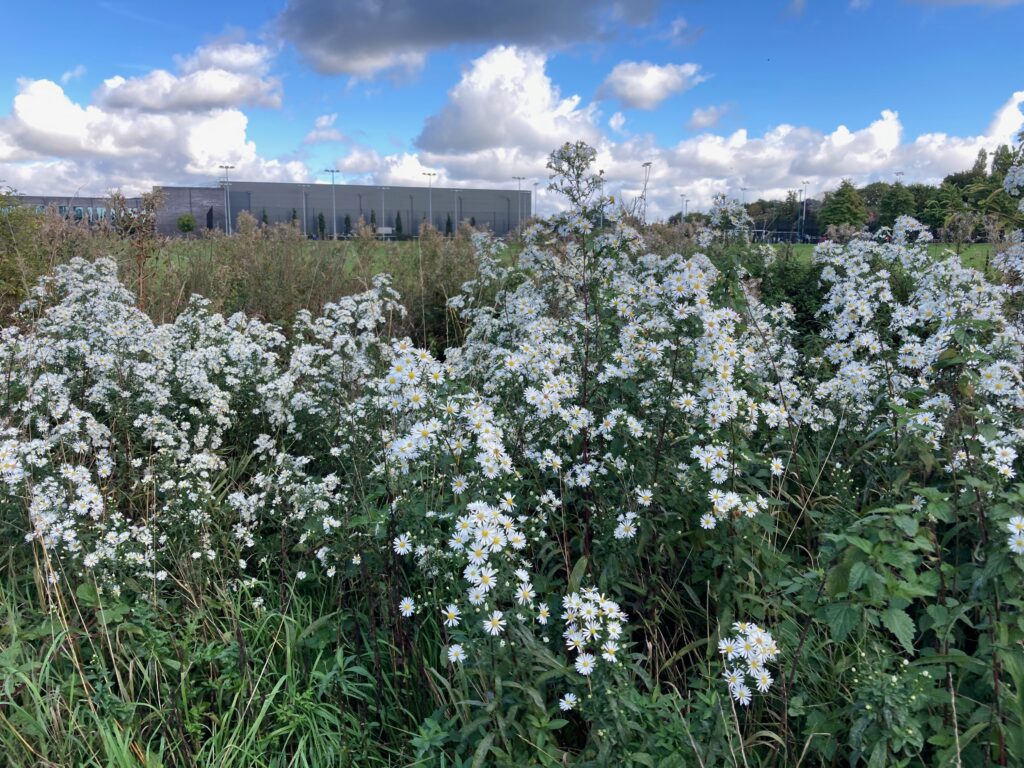
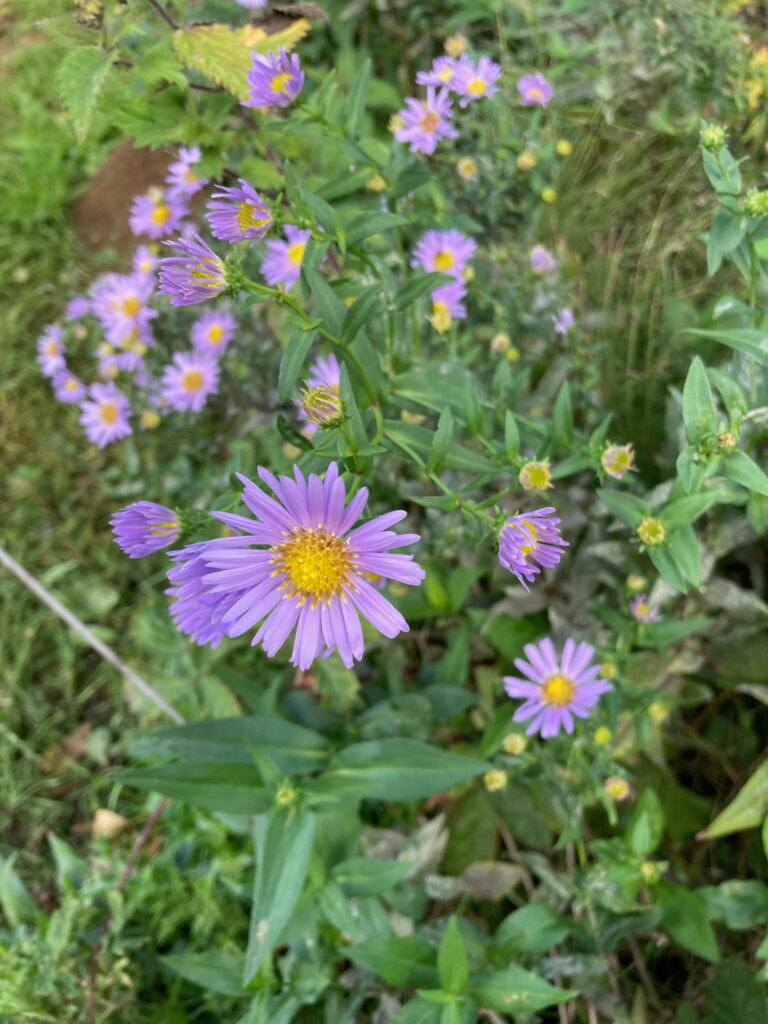
Further on, I found some of the native plants under threat from the Himalayan Balsam. A large clump of perennial asters brightened the riverbank near the next bridge. The first ones I saw were white, but further along, I found the more common purple variety, often called Michaelmas daisies. The asters growing wild in Britain are not all British natives. Some may be garden plants, mostly from North America, that have escaped into the wild, but it’s hard to tell the difference unless you’re an expert. Either way, they are not as invasive as the balsam, and I always find them a welcome splash of colour in late summer and early autumn.
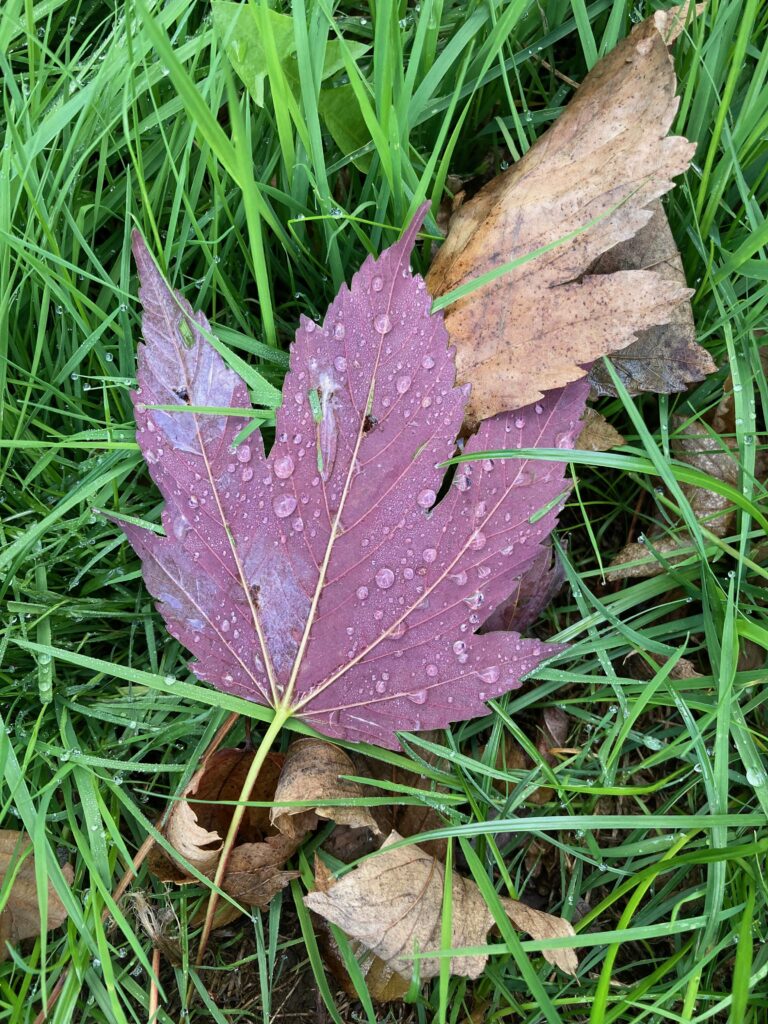
The next bridge was nowhere near as attractive as the first, and I passed it by without crossing. Apart from anything, there was far too much on my side to hold my attention. I found a tree stump with a splendid horseshoe fungus. One look and it’s easy to see how it got its name. The first few fallen leaves littered the grass, and a deep red Acer leaf caught my eye. Then there were the burdock seed heads whose hooked spines and clinging properties led to the invention of velcro.
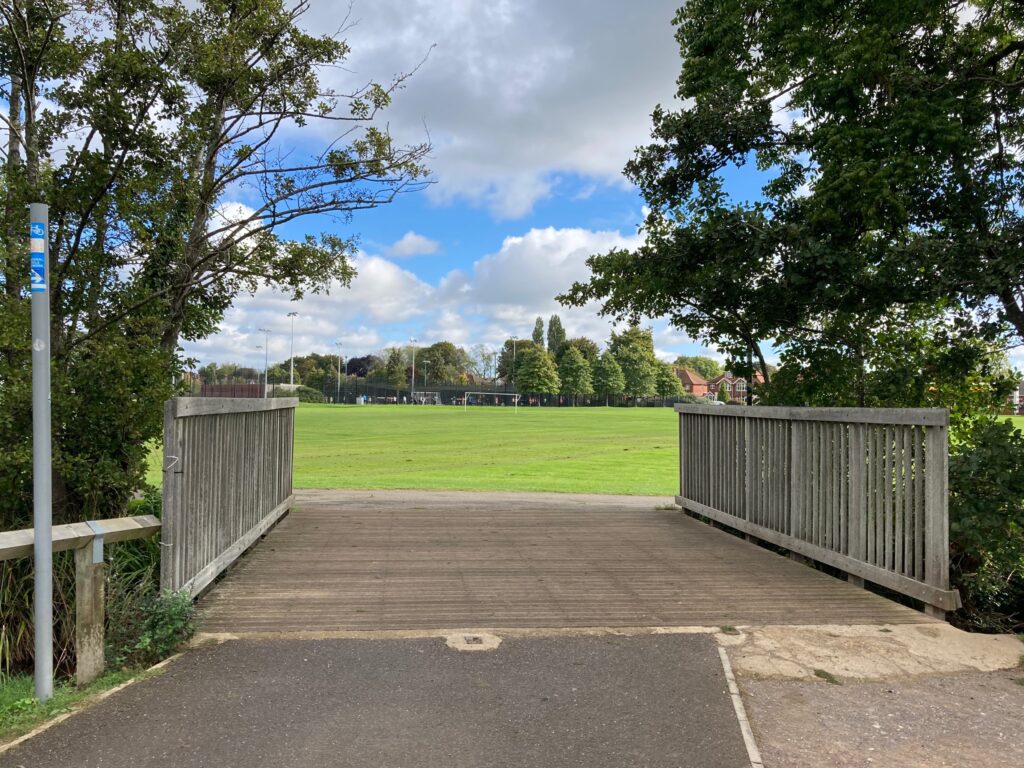


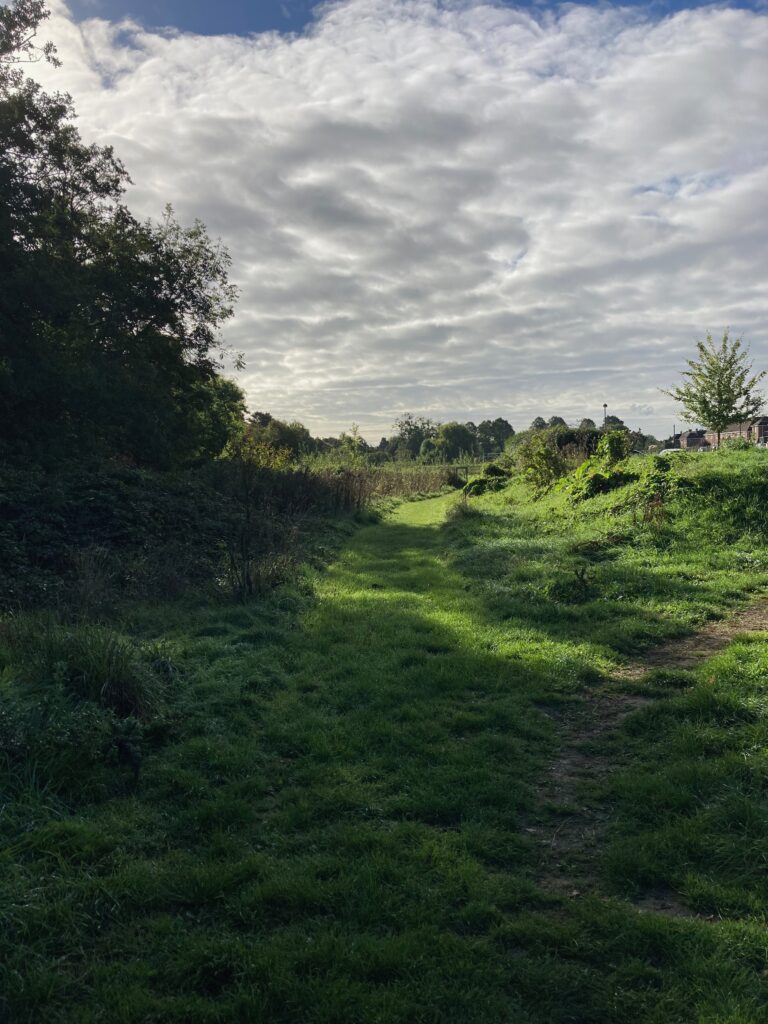
Had I crossed the bridge, I could have followed the riverbank more closely, but the banks were so overgrown I wouldn’t have seen the water. Instead, I crossed the car park and headed for the part of the park I knew best. This is where they hold Eastleigh parkrun and the CC6s. There were many winding paths and trails to tempt me, but I was more interested in the trail beside the brook. First, I had to walk across the wet grass to get to it. I’ve crossed various bridges here, but I’ve never had a chance to follow the course of the brook, and I wasn’t sure how far I could walk beside it.
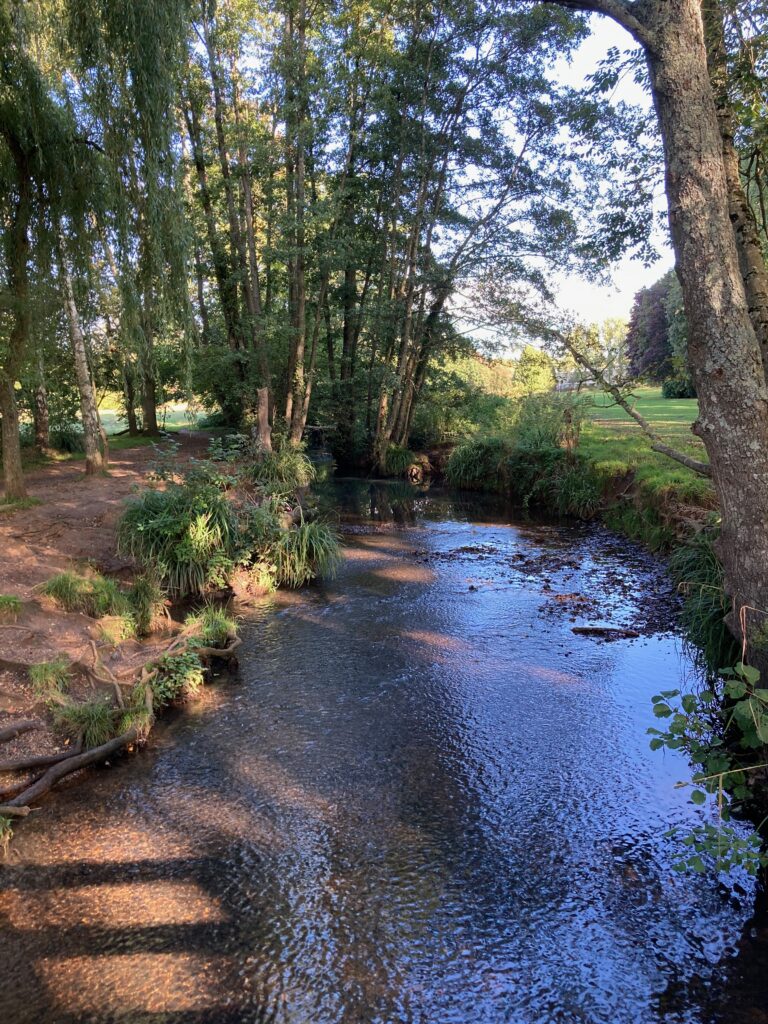
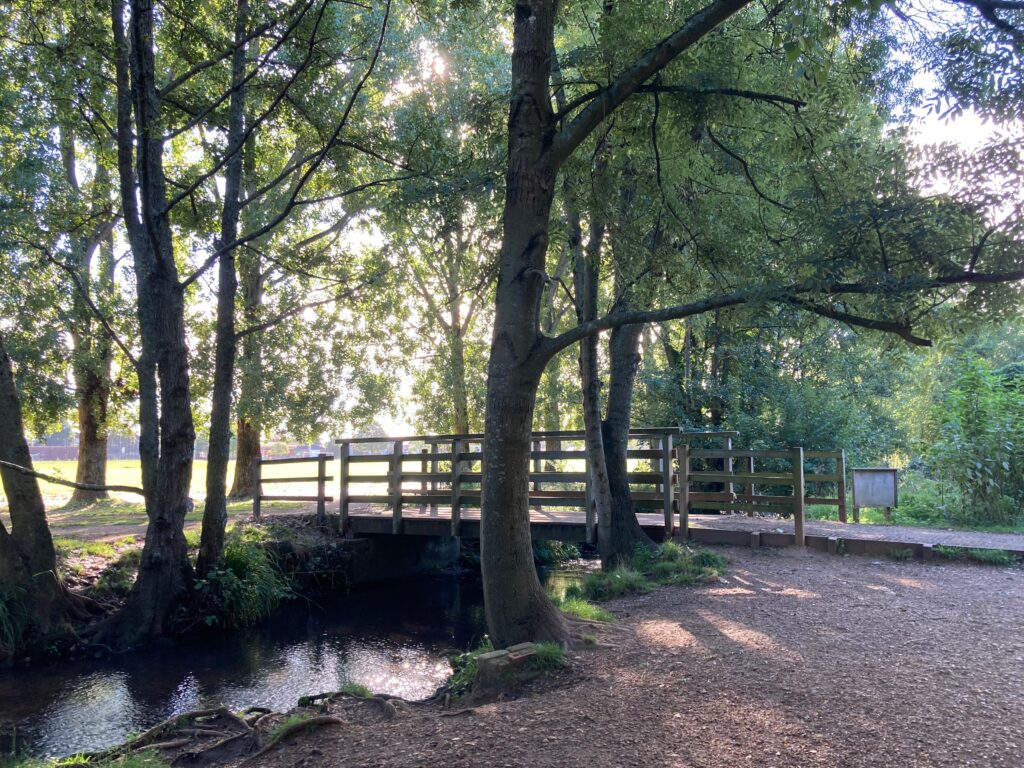
I got my first decent view of the water from the next bridge. It was beautifully clear and clean, so much so that I could count the stones on the bottom. I stopped for a while, enjoying the sound of water trickling over stones and the dappled sunlight slanting through the leaves.

Ahead, I could see a vague trail along the bank. Unlike the man-made trails in the rest of the park, this was a mass of snaking tree roots and potholes. I had to watch my step. With one last look back at the bridge, I headed north into the unknown. Of course, there was zero chance of getting lost because I was still in the park, and I had Google Maps at my disposal on my phone. Still, it felt like a small adventure.

I hadn’t gone far when I spotted a stone beneath a tree with a small metal plaque attached. A closer look showed the words, ‘This tree is planted to the memory of Neville Chamberlain.’ Quite what connection the Prime Minister most famous for his ‘peace in our time’ speech and his reluctance to declare war on Germany has with Eastleigh, I don’t know. Perhaps someone will be able to tell me.
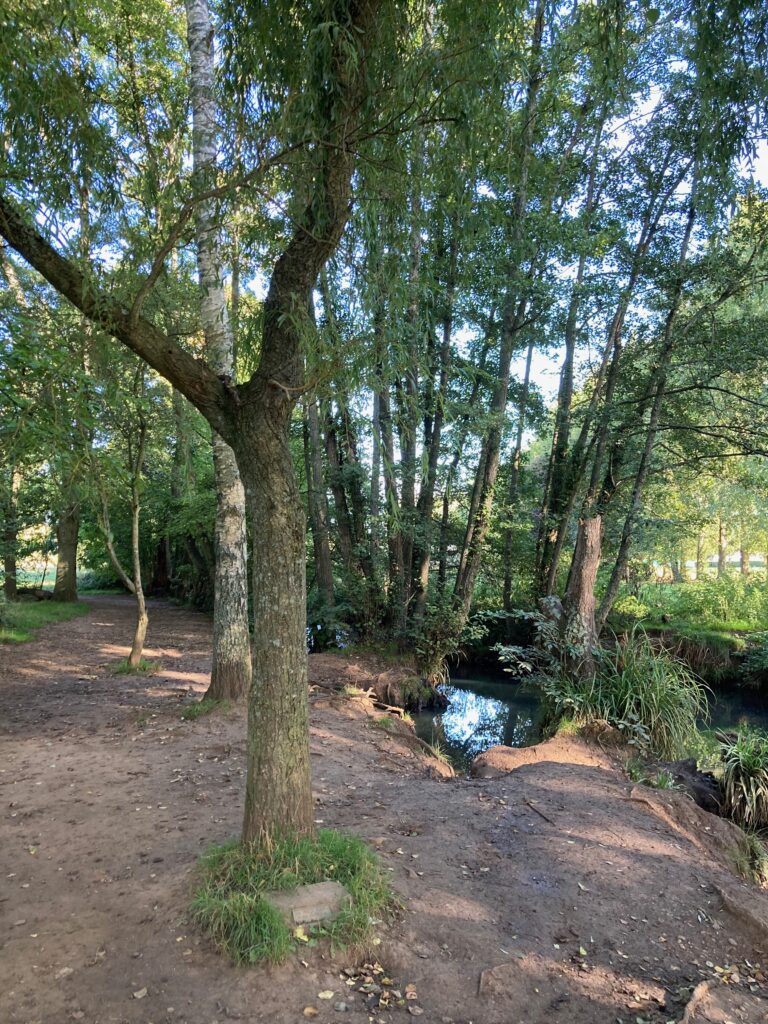
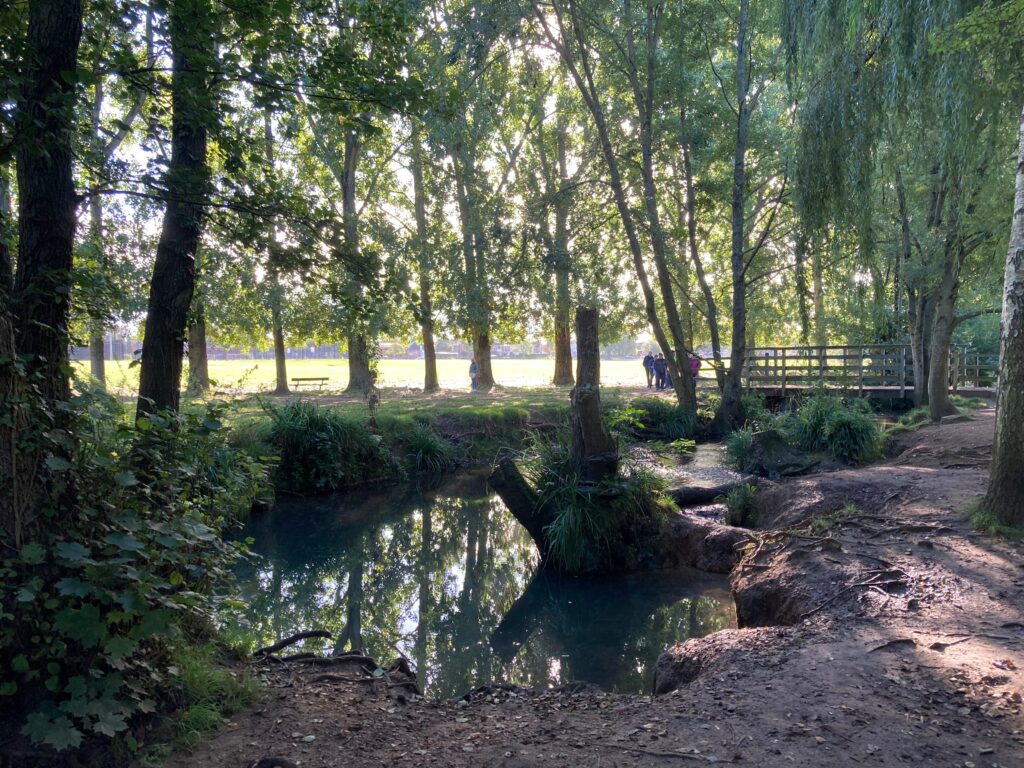
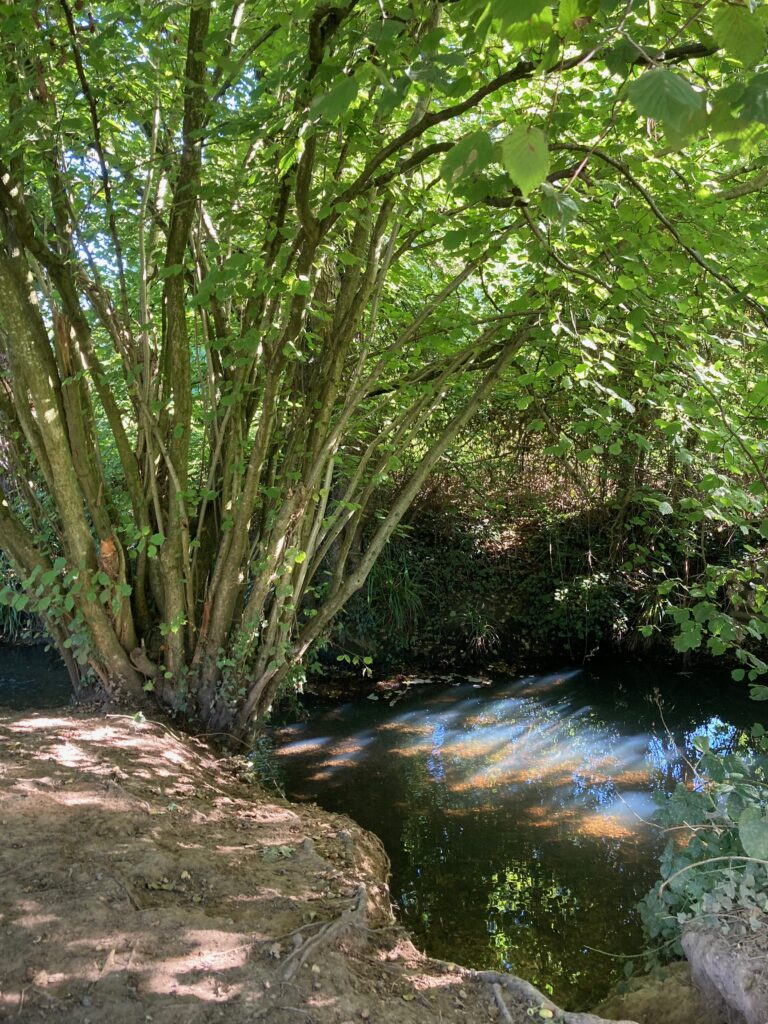
For a short while, I had an enviable view of the brook. I could almost imagine I was in a quiet wood, enjoying the reflections of the trees in the water and the soft greenish light. Of course, I had to half close my eyes and try to ignore all the other people milling about.

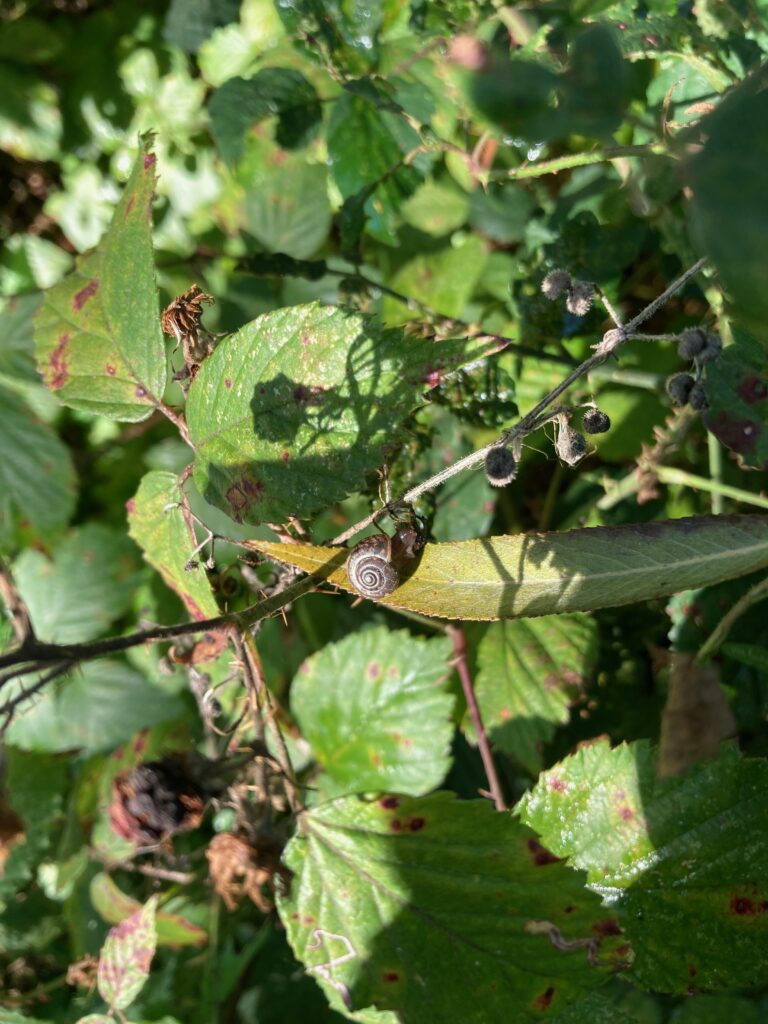
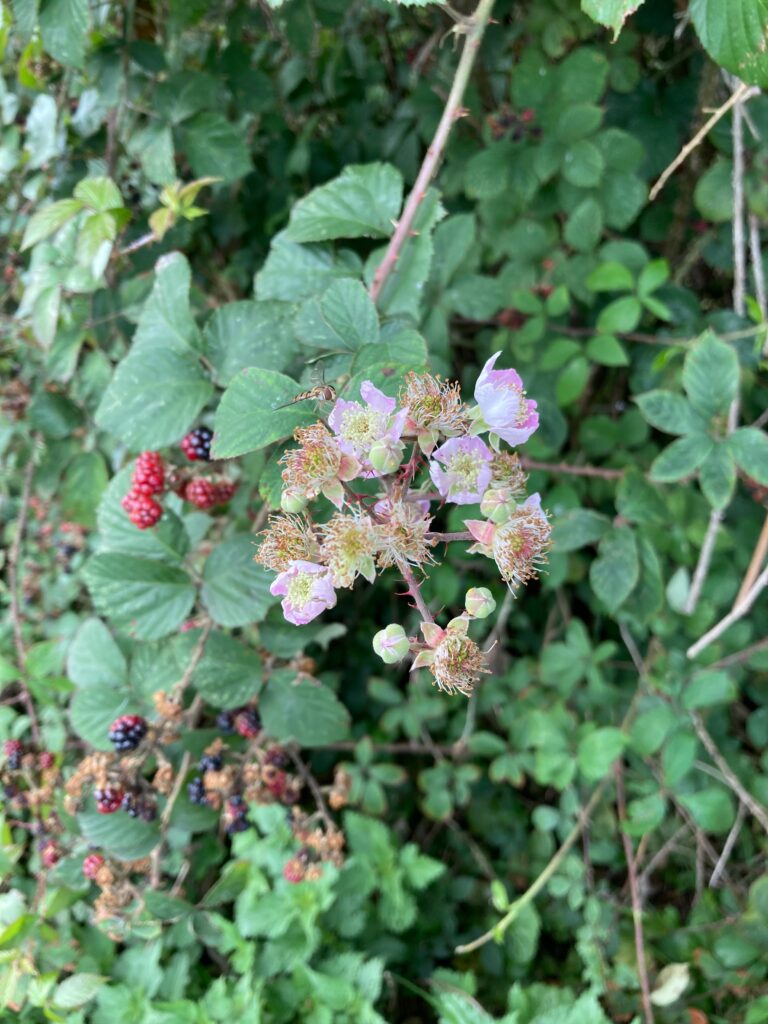
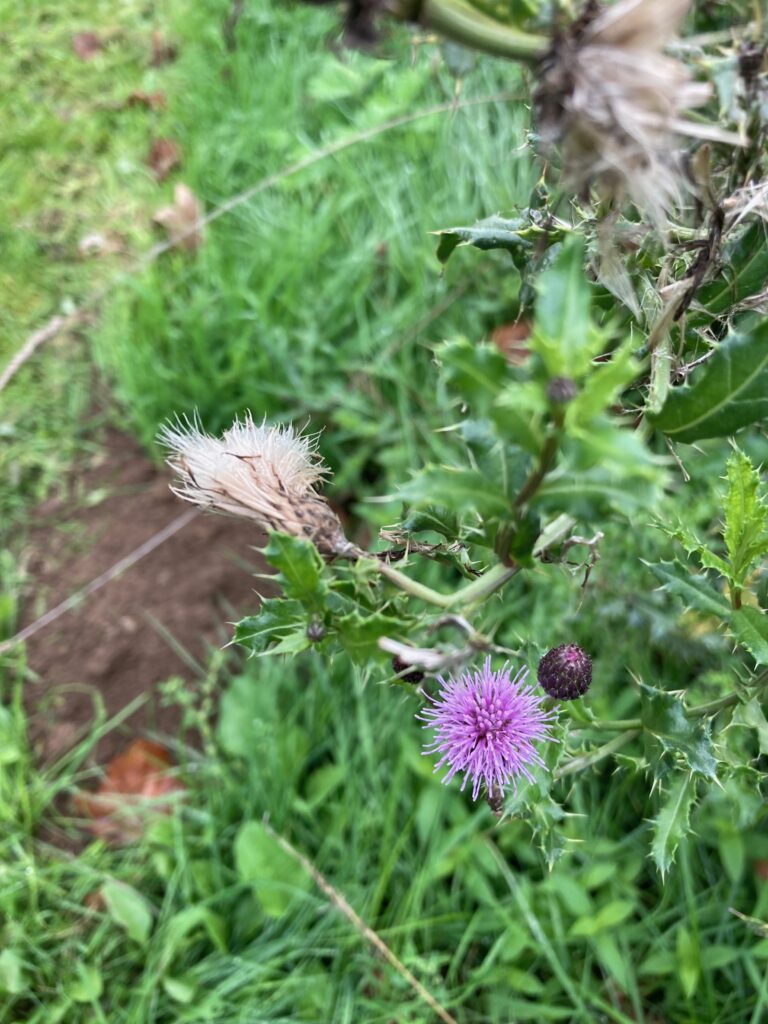
Then the trail ran out, and I had to take to the wet grass again. The water was now hidden from view by brambles, but if I listened hard, I could just about hear it burbling. There were some consolations. I found a tiny snail on a leaf, a hover fly enjoying the blackberry flowers and some knapweed with buds, flowers and seed heads all on the same plant.

Then I came to the next bridge, and had another decision to make. I knew I was getting close to the place where the brook runs under the M3 slip road. After that, it goes beneath the motorway, another slip road, and then Leigh Road. Whether or not there would be a trail following it, I didn’t know. If there was, which side of the brook would it be? My instinct said the east bank was the best bet. I crossed the bridge and walked northwards. There was no trail, but I saw Commando running past and waved to him.

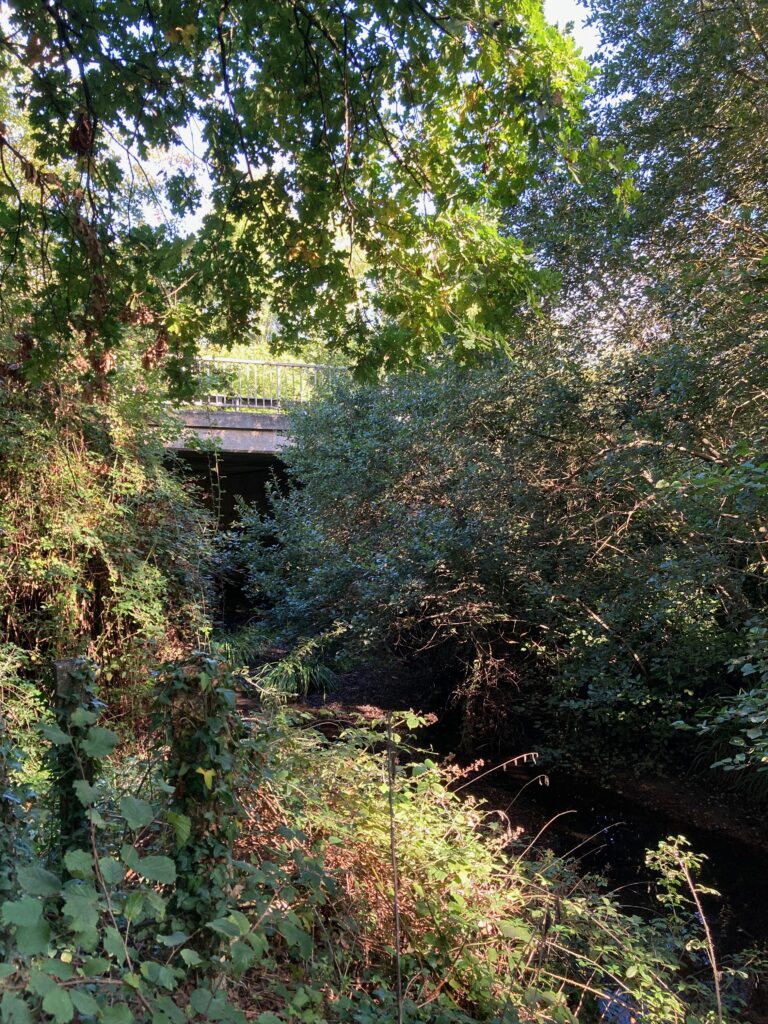
Feeling slightly miffed, I turned back and followed the west bank. I was hopeful when I found a trail leading into the trees. It didn’t last long. I found the water, but the trail soon petered out. I was left with a tantalising view of the slipway bridge and the knowledge that my walk along the bank had come to an end.

There was nothing for it but to turn back towards the park. My walk had been far shorter than I’d expected, and I had quite a bit of time on my hands before Commando was due to finish his run and meet me at the car. The problem was, I had no idea what to do with it . . .

If you like what I write, and you’re interested in my novels are available now on Amazon in paperback, on Kindle and via Kindle Unlimited. Check out my Amazon page here and my Goodreads page here. If you would like to help me keep writing, you can now buy me a virtual coffee by clicking on the little orange coffee cup at the bottom right.
A lovely riverside walk with much to enjoy. It’s a shame about the Himalayan Balsam. Litter is definitely something that really irritates me. Brought up to take my litter home if there isn’t a bin, I just can’t understand the mentality of the folk that just drop it wherever they happen to be.
The litter dropping thing is getting worse, despite bigger and better bins everywhere.