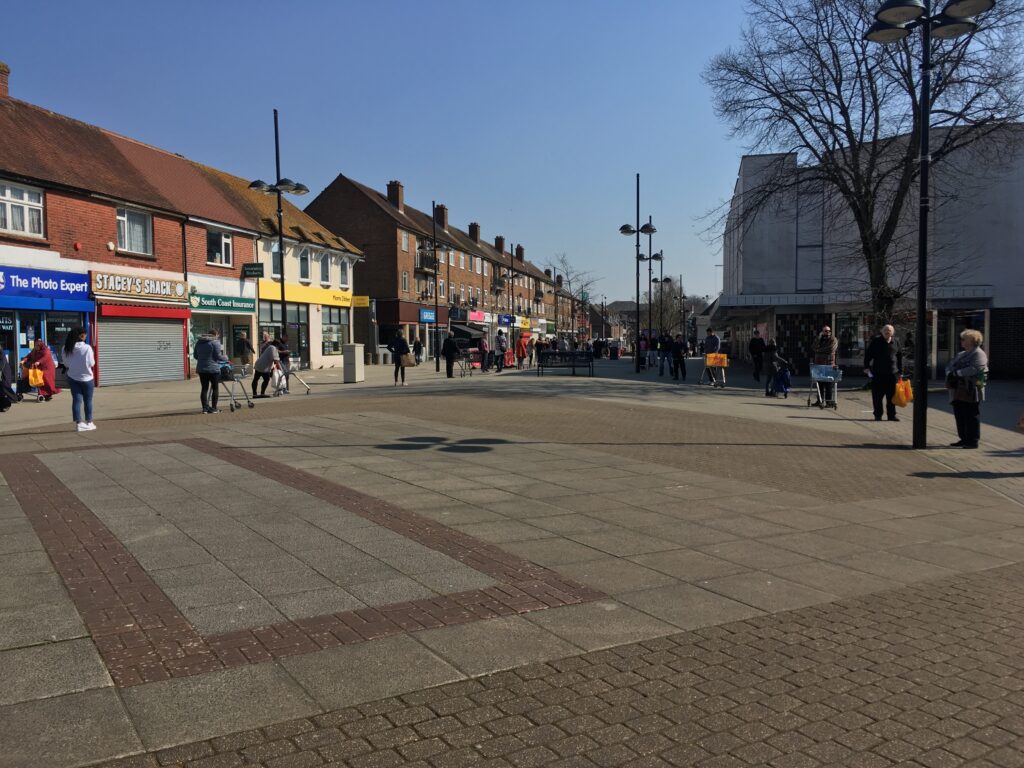
Long before this current pandemic began I’d been researching the Spanish flu of 1918 for something I was writing (all will be revealed later I promise). One hundred and two years on, in the spring of 2020, the echoes of the previous century made me vaguely uneasy. I told myself to stop being so paranoid, this current crisis was not the same at all, a lot has changed in a hundred years. So, after dipping my toe into the water of walking through the local pretty places, I decided to keep walking but to stick to the streets. They were nowhere near as inspiring but they did have the advantage of being empty. In fact, there was an almost eerie silence. Roads that had once been thrumming with life were deserted. Where had all the cars gone? Where were all the people? The world took on a strange, post apocalyptic character that made me feel as if I were the only person left alive.
Every day I went out and walked a loop, often the same loop. It was boring but it was still walking, even if it felt slightly dangerous. My paranoia wouldn’t quite go away. Very rarely did I take a photograph. There was nothing remarkable to see. Nothing to write about. Some days I risked a visit to the local supermarket for essential supplies, like milk, bread and increasingly illusive loo rolls. The wide expanse of the precinct in the village showed me where some of the people were. They stood six feet apart in long, snaking queues waiting their turn to dash inside essential shops, hastily collect whatever necessity they’d run out of and leave as quickly as possible. No one spoke. No one smiled.
March became April and I decided to go back to the river and try again. Perhaps I’d been unlucky before. Maybe things had settled down now. As soon as I got to the park I knew it was a mistake but I pressed on anyway. It was a Wednesday morning, April fools day. The park was full of fools and I was one of them. This time they were more distant, perhaps because the police patrols were very much in evidence. There was less zigging and zagging. Even so, I stuck to the grass because the path felt too crowded.

It may have been my imagination but there seemed to be an air of desperation about the people in the park. They were walking, but they were not walkers. They moved along the riverbank with the same detached, unsmiling expressions as the people waiting in line at the shops. Where was the joy? Where was the laughter, the conversation? The sun was out, the sky was blue but it left me cold.
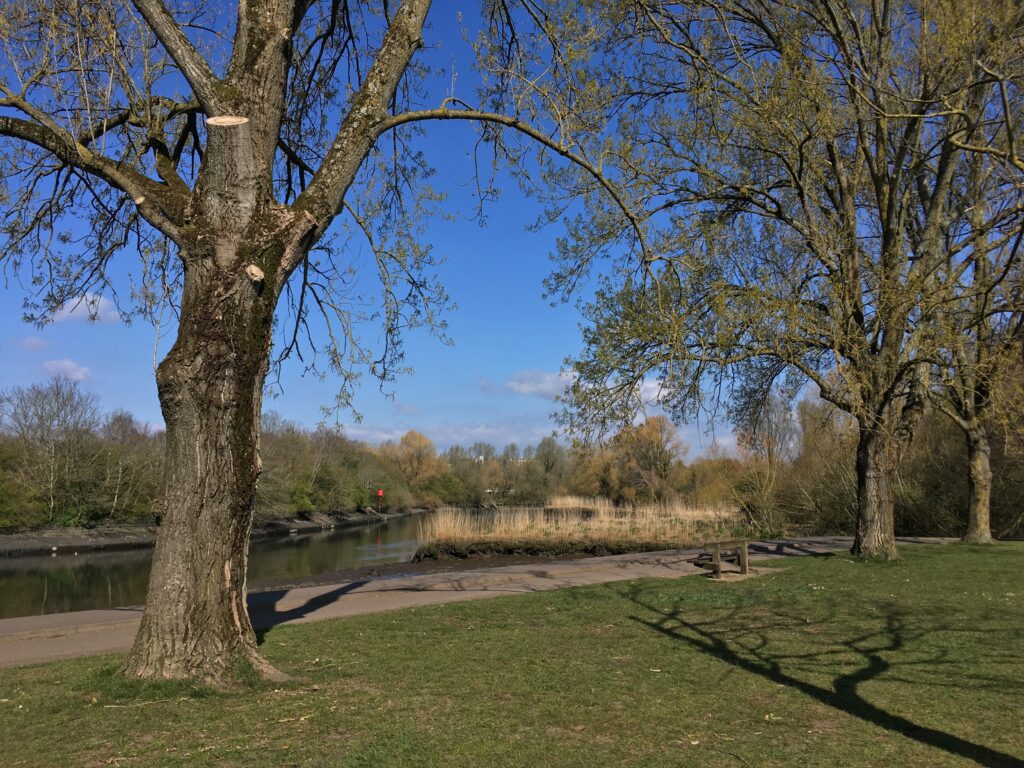
When I reached the reedbeds I had an urge to turn and run but I forced myself to keep going. I took the quiet path behind the trees and, for a short while, I managed to pretend that this was a normal walk on a normal day, dappled sunlight, empty spaces, nature slowly bursting into life. It didn’t last though. Through the branches I could still see the people, marching like zombies, distant from each other, afraid. I thought again about the Spanish flu. Was this what it was like?

In mid 1918, soldiers began to get sick with a deadly strain of influenza. There had been flu amongst the troops for some time, but this was different. Death was often swift and soon more men were succumbing to the flu than combat injuries. Then it came to England. In late July there was an outbreak in a German prisoner of war camp in Hampshire. Almost one thousand men, a third of the camp, were hospitalised. The newspapers called it a new foe in our midst but, with no television, no social media, the public were, for the most part, unaware until it touched their lives. Even when it reached the streets little was reported. When hundreds of cases broke out in Salford, the public were advised to go to bed the moment they felt unwell as it became much worse if people tried to carry on. The Times reported that the ‘man in the street was cheerfully anticipating the arrival of the Spanish flu,’ and suggested it was a German warfare experiment, like the poison gas. It was, they said, not as severe as previous epidemics. The media concentrated on military news. They didn’t want to upset civilian morale.
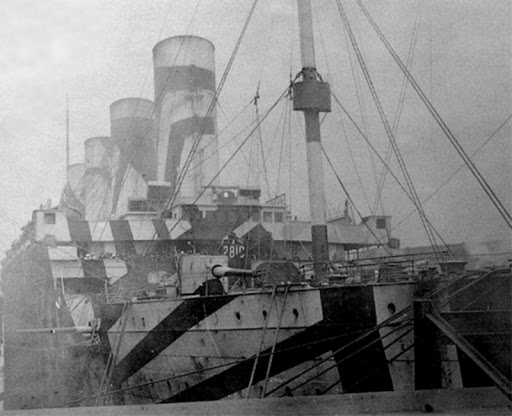
Even when the Prime Minister, Lloyd George, caught the flu it was hushed up. He was in Manchester and reports said he had caught a severe chill after being soaked in the rain in Albert Square. They blamed Manchester’s ‘not too kind climate.’ In reality he was on a ventilator in the town hall, near to death for ten days. Only when it was clear he was going to survive were medical bulletins released to say he was recovering. On 21 September, the troopship Olympic docked in Southampton. So many of the crew were sick with flu, the authorities had to requisition beds in the isolation hospital. One hundred and nineteen cases were admitted and forty one died but the press kept quiet.
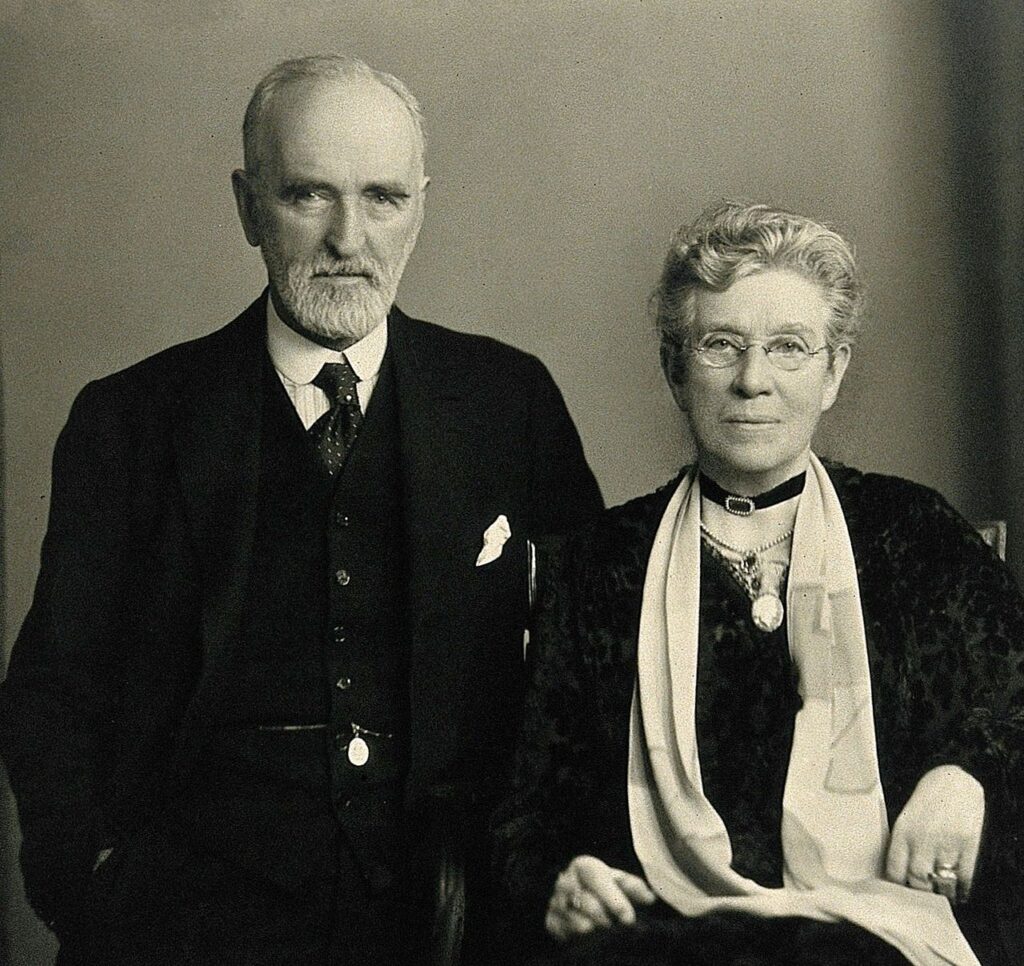
It wasn’t until people began to collapse in the streets that Arthur Newsholm, the public health expert, issued a memorandum. He blamed people for going out when they were sick along with poor sanitary hygiene. People were urged to avoid large gatherings but the main advice was to stay at home if you felt unwell, avoid everything that lowers vitality and wash your hands. The Times suggested this was too little too late and said ‘it would have been better to lock the stable door before the escape of the horse.’ By this time, 1400 police and 1000 telephone operators were sick and doctors and undertakers were worked off their feet.
Reporting on the flu did not start in earnest until October. The Daily Mail called it ‘influenza of a more virulent type than in the early part of year.’ The news, particularly from France, was heavily censored because of the war, but reports came in of rampant flu in India and South Africa including five thousand dead in Cape Town in the first two weeks of October. At the end of the month The Times criticised the authorities and suggested that someone should be answerable for the nation’s health. Almost five thousand people had died in England in the last week of October and there were no signs of the death toll diminishing. The newspapers asked people to see things in perspective and said ‘a stout heart is a great safeguard in these days. Fear is certainly the mother of infection. To go about expecting influenza is to invite it. Such an attitude lowers ones natural resistance to external enemies. The alarmists and defeatists are the allies of the epidemic.’ In early November the Daily Mail ran a series of articles criticising the government for neglecting research into the flu.
If this all sounds very familiar, it’s because it is. So many of the things I’d learned from my research seemed to be echoed in the current pandemic. The coronavirus of this century did not appear in the middle of a world war, even so, with all our modern science, our newspapers, television and social media, the same lack of information, misinformation and conspiracy theories have done the rounds. The Spanish flu came in waves and continued into 1919 and beyond, although never again as bad as the second wave in the autumn of 1918. Many medicines were claimed to be cures, two prime examples being aspirin and quinine. False hope rose and fell like the waves of illness as each medicine and measure was found to be wanting. The last cases came in the spring of 1920. Even now, no one can say where the illness came from with any certainty and no one knows where it disappeared to either. Perhaps it just had to run its course. No one can tell what lies ahead. All any of us can do is get through it as best we can.
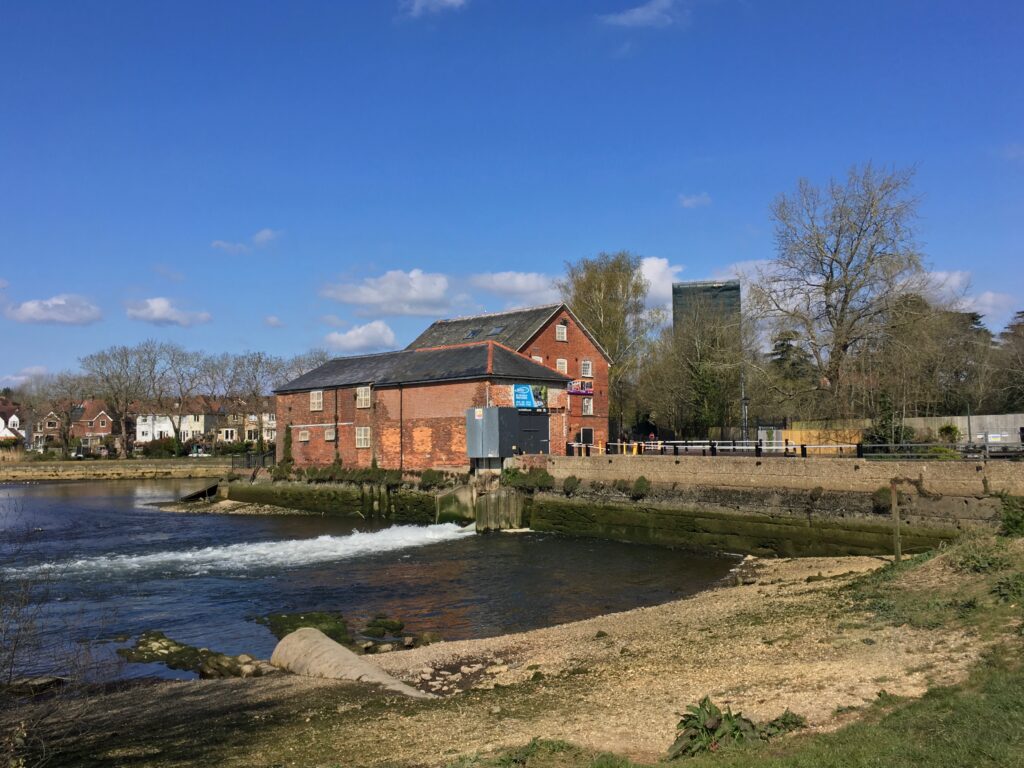
On April fools day 2020, with all this in mind, I kept walking. I made it to Woodmill. For the first time in as long as I can remember, there were no cars queueing to get through. In fact the were no cars anywhere in sight. That was when the echoes of the past became too strong and I left the park again to return to the deserted streets.
If you like what I write and would like to help me keep doing it, you can now buy me a virtual coffee by clicking on the little orange coffee cup at the bottom right. If you’re interested in my historic novels, Plagued is available now on Amazon.
It’s strange that Covid appeared not far off 100 years since Spanish Flu. There’s beem other pandemics but with nothing like the death toll of 1918. Round here people seemed to walk because it was the only exercise they were allowed, not because they wanted to. You’d think that with previous experience the government would have had a plan in place but there didn’t seem to be anything. Misinformation was rife both at the start and when the vaccination programme began, made much worse by social media – thank goodness I raely use Facebook and the like.
The similarities between the two pandemics really struck me as things began to unfold. All the things I’d been researching and writing about, that I thought would never happen in these modern times, kept on happening. When the PM caught COVID, I could hardly believe it. The way they played it down until the knew he was going to survive was so much like Lloyd George in 1918. The fact that quinine was one of the supposed cures in 1918 seemed odd too, when they kept going on about hydroxychloroquine. I have to admit, I’ve avoided the news, at least after the first few weeks. I found myself swearing at the TV too often.
The most surreal experience I had at that time was driving back from Tescos in what would normally have been the rush hour and there wasn’t a car or bus or bike in front of me for the whole length of Shirley High Street. In those days I could run in the road and not worry about cars at all.
I didn’t know that Lloyd George caught Spanish flu. It must have been as scary as Churchill having a heart attack during a visit to the US.
The empty roads and streets really spooked me at times. It felt like being a survivor of some apocalypse at times. Looking back, those quiet roads were lovely though. I don’t think many people even realised Lloyd George had the flu. The papers said he had a chill, and with no TV or social media, and most people not even having radios, it was easier to hush up back then. Walt Disney caught it too, as did US President Woodrow Wilson, Mahatma Gandhi, Greta Garbo, Edvard Munch and Kaiser Willhelm II of Germany. Sadly, so did my aunt Freda. She was 3 and she didn’t survive.
Another odd, coincidence. Lloyd George was 55 when he caught the Spanish flu, the same age as Boris when he caught COVID. It took Lloyd George several months to recover.
Now that you say that, I wonder if that’s what killed my nan’s younger brother. I must check his dates.
I know about Freda because my grandfather talked about it. He said she was playing in the morning and dead in the afternoon. It was in the early part of the pandemic too.
That’s very sad. My nan never talked about her brother and neither did her sisters. I don’t think I knew she had a brother until after her death.
That is sad.
Interesting information about the 1918/19 flu pandemic. It was such a killer and nobody talked about it. And, unlike this pandemic, it particularly affected the young.
I really like your phrase “people marching like zombies”. Walking in the city became an ordeal for me, especially in the 1st lockdown, when everyone seemed grimly determined to get their hour’s exercise, even if that meant jogging past your elbow, or riding a bike dangerously along narrow paths. Had to be always on alert, ready to move to the side to let others through with as much space as possible (although never 2 metres.) We didn’t know then that you were quite unlikely to catch Covid in the open air. Being constantly alert and dodging strangers was stressful. Sucked all the joy out of my wanderings. Things are better now because the zombie walkers have gone! Back to work, or back to the gyms, I guess.
The 1918 pandemic was very much overshadowed by the war I think, even though it actually killed more people. I think, perhaps, the people were so traumatised already by the wounds they saw, the shell shocked men, the worry, the food shortages and the zeppelin raids, one more thing they couldn’t control was more than could be borne. I probably only knew about it because my grandfather lost a child to it. The zombies have mostly gone here too, thank goodness. Sucking out the joy is a very apt phrase. It’s exactly how I felt.