
18 April 2016
CJ and I went for a little stroll along the river this morning. For my part it was mostly about trying to fit some miles in, in a month where I am fast falling behind on my pledge. For CJ it was more about the cygnets. There had been reports that the black swans had another clutch, two this time, and he was eager to spot them while they were still fluffy and grey. Knowing how illusive they are I did my best to lower his expectations but he wasn’t really listening.
The five black cygnets were happily swimming about near Cobden Bridge but there was no sign of the parents or any new cygnets. Of course, I’d never really expected to see them but CJ was slightly disappointed.
“At least it explains why we’ve only seen one of the adults the last few times we came here,” I said, trying to cheer him up. “I thought something had happened to the other one but it was probably sitting on the nest.”
This didn’t cheer him much and we walked on to Woodmill in silence. Perhaps he’d have been happier if there’d been sun but the sky was grey and threatening and it looked as if, yet again, we might get wet before we got home.

The signs over the door at Woodmill were still missing but the flags for the activity centre were flying.
“Maybe they’re getting a new sign made,” CJ said when I pointed it out.
“As long as it doesn’t mean the place is closing. That would be a real shame.”
As we stood there contemplating the spot where the sign used to be I noticed something on the wall around the corner. It looked familiar but I thought I’d go for a closer look. It turned out to be a sign like the ones they’ve put up all along the Itchen Navigation. Usually we cross the road and carry on along the river so it may have been there all along and I haven’t noticed, or have forgotten.

Rather than go back and cross the road to the other side of the river, we carried on through the mill towards Monks Brook. As we passed South Stoneham House I pointed it out to CJ.
“It’s owned by the University now,” I told him, “but this was once a Manor House. In fact, it was home to the Barons of Swaythling before they moved to Townhill Park House. The gardens were designed by Capability Brown and I’d love to get a look at them.”
We peeked through the gate at the grade II listed house, built in the early eighteenth century by Nicholas Hawksmoor. In fact we even took a few steps inside but that was as far as our daring went. Perhaps if we were braver we could have just strolled in and seen those intriguing gardens. Apparently, the University are planning to turn the house into a conference centre and create new footpaths alongside Monks Brook. There is even talk of turning part of the grounds over to the Council as a conservation area. Fingers crossed it happens.

Around the corner we had a little wander in St Mary’s Churchyard. CJ spotted the Gater family graves in the little area beside the church enclosed by wrought iron fencing and got quite excited when he realised this was the family who used to own Gaters Mill. Of course I’d seen them many times before but I didn’t have the heart to spoil his fun so took some pictures anyway.
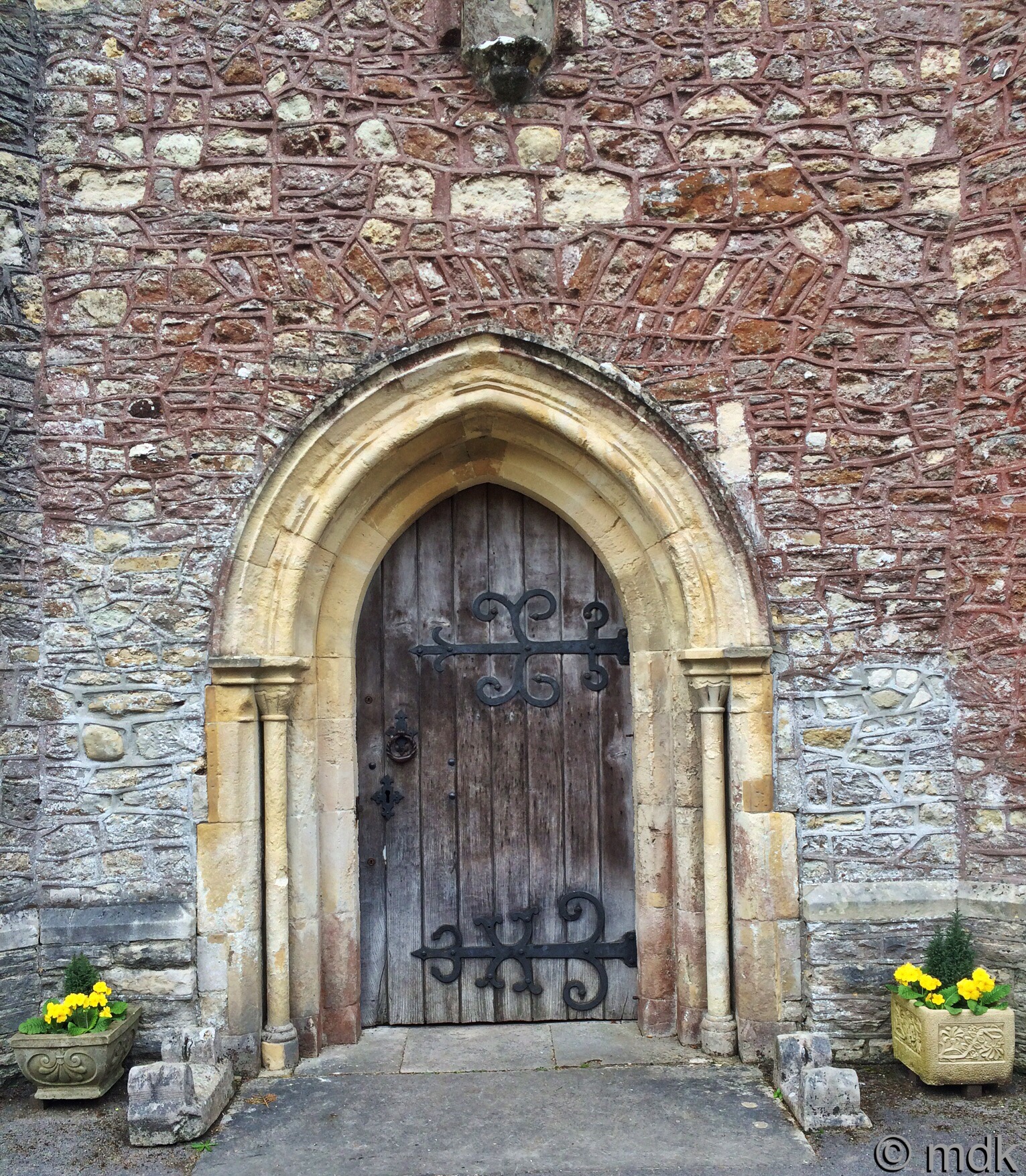


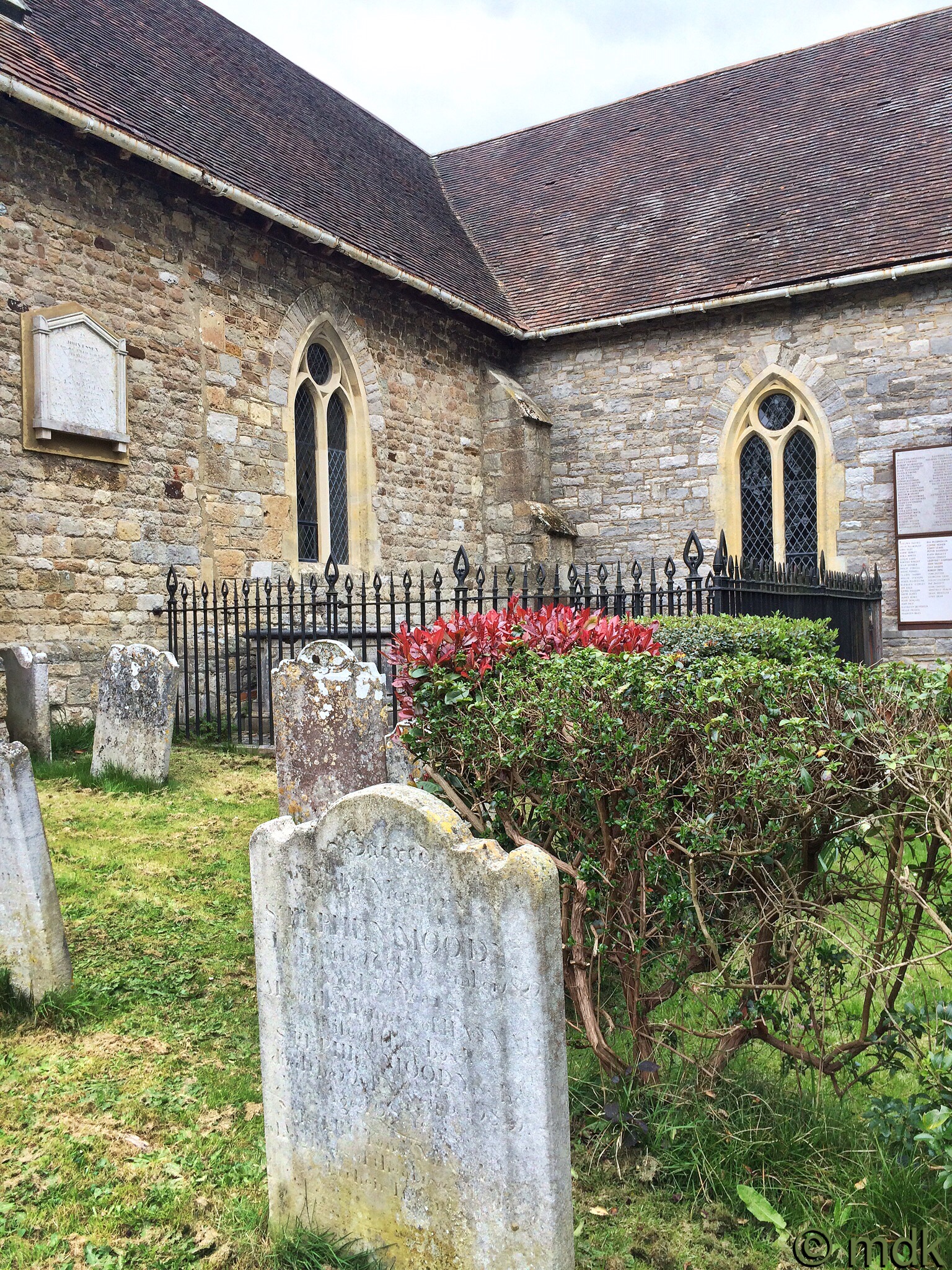
We wandered around for a while stopping here and there to look at a grave. As we set off towards Monks Brook we talked about the lack of flowers on the graves.
“I suppose it’s because they’re so old,” I said. “There’s probably no one left alive to remember now. The only people who visit are probably like us, interested strangers.”
“Or maybe someone researching their family tree and finding a distant relative,” CJ said.

Over the green bridge and across the brook there were flowers to see. Clumps of purple toothwort poked through the earth here and there. Like the Himalayan Baslam that grows later in the year, this is not a native plant and the seed pods also explode, sending the seeds far and wide. Thankfully toothwort is not as invasive as the balsam. This perennial plant lacks chlorophyll and sends its roots out underground searching for a host plant, usually willow or poplar, to attach to. It lives as a parasite, getting the energy it needs secondhand from the leaves of the trees. It certainly makes a bright splash of colour wherever it grows.

The edges of the boggy ground beside the path were speckled with celandines and further on we found snakeshead fritillary. Last year I planted some in my garden and was excited to see them coming up a week or so ago. Sadly, the slugs were more excited and ate the flowers before I had a chance to enjoy them. Finally there were cuckoo pint flowers, their pale green spathes opening to reveal the deep purple, spadix. These have wandered into my garden too but I like them so I leave them.


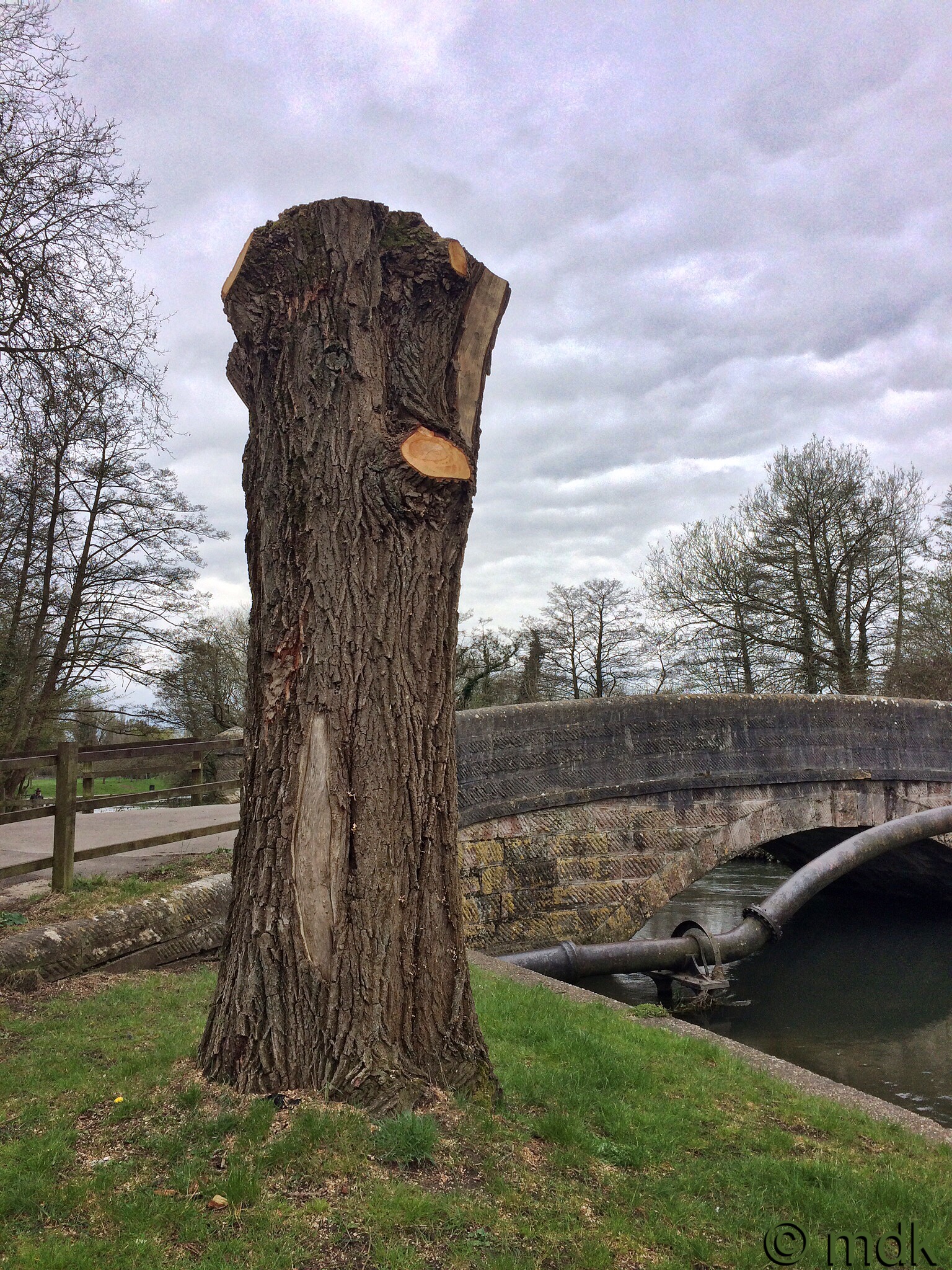
Pretty soon we were at Mansbridge where we veered off the path to take a closer look at the tree that was cut down after the storm at the end of March.
“It’s odd they didn’t cut it right down,” CJ said, looking at the stump which was taller than him.
“Perhaps it’s not actually dead,” I said hopefully, looking about for some sign it was going to grow again. “Maybe new leaves will grow eventually, although I can’t see any sign of them now.”
“We’ll have to wait and see,” CJ said.
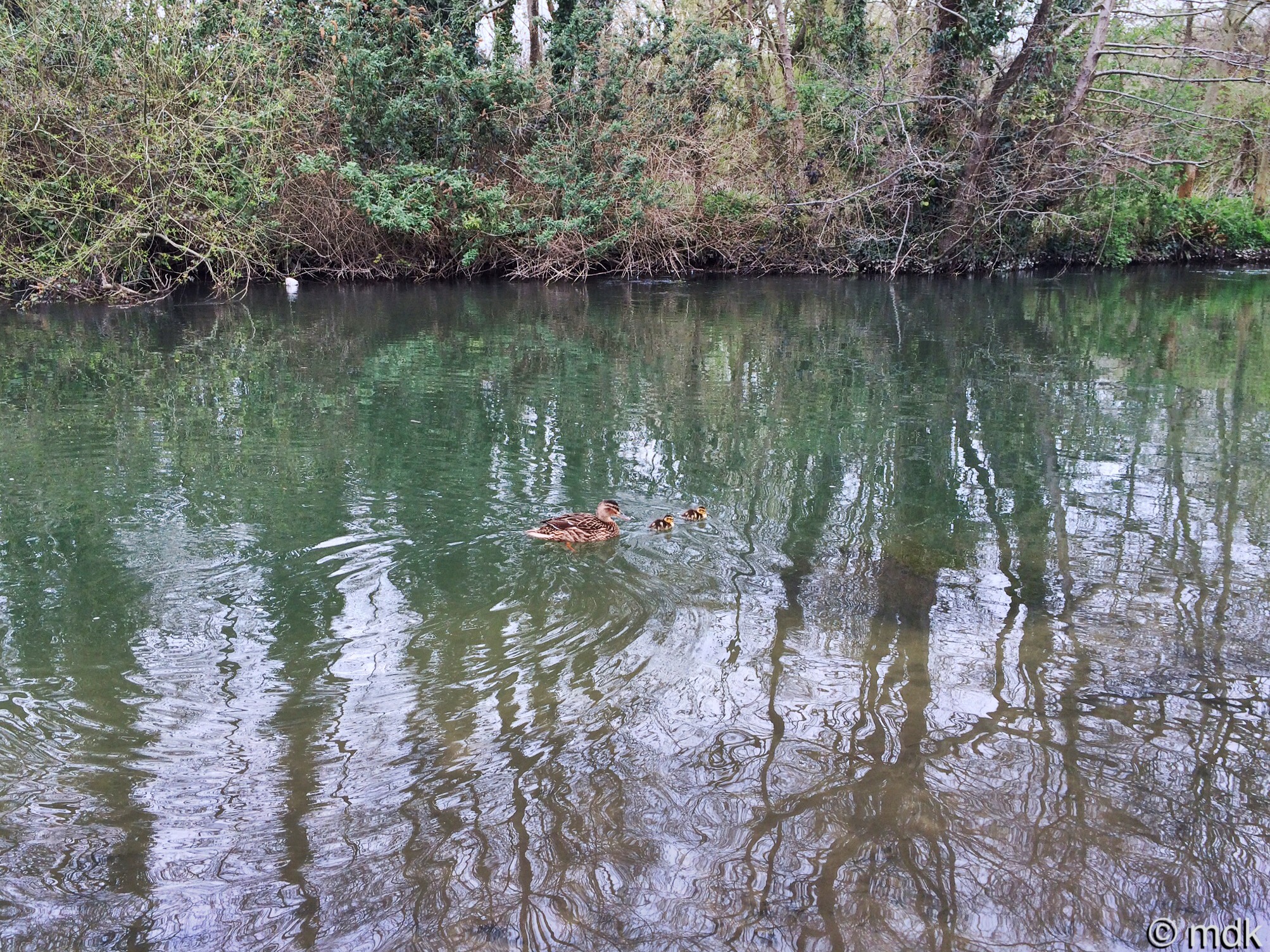
We walked back along the river looking out for signs of nesting swans but coming up with nothing but a few ducks. Then, just before the bend in the river, CJ spotted the first fluffy duckling of the year, at least on the Itchen, swimming along with its proud mother. There was oohing and ahhing and photos were taken. Few things are quite as cute as a newly hatched duckling.

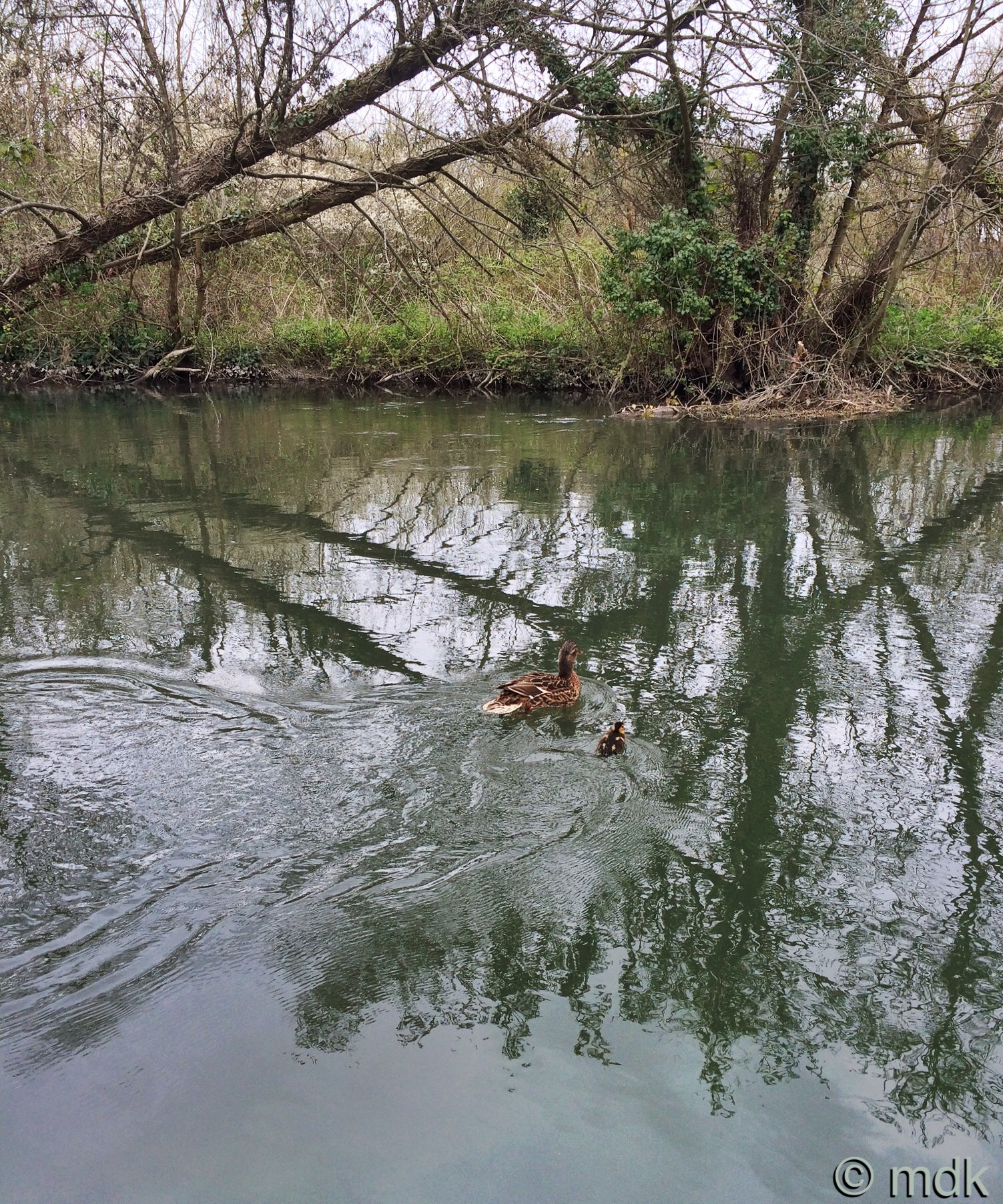
Around the bend we came upon another proud mother duck. This one was smaller than most and her two babies hardly bigger than a ping pong ball.
“What a clever thing you are,” CJ said to her.
“What a pity we didn’t bring the duck food,” I said.

Near Woodmill a row of ducks were lined up on the bank. At our approach, they dived, one after the other, into the water, each making a big splash as it landed. For some reason this amused CJ.


The last of the ducks caused a bit of a disturbance when it almost landed on a greylag watching us from the water. A poor coot got caught up in the kerfuffle and almost jumped out of his skin as the duck came crashing past in a shower of water droplets. While the ducks went skittering across the water and the coot settled back down after his shock, the greylag seemed unconcerned. He just sat watching us with his beady eye, waiting to see if we had anything for him.


Across the road I found a clump of purple dead nettle in the long grass beside the mill. Then we retraced our steps along the river towards the Triangle, talking about ducklings, cygnets and the chances of seeing the new additions to the black swan family. CJ wondered why all the ducklings seemed to be at the White swan end of the river.
“It might be because it’s fresh water above Woodmill and salt below,” I explained. “They probably don’t like the salt.”

When we came to the place we’d seen the first black swan cygnets on the far bank we stopped and peered across the water for a while. I thought I detected movement but it was too far away to be sure.
“I wish we could get to the river on that side,” CJ sighed.
“Its probably because we can’t they’ve chosen that place to nest,” I said.

By this time we were almost at the slope out of the park. There were ducks on the path and I half expected them to disappear into the water as we got nearer, just as the others had near Woodmill. These ducks were made of sterner stuff though. They stayed on the bank quite brazenly and actually came waddling after me as if I might be dropping a trail of bread crumbs behind me as I walked. CJ crouched down and held his hand out to them.
“Don’t tease them,” I said. “They’ll think you have bread and, if you’re not careful, they’ll nip you.”

Of course he didn’t listen any more than he had when I warned him the swans would bite if he held the bread in his hand rather than throwing it into the water. This ended in exactly the same way too. The ducks, thinking he had bread or food of some kind, came waddling over to investigate. When they discovered he had nothing they bit. A less kind mother would have said ‘I told you so,’ instead I just suppressed a chuckle. One of these days he’ll learn.

Just like last time, it seems the black swan cygnets are going to be illusive, at least for now. It would be nice to see them while they’re still little balls of fluff but I suppose we should count ourselves lucky that they’re there at all. At least we got to see some ducklings before our walk came to an end. Maybe we’ll be luckier next time.

Please see my copyright information before you copy or use any of the above words or pictures.
Nice frittillary
It was. Pity the slugs ate mine.
What cute bundles of fluff they are.
The plans for the University building are exciting, I hope they open up the grounds!
Lisa x
I hope they open up the grounds too. I’d love to see them.
The title sounded like a meal! Or maybe I’m just hungry.
That’s a nice shot of the fritillary. I wish I’d see more of them here but nobody seems to grow them.
Your cuckoo pint is cousin to our Jack in the pulpit, but they look a little different. They’ve just started blooming so hopefully I’ll have one in my next flower post.
Now I’m going to have to go and get bitten by a duck to see what it feels like. That might be hard to do though; ours aren’t as friendly as yours.
I like the fritillaries but so do the slugs it seems. I don’t recommend getting bitten by a duck, although CJ said it didn’t hurt much. Apparently swans bite much harder.
Glad you got some more miles in and saw the ducklings.
The ducklings were a real bonus.
I’ve been watching the first ducklings and goslings on my walks, too. It’s such a treat!
its lovely to see all the new arrivals on the river each spring. I can’t wait for the cygnets!