
12 October 2016
When my street view hunting turned up what looked very much like another boundary stone, albeit half hidden behind a wheelie bin, CJ and I were itching to go and see it for real.
“It might not actually be a stone,” I said as we set out along the river this morning. “We shouldn’t count our chickens before they’re hatched.”
Even so, there was a thrill of anticipation in both of us, if it was a stone, it was one that no one else had found. It felt like a very big thing and we couldn’t help getting excited.
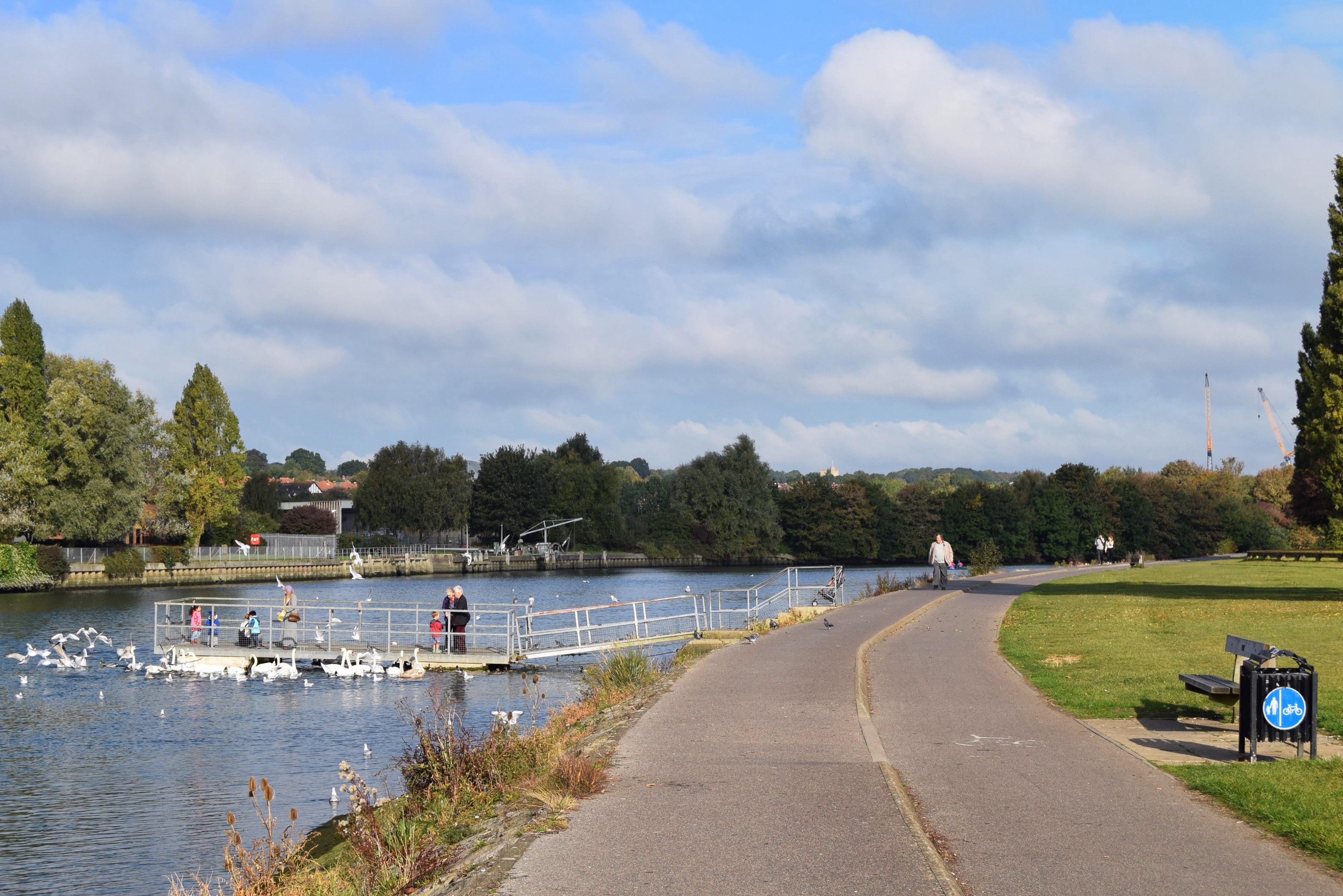
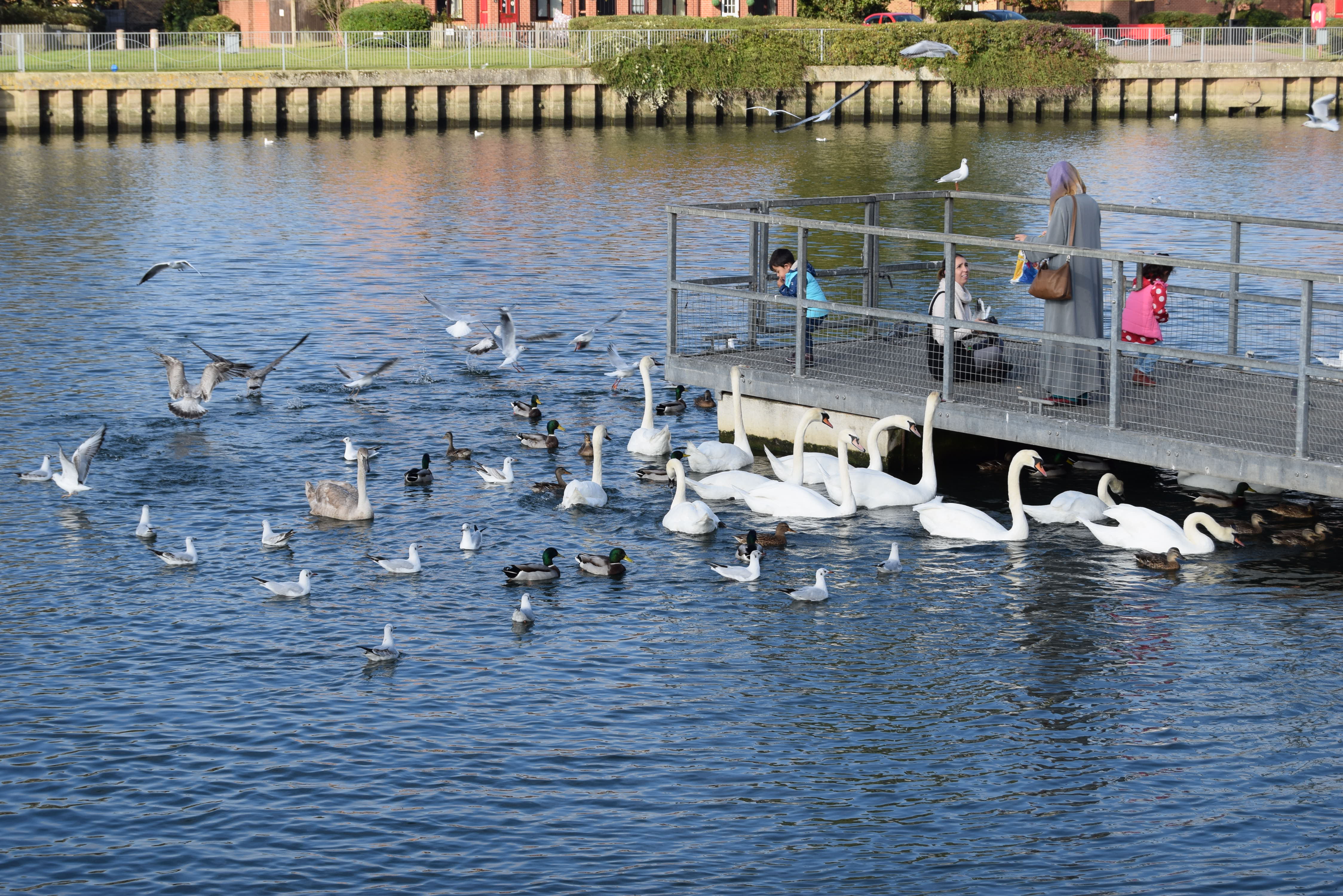
Whatever we found, or didn’t find, it was a lovely morning for a walk, cool and bright with a chill breeze to blow the cobwebs away. There were people on the jetty feeding the swans as we approached.
“Isn’t that a cygnet?” CJ said as we got closer.
Sure enough it was, although almost fully grown and only recognisable by the dark feathers.
“I wonder where he’s been hiding?” I said.
Since the spring we’ve been watching for cygnets along the river here and, while the black swan cygnets were a wonderful surprise, there wasn’t a single mute swan cygnet to be seen. Obviously, we weren’t looking in the right places or at the right times. In the far distance we could see a tower just peeking over the tops of the trees.
“I think that’s the church that thinks it’s a castle,” I told CJ. “Funny I’ve never noticed it from here before but that’s the way we’re heading.”
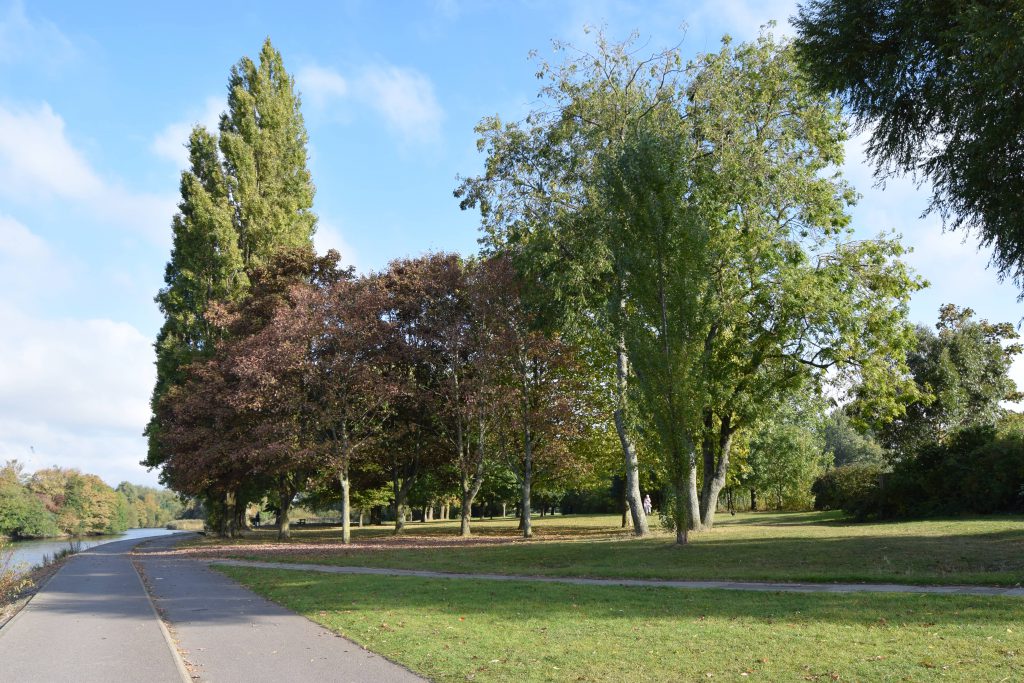
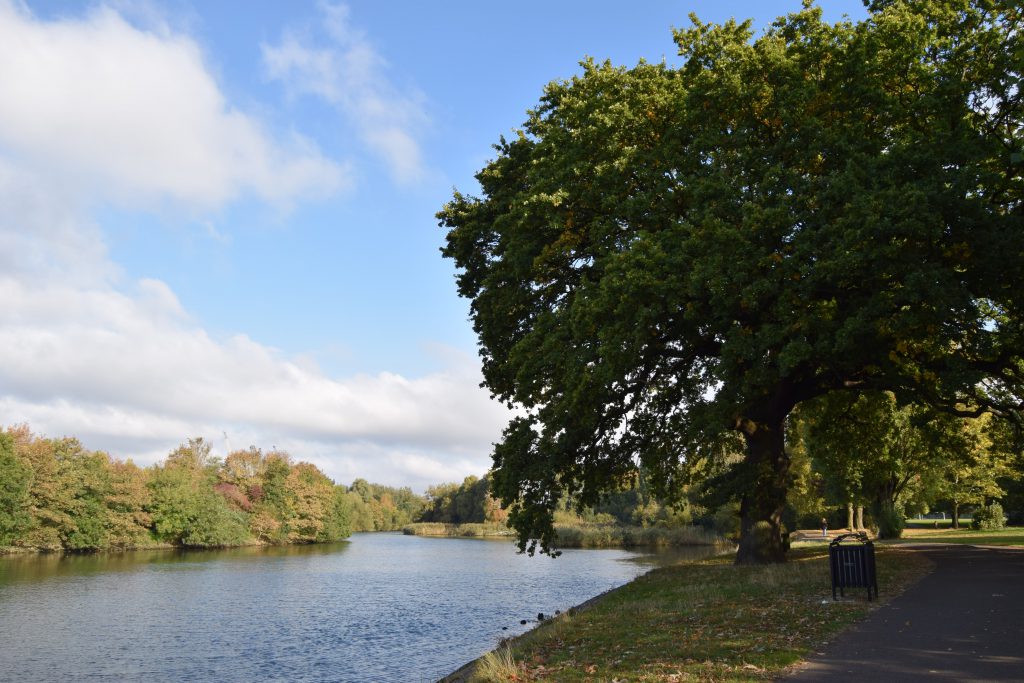
Near the reed beds a group of canoeists were having a lesson, with lots of shouted instructions. Disappointingly, the maples on the corner appear to have missed out the stunning red stage and gone straight for the brown and crinkly look. Perhaps we didn’t get enough cold weather this year for autumn colour? On the opposite bank there was a definite blush of gold amongst the leaves but nothing as spectacular as I’d hoped.

Close to Woodmill something odd was going on. A huge square of grass the size of a football pitch had been dug up. It looked like a ploughed field and neither of us could work out what the point of it was, although the gulls were having a fabulous time picking over the upturned soil for juicy worms. Surprisingly, the roof of the mill was still decorated by gulls. Perhaps no one told them about the feast going on a few yards away or maybe they’d already eaten their fill. Then again I’ve never met a seagull who isn’t hungry.
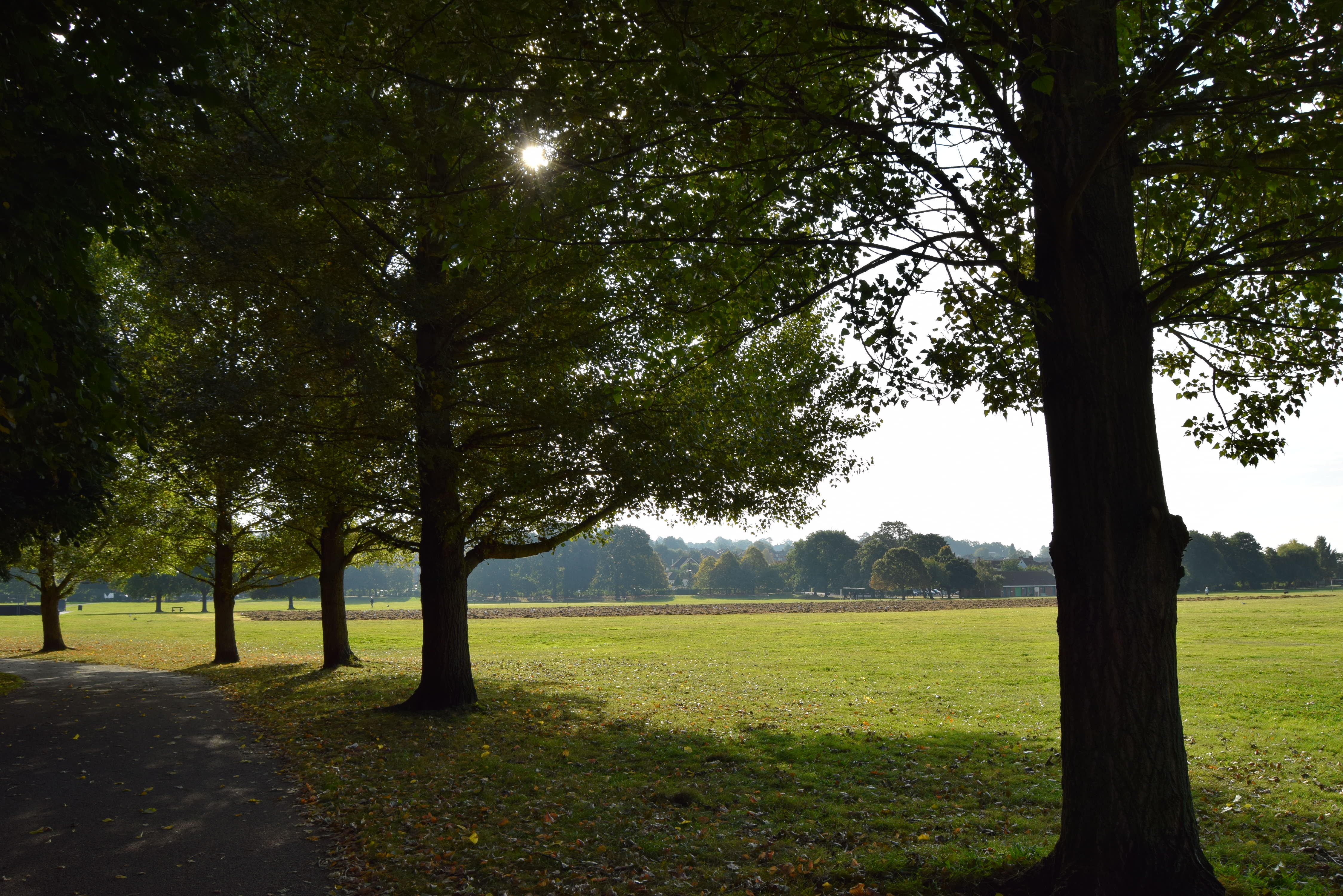
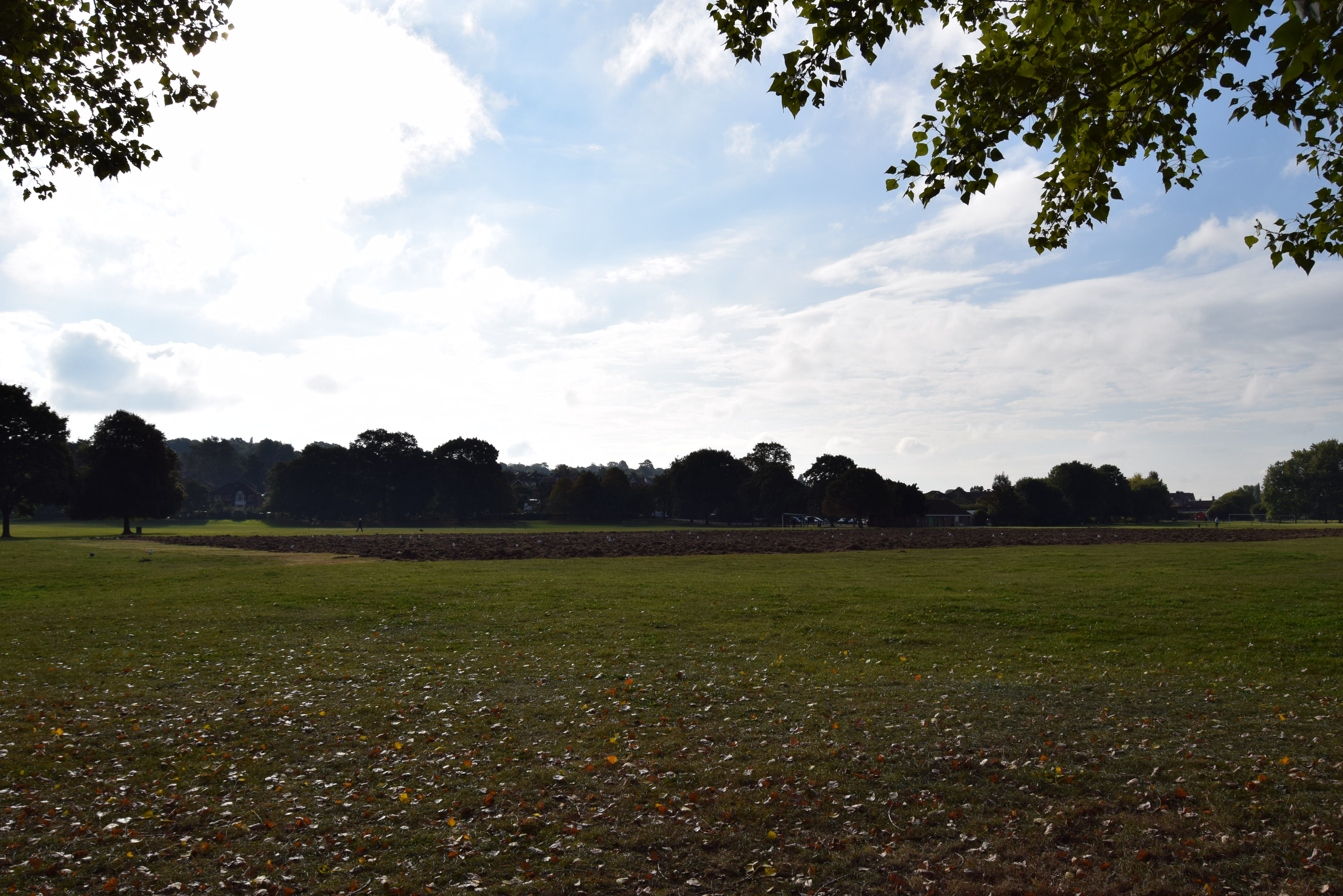
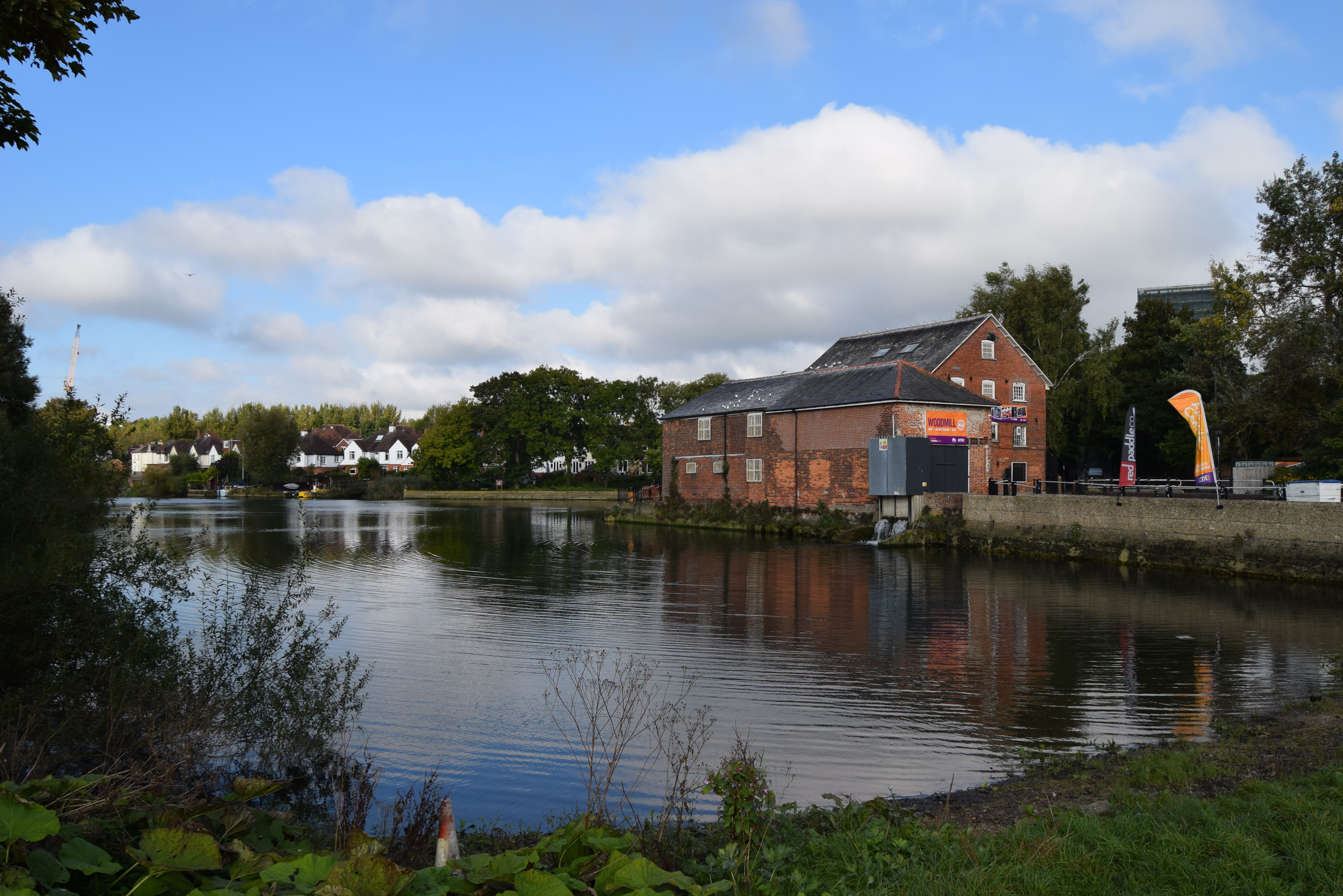
We theorised about the dug up grass as we walked behind the mill, over the bridge towards Burgess Road.
“Maybe it’s going to be a skate park?” CJ suggested.
“It could be for another sports pitch of some kind?” I guessed.
“Or they could have found a buried Romand Villa and be excavating it?” CJ joked. At least I think he was joking.
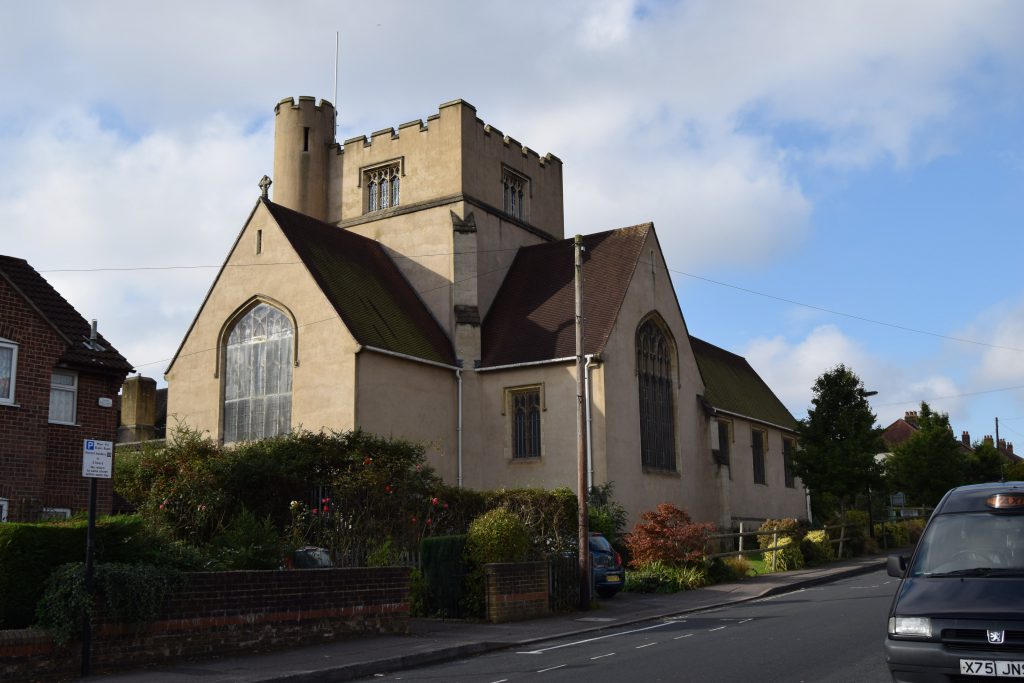
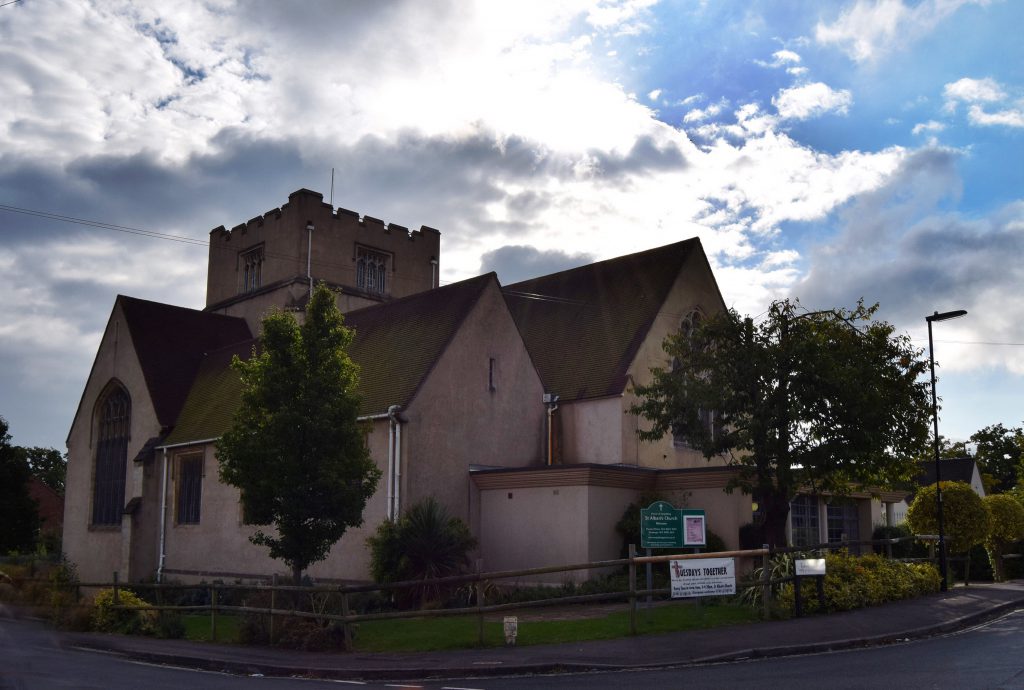
Before we knew it we were zigzagging our way through the flower garden roads in Bassett. On Honeysuckle Road we came upon St Alban’s Church, the one we’d seen from Riverside Park.
“When I first saw this church, back on a very wet day in March, I thought I was going mad,” I told CJ.
“Going mad?” he laughed, “I think that happened years ago.”
“I was walking up from Portswood,” I continued, ignoring the insult, “and I could see what I thought was a castle towards Burgess Road. I couldn’t work out how I’d walked up and down before without spotting a castle or why I didn’t know there was a castle there. Then I discovered it’s actually a church that thinks it’s a castle.”
“Maybe the architect wanted to build a castle but had to make do with building a church,” CJ said looking up at the crennalated tower.
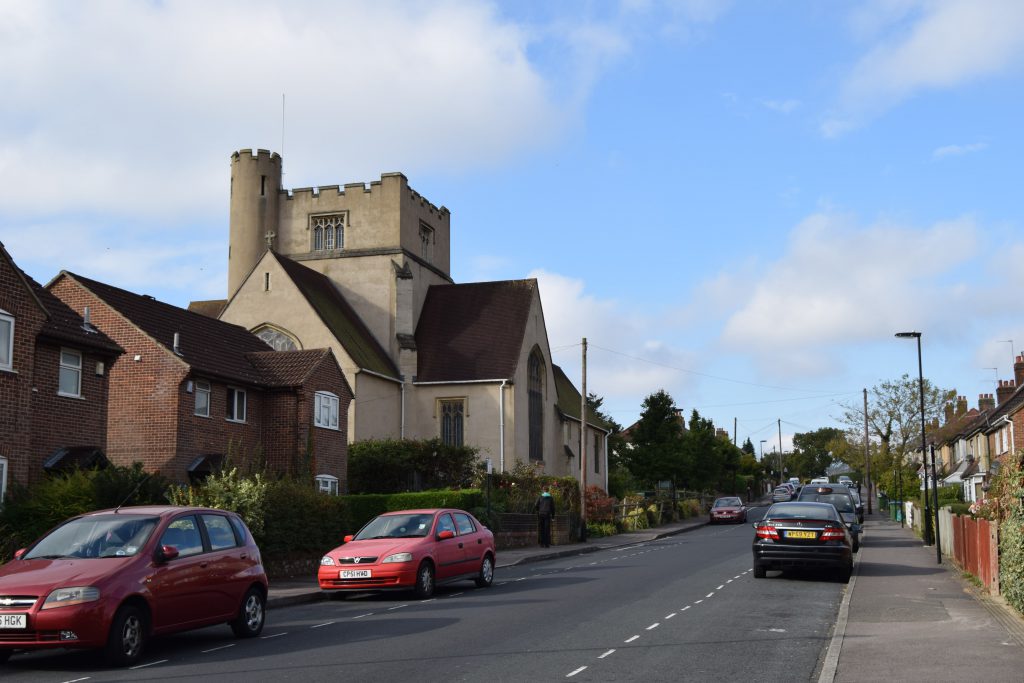
The church was actually built in 1933 on land that was once part of Swaythling Farm. It was one of the first to be designed by architect Nugent Francis Cachemaille-Day and it is grade II listed. Whether he actually wanted to build a castle remains to be seen.
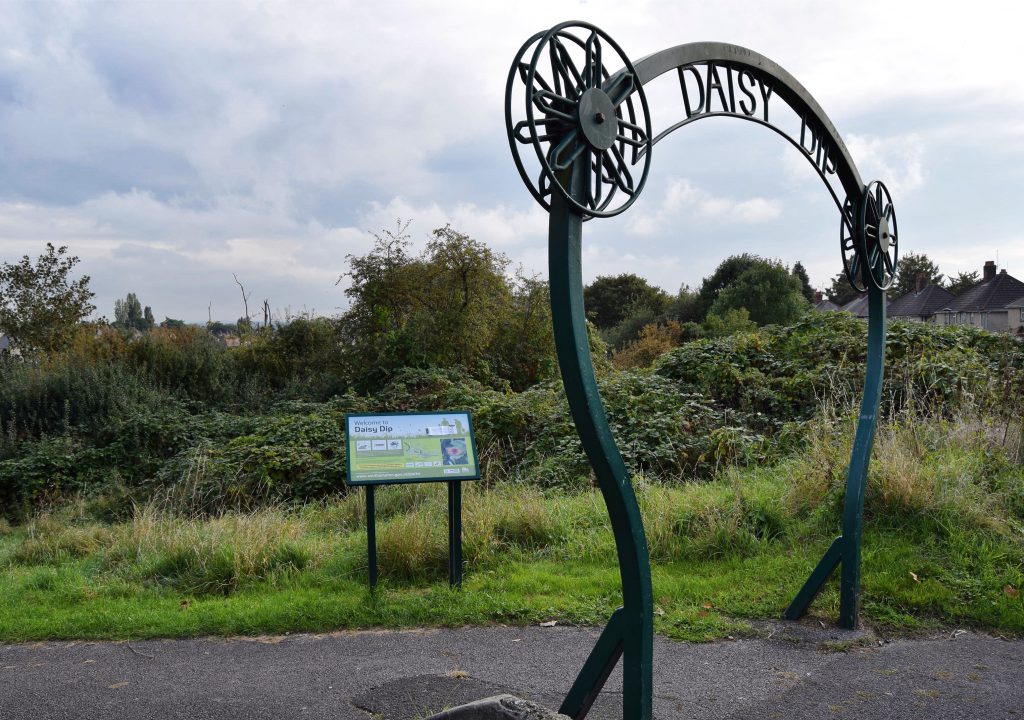
Soon we were turning towards Daisy Dip, close to the house Commando’s grandmother lived in and where his mother was brought up.
“I wonder if grandma played here when she was a girl?” CJ said as we decended the steep path.
“Almost certainly. In fact, my mother was brought up in Bassett so she probably played here too.”
“Wouldn’t it have been funny if they knew each other?”
“It would, but it’s unlikely because Nanna was much older than Grandma and had probably grown up by the time grandma was old enough to play outside.”
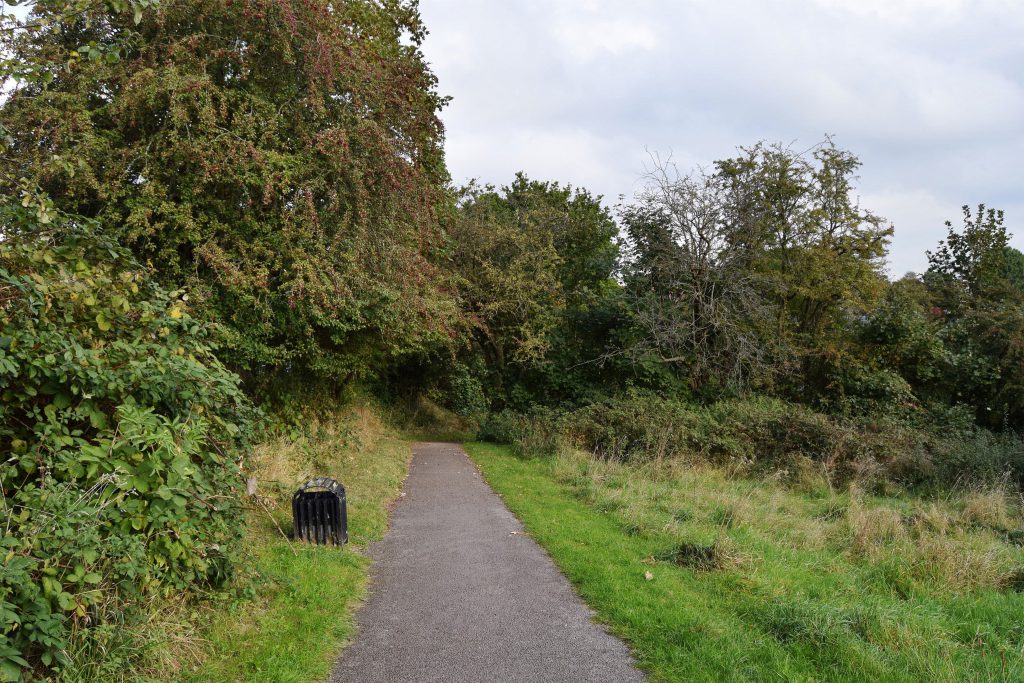
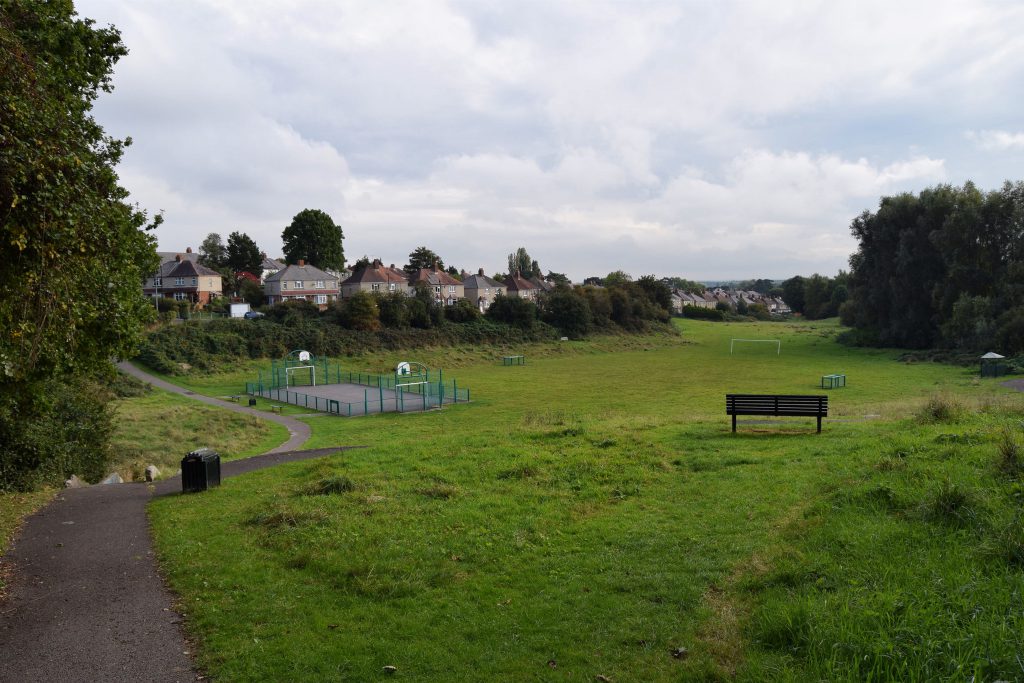
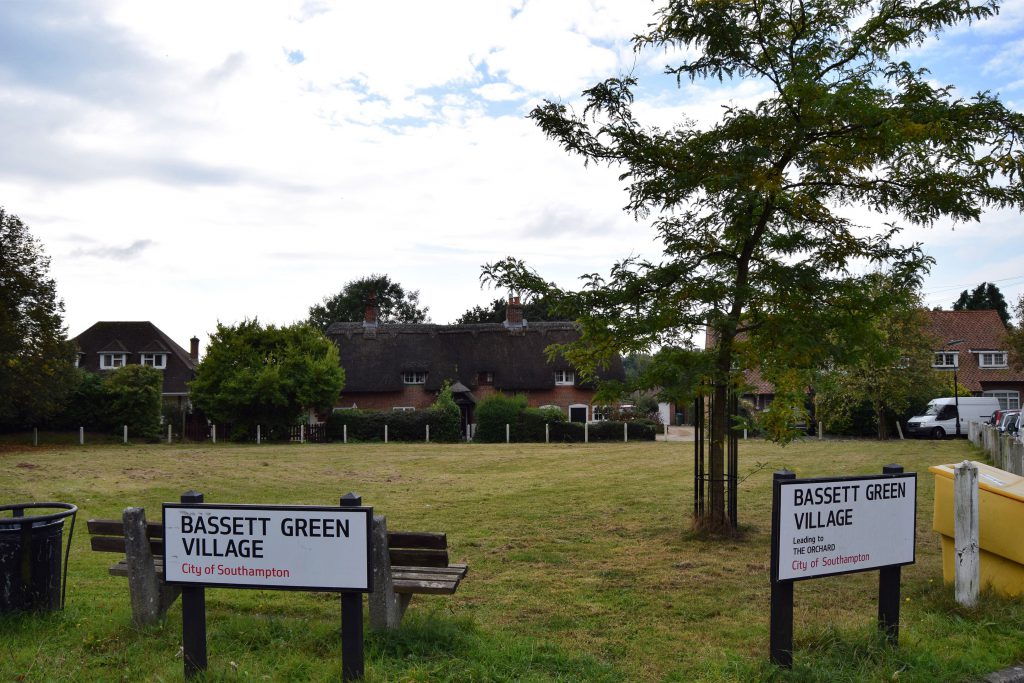
Up the hill on the other side and we were getting closer to our boundary stone, or what we thought was a boundary stone anyway. Our speed increased, as did our excitement. In my head I was already composing an email to Ingrid to tell her we’d found one that wasn’t on her list. Even so, we couldn’t walk past Bassett Green Village without a quick stop.
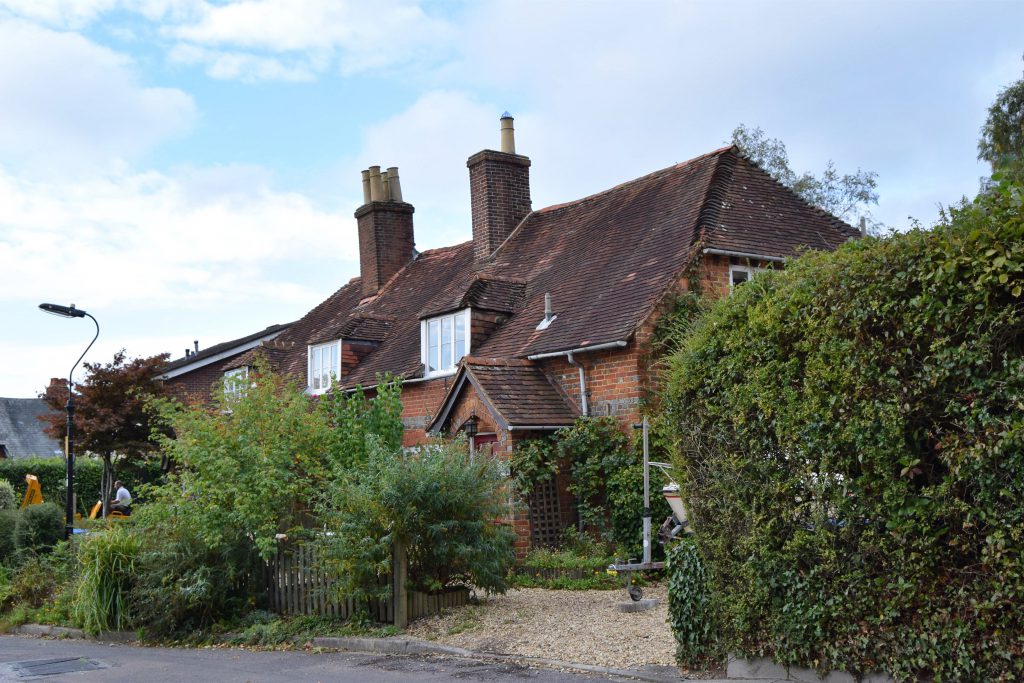
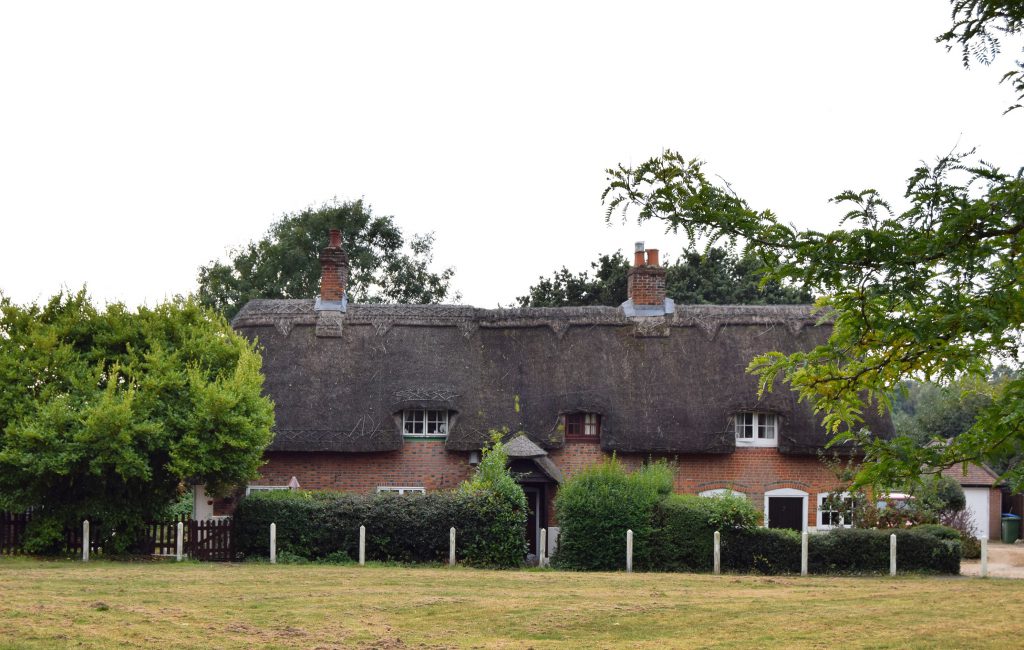
The village has existed since at least the mid eighteenth century and was sometimes known as Old Bassett or Bassett Lane End. Back then this was an area of heathland and woods. The little triangle of village green surrounded by cottages, the prettiest of which has a thatched roof, is now a conservation area and the cottages are listed.
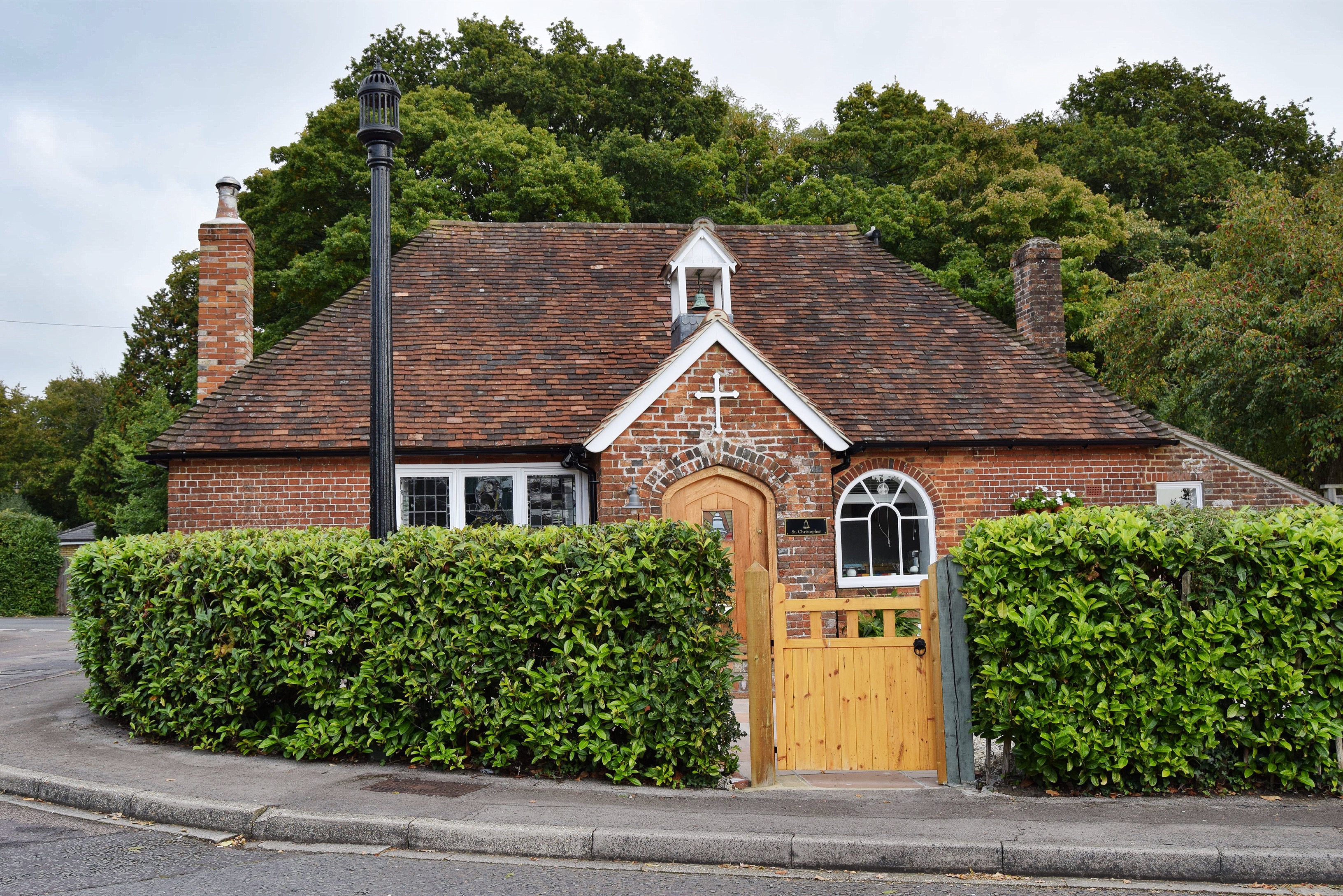
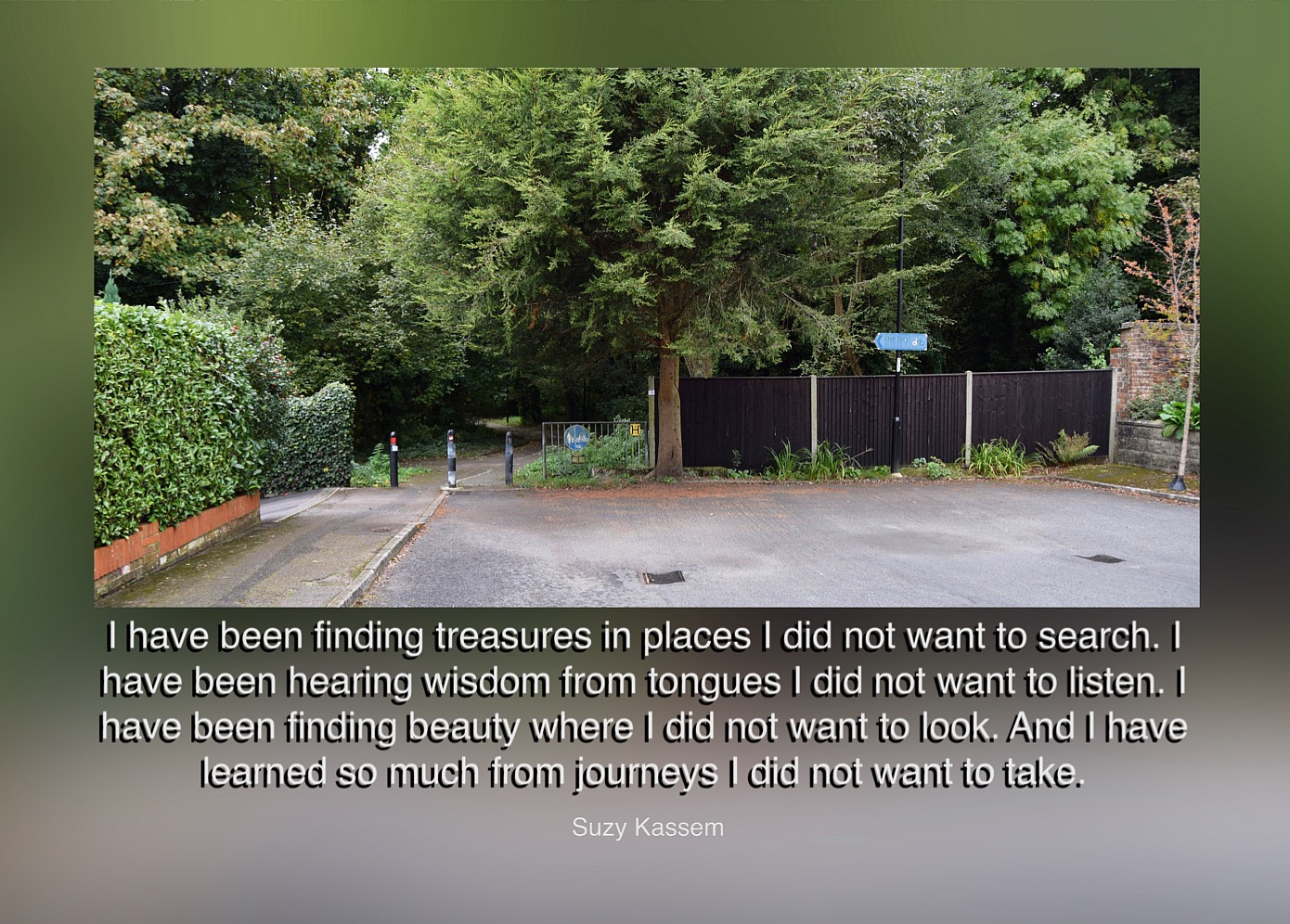
The next part of our walk involved me looking at the map trying to find the entrance to the woods I’d seen on Google Street View. Despite our impatience to get there, there were a few stops to check we were going the right way. Then we turned a corner and there it was in front of us, beside the entrance to the woods, right up against a fence. The wheelie bin was gone, revealing a tree and the whole of the stone. It was the right size and shape and it looked to be completely covered with moss, like so many of the other stones. We walked towards it, still not entirely sure…
Please see my copyright information before you copy or use any of the above words or pictures.
Another cliffhanger. I can’t bear it.
Sorry about that 🙂
Oh Marie!!!
😀
Look forward to the next instalment.
😀
That would be number 11 wouldn’t it? I think I’ve been paying attention but maybe not.
It would, if it was a boundary stone…
I felt exhausted after this one…
Me too. We walked almost ten miles by the time we got back home.