
More by luck than judgement, we found ourselves back where we started. There was a little assistance from Google Maps in there somewhere too but the sun shining on my phone screen didn’t help matters. By now it was almost four O’clock, and apart from our short lunch break, we’d been walking since midday. As several of the Witney locals were lounging about on the grass in the sun, we decided to rest our weary feet and join them. This also gave me the chance to peruse my list of family members. Thomas Haley, my great great great grandfather had lived on Church Green.
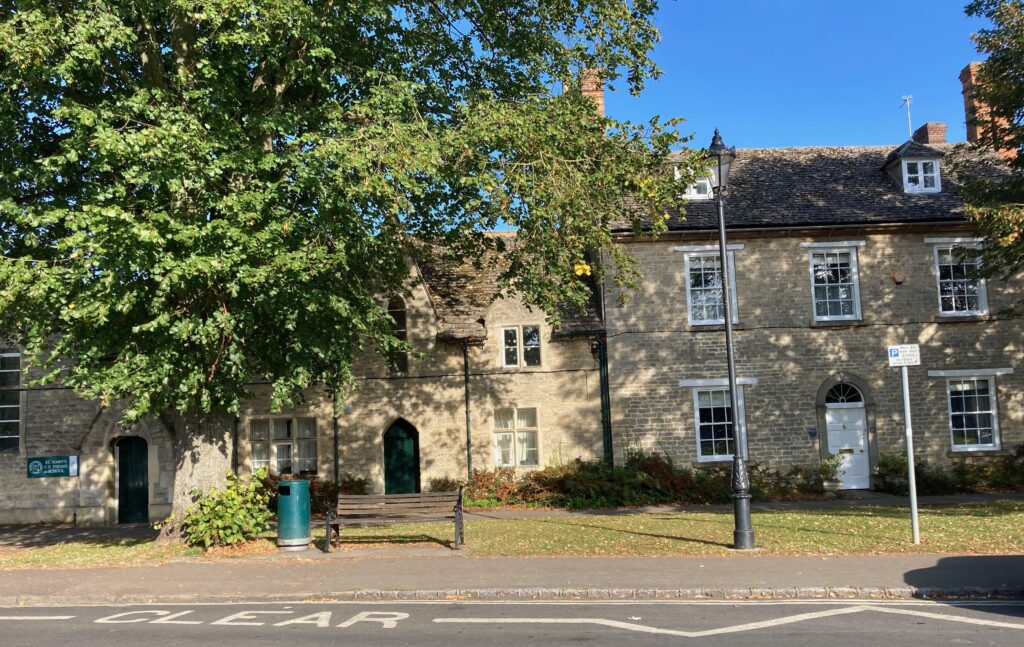
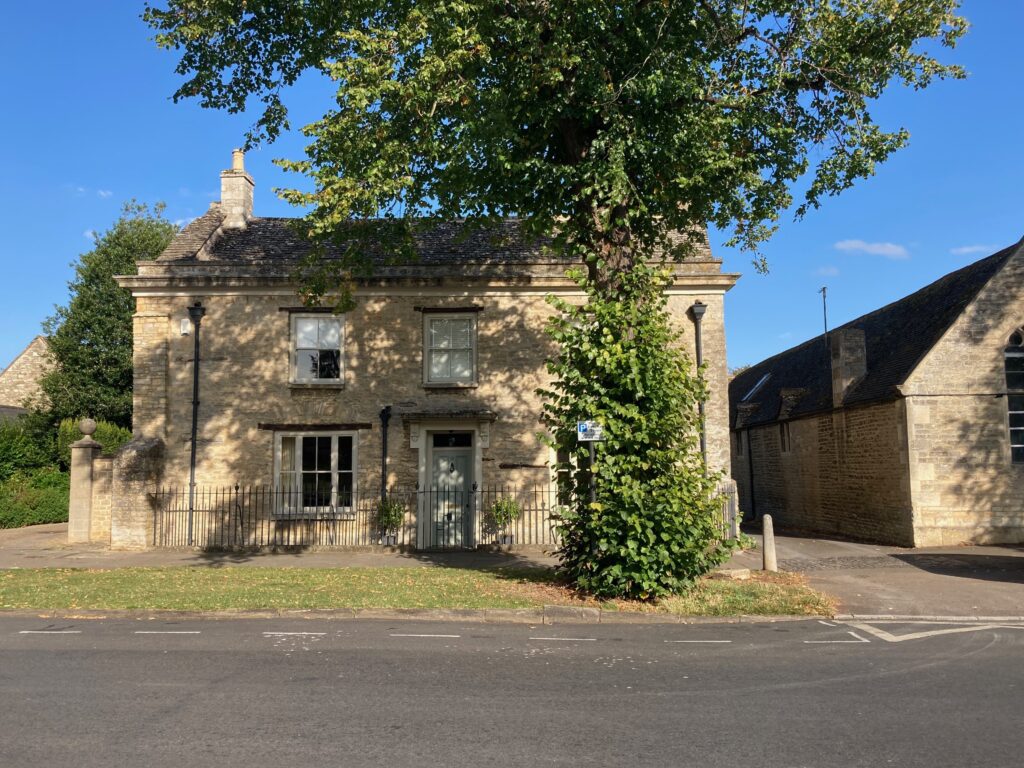
Sadly, I had no idea where on Church Green Thomas and Mary Haley had lived, but as we lazed in the late afternoon sun I looked around at all the beautiful houses and tried to imagine what it must have been like to live in such a pretty spot. Some of the houses were rather grand, so I may have been getting above myself to imagine my blanket weaver ancestor had lived in any of them.
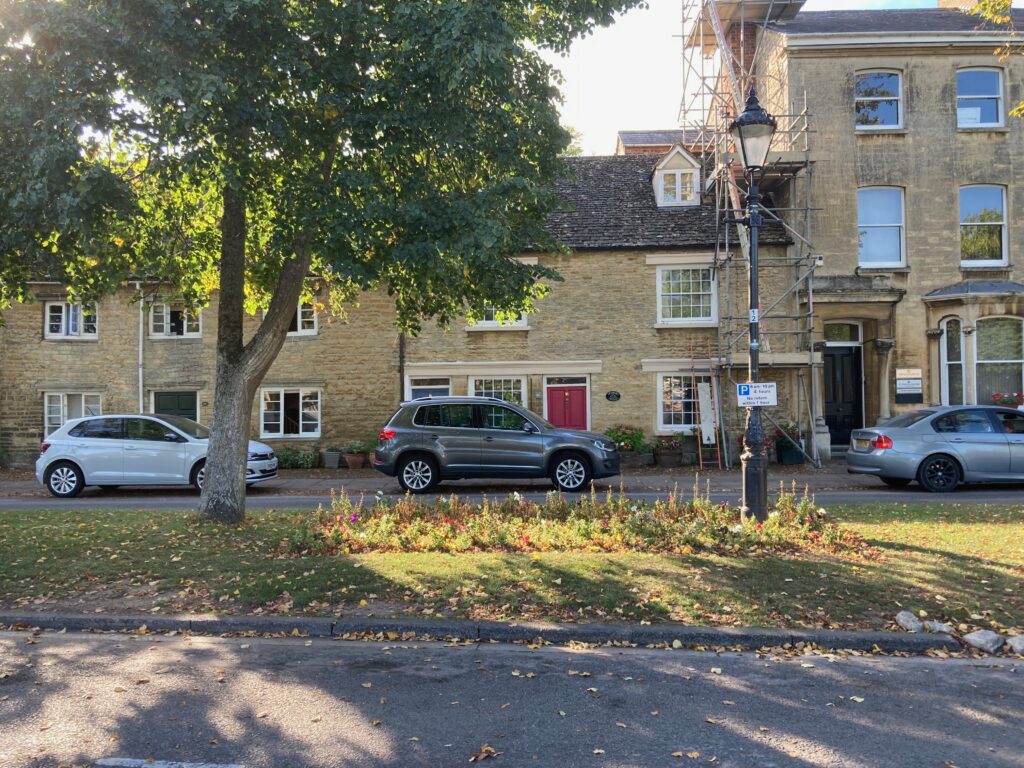

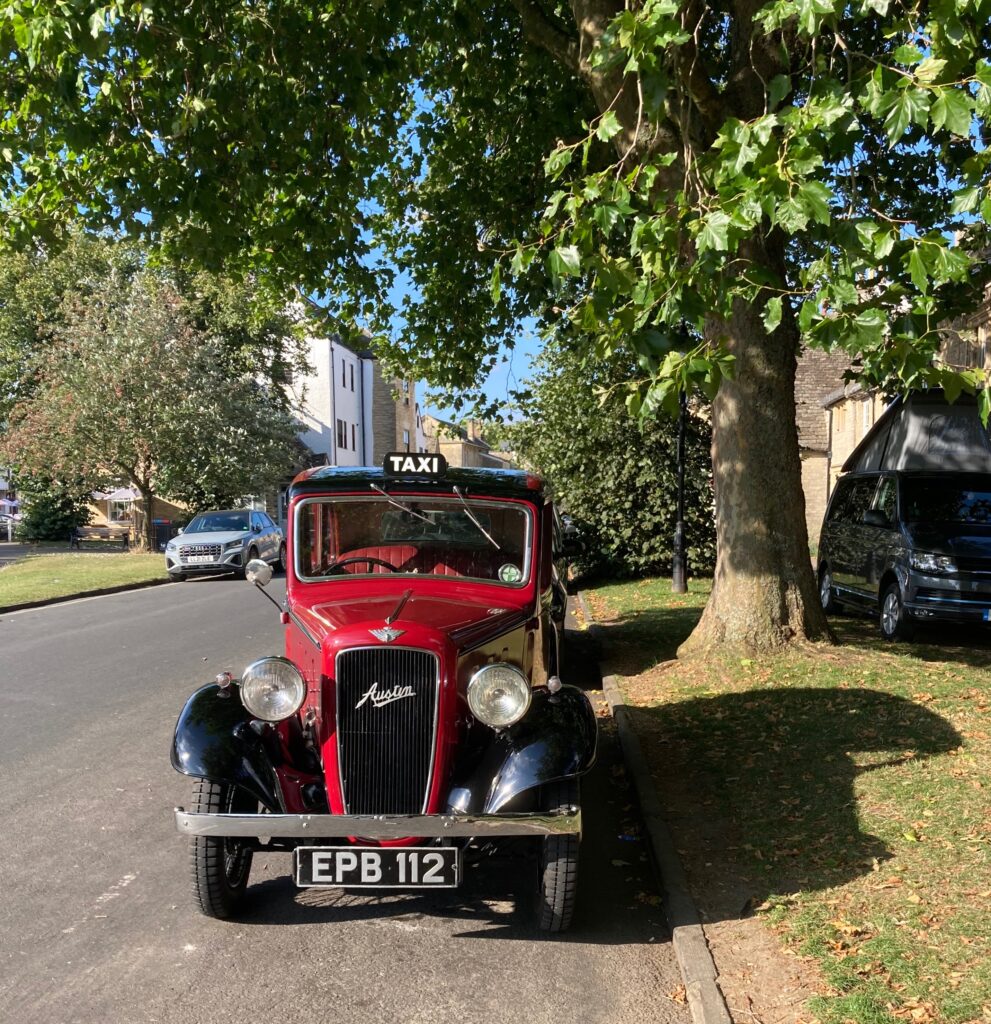
While I was looking around at the houses Commando had spotted something else interesting. Parked a little way up the street was a most unusual car. Now, I am not a car person by any stretch of the imagination. In fact I’ve often thought I’d be the worst witness to some kind of crime involving a vehicle, because the most I’d normally be able to report is the colour of the car in question. I knew exactly what car this was though and seeing it there felt like the strangest coincidence.
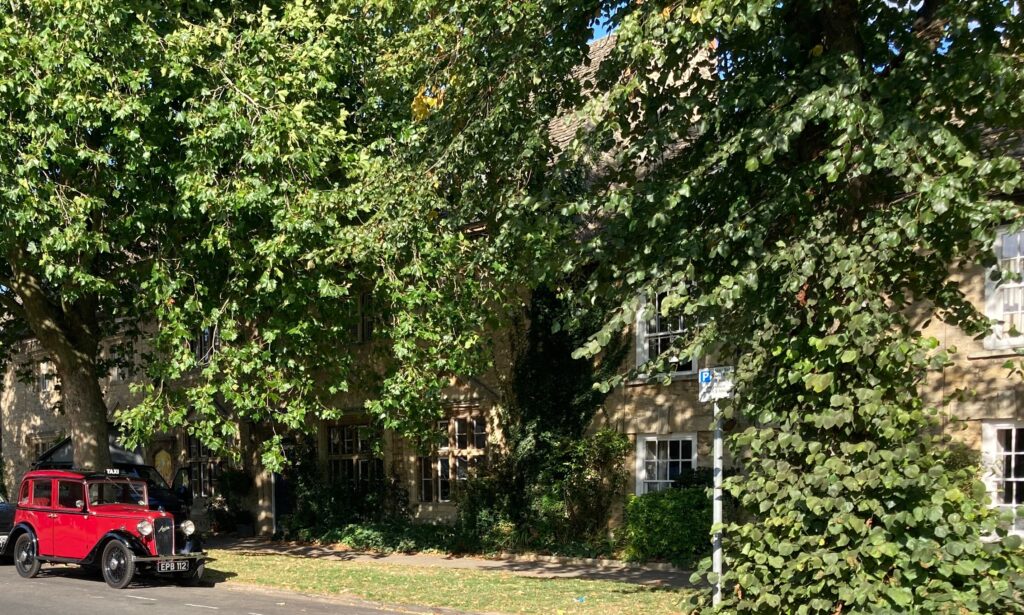
The book I’d recently finished writing, A Dish Best Served Cold, the fourth in the series that begins with Plagued, featured a red Austin 7. In fact the car was integral to the plot. Apart from the taxi sign on the roof, this car could have driven right out of the pages I’d written. As I’d read the first draft to Commando, he was thinking the same thing. If my anti hero, Arthur, had walked out of one of the houses in his trench coat and fedora with a cashmere scarf wrapped around his neck, I’m not sure either of us would have been surprised. Of course, I had to go and have a closer look.

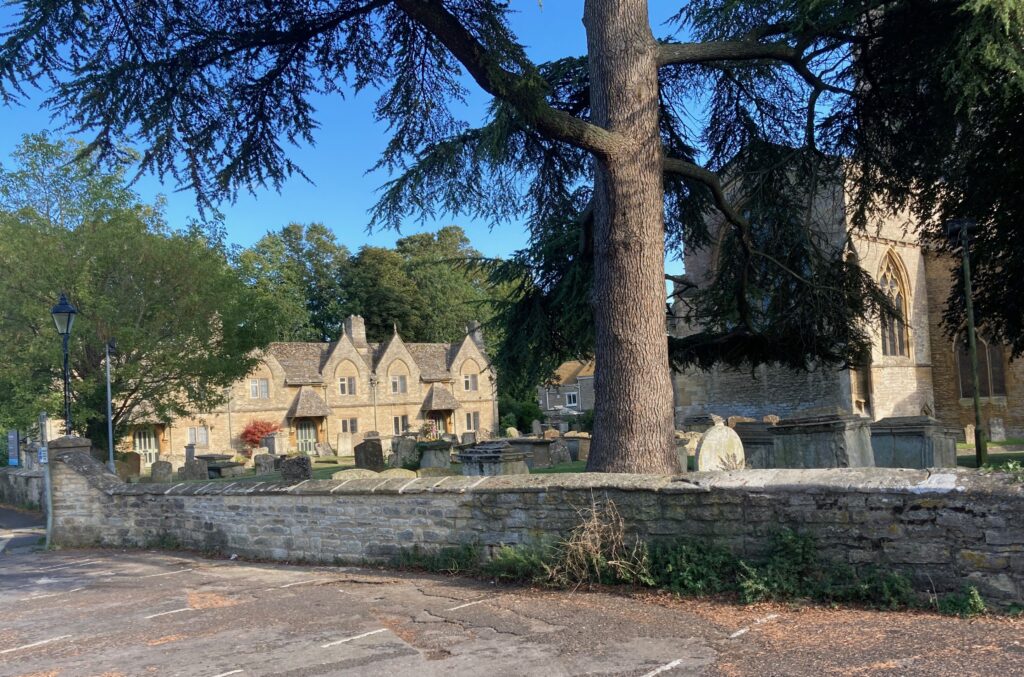
Luckily, Arthur did not appear from anywhere but we both thought it wise to make a move anyway. Despite our previous lack of success in finding any Haley graves in the churchyard of St Mary’s, I thought I’d like one more look before we went back to the hotel just in case we’d missed anything the first time. On the way to the church we passed some pretty little terraced cottages. They looked much more like the kind of place a blanket weaver ancestor of mine might have lived.

We also passed the Henry Box School, founded as a grammar school in 1660 by Witney born grocer, Henry Box. Henry was a student of Oriel College, Oxford and his school, grounded in a classical curriculum, was aimed at preparing the sons of wealthier merchants, manufacturers and minor gentry of Witney for university. I think it’s safe to say none of my humble ancestors would have gone there. Today the Henry Box School is a mixed comprehensive but it still has strong links to Oriel College.

We did have a cursory, and unsuccessful look for Haley graves and I took some more photographs of the row of charming little cottages, but by this time the heat and all the walking was beginning to catch up with us. Commando thought it might be time to go back to the hotel for a wash, brush up and a little rest. He also thought he knew a quicker way to get there. His sense of direction is marginally better than mine so I trailed along behind him as he strode off across the green park behind the church.

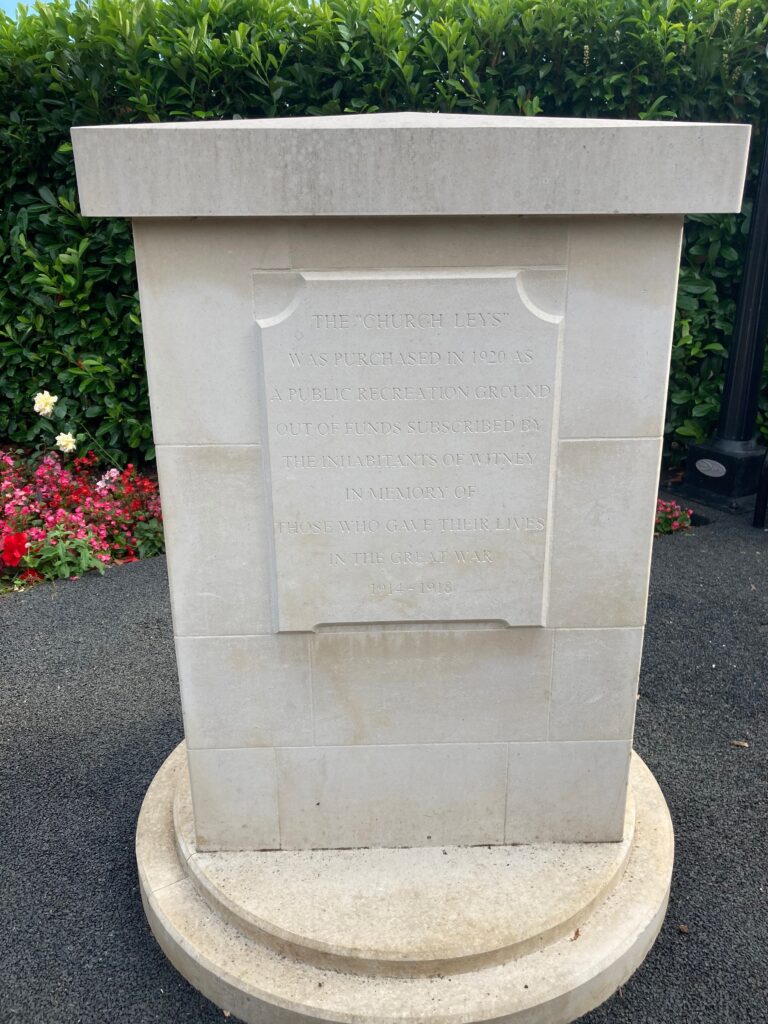
As it happened this was an excellent idea. We had accidentally discovered The Church Leys, a recreation ground purchased in 1920 by the inhabitants of Witney in memory of the men who gave their lives in the Great War. Better still, Commando’s keen eyes spotted a coffee shop on the other side of the park. I have a suspicion that he may have been Googling whist I was busy looking at houses.
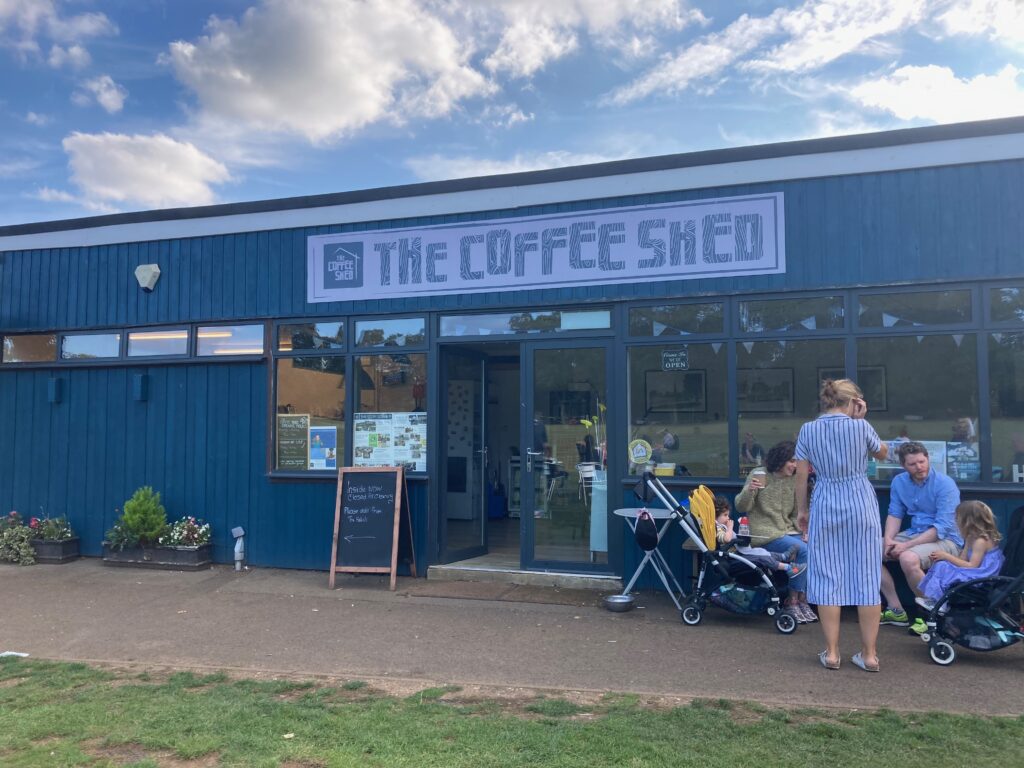
The Coffee Shed turned out to be a real find. Within minutes we were installed at a table on the grass drinking the creamiest, thickest milkshakes I’ve ever had. It was exactly what we needed at that point. Our little rest also allowed me to sneakily check out directions back to the hotel. It turned out Commando was right, it was only about half a mile away.

The war memorial was also well worth a look. It was a pretty little garden with an inscribed stone pillar, some beautiful mosaics, a remembrance bench and one of the Tommy silhouettes that I’ve seen in so many places recently. Given the subject matter of my book, Plagued, and my grandfather’s experiences in France, this seemed a very fitting find.


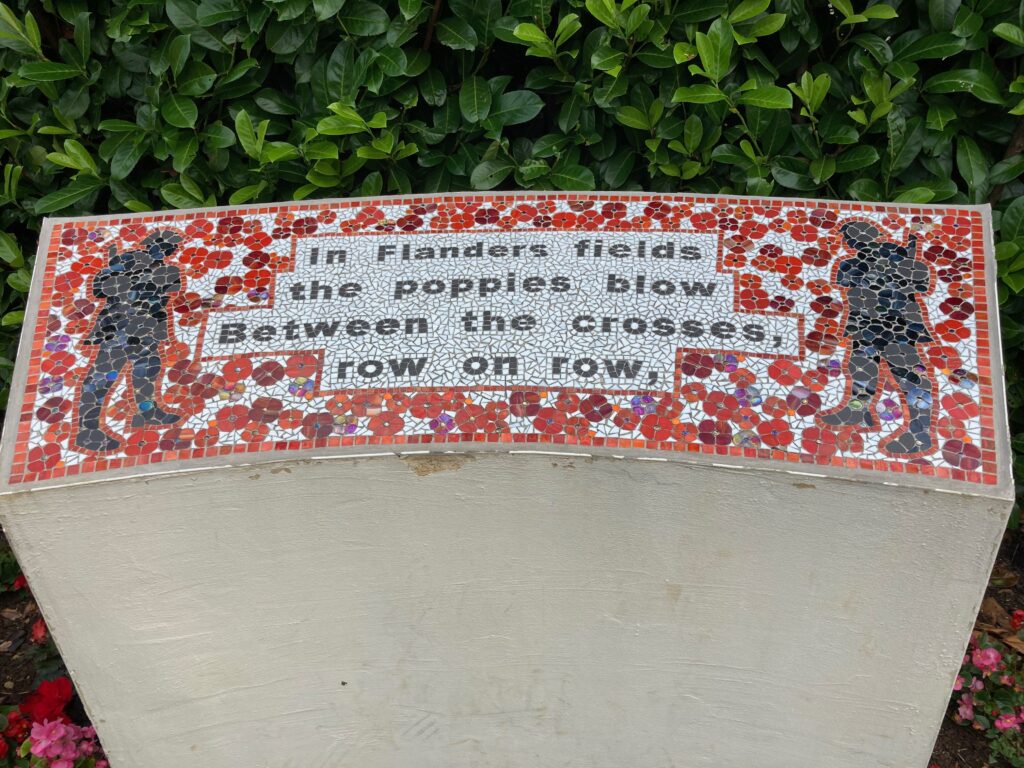
The shortcut did turn out to be short, and after a wash, brush up and a snack we headed back to Church Green to watch the sun go down. By this time I’d had a chance to do some further research. This led us to walk back to the church along the avenue of lime trees, which I had discovered once led to Witney railway station. The trees were planted to mark the route the soldiers would have taken on their way to war.

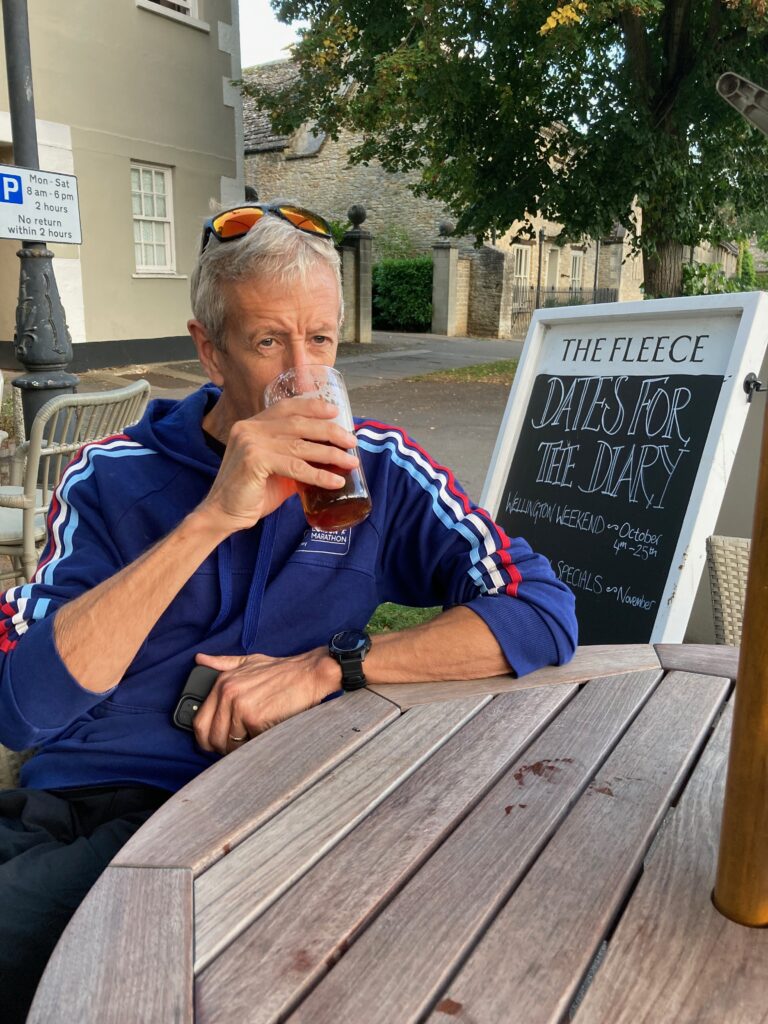
So we spent our first, and last evening in Witney sitting outside The Fleece with some very welcome cold drinks and a splendid view of the sun setting behind the church. It had been a long and busy day but I’d learned a lot. If I could have had one wish at that moment, it would have been to have my Pappy, Thomas John Haley, sitting beside us, but I think he was there in spirit.

If you like what I write and would like to help me keep doing it, you can now buy me a virtual coffee by clicking on the little orange coffee cup at the bottom right. If you’re interested in my historic novels, Plagued is available now on Amazon.
Another wonderful journey! Thank you!
Two of my friends each have one of the lovely cottages – or almshouses – that you picture near Henry Box school and overlooking the green. These were primarily given to spinsters or widows in the parish at low subsidised rents and the same ethos has been kept to this very day! Across the road is St Mary’s infant school – all my children and my mother, grandparents and great grandparents went to this delightful old school. It is included in Derek Honey’s Witney memory books – it might be worth a look as I found a picture of my great grandfather in its pages – taken while he attended the school in the 1890s.
Thank you for filling in the gaps in my knowledge. Those cottages really are beautiful. I will look up Derek Honey’s books. They may be very helpful if I decided to write more about my grandfather’s childhood.
Thank you for listening! I used to do a “potted” history of Witney with mostly my own research for my language students way back in the nineties! I love the history. Southampton is amazing too… I visited often over the last few years as moved to the Isle of Wight in 2015.
Will send you the mill mans details privately 🙂
It was my pleasure. I keep meaning to go to the Isle of Wight again. Must get round to it soon.
The Cottages alongside Henry Box school are known as The Bread & Beef Cottages. My Great grandparents lived in one of them early 1900’s. I believe the the alms houses by St Mary’s Church and the Townsend Alms houses were the ones for spinsters or widows of the parish of reduce means. A my Great grand father & wife lived in one of The Bread & Beef cottages it may have been because of reduced means or age, which I don’t know. The Townsend almshouse are at the other end of the town at Newland heading towards Oxford. I think the name Bread & Beef comes from an annual gift involving Bread & Beef for the occupants, maybe someone else knows more about this than I do. Well done on writing your historical books, I will have a look on Amazon.
Thank you for the information. I love it when people fill in the gaps for me. I hope you like the book. The second in the series is due out soon too.