
1 November 2016
Following my fifteen minutes of radio fame CJ and I spent a fruitless couple of hours wandering around Basset Woods looking for a boundary stone on the strength of a cryptic message. Searching on Google maps showed what I thought was a stone on the edge of the woods. It turned out not to be but the same search turned up another possible stone, this one ancient rather than modern. Today CJ and I decided to check it out.
We set out early while the morning mist was still swirling about. A swan and seagull melee was going on when we reached the jetty and, in amongst the birds fighting for thrown bread we spotted three black swans. It was impossible to tell whether they were the first cygnets now grown or adult swans. A few years back there were three adults on the river here, last year there were only two until the first cygnets were hatched. Perhaps the third adult has now returned?
“Don’t be too disappointed if we can’t find the stone or it turns out to be nothing, ” I warned CJ as we headed towards the reed beds.
“At least I’ll get to see the lych gate made from wood from the Battle of Trafalgar and the one handed clock,” he replied, “and the trees look so much brighter today it’ll be a nice walk whatever we find.”
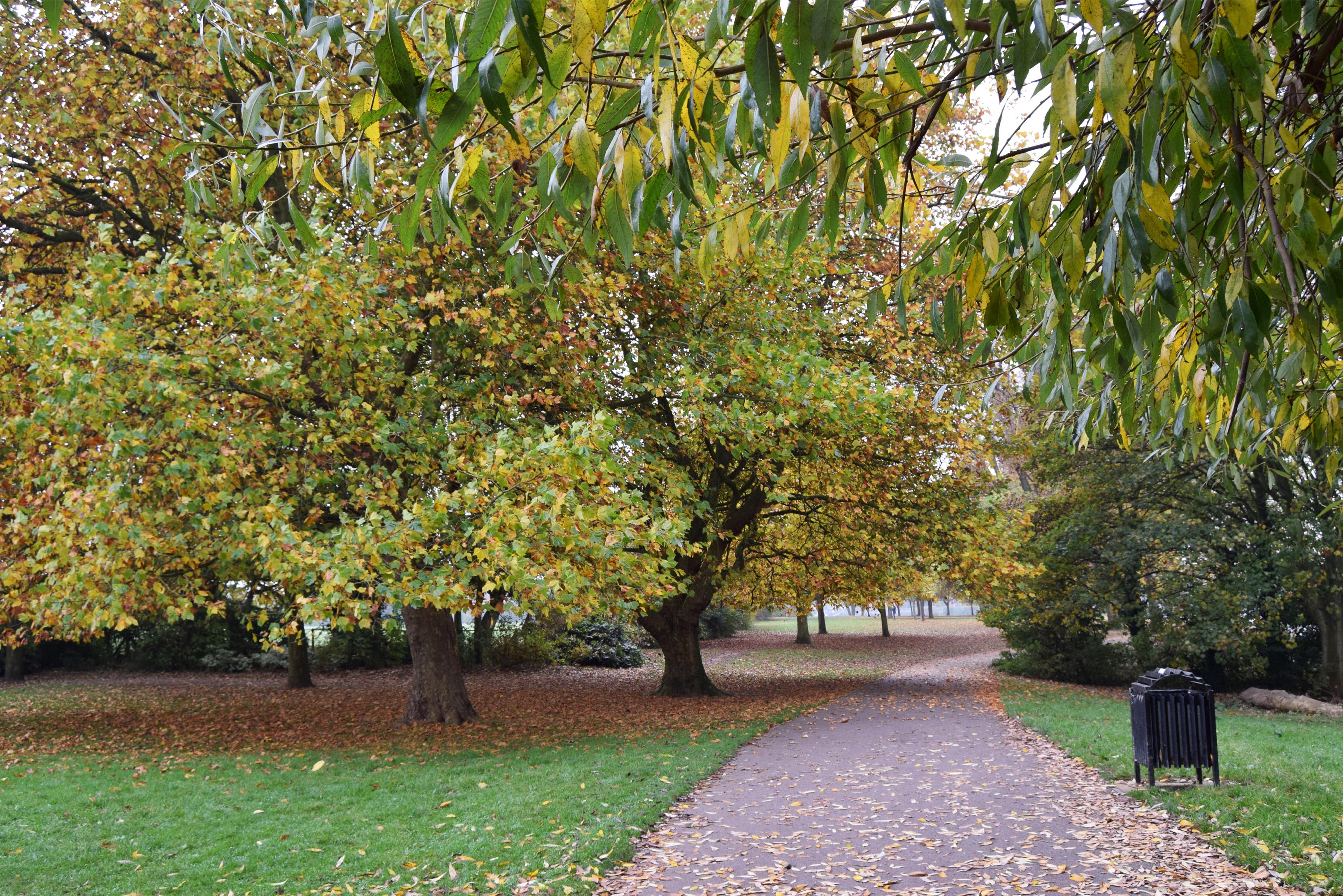
He was right about the trees. The poplars suddenly seemed to have realised it was autumn and were like tall flames in the cold morning air. The little crab apples were now more red than green and even my favourite oak was speckled with gold.
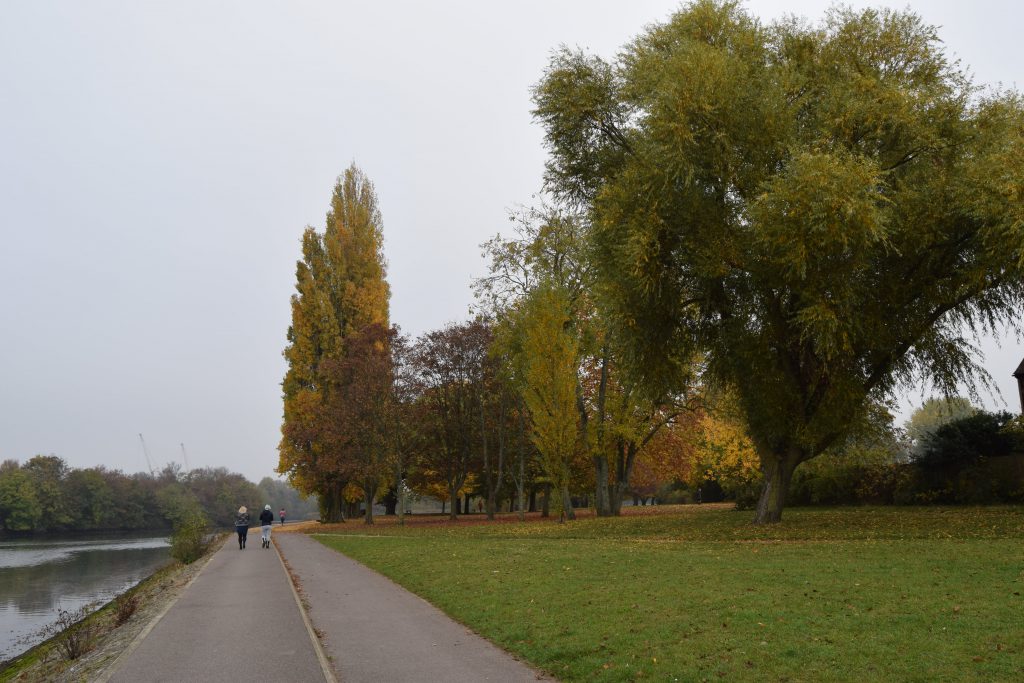
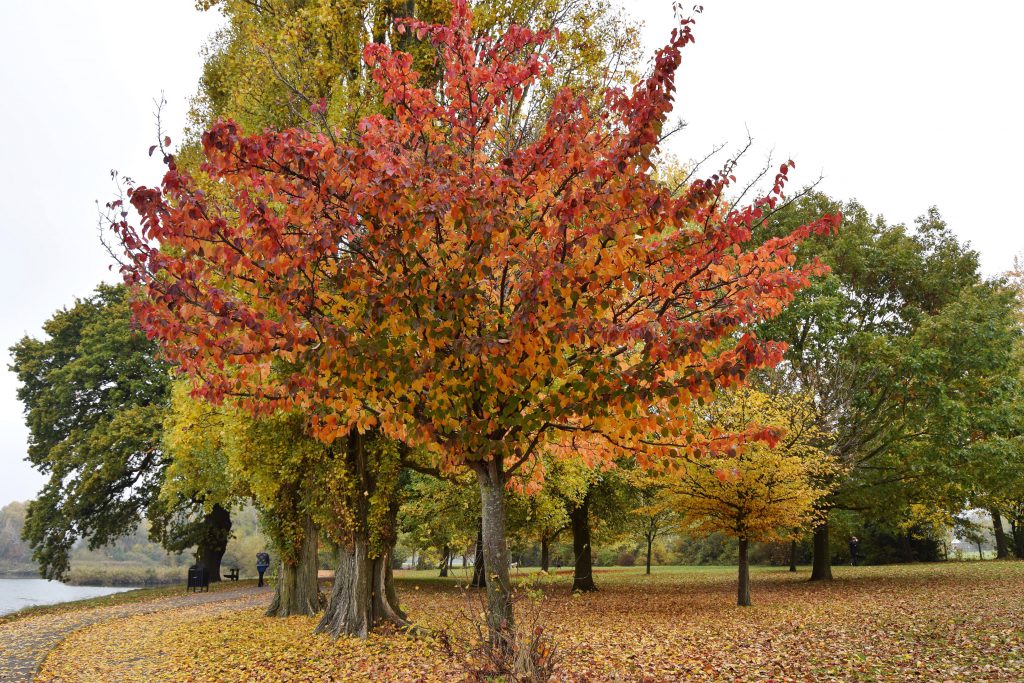
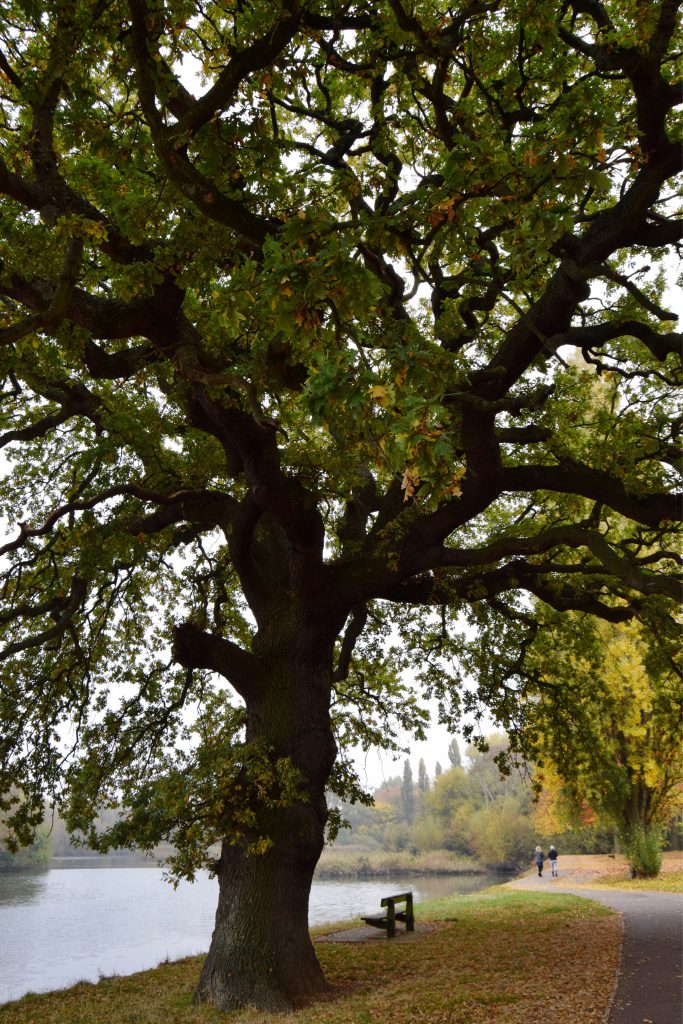
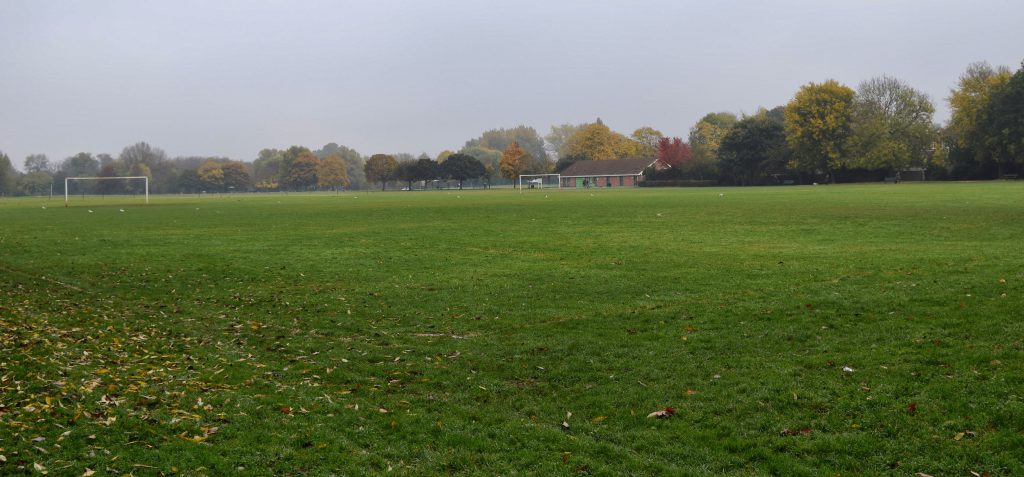
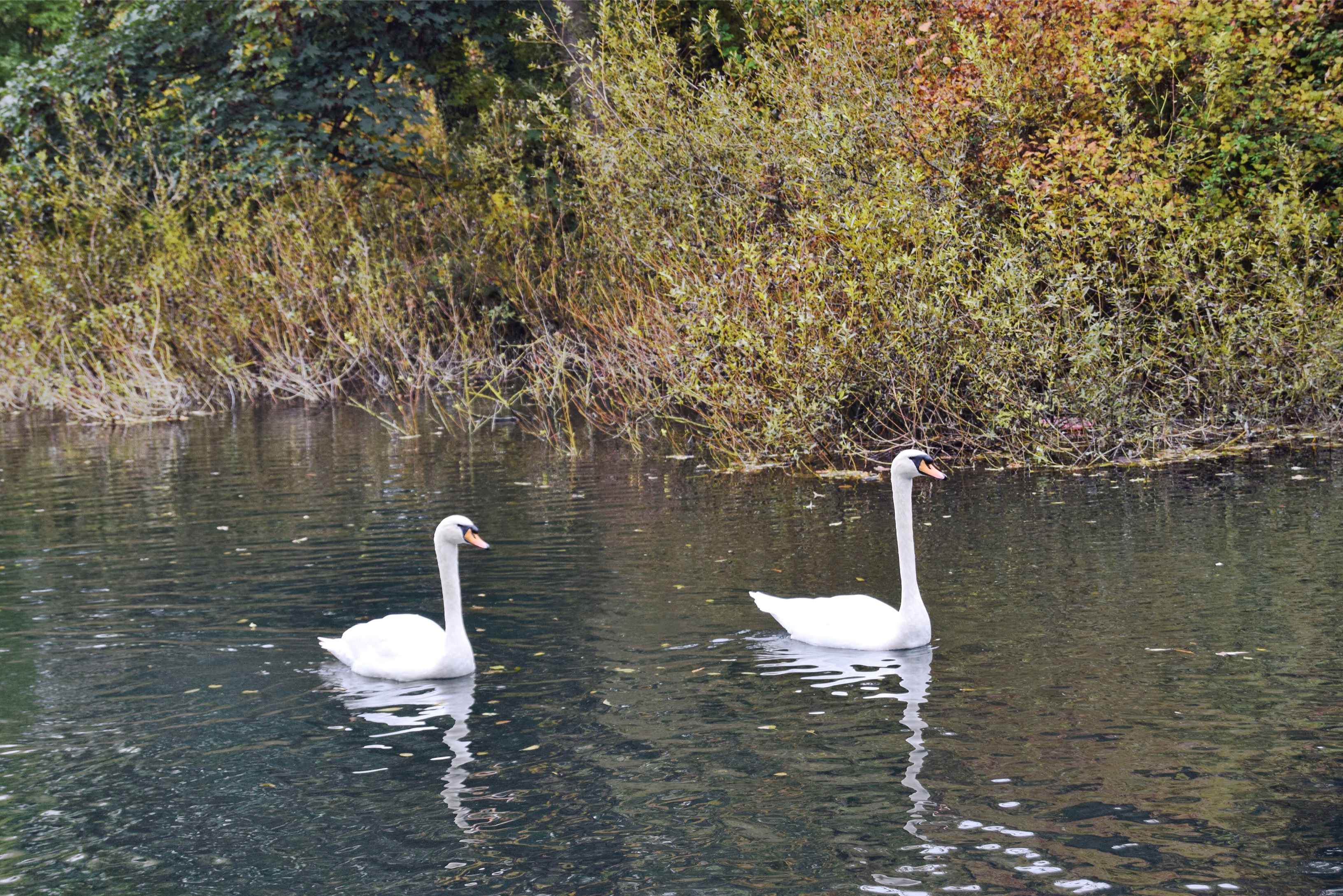
Around the corner the trees on the far side of the playing field were still shrouded in mist but it couldn’t disguise the variety of autumn colours on show. Through showers of leaves we wound our way along the path, past Woodmill and across the road where a cob and a pen were floating serenely.
“I wonder if these are the orphaned cygnets from a couple of years ago?” I said as we passed them by.
A moment later there was a terrific splashing and wooshing of wings as both swans began to take to the air. There was barely time to raise the camera as they half ran half flew along the river with spray flying everywhere and ducks scattering every which way.
“They could have warned us they were going to do that,” CJ said.
“If they had I might have got better photos.”
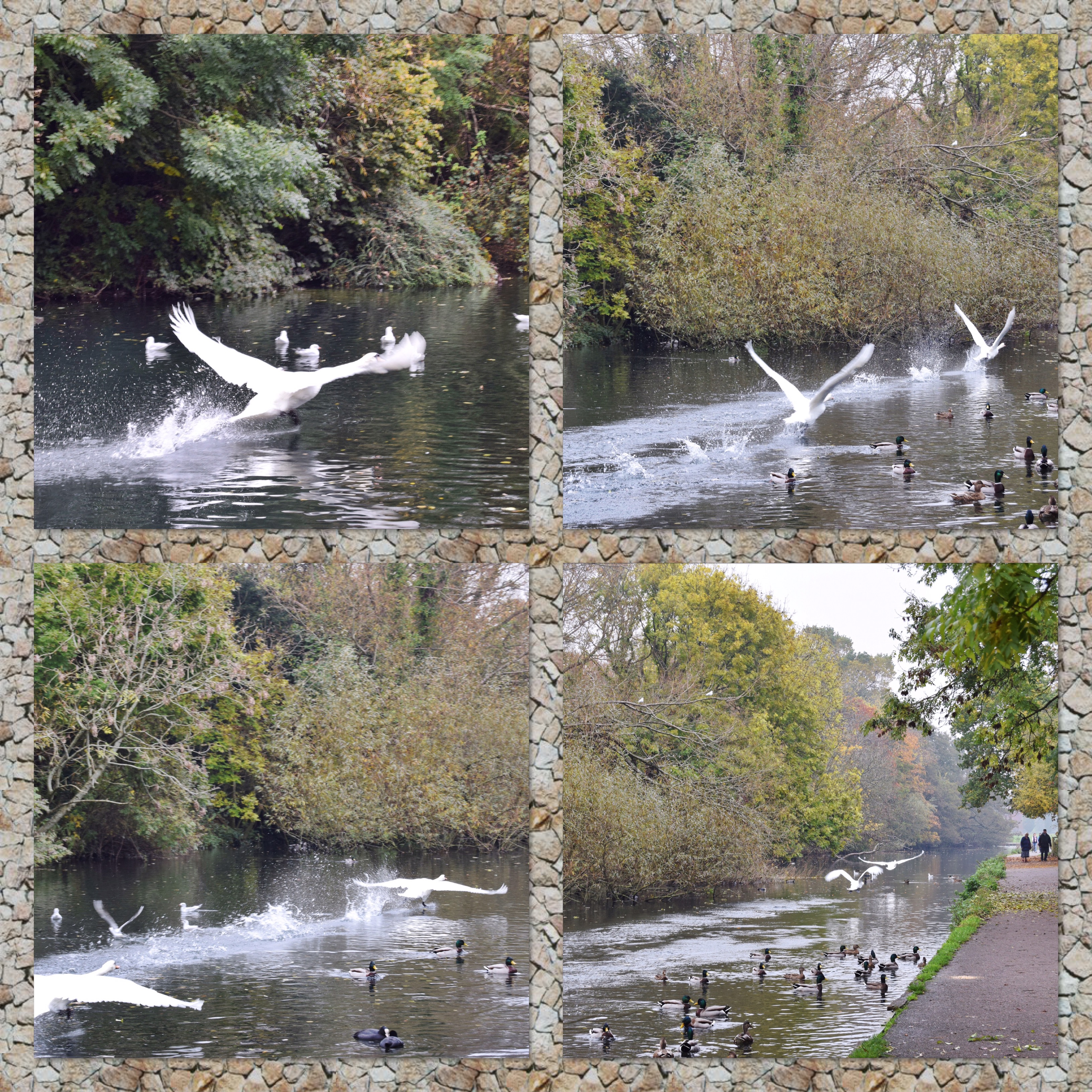
“I wonder where they’re off too?” CJ said as we Watched them disappear into the mist.
“I have no idea but they’re ungainly flyers aren’t they? It always amazes me to see a bird that big take to the air and it always looks like an awful effort to get there.”
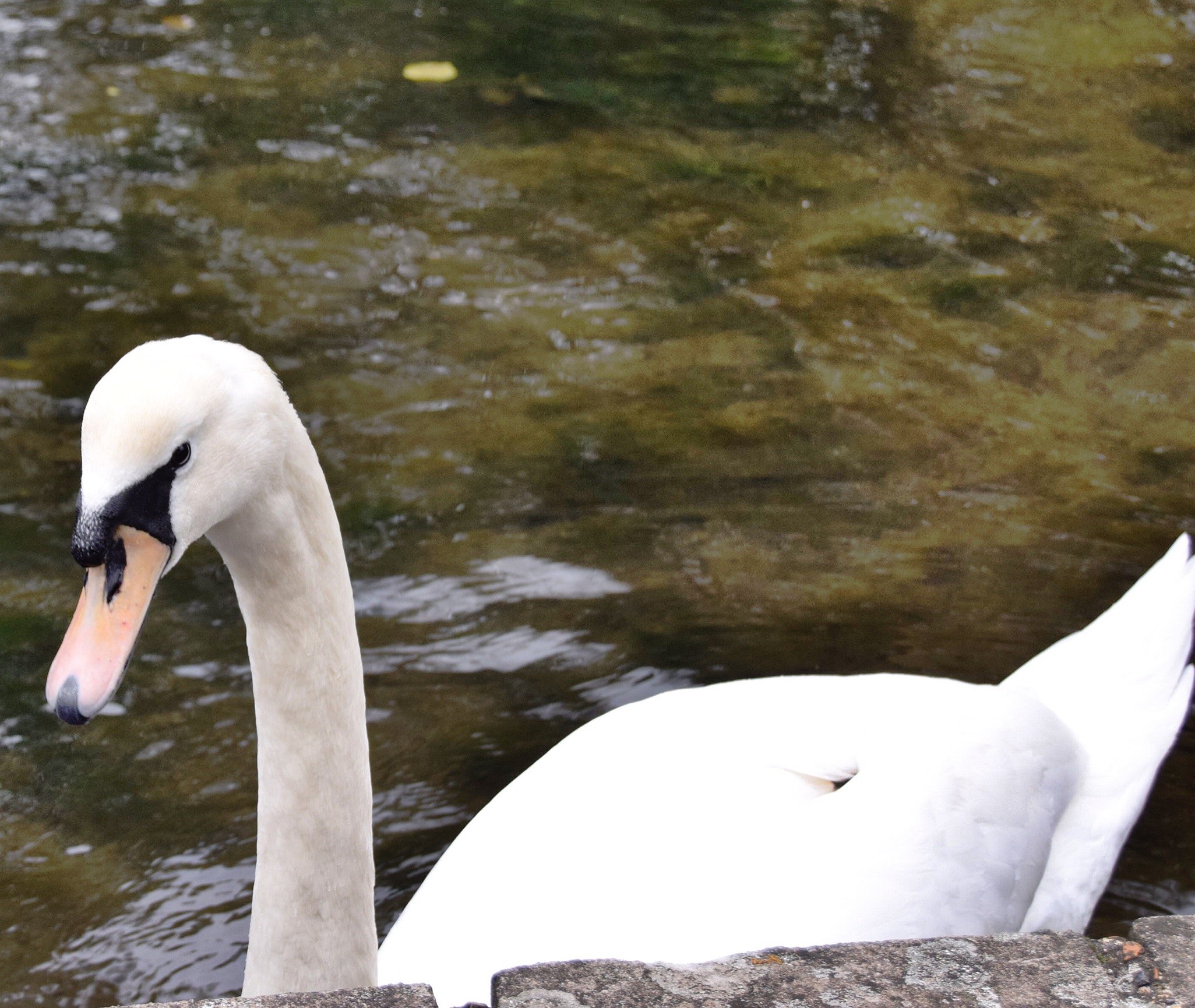
Around the bend in the river we found a single swan. She came close to the bank and posed quite nicely for us but I was fairly sure she was’t one of the two who’d flown past us.
When we reached the row of liquid amber trees our suspicions were proved right. A pair of swans were diving for food and I was almost certain these were the two who’d taken off near the mill.
“It seems to me they’d have used less energy just swimming upstream,” CJ said.
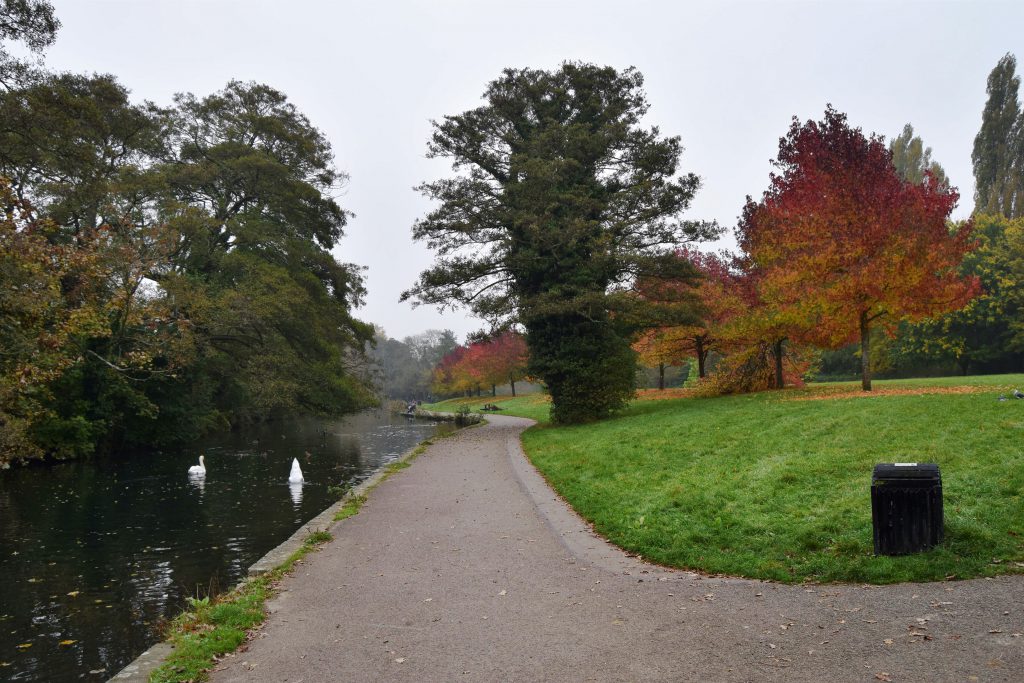
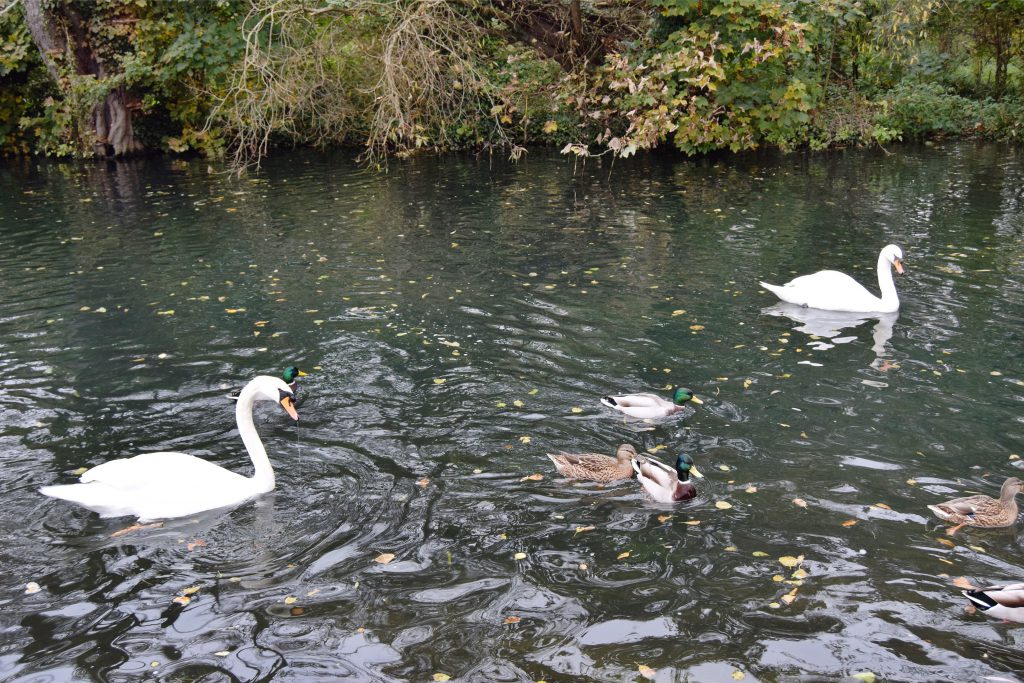
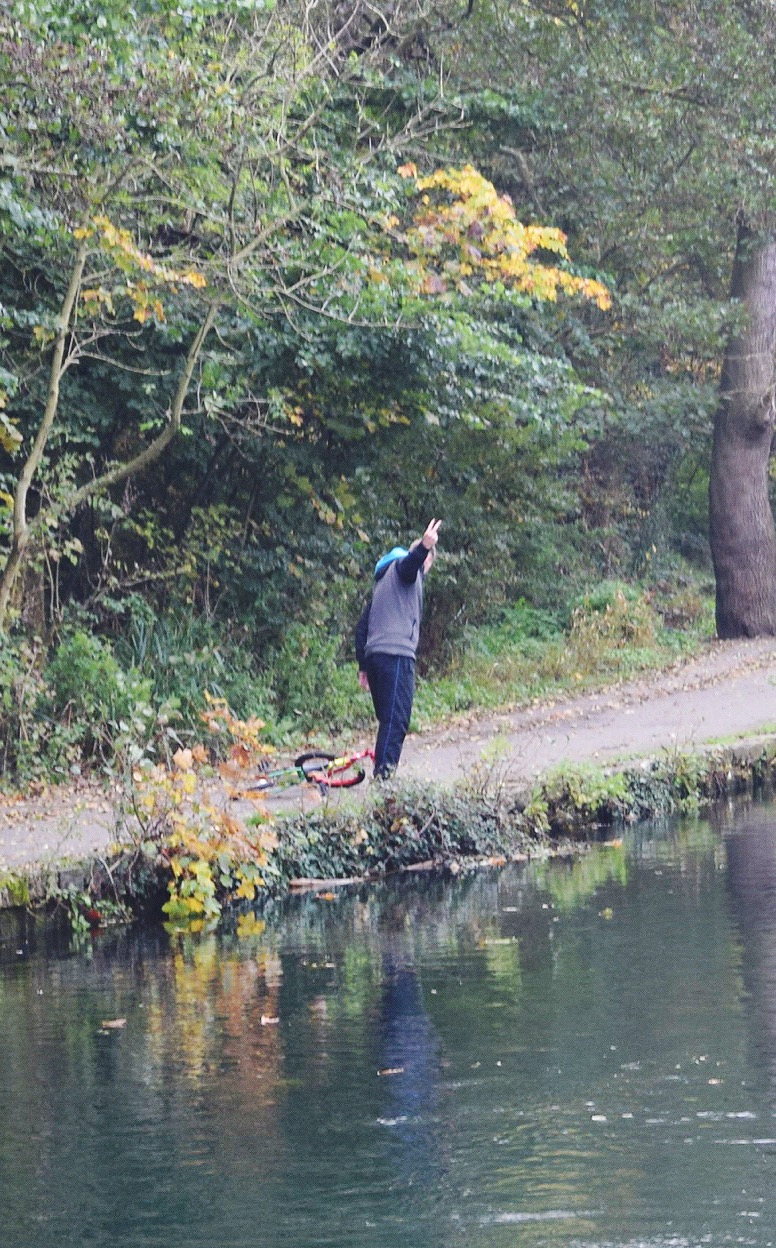
We carried on past the flaming trees and the lone fisherman sitting on the bank. Near the bridge I stopped to take a shot of the boggy fields where a pump has been working away ever since the floods a few years back. Suddenly a cyclist zoomed across the bridge, took the corner wide and almost sent me into the river.
“Watch where you’re going!” I said as he passed without even acknowledging how close he’d come to hitting me.
With that he turned but, instead of an apology he let loose a tirade of foul mouthed abuse. He even got off his bike and made as if to come back towards me shaking his fist. Then he spotted CJ and decided this might not be a good idea so stayed where he was and gestured instead.
“I’m sure his mother would be proud of him,” I said sarcastically to CJ, who was about ready to chase after him at this point.
“His mother should have taught him some manners,” he replied.
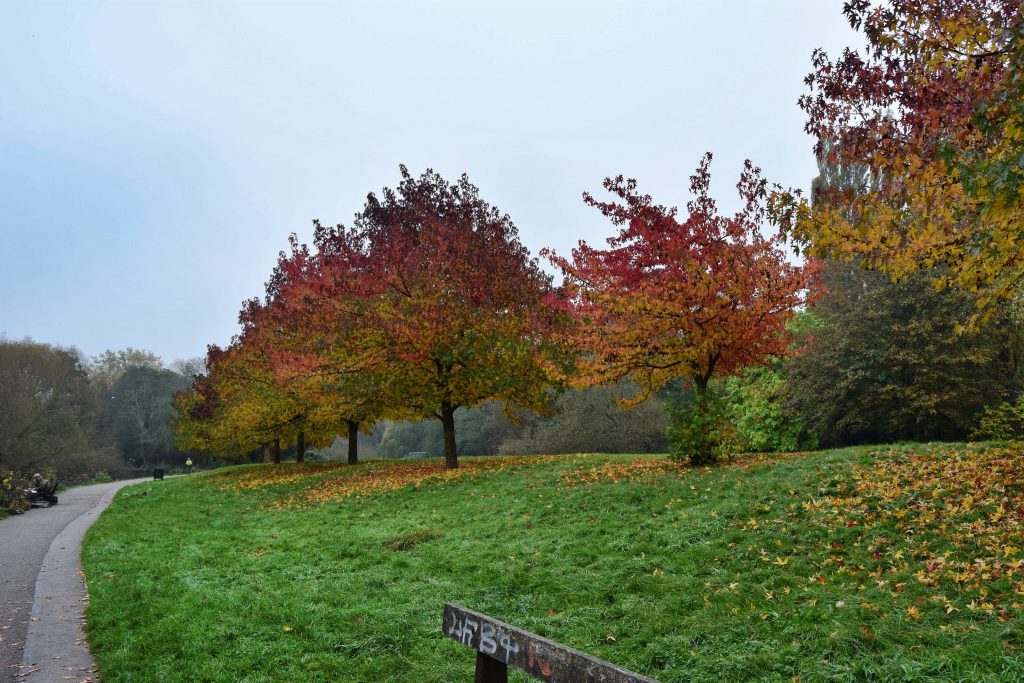
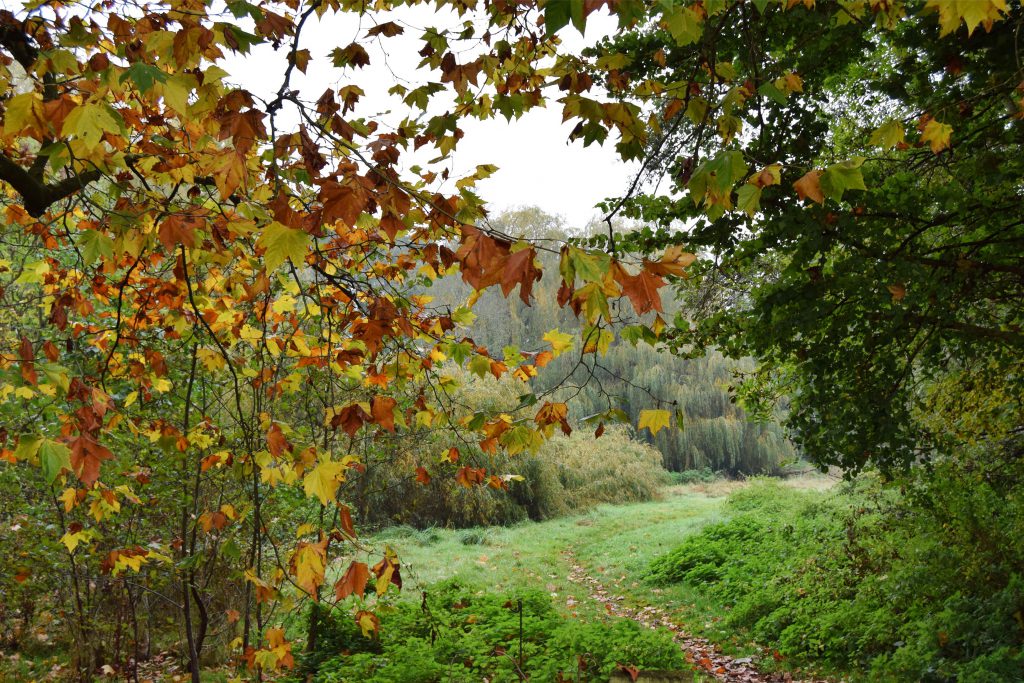
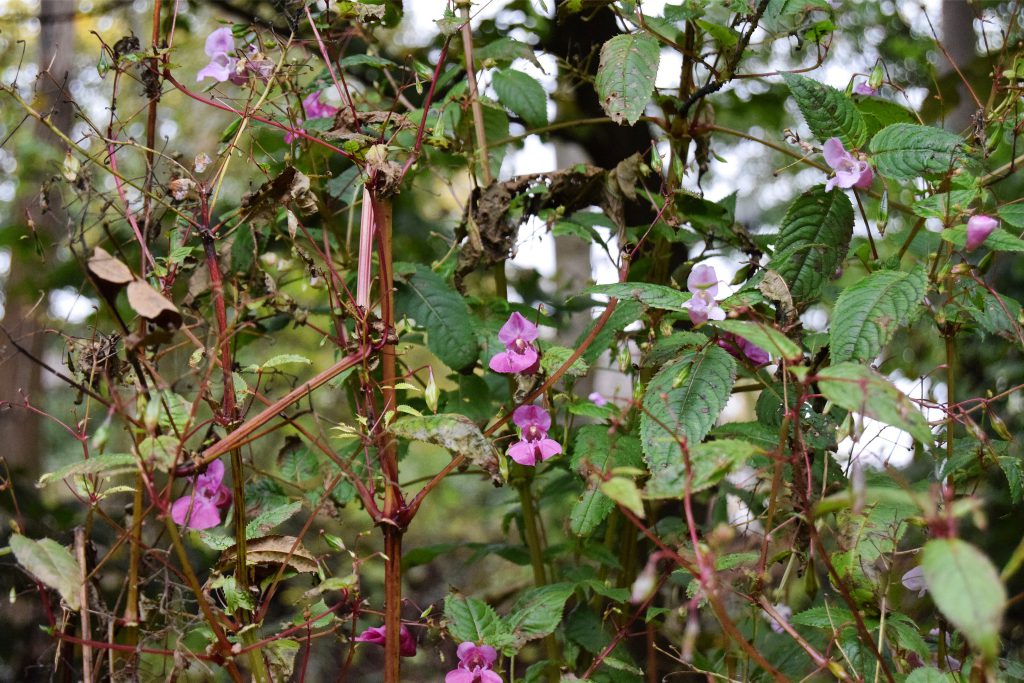
With CJ still grumbling about what he’d have done if the young idiot had hit me we carried on towards Monks Brook. There we found a few Himalayan balsam still flowering. Pretty and sweet scented as they are, these foreign interlopers crowding out the native plants on our riverbanks are not a welcome sight.
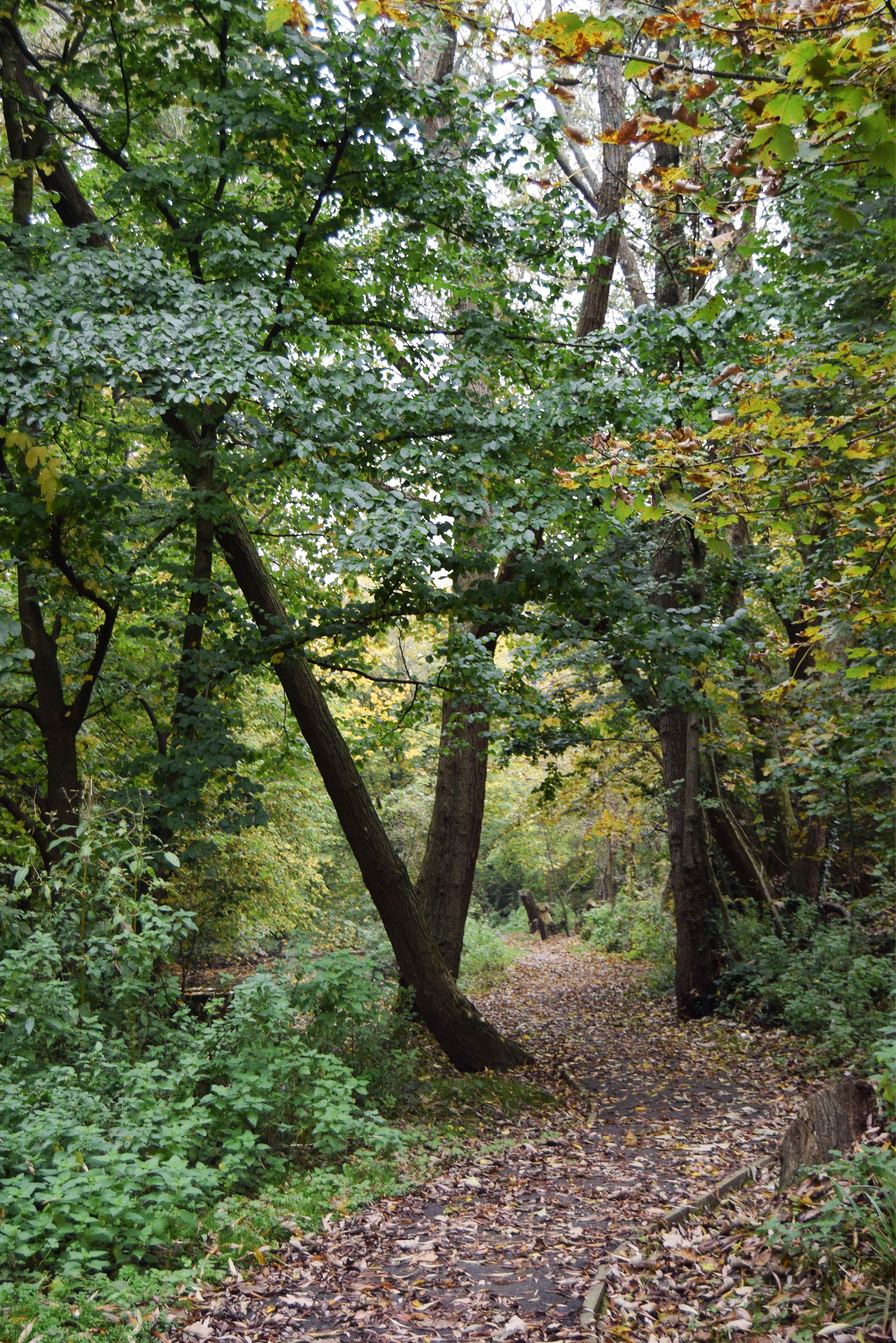
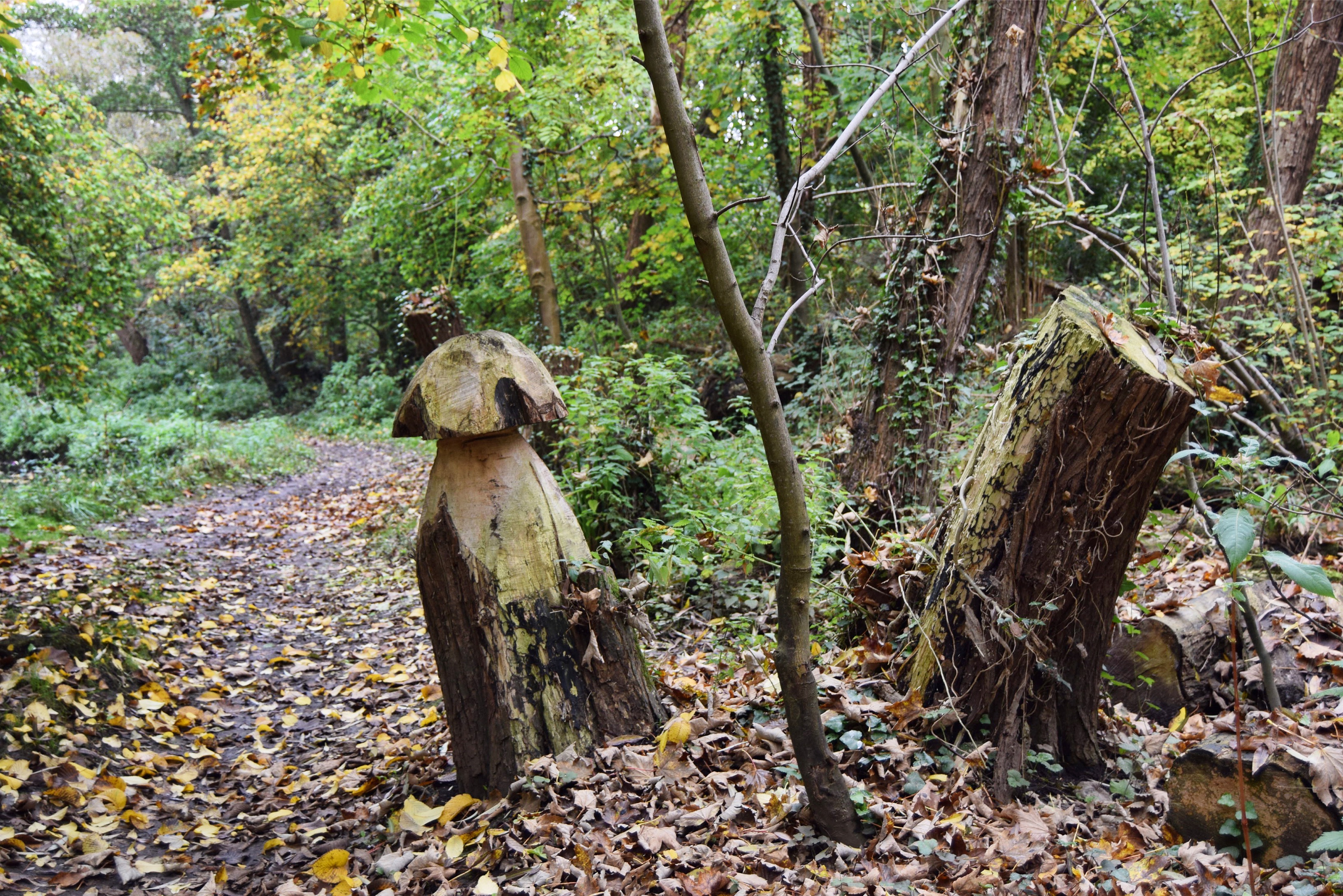
Thankfully the path was dry and we wound our way through, past the mushroom stump and its uncarved mate.
“The woodcarvers missed a trick here,” CJ said, taking the words out of my mouth. “If they’d carved the other stump too it would have looked even better.”
Soon we were crossing the road to the second part of the trail, heading for Monks Brook Meadows. Outside the kissing gate a clump of decaying mushrooms caught my eye. On the other side a fresh crop were beginning to sprout. Quite why this area, so close to the road and in an area of heavy foot traffic should be so popular with fungi was a mystery.
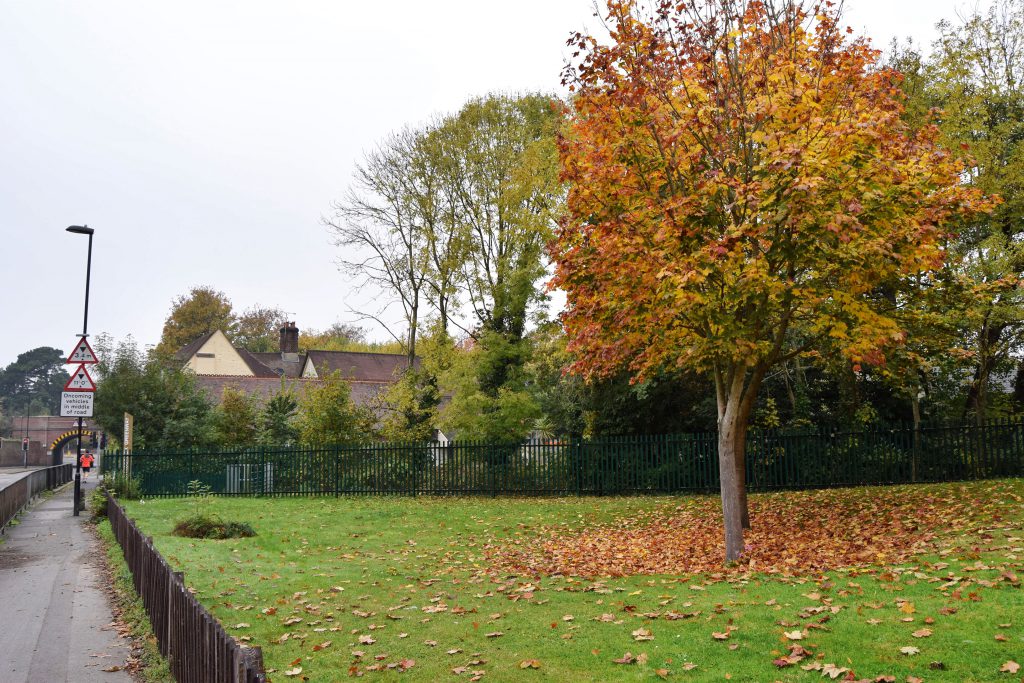
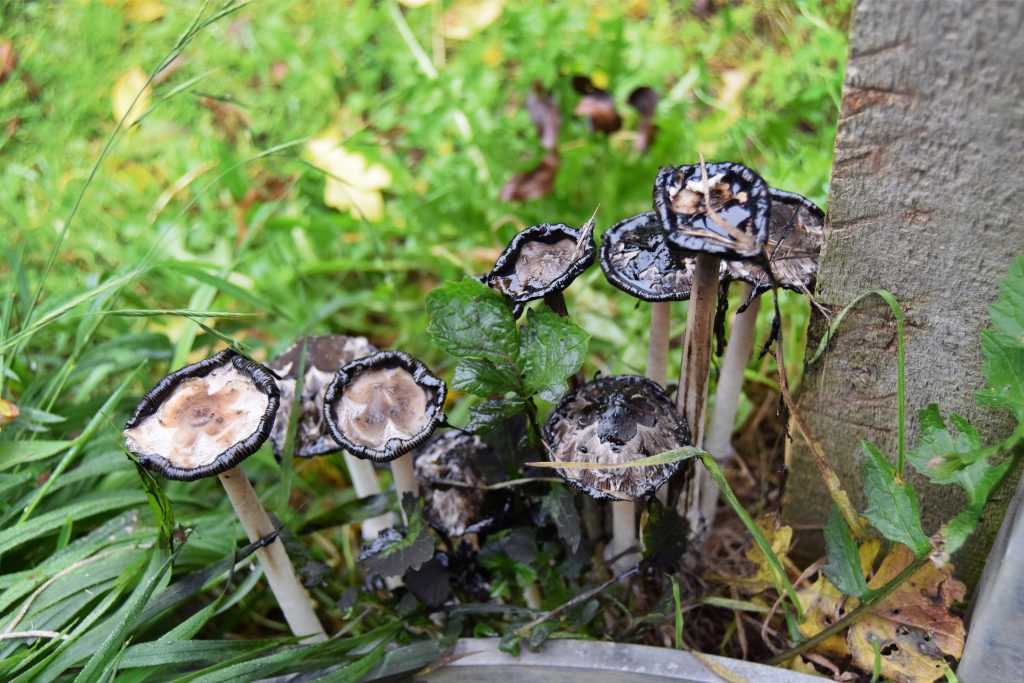
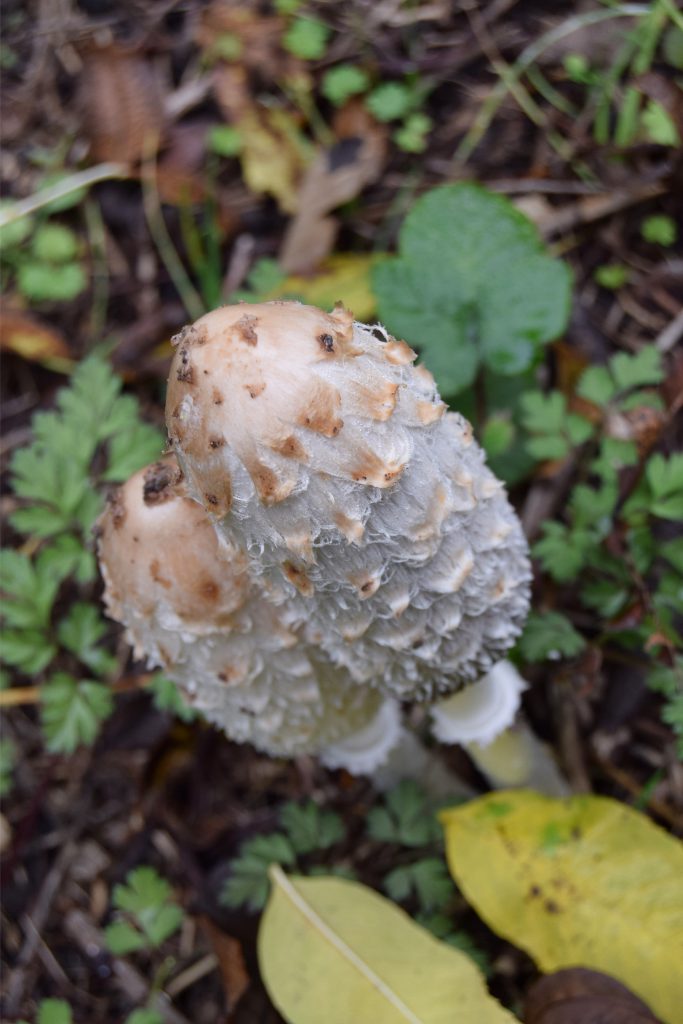
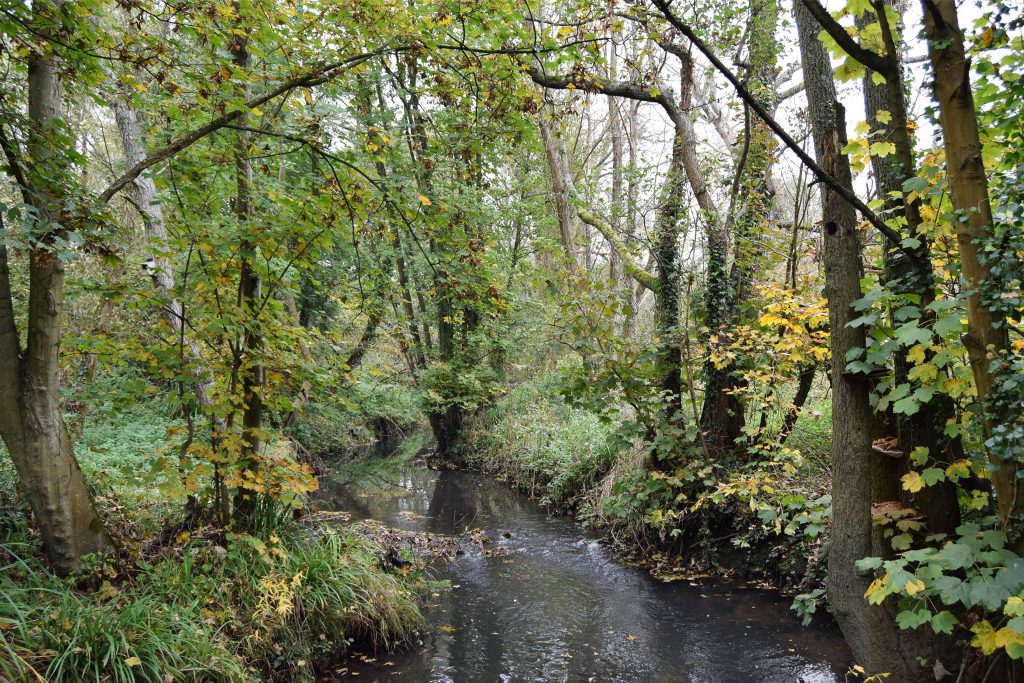
The trail here is narrow and runs behind houses. The brook is wide and close to the trail. When it’s muddy this is not a good combination but today we were lucky and the mud was minimal. Once the winter sets in this path will be unwalkable, especially if it rains.
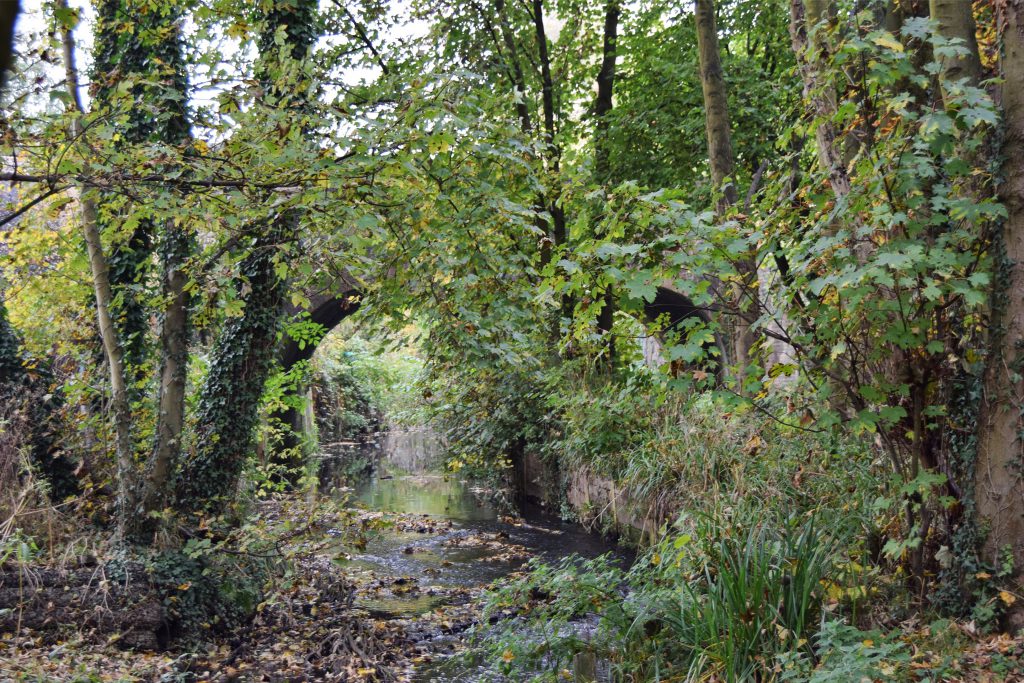
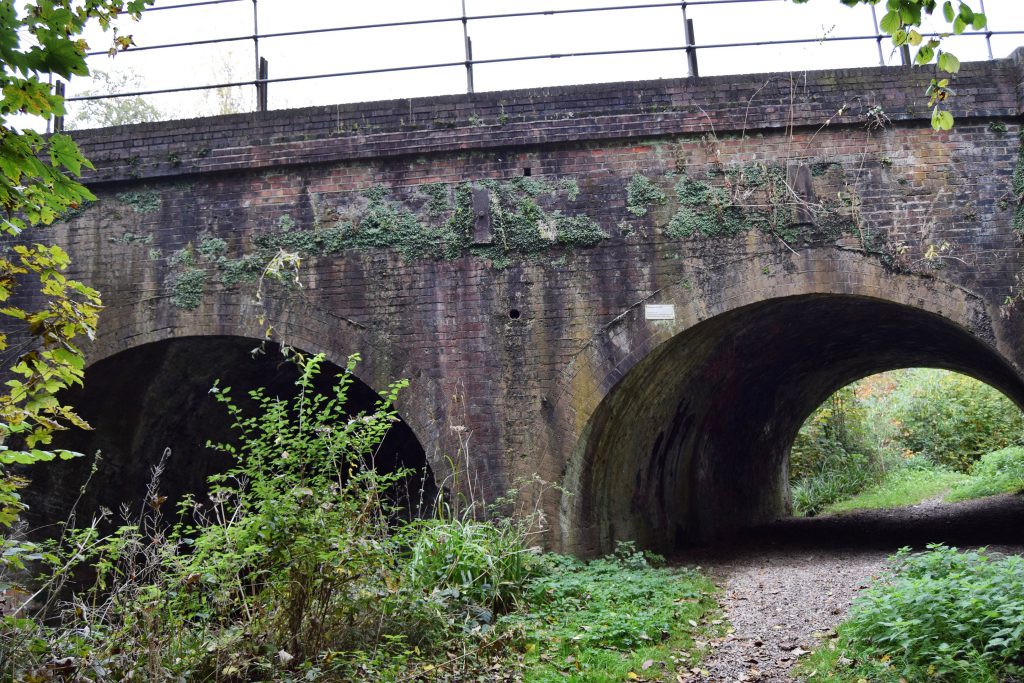
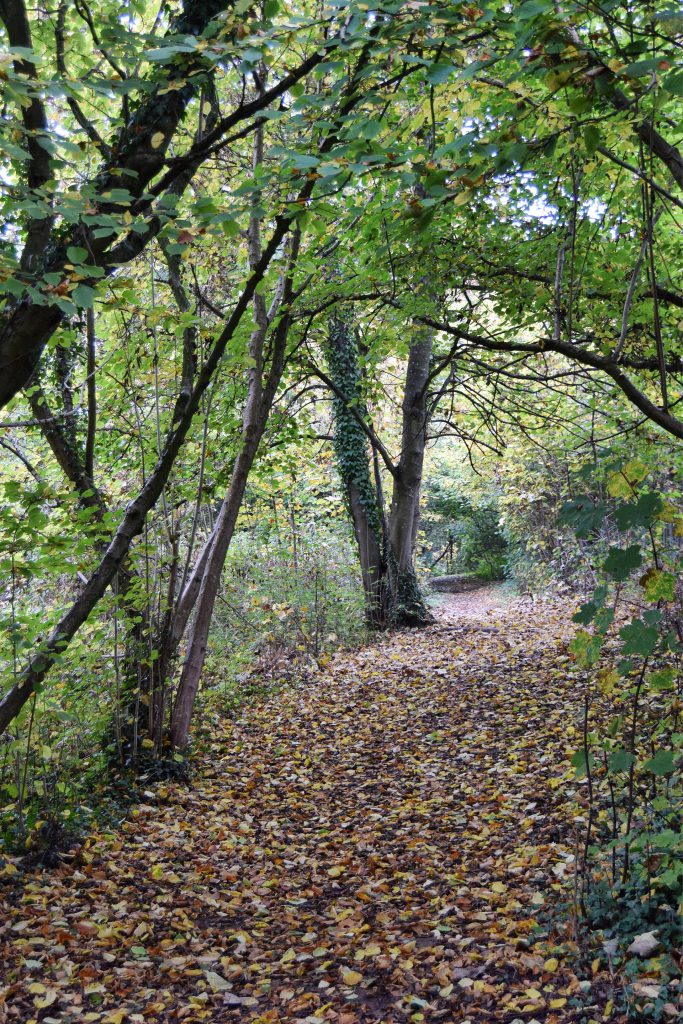
We passed under the railway through the double bridge. The trail ahead was hidden by a carpet of fallen leaves. We crunched our way through. Now there were no houses to our right but, just behind the trees, we heard the rumble of a passing train. Soon we were crossing the brook on the narrow wooden bridge where a butterfly posed for me on my first walk this way.
We tramped across the meadows stopping occasionally to look at a spot of colour here and there. Rosehips, dripping from the mist that still clung about in pockets, were no surprise. This is the season for berries and hips after all. More unexpected were a few knapweed still bravely flowering and what must surely be the last of the ragwort this year.

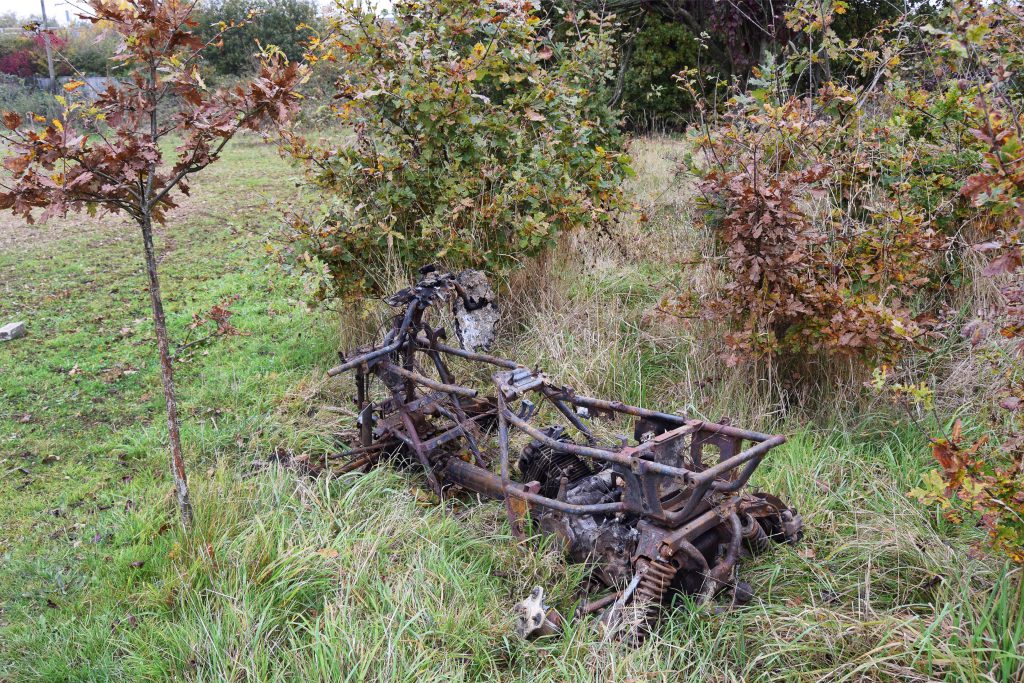
Under the tunnel and in the next field we were getting closer to the end of our journey and talking about the possibility of finding the ancient boundary stone when we came across something really unexpected. Right on the edge of the trail of flattened grass was a burnt out quad bike. CJ stopped for a closer look and I, who’d stopped often enough for flowers, waited patiently while he checked it out.
“It’s a very expensive thing to just abandon,” I ventured as he poked and prodded at it.
“I suppose someone stole it and dumped it here,” he said after a while.
We emerged on the road at the exact moment a police car came zooming past all blues and twos in pursuit of a car. A law abiding driver, trying to pull over on the narrow road, looked startled when she saw us there on the tiny grassy verge. In her efforts to make room for the police she’d come close to knocking us down. She mouthed sorry and we acknowledged her but the incident made for a nervous walk along the footpathless lane towards the church.
When we reached St Nicolas, with its one handed clock, we crossed the road and climbed over the low wall into the church grounds. The verge here is narrow and steeply sloped, making it hard to walk on. In the past I’ve stayed on the opposite side of the road until I reach the lych gate but the police chase and our near miss made me keen to get off the road as soon as possible.
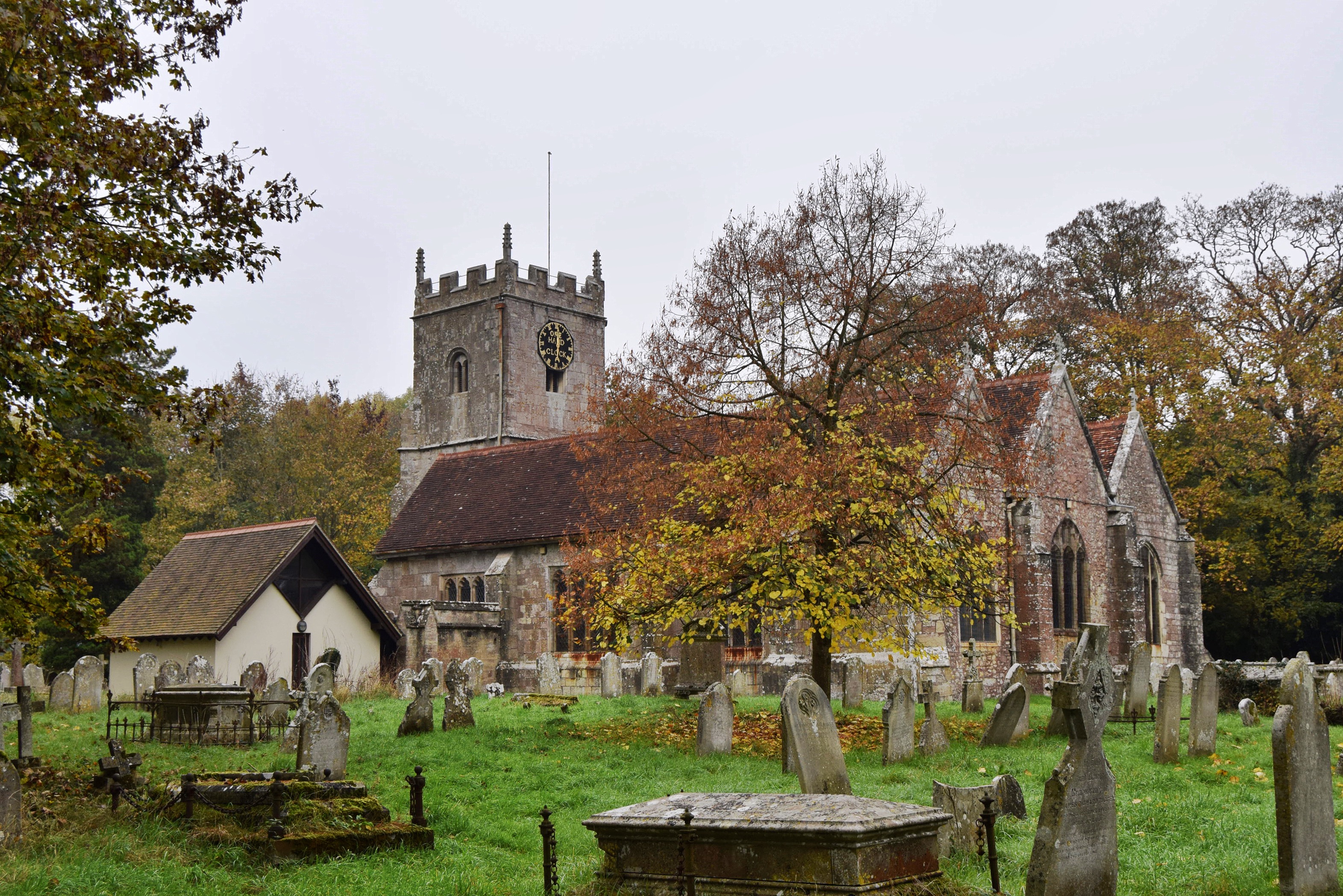
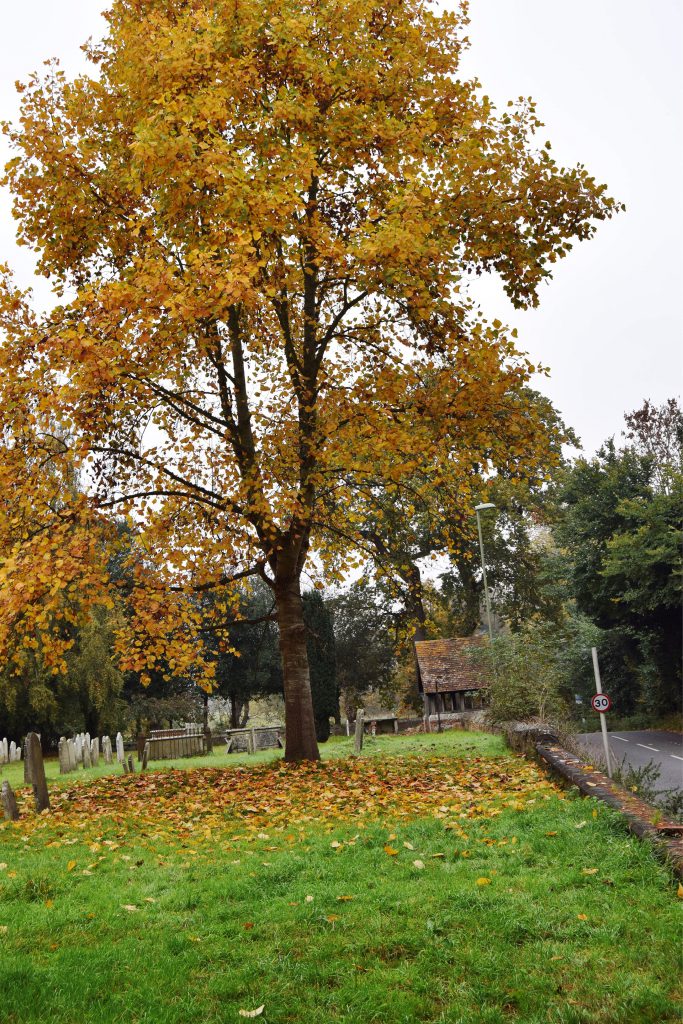
Slowly, we picked our way through the long grass beside the wall, peering over the edge as we went.
“I’m pretty sure there are no modern boundary stones here,” I told CJ, “but we might as well make absolutely sure while we’re here.”
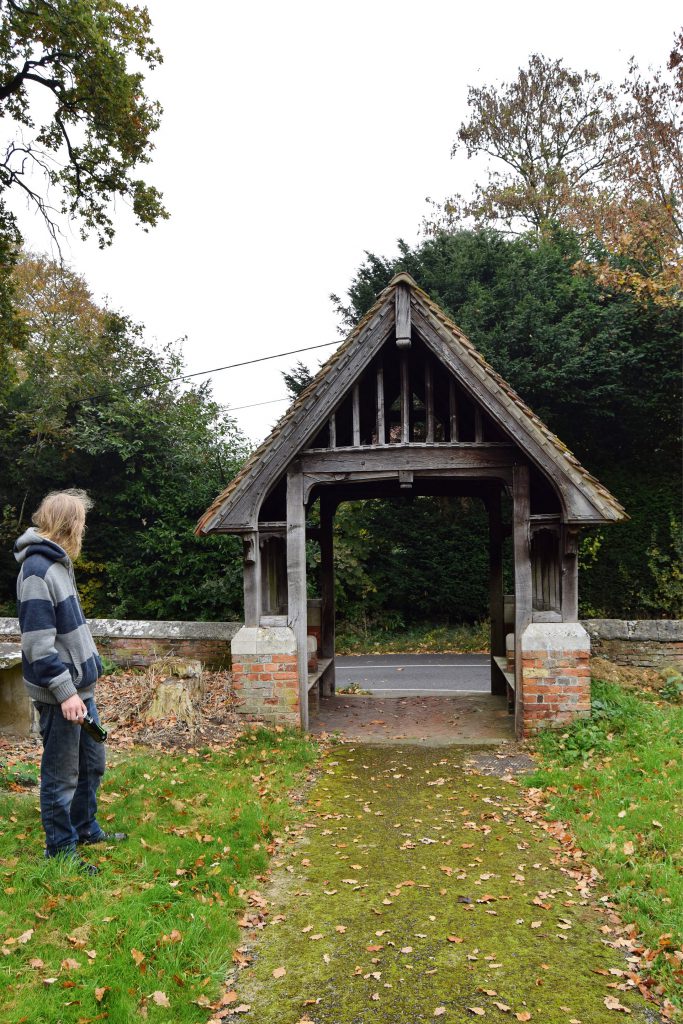
Of course there was no stone so we turned our attention to the lych gate. Built in 1909 as a memorial to Emily Macarthur, the wife of James, the Bishop of Southampton at the time, it was designed by Isle of Wight architect Percy Stone.
While I admired the seats inside with their intricately carved script, CJ was more interested in the oak timbers used for the roof and sides. These came from HMS Thunderer, a seventy four gun Royal Navy ship, built at Rotherhithe and launched in 1783. Thunderer played an important part in the battle of Trafalgar. It was ship’s surgeon James Marr Brydone who first spotted the Franco-Spanish fleet. Thunderer signaled HMS Victory and the battle commenced. Unlike Lord Nelson, she survived the battle but, after several other adventures, was decommissioned in 1808.
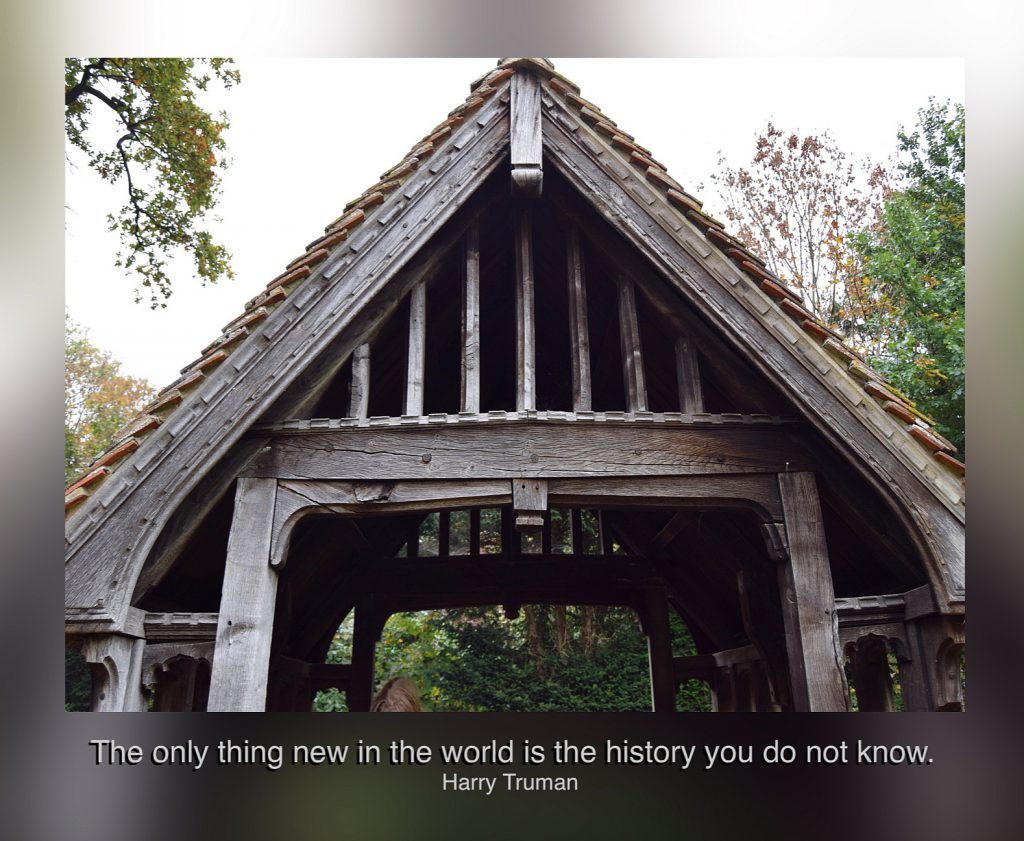
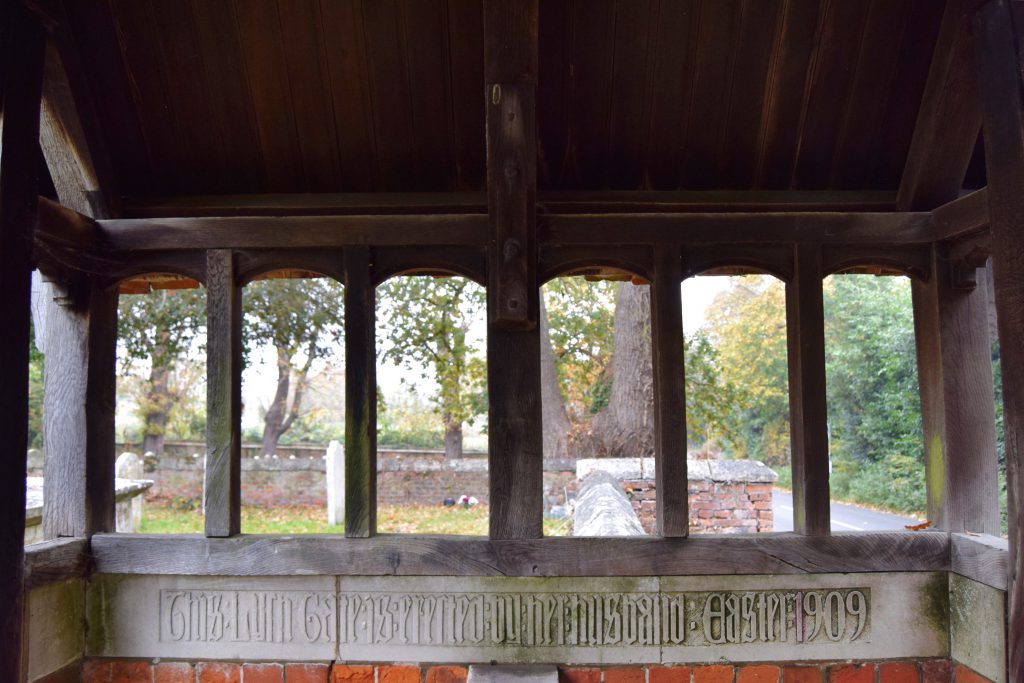
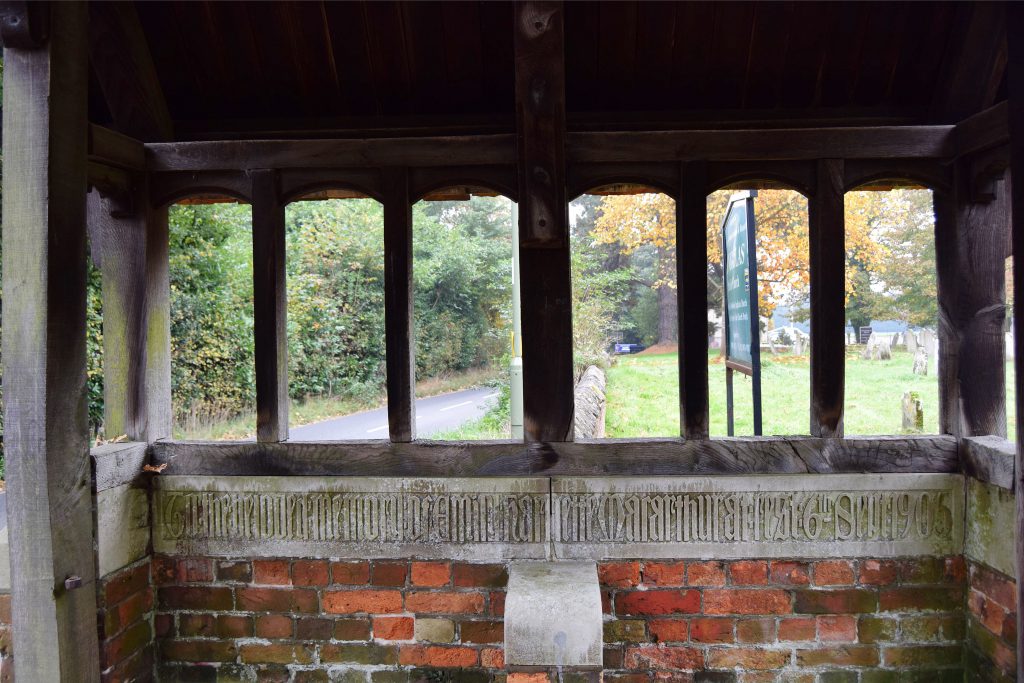
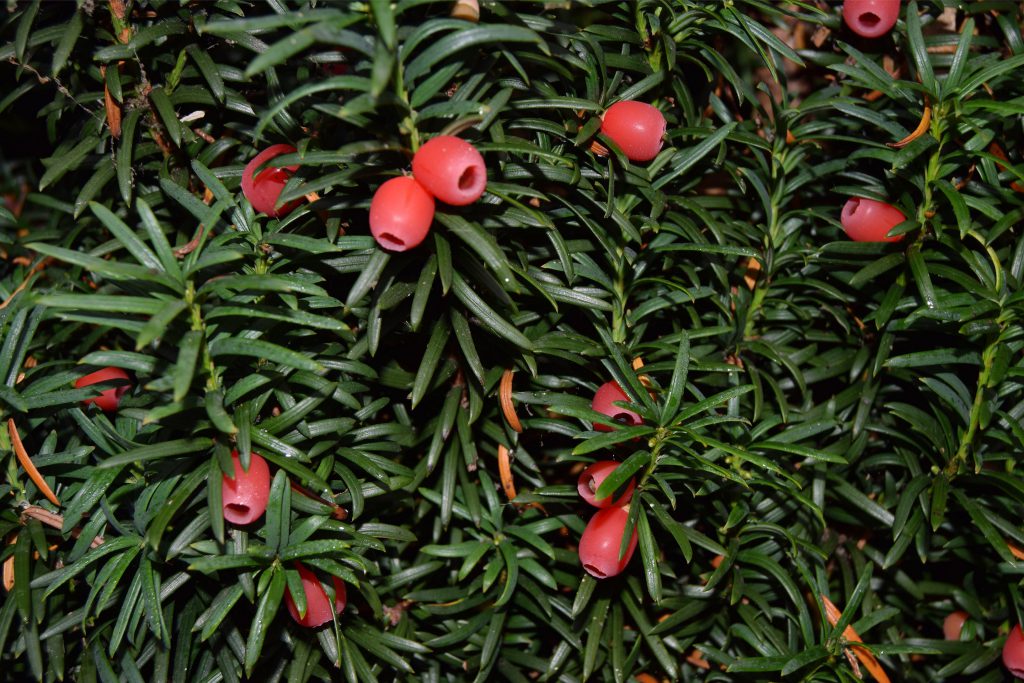
It seemed strange to think that such historic timbers ended up in this sleepy churchyard. While CJ stood admiring the wood and dreaming of cannon fire I hung around admiring the berries on a nearby yew. Eventually I managed to drag him away and we walked towards the medieval church. Research told me there were interesting tombs inside. One gravestone, dating from the fifteenth century, is dedicated to Slovenian Merchants, a wall memorial honours Admiral Lord Hawke who lived at Swaythling House and there is a monument to Sir Thomas Fleming. As Fleming was Lord Chief Justice and one of the judges at the trial of Guy Fawkes, today, just four days before Guy Fawkes Day, would have been a great day to see it. Sadly, the church was closed.
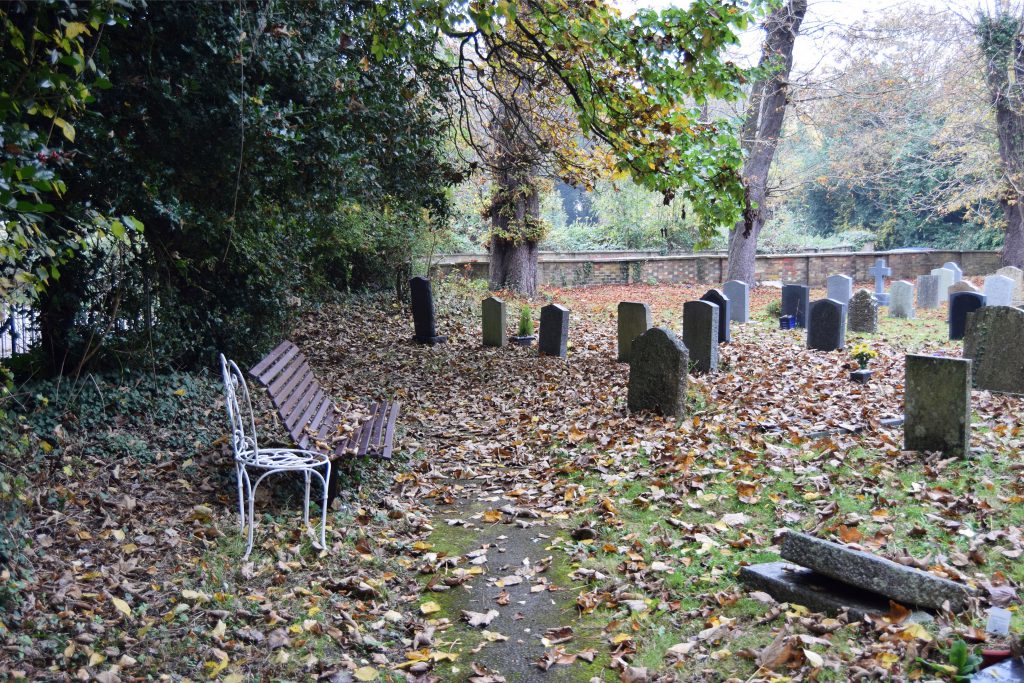
Feeling slightly disappointed, we took ourselves off to the quiet corner we found last time we visited to drink the iced coffee I’d thoughtfully packed in my rucksack and look again at the map. The boundary stone was very close but finding it was by no means a certainty.
Please see my copyright information before you copy or use any of the above words or pictures.
Loved that lych gate with its interesting history.
It’s a lovely gate and an interesting story.
I like the tall flames of autumn and the swans of course. Each morning I’m surprised by the Canada geese and ducks that use the lake behind us as a runway.
The colour here is stunning at the moment and never better than along the river.
It was a nice walk, even if you didn’t see the stone.
I don’t know why bike riders always seem to think they own whatever trail they’re on, but it’s the same here.
It was a fantastic walk and we were so lucky with the weather too. As for the bike rider, I’m sure, with an attitude like that, he will eventually mess with the wrong person and get his comeuppance.
Great shots and a lovely walk!
Thank you