7 February 2017
And so we limped away from the duckpond towards the place I’d really been heading for all along. Well, I limped anyway. The huge, spiny tree trunk in my boot gave me a sharp pain whenever I put my foot down and I was convinced there’d be a puddle of blood when I finally took the boot off. CJ still had no real idea what we were about to see but I did and the memory of the tranquil little church went a long way towards making up for the pain in my foot.
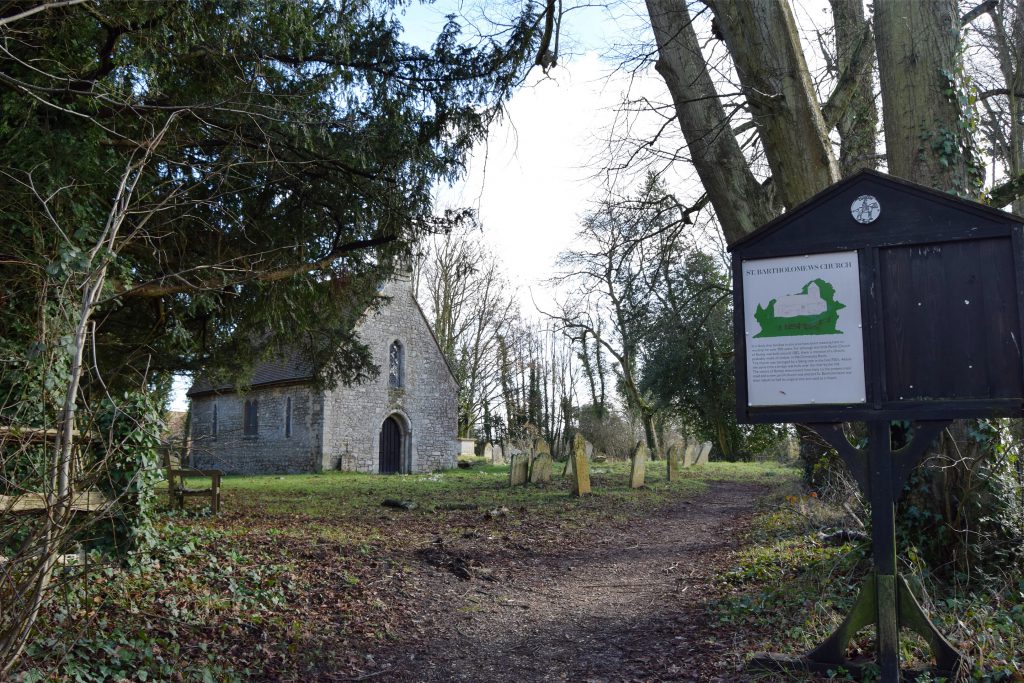
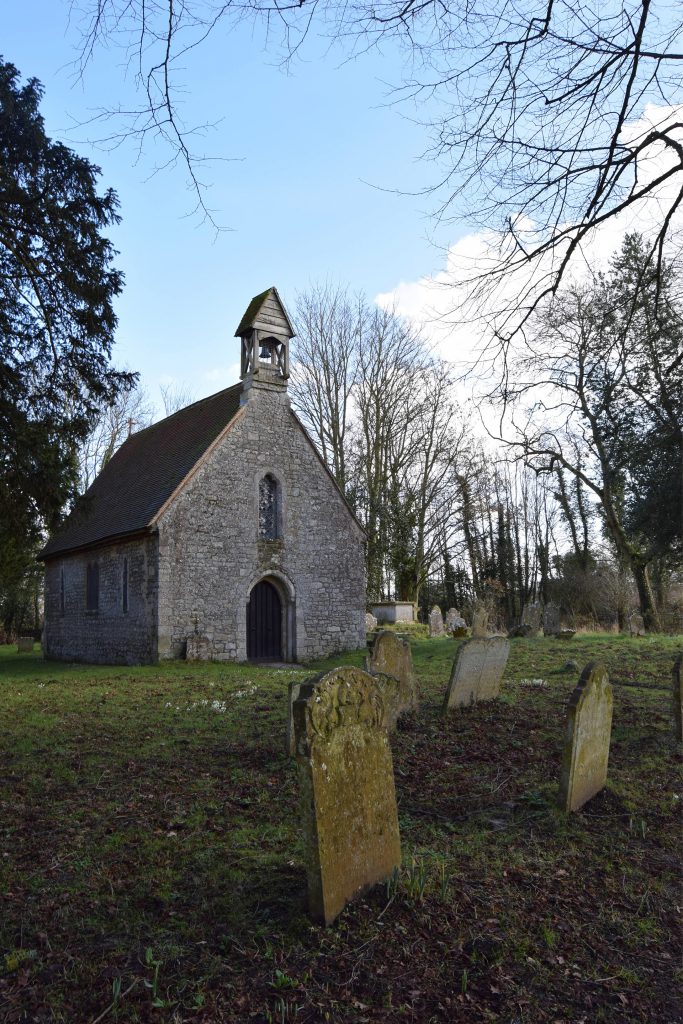
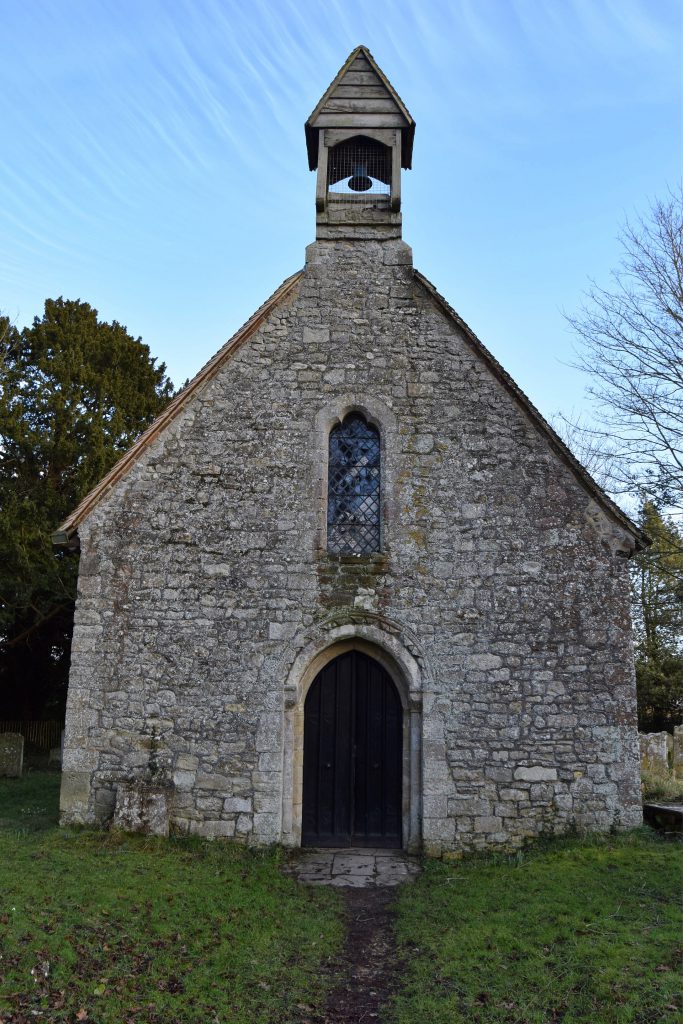
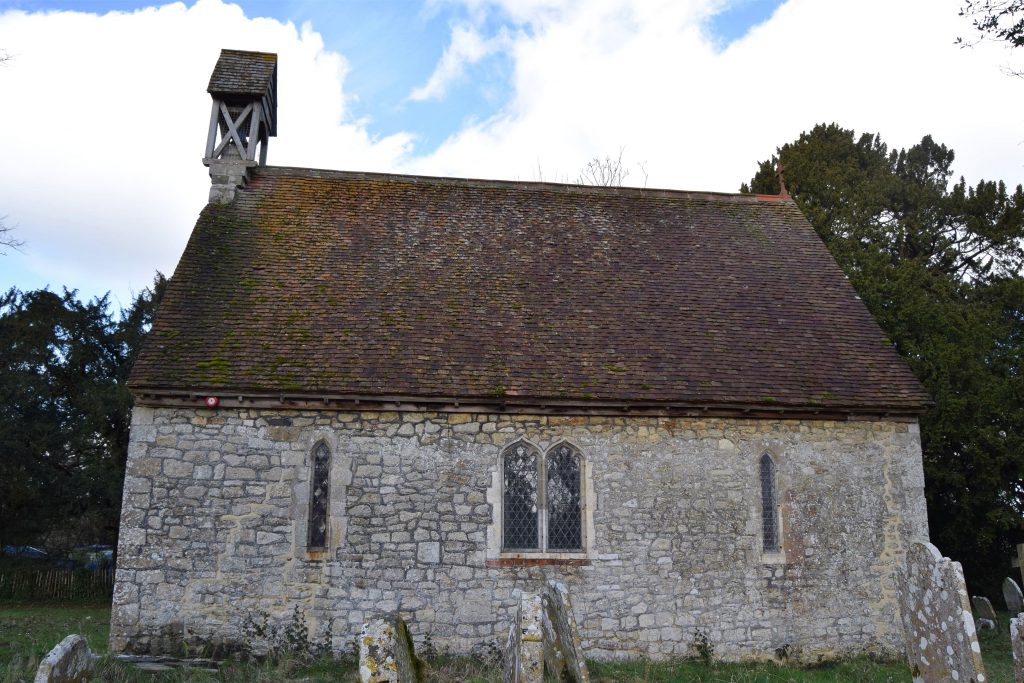
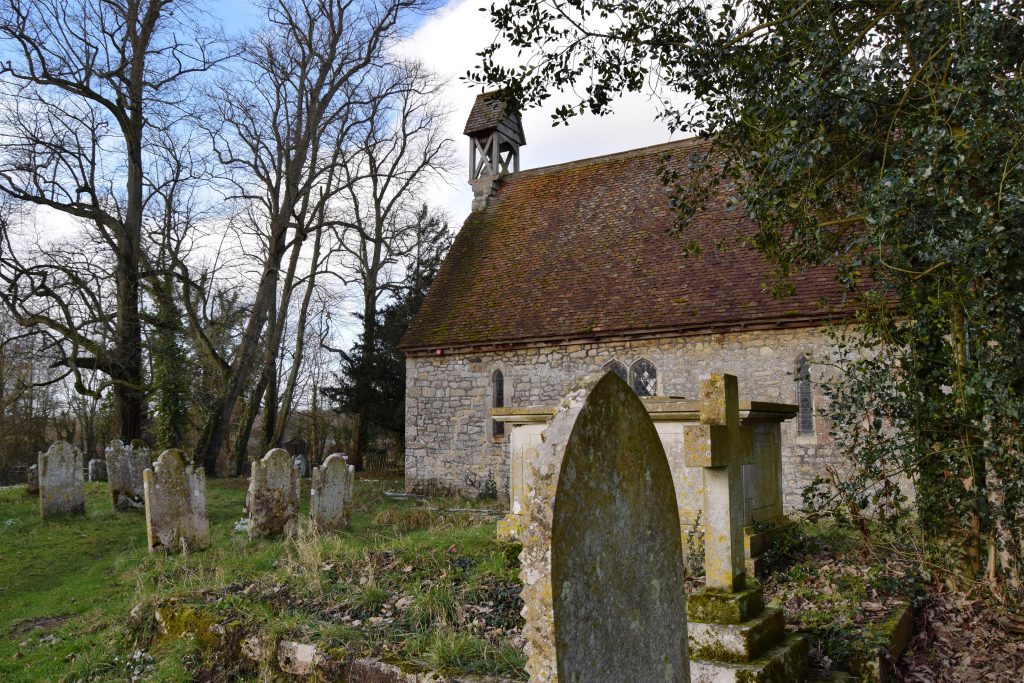
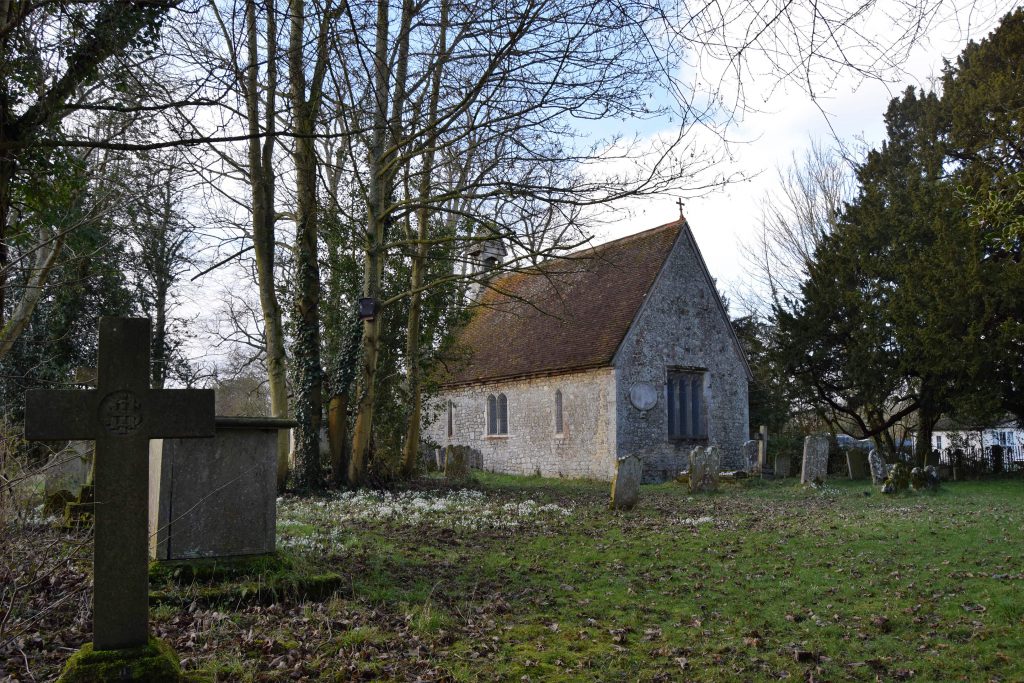
The gate into the churchyard is right next to the gate out of Manor Farm Country Park and, if you didn’t know it was there, it would be easy to miss the church entirely. In fact, on my first visit, I very nearly did. There has been a church on this spot for nine hundred years or more. The original, mentioned in the Doomsday Book, was made of wood but, in the thirteenth century, it was replaced by the lovely little stone church in front of us. CJ seemed as enchanted by it as I had been the first time I saw it and was all but shoving me out of the way so he could take photographs.
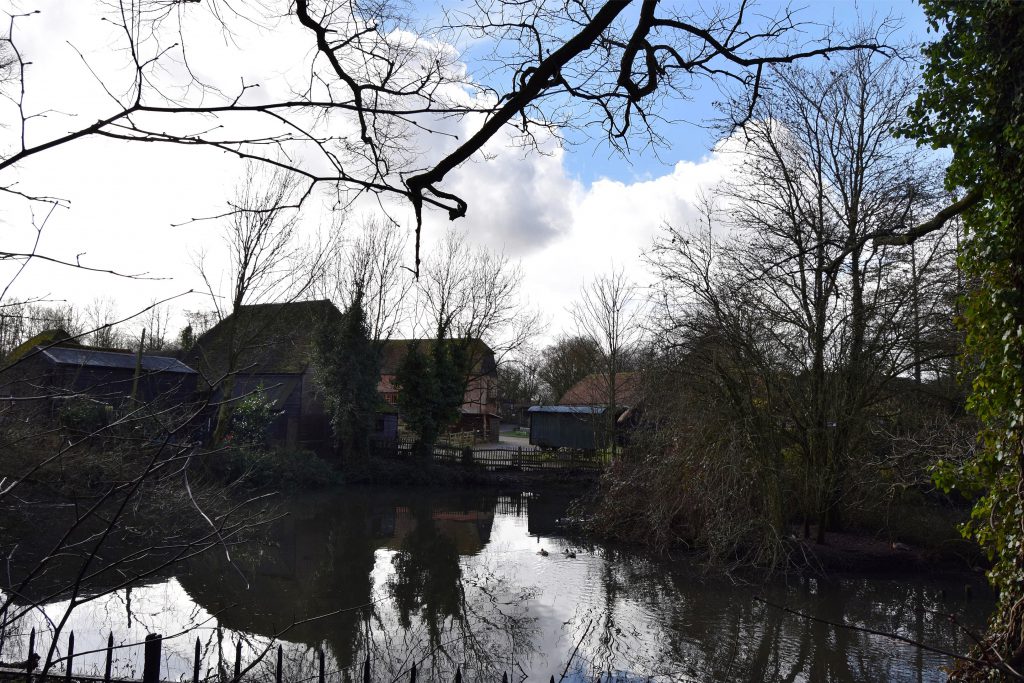
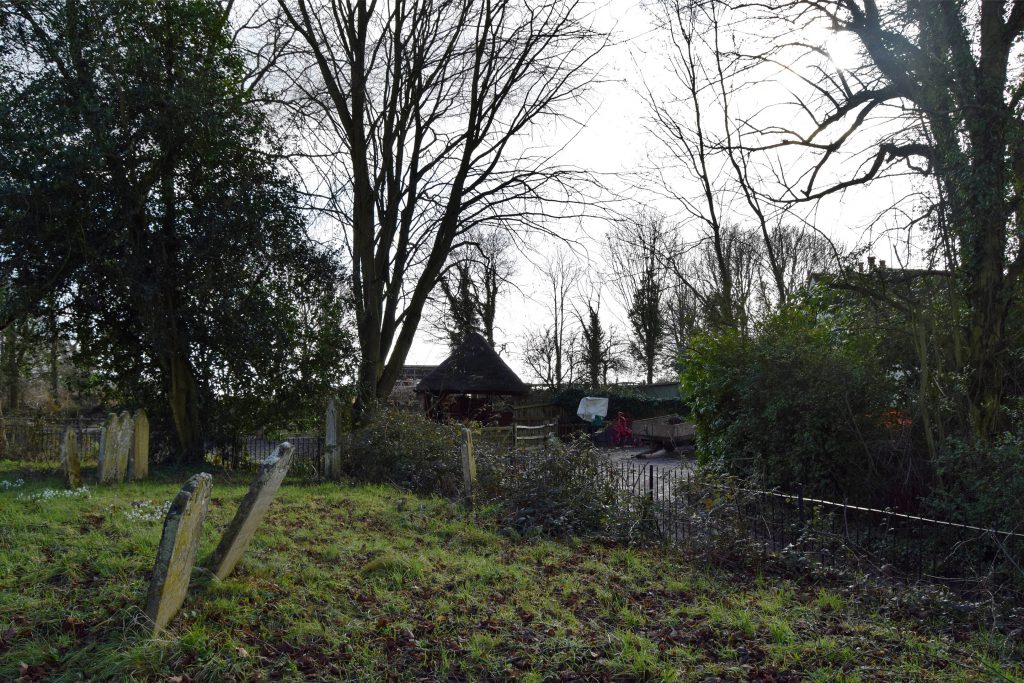
While CJ snapped away I took a look at the duckpond from the opposite side. It is odd to think the farm buildings I could see and the little church I stood beside were once in the centre of Botley Village. The original settlement grew up near the point the Roman road from Chichester to Clausentum crossed the River Hamble. Over time, rising sea levels made it easier to cross the river a little further north of the Roman crossing and, by 1086, when the Doomsday Book was written, the focal point of the village had moved to its current location.
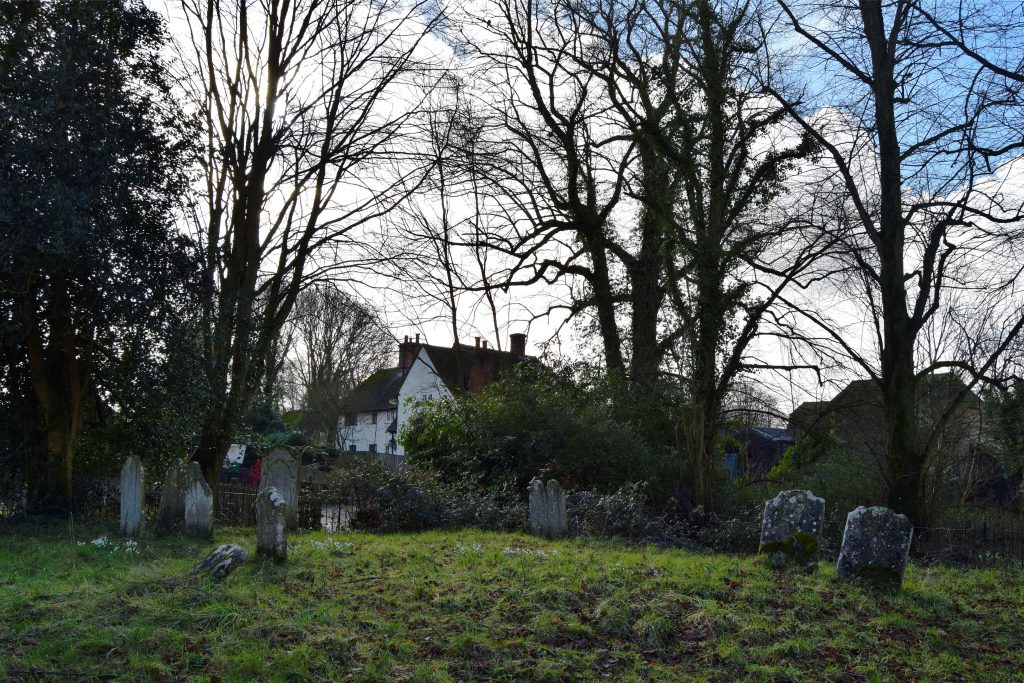
As the focus of the village moved, it became more and more of an inconvenience for the villagers to worship in what was then called All Saints Church. Getting there meant a tramp across fields that were often muddy and a climb over styles. In Sunday best clothes this wasn’t good. For the elderly, infirm or women with their long dresses, it was a real problem and letters of complaint were written to the Bishop of Winchester.
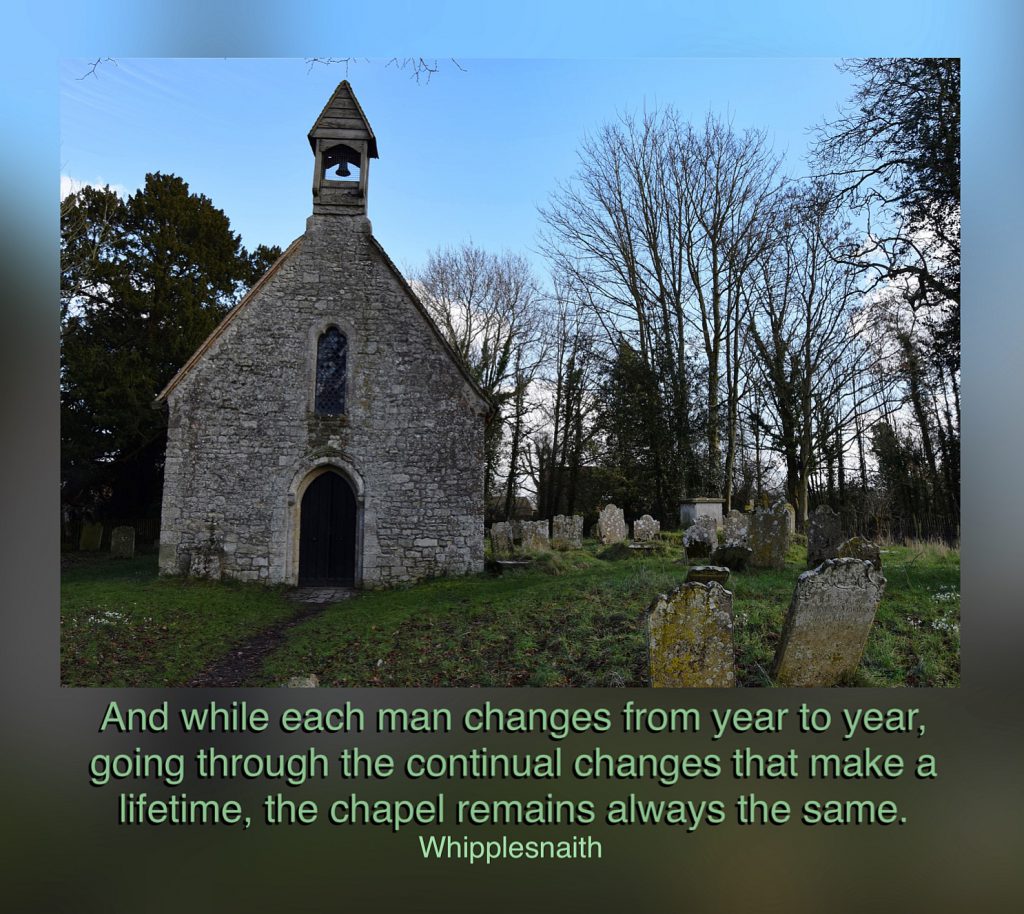
Back then the church was far larger than it is today but, at the end of the eighteenth century, a poplar tree fell on it, destroying the nave. As the villagers were already disenchanted with long muddy walks to church they didn’t bother rebuilding. Instead they removed the damaged nave and bricked up the end wall, leaving just the tiny chapel that still stands today. Now the church was not just inconvenient, it was also too small for the growing village. Obviously something had to be done and, in 1836, a new church was built in the centre of the new village. Like the original, it was called All Saints and, to avoid confusion, this little chapel was renamed St Bartholomew’s. As Bartholomew is the patron Saint of tanners and the area was originally a tannery, it seems quite a fitting name.
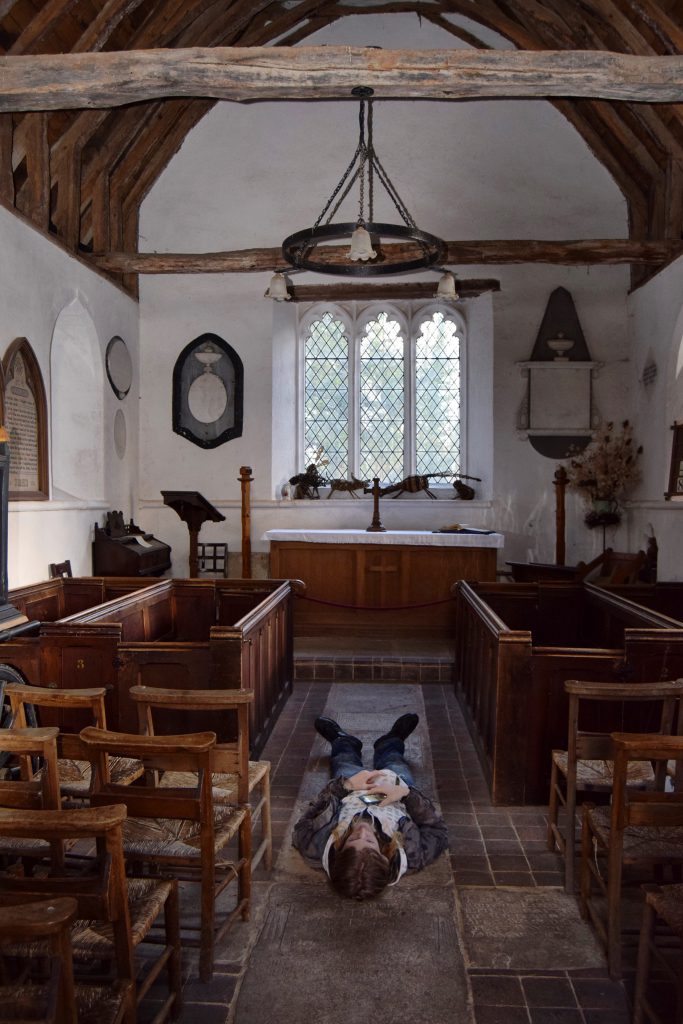
So far we’d only looked at the church from the outside but, from my previous visit, I knew the door was unlocked. I also knew CJ was going to love the interior as much as I had. As soon as we stepped inside he was gasping, in awe of the beautiful simplicity of the place. We have been into many churches and even cathedrals in our wanderings but none quite as wonderful as this.
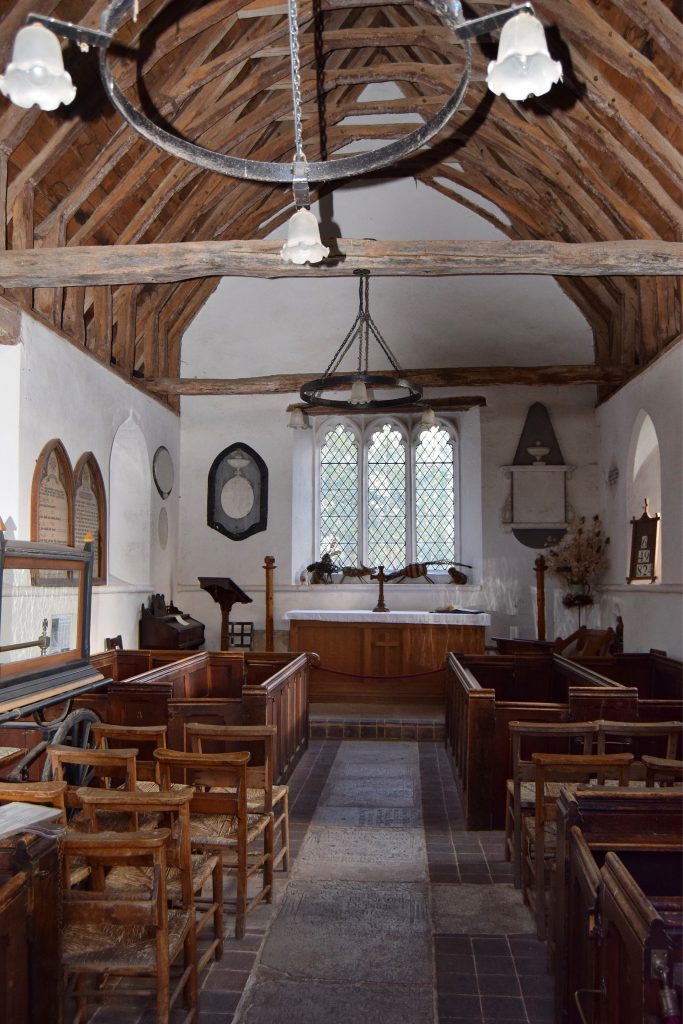
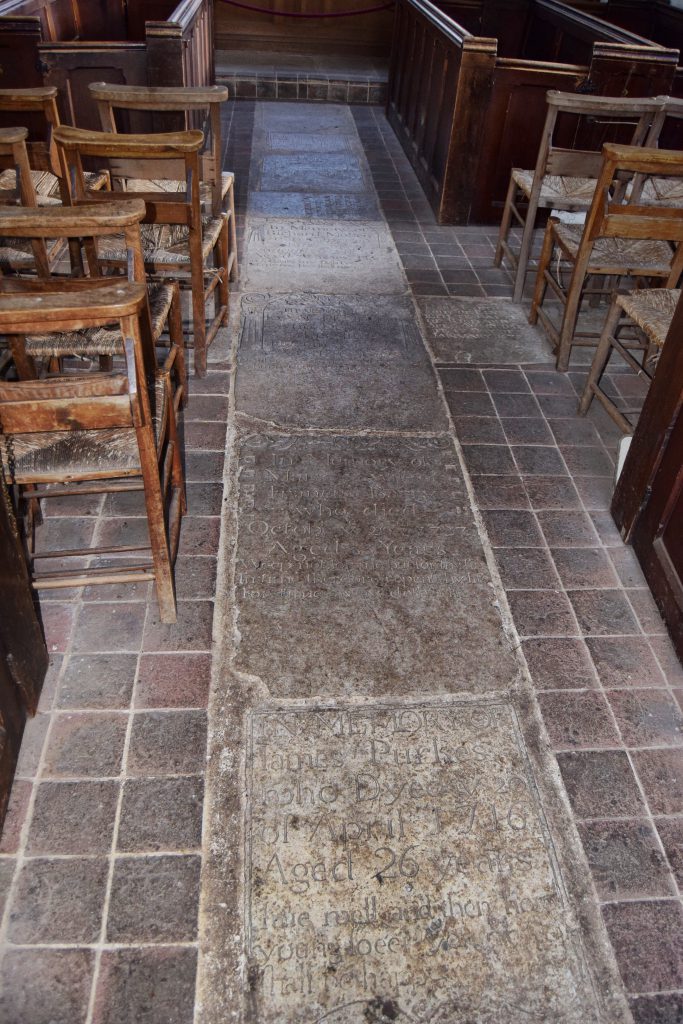
The first thing to capture his attention was the floor. The central aisle was laid out with old gravestones, some dating back to the 1600’s. As we made our way slowly forward, we stopped to read each one.
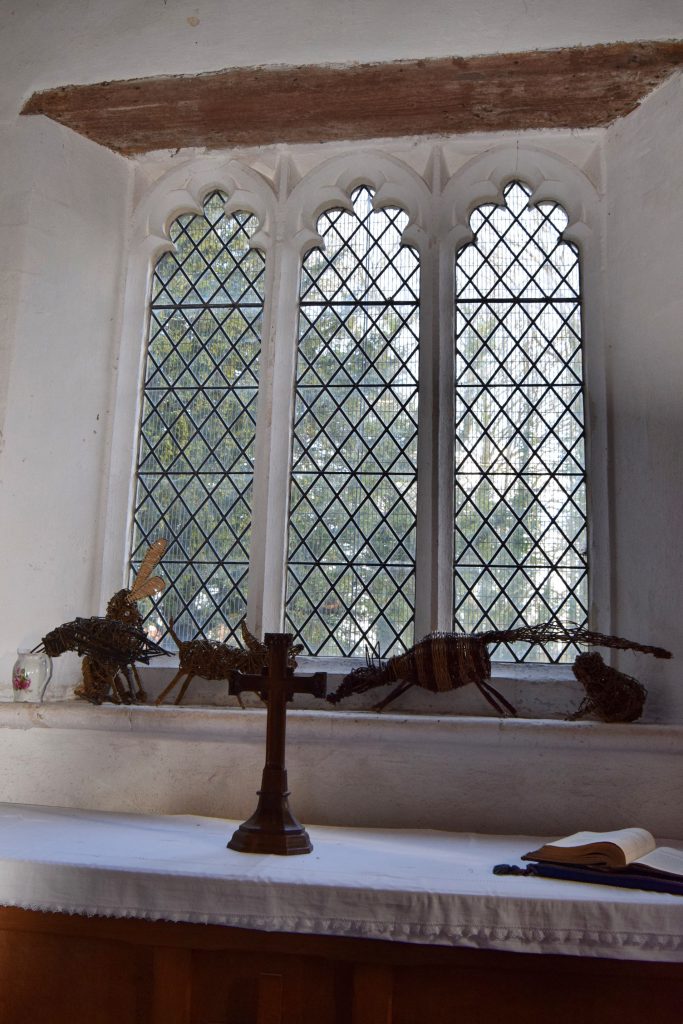
At the far end of the church the simple altar was exactly as it had been when I last came this way. Decorated with just a plain wooden cross and an open book it seemed far more beautiful than all the gold encrusted, bejewelled and ostentatious altars we have seen in our travels. Above, on the plain window ledge, the row of little wicker animals made me smile, just as they had before.
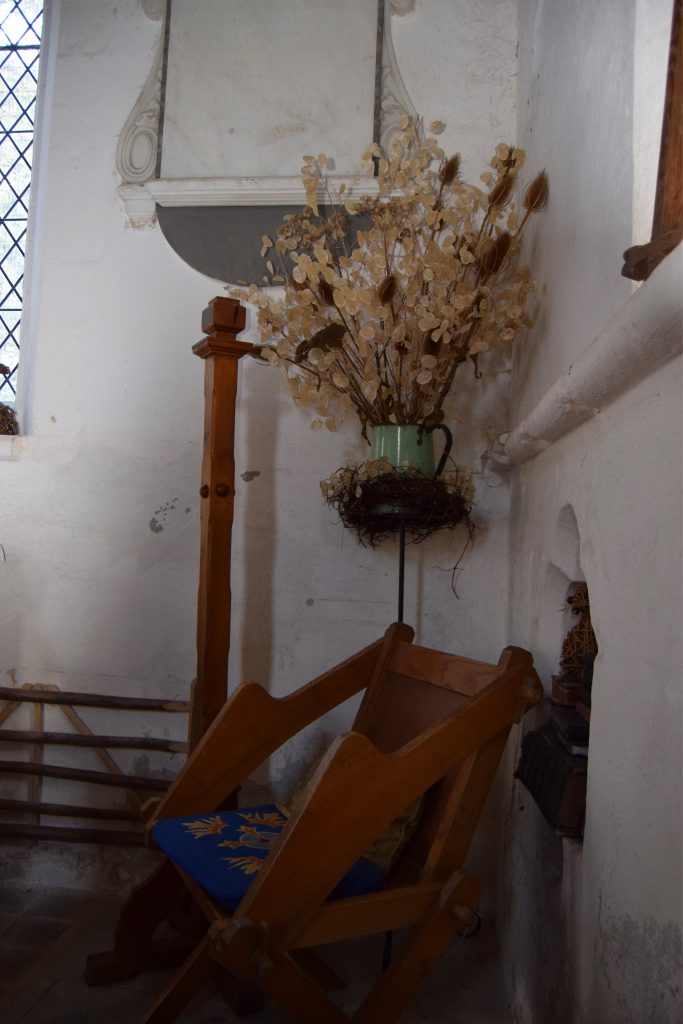
In the corner the chair with its blue cushion still sat beside the little trefoil arch filled with dog eared books. The green enamel mug filled with honesty pods and teasels still decorated the corner. It felt as if time had stood still in this place and all the troubles, worries and fears of the modern world had not touched it.
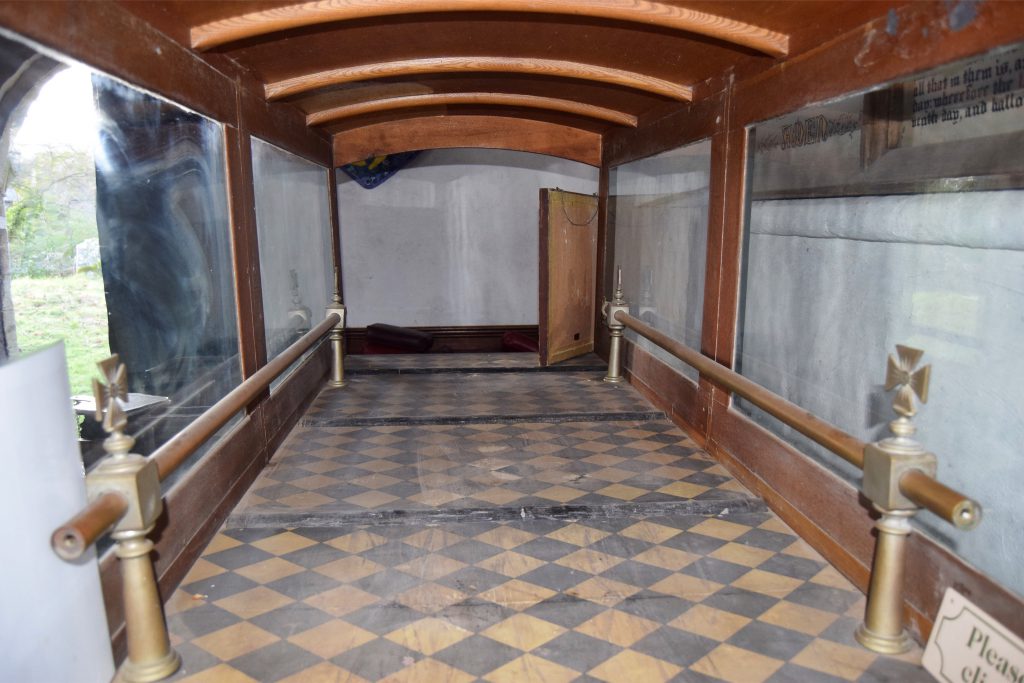
So far CJ had been so caught up with the grave stone flagstones and the wicker animals he hadn’t even noticed the funeral carriage against the side wall. When I pointed it out to him he was almost beside himself to see such a thing. This funeral bier originated in King’s Somborne. It was built by Winchester coach builder William Short in 1910 and purchased by the local council for £31.50. A special bier house had to be constructed to keep it in, as it was too large to be kept inside the King’s Somborne church. It was first used to carry village carpenter Augustus Holloway, aged just twenty six, to his grave. Quite how it ended up in this little church in Botley is a mystery but it was last used in the late 1970’s.
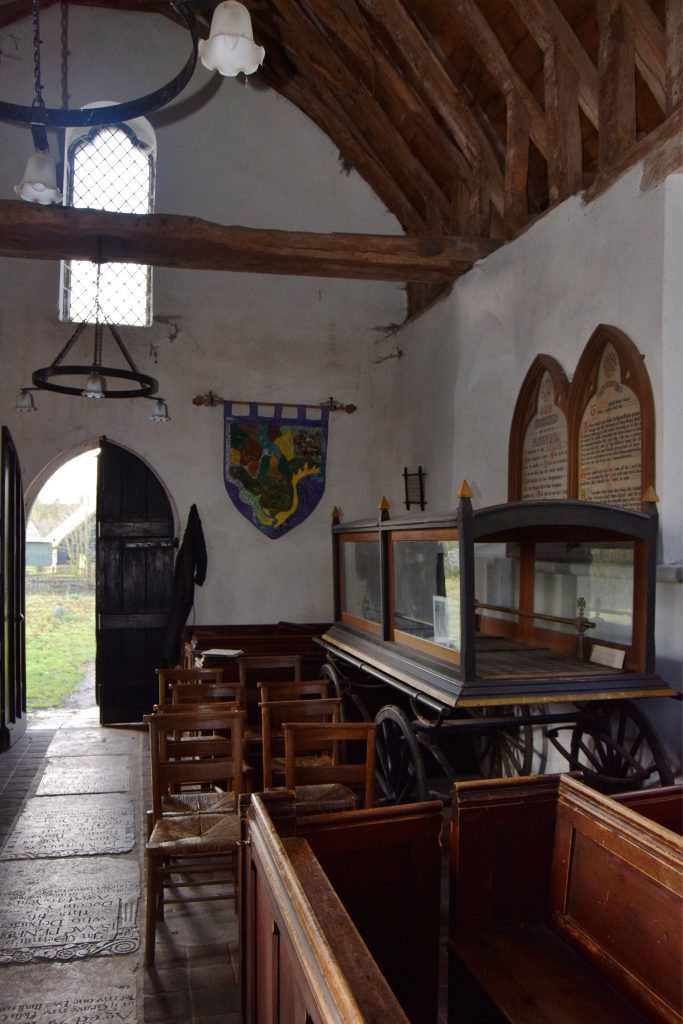
Standing at the end and looking inside, I was struck by how beautifully made it was. I couldn’t help thinking of all the people who had taken their last journey inside its glass walls and the horses who would have pulled it. It must have been quite a sight rumbling through the village with people stopping to doff their caps as it passed. Somehow a big black motorised hearse seems a poor replacement.
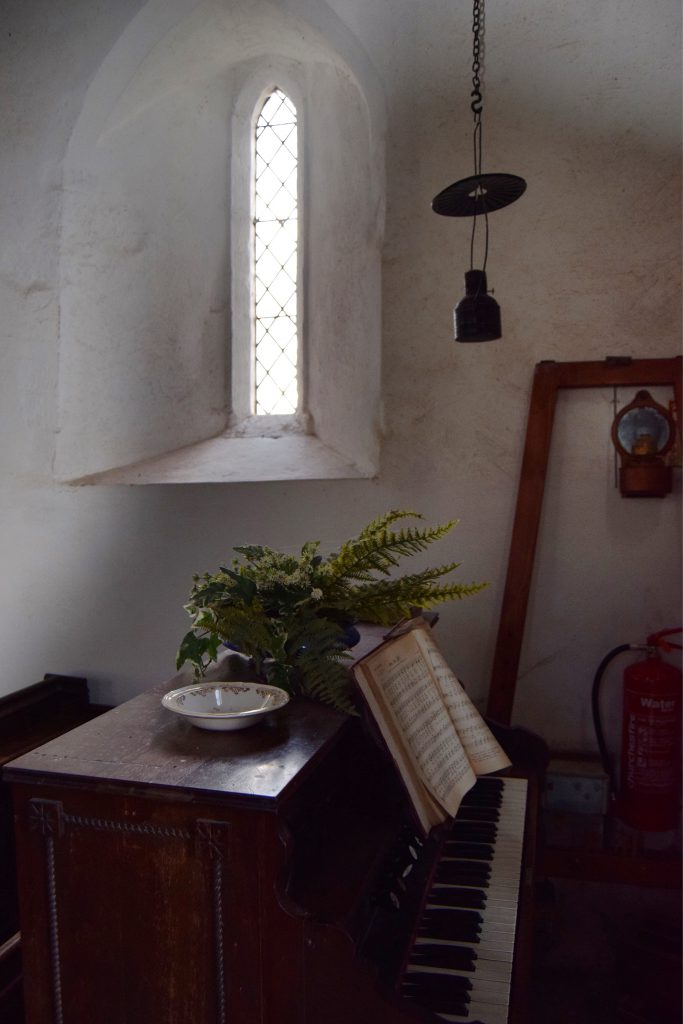
The organ was still at the end of the church and, as we looked at it, I told CJ about the piano of my childhood and how I used to bash out Beatles Songs.
“I didn’t know you could play the piano,” he said.
“Hmm, I’d hardly call it playing. It must have driven Nanna mad to hear me murdering good music. I always wanted piano lessons but we never had the money for them.”
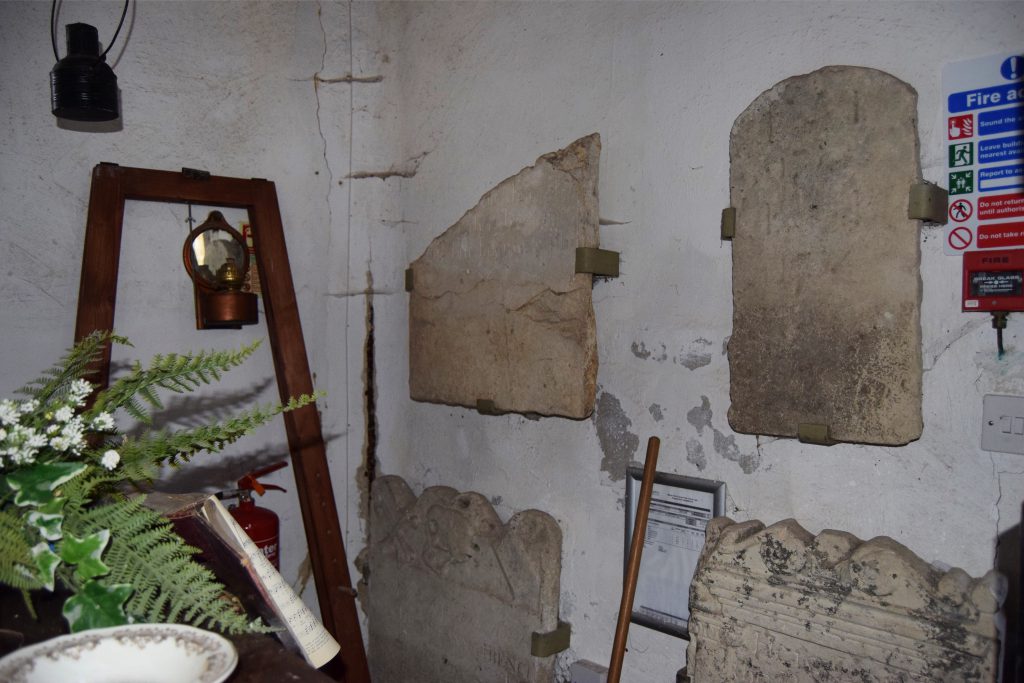
Behind the organ there were more ancient gravestones lining the wall but the inscriptions on these were too worn to tell us any stories.
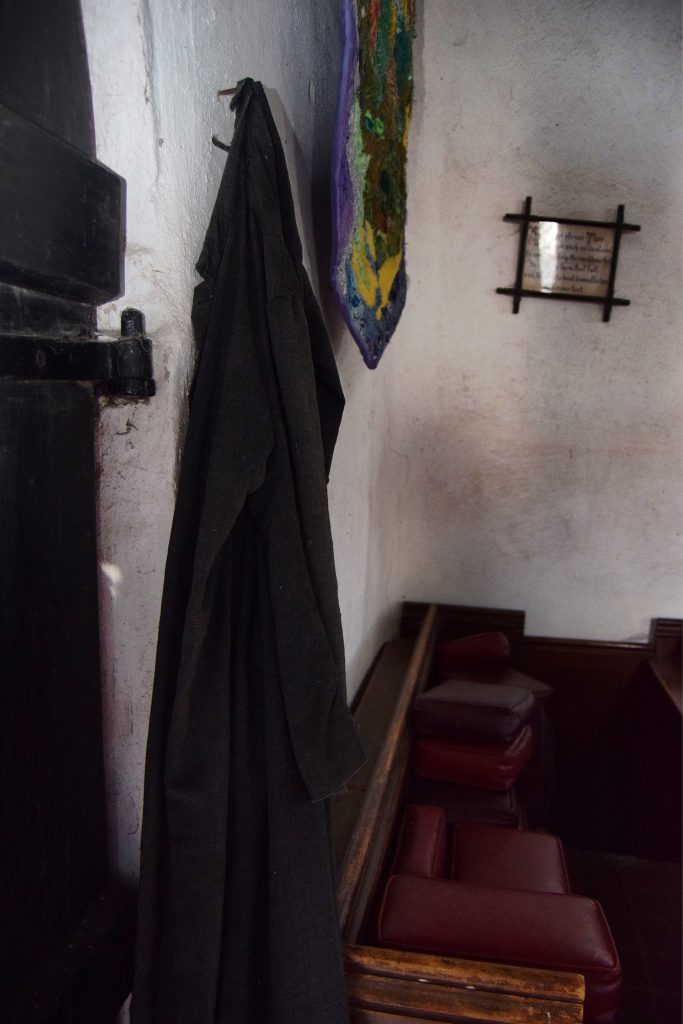
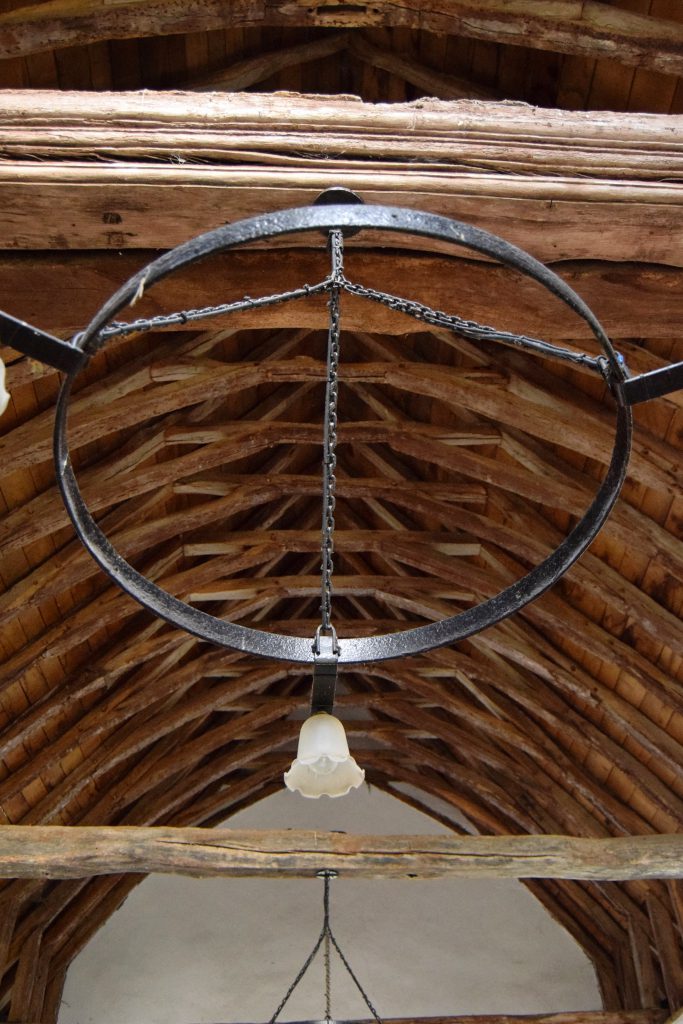
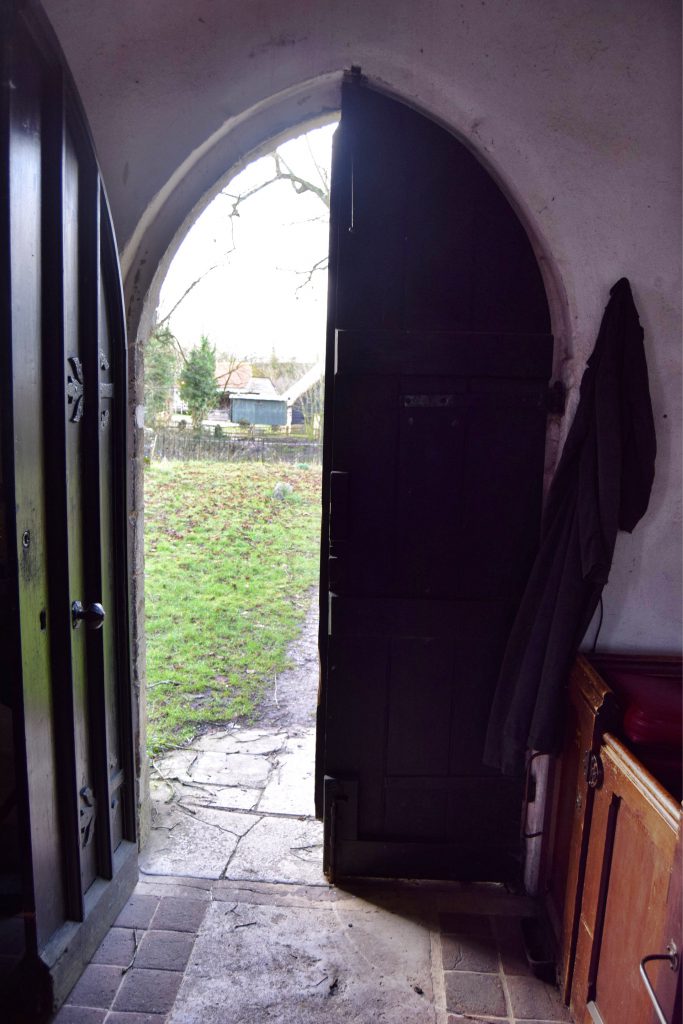
CJ was very taken with the beams of the roof. They reminded him of an upturned ship. While he was trying to take a picture I admired the vicar’s robe, hanging by the door as if waiting for him to come back. Some ladies were approaching the church door as I stood there but, seeing me, they turned to walk around the graves outside. The church is very small after all and I supposed they didn’t want to disturb me. When I turned around, CJ was laying flat on the floor looking at the beams. Perhaps the ladies hadn’t been loathe to disturb me after all, but were frightened of my seemingly mad son.
Eventually he got to his feet and we left the church. As we passed them, the ladies gave us a sideways glance. Maybe they thought we were performing some strange satanic ritual? Now it was our turn to look around the graveyard and the outside of the sweet little building. Looking at it as it is today it’s hard to imagine the church ever being larger
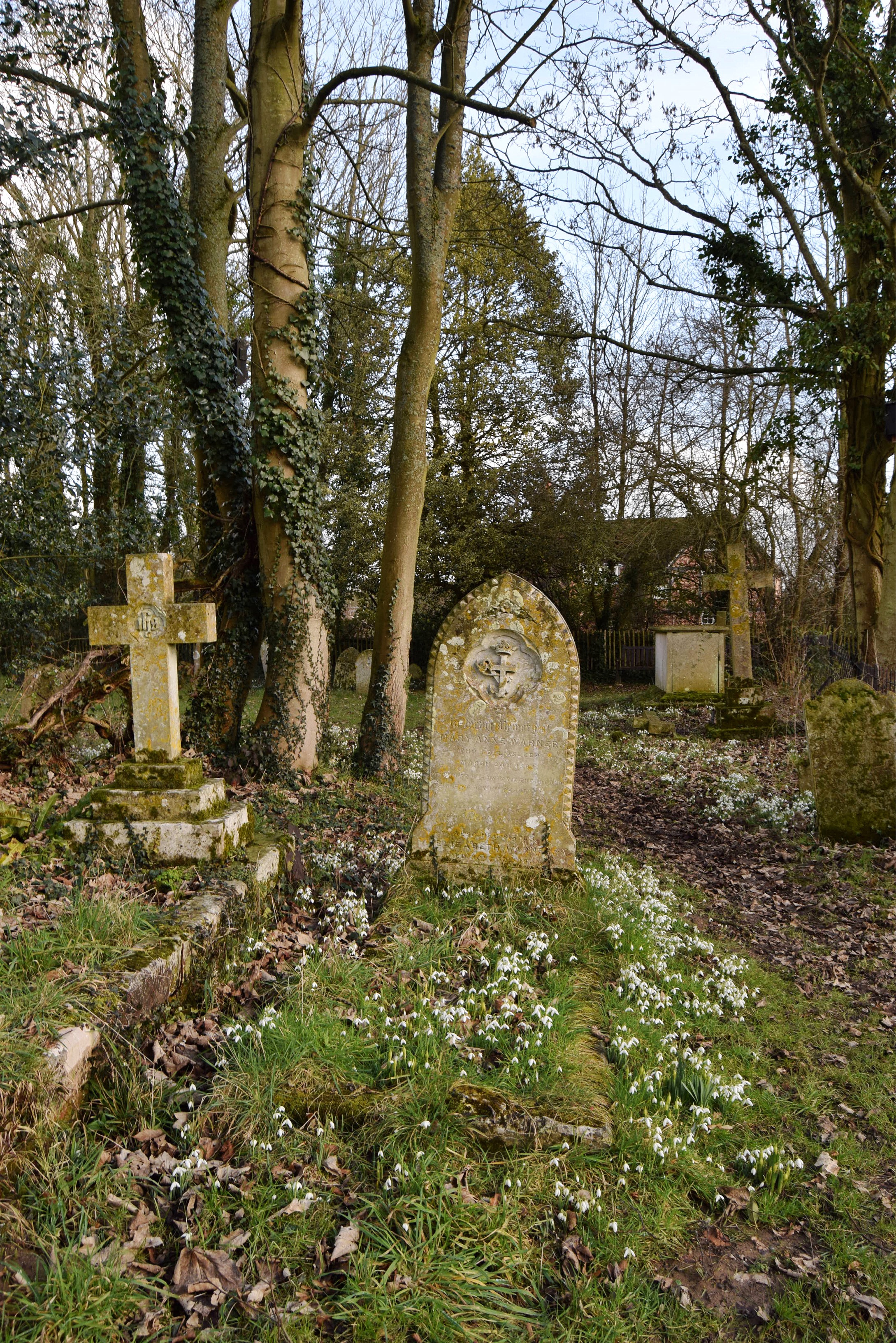
The graves were sprinkled with snowdrops, the first spring flowers I’ve seen this year. The plain white flowers against the green grass and the old, lichen covered stones matched the simplicity of the setting and seemed the perfect way to mark the old graves.
In the corner of the graveyard, we sat down on a bench to drink the chocolate milk I’d carried all the way from our own village. FInally I could look at my foot. Somehow it hadn’t seemed right to be stripping off my boot inside the church and I knew the damage had already been done so a little waiting made no difference. The huge tree trunk peppered with slivers of razor sharp glass turned out to be a small piece of thorny bramble about two inches long. It had worked its way to the bottom of my boot, near my heel. There was no blood but there was a large blister running from my instep to my heel on the outside of my foot. The thorns had punctured it. It hurt. Once I’d disentangled the thorns from my sock and put a blister plaster on it felt a little better but I knew it was going to be a painful five mile walk home.
I’d always planned a circular walk and I was glad that the route home was slightly shorter than the route we’d taken to get to the church. It wasn’t a route I’d walked before though and there was always the possibility of getting lost. As set off along Brook Lane I suggested we might even catch a bus for the last part of the journey, once we reached Hedge End. Despite the blister plaster my foot was hurting and we’d taken far more time than I’d planned because of the mud and a longer than expected stop at the church.
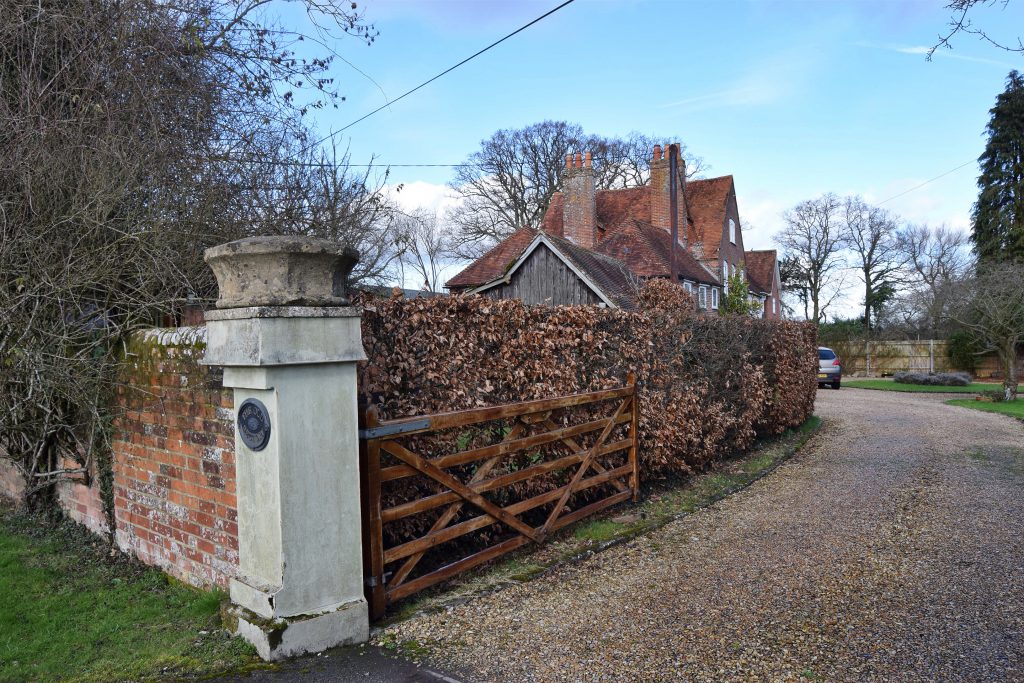
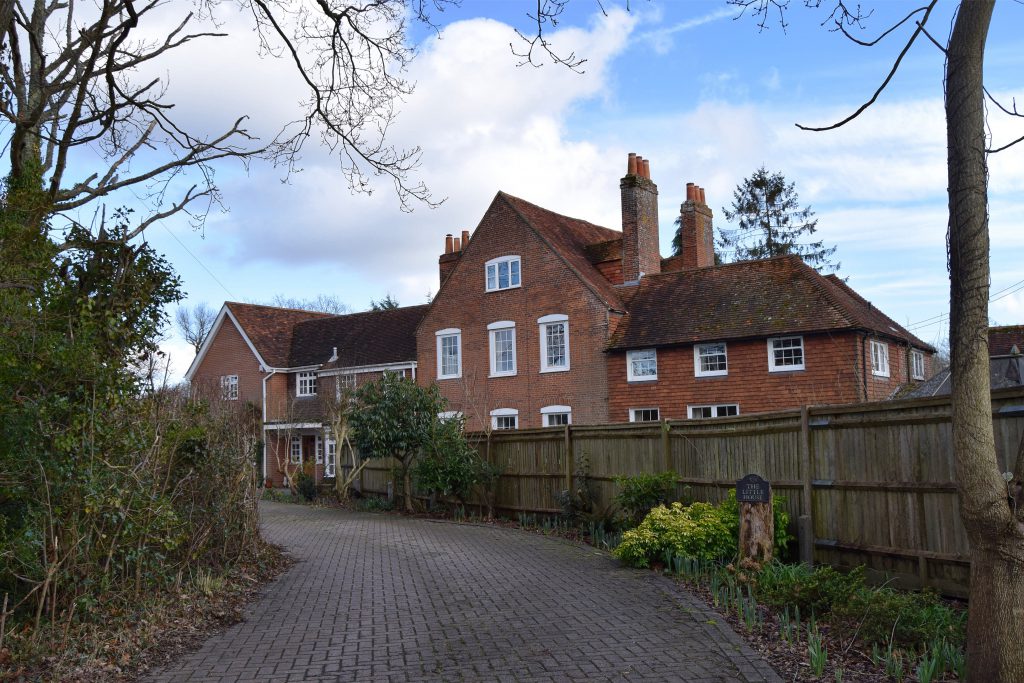
The Lane was unpaved and gently winding. On the first part we passed a few scattered houses, including The Old Rectory and The Little House. Built in the eighteenth century and originally called Maske or Marks Farm, it seems unlikely this was ever a real rectory but, despite a modern extension, it was pretty enough for us to stop to admire.
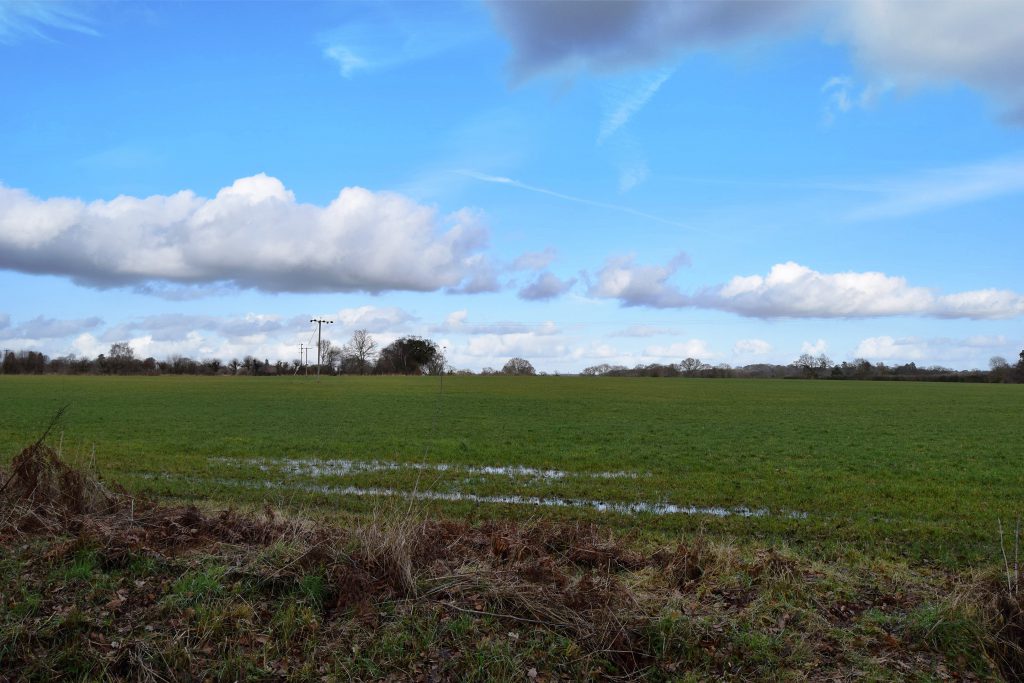
Between the houses there were pleasant views across the fields. They looked rather soggy and I began to wonder if the footpath we were heading for was going to turn out to be as problematic as the last at Tanhouse Lane. As it happened, we completely missed the footpath sign and ended up adding to our miles by having to turn around and walk back to find it. It was a relief to see that, apart from a few puddles, it looked quite firm.
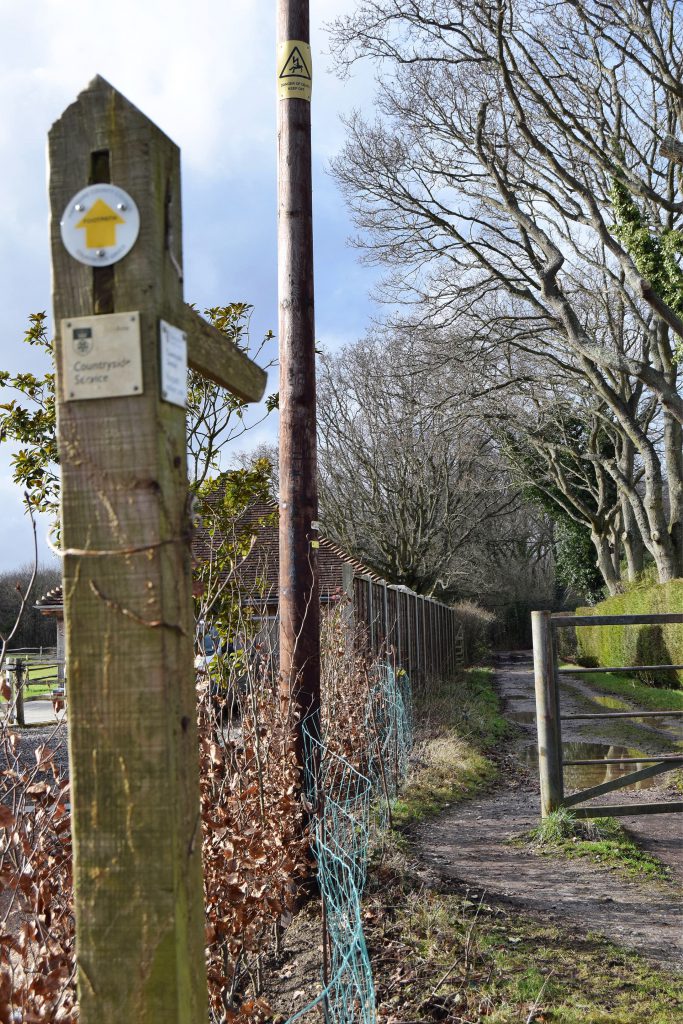
It was a pleasant trail, or it would have been if my foot hadn’t hurt so much. After a little while we hit a few patches of mud but they were easy to skirt and I breathed a sigh of relief. We’d come too far to turn back without adding many miles to our walk so obstacles at this point would have been pretty disasterous.
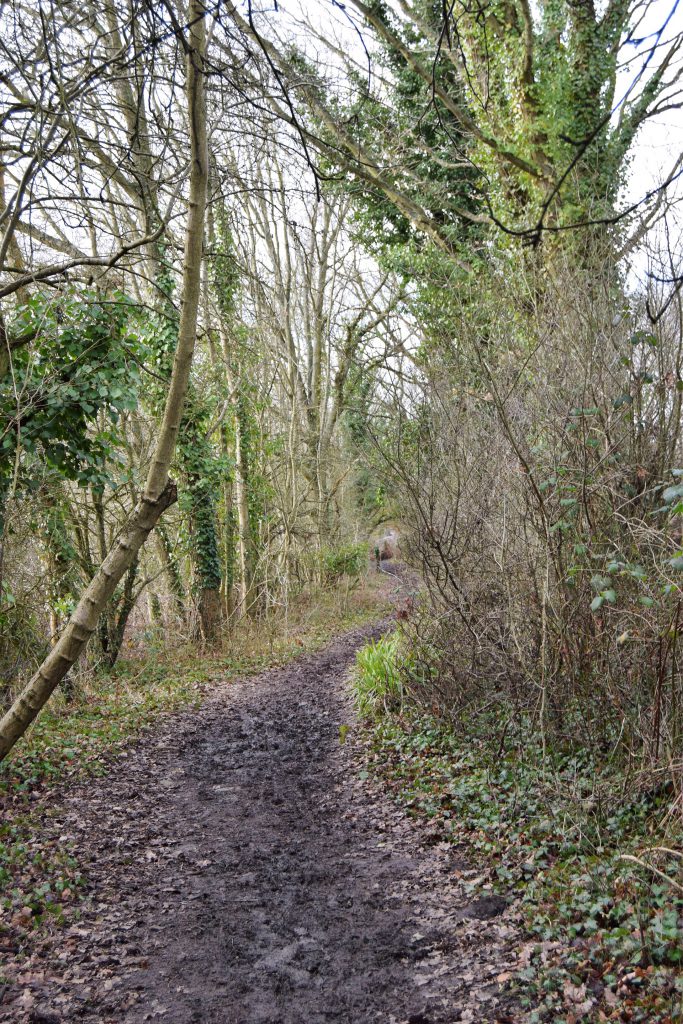
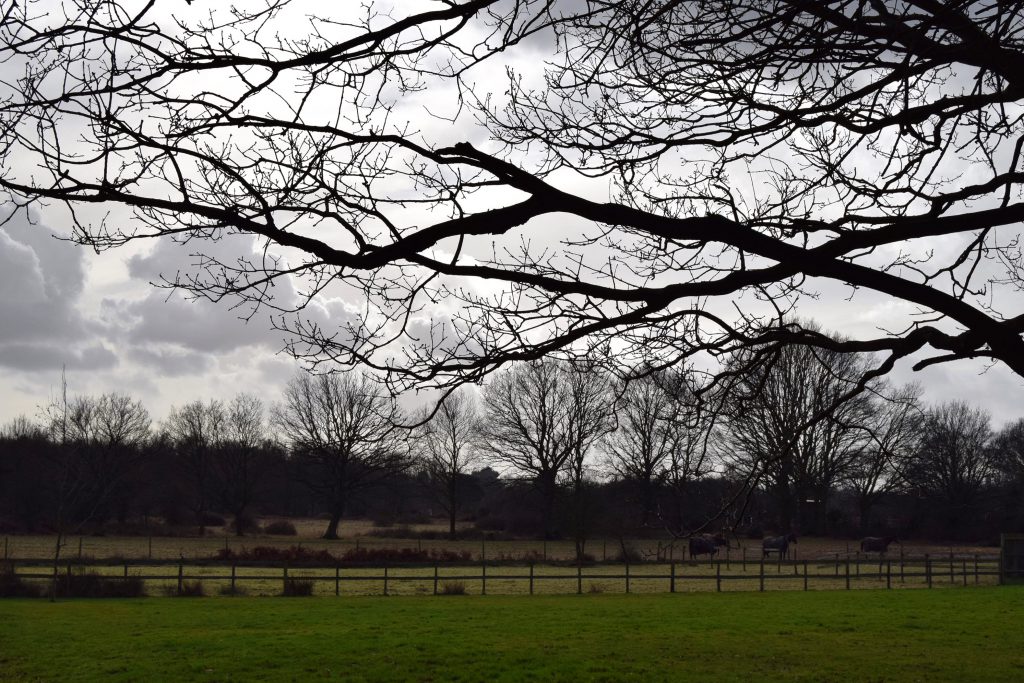
Between the trees we looked out over green fields filled with grazing horses and, even though the sun had disappeared, our spirits were high. My sigh of relief had been a little premature though. We’d nearly reached the end of the lane when we came to a huge stretch of mud. It was deep, wet and sticky and there was no skirting round it. All we could do was squelch through, our boots sinking above the ankle. CJ even had to roll up the bottoms of his jeans.
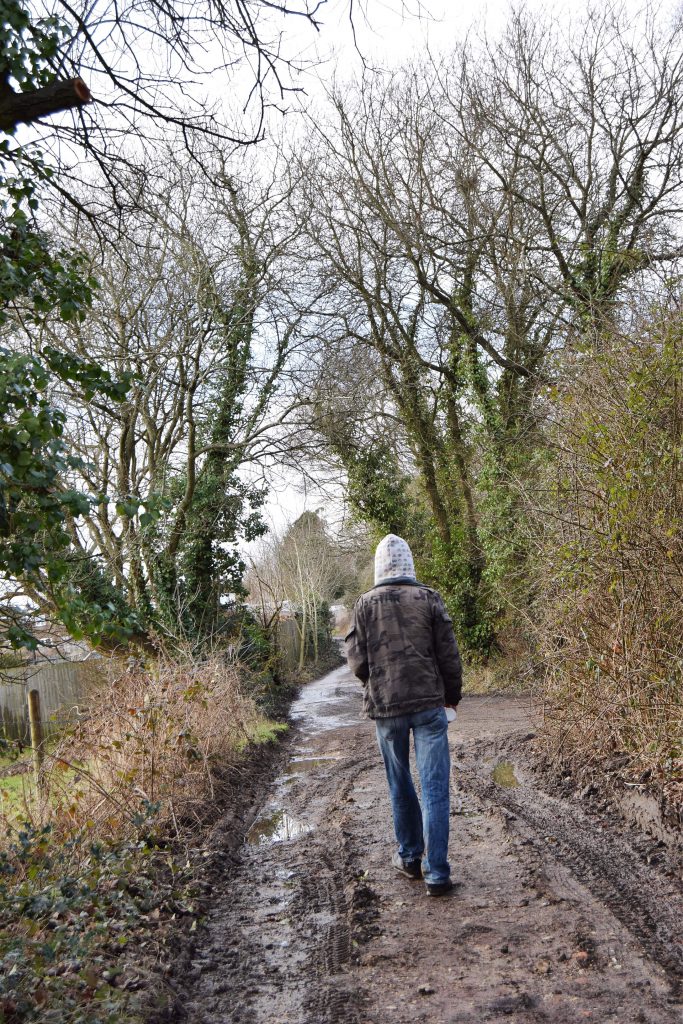
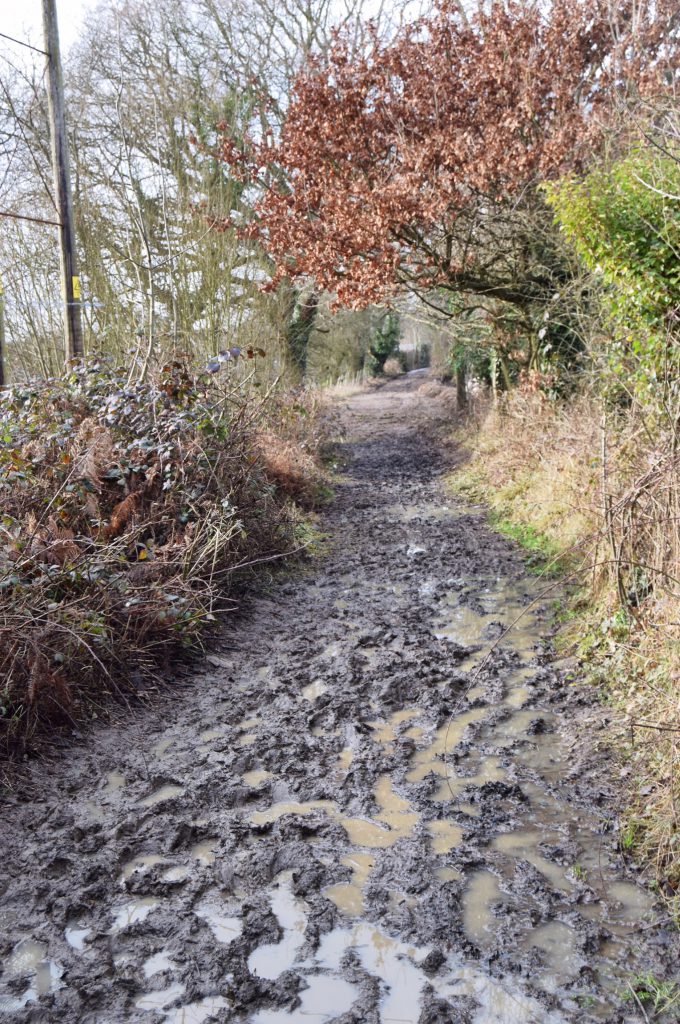
Somehow we made it across with a fair bit of slipping and waving about of arms. No boots were lost. No one fell over. It wasn’t the end of our walk by a long way, or the end of our problems. My plan to catch a bus from Hedge End was a non starter. When we reached the village we discovered there was only one bus going our way and we’d missed it. The next was an hour later and we could easily walk home in that time.
“Wouldn’t it be great if someone invented a car you could fold up and carry in your pocket,” I said.
CJ looked at me as if I’d gone mad. Maybe I had.
On we went.
“There should be lots of buses going through Thornhill,” I said, more to console myself than CJ.
By this time my foot was hurting as much as it had when the bramble was still in my boot and every step was agony. The thought of that bus a couple of miles ahead kept me going. In the end there was no bus though. The seven minute service through Thornhill turned out to be from the other side of the estate, almost as far to walk as just carrying on towards home. On the side we were on there was just one bus an hour and we’d missed it. There was nothing for it but to struggle up and down all the hills. I have never been so relieved to get home and sit down in my life. There may be a lesson in all this somewhere but what it is is a mystery at the moment.
Please see my copyright information before you copy or use any of the above words or pictures.
That church is a beauty.
It’s a lovely place, so peaceful and unspoilt
I love the chapel interior, especially the snapshot of CJ on the floor, sort of mock reverential maybe . . .
And I hope your foot feels better!
The chapel is a real find. It looks as if nothing has changed for centuries. CJ was very taken with those beams. Thankfully the foot is now all recovered but it did stop me walking for a few days.
Poor you, all that mud and no buses.
I was convinced there would be lots of buses but I was wrong.
I can imagine that a thorn would be quite painful, having had a few blisters myself.
Seeing the church must have been worth the trouble though. It’s a pretty place, inside and out, and so very old.
It’s nice to see the snowdrops.
It was painful but, as you say, the church was worth the pain. Hopefully the snowdrops are the first of the spring flowers and there will be lots more soon.
Walking in all that pain, you poor thing! However that little chapel is a delight both outside and in, and I laughed out loud at the photo of CJ lying flat looking up at the beams.
That was certainly a memorable walk, although not necessarily for the right reasons. The chapel is well worth a visit. It’s like a step back in time. CJ often makes me laugh out loud. Laying in the ground d to get a photograph is the least of it!