
My foggy walk on 11 January did not end in Dukes Road. Instead, I carried on to Bevois Valley. The area is named after Sir Bevois, who, according to legend, founded the town of Southampton. I’ve written about the story of Sir Bevois before when I explored the Bevois Mount area and its fabulous graffiti, so I won’t repeat myself now. Today, there were other things I wanted to see. Some were connected with my work in progress, some were reminders of Plagued and Land Fit For Heroes, and others were curiosities I wanted to investigate. The fog wasn’t going to make it easy, but I was there, so it was worth a try.
The first place I came upon fits into the latter category. The Hobbit pub began life as the Portswood Hotel in the 1870s. It once stood at the junction of Dukes Road and Bevois Valley Road. In 1989, when Thomas Lewis Way first opened, it was renamed The Hobbit, after J R R Tolkien’s hairy-footed creations. It was a popular pub, in part, because of the shots and cocktails named after Tolkien’s characters. Purportedly, it also has the largest beer garden in Southampton. It’s another of those pubs I’ve always meant to visit, but not being a drinker, I never have. This was not the day, mainly because it wasn’t open.

Despite all it has going for it, life has not been easy for The Hobbit. In 2012, Middle Earth Enterprises, the company which owns the worldwide rights to J. R. R. Tolkien’s The Hobbit and The Lord of the Rings, accused the Southampton pub of copyright infringement. A huge multimillion-dollar corporation going after a tiny little pub for using the name Hobbit, seemed like overkill. Especially as there were several other pubs also using the name with impunity. There were protests from local MP John Denham and actors Stephen Fry and Ian McKellen, who starred in the Hobbit film series, and a Facebook campaign to save the pub began. Considering the pub had been using the name for decades, the corporation came over as bullies, in my opinion. The details of how the dispute ended aren’t clear, but the pub is still called the Hobbit and has just undergone a revamp.
In a twist to the story, the Tolkien Estate sued Middle Earth Enterprises for infringing Tolkien’s copyrights later that same year. The corporation had produced video and casino games using Tolkien’s characters, contrary to the licence they had been granted. Whether the bully boy tactics employed against the little pub had any bearing on their action remains to be seen, but I’d like to think it did. This debacle also seems like a warning to all authors to keep a tight hold of their copyright, even if a big company offers you lots of money. Otherwise, you never know what they are likely to do in your name.

The walk down into the valley echoed a walk in my work in progress. Of course, my story was set in 1940, and a lot has changed here since then. Also, my character was walking at night. Despite this, I did get a feel for the distances, the terrain and what she might have seen. Obviously, there would have been no wheelie bins back then, and the businesses would have been very different, but many of the original buildings remain. The fog made it easier to imagine it as it used to be somehow.

Bevois valley was once the valley of a stream. Before Empress Road was built, the area behind the shops on the river side of the road used to be allotment gardens . No trace of either remains, but some of the older buildings are a delight. I like the quirky little shops and the surprising decorative features. They don’t build things like they used to

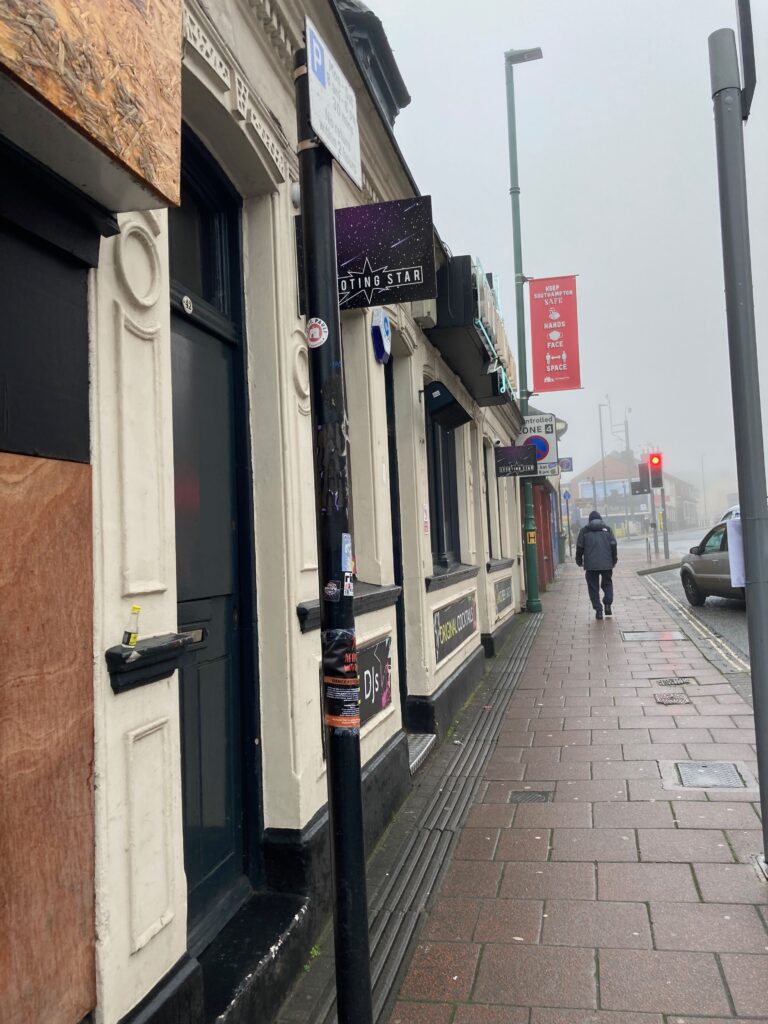
When I reached the junction of Mount Pleasant Road, my character and I parted company. Admittedly, I was tempted to keep following in her footsteps and head towards the railway crossing, but I decided against it. There were other things I wanted to see, and Mount Pleasant deserved a more thorough examination, preferably when the weather was better.

During my research into the area I’d found many old photographs and postcards. It was fascinating to see what had changed and how much remained the same. For instance, there is still a pub at the junction of Mount Pleasant Road and Bevois Valley. Today it’s called 5 Rivers, but back in 1940, it was the Crown and Sceptre. The current pub had a line of soggy pigeons on the roof and a pleasingly curved facade. The old pub was a far more traditional place, with red brick and stone pillars and etched windows. Unfortunately, it was destroyed in November 1940, during the Southampton Blitz.


I had been walking down a gentle slope towards the bottom of the valley since I left the Hobbit. Now I had reached the bottom and had a gradual incline ahead of me. I was leaving Bevois Valley and my work in progress behind. To my right, on the triangle of land between Bevois Valley Road and Peterborough Road, was the Gurdwara Nanaksar. This was once the Bevois Town Methodist Chapel, one of two methodist chapels in Bevois Town. It was built in 1861 and enlarged in 1906. After the war, the chapel proved too large and difficult to maintain. It was closed in 1950, and, in 1952, it was sold. For some time, it was used as a furniture warehouse. Then, in 1971, the Sikh community purchased it and turned it into a Sikh temple. These days, it has a golden dome instead of a spire, but I’m glad it was saved and is being used for worship again.


Going past the temple, I’d crossed the slightly hazy divide between Bevois Valley Road and Onslow Road. The climb became a little steeper, and, to my right, on another triangle of land, was the Rockstone pub. This is one pub I have actually visited on several occasions. Before the pandemic, Bard worked there as a chef. The pub was opened in 1843 as the Bevois Inn. By 1870, it had been renamed the Bevois Castle Hotel. It closed briefly in 2011, and when it reopened, it had been renamed again as The Rockstone. The pub is at the junction of Onslow Road and Rockstone Lane, and the name is probably a nod to the latter. Rockstone Lane was once the main route between Southampton and London. The name either originates from the 13th-century hamlet of Rokesdene, which was in this area, or Rooks Down, the large field adjacent to the lane until the mid-1800s.


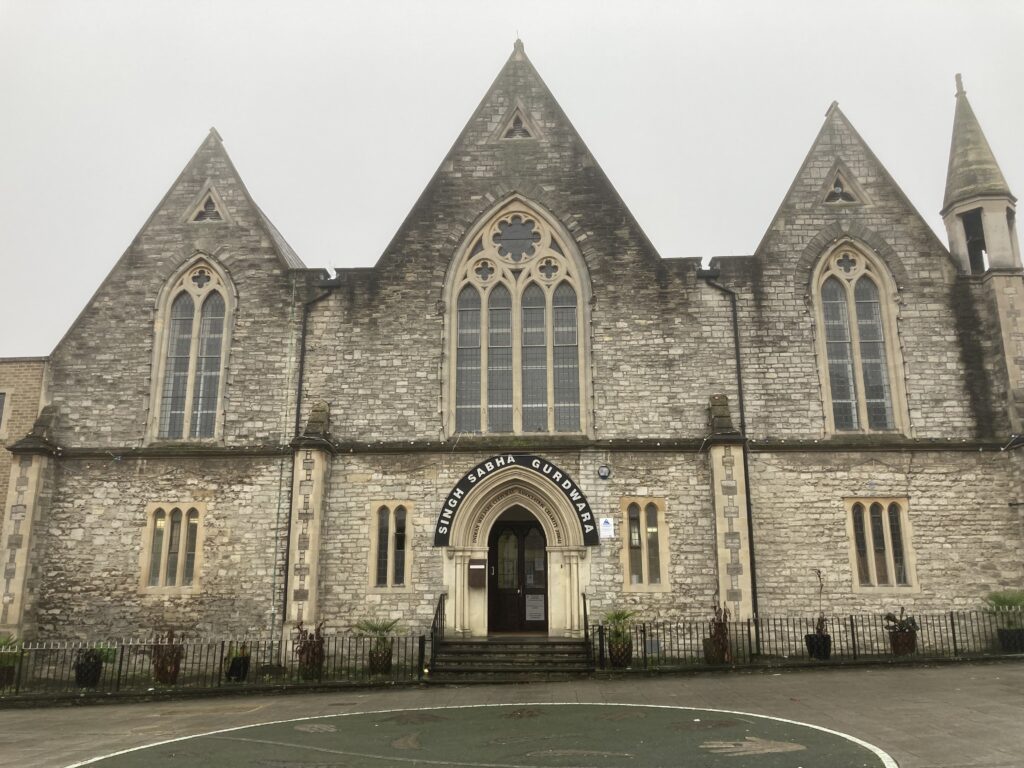
Beyond the Rockstone, the buildings on Onslow Road are mainly modern ones, but up ahead, I could just make out the corner of a church. This was the church I imagined Thomas and Mary walking to in Plagued the day after he finally came home from the hospital. Of course, it isn’t a church any more.

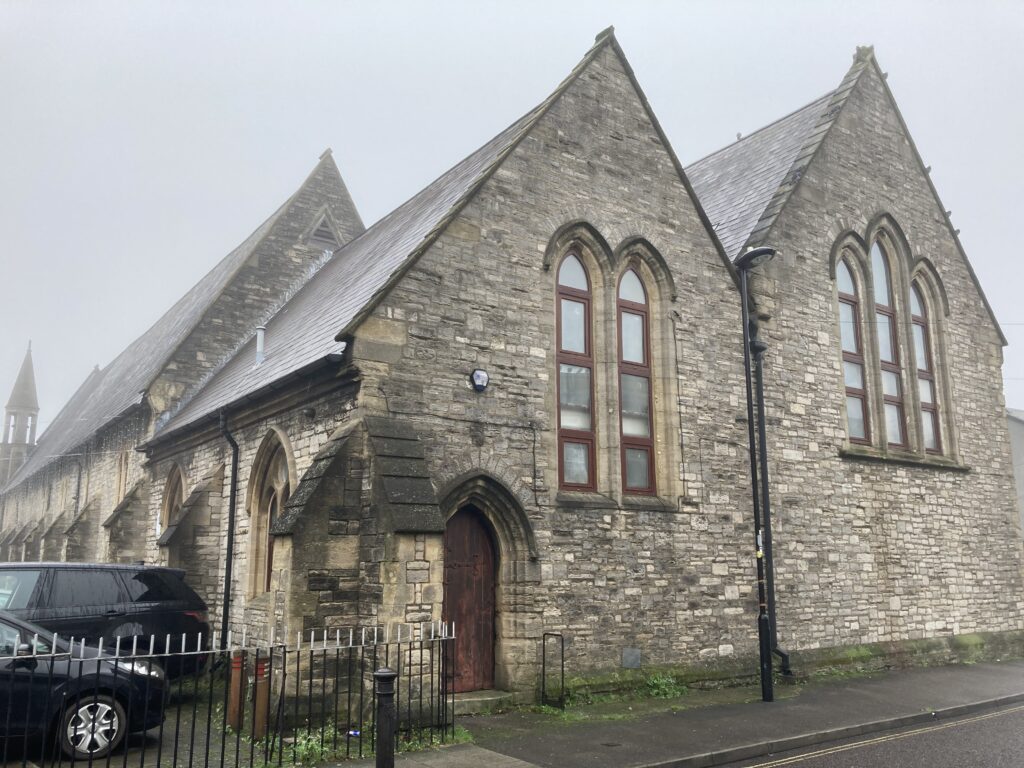
St Luke’s Church was built in 1853 on the corner of Onslow Road and Cranberry Avenue. The architect was John Elliott of Chichester. In 1860 it was enlarged, and a chancel was added in 1873, designed by James Piers St Aubyn. General Gordon worshipped at St Luke’s whenever he was in Southampton. In 1913, Alderman Edward Wise donated a stained glass window to the church in his memory. Like the Bevois Town Methodist Chapel, St Luke’s was converted into a Sikh temple in 1983, and the window was moved to the Gordon Boys School near woking. Except for the sign above the arched doorway, the structure remains largely unchanged, and I am glad it has been saved.

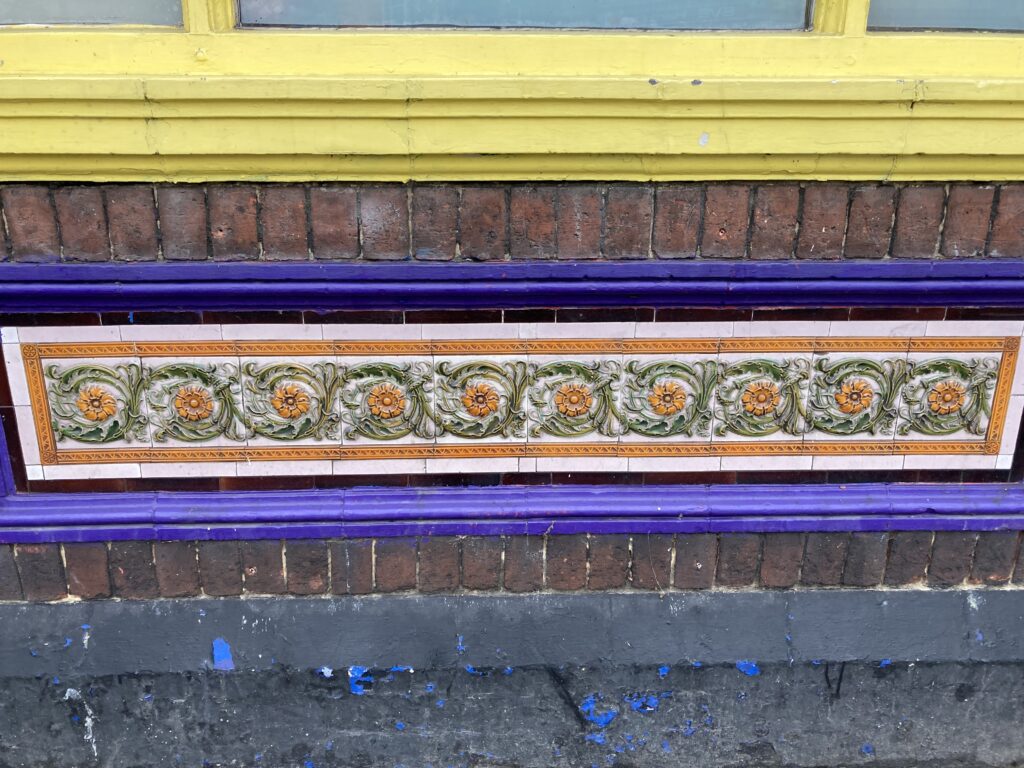
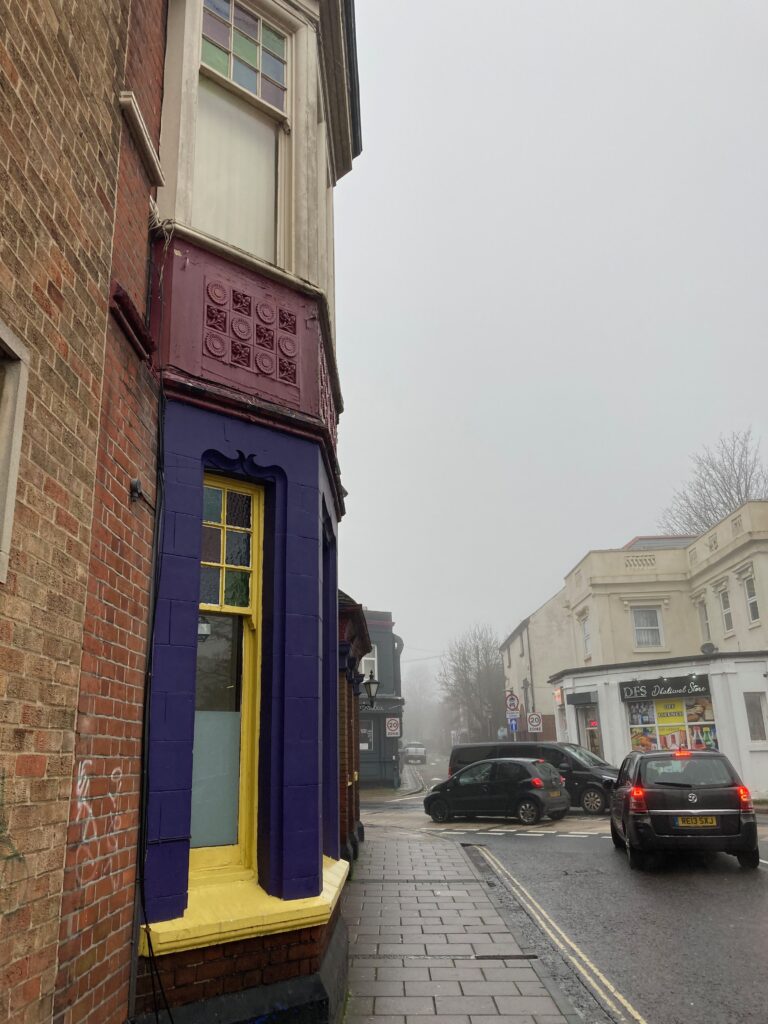
On the opposite corner of Onslow Road and Lyon Street is another building that has been saved. This one is a pub, rather than a church. It used to be called the Dorchester Arms, and it was opened in the 1860s. In 2014, the licence was suspended after a series of problems, including licensing issues, a large brawl and complaints about noise from nearby residents. For a while, it looked as if the old pub was going to be turned into flats, but, in 2017, a group called Board in the City took it over as a tabletop gaming cafe.

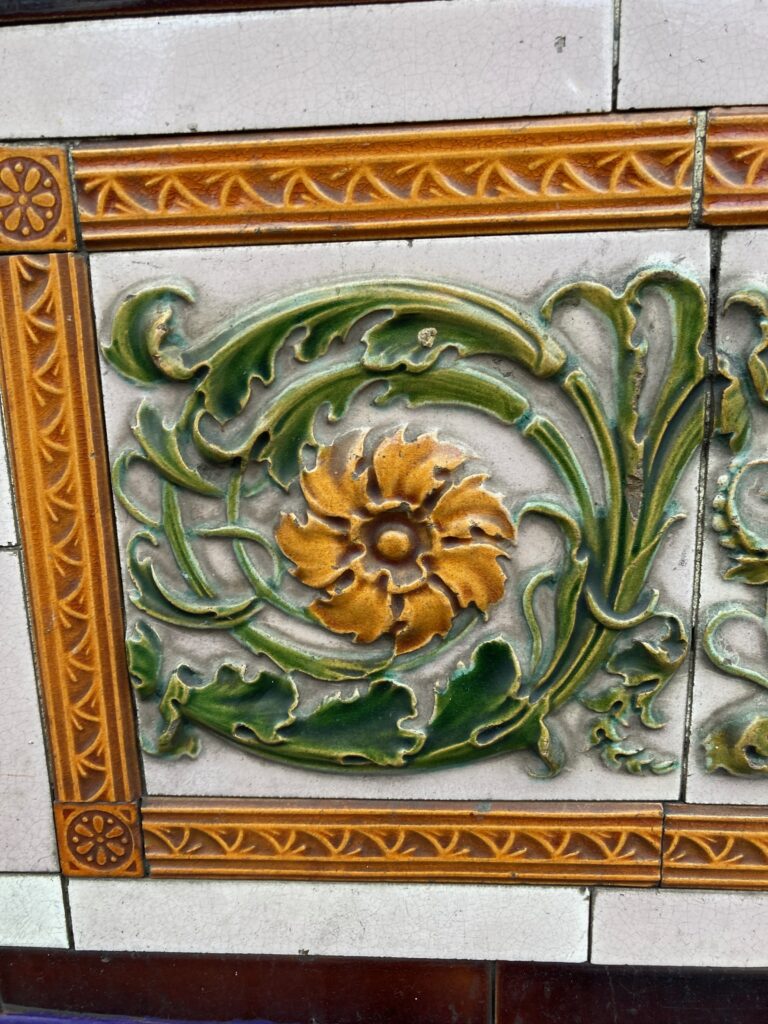
Gaming is not my thing, so I doubt I will ever go inside the old Dorchester Arms, but I’m glad it has survived. It is a fine example of the times it was built, bursting with quirky features. It would have been a terrible shame to lose the beautiful tiles, the stained glass in the windows, or any of the other decorative features that show the pride builders had in their work back then.
Now, I had another decision to make. I had been walking for over an hour and a half — Should I turn for home, or should I step back into the world of Land Fit For Heroes for a while?
If you like what I write, and you’re interested in my novels are available now on Amazon in paperback, on Kindle and via Kindle Unlimited. Check out my Amazon page here and my Goodreads page here. If you would like to help me keep writing, you can now buy me a virtual coffee by clicking on the little orange coffee cup at the bottom right.
Shame it was a video
?