
12 March 2016
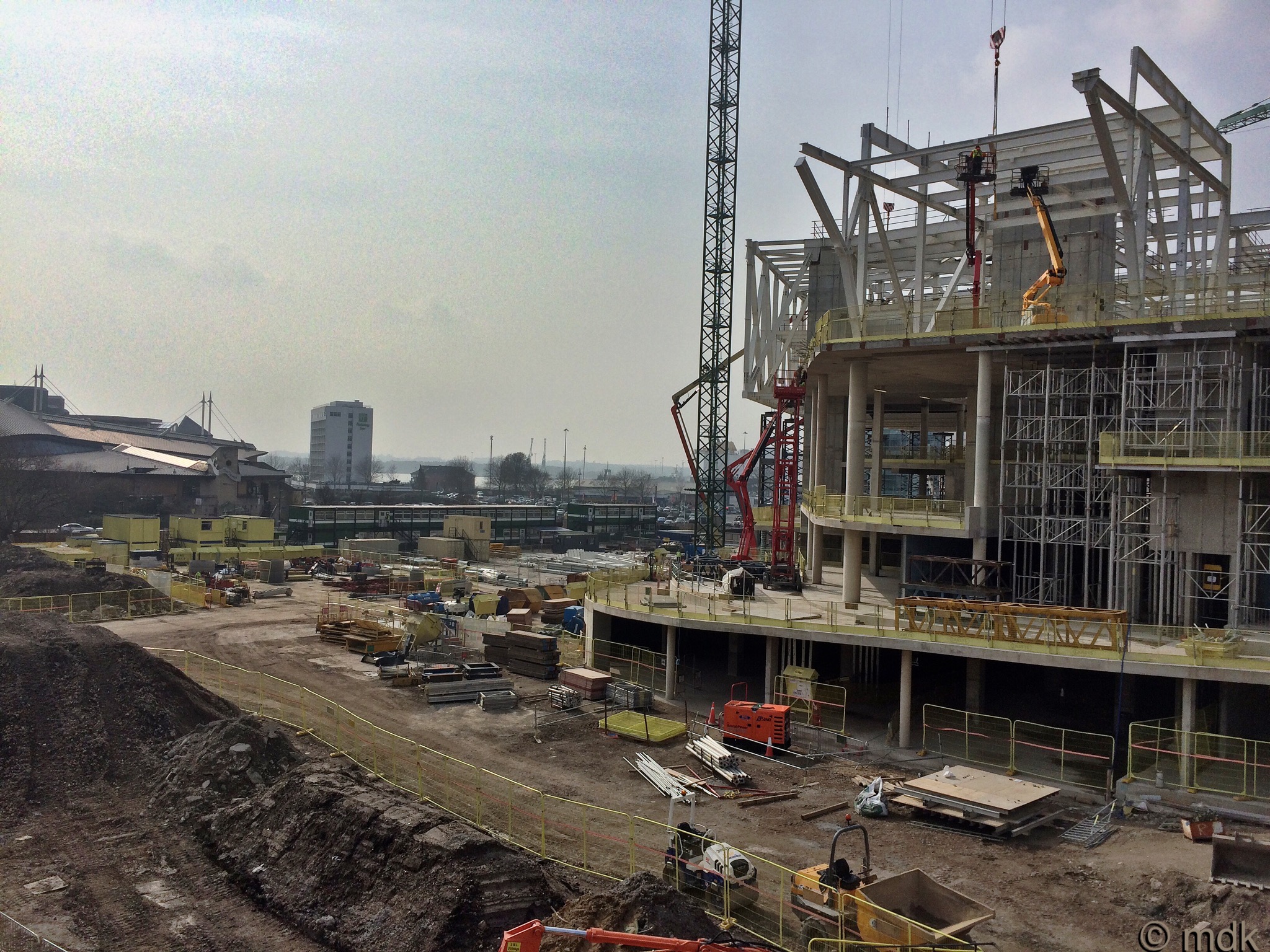
A Saturday trip to town with Commando gave me a chance to have a look at the progress on the WestQuay II, or Watermark development. Let’s face it, I didn’t have the money to go shopping and I had time to kill. Besides, I’d read some old stone walls had been uncovered at the base of Catchcold Tower and I wanted a look before they covered them up again.
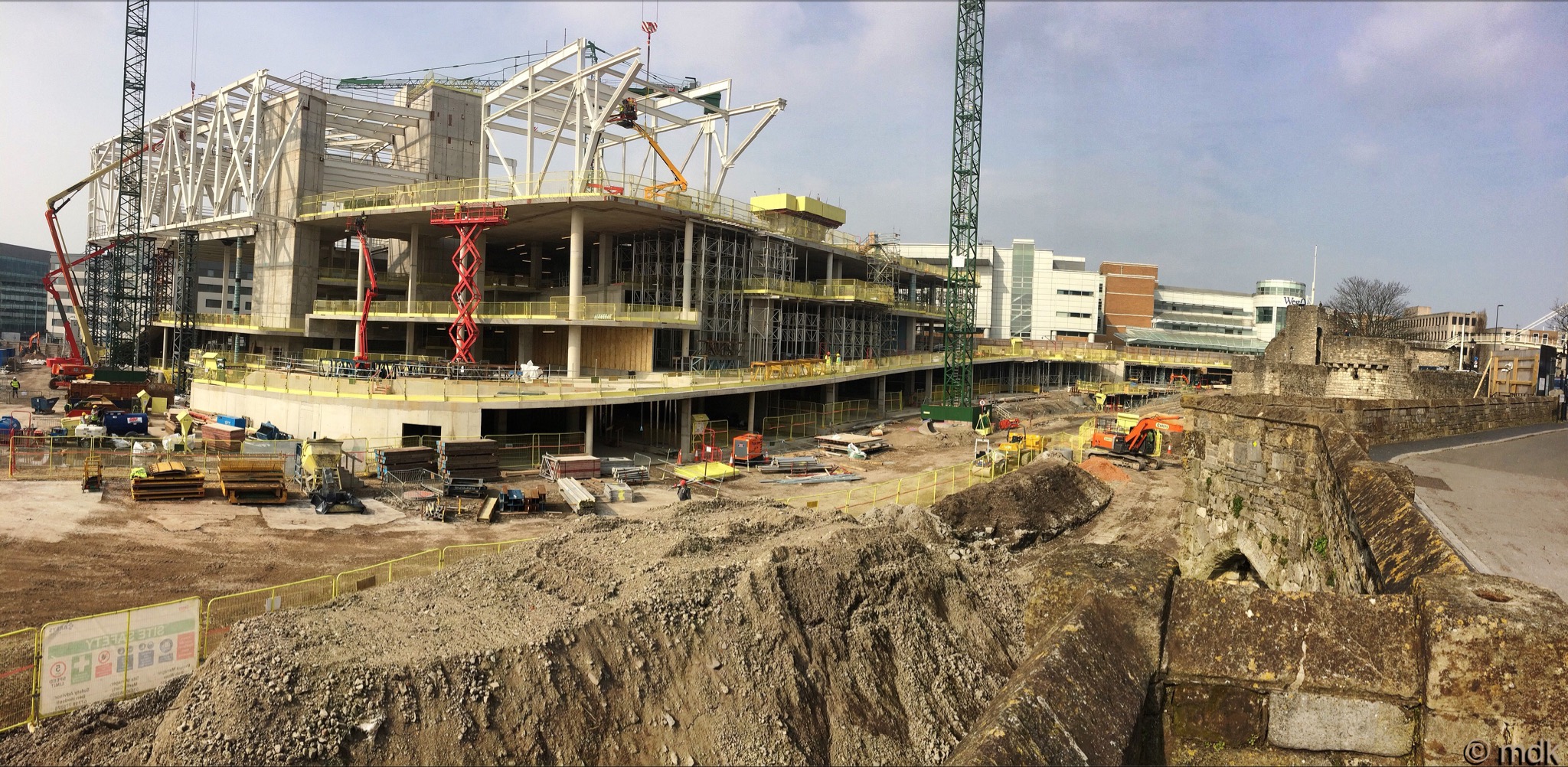
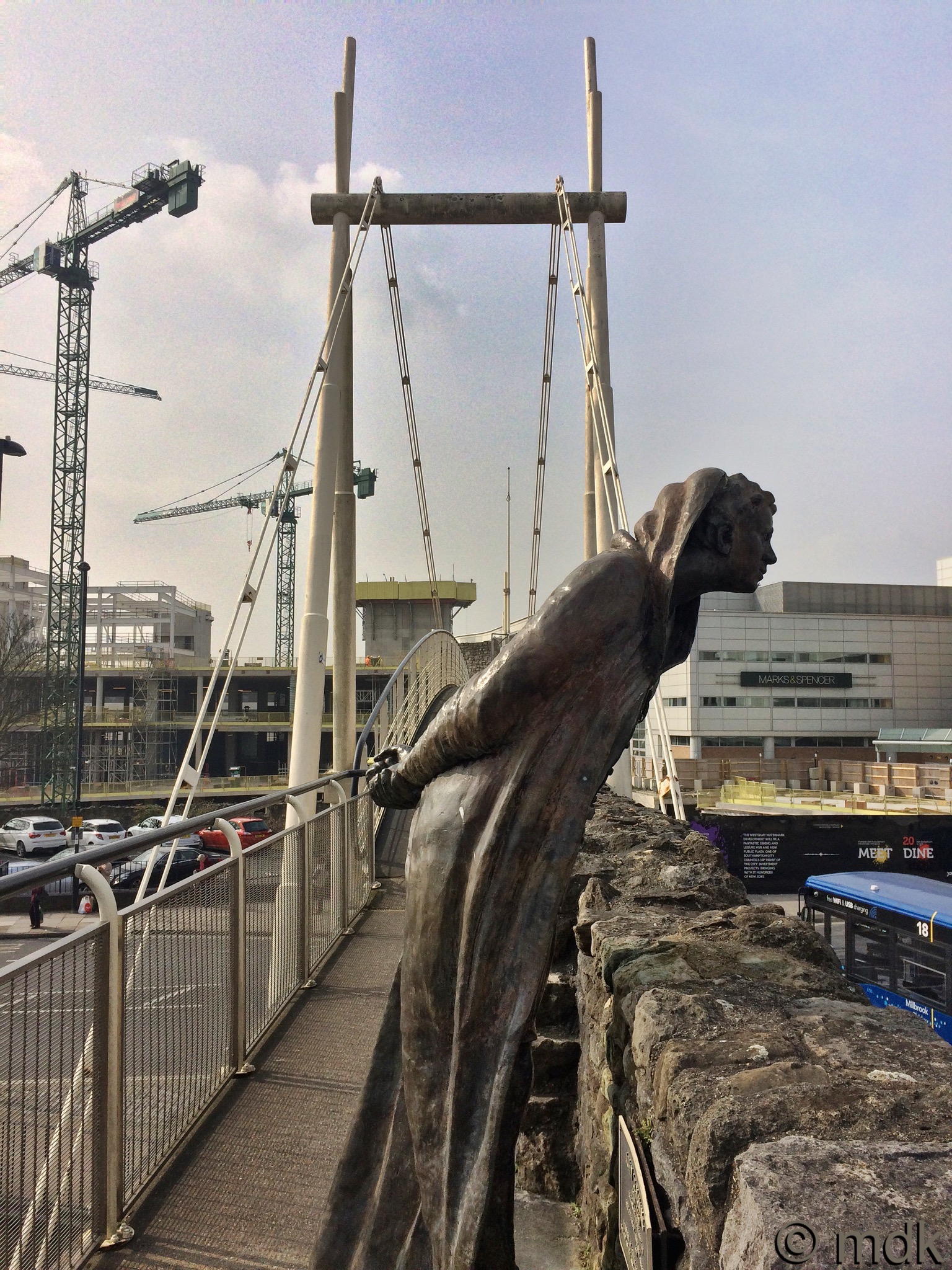
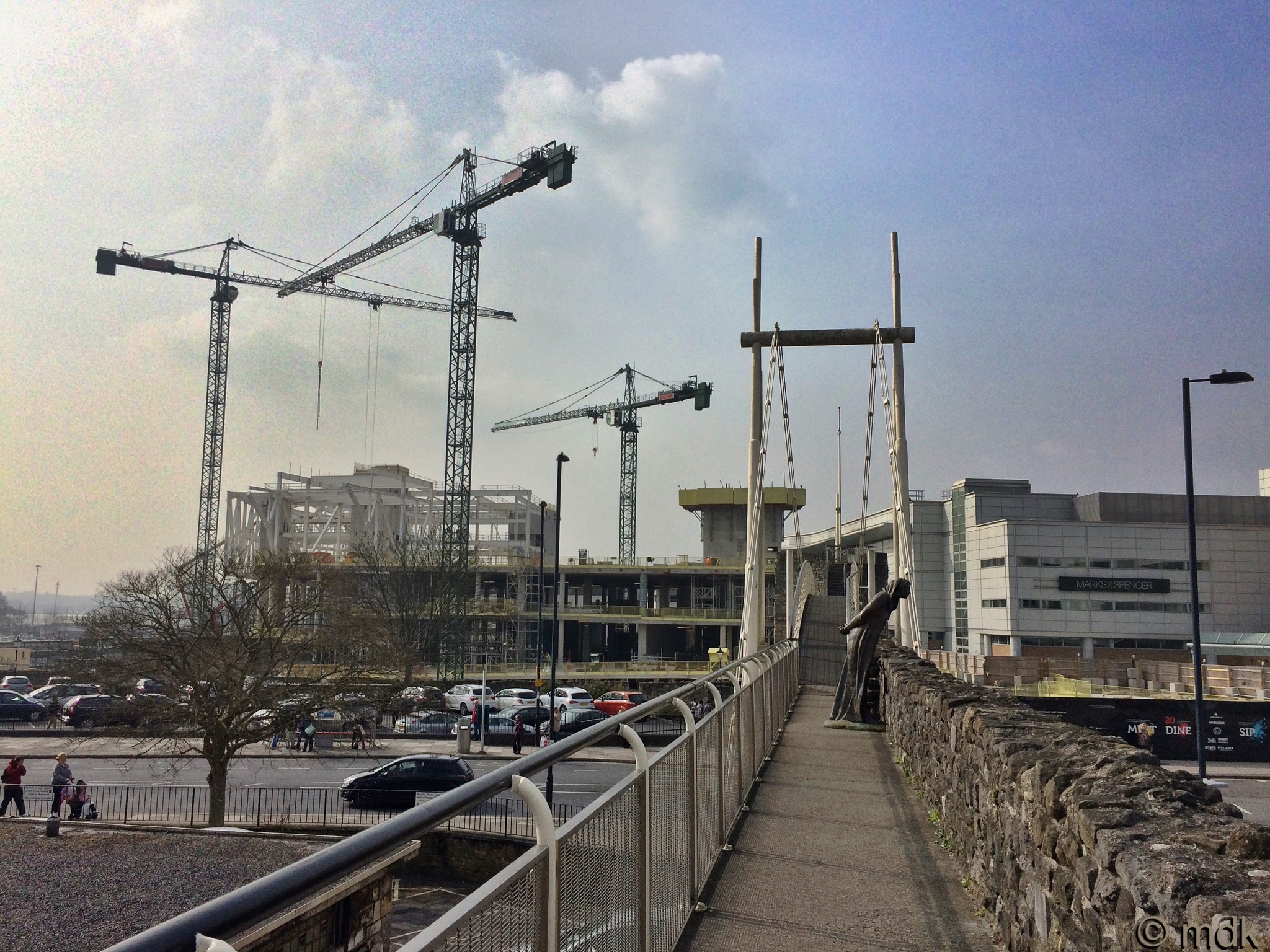
A lot has changed since I last looked over the walls, back in September. From the walkway around the current WestQuay I could see the bones of a building were certainly starting to take shape but the huge boards around the corner stopped me seeing much else. Still, I knew exactly where I could get a good view. The battlements of the medieval walls between Arundel and Catchcold towers look right over the site.
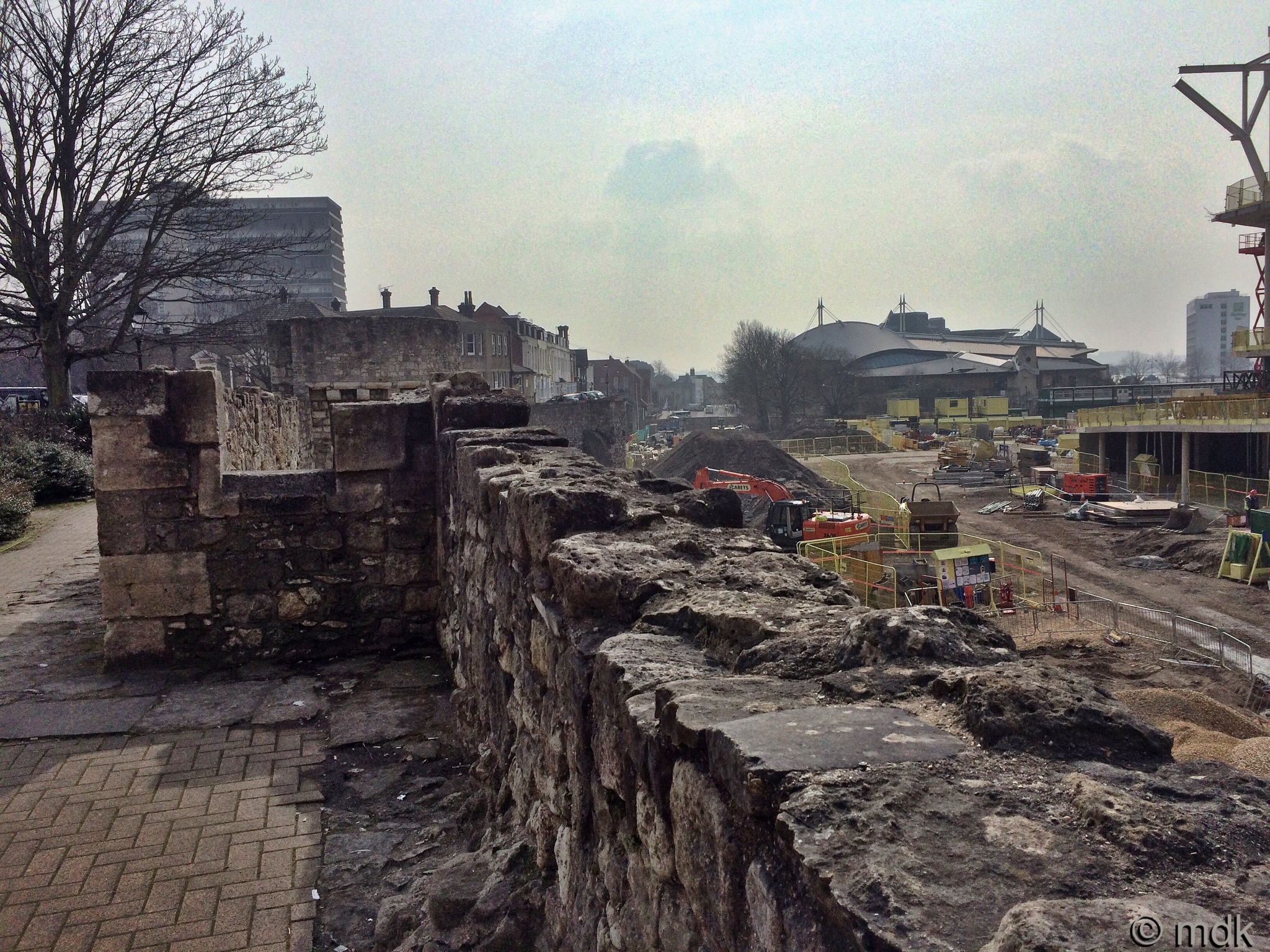
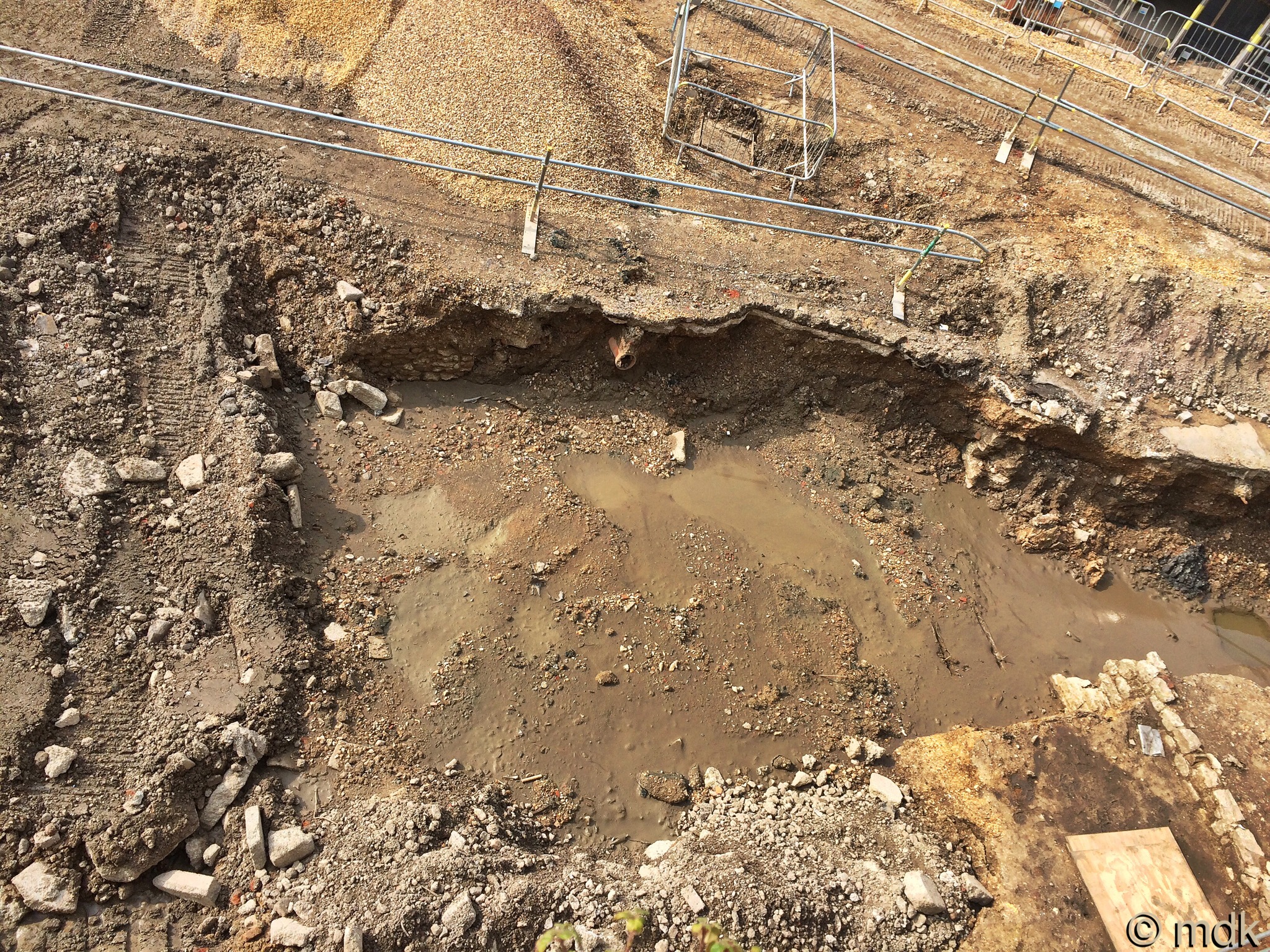
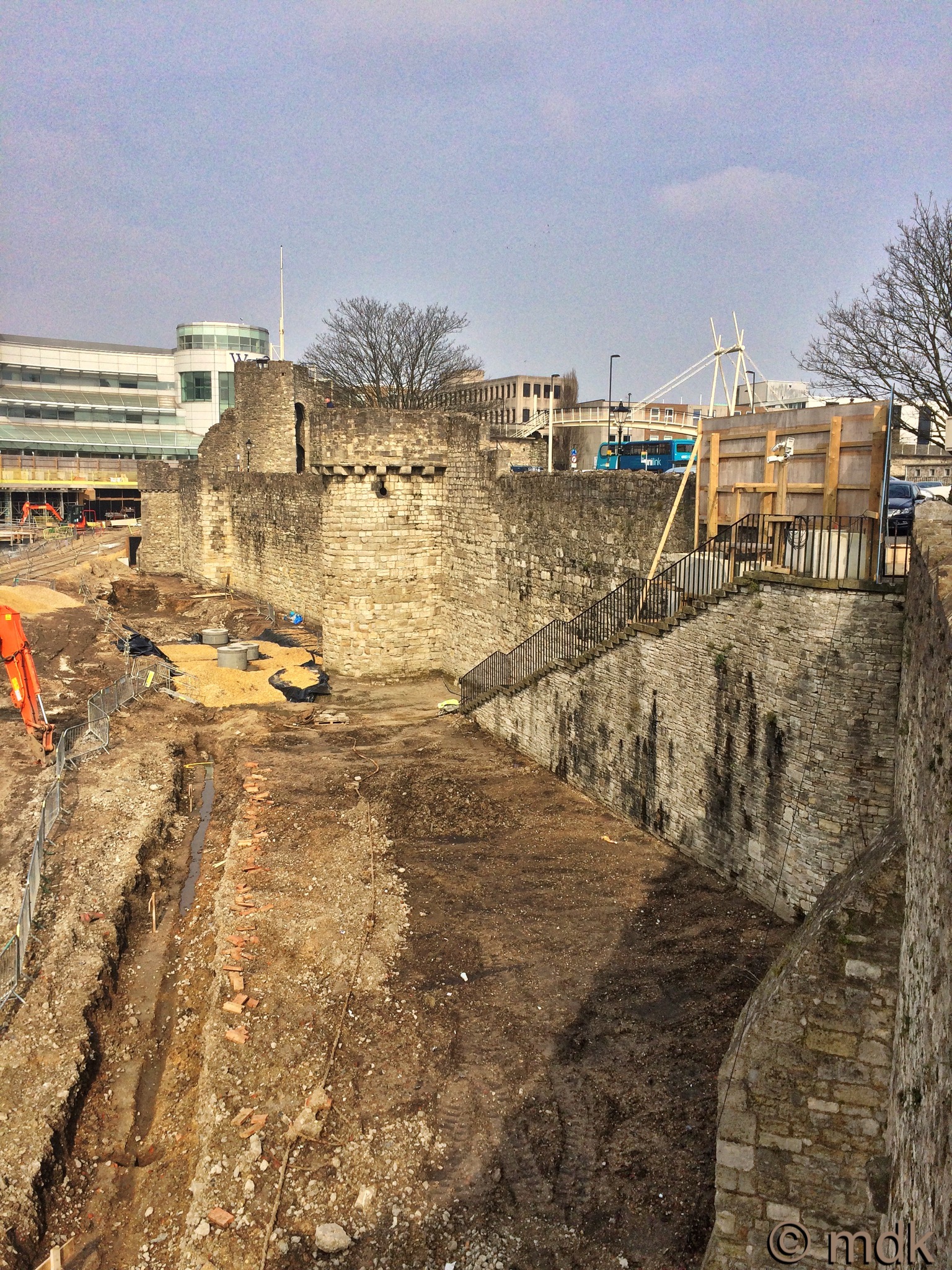
Looking over the edge I could see the stone walls everyone was talking about. From the outset I’d had a good idea what they might be but a lot of people were getting rather worked up about them. Because they’re right next to the medieval walls people believed they were part of them and felt the builders were destroying part of the city heritage. There were things they weren’t taking into account though. Nice as it would be to think new bits of medieval wall could be uncovered, until the ninteenth century this whole area was shore line and the land being built on is actually reclaimed from the sea. While the stones do look similar to the medieval stonework on the face of it, there obviously weren’t any buildings in the sea.
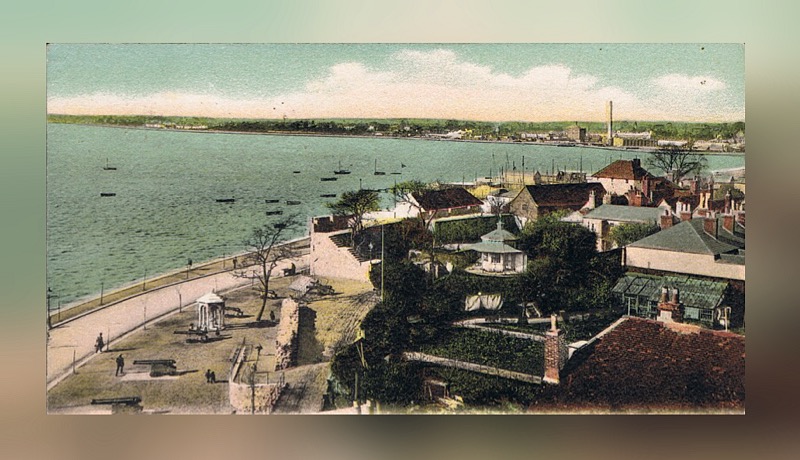
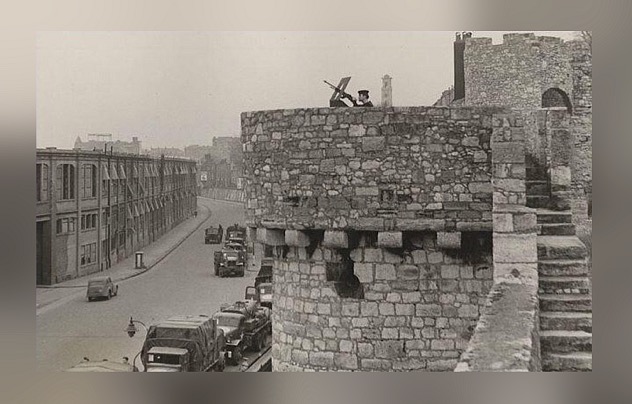
Since the waves crashed against the foot of the town walls in the Middle Ages, a great deal has changed. The walls themselves have been added to and altered since building began in the twelfth century. Then the Victorians decided Southampton would make a nice seaside resort. Personally I blame Jane Austen who liked to come here to walk along the shingle. They constructed a fashionable promenade and the forty steps were built against the walls to make it easier to get from the town to the shore. In the ninteenth century Cement Terrace was built along the upper wall. At the same time the top of the wall was demolished and rebuilt, adding crenelations along the parapet. Then, in 1892, the Lido was constructed, replacing baths that had been built thirty eight years earlier.
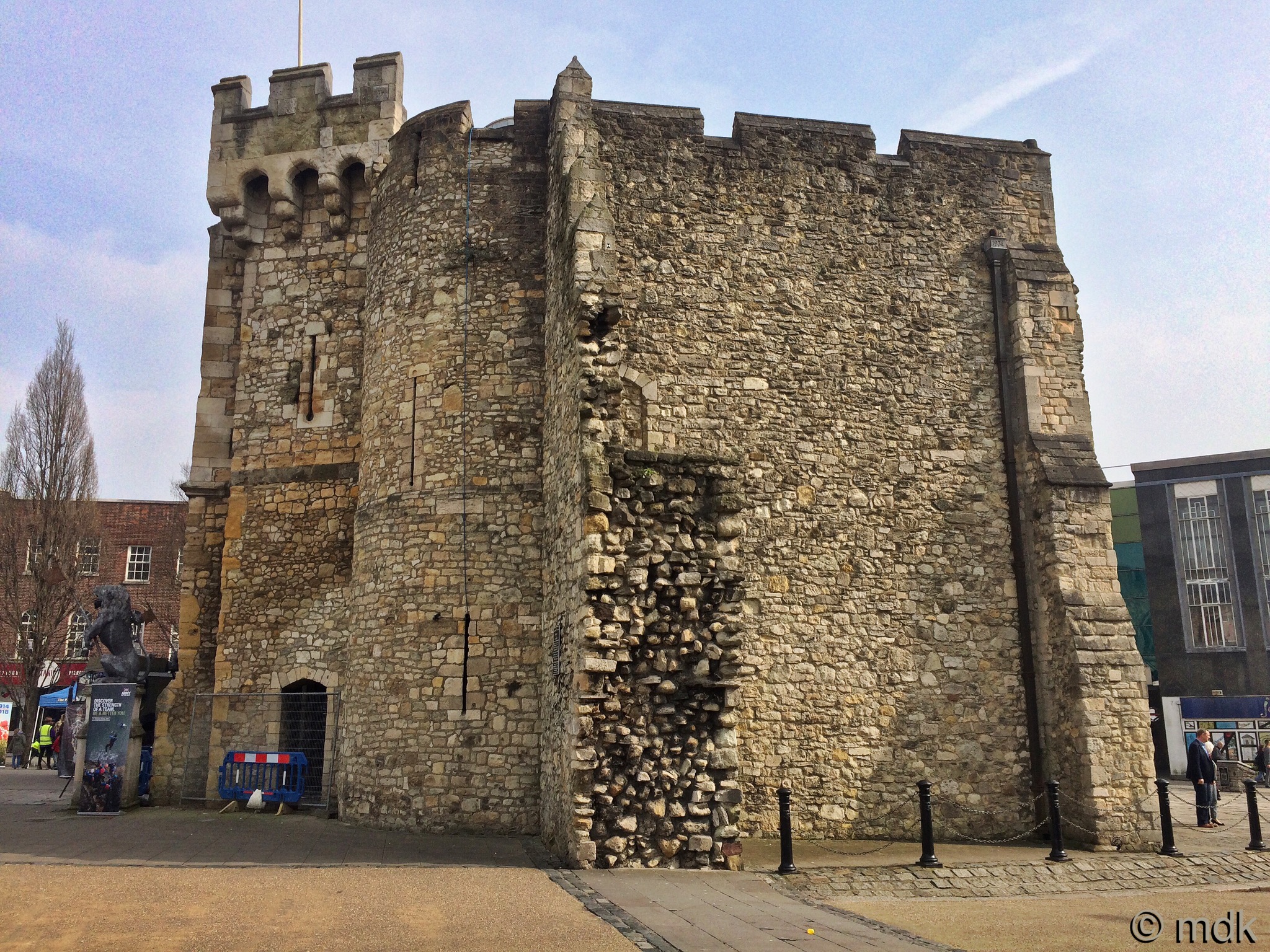
Thinking about all these changes I strolled along the battlements admiring a lush growth of moss and grass along the top. Catchcold Tower seemed a good place to get an overview of the new development so I climbed the steps. Ironically, even this tower is an addition, constructed in the fifteenth century, three hundred years after the original walls were built. Change, it seems, is not a modern phenomenon.

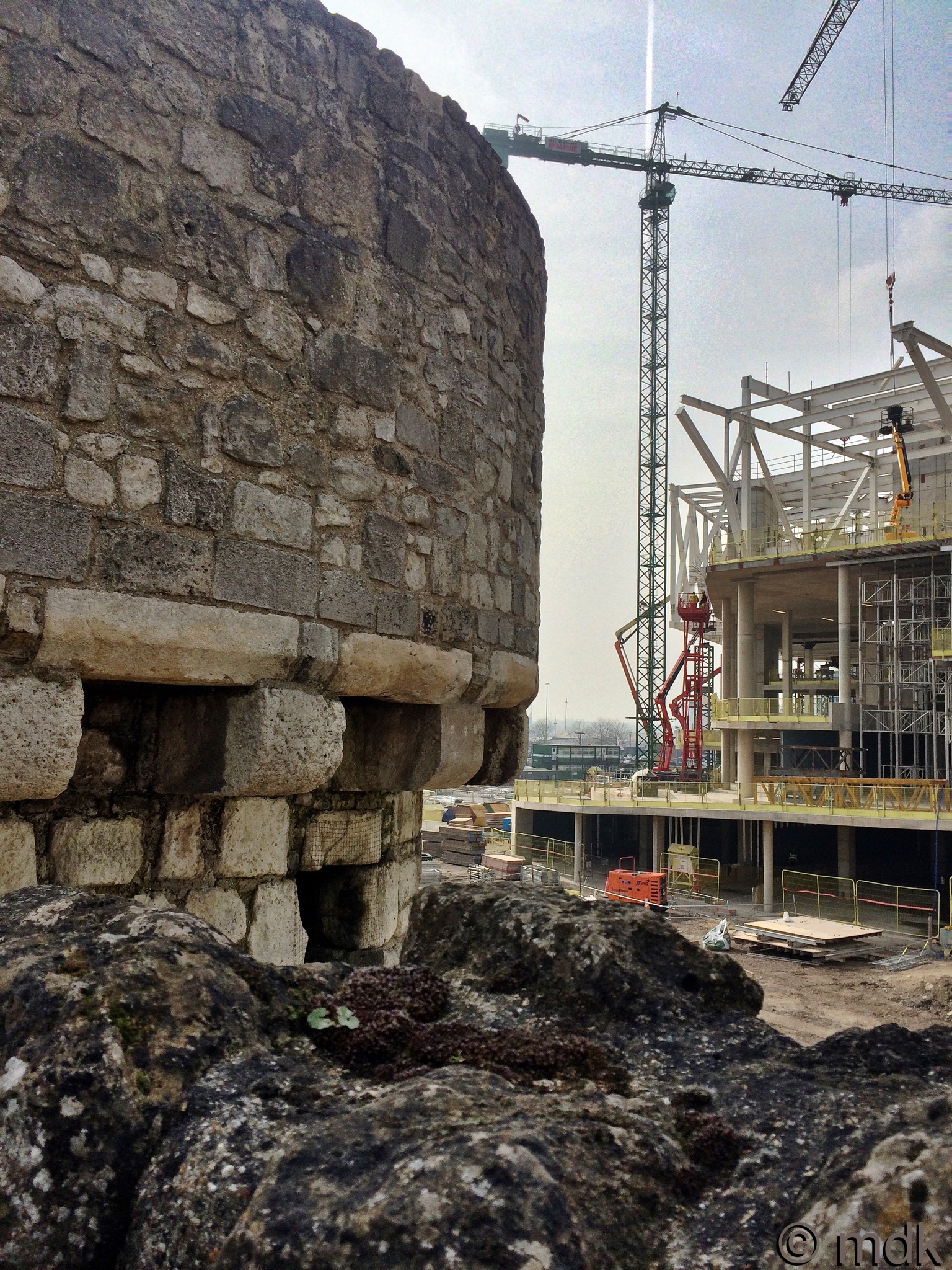
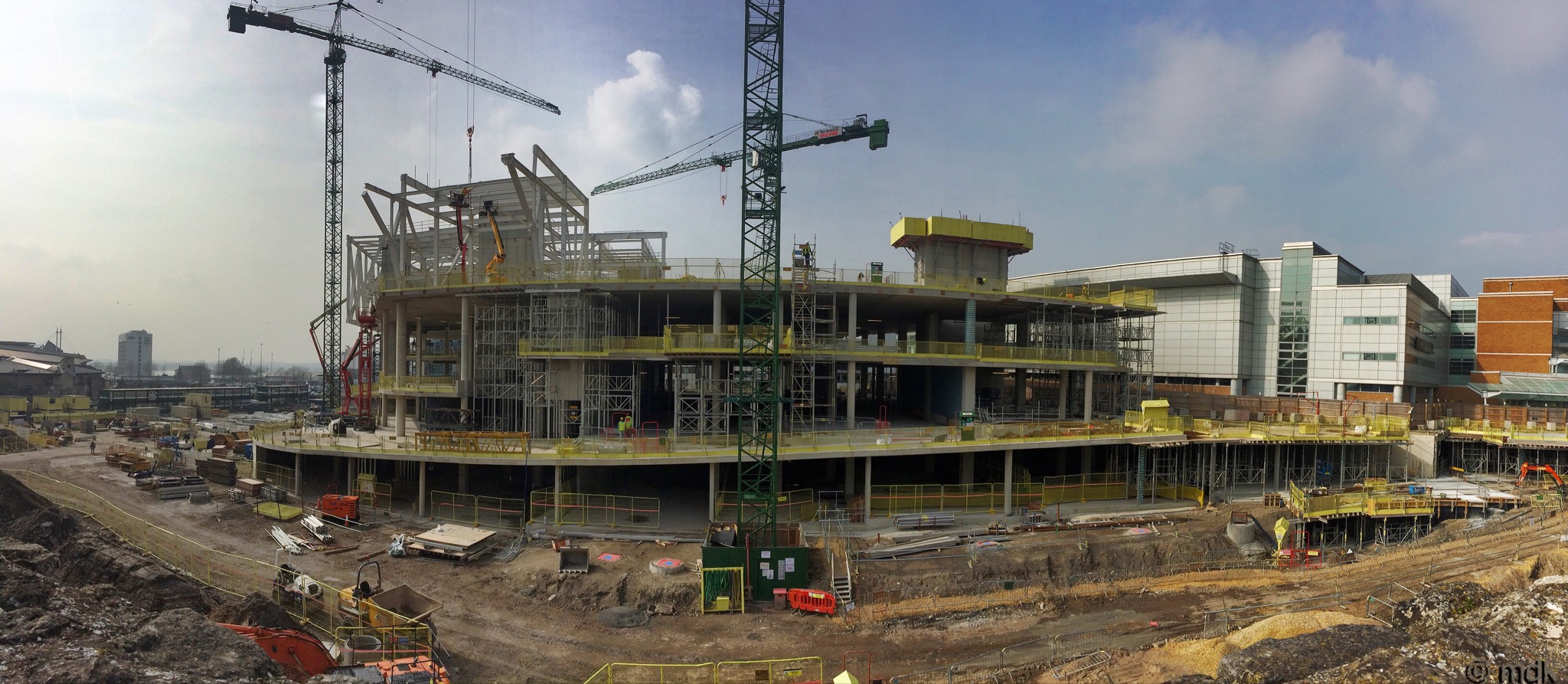
Many people struggle with change, they’re suspicious of it and feel it can never be good. Perhaps this explains the strength of feeling against the new Watermark complex. Maybe if they were knocking down a lovely old building I’d feel the same but the fact is this area was an eyesore, a wasteland of patchy concrete that had been used as a car park until a few years ago. Before that it was the unsightly and slightly smelly Pirelli Cable works. It would be difficult for anything not to be an improvement and from the plans, it looks like Watermark is going to be that and more. Along with a cinema complex, restaurants and other exciting things there’s going to be a piazza alongside the walls and a water feature that ebbs and flows like the tide.
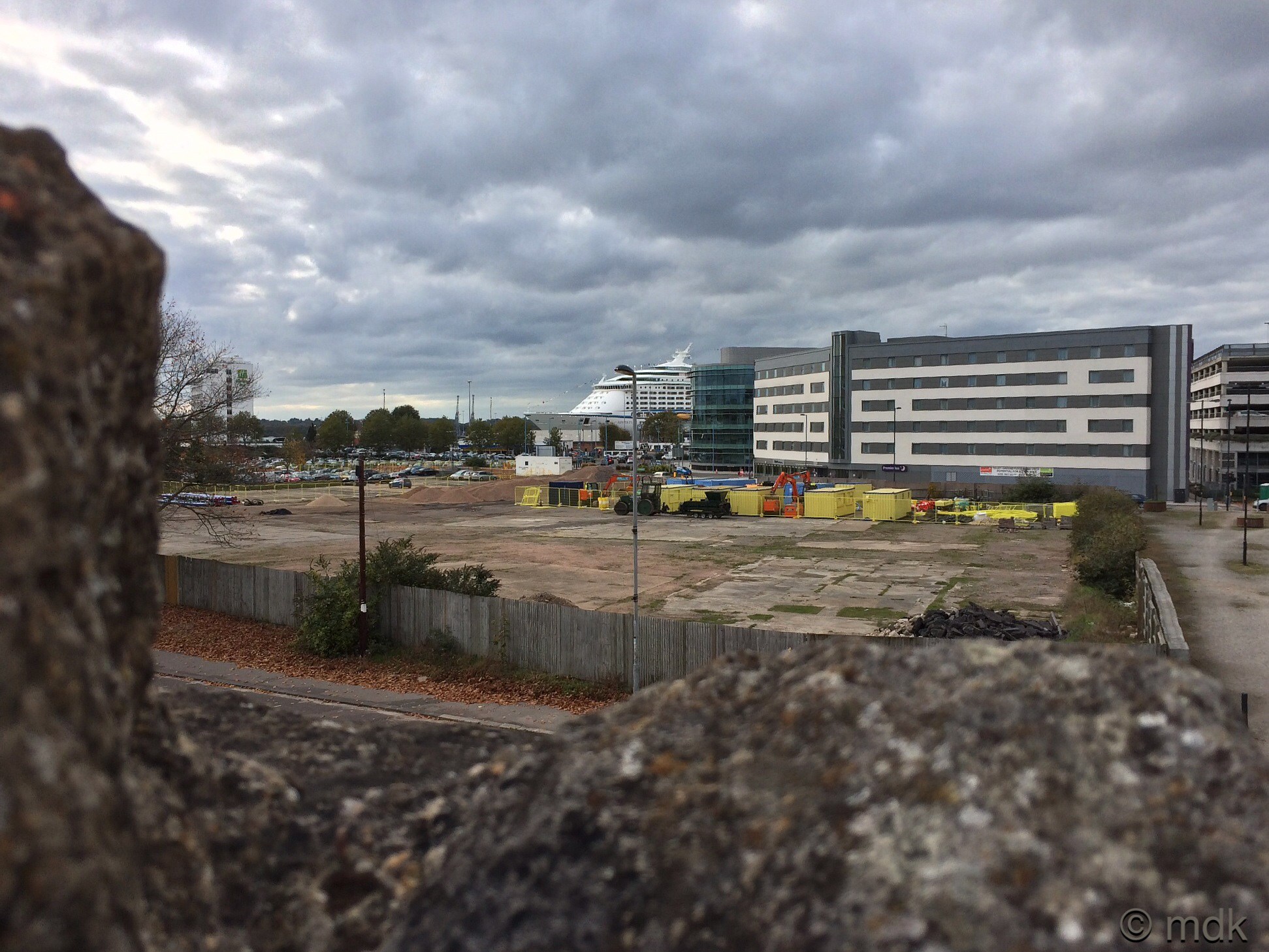
If I’d have thought for one moment the walls they’ve uncovered were ancient, I’d have been as up in arms as everyone else but it stood to reason they weren’t. As this work is being carried out so close to the old walls there have been archaeologists on the site from the outset just in case. They’ve checked out everything that’s been removed and dated the uncovered stone walls to the ninteenth century. They were, they say, sea walls, much as I suspected. Even so, I walked further along the battlements and had a final look. The Victorians might have used stone reclaimed from all the bits of wall they happily knocked down after all.
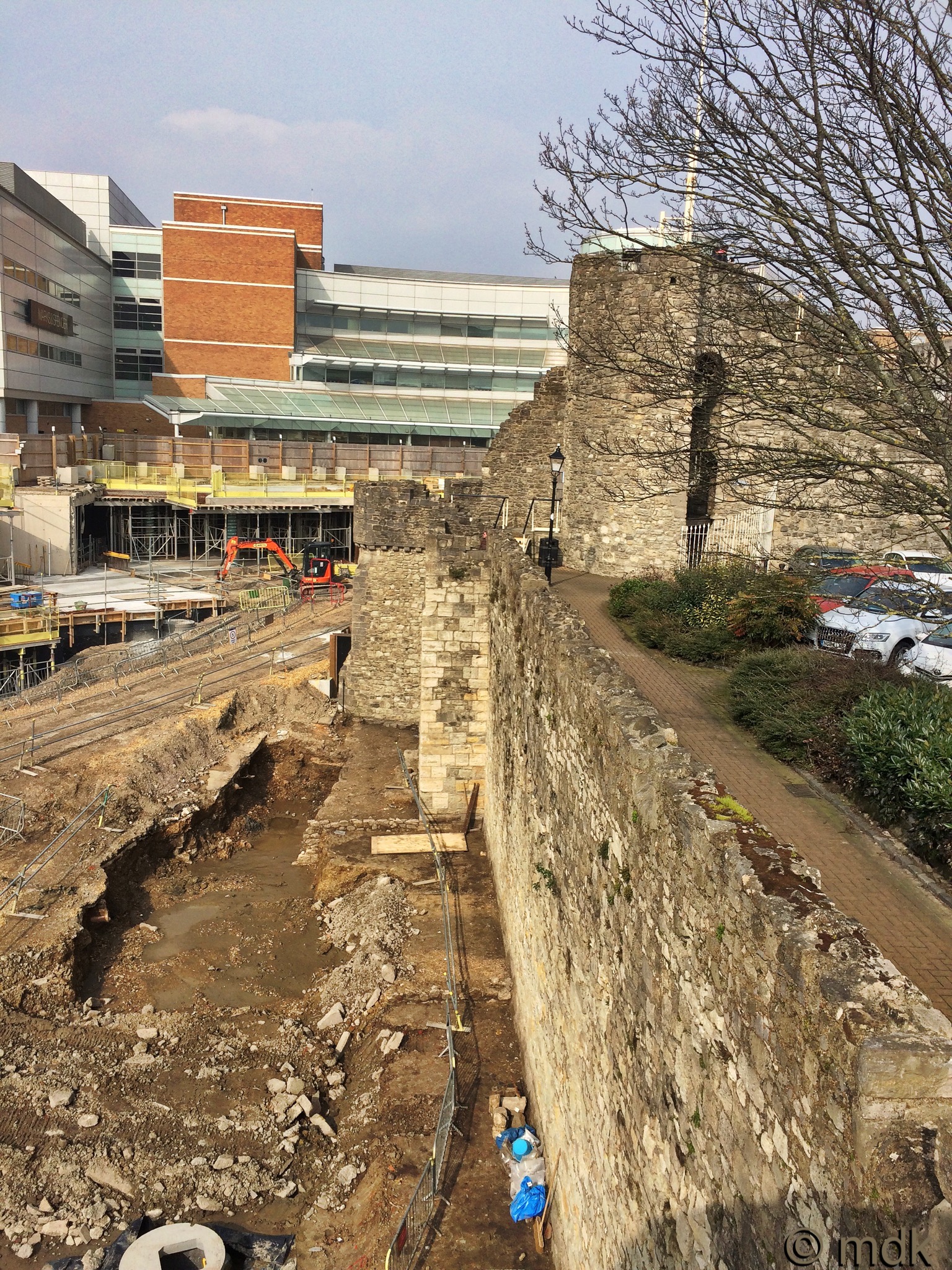
Admittedly the area below the walls at the bottom of the blocked off forty steps looks a bit of a mess at the moment, all mud and trenches. Change, like birth, it’s a messy unpleasant process until it’s over. Looking beyond the mess and upheaval though, the city is on the brink of an exciting change and I, for one, can’t wait.


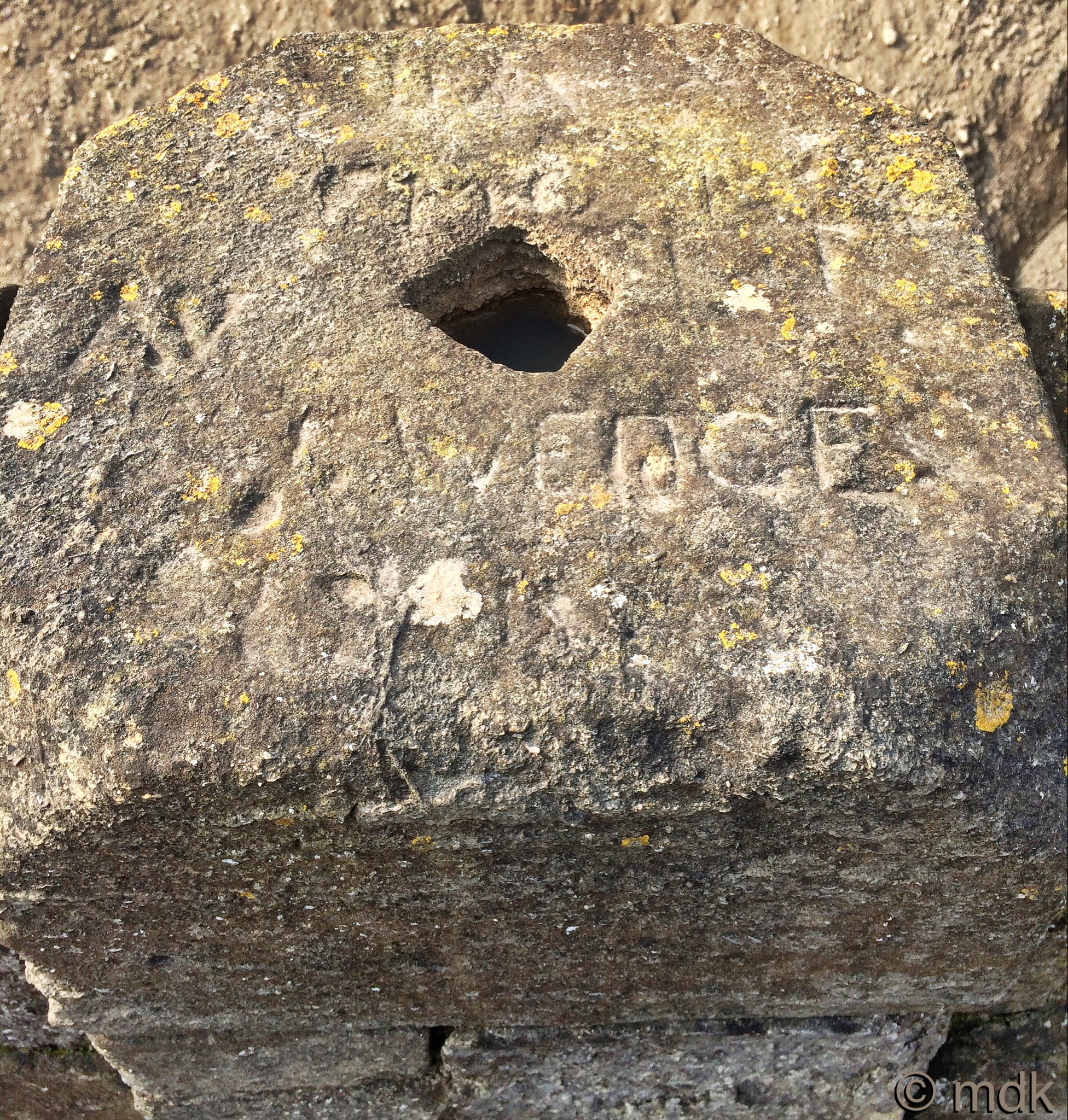
While I was standing there, looking over the wall I suddenly noticed something I don’t remember seeing before. The jamais remarqué phenomenon was at work again if I wasn’t very much mistaken. Along the top of the wall on Cement Terrace, the part that was rebuilt in the ninteenth century, there was etched graffiti, names for the most part, some of them quite decorative. Of course, I couldn’t help wonduring who wrote them. I guess I’ll never know.
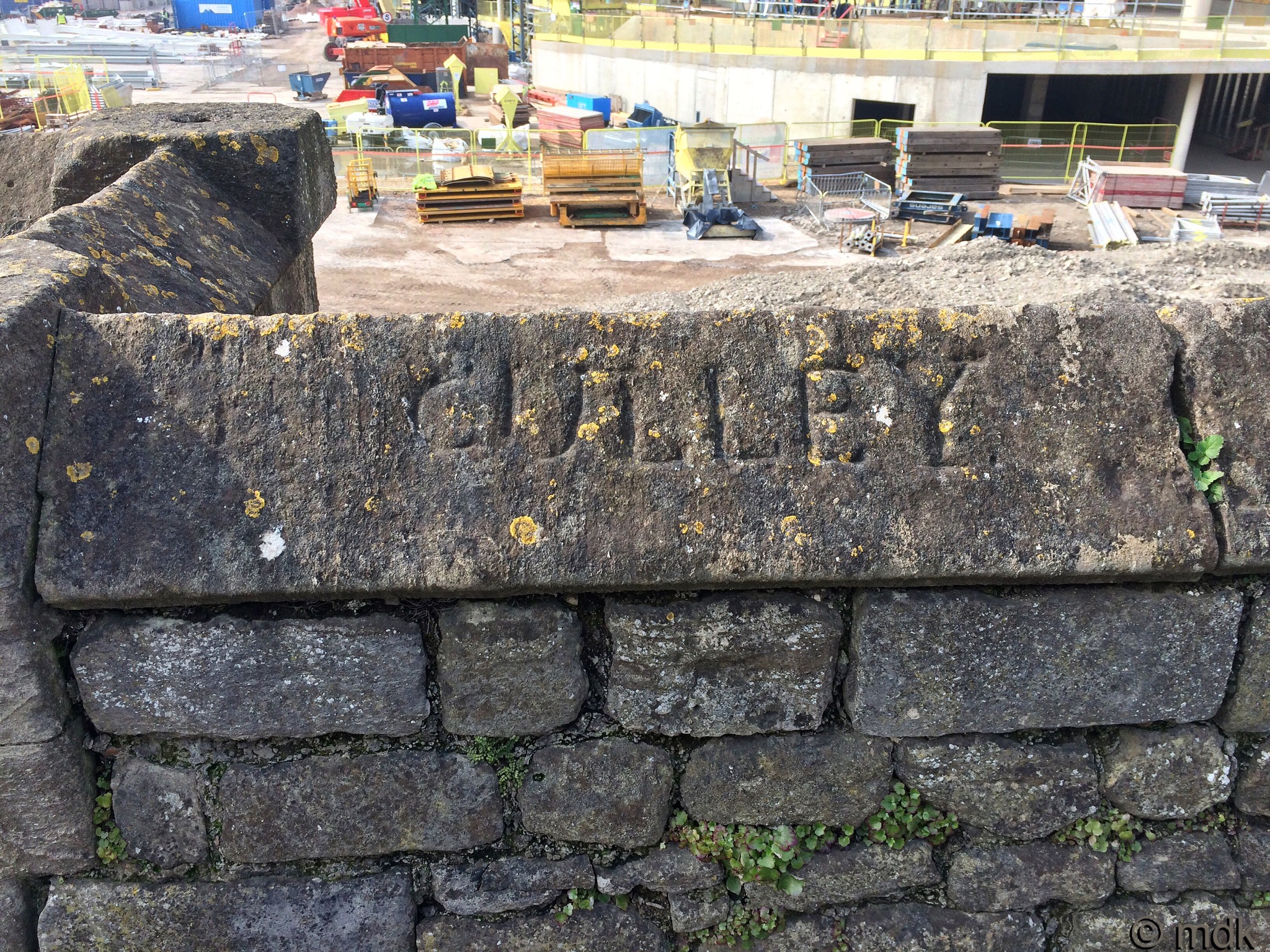
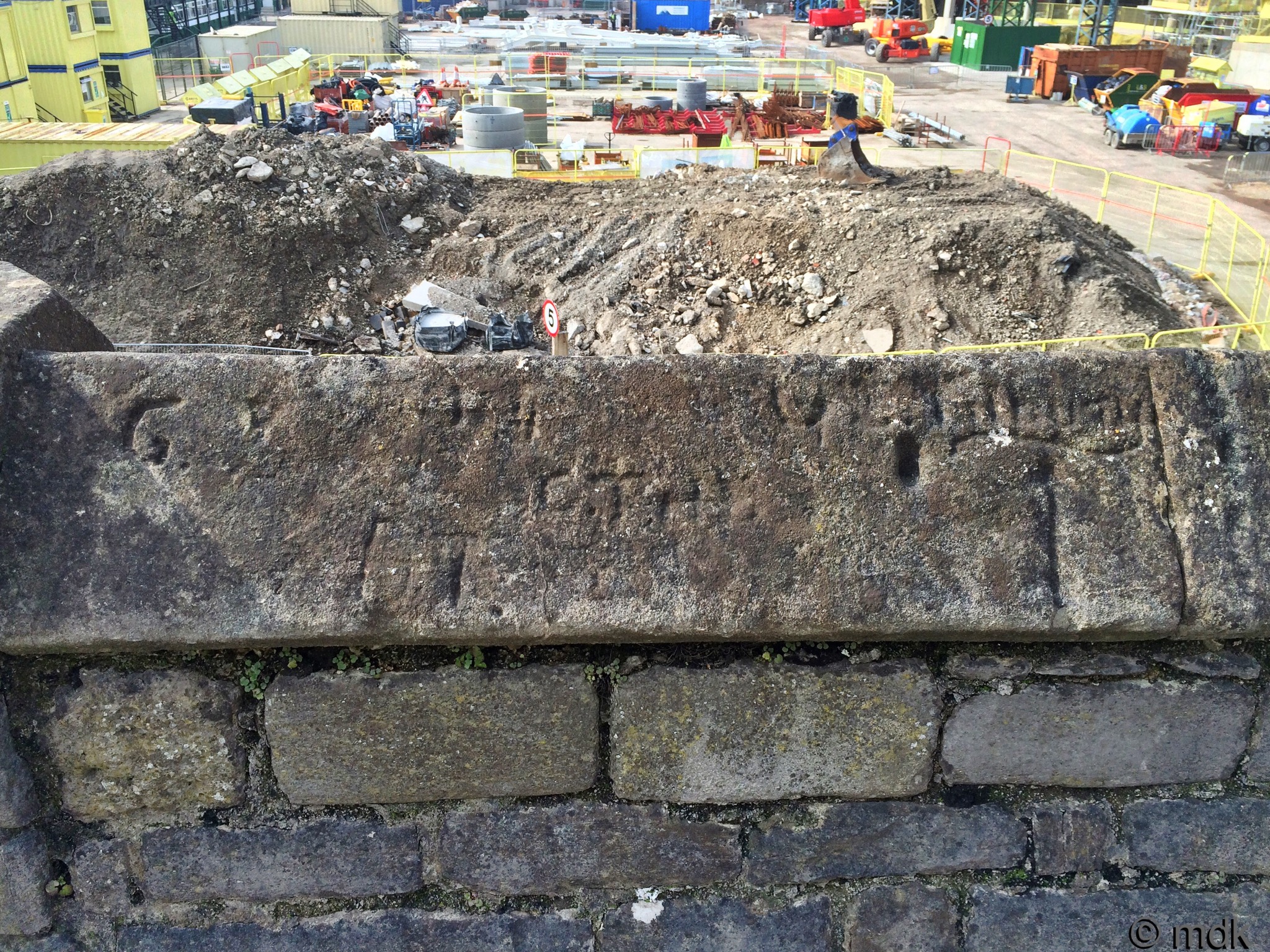
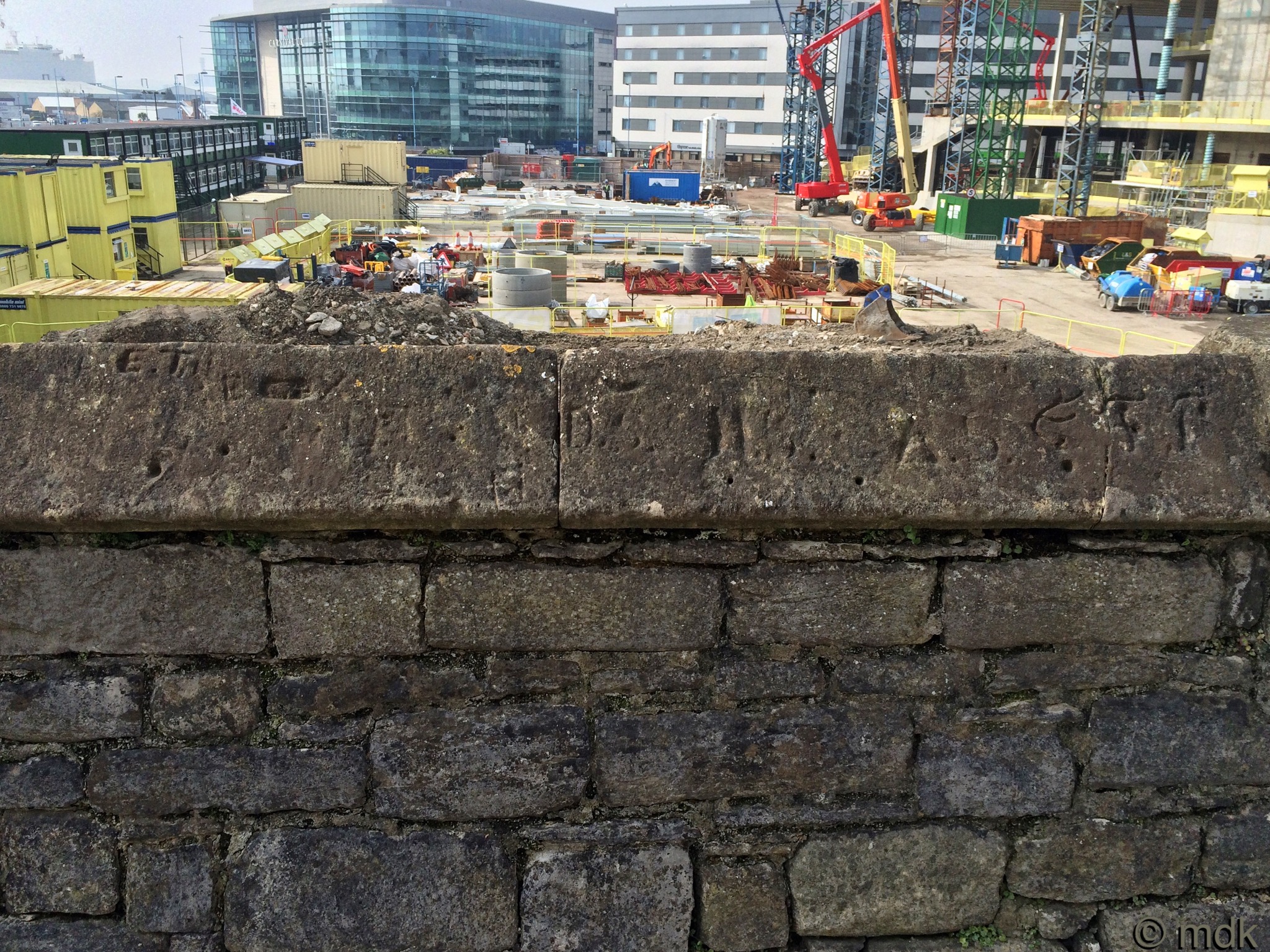
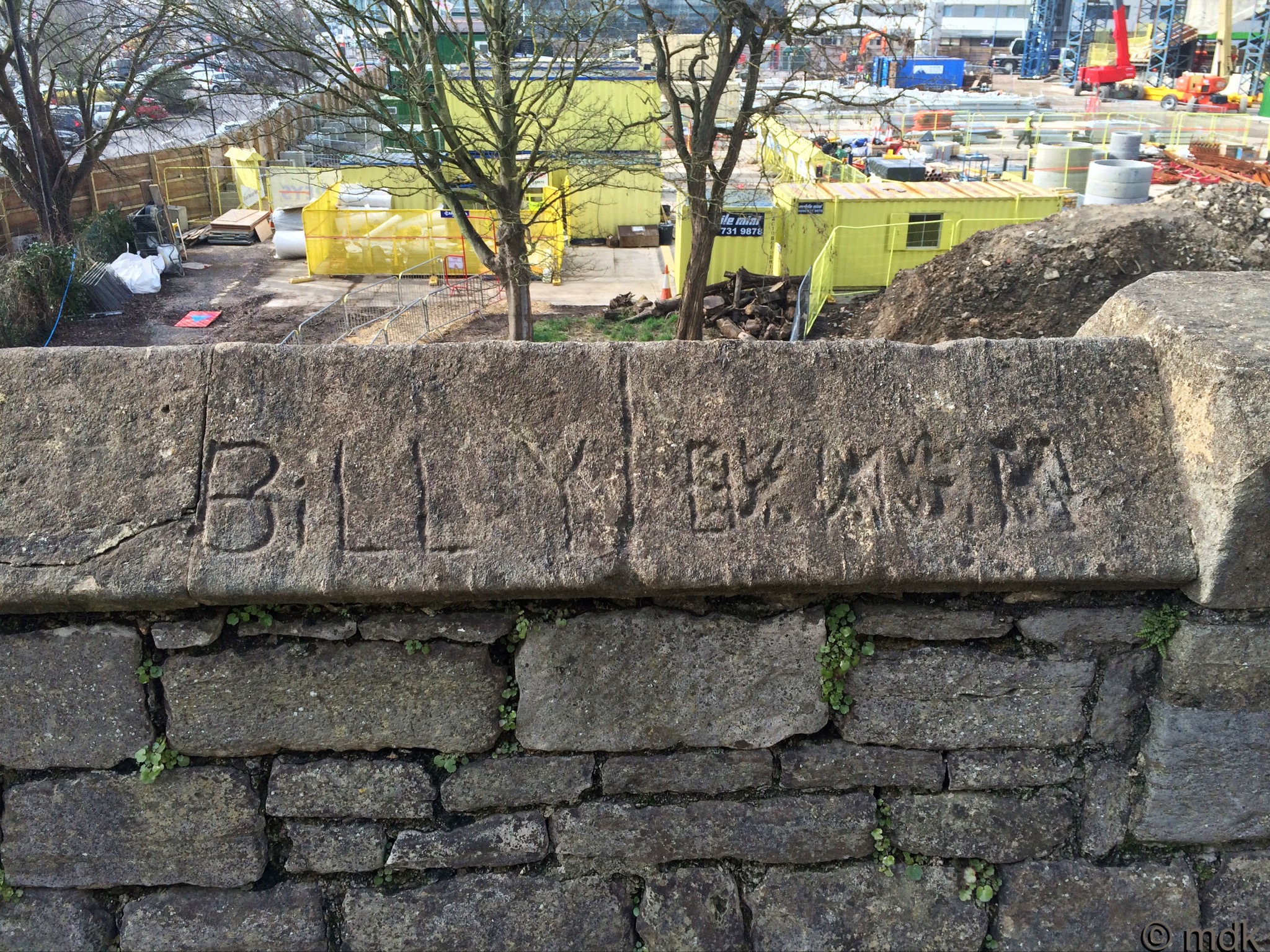
Commando and I had arranged our usual rendezvous and time was getting on so I turned back towards WestQuay. Rather than simply cross the road I decided to climb Arundel Tower. From there I knew I’d have wonderful views down towards Mayflower Park and the water.

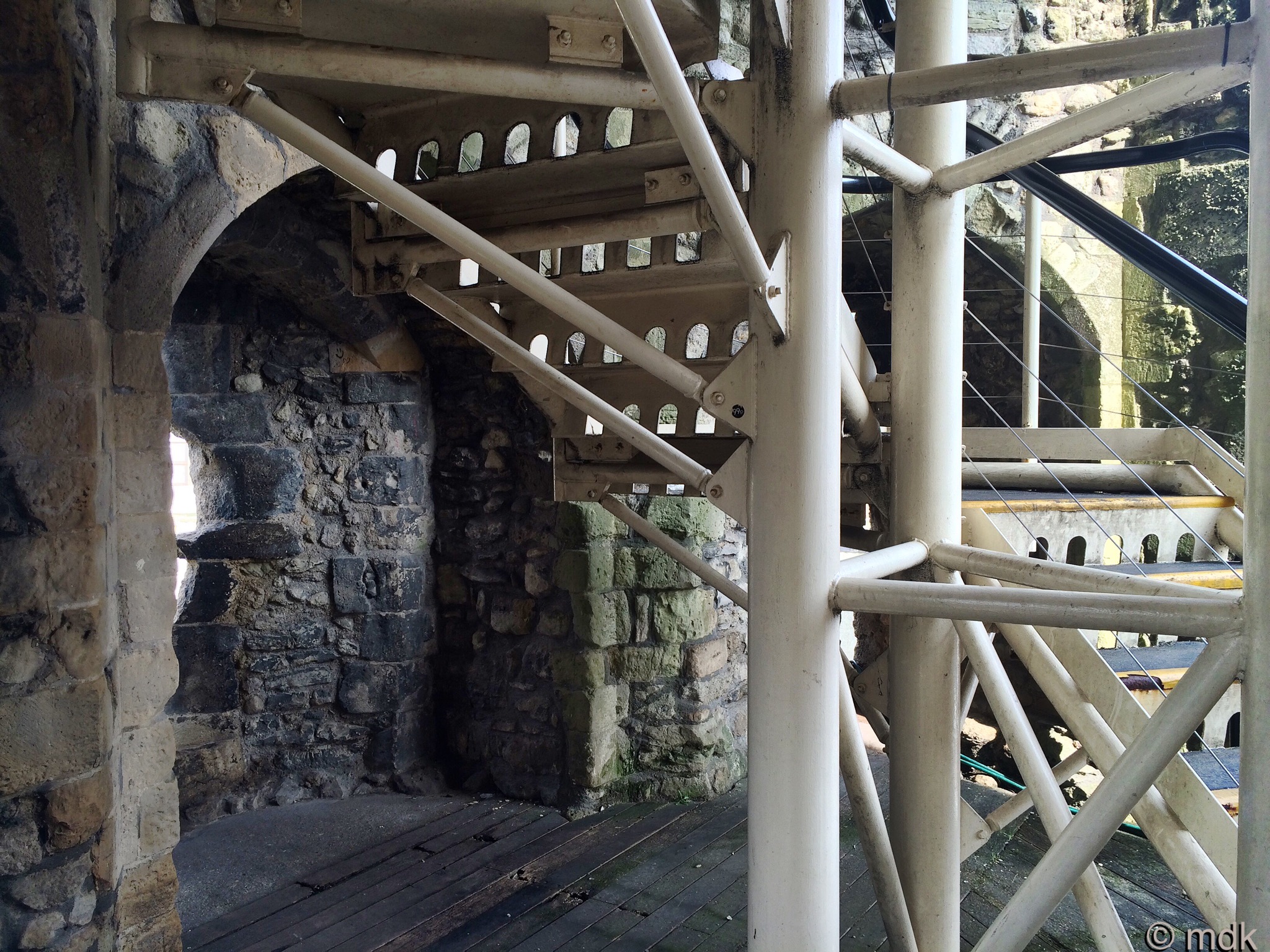
Legend has it the tower was named after Sir Bevois’s flying horse, Hirondelle. When Sir Bevois died, they say the horse flung himself from the tower. If you don’t look too closely, this is a nice story, although I’m not sure I believe in magical flying horses and, if he could fly, it would be difficult for him to fling himself from the tower, even if he could have climbed the spiral stone staircase. Today there are modern metal stairs but I still can’t see a horse getting up them. Arundel Tower was more likely to have been named for Sir John Arundel, the castle governor in 1386 when it was built. Not as romantic admittedly but more believable.

Another thing people had been moaning about was not being able to see the sea from the walls once the Watermark building went up. With the work at the stage it is now it was far easier to judge the impact it will have. From the tower I still had a clear view of sparkling water looking down Western Esplanade. Obviously the view in front of me, across the river was a different matter. This did seem a shame until I looked at my photos from before the work began. Back then you could certainly see trees and, if a large ship was in port, it might be visible but so were lots of other tall buildings and water really wasn’t part of the picture at all. Truthfully, the last time this wall had a real sea view was before the land was reclaimed in the 1920’s and 30’s and I doubt many people can remember that.

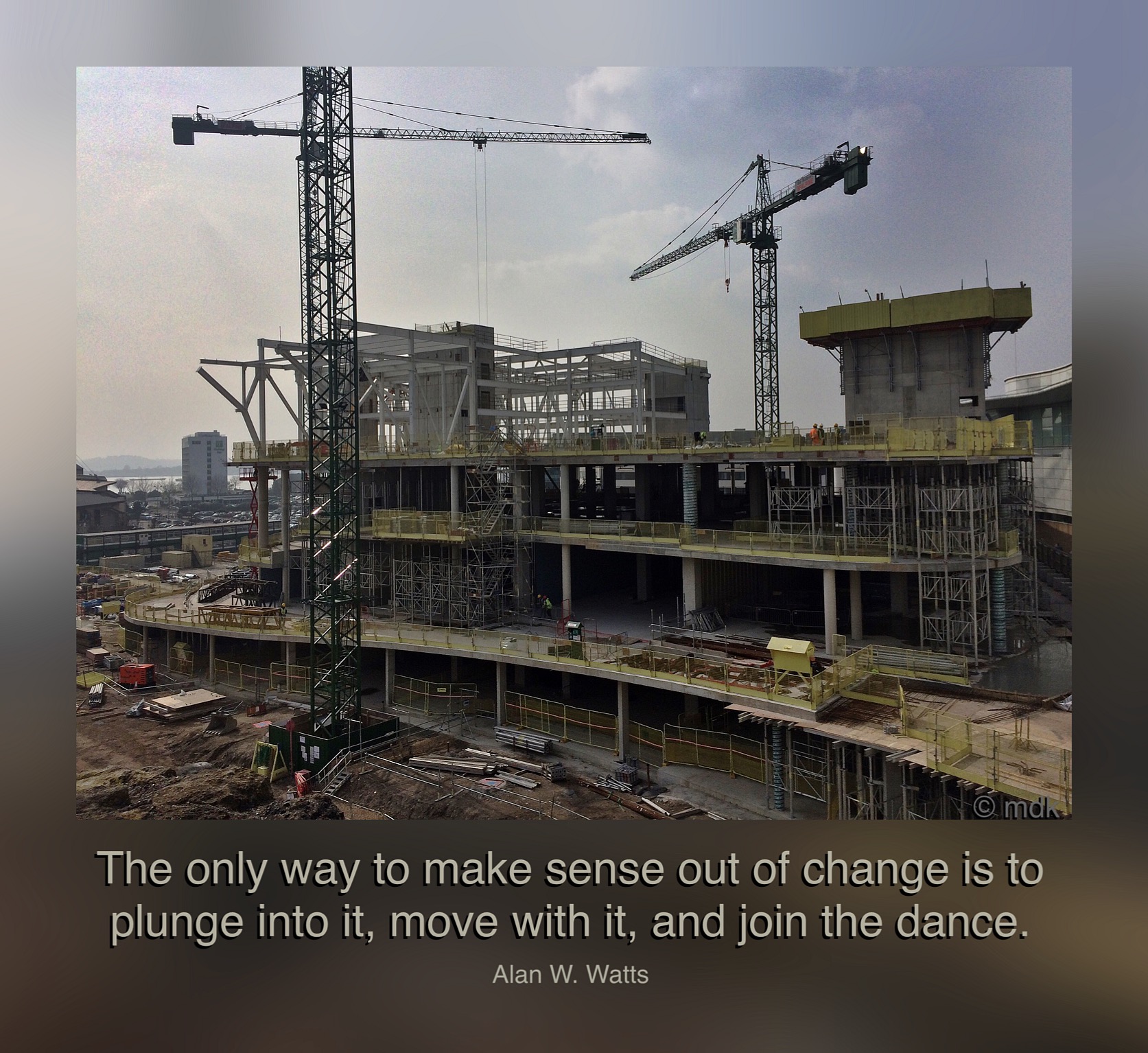
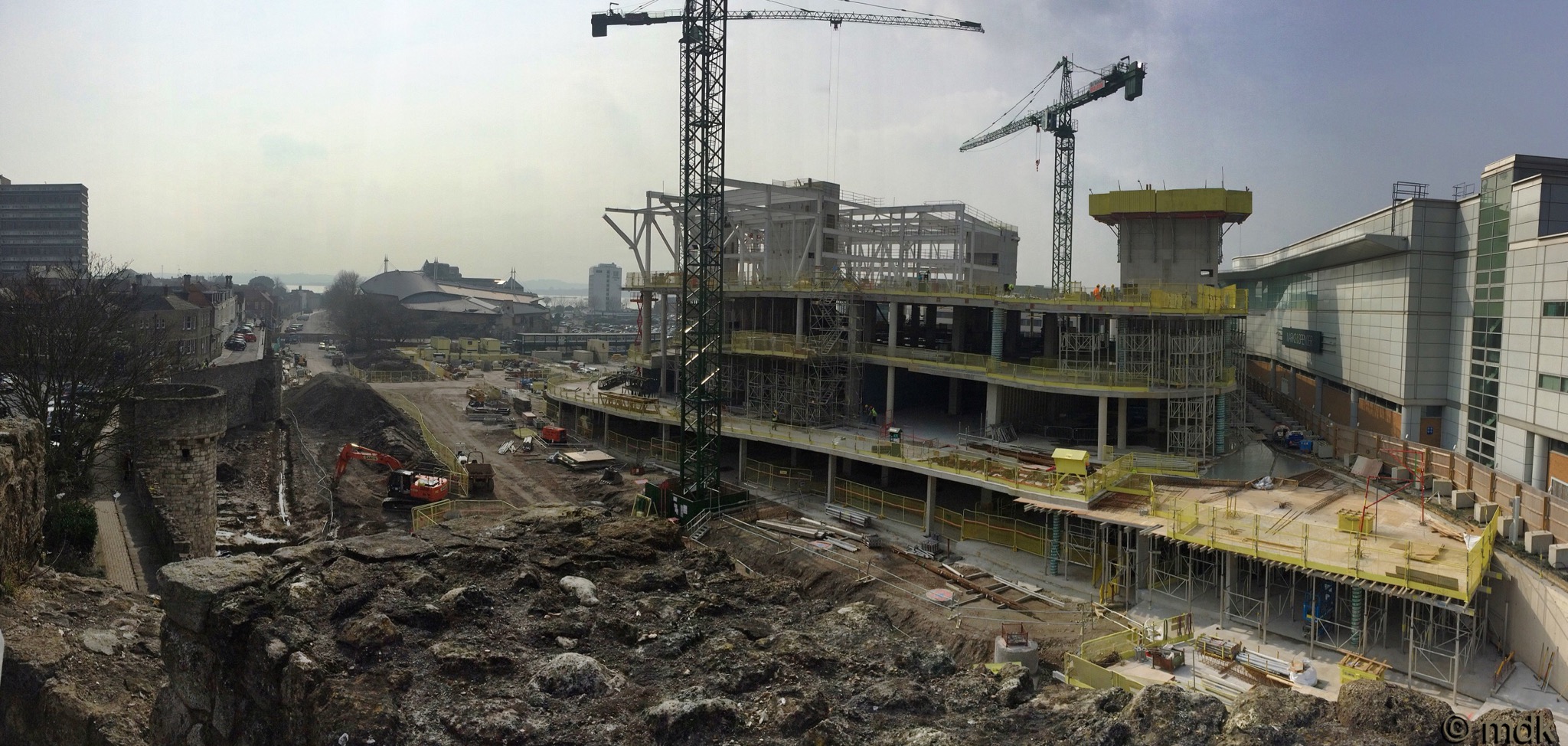
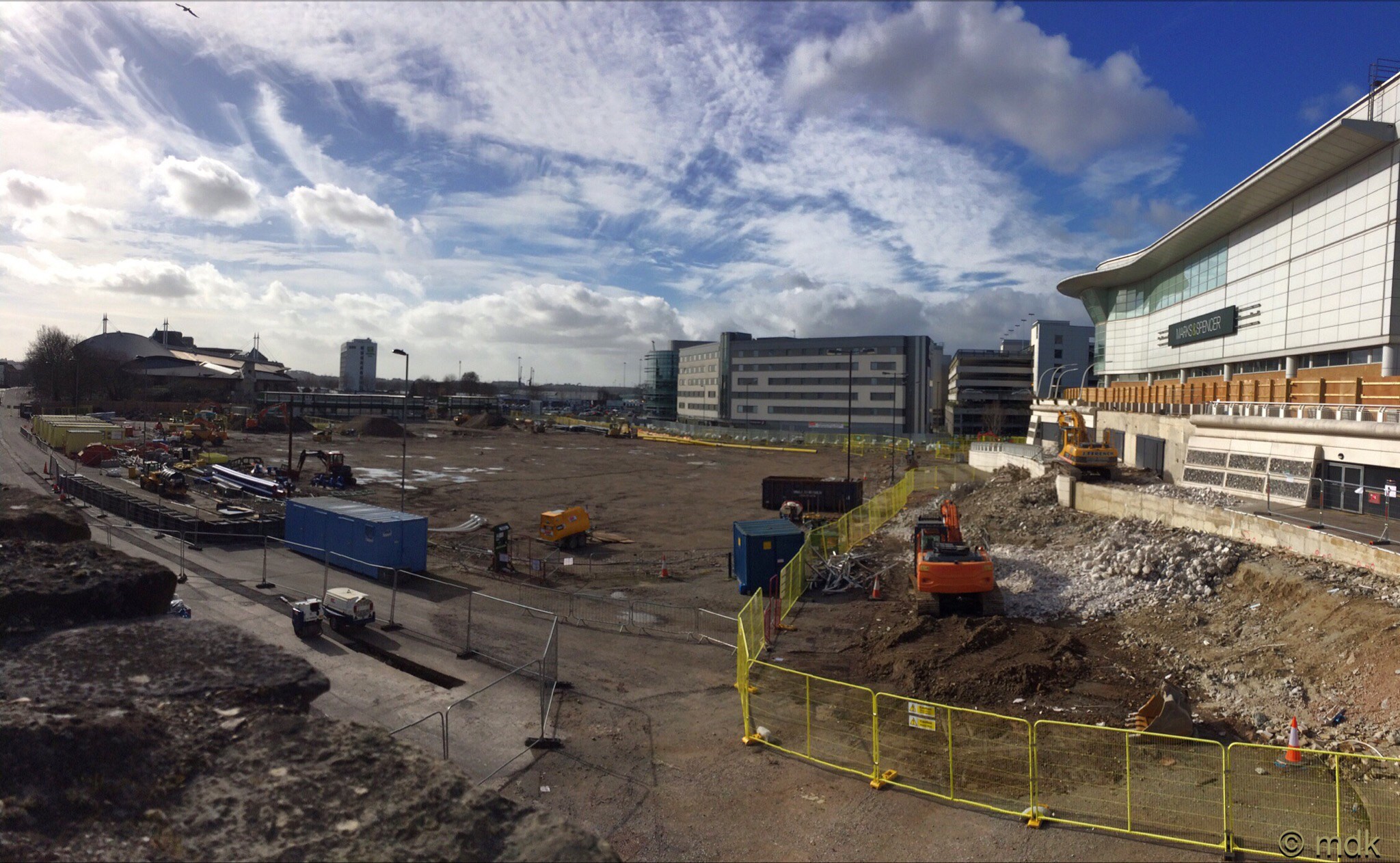
Change is not a modern phenomenon. As I walked down the stone steps from the tower to the modern bridge across Portland Terrace looking back at the huge cranes that dominate today’s skyline I wondered if anyone grumbled in the early 1800’s when the walls here were demolished to make way for the road? Somehow I doubt it. Back then change was seen as good and the history of the old walls that stood in the way of progress wasn’t appreciated. Frankly, it’s a wonder the whole lot wasn’t knocked down. These were the days when even the Bargate was under threat because it was in the way.


Perhaps the placing of Anthony Griffiths’ 1991 statue of John Le Fleming, Southampton mayor in the thirteenth century, is no coincidence. As he stands looking over the cavernous gap between Arundel Tower and Bargate at the breach in the town walls I’m sure I detect a look of disapproval in his eye. Change is inevitable, without it we would all still be living in caves picking fleas off each other. Sometimes the march of progress is a destructive beast as the medieval walls can attest. Sometimes it’s a good thing, like the bulldozing of the filthy slums that once stood inside those walls. As for the Watermark development, I guess time will tell.

Please see my copyright information before you copy or use any of the above words or pictures.
I’d already been thinking about going down to the Medieval Merchant’s House next week and now you’ve convinced me. Whilst I agree that whatever has been uncovered is probably not medieval, even something Victorian is quite interesting.
Jane Austen wasn’t to blame. Southampton was, very briefly, a spa town and almost became fashionable. The Chalybeate springs were, apparently, very medicinal. As well as the springs, Southampton also had the benefit of being by the seaside, just as sea bathing was becoming fashionable.
I wasn’t keen on the new development, because it’s already hard to get to that part of town by car. I can walk there, but if we want to take my dad out for a meal we have to go by car. It takes longer to get there by car when it’s busy than it does to walk. I’m really glad the Victorians and the town planners of the 1930s didn’t knock the Bargate down, but I suspect the next generation will see it fall down due to bad management.
Parking around the centre of town is bad, unless you can get a spot in castle way or your willing to pay WestQuay prices. I’m not sure if more parking is included in the new development. They are going to be repairing Bargate this month so fingers crossed it will keep,on standing 🙂
I think people resist change more out of fear of the unknown than for other reasons.
It’s hard to remember what things once looked like. I find that they don’t stay in my memory that long!
Very true.
I look forward to your next post about this part of your world when all that work is finished.
It will be interesting to see it finished.
Change isn’t always progress, but I think in this case it will be. It’s hard to balance history with future.
It is a hard act and I agree the walls must be protected at all costs but I think this will be an improvement and will, hopefully, draw more people to walk the walls.
Great pics. That picture of poor old Pirellis….
I think it will be an interesting year for the city.
Hope so
As the heart gets ripped out , will the soul of the new flower in its wake , and possibly blossom for years to come ! Lets hope all the new additions will leave their own memorable footprint in our city , Ocean village had the chance to make a statement and failed drastically . We live in hope that landmarks will be born.
Lovely analogy Gary. I’m hoping this one lives up to expectation.