
My decision not to think about all the media hype over the pandemic was proving far more difficult than expected. Not thinking is, it would seem, a physical impossibility and the only way to not think about one thing is to think really hard about something else. Well, that and walking. So, on 16 September 2020, I set off on another river walk. This time I decided to tackle the old two bridge challenge route.
The tide was out when I reached Chessel Bay and the accumulation of wrecks that dot the river here were mostly sitting on slimy green mud. A boat is a very expensive purchase, so I’m told. So it always seems strange to me that so many people abandon boats and let them rot away on the river. They are all shapes and sizes in various states of decay and there seem to be more and more of them every time I look. What happens to turn the pristine boats moored up along Kemps Quay into the decomposing wrecks that line the riverbank? Why would someone spend thousands, maybe hundreds of thousands of pounds on a boat and then dump it?
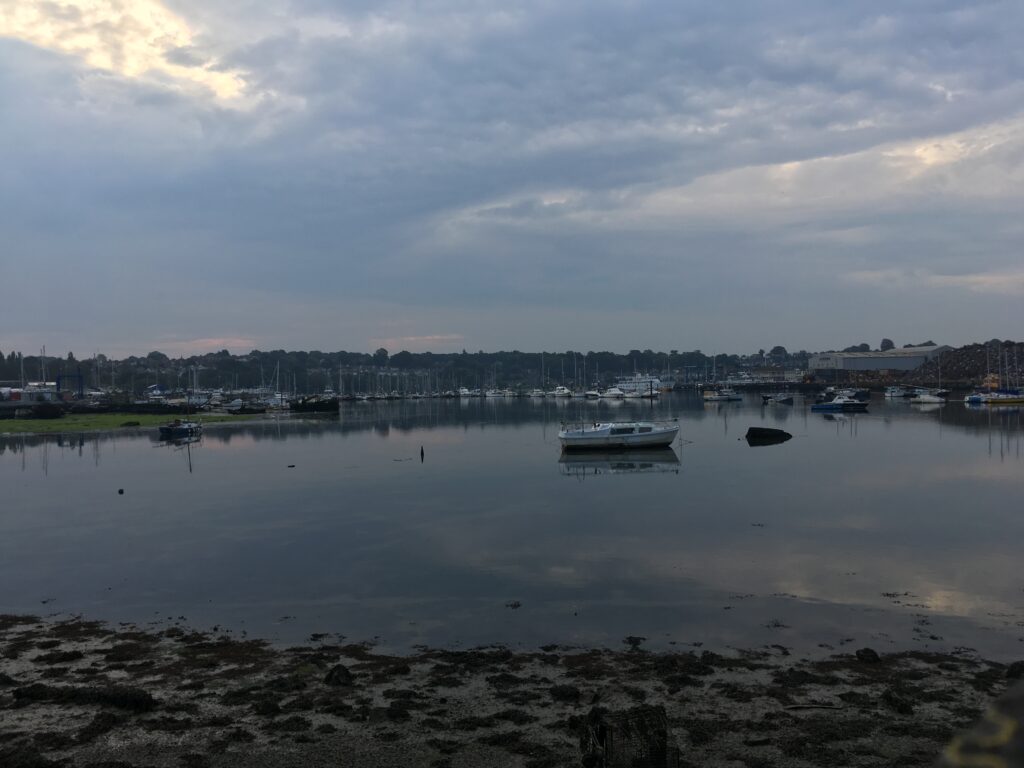
As I walked across Northam Bridge and followed the river towards the Itchen Bridge I thought about those boats. They seemed like a symptom of the strange, throw away society we live in today. To me it was quite ironic to hear about people staging mass protests about climate change, glueing themselves to pavements and demanding that the Government take action to save the environment, in a world where people accumulate more and more possessions and even an expensive boat is considered a throw away item.
What happened to the world I grew up in? How did it become this place where everything is disposable and nothing is valued? My childhood was an era of mend and make do. My parents had lived through the last world war. They worked hard for the things they had and, by modern standards, they had very little. My dad had a motorbike and sidecar. Eventually, he sold it and brought a car, a little green Hillman. We had a coal fire until I was about six or so, then we had a gas fire. It was the only heating in the house. When we wanted a bath, Mum had to light the geyser in the bathroom. It made horrible popping noises and frightened me half to death. All our other hot water came from the big kettle on the gas stove. We didn’t have a telephone but we did have a radio and a small black and white television.
Credit was a dirty word in our house. If you wanted something, you saved up the money to buy it. When you got it, you looked after it. When shoes got holes in the soles they were mended, socks were darned, clothes were handed down and, when they finally wore out completely, they were used as rags to clean things. My grandmother even made rag rugs. Mum knitted, sewed and crocheted. Most of my clothes were hand made, so were hers. New clothes were a very rare treat, even home made ones.
We didn’t waste much at all. We had one small dustbin for our rubbish, not much bigger than my kitchen bin today. Once a week the dustman came. He walked down the side of the house into our back garden, picked the bin up on his shoulder and carried it out to the dustcart, then he put it back where he found it. All the rubbish from three adults and one child fit in that bin easily.
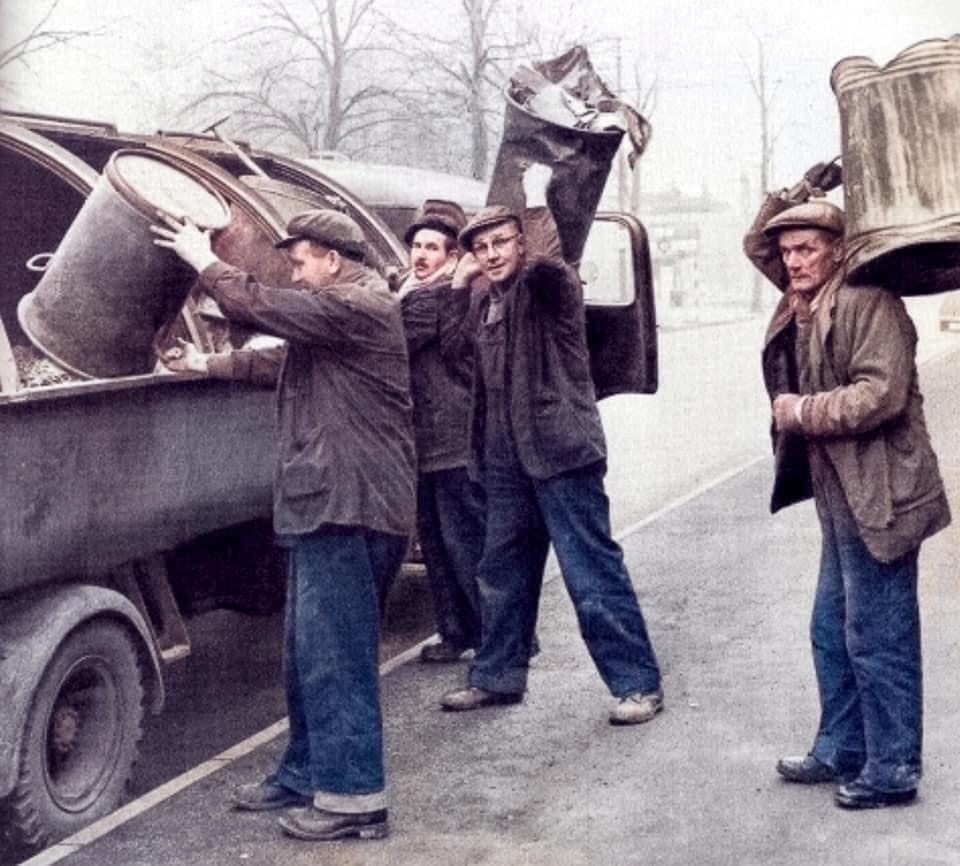
Plastic, one of the big modern day polluters, hardly featured in our lives at all. There were no plastic bin bags or shopping bags. The bin got washed out once it was emptied and our shopping came wrapped in paper and was carried home in a cloth shopping bag or a basket. Milk came in glass bottles, cosmetics came in glass jars or tins, food came in jars, paper bags, cardboard boxes or tins. Mum saved the jars for making jam and pickles. We didn’t need tools to remove swathes of plastic from anything we bought. Fast food meant fish and chips wrapped in newspaper. Vegetable peelings went on the compost heap with the grass clippings and other garden waste. The ash from the fire also ended up on the compost heap. My granddad grew amazing tomatoes in all that rich, loamy compost.
By the time I reached the Itchen Bridge I’d come to the conclusion that what we really needed to do if we wanted to save the environment was live more like we used to live. If all those protesters used their energy to walk or cycle instead of drive and turned their minds to reusing, repairing and recycling instead of buying new things and throwing away the old we wouldn’t have a problem. We’d all probably be a lot richer for it too.
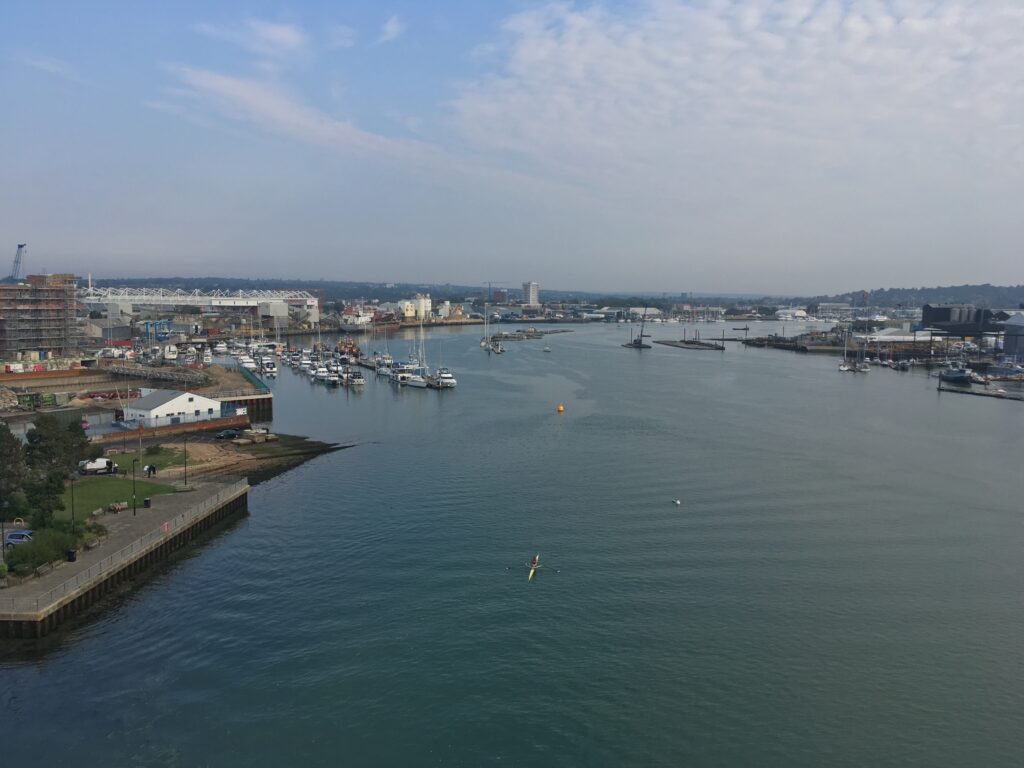
By the time I’d climbed the steps to the bridge I was feeling rather warm. The morning cloud had burnt off and the sun was hot on the back of my neck. I stopped for a breather and watched a man rowing towards me down on the water. Like me, he was using the power of his muscles to propel himself, getting where he wanted to go and keeping fit while doing it.
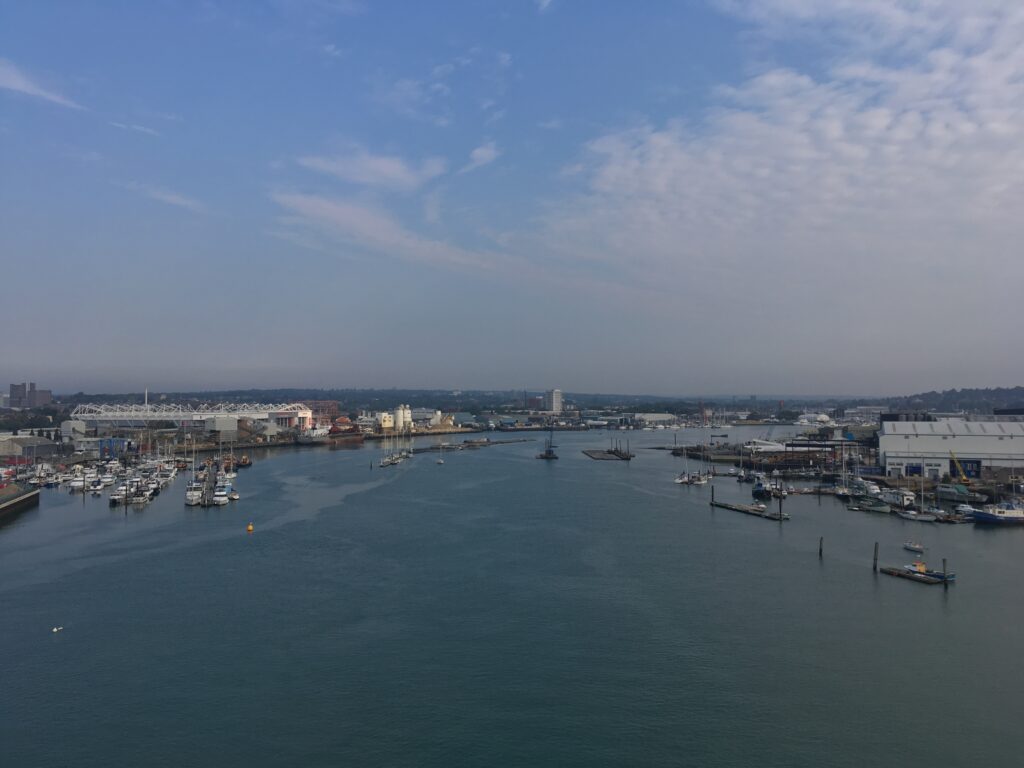
The man disappeared beneath me and I walked on. My steps were slower now because of the growing heat. When a car came past I realised it was the first I’d seen since I stepped onto the bridge. If there was one good thing that had come out of the pandemic, it had to be the quiet roads. It took me back to my childhood, when most people didn’t have cars and us children could play tag, or football in the road.
When I was a child we did have a car but I rarely went in it. Dad used his little Hillman to go to work, or to bring my Nanny from her prefab in Bassett to our house for Sunday lunch. Once a year we drove away on holiday to Swanage or to Butlins at Bognor. We walked to the shops and we walked to school. In fact we walked almost everywhere we went. Mum didn’t drive so, if we had to go somewhere we couldn’t walk, we caught the bus. If only we could take a step back now and release ourselves from dependence on the noisy, smelly, polluting internal combustion engine. If we could we wouldn’t have to worry about the environment at all.
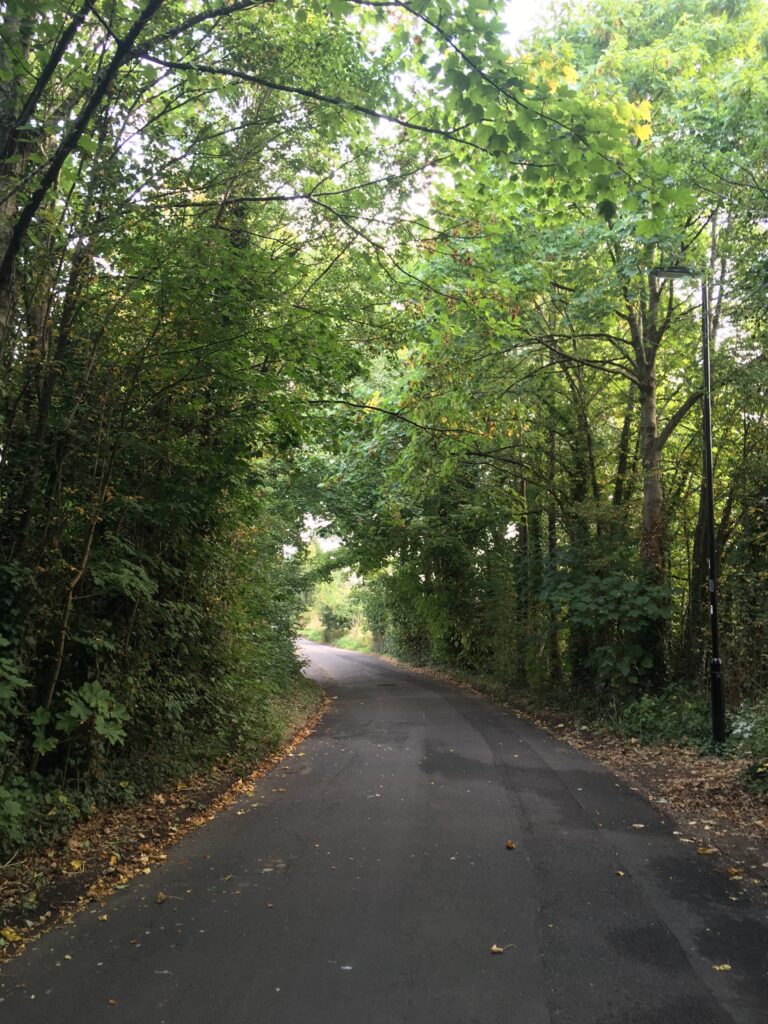
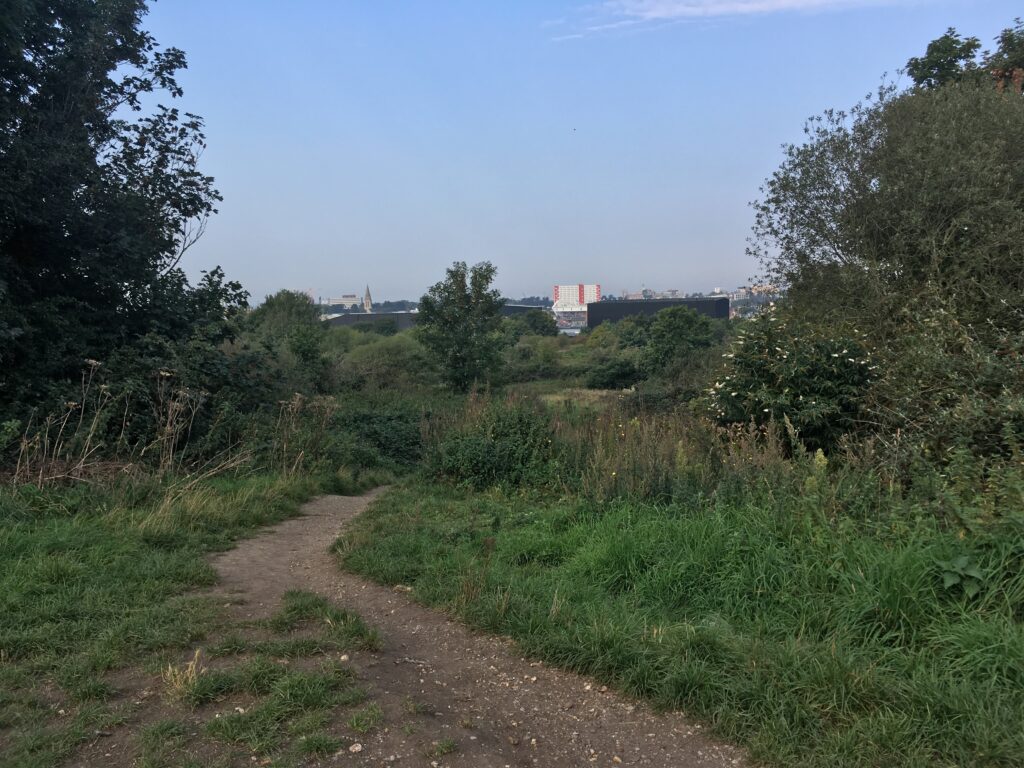
It was a relief to get off the bridge and out of the sun. In no time at all I’d reached Sea Road the shady lane across Peartree Green. Just beyond the point where the road stops being a road and starts being a trail there is a bench with a view across the river. As I often do, I sat for a moment and looked back at where I’d been walking earlier. Beyond the trees and wildflowers I could see the spire of St Mary’s church and the football stadium I’d passed on my way to the bridge.
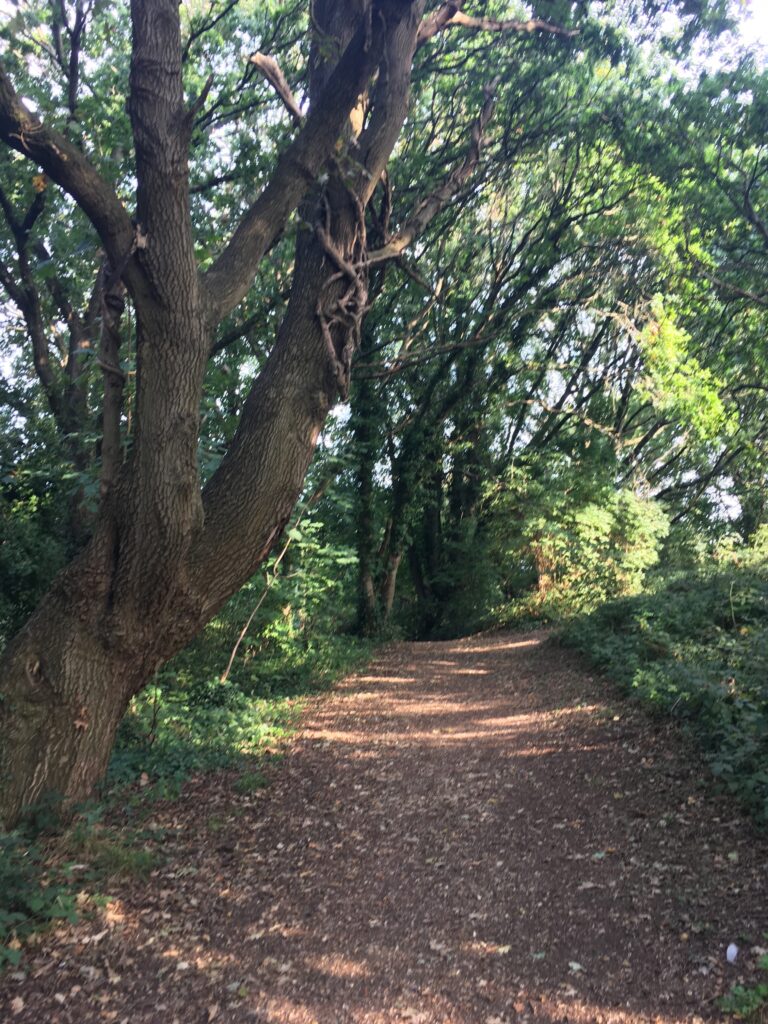
Now it was time to leave the river behind again. The trail leads through a little patch of woodland, all dappled shade and squirrels darting up trees. The two bridges were both behind me, along with all the abandoned boats. The not thinking hadn’t gone all that well but the walking certainly had.
I still walk everywhere I can. I drive short distances if I’ve got heavy things to carry or if I’m at an event and I think it would be too dangerous to walk back late at night, but otherwise it’s the feet that carry me where I want to go locally. I honestly don’t understand why more people don’t walk; it’s much more fun.
Me too.It always shocks me when people think a walk of a mile or so is just too far and can’t believe anyone could possibly survive it.
When I worked in town I had a two mile walk there and a two mile walk back. It never occurred to me to drive and I only got a bus back once because I had such a bad migraine that I wasn’t convinced I’d make it on foot.
The same here. Ive always walked to work, distances of between two and three miles for various jobs. Occasionally I’d catch a bus if the weather was really bad because walking across the bridge in the wind and rain is no fun. It always felt like the best part of the day, especially the early shifts when the sun was coming up.
Yes, yes , yes and Swanage is still lovely, we visit family 3 or 4 times each year. But not the last year of course
My parents had a caravan in Swanage when i was small and my in-laws had one in more recent years near Durdle Door.
Your memories of childhood are very similar to mine Marie.The only difference was that my Father had a Motorcycle and Sidecar but never bought a car.We went on holidays in the motorcycle and sidecar,but dad used it to get to work.So,my Mother,Sister and I walked everywhere.That has stayed with me all my life.
I guess that’s why we like to walk
Hi Marie,
Thanks for putting your thoughts and walks on paper. Thanks also for shots of Chessel Bay. I can’t ever remember it being called that back in the 60’s. It was just “the River”.
Believe it or not, I can spot our old house in Athelstan Road in your second picture. From my parents bedroom we had a great view of the city and docks….in the days when the ‘Queen Mary’ or ‘United States’ would dominate the skyline. From that house I used to walk to my parents greengrocers shop in Swaything almost every day. Till I got a bike!
Back to the river, and the memories came flooding back as this was the stretch where my Sea Scout pack would come every Friday night to launch our canoes (we would call them kayaks now, but they were canoes to us back then!) I can even remember a couple of their names: “Tantalus”, “Moonraker”. The wooden scout hut was on Princes Street, just about behind what now looks like a pile of scrap. The quayside then was a timber wharf and aggregate dump a little further up by Northam Bridge. It was often visited by small “coasters” such as the ‘Pen Arun’ and ‘Pen Adur’ which would offload their cargoes over a couple of days and then disappear for a week or so.
The hut is gone now , but from the looks of it the concrete pad on which it stood is still there…just outside what used to be a margarine factory. I can still hear the noisy footfalls as I came up past the Southern ITV studios near the bridge, where you could occasionally bump into a “personality” like Trevor The Weather “off the telly”! We used to carry our canoes down the road, past the pub (now offices) to a small passageway down to the river. It was possibly the site of, or close to the outlet of an old canal. We didn’t know that then, of course. It was just a way out to water. We were the 25th Northam pack.
I think they’re still going somewhere else down by Itchen bridge, which was in my day not there…we had the delights of the Floating Bridge, from which you could see the river “up close”. The old Supermarine works and a scrap yard where I witnessed the end of the Princess Flying Boats. The noisy SRN-6 hovercraft which could be heard all over the city.
Good days. Your writing brings it all back. Many thanks!
What wonderful memories. Thank you for sharing. I’m so glad my ramblings and photos have reminded you.