
After a week spent mostly lazing on the beautiful Agadir beach or by the pool it was time to experience a bit of culture. As my lovely Geordie friend, Holly, owns a tour company we decided to hire one of her guides for the day and, for once, we did the tourist thing. It was both an interesting and moving experience.
10 August 2012
Today we decided to take in a bit of culture. Agadir isn’t just about the beach after all, it has an interesting, if tragic, history. In 1960, the year I was born, Agdair had over forty thousand inhabitants, mostly living on the hillside overlooking the bay. This area is The Kasbah, a fortress with winding streets, built in 1572 by Moulay Abdallah al-Ghalib. It was once a bustling, lively place.
All that changed at fifteen minutes to midnight on 29 February 1960 in just fifteen seconds. An earthquake measuring 5.7 on the Richter scale, turned the city to rubble killing around fifteen thousand people. Thirty five thousand people were left homeless, hotels, markets, office buildings, hospitals and the ancient Kasbah collapsed, sewers crumbled and water mains burst. Never had an earthquake caused so much devastation in the history of Morocco.
It was the third day of Ramadan. There was no water to put out the fires, even if there had been the fire stations had been destroyed, along with many firemen. Almost seventy percent of the city was in ruins and there was no one to rescue those trapped and dying. The French army and sailors from the US Sixth Fleet who had been nearby began the process the next day but, by then, it was too late for many.
The unusually hot weather hampered the rescue work. It was forty degrees centigrade in the shade, thousands of corpses created a health hazard. Despite King Mohammed V giving special dispensation for people to set aside the Ramadan fasting many did not. Many people refused medical treatment believing that would break their fast too.
The scene is unimaginably horrific. Gas masks had to be issued to rescue workers to combat the stench of death. Quicklime was spread where rescue was hopeless and DDT was sprayed over the ruins by helicopter to control disease. Flies and rats infested the place. Epidemic was a distinct possibility. On seeing the destruction King Mohammed V said, “If Destiny decided the destruction of Agadir, its rebuilding depends on our Faith and Will.”
Today the area remains in ruins, a mass grave. A new city was built two kilometres south the city we are staying in. From the world famous promenade outside our hotel the hill where the Kasbah once stood dominates the skyline. At night the words God, Country, King, in Arabic letters, along with the rebuilt Kasbah walls are illuminated. It was time for a visit.
Our guide drove us up the winding road to the Kasbah gate, one of the few things still standing. The original inscription above the arch reads ‘Fear God and honour the King.’ There is little to see except the remnants of the old walls, a ground strewn with piles of rubble and scrubby shrubs. It’s eerily quiet. Death hangs in the air.
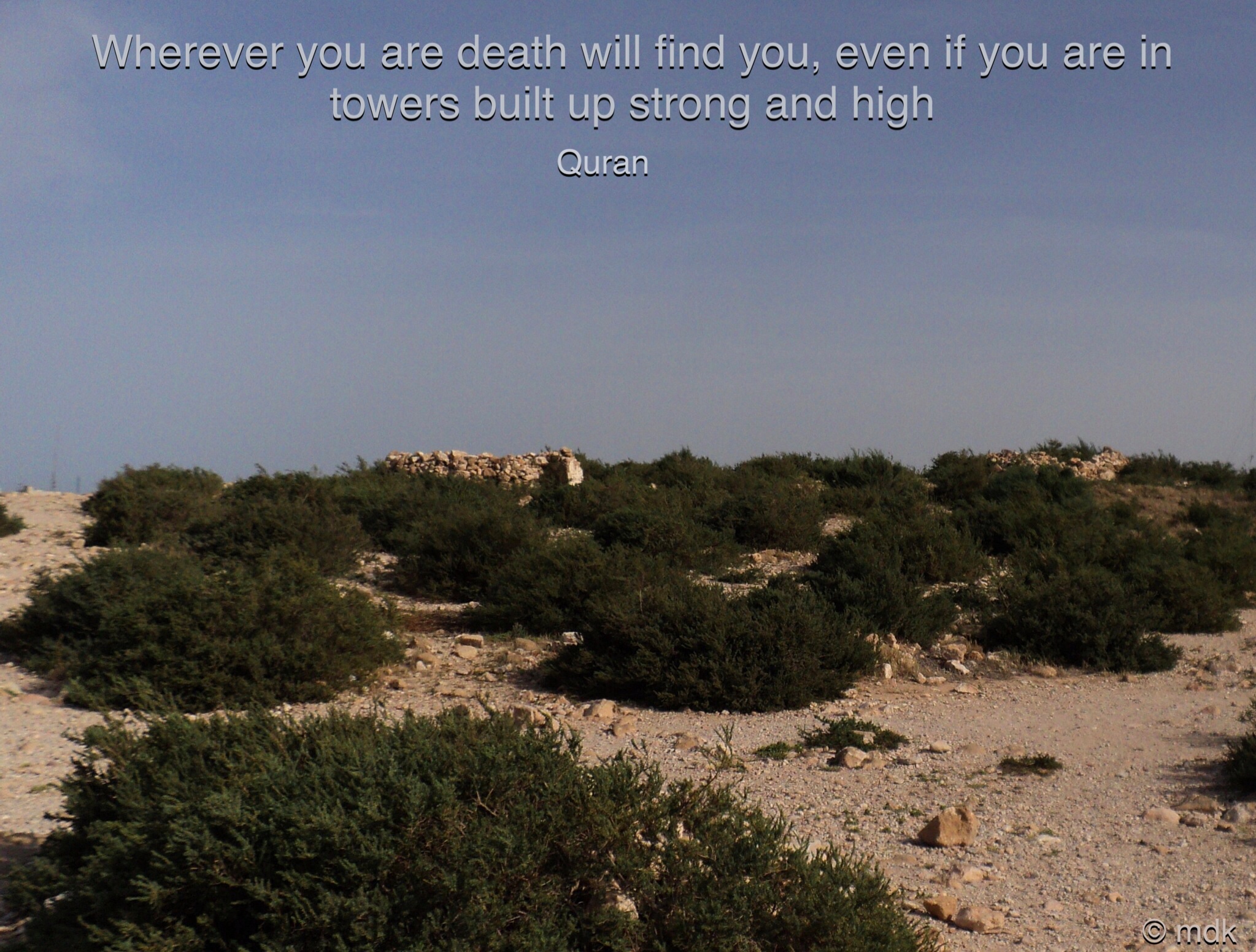

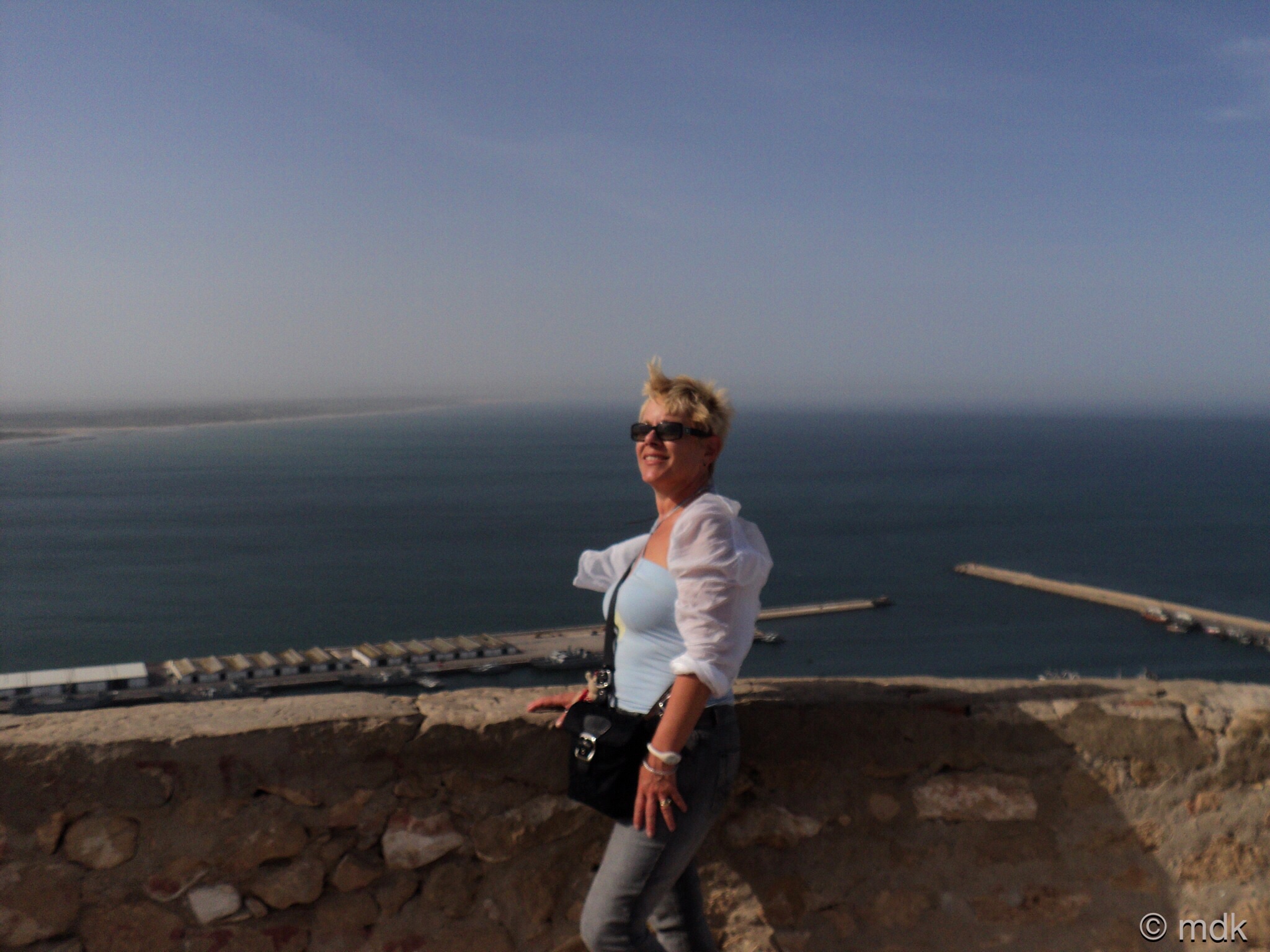
Looking out from those crumbling walls though the views over the bay took my breath away with their beauty. We stood for a long time contemplating this place with the cool wind snatching at our clothes and the sun warming our skin. The spirits of those lost seemed to be close by.
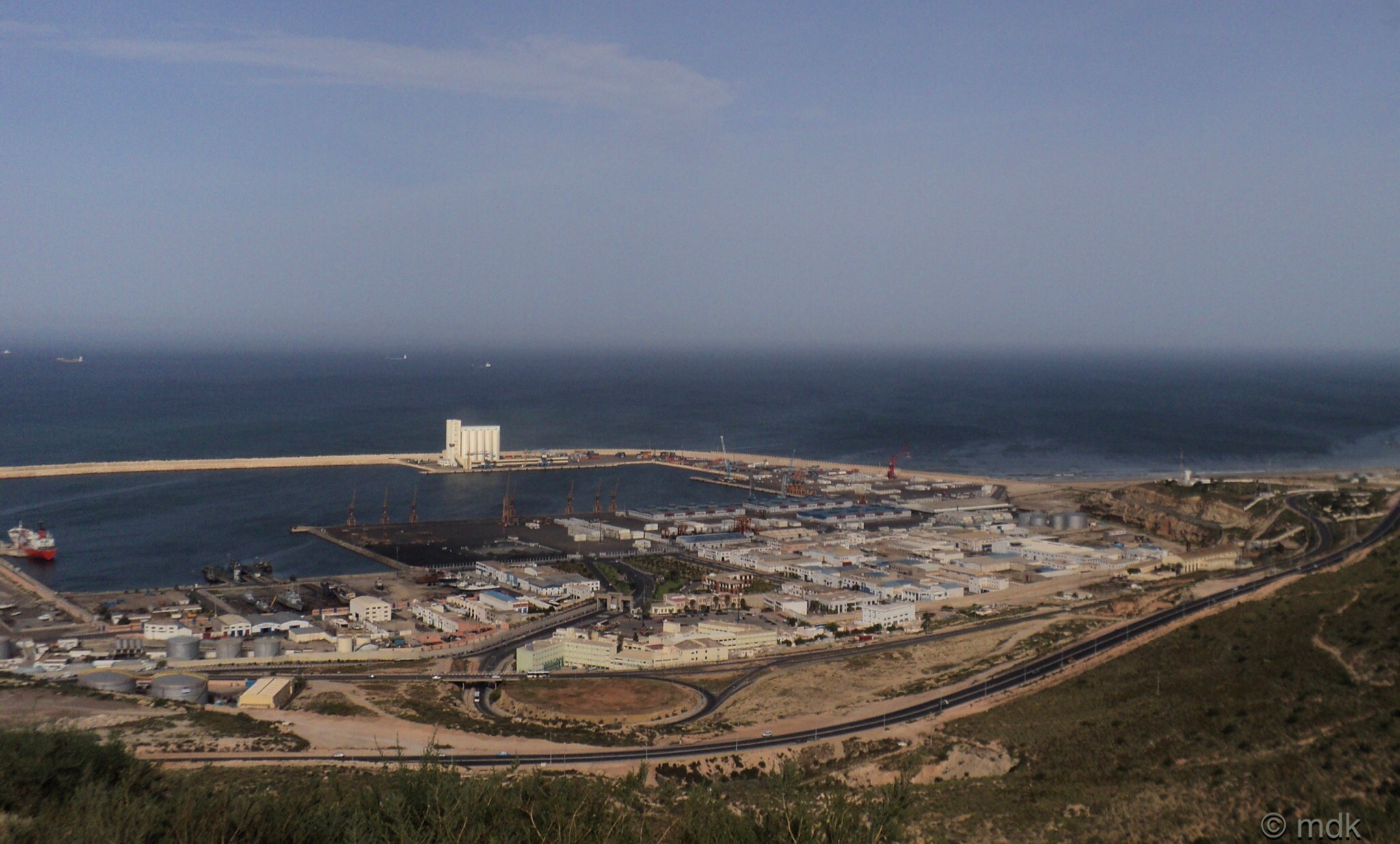

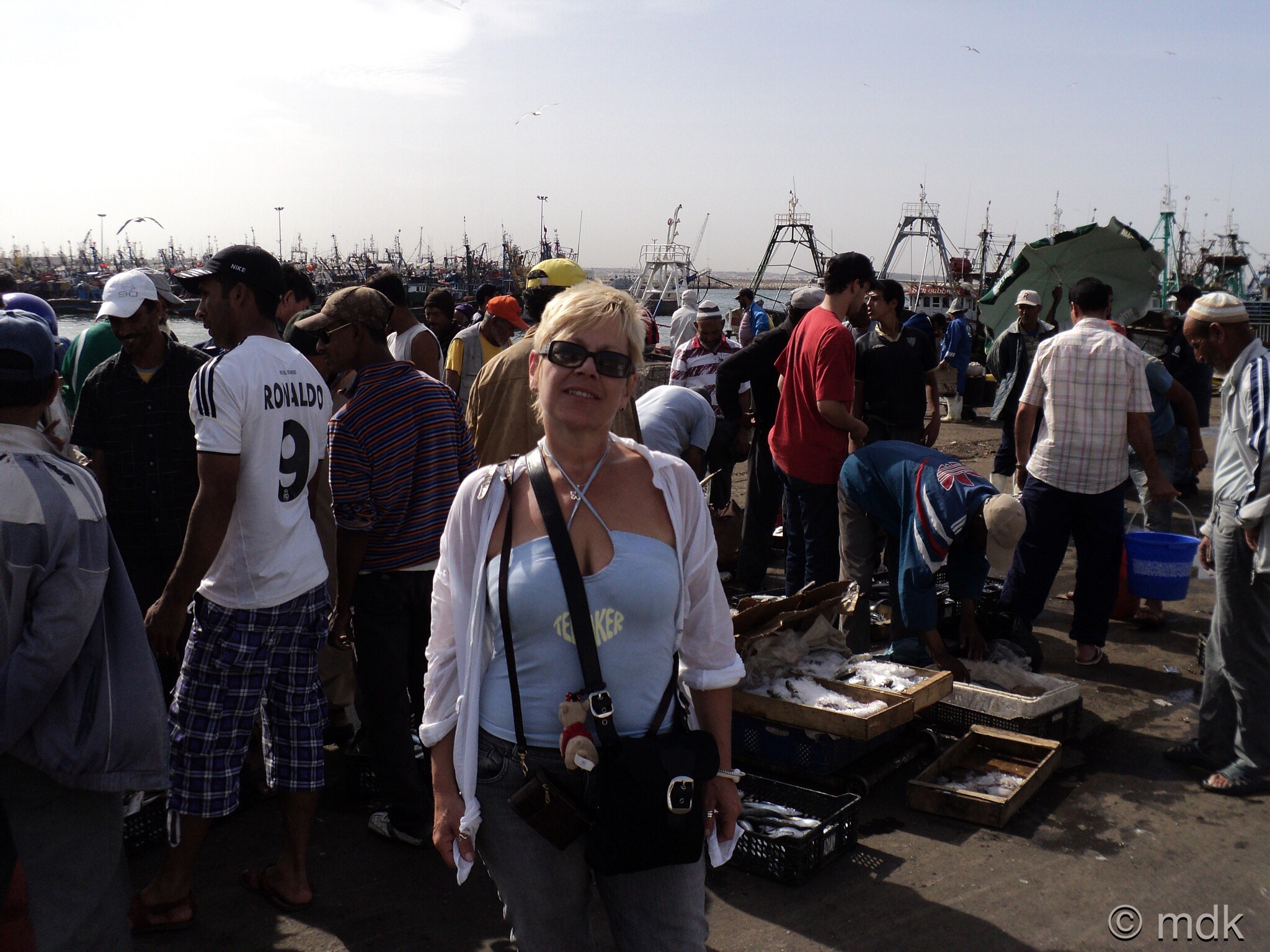
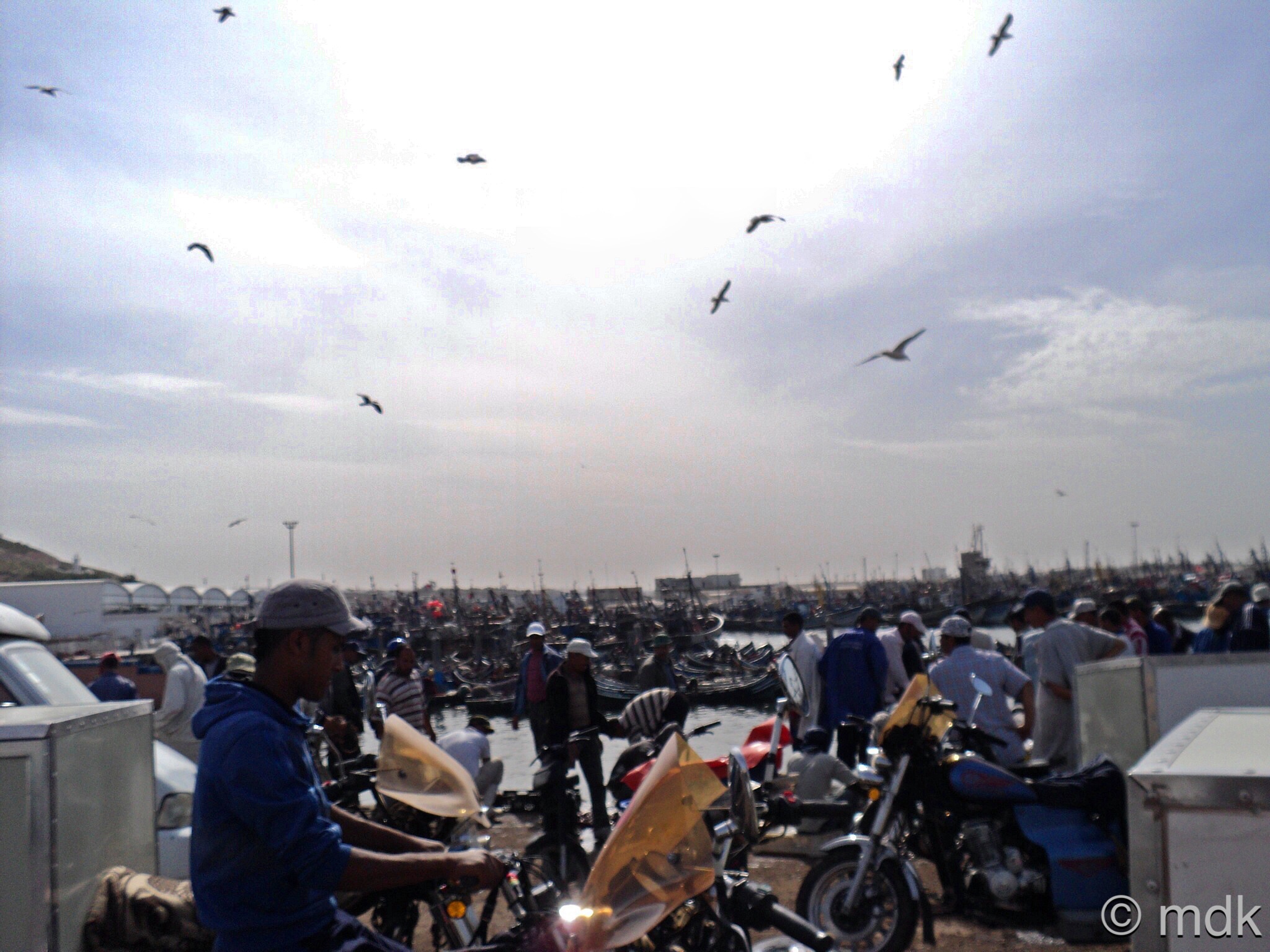
We were in a fairly somber mood when we left the Kasbah but our next port of call was the fishing port. In contrast to the peace and quiet on the hill, this was a bustling area, full of people and little fishing boats. The noise of people haggling to get the best price for trays of fish was deafening and the smell, well, let’s just say in the heat of the Moroccan sun, despite the rapidly melting ice, it wasn’t the best. Above the din the cry of seagulls looking for a sneaky meal could just be heard.
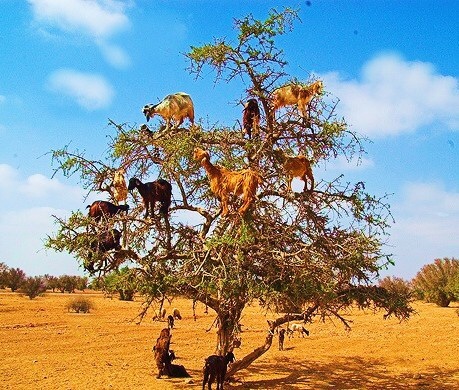
From the port we set off back toward the new town. Our mission was to see where Argan oil came from. Of course I already knew about Argan trees and the nuts that yield this valuable oil. This is the only area in the world where they grow and they can be seen as you drive on the outskirts of the city, complete with the goats who climb impossibly high into the branches to eat them. What we were going to see was a place where the nuts are turned into oil.
The fruits of the tree are covered by a thick peel and a fleshy pulp. Inside is the nut. The fruits are dried in the hot sun then the flesh and pulp is removed. As always in Morocco, nothing is wasted and this is used as animal feed. After this the nut is cracked to release the kernel. It’s a time consuming, labour intensive process but no one has managed to find a way to do it mechanically yet so it is done by hand by Berber women. Next the kernels are roasted and, once cooled, they are ground, pressed, filtered and bottled. In many cases this grinding process is also completed by hand. The protein rich press cake, left over after the oil has been extracted is also used as an animal feed.
The oil is something of a miracle, used in both cosmetics and cooking. Modern research has found consuming the oil daily can help prevent cancer, cardiovascular disease and obesity. It’s used on couscous, salads, for dipping bread and made into a paste with the ground nuts and honey that is similar to peanut butter. We tried some, it was lovely. Cosmetically it is used in moisturisers, soaps shampoos, hair treatments and in the healing of burns amongst other things.
We watched the kernels being ground by a small Berber woman, with a kind of stone basin and a large stone wheel. She sat on the floor intent on her laborious job and the thick oil she produced poured into a dish as a thick paste. Of course I bought some oil to take home but, mindful of my luggage allowance, not as much as I’d have liked.
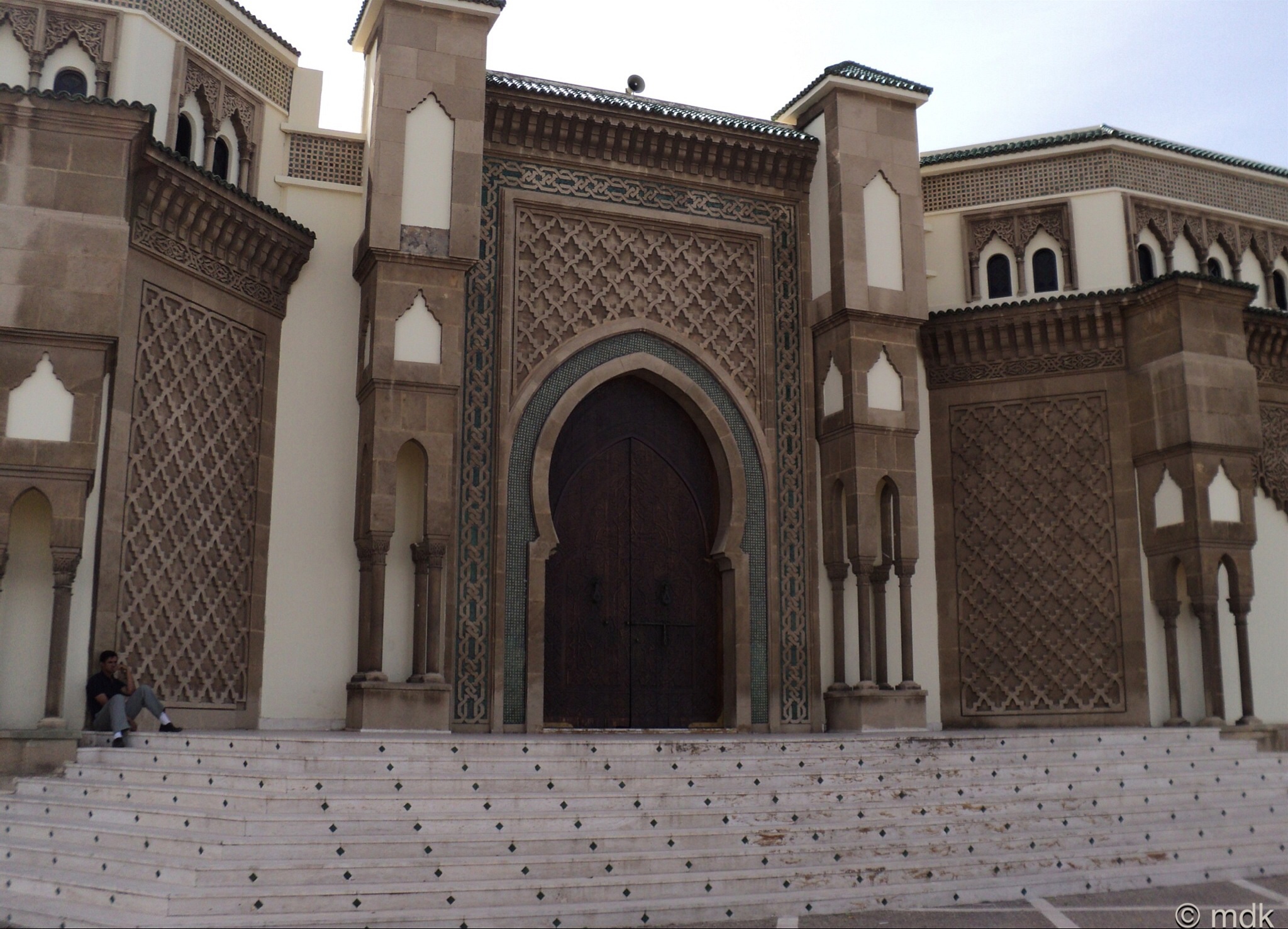
On the way back to our hotel we stopped off to look at the Mosque Loubnan, one of the most beautiful in Agadir. The tall square tower of brown and cream with rows of little arched windows on each side was impressive. The huge moorish arch of the door decorated with latticework made me wonder what was behind the huge oak doors. Sadly, as non Muslims, we could not go inside.

All in all it was an interesting day but the thing that will stay with me is the eerily silent Kasbah. It really was a ghost town.
I’m surprised that they were even able to rebuild. It sounds like a poor country away from the tourist areas.
It is a poor country in many ways but the people are very resourceful. One of the things I most admire is the way nothing goes to waste. On one visit I was give a little mirror in a metal frame beautifully engraved. Many years later it broke and I discovered the frame was made from an old coke can turned inside out. Recycling at its best.
Lovely shots. I remember reading about the history when I went to Agadir. Amazing that it’s been so nicely rebuilt.
The views from the Kasbah are beautiful