
May 2014 and, after a nightmare of mud and water on the Itchen Navigation I was hoping for a more sedate walk. Typically, the stroll along the shore I’d expected had turned into a battle against seemingly never ending shingle and strong wind. Hurst Castle was ahead but I was so exhausted I’d given up on reaching it and turned around to head back.
11 May 2014
Did you really think I’d turn back? Shame on you. Of course there was a huge temptation to give up because, frankly, I was fed up with the shingle and the wind. I actually turned around but then I thought of sitting writing my blog and having to admit I’d chickened out. At a guess I thought I probably had just over half a mile to walk, ok so it was going to feel more like a mile but it’s all exercise right? I thought of all the calories I must be burning, turned back round and kept putting one foot in front of the other.
Slowly, painfully so, the castle got closer. It still didn’t look exactly exciting and I had the feeling I was going to be disappointed when I got there but there was always the lighthouse if I still had the energy. As I got close enough for my aged eyes to focus properly I could see it was a low, semi circular building, similar to the sea forts off the coast of Portsmouth. Southsea castle is another of those defensive forts and I had a lonely little wander around that back in February while Commando was running the Muddy Beach Run. They may call them castles but they are nothing like the image the word castle conjures up for me. This one looked bigger but less castle like than Southsea if that is actually possible.
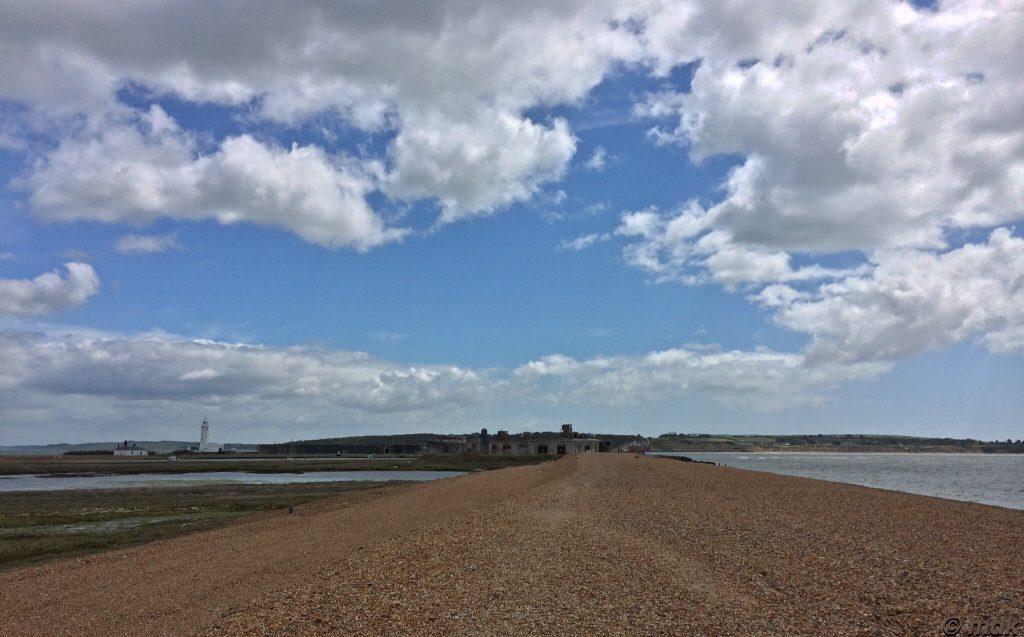
Still, there was plenty of history to it and I’m a sucker for a bit of history. Besides, I could hardly turn back at this late stage without at least having a look. The castle was built to be part of Henry VIII’s chain of coastal defences right at the entrance to the River Solent where the strong tides and currents would already have would be invaders at a disadvantage. Back in 1539 William FitzWilliam, 1st Earl of Southampton and William Paulet, 1st Marquess of Winchester suggested it might be a good idea to build a castle on Hurst Point to protect Southampton against the French. Work began fairly quickly and a fortification was in place by the next year but it took until the end of 1544 for the castle to be completed.

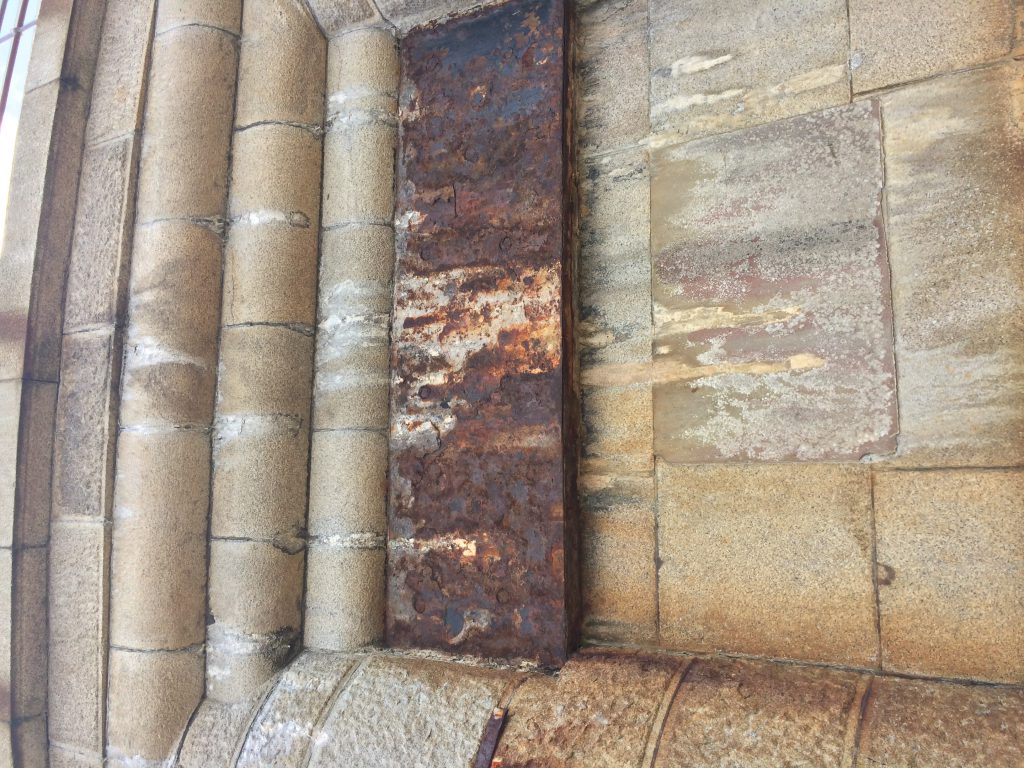
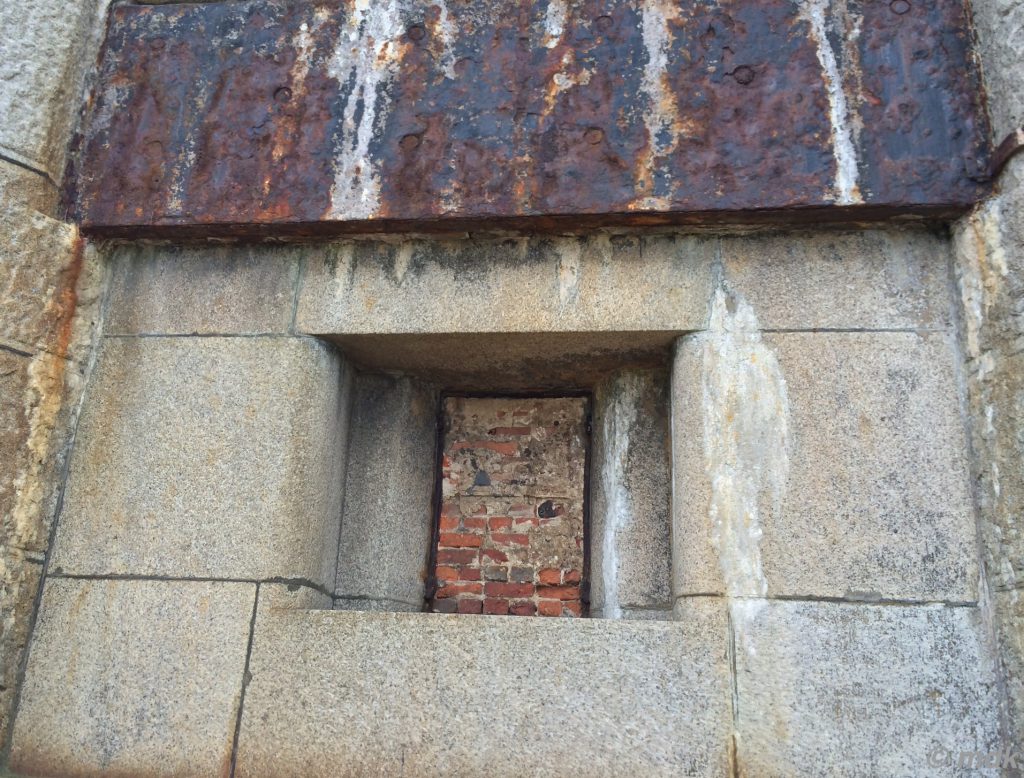
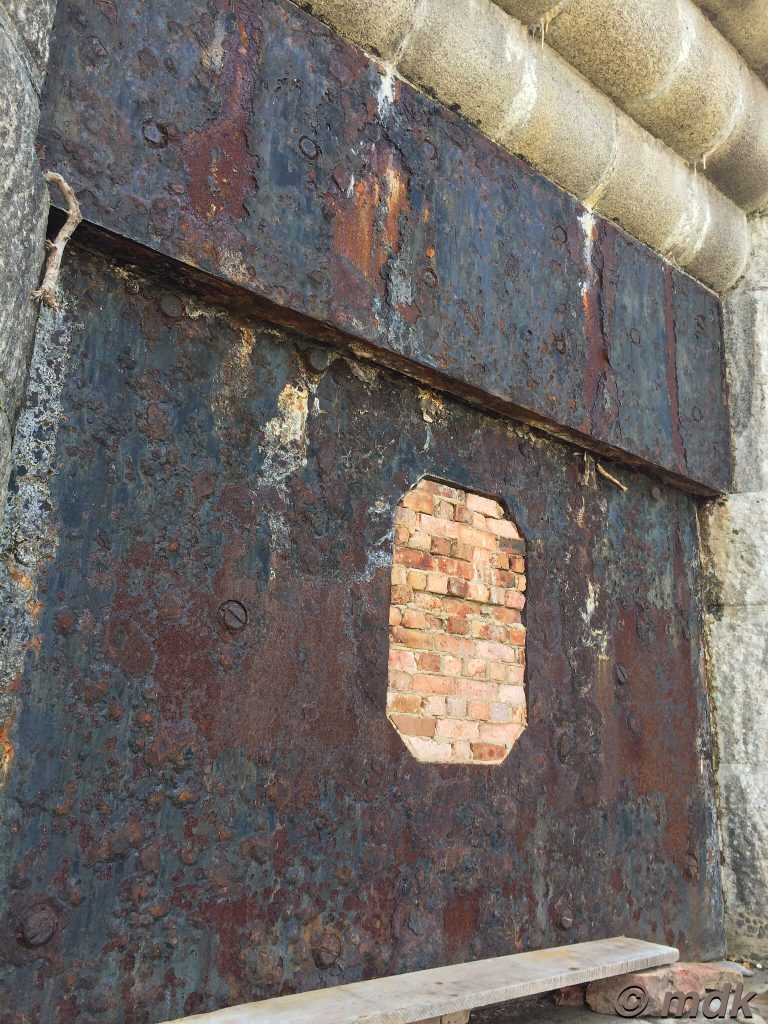
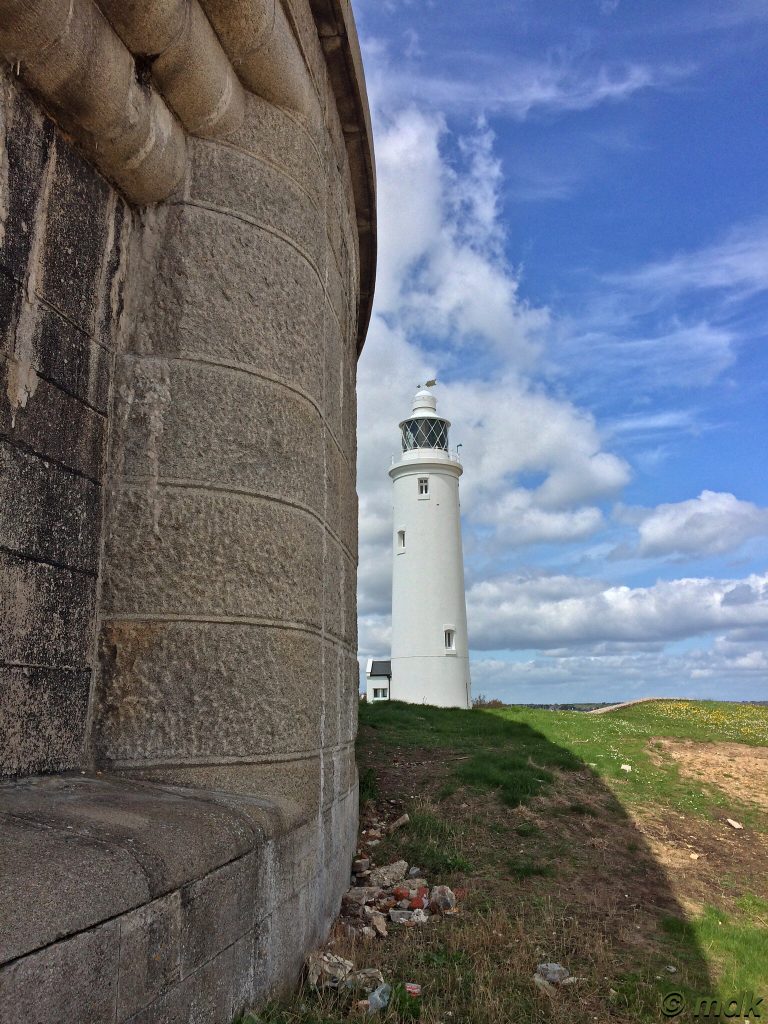
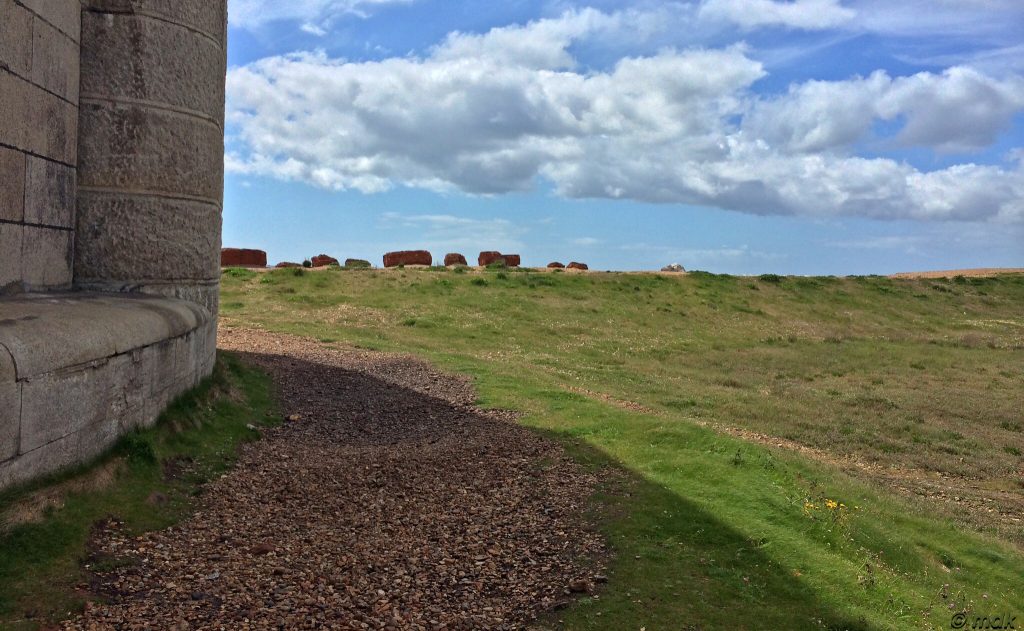
As I crunched down the gravelly path huge chunks of brickwork lay beside me. It turns out these are the remains of 19th Century gun emplacements and the building I was looking at was actually part of the two large wing batteries added in the 19th century. There were people wandering around on the top wall and I wondered if I’d be able to get up there or if I’d want to given the wind. At regular intervals there are indents that look as if they could once have been doors or windows but, as it was a defensive castle, I doubt they were. Some of them have what can only be described as rusting iron shutters with an inner square of brick, armour plating to protect it I suppose. Some looked like they might once have had guns or cannons pointing from them.
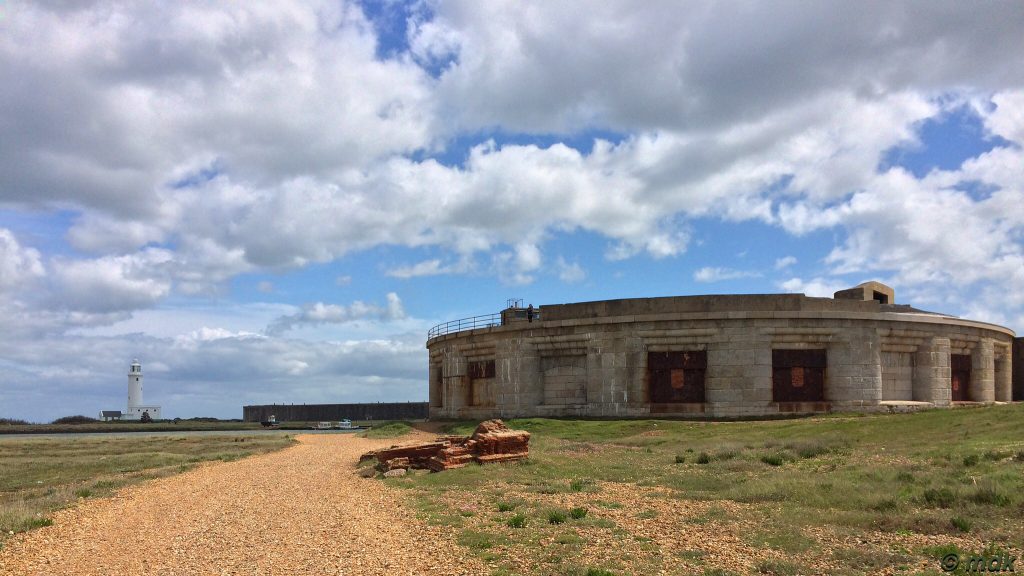
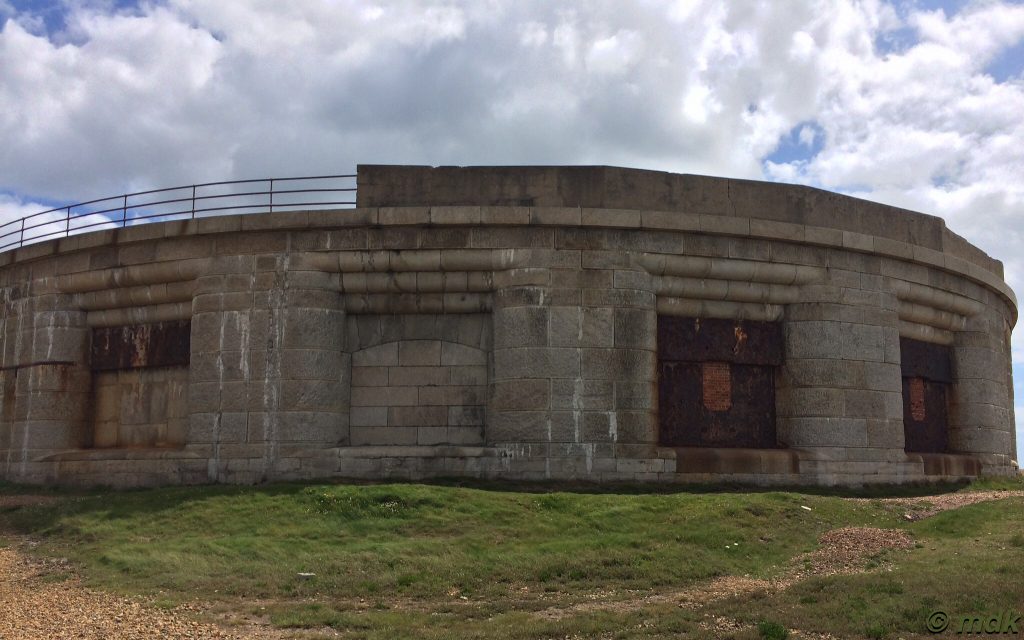
When I came round the corner I was finally out of the wind and I could see the original castle, flanked by the two more modern wings. It was a short squat affair, much like the king who built it. Even as early as 1593 the castle seemed to be crumbling. Sir Thomas George asked for repairs, stating that the platforms were so decayed they couldn’t support the guns. By 1628 things were worse. When the porter was ordered to stop a ship he had “neither powder not shot” and, of twenty seven cannon, only four or five were working.
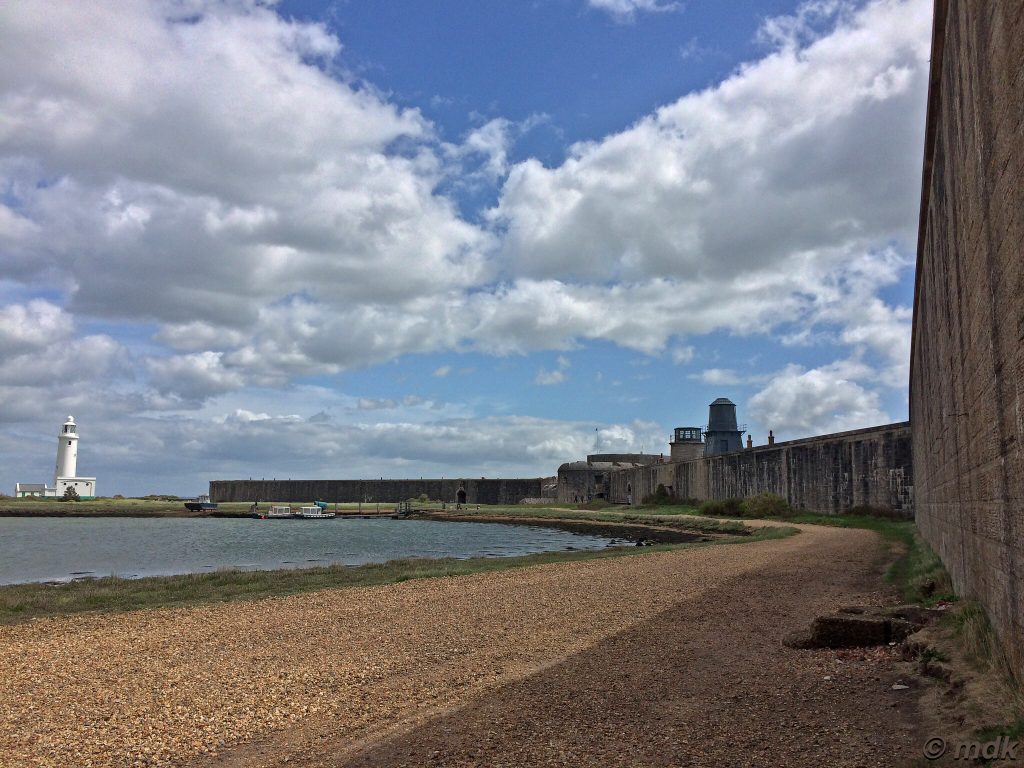
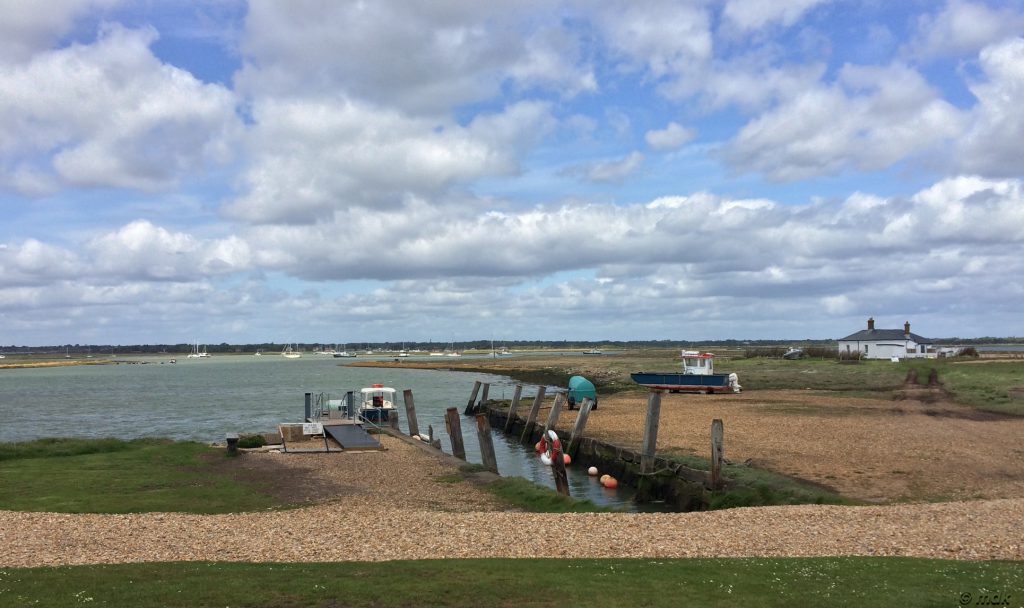
A little boat had come in, the Keyhaven Ferry we’d seen when we took a wrong turn at the start of the day. People streamed off and made for the castle and, after my long shingle trudge, the ferry seemed like a much better idea. Finally I got off the shingle and onto the grass running behind the castle. It was a relief.
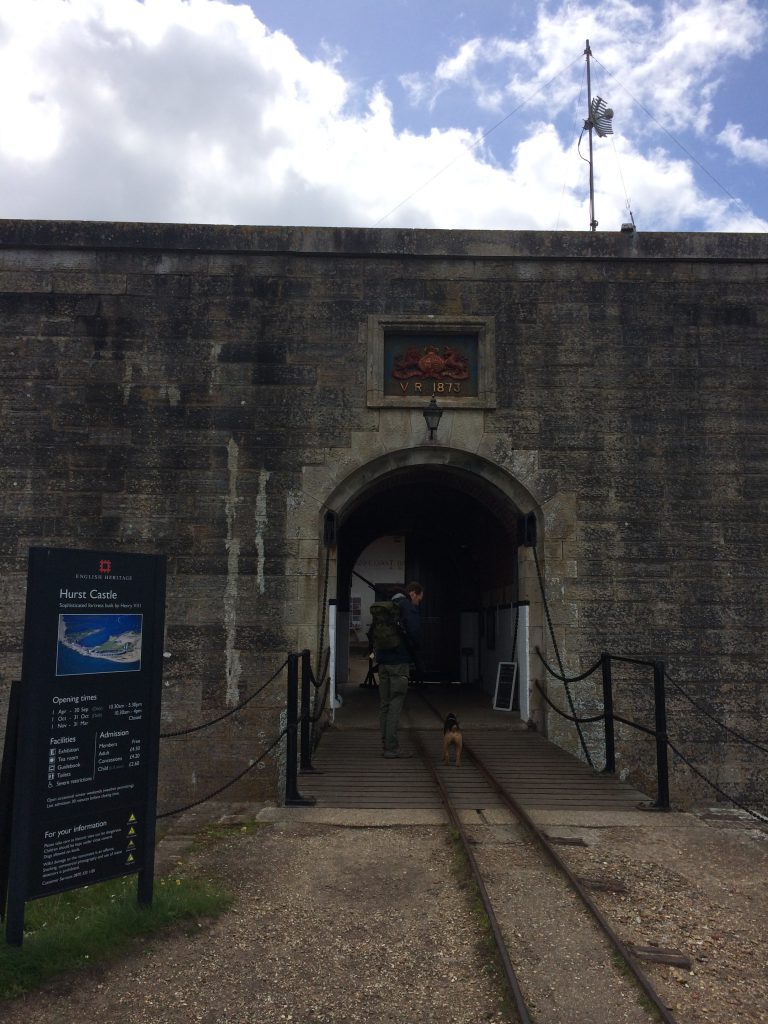
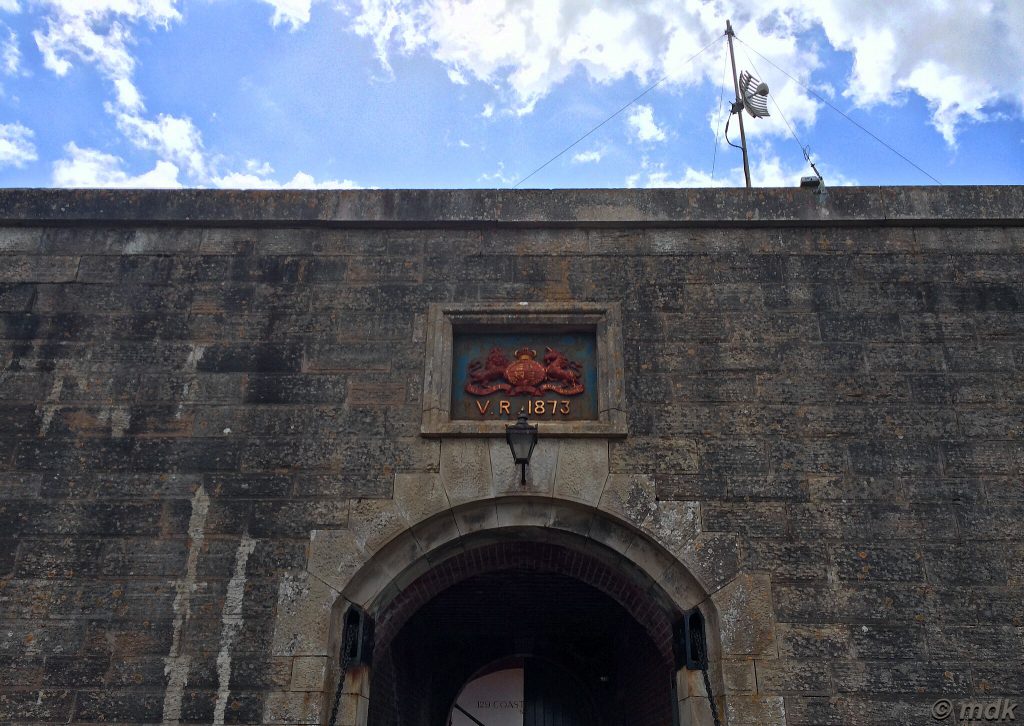
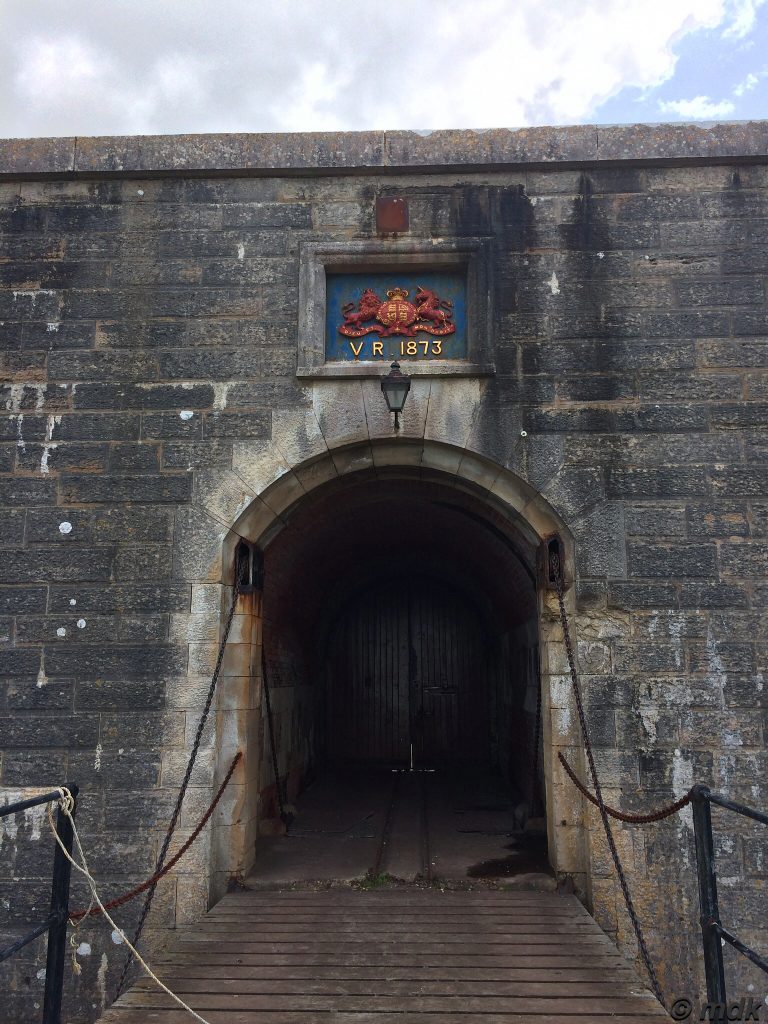
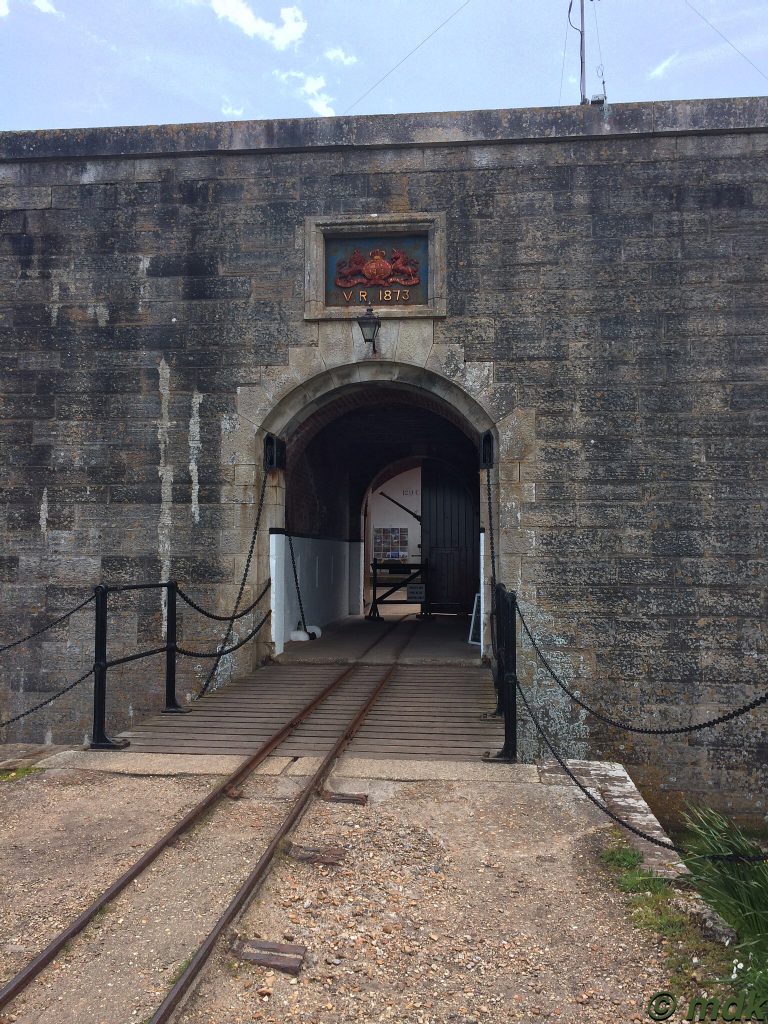
When I reached the door I saw there was a charge to get inside. It wasn’t much, under a fiver, but, as Commando would be waiting for me, I thought I’d better just content myself with a walk around the outside. The door is actually in the ‘newer’ part of the castle, above it a rusting coat of arms gives the date 1873. Slowly I walked around, looking at the barrel of a building and all the additions trying to work out which was which.
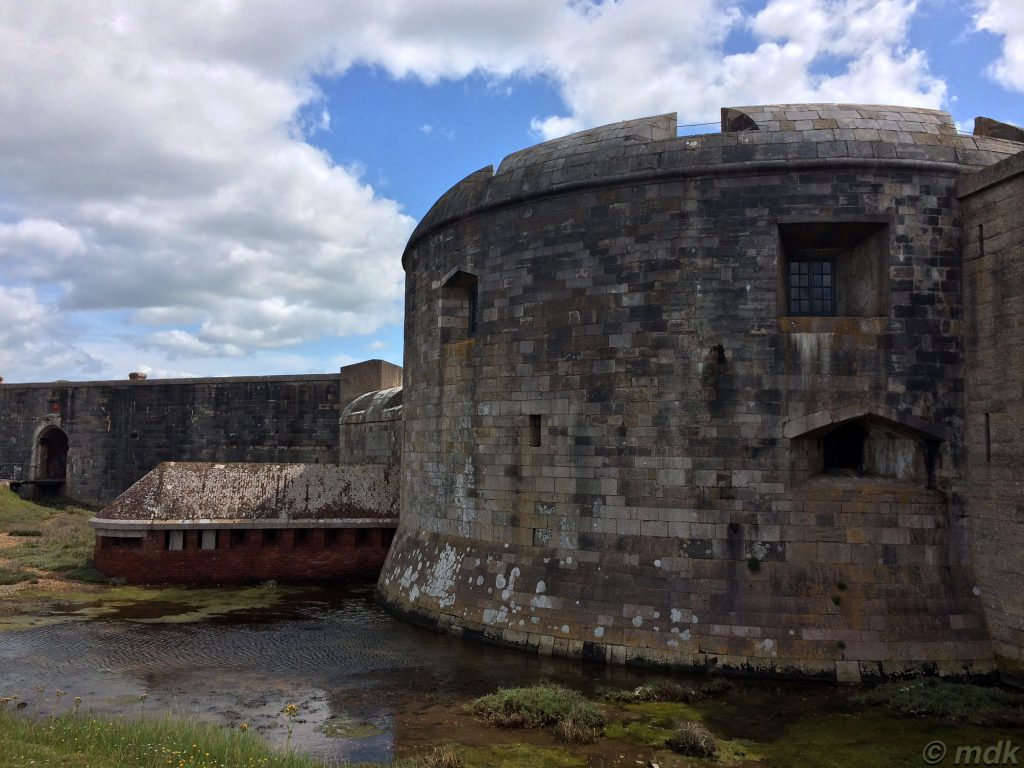
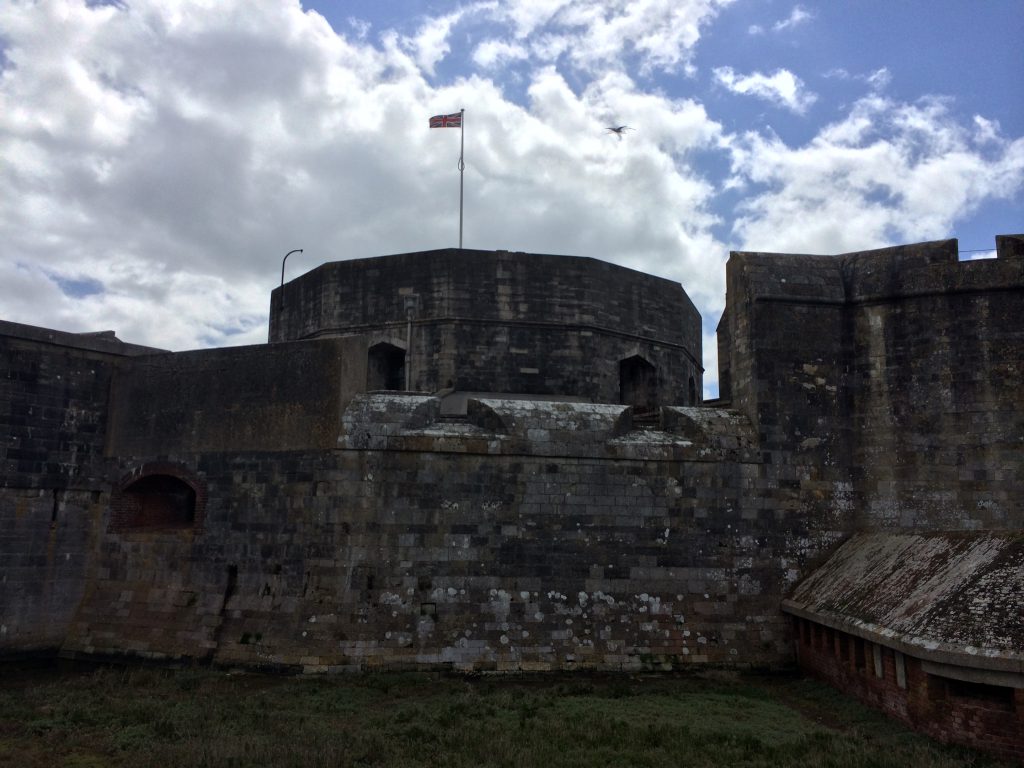
During the English Civil War the castle was occupied by parliamentary forces. Somewhere inside served as the last prison of Charles I before he was moved to Windsor for his trail and execution. Looking at the small windows high in the central tower I wondered if he had been given the privilege of a view over the raging sea to the Isle of Wight, less than a mile across the water?
After the Restoration, Charles II ordered the garrison to be disbanded and demolished, perhaps remembering his father’s imprisonment. Shortly afterwards he had a change of heart about the demolition and, by 1666, decided it should be a garrison for Sir Robert Holmes’ company on the Isle of Wight. Sadly, by this time it was in such a state of decay this didn’t happen until 1671 after extensive repairs.
In the early 18th century the castle was used as a prison once again. This time for priests convicted of popery, or fostering the growth of Catholicism. As far as anyone can tell only one priest, a Franciscan father, Paul Atkinson, was sent there. He remained for thirty years until his death in 1729. Once again it became neglected and, by the end of the century, it was being used as a rendezvous for smugglers. Their leader, John Streeter, and his men landed large cutters here and unloaded their contraband. With the currents, the winds and the rocks it must have been a risky business.
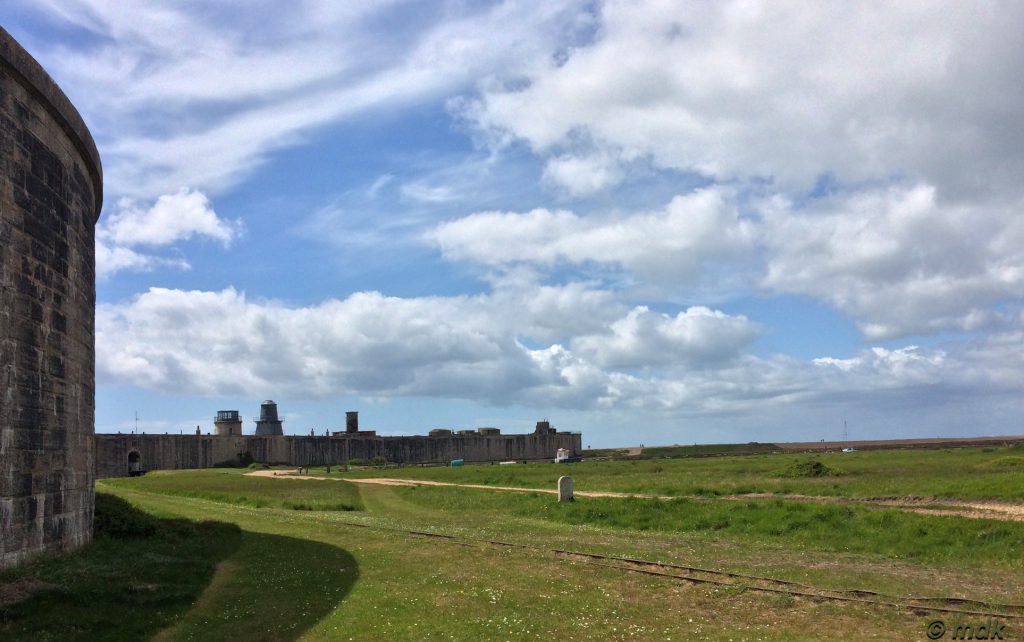
As I walked on I came to another door, this one closed, then I passed the lighthouse and walked towards the far end of the newer part of the building. There were curious train tracks running through the grass some going right to the castle doors. Whether these are part of the castle defences or a modern addition I don’t know but if anyone does I’d be very interested. At the very end, just beyond the building, there were steps, I climbed them, thinking to walk right around and back towards the spit. The wind was so much stronger on that side of the castle and the thought of yet more shingle turned me back. Instead I took a few pictures of the iron armour up close and turned my attention to the lighthouse.

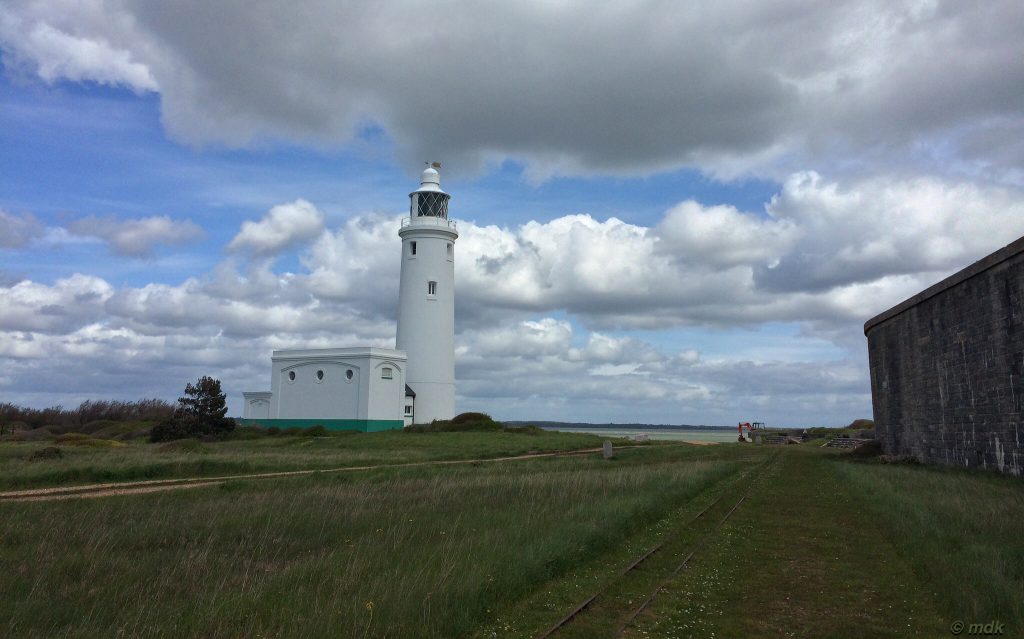
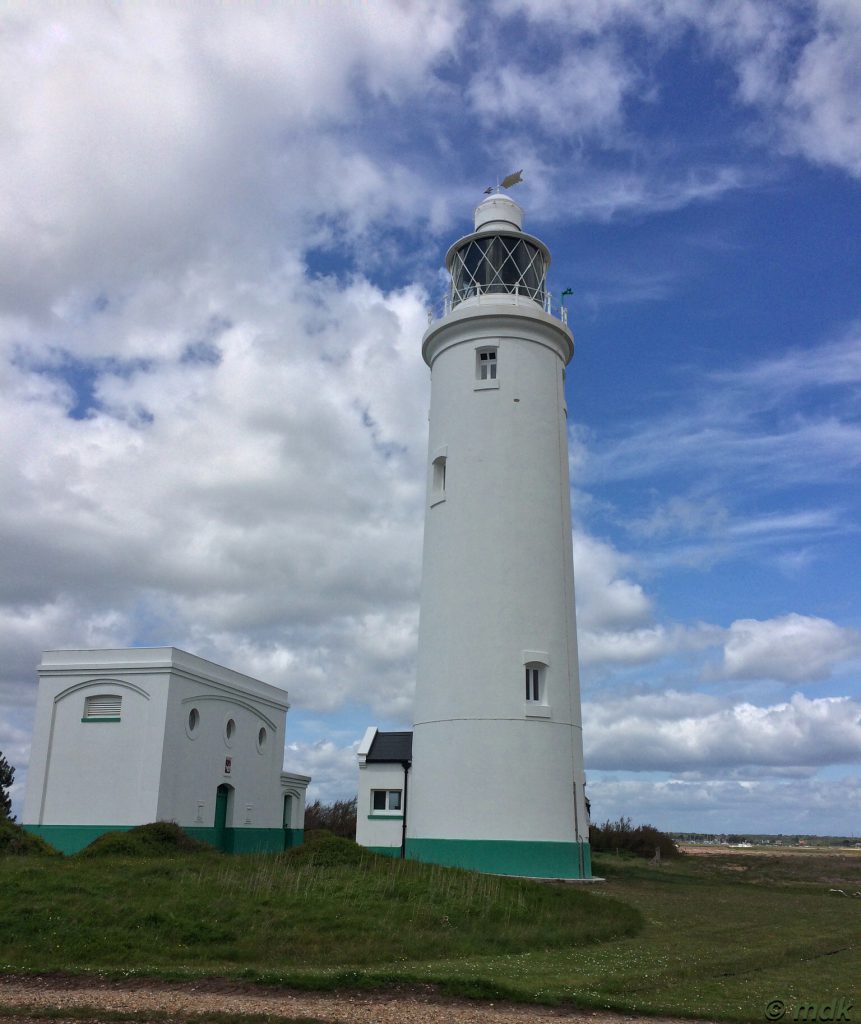
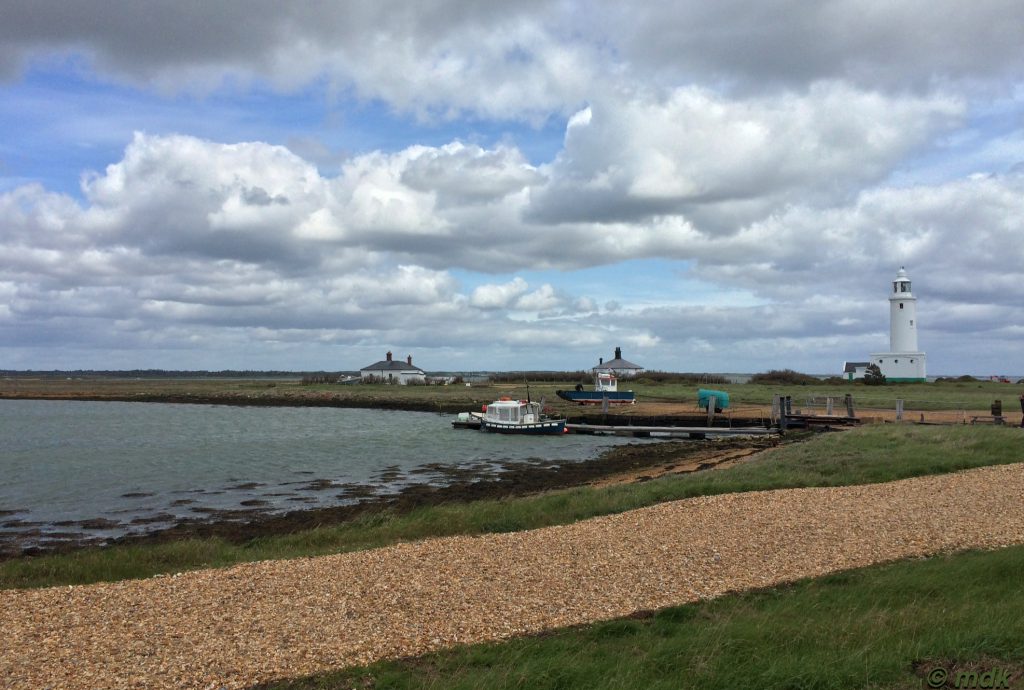
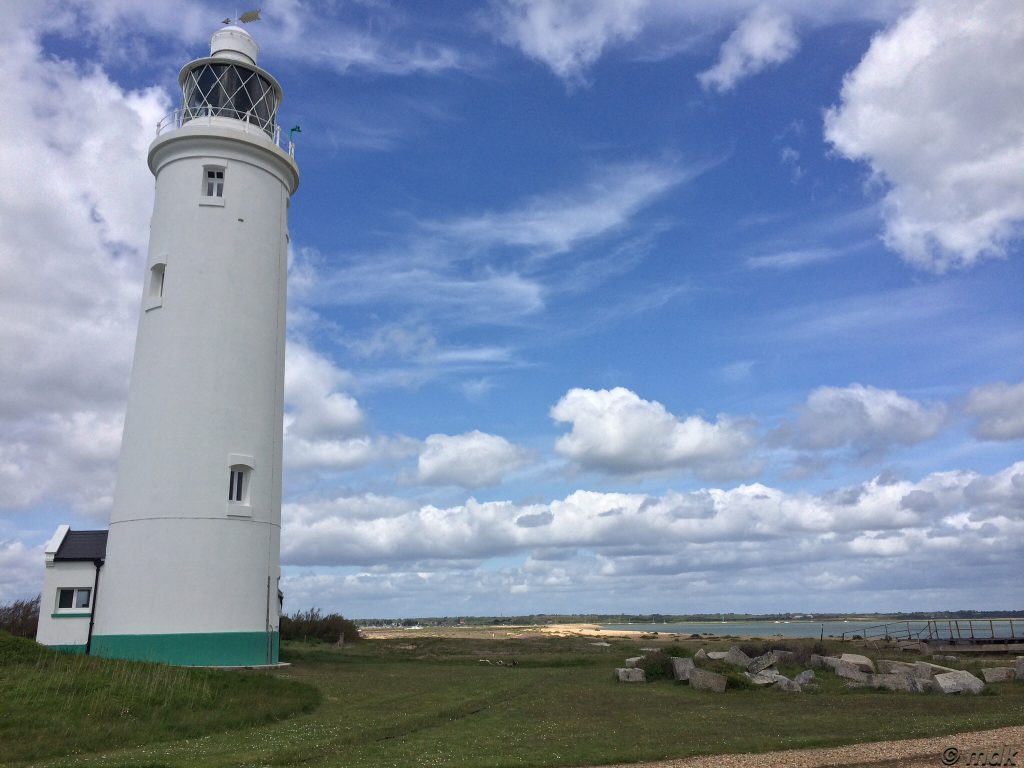
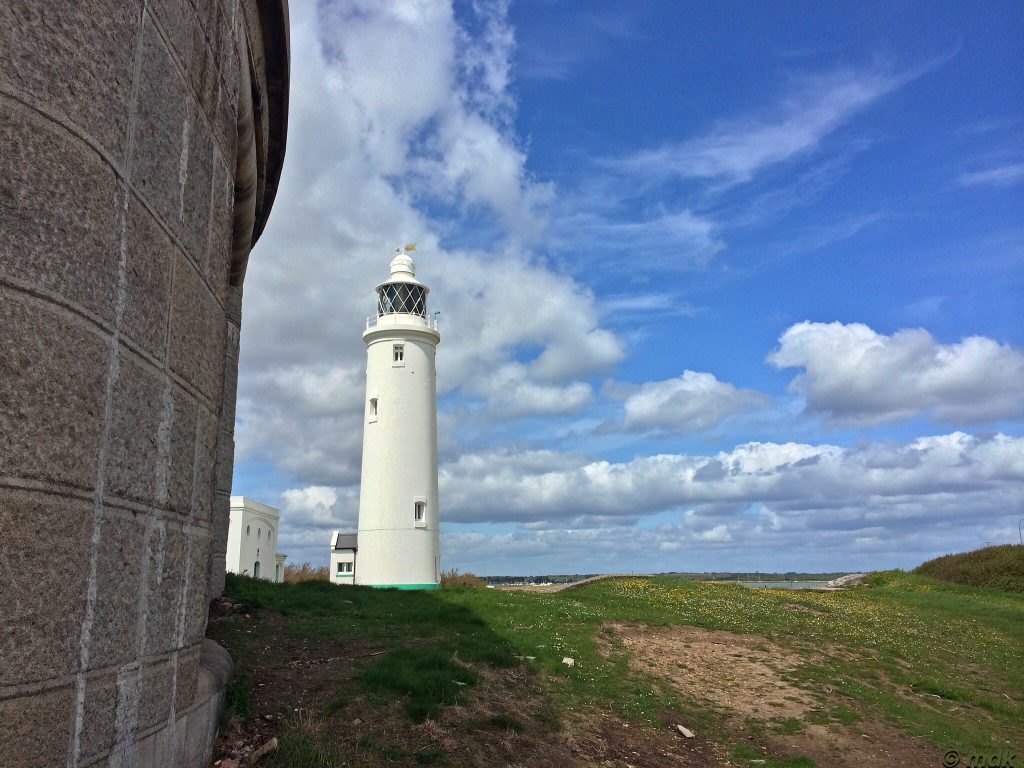
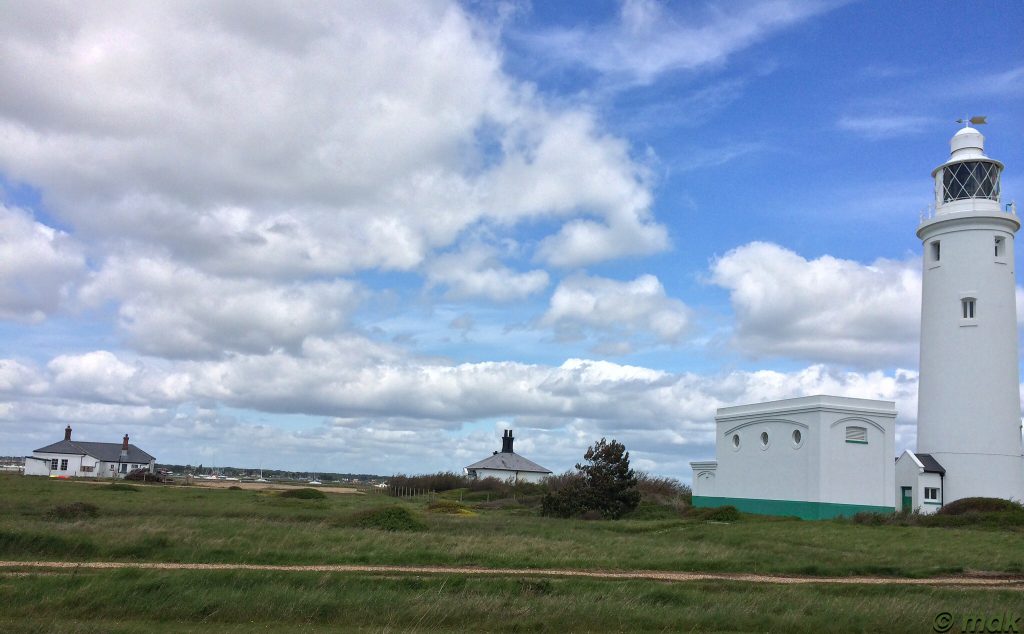
I do like a nice lighthouse and I’d have quite liked a longer look but I was very aware of the time passing and Commando bringing the car back to wait for me. In the end I contented myself with a photo of the light and all the little buildings around it. Hurst Point Lighthouse was built between 1865 and 1867 and there is probably a lot of interesting history to it but I think I will return, by way of the Keyhaven Ferry, and have a longer visit.
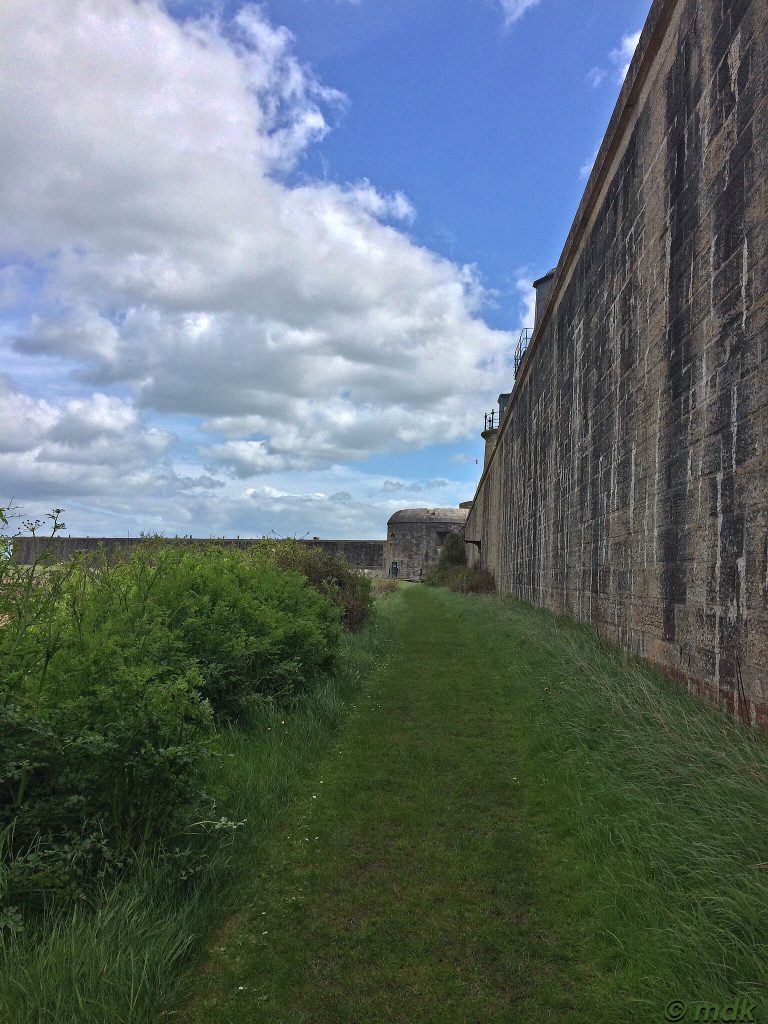
So I started off back towards the shingle spit, stopping for a moment to look back along the line of the castle. When I got back to the main door I noticed the odd train tracks actually run right inside, there were crowds going in when I first passed so I must have missed them. Maybe they used them to move cannons about? Passing the little Keyhaven Ferry boat I looked at it longingly, thinking of all the shingle I could miss if I caught it.
Just as I came to the edge of the castle and was looking up at the ruined brick battlements my phone rang. Commando was already back at the cafe at the other end of the spit waiting for me. I could hardly hear him for the wind and I was a bit worried about how long it was going to take me to walk back what with the shingle and a head wind.
“Don’t worry, I’ll wait for you,” he said.
Please see my copyright information before you copy or use any of the above words or pictures.
Beautiful photos – I love walking around Hurst Castle
It was a slog because of the wind but the scenery was breathtaking.