
14 October 2015
When we got back to the chalet we found a note from Alan saying he and Maggie would be round to pick us up in about an hour so we made ourselves a coffee and waited. We had both fallen asleep by the time they arrived. Maybe it was the jet lag catching up with us or all the fresh air.
“We thought we’d take you out to see some trails,” Maggie said.
“Not far, just about an hour’s drive there and back,” Alan added.
This was when I realised that not far has a completely different meaning in Canada. In England, not far means a mile down the road, in Canada, if it’s less than an hour’s drive it’s nearby. Suddenly I began to wonder just how long these trails were.
We drove along wide highways with numbers rather than names through breathtaking scenery that I wished I could photograph until we came to Port Carling in Muskoka Lakes. Originally called Obajewanung by the Ojibway Indians who settled there, in the 1850’s it was renamed Port Carling by Benjamin Hardcastle Johnston when he started the post office in the late 1860’s. As the white settlers moved in, bringing tourism, sawmills, logging, boat works and three churches, the indians moved away. Where they went I’m not sure but I should think they were sad to leave.
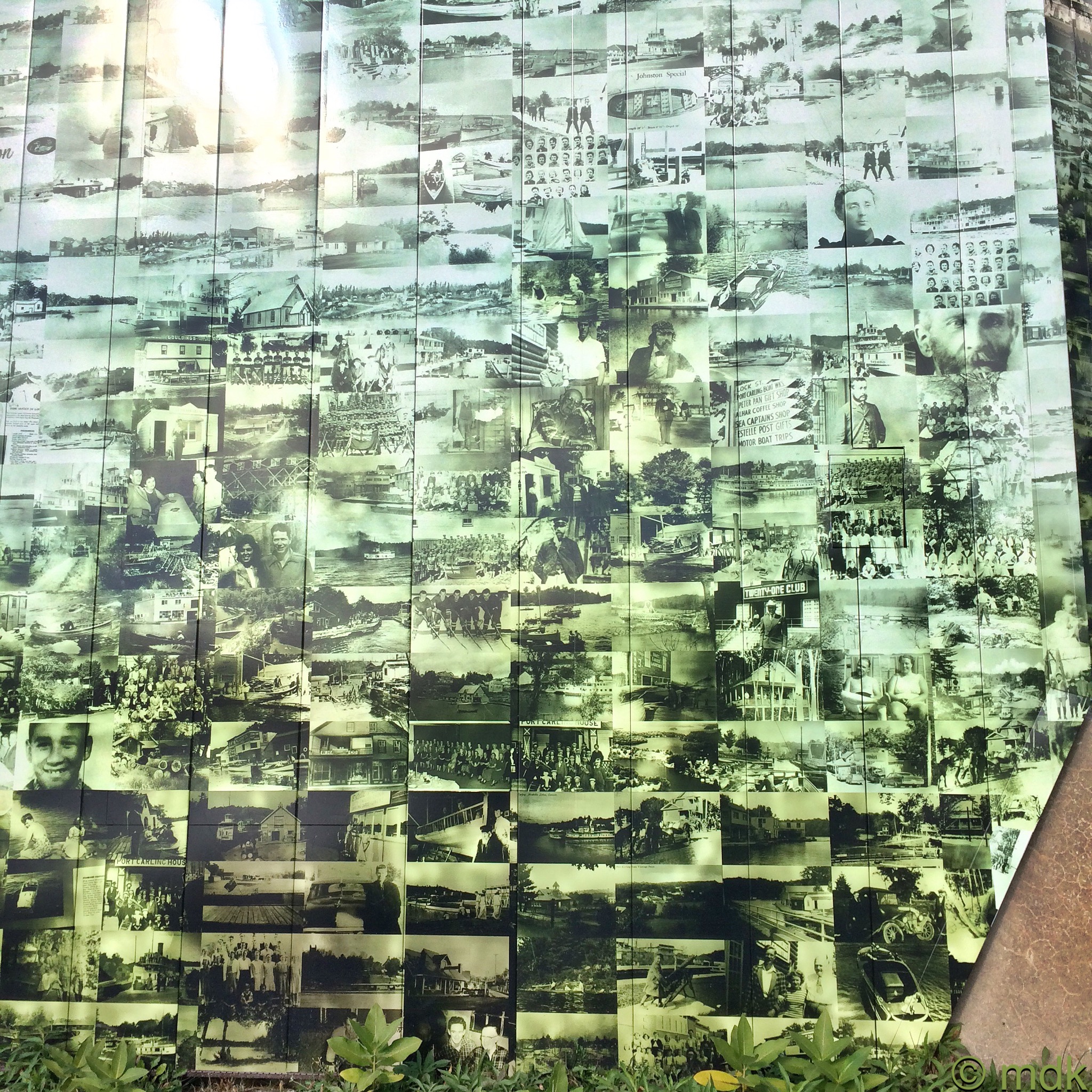
This little village, on the Indian River has just a couple of hundred residents although it caters for thousands of visitors in the summer months. The reason so many people flock there was obvious as soon as we got out of the car. We’d parked on the banks of Mirror Lake beside a row of shops with an attractive mural of a stream boat in shades of green and a sign that said Welcome to Port Carling. On closer inspection the sign was made up of lots of old photographs of the area. Left to my own devices I’d have stood there all day looking at them. Instead I took a photo.
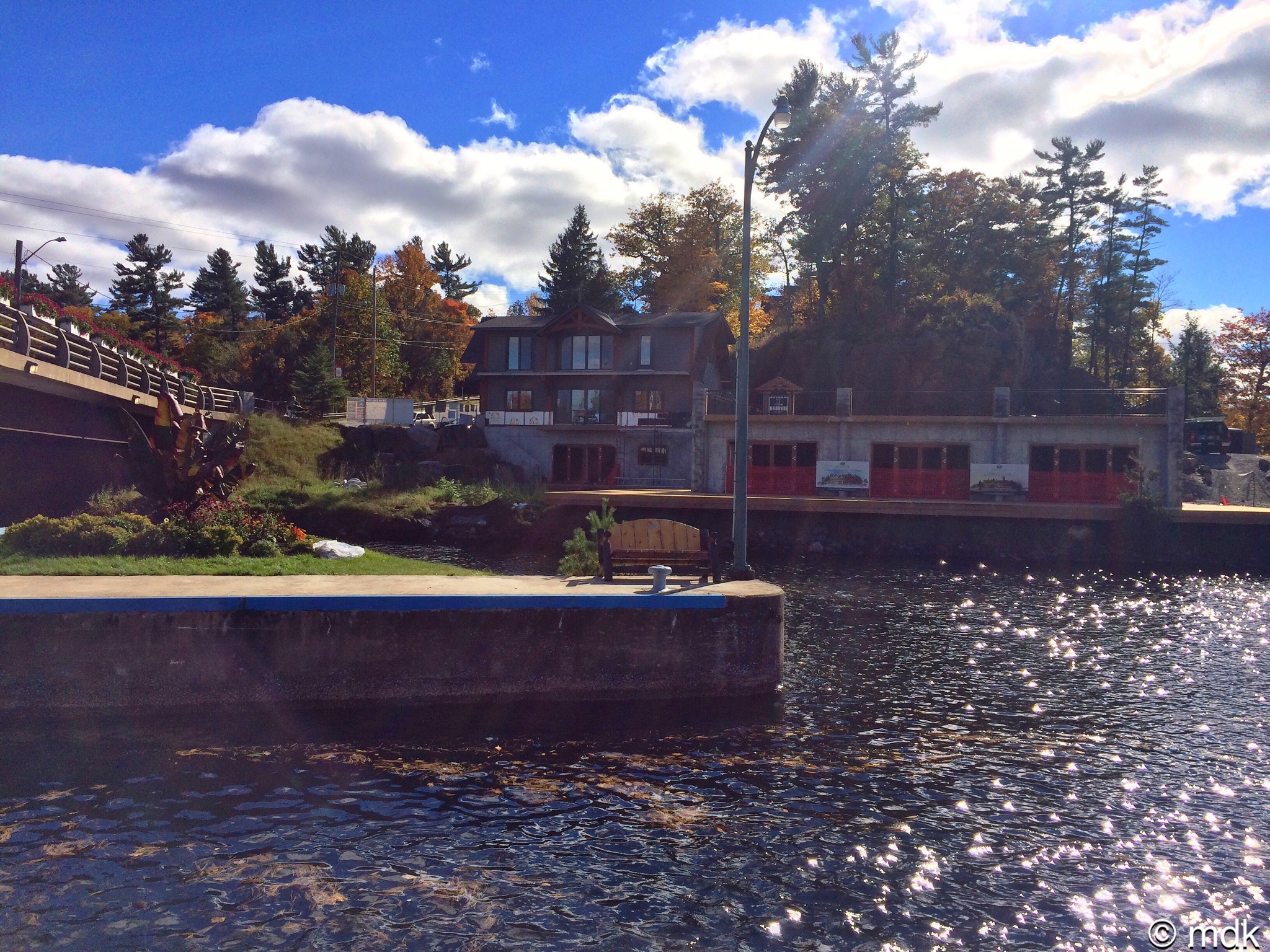
We strolled along a boardwalk beside the lake and under a bridge carrying the Highway 118 to a small pleasure boat lock, built in the 1920’s, joining Mirror Lake with Lake Rosseau. There is another large set of locks between Lake Rosseau and Lake Muskoka but we didn’t see those. The village also touches the shores of Silver Lake and has access to Lake Joseph. For this reason it has been dubbed Hub of the Lakes. There were a handful of locals about but, for the most part, the place was deserted, all the benches lining the shore empty.
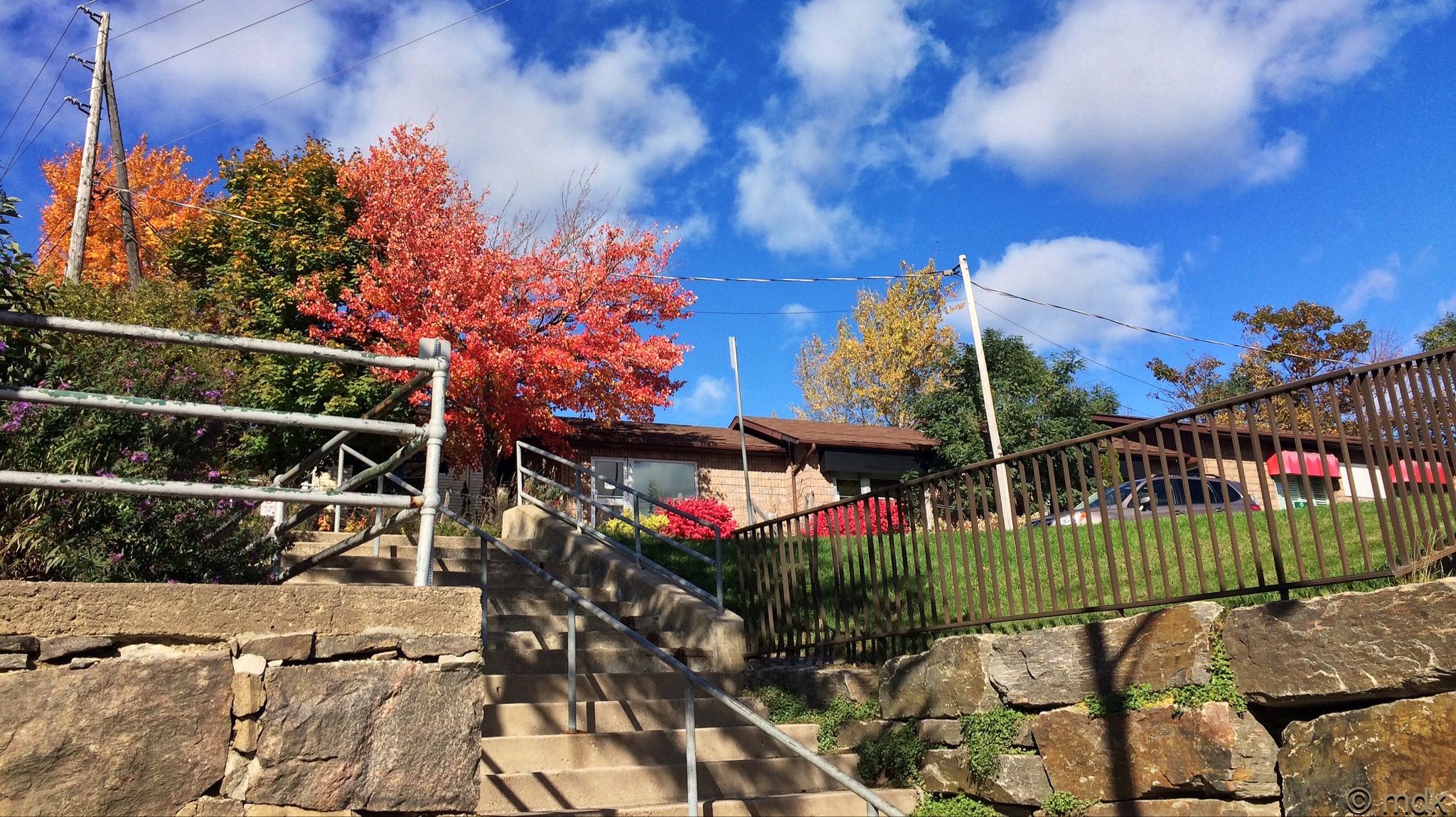
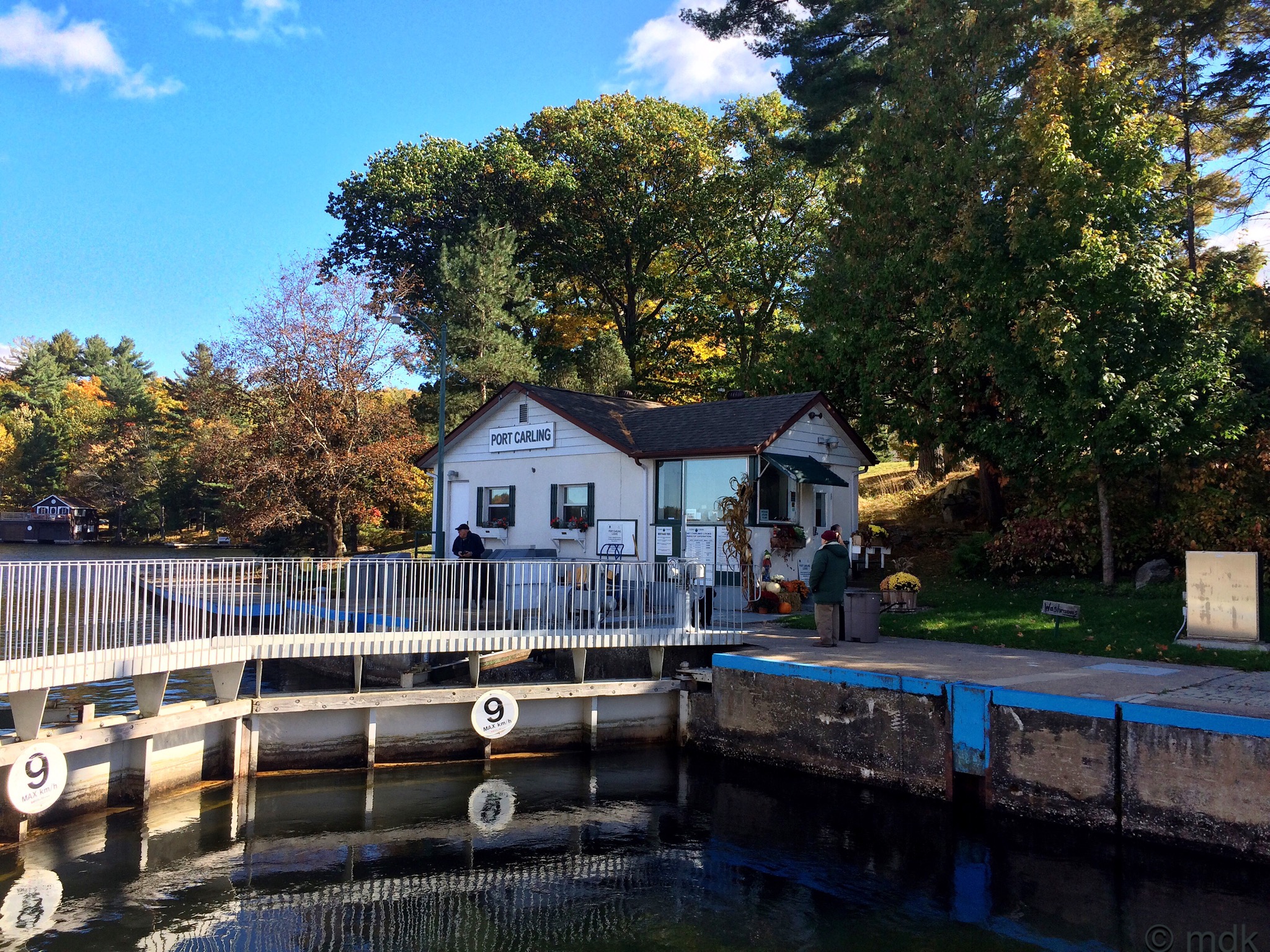
As we walked Maggie told me about RMS Segwun, the oldest steam driven ship still operating in North America. Built in 1887 when there were few roads in Muskoka, she was part of a fleet that carried holiday makers around the area. Now she is the only one left and is one of just four Royal Mail Ships in the world. These days she steams through Gravenhurst, Bracebridge, Beaumaris, Port Sandfield, Bala and Port Carling. We came to a large wooden jetty with a kind of tile roofed pavilion. A few people were milling about at tables under it.
“Look, there’s a steam boat,” Maggie said pointing to the end of the jetty.

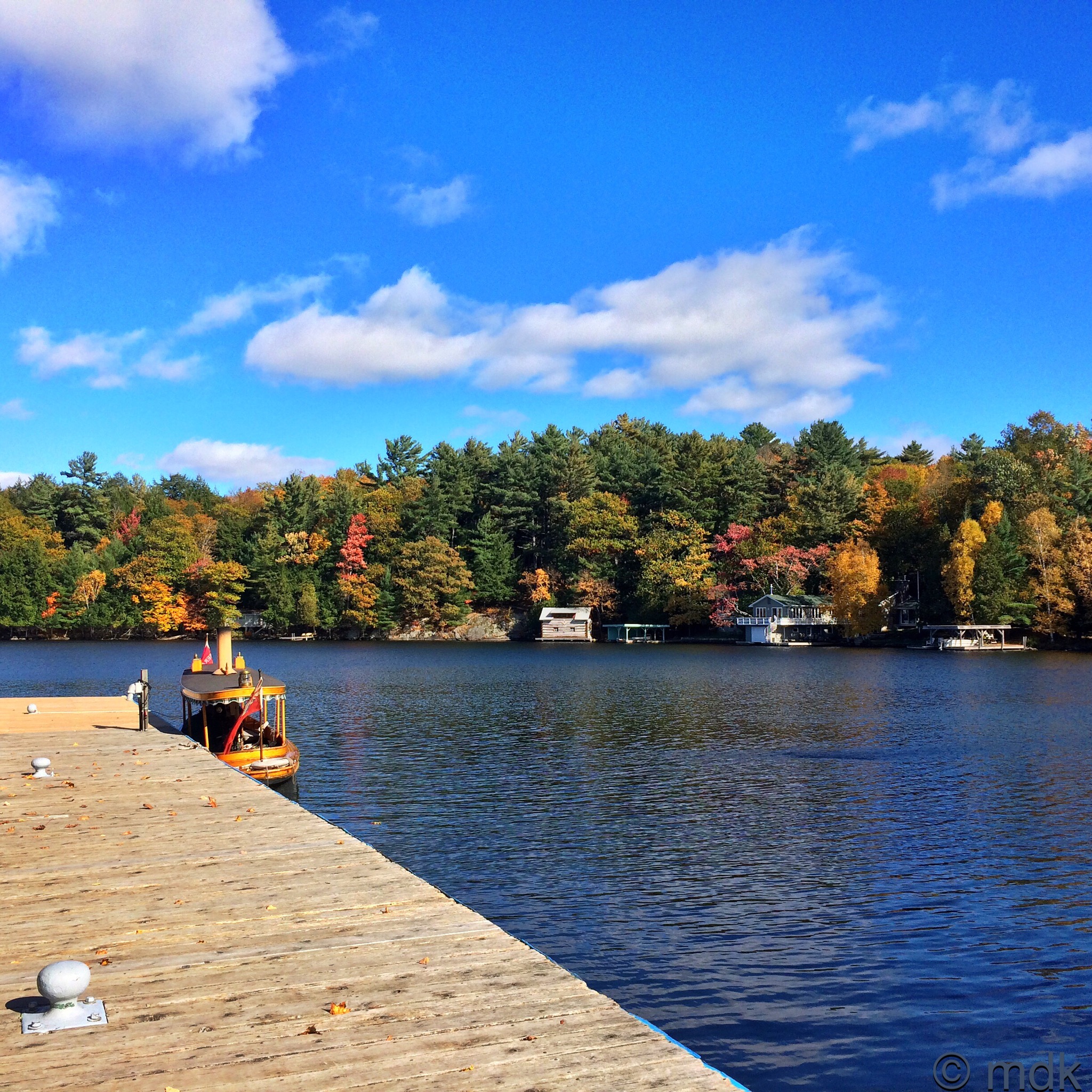
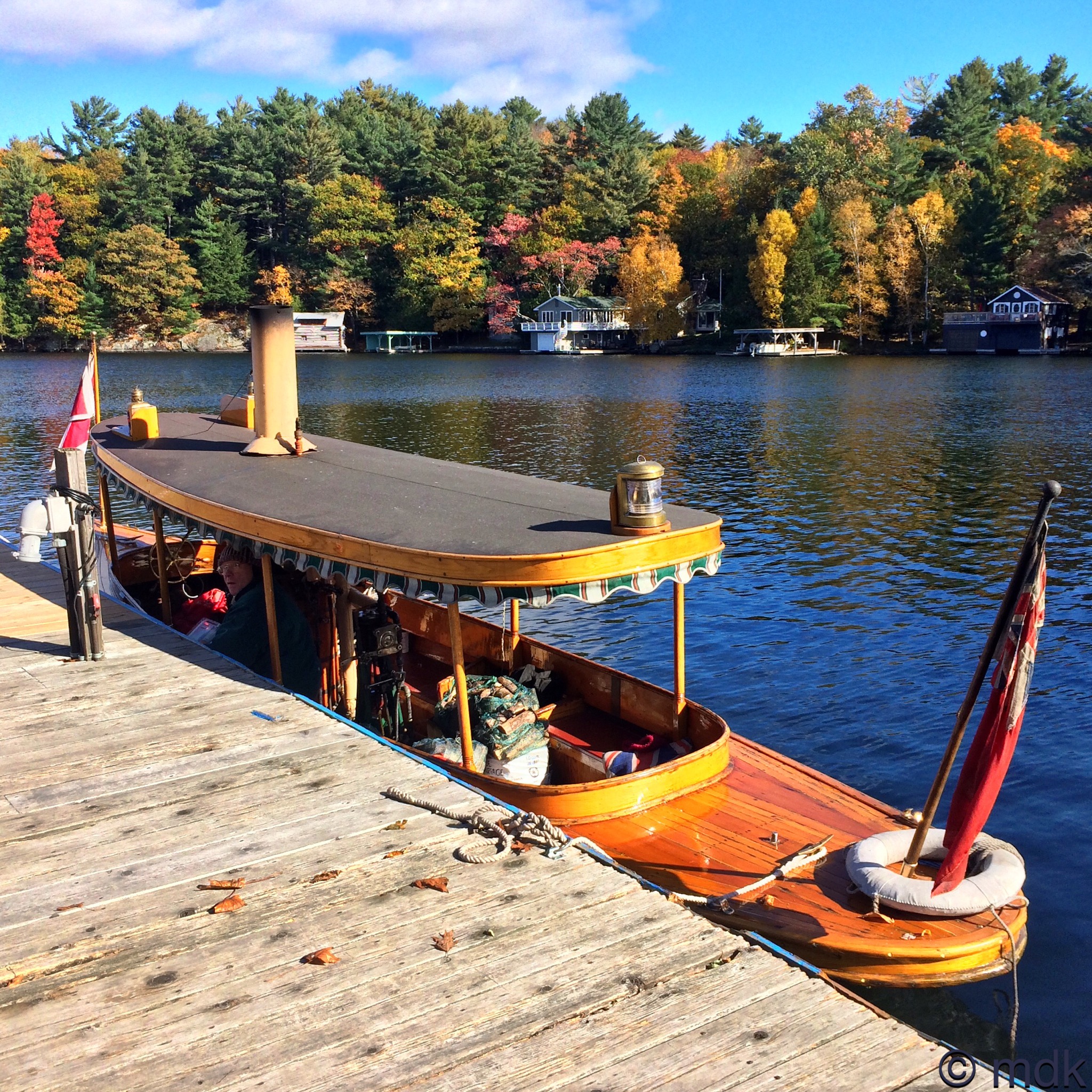
We went to have a closer look. Sadly it wasn’t Segwun but it was a fabulous little thing, like a large highly polished wooden canoe with a steam engine. While we were admiring it one of the people who’d been under the pavilion came over to us.
“Hello Maggie,” he said, “I thought it was you.”
While they were chatting I had a good look at the lovely little boat. The owner even tooted the steam whistle for me.
“Would you like some blueberry pie?” the lady with Maggie’s friend asked, handing me a serviette with a huge slice of juicy looking loveliness.
In no time at all we were all tucking in and the pie was even better than it looked. Canadian hospitality really does know no bounds. Fresh, cool air, beautiful views and sweetly succulent blueberry pie, what more could anyone want?

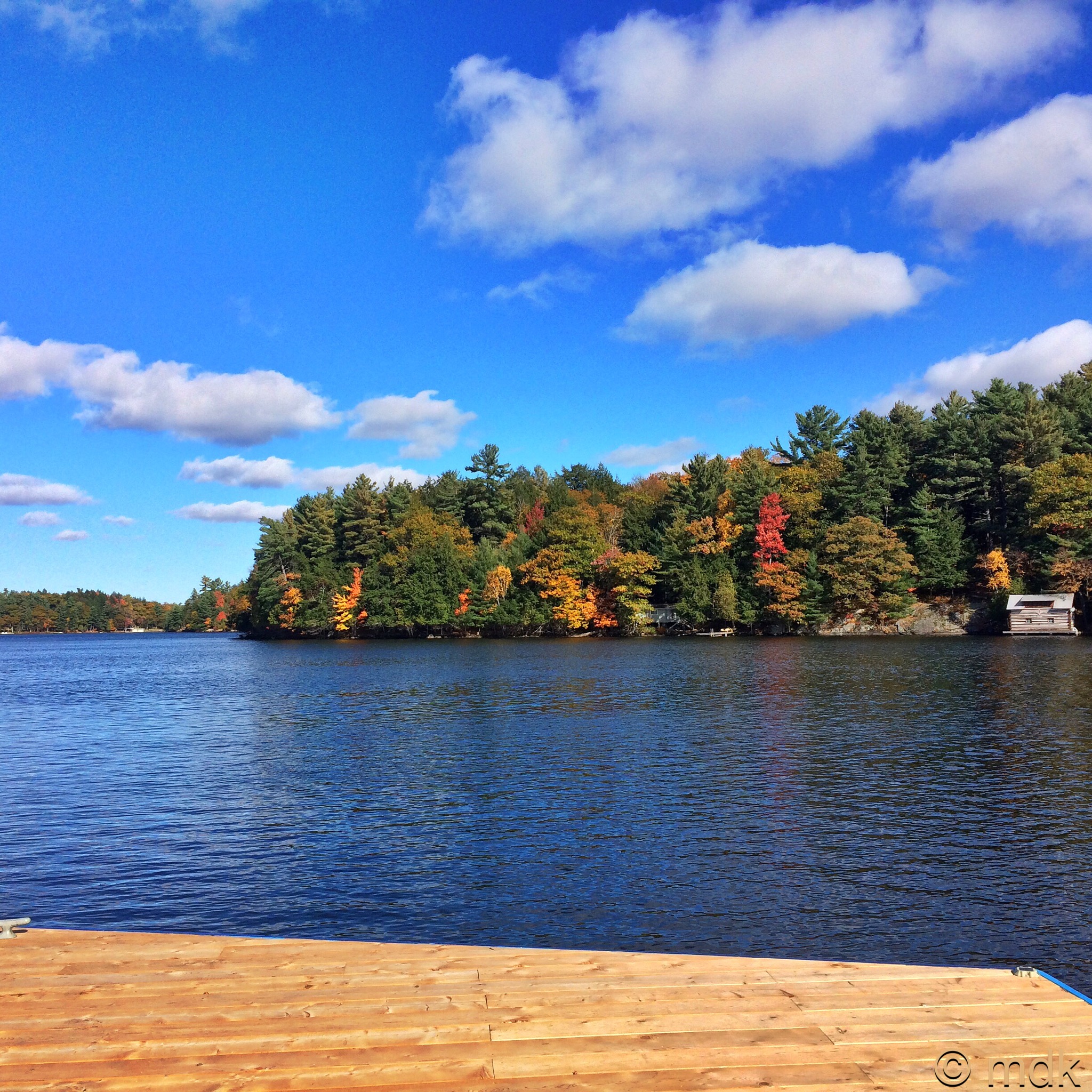

So, full of pie, we said our goodbyes and wandered back to the car. Our next stop was the Huckleberry Rock Lookout Trail about five or six miles away on the banks of Lake Muskoka. Alan said this was one of his favourite trails and I, for one, was looking forward to it, especially when I saw the script on the huge rock sign under the lych gate like entrance.
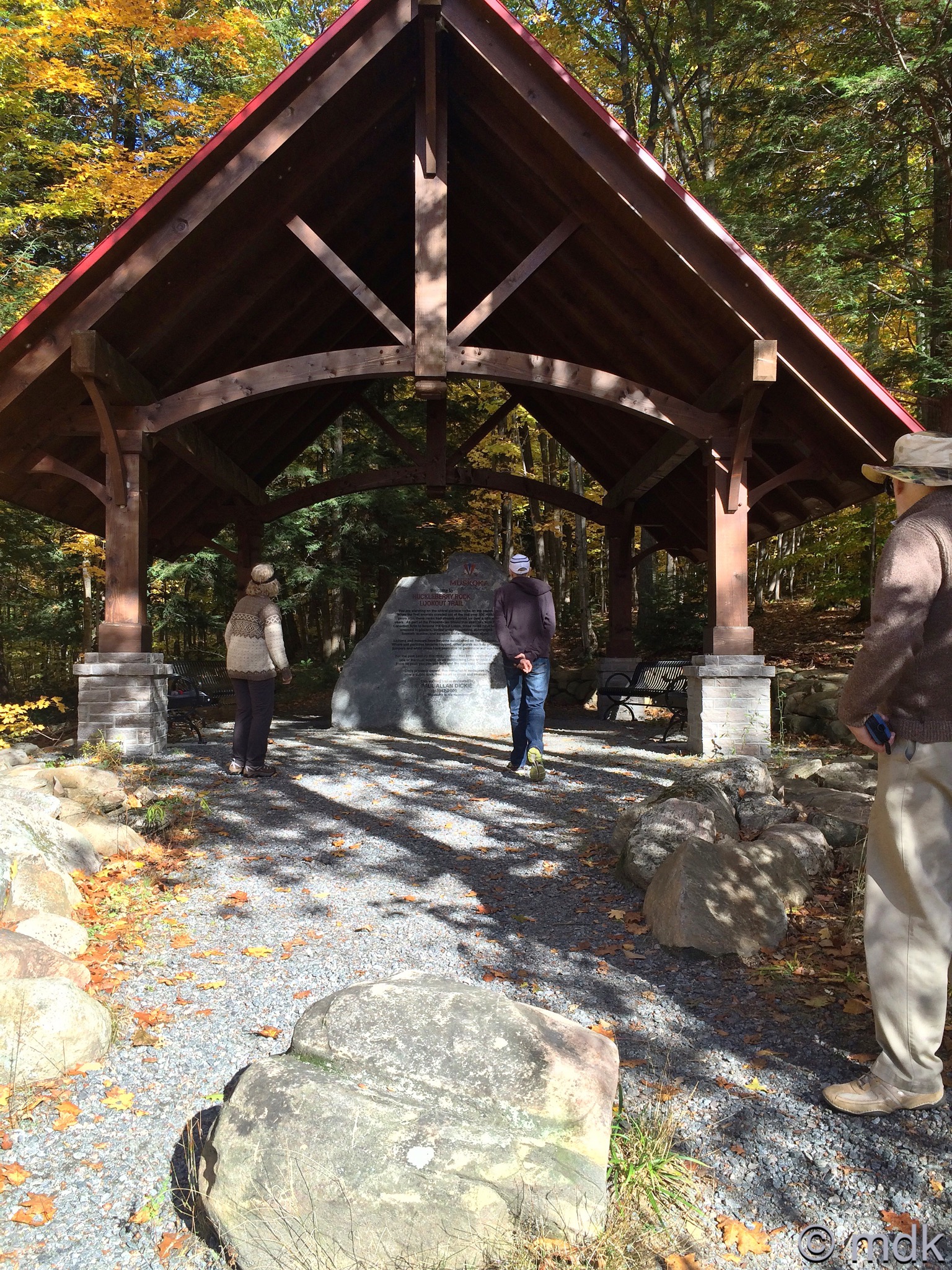
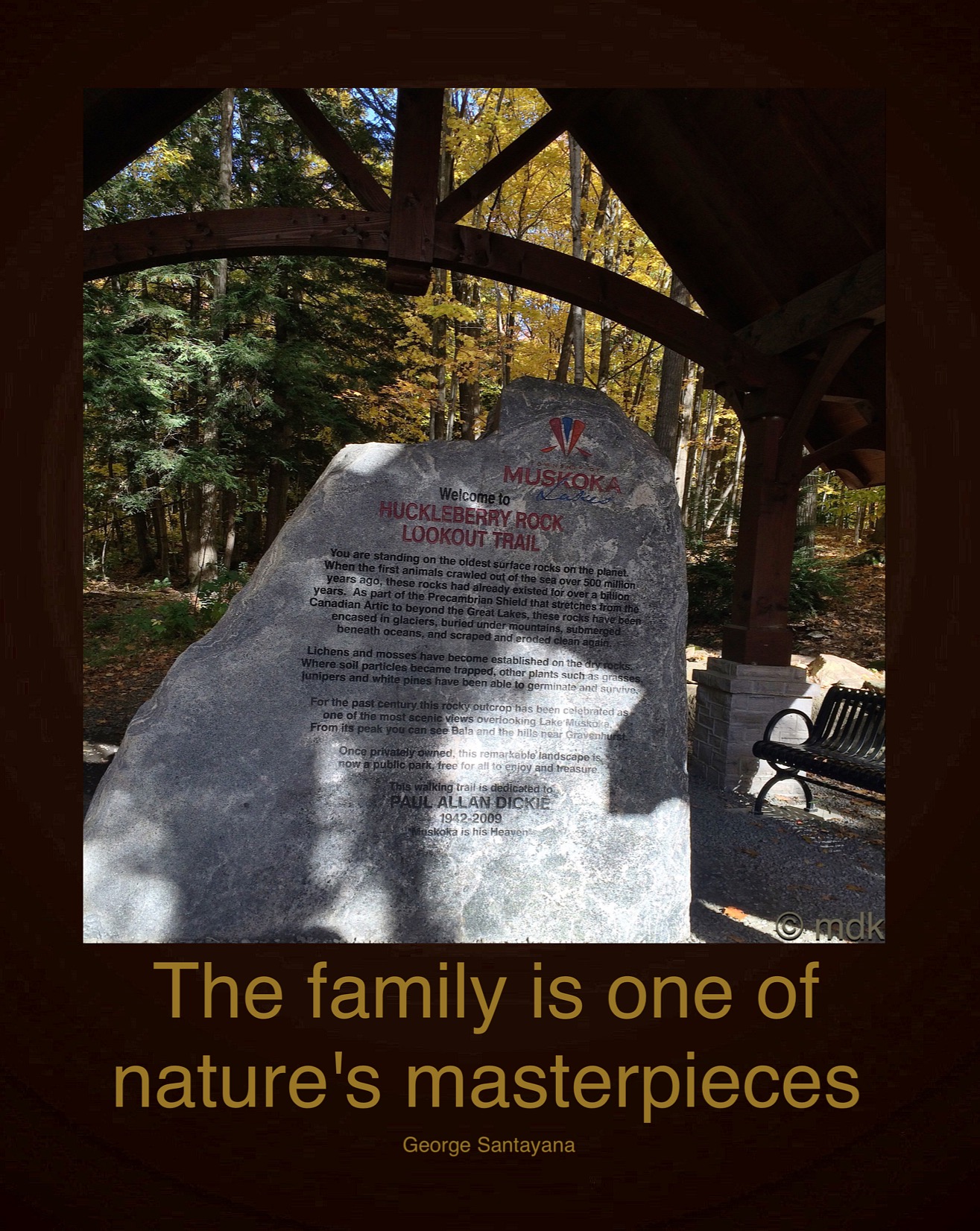
The trail crosses some of the oldest rock in the world, more than a billion years old. Just thinking about that made my fifty five years seem pretty insignificant. Glaciers scraped away the thin covering of soil exposing the bare granite but, over the centuries, lichens and mosses have grown, trapping soil particles and grasses and trees have taken a tenuous hold.
“It’s a bit of a climb,” Alan said as we set off through the trees, “but the views are worth it.”
It seemed as if we’d entered a cathedral of green and gold with large altars of glacial erratics scattered about.
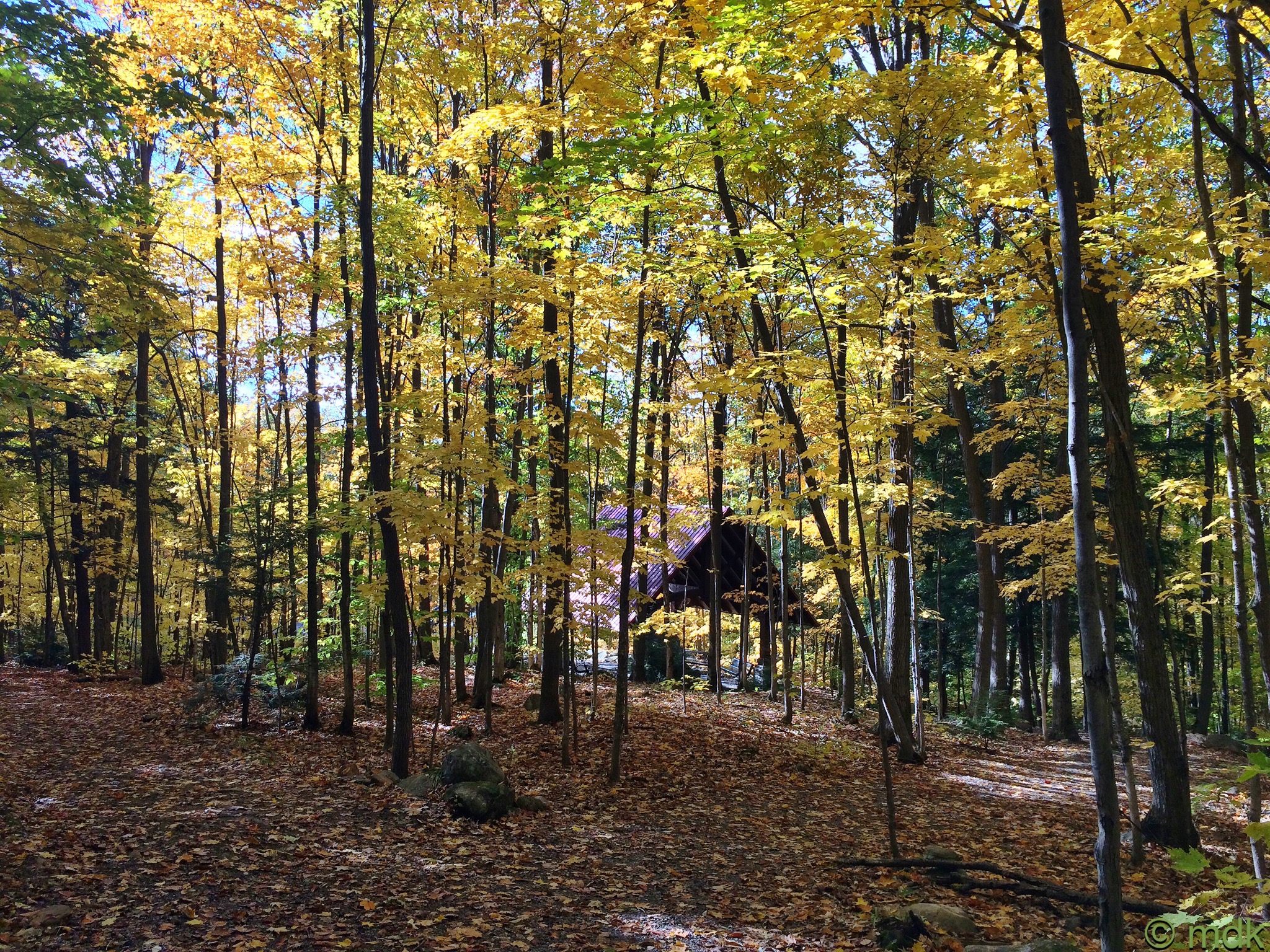
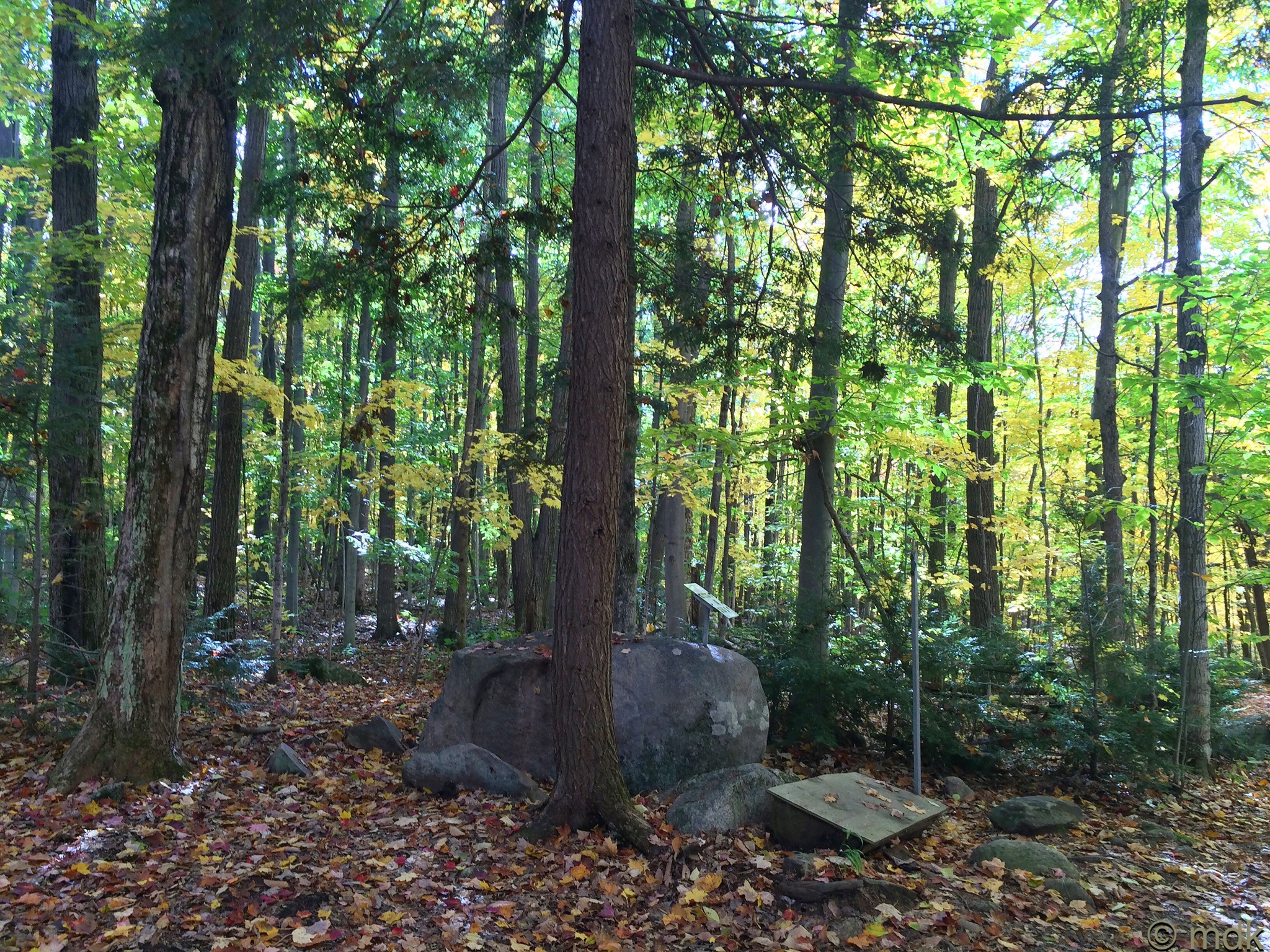
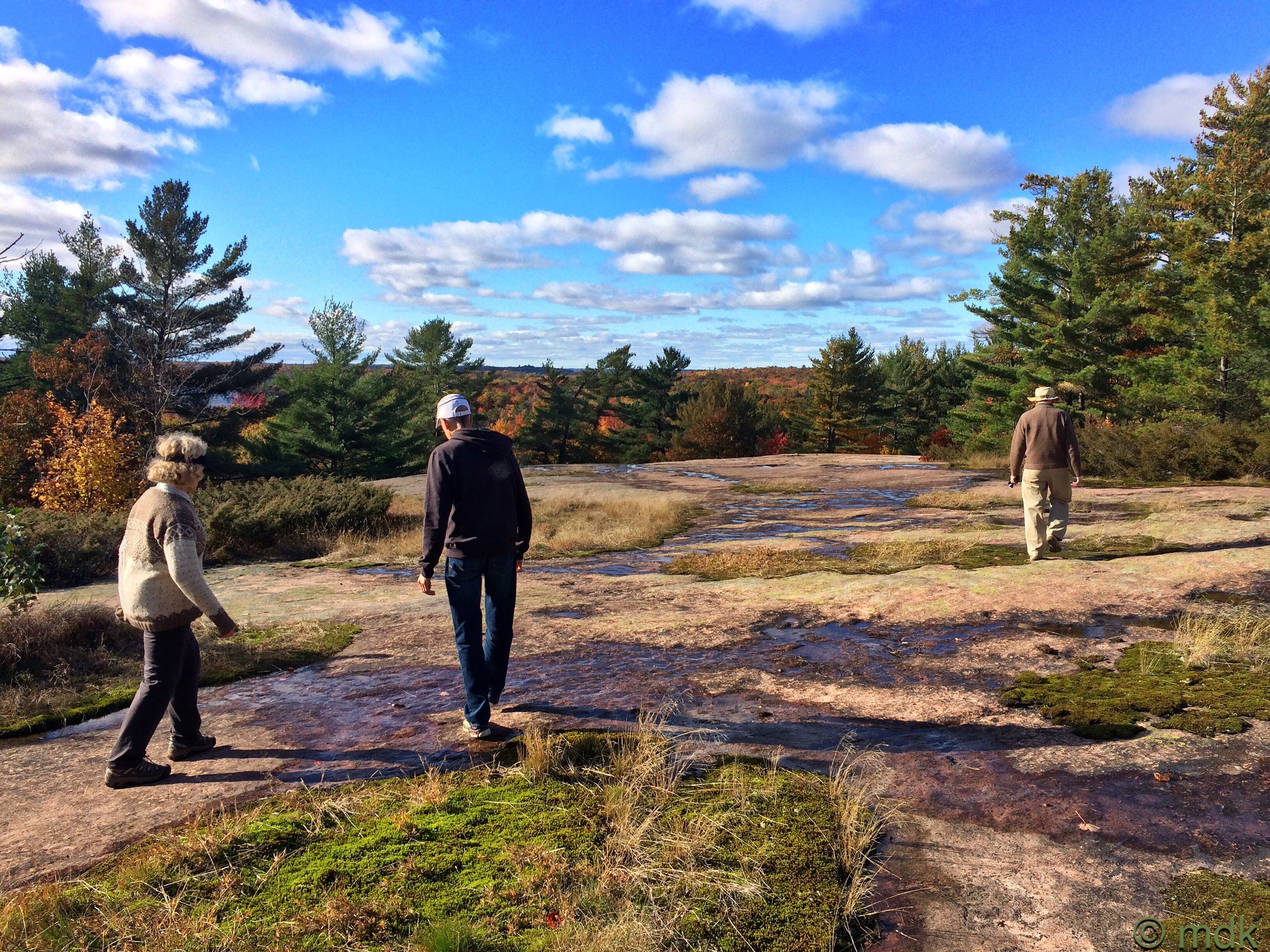
Commando and Alan strode on ahead, deep in conversation while I took it slower with Maggie, who has a dodgy knee after a ‘little fall down a mountain’ a while back. The pace suited me fine as it gave me chance to look around. When I oohed and ahhed over the stunning colours of the trees Maggie said, “I was worried there’d be none left by the time you arrived but fall came late this year. They were much better a few weeks ago though.”
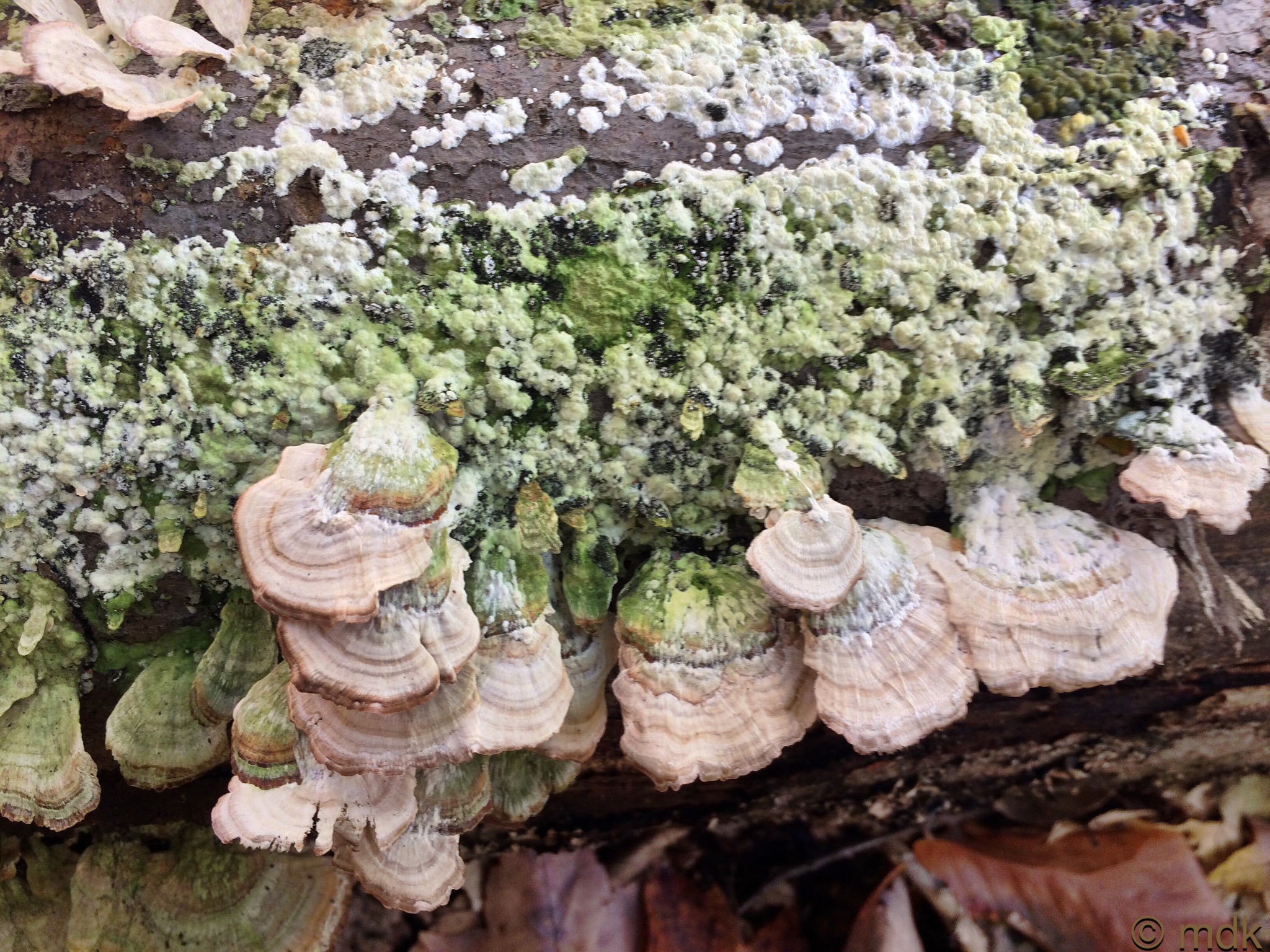
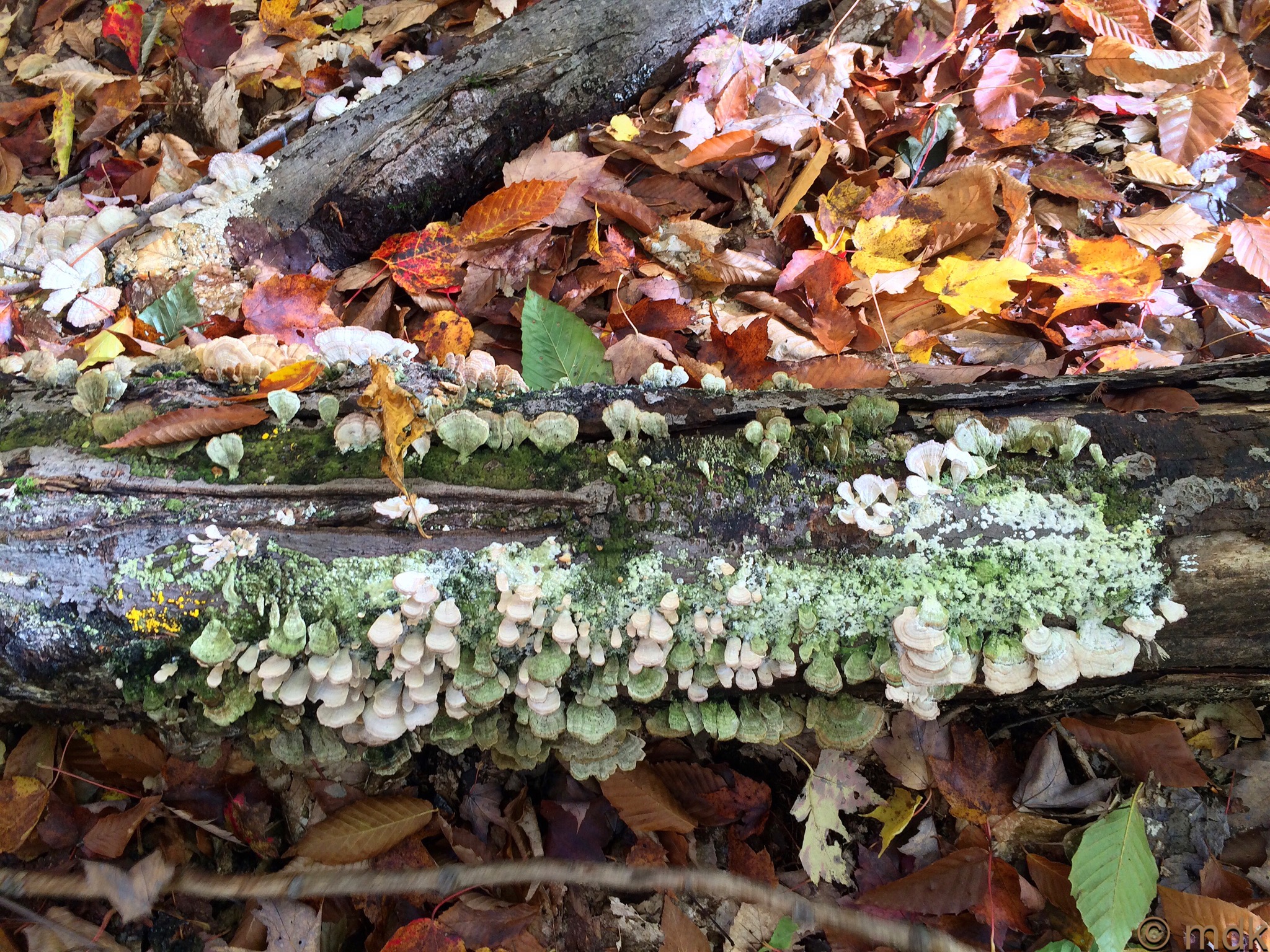
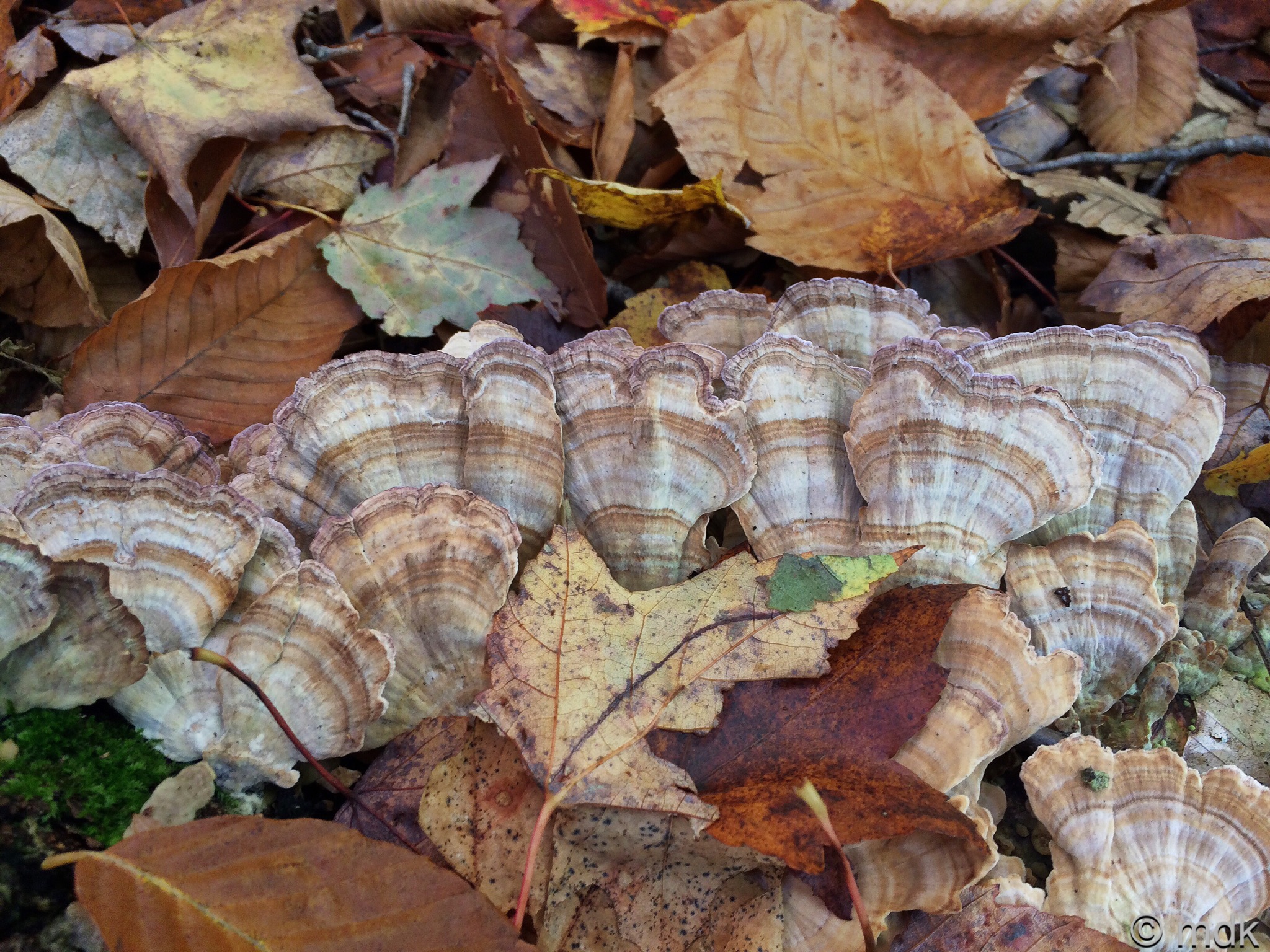
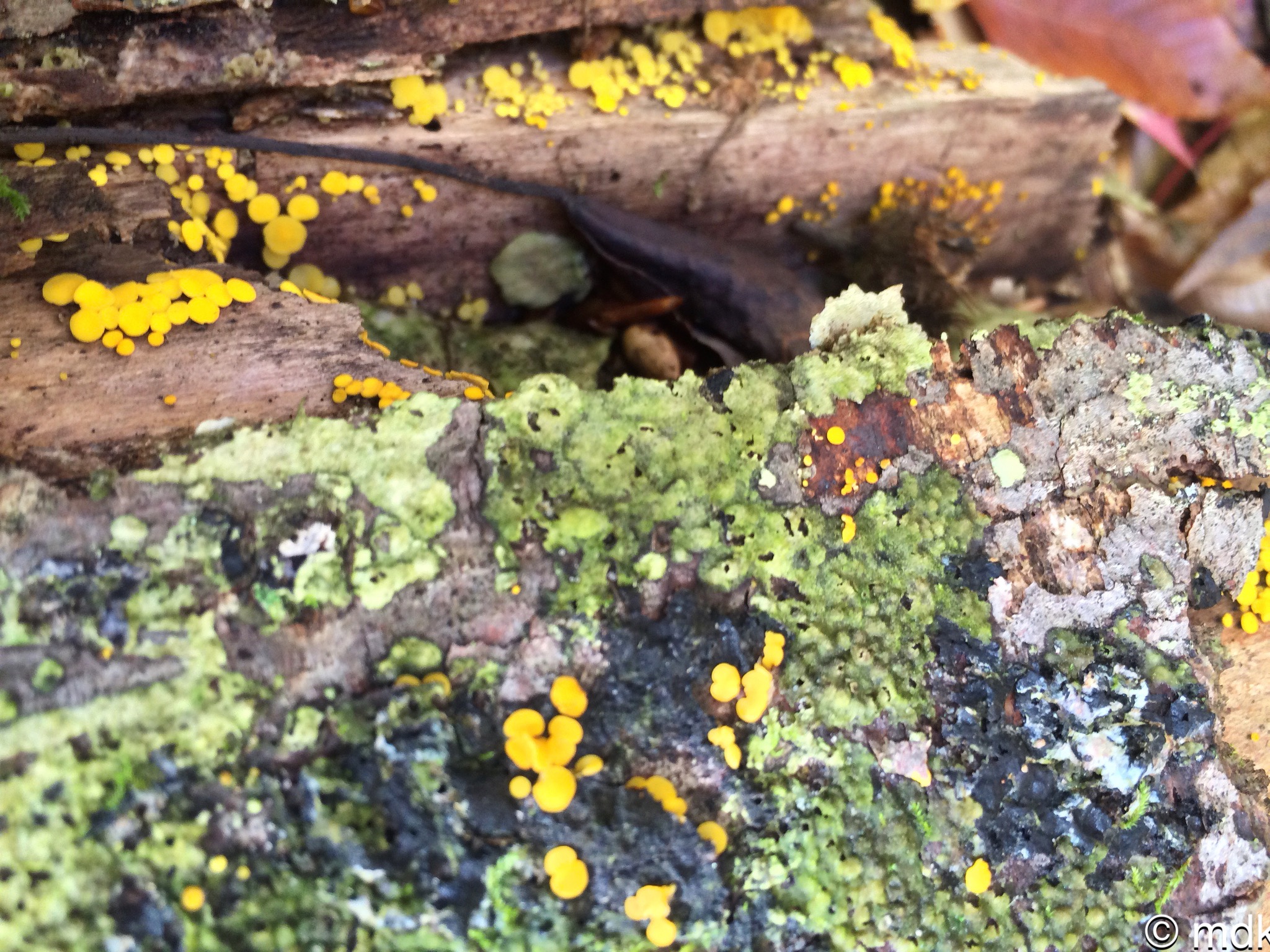
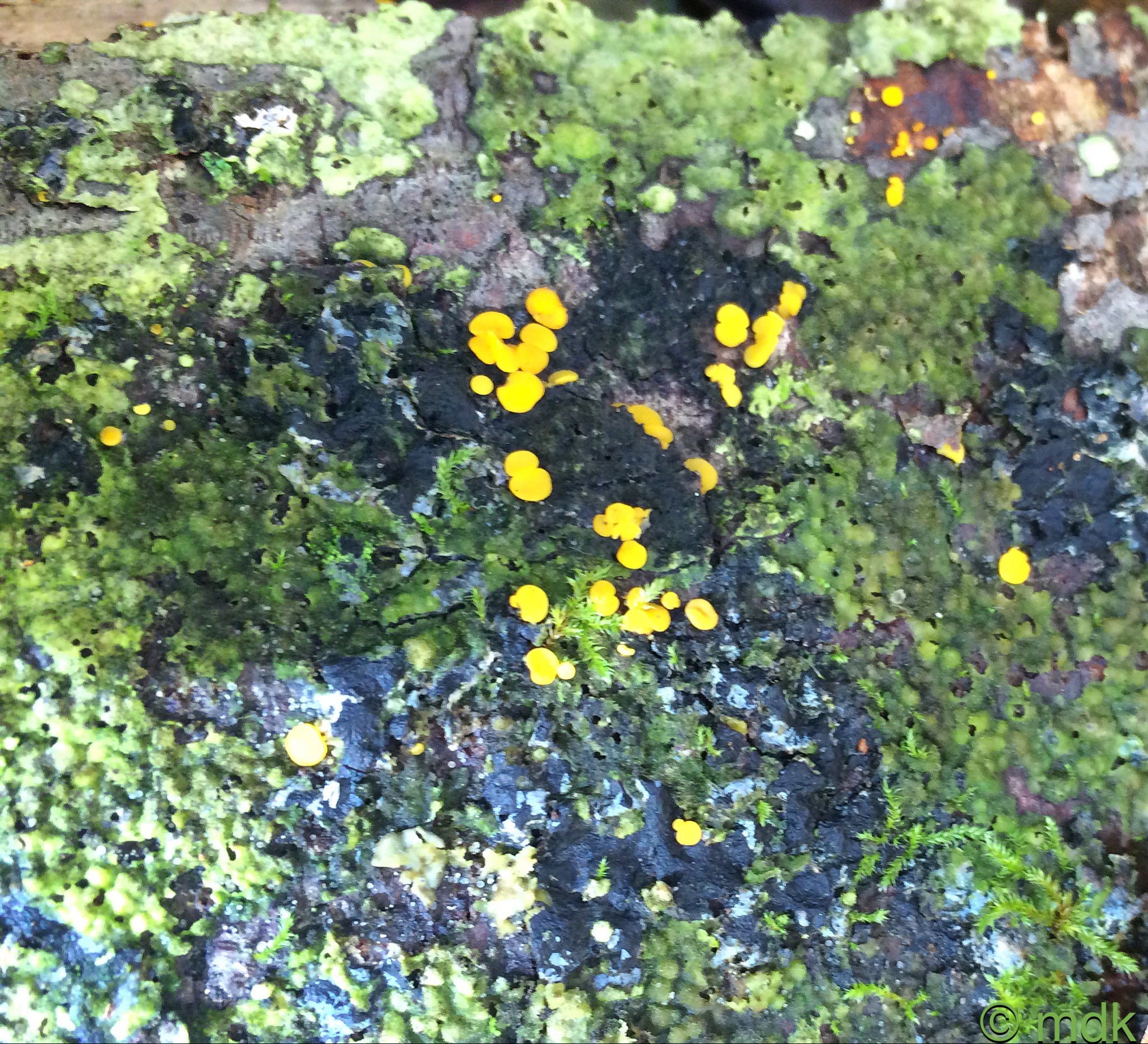
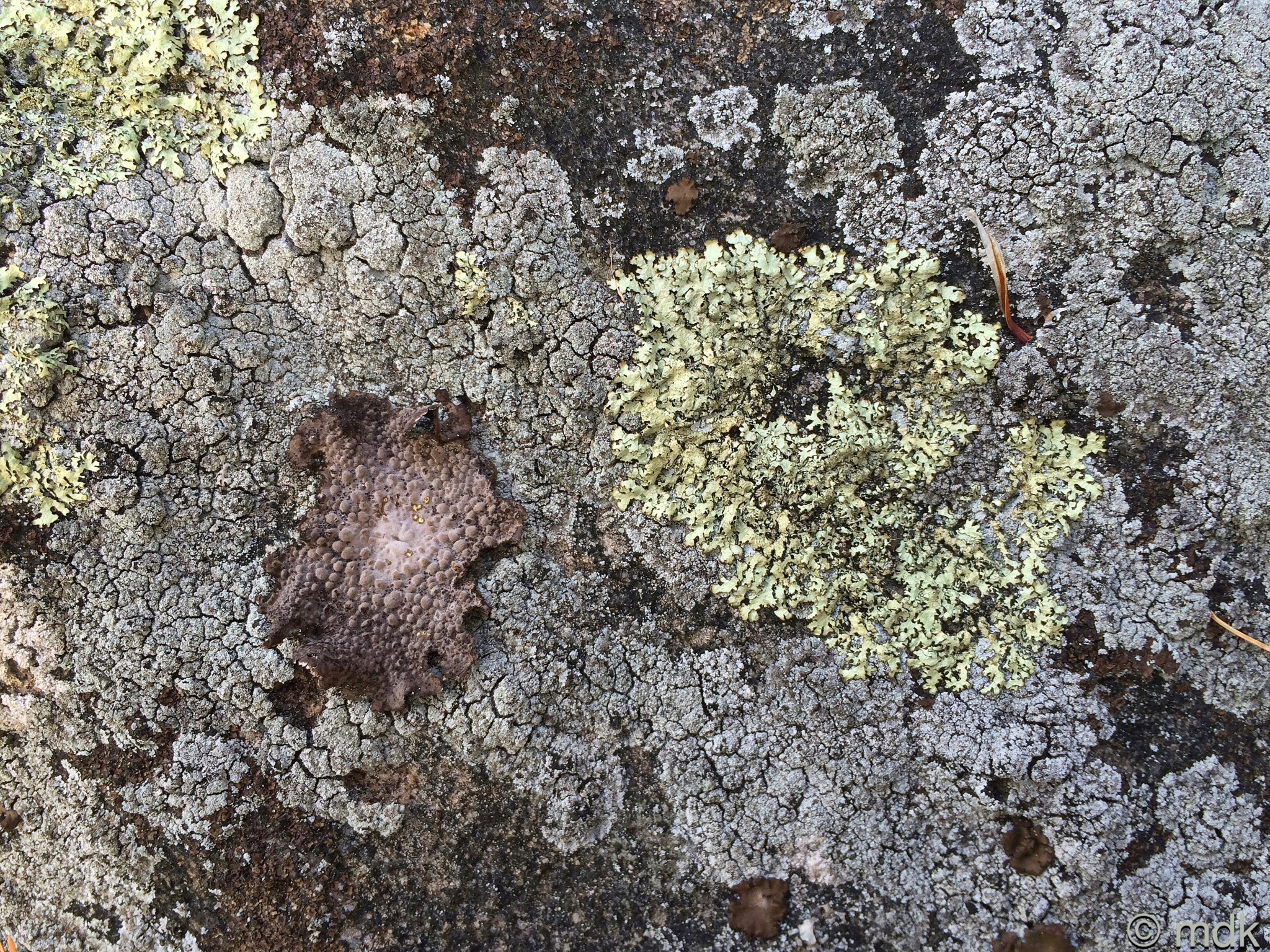
It was hard to imaging them being any brighter and odd that fall in Canada was late while autumn had barely started when we left England. Between us we spotted some beautiful cream and green fungi on a fallen tree, like scallop shells on a sea of foamy lichen. A spattering of tiny orange discs looked like slime mould but I couldn’t be sure. Another exciting find, at least for me, was a toadskin lichen, something I recognised from the blog of Allen in New Hampshire but had never seen in real life.
Before long we had climbed out of the trees and were scrambling over the rocky granite boulders. Over the tops of the Muskoka pines we could see the blue waters of Lake Muskoka and the patchwork quilt of pines and autumn leaves. The rock itself was a warm, pinkish colour marbled with veins of green and shot through with sparkling seams of quartz, the sky above a deep, cool blue.
“I can’t believe how clean and fresh the air is here after New York,” Commando said and it was.
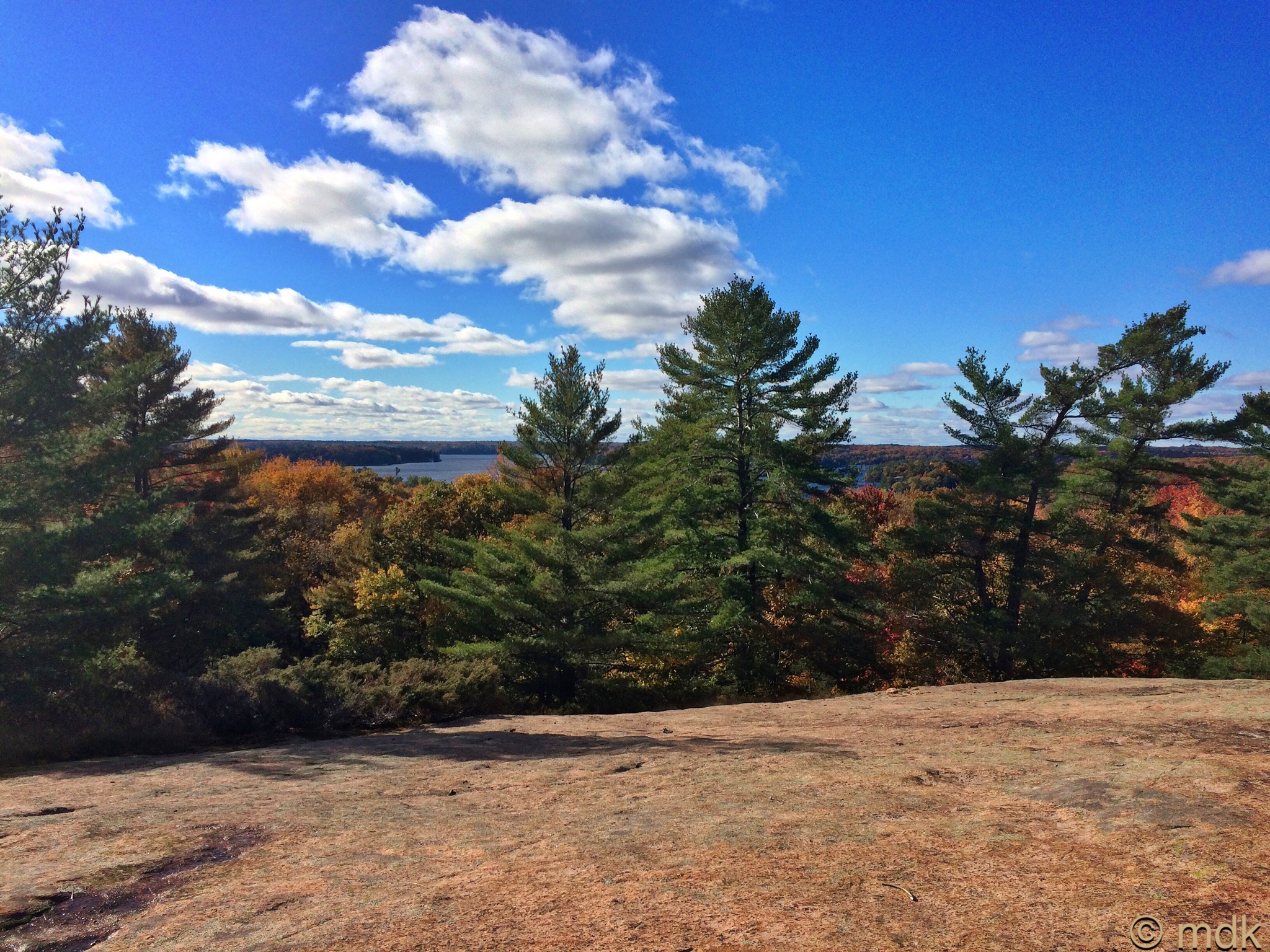
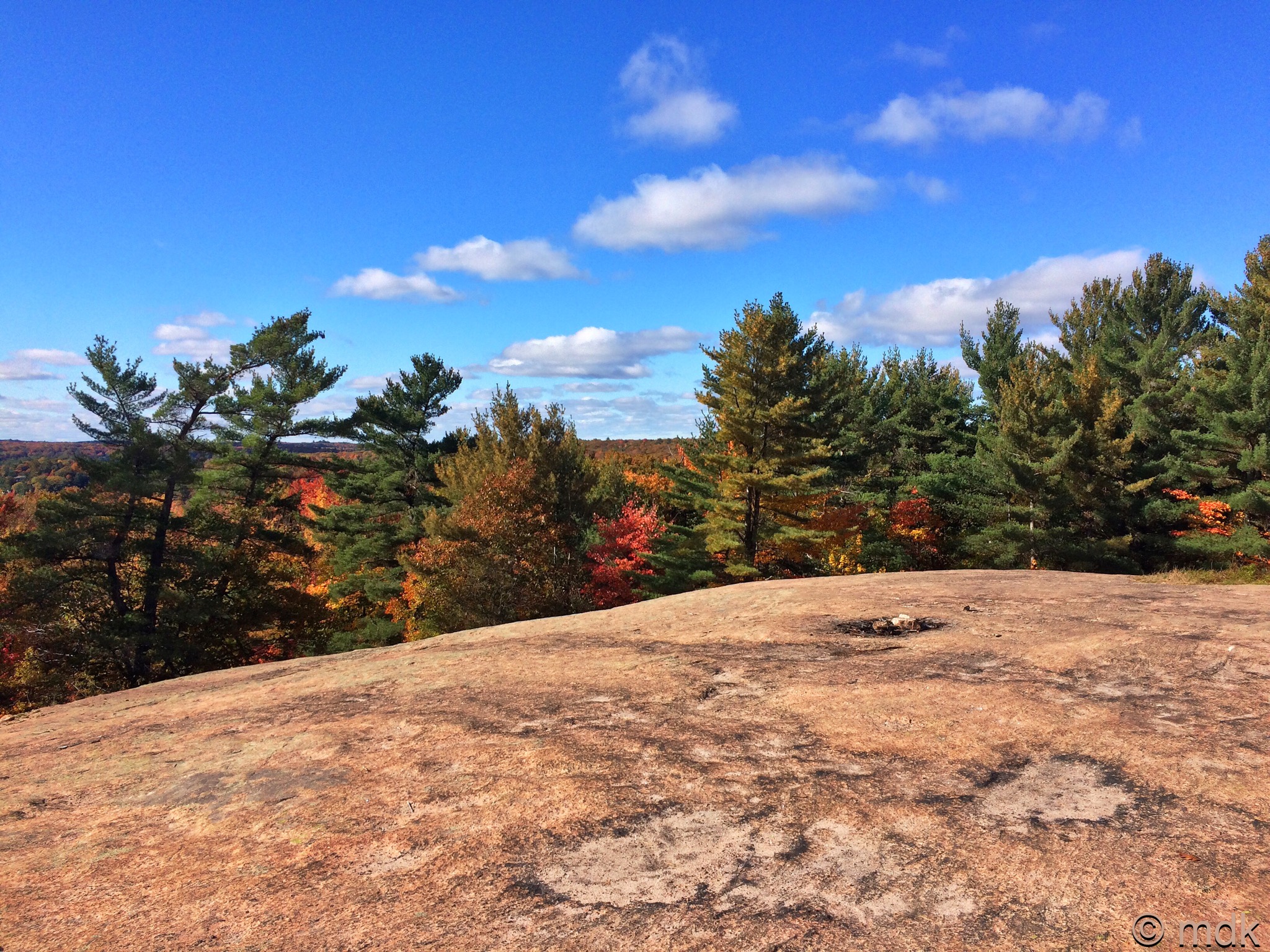
Here and there dips in the rock had become impromptu mini ponds, others were tiny islands of coarse, parched grass or cushions of spongy emerald green moss. This was a working demonstration of how nature is still reclaiming the granite little by little. When we came to a bench Maggie said she’d sit a while to give her poor knee a rest and we carried on without her. She’s so sprightly and full of energy it’s hard to remember she has twenty years on me and a shattered knee to boot. She did well to climb so far.
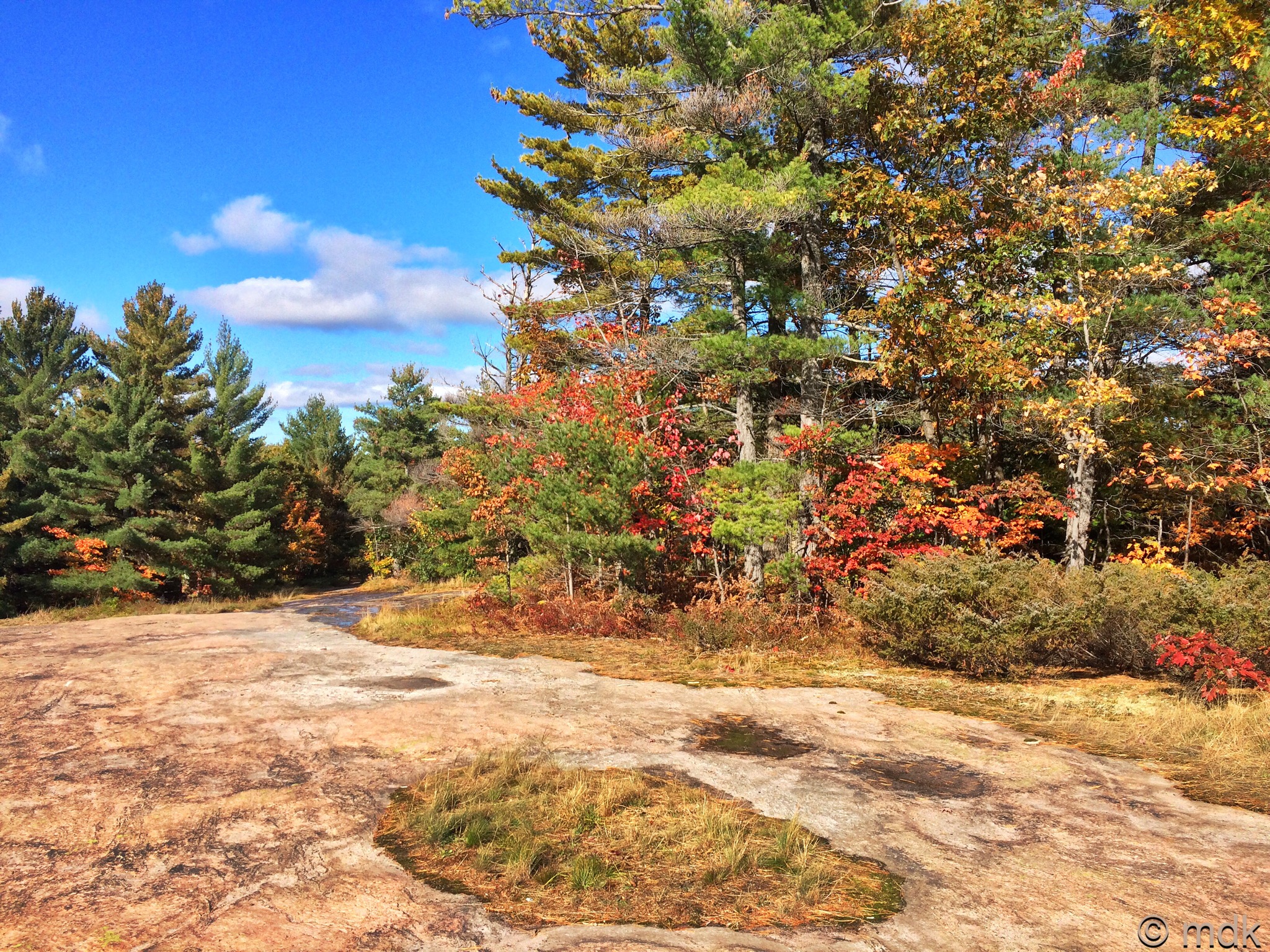
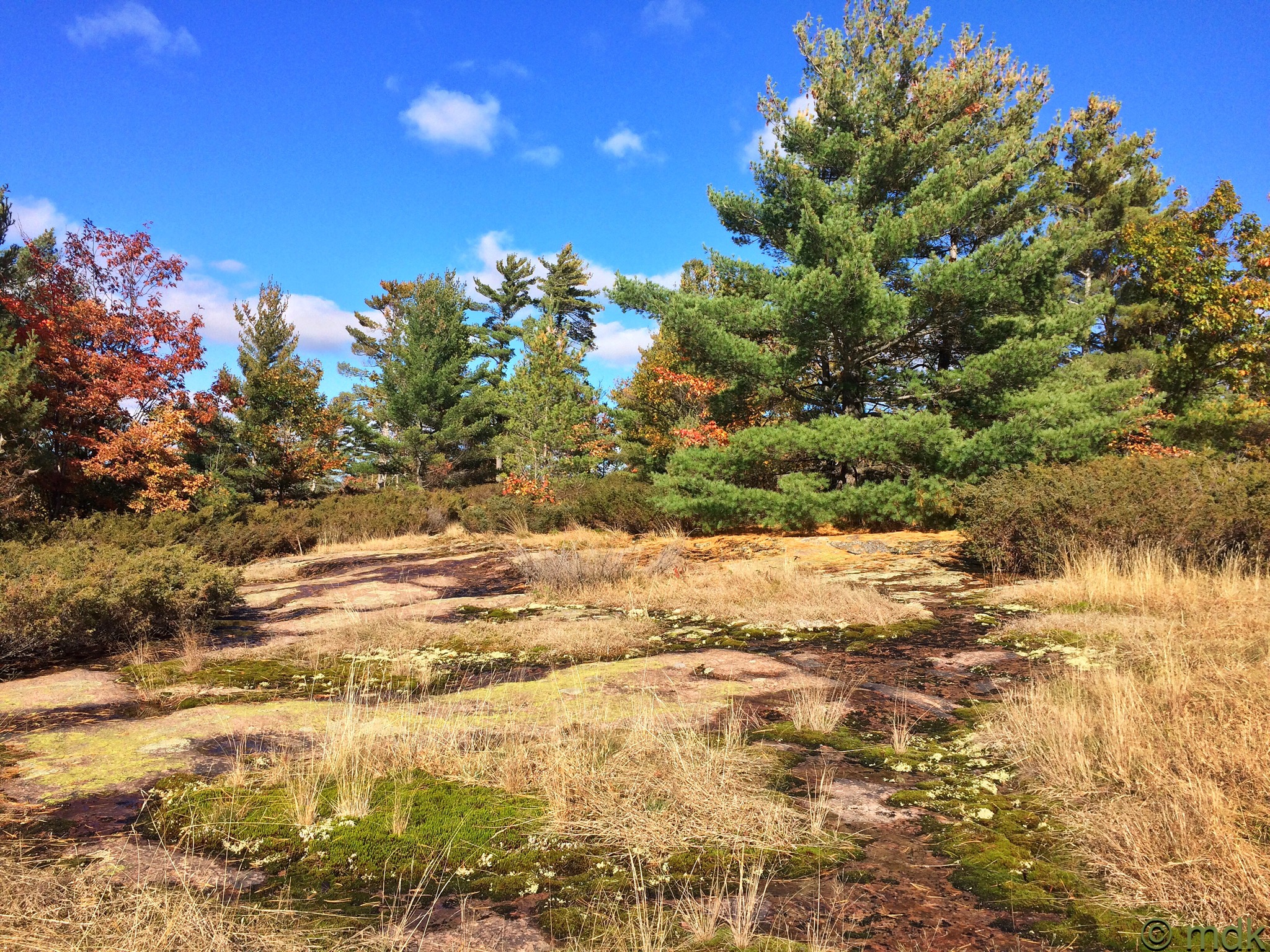
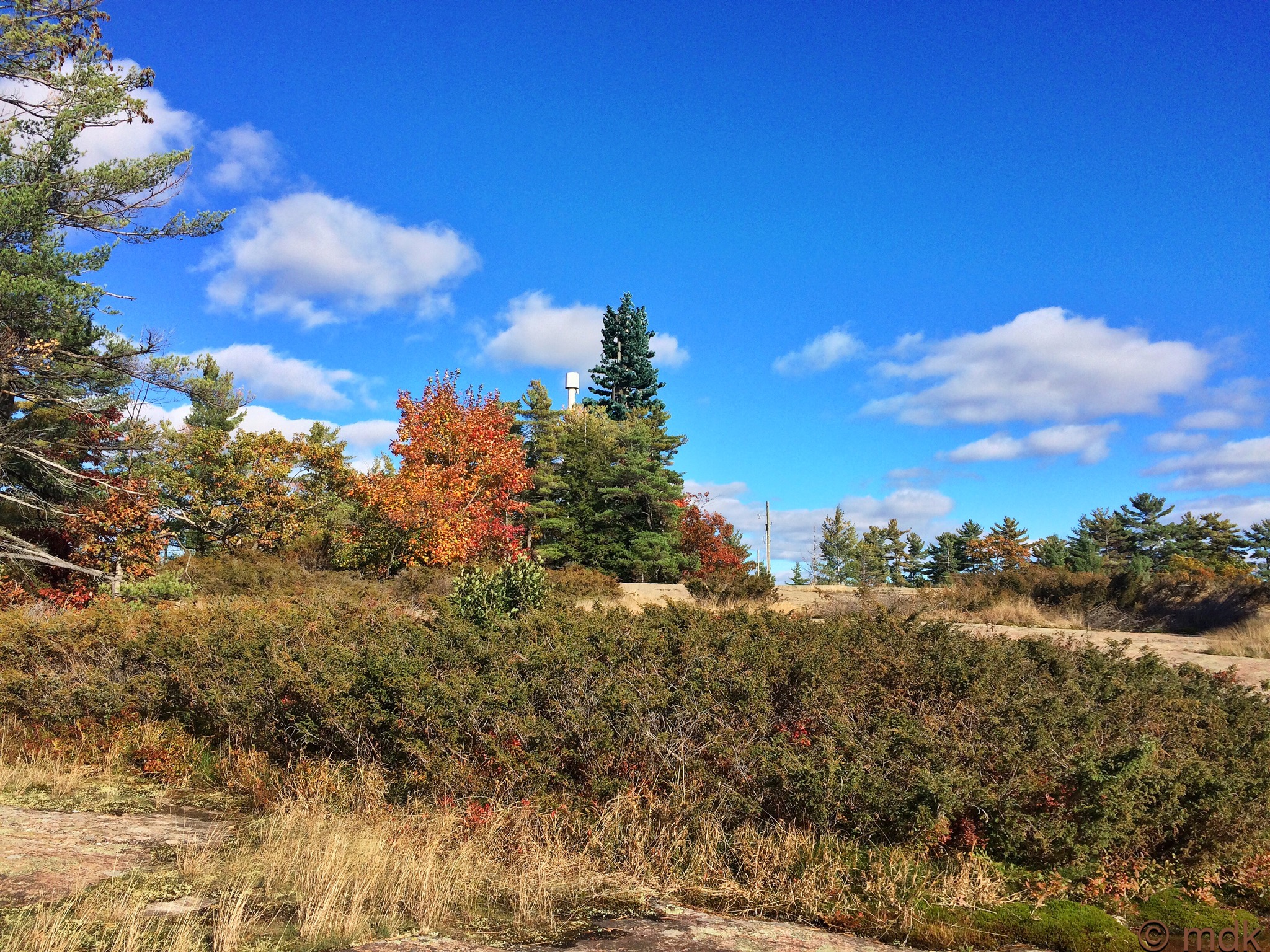
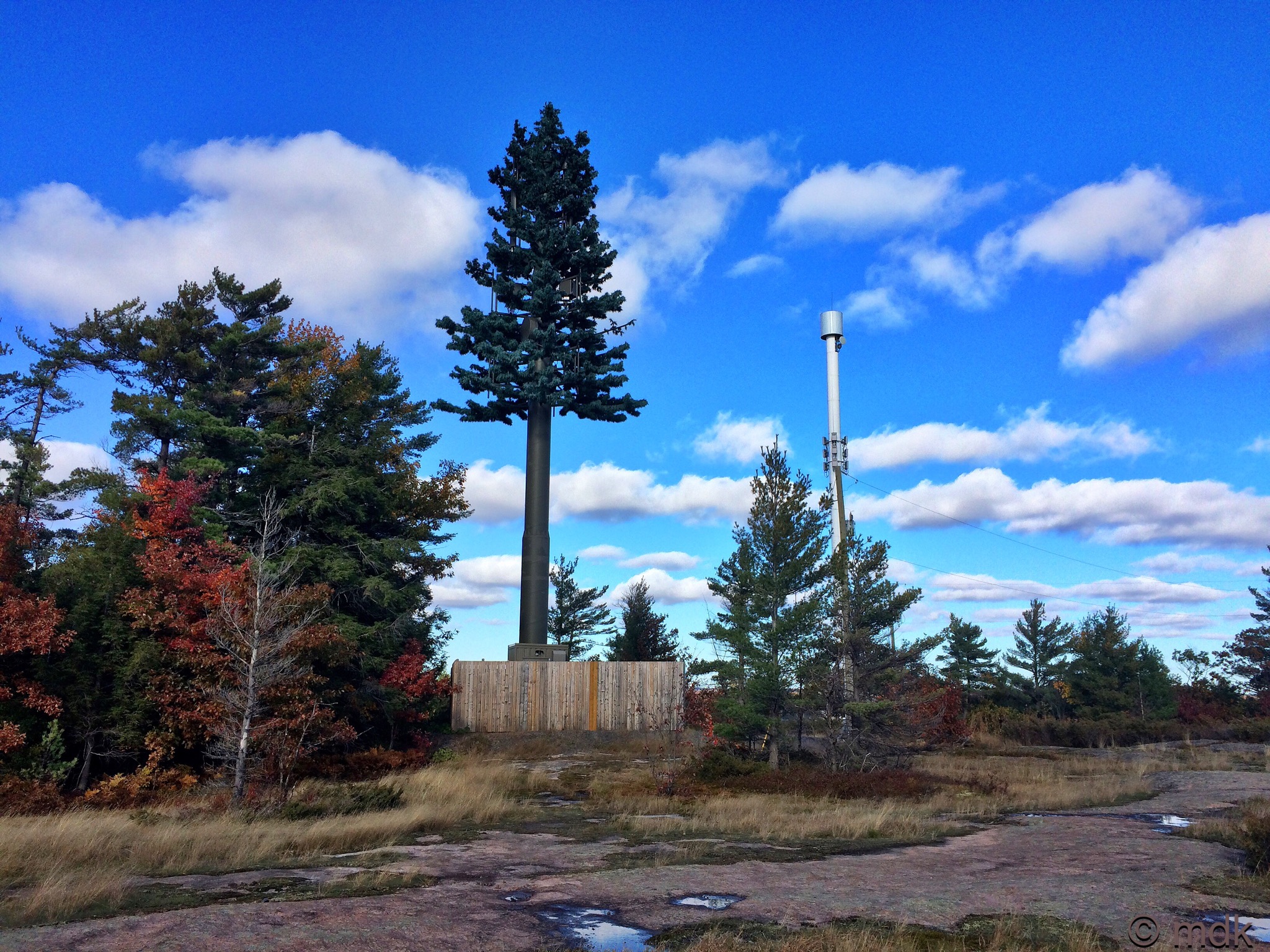
After a bit more climbing Alan pointed towards a distant tree near a white pole.
“Do you notice anything odd about that pine?” he asked
“Now you come to mention it, it does look a bit strange,” Commando said.
“Come and have a look,” he smiled and we followed him on a circuitous route skirting the mounds of grass and clambering over undulating rocks.
When we finally had a clear, up close, view of the offending tree we could see why he was smiling. It wasn’t a real tree at all. In actual fact it was a mobile phone mast cunningly disguised as a pine to stop it spoiling the landscape.
“What a fabulous idea,” I said, ” we should do that to all mobile phone masts. Maybe people wouldn’t complain about them so much then.”
We’d reached the summit and it was time to turn back so, with Alan leading the way, we began our decent. After we’d been walking for a bit I noticed nothing looked familiar. This didn’t worry me unduly because things never look the same from the opposite direction and it could be that Alan was taking a different route down. At least we had a guide who knew the trail, on my on I’d have been lost as soon as we left the woods because it’s impossible to mark a trail over rocky terrain. When we came to a place where the trail divided we stopped. Alan looked around for a moment, shading his eyes and looking into the far distance.
“Mmmm, I think we’ve gone a bit wrong,” he said.
It seems getting lost runs in the family.
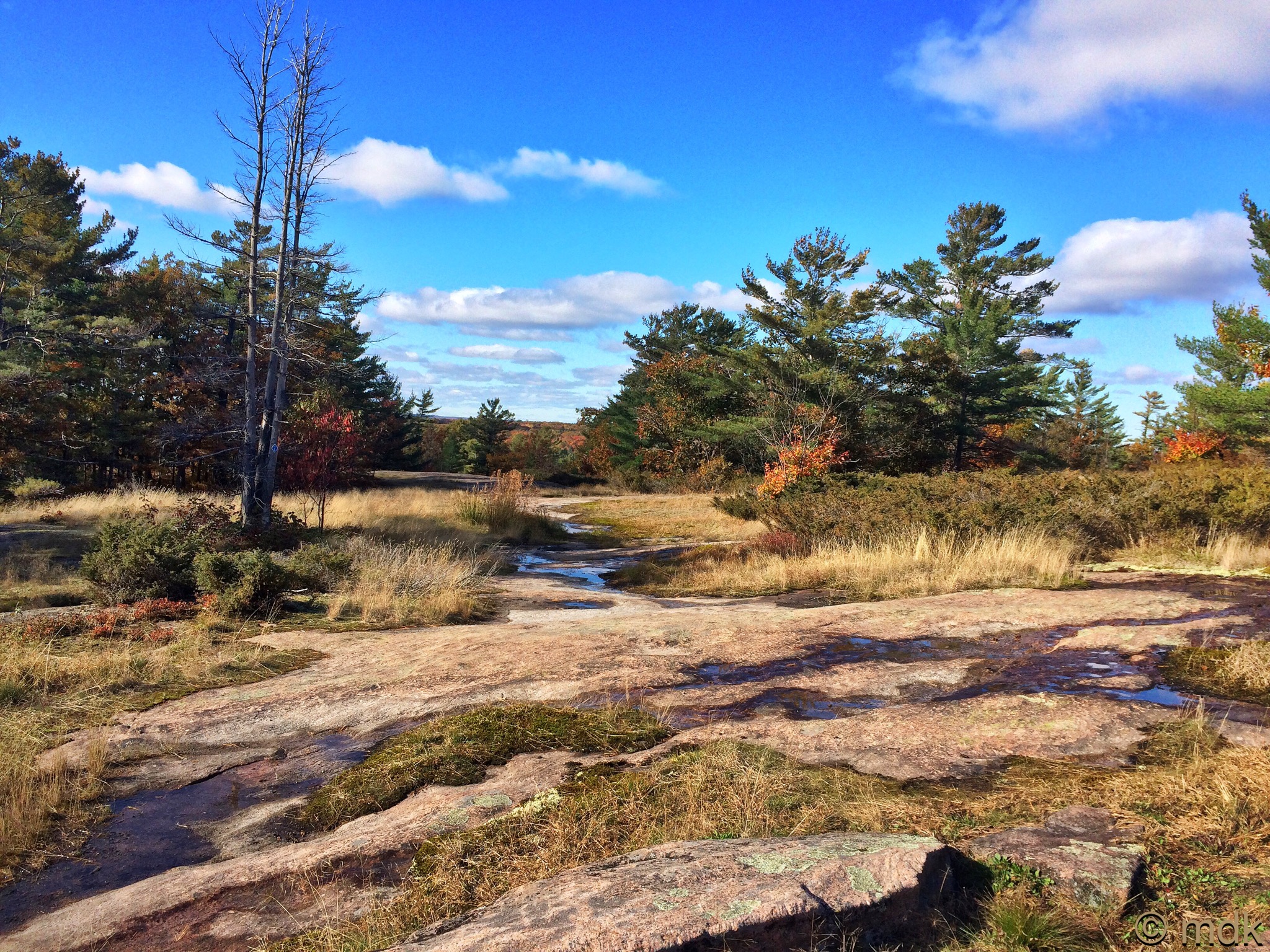
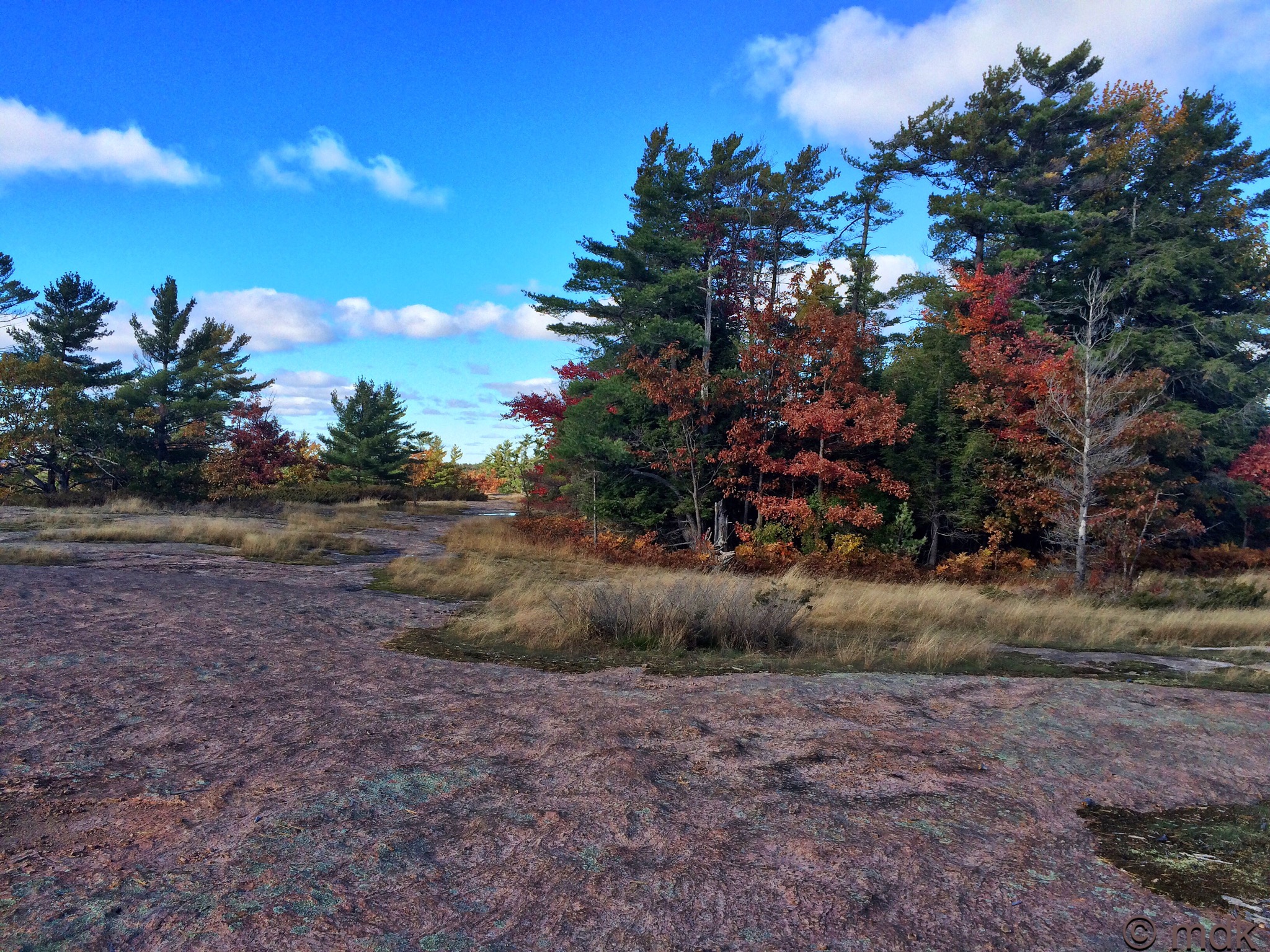
We wandered about for a while in silence, each of us looking for something we recognised. I’m pretty sure we were going in circles at one point and I began to worry about poor Maggie sitting all on her own. It was warm enough climbing over the rocks but sitting on a bench would be pretty chilly. Finally, just when we thought we’d never find our way back, there was Maggie on her bench looking totally unconcerned.
Our final stop of the afternoon was at Bracebridge. In honesty I think Alan intended to drive right through but Maggie, like a rather excited school girl, insisted we stop to get butter tarts.
“We simply must get some Alan,” she said “they have to try butter tarts.”
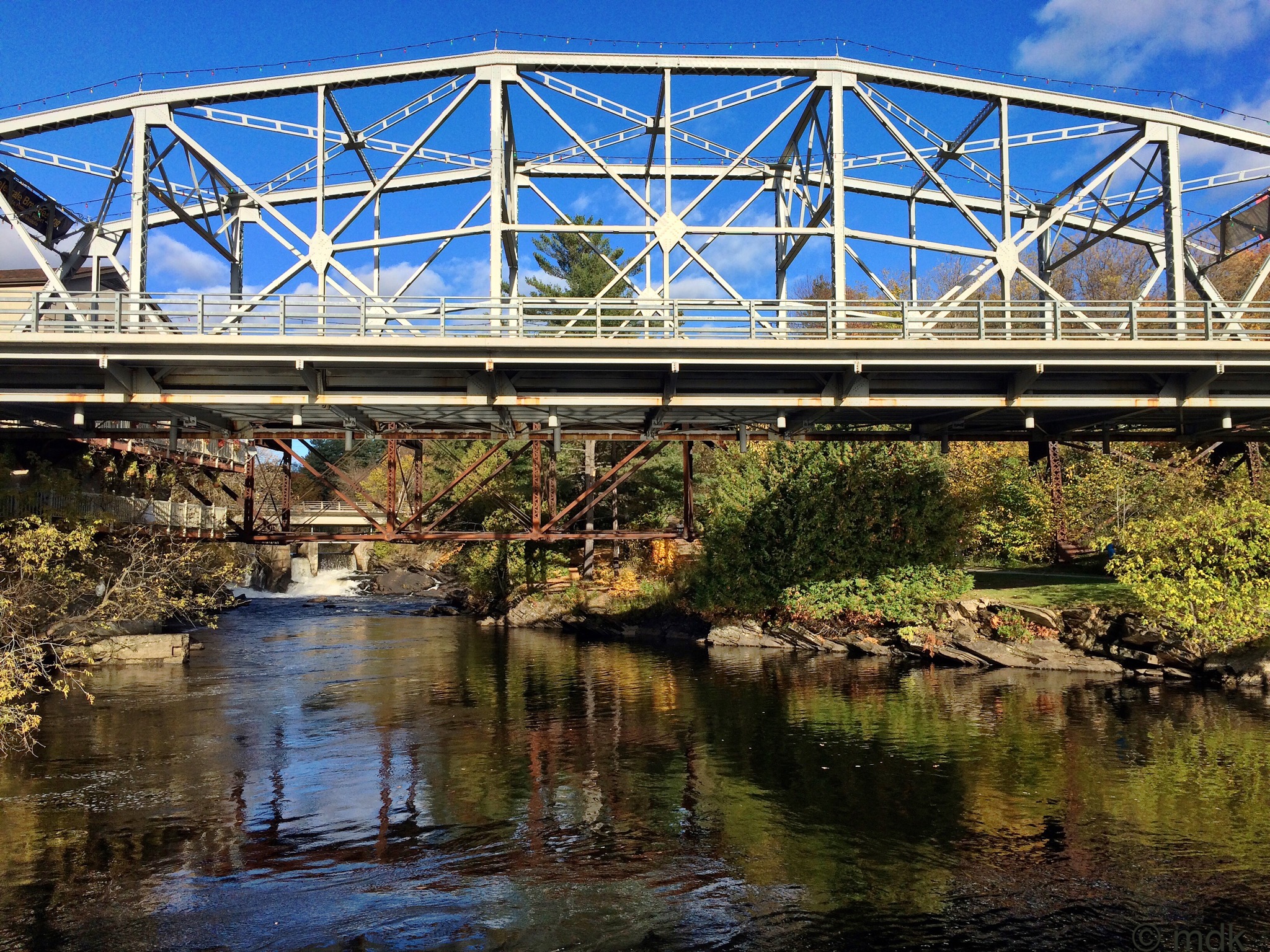
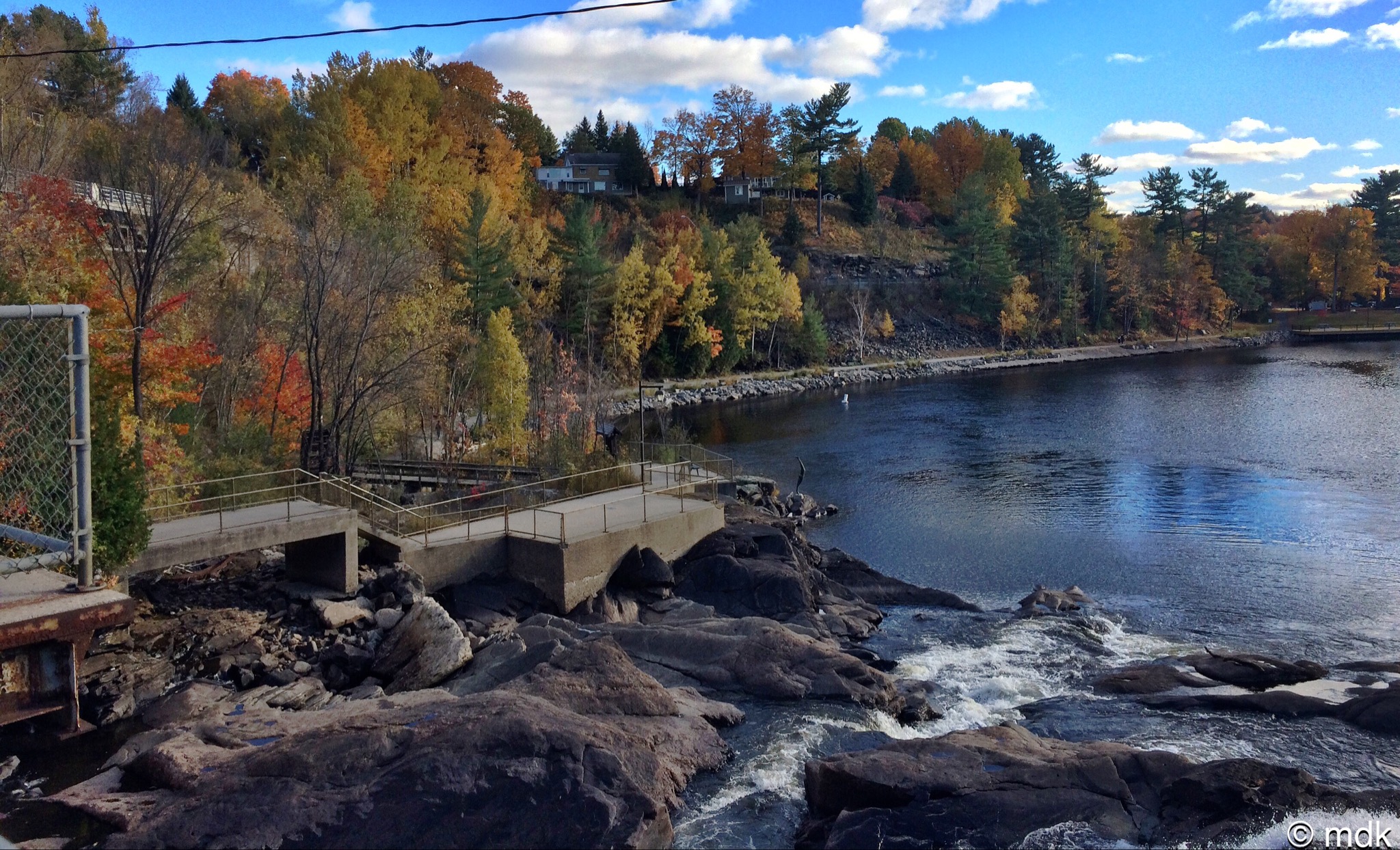
So we stopped at a bakery and soon we were walking down the street nibbling on sweet, sticky, maple sugary butteriness. We strolled down the road making mmmm, noises and dropping crumbs until we came to a bridge. This, Alan told us, was the famous Silver Bridge and looking over it we could see the waterfall that powered the first factory in the town. The town began in the 1860’s as a few log huts around these falls on the Muskoka River and a few years later the Steamship service began and made this the main distribution centre for the area. By 1894 Bracebridge had its own hydro generating station, the first in Ontario.

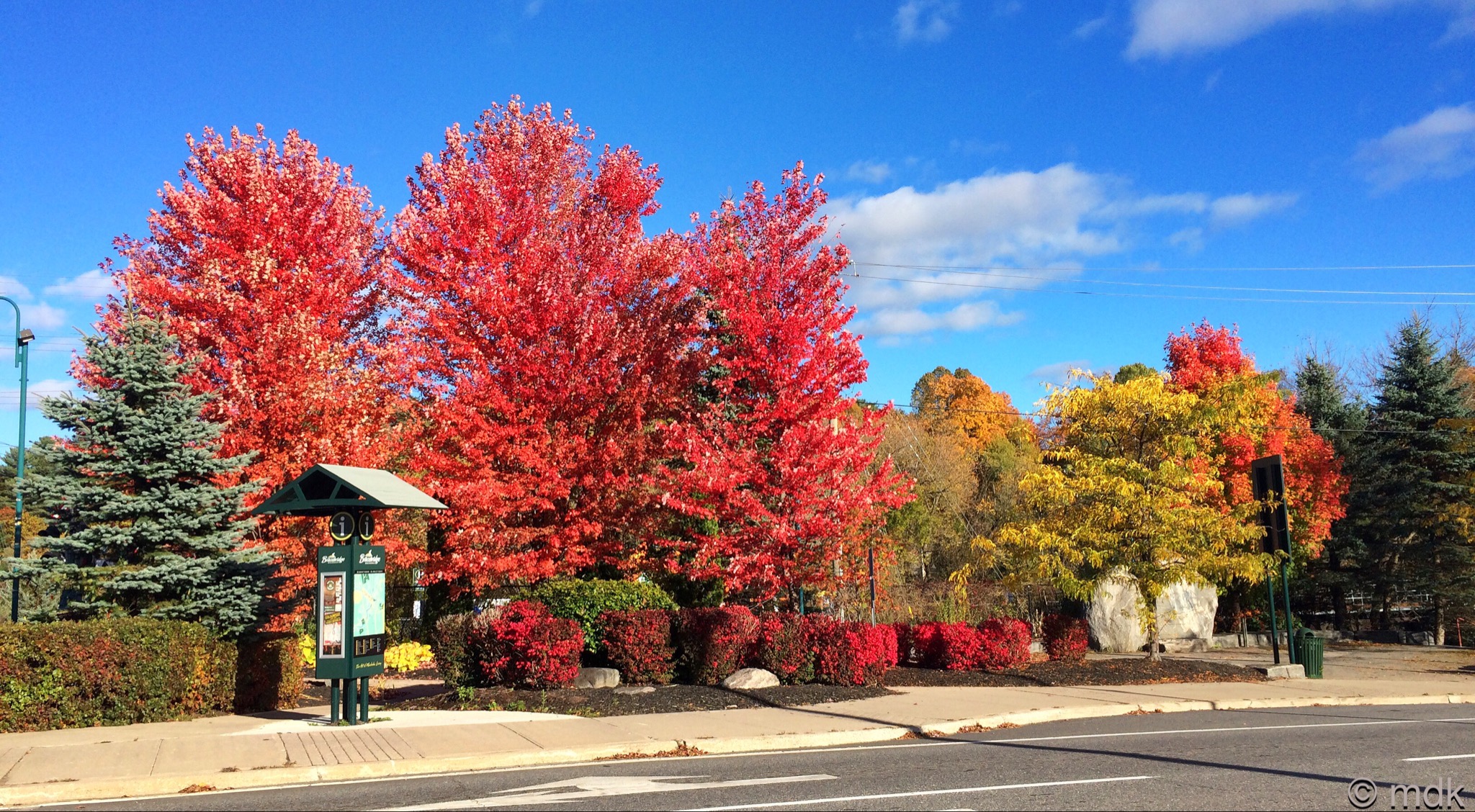
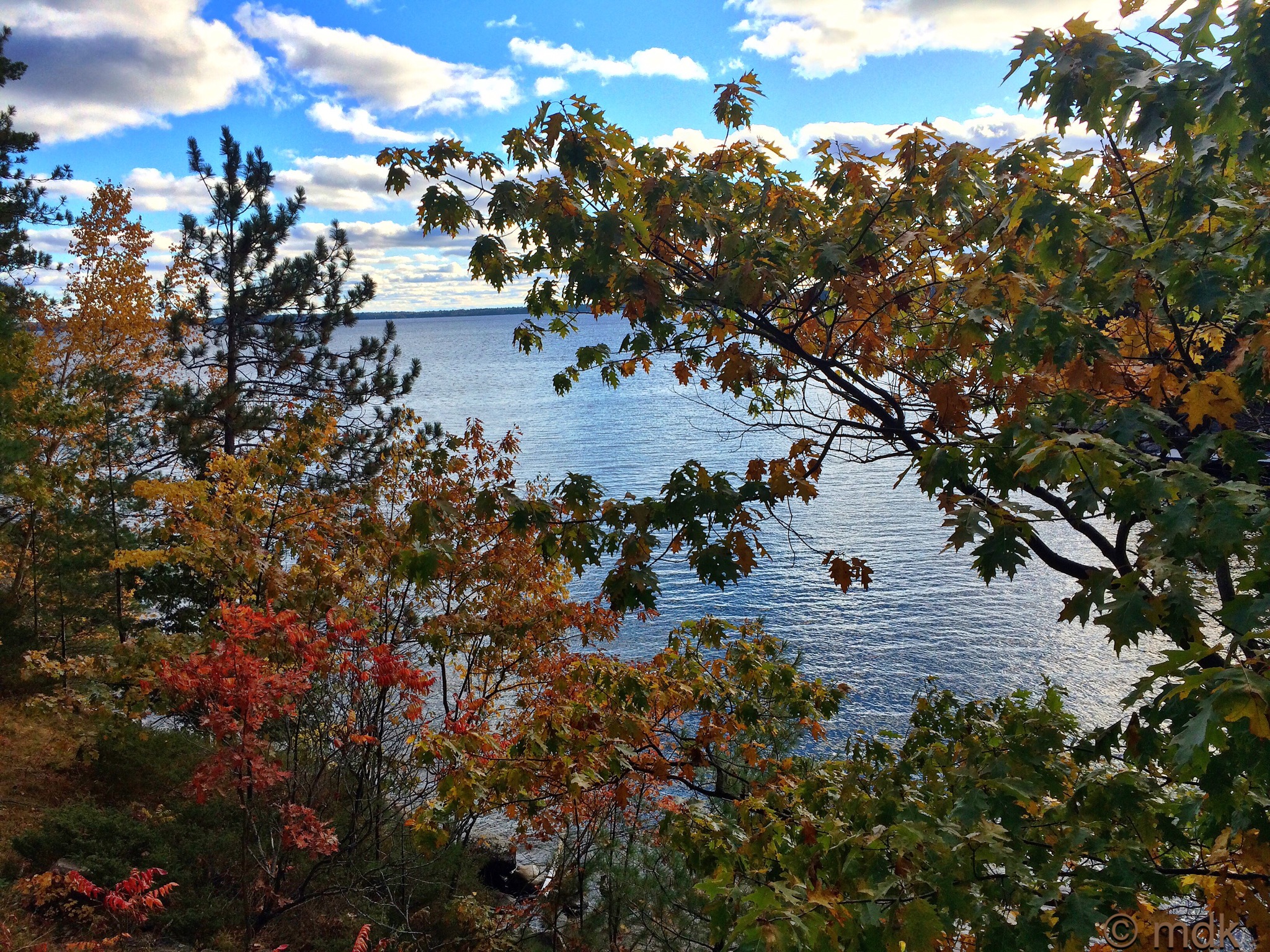
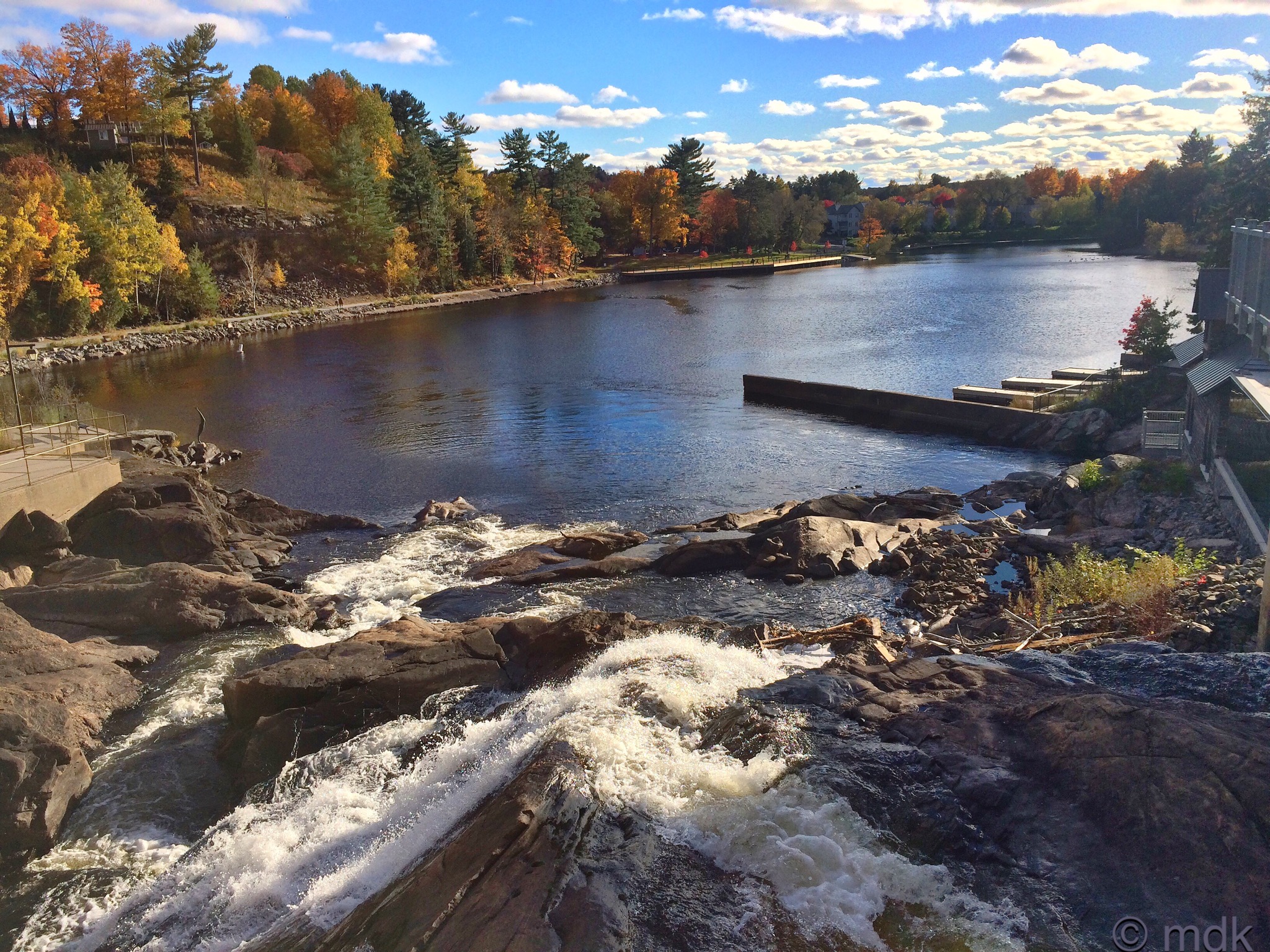
Our visit to Bracebridge was short because Marina, Maggie’s wonderful Newfoundland friend was cooking us a chicken pot pie. I hoped the sugar tart and the earlier blueberry pie wouldn’t spoil our appetites. On the way back Maggie excitedly pointed out the Muskoka River and Santa’s Village, exactly half way between the equator and the North Pole and open all year. I’m pretty sure she’d have taken us there if she had the chance. If I have half her energy and joie de vivre in twenty years time I shall be a lucky woman.
What a gorgeous time you had with your family.
It was lovely and Maggie and Alan are such an inspiration.
You certainly ate well!
The tiny yellow dots are called lemon drops (Bisporella citrina). They’re a fungus that’s fairly common as the weather gets cooler in the fall, and I always find them on logs or stumps.
That’s a toadskin lichen alright and I’m surprised that it wasn’t on a hill top. That’s the only place I’ve ever seen one.
Your visit to Canada will come in handy when you read my blog because I’m sure all the smells, sounds, plants, and fresh air there are pretty much the same as we have here.
Thanks for the heads up on the lemon drops. I’ve never seen them here. The toadskin lichen was near the top of the trail and the whole thing is one great big hill so I guess it was exactly where you’d expect. Maybe we don’t have enough woods on hills here for them. You are so lucky to live where you do if it’s anything like what I saw in Canada. Commando and I both wished we’d visited years ago when we were still young enough to think about moving there.
Mr Tootlepedal found some lemon drops in Scotland once.
This is a great place to live but you can still visit occasionally I would think. It’s not exactly close by, but there’s an awful lot of beauty to see here.
I shall have to keep looking here then. You do seem to have a greater variety of fungi and lichen than us.
Good views and interesting fungi….Canada is obviously a top place.
It really is.
The mural made of photos was a wonderful start to this post, Marie. I love following your adventures and as I have said before, your curiousity would suit you so well as a travel writer!!
I’d love to have more time to look at all the photos in that mural. It’s seemed like such a lovely idea. I couldn’t help wondering about all the people in them and what their stories were too.