
29 July 2015
Eight hundred years ago the tyrant King John was forced to sign Magna Carta at Runnymead. Parchment copies were sent out to the English county courts and, today, four of those copies survive. One is currently on display at Salisbury Cathedral and it was Commando’s idea for me to take CJ to have a look at it. Many years ago I regularly frequented a pub called The George in Salisbury and the spire of the cathedral has often felt like the first sight of home at the end of long journeys. Even so, I’d never visited the cathedral and I couldn’t remember the last time I visited Salisbury. All in all it seemed like a good plan for the last day of my holiday so, early on Wednesday morning, we got on a train bound for Wiltshire.
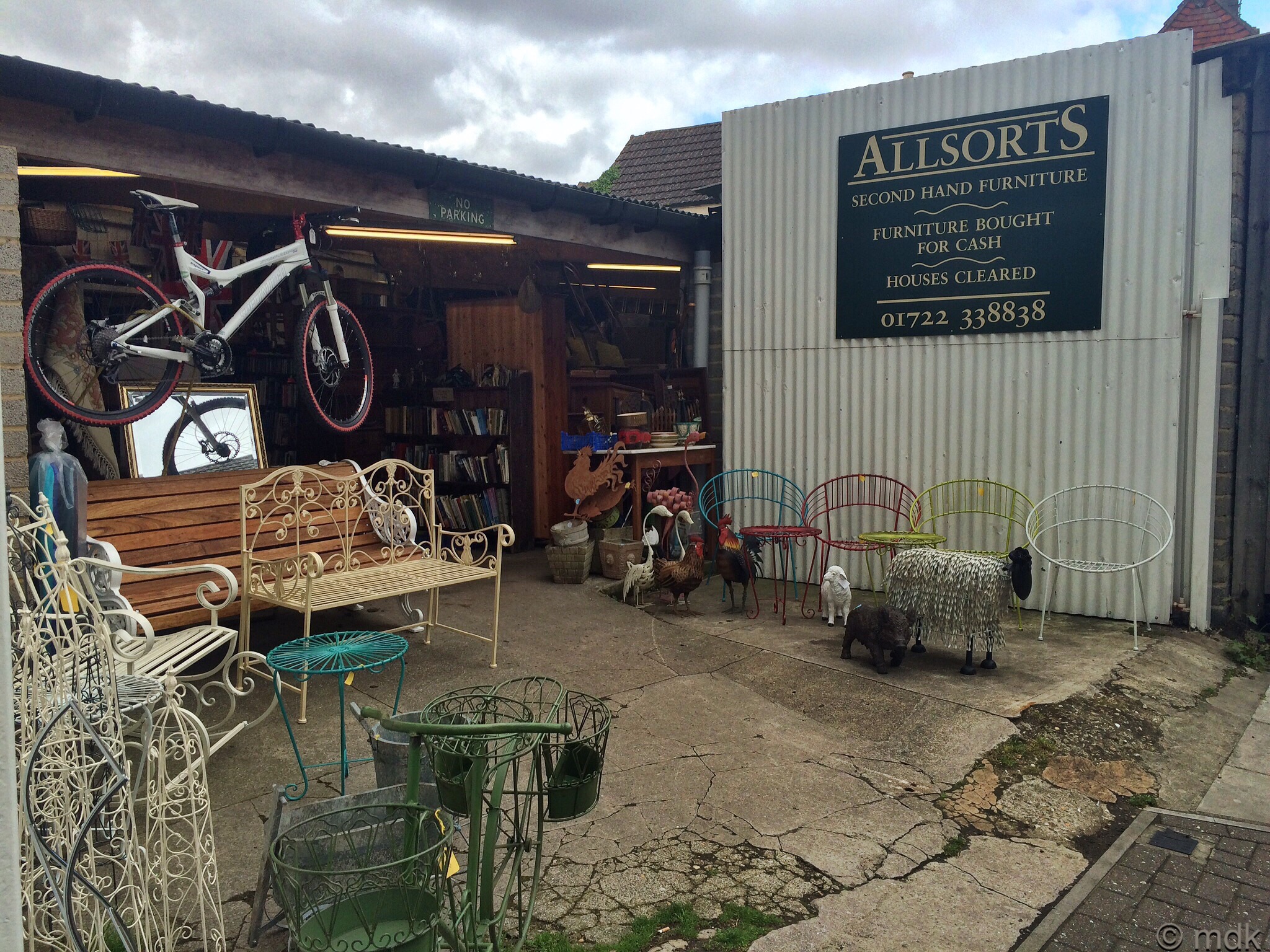
The weather wasn’t the best but at least it wasn’t raining when we got off the train at the pretty little station where the awning supports were covered with wrought iron flowers. As with London, I’d written a set of precise instructions but we could see the cathedral spire as soon as we got off the train so it was fairly unlikely we’d get lost. Teenage evenings of drinking in The George are now just a hazy memory and, as I’d always arrived on a motorcycle, I’d never walked the Salsibury streets. Soon after we left the station we passed a funny open air second hand shop, stuffed with weird and wonderful items including a quirky sculpture of a sheep.
“You’d never get it back on the train,” CJ laughed when I stopped for a photo.
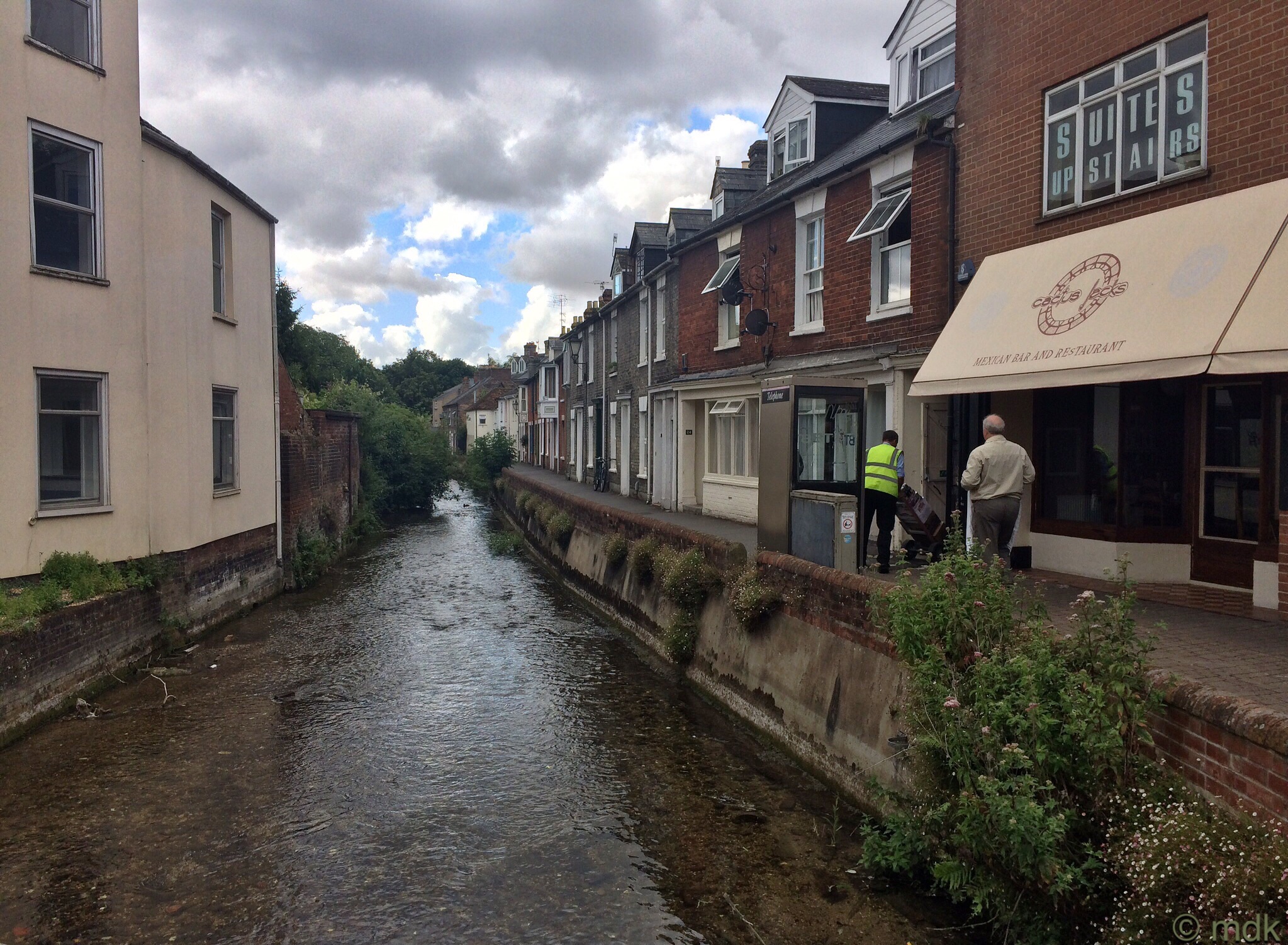
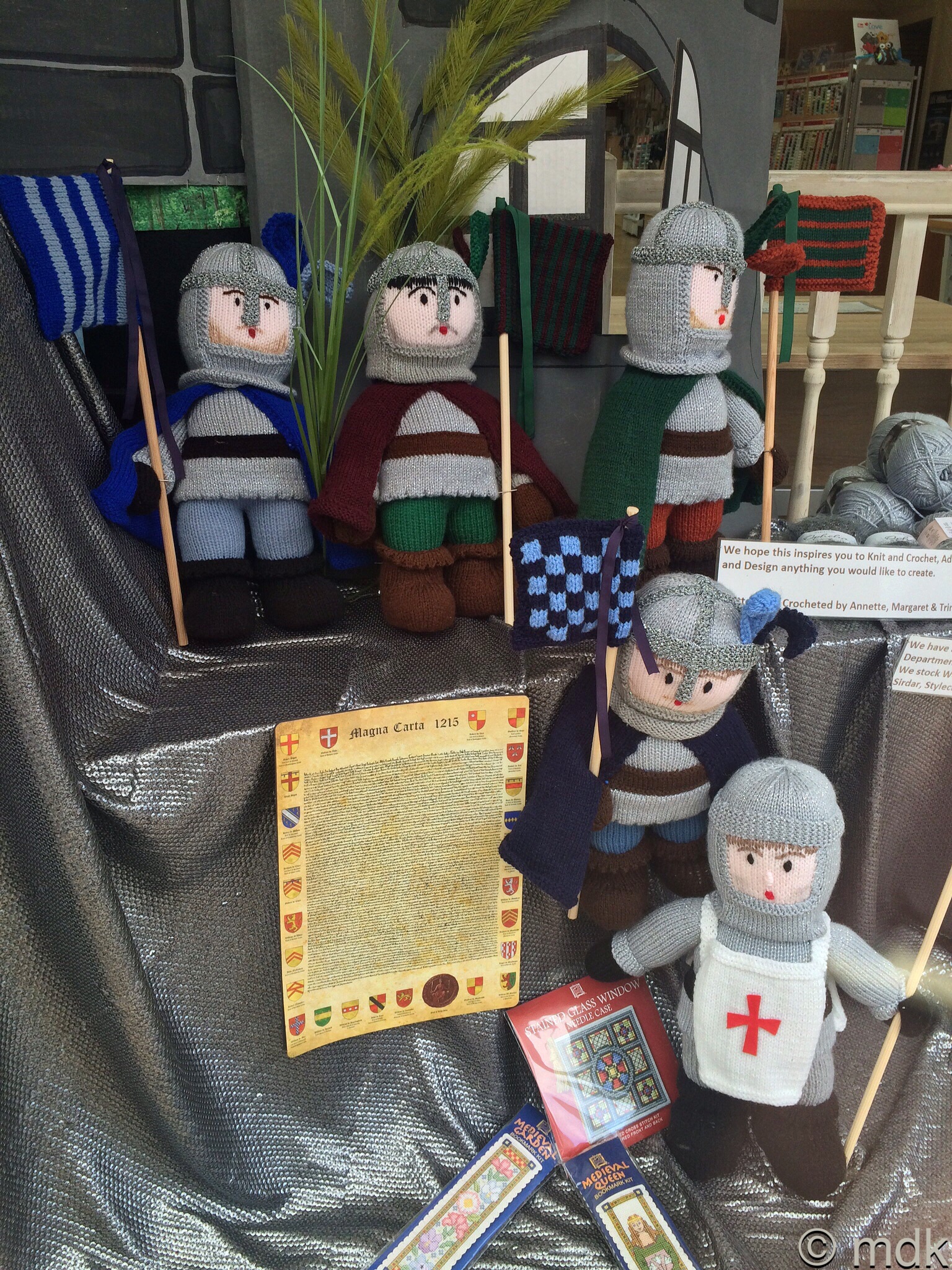
We crossed a bridge over what we guessed was the River Avon but looked more like a canal, lined with shops and houses and overgrown with shaggy looking wildflowers and shrubs. In the window of Franklins Needlecraft stores some knitted Knights and a mock up of Magna Carta caught my eye.
“Maybe I could knit one of those,” I said, remembering all the knitted toys I’d made when the boys were small.
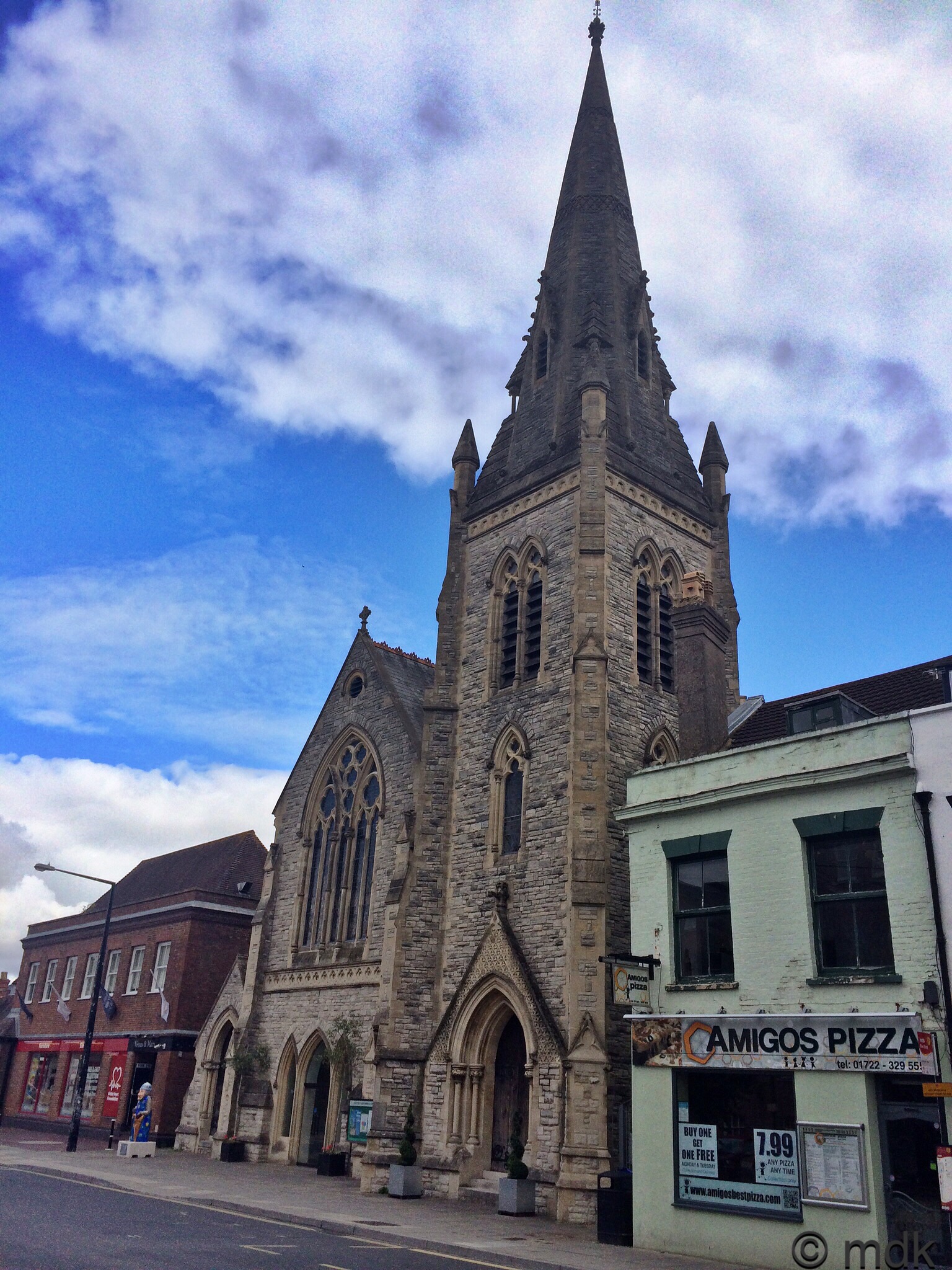
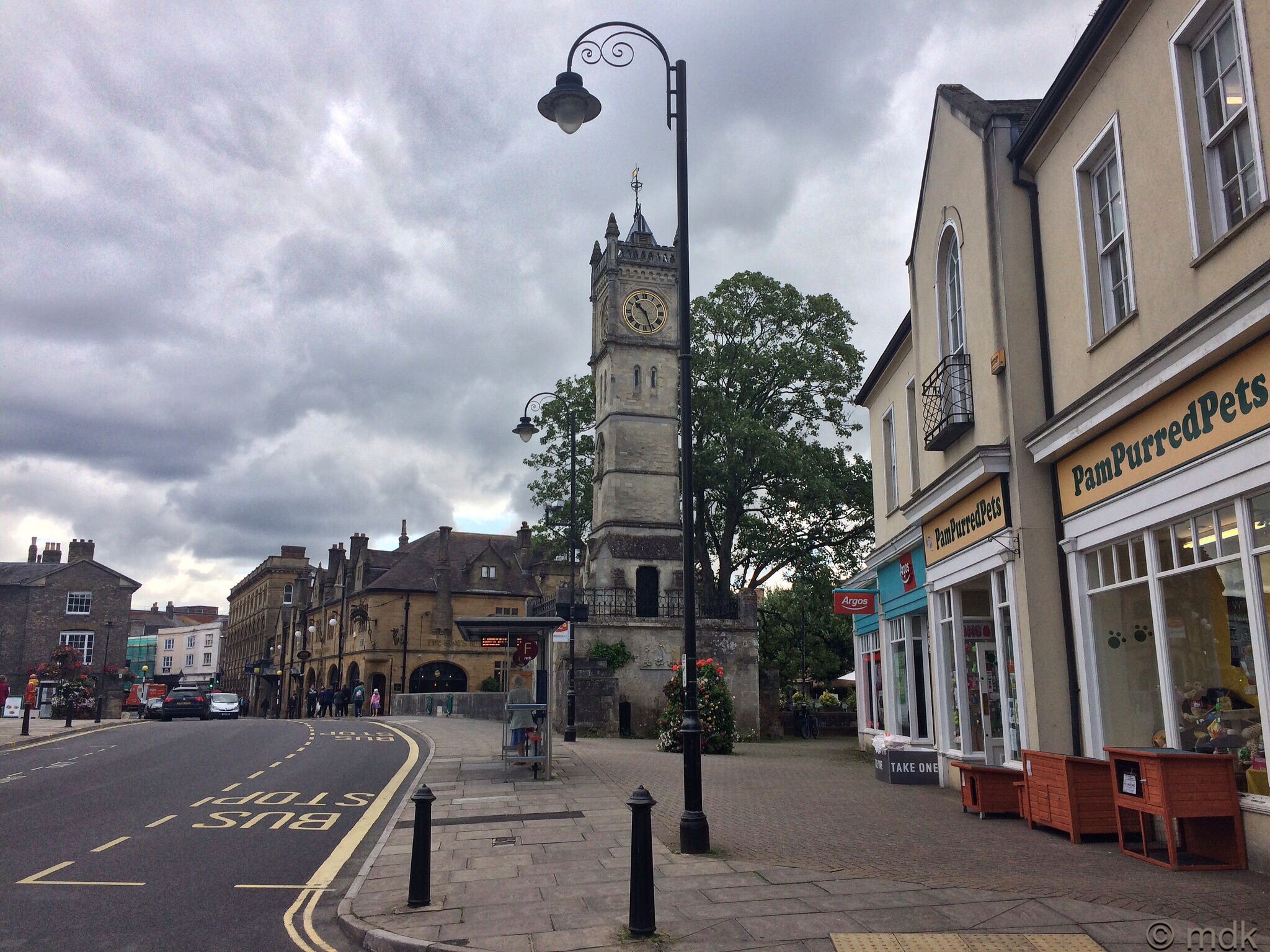
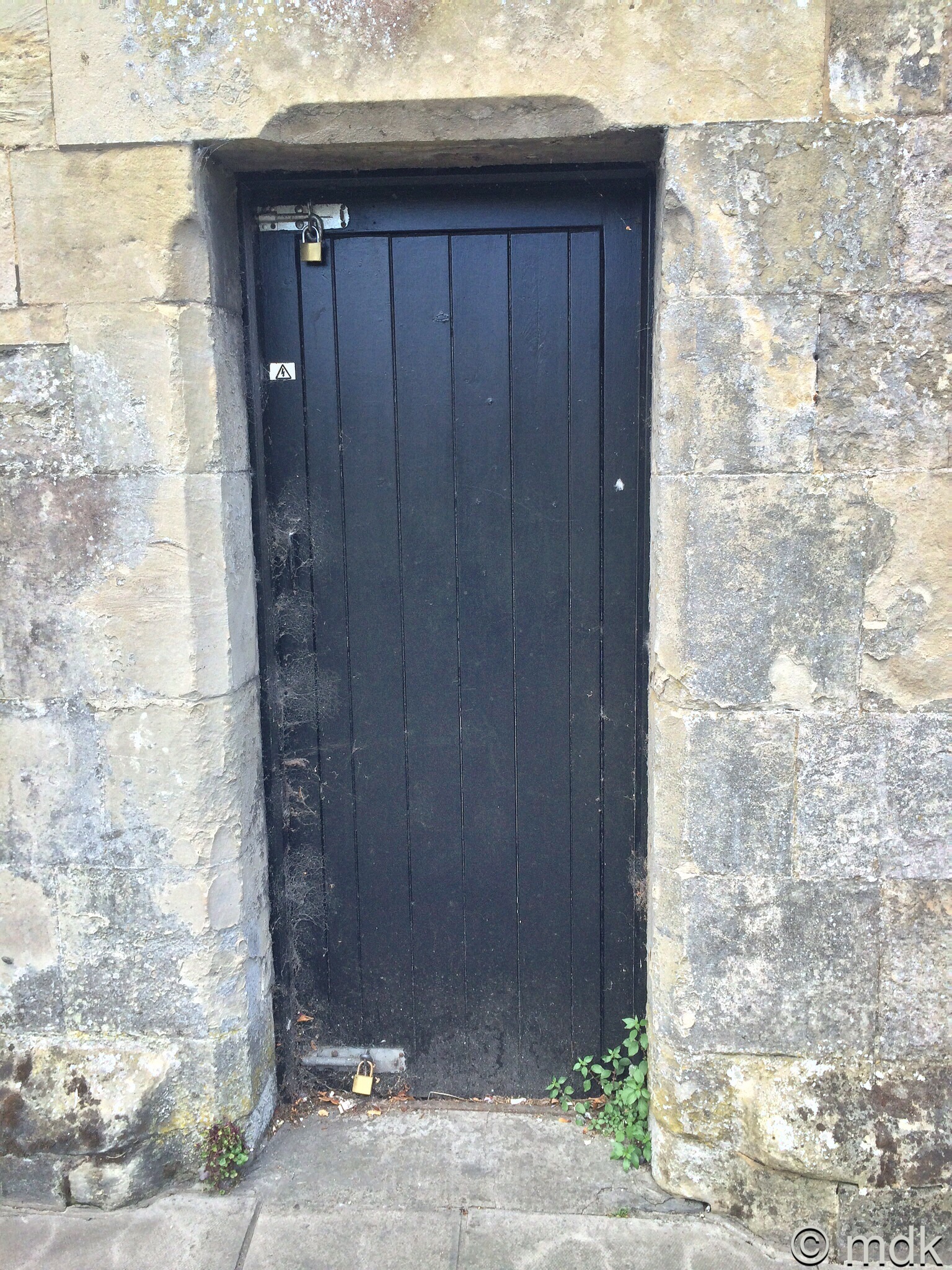
The further we went the older the buildings seemed to get and it put me in mind of Winchester where every other building seems to be historic. We passed the 1879 built United Reformed Church with its lovely spire and the clock tower, nick named locally Little Ben. Beneath the tower an intriguing door piqued my interest, I do like an interesting door and always want to know what’s behind it. Later reading told me the tower was built in 1892 by Dr John Roberts in memorial for his wife and the door was probably more interesting than I’d thought, as the tower was built on the site of Fisherton gaol. Maybe the plaque on the side wall of the tower should have given me a clue. It depicts manacles and can be clearly see in my photo although I didn’t notice it at the time.
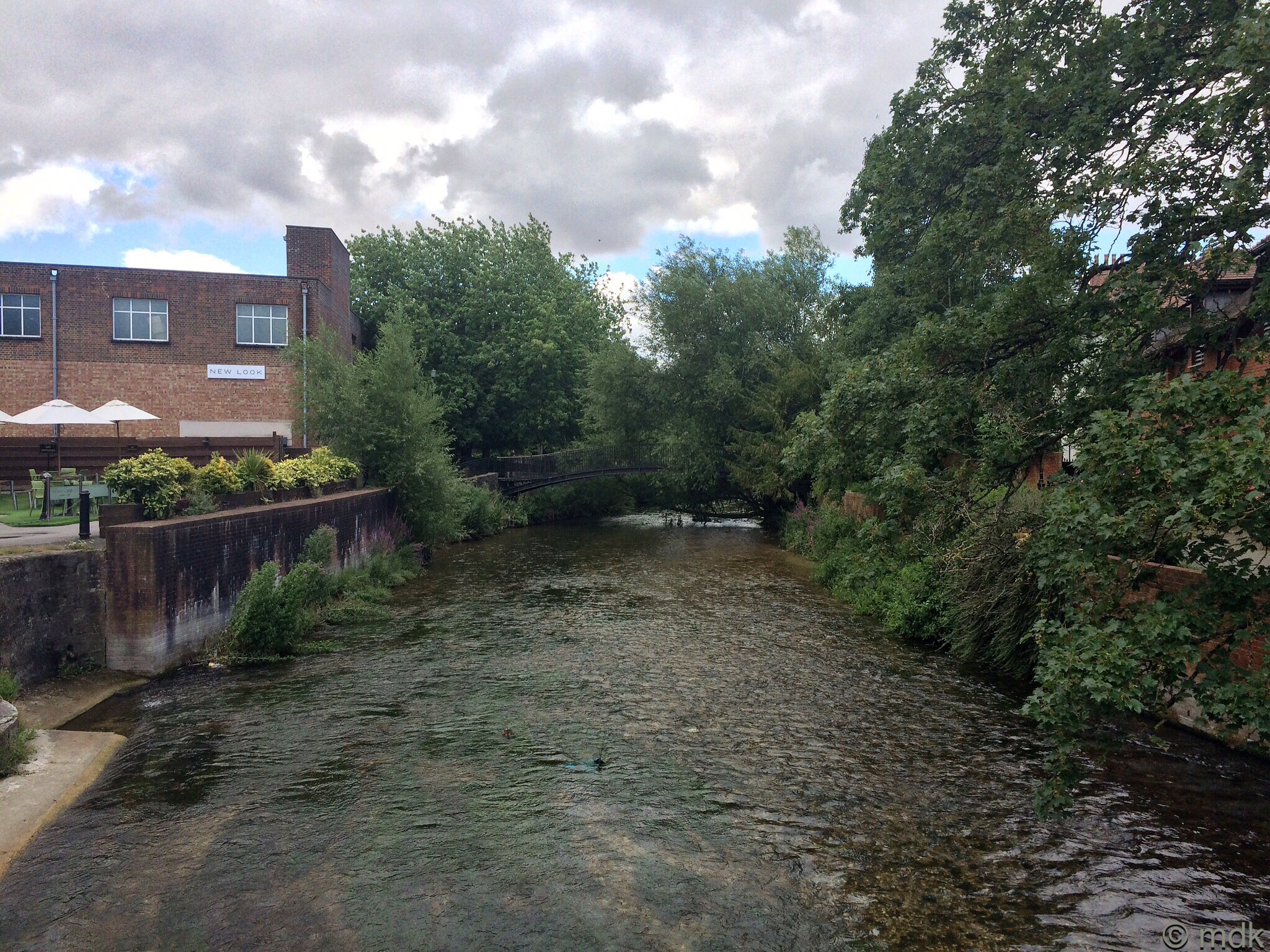
Right after this we crossed the River Avon again at Fisherton Bridge. This time it looked far more river like. Then I began to check my list of instructions. CJ quickly pointed out the futility of this when he said, “Mum, I can see the spire at the end of the street on the other side of that arch.”
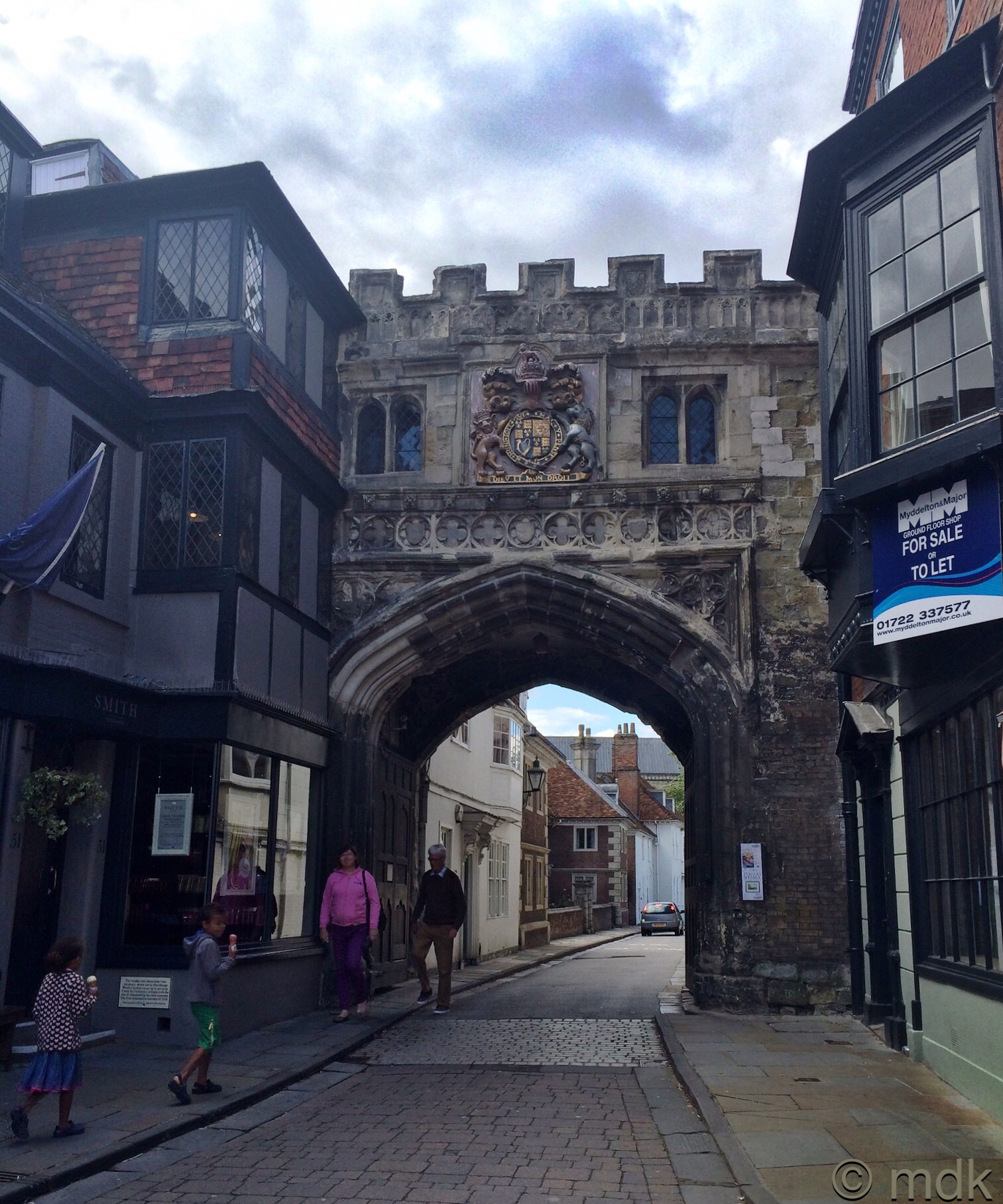
Like Southampton, Salisbury was a wool town in the Middle Ages and, like my hometown, it also had city walls surrounding the cathedral. These were built in the fourteenth century with with stones taken from the old cathedral at Sarum and the arch turned out to be one of the five city gates. Of course I didn’t think this North Gate, also called High Street Gate, was as impressive as Bargate but the mullioned windows above it were attractive as was the painted crest.
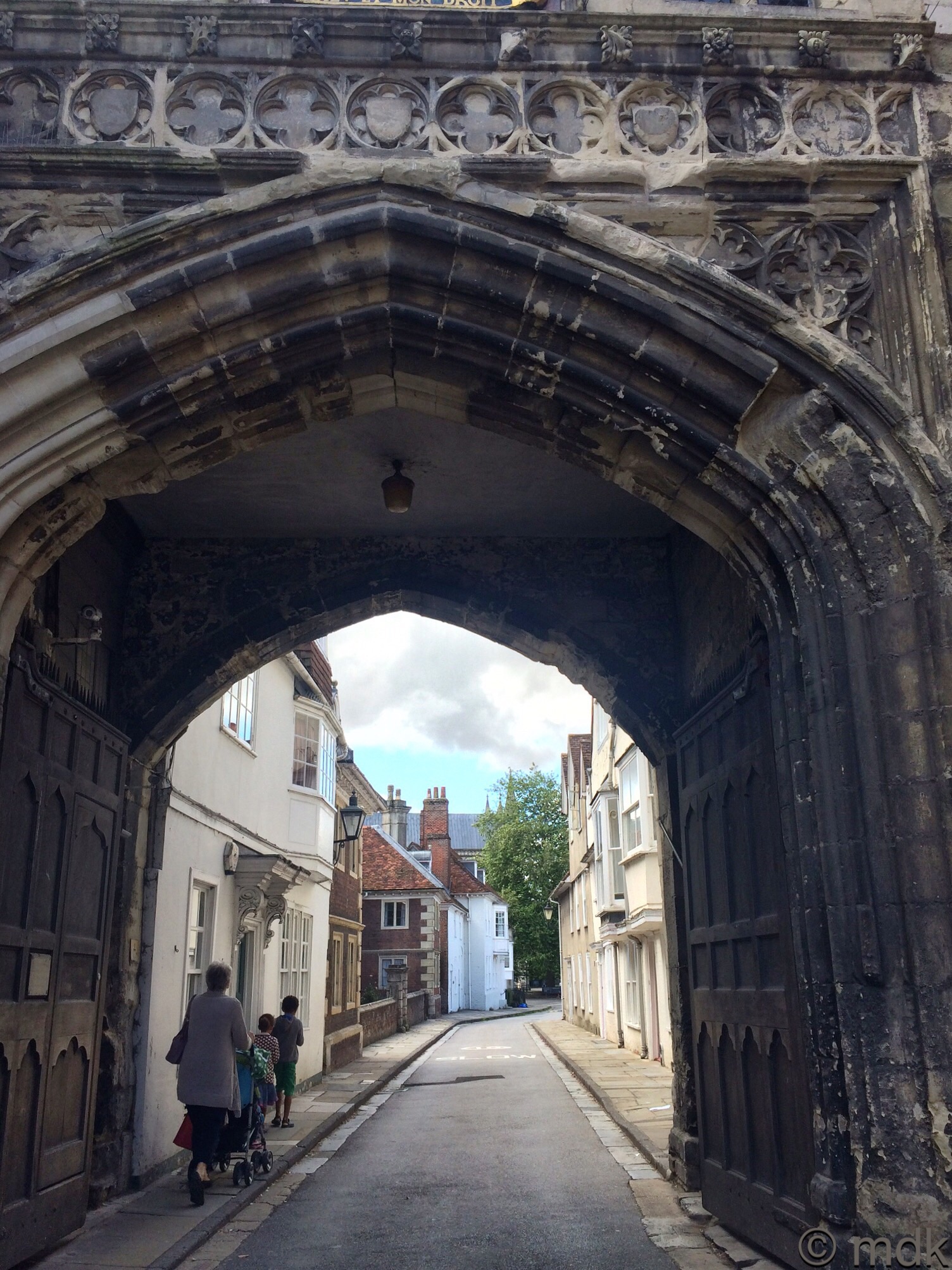
Then the spire was right in front of us, at four hundred and four feet, the tallest in the United Kingdom. Apparently it’s possible to climb up inside and see the ancient wood scaffolding but that delight would have to wait for another day, we had ancient documents to see. As we broke out from between the buildings the whole north west side of the cathedral came into view, one of the leading examples of Early English architecture, it was stunning.
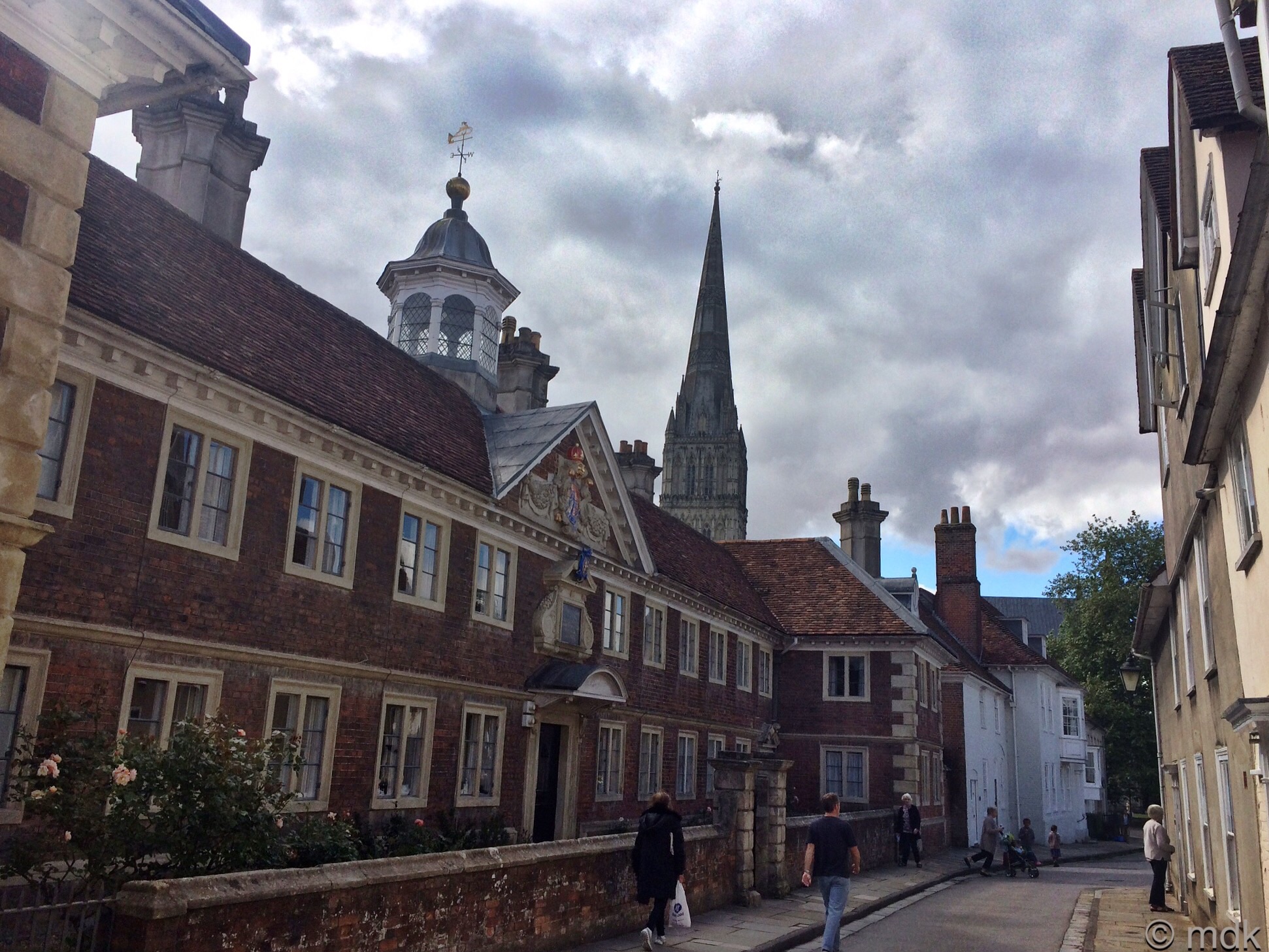
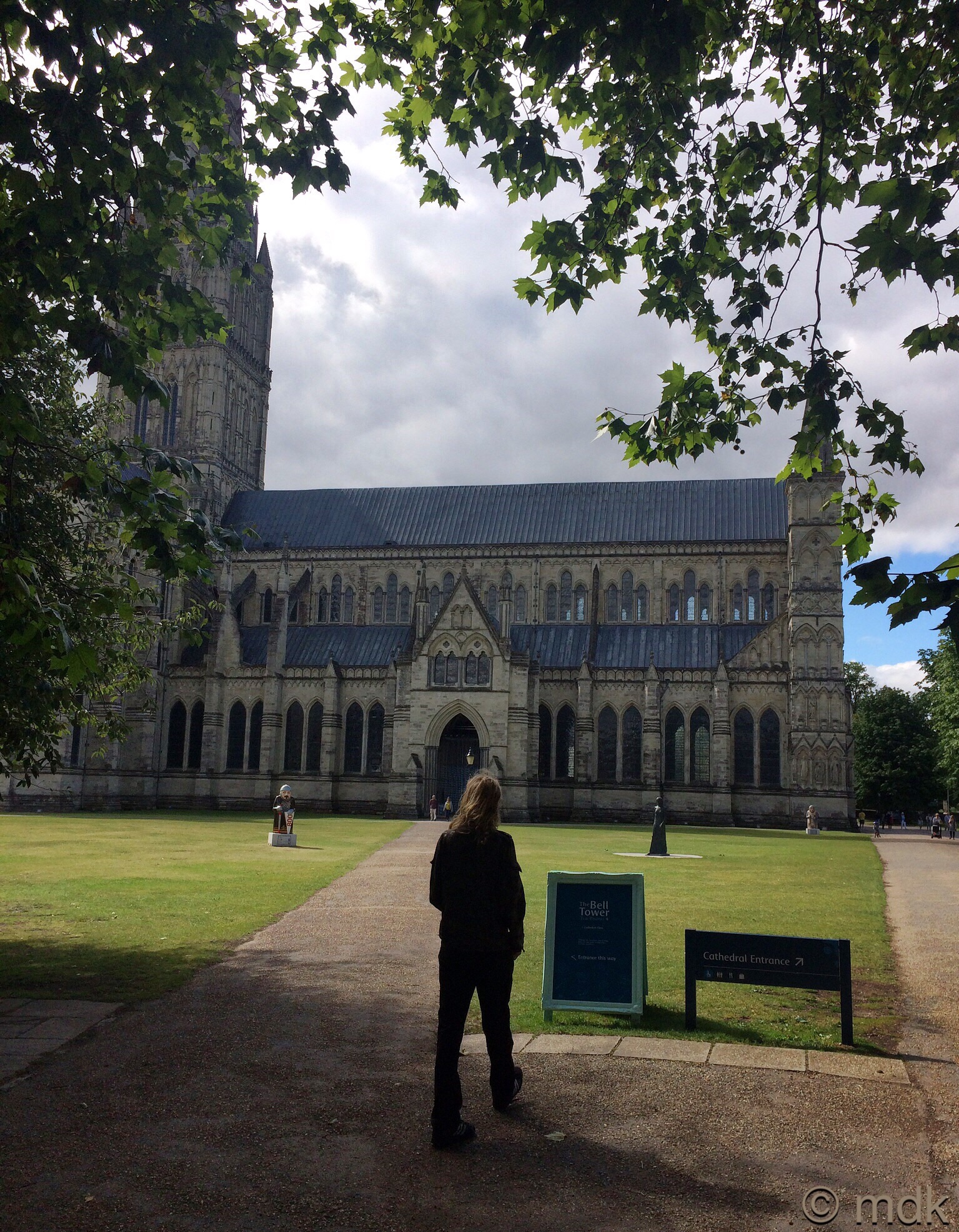
The cathedral we stood gawping at is not actually the first cathedral to be built in the area. The original stood about two miles north at Sarum but, in 1220, for reasons I shall go into later, it was relocated. Sarum was abandoned and a new settlement grow up around the new cathedral. The new town recieved its city charter in 1227. Unbelievably, until 2009, Salisbury was called New Sarum and it wasn’t until the Salisbury City Council was formed that the ‘new’ name was made offical, although everyone had been calling it Salisbury for centuries.

We walked across the grass towards a high archway flanked by colums of dark polished Purbeck marble. As we got closer there appeared to be some kind of bead curtain across the doorway, something akin to the things you hang to stop flies coming into the kitchen. How odd, I thought. Closer still and it became apparent this was an art installation called Enlightenment, created by digital arts design group Squidsoup. The beads are actually lights and the installation, which is on display until September, is supposed to be viewed after dark. We walked through them into the north porch, our steps causing waves of movement as the lights slowly changed colour. It was an unusal, and slightly disorienting, experience but quite magical. When we reached the massive oak door, we turned and walked back out again.


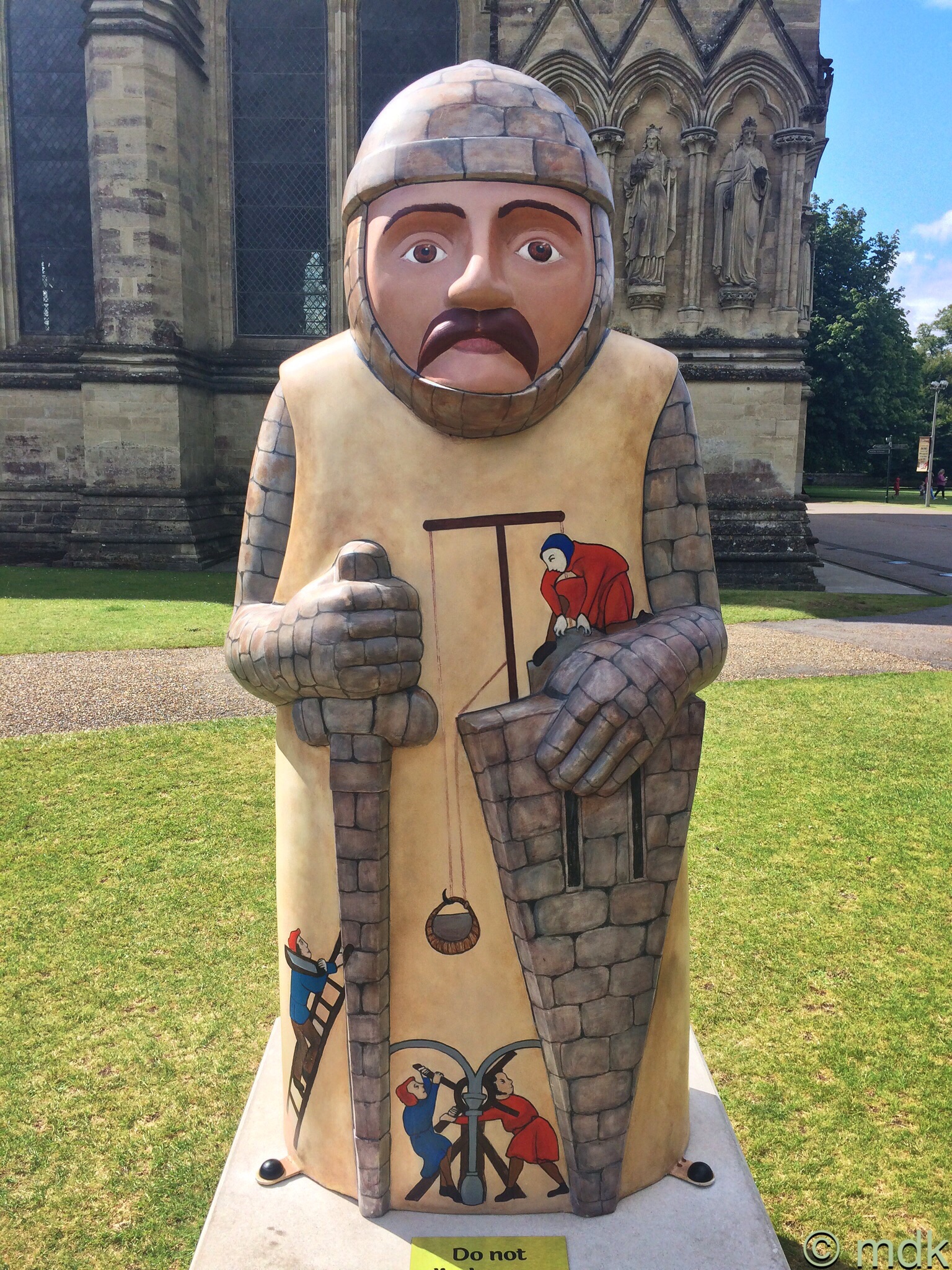
Back outside we came upon a small statue of a knight. It seemed a little incongruous standing there on the grass and the painting on the Knight’s body looked to be depicting the building of the cathedral. Puzzled I took a photo. From my pre walk reading I knew the cathedral’s construction hadn’t been as straight forward as expected. The foundation stone was laid in 1220 and it was mostly finished in just thirty eight years. The problems came from the high water table. The land was, basically, water meadow and digging deeply was impossible. In fact this whole massive building stands on foundations that are just four feet deep.
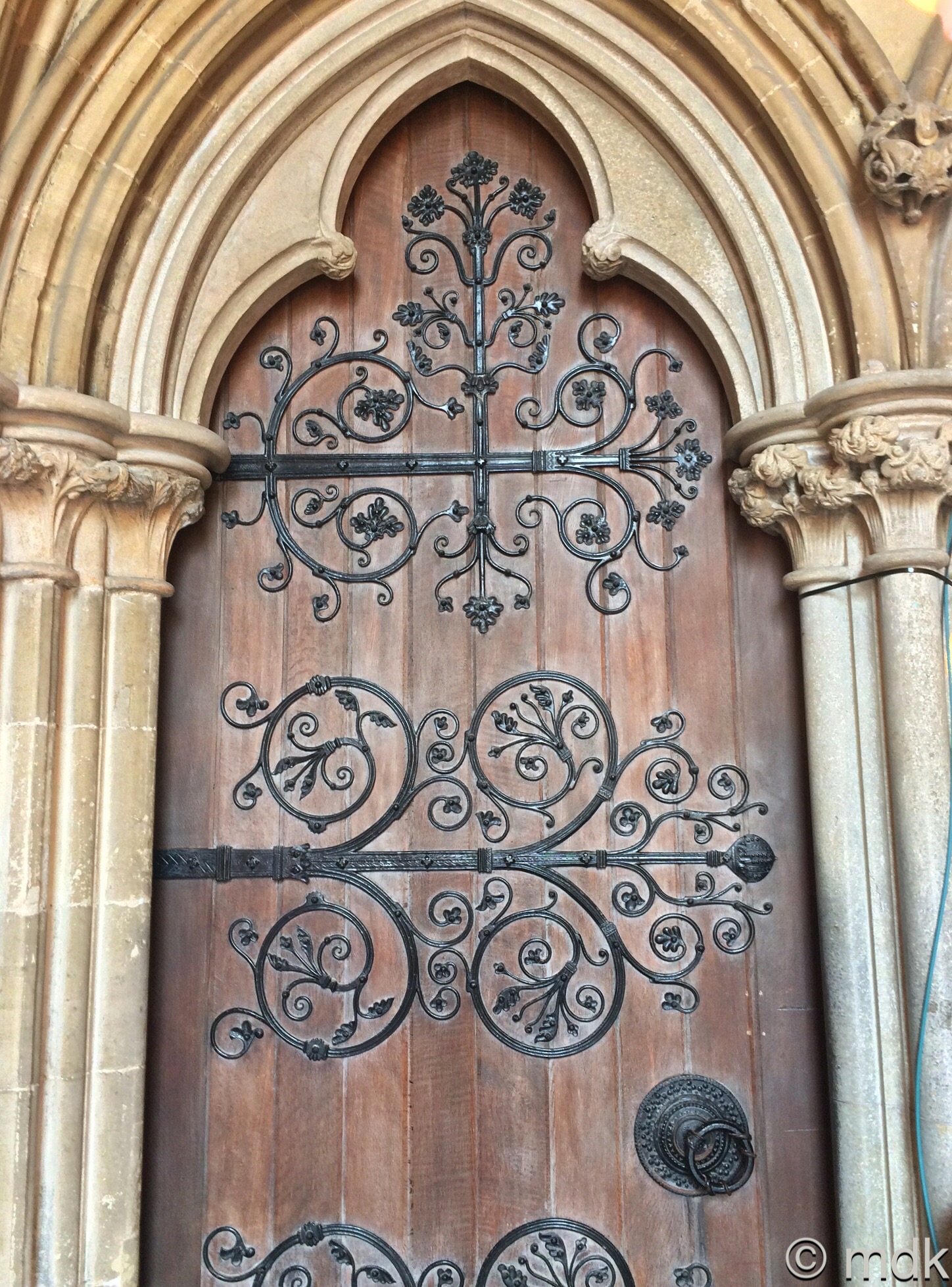
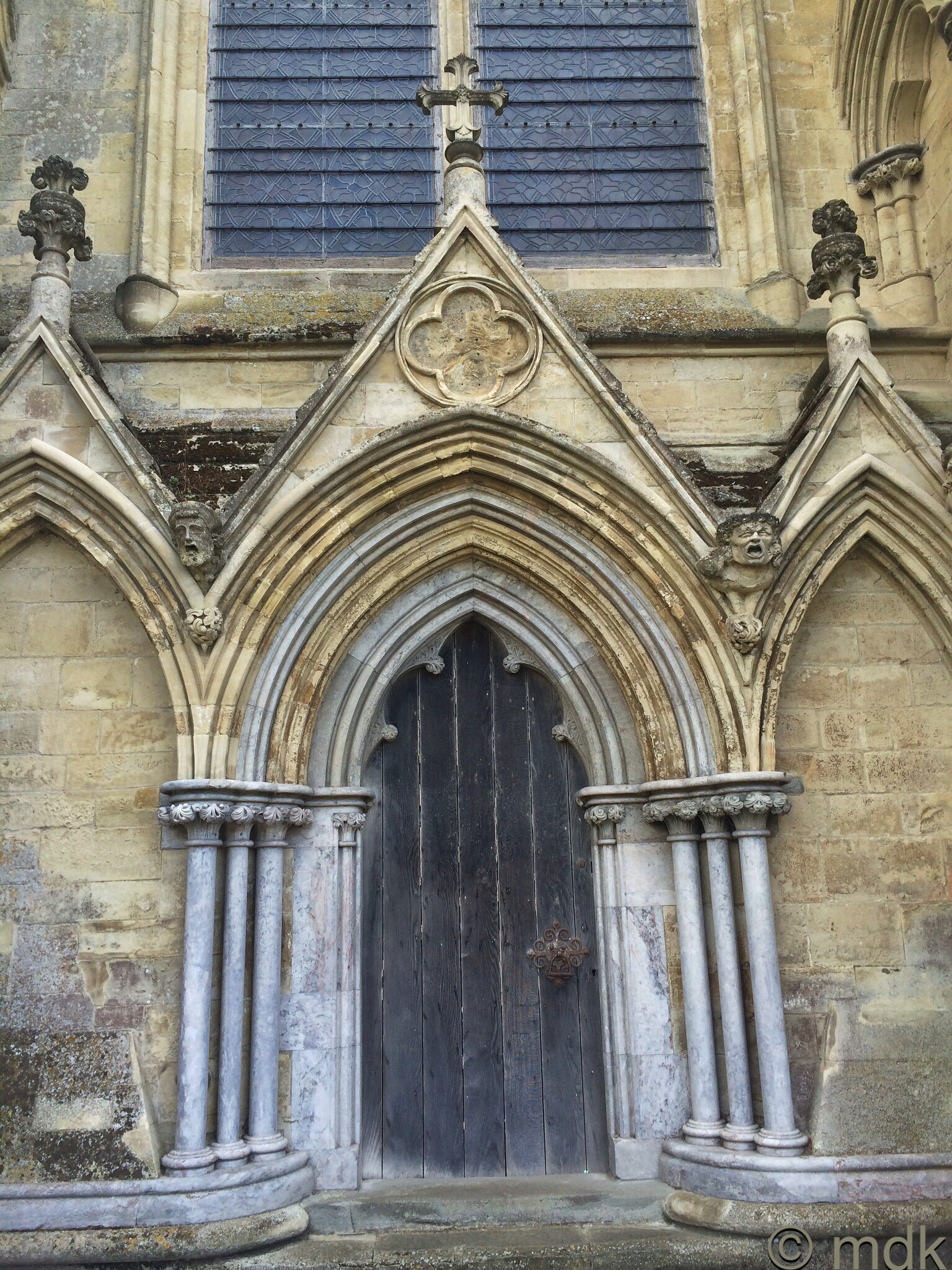
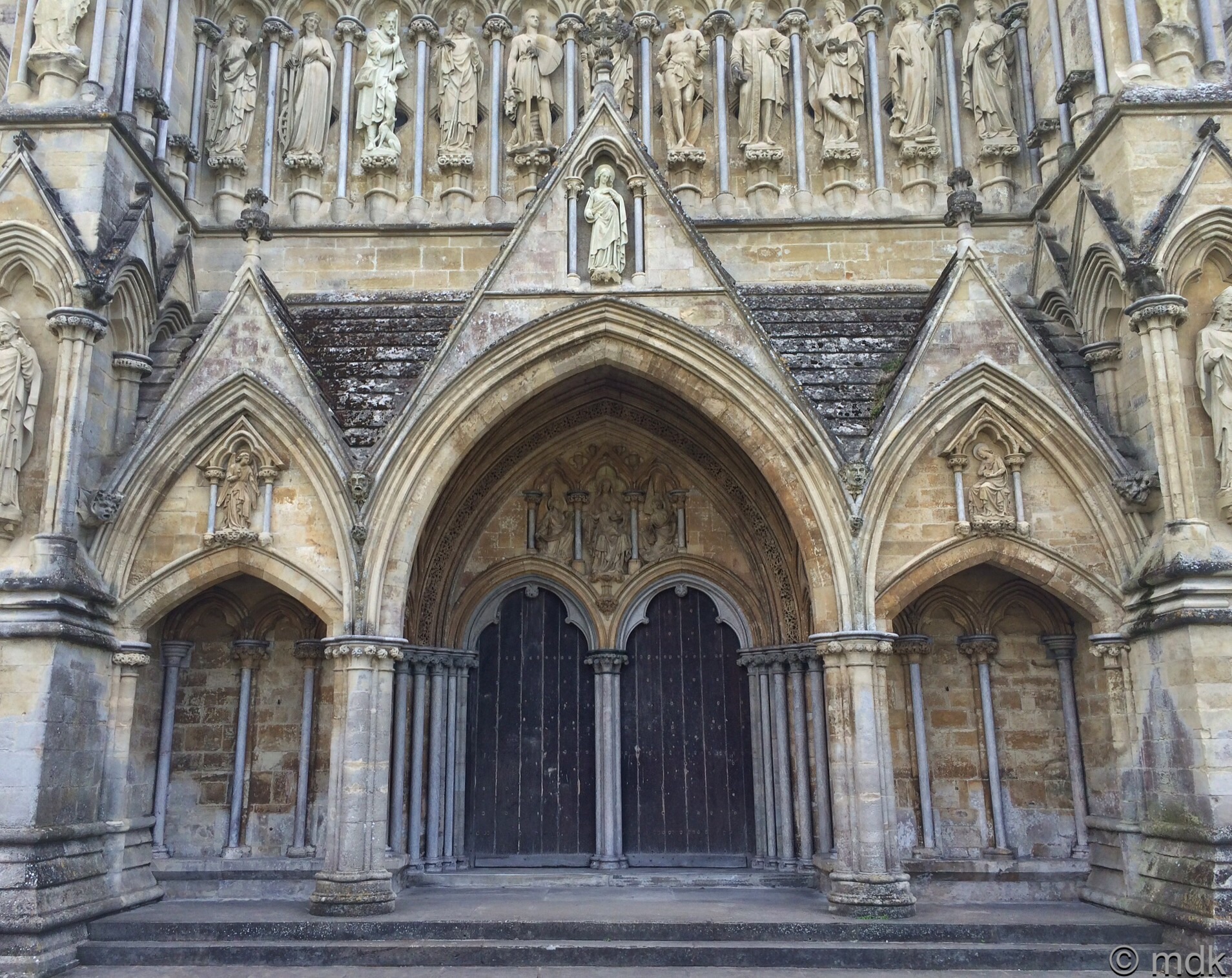
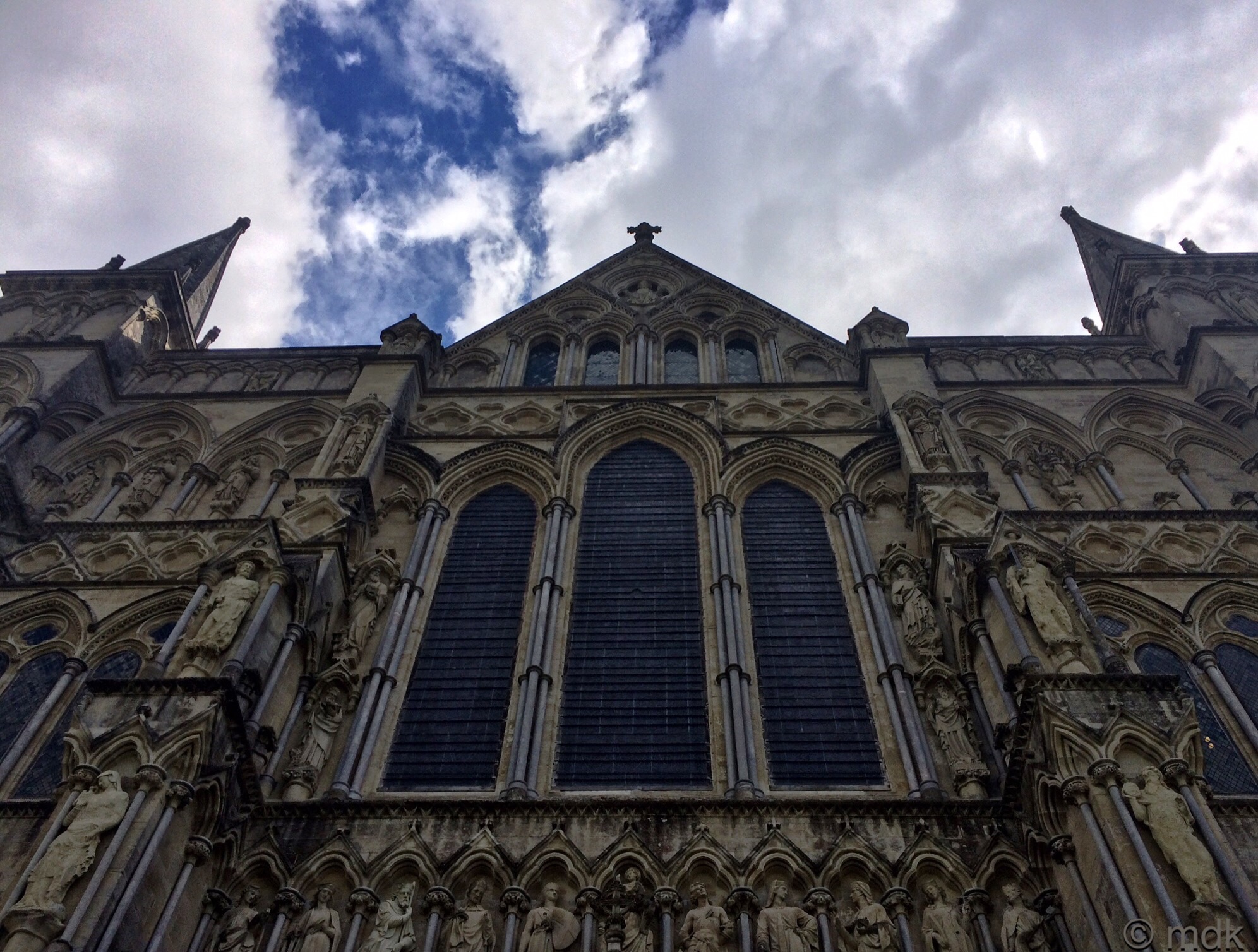
Much of the stone for the building came from Teffont Evias quarries and the dark marble for the pillars, shafts, capitals and bases from Alice Brewer’s quarry in Corfe Castle. Stone taken from the old cathedral at Sarum was used to build the clergymen’s houses in cathedral close. Although the main body of the cathedral was finished by 1258 the cloisters, chapter house and West Front, traditionally the ceremonial entrance, took a little longer and work wasn’t finally completed until 1266. It is a thing of beauty. We stood and looked at it for a while. Arches, pillars, heavy oak doors and so many statues and gargoyles it made my head spin.
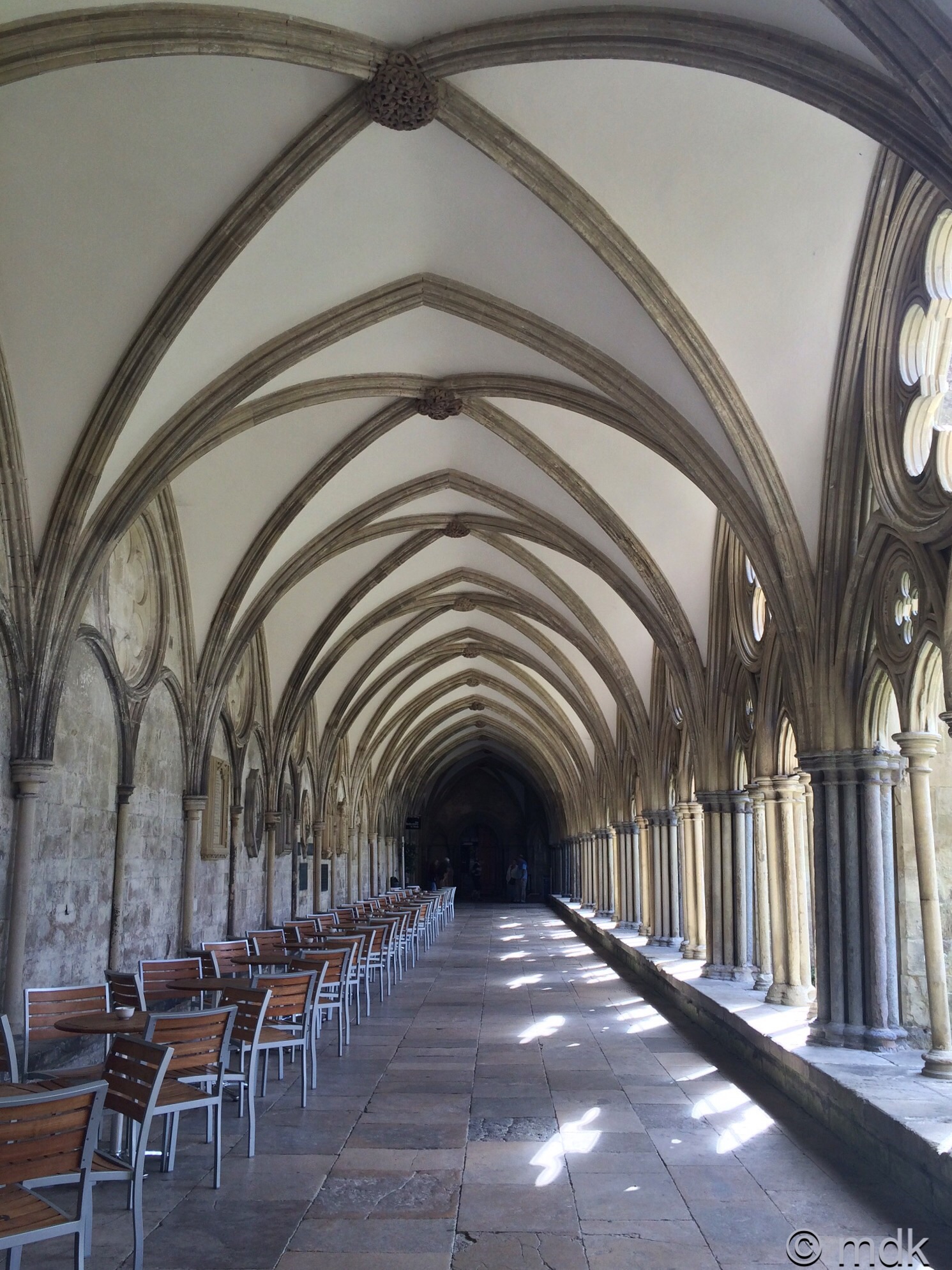
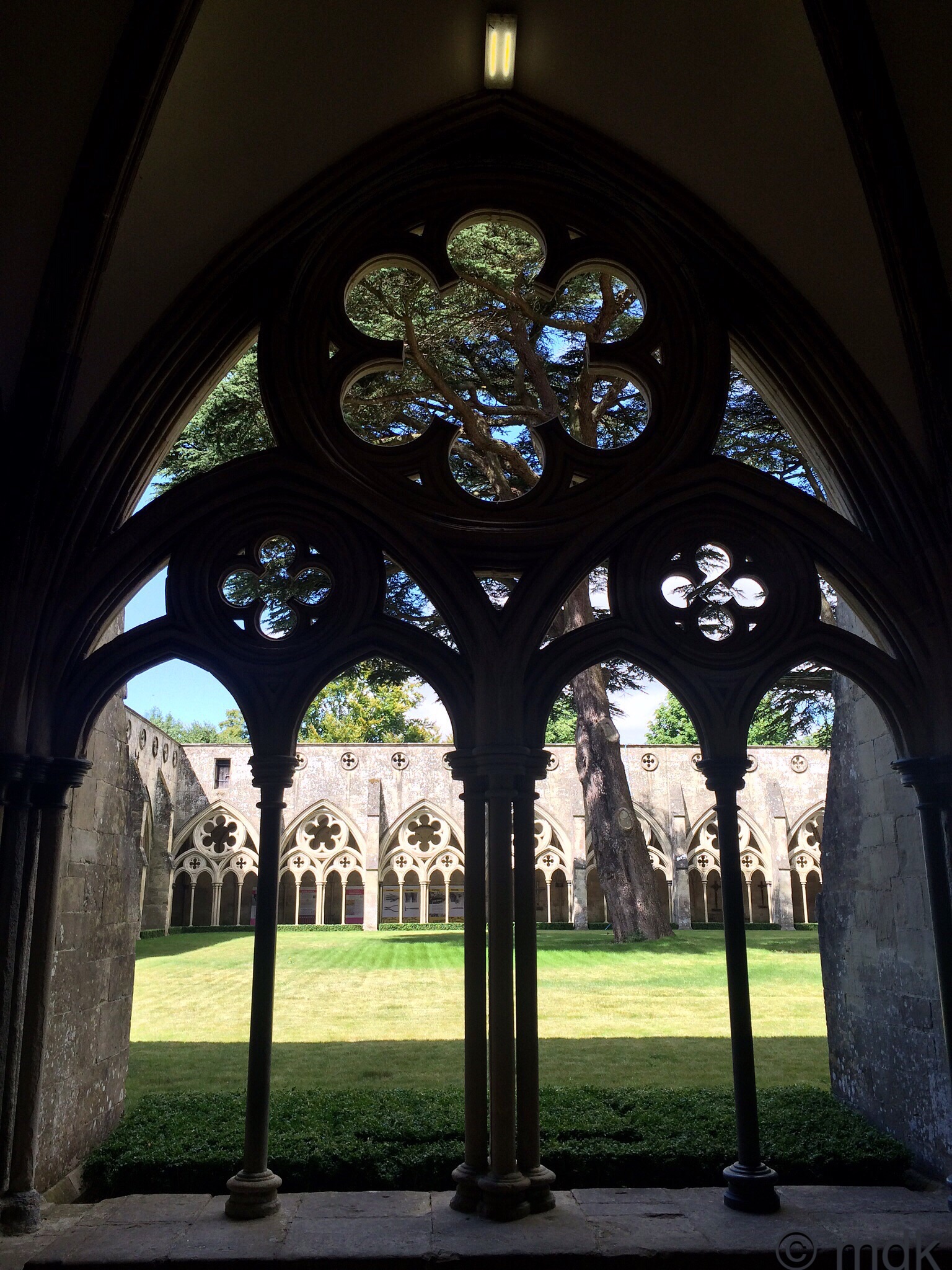
We entered through a kind of tented corridor where we paid our money and made our way into the largest cloister in Britain. We strolled along taking in the beautiful vaulted ceilings the light streaming through the arches, quatrefoils and hexafoils onto the stone flagged floors. The green grass and massive trees in the central square were a wonderful contrast to the pale stone and plaster. The walls were decorated with plaques and memorials too numerous to read and soon we were standing outside the chapter house where Magna Carta is kept.

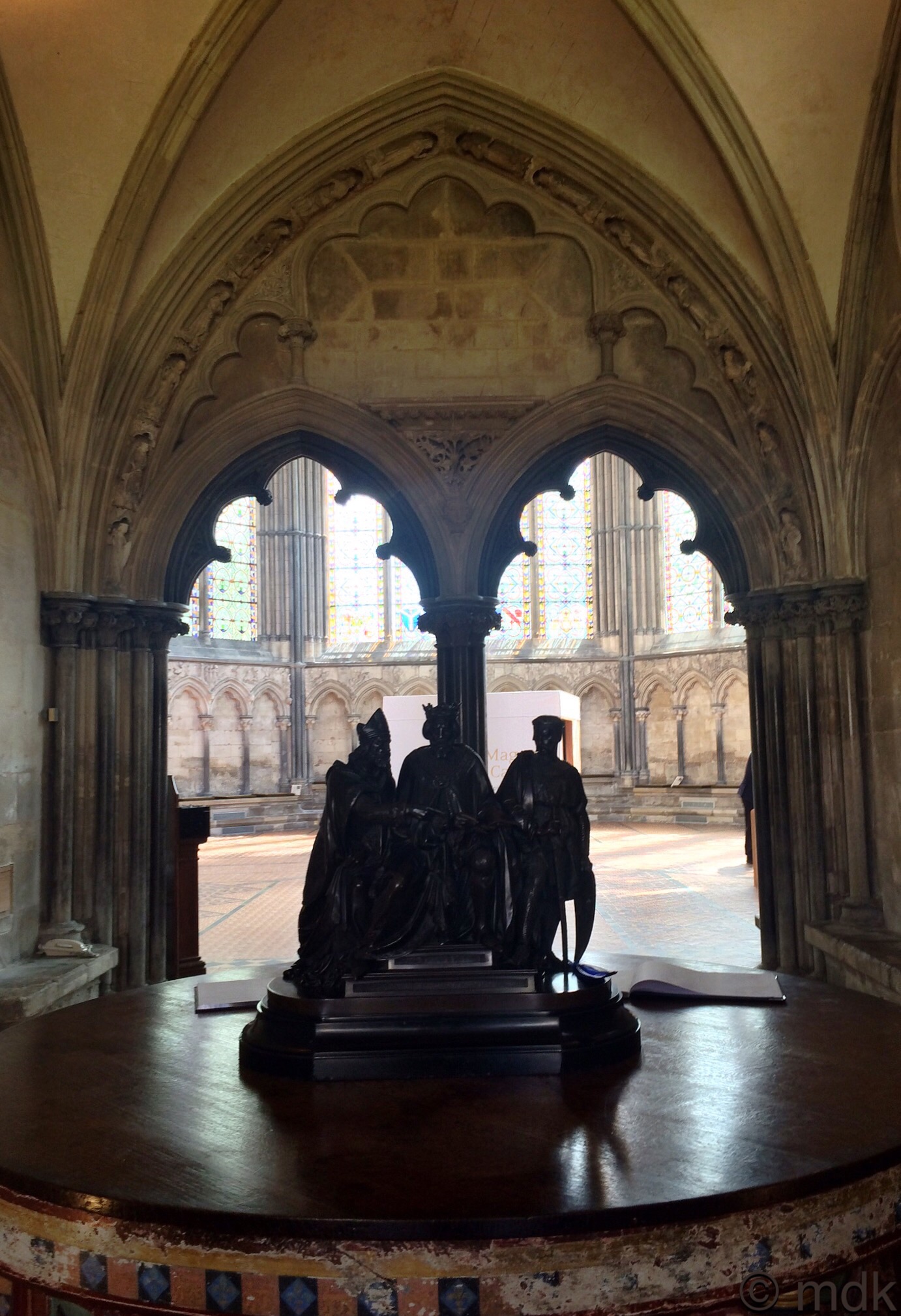
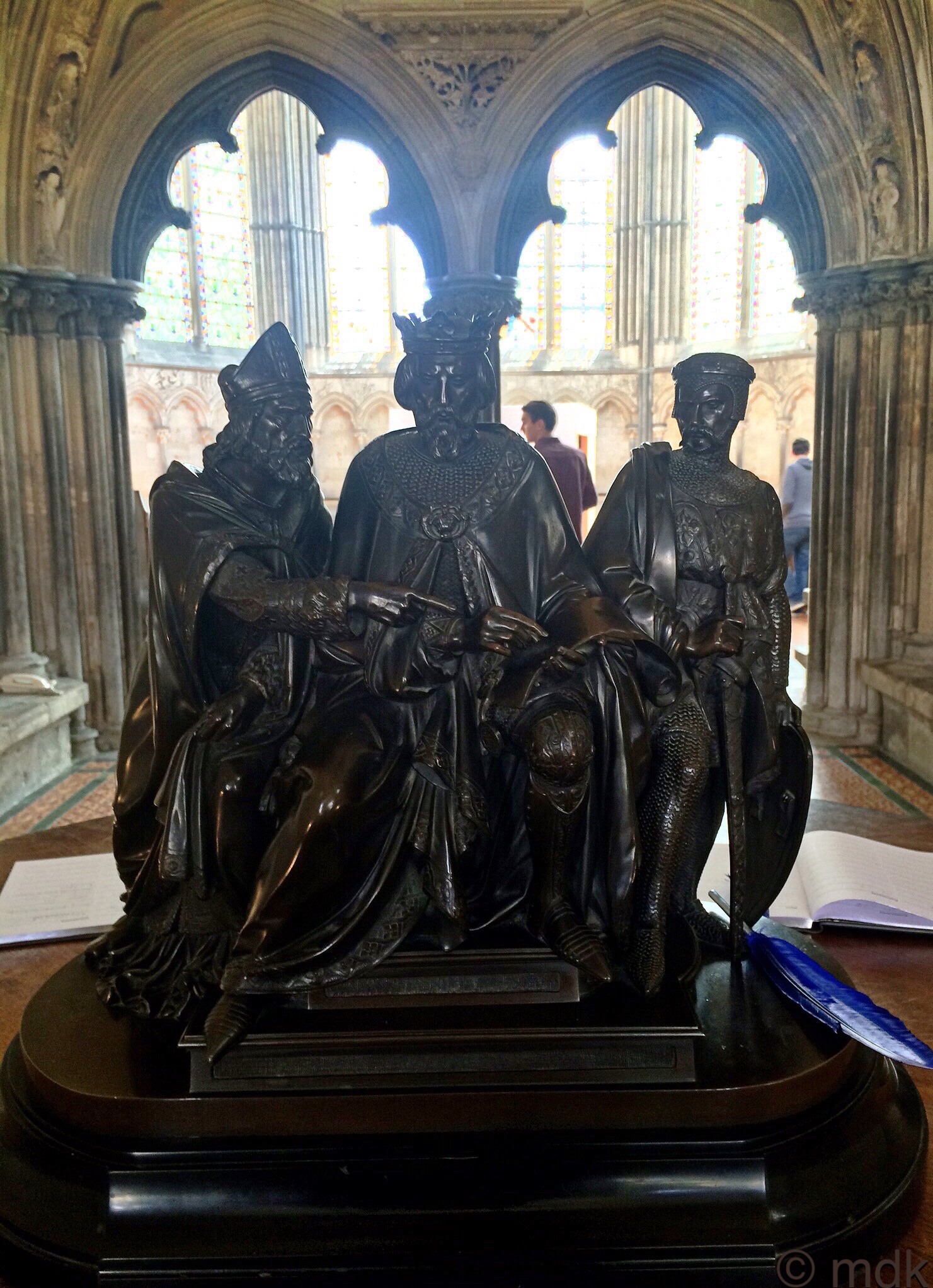
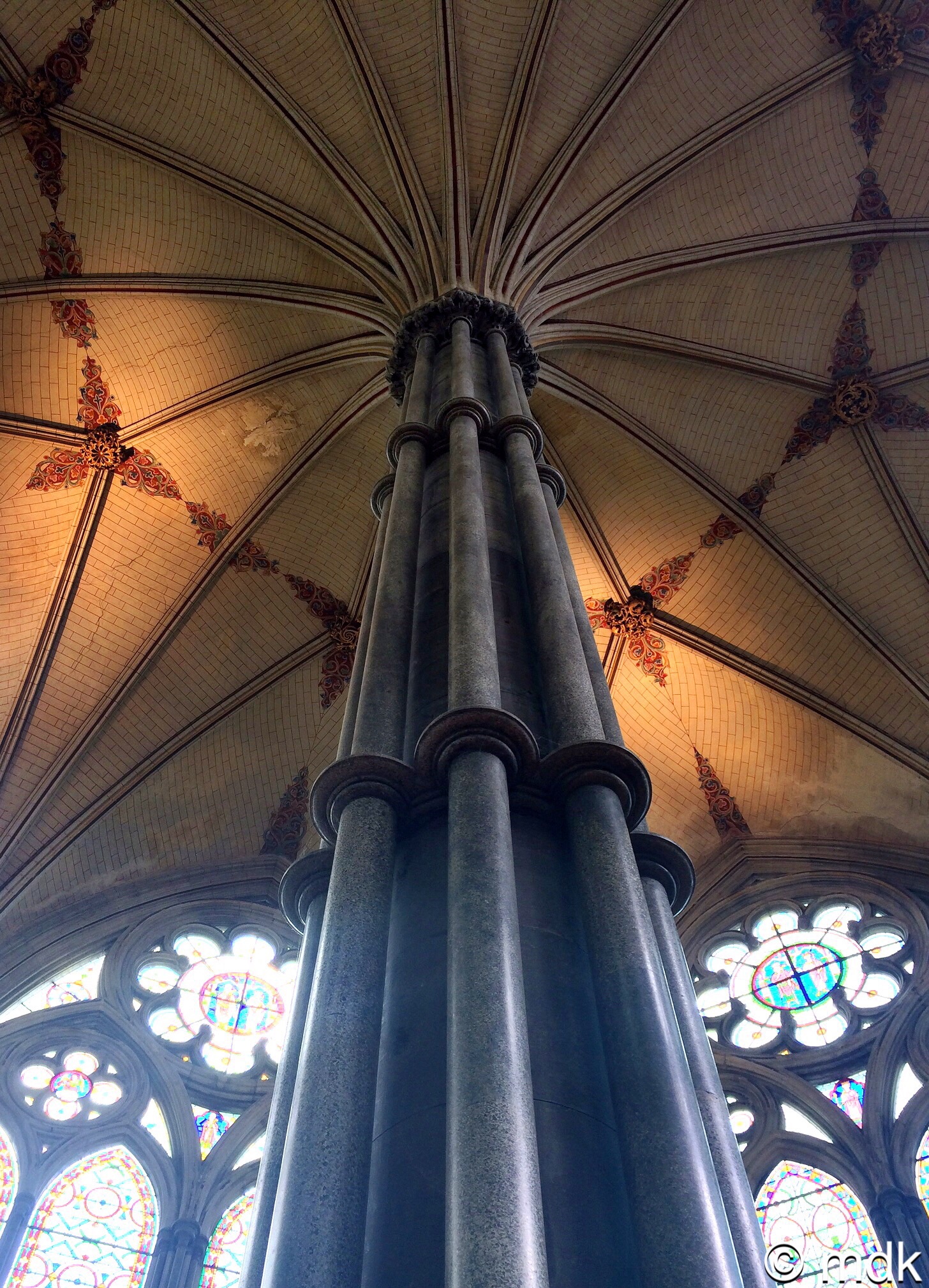
In the entrance is a bronze sculpture of an unhappy looking King John, apparently being ‘gently’ persuaded to sign the famous document. This was created in 1880 by Paris firm de Vaux. Behind, through a double arch, light streamed through the eight beautiful windows of this stunning octagonal room. Even withouth the added incentive of a peek at Magna Carta those windows, the central marble pillar supporting an elegantly arched and beautifully decorated ceiling and the freise running around the walls depicting bible stories would have been worth the visit.
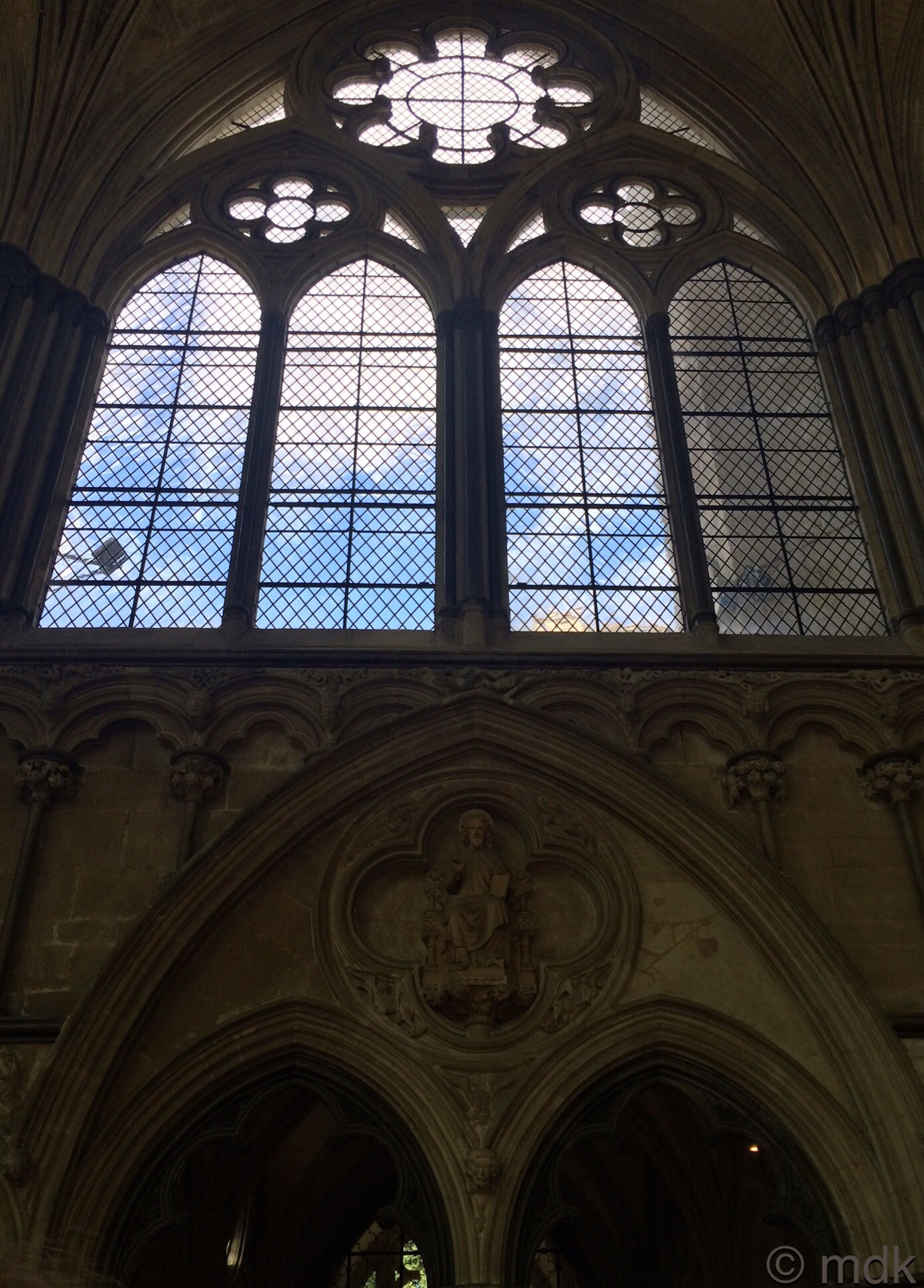
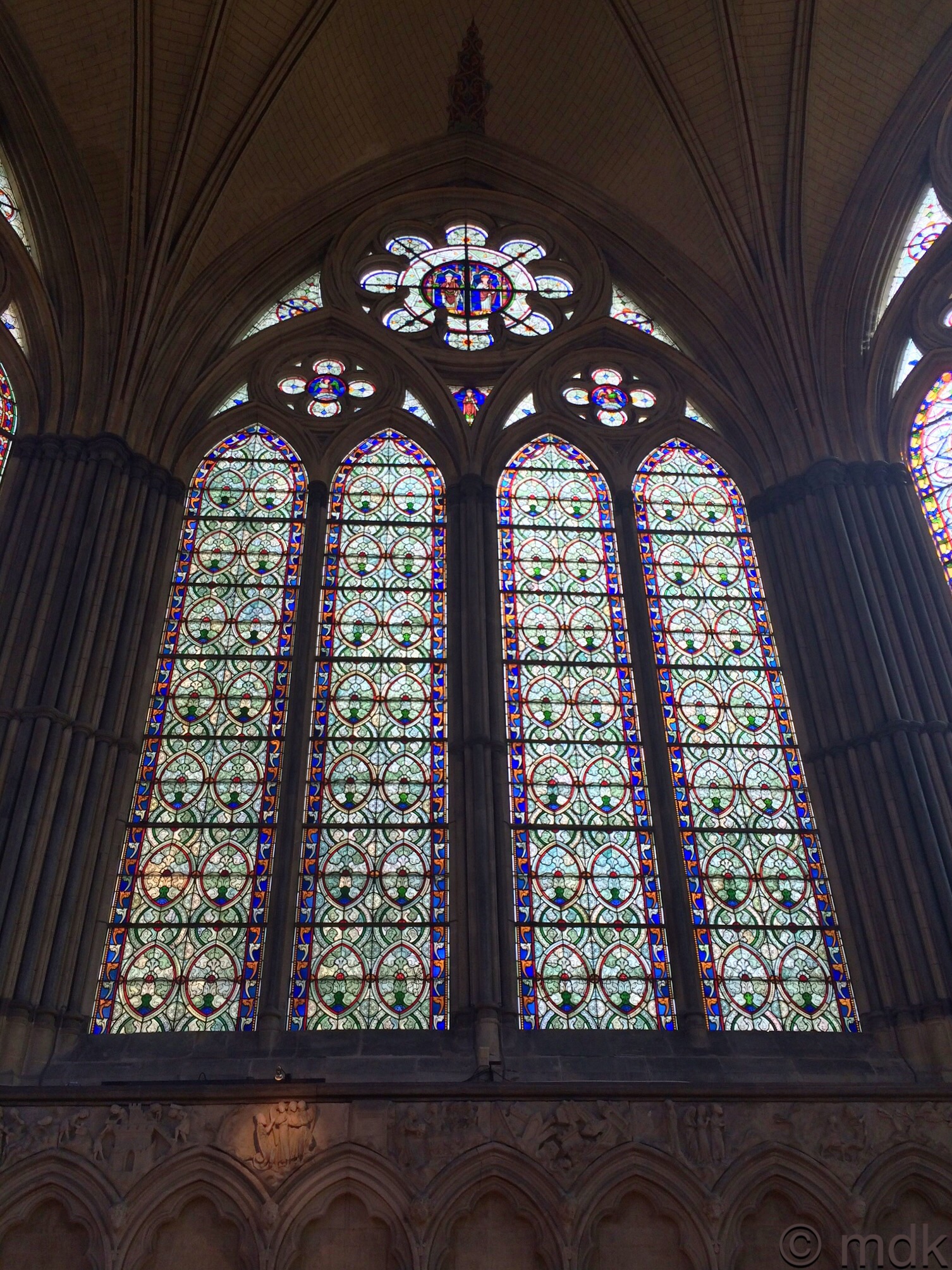
The famous document was displayed in a small tent and is the best preserved of the four remaining copies, brought to Salisbury by Elias of Dereham who was at Runnymede when it was signed. As we waited our turn to enter the tent I wondered how many of the people trooping through really knew what Magna Carta was and why it was so important, not just in Great Britan but all over the world?
Eight hundred years ago the country was ruled by a greedy and unscrupulous king. Over his sixteen years rulership, King John had become increasingly ruthless in exploiting feudal rights and levying taxes and the church and the barons were, frankly, fed up with him. In 1215, the barons seized London and John had no choice but to sign this document drawn up by the barons with the help of the Archbishop of Canterbury. Written in Latin, it outlines the basic rights of the people, amongst them the right to a fair trail and limits to taxation without representation. Most importantly, it stated that no one was above the law, even the king. No wonder he wasn’t keen to sign it.
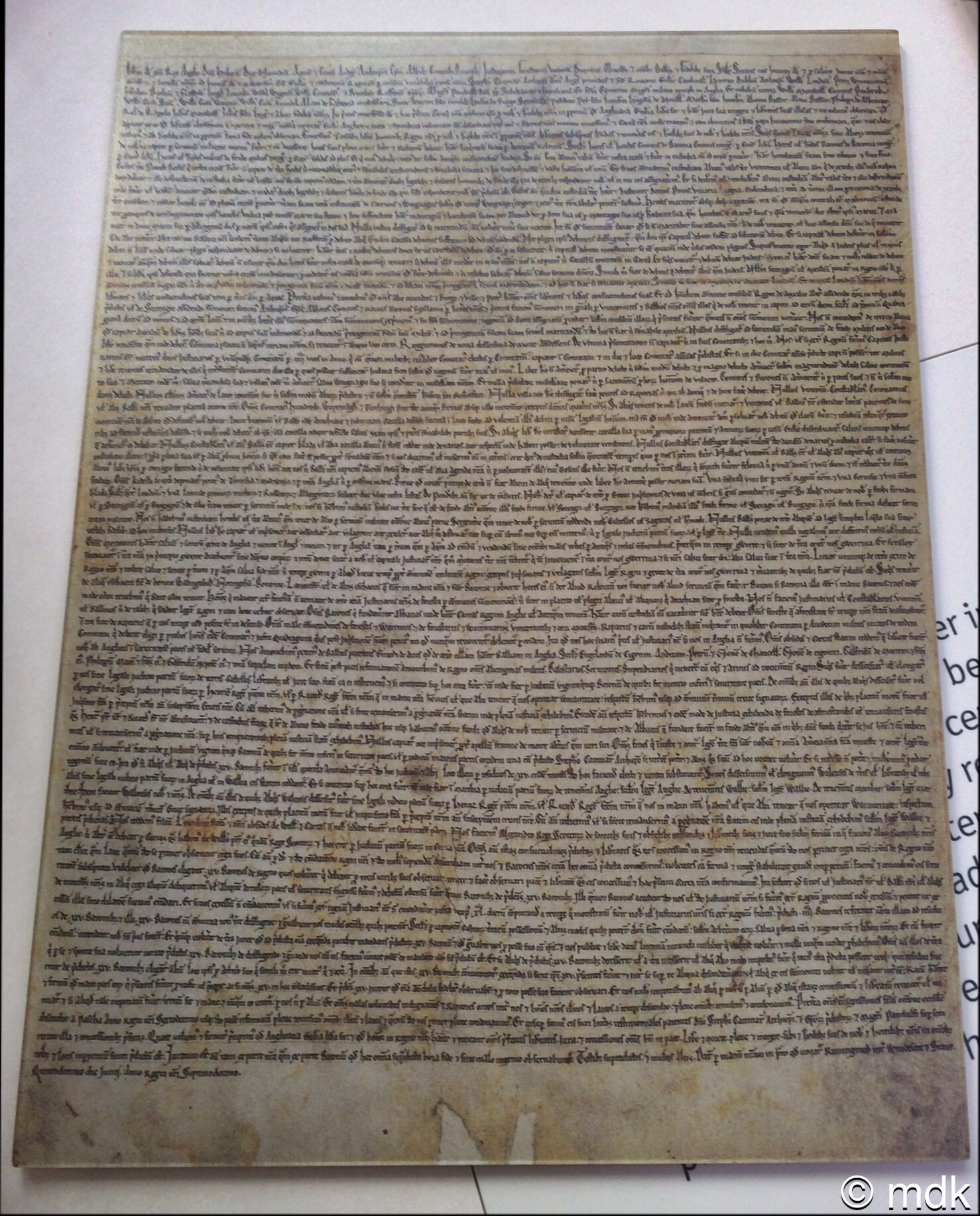
This small, tattered piece of parchment with tiny words penned by a quill in oak gall ink still holds a central place in English law and has influenced many other important documents. The 1791 Ameircan Bill of Rights owes a lot to Magna Carta and a copy, made in 1297, is held in the National Archive in Washington DC. The basic principles are also clearly seen in the 1948 Universal Declaration of Human Rights which followed World War II.
We left the chapter house feeling quite privildged to have had a glimpse at this important piece of history and, almost immediately, came to the cathedral cafe. As we walked towards the glass door it swung open. This seemed like an invitation we couldn’t refuse so we went inside and ordered lattes. Obviously the self opening door owed more to modern technology than divine intervention but the coffee was nice and the views spectacular.

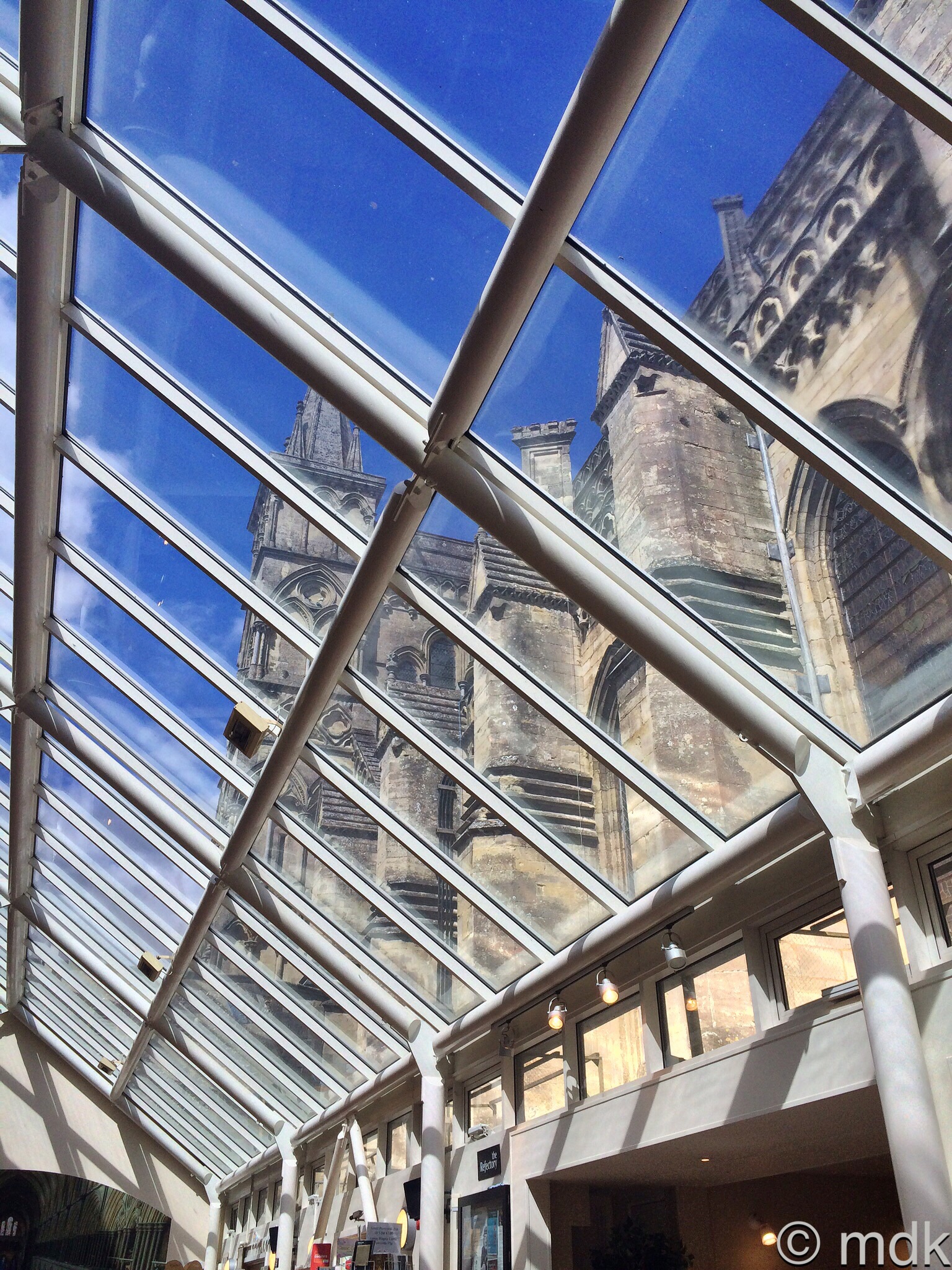
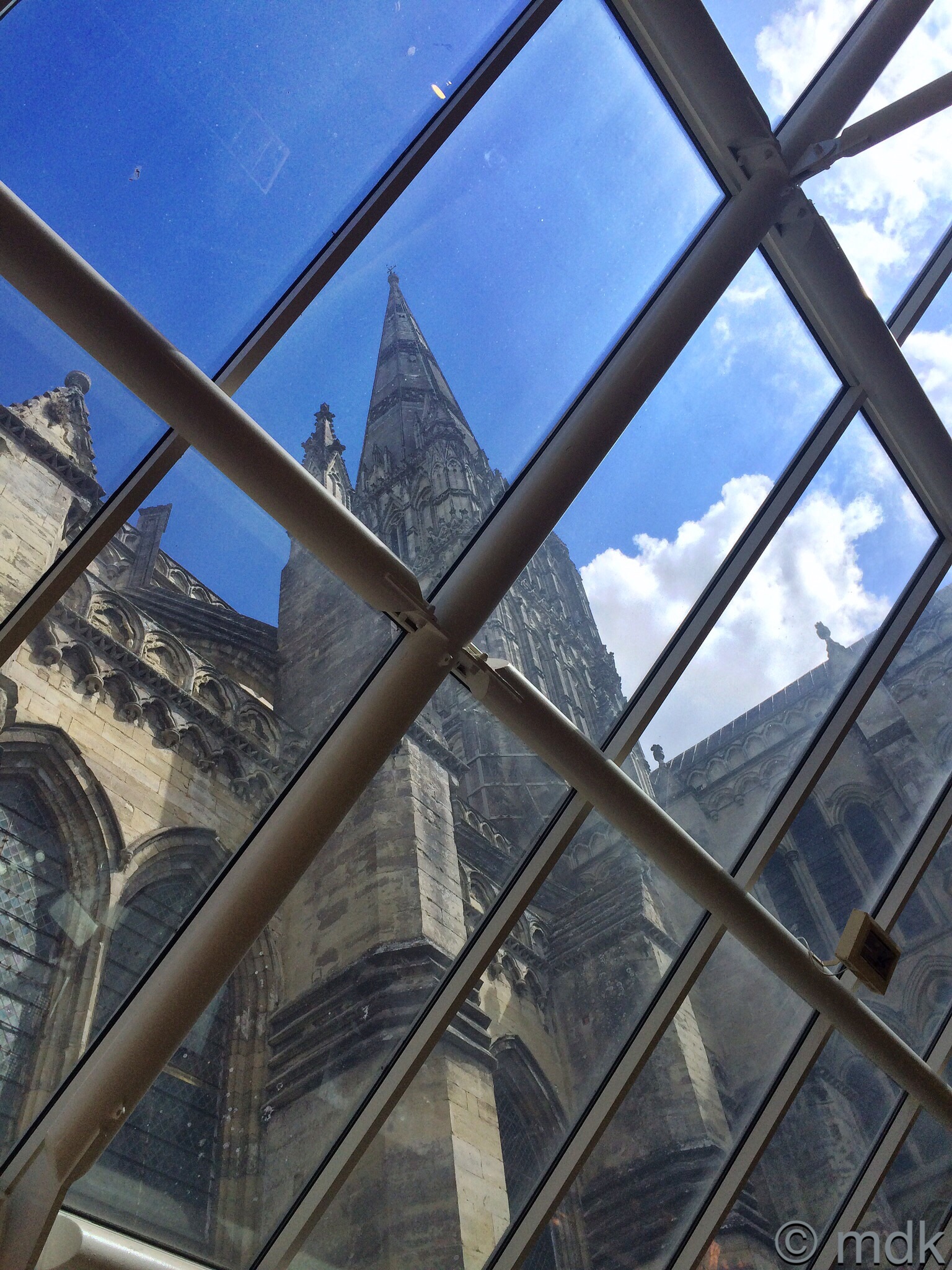
Above us, through the glass roof, was a breathtaking view of blue sky and the tallest spire in the land. We drank with our necks craned to look at it. Impressive as the tall spire is, it has not been without its problems. Asking such shallow foundations to support six and a half thousand tonnes of stone in one place was always pushing things a little far. Lesser spires on firmer ground have fallen but here buttresses, bracing arches and anchor irons have been added over the centuries. In 1668, when the supporting pillars at the spire’s corners began to bend inwards under the stress, Christopher Wren added reinforcing tie beams, hidden by a false ceiling below the lantern stage of the tower. So far, it all seems to have worked.

So, we’d seen a little of Salisbury, wandered through the cloister and had a look at Magna Carta. Now it was time to take a look inside the cathedral…
Very interesting.
It was. The cathedral is well worth a visit. We spent far too much time there.
Good pictures. It is often hard to take pictures of large interiors. I don’t think that Magna Carta still holds much place in our legal system if the government can put people on trial without even telling them what they are charged with or letting them see the witnesses.
The spirit of Magna Carta does but the government were never keen on obeying the law.
I wonder if the United States as it stands as the “land of the free” would even exist without that document.
The cathedral is beautiful. If I ever make it over there I don’t know how I’m going to have time to see it all. I’m going to have to stay for a year.
It was a world changing document although the king was very reluctant to sign it. Ever since monarchs and governments have been trying to worm their way out of it (the current one a fine example as they are trying to change the laws on the right to a fair trail). I felt I could have stayed in the cathedral for a month and never have seen everything.
Wonderful post about a city I know very well. Hubby and I used to spend a lot of time there when we first met, I took the kids to visit the cathedral a few times during our visits back ‘home’ when I lived in the States, and we pass through often on our way to Brighton to visit the boys. My middle boy lived there for a while. Salisbury Cathedral is one of our favourite places to visit. But I loved your narrative here, giving so much of the history of the place itself and your photos are beautiful. Thank you so much for the heads-up about ‘Enlightenment’, must go and see it before it’s taken down! I’m so glad you got to see The Magna Carta at last. It’s amazing isn’t it?
It was a fab visit, we both thoroughly enjoyed it. Enlightenment is worth a look and I hear it’s at its best after dark.
Bet it’s beautiful! Have a lovely weekend Marie 🙂
🙂
One of those quirky historical facts……King John did not sign Magna Carta… 🙂
Very true. He actually used his seal rather than his signature but artists and sculptors always have him quill in hand.